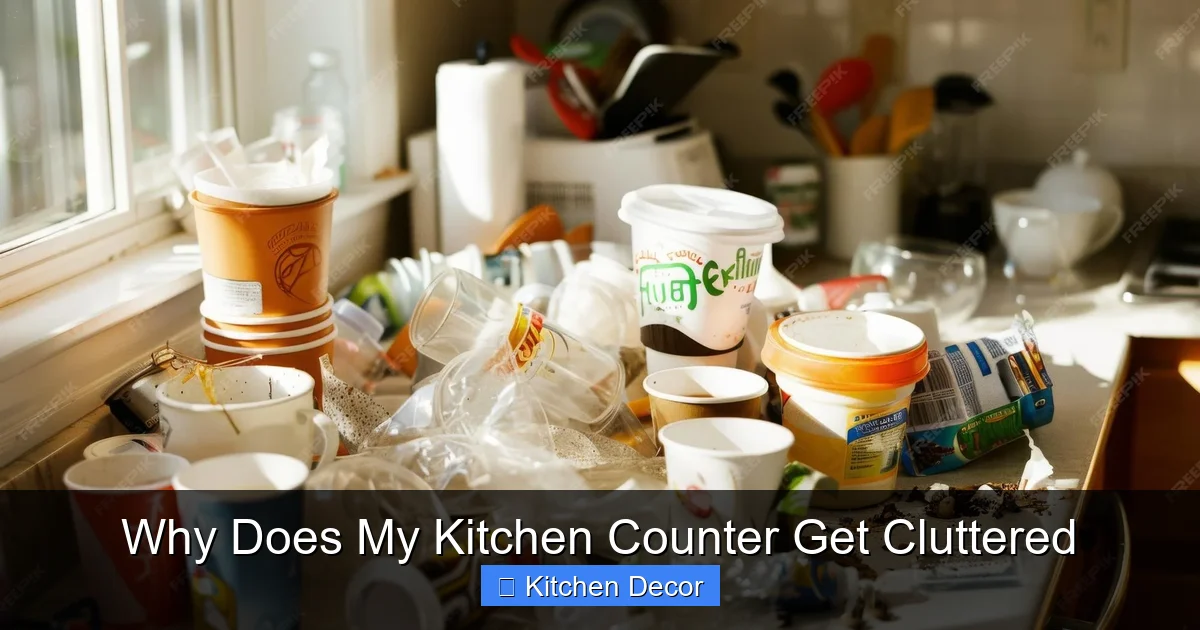
Are you constantly battling a messy kitchen counter? You’re not alone! This guide reveals the common reasons why your kitchen counter gets cluttered, from lack of storage to daily habits. Learn simple, actionable steps to declutter your space, create lasting organization, and enjoy a functional, beautiful kitchen. Say goodbye to the endless cycle of clutter and hello to a serene countertop!
Why Does My Kitchen Counter Get Cluttered
Do you ever feel like your kitchen counter is a magnet for all sorts of odds and ends? One minute it’s clean, the next it’s covered in mail, keys, forgotten groceries, and small appliances. You’re not alone! A cluttered kitchen counter is a common challenge for many households, turning a functional space into a source of frustration. But why does your kitchen counter get cluttered, and more importantly, what can you do about it?
This comprehensive guide will help you understand the root causes behind your kitchen counter chaos. We’ll walk you through a clear, step-by-step process to declutter, organize, and maintain a tidy counter. You’ll learn practical tips, discover smart storage solutions, and gain the habits needed to keep your kitchen looking its best. Get ready to reclaim your counter space and transform your kitchen into a calm, functional heart of your home!
Key Takeaways
- Identify Root Causes: Understand that a cluttered kitchen counter isn’t just about mess; it often stems from a lack of designated homes for items, convenience trumping order, or simply having too much stuff. Addressing these underlying issues is key to lasting change.
- Start with a Clean Slate: The most effective way to tackle a cluttered kitchen counter is to clear *everything* off it first. This provides a blank canvas, allowing you to re-evaluate each item deliberately rather than just shifting things around.
- Implement the “Sort, Don’t Store” Method: Categorize items into “Keep,” “Donate/Sell,” “Relocate,” and “Trash/Recycle.” This disciplined approach helps you make clear decisions about what truly deserves a spot in your kitchen, preventing unnecessary items from creeping back onto your kitchen counter.
- Create Designated Homes: Every item needs a specific place to live, whether it’s in a drawer, cabinet, or on a shelf. When things have a clear “home,” they are less likely to end up sitting out, preventing your kitchen counter from becoming a default dumping ground.
- Embrace Vertical Storage: Maximize your space by looking up! Wall-mounted shelves, pot racks, and cabinet organizers can free up valuable counter space, offering practical solutions when your kitchen counter gets cluttered due to limited horizontal area.
- Establish Daily Habits: Long-term tidiness relies on consistent routines. Simple habits like a nightly “reset,” following the “one-touch” rule, and putting things away immediately after use are powerful tools to prevent your kitchen counter from getting cluttered again.
- Regular Maintenance is Crucial: Decluttering isn’t a one-time event. Schedule weekly check-ins and seasonal purges to keep your kitchen counter clear and functional. This proactive approach helps to catch and manage new clutter before it becomes overwhelming.
Why Your Kitchen Counter Gets Cluttered: The Root Causes
Before we can fix the problem, it’s helpful to understand why your kitchen counter gets cluttered in the first place. It’s rarely just one thing; often, a combination of factors contributes to the pile-up.
Lack of Designated Homes
This is perhaps the biggest culprit. When an item doesn’t have a specific place to “live” in your kitchen, it naturally ends up on the nearest flat surface – your kitchen counter. Think about it: where do your keys go? Your sunglasses? That charging cable? If the answer isn’t a specific drawer, hook, or basket, then the counter becomes the default landing spot. This makes it incredibly easy for your kitchen counter to get cluttered because there’s no clear path for items to be put away.
Convenience Over Order
We’re all busy, and sometimes it feels easier to just set something down on the counter rather than taking an extra few seconds to put it away. Mail gets dropped by the door and then moves to the counter. School papers land there after a busy day. That half-used spice jar gets left out because you’ll “use it again tomorrow.” This habit of prioritizing immediate convenience over long-term order is a major reason why your kitchen counter gets cluttered.
Emotional Attachment
Some items on your kitchen counter might hold sentimental value. Perhaps it’s a gift from a loved one, a souvenir from a trip, or an old family heirloom. While these items are precious, they might not belong on a high-traffic, functional surface like a kitchen counter. Keeping them out can contribute to the visual noise and reduce usable space.
The Default Dumping Ground
The kitchen counter is often the first flat surface you encounter when you walk into the house. It’s wide, open, and seems to invite things to be placed upon it. This makes it the unwitting “default dumping ground” for anything and everything that comes into the house – groceries, shopping bags, receipts, wallets, and random tools. When this happens regularly, your kitchen counter will inevitably get cluttered.
Too Much Stuff (Storage Overload)
Sometimes, the simple truth is that you have more items than your kitchen can reasonably store. If your drawers are overflowing and your cabinets are packed to the brim, then anything new (or anything that doesn’t fit) will spill out onto your counter. When you lack adequate storage, your kitchen counter gets cluttered out of necessity.
Small Kitchen Syndrome
If you have a compact kitchen, you might feel like you have very little counter space to begin with. This amplifies the clutter problem, as even a few items can make the entire area feel overwhelmed. Every square inch counts, and when space is limited, it’s even easier for your kitchen counter to get cluttered quickly.
Habit and Routine (Or Lack Thereof)
Our daily habits play a huge role. If you don’t have a routine for tidying up, putting things away, or managing incoming items, then clutter will build up. A lack of consistent effort, even just 5-10 minutes a day, can quickly lead to an unruly kitchen counter. If you habitually leave things out, your kitchen counter will always get cluttered.
Step-by-Step Guide to Decluttering Your Kitchen Counter
Now that we understand the “why,” let’s tackle the “how.” This comprehensive, step-by-step guide will help you transform your cluttered kitchen counter into a clear, functional space.
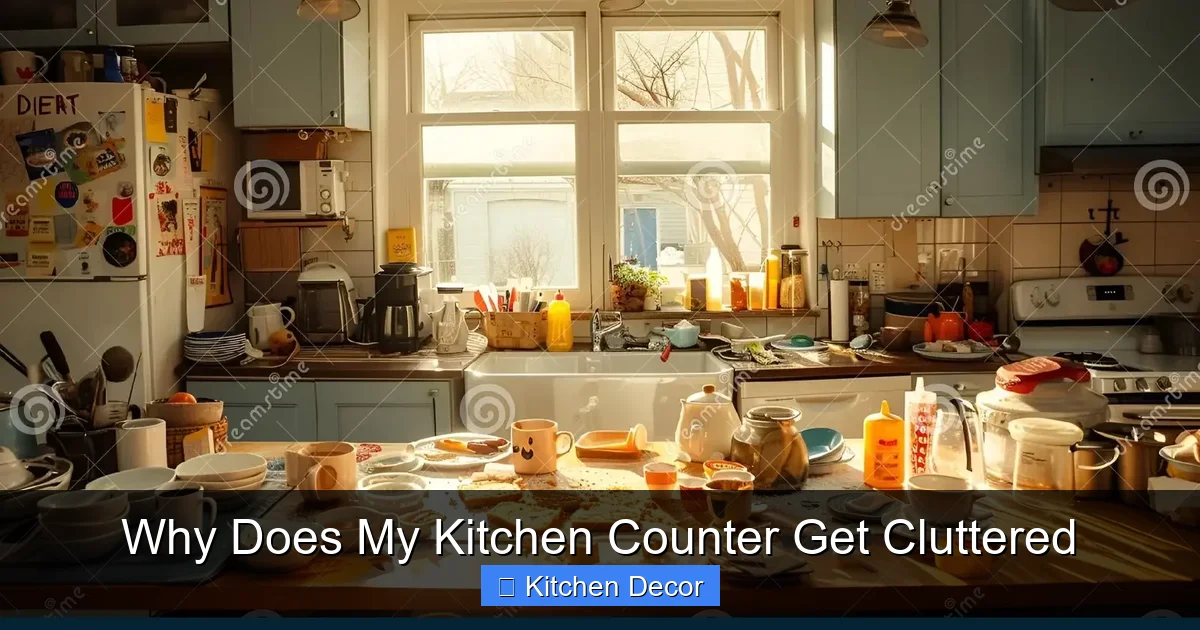
Visual guide about Why Does My Kitchen Counter Get Cluttered
Image source: thumbs.dreamstime.com
Step 1: The “Everything Off” Approach
This might feel drastic, but it’s the most effective first step. You can’t truly declutter if you’re just moving things around. Take everything – and we mean everything – off your kitchen counter. Don’t worry about where it will go yet; just create a blank slate.
- Clear the Surface Entirely: Remove all appliances, canisters, decorative items, mail, papers, and anything else sitting on your counter. Place these items on your dining table, a cleared floor space, or another temporary holding zone.
- Wipe It Down: Once the counter is bare, give it a good clean. Wipe away crumbs, spills, and sticky spots. This small act can be surprisingly motivating and gives you a fresh start.
Step 2: Sort, Don’t Store (The 4-Box Method)
Now, approach the pile of items you just removed. Pick up each item and make a quick, decisive decision. Use four designated boxes or areas (even just piles on the floor) for this process:
- Keep: These are items that genuinely belong in your kitchen, are used frequently, and you want to keep.
- Donate/Sell: Items that are still useful but you no longer need or use. Think small appliances, extra utensils, or decorative pieces that don’t fit your aesthetic.
- Relocate (to another room): This is for items that accidentally migrated to the kitchen but belong elsewhere in your home (e.g., mail for the office, toys for the living room, batteries for the junk drawer).
- Trash/Recycle: Anything broken, expired, or truly useless. Be honest with yourself!
Work quickly through the pile. The goal is to make decisions, not to second-guess yourself. This step is crucial for understanding why your kitchen counter gets cluttered – you might find you have too many “keep” items without homes.
Step 3: Evaluate What Truly Belongs
Now look at your “Keep” pile. Not everything in this pile necessarily needs to live on your kitchen counter. Apply these criteria to each item:
- Functionality Test: Is this item essential for daily kitchen tasks? Does it need to be readily accessible?
- Frequency of Use: Do you use this item every day, or at least several times a week? High-frequency items (like your coffee maker or toaster) might earn a spot on the counter. Items used monthly or annually should ideally be stored away.
- Aesthetics: Does the item contribute positively to the look of your kitchen? Is it something you genuinely enjoy seeing? While functionality comes first, visual appeal is also important for creating a serene space.
Example: Your stand mixer might be used often, but if it’s too heavy to move constantly, a dedicated counter spot makes sense. The bread maker you use once a month? That can likely go in a cabinet.
Step 4: Create “Homes” for Everything
This is where organization really takes hold. For every item you’ve decided to keep, you must assign it a specific “home.” When everything has a designated place, it makes it much easier to put things away and prevents your kitchen counter from getting cluttered again.
- Drawer Organizers: Use dividers, trays, or small bins to keep utensils, gadgets, and small items neat and contained within drawers.
- Cabinet Solutions: Maximize cabinet space with tiered shelves, pull-out drawers, or stackable bins. Group similar items together (e.g., all baking supplies, all spices).
- Wall-Mounted Storage: Consider hooks for mugs or towels, magnetic knife strips, or wall-mounted shelves for often-used spices or small jars.
- Designated Zones: Create “zones” for activities. A coffee station in one corner, a baking zone in another. This keeps related items together and limits their spread.
Remember, the goal is to get as much off your counter as possible without sacrificing convenience for items you truly use daily.
Step 5: Master the Art of Vertical Storage
When you feel like you’re running out of space, look up! Vertical storage is your secret weapon against a cluttered kitchen counter, especially in smaller kitchens.
- Shelves and Racks: Install open shelving for attractive items (cookbooks, pretty dishware) or spice racks to keep bottles off the counter.
- Pot Hangers: A ceiling-mounted or wall-mounted pot rack frees up cabinet space and looks stylish.
- Cabinet Door Organizers: Use over-the-door racks for cutting boards, foil, or cleaning supplies.
- Stackable Containers: Opt for stackable, clear containers for dry goods in your pantry or cabinets. This makes finding items easier and frees up counter space.
Every item you can store vertically is an item that’s not contributing to a cluttered kitchen counter.
Step 6: Implement Daily Habits
Decluttering is a project; staying decluttered is a lifestyle. Building small, consistent habits will prevent your kitchen counter from getting cluttered in the future.
- The “Reset” Rule: Spend 5-10 minutes each evening before bed resetting your kitchen. Put away dishes, wipe down counters, and return items to their homes. Waking up to a clean kitchen is a wonderful feeling.
- “One Touch” Principle: When you bring an item into the kitchen (mail, groceries, etc.), handle it once. Open the mail and immediately file or discard it. Put away groceries as soon as you bring them in. Don’t let items sit on the kitchen counter “just for a minute.”
- Evening Tidy-Up: As you prepare dinner or clean up afterwards, make it a point to put ingredients and tools away as you finish using them. Don’t let everything accumulate until the very end.
- Dishwasher First: Always load your dishwasher before hand-washing anything. This clears the sink and ensures dirty dishes don’t start to pile up on the counter.
Step 7: Regular Maintenance and Reviews
Clutter has a sneaky way of creeping back. Regular check-ins will help you stay on top of it.
- Weekly Check-ins: Once a week, take 15-20 minutes to do a deeper dive. Go through any accumulated mail, re-organize a drawer that’s gotten messy, or wipe down appliances. This prevents small messes from turning into big ones that make your kitchen counter get cluttered.
- Seasonal Purges: A few times a year (e.g., spring cleaning, before holidays), do a more thorough declutter. Re-evaluate what’s on your counter and in your cabinets. Are there appliances you haven’t used in months? Items that are no longer serving you?
These consistent efforts are what prevent your kitchen counter from getting cluttered again and again.
Troubleshooting Common Clutter Challenges
Even with the best intentions, you might face specific hurdles. Here’s how to troubleshoot some common reasons why your kitchen counter gets cluttered.

Visual guide about Why Does My Kitchen Counter Get Cluttered
Image source: veryhom.com
“But I Use *Everything*!”
It’s easy to fall into the trap of thinking everything is essential. Take a critical look. If you truly use an item daily, it might earn a counter spot. But if you only use it weekly, monthly, or for specific occasions, it likely belongs in a cabinet or drawer. Consider what “frequently used” truly means to you. Do you bake every day? Probably not. So, the bread maker doesn’t need to be on display. A good rule of thumb: if it’s not used every day or two, it goes away.
Sentimental Items
Your grandma’s antique cookie jar is beautiful, but if it takes up prime real estate and isn’t used, it might be contributing to the problem. Find a different display spot – a dining room hutch, a living room shelf, or a dedicated curio cabinet. If it’s truly important, display it proudly where it doesn’t hinder kitchen functionality. Your kitchen counter gets cluttered less when decorative items are thoughtfully placed.
Small Kitchen, No Storage
This is where creativity shines! Explore solutions like:
- Rolling Carts: A small utility cart can provide extra counter space or storage that can be moved as needed.
- Over-the-Sink Drying Racks: These free up counter space for drying dishes.
- Tension Rods: Use them under sinks for cleaning supplies or to hang spray bottles.
- Door Storage: Add hooks to the inside of pantry or cabinet doors for aprons, oven mitts, or small tools.
- Lazy Susans: Perfect for corners in cabinets or on the counter for spices or oils, keeping them contained.
When your kitchen counter gets cluttered in a small space, every inch of vertical or hidden storage counts.
Family Cooperation
Getting everyone on board is key. Communicate your goals clearly and involve family members in the decluttering process. Assign specific “homes” for communal items like keys, wallets, and mail, and make sure everyone knows where these homes are. Lead by example, and gently remind others. Make it a team effort. A chore chart for daily tidy-ups can also help, especially with children. Explain that a clear kitchen counter makes meal prep easier and the space more pleasant for everyone.
Conclusion
A cluttered kitchen counter isn’t just an eyesore; it can be a source of stress, inefficiency, and lost cooking joy. By understanding why your kitchen counter gets cluttered – whether it’s a lack of homes, bad habits, or too much stuff – you’ve taken the first crucial step towards a more organized space.
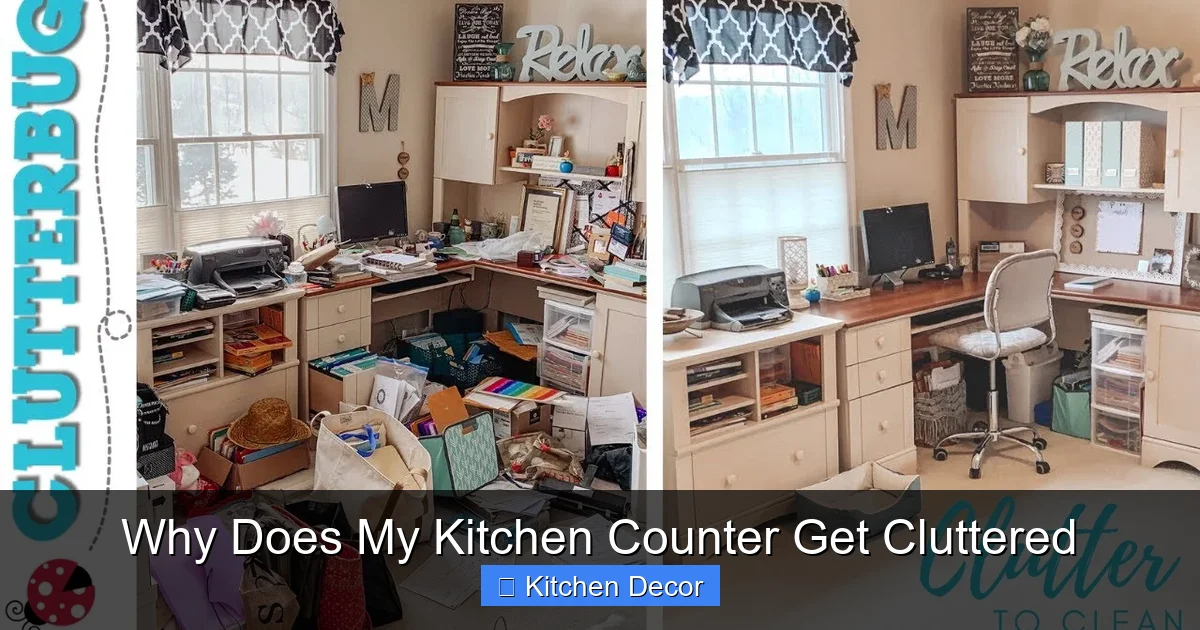
Visual guide about Why Does My Kitchen Counter Get Cluttered
Image source: i.ytimg.com
Remember, transforming your kitchen counter is a journey, not a destination. It requires an initial effort to declutter and consistent small habits to maintain. But the rewards are immense: a functional cooking space, a serene environment, and a sense of calm every time you walk into your kitchen. Embrace these steps, create your own systems, and enjoy the beauty and efficiency of a clear kitchen counter. You deserve a kitchen that works for you, not against you!