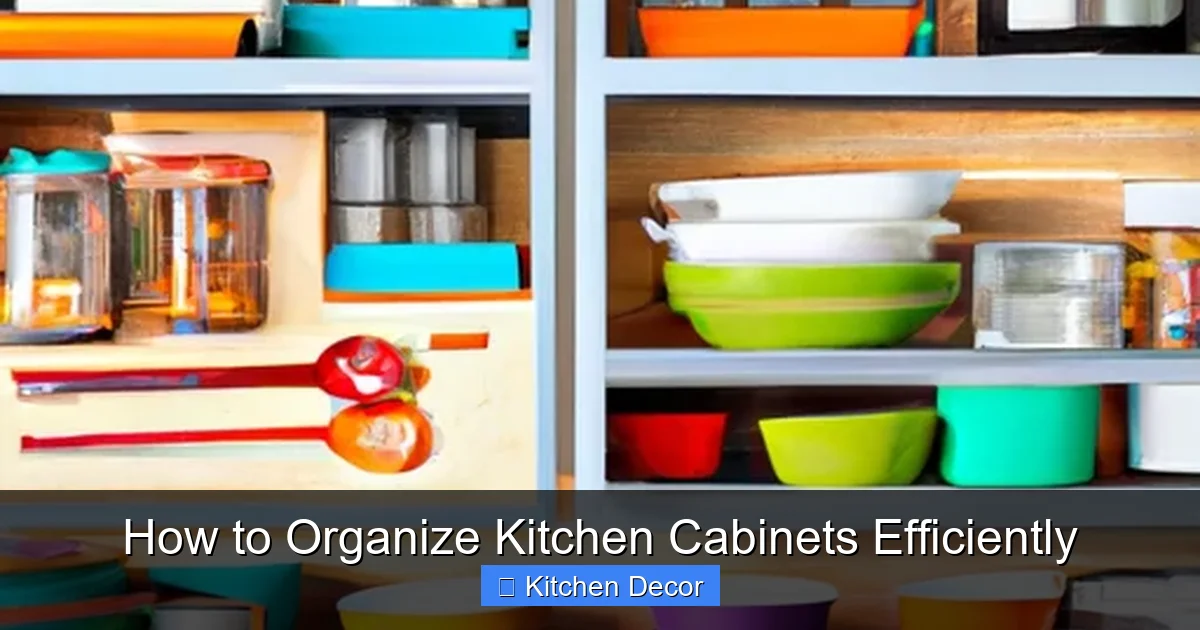
Transform your kitchen with our ultimate guide on how to organize kitchen cabinets efficiently. Discover practical, step-by-step methods to declutter, categorize, and optimize every space. Learn to utilize smart storage solutions and zoning principles, creating a functional, stress-free cooking environment that’s easy to maintain. Say goodbye to cabinet chaos and hello to a beautifully organized kitchen!
How to Organize Kitchen Cabinets Efficiently
Do you open your kitchen cabinets only to be greeted by a jumble of mismatched containers, forgotten gadgets, and items you haven’t seen in years? You’re not alone! A disorganized kitchen can make cooking a chore, waste your time searching for essentials, and even limit your culinary creativity. But imagine a kitchen where everything has its place, where tools are within easy reach, and where every cabinet opens to a sight of order and efficiency.
Learning how to organize kitchen cabinets efficiently isn’t just about tidiness; it’s about creating a more functional, enjoyable, and stress-free cooking environment. It’s about saving time, reducing waste, and making your kitchen truly work for you. In this comprehensive guide, we’ll walk you through a simple, step-by-step process to transform your chaotic cabinets into a beautifully organized system. Ready to conquer the cabinet clutter and learn how to organize kitchen cabinets efficiently? Let’s dive in!
Key Takeaways
- Start with a Thorough Purge: Empty every cabinet, ruthlessly declutter items you no longer need or use, and clean thoroughly before you begin to organize kitchen cabinets.
- Categorize and Zone Strategically: Group similar items together and assign specific zones (e.g., cooking, baking, prep) to your cabinets for logical, efficient storage.
- Utilize Smart Storage Solutions: Invest in effective organizers like pull-out shelves, lazy Susans, drawer dividers, and shelf risers to maximize space and improve accessibility within your kitchen cabinets.
- Prioritize Item Placement: Store frequently used items in the most accessible locations, heavy items on lower shelves, and light items on higher shelves. Maximize vertical space wherever possible.
- Maintain Your System Consistently: Implement a “one in, one out” rule, perform regular mini-purges, and use consistent labeling to ensure your newly organized kitchen cabinets remain functional and tidy long-term.
- Personalize for Your Lifestyle: Remember that the best organization system is one that caters to your unique cooking habits and kitchen layout, making it easier for you to sustain.
Step 1: The Big Purge and Emptying
Before you can even begin to think about where things should go, you need to know what you have. This first step is the most crucial, and often the most daunting, but it sets the foundation for a truly efficient kitchen cabinet organization.
Empty Every Cabinet
This is where the real work begins! Don’t try to organize around existing items. Take everything out of your kitchen cabinets, one by one. Yes, everything. This means pots, pans, plates, spices, food items, small appliances – literally every single item. Place everything on your countertops, dining table, or even the floor. Seeing everything laid out will give you a clear picture of the sheer volume of items you own.
Declutter and Decide
Now comes the tough part: decluttering. Pick up each item and make a quick, honest decision. Ask yourself these questions:
- Do I use this? If not in the last year, consider letting it go.
- Do I need this? Do you have duplicates? Is it broken?
- Does this spark joy? (Marie Kondo style!) If it’s not useful or beautiful, why keep it?
Create three piles: Keep, Donate/Sell, and Trash/Recycle. Be ruthless. Getting rid of unused items is key to efficiently organize kitchen cabinets. You might be surprised by how much extra space you gain!
Clean Thoroughly
With your cabinets empty, now is the perfect time for a deep clean. Wipe down all interior surfaces, shelves, and cabinet doors. Use a mild all-purpose cleaner. For stubborn grime, a baking soda paste can work wonders. If you want, line your shelves with non-slip shelf liners. This protects your cabinets and makes future cleaning easier. A clean slate is essential before you start to organize kitchen cabinets.
Step 2: Categorize and Group
Once you’ve purged and cleaned, the next step is to make sense of what you’re keeping. Grouping similar items is fundamental to good kitchen cabinet organization.
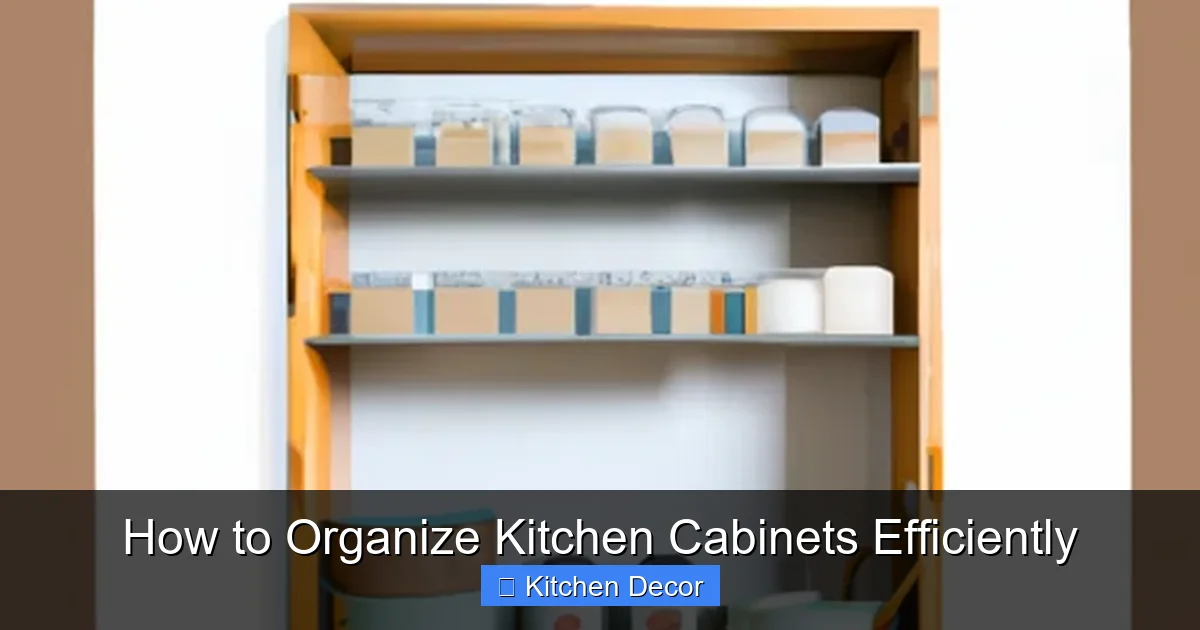
Visual guide about How to Organize Kitchen Cabinets Efficiently
Image source: spaziokitchen.com
Identify Categories
Look at your “Keep” pile. Start sorting items into logical categories. Common categories include:
- Cookware (pots, pans, baking sheets)
- Dinnerware (plates, bowls, mugs)
- Glassware (drinking glasses, wine glasses)
- Baking Supplies (flour, sugar, mixing bowls, measuring cups)
- Spices and Oils
- Food Storage Containers
- Utensils (cooking tools, eating cutlery)
- Small Appliances (blender, toaster, mixer)
- Linens (dish towels, oven mitts)
- Cleaning Supplies (if stored in the kitchen)
Group Similar Items
Once categories are established, gather all items belonging to each group. For example, put all your baking spices together, all your measuring cups, and all your mixing bowls. This step makes it easier to assign homes and understand the space needed for each category as you learn to organize kitchen cabinets efficiently.
Step 3: Zone Your Kitchen
The secret to an efficient kitchen is creating “zones” – placing items where they are most frequently used. This minimizes steps and makes cooking much more fluid. Think about your kitchen’s natural flow and common tasks.
Visual guide about How to Organize Kitchen Cabinets Efficiently
Image source: i.pinimg.com
The Cooking Zone
This area is typically around your stove and oven. Store pots, pans, baking sheets, cooking oils, frequently used spices, and cooking utensils here. Consider a cabinet above or beside the stove for spices and oils, and lower cabinets or drawers for pots and pans.
The Prep Zone
Usually near your main countertop space and sink. This zone is for cutting boards, knives, mixing bowls, measuring cups, and food prep gadgets. If you have a drawer for utensils, this is a prime spot for it.
The Baking Zone
If you bake often, dedicate a cabinet or two to baking essentials. Store flour, sugar, leavening agents, extracts, mixing bowls, measuring spoons, and baking pans here. Keeping everything together makes baking a breeze.
The Dining Zone
Near your dining table or where you serve food. This zone is perfect for dinnerware, glassware, cutlery, and serving dishes. This reduces trips back and forth when setting the table.
The Storage Zone
For food storage containers, plastic wrap, foil, and food items (pantry items). Consolidate these items in one or two dedicated cabinets. This is crucial to organize kitchen cabinets for everyday meal prep and leftovers.
Step 4: Optimize Cabinet Interiors
Now that you know what you have and where it’s generally going, it’s time to make the most of the actual cabinet space. This is where clever organizers come into play to help you organize kitchen cabinets efficiently.
Assess Your Storage Needs
Look inside your empty cabinets. Do they have fixed shelves? Are they deep? Are there awkward corner spaces? Understanding the physical limitations and opportunities of each cabinet will guide your choice of organizers.
Utilize Organizers
Smart storage solutions are your best friends when learning how to organize kitchen cabinets. They help you utilize every inch of space.
- Pull-Out Shelves/Drawers: Perfect for deep lower cabinets. They bring items at the back right to you, preventing forgotten items and wasted space. Ideal for pots, pans, small appliances, or pantry items.
- Lazy Susans (Turntables): Excellent for corner cabinets or pantries. They make it easy to access spices, oils, condiments, or small jars by simply spinning the tray.
- Shelf Risers/Expanders: Double your vertical storage space in taller cabinets. Use them for plates, bowls, mugs, or canned goods. This prevents stacking too high and making items hard to reach.
- Drawer Dividers: Essential for keeping cutlery, cooking utensils, and small gadgets tidy in drawers. No more rummaging through a tangled mess!
- Stackable Bins/Containers: Great for grouping similar items (e.g., snack bags, baking mixes, cleaning supplies) within a cabinet or pantry. Clear containers are best so you can see contents.
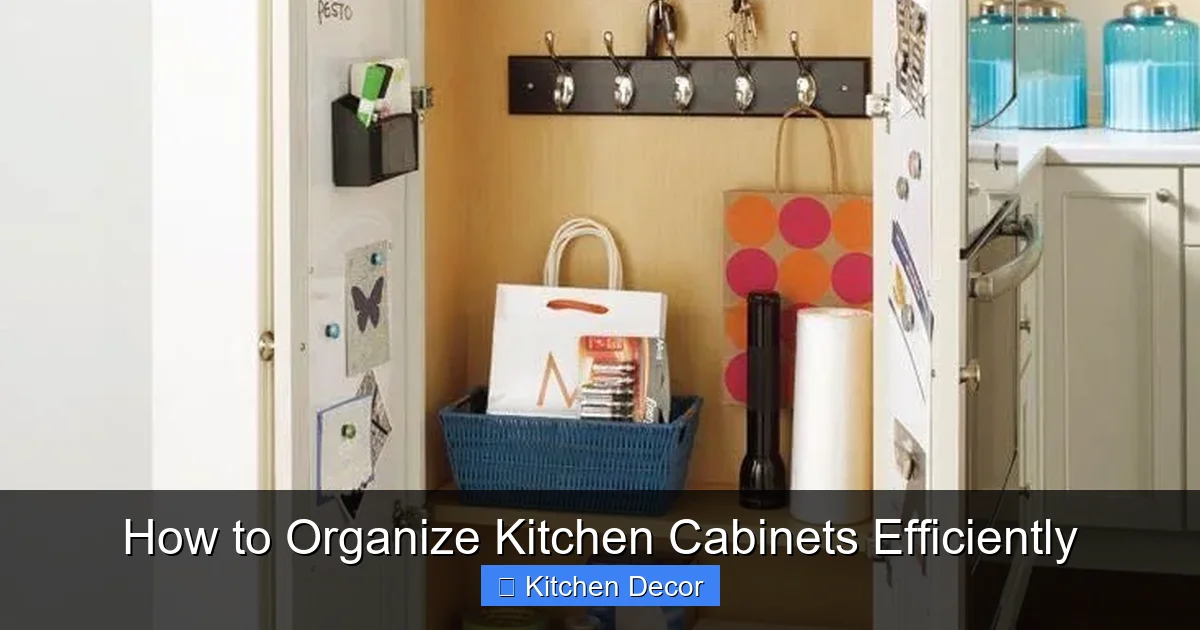
- Door Organizers: Maximize unused space on the inside of cabinet doors. Use hooks for oven mitts, racks for spices, or even small bins for foil and plastic wrap. This is a brilliant way to organize kitchen cabinets in smaller kitchens.
- Pot and Pan Organizers: Keep lids and pans separated and upright, making them easy to grab without causing an avalanche.
Step 5: Smart Placement Strategies
Once you have your zones and organizers, it’s about putting everything back in a way that maximizes convenience and visibility. This is a critical step to truly organize kitchen cabinets efficiently.
Everyday vs. Seldom-Used Items
- Eye-Level & Front: Store items you use daily at eye-level and towards the front of your cabinets. This includes your everyday plates, glasses, coffee mugs, and frequently used cooking tools.
- Lower Cabinets: Heavy items like stand mixers, large pots, and stacks of plates belong in lower cabinets for safety and ease of access.
- Upper Cabinets/Back of Deep Cabinets: Seldom-used items, seasonal dishes, or bulk supplies can go on higher shelves or deeper into cabinets. Just remember they’re there!
Heavy Items Below, Light Items Above
This is a safety rule and a practicality rule. Don’t risk a heavy ceramic dish falling from a high shelf. Place heavy cookware and dinnerware in lower cabinets. Lighter items like plastic containers, small mugs, or delicate glassware can go higher.
Vertical Storage Maximization
Think up! Many cabinets have wasted space between shelves. Use shelf risers, stackable containers, or vertical dividers (for baking sheets and cutting boards) to take advantage of this often-overlooked area. This is a game-changer when you want to organize kitchen cabinets efficiently, especially in compact spaces.
Decanting for Uniformity and Freshness
Consider decanting dry goods like flour, sugar, pasta, cereal, and snacks into airtight, clear containers. This not only keeps food fresher but also creates a uniform, aesthetically pleasing look in your pantry or food storage cabinets. It makes it easier to see what you have and how much is left, making your ability to organize kitchen cabinets much more effective.
Step 6: Maintain Your Organized System
The biggest challenge isn’t organizing your cabinets; it’s keeping them that way. Consistency is key to long-term kitchen cabinet organization.
Implement a “One In, One Out” Rule
When you buy a new item (e.g., a new mug, a new serving dish), commit to getting rid of an old, similar item. This prevents clutter from accumulating again.
Regular Mini-Purges
Don’t wait for your cabinets to become chaotic again. Once every few months, do a quick “check-in.” Spend 15-30 minutes scanning your cabinets for items that have crept back into disarray, expired food, or things you no longer use. This prevents small messes from turning into big ones.
Label Everything
Labels are not just for aesthetics; they are functional! Label your bins, containers, and even shelves (if necessary). This helps everyone in the household know where things belong, making cleanup and putting away items a breeze. Clear labeling is an essential tip on how to organize kitchen cabinets efficiently and sustainably.
Troubleshooting Common Cabinet Challenges
Even with the best intentions, some cabinet quirks can make organizing tough. Here are solutions for common problems:
Small Kitchen?
Solution: Think vertically and utilize door space. Over-the-door organizers, magnetic strips for knives or spices, and stackable containers are your best friends. Consider mounting small shelving units on empty wall space between cabinets. Look for multi-functional items that serve more than one purpose.
Awkward Corners?
Solution: Lazy Susans (turntables) are practically designed for corner cabinets. They allow you to access items without reaching deep into the dark corners. Another option is specialized pull-out corner cabinet systems, though these are a bigger investment.
Deep Cabinets?
Solution: Pull-out shelves or drawers are ideal here. If that’s not an option, use large, clear bins or baskets on shelves. You can pull the entire bin out to access items at the back, then slide it back in. Store like items together in these bins.
Conclusion
Learning how to organize kitchen cabinets efficiently is an investment in your peace of mind and your culinary happiness. It takes effort upfront, but the benefits of a well-ordered kitchen are immense. You’ll save time, reduce stress, make cooking more enjoyable, and rediscover items you forgot you even had!
Remember, your kitchen is unique. Adapt these principles to fit your space, your habits, and your family’s needs. Start today, one cabinet at a time, and watch as your kitchen transforms into a model of efficiency and serenity. You’ll be amazed at how much easier and more pleasant your daily routine becomes once you truly learn how to organize kitchen cabinets efficiently!