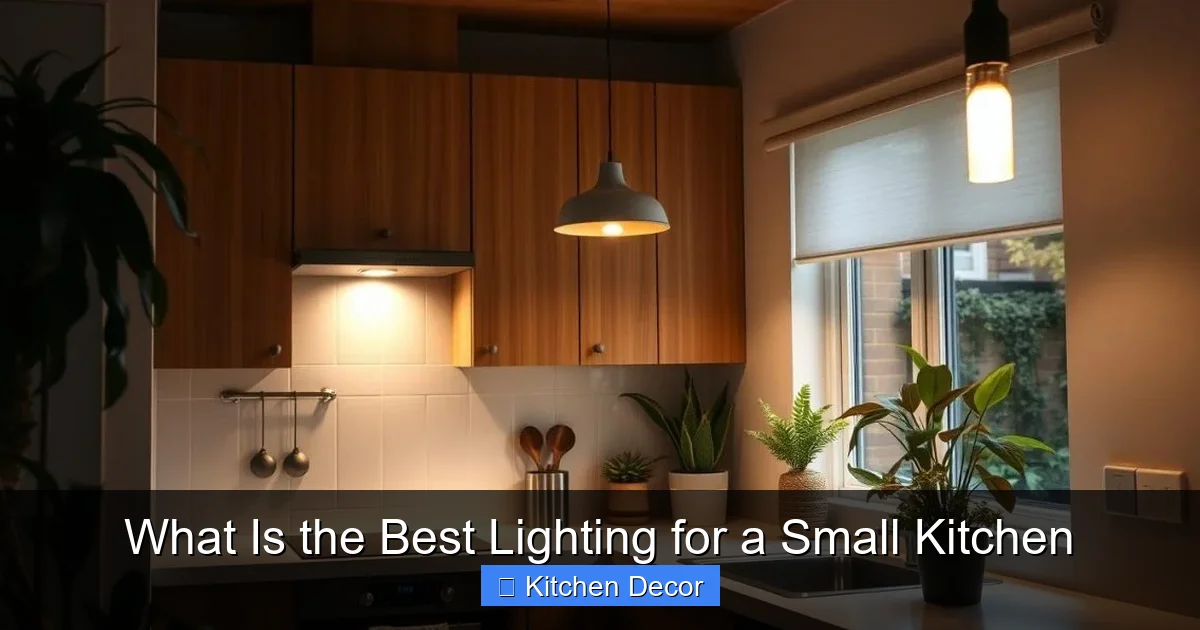
Transform your compact cooking area with the best lighting for a small kitchen. This guide breaks down how to use a layered approach, combining ambient, task, and accent lighting to eliminate shadows and enhance functionality. Learn to choose the right fixtures and techniques to make your small kitchen feel brighter, bigger, and more inviting, ensuring every corner is beautifully illuminated with the optimal small kitchen lighting.
What Is the Best Lighting for a Small Kitchen
Welcome to your guide on transforming a small kitchen with smart lighting! Small kitchens often present unique challenges. They can feel cramped, dark, or simply not as functional as you’d like. But here’s a secret: the right lighting can make all the difference. It can make your kitchen feel larger, brighter, and far more inviting. It can even make cooking more enjoyable and safer.
In this comprehensive guide, we’ll walk you through everything you need to know to achieve the best lighting for a small kitchen. We’ll explore different types of lighting, how to layer them effectively, and practical tips for choosing and placing fixtures that truly enhance your space. By the end, you’ll be equipped with the knowledge to illuminate your small kitchen like a pro.
Key Takeaways
- Layering is Essential: Achieve the best lighting for a small kitchen by combining ambient, task, and accent lights to create depth, eliminate shadows, and enhance functionality.
- Prioritize Task Lighting: Under-cabinet lights are non-negotiable for workspaces, providing focused light where you need it most for chopping, cooking, and prep.
- Embrace Dimmer Switches: Gain full control over your kitchen’s ambiance and brightness with dimmer switches for all lighting layers, adapting to any mood or activity.
- Select the Right Color Temperature and Brightness: Aim for a warm to neutral white (2700K-4000K) and sufficient lumens to make your small kitchen feel inviting and well-lit without being overwhelming.
- Mind the Scale of Fixtures: Choose compact, sleek lighting fixtures like recessed lights, slim under-cabinet strips, and appropriately sized pendants that won’t clutter or overpower a small space.
- Maximize Natural Light: Don’t underestimate the power of natural light. Keep windows clear and use reflective surfaces to amplify both natural and artificial light sources.
- Recessed Lighting is a Small Kitchen’s Friend: This type of lighting offers general illumination without taking up precious visual or physical space, making it ideal for the best lighting for a small kitchen.
Understand Your Small Kitchen’s Lighting Needs
Before you start picking out light fixtures, it’s crucial to understand what your specific small kitchen needs. Every kitchen is different, and what works for one might not work for another. Thinking about these factors will help you make informed decisions about the best lighting for a small kitchen.
Assess Your Current Lighting Situation
Start by taking a good look at your kitchen as it is now.
- What do you have? Do you have a single ceiling light? A few recessed lights? No under-cabinet lighting?
- Where are the dark spots? Identify areas that feel shadowed, especially when you’re working at the counters.
- How does it feel? Does your kitchen feel dim, sterile, or just “off”? Note down these feelings.
Consider Your Kitchen’s Layout and Use
Your kitchen’s design and how you use it will heavily influence your lighting choices.
- What tasks do you perform? Do you mostly reheat meals, or do you chop, dice, and bake often? Task-heavy kitchens demand more focused lighting.
- Is there a dining area? If you have a small eat-in area, you’ll want different lighting there compared to your prep zones.
- Are there windows? Natural light is a powerful asset. Consider how to maximize it and where artificial light needs to compensate.
- What’s your style? While functionality comes first, the aesthetic of your fixtures should complement your kitchen’s overall design.
Master the Art of Layered Lighting
The single most important concept when creating the best lighting for a small kitchen (or any kitchen, really) is layering. This means using a combination of different light types to achieve a balanced, functional, and beautiful space. Think of it as building your lighting from the ground up, with each layer serving a specific purpose.
Ambient Lighting: The Foundation
Ambient lighting is your general, overall illumination. It brightens the entire room, making it safe to navigate and setting a base level of brightness. For a small kitchen, you want this layer to be subtle and space-saving.
Recessed Lighting
This is often the go-to for the best lighting for a small kitchen. Recessed lights are installed directly into the ceiling, meaning they don’t take up any visual space. They provide a clean, uncluttered look, which is perfect for making a small kitchen feel larger.
- Tip: Use several smaller recessed lights rather than a few large ones to ensure even coverage and avoid dark spots. Place them strategically so that the light washes over your countertops without creating harsh shadows.
Flush Mount or Semi-Flush Mount Fixtures
If recessed lighting isn’t an option or you prefer a more decorative element, a flush mount (flat against the ceiling) or semi-flush mount (hangs slightly down) can work.
- Tip: Choose a fixture with a wide diffuser to spread light evenly. For small kitchens, opt for compact, sleek designs that don’t overwhelm the ceiling space.
Task Lighting: The Essential Workhorse
Task lighting is direct, focused light designed for specific activities like chopping, reading recipes, or washing dishes. In a small kitchen, excellent task lighting is non-negotiable for safety and efficiency. This is where you really boost the functionality of your small kitchen lighting.
Under-Cabinet Lighting
This is arguably the most crucial component for the best lighting for a small kitchen. When you stand at your countertop, your body casts a shadow on your workspace if the only light is from above. Under-cabinet lights eliminate these shadows, providing bright, clear illumination precisely where you need it for prep work.
- Types: LED strip lights (most popular, provide continuous light), puck lights (small, circular lights, good for specific spots), and light bars.
- Tip: Opt for LED strips that run the length of your cabinets for the most uniform illumination. Make sure they are warm enough (around 3000K) to be inviting but bright enough for tasks.
Pendant Lights (Strategically Placed)
If your small kitchen includes a peninsula or a very small island, one or two small pendant lights can serve as excellent task lighting. They bring light closer to your workspace and add a decorative touch.
- Tip: Be mindful of scale. Oversized pendants will overwhelm a small kitchen. Choose slim, minimalist designs and ensure they don’t impede movement or block sightlines. Hang them at a height that illuminates the surface without creating glare.
Adjustable Track Lighting
Track lighting offers fantastic flexibility. Individual heads can be directed to illuminate specific task areas, making it a versatile choice for small kitchens where needs might change.
- Tip: Choose a sleek, minimalist track system to avoid making the ceiling feel cluttered. Use LED bulbs for energy efficiency and directed light.
Accent Lighting: The Finishing Touch
Accent lighting is about highlighting features, adding visual interest, and creating ambiance. While not strictly necessary for functionality, it can significantly enhance the mood and aesthetic appeal of your small kitchen.
In-Cabinet Lighting
If you have open shelving or glass-front cabinets, internal lighting can showcase dishware or decorative items. This adds a layer of visual warmth and depth.
- Tip: Use low-profile LED strips or puck lights inside cabinets. Dimmable options are great for setting different moods.
Toe-Kick Lighting
Installed under your lower cabinets, toe-kick lighting provides a soft glow at floor level. This is fantastic for late-night kitchen visits (no harsh overhead lights!) and makes the cabinets appear to float, which can make a small kitchen feel more spacious.
- Tip: LED strips are perfect for toe-kick lighting. Choose a warm color temperature for a cozy feel.
Choosing the Right Fixtures and Bulbs for a Small Kitchen
Now that you understand the layers, let’s talk about specific choices for fixtures and bulbs that work best in compact spaces.
Fixture Selection for Space-Saving Style
For the best lighting for a small kitchen, always think sleek, compact, and multi-functional.
Slim Profile Recessed Lights
As mentioned, these are excellent for general ambient light without visual clutter. They integrate seamlessly into the ceiling.
Linear LED Under-Cabinet Strips
These provide continuous, even light, which is superior to individual puck lights that can create “hot spots” of light and shadows between them. Look for models with a low profile that disappear once installed.
Small, Unobtrusive Pendants
If you choose pendants for a peninsula or island, make sure they are small and visually light. Glass or open-cage designs can feel less heavy than solid fixtures.
Flat Panel or Edge-Lit Fixtures
These are very thin ceiling fixtures that provide widespread, uniform light. They are a modern, space-saving alternative to traditional flush mounts.
Bulb Smarts: Lumens, Color Temperature, and Dimming
The bulb you choose is just as important as the fixture.
Brightness (Lumens)
Forget watts; lumens measure brightness. For general kitchen lighting, you’ll want a good amount of lumens.
- Ambient: 30-40 lumens per square foot is a good starting point for a small kitchen.
- Task: Task areas need more, typically around 50-70 lumens per square foot for effective illumination.
Color Temperature (Kelvin – K)
This dictates whether your light appears warm (yellowish) or cool (bluish).
- Warm White (2700K-3000K): Creates a cozy, inviting atmosphere. Ideal for ambient and accent lighting.
- Neutral White (3500K-4000K): A good balance for task lighting, as it provides clear visibility without being too harsh. Often recommended for overall kitchen use to keep colors true.
- Cool White (4500K+): Can feel sterile. Generally avoided in residential kitchens unless a very modern, industrial look is desired.
Aim for consistency across all your lights, or slight variations to create specific zones (e.g., slightly warmer ambient, slightly cooler task).
Dimmability
Always, always install dimmer switches for all your lighting layers. This is crucial for controlling the mood and adapting your small kitchen lighting to different times of day or activities. Full brightness for cooking, dim for a relaxed evening meal.
Energy Efficiency (LEDs are King)
LED bulbs are the undisputed champion for kitchen lighting. They are energy-efficient, long-lasting, and offer a wide range of brightness and color temperatures. They also generate less heat, which is a bonus in a small kitchen.
Practical Tips for Small Kitchen Lighting Success
Beyond fixtures and layers, these practical tips will help you achieve the best lighting for a small kitchen.
Embrace Natural Light
If your small kitchen has windows, make the most of them!
- Keep window treatments minimal, light, and easy to open fully.
- Use sheer curtains or blinds that can be pulled up entirely.
- Clean windows regularly to maximize light transmission.
Reflective Surfaces Are Your Friends
Light colors and reflective materials bounce light around, making a small kitchen feel larger and brighter.
- Cabinetry: Light-colored cabinets (white, cream, light grey) will reflect light best.
- Countertops: Glossy or light-colored countertops help too.
- Backsplash: A tiled backsplash with a reflective glaze can work wonders.
- Appliances: Stainless steel appliances can also reflect light.
Placement Matters
Think about where each light source will be most effective.
- Recessed Lights: Space them evenly, typically 3-4 feet apart, ensuring they illuminate countertops without causing glare. Consider how light falls on cabinets.
- Under-Cabinet Lights: Mount them towards the front edge of the cabinet to illuminate the entire counter, not just the backsplash.
- Pendants: Hang them so the bottom is roughly 30-36 inches above the countertop or island surface, ensuring they don’t block your view or hit your head.
Avoid Clutter and Over-Lighting
Just as physical clutter can make a small kitchen feel cramped, too many bulky light fixtures can do the same.
- Choose streamlined designs.
- Focus on quality over quantity for fixtures.
- Use dimmers to prevent your kitchen from feeling “over-lit” or harsh.
Troubleshooting Common Small Kitchen Lighting Problems
Even with the best intentions, you might run into some issues. Here’s how to address common small kitchen lighting challenges.
Problem: My Kitchen Still Feels Dim and Shadowy
This is a sign that your ambient and task lighting might not be sufficient or properly placed. Review your layering. Do you have enough general light (recessed or flush mount)? Is your under-cabinet lighting covering the entire workspace? Often, adding more lumens to your ambient lighting or extending your under-cabinet strips can make a significant difference. Also, check the color temperature – if it’s too warm, it might feel dim even if bright.

Visual guide about What Is the Best Lighting for a Small Kitchen
Image source: st.hzcdn.com

Visual guide about What Is the Best Lighting for a Small Kitchen
Image source: bhg.com

Visual guide about What Is the Best Lighting for a Small Kitchen
Image source: cms.dresma.com
Problem: There’s Too Much Glare or Bright Spots
Glare usually means lights are too harsh, too focused, or pointed in the wrong direction. For recessed lights, ensure they have proper diffusers or baffles to soften the light. If pendants are too bright, try lower lumen bulbs or install a dimmer. Under-cabinet lights should be diffused to avoid direct bright spots on your counter. Sometimes, adjusting the angle of a directional light can solve the problem.
Problem: My Small Kitchen Feels Cold or Uninviting
This is often a color temperature issue. If you’re using bulbs that are too cool (4000K or higher), your kitchen can feel sterile. Switch to warmer bulbs (2700K-3000K) for ambient and accent lighting. Even for task lighting, aim for a neutral white (around 3500K) rather than stark cool white. Adding some accent lighting with a very warm glow (like toe-kick lighting) can also introduce warmth.
Problem: My Fixtures Look Bulky and Overwhelm the Space
This indicates a scale problem. For a small kitchen, less is often more. If your pendants are too large, consider replacing them with smaller, slimmer options or even switching to recessed lighting in that area. For flush mounts, choose designs that are truly flat against the ceiling. Look for fixtures that have a minimalist design and don’t draw too much attention to themselves, allowing the light itself to be the star.
Problem: Not Enough Flexibility in Lighting
This points directly to a lack of dimmer switches. If you can’t adjust the brightness of your different light layers, you lose control over the mood and functionality. Install dimmer switches for your ambient, task, and accent lighting circuits separately. This allows you to create different atmospheres for cooking, dining, or just relaxing.
Conclusion: Illuminate Your Small Kitchen with Confidence
Achieving the best lighting for a small kitchen is entirely within your reach. It’s not about finding a single “magic” fixture, but rather about creating a thoughtful, layered lighting design that addresses both functionality and aesthetics.
Remember the key takeaways:
- Layer your lighting with ambient, task, and accent sources.
- Prioritize essential task lighting, especially under-cabinet lights.
- Embrace dimmer switches for ultimate flexibility.
- Choose the right color temperature and brightness for comfort and clarity.
- Select fixtures that respect the scale of your small space.
- Maximize natural light and use reflective surfaces to amplify illumination.
By following these steps, you won’t just brighten your small kitchen; you’ll transform it into a more efficient, inviting, and seemingly larger space. Step out of the shadows and into a beautifully lit kitchen where every meal feels like a culinary adventure!