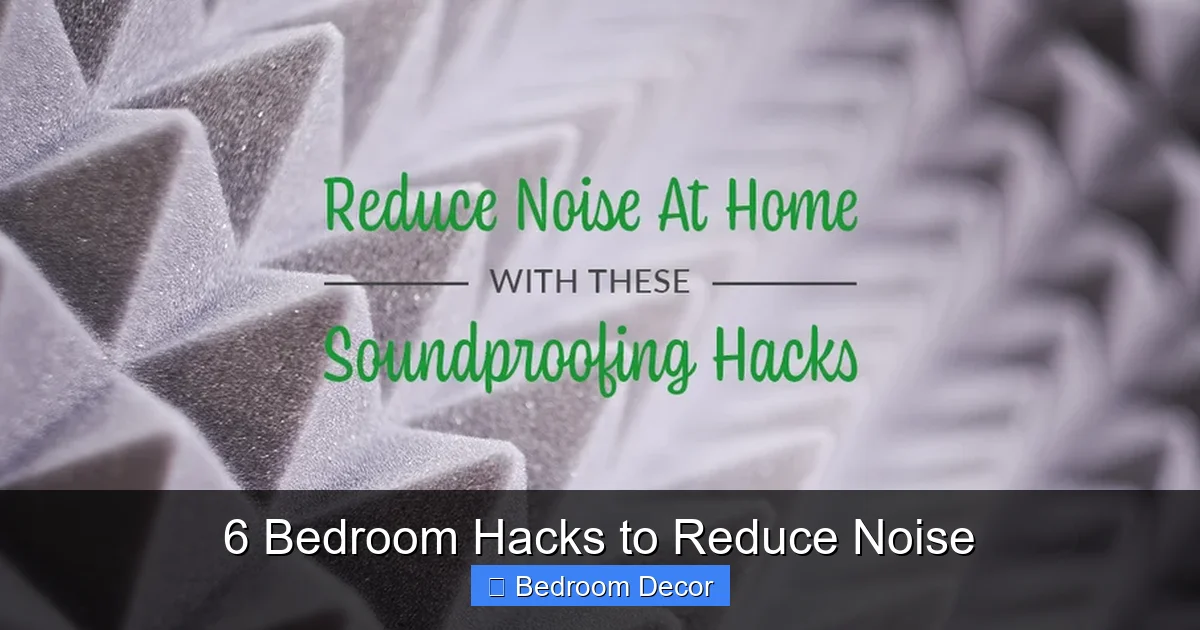
Transform your noisy bedroom into a peaceful oasis with these 6 effective bedroom hacks to reduce noise. From sealing sneaky gaps to embracing soft furnishings and strategic furniture placement, you’ll discover simple, budget-friendly ways to absorb and block unwanted sounds. Get ready to enjoy a significantly quieter and more restful night’s sleep, enhancing your overall well-being.
6 Bedroom Hacks to Reduce Noise
Tired of traffic sounds, noisy neighbors, or creaky floors disturbing your peace? Your bedroom should be a sanctuary, a quiet retreat where you can truly unwind and recharge. Unfortunately, external and internal noises often invade this precious space, making it difficult to fall asleep, stay asleep, or simply enjoy a moment of tranquility. The good news is, you don’t need a professional sound engineer or a massive renovation project to create a quieter environment.
In this comprehensive guide, we’ll walk you through 6 practical and often budget-friendly bedroom hacks to reduce noise. Whether you’re dealing with city clamor, household hubbub, or just seeking a more serene atmosphere, these tips will help you transform your bedroom into the peaceful haven you deserve. We’ll cover everything from sealing sneaky gaps to clever decorating tricks and simple DIY soundproofing solutions. Let’s dive in and discover how to significantly reduce noise in your bedroom!
Key Takeaways
- Seal Up Gaps: Even tiny cracks around doors, windows, and outlets can let in a surprising amount of noise. Use weatherstripping, door sweeps, and acoustic caulk to create an effective sound barrier.
- Embrace Softness: Hard surfaces reflect sound, while soft furnishings absorb it. Introduce thick curtains, area rugs, upholstered furniture, and throw pillows to significantly dampen echoes and external noise.
- Strategically Place Furniture: Heavy, dense furniture like bookcases and wardrobes can act as excellent sound blockers. Position them against shared walls or noise sources to create a natural acoustic barrier.
- Utilize White Noise: Sometimes, completely eliminating noise isn’t possible. White noise machines or apps can mask disruptive sounds with a consistent, soothing background hum, promoting better sleep.
- Upgrade Windows and Doors: For persistent noise issues, consider upgrading to double-pane windows or solid-core doors. These offer superior sound insulation compared to standard options.
- DIY Wall & Ceiling Treatments: Simple acoustic panels, tapestries, or even sound-dampening drywall can be added to walls and ceilings to further reduce noise transmission and improve your bedroom’s acoustics.
- Layer for Maximum Impact: Don’t rely on just one hack. Combining several of these strategies – like sealing gaps, adding soft furnishings, and strategic furniture placement – will yield the most dramatic results in reducing noise.
Hack 1: Seal Up Gaps and Cracks
You might be surprised by how much noise can sneak through seemingly insignificant openings. Doors, windows, and even electrical outlets are common culprits for letting unwanted sounds (and drafts!) into your peaceful space. Sealing these gaps is often the most effective first step in your quest to reduce noise in your bedroom.
H3.1.1. Focus on Doors
Your bedroom door is a major gateway for sound. If light can peek through the edges, so can noise.
- Weatherstripping: Apply adhesive weatherstripping around the perimeter of your door frame. This creates a tight seal when the door is closed, blocking air and sound. Choose foam or rubber strips for effective noise reduction.
- Door Sweeps: A gap under your door can allow a lot of sound to pass through. Install a door sweep along the bottom edge of the door. These come in various styles, from simple brushes to more robust rubber or vinyl flaps, and are highly effective at blocking noise from hallways or other rooms.
- Door Seals/Gaskets: For more significant noise reduction, consider professional-grade door seals that press against the door frame when closed, similar to refrigerator door seals.
- Upgrade to a Solid Core Door: If your current door is hollow, upgrading to a solid core door can make a massive difference. Solid doors are much denser and block sound far more effectively than their hollow counterparts. This is a more involved step, but worth it for significant noise problems.
H3.1.2. Tackle Windows
Windows are another prime entry point for noise, especially if you live in a busy area.
- Window Seals: Just like doors, windows can benefit from weatherstripping around the sashes and frame. Check for any gaps or cracks around the window frame itself where it meets the wall and seal them with acoustic caulk.
- Window Insulating Film: For a quick and inexpensive fix, apply clear insulating film over your windows. While primarily designed for thermal insulation, the extra layer of material can offer a slight noise reduction benefit.
- Acoustic Caulk: Use acoustic caulk (also known as soundproofing caulk) to seal any small cracks or gaps around the window frame where it meets the wall. Unlike regular caulk, acoustic caulk remains flexible and has better sound-dampening properties.
- Secondary Glazing: If replacing your windows isn’t an option, consider secondary glazing. This involves installing an additional pane of glass inside your existing window frame, creating an air gap that significantly improves both thermal and acoustic insulation. It’s a fantastic bedroom hack to reduce noise without full window replacement.
H3.1.3. Don’t Forget Outlets and Light Switches
It might seem minor, but electrical outlets and light switches are essentially holes in your wall, and sound can travel through them.
- Outlet Sealers: Purchase foam gaskets specifically designed to go behind outlet and switch covers. These are inexpensive, easy to install, and help block air and sound transfer.
- Acoustic Putty Pads: For even better sound blocking, especially on shared walls, you can place acoustic putty pads inside the electrical box before reinstalling the outlet or switch. This creates a dense barrier within the hollow space.
Hack 2: Introduce Soft Furnishings
Visual guide about 6 Bedroom Hacks to Reduce Noise
Image source: energytheory.com
Hard surfaces are sound reflectors. Think about an empty room – it echoes, right? That’s because sound waves bounce off the walls, floor, and ceiling. By introducing soft furnishings, you can absorb sound waves, significantly reducing echoes and overall noise levels in your bedroom. This is one of the most aesthetically pleasing bedroom hacks to reduce noise.
H3.2.1. Layer Up with Curtains and Drapes
Windows are not only noise entry points but also large, hard surfaces.
- Heavy, Lined Curtains: Replace lightweight blinds or thin curtains with heavy, thick, lined curtains or drapes. Thermal or blackout curtains are often excellent choices because their density helps absorb sound. Hang them floor-to-ceiling and wider than the window frame to cover as much wall space as possible. This acts as a soft barrier that soaks up incoming sound.
- Velvet or Suede Materials: Opt for materials like velvet, suede, or heavy tweed, which naturally have better sound-absorbing properties than lighter fabrics.
H3.2.2. Roll Out the Rugs
Your floor can also be a significant contributor to noise, especially if you have hard flooring like wood, laminate, or tile.
- Thick Area Rugs: Lay down thick area rugs, especially in high-traffic areas or under your bed. The thicker the rug and its underlay, the more sound it will absorb. A quality rug pad beneath your rug not only protects your floor but also adds another layer of sound absorption.
- Wall-to-Wall Carpeting: If possible, consider wall-to-wall carpeting. This is one of the most effective ways to absorb sound from footsteps and greatly reduce ambient noise and echoes within the room.
H3.2.3. Embrace Upholstery and Textiles
The more soft surfaces you have, the better your room will be at dampening sound.
- Upholstered Headboards and Furniture: An upholstered headboard not only looks luxurious but also absorbs sound. Similarly, upholstered chairs or ottomans add to the sound-absorbing capacity of the room.
- Throw Pillows and Blankets: Don’t underestimate the power of soft textiles. Pile on extra throw pillows on your bed or an armchair. Drape thick blankets or throws over furniture. Every soft surface contributes to a quieter environment.
- Wall Hangings and Tapestries: Decorative tapestries, quilted wall hangings, or even large framed fabric art can serve a dual purpose: beautifying your room and absorbing sound waves that would otherwise bounce off bare walls.
Hack 3: Rearrange Furniture Strategically
Visual guide about 6 Bedroom Hacks to Reduce Noise
Image source: img.gadgethacks.com
The way you arrange your furniture can have a surprising impact on how sound travels through your bedroom. Heavy, dense items can act as excellent sound barriers, helping to block or diffuse noise before it reaches your ears. This is a free and effective bedroom hack to reduce noise.
H3.3.1. Place Heavy Furniture Against Shared Walls
If you share a wall with a noisy neighbor or a loud part of your own home, strategic placement is key.
- Bookcases and Wardrobes: Position large, heavy pieces of furniture like bookcases filled with books or solid wardrobes against the wall that’s the primary source of noise. The mass and irregular surfaces of these items help to absorb and block sound waves. The denser the item, the better.
- Headboard Placement: If the noise comes through the wall where your bed is, consider moving your bed (and its headboard) away from that wall, or place a dense piece of furniture between the bed and the wall.
H3.3.2. Use Furniture to Break Up Space
In larger bedrooms, sound can travel and echo more easily.
- Room Dividers: If your bedroom is particularly large or open, consider using a decorative room divider or a large screen. While not perfectly soundproof, the extra surface can help absorb and break up sound waves, making the room feel quieter.
- Furniture Layout for Absorption: Arrange furniture to create “zones” or breaks in the open space. This helps to interrupt the path of sound waves and prevents them from traveling unimpeded across the room.
Hack 4: Use White Noise or Sound Masking
Visual guide about 6 Bedroom Hacks to Reduce Noise
Image source: themummyfront.com
Sometimes, despite your best efforts, some noise will always get through. This is where sound masking comes in. Instead of trying to eliminate all noise, you introduce a consistent, unobtrusive sound that helps to “mask” or cover up sudden, jarring noises. This can be one of the simplest and most effective bedroom hacks to reduce noise disturbances.
H3.4.1. White Noise Machines
A dedicated white noise machine is a popular and effective solution.
- Consistent Sound: White noise machines produce a broad spectrum of sound frequencies, creating a consistent “shush” or static-like sound. This sound helps to blend into the background, making sudden noises like a car horn, a door slamming, or voices less noticeable and disruptive.
- Various Tones: Many machines offer different types of white noise (e.g., pure white noise, pink noise, brown noise) or natural sounds like rain, ocean waves, or forest sounds. Experiment to find what works best for you.
H3.4.2. Apps and Speakers
If you don’t want a dedicated machine, your smartphone or smart speaker can serve the same purpose.
- White Noise Apps: There are numerous apps available for smartphones and tablets that generate white noise or ambient sounds. Simply connect your device to a good quality speaker (avoid your phone’s tiny internal speaker) and place it strategically in your room.
- Smart Speakers: Devices like Amazon Echo or Google Home can play white noise or other ambient sounds on command. This is a convenient option if you already own one.
H3.4.3. Natural Sound Masking
Sometimes the simplest solutions are the best.
- Fan: A simple oscillating fan can provide a low, consistent hum that effectively masks other noises. Plus, it can help with air circulation, which is a bonus!
- Indoor Water Feature: A small tabletop fountain can create a soothing trickling sound that masks other noises, adding a touch of tranquility to your bedroom.
Hack 5: Upgrade Windows and Doors
While sealing gaps is a good first step, for persistent or significant noise issues, upgrading your windows and doors can provide a much more substantial and permanent solution to reduce noise in your bedroom. This is a more involved and costly hack but offers the best results for serious noise problems.
H3.5.1. Invest in Double-Pane Windows
Single-pane windows are poor sound insulators.
- Air Gap Insulation: Double-pane (or triple-pane) windows feature two (or three) panes of glass separated by a sealed air or gas-filled space. This air gap acts as an excellent insulator against both temperature and sound. The thicker the gap, the better the sound insulation.
- Laminated Glass: For even better soundproofing, look for windows with laminated glass. This involves a layer of plastic or resin between two panes of glass, which is highly effective at dampening sound vibrations.
H3.5.2. Install Solid Core Doors
As mentioned in Hack 1, the type of door you have makes a huge difference.
- Increased Density: Hollow-core doors are lightweight and allow sound to pass through easily. Solid-core doors are much denser, often made from composite wood or solid wood, and significantly block sound transmission.
- Proper Installation: Even a solid core door needs proper installation with tight seals and a good frame to be most effective. Ensure it fits snugly and use weatherstripping and a door sweep for maximum impact.
H3.5.3. Consider Window Inserts
If replacing your entire window isn’t feasible, specialized window inserts can offer a middle-ground solution.
- Acrylic or Glass Panels: These are custom-fit panels that fit inside your existing window frame, creating an additional sealed air gap similar to double-pane windows but without the full replacement. They can significantly reduce noise without major construction.
Hack 6: Soundproof Walls and Ceilings (DIY-Friendly Options)
For those seeking more advanced (but still DIY-friendly) methods to truly reduce noise in their bedroom, focusing on the walls and ceiling can be highly effective. These hacks aim to add mass, density, or sound-absorbing materials to prevent sound from vibrating through the structures.
H3.6.1. Add Acoustic Panels
Acoustic panels are specifically designed to absorb sound waves.
- Strategic Placement: Place acoustic panels on walls, especially on the wall that’s a primary source of external noise or directly opposite the source of sound within the room. They come in various colors and designs, so you can choose ones that blend with your decor.
- DIY Panels: You can even create your own acoustic panels using plywood, rigid insulation (like Roxul Safe’n’Sound), and fabric. This is a more budget-friendly approach to reduce noise.
H3.6.2. Apply Mass Loaded Vinyl (MLV)
MLV is a flexible, dense material that is excellent for blocking sound.
- Behind Drywall or Hang: While often used professionally behind new drywall, MLV can also be stapled or glued to existing walls and then covered with fabric, tapestry, or even another layer of drywall for a more finished look. Its high mass effectively blocks sound transmission.
- Floor Underlayment: MLV can also be used as an underlayment for flooring to reduce impact noise from above or below.
H3.6.3. Sound-Dampening Drywall or Green Glue
For those willing to undertake a slightly larger DIY project, upgrading your drywall can make a big difference.
- Sound-Dampening Drywall: Products like QuietRock or similar sound-dampening drywall are designed with multiple layers and viscoelastic damping compounds to significantly reduce sound transmission. Replacing a regular drywall sheet with this can transform a noisy wall.
- Green Glue: If replacing drywall isn’t an option, you can add a layer of Green Glue (a soundproofing compound) between two layers of standard drywall. This creates a “constrained layer damping” system that is very effective at absorbing vibrations and reducing noise.
H3.6.4. Consider Ceiling Treatments
Don’t forget the ceiling, especially if you have upstairs neighbors or noise from an attic.
- Acoustic Ceiling Tiles: While often associated with offices, decorative acoustic ceiling tiles or panels can be installed to absorb sound within the room and prevent sound from above from penetrating.
- Ceiling Cloud/Baffles: For a more modern look, consider hanging acoustic “clouds” or baffles from the ceiling. These are effective at absorbing echo and reducing ambient noise.
Troubleshooting Common Noise Problems
Even after implementing these hacks, you might still encounter specific noise issues. Here are some quick troubleshooting tips:
- Still Hearing Footsteps from Above? This is impact noise. Focus on Hack 2 (thick rugs/carpeting upstairs if possible) and Hack 6 (ceiling treatments, MLV in ceiling joists if accessible).
- Loud Voices Through Walls? This is airborne noise. Double down on Hack 1 (sealing gaps in the shared wall, especially outlets) and Hack 6 (MLV, acoustic panels, or sound-dampening drywall on the shared wall). Hack 3 (heavy furniture) also helps.
- Persistent Street Noise? This is primarily external airborne noise. Prioritize Hack 1 (windows), Hack 2 (heavy curtains), and Hack 5 (window upgrades). White noise (Hack 4) is also very effective here.
- Creaky Floors or Doors Within Your Room? Lubricate hinges with WD-40 or silicone spray for doors. For floors, locate the exact spot of the creak and consider using shims or screws to secure the subfloor to the joists from below, or sprinkle talcum powder into cracks from above.
Conclusion
Creating a peaceful bedroom where you can truly relax and sleep undisturbed is not just a luxury – it’s essential for your health and well-being. By applying these 6 bedroom hacks to reduce noise, you can significantly diminish unwanted sounds and transform your personal space.
Start with the easiest and most budget-friendly options, like sealing gaps and introducing more soft furnishings. Then, gradually move to more involved solutions like strategic furniture placement, white noise, and finally, window/door upgrades or DIY soundproofing treatments if needed. Remember, layering these techniques will give you the best results. Each step you take will bring you closer to that serene, quiet sanctuary you’ve been dreaming of. Get ready to enjoy better sleep, deeper relaxation, and a truly peaceful bedroom environment!