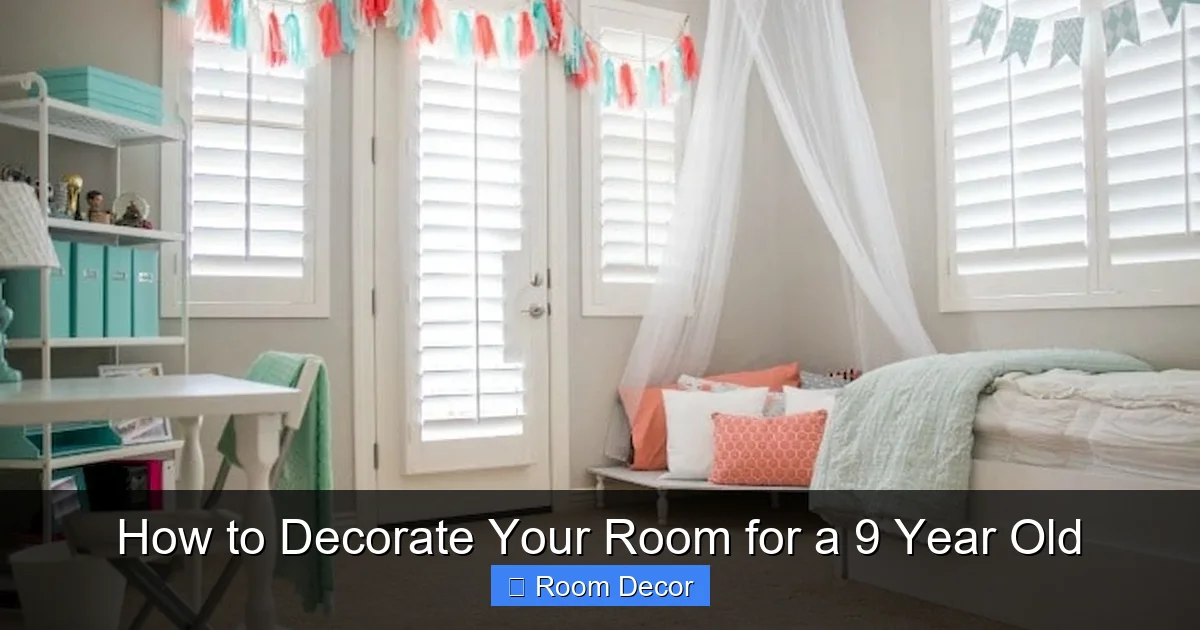
Transform your 9-year-old’s bedroom into a space that reflects their personality and interests! This guide offers practical advice on choosing themes, selecting colors, and incorporating age-appropriate furniture and storage solutions. Discover how to create a room that’s both fun and functional, encouraging independence and creativity.
## How to Decorate Your Room for a 9 Year Old
Turning nine is a big deal! It’s an age where kids are developing stronger interests, more distinct personalities, and a greater desire for independence. Your 9-year-old’s room should be more than just a place to sleep; it should be their sanctuary, their creative hub, and their personal retreat. Decorating their room is a fantastic opportunity to foster their creativity and make them feel proud of their personal space. This guide will walk you through every step, from initial planning to the final touches, to create a room that your 9-year-old will absolutely adore.
### Step 1: Collaborate with Your Child – The Foundation of a Dream Room
The single most important step in decorating a 9-year-old’s room is to involve them in the process. At nine, children have strong opinions and developing tastes. Ignoring their input will likely lead to a room that doesn’t feel like theirs.
#### Discuss Their Interests and Hobbies
Start by having a conversation about what they love. What are their favorite colors? What are their passions? Do they love animals, space, sports, art, music, or a particular book series? Their answers will be your roadmap.
* **Example:** If they love to draw, consider a “creative corner” with a special easel or art supplies storage. If they’re obsessed with dinosaurs, a subtle dinosaur-themed accent wall or bedding can be perfect.
#### Explore Their Favorite Colors
Nine-year-olds often have strong color preferences. Ask them about their favorite colors, but also discuss how colors can make a room feel. Do they want a bright and energetic space, or something calmer and more relaxing?
* **Tip:** While their favorite color might be neon green, consider using it as an accent. A room that’s entirely neon green might be overwhelming. Think about balancing bold choices with more soothing neutrals.
#### Discuss Functionality Needs
Beyond aesthetics, talk about how they use their room. Do they need a dedicated space for homework? Do they have a lot of toys that need storing? Do they want a cozy reading nook? Understanding their daily routines will help you plan a functional layout.
### Step 2: Choosing a Theme (Or a Lack Thereof!)
Themes can be fun, but at age nine, interests can change rapidly. The key is to choose a theme that has longevity or is easily adaptable.
#### Flexible Themes for Evolving Tastes
Instead of a super-specific theme like “Paw Patrol” (which they might outgrow quickly), consider broader themes that can grow with them.
* **Color-Based Themes:** Decorate around a favorite color palette. For example, a “blue and grey adventure” theme can incorporate nautical elements now and transition to a more sophisticated “urban cool” vibe later.
* **Hobby-Based Themes:** If they love sports, focus on sports memorabilia, team colors, and perhaps a basketball hoop over the door. This can be updated with new favorite teams.
* **Nature/Adventure Themes:** Think forest greens, earthy browns, and images of mountains or stars. These themes often have a timeless appeal.
* **”Cool” and Trendy Themes:** What’s popular now can also be adapted. A “gaming den” theme can evolve from vibrant, pixelated decor to sleek, tech-inspired elements.
#### When No Theme is the Best Theme
Sometimes, the best approach is to create a neutral, comfortable backdrop that can be easily personalized with accessories. This gives you more flexibility as your child’s interests change. Focus on a calming wall color and versatile furniture, then let their personality shine through bedding, posters, rugs, and decorative items.
### Step 3: Color Palette Selection
Color plays a huge role in the mood and feel of a room. For a 9-year-old’s room, you want a balance of fun and functionality.
#### Walls: The Big Picture
* **Neutrals as a Base:** Light grays, soft blues, gentle greens, or even off-whites are excellent choices for walls. They provide a calming backdrop and allow for pops of color through accessories.
* **Accent Walls:** If your child wants a bold color, consider painting just one wall. This can be a vibrant hue like a bright teal, a sunny yellow, or a deep purple. It adds personality without overwhelming the space.
* **Stencils and Decals:** For a more playful touch, consider stencils for patterns or wall decals. These are often removable, making them a good option for a child who likes to change things up.
#### Furniture Colors: Longevity Matters
When choosing large furniture items like beds, desks, and dressers, opt for colors that have longevity.
* **Wood Tones:** Natural wood finishes, white, or gray furniture can easily fit with any theme or color scheme that your child chooses in the future.
* **Painted Furniture:** If you’re painting furniture, a neutral color is a safe bet. You can always add colorful drawer knobs or hardware for a personalized touch.
#### Accents: Where Personality Shines
This is where you can go bold!
* **Bedding:** This is an easy and impactful way to introduce favorite colors and patterns. Think vibrant duvet covers, fun throw pillows, and colorful blankets.
* **Rugs:** A colorful rug can define a space and add warmth. Consider a rug with a fun pattern or in their favorite color.
* **Curtains and Blinds:** These can also be used to add color and texture.
* **Decorative Accessories:** Think lamps, picture frames, storage bins, and wall art.
### Step 4: Furniture Considerations – Comfort, Function, and Fun
At nine, your child is growing, so furniture needs to be age-appropriate and functional.
#### The Bed: A Cozy Haven
* **Size:** A twin or full-size bed is likely appropriate. If space allows and they’re a heavy sleeper or tend to sprawl, a full might be more comfortable.
* **Style:** Consider beds with built-in storage drawers underneath. This is invaluable for keeping the room tidy. Loft beds can also be a fun option, creating play or study space underneath.
* **Comfort:** A good mattress and comfortable bedding are essential for a good night’s sleep.
#### Desk and Study Area: Encouraging Independence
Many 9-year-olds will be doing more homework and creative projects.
* **Desk Size:** Ensure the desk is large enough for a laptop or tablet, books, and writing space.
* **Chair Comfort:** A comfortable and ergonomically suitable chair is important, especially if they spend a lot of time at their desk.
* **Lighting:** Good desk lighting is crucial. A desk lamp provides focused light for reading and writing.
#### Seating and Play Space: Room to Relax and Explore
* **Beanbag Chairs:** These are a classic for a reason! They’re comfortable, lightweight, and add a fun, relaxed vibe.
* **Floor Cushions:** Large, comfortable floor cushions can create a cozy reading nook or a space for playing games.
* **Small Armchair:** If space allows, a small, comfortable armchair can be a nice addition for reading or quiet time.
### Step 5: Smart Storage Solutions – Taming the Toy Tornado
A 9-year-old’s room can quickly become a whirlwind of toys, books, art supplies, and clothes. Effective storage is key to maintaining order and a sense of calm.
#### Maximize Vertical Space
* **Shelving:** Install wall shelves for books, decorative items, and storage bins. Floating shelves can look sleek and modern.
* **Tall Bookcases:** These provide ample storage for books and display items. Ensure they are anchored to the wall for safety.
#### Under-Bed Storage
* **Drawers:** If your bed doesn’t have them, consider under-bed storage bins or drawers. These are perfect for out-of-season clothes, extra bedding, or less frequently used toys.
#### Toy Organizers
* **Cubbies and Bins:** These are excellent for sorting and storing toys. Labeling the bins can help your child learn to put things away in their designated spots.
* **Pegboards:** A pegboard wall can be a fantastic way to store art supplies, small toys, or even sports equipment in an organized and accessible way.
#### Closet and Drawer Organization
* **Drawer Dividers:** Use dividers to keep socks, underwear, and smaller clothing items neat.
* **Hanging Organizers:** Over-the-door or hanging closet organizers can provide extra shelves for shoes, accessories, or folded clothes.
### Step 6: Personalization and Decor – Making it Their Own
This is where the room truly comes alive and reflects your child’s unique personality.
#### Displaying Artwork and Creations
* **Corkboards or Magnetic Boards:** These are perfect for displaying drawings, school papers, and photos.
* **Gallery Wall:** Create a curated gallery wall with framed artwork, photos, and favorite quotes.
* **3D Displays:** For larger creations like LEGO models or craft projects, consider display shelves or pedestals.
#### Lighting Touches
* **Fairy Lights:** String lights can add a magical and cozy ambiance, especially around a bed frame or window.
* **Fun Lamps:** A themed desk lamp or a colorful bedside lamp can add personality and functionality.
#### Soft Furnishings
* **Throw Pillows:** A variety of colorful and textured throw pillows on the bed or floor add comfort and style.
* **Blankets:** Cozy throws are perfect for reading or lounging.
#### Wall Decor
* **Posters and Prints:** Allow your child to choose posters of their favorite characters, bands, or inspirational images.
* **Wall Decals:** Removable wall decals can add a fun graphic element that’s easy to change.
### Step 7: Safety First – A Secure and Comfortable Space
As with any child’s room, safety is paramount.
#### Secure Furniture
* **Anchor Everything:** Ensure all tall furniture, like bookcases and dressers, are securely anchored to the wall to prevent tipping.
* **Rounded Corners:** Consider furniture with rounded corners to minimize the risk of bumps and bruises.
#### Electrical Safety
* **Outlet Covers:** Use safety covers on unused electrical outlets.
* **Cord Management:** Keep electrical cords tidy and out of reach to prevent tripping hazards or chewing.
#### Window Treatments
* **Cordless Blinds:** Opt for cordless window treatments to avoid strangulation hazards.
### Troubleshooting Common Decorating Challenges
#### “I Don’t Know What I Want!”
* **Solution:** This is common! Start by showing them different styles and color palettes from magazines or online. Ask “What do you like about this?” and “What don’t you like?” Look for common threads. Try creating a Pinterest board together.
#### “It’s Too Babyish/Too Grown-Up”
* **Solution:** Nine is an in-between age. Aim for a balance. Use sophisticated colors for the main elements and add playful touches with bedding, rugs, and accessories. As they grow, it’s easier to swap out accessories than repaint the entire room.
#### “It’s Too Messy All the Time!”
* **Solution:** Focus on making storage accessible and intuitive. Ensure there are clear places for everything. Involve them in a weekly “tidy-up” routine. Sometimes, the amount of stuff is the issue, so consider a decluttering session together.
### Conclusion: A Space for Growth and Imagination
Decorating a 9-year-old’s room is a rewarding experience that offers a chance to connect with your child and create a space that truly supports their development. By involving them in the process, choosing flexible and functional elements, and focusing on personalization, you can design a room that is not only aesthetically pleasing but also a safe, comfortable, and inspiring haven for your growing child. Remember, the goal is to create a room that they love and that fosters their independence, creativity, and well-being for years to come.
Key Takeaways
- Involve Your Child: The most crucial step is to involve your 9-year-old in the decorating process. Their input ensures the room feels truly theirs.
- Choose a Flexible Theme: Opt for themes that can evolve with your child’s changing interests, like a color-based theme or a general hobby theme.
- Prioritize Functionality and Comfort: Ensure the room has comfortable sleeping arrangements, adequate study space, and plenty of storage for toys and belongings.
- Embrace Color Wisely: Use bold colors as accents and opt for more neutral tones for larger items like walls and furniture to allow for easier updates.
- Smart Storage is Key: Implement creative storage solutions like under-bed bins, wall shelves, and toy organizers to keep the room tidy and maximize space.
- Personalize with Art and Decor: Encourage your child to display their own artwork, photos, and favorite collections to make the room uniquely theirs.