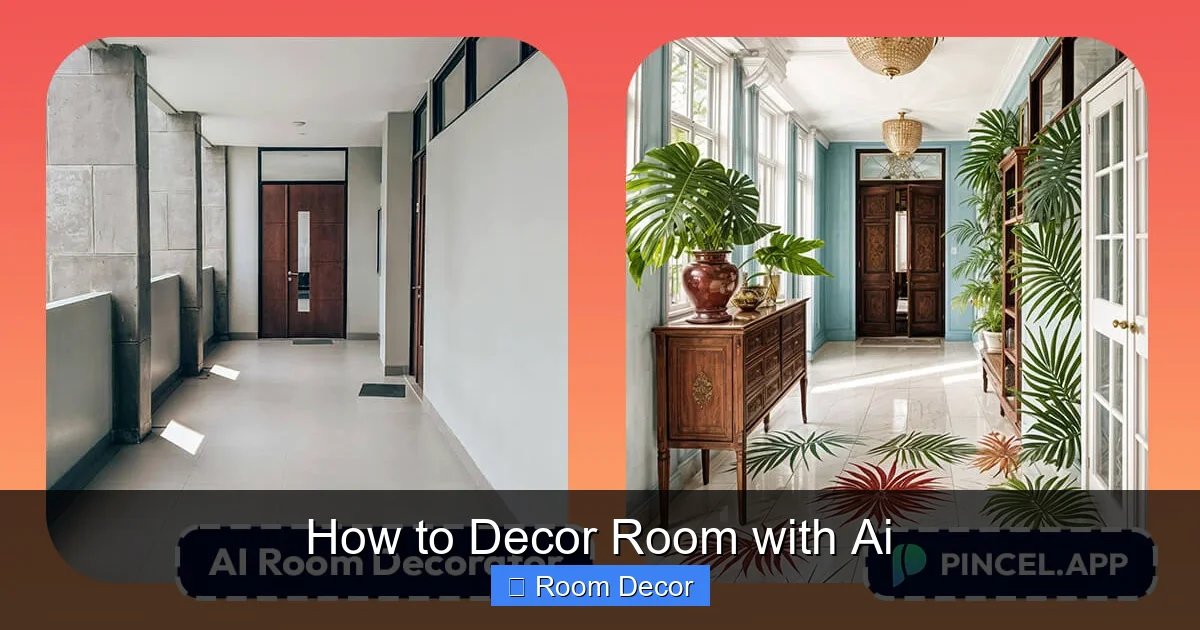
Transform your living space with the power of Artificial Intelligence! This guide shows you how to leverage AI tools for unique room decor ideas, visualize your dream space with AI-generated mood boards and 3D layouts, and even find the perfect furnishings. Get ready to reimagine your room with smart, creative, and effortless AI-assisted decorating.
Key Takeaways
- AI for Inspiration: AI can generate countless decor styles and concepts based on your preferences, breaking through creative blocks.
- Visualizing with AI: Tools allow you to create realistic mood boards and 3D room visualizations, helping you see your design before you buy.
- Personalized Recommendations: AI analyzes your style and room dimensions to suggest furniture and decor items tailored to your needs.
- Streamlined Shopping: AI can help you find specific items, compare prices, and even suggest complementary products, simplifying the purchasing process.
- Iterative Design: AI enables easy experimentation with different layouts, colors, and furniture, allowing you to refine your design until it’s perfect.
- Accessibility for All: AI democratizes interior design, making professional-level visualization and idea generation accessible to everyone, regardless of budget or experience.
How to Decor Room with AI
Are you dreaming of a room makeover but feeling overwhelmed by the choices? Do you wish you had a personal interior designer on demand? What if you could see your ideal space before you even bought a single item? Well, get ready to be amazed, because Artificial Intelligence (AI) is here to revolutionize how we decorate! This comprehensive guide will walk you through every step of using AI to design your dream room, from sparking initial inspiration to finalizing your perfect space. You’ll learn how AI can be your creative partner, helping you discover new styles, visualize your ideas, and even find the right pieces to bring it all together.
Let’s dive into the exciting world of AI-powered room decor and unlock a new level of creativity for your home.
Step 1: Define Your Vision and Gather Inspiration with AI

Visual guide about How to Decor Room with Ai
Image source: content.presspage.com
Before you can start decorating, you need a clear idea of what you want. This is where AI truly shines, acting as an endless wellspring of inspiration. Forget endless scrolling through Pinterest or flipping through magazines for hours. AI can process vast amounts of design data and generate personalized ideas based on your input.
Understanding Your Style Preferences
The first step is to communicate your desires to the AI. Think about what you like. Do you prefer a minimalist aesthetic, a cozy bohemian vibe, a modern industrial look, or something entirely unique? Consider your favorite colors, textures, and the overall mood you want to create.
* Inputting Keywords: Most AI design tools will ask for keywords. Be descriptive! Instead of “bedroom,” try “cozy minimalist bedroom with natural light and a touch of Scandinavian influence.”
* Providing Examples: If you have images of rooms you admire, some AI platforms allow you to upload them. The AI will analyze these images to understand your aesthetic.
* Answering Questionnaires: Many AI interior design tools offer guided questionnaires. These help the AI understand your preferences regarding color palettes, furniture styles, and even the function of the room.
Generating AI Mood Boards and Style Concepts
Once you’ve provided your input, the AI can generate a variety of mood boards and style concepts. A mood board is a visual collection of images, colors, and textures that represent a particular design idea.
* Experiment with Different Prompts: Don’t settle for the first output. Try slightly different keyword combinations or emphasize different aspects of your desired style. For example, if you initially asked for “modern living room,” try “modern living room with plush seating and a warm color scheme.”
* Analyzing AI-Generated Concepts: Look at the generated mood boards. What elements do you love? Are there recurring themes in colors, furniture shapes, or materials? This is your AI helping you refine your taste.
* Saving and Curating: Save the mood boards and individual images that resonate with you. This will form the foundation for your design. You might even discover styles you hadn’t considered before!
Step 2: Visualize Your Space with AI-Powered 3D Room Layouts

Visual guide about How to Decor Room with Ai
Image source: neuralnetworkpress.com
Now that you have a strong sense of your desired style, it’s time to see how it will actually look in your room. This is where AI-driven 3D visualization tools become invaluable. They take your room’s dimensions and your chosen style to create a realistic digital model.
Inputting Your Room’s Dimensions
Accuracy is key here. Most 3D visualization tools will require you to input the length, width, and height of your room. You’ll also need to indicate the placement of doors, windows, and any architectural features like fireplaces or built-in shelving.
* Measure Carefully: Use a measuring tape to get precise measurements. Don’t forget to account for baseboards and moldings.
* Sketch a Floor Plan: A simple sketch of your room’s layout, marking the position of doors and windows, can be very helpful when inputting data into the AI tool.
* Consider Existing Features: If you have radiators, vents, or quirky wall angles, make sure to note them. The more information the AI has, the more accurate your 3D model will be.
Generating and Customizing 3D Room Designs
Once the room’s dimensions are set, you can start applying your AI-generated style elements. You can virtually place furniture, experiment with paint colors, and even test different lighting scenarios.
* Placing Furniture: AI tools often have extensive libraries of furniture. You can drag and drop items into your 3D space, resizing and rotating them as needed. The AI can also suggest furniture that fits your style and dimensions.
* Experimenting with Colors and Textures: Change wall colors, try different flooring options, and see how various fabric textures for upholstery would look. The AI can suggest harmonious color palettes based on your mood board.
* Testing Layouts: This is a huge advantage! You can try different furniture arrangements to see what works best for flow and functionality without physically moving anything. The AI can even suggest optimal layouts based on room size and traffic patterns.
* Iterate and Refine: Don’t expect perfection on the first try. Play around with different combinations until you’re happy. Save different versions of your 3D design to compare.
Step 3: AI-Assisted Furniture and Decor Selection

Visual guide about How to Decor Room with Ai
Image source: foyr.com
With a solid 3D visualization of your dream room, the next logical step is finding the actual items to make it a reality. AI can significantly streamline this process, helping you find the right pieces that match your style and budget.
Finding Specific Items with AI Search
Many AI platforms integrate with online retailers or have their own curated product catalogs. You can describe the exact piece of furniture or decor item you’re looking for, and the AI will help you find it.
* Describing Furniture: Be specific. Instead of “sofa,” try “a navy blue velvet sofa with mid-century modern legs” or “a rustic oak dining table that seats six.”
* Matching Existing Pieces: If you have a specific chair or artwork you want to complement, upload a picture. AI can often find similar or coordinating items.
* Budget Considerations: Some AI tools allow you to set a budget, and they will filter results accordingly, helping you find affordable options that still fit your style.
Receiving Personalized Product Recommendations
Beyond just searching, AI can analyze your 3D room design and your style preferences to offer personalized product recommendations. It’s like having a personal shopper who understands your taste.
* Complementary Items: The AI might suggest a rug that perfectly matches your sofa, or accent pillows that tie together your color scheme.
* Space-Saving Solutions: If your 3D model shows a tight corner, the AI might recommend a space-saving storage solution or a multi-functional piece of furniture.
* **Style Consistency:** The AI ensures that recommended items align with the overall aesthetic you’ve established, preventing mismatched purchases.
Step 4: Bringing Your AI-Designed Room to Life
Once you’ve finalized your design and selected your items, it’s time for the most exciting part: making it all happen! The AI has done the heavy lifting of planning and visualization, but the joy of bringing it to life is all yours.
Purchasing Your Chosen Items
Use the product links provided by the AI tools to purchase your furniture and decor. Double-check dimensions and return policies before completing your order.
* Organize Your Shopping List: Keep a clear list of all the items you need, along with their purchase links and prices.
* Track Your Deliveries: Keep an eye on your order confirmations and delivery estimates.
* Read Reviews: Even with AI recommendations, it’s always wise to read customer reviews for the specific products you’re buying.
Arranging and Styling Your Room
This is where your personal touch truly shines. While the AI provided the blueprint, you get to be the hands-on decorator.
* Refer to Your 3D Model: Use your saved 3D visualizations as a guide for furniture placement.
* Focus on the Details: Add personal touches like photos, plants, and decorative objects that make the space feel like yours.
* Adjust and Experiment: Don’t be afraid to make minor adjustments to the layout or styling once the furniture is in place. Sometimes, seeing it in real life sparks new ideas.
Practical Tips for Decorating with AI
* Start Small: If you’re new to AI design tools, begin with a single room or even just a corner of a room. This makes the process less daunting.
* Be Patient: AI is a tool, and like any tool, it takes some practice to get the best results. Experiment with different platforms and features.
* Combine AI with Your Own Creativity: AI is an assistant, not a replacement for your personal taste. Use its suggestions as a starting point and add your unique flair.
* Save Everything: Keep records of your AI-generated ideas, mood boards, and 3D models. You never know when you might want to revisit them.
* **Consider the Room’s Function:** Always remember how you intend to use the room. An AI can create a beautiful space, but it needs to be practical for your lifestyle.
Troubleshooting Common AI Decor Challenges
* **AI Doesn’t Understand Your Style:** Try using more descriptive keywords, providing clearer example images, or simplifying your requests. Some AI tools are better at understanding abstract concepts than others.
* Unrealistic Visualizations: Ensure your room dimensions are accurate. Some AI models may struggle with very unusual room shapes or complex lighting conditions. Try simpler prompts or different AI platforms.
* Limited Furniture Options: If the AI’s furniture library doesn’t have what you’re looking for, use it for inspiration and then perform manual searches on your favorite online retailers. Many AI tools allow you to import custom furniture models if you’re tech-savvy.
* **Overwhelming Number of Choices:** This is a good problem to have! Use the AI’s filtering and recommendation features, and don’t be afraid to set clear boundaries (like budget or color palettes) to narrow down options.
Conclusion
Decorating a room has never been more exciting or accessible. With the power of Artificial Intelligence, you can now approach interior design with confidence, creativity, and a clear vision. AI acts as your ultimate design assistant, helping you discover new styles, visualize your ideas in stunning detail, and even find the perfect pieces to bring your dream room to life. From generating endless inspiration to creating realistic 3D layouts and offering personalized product recommendations, AI tools empower you to design a space that truly reflects your personality and needs. So, embrace the future of home decor, start experimenting with AI, and get ready to transform your living spaces into works of art!