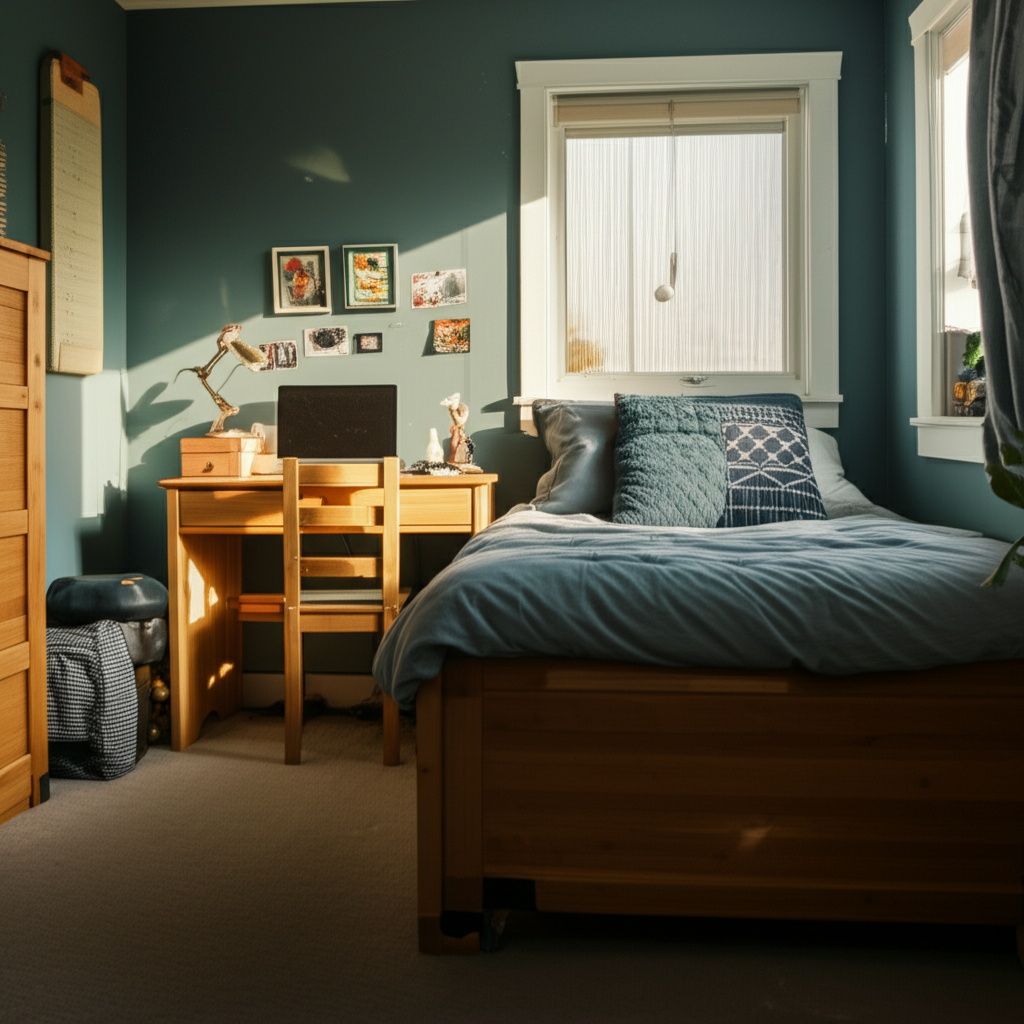
Make your room aesthetic for boys by focusing on a clean layout, personal touches, and a cohesive color scheme. This guide provides simple, budget-friendly steps to transform any space into a stylish haven reflecting your personality.
Ever feel like your room is just… a room? You’re not alone! Many guys want their personal space to feel more like a reflection of who they are – somewhere cool, comfortable, and uniquely theirs. It can feel a bit overwhelming to know where to start, especially if you’re on a budget or just starting out.
But don’t worry, making your room look awesome is totally achievable. We’re going to break it down into easy, step-by-step tips that anyone can follow. You’ll learn how to create a space that feels both stylish and totally you.
Get ready to ditch the clutter and say hello to a room that’s not just a place to sleep, but a space you’ll love to hang out in. Let’s dive in!
Why an Aesthetic Room Matters for Boys
Your room is more than just four walls; it’s your personal sanctuary. It’s where you relax, study, game, and recharge. Having an “aesthetic” room means creating a space that feels organized, visually pleasing, and truly represents your interests and personality.
When your room looks good, it often feels good too. A well-designed space can boost your mood, improve focus, and even increase your productivity. It’s about making your environment work for you, making it a place you’re proud to show off or just enjoy being in.
Step 1: Declutter and Organize – The Foundation of Aesthetics
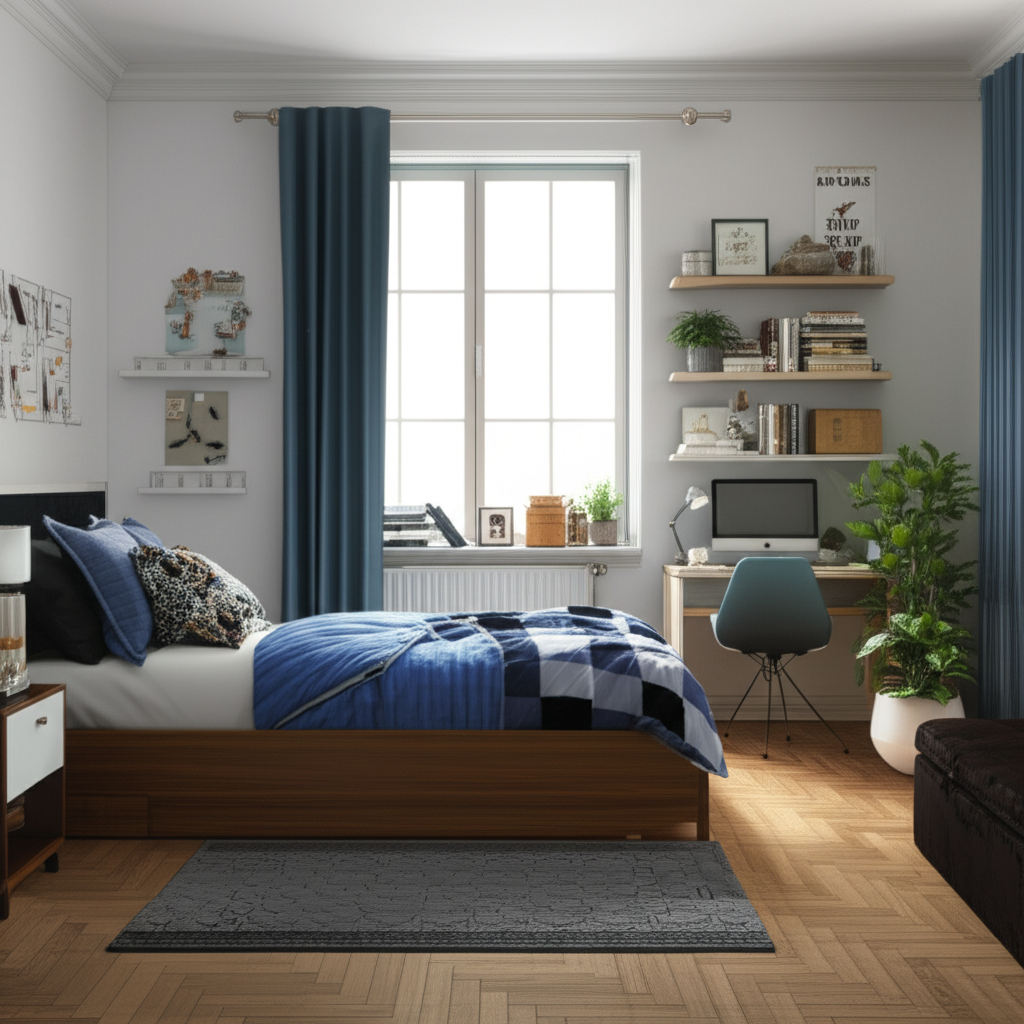
Before you can think about cool decor, you need a clean slate. Clutter is the enemy of any aesthetic. A messy room can make even the most stylish items look out of place.
Start by taking everything out of your closet, drawers, and off surfaces. Sort items into three piles: Keep, Donate/Sell, and Trash. Be honest with yourself about what you actually use and need. Less stuff often means a more organized and visually appealing space.
Essential Organization Tools
Once you’ve decluttered, it’s time to get organized. Smart storage solutions make a huge difference in keeping things tidy and out of sight.
- Storage Bins and Boxes: Perfect for closets, under the bed, or on shelves. Look for ones that match your desired aesthetic.
- Drawer Organizers: Keep socks, underwear, accessories, and stationery neat and easy to find.
- Shelving: Wall shelves can display decor or store books and essentials without taking up floor space.
- Cable Management Solutions: Tidy up wires from electronics with clips, ties, or sleeves for a cleaner look.
Think about vertical space. Adding shelves or using wall-mounted organizers can free up valuable floor and surface area, making your room feel larger and more organized. For more inspiration on smart storage, check out our guide to stylish storage accessories that work in any room.
Step 2: Choose Your Aesthetic Vibe and Color Palette
What kind of vibe do you want for your room? This is where you inject your personality! Are you into a minimalist, clean look? A cozy, rustic feel? A sleek, modern space? Or maybe something more industrial or gaming-inspired?
Once you have a general idea, pick a color palette. Sticking to 2-3 main colors and a couple of accent colors will create a cohesive and polished look. This makes choosing furniture and decor much easier.
Popular Aesthetic Vibes for Boys
Here are a few ideas to get your creativity flowing:
- Minimalist: Clean lines, neutral colors (white, grey, black, beige), and functional pieces. Focus on quality over quantity.
- Industrial: Exposed brick, metal accents, wood tones, and a slightly raw, unfinished feel. Think concrete, steel, and leather.
- Modern/Tech: Sleek furniture, smart technology integration, cool lighting, and a focus on functionality. Often uses black, white, and metallic colors.
- Urban/Street Art: Bold colors, graphic prints, graffiti-inspired art, and maybe some skate or music memorabilia.
- Gamer/Esports: Inspired by gaming setups, often featuring RGB lighting, ergonomic furniture, and themed decor.
- Cozy/Hygge: Warm colors, soft textures, comfortable seating, and personal touches that make the space feel inviting and relaxed.
Color Palette Basics
A good rule of thumb is the 60-30-10 rule:
- 60% Dominant Color: Usually your walls, large furniture pieces.
- 30% Secondary Color: Curtains, rugs, smaller furniture.
- 10% Accent Color: Pillows, decor items, artwork.
Neutrals like white, grey, beige, and black are always safe bets as a base. You can then add pops of bolder colors through accessories to bring your personality to life. If you’re drawn to minimalist vibes, explore our minimal decor ideas for clean, calming inspiration.
Step 3: Furniture Placement for Function and Flow
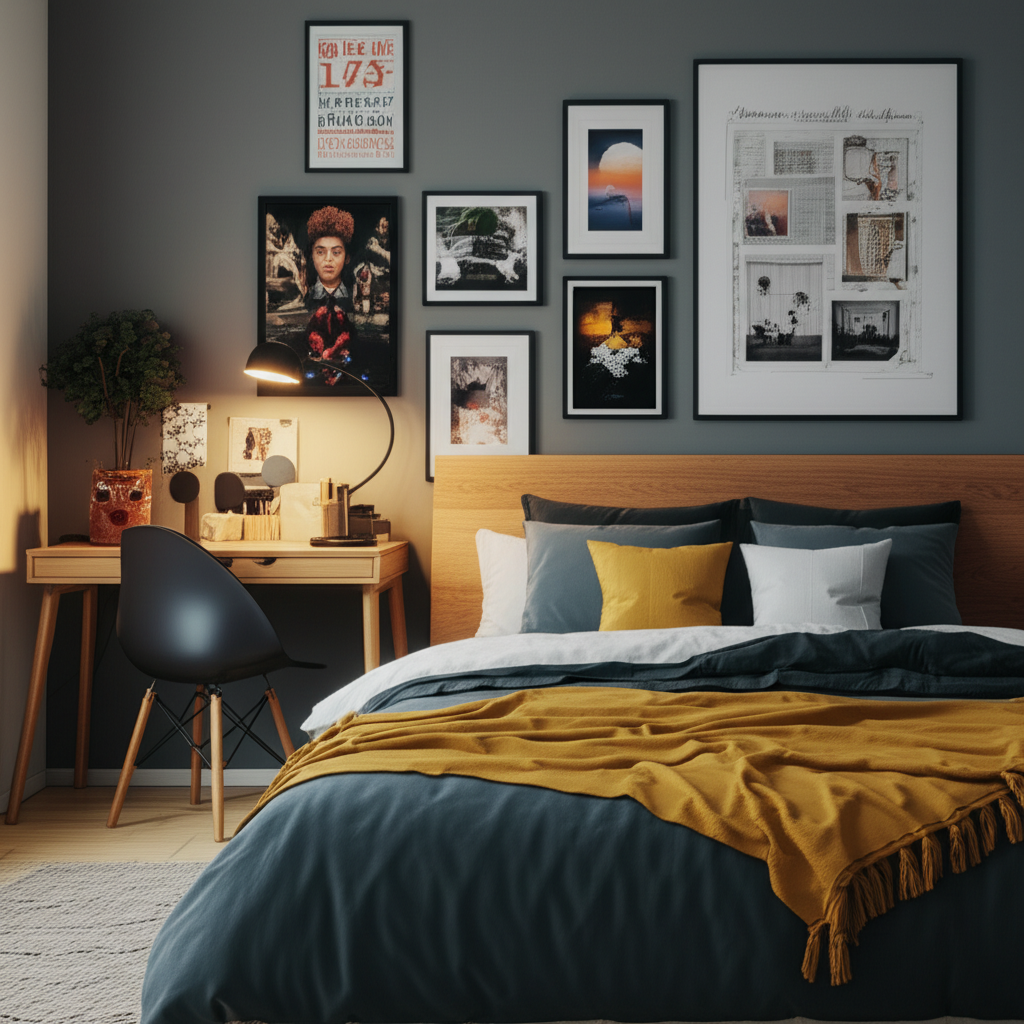
How you arrange your furniture is key to both the look and feel of your room. Good furniture placement creates a sense of order and makes the room easier to navigate.
Think about the main purpose of each zone in your room: sleeping, studying/working, and relaxing. Arrange furniture to define these areas without making the room feel cramped. Avoid blocking doorways or windows if possible.
Tips for Smart Furniture Arrangement
- Bed Placement: The bed is usually the focal point. Placing it against a solid wall, ideally not directly opposite the door, often works best.
- Desk Placement: If you study or work in your room, position your desk near a natural light source if possible. Facing a window can be inspiring, but avoid glare on your screen.
- Create Zones: Use rugs or furniture arrangement to visually separate different areas, like a reading nook or a gaming corner.
- Maintain Walkways: Ensure there’s enough space to walk comfortably around your furniture. Aim for at least 2-3 feet for main pathways.
- Consider Scale: Don’t cram oversized furniture into a small room, or vice versa. Choose pieces that fit the proportions of your space.
A great resource for understanding room layouts and furniture scale is the Architectural Digest guide to furniture layout, which offers principles applicable to any room size.
Step 4: Lighting – Setting the Mood
Lighting is one of the most powerful tools for transforming a room’s atmosphere. Harsh overhead lights can make a room feel sterile, while good lighting can create warmth, highlight features, and improve functionality.
Layer your lighting. This means having different types of lights for different purposes. Think ambient (overall light), task (for specific activities like reading or working), and accent (to highlight decor).
Types of Lighting to Consider
- Overhead Lighting: Often a ceiling fixture. Consider a dimmer switch to control brightness.
- Task Lighting: A desk lamp for studying or a floor lamp next to a reading chair.
- Ambient/Mood Lighting: String lights, LED strips, bedside lamps, or even smart bulbs that can change color.
- Natural Light: Maximize it by keeping windows clean and using sheer curtains if privacy is needed.
Smart bulbs and LED strips offer a lot of flexibility for boys’ rooms, allowing for color changes and mood settings that can be controlled via an app or remote. This is perfect for creating different vibes for gaming, studying, or relaxing.
Step 5: Walls – More Than Just Paint
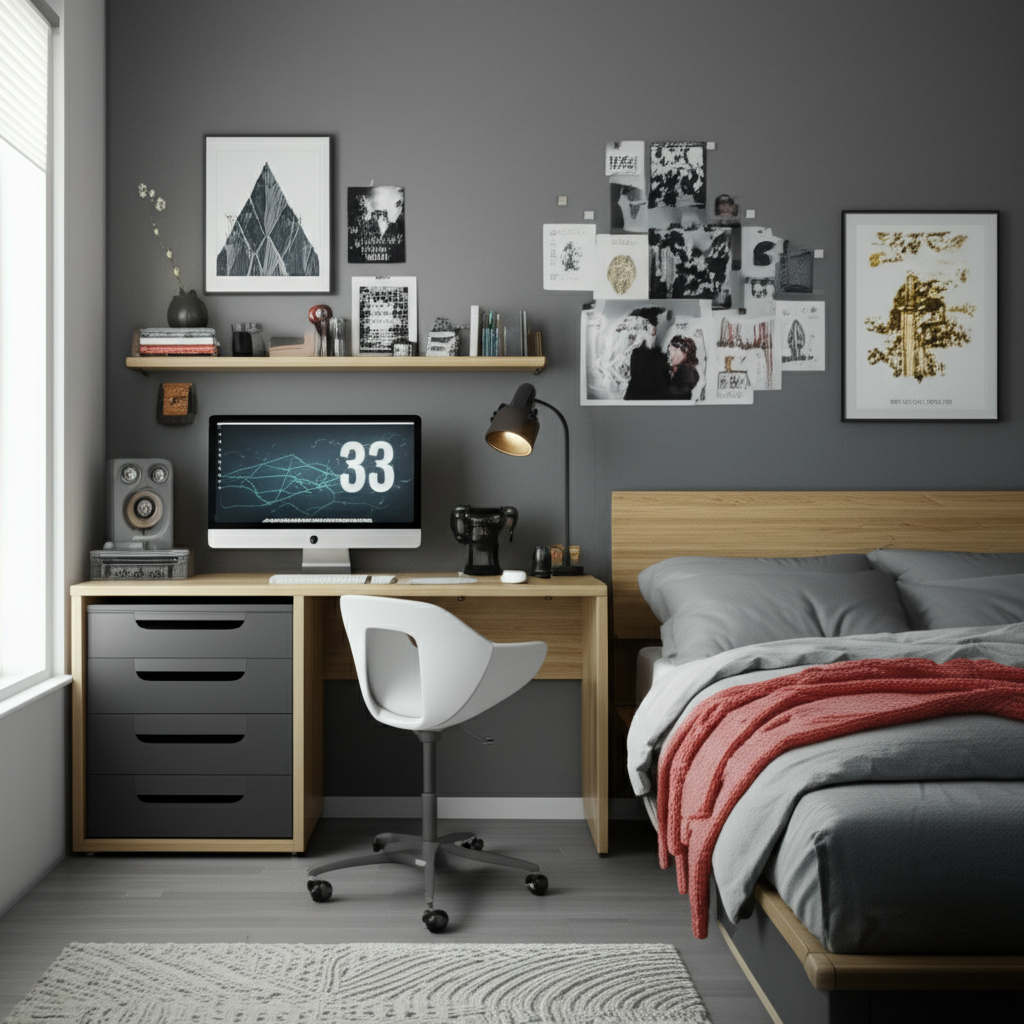
Your walls are a blank canvas for expressing your style. Paint is the most common way to add color, but there are many other options to consider for making your walls pop.
Think beyond a single color. Accent walls, wall art, and even textured elements can add significant visual interest without a huge cost.
Wall Decor Ideas
- Paint: Choose colors that fit your chosen palette. Consider an accent wall in a bolder shade or a contrasting neutral.
- Posters & Art Prints: Showcase your favorite movies, bands, sports teams, or abstract designs.
- Photography: Personal photos or curated art prints can add a personal touch.
- Shelving & Display Ledges: Use these to showcase collectibles, plants, or small decor items.
- Tapestries or Wall Hangings: A large tapestry can cover a significant wall area and add texture and pattern.
- Mirrors: Not only decorative, but mirrors can also make a room feel larger and brighter by reflecting light.
- Pegboards or Corkboards: Functional and customizable for displaying notes, photos, or small items.
For a DIY touch, consider creating your own abstract art or framing interesting fabric. Resources like The Home Depot’s DIY project guides can offer inspiration for painting and wall treatments. For more wall transformation ideas, see our collection of wall art ideas that can inspire bedroom projects too.
Step 6: Textiles and Textures – Comfort and Style
The fabrics and textures in your room add depth, comfort, and personality. Think about your bedding, curtains, rugs, and throw pillows.
Mixing textures can make a space feel more dynamic and inviting. For example, pairing a smooth leather accent chair with a chunky knit throw blanket and a soft rug creates a rich sensory experience.
Key Textile Elements
- Bedding: This is often the largest textile in the room. Choose a comforter, duvet cover, and sheets that align with your color scheme and desired feel.
- Rug: A rug can define a space, add warmth, and absorb sound. Choose a size that fits the area – it should ideally be large enough for the main furniture pieces to sit on or at least have their front legs on it.
- Curtains/Blinds: These control light and privacy, but also contribute to the room’s style. Opt for blackout curtains for better sleep or lighter ones to let in more light.
- Throw Pillows & Blankets: Easy and affordable ways to add pops of color, pattern, and texture.
Consider the materials. Cotton and linen offer a natural, breathable feel, while fleece or faux fur can add cozy warmth. If you’re aiming for a modern look, smooth, sleek fabrics might be best.
Step 7: Personal Touches and Accessories – Make It Yours
This is where your room truly becomes your aesthetic. Accessories are the finishing touches that tell your story and bring your personality into the space.
Don’t go overboard; a few well-chosen items are more impactful than a room full of random trinkets. Think about what you love – hobbies, interests, music, sports, gaming, travel.
Ideas for Personalizing Your Space
- Hobby-Related Items: Display your guitar, gaming controllers, sports equipment, or art supplies.
- Collectibles: Action figures, Funko Pops, vintage items, or anything you enjoy collecting.
- Plants: Bring life and color into your room with easy-to-care-for plants.
- Books: Arrange them neatly on shelves, showcasing your interests.
- Photos: Frame pictures of friends, family, or memorable trips.
- Unique Lighting: A cool lava lamp, a neon sign, or a unique desk lamp can add character.
- Sound System: Good speakers or a turntable can enhance the room’s ambiance.
When selecting accessories, consider how they fit into your overall color scheme and aesthetic. Even functional items like a stylish alarm clock or a cool water bottle can contribute to the look.
Budget-Friendly Aesthetic Hacks
Creating an aesthetic room doesn’t have to break the bank. Here are some smart ways to save money while still achieving a stylish look.
DIY projects are your best friend! Painting old furniture, creating your own wall art, or upcycling items can save a lot. Also, don’t underestimate the power of thrift stores, flea markets, and online marketplaces for unique and affordable finds.
Smart Shopping and DIY Tips
- Thrift Stores & Flea Markets: Great for finding unique furniture, decor, and accessories at low prices.
- Online Marketplaces: Sites like Facebook Marketplace or Craigslist can offer great deals on used items.
- DIY Wall Art: Create your own abstract paintings, stencils, or frame cool fabric scraps.
- Upcycle Furniture: A coat of paint and new hardware can transform an old dresser or desk.
- DIY Lighting: String lights or custom lampshades can be made affordably.
- Focus on Key Pieces: Invest a bit more in one or two statement pieces (like a good rug or desk) and save on smaller decor items.
- Sales and Discounts: Keep an eye out for sales at home decor stores.
Remember, it’s about smart choices, not just cheap ones. A few well-chosen, budget-friendly items can look just as good, if not better, than expensive ones.
Aesthetic Room Examples & Inspiration
Seeing examples can spark ideas for your own space. Here’s a quick look at how different aesthetics can come to life:
| Aesthetic Style | Key Elements | Color Palette Example | Budget Tip |
|---|---|---|---|
| Minimalist | Clean lines, functional furniture, neutral colors, lack of clutter. | White, Grey, Black, Natural Wood | Focus on decluttering and organization; buy fewer, higher-quality essentials. |
| Industrial | Exposed materials (brick, metal, wood), raw finishes, vintage touches. | Greys, Browns, Black, Muted Reds | Look for metal shelving or wood accents at discount stores or salvage yards. |
| Modern/Tech | Sleek furniture, integrated tech, cool lighting, geometric shapes. | Black, White, Silver, Electric Blue accents | Use LED strips for dynamic lighting; find affordable sleek furniture online. |
| Gamer/Esports | Ergonomic setup, RGB lighting, themed decor, organized cables. | Black, Red, Blue, Green (often customizable with RGB) | DIY RGB lighting solutions or focus on cable management for a cleaner look. |
For more visual inspiration, platforms like Pinterest and Instagram are goldmines. Search for terms like “boy room decor,” “teen boy room ideas,” or specific aesthetic styles to find thousands of images.
Frequently Asked Questions (FAQ)
Q1: How do I make my small room look bigger and aesthetic?
A1: In a small room, focus on light colors, mirrors, and multi-functional furniture. Keep clutter to a minimum and utilize vertical space with wall shelves. Strategic lighting can also make a room feel more expansive.
Q2: What are the easiest ways to add personality to a room?
A2: The quickest ways are through wall art, photos, and small decor items like plants or collectibles. Changing your bedding and adding throw pillows can also have a big impact.
Q3: Is it okay to mix different styles in my room?
A3: Absolutely! Mixing styles can create a unique and personal look, often called “eclectic.” The key is to have a unifying element, like a consistent color palette or recurring material, to tie everything together.
Q4: How much should I spend on decorating my room?
A4: There’s no set amount! You can create an aesthetic room on any budget. Prioritize what’s most important to you and explore budget-friendly options like DIY, thrifting, and sales.
Q5: What are some common mistakes beginners make when decorating?
A5: Common mistakes include over-cluttering, not planning a color scheme, buying too much furniture for the space, and neglecting lighting. Starting with a plan and decluttering first helps avoid these.
Q6: How often should I redecorate or update my room?
A6: There’s no set schedule. You can make small updates whenever you feel like a change, perhaps seasonally with new throw pillows or by swapping out wall art. Major redecorating can happen every few years or when your style evolves.
Conclusion
Transforming your room into an aesthetic space that reflects your style is an exciting journey. By focusing on decluttering, choosing a color palette and vibe that resonates with you, smart furniture arrangement, thoughtful lighting, and adding personal touches, you can create a room that is both stylish and functional.
Remember, it’s your personal space, so don’t be afraid to experiment and let your personality shine through. Start with small changes, incorporate budget-friendly hacks, and most importantly, have fun with the process. Your dream room is within reach!