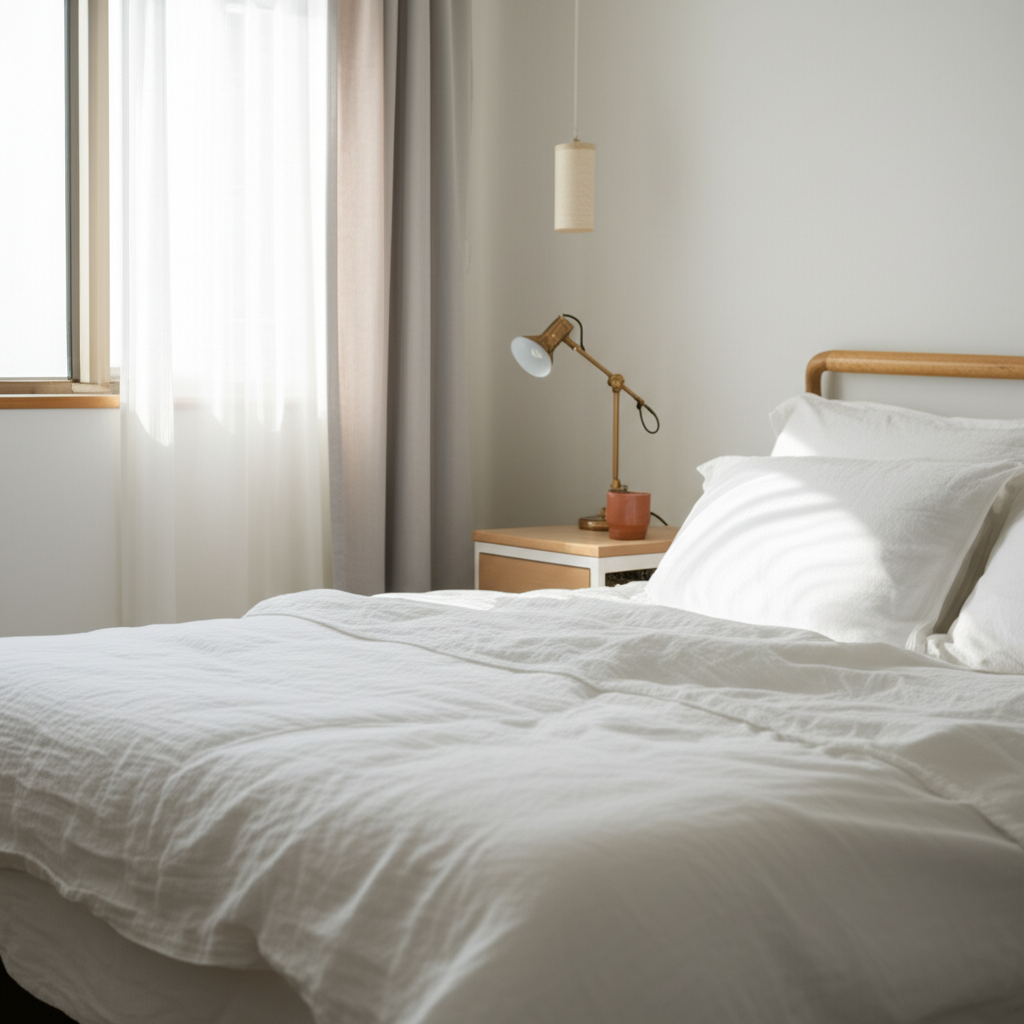
Mastering small bedroom design is achievable! Our 7 essential ideas maximize space, boost style, and create a cozy haven, even in the smallest rooms. Discover smart, beginner-friendly tips to transform your compact space into a functional and beautiful retreat.
Feeling a bit cramped in your bedroom? You’re definitely not alone! Many of us dream of spacious sanctuaries, but reality often means working with a cozy footprint. It’s easy to feel overwhelmed, wondering how to fit everything you need while keeping it looking stylish and feeling open.
But here’s the good news: designing a small bedroom doesn’t have to be a headache. With the right strategies, you can unlock the hidden potential of your space. Think clever storage, light-enhancing tricks, and furniture choices that work harder.
This guide is packed with simple, effective ideas to help you create a bedroom that feels bigger, looks fantastic, and functions perfectly for you. Let’s dive into 7 essential design concepts that will make your small bedroom shine!
7 Small Bedroom Interior Design Ideas: Essential for Maximizing Your Space
Transforming a small bedroom from cramped to captivating is all about smart choices and a little creativity. These 7 essential ideas are designed to make your compact space feel more open, functional, and stylish. We’ll walk through each one, offering practical tips perfect for beginners.
1. Embrace Light and Bright Colors
Color is one of the most powerful tools in your design arsenal, especially when working with limited square footage. Light and bright colors have a magical way of making walls recede, creating an illusion of more space and airiness.
Think about shades like soft whites, pale grays, gentle blues, and muted greens. These hues reflect light beautifully, making the room feel instantly larger and more open. Avoid dark, heavy colors on all walls, as they can absorb light and make the room feel smaller and more enclosed.
Pro-Tip: If you love a pop of color, use it strategically! Consider a vibrant accent wall behind your bed, or introduce color through smaller decor items like throw pillows, artwork, or a rug. This adds personality without overwhelming the space.
Consider exploring color psychology for bedrooms to understand how different hues can affect your mood and perception of space. For instance, blues and greens are often associated with calmness and relaxation, which are perfect for a bedroom environment. For more inspiration on using color effectively in compact spaces, check out our guide on warm kitchen color ideas—many of the same principles apply to small bedrooms.
2. Maximize Vertical Space with Smart Storage
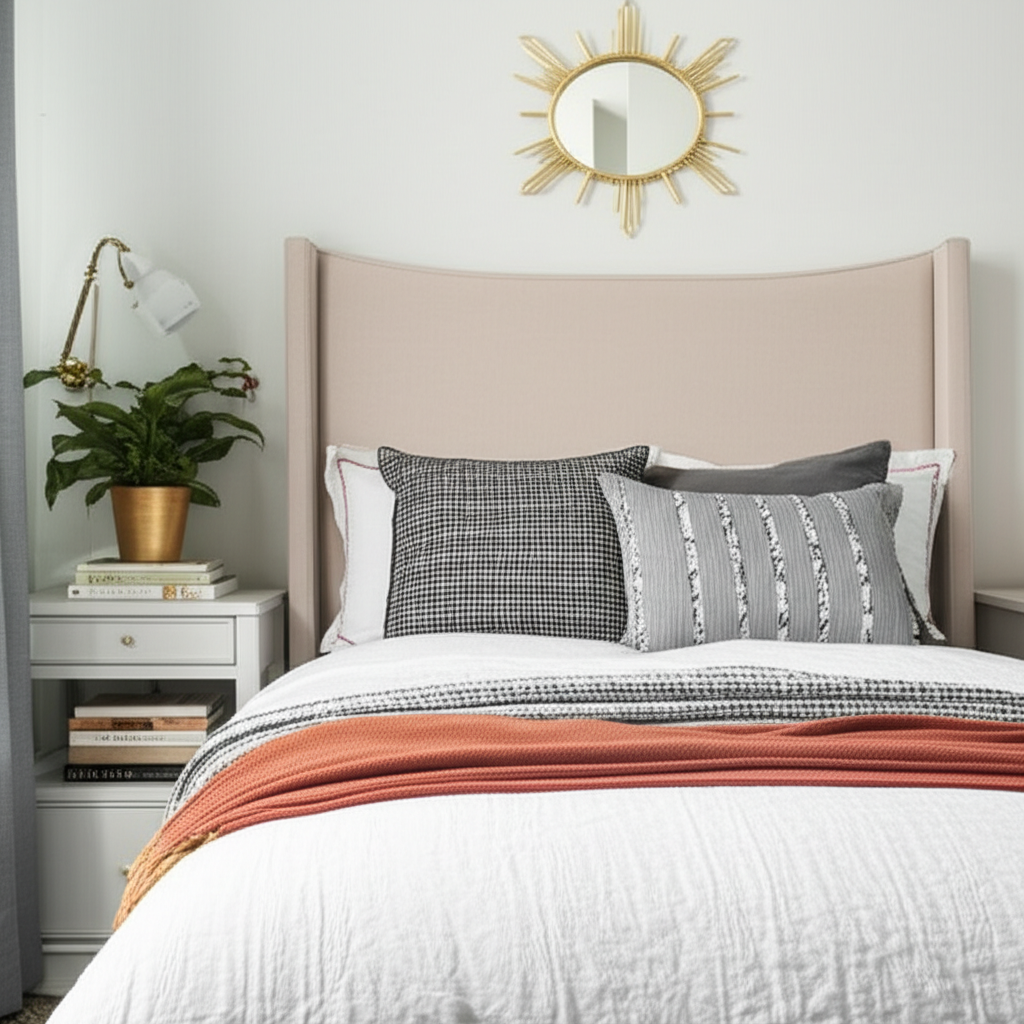
When floor space is limited, looking up is your best friend! Utilizing vertical space is crucial for keeping a small bedroom clutter-free and organized. This means thinking beyond traditional dressers and nightstands.
Floating shelves are a fantastic option. They provide storage and display space without taking up valuable floor real estate. Use them for books, decorative items, or even to hold a small plant. They create an airy feel because they don’t have a bulky base.
Tall, slim bookshelves or storage units can also be incredibly effective. They draw the eye upward, making the ceiling appear higher, while offering ample room for your belongings. Look for units that have doors or drawers to hide less attractive items and maintain a clean look.
Wall-mounted cabinets or headboards with built-in storage are another smart move. These can house everything from extra linens to personal items, keeping them neatly tucked away and off your surfaces. The key is to keep as much off the floor as possible.
Here’s a quick look at vertical storage options:
| Storage Solution | Benefits for Small Bedrooms | Best For |
|---|---|---|
| Floating Shelves | Maximizes wall space, creates an airy feel, versatile display. | Books, decor, plants, small essentials. |
| Tall Bookshelves/Units | Draws eye upward, increases perceived height, ample storage. | Books, storage boxes, decorative items. |
| Wall-Mounted Cabinets | Keeps items hidden, frees up floor space, sleek look. | Linens, personal items, electronics. |
| Over-the-Door Organizers | Utilizes often-wasted space, keeps small items tidy. | Shoes, accessories, toiletries. |
Don’t forget about the space above your door or windows! Installing a narrow shelf there can provide extra storage for rarely used items. For even more clever storage inspiration, explore our collection of stylish kitchen storage accessories—many of these solutions can be adapted for bedroom use.
3. Choose Multi-Functional Furniture
In a small bedroom, every piece of furniture needs to earn its keep. Opting for items that serve more than one purpose is a game-changer for maximizing utility and saving space.
Ottomans with hidden storage are brilliant. They can serve as a footrest, extra seating, and a place to stash blankets, pillows, or out-of-season clothing. Look for ones that are stylish and complement your decor.
A bed with built-in drawers underneath is a classic small-space solution. This offers significant storage for clothing or linens without adding any extra furniture to the room. If a new bed isn’t in the budget, consider under-bed storage bins that can slide out easily.
A wall-mounted desk or a folding desk can transform a corner into a functional workspace when needed, and disappear when not in use. This is perfect for students or anyone who occasionally works from home.
Consider a daybed or a sofa bed if your small bedroom also needs to double as a guest room. These versatile pieces offer seating during the day and a comfortable sleeping spot at night.
Think about pieces that can adapt. For example, a mirror that doubles as a medicine cabinet or a bench at the foot of the bed that also offers storage.
4. Utilize Mirrors to Create an Illusion of Space
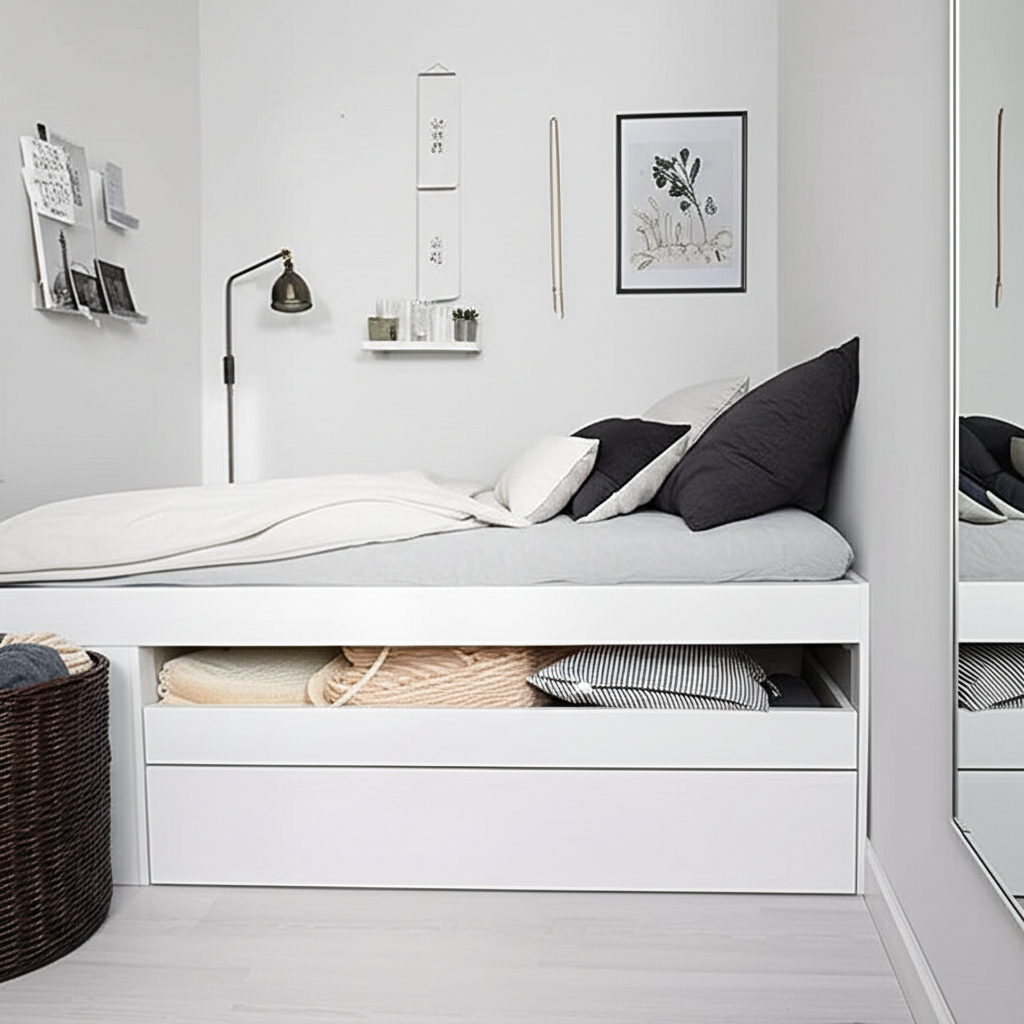
Mirrors are one of the oldest and most effective tricks in the interior designer’s book for making a space feel larger. They work by reflecting light and the room itself, creating a sense of depth and openness.
Strategically placed mirrors can make a small room feel twice its size. Hang a large mirror opposite a window to bounce natural light around the room. This not only brightens the space but also gives the illusion of another window.
Mirrored closet doors are a fantastic way to add a large reflective surface without taking up wall space. They also serve a practical purpose, allowing you to check your outfit before heading out.
A collection of smaller mirrors arranged artfully on a wall can also create a beautiful focal point and add sparkle. Think about different shapes and frame styles to add visual interest.
When choosing a mirror, consider its frame. A thin, metallic frame can add a touch of modern elegance, while a frameless mirror can create a seamless, expansive feel. For a more traditional look, a decorative frame can act as artwork.
A great resource for understanding light reflection and its impact on interior spaces can be found through architectural and design principles. Websites like the Architectural Digest often feature articles on how light and reflection affect perception of space.
5. Go for Leggy Furniture and Keep it Scaled
The visual weight of your furniture plays a huge role in how a small room feels. Furniture that is “leggy” – meaning it has visible legs that lift it off the floor – creates a sense of openness and airiness.
When you can see the floor underneath a piece of furniture, it makes the room feel less cluttered and more spacious. This applies to beds, nightstands, dressers, and chairs. Opt for pieces with slender legs rather than solid, blocky designs.
Scale is key. Resist the urge to fill your small bedroom with oversized furniture. Choose pieces that are proportionate to the room’s size. A giant bed or a massive dresser can quickly overwhelm a small space and make it feel cramped.
Consider furniture with rounded edges as well. Sharp corners can sometimes make a space feel more confined. Rounded shapes can soften the look and create a more fluid flow.
Here’s a quick comparison of furniture styles for small spaces:
| Feature | Impact on Small Rooms | Recommendation |
|---|---|---|
| Visible Legs (Leggy Furniture) | Creates visual space, makes room feel lighter and larger. | Choose beds, nightstands, and dressers with legs. |
| Oversized Furniture | Dominates the space, makes room feel cramped and cluttered. | Opt for appropriately scaled pieces. |
| Blocky/Solid Bases | Visually heavy, can make furniture appear to take up more space. | Prefer furniture with open bases or legs. |
| Sharp Corners | Can create a visually confined feeling. | Consider furniture with softer, rounded edges. |
When shopping, visualize how each piece will fit and how much walking space will remain. Measure carefully before you buy!
6. Strategic Lighting is Your Best Friend
Good lighting can transform any room, but it’s particularly impactful in small bedrooms. Layering your lighting ensures that the space feels well-lit, inviting, and more expansive. Don’t rely on a single overhead light.
Ambient lighting is your general room light. This could be a stylish ceiling fixture or recessed lighting. Choose fixtures that are proportionate to the room’s size; a huge chandelier will look out of place.
Task lighting is essential for specific activities. Think bedside lamps for reading or a small desk lamp if you have a workspace. Wall-mounted sconces are excellent for small bedrooms as they don’t take up precious surface space on nightstands.
Accent lighting can highlight artwork or architectural features, adding depth and interest. This could be a small spotlight or even a string of fairy lights for a cozy ambiance.
Natural light is also crucial. Keep window treatments simple and light-colored to allow as much sunlight to enter as possible. Avoid heavy, dark curtains that can block light and make the room feel smaller.
Consider smart bulbs that allow you to adjust brightness and color temperature. This flexibility can help you create different moods and make the room feel more dynamic.
7. Declutter Ruthlessly and Organize Thoughtfully
This might be the most important tip of all: a cluttered small bedroom will always feel small. Ruthless decluttering is essential to creating a sense of calm and spaciousness.
Take everything out and sort it into keep, donate, sell, or trash piles. Be honest with yourself about what you truly need and use. If you haven’t used something in a year, it’s likely time to let it go.
Everything needs a home. Once you’ve decluttered, ensure every item has a designated place. This is where smart storage solutions come in. Use drawer organizers, shelf dividers, and baskets to keep things tidy and accessible.
Keep surfaces clear. Nightstands, dressers, and desks should be kept as clear as possible. This creates a sense of calm and makes the room feel much larger. Store items in drawers, cabinets, or decorative boxes.
Regular maintenance is key. Make it a habit to put things away immediately after use. A quick tidy-up each day can prevent clutter from accumulating and keep your small bedroom feeling spacious and serene.
Consider the KonMari method of tidying, popularized by Marie Kondo, which focuses on keeping only items that “spark joy.” This approach can be very effective for decluttering a living space. For additional organization inspiration, see our tips on cozy small kitchen ideas, where smart storage and minimalism go hand in hand.
Frequently Asked Questions About Small Bedroom Design
Q1: How can I make my small bedroom look bigger?
A1: Use light colors on walls and ceilings, incorporate mirrors to reflect light, choose furniture with visible legs, and keep surfaces clear. Maximizing vertical space with shelving also helps create an illusion of more room.
Q2: What kind of bed is best for a small bedroom?
A2: A bed with built-in storage drawers or a platform bed that allows for under-bed storage bins are excellent choices. Consider a bed frame that is lower to the ground or has a minimalist design to avoid overwhelming the space.
Q3: Should I use dark colors in a small bedroom?
A3: It’s generally best to use dark colors sparingly in small bedrooms. While a dark accent wall can add depth and drama, using dark colors on all walls can make the room feel smaller and more enclosed. Stick to lighter, brighter hues for the main color scheme.
Q4: How much furniture can I fit in a small bedroom?
A4: Focus on essential, multi-functional furniture. A bed, a nightstand, and a dresser or closet are usually standard. Avoid overcrowding; ensure there’s enough space to move around comfortably. Opt for scaled-down or leggy furniture pieces.
Q5: What’s the best way to add storage to a small bedroom?
A5: Maximize vertical space with floating shelves or tall, slim bookcases. Utilize furniture with built-in storage, such as beds with drawers or ottomans. Wall-mounted units and over-the-door organizers are also great for keeping items tidy and out of sight.
Q6: How can I make my small bedroom feel cozy?
A6: While making a small room feel bigger, you can still add coziness! Use soft textures like plush rugs, cozy throws, and comfortable bedding. Layered lighting with warm-toned bulbs can create an inviting atmosphere. Personal touches like artwork and plants also add warmth.
Conclusion
Designing a small bedroom doesn’t have to be a daunting task. By implementing these 7 essential interior design ideas, you can transform even the most compact space into a stylish, functional, and comfortable retreat. Remember, the key is to be smart with your choices – from color palettes and furniture selection to storage solutions and lighting.
Embracing light and bright colors will visually expand your room, while maximizing vertical space with clever storage will keep clutter at bay. Multi-functional furniture and strategic use of mirrors work wonders in creating the illusion of more space. Choosing leggy, scaled-down furniture and layering your lighting will enhance both the look and feel of your bedroom.
Finally, don’t underestimate the power of decluttering and thoughtful organization. A tidy room is a happy room, especially when space is at a premium. With these practical and inspiring tips, you’re well on your way to creating a small bedroom you’ll love spending time in.