Small bedroom ideas for adults focus on smart storage, multi-functional furniture, and clever decor to maximize space. Transform your cozy room into a stylish and practical sanctuary with these essential tips.
Don’t let a small bedroom get you down! Many adults find themselves with limited space, whether it’s a starter apartment, a cozy cottage, or just a compact room. It can feel frustrating when you want your bedroom to be a peaceful retreat, but it seems to be overflowing with stuff.
But guess what? A small bedroom doesn’t mean sacrificing style or comfort. With a few clever tricks and smart choices, you can make your limited space feel bigger, more organized, and totally you.
This guide is packed with easy-to-implement ideas that will help you unlock the potential of your small bedroom. We’ll cover everything from furniture placement to decorative touches, so you can create a space you love.
Let’s get started on making your small bedroom an amazing and essential part of your home!
Small Bedroom Ideas For Adults: Make Your Cozy Space Shine
Having a small bedroom can feel like a design puzzle, but it’s also a fantastic opportunity to get creative! It forces you to be intentional about every item you bring in and how you arrange it. Instead of feeling cramped, think of it as a chance to curate a perfectly organized and stylish haven.
The goal is to make your bedroom feel larger than it is, functional, and a true reflection of your personality. We’ll explore how to maximize every inch, from the floor to the ceiling, using smart storage, versatile furniture, and illusion-creating decor.
1. Embrace Vertical Space: Go Up, Not Out!
When floor space is limited, the walls become your best friends. Think about how much you can store and display by utilizing the height of your room.
Tall, Slim Bookshelves: Instead of wide, bulky units, opt for taller, narrower bookshelves. They draw the eye upward, making the ceiling feel higher, and provide ample storage for books, decor, and essentials. Anchor them securely to the wall for safety.
Floating Shelves: These are fantastic for displaying decor, storing bedside essentials, or even creating a mini vanity area. They offer storage without the visual weight of a traditional shelf unit.
Wall-Mounted Storage Units: Consider modular wall systems that can be customized to your needs. These can include shelves, drawers, and even fold-down desks, keeping items off the floor and neatly organized.
Over-the-Door Organizers: Don’t forget the back of your doors! These can hold shoes, accessories, toiletries, or cleaning supplies, freeing up closet and drawer space.
2. Smart Furniture Choices: Multi-Functional is Key
In a small bedroom, every piece of furniture needs to earn its keep. Look for items that serve more than one purpose or are designed with space-saving in mind.
Storage Beds: This is a game-changer! Beds with built-in drawers underneath or lift-up mechanisms offer a huge amount of hidden storage for bedding, out-of-season clothes, or anything you want to tuck away.
Ottomans and Benches with Storage: A storage ottoman can double as a footrest, extra seating, and a place to hide blankets or magazines. A storage bench at the foot of the bed is also a great option.
Nesting Tables: If you need a side table or a small desk area, nesting tables can be pulled out when needed and tucked away when not in use, saving precious floor space.
Fold-Down Desks or Tables: For those who need a workspace but don’t have room for a permanent desk, a fold-down option mounted on the wall is ideal. It can be folded away when not in use, reclaiming floor space.
Slim-Profile Nightstands: Choose nightstands that are narrow and perhaps wall-mounted to avoid taking up too much floor space.
3. Declutter Ruthlessly: Less is More
This is perhaps the most crucial step. A small space quickly becomes cluttered if you keep too many items. Be honest about what you need and use regularly.
The One-In, One-Out Rule: For every new item you bring into your bedroom, get rid of a similar item.
Seasonal Storage: Store out-of-season clothing and accessories in under-bed bins or in a separate storage area if possible.
Digitalize: If you have many books, consider an e-reader. For papers, scan and save them digitally.
Regular Purges: Schedule a decluttering session every few months to reassess your belongings. The EPA offers great resources on how to responsibly dispose of or recycle unwanted electronics and other items.
4. Light & Bright: Creating an Illusion of Space
The right colors and lighting can dramatically change how large a room feels.
Light Color Palette: Opt for light, neutral colors for your walls, such as whites, creams, light grays, or soft pastels. These colors reflect light and make the room feel more open and airy.
Mirrors, Mirrors Everywhere: Mirrors are magic for small spaces. Place a large mirror opposite a window to reflect natural light and the outdoors, instantly making the room feel larger. A mirrored closet door is also a smart choice.
Strategic Lighting: Use multiple light sources instead of one overhead light. Wall sconces, bedside lamps, and even string lights can add warmth and dimension, making the room feel cozier and less confined. Consider energy-efficient LED lighting to save on bills and reduce heat.
Sheer Curtains: Use lightweight, sheer curtains that allow natural light to filter in. Avoid heavy, dark drapes that can make the room feel closed off.
5. Clever Layouts: Maximizing Flow
How you arrange your furniture can make a big difference in how spacious your bedroom feels.
Place the Bed Strategically: Often, placing the bed against the longest wall is best, but experiment. Sometimes pushing it into a corner can free up more central floor space.
Clear Pathways: Ensure there’s a clear path to walk around your bed and to your closet and door. Avoid blocking doorways or creating tight squeezes.
Consider a Corner Bed: If your room is very narrow, pushing the bed into a corner can sometimes work well, especially if you use the wall space around it for storage.
6. Utilize Wall Space for Decor & Functionality
Don’t let your walls be bare! They offer prime real estate for both style and storage.
Gallery Walls: Create a visually interesting focal point with a gallery wall of photos or art. This draws the eye upward and adds personality without taking up floor space.
Pegboards: A stylish pegboard can be customized with shelves, hooks, and containers to store jewelry, accessories, small tools, or even plants.
Wall-Mounted Lighting: Sconces are excellent space-savers, eliminating the need for bedside tables with lamps.
Hanging Plants: Bring life into your room with hanging plants. They add a natural touch and don’t take up valuable surface area.
7. Bedding & Textiles: Soft Touches, Big Impact
The right bedding and textiles can enhance the feeling of space and comfort.
Light and Airy Bedding: Choose bedding in light colors or subtle patterns. This contributes to the overall bright and open feel of the room.
Layering Textures: Even with a light color palette, you can add depth and interest by layering different textures – think a chunky knit throw, velvet cushions, or a linen duvet.
Floor Rugs: A strategically placed rug can define a space, add warmth, and make the room feel more grounded. A lighter-colored rug can also help bounce light around.
8. Keep it Organized: Smart Storage Solutions
Organization is paramount in a small bedroom. Think about where you can hide clutter and keep essentials accessible.
Under-Bed Storage: As mentioned with storage beds, utilize the space beneath your bed. Use low-profile bins with wheels for easy access.
Closet Organizers: Maximize your closet space with shelves, hanging organizers, and drawer units.
Drawer Dividers: Keep your drawers tidy and maximize their capacity with dividers for socks, underwear, and accessories.
Decorative Baskets and Boxes: Use attractive baskets and boxes on shelves or in corners to hide less attractive items while adding to your decor.
9. Visual Tricks to Make Your Room Look Bigger
Beyond mirrors and light colors, a few other visual tricks can help.
Vertical Stripes: Incorporating vertical stripes, whether in wallpaper, curtains, or bedding, can make the ceiling appear higher.
Leggy Furniture: Furniture with exposed legs (like beds, nightstands, or chairs) creates a sense of openness by allowing light and air to flow underneath.
Minimalist Decor: Avoid overcrowding surfaces with too many knick-knacks. A few well-chosen decorative items will have more impact.
Consistent Color Scheme: Sticking to a consistent color palette throughout the room creates a sense of cohesion and makes the space feel less busy and therefore larger.
10. Personal Touches: Make it Yours!
Even with all the space-saving strategies, your bedroom should still feel like a personal sanctuary.
Art and Photos: Display art or photos that you love. A well-placed piece can add personality without taking up much room.
Plants: Bring in some greenery! Plants add life, color, and can even improve air quality.
Cozy Touches: Add soft throws, comfortable cushions, and anything that makes you feel relaxed and happy.
Small Bedroom Furniture Placement Cheat Sheet
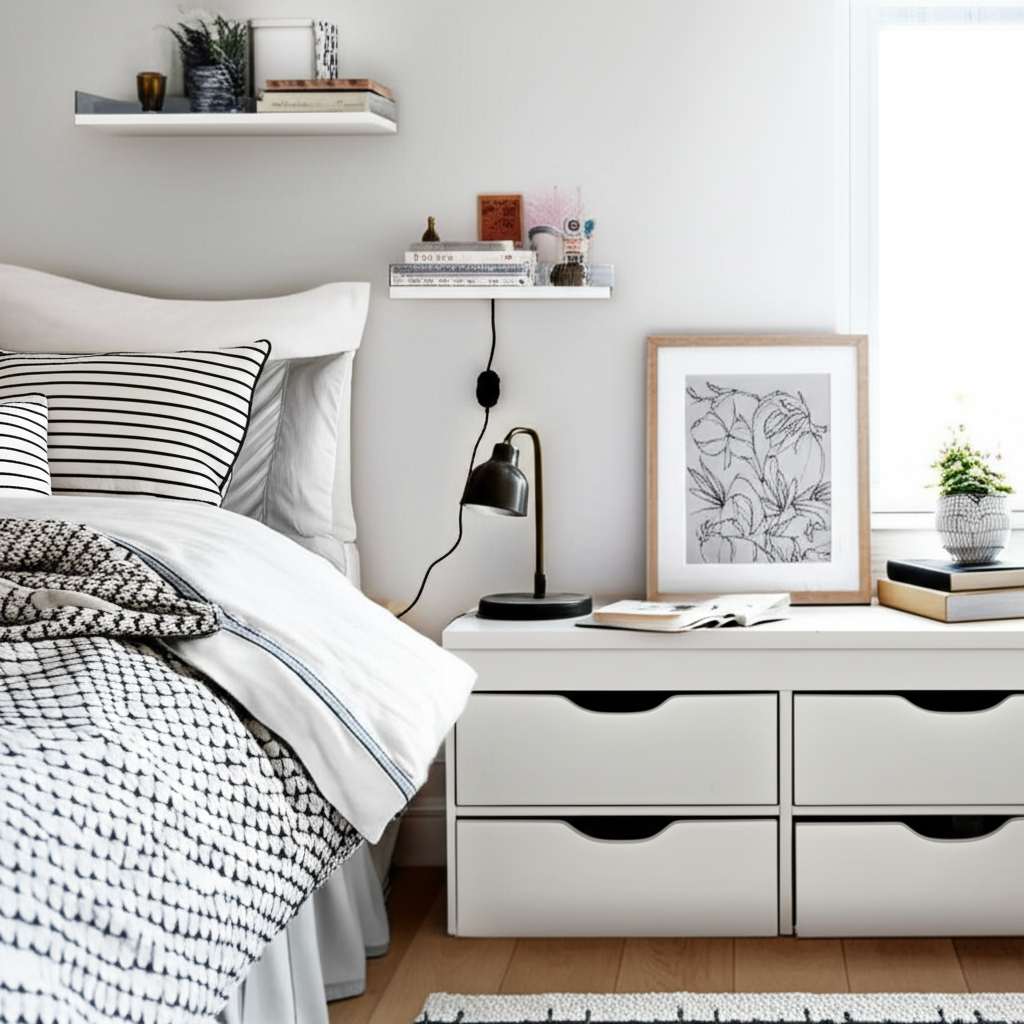
Finding the right place for everything can be tricky. Here’s a quick guide to help you visualize common furniture arrangements in small adult bedrooms.
| Furniture Item | Best Placement for Small Rooms | Why it Works |
|---|---|---|
| Bed | Against the longest wall, or in a corner if space is extremely limited. | Maximizes floor space for movement; corner placement can free up more central area. |
| Nightstand | On one side of the bed, or a narrow wall-mounted option. | Keeps essentials close; wall-mounted saves floor space. |
| Dresser/Wardrobe | Against a wall, ideally not blocking windows or the main walkway. Consider a taller, slimmer unit. | Utilizes wall space; tall units draw the eye up. |
| Desk (if needed) | In a corner, or a fold-down wall-mounted unit. | Minimizes footprint; fold-down disappears when not in use. |
| Seating (if space allows) | In a corner, or a small, leggy armchair. | Adds functionality without overwhelming the room; leggy furniture feels less bulky. |
Small Bedroom Design Elements & Their Impact
Understanding how different design elements affect the perception of space is key to making your small bedroom feel amazing.
| Element | Impact on Small Bedrooms | Tips for Maximizing Space |
| :————- | :———————————————————————————— | :—————————————————————————————————————————————————— |
| Color | Light colors expand space; dark colors can make it feel cozier or even smaller. | Use a monochromatic or analogous color scheme with light neutrals. Accent with pops of color sparingly. |
| Lighting | Good lighting makes a room feel larger and more inviting. Poor lighting can feel gloomy. | Layer lighting: overhead, task (bedside lamps), and accent. Use natural light to your advantage. Mirrors enhance light reflection. |
| Mirrors | Reflect light and views, creating an illusion of depth and a larger space. | Place a large mirror opposite a window. Consider mirrored closet doors or a collection of smaller mirrors. |
| Furniture Scale | Bulky furniture can overwhelm a small room. | Opt for furniture with slim profiles, exposed legs, and multi-functional features. Choose pieces proportional to the room size. |
| Storage | Clutter makes any room feel smaller and more chaotic. | Utilize vertical space (shelving, wall units), under-bed storage, and multi-functional furniture. Keep surfaces clear. |
| Patterns | Busy, large patterns can make a room feel smaller. | Use subtle, small-scale patterns or stick to solid colors. Vertical patterns can draw the eye upward. |
| Layout | An efficient layout maximizes usable space and improves flow. | Ensure clear pathways. Position the bed to optimize floor space. Consider corner placement or floating furniture arrangements. |
| Window Treatments | Heavy, dark curtains can block light and make a room feel smaller. | Use sheer or light-colored curtains that allow natural light to filter through. Opt for blinds or shades that can be fully retracted. |
Frequently Asked Questions About Small Bedrooms
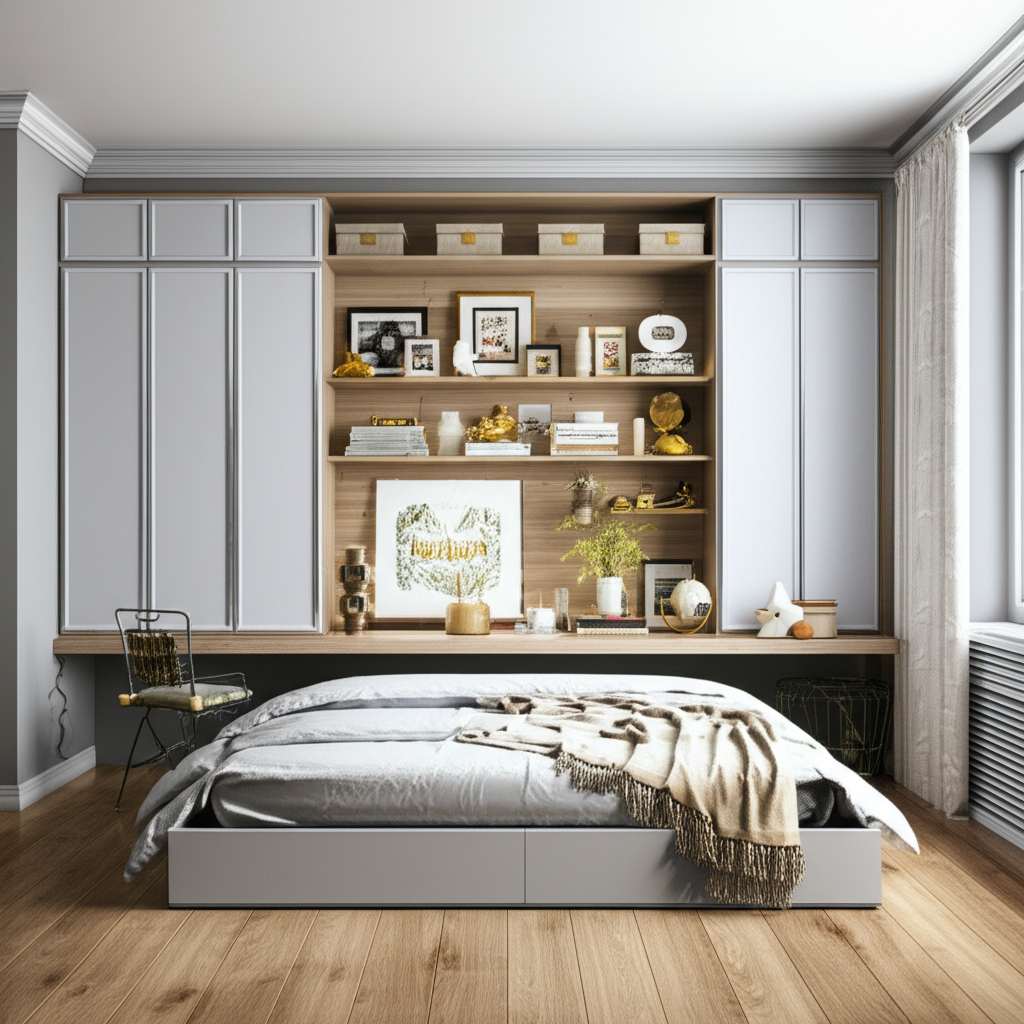
Here are some common questions people have when decorating small adult bedrooms.
Q1: What’s the best color to paint a small bedroom to make it feel bigger?
Light, neutral colors are your best bet. Think soft whites, creams, pale grays, or light blues and greens. These colors reflect light, making the room feel more open and airy. You can add pops of color with accessories.
Q2: How can I add storage to a small bedroom without making it look cluttered?
Focus on multi-functional furniture like storage beds or ottomans. Utilize vertical space with tall, slim bookshelves or floating shelves. Use decorative baskets and boxes to hide clutter, and keep surfaces as clear as possible.
Q3: Is it okay to have a large piece of furniture, like a dresser, in a small bedroom?
Yes, but choose wisely. Opt for a dresser that is taller and slimmer rather than wide and short. This utilizes vertical space and can actually make the room feel more balanced. Ensure it doesn’t block pathways or windows.
Q4: How important is lighting in a small bedroom?
Lighting is extremely important! Good lighting can make a small room feel much larger and more inviting. Layer your lighting with overhead fixtures, bedside lamps, and possibly wall sconces to create warmth and depth.
Q5: Should I use a rug in a small bedroom?
Absolutely! A rug can define the space, add warmth, and make the room feel more complete. Opt for a lighter-colored rug or one with a subtle pattern. Ensure it’s sized appropriately – not too small that it makes the room look disjointed, and not so large that it overwhelms the space.
Q6: What kind of curtains are best for small bedrooms?
Lightweight, sheer curtains in a light color are ideal. They allow natural light to filter in, which helps make the room feel larger and more open. Avoid heavy, dark drapes that can absorb light and make the space feel closed off.
Q7: Can I still decorate my small bedroom with art?
Yes! Art adds personality. Consider a well-placed larger piece to create a focal point, or a curated gallery wall that draws the eye upward. Just be mindful of not overcrowding your walls or surfaces.
Conclusion: Your Small Bedroom, Your Sanctuary
Creating a functional and beautiful small bedroom for adults is entirely achievable. It’s all about being smart with your choices, decluttering effectively, and using design tricks to your advantage.
By embracing vertical storage, opting for multi-functional furniture, and choosing a light and airy color palette, you can transform even the most compact room into a stylish and serene retreat. For more space-saving inspiration, check out our guide on cozy small kitchen ideas that apply similar principles. Remember, a small space doesn’t have to feel limiting; it can be a cozy, personalized haven that perfectly suits your needs.
Don’t be afraid to experiment and have fun with the process. With these essential ideas, your small bedroom can become an amazing and essential space that you’ll love spending time in. Happy decorating!