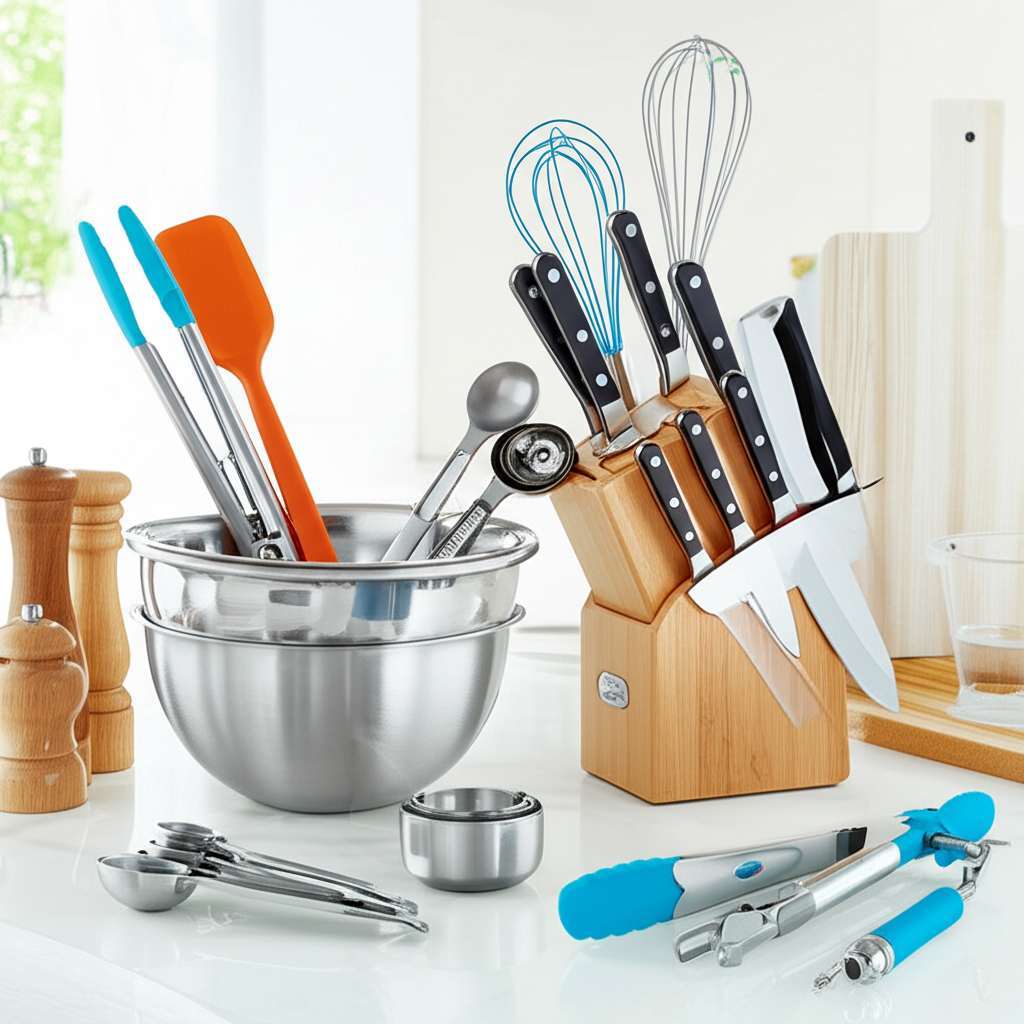
Upgrade your kitchen with these 10 must-have accessories! Discover simple, stylish, and budget-friendly essentials that make cooking and entertaining a joy, even in small spaces. Transform your kitchen with practical tools and chic additions.
Does your kitchen feel a little… uninspired? Maybe you love to cook, but your current setup makes it a chore. Or perhaps you’re starting from scratch and feel overwhelmed by all the choices.
Don’t worry! Upgrading your kitchen doesn’t require a complete renovation or a huge budget. Sometimes, all it takes are a few smart, essential accessories to make a world of difference.
We’ve rounded up 10 must-have kitchen accessories that are perfect for beginners and seasoned home cooks alike. These are the game-changers that bring both function and flair to your culinary space. Get ready to fall in love with your kitchen all over again! For even more inspiration, explore our guide to 15 Best Kitchen Tools for Amazing Home Cooks.
1. A High-Quality Chef’s Knife
Let’s start with the absolute MVP of your kitchen: a good knife. A sharp, well-balanced chef’s knife can transform the way you prep food. It makes chopping, slicing, and dicing feel effortless and even enjoyable.
Think of it as an investment in your cooking experience. A dull knife can be frustrating and even dangerous, as it requires more force and can slip easily. A quality chef’s knife will last for years if cared for properly.
- Why it’s a must-have: Makes food preparation faster, safer, and more enjoyable.
- What to look for: A comfortable grip, a blade that feels balanced in your hand, and good steel quality.
- Tip: Invest in a knife guard or block to protect the blade and keep it sharp. Check out resources like FoodSafety.gov’s knife safety tips for best practices.
2. A Versatile Cutting Board
Paired with your chef’s knife, a sturdy cutting board is essential. It protects your countertops and provides a stable surface for all your chopping needs.
Consider having at least two: one for raw meats and one for produce to prevent cross-contamination. Materials like wood or bamboo are great for knives as they are gentler on the blade, while plastic boards are easy to sanitize.
- Why it’s a must-have: Protects surfaces, provides a stable cutting area, and helps prevent foodborne illnesses.
- Material options: Wood (like bamboo or maple), plastic, or composite materials.
- Tip: Look for a board with a groove around the edge to catch juices from meats or fruits.
3. A Set of Reliable Measuring Tools
Baking and precise cooking rely on accurate measurements. A good set of measuring cups and spoons ensures your recipes turn out just right, every time.
Opt for stainless steel for durability and ease of cleaning. Having both dry and liquid measuring cups is a bonus, as they are designed differently for accuracy.
- Why it’s a must-have: Ensures recipe accuracy, leading to consistent and delicious results.
- What to look for: Clearly marked measurements, durable materials (stainless steel is great), and a variety of sizes.
- Tip: Keep them organized in a drawer or container so they’re easy to find when you need them.
4. A Quality Non-Stick Skillet
A good non-stick skillet is a true kitchen workhorse. It’s perfect for everything from frying eggs to sautéing vegetables without food sticking and ruining your meal (and your cleanup!).
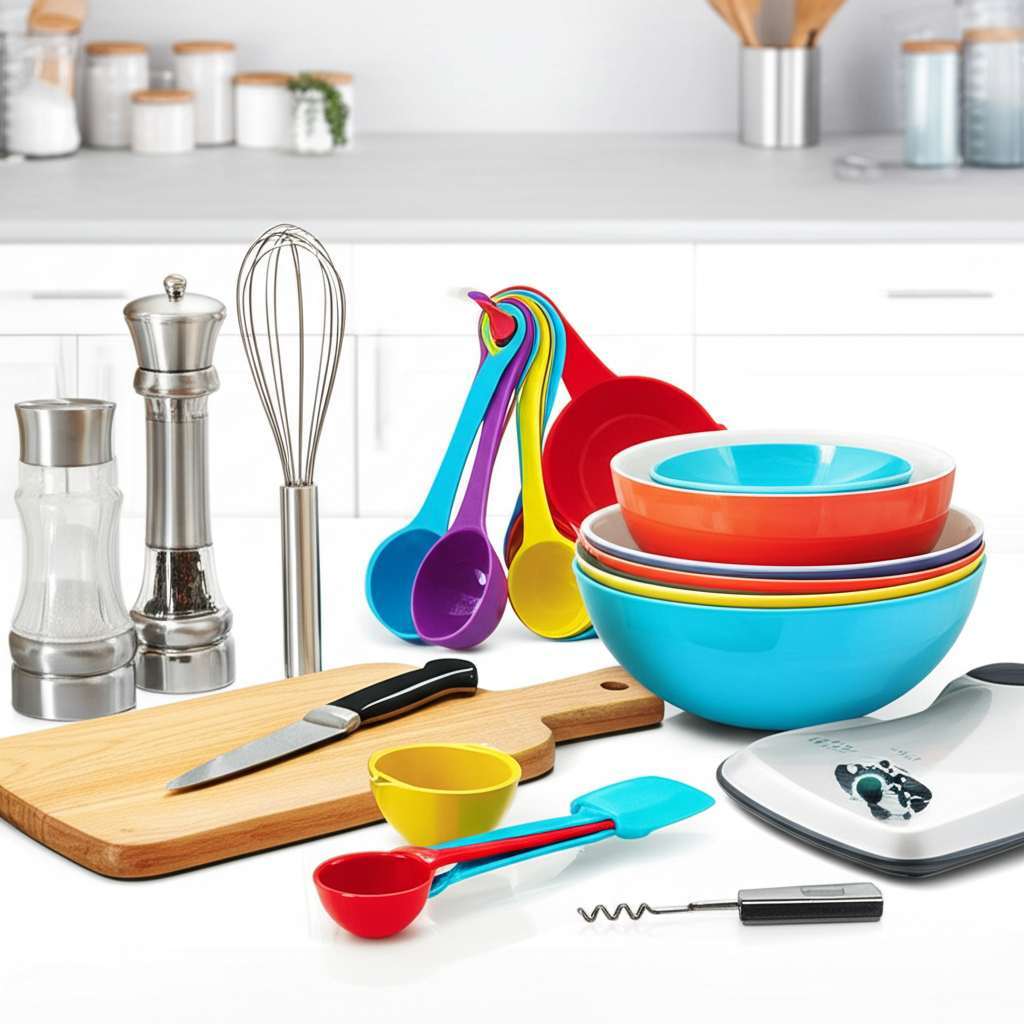
Look for a skillet that’s oven-safe for versatility and has a comfortable, stay-cool handle. A medium-sized skillet (around 10 inches) is a great starting point for most kitchens.
Here’s a quick look at popular non-stick materials:
| Material | Pros | Cons |
|---|---|---|
| Ceramic | Eco-friendly, PFOA-free, good non-stick properties | Can degrade over time, not always as durable |
| PTFE (Teflon) | Excellent non-stick performance, widely available | Can be damaged by high heat or metal utensils, concerns about PFOA in older versions |
| Hard-Anodized Aluminum with Non-Stick Coating | Durable, even heating, good non-stick | Requires careful use to maintain coating |
- Why it’s a must-have: Makes cooking and cleaning easier, perfect for delicate foods.
- Consider: A 10-inch or 12-inch skillet for versatility.
- Tip: Avoid using metal utensils and high heat to preserve the non-stick coating.
5. A Versatile Whisk
Don’t underestimate the power of a good whisk! It’s not just for eggs or whipping cream. A whisk is fantastic for blending dry ingredients, creating smooth sauces, and aerating batters.
A balloon whisk, with its wide, bulbous shape, is excellent for incorporating air. A flat whisk is useful for deglazing pans. Having at least one sturdy whisk will speed up many kitchen tasks.
- Why it’s a must-have: Essential for blending, emulsifying, and creating smooth textures in sauces, batters, and dressings.
- Types to consider: Balloon whisk (for aeration), flat whisk (for pans).
- Tip: Stainless steel whisks are durable and easy to clean.
6. A Sturdy Set of Mixing Bowls
You’ll find yourself reaching for mixing bowls constantly, whether you’re prepping a salad, mixing cookie dough, or marinating chicken. A set with a variety of sizes is incredibly useful.
Look for bowls that are lightweight yet durable. Stainless steel, glass, or sturdy plastic are all good options. Bowls with non-slip bottoms are a fantastic bonus for easier mixing.
- Why it’s a must-have: Crucial for mixing ingredients, preparing batters, salads, and more.
- Ideal set: Includes small, medium, and large bowls.
- Tip: Nesting bowls save valuable kitchen space, which is a huge plus for smaller kitchens. For clever storage ideas, check out our roundup of 10 Stylish Kitchen Storage Accessories.
7. A Can Opener (Manual or Electric)
This might seem basic, but a reliable can opener is a true lifesaver. Trying to open a can with a dull knife or struggling with a cheap opener is incredibly frustrating.
A good manual can opener is compact and effective. If you have larger hands or find manual openers difficult, an electric one can be a great upgrade. Look for smooth-edge openers that leave no sharp edges.
- Why it’s a must-have: Grants access to a pantry staple – canned goods!
- Options: Manual (lever-style or rotary) or electric.
- Tip: Smooth-edge can openers are safer and leave a cleaner edge on the can.
8. A Fine-Mesh Sieve or Strainer
A fine-mesh sieve is surprisingly versatile. It’s perfect for sifting flour to remove lumps, draining small ingredients like berries or quinoa, and rinsing grains. It’s also great for dusting powdered sugar or cocoa over desserts.
Having one in a medium size will cover most of your needs. Stainless steel is a durable and easy-to-clean choice.
- Why it’s a must-have: For sifting dry ingredients, draining small foods, rinsing grains, and creating smooth sauces.
- Size: A 6-8 inch diameter sieve is a good all-rounder.
- Tip: Use it to rinse rice or quinoa for perfectly fluffy grains every time.
9. A Set of Sturdy Tongs
Tongs are your best friend for safely flipping, turning, and serving food. They keep your hands away from heat and make handling everything from delicate fish to hefty steaks a breeze.
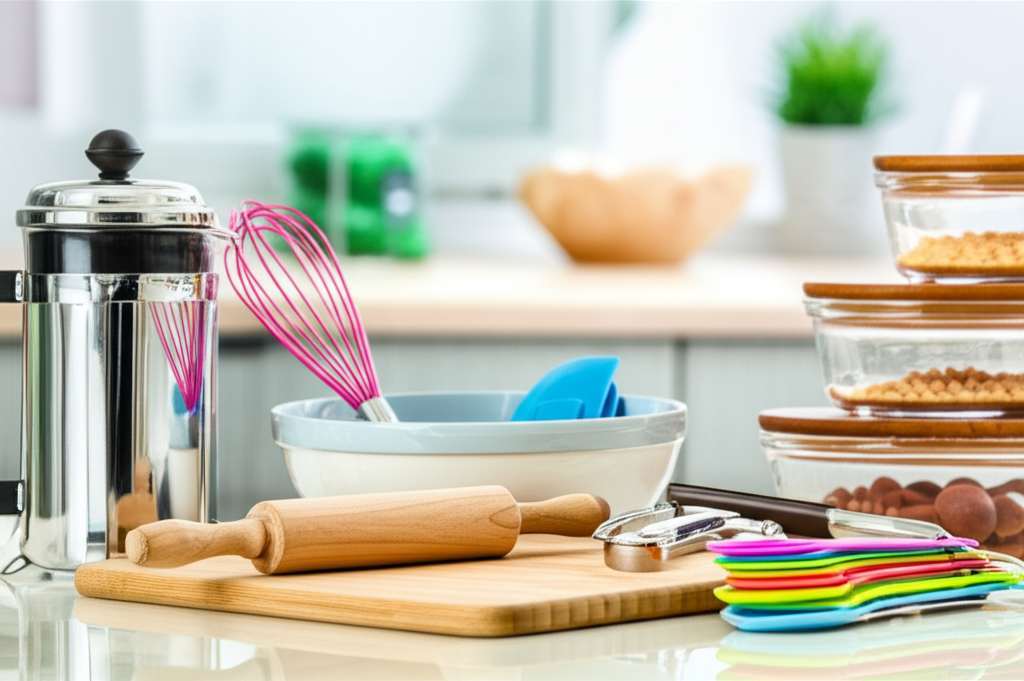
Look for tongs with a comfortable grip and a locking mechanism for easy storage. Silicone-tipped tongs are excellent for non-stick cookware, as they won’t scratch the surface.
- Why it’s a must-have: For safely turning, flipping, and serving food without direct contact.
- Features: Comfortable grip, locking mechanism for storage, silicone tips for non-stick pans.
- Tip: Keep a pair handy for grilling, sautéing, and serving salads.
10. A Good Quality Vegetable Peeler
Peeling vegetables can be a tedious task, but a good peeler makes it quick and easy. A swivel-head peeler, for instance, conforms to the shape of fruits and vegetables, making the job much smoother.
A sharp, ergonomic peeler will save you time and frustration. It’s one of those simple tools that makes a big difference in everyday cooking.
- Why it’s a must-have: Makes peeling fruits and vegetables efficient and less of a chore.
- Types: Swivel peeler (most popular and versatile), Y-peeler, or paring knife (though a dedicated peeler is often easier).
- Tip: Keep it clean and sharp for the best performance.
Beyond the Basics: Smart Storage & Organization
Once you’ve got your essential accessories, think about how you’ll store them. Good organization can make your kitchen feel bigger and more functional, especially in smaller spaces.
Consider drawer organizers for utensils, spice racks to keep your seasonings accessible, and wall-mounted magnetic strips for knives. Even simple solutions can make a big impact on how you use and enjoy your kitchen.
For more tips on small kitchen organization, check out Better Homes & Gardens’ guide to small kitchen solutions. If you’re working with limited square footage, our guide to 10 Cozy Small Kitchen Ideas offers stylish and practical makeover inspiration.
Frequently Asked Questions (FAQs)
Q1: What is the single most important kitchen accessory for a beginner?
A1: A high-quality chef’s knife. It’s the foundation of efficient and enjoyable food preparation and will make a significant difference in your cooking experience.
Q2: How much should I expect to spend on these accessories?
A2: Prices vary greatly, but you can find good quality essentials for around $100-$200 for a starter set of these 10 items. Investing a bit more in key items like the chef’s knife can pay off in longevity and performance.
Q3: Are there any accessories I can skip if I have a very small kitchen?
A3: While all are useful, if space is extremely limited, you might prioritize a versatile cutting board over separate ones, and perhaps a single, well-rounded whisk rather than multiple types. Prioritize multi-functional items.
Q4: How do I maintain my new kitchen accessories to make them last?
A4: Generally, hand-washing is best for most accessories, especially knives and non-stick pans, to preserve their quality. Follow manufacturer instructions for specific items, and store them properly to prevent damage.
Q5: What’s the difference between a chef’s knife and a paring knife?
A5: A chef’s knife is larger (typically 8-10 inches) and versatile for chopping, slicing, and dicing most foods. A paring knife is much smaller (3-4 inches) and is best for intricate tasks like peeling small fruits, deveining shrimp, or coring tomatoes.
Q6: Are there any “must-have” accessories for specific diets (e.g., vegan, gluten-free)?
A6: For specific diets, cross-contamination prevention is key. Having separate cutting boards and utensils for raw meats versus plant-based foods is crucial for vegan or vegetarian cooking. For gluten-free cooking, a good sieve is essential for sifting alternative flours.
Conclusion
Transforming your kitchen into a functional and inspiring space doesn’t have to be complicated or expensive. By focusing on these 10 must-have kitchen accessories, you’re equipping yourself with the tools that make cooking, baking, and everyday meal prep a true pleasure.
From the essential chef’s knife to the handy tongs, each item on this list is chosen for its ability to enhance your culinary experience, simplify tasks, and bring a touch of efficiency to your home. These aren’t just gadgets; they’re smart upgrades that empower you in the kitchen.
So, take a look around your kitchen. Which of these essential upgrades are you most excited to add? Remember, a few well-chosen accessories can make all the difference. Happy cooking!