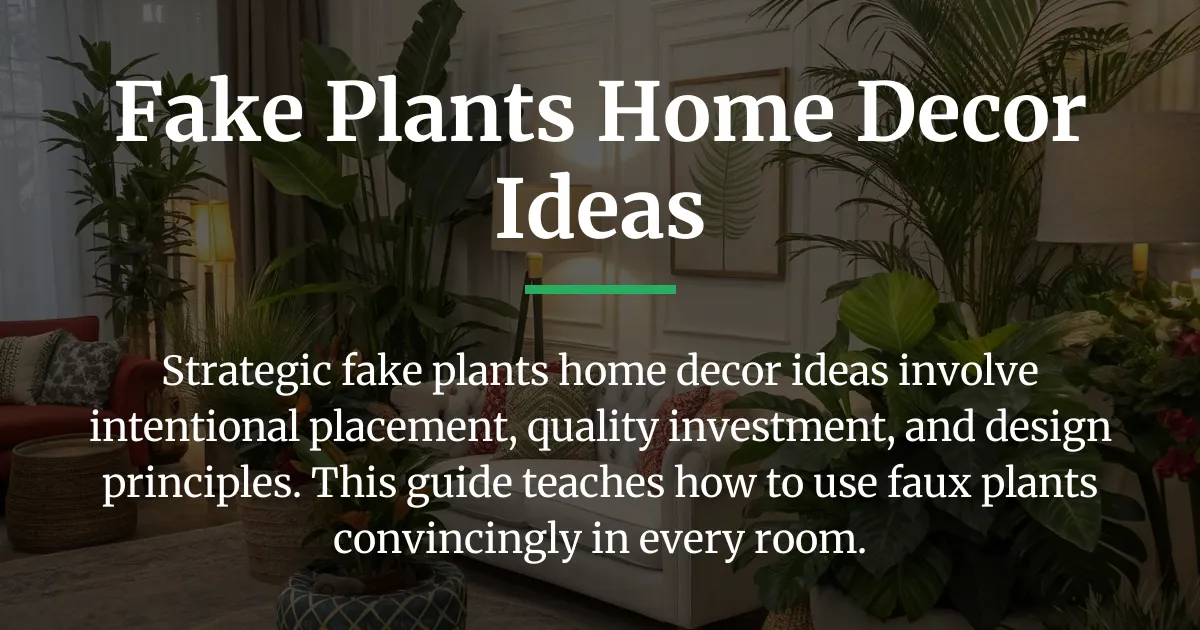
You want the beauty of indoor greenery without the stress of keeping it alive. Maybe you have a dark corner that never sees the sun or a busy life that forgets to water. The search for fake plants home decor ideas is a smart one, a quest for style that endures. The great news is that artificial plants are a completely legitimate and powerful design tool. The secret lies not in the plants alone, but in the strategy behind using them. This guide moves beyond basic lists to teach you the principles of selection, placement, and styling that transform simple faux greenery into a convincing and elevated part of your home’s story.
The Real Benefits of Fake Plants in Your Home
Choosing fake plants is not a design compromise. It is a deliberate choice with unique advantages that real plants simply cannot offer. Understanding these benefits gives you confidence and helps you deploy them where they make the most sense.
First, they provide unwavering consistency. A well-made faux fiddle leaf fig tree maintains its perfect shape and vibrant color day after day. It won’t drop leaves, develop brown spots, or go through an awkward growing phase. This reliability allows you to design around a permanent, predictable element.
Their ultimate adaptability is their superpower. These plants thrive in the impossible places. That zero-light bathroom corner, the high shelf above the kitchen cabinet, or the dusty mantelpiece become opportunities for a touch of life. You are freed from the constraints of sunlight and humidity, opening up a world of decorative possibilities.
They are also the allergy-friendly, low-commitment choice. For households with pets that nibble or children who explore, non-toxic fake plants offer peace of mind. They suit a lifestyle that involves travel or simply not wanting another chore. Your decor remains lush and welcoming without demanding constant care.
Foundational Rules for Fake Plants Home Decor Ideas
This is the core knowledge that separates a thoughtful display from a collection that looks obviously artificial. These rules form your decision-making framework.
The Investment Hierarchy
You do not need to spend a fortune on every single piece. Allocate your budget strategically. Splurge on large statement trees or plants that sit at eye level where details are visible, like a realistic faux olive tree in the living room. The texture of the leaves and the natural variation in color matter most here.
Save on filler greenery. Small succulents for a shelf, ivy strands trailing from a high bookcase, or grassy sprays in a vase can be less expensive because they are seen in groups or from a distance. The overall impression creates the effect, not the minute details of each small stem.
The Planter is Half the Battle
A beautiful fake plant placed in a cheap, lightweight plastic pot will always look fake. The container must feel grounded, substantial, and real. Invest in a planter with visual weight, made of materials like ceramic, concrete, or a woven basket.
Take the extra step to make the base convincing. After placing your plant, cover the plain plastic interior pot with a layer of real materials. Use preserved sheet moss, small pebbles, bark chips, or even a thin layer of actual potting soil. This simple act of “potting” your faux plant does more for realism than almost anything else.
Principles of Convincing Placement
Where you put a fake plant is as important as which plant you choose. This is the applied psychology of making them work.
Conduct a sightline audit in your room. Identify the key focal points and areas where people linger or look closely, such as an entryway console, a coffee table, or a desk. Place your highest-quality, most realistic specimens in these prime viewing zones. Reserve simpler, less detailed plants for high shelves or corners that are viewed from across the room.
Embrace the grouping method. Nature is rarely singular and neat. Instead of one lonely fake plant on a stand, create a vignette. Combine plants of different sizes a large floor tree, a medium plant on a stool, and a trailing vine on a side table. Mix textures broadly. Pair the large, glossy leaves of a faux bird of paradise with the feathery fronds of a fake fern and the spiky leaves of an artificial succulent. Group them in odd numbers, like threes or fives, for a more natural, organic feel.
Consider lighting mimicry. One telltale sign of a fake plant is uniform, shadowless perfection. Bend the stems and leaves slightly to imply they are growing toward a light source, like a window. If your plant is near a lamp, arrange it so some leaves cast gentle shadows on the wall behind it. This subtle play of light and shadow adds immense depth and life.
When a Fake Plant Will Always Look Fake
Being honest builds trust and saves you from design mistakes. There are a few scenarios where faux botanicals struggle. Direct, bright sunlight streaming onto plastic or silk leaves can reveal their artificial sheen and cause fading over time. Placing an identical fake plant right next to its living counterpart often highlights the differences. In ultra-minimalist, raw aesthetics where every element is authentic and untreated, a fake plant can feel like an obvious imposter.
Room by Room Fake Plants Decor Ideas
Now, let’s apply those principles to specific spaces in your home. This is where abstract ideas become concrete action.
Living Room Authority
The living room often needs the biggest impact. Use a large faux tree, like a fiddle leaf fig or a plant parlor palm artificial tree, to anchor a seating area or fill an empty corner. This creates an instant architectural element. Layer medium-sized plants on shelves behind your sofa to add depth and break up the lines of books and decor. A trailing pothos or ivy placed on a media console can soften the hard edges of electronics, introducing a relaxed, organic feel to your entertainment space.
Bedroom and Bathroom Sanctuaries
These are rooms for relaxation, and the plant choices should reflect that. For bedrooms, opt for softer shapes and smaller scales. A petite faux succulent or a graceful orchid on a nightstand adds life without clutter. In bathrooms, where light is often low, fake eucalyptus stems in a shower corner or a small fake snake plant on the vanity bring in spa-like warmth. The key here is to avoid anything overly large or jungle-like, which can feel imposing in a space meant for calm.
Kitchen and Dining Vibrancy
The kitchen is a hub of activity where real plants can struggle with grease and variable temperatures. Fake herbs like rosemary or basil in small pots on a windowsill (even a fake one) add a perennial splash of green. For the dining table, a statement centerpiece of artificial anthurium or a low arrangement of faux magnolia leaves won’t wilt during long dinners. Consider hanging a fake macrame plant holder with a trailing artificial vine to save precious counter space while drawing the eye upward.
Home Office and Entryway Impact
In a home office, fake plants on bookshelves create depth and reduce visual monotony during work hours. A symmetrical pair of faux boxwood balls in nice planters on either side of a formal entryway table provides instant, balanced elegance that welcomes guests. These placements use plants as structural design elements, defining the space with intentional greenery.
Beyond the Basics: Curating Your Faux Collection
Your collection of fake plants should evolve, just like any other part of your decor. Thinking long-term ensures your space stays fresh and intentional.
Start with thematic styling. Instead of random purchases, build a cohesive look. Create a desert-scape in a sunny nook using various fake cacti and succulents in terracotta pots. Design a tropical corner with a large fake palm, a monstera, and other broad-leaf plants. This curated approach feels more designed and less like a store display.
Introduce seasonal touches to keep the look dynamic. You are not stuck with the same display forever. In autumn, tuck a few faux berry branches or fall leaves into your permanent planters. For winter, swap in a planter with fake amaryllis or paperwhites. When spring arrives, add a vase of artificial tulips or cherry blossoms to your mantle. These small, easy changes make your decor feel alive and connected to the time of year.
Consider the end of life for your pieces. When you are finally tired of a fake plant, think beyond the trash. Donate high-quality items to a local thrift store, theater group, or school. Repurpose long stems by cutting them and weaving them into a seasonal wreath or a new arrangement. For plastic plants, check with local recycling programs to see if the materials can be processed. This responsible approach closes the loop thoughtfully.
Frequently Asked Questions
Can you mix fake plants with real plants successfully?
Yes, absolutely. Mixing real and faux plants is one of the best ways to enhance realism. Use the real plants as your “hero” pieces in well-lit areas and supplement with high-quality fake plants in darker spots. The key is to avoid placing identical species directly next to each other.
How often should you clean dust from artificial plants?
You should dust your fake plants about once a month, or whenever you dust the rest of your room’s surfaces. Use a microfiber cloth, a soft brush, or a hairdryer on a cool, low setting to blow dust away gently.
Are there certain rooms where you should avoid using fake plants?
It’s less about specific rooms and more about specific spots within them. Avoid placing low-quality fake plants in direct sunlight where their sheen shows, or in ultra-humid showers if they are not made of waterproof materials, as steam can damage some faux finishes.
What is the best way to make a fake plant look more realistic in a simple pot?
Remove the plant from its cheap nursery pot and place it into a nicer, heavier planter. Then, cover the visible soil area inside the new pot with a layer of real materials like moss, small stones, or bark to hide the plastic base.
Where can you find high-quality fake plants besides big box stores?
Look at online specialty retailers that focus on artificial botanicals, wholesale floral suppliers that sell to the public, and even thrift stores for unique vintage planters you can refresh with new faux stems.
How do you arrange multiple fake plants together without a cluttered look?
Follow the grouping principles: use a variety of heights, textures, and pot styles. Arrange them in odd numbers and ensure they have breathing space between them. Think of creating a small, intentional scene rather than lining them up like soldiers.
Can fake plants be used in bathrooms where there’s steam?
Yes, but choose materials wisely. Look for fake plants made of plastic or treated silk that can handle moisture. Avoid paper-based or very delicate materials, and keep them away from the direct spray of the shower.
What do you do with a fake plant when you’re tired of it?
First, see if you can refresh it by moving it to a new room or repotting it. If not, donate it, repurpose the stems into a smaller craft project, or disassemble it for responsible recycling of its plastic parts.
Is it acceptable to use fake flowers in home decor, or only greenery?
Fake flowers are perfectly acceptable, but use them more sparingly than greenery. Opt for blooms that look realistic in color and texture, and place them in contexts where cut flowers would naturally go, like a vase on a dining table, rather than in a planter meant for a living plant.
Do fake plants have any impact on indoor air quality?
No, fake plants do not purify the air like real plants can. Their benefit is purely aesthetic and psychological, adding visual calm and natural texture to your space without the functional air-cleaning properties of living plants.
Ultimately, successful fake plants home decor ideas come down to intention. It is the thoughtful application of design principles that bridges the gap between artificial and authentic. By investing strategically, mastering placement, and curating your collection over time, you create a home filled with effortless, lasting greenery that suits your life perfectly. Your space feels alive and styled, entirely on your own terms.