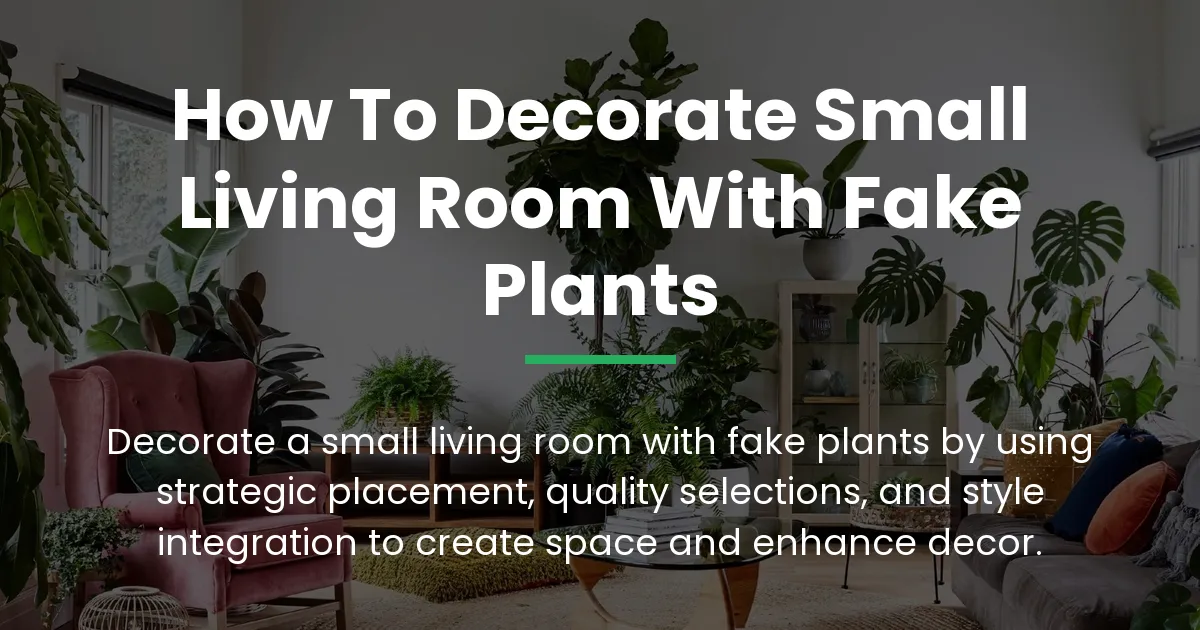
You can decorate a small living room with fake plants by treating them as architectural tools for scale and style, not just decorations, focusing on strategic placement, deliberate proportion, and selective quality. This approach turns limited space into an advantage, using faux botanicals to manipulate perception and add life without the clutter. Let’s explore how to make your compact living area feel larger and more inviting with smart fake plant decor.
Choosing Fake Plants for Limited Space
Selecting the right fake plants for a small living room requires more than picking pretty options. You need to consider how each plant affects the room’s feel and flow, ensuring they enhance rather than overwhelm the space. This means filtering choices based on size, shape, and quality to find pieces that serve a purpose beyond mere decoration.
The Size and Shape Principle
In a small room, every item must earn its place by contributing to a sense of openness. Choose fake plants with silhouettes that complement tight quarters, such as vertical lines that draw the eye upward or compact forms that minimize footprint. For instance, a tall, slender faux tree like a fiddle leaf fig can add height without spreading out, while a sprawling plant might make walls feel closer. Always measure the pot’s base and the plant’s spread before buying to avoid overcrowding your floors or surfaces. Think about the plant’s shape as a visual tool—upright plants like snake plants create clean lines, while trailing varieties like pothos can soften edges without consuming valuable space.
A Practical Guide to Faux Plant Quality
Quality in fake plants is not just about price; it’s about visual realism that prevents a cheap look in your intimate living area. Break down options into practical tiers: budget-friendlier picks for subtle accents, investment-worthy statements for focal points, and types to avoid that often appear plasticky. Look for details like leaf veining, color variation from light to dark greens, and stem structure that mimics natural growth—these cues make faux plants believable. For example, a John Richard Fiddle Leaf Fig might showcase textured leaves with realistic imperfections, while a Plant Parlor Palm Artificial Tree could feature layered fronds that catch light naturally. Avoid plants with overly shiny surfaces or uniform colors, as they tend to stand out poorly in small rooms where details are easily noticed.
Best Types for Small Living Rooms
Certain fake plant categories excel in compact spaces due to their forms and low visual weight. Snake plants are ideal for their upright, architectural shape that fits neatly in corners or beside furniture. Fiddle leaf fig trees offer a statement look with a narrow profile, perfect for adding height without width. Succulents in small pots, like those in a Der Rose Set of 6, work well on shelves or desks for subtle greenery. Trailing plants such as faux ivy or pothos can be placed on high shelves to cascade down, drawing eyes upward and creating illusion of depth. Always prioritize plants with naturalistic proportions that won’t dominate your room, ensuring each piece feels intentional and scaled to your living area.
Arranging Your Fake Plants to Expand the Room
Arrange fake plants in a small living room by following a step-by-step system that uses placement to trick the eye and maximize space. This method transforms plants from clutter into tools that enhance room dimensions, making areas feel larger and more organized.
- Anchor with a Vertical Element Start by placing a tall, slim fake plant like a faux tree in a corner. This draws attention upward, emphasizing ceiling height and creating a focal point that anchors the room without eating up floor space. For example, a Fiddle Leaf Fig Tree in a lightweight planter can stand gracefully, making walls recede visually.
- Layer Height on Surfaces Use surfaces like shelves, media units, or side tables to group smaller fake plants in pots of varying heights. This layering adds depth and interest without congestion, as seen with a mix of succulents and a Planter Fake Snake Plant at different levels. It prevents a flat, crowded look and encourages the eye to move around the room.
- Define Spaces with Strategic Placement In open-plan small living rooms, position medium-sized fake plants to subtly divide areas. A fake plant on a console table between seating and dining zones can act as a soft barrier, enhancing functionality without bulky furniture. This strategic use helps organize the layout while maintaining an airy feel.
- Look Up for Opportunities Utilize vertical space by adding hanging fake plants or wall-mounted pieces like a Diy Artificial Living Wall. A single trailing plant near a window or ceiling draws the gaze up, making the room feel taller and more dynamic. This approach frees up floor and surface area, crucial in limited spaces.
The rule of visual weight also applies: choose plants with lighter green hues and less dense foliage to avoid a heavy look. Dark, bulky plants can make a room feel smaller, so opt for airier options that blend seamlessly into your decor.
Making Fake Plants Look Intentionally Designed
After placing your fake plants, the next step is to style them so they appear cohesive and real, integrating them into your living room’s overall aesthetic. This involves thoughtful details that elevate faux botanicals from afterthoughts to key design elements.
Upgrading from Plastic Pots
The quickest way to improve fake plants is to repot them from cheap plastic containers into pots that match your room’s style. Choose ceramic, terracotta, or woven baskets that complement your color scheme and texture palette. For instance, a minimalist living room might use a neutral ceramic pot for a fake snake plant, while a bohemian space could pair a faux fiddle leaf fig with a rattan basket. This upgrade adds weight and authenticity, making plants look like cherished decor rather than store-bought items.
Styling by Your Living Room’s Theme
Tailor your fake plant styling to your existing decor theme for a polished look. In a Mid-Century Modern room, use a sculptural fake fiddle leaf fig in a sleek planter alongside wooden furniture. For Scandinavian style, opt for sparse groupings of faux succulents in white pots to maintain clean lines. In Bohemian decor, mix textures by combining a fake travellers palm decor with textiles and books for a layered effect. This cohesion ensures plants enhance the narrative of your space, rather than sitting as isolated items.
The Details That Build Belief
Small touches can make fake plants convincing and lived-in. Add real moss or pebbles to the soil surface to mimic natural growth. Dust leaves regularly with a soft cloth to maintain a fresh appearance, as dust accumulation can reveal artificiality. Gently bend stems or adjust leaves to avoid perfect symmetry, which rarely occurs in real plants. These details encourage a second glance, blending your faux greenery seamlessly into daily life.
Frequently Asked Questions
How often do I need to clean fake plants in my living room?
Clean fake plants every two to four weeks by wiping leaves with a damp cloth or using a gentle duster to prevent dust buildup, which can make them look artificial in a small space.
Can I mix fake plants with real ones in a small space?
Yes, mixing fake and real plants can work well if you balance them by style and scale. Use real plants for easy-care varieties and faux ones for spots with no light, ensuring both types follow the same placement rules to avoid clutter.
What are the best fake plants for a living room with no natural light?
Choose fake plants that mimic shade-tolerant species, such as faux snake plants or fiddle leaf figs, as they look natural without sunlight and maintain their color in dark corners.
How do I secure a tall fake tree so it doesn’t tip over?
Secure a tall fake tree by placing it in a heavy, weighted pot or adding sand or rocks to the base. You can also use discreet adhesive putty under the planter for stability on smooth floors.
Are there any styles of decor where fake plants look bad?
Fake plants can look out of place in ultra-minimalist or rustic styles that prioritize organic imperfection, but with high-quality selections and proper styling, they can adapt to most themes.
Can I put a fake plant in a bathroom that opens into my living room?
Yes, a fake plant in an adjoining bathroom can extend your decor theme, but choose moisture-resistant materials and ensure it complements the living room’s style for a cohesive flow.
How do I make a cheap fake plant look more expensive?
Make a cheap fake plant look expensive by repotting it into a better container, trimming any overly plastic stems, and adding realistic touches like moss or subtle paint highlights on leaves.
What should I avoid when buying fake plants for a small living room?
Avoid overly large plants, shiny plastic finishes, and uniform colors that look fake. Also, skip sets with too many pieces, as they can create clutter instead of curated decor.
Do fake plants attract dust more than other decor?
Fake plants may attract dust similarly to other textured surfaces, but regular cleaning prevents this. Their static charge can sometimes hold dust, so prioritize smooth-leaf varieties for easier maintenance.
Are fake plants safe for homes with pets?
Fake plants are generally safe for pets as they’re non-toxic, but ensure they’re placed securely to prevent chewing or tipping, and avoid small detachable parts that could be swallowed.
By following these strategies, you can confidently decorate a small living room with fake plants, turning constraints into creative opportunities for a stylish and spacious home. Remember, it’s not about filling space but using each plant to enhance your room’s perception and personality.