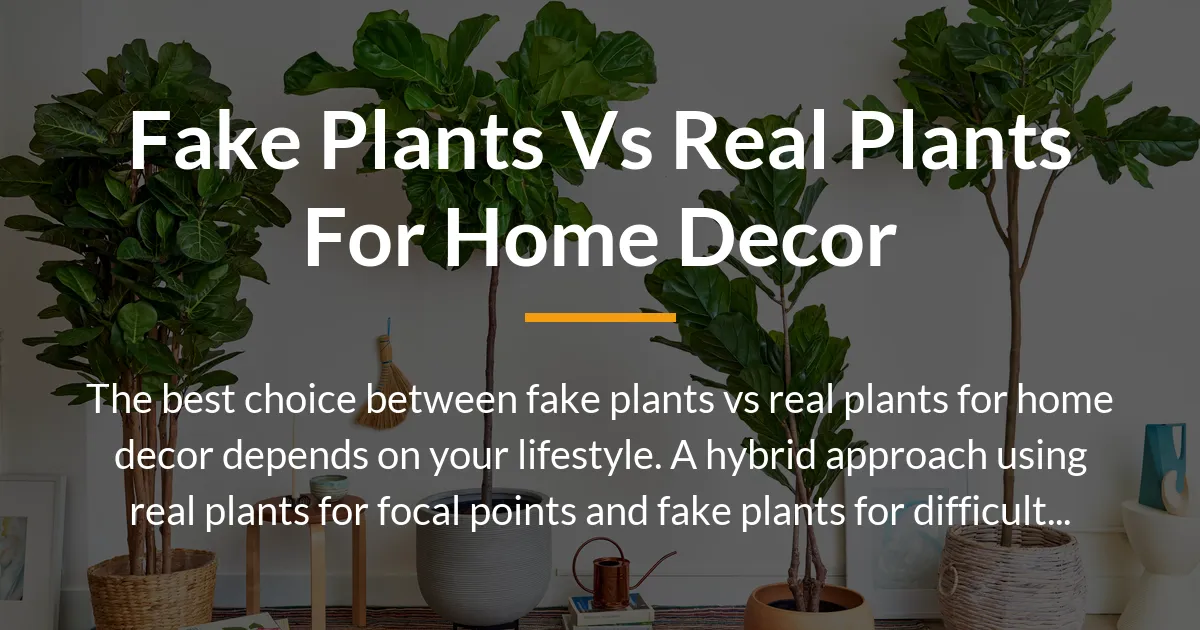
Choosing between fake plants and real plants for your home is a common decorating dilemma. You might love the idea of lush greenery but worry about your ability to keep it alive. Or you might adore the look of plants but live in a space with no natural light. This decision doesn’t have to be a strict either-or choice. The most successful approach is often a strategic blend of both, tailored to fit your specific life, space, and goals.
This guide moves beyond simple pros and cons lists. We will explore how to match plants to your personal reality, the psychology behind your choice, and a smart method for combining real and fake plants to create a home that feels alive and perfectly suited to you.
The Core Difference Between Real and Fake Plants
Understanding what you are really bringing into your home is the first step. A real plant is a living, breathing system. A fake plant is a permanent, static design object. Knowing this core distinction helps set realistic expectations for what each can provide.
What a Real Plant Offers
A real plant is a biological organism. It needs a specific environment to survive, which includes light, water, and air circulation. Caring for it is an ongoing interaction, not a one-time task.
The benefits are tangible and dynamic. Through photosynthesis, they can improve indoor air quality by absorbing carbon dioxide and releasing oxygen. They also release moisture into the air, which can help with dry indoor environments.
Perhaps the biggest benefit is the connection to nature, often called the biophilia effect. Watching a plant grow new leaves or flower provides a unique sense of accomplishment and calm. Its appearance changes with the seasons and its own growth cycle.
What a Fake Plant Offers
A fake plant is a manufactured item made from materials like plastic, silk, or polyester. Its form is set from the day you buy it. It requires no water, no specific light, and no nutrients from the soil.
Its primary benefit is absolute consistency and total placement freedom. You can put a beautiful faux fiddle-leaf fig in a dark corner or on a high shelf without a second thought. It offers permanent greenery with zero care, making it ideal for busy lifestyles or challenging spaces.
It is a purely visual design element. Its job is to look good and fill a space with color and shape, without any of the biological demands of a living thing.
Quick Comparison at a Glance
| Consideration | Real Plants | Fake Plants |
|---|---|---|
| Required Care | Regular watering, light, occasional fertilizing | Occasional dusting |
| Light Dependence | Essential for survival; needs vary by plant | None; can be placed anywhere |
| Air Quality Impact | Can improve humidity and filter air | No impact |
| Long-Term Cost | Low initial cost, but requires ongoing care supplies | Higher initial cost for quality, but lasts years |
| Safety for Pets/Kids | Some can be toxic; requires research | Generally safe, but check for small parts |
| Durability | Can die from over/under-care; sensitive | Very durable; won’t die from neglect |
| Aesthetic Consistency | Changes over time; may drop leaves | Stays exactly the same, forever |
Finding the Right Fit for Your Home and Life
Now that you know the basic differences, the next step is to match them against your actual living situation. An honest audit of your space and habits is more useful than any generic advice.
How to Audit Your Space and Lifestyle
Start by looking at the light in your home. Walk through each room at different times of day. Note which windows get strong, direct sun and which areas are perpetually in shadow. A sunless corner is a poor candidate for a real fern but a perfect spot for a high-quality fake one.
Next, be brutally honest about your care capacity. Do you enjoy the ritual of watering and checking on plants, or does it feel like a chore? How often do you travel? If you’re away for weeks at a time, real plants will struggle without a plant-sitter.
Finally, consider your household members. Do you have curious pets that might chew on leaves? Do you have small children? Some real plants, like certain lilies, are highly toxic to cats, while others, like the spider plant, are safe. Fake plants avoid this issue, though you should secure them from being pulled over.
The Realism Spectrum of Fake Plants
Not all fake plants are created equal. A cheap, plastic fake plant can look tacky and actually detract from your decor. Investing in a high-quality artificial plant changes the entire value proposition.
Look for plants made from blended materials, like silk and plastic, which mimic the texture and subtle color variations of real leaves. Avoid ones with an obvious plastic sheen. Examine the construction. Are the leaves individually placed, or is it one solid molded piece? Individual placement looks more natural.
Check for details like realistic-looking soil or moss at the base, and veins on the leaves. A quality fake plant is a long-term decor investment. While it costs more upfront, its cost-per-year over a decade can be lower than replacing a series of real plants you couldn’t keep alive.
The Psychology Behind Your Choice
This decision isn’t just practical; it’s emotional. Many people feel a deep sense of pride and connection when they successfully nurture a living plant. The act of care itself can be a mindful, rewarding practice that fake plants cannot replicate.
On the flip side, “plant guilt” is real. Watching a plant struggle and die can be discouraging, making you feel like you’ve failed. This anxiety is a major reason people opt for fake plants. The satisfaction from a perfectly placed, realistic faux plant comes from its flawless appearance and the stress it removes.
The key is to know yourself. If you crave a living, changing element and don’t mind the learning curve, go real. If you want guaranteed beauty without the emotional rollercoaster, a high-quality fake is a valid and intelligent choice.
The Smart Way to Mix Real and Fake Plants
You do not have to pick a side. The most effective and modern approach is a hybrid strategy. This means using real plants where they will thrive and you can enjoy them, and using fake plants to solve difficult design problems.
The core philosophy is simple: use real plants for focus and interaction, and use fake plants for fill and impossible spots. This allows you to enjoy the benefits of both without the downsights of either.
Place your real plants in areas where you spend time and can easily care for them. A kitchen herb garden, a large statement floor plant next to your favorite reading chair, or a sun-loving succulent on your desk are perfect examples. You get to interact with them daily.
Use fake plants to add permanent greenery where real plants would suffer. This includes dark bathrooms, high shelves, mantles, or inside bookshelves. They are also perfect for sun-blasted windowsills where the intense light would scorch a real plant but looks beautiful.
To make both types look cohesive, use similar pots or baskets. You can even mix real and fake versions of the same plant species, like a real snake plant on the floor and a smaller fake one on a shelf. Layering them together creates a rich, textured look that feels intentional.
Making Your Final Decision
After considering all these factors, your path should be clearer. Here is a simple summary to guide your final choice.
Choose real plants if you have adequate light in your home, enjoy the process of care, want the air-purifying and psychological benefits, and don’t mind the changing, imperfect nature of a living thing.
Choose fake plants if your home has very low light, you have a busy or traveling lifestyle, you want guaranteed, zero-maintenance greenery, or you need plants in hard-to-reach places.
Embrace a hybrid approach if you want the best of both worlds. This is ideal for most people. You can enjoy the vitality of real plants where it’s easy and use the reliability of fake plants to complete your vision everywhere else.
Frequently Asked Questions
Can fake plants ever look real?
Yes, high-quality fake plants made from materials like silk and polyethylene can look incredibly real, especially from a few feet away. The key is to avoid cheap plastic ones and look for realistic details like color variation, textured leaves, and natural-looking stems.
How do I clean dust off artificial plants effectively?
Use a hairdryer on a cool setting to blow loose dust away. For a deeper clean, wipe leaves with a slightly damp cloth or use a gentle spray of compressed air. For very dusty plants, you can give them a quick shower in the tub and let them air dry completely.
Are there any real plants that are truly impossible to kill?
No plant is truly impossible to kill, but some are very resilient. Snake plants, ZZ plants, and pothos can tolerate low light and irregular watering, making them excellent low-maintenance choices for beginners.
Do real plants actually improve air quality enough to make a difference?
While real plants do remove carbon dioxide and some toxins, you would need a very large number of them to significantly impact the air quality in a whole room. Their effect on humidity and the psychological benefit of greenery are often more noticeable perks.
Is it bad for my mental health to have fake plants?
No, not if they bring you joy. If a beautiful, care-free fake plant reduces your stress and makes your home feel more welcoming, that is a positive mental health benefit. The goal is to create an environment you love.
What should I look for on the label when buying a fake plant?
Look for labels mentioning “UV resistant” if it will be in sun, “real-touch technology” for better texture, and materials like “silk” or “polyblend.” Avoid labels that only say “plastic” without further detail, as these are often lower quality.
Can I put a fake plant in a window with full sun?
You can, but direct sun will cause the colors to fade over time, especially on cheaper plants. If you want a fake plant in a sunny spot, invest in one labeled as UV-resistant to help it last longer without looking washed out.
How often do I really need to water most common indoor houseplants?
There’s no single answer, as it depends on the plant, pot size, and light. The most common mistake is overwatering. A good rule is to check the soil by sticking your finger in an inch deep. If it feels dry, it’s time to water. For many plants, this might be once every 1-2 weeks.
Are fake plants safe for homes with small children or pets?
Generally, yes, as they are non-toxic. However, you must ensure they are stable and can’t be pulled over, and check that small berries or parts can’t be pulled off and become a choking hazard. Secure heavy pots and avoid flimsy designs.
What is the most common mistake people make when choosing between real and fake plants?
The biggest mistake is not being honest about their lifestyle. People buy real plants for a dark apartment because they feel they “should,” setting themselves up for failure. Or they buy a cheap, unrealistic fake plant that looks worse than having no plant at all. Match the plant to your reality.
The debate between fake plants vs real plants for home decor isn’t about finding one right answer. It’s about making an informed choice that brings life and beauty into your home in a way that works for you. Whether you choose the nurturing path of real plants, the easy elegance of fake ones, or a clever mix of both, the result is a space that feels more like you. Your perfect greenery strategy is the one that makes you happy every time you walk in the door.