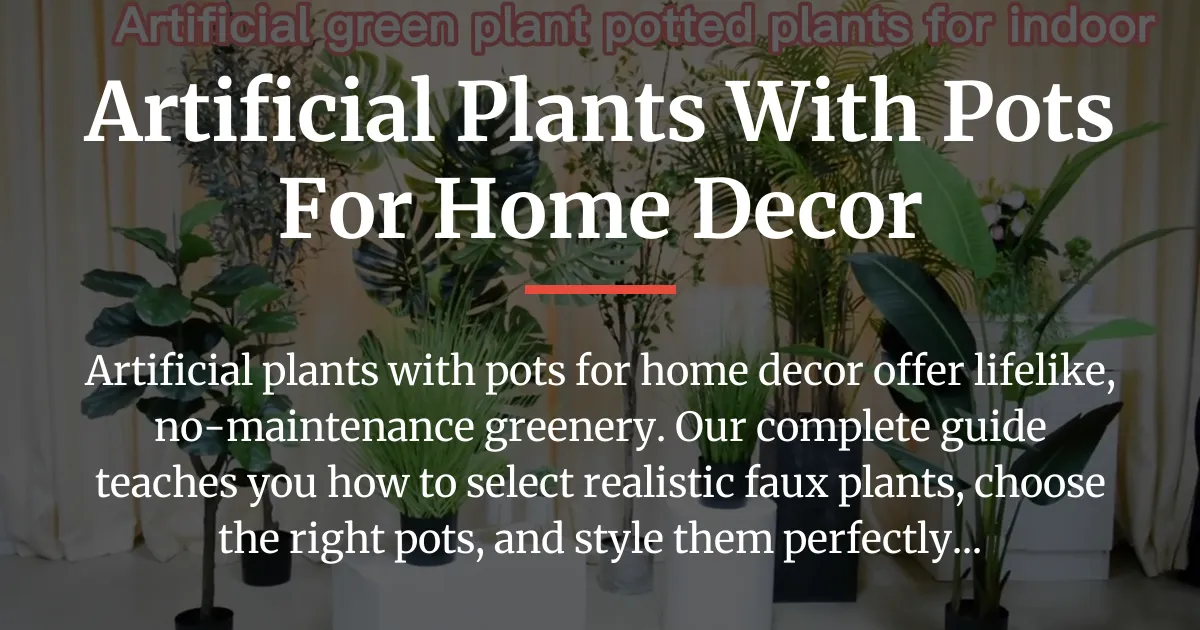
You want the life and color that plants bring to a room, but maybe you don’t have the time, light, or luck to keep real ones alive. That’s where the search for the perfect artificial plants with pots for home decor begins. It can feel overwhelming with so many options online, from tiny succulents to towering palms. This guide is here to change that. We will move beyond just showing you products and instead give you the knowledge to choose, style, and place artificial greenery that looks convincing and enhances your space beautifully. The secret lies in focusing on three things: finding realistic details, understanding scale, and placing your plants with purpose.
Why Choose Artificial Plants with Pots for Your Home
Choosing artificial plants is a smart design decision that solves multiple problems at once. The most obvious benefit is the complete freedom from maintenance. There is no watering schedule to remember, no worry about sunlight, and no fear of coming home to a wilted or dying plant. This makes them perfect for dark corners, sun-drenched windows that would scorch real leaves, or rooms you use less often.
For those with busy lives or a tendency to forget, it’s a hassle-free solution. They are also ideal for people with allergies, as they don’t produce pollen or attract mold in the soil. From a purely decorative angle, artificial plants give you permanent control. The arrangement you create today will look just as full and vibrant years from now, with no seasonal drooping or uneven growth.
You can fill that awkward empty corner with a tall fiddle leaf fig without checking its light needs. You can place a lush fern on a bookshelf in a windowless hallway. This flexibility allows you to use plants as pure design elements, curating your space without being limited by nature’s rules. And today’s high-quality options are a far cry from the obviously fake plastic plants of the past, making it easy to achieve a look that is both stylish and believably organic.
Selecting Artificial Plants that Look Real
The biggest fear people have is that artificial plants will look cheap or tacky. This fear disappears when you know what makes a faux plant believable. The goal is to trick the eye, even up close, and it all comes down to the details in both the plant and its container.
First, pay close attention to the materials. Modern artificial plants use blends of silk, plastic, and latex to mimic real textures. “Real-touch” technology, often a latex or vinyl coating, gives leaves a soft, slightly waxy feel like a living plant. Look for color variation within a single leaf or frond—real leaves are never one flat shade of green. They have gradients, lighter veins, and sometimes even subtle spots or edges in a different color.
Avoid plants where every leaf is perfectly identical and symmetrically placed. Nature is imperfect. Seek out stems that have a natural bend or curve, and plants where the leaves point in different directions. Fine details like a realistic-looking trunk with textured bark, or the inclusion of faux soil, moss, or pebbles at the base, add massively to the illusion.
Do not underestimate the power of the pot. A cheap, lightweight plastic pot can ruin the effect of a beautiful plant. A good decorative planter gives weight and substance. Look for pots with a finished interior rim so you can’t see a plain plastic nursery pot inside. Many high-quality faux plants come with the plant roots embedded in a foam or cement block within the planter, making it look and feel like it’s genuinely potted. This combination of a realistic plant and a substantial pot is what sells the complete look.
Key Details to Look For
When shopping online, zoom in on the product photos. Check customer images, not just the professional ones. You want to see evidence of texture and depth. Look for plants that mimic specific real species you recognize, like a Monstera or an Areca Palm, rather than generic “tropical foliage.” The more specific, the more care was likely taken in its design.
Matching Plant and Pot to Your Space
Once you know how to spot a good plant, the next step is choosing the right one for your room. This is all about scale, proportion, and the mood you want to create. A huge plant in a tiny room will feel overwhelming, while a tiny plant on a large empty floor will look lost.
A simple principle is to use height as your guide. Small plants, around 1 to 2 feet tall, are perfect for desks, shelves, side tables, and kitchen counters. They add a touch of life without getting in the way. Medium plants, from 2 to 4 feet tall, work well as floor accents next to a chair, sofa, or in a bathroom corner. They help fill vertical space without dominating it.
Large statement plants, from 4 feet up to 6-8 feet, are for filling empty corners, anchoring a room, or creating a bold focal point behind a piece of furniture. They command attention and bring a real sense of indoor greenery.
Styling for Different Rooms
Each room in your home has a different function, and your plant choices should reflect that. In the living room, use plants to create balance. Place a tall palm or fiddle leaf fig in an empty corner to draw the eye up. Use a medium-sized plant on a console table behind the sofa. Group a few small potted plants together on a coffee table or shelves to create a curated vignette.
For bedrooms and bathrooms, think about creating calm. Delicate ferns, trailing plants like ivy, or simple succulents add organic texture without being busy. In bathrooms, choose plants in pots made from materials that handle humidity well, like ceramic, glazed pottery, or plastic, and avoid natural wicker baskets that can warp.
Home offices and small spaces benefit from mini potted plants on desks or narrow planters on bookshelves. They add personality and a break from screens without cluttering your workspace. For porches or covered outdoor areas, this is where material choice is critical. You must select plants labeled for outdoor use, as they are treated to resist fading from UV rays. Similarly, the pots should be weather-resistant, like fiberglass, treated metal, or certain ceramics.
Creating Groupings and Arrangements
A single artificial plant can look lonely. The trick to making them look natural is to group them. Avoid lining them up like soldiers. Instead, create clusters of three or five plants at varying heights. Mix different leaf shapes and textures—pair a spiky grass plant with a broad-leafed plant and a trailing vine. This variation mimics how plants grow together in nature and keeps the arrangement dynamic and interesting.
Critical Considerations Before You Buy
Before you click “add to cart,” take a moment to think beyond just the look. Considering these practical points will ensure you are happy with your purchase for years to come, turning it from a simple decor item into a smart long-term investment for your home.
Think about longevity versus the initial price. A slightly more expensive artificial plant made with UV-resistant materials for a sunny spot will not fade and will last many times longer than a cheaper one that turns pale in a year. Check the construction in the product description—are the leaves securely stitched or glued? Is the internal wire frame sturdy enough to hold the shape? For floor plants, stability is key. A lightweight pot is a tipping hazard. You can easily add weight by placing sandbags, rocks, or even a bag of pebbles in the bottom of the planter before inserting the plant.
If you have pets or small children, consider safety. Choose plants made from non-toxic materials, and avoid options with very small, detachable parts like tiny berries that could be pulled off and swallowed. Secure top-heavy plants firmly to prevent them from being knocked over. This foresight turns a beautiful object into a safe and permanent part of your home environment.
Caring for Your Artificial Plants
While they don’t need water, artificial plants do need a small amount of care to keep them looking their best. Dust is the main enemy, as it dulls the color and makes the plant look old. Regular light dusting with a feather duster is the easiest maintenance. For a deeper clean every few months, you can use a hairdryer on a cool setting to blow dust away, or gently wipe the leaves with a damp cloth and a tiny bit of mild soap, followed by a rinse with a damp cloth.
Over time, leaves may get bent from storage or accidental bumps. You can gently reshape them by hand, bending the internal wire back to a natural-looking position. If your plant is in a very sunny spot, even if it’s UV-resistant, rotating it occasionally ensures any minimal fading happens evenly. This simple upkeep preserves your investment and keeps your artificial greenery looking freshly placed.
Frequently Asked Questions
Can artificial plants with pots be used in a bathroom?
Yes, they are excellent for bathrooms. Choose plants in pots made from humidity-resistant materials like ceramic, plastic, or metal. Avoid natural materials like unfinished wood or wicker that can warp. The plant itself will be fine, as it requires no moisture to live.
How do I keep my tall artificial plant from tipping over?
Weight the base of the decorative planter. Before placing the plant in the pot, add a layer of sand, pebbles, or a sandbag to the bottom. This lowers the center of gravity. Also, ensure the plant’s central stem is securely fixed into the base material inside the pot.
What is the best way to clean dusty artificial leaves?
For light dust, use a feather duster. For a deeper clean, wipe each leaf gently with a soft cloth dampened with a mixture of mild soap and water, then wipe again with a cloth dampened with plain water to rinse. Let the plant air dry completely.
Are there artificial plants safe for homes with pets?
Look for plants made from non-toxic materials. It’s also a good idea to avoid styles with lots of small, detachable parts like fake berries or moss that curious pets might try to eat. Secure the plant well so it can’t be easily knocked over.
Can I repot an artificial plant into a different decorative planter?
Absolutely. This is one of the easiest ways to update your decor. Most artificial plants are designed as a “drop-in” unit. Simply lift the plant, with its built-in soil or foam base, out of the original pot and place it into a new, larger decorative planter. You may need to add some filler around the edges for stability.
Choosing the right artificial plants with pots for home decor is more than just shopping—it’s a thoughtful way to design your space. By focusing on realistic details, applying smart scale to your rooms, and making informed choices for safety and longevity, you can create a green oasis that brings joy without any work. You now have the knowledge to bypass the overwhelming catalogs and select pieces that will look beautiful and intentionally placed in your home for years to come.