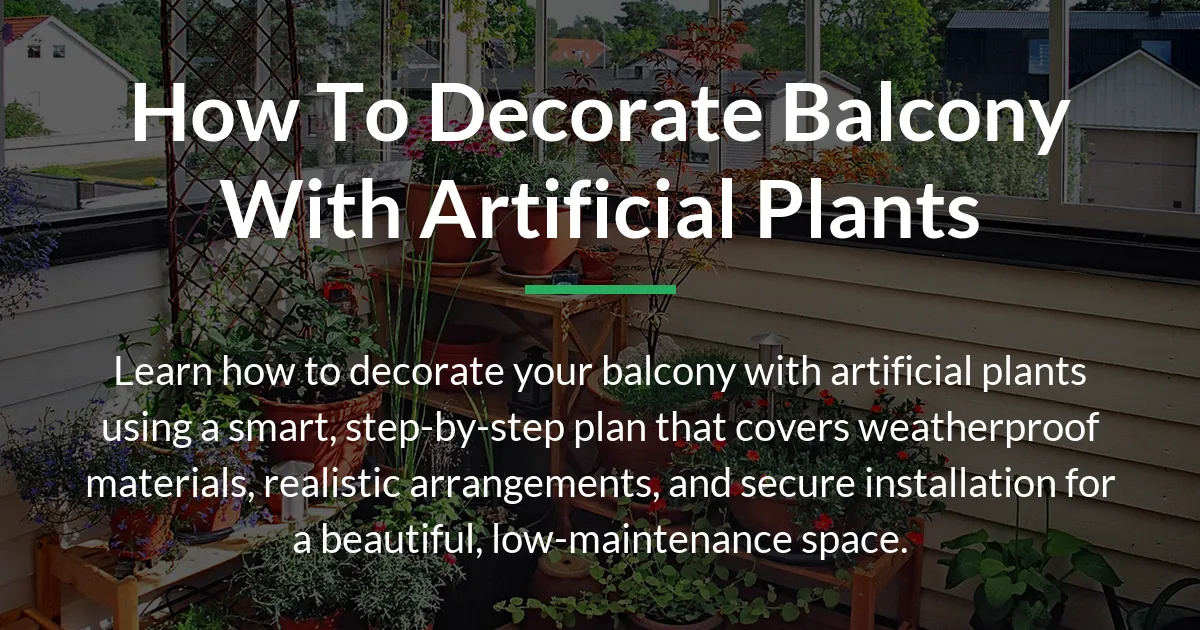
Do you dream of a green, relaxing balcony but struggle with poor light, busy schedules, or unpredictable weather? Learning how to decorate your balcony with artificial plants is the perfect, clever solution. This guide moves beyond simple lists to give you a complete plan, focusing on choosing durable materials, designing with purpose, and using professional tricks to create a stunning, realistic outdoor retreat you’ll love all year.
Benefits of an Artificial Plant Balcony
Choosing artificial plants for your balcony solves several common problems at once. Unlike real plants, they do not need any sunlight or regular watering to thrive, which means you can place them anywhere regardless of your balcony’s exposure. This makes them perfect for shaded spaces or high-floor apartments where conditions are tough for living greenery.
Your balcony will look consistently vibrant in every season, without the worry of plants dying in winter heat or summer droughts. This consistency is also ideal for renters who want to personalize their space without making permanent changes or leaving behind a garden to maintain.
Additionally, an artificial setup creates a low-allergy environment and does not attract pests like mosquitoes or aphids. It removes the ongoing cost and time of soil, fertilizer, and plant replacement, offering a one-time setup that delivers long-term beauty with minimal effort.
Assessing Your Balcony Space
Before buying a single plant, the most important step is to understand your specific balcony. Start by measuring the floor space, railing length, and wall area. This gives you a clear canvas to work with and prevents overcrowding.
Next, observe your balcony’s sun and wind patterns over a few days. Note which areas get full, harsh sun all day and which are mostly in shade. Also, pay attention to wind tunnels, especially on higher floors, as this will directly impact how you secure your decor.
Look at the existing features like the material of your railings, walls, and floor. A metal railing might allow for magnetic hooks, while a concrete wall could support heavier mounted panels. Finally, define your primary goal. Do you want a lush green privacy screen, a decorative frame for your seating area, or simply to cover up a drab view?
Understanding Load and Safety
This is a critical gap many guides miss. Balconies, especially on older buildings or high floors, have weight limits. A large planter filled with soil or stability rocks can be very heavy. Always check your building’s guidelines or consider using lighter materials like fiberglass planters and foam filler instead of real soil to add stability without excess weight.
Choosing Artificial Plants and Planters
Selecting the right components is where your project’s success is decided. This is not just about looks, but about durability and safety in an outdoor environment.
Materials Built to Last
For outdoor use, material choice is non-negotiable. You must look for plants labeled “UV resistant” or “UV protected” to prevent rapid fading. The best material for full-sun balconies is high-density polyethylene (PE). It feels more realistic, has better UV resistance, and is more flexible than cheap plastic.
Plastic (PVC) plants are common but can become brittle and fade faster in direct sun. Avoid silk or fabric plants outdoors, as they will break down quickly with moisture and sun exposure. Also, consider fire-retardant options if you live in an area with strict safety codes or plan to use outdoor lighting nearby.
Selecting Plants for Scale and Style
Think about the role each plant will play. Use tall, statement plants like artificial fiddle leaf figs, palm trees, or olive trees in corners to add height and structure. For railings, walls, and to cover fences, choose trailing varieties like ivy, ferns, or creeping fig vines.
Bushes, grasses, and boxwood are perfect as filler plants to create volume and hide planter edges. Mixing different leaf sizes and textures—broad palm fronds with delicate ivy, for example—is key to avoiding a fake, repetitive look.
Planter Function and Style
The planter is just as important as the plant. For balconies, especially windy ones, weighted planters are essential. Self-watering planters are a brilliant hack, not for water, but because you can fill the reservoir with sand or pebbles to add low-cost, hidden weight.
Ensure all outdoor planters have proper drainage holes to prevent rainwater from pooling and causing damage. Style-wise, match the planter to your balcony’s architecture—modern fiberglass for a contemporary look, rustic wood or woven baskets for a bohemian feel, or classic ceramic for a Paris balcony aesthetic.
Core Strategies for Balcony Decoration
Now, with your plants and planters selected, it’s time to apply design strategies that transform a collection of items into a cohesive, beautiful space.
Vertical Gardening Techniques
Using vertical space is the smartest way to add greenery without sacrificing floor area. Install a simple trellis against a wall and weave artificial climbing vines or ivy through it for an instant green wall. You can use wall-mounted panels or pockets filled with small artificial plants for a similar effect.
Hanging planters are another excellent tool. Hang them at varying heights from ceiling hooks or railing brackets to create depth and movement. Mix different types of hanging plants, like long trailing pothos with fuller ferns, for a lush, layered look.
Defining Balcony Zones
Use plants to create purposeful zones on your balcony. To build a privacy screen, arrange tall planters with bushy trees or use a series of tall, narrow planters filled with grasses along the edge of your railing. This blocks sightlines while letting light through.
Frame your seating area or balcony doorway with a pair of matching topiaries or medium-sized plants in stylish pots. This creates a welcoming entrance and defines the seating nook. You can also use low plants or a row of small herbs to create a border along the edge of your floor, subtly marking the space.
Creating a Convincing and Realistic Display
This section tackles the core user anxiety: avoiding a cheap, fake appearance. The secret is in the details and the arrangement.
Always layer your plants. Place taller ones at the back or in corners, medium ones in the middle, and let trailing varieties spill over edges. Avoid perfect symmetry, which is rare in nature. Group plants in odd numbers, like threes or fives, for a more natural feel.
Incorporate real, natural elements into your pots. Before placing your artificial plant, fill the base of the planter with real pea gravel, mulch, or dried moss. This covers the plastic “stem” area and adds authentic texture. You can even press a layer of real soil or sand on top for ultimate realism.
Regular maintenance is crucial for realism. Dust and pollen will settle on leaves. Every month or so, gently wipe leaves with a damp cloth or use a hairdryer on a cool setting to blow away debris. Occasionally bend stems and rearrange leaves to mimic natural growth and prevent a stiff, manufactured pose.
Installation and Long-Term Care
Proper installation ensures your beautiful setup lasts and stays safe, addressing the high-floor user’s concern about wind.
Secure all planters against tipping. Use museum putty or outdoor-rated adhesive strips under lightweight pots. For heavier planters, consider discreet plastic or metal straps that anchor the pot to the balcony railing or wall. For tall trees, you can place the pot inside a larger, heavier decorative planter for added stability.
Even with drainage holes, check planters after heavy rain to empty any collected water. Establish a simple care routine: a quick visual check and dusting every few weeks, and a more thorough cleaning each season. If you face extreme weather like hurricanes or heavy snowstorms, it’s wise to temporarily move lighter pieces indoors.
Frequently Asked Questions
Can artificial plants be left outside in winter?
Yes, if they are specifically labeled for outdoor use and UV resistant. However, in areas with extreme freezing temperatures, heavy snow, or ice storms, it is safer to move them inside to prevent potential cracking or damage from the weight of ice.
How do I clean dust and pollen from artificial balcony plants?
Use a soft cloth dampened with a mixture of mild soap and water. For detailed plants, you can use a soft-bristle brush or a can of compressed air. For a hands-off approach, place them in a sheltered area and use a hairdryer on the cool setting to blow away loose dust.
Are artificial plants safe for balconies with pets?
Generally, yes, but you must choose non-toxic materials and ensure they are securely installed so pets cannot knock them over. Avoid plants with very small, detachable parts that could be a choking hazard if your pet likes to chew.
How can I make my artificial balcony plants smell nice?
Add a natural scent by tucking dried lavender or eucalyptus stems among the leaves. You can also use outdoor-safe essential oil diffusers placed nearby or lightly spray the planter’s filler material (like moss) with a linen or floral spray.
What’s the best way to light up artificial plants on a balcony at night?
Use outdoor string lights or waterproof LED spotlights. Weave fairy lights through trailing vines or place a small, solar-powered spotlight at the base of a tall plant to cast interesting shadows and highlight textures, creating a magical evening atmosphere.
Can I mix real and artificial plants on my balcony?
Absolutely. Mixing a few real, hardy plants like succulents with artificial ones is a great way to boost realism. The real plants add natural variation and scent, while the artificial ones fill in gaps and provide constant color where real plants might struggle.
How do I secure tall artificial plants from blowing over?
Place them in heavy, weighted planters. For extra security, use clear fishing line or discreet plant ties to anchor the main stem to a stable railing or wall bracket. You can also fill the bottom third of the planter with rocks or sand before adding your filler material to lower the center of gravity.
Do artificial plants fade on a sunny balcony?
Even UV-resistant plants can fade over many years in direct, constant sunlight. To slow this process, choose high-quality polyethylene (PE) plants and consider using a UV-protectant spray designed for outdoor fabrics and plastics for added defense.
Where should I avoid placing artificial plants on the balcony?
Avoid placing them directly against hot surfaces like sun-baked metal railings in peak summer, as excessive heat can warp materials. Also, keep them away from barbecue grills or open flames, and ensure they do not block important safety exits or pathways.
How often should I update or rearrange my artificial balcony decor?
A light seasonal refresh is a good idea. Every 3-4 months, rearrange a few pots, switch out seasonal elements like flowers, or introduce one new plant. This keeps the space feeling dynamic and allows you to clean areas that are normally hard to reach.
Decorating your balcony with artificial plants is a rewarding project that combines creativity with smart planning. By following these steps—from assessing your space and choosing weatherproof materials to installing with security and aiming for realism—you can create a personal, green oasis that needs almost no work but gives back beauty every single day. Start with a plan, choose quality pieces, and enjoy your perfect, low-maintenance balcony retreat.