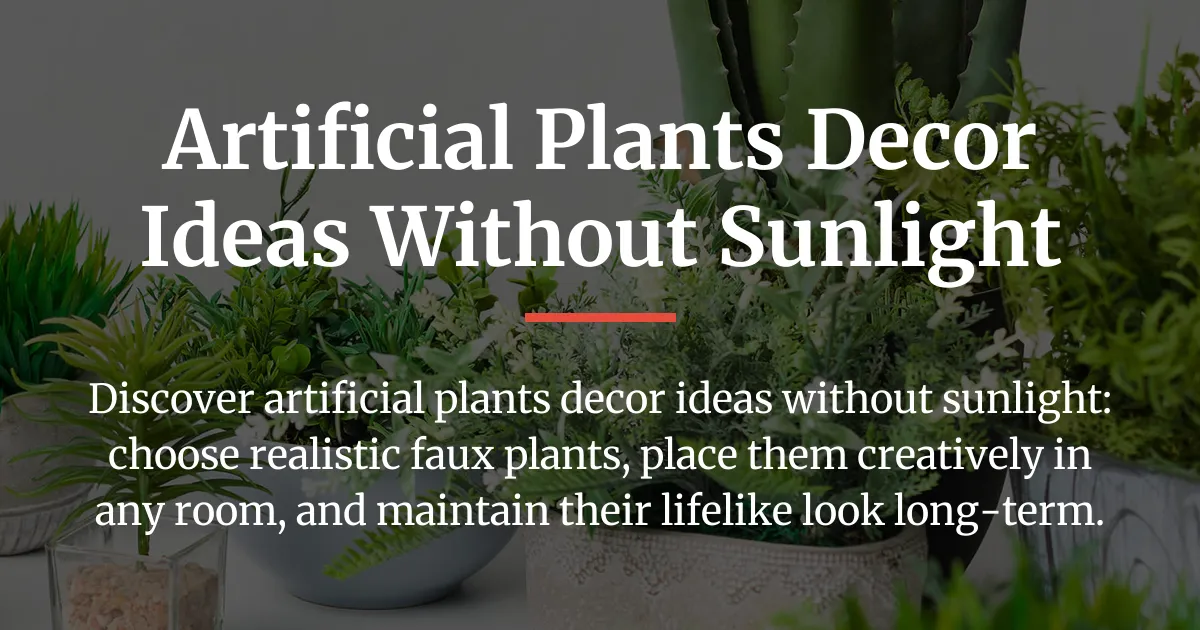
Decorating a room with no natural light is easy with artificial plants. This guide shares creative artificial plants decor ideas without sunlight, helping you turn dark corners into vibrant spaces. You will learn how to pick plants that look real, place them with style, and keep them fresh for years, all without worrying about sunlight.
Rethinking Greenery in Sunless Rooms
When a room has no sunlight, the goal changes from keeping plants alive to creating a beautiful mood. Artificial plants let you choose perfect shapes and colors that never fade or wilt. They become reliable design pieces, like art or furniture, that always look good.
This mindset shift is important because a real plant in low light might die and look sad. Artificial greenery stays lush and full, so your space feels happy and designed on purpose. Think of faux plants as tools for consistent beauty, not just fake substitutes.
The Realism Investment Strategy
You do not need every artificial plant to look super real. Spend more on plants in high-touch zones where people see them up close, like on a coffee table or desk. For these spots, choose plants with fine details and realistic texture, such as a fiddle leaf fig or a succulent with natural color variations.
In areas viewed from afar, like a high shelf or a dark hallway, simpler plants work well. A bold areca palm or a group of ferns in a wicker basket adds depth without needing costly details. This way, you mix premium styles with affordable options for a full, layered look.
Selecting Artificial Plants for Believable Beauty
Picking the right artificial plants means looking at materials, colors, and size. Choose plants made from silk or high-quality plastic blends that feel real to the touch. Avoid shiny surfaces that look cheap and fake.
Check for color variations in the leaves, just like real plants have. Some leaves should be lighter green, others darker, to mimic growth. This makes the plant blend into any aesthetic, from modern to farmhouse.
Stem construction matters too. Plants with wired stems let you bend branches into natural shapes, so they do not look stiff. This flexibility helps in creating custom arrangements that feel organic.
Scale is crucial for believability. A small plant in a big room gets lost, while a huge one can overwhelm. Measure your space and pick sizes that fit. For example, a tall corn stalk dracaena suits a floor corner, and a small agave plant is perfect for a desk.
How Light Interacts with Faux Foliage
Even though artificial plants do not need light, how light hits them affects realism. Place plants where room light, like from a lamp, can gently shine on the leaves. This creates soft shadows and highlights, making the foliage look dynamic and alive.
Avoid putting fake plants in direct, bright artificial light for long periods, as it can cause colors to fade over time. Instead, use ambient lighting to enhance their texture. This trick helps artificial plants blend seamlessly into your decor for a beautiful space.
Artificial Plants Decor Ideas Without Sunlight
Now, explore specific ways to use artificial plants in rooms with no sunlight. These ideas focus on practical application, from dark corners to statement pieces, ensuring your decor feels cohesive and inviting.
Creating Depth in Dark Corners and Hallways
Dark corners often feel empty, but a tall artificial plant like a bamboo palm or areca palm in a decorative planter can draw the eye upward. This adds vertical interest and breaks the monotony of plain walls.
For hallways, consider a series of small plants on a console table. Group different types, such as a mix of ferns and grasses, in complementary planters like wood or wicker baskets. This creates a vignette that feels curated, turning a passageway into a gallery of greenery.
You can also use wall-mounted planters with trailing plants like ivy to save floor space. This guides the eye along the hall and makes it feel more welcoming without needing sunlight.
Brightening Windowless Bathrooms and Offices
Bathrooms without windows can feel sterile, but artificial plants add life. Place a faux orchid or a small artificial fern on the vanity for elegance. These plants handle humidity well and require no watering, making them a smarter solution for damp areas.
In home offices with no natural light, artificial plants boost mood without distraction. A structured agave plant on your desk adds modern texture, or a hanging pothos from a shelf brings softness. These elements promote focus and creativity without the need for sunlight.
Choose plants that suit the room’s style. A sleek ceramic planter with a maidenhair fern fits a modern bathroom, while a rustic basket with a silk plant suits a cozy office. This personalization makes the space feel intentional.
Making a Statement in Living and Dining Areas
For larger rooms, artificial plants can serve as focal points. A full-sized areca palm in a stylish planter can act as a room divider, defining spaces without blocking light. Similarly, a large fiddle leaf fig in a basket adds a lush, tropical feel to living areas.
In dining rooms, use seasonal arrangements for centerpieces. Faux eucalyptus or berry stems in a decorative vase can be changed with the seasons, keeping your decor fresh. This approach lets you experiment with different looks without committing to live plants that might not thrive.
Do not shy away from mixing plant sizes and types. Combine a tall palm with medium ferns and small succulents on a console table for depth. Balance the arrangement with other decor like paintings or lamps for a harmonious look.
Maintaining Your Artificial Plants Decor
Keeping your artificial plants looking fresh requires minimal care. Follow these steps to ensure they remain lifelike and beautiful for years.
- Regular Dusting: Use a microfiber cloth or a soft brush to gently dust the leaves every few weeks. This prevents buildup and maintains color vibrancy, especially for delicate succulents with fine details.
- Deeper Cleaning: For a thorough clean, rinse plants with cool water or wipe with a damp cloth. Allow them to air dry completely before returning them to avoid water spots or damage.
- Preventing Material Fatigue: Keep artificial plants away from direct heat sources and intense artificial light to prevent fading or warping. Rotate them occasionally if exposed to light from one direction.
- Refreshing the Arrangement: Update your decor by swapping planters, regrouping plants, or adding new stems annually. This prevents visual fatigue and lets you adapt to seasonal changes without new purchases.
By treating artificial plants as part of your decor collection, you ensure they stay vibrant and flexible for any room.
Frequently Asked Questions
Can artificial plants be used in a bathroom with no window?
Yes, artificial plants are perfect for windowless bathrooms. Choose materials like silk or plastic that resist humidity, and avoid direct water contact. They add greenery without needing light or watering.
How do I make a cheap artificial plant look more expensive?
Upgrade the planter to a decorative vase or wicker basket, and group several plants together for a fuller look. Adding realistic moss or rocks around the base can also enhance the appearance.
What is the best way to clean dust from delicate artificial succulents?
Use a soft, dry brush like a makeup brush to gently dust between the leaves. For stubborn dirt, a quick rinse with cool water and air drying works well without damage.
Can I mix artificial plants with real ones in other parts of my home?
Absolutely. Mixing artificial and real plants can create depth and variety. Place realistic artificial plants among real ones in well-lit areas, ensuring a cohesive look by matching styles and scales.
How often should I rearrange my artificial plants decor?
Consider rearranging or refreshing your artificial plants decor every season or at least once a year. This keeps the look dynamic and prevents it from becoming stale.
Are there any artificial plant types that typically look less realistic?
Some cheap plastic plants with uniform colors and shiny surfaces can look fake. Avoid plants with overly perfect symmetry or bright, unnatural greens. Opt for those with color variations and textured leaves.
What kind of artificial lighting works best with fake plants?
Soft, indirect LED or ambient room lighting works best. It highlights the plants’ textures without causing glare or fading. Avoid placing them under harsh, direct spotlights for extended periods.
How do I secure tall artificial plants in a planter?
Use rocks, sand, or foam at the bottom of the planter to add weight and stability. For extra security, you can also use adhesive putty or a plant stake anchored in the base.
Is it okay to use outdoor artificial plants inside?
Yes, but check the materials. Outdoor plants are often UV-resistant and durable, which can be beneficial indoors. However, ensure they do not have a strong chemical smell or rough textures unsuitable for indoor spaces.
Where should I avoid placing artificial plants?
Avoid placing artificial plants directly next to heat sources like radiators or fireplaces, as heat can warp materials. Also, keep them out of constant direct sunlight to prevent color fading over time.
Embracing artificial plants decor ideas without sunlight lets you design vibrant, green spaces in any room. By selecting realistic plants, placing them thoughtfully, and maintaining them well, you can enjoy lush greenery without limitations. Start using these ideas to transform your sunless areas into beautiful, lifelike retreats.