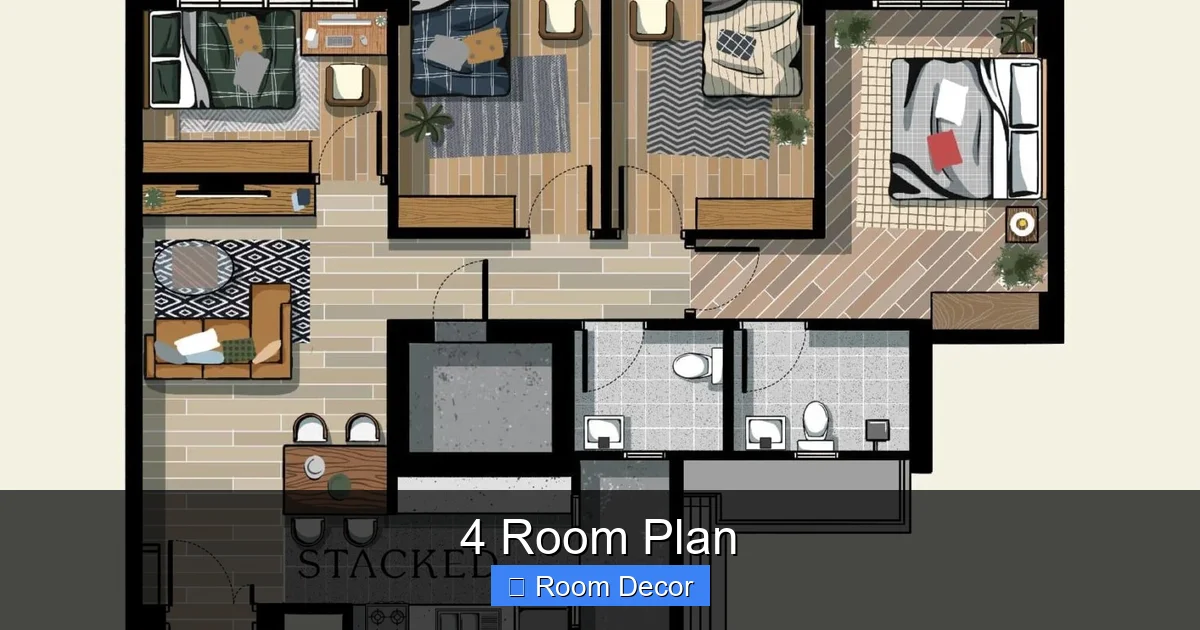
Unlock the secrets to a perfectly organized and beautifully styled home with our comprehensive guide to the 4-room plan. This strategy helps you define distinct functional zones within your living space, whether you’re dealing with a studio apartment or a larger home. Learn how to maximize every inch and create a harmonious flow, transforming your house into a dream home.
4 Room Plan
Welcome to the ultimate guide on mastering the 4-room plan! Are you feeling overwhelmed by clutter? Is your living space not serving your needs as effectively as it could? You’re not alone. Many of us dream of a home that is both beautiful and functional, a place that supports our daily activities, relaxation, and personal pursuits. The 4-room plan is a fantastic strategy that can help you achieve just that.
In this guide, we’ll break down what the 4-room plan is all about. We’ll walk you through how to implement it in your own home, step by step. You’ll learn how to divide your space into four key zones, each with a specific purpose. We’ll share practical tips, creative ideas, and even address common challenges you might face. By the end, you’ll be equipped to transform your home into a more organized, efficient, and enjoyable sanctuary.
Key Takeaways
- Understand the Core Concept: The 4-room plan divides your home into four distinct, functional zones: living/social, sleeping, working/hobbies, and storage/utility.
- Assess Your Needs: Before planning, analyze how you use your current space and what activities you want to accommodate in each zone.
- Zone Creation Strategies: Employ furniture arrangement, rugs, screens, and different paint colors to visually delineate your four rooms.
- Prioritize Functionality: Ensure each zone serves its intended purpose effectively, considering furniture placement, lighting, and accessibility.
- Embrace Decluttering: A successful 4-room plan requires a commitment to decluttering and organizing items into their designated storage areas.
- Personalize Your Zones: Infuse each area with your personality through decor, color palettes, and personal touches that reflect your lifestyle.
- Flexibility is Key: The 4-room plan is adaptable; don’t be afraid to adjust your zones as your needs and preferences evolve over time.
What Exactly is the 4-Room Plan?
At its heart, the 4-room plan is a philosophy of home organization and design. It’s about deliberately carving out specific areas within your home, each dedicated to a particular function. Think of it as creating distinct “rooms” within your existing layout, even if you don’t have traditional separate rooms for everything. The four core zones are generally understood as:
- The Living/Social Zone: This is your primary area for relaxation, entertainment, and spending time with family and friends.
- The Sleeping Zone: This is your private sanctuary for rest and rejuvenation.
- The Working/Hobby Zone: This space is dedicated to focused tasks, creative pursuits, or learning.
- The Storage/Utility Zone: This area is for keeping things organized and functional, including laundry, pantry items, and general storage.
This plan is incredibly versatile. It works wonderfully for people living in studio apartments, small homes, or even larger houses where different areas might blend together. The goal is to bring order and intention to your living space, making it work harder for you.
Step 1: Assess Your Current Space and Needs
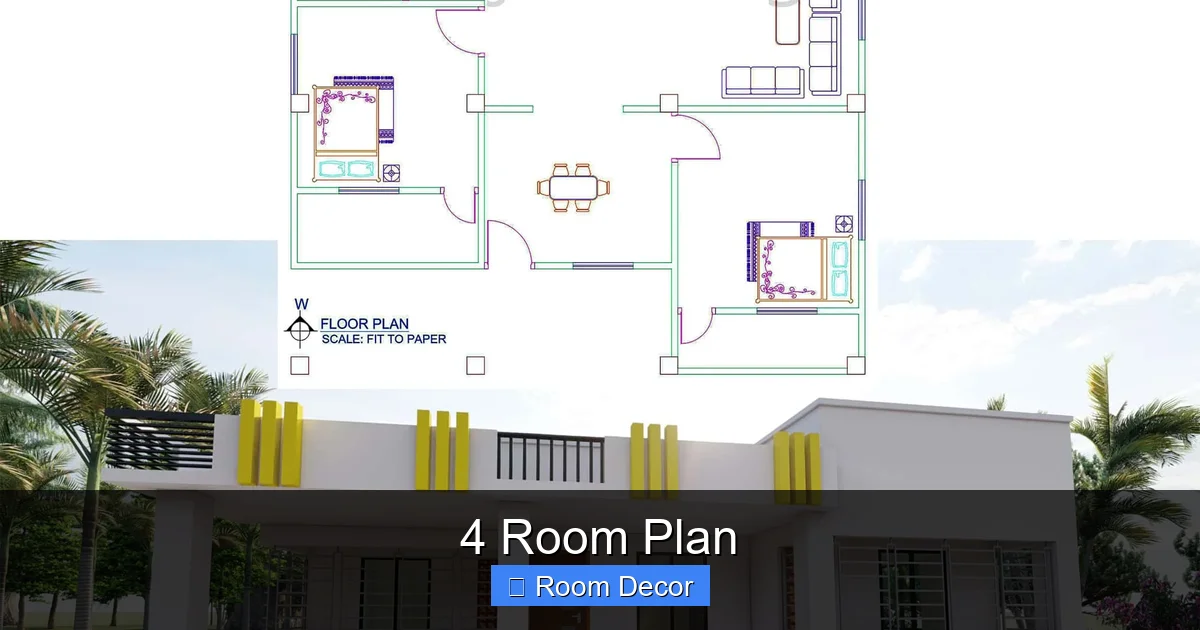
Visual guide about 4 Room Plan
Image source: sirajtech.org
Before you start rearranging furniture or buying new decor, the most crucial first step is to take a good, honest look at your current living situation. Understanding how you *actually* use your space and what you *wish* you could do in your space is key to a successful 4-room plan.
H3: Analyze Your Daily Routines
Spend a day or two observing your habits. Where do you spend most of your time? What activities do you engage in? Do you work from home? Do you enjoy reading? Do you need a dedicated space for crafts? Do you entertain often? Are there areas that constantly feel cluttered or unused?
For example, if you find yourself always taking your laptop to the kitchen table, you might need a dedicated workspace. If your living room is always messy with toys, it might be time to designate a specific play area.
H3: Identify Your “Must-Haves”
What are the absolute essentials for your comfort and functionality? Do you need a quiet corner to read? A comfortable spot to watch TV? A desk with good lighting? A place to store your workout gear? List these out.
H3: Consider Your Lifestyle
Are you a minimalist or do you have many hobbies that require dedicated space? Do you live alone or with a family? Do you have pets? Your lifestyle will greatly influence how you define and utilize each of your four zones. A family with young children will have different needs for their living and storage zones compared to a single professional.
Step 2: Define Your Four Zones
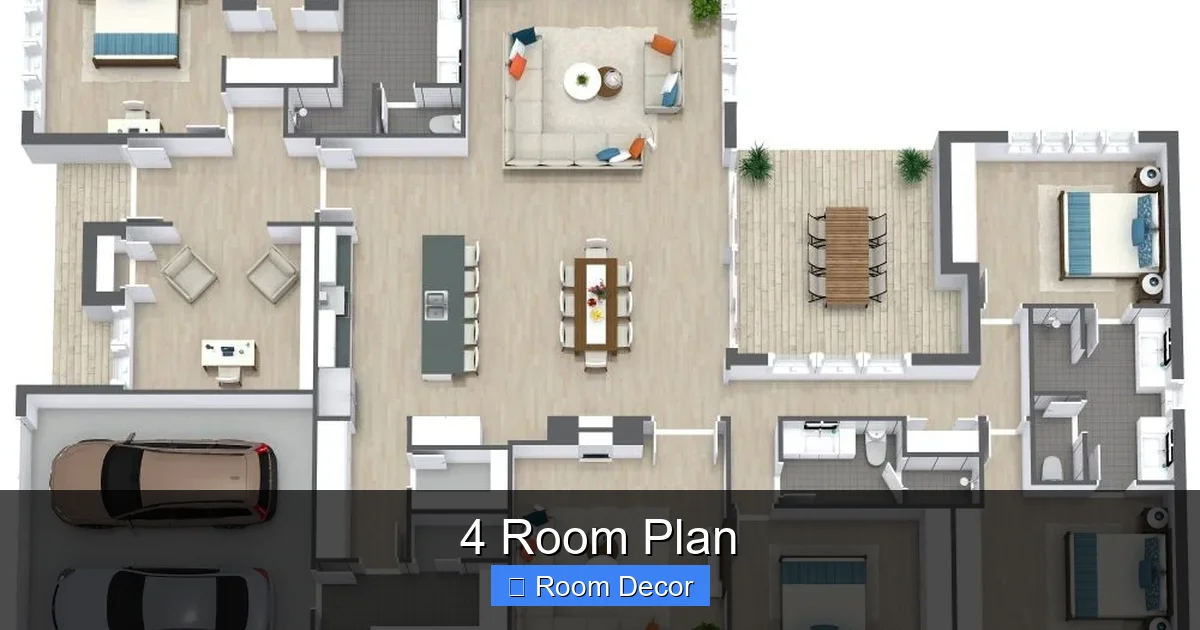
Visual guide about 4 Room Plan
Image source: fpg.roomsketcher.com
Now that you have a clear understanding of your needs, it’s time to start thinking about how to translate that into your physical space. This is where the “magic” of the 4-room plan really begins to happen.
H3: Designate Areas for Each Zone
Look at your home’s layout. Even in a studio apartment, you can create distinct zones. In a larger home, you might be repurposing existing rooms or dividing larger spaces.
* Living/Social Zone: This is often the largest zone. It could be your entire living room, or a section of a larger open-plan space. This is where your sofa, coffee table, and entertainment center might live.
* Sleeping Zone: This is usually your bedroom. The key here is to make it feel like a retreat, separate from the hustle and bustle of daily life.
* Working/Hobby Zone: This could be a spare bedroom, a corner of the living room, or even a dedicated nook. Think about what you need for this space: a desk, good lighting, shelving for supplies.
* Storage/Utility Zone: This zone encompasses areas like closets, pantries, laundry rooms, or even designated areas within other rooms for things like shoe racks or a coat area.
H3: Visualize the Flow
Consider how you will move between these zones. You want a natural flow that makes sense. For instance, you don’t want to have to walk through your sleeping zone to get to your working zone. Think about how you can connect and separate these spaces logically.
Step 3: Implement Zone Creation Strategies
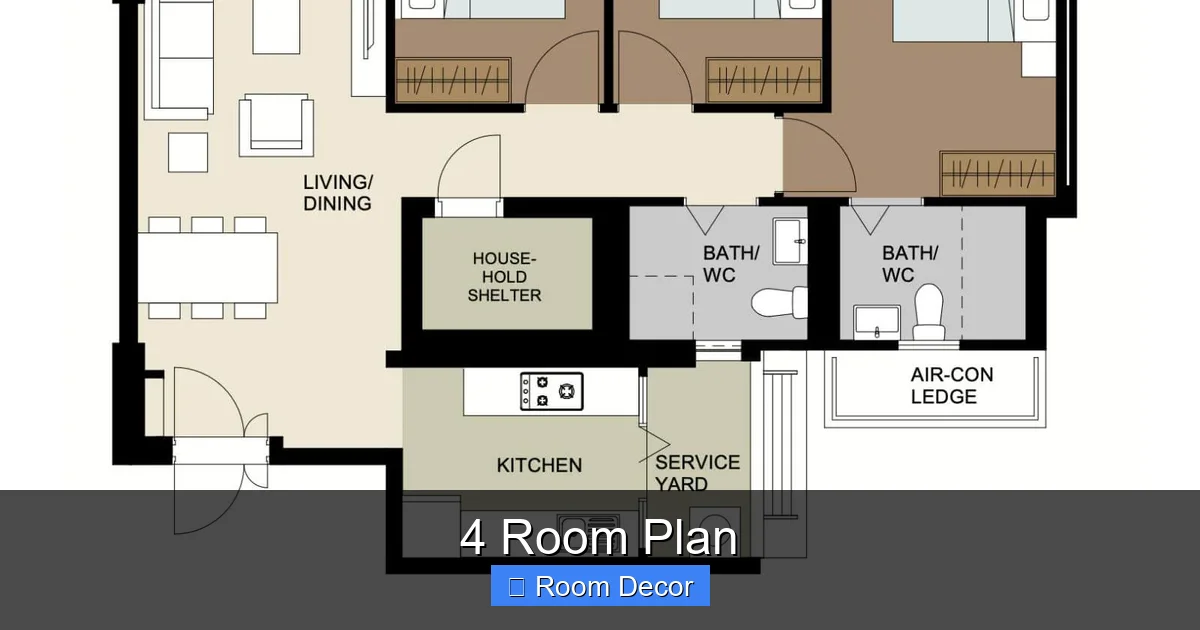
Visual guide about 4 Room Plan
Image source: directcurtain.com
This is where you get creative! You don’t need walls to create distinct rooms. Here are some effective strategies to visually and functionally separate your four zones.
H3: Furniture Arrangement is Key
This is one of the most powerful tools.
* Living/Social Zone: Arrange your sofa and chairs to face each other or towards an entertainment area, creating a conversational grouping.
* Working/Hobby Zone: Place your desk facing a wall or a window for minimal distraction. If it’s in an open plan area, position it so it doesn’t feel like it’s facing the main living space. A bookshelf can act as a divider.
* Sleeping Zone: Position your bed as the focal point, often against a solid wall, away from high-traffic areas.
H3: Use Rugs to Define Areas
Area rugs are fantastic for visually grounding a zone.
* Place a large rug under your sofa and coffee table to define the living area.
* A smaller rug next to your bed can signal the sleeping zone.
* A rug under your desk can demarcate your workspace.
H3: Employ Screens and Dividers
For open-plan spaces, room dividers, screens, or even tall bookshelves can create a sense of separation without closing off the space entirely.
* A folding screen can be moved as needed to temporarily divide a space.
* A strategically placed bookshelf can serve as both storage and a visual barrier.
H3: Vary Lighting
Different zones often require different types of lighting.
* **Living/Social Zone:** Ambient lighting from lamps, accent lighting for decor.
* **Sleeping Zone:** Soft, warm lighting from bedside lamps or dimmers.
* Working/Hobby Zone: Bright, focused task lighting over your desk or workspace.
H3: Use Color and Texture
Paint colors can subtly change the feel of a zone.
* A calming blue or green for the sleeping zone.
* A more vibrant or neutral color for the living area.
* A stimulating color or a calm, focused shade for the working zone.
Consider using different textures in rugs, curtains, and upholstery to further differentiate the zones.
Step 4: Declutter and Organize Within Each Zone
A successful 4-room plan hinges on being organized. This means letting go of what you don’t need and giving everything a designated “home.”
H3: The Art of Decluttering
* **Be Ruthless:** Go through your belongings room by room, or zone by zone. Ask yourself: do I use this? Do I love this? Do I need this? If the answer is no to all, it’s time to donate, sell, or discard.
* **One In, One Out Rule:** For every new item that comes into your home, try to remove a similar item.
H3: Smart Storage Solutions
Once you’ve decluttered, implement smart storage to keep each zone tidy.
* **Living/Social Zone:** Use ottomans with storage, decorative baskets for throws and magazines, and media consoles with closed cabinets.
* Sleeping Zone: Utilize under-bed storage, a well-organized closet system, and bedside tables with drawers.
* Working/Hobby Zone: Invest in drawer organizers, shelving units, file cabinets, and containers for craft supplies.
* Storage/Utility Zone: Maximize vertical space with shelves, use clear bins for easy identification, and label everything clearly.
H3: Maintain the System
The 4-room plan isn’t a one-time event. It requires ongoing maintenance. Make a habit of putting things back in their designated places. Schedule regular decluttering sessions.
Step 5: Personalize Your Zones
Now for the fun part – making each zone truly yours! This is where you inject your personality and style into your home.
H3: Living/Social Zone
This is your showcase. Add comfortable seating, decorative pillows, art that reflects your tastes, and plants to bring life into the space. Think about creating an inviting atmosphere for yourself and your guests.
H3: Sleeping Zone
Make this your ultimate sanctuary. Choose calming colors, soft bedding, and personal touches like photos or meaningful artwork. Consider blackout curtains for better sleep.
H3: Working/Hobby Zone
This space should inspire you. Display motivational quotes, organize your tools or supplies aesthetically, and choose lighting that makes you feel productive and comfortable.
H3: Storage/Utility Zone
While this zone is primarily about function, you can still add a touch of personality. Use attractive baskets, labels that match your decor, and perhaps some simple artwork to make it feel less utilitarian.
Practical Tips and Examples
* **Small Apartment Studio:**
* Living/Social: Sofa, coffee table, and a small rug defining the area.
* Sleeping: A murphy bed or a stylish sofa bed that can be put away.
* Working/Hobby: A foldable desk that can be tucked away when not in use, or a floating desk mounted on the wall.
* Storage: Utilize vertical space with tall shelving units, under-bed storage, and wall-mounted organizers.
* **Family Home:**
* Living/Social: A spacious living room with designated play zones for kids within it (e.g., a corner with a rug and toy bins).
* Sleeping: Individual bedrooms, perhaps a shared “family room” for movie nights.
* Working/Hobby: A dedicated home office, or a craft table set up in a multipurpose room.
* Storage: A well-organized pantry, a mudroom for coats and shoes, and ample closet space.
* **Open Plan Living:**
* Use furniture placement: a sofa can divide the living area from the dining area.
* Use rugs: one for the living area, another for the dining area.
* Use lighting: pendant lights over the dining table, floor lamps in the living area.
* Use screens: a decorative screen can create a private nook for a reading chair or a small workspace.
Troubleshooting Common Challenges
* **”I don’t have enough space!”**
* **Solution:** Get creative with vertical space. Think shelves, wall-mounted units, and over-the-door organizers. Embrace multi-functional furniture. For example, an ottoman that doubles as storage and extra seating.
* **”My zones keep blending together.”**
* **Solution:** Reinforce your visual cues. Ensure your rugs are clearly defining areas. Consider using furniture like a low bookshelf or a console table as a subtle divider.
* **”I have too much stuff!”**
* **Solution:** This is where the decluttering step is crucial. Be honest about what you truly need and use. If you’re struggling, consider the “KonMari” method or hiring a professional organizer.
* **”It feels too rigid, I like spontaneity.”**
* **Solution:** The 4-room plan is a framework, not a straitjacket. Adapt it to your needs. Some zones might be more fluid than others. A flexible room divider can help.
Conclusion
The 4-room plan offers a powerful and accessible way to transform your living space. By thoughtfully dividing your home into distinct functional zones – living/social, sleeping, working/hobbies, and storage/utility – you can create a more organized, efficient, and enjoyable environment. Remember to assess your unique needs, implement creative zone-creation strategies, prioritize decluttering, and personalize each area to reflect your lifestyle. With a little planning and consistent effort, you can turn any space into a harmonious sanctuary that perfectly supports your daily life. Happy organizing!