Transform your bedroom into a spacious sanctuary with these 7 ingenious hacks for foldable bed systems. Learn how to maximize every inch, from optimizing vertical storage to choosing dual-purpose furniture and smart lighting. These practical tips will help you create a functional, stylish, and adaptable living space, making the most of your versatile foldable bed system and enhancing your home’s functionality.
Living in smaller spaces often means getting creative with how we use every square foot. This is especially true for bedrooms, where the need for a comfortable sleeping area often clashes with the desire for functional living space. Enter the hero of modern compact living: the foldable bed system. Whether you call it a Murphy bed, a wall bed, or a cabinet bed, these ingenious systems allow you to reclaim valuable floor space when your bed is not in use.
But simply having a foldable bed isn’t enough. To truly unlock its potential, you need smart design strategies. This guide will walk you through seven practical bedroom hacks specifically designed for homes with foldable bed systems. You’ll learn how to transform your bedroom from a cramped sleeping area into a versatile, stylish, and highly functional space that adapts to your daily needs. Get ready to maximize your square footage, enhance your decor, and make the most of your amazing foldable bed system!
Key Takeaways
- Optimize Vertical Space: Utilize built-in shelving, wall-mounted organizers, and headboard storage to keep clutter off the floor and integrate seamlessly with your foldable bed system.
- Embrace Dual-Purpose Furniture: Choose items like desk-bed combos, sofa-beds, or ottomans that serve multiple functions, adapting to your needs whether the bed is open or closed.
- Strategize Placement: Position your foldable bed system thoughtfully to maintain clear traffic paths, maximize natural light, and ensure a functional flow in your room.
- Go Modular and Movable: Incorporate lightweight, stackable, or nesting furniture and decor that can be easily rearranged or stored when deploying your bed.
- Implement Smart Lighting: Use layered lighting solutions, including wall-mounted fixtures and smart controls, to create versatile ambiances that adapt to different room configurations.
- Create Illusion with Color and Mirrors: Opt for light color palettes, strategic mirror placement, and streamlined decor to make your bedroom feel more spacious and open.
- Personalize Smartly: Curate decor and textiles that are easy to store or integrate into your foldable bed system’s design, ensuring your space feels cozy and personal without feeling cluttered.
Hack 1: Optimize Vertical Space with Integrated Storage
When floor space is at a premium, the only way to go is up! Maximizing vertical space around your foldable bed system is one of the most effective ways to boost storage without sacrificing precious room to move. Think of the walls around your bed as prime real estate waiting to be developed.
Built-in Shelving and Cabinets
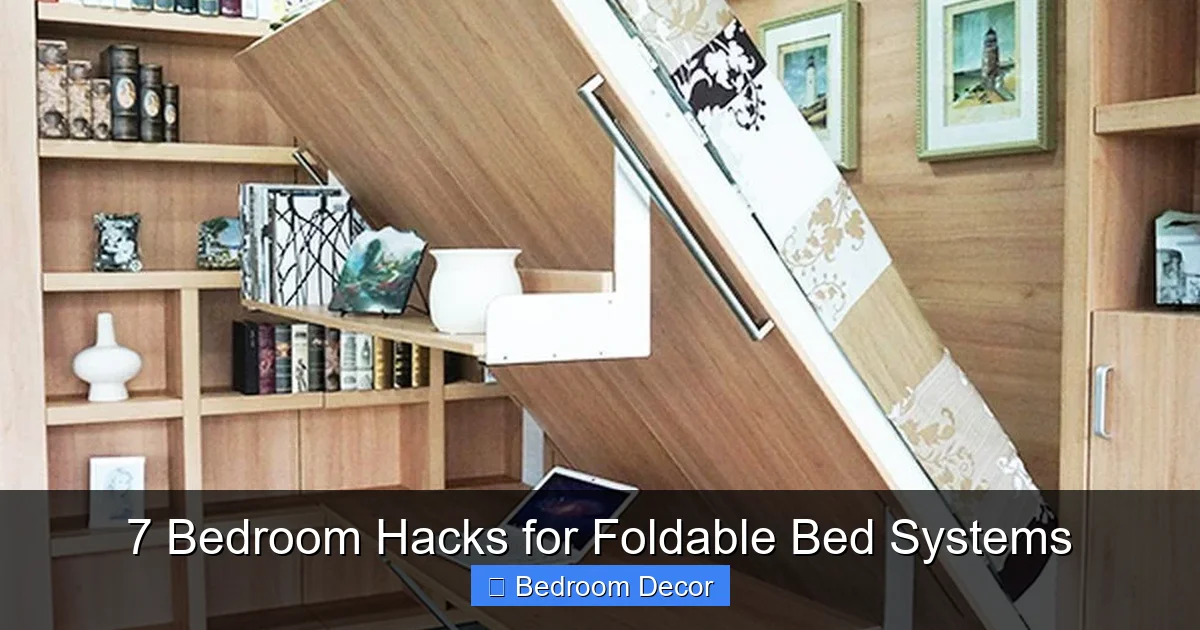
Many modern foldable bed systems come with integrated shelving or cabinet units on either side or above the bed frame. If yours doesn’t, consider adding custom built-ins or modular furniture that frames the bed when it’s closed. These units can house books, decorative items, clothes, or even a hidden desk. When the bed is folded away, these cabinets create a seamless, elegant wall unit that makes your room feel less like a bedroom and more like a sophisticated living area.
Practical Tip: Choose shelving with adjustable heights for flexibility. Include some closed cabinets to hide clutter and maintain a tidy appearance, especially in a multi-functional room.
Headboard Storage Solutions
Even a foldable bed can benefit from a “headboard” that doubles as storage. When the bed is stowed, the back panel or a shallow console can act as a display shelf for small plants, photos, or charging devices. When the bed is down, this same area can hold nighttime essentials. Some systems even feature pull-down shelves or cubbies that become accessible once the bed is deployed.
Practical Tip: Ensure any items on these shelves are lightweight and secure, or can be easily removed before folding the bed up. Magnetic strips can keep small metallic items from falling.
Wall-Mounted Organizers
Beyond built-ins, consider wall-mounted shelves, floating cubes, or pegboards. These can be placed strategically to hold everyday items without encroaching on floor space. A pegboard wall, for example, offers incredible versatility, allowing you to reconfigure hooks and shelves for different needs – from holding office supplies when the room is a workspace to displaying art when it’s a living room.
Practical Tip: Use wall-mounted organizers for items you need frequently, like keys, glasses, or charging cables, keeping them accessible but out of the way.
Hack 2: Master the Art of Dual-Purpose Furniture
The key to making a small space feel large and functional is furniture that pulls double duty, or even triple duty! This concept perfectly complements the versatility of a foldable bed system.

Visual guide about 7 Bedroom Hacks for Foldable Bed Systems
Image source: i.pinimg.com
Desk-Bed Combos
Perhaps the most popular dual-purpose furniture for foldable bed systems is the desk-bed combo. Many wall beds are designed so that a desk surface automatically tucks away or slides under the bed as it lowers, meaning you don’t even have to clear your workspace before sleeping. This is a game-changer for home offices that need to transform into bedrooms overnight.
Practical Tip: Look for systems where the desk remains level as the bed deploys, so you don’t have to remove items from your desk each time. This saves immense time and effort.
Sofa-Beds and Ottoman Seating
If your foldable bed system is in a living room or studio apartment, consider pairing it with a comfortable sofa or ottoman that serves as seating during the day. Some wall beds even come with integrated sofas that fold down with the bed. Ottomans with storage compartments are excellent for stashing extra blankets, pillows, or remotes, keeping your space tidy. When guests arrive, the sofa provides seating, and when it’s time for bed, the wall bed descends, transforming the room.
Practical Tip: Choose a sofa or ottoman on wheels for easy repositioning when deploying the bed, or ensure it’s lightweight enough to move without hassle.
Folding Tables and Chairs
Beyond the larger furniture pieces, think about small, collapsible items. A slim, folding dining table can be stored against a wall or in a closet and brought out for meals or extra workspace. Folding chairs can hang on hooks or stack neatly in a corner. These pieces give you the flexibility to host or work without dedicating permanent floor space.
Practical Tip: Invest in quality folding furniture that is sturdy and looks good, rather than cheap, flimsy options. Durability matters when items are frequently moved.
Hack 3: Strategic Placement for Flow and Function
Where you place your foldable bed system dramatically impacts the overall feel and functionality of your room. It’s not just about fitting it in; it’s about making it work with the rest of your space.

Visual guide about 7 Bedroom Hacks for Foldable Bed Systems
Image source: simplifycreateinspire.com
Consider Traffic Patterns
When planning the layout, visualize both scenarios: with the bed folded up and with the bed deployed. Ensure there’s a clear path to doors, windows, and other furniture, regardless of the bed’s position. Avoid blocking essential access points or creating awkward detours. The bed should fold down without bumping into a desk or requiring you to move a heavy dresser.
Practical Tip: Map out your room on graph paper or use painter’s tape on the floor to visualize the bed’s footprint in both positions before installation. This helps prevent costly mistakes.
Maximize Natural Light
Try to position your foldable bed system in a way that doesn’t obstruct windows or block natural light when it’s folded up. Natural light makes a room feel larger and more inviting. If the bed must be near a window, ensure its design (e.g., a lighter color or a sleeker profile) minimizes its visual impact on the light flow. When the bed is deployed, consider sheer curtains or blinds that allow some light in while maintaining privacy.
Practical Tip: If your room lacks natural light, compensate with layered artificial lighting (see Hack 5) to brighten the space.
Future-Proofing Your Layout
Think about how your needs might change over time. Could this room serve as a guest room, a home office, or even a gym? A well-planned layout for your foldable bed system allows for easy adaptation. Ensure there’s enough flexibility to bring in other pieces of furniture or equipment without a complete overhaul.
Practical Tip: Keep surrounding furniture pieces lightweight and easily movable to accommodate different room configurations as your needs evolve.
Hack 4: Embrace Modular and Movable Decor
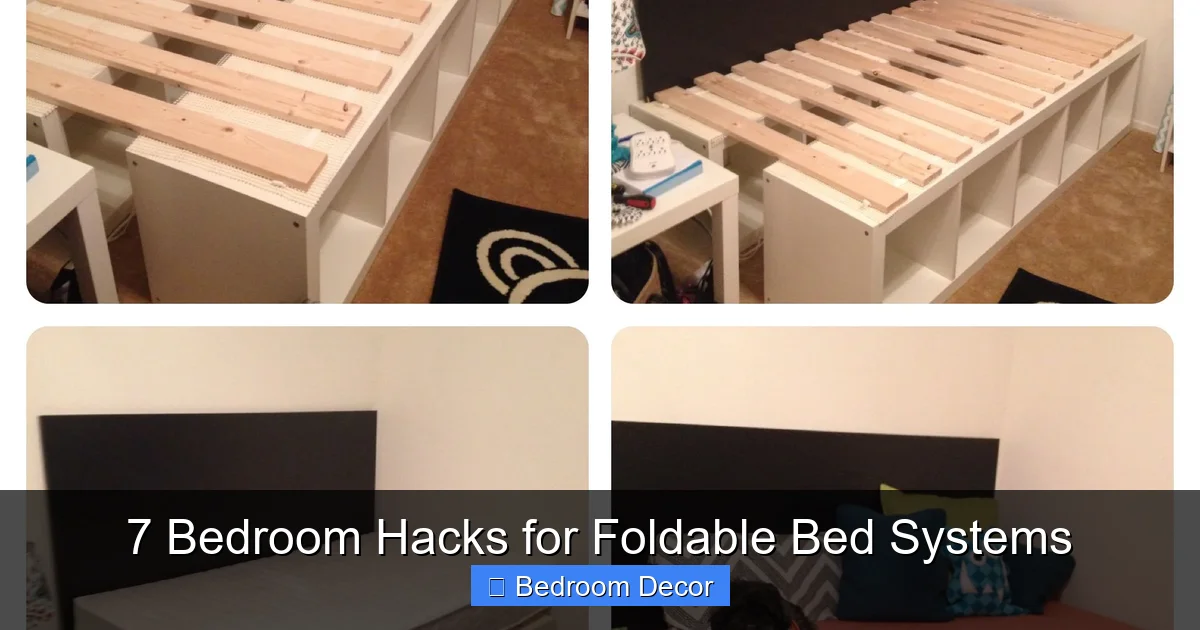
When your room’s main feature (the bed!) is constantly changing its state, your decor needs to be just as adaptable. Heavy, permanent pieces can hinder the functionality of your foldable bed system.
Visual guide about 7 Bedroom Hacks for Foldable Bed Systems
Image source: i.pinimg.com
Lightweight Furniture
Opt for furniture that’s easy to move or reconfigure. Small, lightweight side tables, poufs, or beanbag chairs can be quickly shifted when you need to deploy the bed. Acrylic or wire furniture can also create an airy feel, making the room appear less cluttered.
Practical Tip: If you absolutely need a larger piece of furniture, consider putting it on casters (wheels) so it can be rolled aside effortlessly when the bed is in use.
Stackable and Nesting Pieces
Nesting tables or stackable stools are brilliant for small spaces. They offer multiple surfaces or seating options when needed but can be tucked away neatly into a compact footprint when not in use. This flexibility is invaluable in a multi-functional room.
Practical Tip: Choose nesting tables that vary in height to create visual interest when they are pulled out for use, and ensure they are sturdy enough for their intended purpose.
Portable Partitions
If your foldable bed system is in a studio apartment and you want to create a sense of separate zones, consider a lightweight, portable room divider. A decorative screen or a rolling bookshelf can define areas during the day and be easily folded or moved when the bed needs to come down. This offers privacy without permanent construction.
Practical Tip: Choose partitions with open shelving or translucent panels to allow light to pass through, preventing the space from feeling too closed off.
Hack 5: Smart Lighting Solutions
Lighting can completely transform the mood and perceived size of a room. For a space with a foldable bed system, layered and flexible lighting is crucial to adapt to its various roles.
Layered Lighting for Versatility
Don’t rely on a single overhead light. Incorporate ambient lighting (general room illumination), task lighting (for reading or working), and accent lighting (to highlight decor). Dimmers are your best friend, allowing you to adjust brightness for different activities – bright for working, soft for relaxing, and dim for sleeping.
Practical Tip: Use LED strip lights under shelves or behind panels of your foldable bed system for a modern, ambient glow that doesn’t take up any physical space.
Wall-Mounted and Flexible Fixtures
Floor lamps can be cumbersome and get in the way when deploying a bed. Instead, opt for wall-mounted sconces, picture lights, or swing-arm lamps that can be positioned precisely where needed for reading or task work. These free up floor and surface space. Recessed lighting is also an excellent choice for general illumination, as it’s completely flush with the ceiling.
Practical Tip: Install wall-mounted lamps with independent switches or smart bulbs so you can control them from your bed without getting up.
Smart Home Integration
Embrace smart lighting. Smart bulbs and switches can be controlled via voice commands or a smartphone app, allowing you to change colors, brightness, and even set schedules. This is incredibly convenient in a multi-functional room, letting you instantly shift the ambiance from a vibrant workspace to a calming bedroom.
Practical Tip: Integrate smart plugs to control non-smart lamps, adding another layer of convenience to your adaptable space.
Hack 6: The Illusion of Space with Color and Mirrors
Visual tricks can make a small room feel significantly larger and more open, which is essential when a large item like a bed frequently appears and disappears.
Light Color Palettes
Paint walls in light, neutral colors like white, cream, pale grey, or soft pastels. These colors reflect light, making the room feel brighter and more expansive. You can add pops of color through accessories and textiles, which are easier to change than paint. Even your foldable bed system itself can be chosen in a light finish to blend seamlessly with the walls when closed.
Practical Tip: Consider painting the ceiling a lighter shade than the walls (or the same shade as the walls if they are already light) to make the room feel taller.
Strategic Mirror Placement
Mirrors are a designer’s secret weapon for making a room feel larger. A large mirror placed strategically can reflect light and the illusion of depth, effectively doubling the perceived size of the room. Place a full-length mirror on the wall opposite a window or where it can reflect an interesting focal point.
Practical Tip: Some foldable bed systems even incorporate a mirror on the panel that becomes visible when the bed is folded up. This is a brilliant two-in-one solution for both functionality and aesthetic.
Streamlined Decor
Keep decor minimalist and uncluttered. A few well-chosen pieces are more impactful than many small knick-knacks that can make a space feel busy and chaotic. When choosing furniture, opt for pieces with clean lines and legs that allow light to pass underneath, making them appear less heavy.
Practical Tip: Use transparent or semi-transparent materials like glass or acrylic for small tables or chairs to maintain an open, airy feel.
Hack 7: Personalize and Accessorize Smartly
Just because your room is highly functional doesn’t mean it can’t be personal and cozy. The trick is to choose accessories and textiles that complement your foldable bed system and adapt to its flexibility.
Curated Decor Collections
Instead of spreading decor throughout the room, create a few curated collections on shelves or within display niches. These can be items that reflect your personality and interests. When the bed is down, these collections provide visual interest without getting in the way. When the bed is up, they elevate the room’s aesthetic.
Practical Tip: Choose decorative items with a similar color palette or theme to create a cohesive and calming look.
Easy-to-Store Textiles
Think about blankets, throw pillows, and rugs. While you want your bed to be comfortable, you might not want bulky bedding on display when the bed is folded up. Opt for bedding that is easy to fold and store in an integrated cabinet or a storage ottoman. Lightweight throw blankets can be neatly draped over a sofa or chair during the day.
Practical Tip: Use a durable, low-pile rug that can withstand furniture being moved over it, or opt for smaller, washable rugs that can be rolled up and stored when necessary.
Art That Adapts
Wall art can make a huge impact. For a space with a foldable bed, consider a gallery wall with lighter frames that are easy to move if needed, or choose art that can be enjoyed from different vantage points. Some clever foldable bed systems even incorporate artwork directly onto the bed panel, so a beautiful scene appears when the bed is stowed.
Practical Tip: Consider removable peel-and-stick wallpaper or wall decals for a splash of personality that can be changed without damaging walls.
Troubleshooting Common Foldable Bed Challenges
Even with the best hacks, you might encounter a few snags. Here are quick solutions for common challenges:
Limited Storage Options
If you’ve optimized vertical space and still need more, consider under-bed storage bins for items you don’t use daily. When the bed is down, these can be accessed. Alternatively, look for slim, rolling carts that can slide into tight gaps or closets.
Room Feels Cramped
Re-evaluate your color scheme and mirror placement. Ensure there’s enough clear floor space for movement when the bed is both open and closed. Declutter relentlessly; if you haven’t used something in a year, it might be time to let it go. Focus on a few quality pieces rather than many small ones.
Difficulty Decorating
If you’re struggling to make the space feel cohesive, try to stick to a consistent style or theme. Use Pinterest or interior design magazines for inspiration for small, multi-functional spaces. Remember, less is often more. Your foldable bed system is a statement piece; let it shine and complement it with thoughtful, minimalist decor.
Conclusion
A foldable bed system is more than just a place to sleep; it’s a foundation for flexible, intelligent living. By implementing these seven bedroom hacks, you’re not just saving space; you’re designing a dynamic environment that adapts to your lifestyle. From maximizing vertical storage to choosing multi-functional furniture and smart decor, each tip helps you create a home that’s both beautiful and incredibly efficient. Embrace the versatility, get creative, and enjoy your transformed, spacious bedroom!