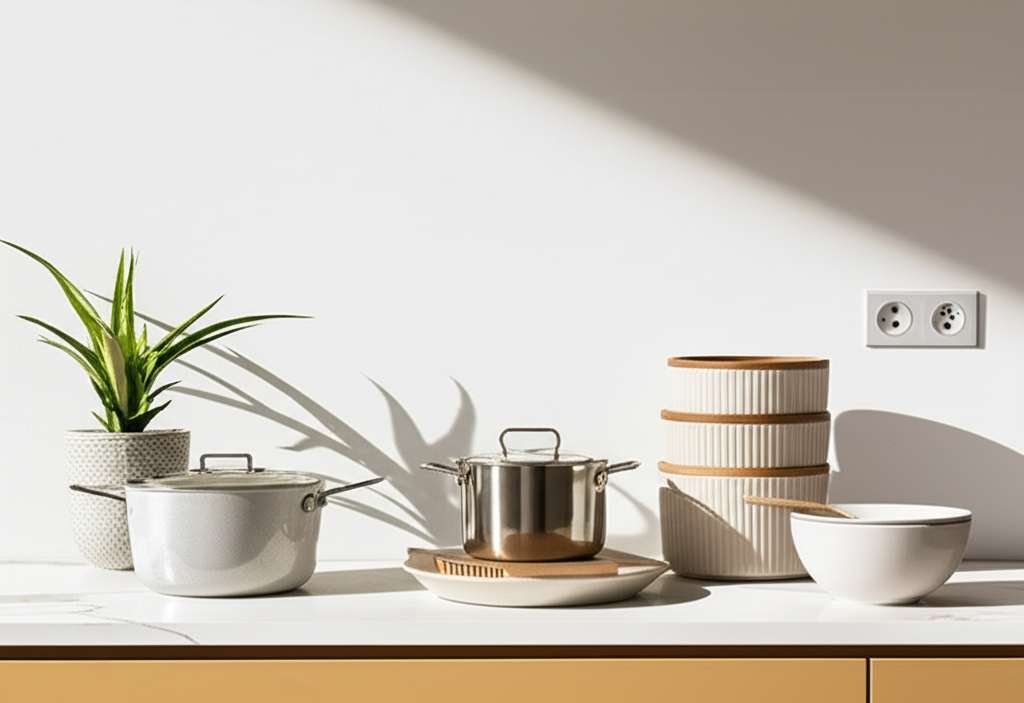
Create a stylish and functional kitchen with 8 minimalist essentials. Discover smart savings and declutter your space for a calm, efficient cooking area. Perfect for beginners!
Feeling overwhelmed by kitchen clutter? You’re not alone! So many of us dream of a beautiful, organized kitchen, but the reality can feel like a chaotic jumble of gadgets and dishes. It’s easy to accumulate things we rarely use, leading to cramped countertops and stressful cooking sessions.
But what if I told you that less can actually be more? Embracing a minimalist approach to your kitchen doesn’t mean sacrificing style or functionality. It’s about choosing the right pieces that serve multiple purposes and bring a sense of calm to your cooking space.
This guide is here to help you navigate the world of minimalist kitchen essentials. We’ll walk through eight must-have items that will transform your kitchen into a serene, efficient, and budget-friendly haven. Get ready to discover how smart choices can lead to big savings and a happier cooking experience!
Why Go Minimalist in the Kitchen?
A minimalist kitchen is more than just a trend; it’s a lifestyle choice that brings incredible benefits. Imagine walking into a kitchen that feels open, airy, and calm. This sense of peace can extend to your cooking, making meal prep a joy rather than a chore.
Beyond the aesthetic appeal, a minimalist kitchen saves you time and money. When you have fewer items, cleaning is a breeze. You also stop buying duplicates or items you don’t truly need, which is a fantastic way to keep your budget in check. It’s about intentionality – having only what you love and use.
8 Minimalist Kitchen Essentials for Smart Savings
Ready to create your dream minimalist kitchen without breaking the bank? These eight essential categories focus on versatility, durability, and timeless design. By investing wisely in these core items, you’ll build a foundation that serves you for years to come.
1. A Quality Chef’s Knife
This is arguably the most important tool in any kitchen. A good chef’s knife can handle almost every task, from chopping vegetables to dicing meat. Investing in one high-quality knife means you won’t need a whole block of lesser knives.
Look for a knife made from durable stainless steel with a comfortable handle. Brands like Wüsthof, Shun, or even a well-regarded Victorinox Fibrox Pro can be excellent choices. Caring for your knife properly – washing by hand and sharpening regularly – will ensure it lasts a lifetime.
Why it’s a smart saving: Reduces the need to buy multiple specialized knives, saving space and money in the long run. A sharp knife is also safer and more efficient.
2. A Versatile Dutch Oven
A Dutch oven is a true workhorse. This heavy-duty pot is perfect for everything from baking bread and making stews to braising meats and even frying. Its even heat distribution makes it ideal for slow cooking and achieving perfect results.
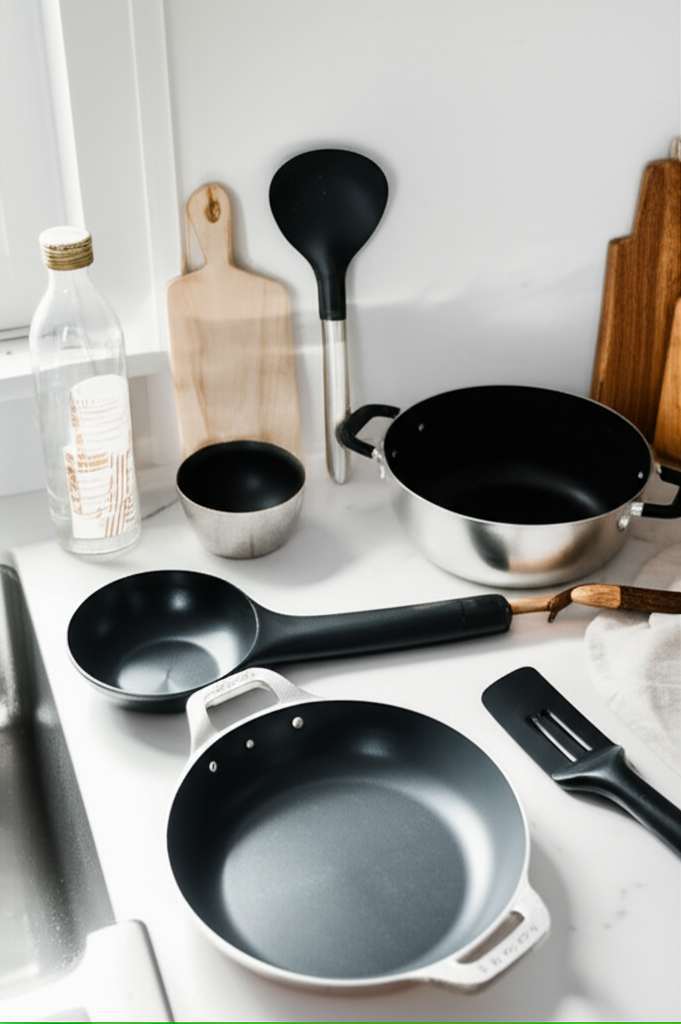
Materials like enameled cast iron are popular for their durability and non-stick properties. Brands like Le Creuset and Staub are premium options, but many affordable alternatives offer similar performance. Look for a size that fits your typical cooking needs – around 5-7 quarts is usually a good starting point for families.
Why it’s a smart saving: Replaces multiple pots and pans (stockpot, casserole dish, frying pan). Its longevity means you won’t need to replace it for decades.
3. A Set of Sturdy Mixing Bowls
You don’t need a dozen mixing bowls. A set of three nesting bowls in varying sizes (small, medium, large) is usually sufficient. They are essential for mixing ingredients, marinating, and serving.
Opt for durable materials like stainless steel, glass, or ceramic. Stainless steel is lightweight and won’t break, while glass offers a clean aesthetic and can often go from mixing to oven. Nesting bowls are a space-saving bonus for smaller kitchens.
Why it’s a smart saving: A small, versatile set prevents clutter and the impulse to buy more bowls than you need. Nesting designs maximize storage.
4. Essential Utensils (Spatula, Whisk, Slotted Spoon)
Instead of a drawer overflowing with gadgets, focus on a few high-quality, multi-purpose utensils. A heat-resistant silicone spatula, a sturdy whisk, and a slotted spoon can cover most of your stirring, mixing, and serving needs.
Consider utensils made from durable materials like stainless steel with silicone or wood handles. Silicone is great because it’s heat-resistant and won’t scratch your cookware. A good set will feel comfortable in your hand and stand up to daily use.
Why it’s a smart saving: Eliminates the need for specialized, single-use tools. Choosing durable options means they won’t need frequent replacement.
5. A Reliable Cutting Board
A good cutting board protects your countertops and your knives. Opt for one made from wood (like bamboo or maple) or a durable composite material. Avoid glass boards, as they dull knives quickly.
Having one medium-to-large sized board is usually enough for most home cooks. If you’re concerned about cross-contamination, consider getting two – one for meats and one for produce. However, thorough washing between uses can often suffice for a minimalist approach.
Why it’s a smart saving: A single, well-maintained board prevents the accumulation of multiple, less practical boards. It also protects your expensive knives.
6. A Multi-Functional Blender or Immersion Blender
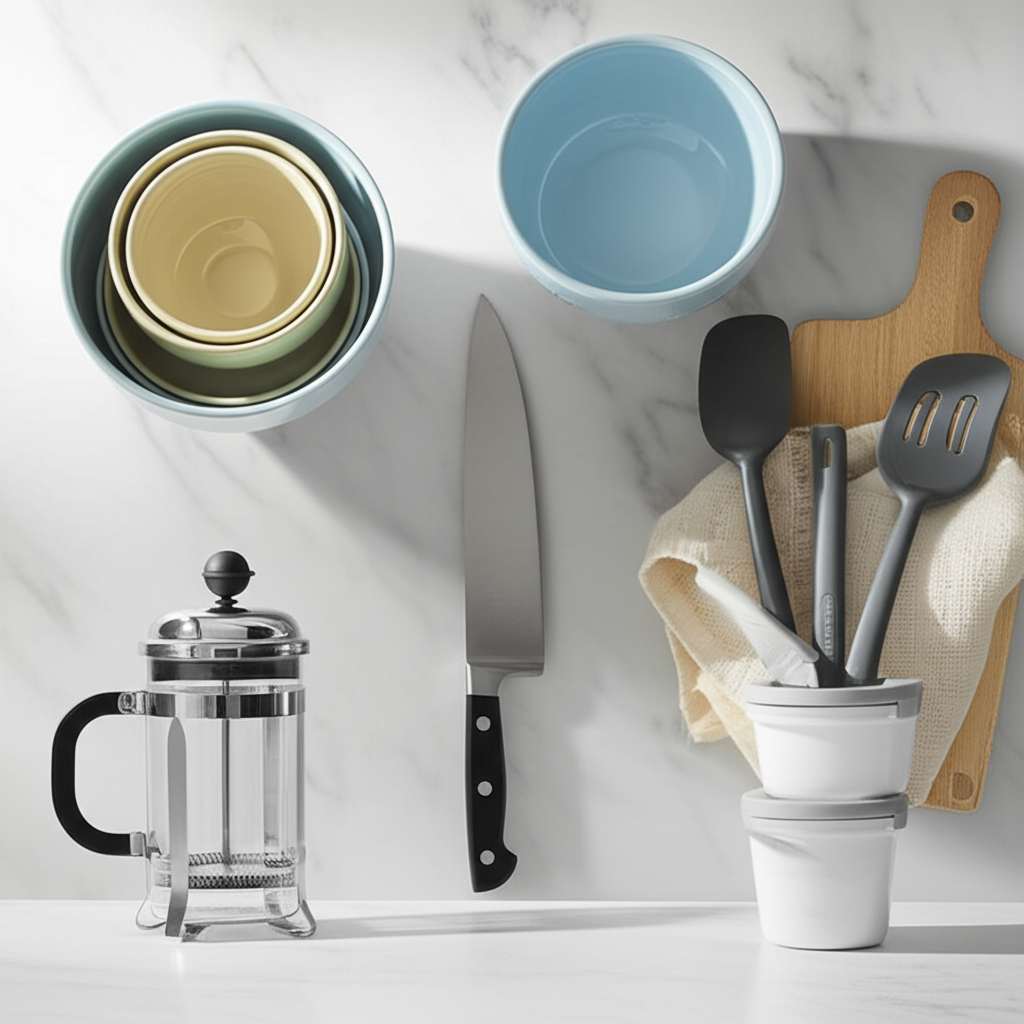
A high-powered blender can make smoothies, soups, sauces, and nut butters. If space is a concern, an immersion blender (or stick blender) is a fantastic minimalist alternative. It can blend directly in pots and bowls, saving on washing up and storage.
For a full blender, look for one with multiple speed settings and a durable motor. For an immersion blender, check for a powerful motor and useful attachments like a whisk or mini chopper. Brands like Vitamix and Blendtec are top-tier for full blenders, while Braun and Cuisinart offer great immersion options.
Why it’s a smart saving: Replaces the need for separate food processors or mixers for many tasks. An immersion blender is particularly space-saving.
7. A Set of Stackable Food Storage Containers
Say goodbye to mismatched plastic containers! A set of stackable, airtight food storage containers in glass or BPA-free plastic is essential for leftovers, meal prepping, and packing lunches. Glass containers are excellent as they can go from fridge to oven or microwave.
Look for containers that nest or stack efficiently to save cabinet space. Having a few different sizes within the set will cover most of your needs. Airtight seals keep food fresher for longer, reducing waste.
Why it’s a smart saving: Prevents the endless cycle of buying cheap containers that warp or break. Reduces food waste by keeping leftovers fresh.
8. A Kettle or Coffee Maker (Choose One!)
For many, a morning beverage is non-negotiable. However, do you really need both a stovetop kettle and an electric coffee maker if you only drink one? If you’re a tea lover, a good kettle is your essential. If coffee is your go-to, choose a simple, reliable coffee maker.
For kettles, consider stainless steel for durability. For coffee makers, a simple drip machine or a pour-over setup can be perfectly minimalist. The key is to choose the one that best suits your daily ritual and stick with it.
Why it’s a smart saving: Avoids having redundant appliances. Focus on the one that truly serves your primary beverage need.
The “Less is More” Kitchen: Beyond the Essentials
Once you have these eight essentials, you’ll notice a significant difference. The next step in building your minimalist kitchen is to be mindful of every additional purchase. Before bringing anything new into your kitchen, ask yourself:
- Do I truly need this?
- Does it serve multiple purposes?
- Do I already have something that can do this job?
- Will it add clutter or calm to my space?
This conscious approach helps maintain your minimalist sanctuary. It also encourages creative problem-solving. For example, can you use your Dutch oven as a serving dish? Can your mixing bowls double as salad bowls?
Minimalist Kitchen Organization Tips
Even with fewer items, organization is key to a functional minimalist kitchen. Here are some tips:
- Group Like Items: Keep all your cooking utensils together, baking supplies in one area, etc.
- Vertical Storage: Utilize wall space with shelves or magnetic knife strips.
- Drawer Organizers: Even essential items benefit from being neatly arranged.
- Clear Countertops: Aim to keep your countertops as clear as possible. This creates an illusion of space and makes cleaning much easier.
- Declutter Regularly: Schedule a quick declutter session every few months to ensure you’re still only keeping what you need and use.
For more inspiration on decluttering and organizing small spaces, check out our guide to cozy small kitchen ideas that maximize every inch with style.
Cost-Saving Strategies for Minimalist Kitchen Essentials
Building a minimalist kitchen doesn’t have to be expensive. Here’s how to save:
1. Buy Quality Over Quantity
It might seem counterintuitive, but investing in one high-quality item that lasts for years is cheaper than constantly replacing several cheap ones. Look for durable materials and solid construction.
2. Shop Secondhand
Thrift stores, consignment shops, and online marketplaces like Facebook Marketplace or eBay can be treasure troves for kitchen essentials. You can often find gently used, high-end items for a fraction of the original price.
3. Look for Sales and Discounts
Keep an eye out for holiday sales, end-of-season clearances, and discount codes. Many reputable kitchenware brands offer sales throughout the year.
4. Consider Essential Kits
Sometimes, buying a curated set of essential utensils or mixing bowls can be more cost-effective than purchasing items individually. Explore our list of the 15 best kitchen tools for amazing home cooks to find reliable, multi-use options.
5. Prioritize and Phase Purchases
You don’t need to buy everything at once. Identify your most-used items and invest in those first. You can gradually add other essentials as your budget allows.
Minimalist Kitchen: A Comparison of Material Choices
Choosing the right materials for your essentials can impact durability, aesthetics, and cost. Here’s a quick look:
| Essential Item | Material Options | Pros | Cons | Minimalist Tip |
|---|---|---|---|---|
| Chef’s Knife | Stainless Steel, Ceramic | Durable, holds an edge well (steel), lightweight (ceramic) | Can rust if not cared for (steel), brittle (ceramic) | Invest in one good steel knife. |
| Dutch Oven | Enameled Cast Iron, Cast Iron | Excellent heat retention, durable, versatile | Heavy, requires seasoning (cast iron) | One quality enameled cast iron Dutch oven is all you need. |
| Mixing Bowls | Stainless Steel, Glass, Ceramic | Lightweight, durable (steel), aesthetically pleasing, microwave-safe (glass/ceramic) | Can dent (steel), breakable (glass/ceramic) | Choose nesting stainless steel or glass bowls. |
| Cutting Board | Wood (Bamboo, Maple), Composite | Kind to knives, durable, antimicrobial (some woods) | Requires maintenance (wood), can absorb odors | One large, sturdy wood board. |
| Food Storage | Glass, BPA-free Plastic | Durable, oven/microwave safe (glass), lightweight, affordable (plastic) | Heavy, breakable (glass), can stain/warp (plastic) | Opt for stackable glass containers. |
Frequently Asked Questions About Minimalist Kitchen Essentials
Q1: I’m a student with a tiny kitchen. Can I still go minimalist?
Absolutely! Minimalism is perfect for small spaces. Focus on the absolute essentials like a good knife, a cutting board, and a couple of versatile pots/pans. Prioritize items that serve multiple purposes to save precious counter and cabinet space.
Q2: What if I love to cook and need specialized tools?
Minimalism doesn’t mean giving up your passions! It means being intentional. Instead of a drawer full of single-use gadgets, choose the most versatile versions of specialized tools. For instance, a high-quality blender can replace several other appliances. For truly unique tasks, consider borrowing or renting if you don’t use them often.
Q3: How do I avoid buying “trendy” kitchen gadgets I don’t need?
The key is mindful shopping. Before buying any new gadget, pause and ask yourself if it truly aligns with your needs and if you have an existing item that can do the job. Following design blogs or social media accounts that promote timeless, functional items can also help steer you away from fleeting trends.
Q4: Is it expensive to start a minimalist kitchen?
It doesn’t have to be. While investing in a few high-quality pieces upfront can save money long-term, you can also start by decluttering what you already have. Look for secondhand deals, wait for sales, and prioritize the items that will make the biggest impact on your daily cooking.
Q5: How many pots and pans do I really need?
For most households, a minimalist approach requires very few. A good Dutch oven, a non-stick skillet (around 10-12 inches), and perhaps a small saucepan are often enough. The Dutch oven can handle soups, stews, and braises, while the skillet is perfect for frying and sautéing. A saucepan is useful for boiling pasta or making sauces.
Q6: What about dishes and cutlery?
Aim for a simple set that matches. For cutlery, a basic set of knives, forks, and spoons for each person in your household, plus a couple of serving pieces, is usually sufficient. For dishes, a set of plates, bowls, and mugs that can be mixed and matched or are all the same color provides a clean, cohesive look without excess.
Conclusion
Embracing a minimalist kitchen is a journey towards simplicity, efficiency, and savings. By focusing on these eight essential categories – a quality chef’s knife, a versatile Dutch oven, sturdy mixing bowls, essential utensils, a reliable cutting board, a multi-functional blender, stackable food storage, and a single beverage maker – you create a foundation for a calm and functional cooking space.
Remember, minimalism is about intention. It’s about curating a kitchen that serves you, sparks joy, and makes your daily routines smoother. Don’t be afraid to declutter what you don’t use, invest in pieces that last, and enjoy the process of transforming your kitchen into a peaceful sanctuary. Your wallet, your mind, and your taste buds will thank you! For additional inspiration, explore our collection of 10 minimal decor ideas for kitchens that prove less truly is more.