Transforming a small kitchen from chaotic to functional is entirely possible with the right approach. This comprehensive guide provides a step-by-step small kitchen organization checklist to help you declutter, optimize every inch, and implement smart storage solutions. You’ll learn how to create efficient zones, utilize vertical space, and maintain a tidy environment, ensuring your compact cooking space feels spacious and works harder for you.
Small Kitchen Organization Checklist
Do you ever feel like your small kitchen is working against you instead of for you? Are you constantly battling overflowing cabinets, cluttered countertops, and a general sense of chaos every time you try to cook? You’re not alone! Many of us face the unique challenge of making a compact culinary space feel functional, inviting, and efficient. But here’s the good news: with a strategic approach and this ultimate small kitchen organization checklist, you can transform your tiny kitchen into a tidy, streamlined powerhouse.
This comprehensive guide will walk you through a step-by-step process designed specifically for small kitchens. We’ll cover everything from ruthless decluttering to smart storage solutions, vertical space maximization, and clever hacks that make every inch count. By the end, you’ll have a clear plan to organize your small kitchen, enhance its functionality, and make cooking a joy again. Get ready to reclaim your space and enjoy a kitchen that feels much larger than it actually is!
Key Takeaways
- Declutter Ruthlessly First: Before organizing, remove all non-essentials, duplicates, and rarely used items to create a clean slate and truly understand your space.
- Utilize Vertical Space Aggressively: Small kitchens benefit immensely from wall-mounted shelves, magnetic strips, and tiered organizers that take advantage of height, not just counter space.
- Implement Smart Storage Solutions: Invest in drawer dividers, cabinet pull-outs, clear containers, and nesting items to keep everything accessible, tidy, and maximize internal storage.
- Create Functional Zones: Organize your kitchen into dedicated areas for prep, cooking, storage, and cleaning. This streamlines workflows and makes your small space feel more efficient.
- Embrace Multi-Functional Items: Opt for appliances and tools that serve multiple purposes, reducing the need for numerous single-use gadgets that clutter a small kitchen.
- Maintain a Regular Tidying Routine: Organization isn’t a one-time event. Establish simple daily and weekly habits to prevent clutter from returning and keep your small kitchen in top shape.
- Measure Before You Buy: Always measure your cabinets, drawers, and counter spaces before purchasing any organizers to ensure a perfect fit and avoid wasted effort or money.
Step 1: The Decluttering Deep Dive – Purge and Prioritize
Before you even think about buying organizers or rearranging items, the absolute first step in any successful small kitchen organization checklist is decluttering. This is where you bravely confront every item in your kitchen and decide if it truly deserves a spot. Be honest with yourself!
Empty Everything Out
This might sound daunting, but it’s the most effective way to start. Take everything out of your cabinets, drawers, pantry, and off your countertops. Place items on your dining table, a portable island, or even in another room if space is tight. Seeing everything laid out helps you visualize the sheer volume you’re dealing with.
Categorize and Conquer
As you pull things out, group similar items together. All mugs in one pile, all spices in another, pots and pans together, baking supplies, small appliances, cleaning products, etc. This helps you see how many of each item you truly own.
The “Keep, Donate, Toss” Rule
Now, go through each category with a critical eye. For every item, ask yourself these questions:
- Do I use this regularly (at least once a month)? If not, consider if it’s truly essential.
- Does this item work properly? Broken gadgets or chipped dishes should be discarded.
- Do I have a designated spot for this? If an item always floats around without a home, it’s a candidate for removal.
- Does this spark joy or serve a vital purpose? (A nod to Marie Kondo!)
Create three piles:
- Keep: These are your essentials, frequently used items, and beloved tools.
- Donate/Sell: Items in good condition that you no longer need or use (e.g., duplicate appliances, rarely used specialty gadgets, extra serving dishes).
- Toss/Recycle: Broken items, expired food, worn-out utensils, or anything beyond repair.
Be Realistic About Usage
For a small kitchen, you simply don’t have the luxury of keeping things “just in case.” If you use a stand mixer once a year for holiday baking, can you borrow one? Could you use a hand mixer instead? Be ruthless! Aim to keep only what you truly need and love.
Tackle Duplicates and “Just in Case” Items
Do you really need five spatulas? Three can openers? Reduce duplicates. Also, challenge yourself on items kept “just in case.” If that specialized avocado slicer only sees action once every blue moon and takes up precious drawer space, it might be time for it to go.
Step 2: Clean Slate – Deep Clean and Prep
With your kitchen emptied of clutter, this is the perfect time for a thorough cleaning. It’s an essential step in your small kitchen organization checklist to ensure a fresh start.
Visual guide about Small Kitchen Organization Checklist
Image source: 2thesunnyside.com
Sanitize Every Surface
Wipe down the inside and outside of all cabinets, drawers, and pantry shelves. Clean your countertops, backsplash, sink, and appliances. A clean kitchen feels instantly larger and more inviting.
Repair and Maintain
Check for leaky pipes under the sink, loose cabinet hinges, or sticky drawers. Address these minor repairs now to ensure your storage solutions work optimally.
Measure Your Space
This is crucial for a small kitchen. Before buying any organizers, measure the internal dimensions of your cabinets (height, width, depth), drawers, and pantry shelves. Note down any obstructions like pipes or uneven shelves. This will save you time and money by ensuring any new purchases fit perfectly.
Step 3: Zone Control – Creating Functional Zones
One of the best strategies for a small kitchen organization checklist is to create distinct zones. This streamlines your workflow and makes cooking more efficient, even in a compact space.
Visual guide about Small Kitchen Organization Checklist
Image source: theperesteam.com
Prep Zone
This is typically near your sink or a main countertop area. Store items you use for food preparation here: cutting boards, knives, mixing bowls, measuring cups and spoons, basic spices, and frequently used oils.
Cooking Zone
Around your stovetop and oven, keep pots, pans, lids, cooking utensils (spatulas, ladles, tongs), oven mitts, and frequently used cooking oils and spices.
Storage Zone (Pantry, Dishes)
Designate an area for food storage (pantry items, canned goods, dry goods) and another for dishes, glasses, and serving ware. Keep these items near the dishwasher or sink for easy loading and unloading.
Cleaning Zone
This is usually under the sink. Store your dish soap, sponges, cleaning sprays, trash bags, and any other cleaning supplies here. Ensure they are neatly contained.
Step 4: Vertical Victory – Maximizing Vertical Space
In a small kitchen, every inch counts, especially upwards! Thinking vertically is a game-changer for your small kitchen organization checklist.
Visual guide about Small Kitchen Organization Checklist
Image source: i.pinimg.com
Shelving Solutions
- Open Shelving: If your kitchen allows, open shelves can make a small space feel more open and provide stylish storage for dishes, glasses, or decorative items. Just remember to keep them tidy.
- Add Extra Shelves: Install additional shelves inside cabinets if there’s unused vertical space between existing shelves.
- Stackable Shelves/Risers: These inexpensive tools double your cabinet space by allowing you to stack plates or mugs more efficiently without crushing them.
Wall-Mounted Storage
- Magnetic Knife Strips: Free up precious drawer space and keep your knives safely accessible.
- Pot Racks: A wall-mounted or ceiling-mounted pot rack can be a lifesaver for pots and pans, adding a rustic charm while freeing up cabinet space.
- Pegboards: A versatile option! You can customize a pegboard with hooks, baskets, and small shelves to hold utensils, cutting boards, spices, or even small pots.
- Spice Racks: Wall-mounted spice racks keep spices visible and off your counter.
Over-the-Door Organizers
Don’t forget the back of your pantry door or even a cabinet door! Over-the-door organizers with pockets or shelves are perfect for spices, wraps, foils, cleaning supplies, or small pantry items.
Step 5: Smart Storage Solutions – Containers & Dividers
Once you’ve decluttered and zoned your kitchen, it’s time to implement smart storage solutions that keep everything neat, accessible, and contained. This is a core element of your small kitchen organization checklist.
Drawer Organizers and Dividers
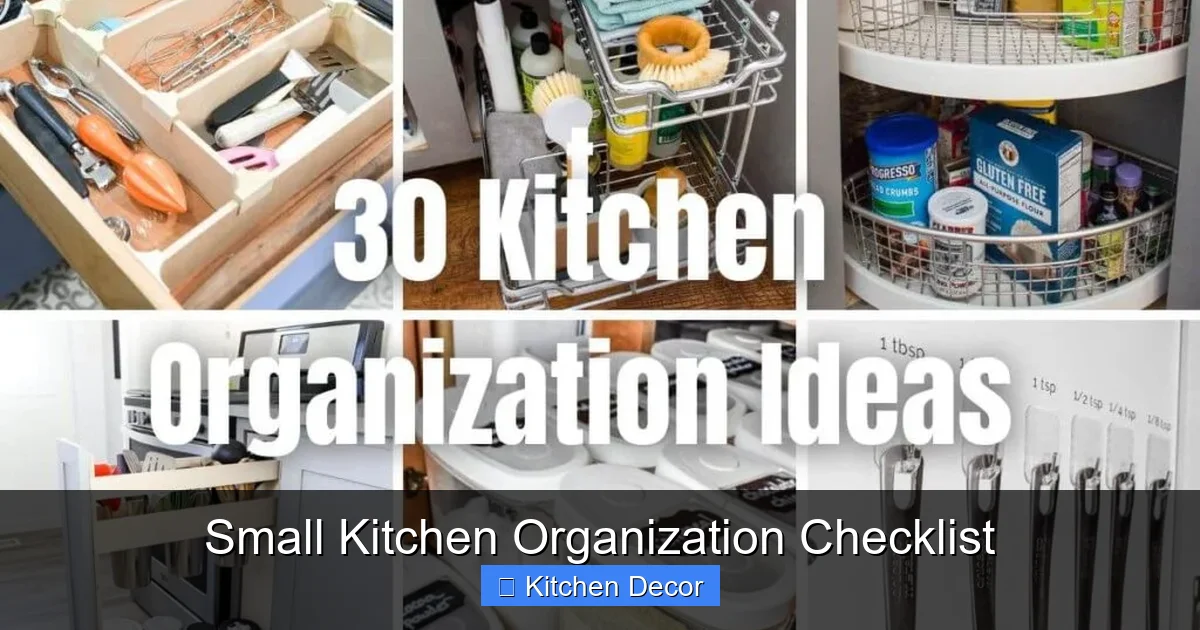
Stop the junk drawer madness! Use expandable bamboo, plastic, or mesh drawer organizers to compartmentalize utensils, cooking gadgets, and other small items. Custom dividers can be cut to fit any drawer perfectly.
Cabinet Organizers (Pull-Outs, Risers, Turntables)
- Pull-Out Shelves/Drawers: These are fantastic for deep lower cabinets, allowing easy access to pots, pans, or cleaning supplies without rummaging.
- Tiered Spice Racks: These can be placed inside cabinets to elevate spices at the back, making them all visible.
- Lazy Susans (Turntables): Ideal for corner cabinets or pantries, a lazy Susan allows you to easily access items like oils, vinegars, sauces, or spices with a simple spin.
- Pot and Pan Organizers: Vertical racks or lid organizers keep these bulky items tidy and prevent them from clanging around.
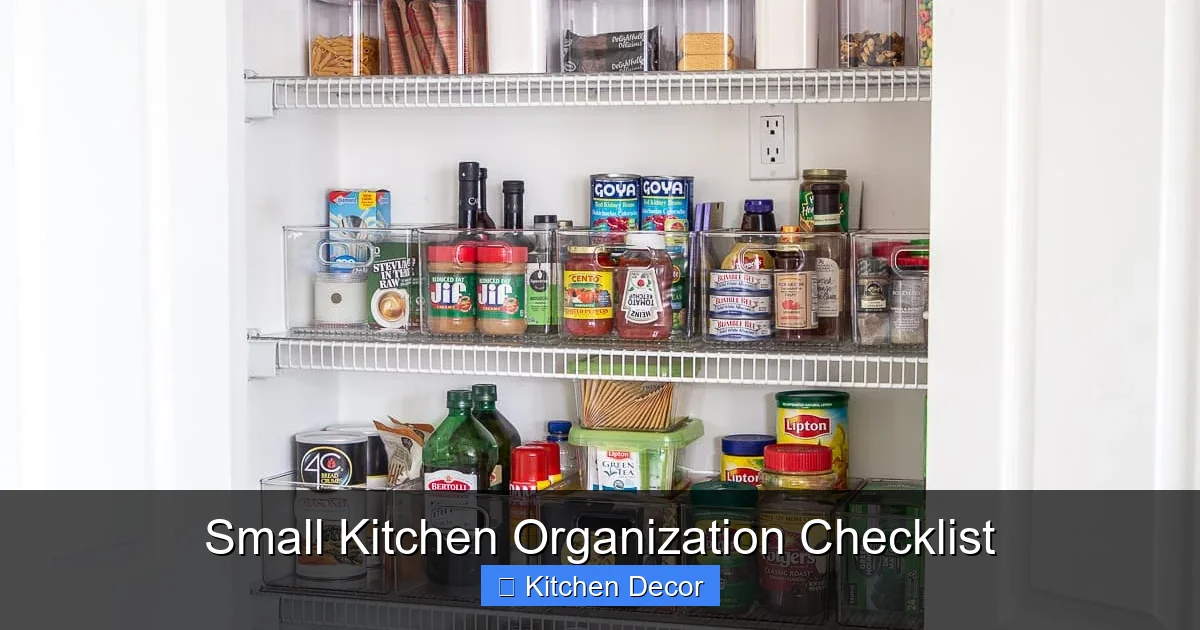
Clear Containers and Labels
Decant dry goods like pasta, rice, flour, sugar, and snacks into clear, airtight containers. Not only does this keep food fresh and deter pests, but it also makes it easy to see what you have (and what you need to restock). Label everything clearly for quick identification.
Nesting and Stacking
Whenever possible, choose items that nest or stack. Mixing bowls, measuring cups, and even some cookware sets are designed this way to save significant space. Opt for stackable storage bins in your pantry or fridge.
Step 6: Appliance and Utensil Management
Small appliances and numerous utensils can quickly overwhelm a tiny kitchen. Managing them effectively is key to a successful small kitchen organization checklist.
Countertop Cadence (Minimalism)
For a small kitchen, less is definitely more on the countertops. Keep only your most frequently used items out, such as a coffee maker, toaster, or a knife block if space permits. Everything else should have a home in a cabinet or drawer.
Smart Appliance Storage
- Vertical Appliance Storage: If you have an appliance garage or a deep pantry shelf, consider vertical storage solutions for items like blenders or food processors.
- Multi-Functional Appliances: Invest in appliances that do double duty, like an Instant Pot that can pressure cook, slow cook, sauté, and more, reducing the need for separate gadgets.
- Small Footprint Appliances: When replacing appliances, look for compact versions designed for smaller spaces.
Utensil Organization
- Drawer Organizers: As mentioned, use dividers for all your cooking utensils.
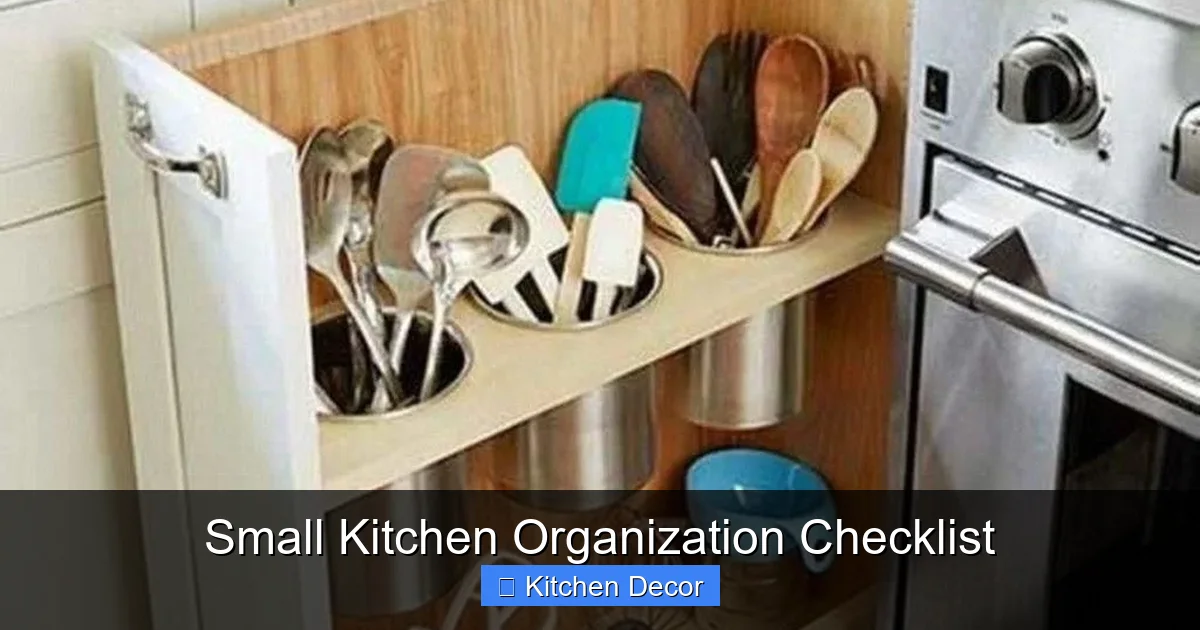
- Utensil Crocks: For frequently used cooking utensils, a stylish crock on the counter can be okay if you have minimal other items out. Alternatively, a hanging rail with S-hooks can work wonders.
- Door Storage: Some clever systems allow you to store flat utensils (like spatulas or measuring spoons) on the inside of cabinet doors.
Step 7: Pantry Power-Up – Optimizing Food Storage
The pantry, whether it’s a dedicated closet or just a few shelves, is a critical component of your small kitchen organization checklist. Maximize its potential.
First In, First Out (FIFO)
When restocking, always place new items behind older ones. This ensures you use up products before they expire, minimizing waste and keeping your inventory fresh.
Group Similar Items
Keep all baking supplies together, all snacks together, all canned goods together, etc. This makes grocery list creation easier and prevents you from buying duplicates.
Decanting Dry Goods
As mentioned, clear, airtight containers for dry goods are invaluable. They look uniform, save space compared to bulky bags, and make it easy to see when you’re running low. They also protect against pests.
Snack Bins
Use small bins or baskets to group snacks or kids’ lunch items. This keeps shelves tidy and makes it easy to grab what you need.
Step 8: The Finishing Touches – Maintenance & Aesthetics
An organized small kitchen isn’t just about functionality; it’s also about creating a space you love. This final step in your small kitchen organization checklist addresses long-term success and visual appeal.
Regular Maintenance Schedule
Organization is an ongoing process, not a one-time event. Institute a few simple habits:
- Daily: Wipe down counters, put dishes away immediately, and do a quick tidy-up after each meal.
- Weekly: Do a quick pantry check, wipe down appliances, and reorganize any areas that have become messy.
- Monthly/Quarterly: A deeper dive into one cabinet or drawer, checking expiration dates, and reassessing what you truly need.
Lighting and Decor
Good lighting can make a small kitchen feel more expansive. Consider under-cabinet lighting or bright overhead fixtures. For decor, keep it minimal. A single plant, a small piece of art, or a colorful dish towel can add personality without adding clutter.
Embrace Multi-Functional Items
Think about a cutting board that fits over your sink to add prep space, a rolling cart that serves as extra counter space and storage, or a collapsible dish drainer. Every item should earn its place!
Troubleshooting Common Small Kitchen Woes
Even with a checklist, you might encounter specific challenges. Here’s how to address some common small kitchen organization hurdles:
“I Still Don’t Have Enough Space!”
- Go Vertical, Again: Re-evaluate every wall and the inside of every door. Can you add another shelf? A pegboard? Hanging bins?
- Off-Site Storage: For truly seasonal items (e.g., holiday cookie cutters, large serving platters), consider storing them in a basement, garage, or dedicated storage bin elsewhere in your home.
- The “One In, One Out” Rule: For every new item you bring into your kitchen, one old item must leave.
“It Gets Messy Again Too Quickly!”
- Review Your Zones: Are items stored logically close to where they’re used? If not, adjust.
- Assign a Home for Everything: If an item doesn’t have a clear “home,” it will always end up on the counter. Create a place for it, or get rid of it.
- The “2-Minute Rule”: If something takes less than two minutes to put away or clean, do it immediately.
“My Countertops Are Always Cluttered.”
- Prioritize: Only keep appliances or tools on the counter that you use daily. Everything else needs a cabinet or drawer.
- Wall Mount: Use wall-mounted solutions for knife blocks, spice racks, or even a paper towel holder to free up counter space.
- Utilize Sink Space: A cutting board that fits over your sink can give you temporary extra prep space.
“My Cabinets Are a Black Hole.”
- Pull-Out Solutions: Invest in pull-out shelves or drawers for deep lower cabinets to bring items to you.
- Lazy Susans: Perfect for corner cabinets or any deep space where items get lost in the back.
- Clear Containers: Use clear bins or baskets on shelves to pull out and see what’s inside without having to unload everything.
Conclusion: Enjoying Your Organized Small Kitchen
Congratulations! By following this small kitchen organization checklist, you’ve taken significant steps to transform your compact cooking space. Remember, an organized small kitchen isn’t just about aesthetics; it’s about creating a highly functional environment that makes cooking and entertaining a pleasure, not a chore. You’ve decluttered, maximized vertical space, implemented smart storage, and established routines that will keep your kitchen tidy for the long haul.
Embrace the freedom that comes with knowing where everything is, enjoying clear countertops, and having a kitchen that truly works for you. Your small kitchen is now a testament to clever design and efficient living. Enjoy your beautifully organized culinary haven!