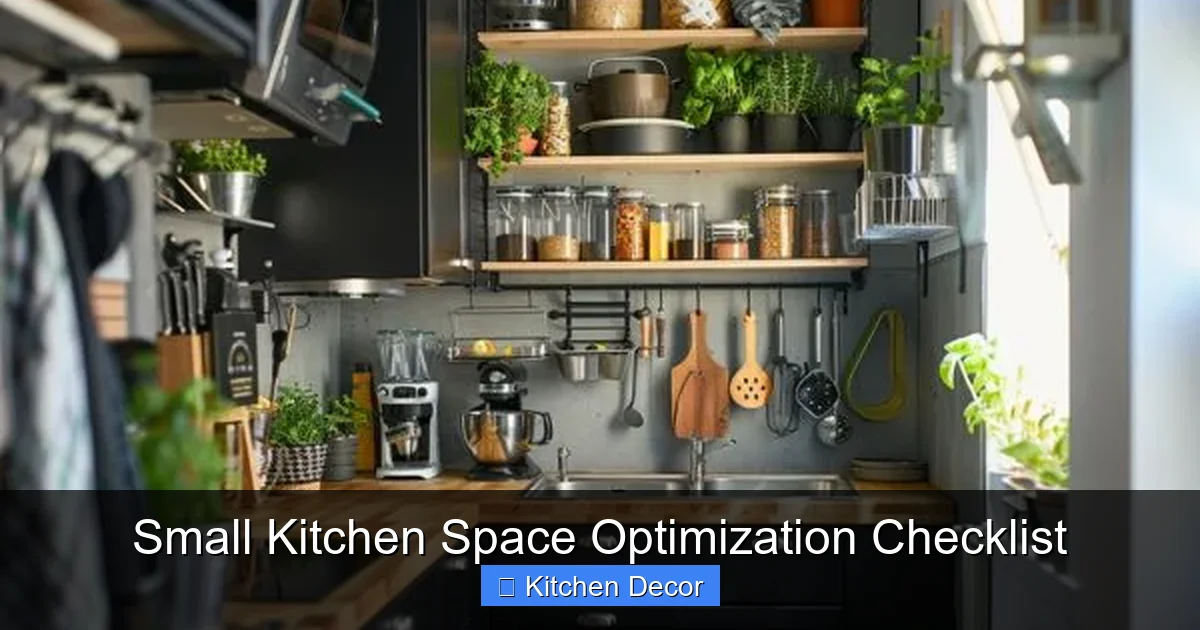
Unlock the full potential of your compact cooking area with our ultimate Small Kitchen Space Optimization Checklist. This guide provides actionable steps, from ruthless decluttering and maximizing vertical space to smart cabinet organization and multi-functional solutions, ensuring your kitchen is both efficient and enjoyable. Say goodbye to clutter and hello to a highly functional, well-organized small kitchen.
Small Kitchen Space Optimization Checklist
Having a small kitchen can sometimes feel like a daily wrestling match with limited space. You might find yourself constantly shuffling appliances, struggling to find ingredients, or wishing you had more counter space to chop vegetables. But a small kitchen doesn’t have to be a source of frustration. In fact, with the right strategies and a bit of creativity, you can transform your compact cooking area into a highly efficient, organized, and enjoyable space.
This comprehensive Small Kitchen Space Optimization Checklist is designed to guide you through a step-by-step process of decluttering, organizing, and maximizing every inch of your kitchen. We’ll explore practical tips, smart storage solutions, and innovative ideas to help you reclaim your kitchen and make it work harder for you. Get ready to unlock the full potential of your small kitchen!
Key Takeaways
- Declutter Ruthlessly First: The foundation of any successful small kitchen space optimization project is a thorough decluttering, removing all unnecessary items to create a clean slate.
- Maximize Vertical Space: Look up! Walls, cabinet tops, and even the space above your fridge offer untapped potential for shelves, racks, and hooks to store items without occupying precious counter or floor space.
- Smart Interior Organization: Don’t just toss things into cabinets and drawers. Use dividers, pull-out solutions, risers, and door-mounted organizers to make every inch inside your storage accessible and efficient.
- Keep Countertops Clear: Prioritize multi-functional appliances and vertical countertop organizers. A clean countertop instantly makes a small kitchen feel larger and more usable.
- Embrace Multi-Functional Items: Opt for tools, cookware, and furniture that serve more than one purpose, such as nested bowls, cutting boards that fit over the sink, or a kitchen island with built-in storage.
- Leverage Every Nook: Identify and utilize often-overlooked spaces like under the sink, the sides of cabinets, or narrow gaps for rolling carts, tension rods, and magnetic strips.
Step 1: Declutter Ruthlessly to Create a Blank Canvas
Before you even think about buying new organizers or storage solutions, the absolute first step in any successful small kitchen space optimization project is to declutter. Think of it like preparing a canvas before painting; you need a clean, clear surface to work with. This step is about honest evaluation and letting go of items that no longer serve a purpose or bring you joy.
Empty Everything and Assess
Start by taking everything out of your cabinets, drawers, pantry, and off your countertops. Yes, everything! Lay it all out on your dining table, a large sheet, or even the floor. Seeing everything you own in one place is often an eye-opening experience and highlights duplicates or unused items.
Categorize and Evaluate Each Item
Now, go through each item with a critical eye. Create three piles: KEEP, DONATE/SELL, and TRASH. For each item, ask yourself these questions:
- Do I use this regularly? “Regularly” might mean weekly or monthly, not once a year for Thanksgiving.
- Is it broken or chipped? If it’s damaged and not fixable, it’s trash.
- Do I have duplicates? You likely don’t need three spatulas or five mismatched mugs. Keep only the best one or two.
- Does it bring me joy or serve a crucial purpose? If neither, it’s time to let it go.
Be honest with yourself. That bread maker you used twice? That specialty gadget gathering dust? They’re taking up valuable real estate in your small kitchen.
Implement the “One Year Rule”
For items you’re unsure about, apply the “one year rule.” If you haven’t used an item in the past year, it’s highly unlikely you’ll use it in the next. Unless it’s a cherished family heirloom or a truly essential seasonal item, it’s probably best to part with it. This intense decluttering is the most crucial part of small kitchen space optimization.
Step 2: Maximize Vertical Space with Smart Solutions
Once your kitchen is decluttered, it’s time to look up! Vertical space is often the most underutilized area in a small kitchen. By taking advantage of walls, the backs of doors, and even the space above your cabinets, you can free up precious counter and drawer space.
Visual guide about Small Kitchen Space Optimization Checklist
Image source: i.pinimg.com
Install Wall Shelving and Racks
Open shelves or floating shelves can transform a blank wall into functional storage for plates, glasses, cookbooks, or decorative items. If you prefer to hide clutter, enclosed wall cabinets are also an option. Consider installing a narrow shelf above your window or door frame for infrequently used items.
- Floating Shelves: Create an airy feel and easy access.
- Wall-Mounted Pot Racks: Frees up cabinet space and keeps frequently used pots and pans within reach.
- Spice Racks: A wall-mounted spice rack is far more efficient than taking up drawer or cabinet space.
- Magnetic Knife Strips: Safely stores knives while freeing up drawer space or a countertop block.
Utilize Over-Cabinet and Appliance Space
The tops of your kitchen cabinets are prime real estate for storing items you don’t use daily, such as special occasion serveware, rarely used large appliances, or extra pantry stock. Baskets or attractive bins can keep these items organized and prevent dust accumulation. Similarly, the space above your refrigerator can hold a basket for infrequently used items.
Consider Over-the-Door Organizers
The back of your pantry door or even the main kitchen door can be fitted with an over-the-door organizer. These are perfect for spices, cleaning supplies, aluminum foil, plastic wrap, or even small snacks. This is a simple yet effective small kitchen space optimization tactic.
Step 3: Organize Drawers and Cabinets Smartly
Even after decluttering, the inside of your cabinets and drawers can become a jumbled mess without proper organization. Smart interior solutions are key to ensuring every item has a designated home and is easily accessible.
Use Drawer Dividers and Organizers
Say goodbye to the “junk drawer” mentality. Invest in expandable drawer dividers, cutlery trays, or custom-fit inserts to keep utensils, gadgets, and other small items neatly separated. When everything has its place, you’ll save time searching and maximize drawer capacity.
Implement Pull-Out Solutions
For deep cabinets, especially those under the counter, pull-out shelves or drawers are game-changers. No more rummaging to find items at the back! These are fantastic for pots, pans, cleaning supplies, or pantry items, making every inch of storage accessible.
Stackable Shelves and Risers
Maximize vertical space within your cabinets using stackable shelves or risers. This allows you to store more dishes, glasses, or food items without creating precarious towers. They’re particularly effective for maximizing a small kitchen’s limited cabinet height.
Door-Mounted Organizers for Cabinets
Similar to over-the-door organizers, smaller versions can be mounted to the inside of cabinet doors. These are perfect for storing cutting boards, dish towels, lids for pots and pans, or small cleaning supplies. This ingenious use of forgotten space is critical for small kitchen space optimization.
Step 4: Optimize Countertop Real Estate
In a small kitchen, countertops are precious. The goal is to keep them as clear as possible, allowing for maximum workspace. Every item left out should either be multi-functional, frequently used, or aesthetically pleasing.
Go Vertical with Counter Organizers
Instead of spreading items across your counter, stack them up! A tiered fruit basket, a vertical dish drying rack, or a compact knife block uses less counter footprint. A slim utensil crock can hold cooking tools, rather than having them scattered.
Choose Multi-Functional Appliances
If you have limited counter space, opt for appliances that do double duty. A toaster oven that also air-fries, or a stand mixer with multiple attachments, are better choices than separate single-function gadgets. When purchasing new items, always consider their footprint and versatility for small kitchen space optimization.
Embrace a “Clean Slate” Mentality
After each cooking session, make it a habit to wipe down and clear your countertops. Only keep truly essential, frequently used items out. Store less-frequent appliances in cabinets or on vertical shelving. A clear countertop not only provides more workspace but also makes your small kitchen feel larger and less cluttered.
Step 5: Leverage Dead Space and Awkward Nooks
Every kitchen, no matter how small, has “dead space” or awkward nooks that can be transformed into valuable storage with a bit of ingenuity. Think outside the box to discover these hidden gems for small kitchen space optimization.
Rolling Carts and Islands
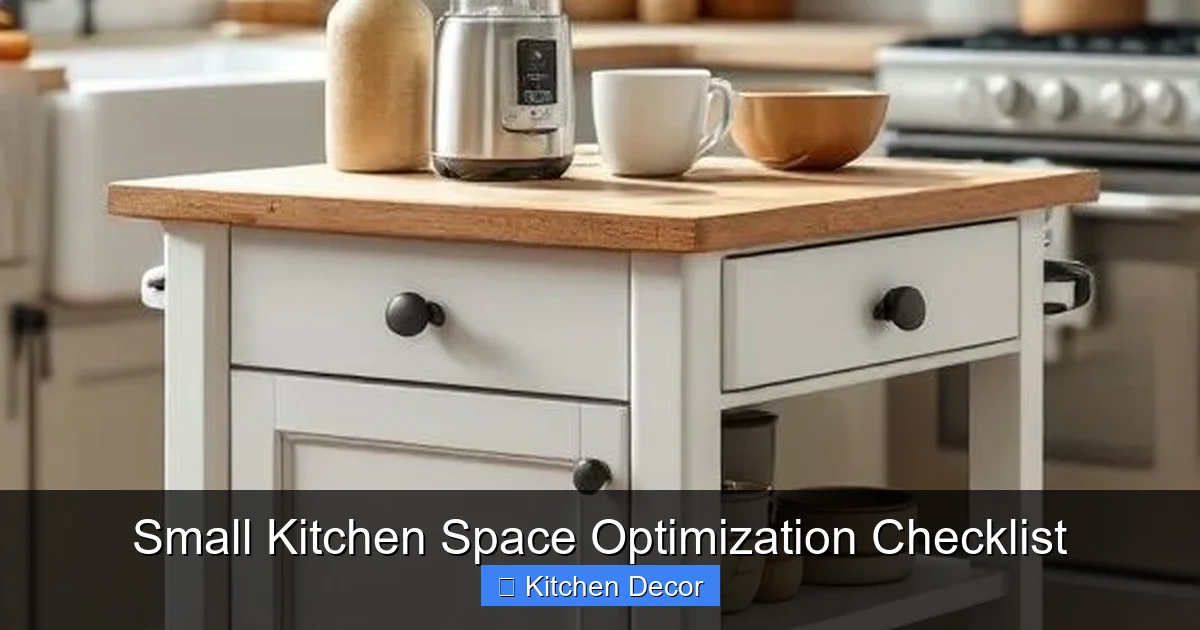
A slim rolling cart or a small, movable kitchen island can provide extra counter space, storage, and even a dining spot. The beauty of these items is their mobility – you can tuck them away when not in use and pull them out when you need them. Look for models with shelves, drawers, or hooks for maximum utility.
Corner Solutions
Corner cabinets can be tricky. Implement lazy Susans or pull-out corner shelves to make them fully functional. For empty wall corners, consider installing triangular shelves to store cookbooks or decorative items.
Space Above the Fridge
As mentioned before, the space above your refrigerator is often an ignored area. Use it to store large, lightweight items that aren’t used daily, like serving platters, large bowls, or extra paper towels. Bins or baskets keep things tidy.
Under-Sink Solutions
The area under the sink is often plumbing-dominated. However, caddy organizers, tension rods (for spray bottles), or small pull-out drawers can make this space highly efficient for cleaning supplies, sponges, and dish soap. Ensure you use waterproof containers for any spills.
Step 6: Smart Storage for Specific Items
Certain items require specific solutions to optimize space in a small kitchen. Thinking about how these items are stored can make a big difference.
Dish Drying Racks
Instead of a bulky rack taking up counter space, consider an over-the-sink drying rack that rolls up when not in use, or a collapsible rack that can be tucked away. If you have a dishwasher, use it as your primary drying method to keep the counter clear.
Pantry Optimization
If your “pantry” is just a single cabinet, make it count. Use clear, stackable containers for dry goods like pasta, rice, and cereals. Label everything. Utilize door-mounted spice racks or narrow shelves for cans. A tiered can organizer can also maximize vertical space in a deep pantry cabinet. This is crucial for small kitchen space optimization where every food item needs a home.
Storing Pots, Pans, and Lids
One of the biggest challenges in a small kitchen is storing cookware. Beyond wall-mounted pot racks, consider:
- Nesting Cookware: Sets designed to stack inside each other save significant space.
- Pot Lid Organizers: These can be wire racks placed inside a cabinet or mounted to a cabinet door, keeping lids upright and accessible.
- Pull-out Drawers: Ideal for storing heavy pots and pans, making them easy to retrieve.
Step 7: Adopt Multi-Functional Furniture and Tools
Every item in a small kitchen should earn its keep. Opting for items that serve multiple purposes is a hallmark of excellent small kitchen space optimization.
Folding Tables and Chairs
If your kitchen doubles as a dining area, consider a drop-leaf table or a wall-mounted folding table that can be put away when not in use. Similarly, folding chairs can be stored flat, freeing up floor space.
Nested Bowls and Measuring Cups
These are simple but effective space-savers. Cookware and bakeware sets designed to nest inside each other are perfect for compact storage.
Cutting Boards Over Sinks
A cutting board designed to fit over your sink provides extra counter space for food prep. Some even come with built-in colanders or food-safe storage bins.
Appliances with Multiple Functions
We touched on this earlier, but it’s worth reiterating. Think about appliances that combine functions, like an instant pot that pressure cooks, slow cooks, and sautés, or a hand blender with chopper and whisk attachments. Fewer appliances mean more space.
Troubleshooting: Overcoming Common Small Kitchen Challenges
Even with the best intentions, you might run into some roadblocks. Here are quick tips for common issues:
“My kitchen still feels cramped!”
If you’ve followed all the steps and still feel short on space, re-evaluate your decluttering. Can you store some seasonal items (like holiday cookie cutters) outside the kitchen, perhaps in a nearby closet? Also, consider visual tricks: light colors, reflective surfaces, and good lighting can make a small kitchen feel much larger and more open.
“I have too many specialty gadgets!”
Be brutally honest: how often do you use that waffle maker? If it’s less than once a month, consider whether it’s truly worth the space. For very occasional use, perhaps a friend has one you can borrow, or you could rent one for special events. Prioritize daily essentials over niche items.
“I can’t install anything on my walls (renter)!”
No problem! Tension rods can be used inside cabinets or under shelves to hang items. Freestanding shelving units, over-the-door organizers (that don’t require drilling), and magnetic strips with adhesive backing are excellent renter-friendly alternatives. Command hooks are also fantastic for hanging dish towels, pot holders, and small utensils.
Conclusion
Optimizing a small kitchen is an ongoing process, but by following this checklist, you’ll be well on your way to a more functional, efficient, and enjoyable cooking space. Remember, it’s not about having less; it’s about making the most of what you have. Ruthless decluttering, clever vertical storage, smart interior organization, and a focus on multi-functional items are the pillars of successful small kitchen space optimization.
Embrace the challenge, get creative, and personalize your solutions to fit your unique cooking style and needs. A well-organized small kitchen can truly be the heart of your home, proving that great things (and great meals!) can come in small packages. Enjoy your newly optimized space!