Struggling with tight bedroom layouts? This guide offers 10 ingenious hacks to transform your small space into a functional and stylish sanctuary. Learn how to strategically maximize every inch, from smart storage solutions to optical illusions, creating a comfortable and organized retreat that feels much larger and more inviting. These practical tips will help you conquer the challenges of limited space, making your bedroom a true haven.
10 Bedroom Hacks for Tight Bedroom Layouts
Do you ever feel like your bedroom is shrinking? Are you constantly bumping into furniture or struggling to find space for all your belongings? You’re not alone! Many of us face the challenge of tight bedroom layouts, where every inch counts, and creative solutions are a must. But fear not! Transforming a small bedroom from cramped to cozy and functional is entirely possible with a few clever tricks up your sleeve.
This comprehensive guide is designed to help you conquer your spatial woes. We’ll walk you through 10 ingenious bedroom hacks specifically tailored for tight bedroom layouts. From maximizing vertical storage to employing optical illusions, these strategies will not only free up space but also make your room feel more inviting, organized, and stylish. Get ready to rethink your bedroom and discover how to make the most of what you have!
Key Takeaways
- Maximize Vertical Space: Look upwards for storage opportunities by utilizing wall-mounted shelves, tall furniture, and over-the-door organizers to free up valuable floor space in tight bedroom layouts.
- Embrace Multifunctional Furniture: Invest in pieces that serve multiple purposes, such as storage beds, ottomans with hidden compartments, or desk-wardrobe combos, to optimize functionality without cluttering your room.
- Declutter Ruthlessly: A tidy space feels larger. Regularly purge unnecessary items and implement smart organizing systems to maintain an uncluttered environment, essential for small or tight bedroom layouts.
- Create Optical Illusions: Strategically placed mirrors, light color palettes, and appropriate lighting can visually expand the room, making tight bedroom layouts appear more spacious and airy.
- Strategic Bed Placement: Rethink traditional bed positioning. Pushing the bed against a wall or into a corner can open up central floor space, improving the flow and functionality of your bedroom.
- Utilize Under-Bed & Wall Space: Don’t overlook the potential of space under your bed for hidden storage or walls for floating nightstands and shelving, which keep the floor clear and easy to clean.
- Choose Leggy & Clear Furniture: Opt for furniture with exposed legs or made from clear materials like acrylic to allow light to pass through, reducing visual bulk and contributing to an open feel in tight bedroom layouts.
Hack 1: Go Vertical with Your Storage
When you can’t build out, build up! One of the most effective ways to combat tight bedroom layouts is to utilize the vertical space you already have. Think of your walls as prime real estate waiting to be developed.
Shelf Up, Not Out
Floating shelves are a small bedroom’s best friend. They offer storage and display space without taking up any precious floor area. Install them above your bed, over a doorway, or in an unused corner. You can use them for books, decorative items, small plants, or even as an alternative to a traditional nightstand. Wall-mounted units, like modular shelving systems, can provide even more substantial storage, allowing you to customize compartments for different items.
Tall & Slender Furniture
Instead of wide, bulky dressers or bookcases, opt for pieces that are tall and narrow. A tall, slender dresser can hold just as many clothes as a wide one but takes up significantly less floor footprint. Similarly, a narrow bookcase reaching towards the ceiling provides ample storage for your literary collection without overwhelming the room. When shopping, prioritize furniture that emphasizes height over width.
Over-the-Door Solutions
Don’t forget the back of your bedroom door! This often-overlooked area is perfect for over-the-door organizers. These can range from shoe racks to multi-pocket fabric organizers for accessories, toiletries, or even small clothing items. They keep essentials handy and off the floor, making a noticeable difference in tight bedroom layouts.
Hack 2: Embrace Multifunctional Furniture
In tight bedroom layouts, every piece of furniture should earn its keep. Investing in items that serve multiple purposes is a game-changer for maximizing utility and minimizing clutter.
Visual guide about 10 Bedroom Hacks for Tight Bedroom Layouts
Image source: i.pinimg.com
Storage Beds are Your Best Friend
The space under your bed is a goldmine for storage. Instead of simply pushing bins underneath, consider a bed frame specifically designed with integrated storage. Options include platforms with built-in drawers, hydraulic lift-up beds that reveal a huge storage compartment beneath, or even captain’s beds with multiple drawers and cubbies. This allows you to store seasonal clothing, extra bedding, or other bulky items neatly out of sight.
Ottomans & Benches with Hidden Compartments
A stylish ottoman or bench placed at the foot of your bed or against a wall can provide extra seating, act as a temporary surface, and most importantly, offer hidden storage. These are perfect for blankets, pillows, books, or even children’s toys, helping to keep your tight bedroom layouts clutter-free.
Desk-Wardrobe Combos
If you need a workspace in your bedroom, look for furniture that cleverly integrates a desk with another function. A wall-mounted desk that folds away when not in use, or a wardrobe that opens to reveal a desk and shelves, can be incredibly efficient. Murphy beds (wall beds) are the ultimate multifunctional solution, disappearing into the wall to free up an entire room’s worth of space during the day, sometimes even featuring integrated desks or shelving.
Hack 3: Master the Art of Decluttering
This might not be a “hack” in the traditional sense, but it’s arguably the most impactful strategy for tight bedroom layouts. Less stuff equals more space, both physically and visually.
Visual guide about 10 Bedroom Hacks for Tight Bedroom Layouts
Image source: i.pinimg.com
The “One In, One Out” Rule
To prevent new items from overwhelming your small space, adopt the “one in, one out” rule. Every time you buy something new, commit to getting rid of something old. This simple habit helps maintain a consistent amount of belongings and prevents accumulation, which is deadly for tight bedrooms.
Regular Purges
Schedule regular decluttering sessions – perhaps seasonally or quarterly. Go through your clothes, books, and miscellaneous items with a critical eye. Ask yourself: “Have I used this in the last year? Do I love it? Does it serve a purpose?” If the answer is no, it’s time to donate, sell, or toss it. Be ruthless; your future spacious bedroom will thank you!
Digitalize What You Can
Physical items like books, magazines, and documents can quickly pile up. Consider digitalizing as much as possible. E-readers can replace dozens of physical books, and cloud storage can handle photos and important papers, freeing up shelf and drawer space in your tight bedroom layouts.
Hack 4: Create Optical Illusions with Mirrors
Mirrors are a decorator’s secret weapon for making small spaces appear larger. They reflect light and create the illusion of depth, tricking the eye into perceiving more square footage than there actually is.
Visual guide about 10 Bedroom Hacks for Tight Bedroom Layouts
Image source: i.pinimg.com
Full-Length Mirrors
A large, full-length mirror leaning against a wall or mounted on a wall can instantly make a room feel bigger and brighter. If you can, place it strategically to reflect natural light from a window or an interesting part of your room.
Strategic Placement
Consider where you place your mirrors. A mirror placed opposite a window will bounce natural light around the room, making it feel more open and airy. Placing one in a narrow hallway or a small wall section can create the illusion of a wider space. Multiple smaller mirrors can also be arranged to create a unique gallery wall that still offers reflective benefits.
Mirrored Furniture Accents
For an extra touch of glamour and space-expanding magic, look for furniture with mirrored accents. A small bedside table with a mirrored top or a dresser with mirrored drawer fronts can subtly contribute to the illusion of depth without being overwhelming. These pieces are particularly effective in tight bedroom layouts.
Hack 5: Light It Up Strategically
Good lighting can dramatically impact how a room feels, making it seem larger, brighter, and more inviting. Poor lighting, conversely, can make a small room feel even more confined.
Natural Light is King
Maximize any natural light you have. Keep windows clear of heavy drapes; opt for sheer curtains or blinds that can be pulled up completely during the day. Clean windows regularly to ensure maximum light penetration. Natural light instantly opens up tight bedroom layouts.
Wall-Mounted & Sconce Lighting
Instead of bulky table lamps that take up precious surface space on nightstands, choose wall-mounted sconces or pendant lights that hang from the ceiling. These free up your bedside tables for other essentials and provide focused or ambient light without cluttering your surfaces. Articulating wall lamps are especially great for reading, as you can direct the light precisely where you need it.
Under-Cabinet & LED Strip Lighting
Subtle lighting can create depth and interest. Install LED strip lights under floating shelves, behind your headboard, or along the perimeter of the ceiling to add a soft glow that makes the room feel more expansive. Under-cabinet lighting in a built-in closet or desk area also adds functionality and a sophisticated touch.
Hack 6: Choose a Cohesive & Light Color Palette
Colors have a powerful psychological impact. For tight bedroom layouts, choosing the right color scheme can make a huge difference in how spacious and serene the room feels.
Pale & Neutral Walls
Light colors like white, cream, soft grays, and pale pastels reflect light, making walls recede and the room appear larger and airier. Avoid dark, heavy colors on walls, which can make a small room feel like a cave. If you crave color, choose a light shade of blue, green, or lavender, which can also have a calming effect.
Monochromatic Schemes
A monochromatic color scheme, using varying shades and textures of a single light color, can create a seamless look that prevents the eye from stopping at distinct color breaks. This continuous flow helps the room feel more expansive and sophisticated. For example, use a light beige wall, a slightly darker beige duvet, and cream throw pillows.
Avoid Busy Patterns
While a pop of pattern can be fun, large, busy patterns on walls, large rugs, or extensive bedding can overwhelm tight bedroom layouts. If you love patterns, use them sparingly on smaller accents like throw pillows, a single piece of artwork, or a small area rug to add personality without visually shrinking the space.
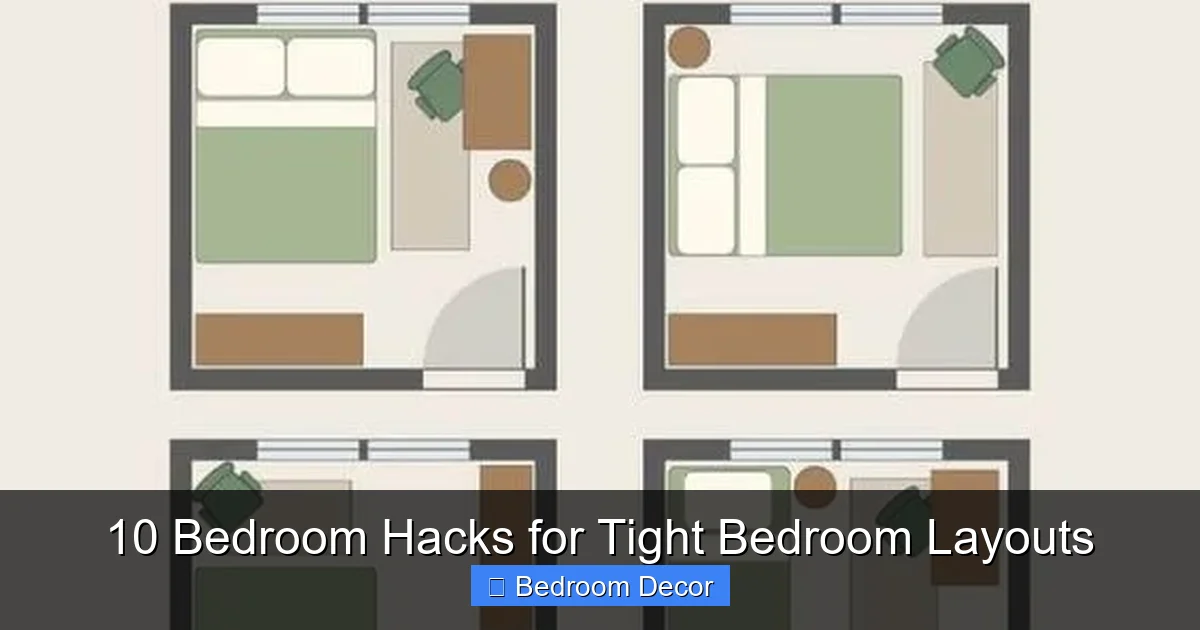
Hack 7: Get Smart with Bed Placement
The bed is usually the largest item in any bedroom, so its placement is critical, especially in tight bedroom layouts. A smart layout can dramatically improve flow and functionality.
Push Against a Wall
While symmetrical bed placement might be aesthetically pleasing in larger rooms, sometimes pushing your bed against a wall (especially if it’s a twin or full size) is the most practical solution for very small spaces. This creates a larger open area in the center of the room, making it easier to move around.
Corner Placement
For some tight bedroom layouts, tucking the bed into a corner can be a clever way to free up an entire wall. This is often seen in studio apartments or dorm rooms and can create a cozy, nook-like feel. You might lose one side access, but gain significant open floor space.
Consider a Wall-Mounted Headboard
Traditional headboards can add several inches of depth to your bed setup. If space is extremely limited, consider a wall-mounted headboard or simply paint a “headboard” directly onto the wall. This saves precious inches and contributes to a streamlined look, which is crucial for tight bedroom layouts.
Hack 8: Use Wall-Mounted Shelving & Nightstands
Keeping the floor clear is a golden rule for making any small room feel larger. Wall-mounted elements are your allies in achieving this in tight bedroom layouts.
Floating Nightstands
Instead of traditional bedside tables, install floating nightstands or small wall-mounted shelves on either side of your bed. These provide a surface for your lamp, phone, and a book without taking up any floor space. This makes the room feel less cluttered and allows for easier cleaning.
Picture Ledges
Thin picture ledges are not just for photos! They can hold small books, candles, or other decorative items. Installing them at various heights can add visual interest without adding bulk, proving incredibly useful in tight bedroom layouts.
Modular Wall Systems
For more extensive wall storage, look into modular wall systems that combine shelves, drawers, and even small desk areas. These custom solutions can be tailored to fit your exact wall dimensions and storage needs, creating a built-in look that maximizes every available vertical inch.
Hack 9: Opt for Leggy Furniture & Clear Materials
The visual weight of furniture plays a big role in how spacious a room feels. Heavy, bulky pieces can quickly overwhelm tight bedroom layouts, making them feel even smaller.
Furniture with Exposed Legs
Choose furniture pieces that have exposed legs rather than solid bases. A dresser or a console table with slender, raised legs allows light to pass underneath and creates a sense of openness. This visual “lift” makes the room feel less heavy and more airy, as if there’s more floor space than there actually is.
Acrylic or Glass Elements
Transparent materials like acrylic or glass are fantastic for small spaces because they practically disappear visually. Consider an acrylic “ghost chair” for a desk, or a glass-top side table. These pieces provide functionality without adding visual clutter, making them perfect for tight bedroom layouts where every element contributes to the overall perception of space.
Open-Concept Pieces
When selecting shelves or bookcases, opt for open-backed designs rather than solid ones. These allow the wall behind to show through, preventing the piece from feeling like a solid block and making the room feel more continuous and open.
Hack 10: Utilize Under-Bed Storage Effectively
We touched upon storage beds in Hack 2, but even without a specially designed bed frame, the space under your bed is a valuable, often underutilized resource for tight bedroom layouts.
Wheeled Storage Bins
Invest in low-profile, wheeled storage bins that can easily slide in and out from under your bed. These are ideal for storing seasonal clothing, extra linens, shoes, or items you don’t need daily access to. Wheels make retrieving items effortless, keeping your bedroom tidy.
Vacuum-Seal Bags
For bulky items like winter coats, duvets, or extra pillows, vacuum-seal bags are a godsend. They compress soft goods, reducing their volume by a significant amount, making them much easier to store under the bed. This is an excellent way to manage seasonal items in tight bedroom layouts without needing extra closet space.
Dividers & Organizers
Whether you’re using bins or the open space under your bed, use dividers and smaller organizers to keep items categorized and accessible. This prevents the under-bed area from becoming a chaotic dumping ground. Labeled containers ensure you can find what you need quickly, maintaining order in your small space.
Troubleshooting Your Tight Bedroom Layouts
Sometimes, even with the best intentions, you might face specific challenges. Here are quick fixes for common tight bedroom layout dilemmas:
- “My room has terrible natural light.” If your room is naturally dark, amplify the effects of artificial lighting. Use multiple light sources (overhead, task, accent), choose higher wattage bulbs, and incorporate more mirrors to bounce around any light available. Stick to very pale color schemes.
- “I can’t paint my walls.” If you’re renting and painting isn’t an option, focus on light-colored bedding, curtains, and rugs. Use removable wallpaper or wall decals sparingly for a touch of personality without permanent commitment.
- “I just have too much stuff!” This often means you need to revisit the decluttering hack. Be honest with yourself about what you truly need and use. Consider off-site storage for sentimental items you can’t part with but don’t need daily.
Conclusion
Living with tight bedroom layouts doesn’t mean sacrificing comfort, style, or functionality. By strategically applying these 10 ingenious hacks, you can transform even the smallest space into a bedroom that feels expansive, organized, and truly yours. Remember, it’s all about making smart choices – from utilizing vertical space and embracing multifunctional furniture to mastering decluttering and creating optical illusions with light and mirrors.
Each hack builds upon the idea of maximizing every inch, both physically and visually. Take these tips, adapt them to your unique space, and watch as your once-cramped bedroom becomes a serene, efficient, and beautiful sanctuary. You’ll be amazed at the difference these changes can make in your tight bedroom layouts, making your home feel bigger and more inviting.