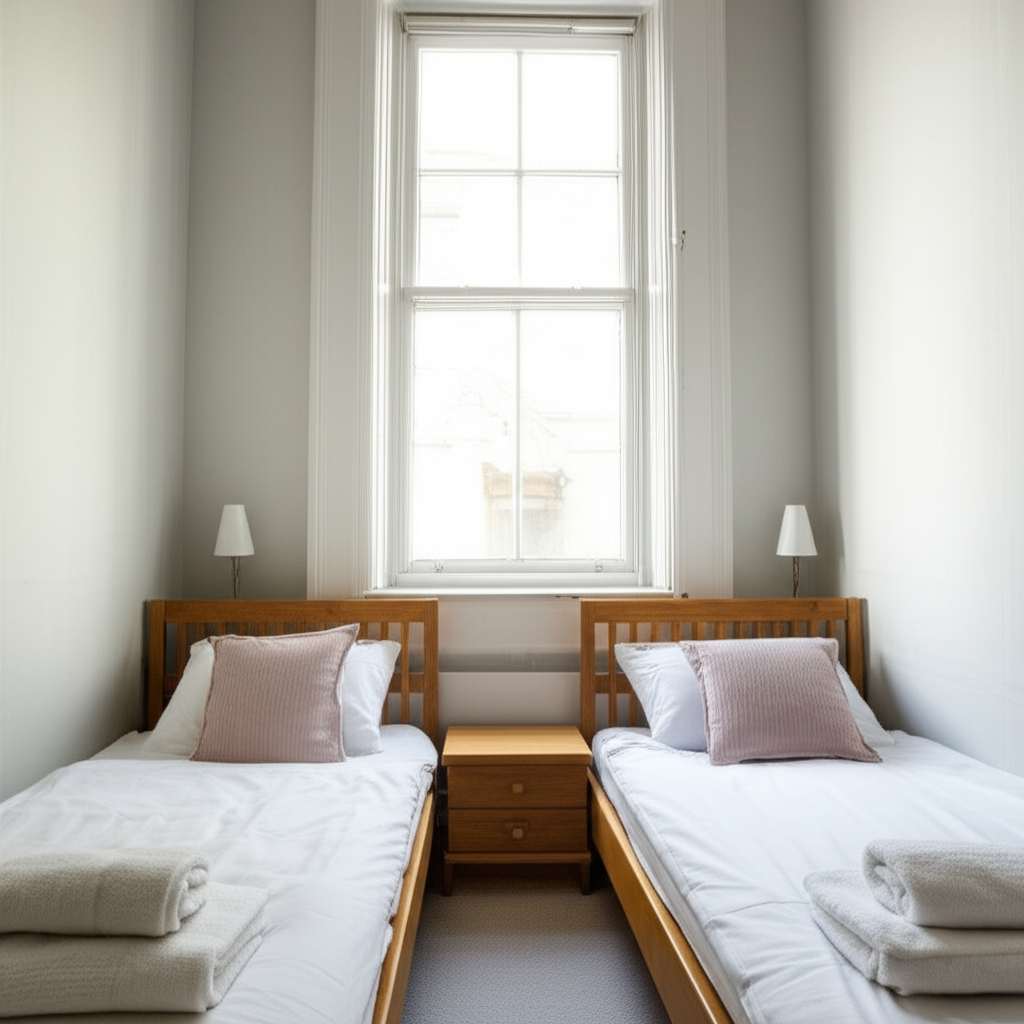
For small room design for 2 people, focus on multi-functional furniture, smart storage, light colors, mirrors, and a clear layout. Prioritize shared needs and personal space to create a comfortable, stylish, and efficient living area.
Feeling a little cramped in your shared space? Designing a small room for two can feel like a puzzle, especially when you’re trying to make sure both of you have enough room and feel comfortable. It’s a common challenge for students in dorms, couples in starter apartments, or anyone sharing a home where space is at a premium.
But don’t worry! With a few clever ideas and smart choices, you can transform even the tiniest room into a cozy and functional haven for two. We’ll break down how to make the most of every inch, ensuring both your needs are met and your style shines through.
Get ready to discover how to create a small room that feels big, works for both of you, and looks fantastic!
Small Room Design for 2 People: Making Every Inch Count
Sharing a small space is an art form, and when it comes to designing it for two, it requires a blend of compromise, creativity, and smart planning. The goal isn’t just to fit two people into one room; it’s to create an environment where both individuals feel comfortable, have their own sense of space, and can coexist harmoniously. This means thinking beyond just furniture placement and considering how the room functions for daily life.
We’ll explore essential ideas that focus on maximizing utility, enhancing the feeling of space, and incorporating personal touches that make it feel like home for both of you. From choosing the right furniture to clever storage solutions, every decision plays a role.
1. Embrace Multi-Functional Furniture: The Space-Saving Heroes
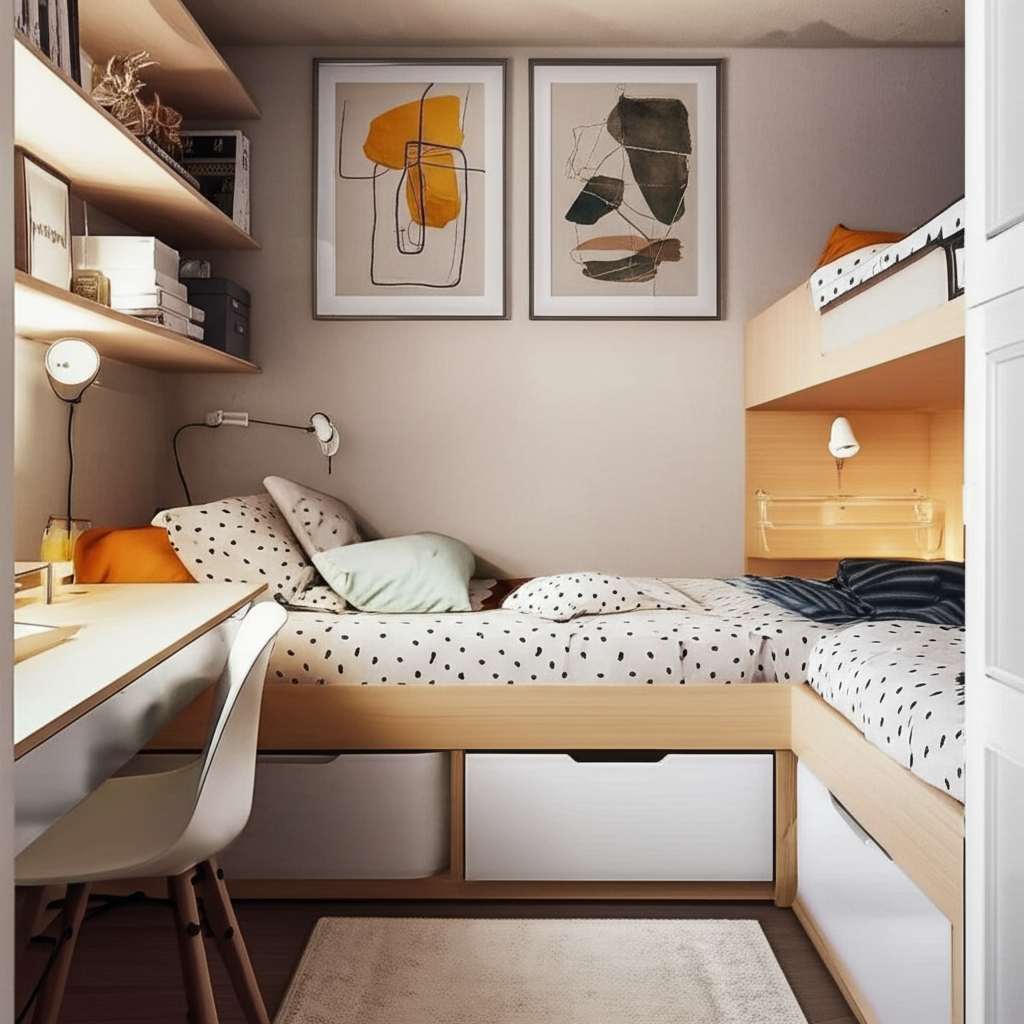
In a small room, every piece of furniture needs to earn its keep. Multi-functional items are your best friends because they serve more than one purpose, reducing the number of pieces you need and freeing up valuable floor space. Think smart, not just stylish.
This is where creativity really comes into play. You can find pieces that transform, fold away, or offer hidden storage, making a big difference in how spacious and organized your room feels. It’s all about getting the most bang for your buck (and your square footage!).
Sofa Beds and Daybeds
A sofa bed or a daybed is a fantastic investment for a shared room. During the day, it acts as a comfortable sofa for lounging, reading, or watching TV. At night, it easily converts into a bed, providing sleeping space. This is perfect for guest visits too!
Look for options with built-in storage underneath to keep extra bedding or personal items tucked away neatly. A good quality mattress is essential, as it will be used regularly.
Ottomans with Storage
A storage ottoman can serve multiple purposes: a footrest, an extra seat, a coffee table (with a tray on top), and most importantly, a hidden storage space. It’s ideal for stashing blankets, books, magazines, or even electronics when not in use.
Choose one that complements your room’s decor. They come in various shapes, sizes, and upholstery, making it easy to find one that fits your style and needs.
Nesting Tables
Instead of a large coffee table that can dominate the space, consider nesting tables. These are sets of smaller tables that fit underneath a larger one. You can pull them out when you need extra surface area for snacks, drinks, or work, and then tuck them away to save space when they’re not in use.
They offer flexibility and can be rearranged easily, adapting to different activities and needs. This makes them incredibly practical for a shared small room.
Wall-Mounted Desks and Fold-Down Tables
If you both need a workspace, a wall-mounted desk or a fold-down table is a game-changer. These take up minimal floor space and can be folded away when not needed, keeping the room looking tidy. Some even have built-in shelves for supplies.
Consider a desk that can accommodate two people if you both work or study from home. Look for designs that are sturdy and easy to operate.
2. Maximize Vertical Space: Think Upwards!
When floor space is limited, the walls become your best allies. Utilizing vertical space for storage and display can dramatically declutter your room and make it feel much more open and organized. Don’t let those empty walls go to waste!
This strategy involves strategic placement of shelves, wall units, and even clever hanging solutions. It’s about using the height of the room to your advantage, keeping essential items accessible without taking up precious floor real estate.
Tall Bookshelves and Shelving Units
Invest in tall, narrow bookshelves or modular shelving units. These draw the eye upward, creating a sense of height and providing ample storage for books, decorative items, plants, and storage boxes. Anchoring them to the wall is crucial for safety, especially in smaller spaces.
Consider open shelving for displaying items you love, and closed cabinets or boxes for things you want to keep out of sight. This mix can create visual interest while maintaining order.
Floating Shelves
Floating shelves offer a sleek and modern way to add storage and display space without the bulk of traditional shelves. They create a minimalist look and can be arranged in various configurations to suit your needs and aesthetic. They are perfect for displaying photos, small plants, or frequently used items.
Install them above beds, desks, or sofas to utilize often-unused wall space. Ensure they are securely mounted to support the weight of your belongings.
Wall-Mounted Organizers and Hooks
Use wall-mounted organizers for smaller items like keys, mail, or toiletries. Over-the-door hooks can be used for coats, bags, or towels, keeping them off furniture and the floor. Pegboards are also excellent for customizable storage, especially in a workspace area.
These small additions can make a big difference in keeping clutter under control and making items easy to find. Think about where daily items accumulate and how a wall solution can help.
3. Smart Storage Solutions: Hide the Clutter
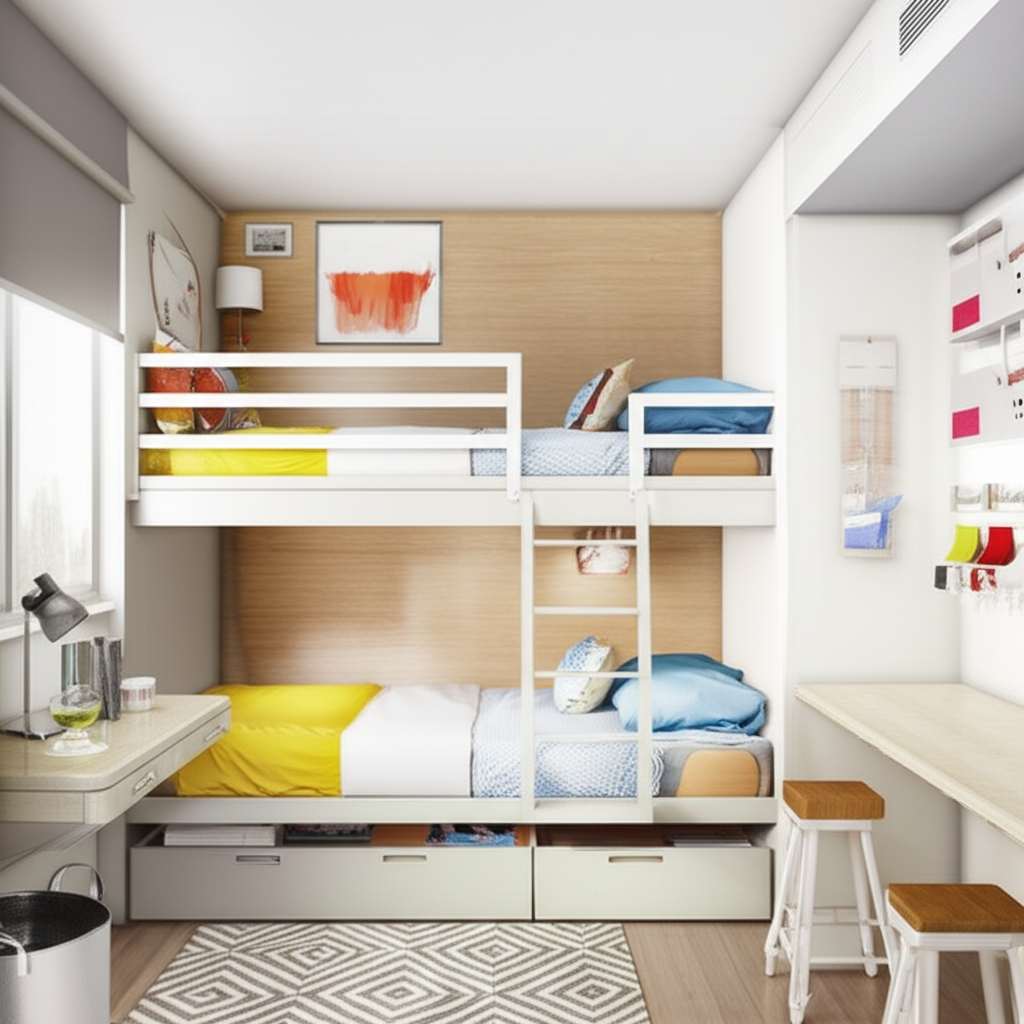
Clutter is the enemy of small spaces. Effective storage is key to making a small room feel larger, more organized, and more peaceful. The less you see, the bigger the room feels!
This means finding creative places to store things and choosing furniture that offers hidden storage. Every item should have a designated home, making tidying up quick and easy. This is where the magic of transforming a small space truly happens.
Under-Bed Storage
The space under your bed is prime real estate for storage. Use low-profile storage bins with wheels or drawers that slide out easily. This is perfect for seasonal clothing, extra bedding, shoes, or anything you don’t need daily access to.
You can also opt for a bed frame with built-in drawers. This offers a neat and integrated storage solution that looks intentional and keeps things dust-free.
Storage Beds
Consider a bed frame that is specifically designed with storage in mind. These can include drawers built into the base, or even lift-up mechanisms that reveal a large compartment underneath. This is one of the most efficient ways to add significant storage without taking up extra room.
While they can be an investment, the amount of storage they provide often makes them worthwhile for small spaces. Look for sturdy construction and easy-to-use mechanisms.
Utilize Corners
Corners are often underutilized. A corner shelving unit, a corner desk, or even a tall plant can make use of these awkward spaces. Corner units can provide surprisingly generous storage and display opportunities without protruding too far into the room.
Think about corner bookcases, triangular shelves, or even a slim corner cabinet. This is a great way to add functionality to an otherwise dead space.
Decorative Storage Boxes and Baskets
Use attractive storage boxes and baskets on shelves or in cabinets. They help to corral smaller items, keep things organized, and add a decorative touch. Choose materials and colors that complement your room’s decor.
These are great for organizing things like toiletries, stationery, craft supplies, or even snacks. Labeling them can make it even easier to find what you need.
4. Color Palette and Lighting: Creating an Airy Feel
The colors you choose and the way you light your room have a huge impact on how spacious and inviting it feels. Lighter colors reflect light, making a room appear larger and brighter, while strategic lighting can banish dark corners and create a welcoming atmosphere.
This is where simple design choices can create a dramatic difference. It’s about making the room feel as expansive and comfortable as possible for both occupants.
Light and Neutral Colors
Opt for light, neutral colors for walls, furniture, and textiles. Whites, creams, light grays, and soft pastels reflect light and make the room feel more open and airy. They also provide a versatile backdrop that can be easily updated with pops of color through accessories.
Avoid dark, heavy colors, as they can make a small room feel even smaller and more closed in. Consider painting the ceiling a lighter shade than the walls to enhance the feeling of height.
Mirrors: The Illusion of Space
Mirrors are a small room designer’s secret weapon. They reflect light and create the illusion of depth, making the space feel significantly larger. Place a large mirror opposite a window to bounce natural light around the room.
Consider a floor-length mirror, a mirrored wardrobe door, or a collection of smaller decorative mirrors. The key is to strategically place them where they can maximize their effect.
Layered Lighting
Good lighting is essential. Relying on a single overhead light can create shadows and make a room feel dull. Instead, layer your lighting with a combination of ambient, task, and accent lighting. Use floor lamps, table lamps, and wall sconces to create a warm and inviting glow.
Consider dimmers to adjust the mood. Ensure each person has access to personal task lighting for reading or working. This approach makes the room functional at all times of day.
5. Layout and Flow: Designing for Two
The way you arrange furniture is crucial for making a small room feel functional and comfortable for two people. You need to consider both shared areas and personal zones. Good flow means being able to move around easily without bumping into things.
Think about how you use the space together and separately. A well-planned layout can prevent everyday frustrations and make the room a pleasure to be in. This is where practical arrangement meets aesthetic appeal.
Define Zones
Even in a small room, you can create distinct zones for sleeping, working, and relaxing. Use furniture placement, rugs, or even different paint colors to visually separate these areas. This helps each person feel like they have their own dedicated space.
For example, a small rug can define the sleeping area, while a desk lamp can mark a workspace. This visual separation is key for shared living.
Consider Traffic Flow
Ensure there’s enough space to walk around furniture easily. Avoid placing large pieces directly in the middle of the room if it obstructs movement. Keep pathways clear, especially between the door and key areas like the bed or desk.
Measure your furniture and the available space carefully before arranging. A good rule of thumb is to leave at least 2-3 feet for main walkways.
Furniture Placement Tips for Two
Position beds so that each person has easy access to the door and doesn’t have to climb over the other to get out. If possible, give each person a small bedside table or a dedicated shelf for personal items.
If you have a shared desk, ensure it’s positioned to maximize natural light and minimize distractions. Consider placing it against a wall to save space.
6. Personal Touches: Making it Yours (Both!)
A room isn’t just about furniture and function; it’s about personality and comfort. Incorporating personal touches that reflect both individuals is what makes a shared space feel like a home.
This is where you can inject your style and create a place that’s uniquely yours as a pair. It’s about finding a balance that satisfies both of your tastes and makes the room feel welcoming.
Shared Decor and Personal Items
Display photos, artwork, or souvenirs that are meaningful to both of you. Balance shared decor with individual items. Perhaps one person has a collection of plants, while the other displays their favorite books or art.
This is about compromise and collaboration. Discuss what you both want to see and display. Open shelving can be great for showcasing these personal items.
Textiles and Soft Furnishings
Use throws, cushions, rugs, and curtains to add color, texture, and warmth. These elements can easily be changed to update the room’s look and feel without a major overhaul. Choose items that complement your chosen color palette.
Consider opting for a neutral base with colorful accents that can be swapped out seasonally or when you want a refresh. This allows for individual expression within a cohesive design.
Plants for Life and Color
Plants add life, color, and a touch of nature to any room, making it feel more welcoming and alive. Choose low-maintenance plants if you don’t have a green thumb. Hanging plants or wall-mounted planters can save floor space.
Research plants that thrive in your room’s lighting conditions. They can be a beautiful and refreshing addition for both of you.
Table: Furniture Scale and Functionality in Small Rooms
When selecting furniture for a small room shared by two people, scale and functionality are paramount. The right pieces will maximize your usable space, while oversized or purely decorative items can quickly make the room feel cramped and cluttered.
Here’s a guide to help you choose furniture that works for your space:
| Furniture Type | Considerations for Small Rooms (2 People) | Multi-Functional Examples |
|---|---|---|
| Bed | Opt for a platform bed with storage drawers or a lift-up mechanism. Consider a full or queen size if space allows, but ensure adequate walking space around it. | Storage bed, Daybed with trundle |
| Seating | A compact loveseat or a comfortable armchair. A sofa bed can serve as both seating and sleeping. | Sofa bed, Storage ottoman (as extra seating) |
| Desk/Workspace | Wall-mounted or fold-down desks. A narrow console table can also work. Ensure enough space for two if needed. | Fold-down desk, Wall-mounted desk with integrated shelves |
| Storage Units | Tall, narrow bookshelves, modular shelving, floating shelves. Avoid bulky dressers if possible. | Cube storage units with bins, Wall-mounted cabinets |
| Tables | Nesting tables, small side tables. A wall-mounted drop-leaf table for dining. | Nesting coffee tables, C-shaped side tables that tuck under seating |
7. Smart Tech Integration
In today’s world, technology plays a significant role in our living spaces. Integrating tech smartly can enhance functionality and comfort without adding to clutter. Think about how you can use technology to make your shared small room more efficient and enjoyable.
This might involve clever solutions for charging devices, optimizing entertainment, or even improving air quality. Consider these points to make your tech work for you.
Charging Stations
Designated charging stations can prevent cable clutter. Consider a multi-port USB charger hidden in a decorative box or a charging station built into a desk or nightstand. This keeps devices organized and reduces the visual mess of wires.
Look for charging docks or stands that can hold multiple devices at once. Wireless charging pads are also a great clutter-reducing option.
Wall-Mounted TV and Entertainment
If you have a TV, mounting it on the wall saves floor space and creates a cleaner look. Consider a slim-profile mount. For entertainment systems, opt for compact, wall-mounted units or shelves to house components neatly.
Ensure cables are managed properly, perhaps by running them through wall channels or using cable concealer solutions. This makes the entertainment area look sleek and intentional.
Smart Lighting and Plugs
Smart lighting systems can be controlled via an app or voice commands, adding convenience and mood. Smart plugs allow you to control lamps and other devices remotely, and can be scheduled for energy efficiency. This technology can enhance both comfort and functionality.
Consider smart bulbs that offer adjustable color temperatures and brightness. This allows for personalized lighting for different activities and times of day.
8. Maintaining Balance and Compromise
Designing a shared space is fundamentally about compromise. What works for one person might not be ideal for the other, so open communication and a willingness to find middle ground are essential. The key is to create a space that feels good for both of you.
This isn’t just about aesthetics; it’s about cohabitation. Setting expectations and respecting each other’s needs will lead to a more harmonious living environment. Remember, it’s a shared home, not just a room.
Communication is Key
Talk regularly about what’s working and what isn’t. Discuss preferences for decor, organization, and how the space is used. Regular check-ins can prevent small issues from becoming bigger problems.
Encourage each other to express needs and desires. Acknowledge that you might have different ideas and work together to find solutions that satisfy both of you.
Respecting Personal Space
Even in a small room, try to create a sense of personal space for each individual. This might involve having dedicated storage areas, or ensuring each person has a comfortable spot for privacy or relaxation. Small gestures can go a long way.
This could be as simple as a designated “corner” for one person’s belongings or ensuring each has a comfortable chair. It’s about acknowledging individuality within the shared space.
Shared Responsibilities
Keeping a small room tidy requires shared effort. Establish a routine for cleaning, organizing, and decluttering. When both people contribute, the room stays more pleasant and functional for everyone.
Make tidying up a joint effort. Consider a quick 10-minute tidy each evening to maintain order. This shared responsibility fosters a sense of ownership and care for the space.
External Resources for Small Space Living
For more in-depth advice and inspiration on making the most of small spaces, consider these authoritative resources:
- EPA’s Recycling Basics: Understanding how to reduce waste and recycle can significantly help in managing clutter in small spaces.
- Consumer.gov – Buying Furniture: This resource provides helpful tips on selecting durable and appropriately sized furniture for your needs.
- U.S. Department of Housing and Urban Development (HUD) – Building Codes: While focused on safety and construction, understanding basic building principles can inform your furniture arrangement and safety choices in a room.
Frequently Asked Questions (FAQs)
Q1: How can I make a small shared room feel less crowded?
A: To make a small shared room feel less crowded, use light colors on walls and furniture, incorporate mirrors to reflect light and create an illusion of space, and opt for furniture with clean lines and a minimal footprint. Maximize vertical space with shelves and wall-mounted storage to keep the floor clear.
Q2: What kind of furniture is best for a small room for two?
A: The best furniture is multi-functional. Think sofa beds, ottomans with storage, nesting tables, and wall-mounted desks. Furniture that serves multiple purposes reduces the number of items needed, thus saving space and keeping the room decluttered.
Q3: How do I divide a small room for two people without walls?
A: You can divide a small room without walls using visual cues. This includes using rugs to define different zones (e.g., sleeping area, study area), strategically placing furniture like a bookshelf or a screen, or using different paint colors on adjacent walls to create distinct areas.
Q4: Is it possible to have enough storage in a small room for two?
A: Absolutely! Focus on vertical storage like tall bookshelves and floating shelves. Utilize under-bed storage, opt for beds with built-in drawers, and use decorative baskets and boxes to keep items organized and out of sight. Every available wall and under-furniture space can be storage-optimized.
Q5: How can two people with different decorating styles make a small room work?
A: Compromise and communication are key. Choose a neutral base for walls and larger furniture pieces that appeal to both. Then, incorporate personal styles through accessories like cushions, artwork, and smaller decorative items. Agree on a few key pieces that represent each person’s taste.
Q6: What are the best colors to use in a small shared room?
A: Light and neutral colors are best. Whites, creams, light grays, and soft pastels make a room feel larger and brighter by reflecting light. You can add pops of color through accent pieces like throw pillows, artwork, or a rug to add personality without overwhelming the space.
Conclusion
Designing a small room for two people is all about smart strategies and creative thinking. By focusing on multi-functional furniture, maximizing vertical space, implementing clever storage solutions, and using color and light to your advantage, you can transform any compact area into a comfortable, stylish, and highly functional living space. Remember that clear communication and a willingness to compromise are just as important as any design trick.
The goal is to create a harmonious environment where both individuals feel at home, have their needs met, and can enjoy their shared space. With these essential ideas, you’re well on your way to making your small room a big success for both of you!
For more inspiration on maximizing limited square footage, check out our guide to 10 Cozy Small Kitchen Ideas: Amazing Makeovers—many of the same principles apply to bedrooms and living areas.
When choosing multi-functional pieces, consider how 10 Stylish Kitchen Storage Accessories: Chic Solutions can inspire similar innovations in your shared room.
And if you’re aiming for a minimalist aesthetic that enhances openness, explore our tips on 10 Minimal Decor Ideas For Kitchens: Amazing Makeover—perfect for creating calm in compact spaces.