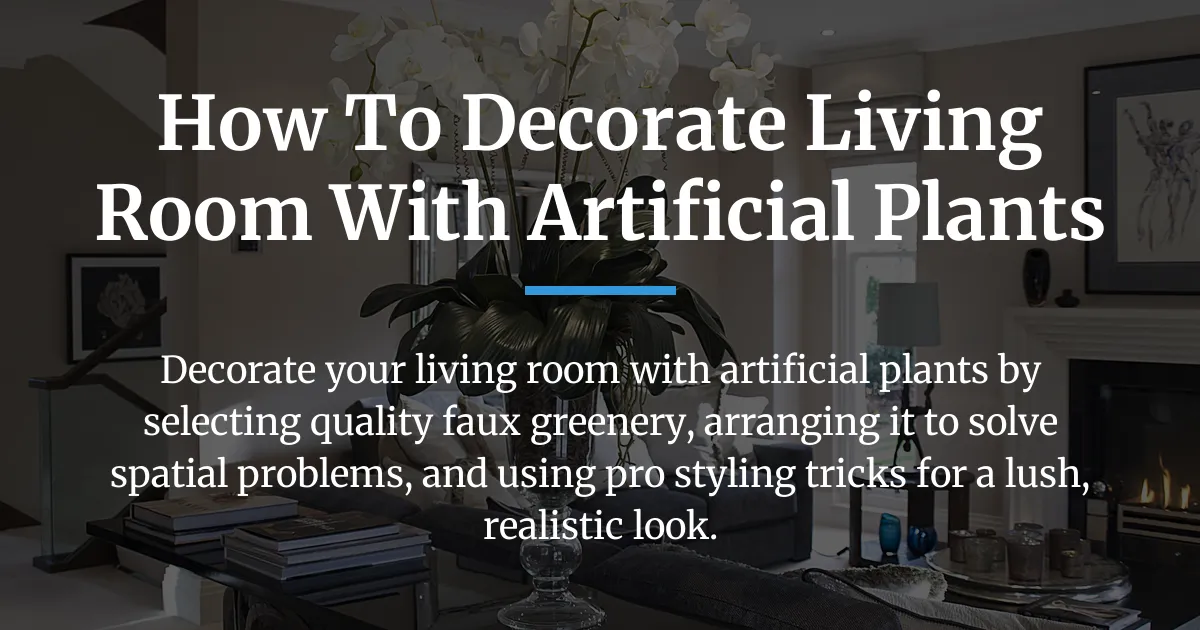
Dreaming of a vibrant, green living room but worried about keeping real plants alive? You are not alone. The good news is that you can create a stunning space with artificial plants by treating them as key design elements. This guide will walk you through how to decorate your living room with artificial plants, from smart selection to pro arrangement, ensuring a result that feels both intentional and lush.
Why Artificial Plants Are a Smart Choice for Your Living Room
Many people think artificial plants are just for those without a green thumb. The truth is they are a powerful design tool. They offer greenery exactly where you want it, without the limitations of light or water.
When Artificial Plants Make the Most Sense
Consider artificial plants for spots where real ones would struggle. Dark corners, high shelves, or areas behind large furniture like sofas are perfect examples. These places often lack the natural light that living plants need.
They are also ideal for households with allergies, busy schedules, or pets that might chew on leaves. You get the visual benefit of plants without any of the common headaches.
The Design Benefits You Might Not Expect
Beyond being low-maintenance, artificial plants give you full control. You can choose the perfect size, color, and type to match your decor without waiting for growth. They stay looking perfect year-round, providing consistent texture and color.
This makes them excellent for creating a specific mood or style. Whether your living room is modern, bohemian, or minimalist, there is a faux plant to complete the look.
Choosing the Right Artificial Plants for Your Space
Picking the right pieces is the first real step. Not all artificial plants are created equal. Your goal should be to find options that look convincing and suit your room’s scale.
Focus on Quality and Realistic Details
High-quality artificial plants use material blends like silk, plastic, and latex. Look for color variation in the leaves, realistic stem textures, and natural shaping. Avoid plants that are one flat color or have perfectly symmetrical leaves.
Touch is important too. Better faux plants often have a slight texture or weight that mimics real foliage. This attention to detail is what makes them blend seamlessly into your living room.
Getting the Scale and Size Right
Scale is crucial for a designer look. One large, statement artificial plant can have more impact than several small ones. Measure your space before you buy.
For an empty corner, a tall faux tree like a fiddle leaf fig or olive tree can anchor the area. For tabletops or shelves, consider medium-sized plants or a group of smaller succulents. Always think about the plant’s proportion relative to your furniture.
Do Not Forget the Planter
The container is half the battle. A beautiful plant in a cheap plastic pot will still look fake. Invest in a nice planter that complements your living room’s style.
Choose planters with weight and substance, made from materials like ceramic, concrete, or woven basket. Ensure the pot is sized correctly for the plant—not too big or too small. This simple step elevates the entire presentation.
How to Decorate Your Living Room with Artificial Plants
This is the core of the process. Decorating with artificial plants is about strategic placement, not just scattering pots around. Think like an interior designer to solve spatial problems and create depth.
Use Plants to Solve Common Living Room Problems
Identify areas in your living room that feel empty or awkward. A large artificial tree can fill a bare corner and draw the eye upward. A trailing faux plant on a bookshelf can soften hard edges.
You can also use plants to frame key features. Place two matching artificial plants on either side of a fireplace, television, or window to create a balanced, focal point. This adds structure to the room.
Create Impact with Groupings and Layers
Grouping plants together makes them look more intentional and lush. Use the rule of three as a starting point. Combine plants of different heights, shapes, and textures.
For example, place a tall faux snake plant behind a medium-sized artificial fern, with a small succulent in front. Layer them in front of or behind other decor items, like a lamp or stack of books, to add depth and make the arrangement feel integrated.
Blend Greenery with Your Room’s Textures
Your living room has a mix of textures from fabrics, wood, and metals. Use artificial plants to complement this palette. The soft leaves of a faux monstera can contrast nicely with a rough linen sofa.
A glossy artificial anthurium plant can reflect light near a metallic side table. Think about how the green interacts with everything else. This harmony is what makes the decor feel cohesive and thoughtfully designed.
Making Your Artificial Plants Look Real
This is the advanced skill that most guides miss. The secret is in the styling details that trick the eye. It is about moving beyond the plant’s “out-of-the-box” appearance.
Always Bend, Fluff, and Reshape
Every artificial plant arrives packed and folded. Take time to gently bend each stem and leaf into a unique, natural position. Separate the leaves so they are not all pointing the same way.
This breaks the perfect symmetry that screams “fake.” A real plant grows towards light and has irregular shapes. Mimicking this is your first and most important step.
Add Realistic Touches to the Base
Cover the obvious plastic pot base inside your planter. Use real moss, decorative pebbles, bark chips, or even a layer of potting soil. This hides the tell-tale signs of an artificial plant.
For a truly clever touch, sprinkle a few faux fallen leaves or petals around the base. This minor imperfection adds a layer of authenticity that people will notice subconsciously.
Use Light to Your Advantage
Place your artificial plants where light would naturally fall in the room. If you have a sunny window, position a plant nearby so it catches the glow. This creates natural-looking highlights and shadows on the leaves.
At night, use your living room lamps to cast warm light across the foliage. This interaction with light is a key factor in making any object, real or fake, feel like it belongs in the space.
Maintaining and Refreshing Your Artificial Decor
Your artificial living room garden is not a one-time setup. To keep it looking its best, a little care and occasional refreshing go a long way. This ensures your decor evolves with your taste.
A Simple Routine for Dusting
Dust is the enemy of realism. Establish a quick cleaning habit. For most plants, a weekly once-over with a feather duster or a soft microfiber cloth works.
For larger faux trees or delicate silk plants, use a hairdryer on a cool, low setting to blow dust away. Regular dusting keeps the colors vibrant and the details sharp.
How to Refresh the Look Over Time
Switch things up seasonally to keep the decor feeling current. You can change the planter for a different color or texture. Rotate plants to new spots in the living room for a fresh perspective.
Consider adding seasonal accents. Tuck a few faux berry sprigs into an arrangement for winter, or swap a tropical leaf for a greener fern in spring. When a plant fades or you tire of it, retire it gracefully and replace it with something new.
Frequently Asked Questions
Can artificial plants be used in a living room with no natural light?
Yes, absolutely. This is one of the biggest advantages of artificial plants. They will remain green and lush in any corner, regardless of how dark it is, making them perfect for light-starved rooms.
How do you securely position a large artificial tree in a living room?
First, choose a heavy, stable planter. Fill the bottom with stones or sand for extra weight. You can also use discreet adhesive putty or museum gel between the pot base and the floor to prevent tipping.
Are artificial plants safe for living rooms with pets or children?
Generally, yes, as they are non-toxic. However, ensure small parts like berries or loose leaves are securely attached to prevent choking hazards. Also, keep them away from direct heat sources like heaters.
What is the best way to clean dust from large faux greenery?
For large trees, use a can of compressed air to dislodge dust from crevices. Alternatively, take them outside occasionally and use a gentle blast from a garden hose, then let them air dry completely.
Can you cut or reshape artificial plants to better fit a space?
You can. Use wire cutters to trim stems that are too long. Be careful to cut gradually and reshape the ends to maintain a natural look. This is great for customizing store-bought plants.
Where is the best place to buy high-quality artificial plants for a living room?
Look for specialty home decor stores, online retailers with detailed reviews, or even thrift stores for unique planters. Brands known for realistic botanicals are a good starting point, but always check product images closely.
How many artificial plants are too many for an average-sized living room?
There is no strict rule, but overloading can feel cluttered. Start with 2-3 key pieces and add more only if the space feels balanced. Use groupings to consolidate greenery rather than spreading single pots everywhere.
Do artificial plants fade in a sunny living room, and how can you prevent it?
Some lower-quality plants can fade in direct, constant sunlight. To prevent this, use UV-protective spray on the leaves or position plants away from windows where harsh sun hits for most of the day.
What are good artificial plant alternatives for common living room plants like fiddle leaf figs?
Excellent realistic alternatives include faux olive trees, snake plants, monstera deliciosa, or parlor palms. These popular styles are widely available in high-quality artificial versions that capture the look perfectly.
How can you make an inexpensive artificial plant look more high-end?
Upgrade the planter immediately. Add real moss or rocks to the soil. Spend extra time bending and fluffing the leaves to break the factory mold. These simple, low-cost tweaks dramatically increase the perceived value.
Decorating your living room with artificial plants is a brilliant way to add permanent, hassle-free greenery. Remember, success lies in choosing plants for their purpose and quality, arranging them with spatial strategy, and mastering those small styling details that create illusion. With this approach, your living room will feel refreshed, designed, and wonderfully alive.