Here’s a helpful visual guide to maximizing small kitchen space from Better Homes & Gardens.
For even more compact kitchen inspiration, check out our roundup of cozy small kitchen ideas that prove tiny spaces can still be stylish and efficient.
9. Color Psychology for Small Spaces
The colors you choose can have a significant impact on how a space feels. For small apartments, leveraging color psychology can make a big difference.
Let’s paint a picture of spaciousness!
Light and Airy Palettes
As mentioned, whites, creams, soft grays, and pale blues or greens are your best bet. They reflect light and create a sense of openness. Painting the ceiling a slightly lighter shade than the walls can also make the room feel taller.
Monochromatic Schemes
Using variations of a single color can create a cohesive and expansive look. This approach avoids visually breaking up the space with too many contrasting colors.
Accent Colors for Interest
Don’t be afraid of a little color! Use brighter or deeper hues as accents through artwork, decorative objects, or a single accent wall (used cautiously). This adds personality without overwhelming the space.
The Importance of Flow
Try to maintain a consistent color palette throughout your apartment, especially in open-plan areas. This creates a visual flow that makes the entire space feel larger and more unified.
10. Creating Cozy Nooks
Even in a small apartment, you can carve out dedicated zones that feel cozy and inviting. These nooks can serve specific purposes and add character.
Think of these as little retreats within your home.
Reading Corner
A comfortable armchair, a small side table, and a good reading lamp can create a perfect little reading nook. Place it near a window for natural light if possible.
Workstation Nook
A small desk or a wall-mounted fold-down desk can create a functional workspace. Add a comfortable chair and good lighting. If space is extremely limited, a corner can often suffice.
Dining Nook
A small bistro table and chairs can create a dedicated dining area. If you have a kitchen island or peninsula, a couple of counter stools can serve the same purpose.
Entertainment Zone
Even a small TV and a comfy sofa or floor cushions can create a cozy entertainment zone. Use rugs to define this area.
Small Apartment Design Ideas: A Comparison Table
To help you visualize the impact of different strategies, here’s a look at how various design choices can affect the perceived size and functionality of a small apartment.
| Design Strategy | Impact on Small Space | Key Benefits | Considerations |
|---|---|---|---|
| Multifunctional Furniture | Maximizes utility, reduces clutter | Saves space, adaptable, cost-effective | Can be expensive, comfort varies |
| Vertical Storage | Opens up floor space, adds visual height | Increases storage, declutters surfaces, enhances aesthetics | Requires secure mounting, can look busy if overdone |
| Light Colors & Mirrors | Creates illusion of spaciousness and light | Makes rooms feel larger and brighter, airy atmosphere | Requires good lighting, mirrors need careful placement |
| Defined Zones | Organizes open spaces, adds functionality | Improves flow, creates distinct areas, enhances usability | Can make space feel smaller if not done carefully, requires planning |
| Scale-Appropriate Furniture | Prevents overcrowding, maintains balance | Comfortable flow, visually appealing, proportional | Finding the right size can be challenging |
Frequently Asked Questions (FAQs)
Q1: How can I make my small apartment look bigger without expensive renovations?
You can make your small apartment look bigger by using light paint colors, strategic mirror placement, maximizing natural light, choosing furniture with slim profiles and exposed legs, and decluttering regularly. Multifunctional furniture and vertical storage also play a huge role.
Q2: What is the best color to paint a small apartment?
Light and neutral colors like white, cream, pale gray, or soft pastels are generally best. They reflect light and create an airy, open feel. You can add pops of color through accessories.
Q3: How do I deal with clutter in a small space?
The key is smart storage and regular decluttering. Utilize under-bed storage, over-the-door organizers, drawer dividers, and floating shelves. Adopt a “one in, one out” policy for new purchases and regularly go through your belongings to donate or discard items you no longer need.
Q4: Is it okay to use dark colors in a small apartment?
Yes, but with caution! Dark colors can make a space feel cozier and more intimate. Use them sparingly as accent colors on a single wall, or in accessories. If you do use a darker palette, ensure you have excellent lighting to prevent the space from feeling cave-like.
Q5: How can I arrange furniture in a small living room?
Arrange furniture to create clear pathways and avoid blocking windows or doors. Consider a sofa with its back to a wall or use a slim console table behind it. Use furniture with visible legs to create a sense of openness. Multifunctional pieces like storage ottomans are great. For very small rooms, consider a loveseat instead of a full sofa.
Q6: What kind of curtains are best for small windows?
Opt for light, sheer, or semi-sheer curtains in light colors. Hang them as high as possible and extend them wider than the window frame to make the window appear larger and allow more natural light in. Avoid heavy, dark, or bulky fabrics.
Q7: How can I make my studio apartment feel like it has separate rooms?
You can define zones using area rugs, strategically placed furniture (like a sofa acting as a divider), screens, open bookshelves, or even tall plants. The goal is to create visual separation without using solid walls.
Conclusion
Designing a small apartment doesn’t have to be a daunting task. By focusing on smart furniture choices, maximizing vertical space, employing clever storage solutions, and using light and color strategically, you can create a home that feels spacious, organized, and stylish. Remember, it’s all about making intentional choices that serve multiple purposes and enhance the perceived size and functionality of your living area.
Embrace the challenge as an opportunity for creativity. Whether you’re a student on a budget, a renter looking to personalize your space, or a homeowner wanting to optimize every square inch, these brilliant solutions are designed to help you transform your compact dwelling into a comfortable and beautiful sanctuary. Start with one or two ideas that resonate with you, and watch your small apartment come to life!
Looking for more ways to enhance your compact kitchen? Discover our top picks for stylish kitchen storage accessories that blend form and function perfectly.
Here’s a helpful visual guide to maximizing small kitchen space from Better Homes & Gardens.
For even more compact kitchen inspiration, check out our roundup of cozy small kitchen ideas that prove tiny spaces can still be stylish and efficient.
9. Color Psychology for Small Spaces
The colors you choose can have a significant impact on how a space feels. For small apartments, leveraging color psychology can make a big difference.
Let’s paint a picture of spaciousness!
Light and Airy Palettes
As mentioned, whites, creams, soft grays, and pale blues or greens are your best bet. They reflect light and create a sense of openness. Painting the ceiling a slightly lighter shade than the walls can also make the room feel taller.
Monochromatic Schemes
Using variations of a single color can create a cohesive and expansive look. This approach avoids visually breaking up the space with too many contrasting colors.
Accent Colors for Interest
Don’t be afraid of a little color! Use brighter or deeper hues as accents through artwork, decorative objects, or a single accent wall (used cautiously). This adds personality without overwhelming the space.
The Importance of Flow
Try to maintain a consistent color palette throughout your apartment, especially in open-plan areas. This creates a visual flow that makes the entire space feel larger and more unified.
10. Creating Cozy Nooks
Even in a small apartment, you can carve out dedicated zones that feel cozy and inviting. These nooks can serve specific purposes and add character.
Think of these as little retreats within your home.
Reading Corner
A comfortable armchair, a small side table, and a good reading lamp can create a perfect little reading nook. Place it near a window for natural light if possible.
Workstation Nook
A small desk or a wall-mounted fold-down desk can create a functional workspace. Add a comfortable chair and good lighting. If space is extremely limited, a corner can often suffice.
Dining Nook
A small bistro table and chairs can create a dedicated dining area. If you have a kitchen island or peninsula, a couple of counter stools can serve the same purpose.
Entertainment Zone
Even a small TV and a comfy sofa or floor cushions can create a cozy entertainment zone. Use rugs to define this area.
Small Apartment Design Ideas: A Comparison Table
To help you visualize the impact of different strategies, here’s a look at how various design choices can affect the perceived size and functionality of a small apartment.
| Design Strategy | Impact on Small Space | Key Benefits | Considerations |
|---|---|---|---|
| Multifunctional Furniture | Maximizes utility, reduces clutter | Saves space, adaptable, cost-effective | Can be expensive, comfort varies |
| Vertical Storage | Opens up floor space, adds visual height | Increases storage, declutters surfaces, enhances aesthetics | Requires secure mounting, can look busy if overdone |
| Light Colors & Mirrors | Creates illusion of spaciousness and light | Makes rooms feel larger and brighter, airy atmosphere | Requires good lighting, mirrors need careful placement |
| Defined Zones | Organizes open spaces, adds functionality | Improves flow, creates distinct areas, enhances usability | Can make space feel smaller if not done carefully, requires planning |
| Scale-Appropriate Furniture | Prevents overcrowding, maintains balance | Comfortable flow, visually appealing, proportional | Finding the right size can be challenging |
Frequently Asked Questions (FAQs)
Q1: How can I make my small apartment look bigger without expensive renovations?
You can make your small apartment look bigger by using light paint colors, strategic mirror placement, maximizing natural light, choosing furniture with slim profiles and exposed legs, and decluttering regularly. Multifunctional furniture and vertical storage also play a huge role.
Q2: What is the best color to paint a small apartment?
Light and neutral colors like white, cream, pale gray, or soft pastels are generally best. They reflect light and create an airy, open feel. You can add pops of color through accessories.
Q3: How do I deal with clutter in a small space?
The key is smart storage and regular decluttering. Utilize under-bed storage, over-the-door organizers, drawer dividers, and floating shelves. Adopt a “one in, one out” policy for new purchases and regularly go through your belongings to donate or discard items you no longer need.
Q4: Is it okay to use dark colors in a small apartment?
Yes, but with caution! Dark colors can make a space feel cozier and more intimate. Use them sparingly as accent colors on a single wall, or in accessories. If you do use a darker palette, ensure you have excellent lighting to prevent the space from feeling cave-like.
Q5: How can I arrange furniture in a small living room?
Arrange furniture to create clear pathways and avoid blocking windows or doors. Consider a sofa with its back to a wall or use a slim console table behind it. Use furniture with visible legs to create a sense of openness. Multifunctional pieces like storage ottomans are great. For very small rooms, consider a loveseat instead of a full sofa.
Q6: What kind of curtains are best for small windows?
Opt for light, sheer, or semi-sheer curtains in light colors. Hang them as high as possible and extend them wider than the window frame to make the window appear larger and allow more natural light in. Avoid heavy, dark, or bulky fabrics.
Q7: How can I make my studio apartment feel like it has separate rooms?
You can define zones using area rugs, strategically placed furniture (like a sofa acting as a divider), screens, open bookshelves, or even tall plants. The goal is to create visual separation without using solid walls.
Conclusion
Designing a small apartment doesn’t have to be a daunting task. By focusing on smart furniture choices, maximizing vertical space, employing clever storage solutions, and using light and color strategically, you can create a home that feels spacious, organized, and stylish. Remember, it’s all about making intentional choices that serve multiple purposes and enhance the perceived size and functionality of your living area.
Embrace the challenge as an opportunity for creativity. Whether you’re a student on a budget, a renter looking to personalize your space, or a homeowner wanting to optimize every square inch, these brilliant solutions are designed to help you transform your compact dwelling into a comfortable and beautiful sanctuary. Start with one or two ideas that resonate with you, and watch your small apartment come to life!
Looking for more ways to enhance your compact kitchen? Discover our top picks for stylish kitchen storage accessories that blend form and function perfectly.
- Towel Bars and Hooks: Install them on the back of the door or on unused wall space.
- Shower Caddies: Keep toiletries organized and off the tub ledge.
- Wall-Mounted Vanities: These can make the floor space appear larger.
- Mirror Cabinets: Combine storage with a mirror.
- Narrow Storage Towers: Fit these into small nooks next to the toilet or sink.
Here’s a helpful visual guide to maximizing small kitchen space from Better Homes & Gardens.
For even more compact kitchen inspiration, check out our roundup of cozy small kitchen ideas that prove tiny spaces can still be stylish and efficient.
9. Color Psychology for Small Spaces
The colors you choose can have a significant impact on how a space feels. For small apartments, leveraging color psychology can make a big difference.
Let’s paint a picture of spaciousness!
Light and Airy Palettes
As mentioned, whites, creams, soft grays, and pale blues or greens are your best bet. They reflect light and create a sense of openness. Painting the ceiling a slightly lighter shade than the walls can also make the room feel taller.
Monochromatic Schemes
Using variations of a single color can create a cohesive and expansive look. This approach avoids visually breaking up the space with too many contrasting colors.
Accent Colors for Interest
Don’t be afraid of a little color! Use brighter or deeper hues as accents through artwork, decorative objects, or a single accent wall (used cautiously). This adds personality without overwhelming the space.
The Importance of Flow
Try to maintain a consistent color palette throughout your apartment, especially in open-plan areas. This creates a visual flow that makes the entire space feel larger and more unified.
10. Creating Cozy Nooks
Even in a small apartment, you can carve out dedicated zones that feel cozy and inviting. These nooks can serve specific purposes and add character.
Think of these as little retreats within your home.
Reading Corner
A comfortable armchair, a small side table, and a good reading lamp can create a perfect little reading nook. Place it near a window for natural light if possible.
Workstation Nook
A small desk or a wall-mounted fold-down desk can create a functional workspace. Add a comfortable chair and good lighting. If space is extremely limited, a corner can often suffice.
Dining Nook
A small bistro table and chairs can create a dedicated dining area. If you have a kitchen island or peninsula, a couple of counter stools can serve the same purpose.
Entertainment Zone
Even a small TV and a comfy sofa or floor cushions can create a cozy entertainment zone. Use rugs to define this area.
Small Apartment Design Ideas: A Comparison Table
To help you visualize the impact of different strategies, here’s a look at how various design choices can affect the perceived size and functionality of a small apartment.
| Design Strategy | Impact on Small Space | Key Benefits | Considerations |
|---|---|---|---|
| Multifunctional Furniture | Maximizes utility, reduces clutter | Saves space, adaptable, cost-effective | Can be expensive, comfort varies |
| Vertical Storage | Opens up floor space, adds visual height | Increases storage, declutters surfaces, enhances aesthetics | Requires secure mounting, can look busy if overdone |
| Light Colors & Mirrors | Creates illusion of spaciousness and light | Makes rooms feel larger and brighter, airy atmosphere | Requires good lighting, mirrors need careful placement |
| Defined Zones | Organizes open spaces, adds functionality | Improves flow, creates distinct areas, enhances usability | Can make space feel smaller if not done carefully, requires planning |
| Scale-Appropriate Furniture | Prevents overcrowding, maintains balance | Comfortable flow, visually appealing, proportional | Finding the right size can be challenging |
Frequently Asked Questions (FAQs)
Q1: How can I make my small apartment look bigger without expensive renovations?
You can make your small apartment look bigger by using light paint colors, strategic mirror placement, maximizing natural light, choosing furniture with slim profiles and exposed legs, and decluttering regularly. Multifunctional furniture and vertical storage also play a huge role.
Q2: What is the best color to paint a small apartment?
Light and neutral colors like white, cream, pale gray, or soft pastels are generally best. They reflect light and create an airy, open feel. You can add pops of color through accessories.
Q3: How do I deal with clutter in a small space?
The key is smart storage and regular decluttering. Utilize under-bed storage, over-the-door organizers, drawer dividers, and floating shelves. Adopt a “one in, one out” policy for new purchases and regularly go through your belongings to donate or discard items you no longer need.
Q4: Is it okay to use dark colors in a small apartment?
Yes, but with caution! Dark colors can make a space feel cozier and more intimate. Use them sparingly as accent colors on a single wall, or in accessories. If you do use a darker palette, ensure you have excellent lighting to prevent the space from feeling cave-like.
Q5: How can I arrange furniture in a small living room?
Arrange furniture to create clear pathways and avoid blocking windows or doors. Consider a sofa with its back to a wall or use a slim console table behind it. Use furniture with visible legs to create a sense of openness. Multifunctional pieces like storage ottomans are great. For very small rooms, consider a loveseat instead of a full sofa.
Q6: What kind of curtains are best for small windows?
Opt for light, sheer, or semi-sheer curtains in light colors. Hang them as high as possible and extend them wider than the window frame to make the window appear larger and allow more natural light in. Avoid heavy, dark, or bulky fabrics.
Q7: How can I make my studio apartment feel like it has separate rooms?
You can define zones using area rugs, strategically placed furniture (like a sofa acting as a divider), screens, open bookshelves, or even tall plants. The goal is to create visual separation without using solid walls.
Conclusion
Designing a small apartment doesn’t have to be a daunting task. By focusing on smart furniture choices, maximizing vertical space, employing clever storage solutions, and using light and color strategically, you can create a home that feels spacious, organized, and stylish. Remember, it’s all about making intentional choices that serve multiple purposes and enhance the perceived size and functionality of your living area.
Embrace the challenge as an opportunity for creativity. Whether you’re a student on a budget, a renter looking to personalize your space, or a homeowner wanting to optimize every square inch, these brilliant solutions are designed to help you transform your compact dwelling into a comfortable and beautiful sanctuary. Start with one or two ideas that resonate with you, and watch your small apartment come to life!
Looking for more ways to enhance your compact kitchen? Discover our top picks for stylish kitchen storage accessories that blend form and function perfectly.
- Towel Bars and Hooks: Install them on the back of the door or on unused wall space.
- Shower Caddies: Keep toiletries organized and off the tub ledge.
- Wall-Mounted Vanities: These can make the floor space appear larger.
- Mirror Cabinets: Combine storage with a mirror.
- Narrow Storage Towers: Fit these into small nooks next to the toilet or sink.
Here’s a helpful visual guide to maximizing small kitchen space from Better Homes & Gardens.
For even more compact kitchen inspiration, check out our roundup of cozy small kitchen ideas that prove tiny spaces can still be stylish and efficient.
9. Color Psychology for Small Spaces
The colors you choose can have a significant impact on how a space feels. For small apartments, leveraging color psychology can make a big difference.
Let’s paint a picture of spaciousness!
Light and Airy Palettes
As mentioned, whites, creams, soft grays, and pale blues or greens are your best bet. They reflect light and create a sense of openness. Painting the ceiling a slightly lighter shade than the walls can also make the room feel taller.
Monochromatic Schemes
Using variations of a single color can create a cohesive and expansive look. This approach avoids visually breaking up the space with too many contrasting colors.
Accent Colors for Interest
Don’t be afraid of a little color! Use brighter or deeper hues as accents through artwork, decorative objects, or a single accent wall (used cautiously). This adds personality without overwhelming the space.
The Importance of Flow
Try to maintain a consistent color palette throughout your apartment, especially in open-plan areas. This creates a visual flow that makes the entire space feel larger and more unified.
10. Creating Cozy Nooks
Even in a small apartment, you can carve out dedicated zones that feel cozy and inviting. These nooks can serve specific purposes and add character.
Think of these as little retreats within your home.
Reading Corner
A comfortable armchair, a small side table, and a good reading lamp can create a perfect little reading nook. Place it near a window for natural light if possible.
Workstation Nook
A small desk or a wall-mounted fold-down desk can create a functional workspace. Add a comfortable chair and good lighting. If space is extremely limited, a corner can often suffice.
Dining Nook
A small bistro table and chairs can create a dedicated dining area. If you have a kitchen island or peninsula, a couple of counter stools can serve the same purpose.
Entertainment Zone
Even a small TV and a comfy sofa or floor cushions can create a cozy entertainment zone. Use rugs to define this area.
Small Apartment Design Ideas: A Comparison Table
To help you visualize the impact of different strategies, here’s a look at how various design choices can affect the perceived size and functionality of a small apartment.
| Design Strategy | Impact on Small Space | Key Benefits | Considerations |
|---|---|---|---|
| Multifunctional Furniture | Maximizes utility, reduces clutter | Saves space, adaptable, cost-effective | Can be expensive, comfort varies |
| Vertical Storage | Opens up floor space, adds visual height | Increases storage, declutters surfaces, enhances aesthetics | Requires secure mounting, can look busy if overdone |
| Light Colors & Mirrors | Creates illusion of spaciousness and light | Makes rooms feel larger and brighter, airy atmosphere | Requires good lighting, mirrors need careful placement |
| Defined Zones | Organizes open spaces, adds functionality | Improves flow, creates distinct areas, enhances usability | Can make space feel smaller if not done carefully, requires planning |
| Scale-Appropriate Furniture | Prevents overcrowding, maintains balance | Comfortable flow, visually appealing, proportional | Finding the right size can be challenging |
Frequently Asked Questions (FAQs)
Q1: How can I make my small apartment look bigger without expensive renovations?
You can make your small apartment look bigger by using light paint colors, strategic mirror placement, maximizing natural light, choosing furniture with slim profiles and exposed legs, and decluttering regularly. Multifunctional furniture and vertical storage also play a huge role.
Q2: What is the best color to paint a small apartment?
Light and neutral colors like white, cream, pale gray, or soft pastels are generally best. They reflect light and create an airy, open feel. You can add pops of color through accessories.
Q3: How do I deal with clutter in a small space?
The key is smart storage and regular decluttering. Utilize under-bed storage, over-the-door organizers, drawer dividers, and floating shelves. Adopt a “one in, one out” policy for new purchases and regularly go through your belongings to donate or discard items you no longer need.
Q4: Is it okay to use dark colors in a small apartment?
Yes, but with caution! Dark colors can make a space feel cozier and more intimate. Use them sparingly as accent colors on a single wall, or in accessories. If you do use a darker palette, ensure you have excellent lighting to prevent the space from feeling cave-like.
Q5: How can I arrange furniture in a small living room?
Arrange furniture to create clear pathways and avoid blocking windows or doors. Consider a sofa with its back to a wall or use a slim console table behind it. Use furniture with visible legs to create a sense of openness. Multifunctional pieces like storage ottomans are great. For very small rooms, consider a loveseat instead of a full sofa.
Q6: What kind of curtains are best for small windows?
Opt for light, sheer, or semi-sheer curtains in light colors. Hang them as high as possible and extend them wider than the window frame to make the window appear larger and allow more natural light in. Avoid heavy, dark, or bulky fabrics.
Q7: How can I make my studio apartment feel like it has separate rooms?
You can define zones using area rugs, strategically placed furniture (like a sofa acting as a divider), screens, open bookshelves, or even tall plants. The goal is to create visual separation without using solid walls.
Conclusion
Designing a small apartment doesn’t have to be a daunting task. By focusing on smart furniture choices, maximizing vertical space, employing clever storage solutions, and using light and color strategically, you can create a home that feels spacious, organized, and stylish. Remember, it’s all about making intentional choices that serve multiple purposes and enhance the perceived size and functionality of your living area.
Embrace the challenge as an opportunity for creativity. Whether you’re a student on a budget, a renter looking to personalize your space, or a homeowner wanting to optimize every square inch, these brilliant solutions are designed to help you transform your compact dwelling into a comfortable and beautiful sanctuary. Start with one or two ideas that resonate with you, and watch your small apartment come to life!
Looking for more ways to enhance your compact kitchen? Discover our top picks for stylish kitchen storage accessories that blend form and function perfectly.
Bathroom
- Towel Bars and Hooks: Install them on the back of the door or on unused wall space.
- Shower Caddies: Keep toiletries organized and off the tub ledge.
- Wall-Mounted Vanities: These can make the floor space appear larger.
- Mirror Cabinets: Combine storage with a mirror.
- Narrow Storage Towers: Fit these into small nooks next to the toilet or sink.
Here’s a helpful visual guide to maximizing small kitchen space from Better Homes & Gardens.
For even more compact kitchen inspiration, check out our roundup of cozy small kitchen ideas that prove tiny spaces can still be stylish and efficient.
9. Color Psychology for Small Spaces
The colors you choose can have a significant impact on how a space feels. For small apartments, leveraging color psychology can make a big difference.
Let’s paint a picture of spaciousness!
Light and Airy Palettes
As mentioned, whites, creams, soft grays, and pale blues or greens are your best bet. They reflect light and create a sense of openness. Painting the ceiling a slightly lighter shade than the walls can also make the room feel taller.
Monochromatic Schemes
Using variations of a single color can create a cohesive and expansive look. This approach avoids visually breaking up the space with too many contrasting colors.
Accent Colors for Interest
Don’t be afraid of a little color! Use brighter or deeper hues as accents through artwork, decorative objects, or a single accent wall (used cautiously). This adds personality without overwhelming the space.
The Importance of Flow
Try to maintain a consistent color palette throughout your apartment, especially in open-plan areas. This creates a visual flow that makes the entire space feel larger and more unified.
10. Creating Cozy Nooks
Even in a small apartment, you can carve out dedicated zones that feel cozy and inviting. These nooks can serve specific purposes and add character.
Think of these as little retreats within your home.
Reading Corner
A comfortable armchair, a small side table, and a good reading lamp can create a perfect little reading nook. Place it near a window for natural light if possible.
Workstation Nook
A small desk or a wall-mounted fold-down desk can create a functional workspace. Add a comfortable chair and good lighting. If space is extremely limited, a corner can often suffice.
Dining Nook
A small bistro table and chairs can create a dedicated dining area. If you have a kitchen island or peninsula, a couple of counter stools can serve the same purpose.
Entertainment Zone
Even a small TV and a comfy sofa or floor cushions can create a cozy entertainment zone. Use rugs to define this area.
Small Apartment Design Ideas: A Comparison Table
To help you visualize the impact of different strategies, here’s a look at how various design choices can affect the perceived size and functionality of a small apartment.
| Design Strategy | Impact on Small Space | Key Benefits | Considerations |
|---|---|---|---|
| Multifunctional Furniture | Maximizes utility, reduces clutter | Saves space, adaptable, cost-effective | Can be expensive, comfort varies |
| Vertical Storage | Opens up floor space, adds visual height | Increases storage, declutters surfaces, enhances aesthetics | Requires secure mounting, can look busy if overdone |
| Light Colors & Mirrors | Creates illusion of spaciousness and light | Makes rooms feel larger and brighter, airy atmosphere | Requires good lighting, mirrors need careful placement |
| Defined Zones | Organizes open spaces, adds functionality | Improves flow, creates distinct areas, enhances usability | Can make space feel smaller if not done carefully, requires planning |
| Scale-Appropriate Furniture | Prevents overcrowding, maintains balance | Comfortable flow, visually appealing, proportional | Finding the right size can be challenging |
Frequently Asked Questions (FAQs)
Q1: How can I make my small apartment look bigger without expensive renovations?
You can make your small apartment look bigger by using light paint colors, strategic mirror placement, maximizing natural light, choosing furniture with slim profiles and exposed legs, and decluttering regularly. Multifunctional furniture and vertical storage also play a huge role.
Q2: What is the best color to paint a small apartment?
Light and neutral colors like white, cream, pale gray, or soft pastels are generally best. They reflect light and create an airy, open feel. You can add pops of color through accessories.
Q3: How do I deal with clutter in a small space?
The key is smart storage and regular decluttering. Utilize under-bed storage, over-the-door organizers, drawer dividers, and floating shelves. Adopt a “one in, one out” policy for new purchases and regularly go through your belongings to donate or discard items you no longer need.
Q4: Is it okay to use dark colors in a small apartment?
Yes, but with caution! Dark colors can make a space feel cozier and more intimate. Use them sparingly as accent colors on a single wall, or in accessories. If you do use a darker palette, ensure you have excellent lighting to prevent the space from feeling cave-like.
Q5: How can I arrange furniture in a small living room?
Arrange furniture to create clear pathways and avoid blocking windows or doors. Consider a sofa with its back to a wall or use a slim console table behind it. Use furniture with visible legs to create a sense of openness. Multifunctional pieces like storage ottomans are great. For very small rooms, consider a loveseat instead of a full sofa.
Q6: What kind of curtains are best for small windows?
Opt for light, sheer, or semi-sheer curtains in light colors. Hang them as high as possible and extend them wider than the window frame to make the window appear larger and allow more natural light in. Avoid heavy, dark, or bulky fabrics.
Q7: How can I make my studio apartment feel like it has separate rooms?
You can define zones using area rugs, strategically placed furniture (like a sofa acting as a divider), screens, open bookshelves, or even tall plants. The goal is to create visual separation without using solid walls.
Conclusion
Designing a small apartment doesn’t have to be a daunting task. By focusing on smart furniture choices, maximizing vertical space, employing clever storage solutions, and using light and color strategically, you can create a home that feels spacious, organized, and stylish. Remember, it’s all about making intentional choices that serve multiple purposes and enhance the perceived size and functionality of your living area.
Embrace the challenge as an opportunity for creativity. Whether you’re a student on a budget, a renter looking to personalize your space, or a homeowner wanting to optimize every square inch, these brilliant solutions are designed to help you transform your compact dwelling into a comfortable and beautiful sanctuary. Start with one or two ideas that resonate with you, and watch your small apartment come to life!
Looking for more ways to enhance your compact kitchen? Discover our top picks for stylish kitchen storage accessories that blend form and function perfectly.
Bathroom
- Towel Bars and Hooks: Install them on the back of the door or on unused wall space.
- Shower Caddies: Keep toiletries organized and off the tub ledge.
- Wall-Mounted Vanities: These can make the floor space appear larger.
- Mirror Cabinets: Combine storage with a mirror.
- Narrow Storage Towers: Fit these into small nooks next to the toilet or sink.
Here’s a helpful visual guide to maximizing small kitchen space from Better Homes & Gardens.
For even more compact kitchen inspiration, check out our roundup of cozy small kitchen ideas that prove tiny spaces can still be stylish and efficient.
9. Color Psychology for Small Spaces
The colors you choose can have a significant impact on how a space feels. For small apartments, leveraging color psychology can make a big difference.
Let’s paint a picture of spaciousness!
Light and Airy Palettes
As mentioned, whites, creams, soft grays, and pale blues or greens are your best bet. They reflect light and create a sense of openness. Painting the ceiling a slightly lighter shade than the walls can also make the room feel taller.
Monochromatic Schemes
Using variations of a single color can create a cohesive and expansive look. This approach avoids visually breaking up the space with too many contrasting colors.
Accent Colors for Interest
Don’t be afraid of a little color! Use brighter or deeper hues as accents through artwork, decorative objects, or a single accent wall (used cautiously). This adds personality without overwhelming the space.
The Importance of Flow
Try to maintain a consistent color palette throughout your apartment, especially in open-plan areas. This creates a visual flow that makes the entire space feel larger and more unified.
10. Creating Cozy Nooks
Even in a small apartment, you can carve out dedicated zones that feel cozy and inviting. These nooks can serve specific purposes and add character.
Think of these as little retreats within your home.
Reading Corner
A comfortable armchair, a small side table, and a good reading lamp can create a perfect little reading nook. Place it near a window for natural light if possible.
Workstation Nook
A small desk or a wall-mounted fold-down desk can create a functional workspace. Add a comfortable chair and good lighting. If space is extremely limited, a corner can often suffice.
Dining Nook
A small bistro table and chairs can create a dedicated dining area. If you have a kitchen island or peninsula, a couple of counter stools can serve the same purpose.
Entertainment Zone
Even a small TV and a comfy sofa or floor cushions can create a cozy entertainment zone. Use rugs to define this area.
Small Apartment Design Ideas: A Comparison Table
To help you visualize the impact of different strategies, here’s a look at how various design choices can affect the perceived size and functionality of a small apartment.
| Design Strategy | Impact on Small Space | Key Benefits | Considerations |
|---|---|---|---|
| Multifunctional Furniture | Maximizes utility, reduces clutter | Saves space, adaptable, cost-effective | Can be expensive, comfort varies |
| Vertical Storage | Opens up floor space, adds visual height | Increases storage, declutters surfaces, enhances aesthetics | Requires secure mounting, can look busy if overdone |
| Light Colors & Mirrors | Creates illusion of spaciousness and light | Makes rooms feel larger and brighter, airy atmosphere | Requires good lighting, mirrors need careful placement |
| Defined Zones | Organizes open spaces, adds functionality | Improves flow, creates distinct areas, enhances usability | Can make space feel smaller if not done carefully, requires planning |
| Scale-Appropriate Furniture | Prevents overcrowding, maintains balance | Comfortable flow, visually appealing, proportional | Finding the right size can be challenging |
Frequently Asked Questions (FAQs)
Q1: How can I make my small apartment look bigger without expensive renovations?
You can make your small apartment look bigger by using light paint colors, strategic mirror placement, maximizing natural light, choosing furniture with slim profiles and exposed legs, and decluttering regularly. Multifunctional furniture and vertical storage also play a huge role.
Q2: What is the best color to paint a small apartment?
Light and neutral colors like white, cream, pale gray, or soft pastels are generally best. They reflect light and create an airy, open feel. You can add pops of color through accessories.
Q3: How do I deal with clutter in a small space?
The key is smart storage and regular decluttering. Utilize under-bed storage, over-the-door organizers, drawer dividers, and floating shelves. Adopt a “one in, one out” policy for new purchases and regularly go through your belongings to donate or discard items you no longer need.
Q4: Is it okay to use dark colors in a small apartment?
Yes, but with caution! Dark colors can make a space feel cozier and more intimate. Use them sparingly as accent colors on a single wall, or in accessories. If you do use a darker palette, ensure you have excellent lighting to prevent the space from feeling cave-like.
Q5: How can I arrange furniture in a small living room?
Arrange furniture to create clear pathways and avoid blocking windows or doors. Consider a sofa with its back to a wall or use a slim console table behind it. Use furniture with visible legs to create a sense of openness. Multifunctional pieces like storage ottomans are great. For very small rooms, consider a loveseat instead of a full sofa.
Q6: What kind of curtains are best for small windows?
Opt for light, sheer, or semi-sheer curtains in light colors. Hang them as high as possible and extend them wider than the window frame to make the window appear larger and allow more natural light in. Avoid heavy, dark, or bulky fabrics.
Q7: How can I make my studio apartment feel like it has separate rooms?
You can define zones using area rugs, strategically placed furniture (like a sofa acting as a divider), screens, open bookshelves, or even tall plants. The goal is to create visual separation without using solid walls.
Conclusion
Designing a small apartment doesn’t have to be a daunting task. By focusing on smart furniture choices, maximizing vertical space, employing clever storage solutions, and using light and color strategically, you can create a home that feels spacious, organized, and stylish. Remember, it’s all about making intentional choices that serve multiple purposes and enhance the perceived size and functionality of your living area.
Embrace the challenge as an opportunity for creativity. Whether you’re a student on a budget, a renter looking to personalize your space, or a homeowner wanting to optimize every square inch, these brilliant solutions are designed to help you transform your compact dwelling into a comfortable and beautiful sanctuary. Start with one or two ideas that resonate with you, and watch your small apartment come to life!
Looking for more ways to enhance your compact kitchen? Discover our top picks for stylish kitchen storage accessories that blend form and function perfectly.
Bathroom
- Towel Bars and Hooks: Install them on the back of the door or on unused wall space.
- Shower Caddies: Keep toiletries organized and off the tub ledge.
- Wall-Mounted Vanities: These can make the floor space appear larger.
- Mirror Cabinets: Combine storage with a mirror.
- Narrow Storage Towers: Fit these into small nooks next to the toilet or sink.
Here’s a helpful visual guide to maximizing small kitchen space from Better Homes & Gardens.
For even more compact kitchen inspiration, check out our roundup of cozy small kitchen ideas that prove tiny spaces can still be stylish and efficient.
9. Color Psychology for Small Spaces
The colors you choose can have a significant impact on how a space feels. For small apartments, leveraging color psychology can make a big difference.
Let’s paint a picture of spaciousness!
Light and Airy Palettes
As mentioned, whites, creams, soft grays, and pale blues or greens are your best bet. They reflect light and create a sense of openness. Painting the ceiling a slightly lighter shade than the walls can also make the room feel taller.
Monochromatic Schemes
Using variations of a single color can create a cohesive and expansive look. This approach avoids visually breaking up the space with too many contrasting colors.
Accent Colors for Interest
Don’t be afraid of a little color! Use brighter or deeper hues as accents through artwork, decorative objects, or a single accent wall (used cautiously). This adds personality without overwhelming the space.
The Importance of Flow
Try to maintain a consistent color palette throughout your apartment, especially in open-plan areas. This creates a visual flow that makes the entire space feel larger and more unified.
10. Creating Cozy Nooks
Even in a small apartment, you can carve out dedicated zones that feel cozy and inviting. These nooks can serve specific purposes and add character.
Think of these as little retreats within your home.
Reading Corner
A comfortable armchair, a small side table, and a good reading lamp can create a perfect little reading nook. Place it near a window for natural light if possible.
Workstation Nook
A small desk or a wall-mounted fold-down desk can create a functional workspace. Add a comfortable chair and good lighting. If space is extremely limited, a corner can often suffice.
Dining Nook
A small bistro table and chairs can create a dedicated dining area. If you have a kitchen island or peninsula, a couple of counter stools can serve the same purpose.
Entertainment Zone
Even a small TV and a comfy sofa or floor cushions can create a cozy entertainment zone. Use rugs to define this area.
Small Apartment Design Ideas: A Comparison Table
To help you visualize the impact of different strategies, here’s a look at how various design choices can affect the perceived size and functionality of a small apartment.
| Design Strategy | Impact on Small Space | Key Benefits | Considerations |
|---|---|---|---|
| Multifunctional Furniture | Maximizes utility, reduces clutter | Saves space, adaptable, cost-effective | Can be expensive, comfort varies |
| Vertical Storage | Opens up floor space, adds visual height | Increases storage, declutters surfaces, enhances aesthetics | Requires secure mounting, can look busy if overdone |
| Light Colors & Mirrors | Creates illusion of spaciousness and light | Makes rooms feel larger and brighter, airy atmosphere | Requires good lighting, mirrors need careful placement |
| Defined Zones | Organizes open spaces, adds functionality | Improves flow, creates distinct areas, enhances usability | Can make space feel smaller if not done carefully, requires planning |
| Scale-Appropriate Furniture | Prevents overcrowding, maintains balance | Comfortable flow, visually appealing, proportional | Finding the right size can be challenging |
Frequently Asked Questions (FAQs)
Q1: How can I make my small apartment look bigger without expensive renovations?
You can make your small apartment look bigger by using light paint colors, strategic mirror placement, maximizing natural light, choosing furniture with slim profiles and exposed legs, and decluttering regularly. Multifunctional furniture and vertical storage also play a huge role.
Q2: What is the best color to paint a small apartment?
Light and neutral colors like white, cream, pale gray, or soft pastels are generally best. They reflect light and create an airy, open feel. You can add pops of color through accessories.
Q3: How do I deal with clutter in a small space?
The key is smart storage and regular decluttering. Utilize under-bed storage, over-the-door organizers, drawer dividers, and floating shelves. Adopt a “one in, one out” policy for new purchases and regularly go through your belongings to donate or discard items you no longer need.
Q4: Is it okay to use dark colors in a small apartment?
Yes, but with caution! Dark colors can make a space feel cozier and more intimate. Use them sparingly as accent colors on a single wall, or in accessories. If you do use a darker palette, ensure you have excellent lighting to prevent the space from feeling cave-like.
Q5: How can I arrange furniture in a small living room?
Arrange furniture to create clear pathways and avoid blocking windows or doors. Consider a sofa with its back to a wall or use a slim console table behind it. Use furniture with visible legs to create a sense of openness. Multifunctional pieces like storage ottomans are great. For very small rooms, consider a loveseat instead of a full sofa.
Q6: What kind of curtains are best for small windows?
Opt for light, sheer, or semi-sheer curtains in light colors. Hang them as high as possible and extend them wider than the window frame to make the window appear larger and allow more natural light in. Avoid heavy, dark, or bulky fabrics.
Q7: How can I make my studio apartment feel like it has separate rooms?
You can define zones using area rugs, strategically placed furniture (like a sofa acting as a divider), screens, open bookshelves, or even tall plants. The goal is to create visual separation without using solid walls.
Conclusion
Designing a small apartment doesn’t have to be a daunting task. By focusing on smart furniture choices, maximizing vertical space, employing clever storage solutions, and using light and color strategically, you can create a home that feels spacious, organized, and stylish. Remember, it’s all about making intentional choices that serve multiple purposes and enhance the perceived size and functionality of your living area.
Embrace the challenge as an opportunity for creativity. Whether you’re a student on a budget, a renter looking to personalize your space, or a homeowner wanting to optimize every square inch, these brilliant solutions are designed to help you transform your compact dwelling into a comfortable and beautiful sanctuary. Start with one or two ideas that resonate with you, and watch your small apartment come to life!
Looking for more ways to enhance your compact kitchen? Discover our top picks for stylish kitchen storage accessories that blend form and function perfectly.
- Magnetic Knife Strips: Free up counter and drawer space by mounting knives on the wall.
- Hanging Pot Racks: Utilize vertical space above your stove or island.
- Over-the-Sink Shelves or Drying Racks: Add extra prep or drying space.
- Slim Rolling Carts: Tuck these into narrow gaps between appliances or cabinets for extra storage.
- Cabinet Organizers: Use tiered shelves, pull-out drawers, and turntables (Lazy Susans) to maximize cabinet space.
Bathroom
- Towel Bars and Hooks: Install them on the back of the door or on unused wall space.
- Shower Caddies: Keep toiletries organized and off the tub ledge.
- Wall-Mounted Vanities: These can make the floor space appear larger.
- Mirror Cabinets: Combine storage with a mirror.
- Narrow Storage Towers: Fit these into small nooks next to the toilet or sink.
Here’s a helpful visual guide to maximizing small kitchen space from Better Homes & Gardens.
For even more compact kitchen inspiration, check out our roundup of cozy small kitchen ideas that prove tiny spaces can still be stylish and efficient.
9. Color Psychology for Small Spaces
The colors you choose can have a significant impact on how a space feels. For small apartments, leveraging color psychology can make a big difference.
Let’s paint a picture of spaciousness!
Light and Airy Palettes
As mentioned, whites, creams, soft grays, and pale blues or greens are your best bet. They reflect light and create a sense of openness. Painting the ceiling a slightly lighter shade than the walls can also make the room feel taller.
Monochromatic Schemes
Using variations of a single color can create a cohesive and expansive look. This approach avoids visually breaking up the space with too many contrasting colors.
Accent Colors for Interest
Don’t be afraid of a little color! Use brighter or deeper hues as accents through artwork, decorative objects, or a single accent wall (used cautiously). This adds personality without overwhelming the space.
The Importance of Flow
Try to maintain a consistent color palette throughout your apartment, especially in open-plan areas. This creates a visual flow that makes the entire space feel larger and more unified.
10. Creating Cozy Nooks
Even in a small apartment, you can carve out dedicated zones that feel cozy and inviting. These nooks can serve specific purposes and add character.
Think of these as little retreats within your home.
Reading Corner
A comfortable armchair, a small side table, and a good reading lamp can create a perfect little reading nook. Place it near a window for natural light if possible.
Workstation Nook
A small desk or a wall-mounted fold-down desk can create a functional workspace. Add a comfortable chair and good lighting. If space is extremely limited, a corner can often suffice.
Dining Nook
A small bistro table and chairs can create a dedicated dining area. If you have a kitchen island or peninsula, a couple of counter stools can serve the same purpose.
Entertainment Zone
Even a small TV and a comfy sofa or floor cushions can create a cozy entertainment zone. Use rugs to define this area.
Small Apartment Design Ideas: A Comparison Table
To help you visualize the impact of different strategies, here’s a look at how various design choices can affect the perceived size and functionality of a small apartment.
| Design Strategy | Impact on Small Space | Key Benefits | Considerations |
|---|---|---|---|
| Multifunctional Furniture | Maximizes utility, reduces clutter | Saves space, adaptable, cost-effective | Can be expensive, comfort varies |
| Vertical Storage | Opens up floor space, adds visual height | Increases storage, declutters surfaces, enhances aesthetics | Requires secure mounting, can look busy if overdone |
| Light Colors & Mirrors | Creates illusion of spaciousness and light | Makes rooms feel larger and brighter, airy atmosphere | Requires good lighting, mirrors need careful placement |
| Defined Zones | Organizes open spaces, adds functionality | Improves flow, creates distinct areas, enhances usability | Can make space feel smaller if not done carefully, requires planning |
| Scale-Appropriate Furniture | Prevents overcrowding, maintains balance | Comfortable flow, visually appealing, proportional | Finding the right size can be challenging |
Frequently Asked Questions (FAQs)
Q1: How can I make my small apartment look bigger without expensive renovations?
You can make your small apartment look bigger by using light paint colors, strategic mirror placement, maximizing natural light, choosing furniture with slim profiles and exposed legs, and decluttering regularly. Multifunctional furniture and vertical storage also play a huge role.
Q2: What is the best color to paint a small apartment?
Light and neutral colors like white, cream, pale gray, or soft pastels are generally best. They reflect light and create an airy, open feel. You can add pops of color through accessories.
Q3: How do I deal with clutter in a small space?
The key is smart storage and regular decluttering. Utilize under-bed storage, over-the-door organizers, drawer dividers, and floating shelves. Adopt a “one in, one out” policy for new purchases and regularly go through your belongings to donate or discard items you no longer need.
Q4: Is it okay to use dark colors in a small apartment?
Yes, but with caution! Dark colors can make a space feel cozier and more intimate. Use them sparingly as accent colors on a single wall, or in accessories. If you do use a darker palette, ensure you have excellent lighting to prevent the space from feeling cave-like.
Q5: How can I arrange furniture in a small living room?
Arrange furniture to create clear pathways and avoid blocking windows or doors. Consider a sofa with its back to a wall or use a slim console table behind it. Use furniture with visible legs to create a sense of openness. Multifunctional pieces like storage ottomans are great. For very small rooms, consider a loveseat instead of a full sofa.
Q6: What kind of curtains are best for small windows?
Opt for light, sheer, or semi-sheer curtains in light colors. Hang them as high as possible and extend them wider than the window frame to make the window appear larger and allow more natural light in. Avoid heavy, dark, or bulky fabrics.
Q7: How can I make my studio apartment feel like it has separate rooms?
You can define zones using area rugs, strategically placed furniture (like a sofa acting as a divider), screens, open bookshelves, or even tall plants. The goal is to create visual separation without using solid walls.
Conclusion
Designing a small apartment doesn’t have to be a daunting task. By focusing on smart furniture choices, maximizing vertical space, employing clever storage solutions, and using light and color strategically, you can create a home that feels spacious, organized, and stylish. Remember, it’s all about making intentional choices that serve multiple purposes and enhance the perceived size and functionality of your living area.
Embrace the challenge as an opportunity for creativity. Whether you’re a student on a budget, a renter looking to personalize your space, or a homeowner wanting to optimize every square inch, these brilliant solutions are designed to help you transform your compact dwelling into a comfortable and beautiful sanctuary. Start with one or two ideas that resonate with you, and watch your small apartment come to life!
Looking for more ways to enhance your compact kitchen? Discover our top picks for stylish kitchen storage accessories that blend form and function perfectly.
- Magnetic Knife Strips: Free up counter and drawer space by mounting knives on the wall.
- Hanging Pot Racks: Utilize vertical space above your stove or island.
- Over-the-Sink Shelves or Drying Racks: Add extra prep or drying space.
- Slim Rolling Carts: Tuck these into narrow gaps between appliances or cabinets for extra storage.
- Cabinet Organizers: Use tiered shelves, pull-out drawers, and turntables (Lazy Susans) to maximize cabinet space.
Bathroom
- Towel Bars and Hooks: Install them on the back of the door or on unused wall space.
- Shower Caddies: Keep toiletries organized and off the tub ledge.
- Wall-Mounted Vanities: These can make the floor space appear larger.
- Mirror Cabinets: Combine storage with a mirror.
- Narrow Storage Towers: Fit these into small nooks next to the toilet or sink.
Here’s a helpful visual guide to maximizing small kitchen space from Better Homes & Gardens.
For even more compact kitchen inspiration, check out our roundup of cozy small kitchen ideas that prove tiny spaces can still be stylish and efficient.
9. Color Psychology for Small Spaces
The colors you choose can have a significant impact on how a space feels. For small apartments, leveraging color psychology can make a big difference.
Let’s paint a picture of spaciousness!
Light and Airy Palettes
As mentioned, whites, creams, soft grays, and pale blues or greens are your best bet. They reflect light and create a sense of openness. Painting the ceiling a slightly lighter shade than the walls can also make the room feel taller.
Monochromatic Schemes
Using variations of a single color can create a cohesive and expansive look. This approach avoids visually breaking up the space with too many contrasting colors.
Accent Colors for Interest
Don’t be afraid of a little color! Use brighter or deeper hues as accents through artwork, decorative objects, or a single accent wall (used cautiously). This adds personality without overwhelming the space.
The Importance of Flow
Try to maintain a consistent color palette throughout your apartment, especially in open-plan areas. This creates a visual flow that makes the entire space feel larger and more unified.
10. Creating Cozy Nooks
Even in a small apartment, you can carve out dedicated zones that feel cozy and inviting. These nooks can serve specific purposes and add character.
Think of these as little retreats within your home.
Reading Corner
A comfortable armchair, a small side table, and a good reading lamp can create a perfect little reading nook. Place it near a window for natural light if possible.
Workstation Nook
A small desk or a wall-mounted fold-down desk can create a functional workspace. Add a comfortable chair and good lighting. If space is extremely limited, a corner can often suffice.
Dining Nook
A small bistro table and chairs can create a dedicated dining area. If you have a kitchen island or peninsula, a couple of counter stools can serve the same purpose.
Entertainment Zone
Even a small TV and a comfy sofa or floor cushions can create a cozy entertainment zone. Use rugs to define this area.
Small Apartment Design Ideas: A Comparison Table
To help you visualize the impact of different strategies, here’s a look at how various design choices can affect the perceived size and functionality of a small apartment.
| Design Strategy | Impact on Small Space | Key Benefits | Considerations |
|---|---|---|---|
| Multifunctional Furniture | Maximizes utility, reduces clutter | Saves space, adaptable, cost-effective | Can be expensive, comfort varies |
| Vertical Storage | Opens up floor space, adds visual height | Increases storage, declutters surfaces, enhances aesthetics | Requires secure mounting, can look busy if overdone |
| Light Colors & Mirrors | Creates illusion of spaciousness and light | Makes rooms feel larger and brighter, airy atmosphere | Requires good lighting, mirrors need careful placement |
| Defined Zones | Organizes open spaces, adds functionality | Improves flow, creates distinct areas, enhances usability | Can make space feel smaller if not done carefully, requires planning |
| Scale-Appropriate Furniture | Prevents overcrowding, maintains balance | Comfortable flow, visually appealing, proportional | Finding the right size can be challenging |
Frequently Asked Questions (FAQs)
Q1: How can I make my small apartment look bigger without expensive renovations?
You can make your small apartment look bigger by using light paint colors, strategic mirror placement, maximizing natural light, choosing furniture with slim profiles and exposed legs, and decluttering regularly. Multifunctional furniture and vertical storage also play a huge role.
Q2: What is the best color to paint a small apartment?
Light and neutral colors like white, cream, pale gray, or soft pastels are generally best. They reflect light and create an airy, open feel. You can add pops of color through accessories.
Q3: How do I deal with clutter in a small space?
The key is smart storage and regular decluttering. Utilize under-bed storage, over-the-door organizers, drawer dividers, and floating shelves. Adopt a “one in, one out” policy for new purchases and regularly go through your belongings to donate or discard items you no longer need.
Q4: Is it okay to use dark colors in a small apartment?
Yes, but with caution! Dark colors can make a space feel cozier and more intimate. Use them sparingly as accent colors on a single wall, or in accessories. If you do use a darker palette, ensure you have excellent lighting to prevent the space from feeling cave-like.
Q5: How can I arrange furniture in a small living room?
Arrange furniture to create clear pathways and avoid blocking windows or doors. Consider a sofa with its back to a wall or use a slim console table behind it. Use furniture with visible legs to create a sense of openness. Multifunctional pieces like storage ottomans are great. For very small rooms, consider a loveseat instead of a full sofa.
Q6: What kind of curtains are best for small windows?
Opt for light, sheer, or semi-sheer curtains in light colors. Hang them as high as possible and extend them wider than the window frame to make the window appear larger and allow more natural light in. Avoid heavy, dark, or bulky fabrics.
Q7: How can I make my studio apartment feel like it has separate rooms?
You can define zones using area rugs, strategically placed furniture (like a sofa acting as a divider), screens, open bookshelves, or even tall plants. The goal is to create visual separation without using solid walls.
Conclusion
Designing a small apartment doesn’t have to be a daunting task. By focusing on smart furniture choices, maximizing vertical space, employing clever storage solutions, and using light and color strategically, you can create a home that feels spacious, organized, and stylish. Remember, it’s all about making intentional choices that serve multiple purposes and enhance the perceived size and functionality of your living area.
Embrace the challenge as an opportunity for creativity. Whether you’re a student on a budget, a renter looking to personalize your space, or a homeowner wanting to optimize every square inch, these brilliant solutions are designed to help you transform your compact dwelling into a comfortable and beautiful sanctuary. Start with one or two ideas that resonate with you, and watch your small apartment come to life!
Looking for more ways to enhance your compact kitchen? Discover our top picks for stylish kitchen storage accessories that blend form and function perfectly.
Small apartment design ideas are about maximizing every inch with smart furniture, clever storage, and strategic decor to create a functional, stylish, and spacious-feeling home, no matter the square footage.
Living in a smaller space doesn’t mean you have to sacrifice style or comfort. It can actually be a fun design challenge!
Many people find it tricky to make a compact apartment feel open and inviting. You might worry about clutter or feeling cramped. But with the right approach, you can transform even the tiniest nook into a dream living area.
We’ll walk through simple, creative ideas that are easy for anyone to implement. Get ready to discover how to make your small apartment feel big and beautiful!
Unlocking the Potential of Your Cozy Space
Living in a small apartment, whether you’re a student, a renter, or a homeowner, often comes with a unique set of challenges. The biggest hurdle? Making a limited square footage feel expansive, functional, and stylish. It’s a common frustration, feeling like you’re constantly battling for space, trying to fit in all your essentials without making the place feel cluttered or cramped.
But here’s the exciting part: small spaces are fantastic canvases for creative design! They encourage us to be smarter about our choices, to think outside the box, and to embrace clever solutions that might not be necessary in larger homes. This is where the magic of “small apartment design ideas” truly shines.
This guide is designed to demystify small-space living. We’ll break down simple, actionable strategies that you can start using today. Forget complicated jargon; we’re talking about practical tips and inspiring ideas that are easy to understand and implement, even if you’ve never decorated before.
Ready to turn your cozy abode into a spacious sanctuary? Let’s dive into brilliant solutions that will make your small apartment feel like a million bucks!
1. Embrace Multifunctional Furniture: The Smartest Way to Save Space
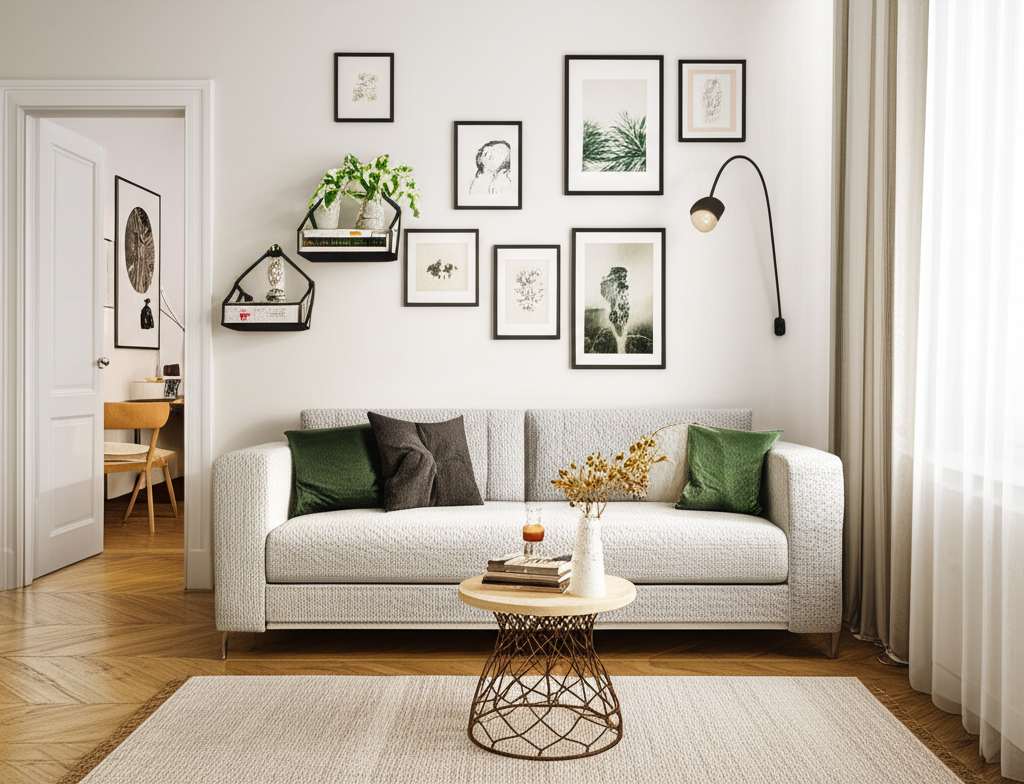
In a small apartment, every piece of furniture needs to work harder. This is where multifunctional furniture becomes your best friend. Think of items that can serve more than one purpose, reducing the number of individual pieces you need.
This strategy is key to keeping your space feeling open and uncluttered. It’s about getting the most bang for your buck and for your square footage!
Sofa Beds: From Living Room to Guest Room in Minutes
A classic for a reason, a sofa bed is a game-changer. During the day, it’s a comfortable spot to relax, watch TV, or read. At night, it effortlessly transforms into a guest bed, providing a welcoming space for visitors without needing a dedicated spare room.
Look for styles that are easy to operate and comfortable for both sitting and sleeping. Many modern designs are sleek and don’t scream “sofa bed.”
Ottomans with Storage: Tidy Up in a Snap
An ottoman can serve as a footrest, extra seating, or even a coffee table when topped with a tray. But the real magic is in its hidden storage. Use it to stash blankets, magazines, remotes, or anything else you want to keep out of sight.
This is perfect for living rooms or bedrooms where you need a place to tuck away everyday items.
Nesting Tables: Flexible and Compact
Nesting tables are a set of smaller tables designed to fit snugly under a larger one. You can pull them out when you need extra surface space for drinks, snacks, or laptops, and tuck them away when they’re not in use. They’re incredibly versatile and take up minimal room.
Convertible Desks: Work, Dine, and Store
Consider a desk that can fold up against the wall or a dining table that can expand or contract. Some desks even have built-in shelving or drawers, adding storage while you work or study.
For even more inspiration on clever furniture, check out these ideas from Houzz, a leading platform for home design inspiration.
2. Vertical Space is Your New Best Friend
When you can’t spread out horizontally, you must go vertical! Utilizing the height of your walls is one of the most effective ways to add storage and visual interest without taking up precious floor space.
Think upwards! This is where you can really get creative with how you store and display your belongings.
Floating Shelves: Chic and Functional
Floating shelves are minimalist and stylish. They create storage and display areas without the visual bulk of traditional bookshelves. Use them for books, decorative items, plants, or even kitchen essentials. They can make a wall look much more organized and intentional.
Tall Bookshelves and Storage Units
Opt for tall, narrow bookshelves or storage units that draw the eye upward. This not only provides ample storage but also creates a sense of height in the room, making it feel larger.
Anchor these units securely to the wall for safety, especially if you have children or pets. The U.S. Consumer Product Safety Commission (CPSC) provides crucial information on furniture tip-over prevention.
Wall-Mounted Organizers
From spice racks in the kitchen to pegboards in a home office or entryway, wall-mounted organizers are fantastic for keeping small items tidy and accessible. They declutter surfaces and make use of often-overlooked wall space.
Hanging Plants and Decor
Don’t forget the ceiling! Hanging plants can add a touch of nature and life to your space without taking up floor or surface area. Similarly, hanging decorative items or even lighting can add dimension and style.
3. Smart Storage Solutions: Declutter Like a Pro
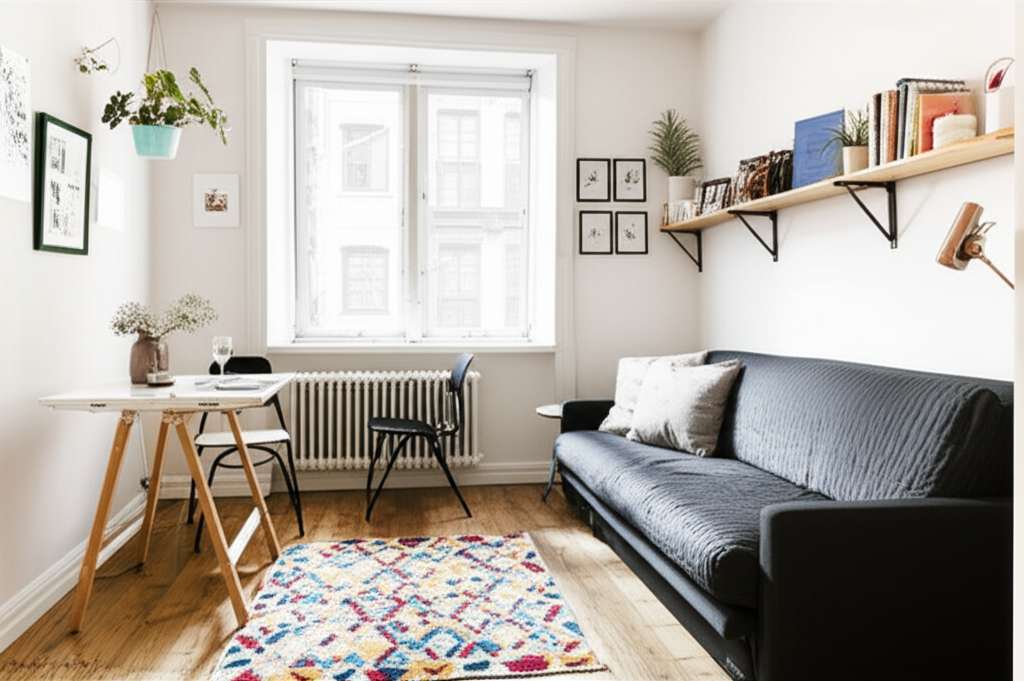
Clutter is the enemy of small spaces. Implementing smart storage solutions is crucial for maintaining a sense of calm and order. It’s not just about having storage; it’s about having the right storage in the right places.
Let’s explore some ingenious ways to stow your stuff!
Under-Bed Storage
The space under your bed is often wasted real estate. Invest in under-bed storage bins or drawers. These are perfect for storing seasonal clothing, extra bedding, or items you don’t need frequent access to. Opt for rolling bins for easy access.
Behind-the-Door Organizers
Over-the-door organizers are incredibly versatile. Use them for shoes in the bedroom or closet, cleaning supplies in a pantry, or toiletries in a bathroom. They’re inexpensive and instantly add significant storage capacity.
Drawer Dividers and Organizers
Keep your drawers neat and tidy with dividers. This applies to kitchen drawers, dresser drawers, and desk drawers. It makes finding things easier and prevents small items from becoming a jumbled mess.
Built-in or Custom Solutions (Renters: Think Temporary!)
If you own your apartment, consider built-in shelving or closet systems. For renters, there are many clever temporary solutions. Freestanding shelving units can be made to look more built-in with a bit of styling, and removable adhesive hooks can add storage without damaging walls.
Utilize Corners
Corners are often awkward and underutilized. Corner shelving units, desks, or even small decorative pieces can fit perfectly into these spaces, adding functionality without jutting out into the main traffic flow.
4. The Power of Light and Mirrors: Creating an Illusion of Space
Light and reflective surfaces are your secret weapons for making a small apartment feel larger and more open. They trick the eye into perceiving more depth and brightness.
This is all about playing with perception to make your home feel grander!
Maximize Natural Light
Keep windows unobstructed. Use sheer or light-colored curtains that allow natural light to filter in. Avoid heavy, dark drapes that can make a room feel smaller and more enclosed. Position furniture so it doesn’t block windows.
Strategic Lighting
Layer your lighting. Use a mix of ambient (overhead), task (reading lamps, under-cabinet lights), and accent lighting (spotlights on artwork). Well-placed lamps can brighten dark corners and make the room feel more expansive. Wall sconces are excellent for saving floor space.
Mirrors, Mirrors Everywhere!
Mirrors are magic in small spaces. They reflect light and create the illusion of depth. Hang a large mirror on a prominent wall, or place smaller mirrors strategically to bounce light around the room. Consider a mirrored closet door or a collection of smaller decorative mirrors.
According to the American Society of Interior Designers (ASID), understanding how color and light interact is fundamental to interior design and can significantly impact the perceived size of a space.
Light Color Palette
Opt for light and neutral colors for your walls, ceilings, and large furniture pieces. Whites, creams, soft grays, and pastels reflect light and make a space feel airy and open. You can always add pops of color with accessories.
5. Clever Layouts: Defining Zones in Open Spaces
For studio apartments or open-plan living areas, defining different zones is crucial for functionality and visual appeal. You want to create distinct areas for living, sleeping, working, and dining without using physical walls.
This is about creating order and purpose within a single room.
Use Rugs to Define Areas
Rugs are excellent for visually separating spaces. Place a rug under your living room seating area to anchor it, and perhaps another smaller rug in a reading nook or by your bed. This helps create distinct “rooms” within a larger space.
Furniture Placement as Dividers
Strategically placed furniture can act as natural room dividers. For example, placing a sofa with its back to the “bedroom” area in a studio apartment can create a clear separation. A bookshelf or a console table can also serve this purpose.
Screens and Room Dividers
Decorative screens or open-shelf units can be used to divide larger spaces. These offer flexibility – you can move them or fold them away when needed, unlike permanent walls.
Vertical Dividers
Consider using tall plants or even strategically hung curtains to create subtle divisions. This adds a touch of softness and greenery while delineating zones.
6. Choose Furniture Wisely: Scale and Proportion Matter
Selecting furniture that is appropriately sized for your small apartment is essential. Oversized pieces will make the space feel cramped, while too many small, delicate items can look cluttered.
It’s all about finding that perfect balance!
Scale Down Your Furniture
Opt for furniture with slimmer profiles. Instead of a bulky, overstuffed sofa, choose one with clean lines and exposed legs, which creates a sense of airiness. A round dining table often fits better in tight spaces than a rectangular one.
See-Through Furniture
Furniture made of glass or acrylic (like coffee tables or chairs) can make a space feel less cluttered because you can see through it. It visually takes up less room.
Wall-Mounted Furniture
Consider wall-mounted desks, nightstands, or even entertainment units. These free up floor space, making the room feel larger and easier to navigate.
Always measure your space and the furniture you’re considering before purchasing. Use painter’s tape to mark out the dimensions of furniture on your floor to get a real sense of how it will fit.
7. Decorate with Intention: Less is More
In a small space, every decorative item should be chosen with purpose. Clutter from too many knick-knacks can quickly overwhelm a compact area.
Focus on quality over quantity, and let each piece contribute to the overall aesthetic.
Curate Your Decor
Be selective about what you display. Choose a few larger, impactful pieces rather than many small ones. This could be a striking piece of art, a statement lamp, or a beautifully styled shelf.
Use Color Strategically
While light colors are great for walls, you can introduce personality with pops of color through accessories like throw pillows, blankets, artwork, or rugs. Don’t be afraid of a bold accent color, but use it judiciously.
Vertical Art
Hang artwork strategically to draw the eye upward. A gallery wall that extends higher up the wall can make the ceiling appear taller. Large-scale art can also make a statement without adding clutter.
Plants for Life and Color
Plants bring life, color, and texture into any space. Opt for taller, slender plants or hanging plants to maximize vertical space and avoid taking up valuable surface area.
For more on how to choose the right decor, explore the principles of minimalist interior design, which often aligns perfectly with small-space living.
8. Smart Kitchen and Bathroom Solutions
These often compact areas can feel especially challenging. But with a few smart tricks, they can become highly functional and stylish.
Let’s tackle these high-traffic zones!
Kitchen
- Magnetic Knife Strips: Free up counter and drawer space by mounting knives on the wall.
- Hanging Pot Racks: Utilize vertical space above your stove or island.
- Over-the-Sink Shelves or Drying Racks: Add extra prep or drying space.
- Slim Rolling Carts: Tuck these into narrow gaps between appliances or cabinets for extra storage.
- Cabinet Organizers: Use tiered shelves, pull-out drawers, and turntables (Lazy Susans) to maximize cabinet space.
Bathroom
- Towel Bars and Hooks: Install them on the back of the door or on unused wall space.
- Shower Caddies: Keep toiletries organized and off the tub ledge.
- Wall-Mounted Vanities: These can make the floor space appear larger.
- Mirror Cabinets: Combine storage with a mirror.
- Narrow Storage Towers: Fit these into small nooks next to the toilet or sink.
Here’s a helpful visual guide to maximizing small kitchen space from Better Homes & Gardens.
For even more compact kitchen inspiration, check out our roundup of cozy small kitchen ideas that prove tiny spaces can still be stylish and efficient.
9. Color Psychology for Small Spaces
The colors you choose can have a significant impact on how a space feels. For small apartments, leveraging color psychology can make a big difference.
Let’s paint a picture of spaciousness!
Light and Airy Palettes
As mentioned, whites, creams, soft grays, and pale blues or greens are your best bet. They reflect light and create a sense of openness. Painting the ceiling a slightly lighter shade than the walls can also make the room feel taller.
Monochromatic Schemes
Using variations of a single color can create a cohesive and expansive look. This approach avoids visually breaking up the space with too many contrasting colors.
Accent Colors for Interest
Don’t be afraid of a little color! Use brighter or deeper hues as accents through artwork, decorative objects, or a single accent wall (used cautiously). This adds personality without overwhelming the space.
The Importance of Flow
Try to maintain a consistent color palette throughout your apartment, especially in open-plan areas. This creates a visual flow that makes the entire space feel larger and more unified.
10. Creating Cozy Nooks
Even in a small apartment, you can carve out dedicated zones that feel cozy and inviting. These nooks can serve specific purposes and add character.
Think of these as little retreats within your home.
Reading Corner
A comfortable armchair, a small side table, and a good reading lamp can create a perfect little reading nook. Place it near a window for natural light if possible.
Workstation Nook
A small desk or a wall-mounted fold-down desk can create a functional workspace. Add a comfortable chair and good lighting. If space is extremely limited, a corner can often suffice.
Dining Nook
A small bistro table and chairs can create a dedicated dining area. If you have a kitchen island or peninsula, a couple of counter stools can serve the same purpose.
Entertainment Zone
Even a small TV and a comfy sofa or floor cushions can create a cozy entertainment zone. Use rugs to define this area.
Small Apartment Design Ideas: A Comparison Table
To help you visualize the impact of different strategies, here’s a look at how various design choices can affect the perceived size and functionality of a small apartment.
| Design Strategy | Impact on Small Space | Key Benefits | Considerations |
|---|---|---|---|
| Multifunctional Furniture | Maximizes utility, reduces clutter | Saves space, adaptable, cost-effective | Can be expensive, comfort varies |
| Vertical Storage | Opens up floor space, adds visual height | Increases storage, declutters surfaces, enhances aesthetics | Requires secure mounting, can look busy if overdone |
| Light Colors & Mirrors | Creates illusion of spaciousness and light | Makes rooms feel larger and brighter, airy atmosphere | Requires good lighting, mirrors need careful placement |
| Defined Zones | Organizes open spaces, adds functionality | Improves flow, creates distinct areas, enhances usability | Can make space feel smaller if not done carefully, requires planning |
| Scale-Appropriate Furniture | Prevents overcrowding, maintains balance | Comfortable flow, visually appealing, proportional | Finding the right size can be challenging |
Frequently Asked Questions (FAQs)
Q1: How can I make my small apartment look bigger without expensive renovations?
You can make your small apartment look bigger by using light paint colors, strategic mirror placement, maximizing natural light, choosing furniture with slim profiles and exposed legs, and decluttering regularly. Multifunctional furniture and vertical storage also play a huge role.
Q2: What is the best color to paint a small apartment?
Light and neutral colors like white, cream, pale gray, or soft pastels are generally best. They reflect light and create an airy, open feel. You can add pops of color through accessories.
Q3: How do I deal with clutter in a small space?
The key is smart storage and regular decluttering. Utilize under-bed storage, over-the-door organizers, drawer dividers, and floating shelves. Adopt a “one in, one out” policy for new purchases and regularly go through your belongings to donate or discard items you no longer need.
Q4: Is it okay to use dark colors in a small apartment?
Yes, but with caution! Dark colors can make a space feel cozier and more intimate. Use them sparingly as accent colors on a single wall, or in accessories. If you do use a darker palette, ensure you have excellent lighting to prevent the space from feeling cave-like.
Q5: How can I arrange furniture in a small living room?
Arrange furniture to create clear pathways and avoid blocking windows or doors. Consider a sofa with its back to a wall or use a slim console table behind it. Use furniture with visible legs to create a sense of openness. Multifunctional pieces like storage ottomans are great. For very small rooms, consider a loveseat instead of a full sofa.
Q6: What kind of curtains are best for small windows?
Opt for light, sheer, or semi-sheer curtains in light colors. Hang them as high as possible and extend them wider than the window frame to make the window appear larger and allow more natural light in. Avoid heavy, dark, or bulky fabrics.
Q7: How can I make my studio apartment feel like it has separate rooms?
You can define zones using area rugs, strategically placed furniture (like a sofa acting as a divider), screens, open bookshelves, or even tall plants. The goal is to create visual separation without using solid walls.
Conclusion
Designing a small apartment doesn’t have to be a daunting task. By focusing on smart furniture choices, maximizing vertical space, employing clever storage solutions, and using light and color strategically, you can create a home that feels spacious, organized, and stylish. Remember, it’s all about making intentional choices that serve multiple purposes and enhance the perceived size and functionality of your living area.
Embrace the challenge as an opportunity for creativity. Whether you’re a student on a budget, a renter looking to personalize your space, or a homeowner wanting to optimize every square inch, these brilliant solutions are designed to help you transform your compact dwelling into a comfortable and beautiful sanctuary. Start with one or two ideas that resonate with you, and watch your small apartment come to life!
Looking for more ways to enhance your compact kitchen? Discover our top picks for stylish kitchen storage accessories that blend form and function perfectly.
Here’s a helpful visual guide to maximizing small kitchen space from Better Homes & Gardens.
For even more compact kitchen inspiration, check out our roundup of cozy small kitchen ideas that prove tiny spaces can still be stylish and efficient.
9. Color Psychology for Small Spaces
The colors you choose can have a significant impact on how a space feels. For small apartments, leveraging color psychology can make a big difference.
Let’s paint a picture of spaciousness!
Light and Airy Palettes
As mentioned, whites, creams, soft grays, and pale blues or greens are your best bet. They reflect light and create a sense of openness. Painting the ceiling a slightly lighter shade than the walls can also make the room feel taller.
Monochromatic Schemes
Using variations of a single color can create a cohesive and expansive look. This approach avoids visually breaking up the space with too many contrasting colors.
Accent Colors for Interest
Don’t be afraid of a little color! Use brighter or deeper hues as accents through artwork, decorative objects, or a single accent wall (used cautiously). This adds personality without overwhelming the space.
The Importance of Flow
Try to maintain a consistent color palette throughout your apartment, especially in open-plan areas. This creates a visual flow that makes the entire space feel larger and more unified.
10. Creating Cozy Nooks
Even in a small apartment, you can carve out dedicated zones that feel cozy and inviting. These nooks can serve specific purposes and add character.
Think of these as little retreats within your home.
Reading Corner
A comfortable armchair, a small side table, and a good reading lamp can create a perfect little reading nook. Place it near a window for natural light if possible.
Workstation Nook
A small desk or a wall-mounted fold-down desk can create a functional workspace. Add a comfortable chair and good lighting. If space is extremely limited, a corner can often suffice.
Dining Nook
A small bistro table and chairs can create a dedicated dining area. If you have a kitchen island or peninsula, a couple of counter stools can serve the same purpose.
Entertainment Zone
Even a small TV and a comfy sofa or floor cushions can create a cozy entertainment zone. Use rugs to define this area.
Small Apartment Design Ideas: A Comparison Table
To help you visualize the impact of different strategies, here’s a look at how various design choices can affect the perceived size and functionality of a small apartment.
| Design Strategy | Impact on Small Space | Key Benefits | Considerations |
|---|---|---|---|
| Multifunctional Furniture | Maximizes utility, reduces clutter | Saves space, adaptable, cost-effective | Can be expensive, comfort varies |
| Vertical Storage | Opens up floor space, adds visual height | Increases storage, declutters surfaces, enhances aesthetics | Requires secure mounting, can look busy if overdone |
| Light Colors & Mirrors | Creates illusion of spaciousness and light | Makes rooms feel larger and brighter, airy atmosphere | Requires good lighting, mirrors need careful placement |
| Defined Zones | Organizes open spaces, adds functionality | Improves flow, creates distinct areas, enhances usability | Can make space feel smaller if not done carefully, requires planning |
| Scale-Appropriate Furniture | Prevents overcrowding, maintains balance | Comfortable flow, visually appealing, proportional | Finding the right size can be challenging |
Frequently Asked Questions (FAQs)
Q1: How can I make my small apartment look bigger without expensive renovations?
You can make your small apartment look bigger by using light paint colors, strategic mirror placement, maximizing natural light, choosing furniture with slim profiles and exposed legs, and decluttering regularly. Multifunctional furniture and vertical storage also play a huge role.
Q2: What is the best color to paint a small apartment?
Light and neutral colors like white, cream, pale gray, or soft pastels are generally best. They reflect light and create an airy, open feel. You can add pops of color through accessories.
Q3: How do I deal with clutter in a small space?
The key is smart storage and regular decluttering. Utilize under-bed storage, over-the-door organizers, drawer dividers, and floating shelves. Adopt a “one in, one out” policy for new purchases and regularly go through your belongings to donate or discard items you no longer need.
Q4: Is it okay to use dark colors in a small apartment?
Yes, but with caution! Dark colors can make a space feel cozier and more intimate. Use them sparingly as accent colors on a single wall, or in accessories. If you do use a darker palette, ensure you have excellent lighting to prevent the space from feeling cave-like.
Q5: How can I arrange furniture in a small living room?
Arrange furniture to create clear pathways and avoid blocking windows or doors. Consider a sofa with its back to a wall or use a slim console table behind it. Use furniture with visible legs to create a sense of openness. Multifunctional pieces like storage ottomans are great. For very small rooms, consider a loveseat instead of a full sofa.
Q6: What kind of curtains are best for small windows?
Opt for light, sheer, or semi-sheer curtains in light colors. Hang them as high as possible and extend them wider than the window frame to make the window appear larger and allow more natural light in. Avoid heavy, dark, or bulky fabrics.
Q7: How can I make my studio apartment feel like it has separate rooms?
You can define zones using area rugs, strategically placed furniture (like a sofa acting as a divider), screens, open bookshelves, or even tall plants. The goal is to create visual separation without using solid walls.
Conclusion
Designing a small apartment doesn’t have to be a daunting task. By focusing on smart furniture choices, maximizing vertical space, employing clever storage solutions, and using light and color strategically, you can create a home that feels spacious, organized, and stylish. Remember, it’s all about making intentional choices that serve multiple purposes and enhance the perceived size and functionality of your living area.
Embrace the challenge as an opportunity for creativity. Whether you’re a student on a budget, a renter looking to personalize your space, or a homeowner wanting to optimize every square inch, these brilliant solutions are designed to help you transform your compact dwelling into a comfortable and beautiful sanctuary. Start with one or two ideas that resonate with you, and watch your small apartment come to life!
Looking for more ways to enhance your compact kitchen? Discover our top picks for stylish kitchen storage accessories that blend form and function perfectly.
Small apartment design ideas are about maximizing every inch with smart furniture, clever storage, and strategic decor to create a functional, stylish, and spacious-feeling home, no matter the square footage.
Living in a smaller space doesn’t mean you have to sacrifice style or comfort. It can actually be a fun design challenge!
Many people find it tricky to make a compact apartment feel open and inviting. You might worry about clutter or feeling cramped. But with the right approach, you can transform even the tiniest nook into a dream living area.
We’ll walk through simple, creative ideas that are easy for anyone to implement. Get ready to discover how to make your small apartment feel big and beautiful!
Unlocking the Potential of Your Cozy Space
Living in a small apartment, whether you’re a student, a renter, or a homeowner, often comes with a unique set of challenges. The biggest hurdle? Making a limited square footage feel expansive, functional, and stylish. It’s a common frustration, feeling like you’re constantly battling for space, trying to fit in all your essentials without making the place feel cluttered or cramped.
But here’s the exciting part: small spaces are fantastic canvases for creative design! They encourage us to be smarter about our choices, to think outside the box, and to embrace clever solutions that might not be necessary in larger homes. This is where the magic of “small apartment design ideas” truly shines.
This guide is designed to demystify small-space living. We’ll break down simple, actionable strategies that you can start using today. Forget complicated jargon; we’re talking about practical tips and inspiring ideas that are easy to understand and implement, even if you’ve never decorated before.
Ready to turn your cozy abode into a spacious sanctuary? Let’s dive into brilliant solutions that will make your small apartment feel like a million bucks!
1. Embrace Multifunctional Furniture: The Smartest Way to Save Space
In a small apartment, every piece of furniture needs to work harder. This is where multifunctional furniture becomes your best friend. Think of items that can serve more than one purpose, reducing the number of individual pieces you need.
This strategy is key to keeping your space feeling open and uncluttered. It’s about getting the most bang for your buck and for your square footage!
Sofa Beds: From Living Room to Guest Room in Minutes
A classic for a reason, a sofa bed is a game-changer. During the day, it’s a comfortable spot to relax, watch TV, or read. At night, it effortlessly transforms into a guest bed, providing a welcoming space for visitors without needing a dedicated spare room.
Look for styles that are easy to operate and comfortable for both sitting and sleeping. Many modern designs are sleek and don’t scream “sofa bed.”
Ottomans with Storage: Tidy Up in a Snap
An ottoman can serve as a footrest, extra seating, or even a coffee table when topped with a tray. But the real magic is in its hidden storage. Use it to stash blankets, magazines, remotes, or anything else you want to keep out of sight.
This is perfect for living rooms or bedrooms where you need a place to tuck away everyday items.
Nesting Tables: Flexible and Compact
Nesting tables are a set of smaller tables designed to fit snugly under a larger one. You can pull them out when you need extra surface space for drinks, snacks, or laptops, and tuck them away when they’re not in use. They’re incredibly versatile and take up minimal room.
Convertible Desks: Work, Dine, and Store
Consider a desk that can fold up against the wall or a dining table that can expand or contract. Some desks even have built-in shelving or drawers, adding storage while you work or study.
For even more inspiration on clever furniture, check out these ideas from Houzz, a leading platform for home design inspiration.
2. Vertical Space is Your New Best Friend
When you can’t spread out horizontally, you must go vertical! Utilizing the height of your walls is one of the most effective ways to add storage and visual interest without taking up precious floor space.
Think upwards! This is where you can really get creative with how you store and display your belongings.
Floating Shelves: Chic and Functional
Floating shelves are minimalist and stylish. They create storage and display areas without the visual bulk of traditional bookshelves. Use them for books, decorative items, plants, or even kitchen essentials. They can make a wall look much more organized and intentional.
Tall Bookshelves and Storage Units
Opt for tall, narrow bookshelves or storage units that draw the eye upward. This not only provides ample storage but also creates a sense of height in the room, making it feel larger.
Anchor these units securely to the wall for safety, especially if you have children or pets. The U.S. Consumer Product Safety Commission (CPSC) provides crucial information on furniture tip-over prevention.
Wall-Mounted Organizers
From spice racks in the kitchen to pegboards in a home office or entryway, wall-mounted organizers are fantastic for keeping small items tidy and accessible. They declutter surfaces and make use of often-overlooked wall space.
Hanging Plants and Decor
Don’t forget the ceiling! Hanging plants can add a touch of nature and life to your space without taking up floor or surface area. Similarly, hanging decorative items or even lighting can add dimension and style.
3. Smart Storage Solutions: Declutter Like a Pro
Clutter is the enemy of small spaces. Implementing smart storage solutions is crucial for maintaining a sense of calm and order. It’s not just about having storage; it’s about having the right storage in the right places.
Let’s explore some ingenious ways to stow your stuff!
Under-Bed Storage
The space under your bed is often wasted real estate. Invest in under-bed storage bins or drawers. These are perfect for storing seasonal clothing, extra bedding, or items you don’t need frequent access to. Opt for rolling bins for easy access.
Behind-the-Door Organizers
Over-the-door organizers are incredibly versatile. Use them for shoes in the bedroom or closet, cleaning supplies in a pantry, or toiletries in a bathroom. They’re inexpensive and instantly add significant storage capacity.
Drawer Dividers and Organizers
Keep your drawers neat and tidy with dividers. This applies to kitchen drawers, dresser drawers, and desk drawers. It makes finding things easier and prevents small items from becoming a jumbled mess.
Built-in or Custom Solutions (Renters: Think Temporary!)
If you own your apartment, consider built-in shelving or closet systems. For renters, there are many clever temporary solutions. Freestanding shelving units can be made to look more built-in with a bit of styling, and removable adhesive hooks can add storage without damaging walls.
Utilize Corners
Corners are often awkward and underutilized. Corner shelving units, desks, or even small decorative pieces can fit perfectly into these spaces, adding functionality without jutting out into the main traffic flow.
4. The Power of Light and Mirrors: Creating an Illusion of Space
Light and reflective surfaces are your secret weapons for making a small apartment feel larger and more open. They trick the eye into perceiving more depth and brightness.
This is all about playing with perception to make your home feel grander!
Maximize Natural Light
Keep windows unobstructed. Use sheer or light-colored curtains that allow natural light to filter in. Avoid heavy, dark drapes that can make a room feel smaller and more enclosed. Position furniture so it doesn’t block windows.
Strategic Lighting
Layer your lighting. Use a mix of ambient (overhead), task (reading lamps, under-cabinet lights), and accent lighting (spotlights on artwork). Well-placed lamps can brighten dark corners and make the room feel more expansive. Wall sconces are excellent for saving floor space.
Mirrors, Mirrors Everywhere!
Mirrors are magic in small spaces. They reflect light and create the illusion of depth. Hang a large mirror on a prominent wall, or place smaller mirrors strategically to bounce light around the room. Consider a mirrored closet door or a collection of smaller decorative mirrors.
According to the American Society of Interior Designers (ASID), understanding how color and light interact is fundamental to interior design and can significantly impact the perceived size of a space.
Light Color Palette
Opt for light and neutral colors for your walls, ceilings, and large furniture pieces. Whites, creams, soft grays, and pastels reflect light and make a space feel airy and open. You can always add pops of color with accessories.
5. Clever Layouts: Defining Zones in Open Spaces
For studio apartments or open-plan living areas, defining different zones is crucial for functionality and visual appeal. You want to create distinct areas for living, sleeping, working, and dining without using physical walls.
This is about creating order and purpose within a single room.
Use Rugs to Define Areas
Rugs are excellent for visually separating spaces. Place a rug under your living room seating area to anchor it, and perhaps another smaller rug in a reading nook or by your bed. This helps create distinct “rooms” within a larger space.
Furniture Placement as Dividers
Strategically placed furniture can act as natural room dividers. For example, placing a sofa with its back to the “bedroom” area in a studio apartment can create a clear separation. A bookshelf or a console table can also serve this purpose.
Screens and Room Dividers
Decorative screens or open-shelf units can be used to divide larger spaces. These offer flexibility – you can move them or fold them away when needed, unlike permanent walls.
Vertical Dividers
Consider using tall plants or even strategically hung curtains to create subtle divisions. This adds a touch of softness and greenery while delineating zones.
6. Choose Furniture Wisely: Scale and Proportion Matter
Selecting furniture that is appropriately sized for your small apartment is essential. Oversized pieces will make the space feel cramped, while too many small, delicate items can look cluttered.
It’s all about finding that perfect balance!
Scale Down Your Furniture
Opt for furniture with slimmer profiles. Instead of a bulky, overstuffed sofa, choose one with clean lines and exposed legs, which creates a sense of airiness. A round dining table often fits better in tight spaces than a rectangular one.
See-Through Furniture
Furniture made of glass or acrylic (like coffee tables or chairs) can make a space feel less cluttered because you can see through it. It visually takes up less room.
Wall-Mounted Furniture
Consider wall-mounted desks, nightstands, or even entertainment units. These free up floor space, making the room feel larger and easier to navigate.
Always measure your space and the furniture you’re considering before purchasing. Use painter’s tape to mark out the dimensions of furniture on your floor to get a real sense of how it will fit.
7. Decorate with Intention: Less is More
In a small space, every decorative item should be chosen with purpose. Clutter from too many knick-knacks can quickly overwhelm a compact area.
Focus on quality over quantity, and let each piece contribute to the overall aesthetic.
Curate Your Decor
Be selective about what you display. Choose a few larger, impactful pieces rather than many small ones. This could be a striking piece of art, a statement lamp, or a beautifully styled shelf.
Use Color Strategically
While light colors are great for walls, you can introduce personality with pops of color through accessories like throw pillows, blankets, artwork, or rugs. Don’t be afraid of a bold accent color, but use it judiciously.
Vertical Art
Hang artwork strategically to draw the eye upward. A gallery wall that extends higher up the wall can make the ceiling appear taller. Large-scale art can also make a statement without adding clutter.
Plants for Life and Color
Plants bring life, color, and texture into any space. Opt for taller, slender plants or hanging plants to maximize vertical space and avoid taking up valuable surface area.
For more on how to choose the right decor, explore the principles of minimalist interior design, which often aligns perfectly with small-space living.
8. Smart Kitchen and Bathroom Solutions
These often compact areas can feel especially challenging. But with a few smart tricks, they can become highly functional and stylish.
Let’s tackle these high-traffic zones!
Kitchen
- Magnetic Knife Strips: Free up counter and drawer space by mounting knives on the wall.
- Hanging Pot Racks: Utilize vertical space above your stove or island.
- Over-the-Sink Shelves or Drying Racks: Add extra prep or drying space.
- Slim Rolling Carts: Tuck these into narrow gaps between appliances or cabinets for extra storage.
- Cabinet Organizers: Use tiered shelves, pull-out drawers, and turntables (Lazy Susans) to maximize cabinet space.
Bathroom
- Towel Bars and Hooks: Install them on the back of the door or on unused wall space.
- Shower Caddies: Keep toiletries organized and off the tub ledge.
- Wall-Mounted Vanities: These can make the floor space appear larger.
- Mirror Cabinets: Combine storage with a mirror.
- Narrow Storage Towers: Fit these into small nooks next to the toilet or sink.
Here’s a helpful visual guide to maximizing small kitchen space from Better Homes & Gardens.
For even more compact kitchen inspiration, check out our roundup of cozy small kitchen ideas that prove tiny spaces can still be stylish and efficient.
9. Color Psychology for Small Spaces
The colors you choose can have a significant impact on how a space feels. For small apartments, leveraging color psychology can make a big difference.
Let’s paint a picture of spaciousness!
Light and Airy Palettes
As mentioned, whites, creams, soft grays, and pale blues or greens are your best bet. They reflect light and create a sense of openness. Painting the ceiling a slightly lighter shade than the walls can also make the room feel taller.
Monochromatic Schemes
Using variations of a single color can create a cohesive and expansive look. This approach avoids visually breaking up the space with too many contrasting colors.
Accent Colors for Interest
Don’t be afraid of a little color! Use brighter or deeper hues as accents through artwork, decorative objects, or a single accent wall (used cautiously). This adds personality without overwhelming the space.
The Importance of Flow
Try to maintain a consistent color palette throughout your apartment, especially in open-plan areas. This creates a visual flow that makes the entire space feel larger and more unified.
10. Creating Cozy Nooks
Even in a small apartment, you can carve out dedicated zones that feel cozy and inviting. These nooks can serve specific purposes and add character.
Think of these as little retreats within your home.
Reading Corner
A comfortable armchair, a small side table, and a good reading lamp can create a perfect little reading nook. Place it near a window for natural light if possible.
Workstation Nook
A small desk or a wall-mounted fold-down desk can create a functional workspace. Add a comfortable chair and good lighting. If space is extremely limited, a corner can often suffice.
Dining Nook
A small bistro table and chairs can create a dedicated dining area. If you have a kitchen island or peninsula, a couple of counter stools can serve the same purpose.
Entertainment Zone
Even a small TV and a comfy sofa or floor cushions can create a cozy entertainment zone. Use rugs to define this area.
Small Apartment Design Ideas: A Comparison Table
To help you visualize the impact of different strategies, here’s a look at how various design choices can affect the perceived size and functionality of a small apartment.
| Design Strategy | Impact on Small Space | Key Benefits | Considerations |
|---|---|---|---|
| Multifunctional Furniture | Maximizes utility, reduces clutter | Saves space, adaptable, cost-effective | Can be expensive, comfort varies |
| Vertical Storage | Opens up floor space, adds visual height | Increases storage, declutters surfaces, enhances aesthetics | Requires secure mounting, can look busy if overdone |
| Light Colors & Mirrors | Creates illusion of spaciousness and light | Makes rooms feel larger and brighter, airy atmosphere | Requires good lighting, mirrors need careful placement |
| Defined Zones | Organizes open spaces, adds functionality | Improves flow, creates distinct areas, enhances usability | Can make space feel smaller if not done carefully, requires planning |
| Scale-Appropriate Furniture | Prevents overcrowding, maintains balance | Comfortable flow, visually appealing, proportional | Finding the right size can be challenging |
Frequently Asked Questions (FAQs)
Q1: How can I make my small apartment look bigger without expensive renovations?
You can make your small apartment look bigger by using light paint colors, strategic mirror placement, maximizing natural light, choosing furniture with slim profiles and exposed legs, and decluttering regularly. Multifunctional furniture and vertical storage also play a huge role.
Q2: What is the best color to paint a small apartment?
Light and neutral colors like white, cream, pale gray, or soft pastels are generally best. They reflect light and create an airy, open feel. You can add pops of color through accessories.
Q3: How do I deal with clutter in a small space?
The key is smart storage and regular decluttering. Utilize under-bed storage, over-the-door organizers, drawer dividers, and floating shelves. Adopt a “one in, one out” policy for new purchases and regularly go through your belongings to donate or discard items you no longer need.
Q4: Is it okay to use dark colors in a small apartment?
Yes, but with caution! Dark colors can make a space feel cozier and more intimate. Use them sparingly as accent colors on a single wall, or in accessories. If you do use a darker palette, ensure you have excellent lighting to prevent the space from feeling cave-like.
Q5: How can I arrange furniture in a small living room?
Arrange furniture to create clear pathways and avoid blocking windows or doors. Consider a sofa with its back to a wall or use a slim console table behind it. Use furniture with visible legs to create a sense of openness. Multifunctional pieces like storage ottomans are great. For very small rooms, consider a loveseat instead of a full sofa.
Q6: What kind of curtains are best for small windows?
Opt for light, sheer, or semi-sheer curtains in light colors. Hang them as high as possible and extend them wider than the window frame to make the window appear larger and allow more natural light in. Avoid heavy, dark, or bulky fabrics.
Q7: How can I make my studio apartment feel like it has separate rooms?
You can define zones using area rugs, strategically placed furniture (like a sofa acting as a divider), screens, open bookshelves, or even tall plants. The goal is to create visual separation without using solid walls.
Conclusion
Designing a small apartment doesn’t have to be a daunting task. By focusing on smart furniture choices, maximizing vertical space, employing clever storage solutions, and using light and color strategically, you can create a home that feels spacious, organized, and stylish. Remember, it’s all about making intentional choices that serve multiple purposes and enhance the perceived size and functionality of your living area.
Embrace the challenge as an opportunity for creativity. Whether you’re a student on a budget, a renter looking to personalize your space, or a homeowner wanting to optimize every square inch, these brilliant solutions are designed to help you transform your compact dwelling into a comfortable and beautiful sanctuary. Start with one or two ideas that resonate with you, and watch your small apartment come to life!
Looking for more ways to enhance your compact kitchen? Discover our top picks for stylish kitchen storage accessories that blend form and function perfectly.
- Towel Bars and Hooks: Install them on the back of the door or on unused wall space.
- Shower Caddies: Keep toiletries organized and off the tub ledge.
- Wall-Mounted Vanities: These can make the floor space appear larger.
- Mirror Cabinets: Combine storage with a mirror.
- Narrow Storage Towers: Fit these into small nooks next to the toilet or sink.
Here’s a helpful visual guide to maximizing small kitchen space from Better Homes & Gardens.
For even more compact kitchen inspiration, check out our roundup of cozy small kitchen ideas that prove tiny spaces can still be stylish and efficient.
9. Color Psychology for Small Spaces
The colors you choose can have a significant impact on how a space feels. For small apartments, leveraging color psychology can make a big difference.
Let’s paint a picture of spaciousness!
Light and Airy Palettes
As mentioned, whites, creams, soft grays, and pale blues or greens are your best bet. They reflect light and create a sense of openness. Painting the ceiling a slightly lighter shade than the walls can also make the room feel taller.
Monochromatic Schemes
Using variations of a single color can create a cohesive and expansive look. This approach avoids visually breaking up the space with too many contrasting colors.
Accent Colors for Interest
Don’t be afraid of a little color! Use brighter or deeper hues as accents through artwork, decorative objects, or a single accent wall (used cautiously). This adds personality without overwhelming the space.
The Importance of Flow
Try to maintain a consistent color palette throughout your apartment, especially in open-plan areas. This creates a visual flow that makes the entire space feel larger and more unified.
10. Creating Cozy Nooks
Even in a small apartment, you can carve out dedicated zones that feel cozy and inviting. These nooks can serve specific purposes and add character.
Think of these as little retreats within your home.
Reading Corner
A comfortable armchair, a small side table, and a good reading lamp can create a perfect little reading nook. Place it near a window for natural light if possible.
Workstation Nook
A small desk or a wall-mounted fold-down desk can create a functional workspace. Add a comfortable chair and good lighting. If space is extremely limited, a corner can often suffice.
Dining Nook
A small bistro table and chairs can create a dedicated dining area. If you have a kitchen island or peninsula, a couple of counter stools can serve the same purpose.
Entertainment Zone
Even a small TV and a comfy sofa or floor cushions can create a cozy entertainment zone. Use rugs to define this area.
Small Apartment Design Ideas: A Comparison Table
To help you visualize the impact of different strategies, here’s a look at how various design choices can affect the perceived size and functionality of a small apartment.
| Design Strategy | Impact on Small Space | Key Benefits | Considerations |
|---|---|---|---|
| Multifunctional Furniture | Maximizes utility, reduces clutter | Saves space, adaptable, cost-effective | Can be expensive, comfort varies |
| Vertical Storage | Opens up floor space, adds visual height | Increases storage, declutters surfaces, enhances aesthetics | Requires secure mounting, can look busy if overdone |
| Light Colors & Mirrors | Creates illusion of spaciousness and light | Makes rooms feel larger and brighter, airy atmosphere | Requires good lighting, mirrors need careful placement |
| Defined Zones | Organizes open spaces, adds functionality | Improves flow, creates distinct areas, enhances usability | Can make space feel smaller if not done carefully, requires planning |
| Scale-Appropriate Furniture | Prevents overcrowding, maintains balance | Comfortable flow, visually appealing, proportional | Finding the right size can be challenging |
Frequently Asked Questions (FAQs)
Q1: How can I make my small apartment look bigger without expensive renovations?
You can make your small apartment look bigger by using light paint colors, strategic mirror placement, maximizing natural light, choosing furniture with slim profiles and exposed legs, and decluttering regularly. Multifunctional furniture and vertical storage also play a huge role.
Q2: What is the best color to paint a small apartment?
Light and neutral colors like white, cream, pale gray, or soft pastels are generally best. They reflect light and create an airy, open feel. You can add pops of color through accessories.
Q3: How do I deal with clutter in a small space?
The key is smart storage and regular decluttering. Utilize under-bed storage, over-the-door organizers, drawer dividers, and floating shelves. Adopt a “one in, one out” policy for new purchases and regularly go through your belongings to donate or discard items you no longer need.
Q4: Is it okay to use dark colors in a small apartment?
Yes, but with caution! Dark colors can make a space feel cozier and more intimate. Use them sparingly as accent colors on a single wall, or in accessories. If you do use a darker palette, ensure you have excellent lighting to prevent the space from feeling cave-like.
Q5: How can I arrange furniture in a small living room?
Arrange furniture to create clear pathways and avoid blocking windows or doors. Consider a sofa with its back to a wall or use a slim console table behind it. Use furniture with visible legs to create a sense of openness. Multifunctional pieces like storage ottomans are great. For very small rooms, consider a loveseat instead of a full sofa.
Q6: What kind of curtains are best for small windows?
Opt for light, sheer, or semi-sheer curtains in light colors. Hang them as high as possible and extend them wider than the window frame to make the window appear larger and allow more natural light in. Avoid heavy, dark, or bulky fabrics.
Q7: How can I make my studio apartment feel like it has separate rooms?
You can define zones using area rugs, strategically placed furniture (like a sofa acting as a divider), screens, open bookshelves, or even tall plants. The goal is to create visual separation without using solid walls.
Conclusion
Designing a small apartment doesn’t have to be a daunting task. By focusing on smart furniture choices, maximizing vertical space, employing clever storage solutions, and using light and color strategically, you can create a home that feels spacious, organized, and stylish. Remember, it’s all about making intentional choices that serve multiple purposes and enhance the perceived size and functionality of your living area.
Embrace the challenge as an opportunity for creativity. Whether you’re a student on a budget, a renter looking to personalize your space, or a homeowner wanting to optimize every square inch, these brilliant solutions are designed to help you transform your compact dwelling into a comfortable and beautiful sanctuary. Start with one or two ideas that resonate with you, and watch your small apartment come to life!
Looking for more ways to enhance your compact kitchen? Discover our top picks for stylish kitchen storage accessories that blend form and function perfectly.
Small apartment design ideas are about maximizing every inch with smart furniture, clever storage, and strategic decor to create a functional, stylish, and spacious-feeling home, no matter the square footage.
Living in a smaller space doesn’t mean you have to sacrifice style or comfort. It can actually be a fun design challenge!
Many people find it tricky to make a compact apartment feel open and inviting. You might worry about clutter or feeling cramped. But with the right approach, you can transform even the tiniest nook into a dream living area.
We’ll walk through simple, creative ideas that are easy for anyone to implement. Get ready to discover how to make your small apartment feel big and beautiful!
Unlocking the Potential of Your Cozy Space
Living in a small apartment, whether you’re a student, a renter, or a homeowner, often comes with a unique set of challenges. The biggest hurdle? Making a limited square footage feel expansive, functional, and stylish. It’s a common frustration, feeling like you’re constantly battling for space, trying to fit in all your essentials without making the place feel cluttered or cramped.
But here’s the exciting part: small spaces are fantastic canvases for creative design! They encourage us to be smarter about our choices, to think outside the box, and to embrace clever solutions that might not be necessary in larger homes. This is where the magic of “small apartment design ideas” truly shines.
This guide is designed to demystify small-space living. We’ll break down simple, actionable strategies that you can start using today. Forget complicated jargon; we’re talking about practical tips and inspiring ideas that are easy to understand and implement, even if you’ve never decorated before.
Ready to turn your cozy abode into a spacious sanctuary? Let’s dive into brilliant solutions that will make your small apartment feel like a million bucks!
1. Embrace Multifunctional Furniture: The Smartest Way to Save Space
In a small apartment, every piece of furniture needs to work harder. This is where multifunctional furniture becomes your best friend. Think of items that can serve more than one purpose, reducing the number of individual pieces you need.
This strategy is key to keeping your space feeling open and uncluttered. It’s about getting the most bang for your buck and for your square footage!
Sofa Beds: From Living Room to Guest Room in Minutes
A classic for a reason, a sofa bed is a game-changer. During the day, it’s a comfortable spot to relax, watch TV, or read. At night, it effortlessly transforms into a guest bed, providing a welcoming space for visitors without needing a dedicated spare room.
Look for styles that are easy to operate and comfortable for both sitting and sleeping. Many modern designs are sleek and don’t scream “sofa bed.”
Ottomans with Storage: Tidy Up in a Snap
An ottoman can serve as a footrest, extra seating, or even a coffee table when topped with a tray. But the real magic is in its hidden storage. Use it to stash blankets, magazines, remotes, or anything else you want to keep out of sight.
This is perfect for living rooms or bedrooms where you need a place to tuck away everyday items.
Nesting Tables: Flexible and Compact
Nesting tables are a set of smaller tables designed to fit snugly under a larger one. You can pull them out when you need extra surface space for drinks, snacks, or laptops, and tuck them away when they’re not in use. They’re incredibly versatile and take up minimal room.
Convertible Desks: Work, Dine, and Store
Consider a desk that can fold up against the wall or a dining table that can expand or contract. Some desks even have built-in shelving or drawers, adding storage while you work or study.
For even more inspiration on clever furniture, check out these ideas from Houzz, a leading platform for home design inspiration.
2. Vertical Space is Your New Best Friend
When you can’t spread out horizontally, you must go vertical! Utilizing the height of your walls is one of the most effective ways to add storage and visual interest without taking up precious floor space.
Think upwards! This is where you can really get creative with how you store and display your belongings.
Floating Shelves: Chic and Functional
Floating shelves are minimalist and stylish. They create storage and display areas without the visual bulk of traditional bookshelves. Use them for books, decorative items, plants, or even kitchen essentials. They can make a wall look much more organized and intentional.
Tall Bookshelves and Storage Units
Opt for tall, narrow bookshelves or storage units that draw the eye upward. This not only provides ample storage but also creates a sense of height in the room, making it feel larger.
Anchor these units securely to the wall for safety, especially if you have children or pets. The U.S. Consumer Product Safety Commission (CPSC) provides crucial information on furniture tip-over prevention.
Wall-Mounted Organizers
From spice racks in the kitchen to pegboards in a home office or entryway, wall-mounted organizers are fantastic for keeping small items tidy and accessible. They declutter surfaces and make use of often-overlooked wall space.
Hanging Plants and Decor
Don’t forget the ceiling! Hanging plants can add a touch of nature and life to your space without taking up floor or surface area. Similarly, hanging decorative items or even lighting can add dimension and style.
3. Smart Storage Solutions: Declutter Like a Pro
Clutter is the enemy of small spaces. Implementing smart storage solutions is crucial for maintaining a sense of calm and order. It’s not just about having storage; it’s about having the right storage in the right places.
Let’s explore some ingenious ways to stow your stuff!
Under-Bed Storage
The space under your bed is often wasted real estate. Invest in under-bed storage bins or drawers. These are perfect for storing seasonal clothing, extra bedding, or items you don’t need frequent access to. Opt for rolling bins for easy access.
Behind-the-Door Organizers
Over-the-door organizers are incredibly versatile. Use them for shoes in the bedroom or closet, cleaning supplies in a pantry, or toiletries in a bathroom. They’re inexpensive and instantly add significant storage capacity.
Drawer Dividers and Organizers
Keep your drawers neat and tidy with dividers. This applies to kitchen drawers, dresser drawers, and desk drawers. It makes finding things easier and prevents small items from becoming a jumbled mess.
Built-in or Custom Solutions (Renters: Think Temporary!)
If you own your apartment, consider built-in shelving or closet systems. For renters, there are many clever temporary solutions. Freestanding shelving units can be made to look more built-in with a bit of styling, and removable adhesive hooks can add storage without damaging walls.
Utilize Corners
Corners are often awkward and underutilized. Corner shelving units, desks, or even small decorative pieces can fit perfectly into these spaces, adding functionality without jutting out into the main traffic flow.
4. The Power of Light and Mirrors: Creating an Illusion of Space
Light and reflective surfaces are your secret weapons for making a small apartment feel larger and more open. They trick the eye into perceiving more depth and brightness.
This is all about playing with perception to make your home feel grander!
Maximize Natural Light
Keep windows unobstructed. Use sheer or light-colored curtains that allow natural light to filter in. Avoid heavy, dark drapes that can make a room feel smaller and more enclosed. Position furniture so it doesn’t block windows.
Strategic Lighting
Layer your lighting. Use a mix of ambient (overhead), task (reading lamps, under-cabinet lights), and accent lighting (spotlights on artwork). Well-placed lamps can brighten dark corners and make the room feel more expansive. Wall sconces are excellent for saving floor space.
Mirrors, Mirrors Everywhere!
Mirrors are magic in small spaces. They reflect light and create the illusion of depth. Hang a large mirror on a prominent wall, or place smaller mirrors strategically to bounce light around the room. Consider a mirrored closet door or a collection of smaller decorative mirrors.
According to the American Society of Interior Designers (ASID), understanding how color and light interact is fundamental to interior design and can significantly impact the perceived size of a space.
Light Color Palette
Opt for light and neutral colors for your walls, ceilings, and large furniture pieces. Whites, creams, soft grays, and pastels reflect light and make a space feel airy and open. You can always add pops of color with accessories.
5. Clever Layouts: Defining Zones in Open Spaces
For studio apartments or open-plan living areas, defining different zones is crucial for functionality and visual appeal. You want to create distinct areas for living, sleeping, working, and dining without using physical walls.
This is about creating order and purpose within a single room.
Use Rugs to Define Areas
Rugs are excellent for visually separating spaces. Place a rug under your living room seating area to anchor it, and perhaps another smaller rug in a reading nook or by your bed. This helps create distinct “rooms” within a larger space.
Furniture Placement as Dividers
Strategically placed furniture can act as natural room dividers. For example, placing a sofa with its back to the “bedroom” area in a studio apartment can create a clear separation. A bookshelf or a console table can also serve this purpose.
Screens and Room Dividers
Decorative screens or open-shelf units can be used to divide larger spaces. These offer flexibility – you can move them or fold them away when needed, unlike permanent walls.
Vertical Dividers
Consider using tall plants or even strategically hung curtains to create subtle divisions. This adds a touch of softness and greenery while delineating zones.
6. Choose Furniture Wisely: Scale and Proportion Matter
Selecting furniture that is appropriately sized for your small apartment is essential. Oversized pieces will make the space feel cramped, while too many small, delicate items can look cluttered.
It’s all about finding that perfect balance!
Scale Down Your Furniture
Opt for furniture with slimmer profiles. Instead of a bulky, overstuffed sofa, choose one with clean lines and exposed legs, which creates a sense of airiness. A round dining table often fits better in tight spaces than a rectangular one.
See-Through Furniture
Furniture made of glass or acrylic (like coffee tables or chairs) can make a space feel less cluttered because you can see through it. It visually takes up less room.
Wall-Mounted Furniture
Consider wall-mounted desks, nightstands, or even entertainment units. These free up floor space, making the room feel larger and easier to navigate.
Always measure your space and the furniture you’re considering before purchasing. Use painter’s tape to mark out the dimensions of furniture on your floor to get a real sense of how it will fit.
7. Decorate with Intention: Less is More
In a small space, every decorative item should be chosen with purpose. Clutter from too many knick-knacks can quickly overwhelm a compact area.
Focus on quality over quantity, and let each piece contribute to the overall aesthetic.
Curate Your Decor
Be selective about what you display. Choose a few larger, impactful pieces rather than many small ones. This could be a striking piece of art, a statement lamp, or a beautifully styled shelf.
Use Color Strategically
While light colors are great for walls, you can introduce personality with pops of color through accessories like throw pillows, blankets, artwork, or rugs. Don’t be afraid of a bold accent color, but use it judiciously.
Vertical Art
Hang artwork strategically to draw the eye upward. A gallery wall that extends higher up the wall can make the ceiling appear taller. Large-scale art can also make a statement without adding clutter.
Plants for Life and Color
Plants bring life, color, and texture into any space. Opt for taller, slender plants or hanging plants to maximize vertical space and avoid taking up valuable surface area.
For more on how to choose the right decor, explore the principles of minimalist interior design, which often aligns perfectly with small-space living.
8. Smart Kitchen and Bathroom Solutions
These often compact areas can feel especially challenging. But with a few smart tricks, they can become highly functional and stylish.
Let’s tackle these high-traffic zones!
Kitchen
- Magnetic Knife Strips: Free up counter and drawer space by mounting knives on the wall.
- Hanging Pot Racks: Utilize vertical space above your stove or island.
- Over-the-Sink Shelves or Drying Racks: Add extra prep or drying space.
- Slim Rolling Carts: Tuck these into narrow gaps between appliances or cabinets for extra storage.
- Cabinet Organizers: Use tiered shelves, pull-out drawers, and turntables (Lazy Susans) to maximize cabinet space.
Bathroom
- Towel Bars and Hooks: Install them on the back of the door or on unused wall space.
- Shower Caddies: Keep toiletries organized and off the tub ledge.
- Wall-Mounted Vanities: These can make the floor space appear larger.
- Mirror Cabinets: Combine storage with a mirror.
- Narrow Storage Towers: Fit these into small nooks next to the toilet or sink.
Here’s a helpful visual guide to maximizing small kitchen space from Better Homes & Gardens.
For even more compact kitchen inspiration, check out our roundup of cozy small kitchen ideas that prove tiny spaces can still be stylish and efficient.
9. Color Psychology for Small Spaces
The colors you choose can have a significant impact on how a space feels. For small apartments, leveraging color psychology can make a big difference.
Let’s paint a picture of spaciousness!
Light and Airy Palettes
As mentioned, whites, creams, soft grays, and pale blues or greens are your best bet. They reflect light and create a sense of openness. Painting the ceiling a slightly lighter shade than the walls can also make the room feel taller.
Monochromatic Schemes
Using variations of a single color can create a cohesive and expansive look. This approach avoids visually breaking up the space with too many contrasting colors.
Accent Colors for Interest
Don’t be afraid of a little color! Use brighter or deeper hues as accents through artwork, decorative objects, or a single accent wall (used cautiously). This adds personality without overwhelming the space.
The Importance of Flow
Try to maintain a consistent color palette throughout your apartment, especially in open-plan areas. This creates a visual flow that makes the entire space feel larger and more unified.
10. Creating Cozy Nooks
Even in a small apartment, you can carve out dedicated zones that feel cozy and inviting. These nooks can serve specific purposes and add character.
Think of these as little retreats within your home.
Reading Corner
A comfortable armchair, a small side table, and a good reading lamp can create a perfect little reading nook. Place it near a window for natural light if possible.
Workstation Nook
A small desk or a wall-mounted fold-down desk can create a functional workspace. Add a comfortable chair and good lighting. If space is extremely limited, a corner can often suffice.
Dining Nook
A small bistro table and chairs can create a dedicated dining area. If you have a kitchen island or peninsula, a couple of counter stools can serve the same purpose.
Entertainment Zone
Even a small TV and a comfy sofa or floor cushions can create a cozy entertainment zone. Use rugs to define this area.
Small Apartment Design Ideas: A Comparison Table
To help you visualize the impact of different strategies, here’s a look at how various design choices can affect the perceived size and functionality of a small apartment.
| Design Strategy | Impact on Small Space | Key Benefits | Considerations |
|---|---|---|---|
| Multifunctional Furniture | Maximizes utility, reduces clutter | Saves space, adaptable, cost-effective | Can be expensive, comfort varies |
| Vertical Storage | Opens up floor space, adds visual height | Increases storage, declutters surfaces, enhances aesthetics | Requires secure mounting, can look busy if overdone |
| Light Colors & Mirrors | Creates illusion of spaciousness and light | Makes rooms feel larger and brighter, airy atmosphere | Requires good lighting, mirrors need careful placement |
| Defined Zones | Organizes open spaces, adds functionality | Improves flow, creates distinct areas, enhances usability | Can make space feel smaller if not done carefully, requires planning |
| Scale-Appropriate Furniture | Prevents overcrowding, maintains balance | Comfortable flow, visually appealing, proportional | Finding the right size can be challenging |
Frequently Asked Questions (FAQs)
Q1: How can I make my small apartment look bigger without expensive renovations?
You can make your small apartment look bigger by using light paint colors, strategic mirror placement, maximizing natural light, choosing furniture with slim profiles and exposed legs, and decluttering regularly. Multifunctional furniture and vertical storage also play a huge role.
Q2: What is the best color to paint a small apartment?
Light and neutral colors like white, cream, pale gray, or soft pastels are generally best. They reflect light and create an airy, open feel. You can add pops of color through accessories.
Q3: How do I deal with clutter in a small space?
The key is smart storage and regular decluttering. Utilize under-bed storage, over-the-door organizers, drawer dividers, and floating shelves. Adopt a “one in, one out” policy for new purchases and regularly go through your belongings to donate or discard items you no longer need.
Q4: Is it okay to use dark colors in a small apartment?
Yes, but with caution! Dark colors can make a space feel cozier and more intimate. Use them sparingly as accent colors on a single wall, or in accessories. If you do use a darker palette, ensure you have excellent lighting to prevent the space from feeling cave-like.
Q5: How can I arrange furniture in a small living room?
Arrange furniture to create clear pathways and avoid blocking windows or doors. Consider a sofa with its back to a wall or use a slim console table behind it. Use furniture with visible legs to create a sense of openness. Multifunctional pieces like storage ottomans are great. For very small rooms, consider a loveseat instead of a full sofa.
Q6: What kind of curtains are best for small windows?
Opt for light, sheer, or semi-sheer curtains in light colors. Hang them as high as possible and extend them wider than the window frame to make the window appear larger and allow more natural light in. Avoid heavy, dark, or bulky fabrics.
Q7: How can I make my studio apartment feel like it has separate rooms?
You can define zones using area rugs, strategically placed furniture (like a sofa acting as a divider), screens, open bookshelves, or even tall plants. The goal is to create visual separation without using solid walls.
Conclusion
Designing a small apartment doesn’t have to be a daunting task. By focusing on smart furniture choices, maximizing vertical space, employing clever storage solutions, and using light and color strategically, you can create a home that feels spacious, organized, and stylish. Remember, it’s all about making intentional choices that serve multiple purposes and enhance the perceived size and functionality of your living area.
Embrace the challenge as an opportunity for creativity. Whether you’re a student on a budget, a renter looking to personalize your space, or a homeowner wanting to optimize every square inch, these brilliant solutions are designed to help you transform your compact dwelling into a comfortable and beautiful sanctuary. Start with one or two ideas that resonate with you, and watch your small apartment come to life!
Looking for more ways to enhance your compact kitchen? Discover our top picks for stylish kitchen storage accessories that blend form and function perfectly.
- Towel Bars and Hooks: Install them on the back of the door or on unused wall space.
- Shower Caddies: Keep toiletries organized and off the tub ledge.
- Wall-Mounted Vanities: These can make the floor space appear larger.
- Mirror Cabinets: Combine storage with a mirror.
- Narrow Storage Towers: Fit these into small nooks next to the toilet or sink.
Here’s a helpful visual guide to maximizing small kitchen space from Better Homes & Gardens.
For even more compact kitchen inspiration, check out our roundup of cozy small kitchen ideas that prove tiny spaces can still be stylish and efficient.
9. Color Psychology for Small Spaces
The colors you choose can have a significant impact on how a space feels. For small apartments, leveraging color psychology can make a big difference.
Let’s paint a picture of spaciousness!
Light and Airy Palettes
As mentioned, whites, creams, soft grays, and pale blues or greens are your best bet. They reflect light and create a sense of openness. Painting the ceiling a slightly lighter shade than the walls can also make the room feel taller.
Monochromatic Schemes
Using variations of a single color can create a cohesive and expansive look. This approach avoids visually breaking up the space with too many contrasting colors.
Accent Colors for Interest
Don’t be afraid of a little color! Use brighter or deeper hues as accents through artwork, decorative objects, or a single accent wall (used cautiously). This adds personality without overwhelming the space.
The Importance of Flow
Try to maintain a consistent color palette throughout your apartment, especially in open-plan areas. This creates a visual flow that makes the entire space feel larger and more unified.
10. Creating Cozy Nooks
Even in a small apartment, you can carve out dedicated zones that feel cozy and inviting. These nooks can serve specific purposes and add character.
Think of these as little retreats within your home.
Reading Corner
A comfortable armchair, a small side table, and a good reading lamp can create a perfect little reading nook. Place it near a window for natural light if possible.
Workstation Nook
A small desk or a wall-mounted fold-down desk can create a functional workspace. Add a comfortable chair and good lighting. If space is extremely limited, a corner can often suffice.
Dining Nook
A small bistro table and chairs can create a dedicated dining area. If you have a kitchen island or peninsula, a couple of counter stools can serve the same purpose.
Entertainment Zone
Even a small TV and a comfy sofa or floor cushions can create a cozy entertainment zone. Use rugs to define this area.
Small Apartment Design Ideas: A Comparison Table
To help you visualize the impact of different strategies, here’s a look at how various design choices can affect the perceived size and functionality of a small apartment.
| Design Strategy | Impact on Small Space | Key Benefits | Considerations |
|---|---|---|---|
| Multifunctional Furniture | Maximizes utility, reduces clutter | Saves space, adaptable, cost-effective | Can be expensive, comfort varies |
| Vertical Storage | Opens up floor space, adds visual height | Increases storage, declutters surfaces, enhances aesthetics | Requires secure mounting, can look busy if overdone |
| Light Colors & Mirrors | Creates illusion of spaciousness and light | Makes rooms feel larger and brighter, airy atmosphere | Requires good lighting, mirrors need careful placement |
| Defined Zones | Organizes open spaces, adds functionality | Improves flow, creates distinct areas, enhances usability | Can make space feel smaller if not done carefully, requires planning |
| Scale-Appropriate Furniture | Prevents overcrowding, maintains balance | Comfortable flow, visually appealing, proportional | Finding the right size can be challenging |
Frequently Asked Questions (FAQs)
Q1: How can I make my small apartment look bigger without expensive renovations?
You can make your small apartment look bigger by using light paint colors, strategic mirror placement, maximizing natural light, choosing furniture with slim profiles and exposed legs, and decluttering regularly. Multifunctional furniture and vertical storage also play a huge role.
Q2: What is the best color to paint a small apartment?
Light and neutral colors like white, cream, pale gray, or soft pastels are generally best. They reflect light and create an airy, open feel. You can add pops of color through accessories.
Q3: How do I deal with clutter in a small space?
The key is smart storage and regular decluttering. Utilize under-bed storage, over-the-door organizers, drawer dividers, and floating shelves. Adopt a “one in, one out” policy for new purchases and regularly go through your belongings to donate or discard items you no longer need.
Q4: Is it okay to use dark colors in a small apartment?
Yes, but with caution! Dark colors can make a space feel cozier and more intimate. Use them sparingly as accent colors on a single wall, or in accessories. If you do use a darker palette, ensure you have excellent lighting to prevent the space from feeling cave-like.
Q5: How can I arrange furniture in a small living room?
Arrange furniture to create clear pathways and avoid blocking windows or doors. Consider a sofa with its back to a wall or use a slim console table behind it. Use furniture with visible legs to create a sense of openness. Multifunctional pieces like storage ottomans are great. For very small rooms, consider a loveseat instead of a full sofa.
Q6: What kind of curtains are best for small windows?
Opt for light, sheer, or semi-sheer curtains in light colors. Hang them as high as possible and extend them wider than the window frame to make the window appear larger and allow more natural light in. Avoid heavy, dark, or bulky fabrics.
Q7: How can I make my studio apartment feel like it has separate rooms?
You can define zones using area rugs, strategically placed furniture (like a sofa acting as a divider), screens, open bookshelves, or even tall plants. The goal is to create visual separation without using solid walls.
Conclusion
Designing a small apartment doesn’t have to be a daunting task. By focusing on smart furniture choices, maximizing vertical space, employing clever storage solutions, and using light and color strategically, you can create a home that feels spacious, organized, and stylish. Remember, it’s all about making intentional choices that serve multiple purposes and enhance the perceived size and functionality of your living area.
Embrace the challenge as an opportunity for creativity. Whether you’re a student on a budget, a renter looking to personalize your space, or a homeowner wanting to optimize every square inch, these brilliant solutions are designed to help you transform your compact dwelling into a comfortable and beautiful sanctuary. Start with one or two ideas that resonate with you, and watch your small apartment come to life!
Looking for more ways to enhance your compact kitchen? Discover our top picks for stylish kitchen storage accessories that blend form and function perfectly.
Small apartment design ideas are about maximizing every inch with smart furniture, clever storage, and strategic decor to create a functional, stylish, and spacious-feeling home, no matter the square footage.
Living in a smaller space doesn’t mean you have to sacrifice style or comfort. It can actually be a fun design challenge!
Many people find it tricky to make a compact apartment feel open and inviting. You might worry about clutter or feeling cramped. But with the right approach, you can transform even the tiniest nook into a dream living area.
We’ll walk through simple, creative ideas that are easy for anyone to implement. Get ready to discover how to make your small apartment feel big and beautiful!
Unlocking the Potential of Your Cozy Space
Living in a small apartment, whether you’re a student, a renter, or a homeowner, often comes with a unique set of challenges. The biggest hurdle? Making a limited square footage feel expansive, functional, and stylish. It’s a common frustration, feeling like you’re constantly battling for space, trying to fit in all your essentials without making the place feel cluttered or cramped.
But here’s the exciting part: small spaces are fantastic canvases for creative design! They encourage us to be smarter about our choices, to think outside the box, and to embrace clever solutions that might not be necessary in larger homes. This is where the magic of “small apartment design ideas” truly shines.
This guide is designed to demystify small-space living. We’ll break down simple, actionable strategies that you can start using today. Forget complicated jargon; we’re talking about practical tips and inspiring ideas that are easy to understand and implement, even if you’ve never decorated before.
Ready to turn your cozy abode into a spacious sanctuary? Let’s dive into brilliant solutions that will make your small apartment feel like a million bucks!
1. Embrace Multifunctional Furniture: The Smartest Way to Save Space
In a small apartment, every piece of furniture needs to work harder. This is where multifunctional furniture becomes your best friend. Think of items that can serve more than one purpose, reducing the number of individual pieces you need.
This strategy is key to keeping your space feeling open and uncluttered. It’s about getting the most bang for your buck and for your square footage!
Sofa Beds: From Living Room to Guest Room in Minutes
A classic for a reason, a sofa bed is a game-changer. During the day, it’s a comfortable spot to relax, watch TV, or read. At night, it effortlessly transforms into a guest bed, providing a welcoming space for visitors without needing a dedicated spare room.
Look for styles that are easy to operate and comfortable for both sitting and sleeping. Many modern designs are sleek and don’t scream “sofa bed.”
Ottomans with Storage: Tidy Up in a Snap
An ottoman can serve as a footrest, extra seating, or even a coffee table when topped with a tray. But the real magic is in its hidden storage. Use it to stash blankets, magazines, remotes, or anything else you want to keep out of sight.
This is perfect for living rooms or bedrooms where you need a place to tuck away everyday items.
Nesting Tables: Flexible and Compact
Nesting tables are a set of smaller tables designed to fit snugly under a larger one. You can pull them out when you need extra surface space for drinks, snacks, or laptops, and tuck them away when they’re not in use. They’re incredibly versatile and take up minimal room.
Convertible Desks: Work, Dine, and Store
Consider a desk that can fold up against the wall or a dining table that can expand or contract. Some desks even have built-in shelving or drawers, adding storage while you work or study.
For even more inspiration on clever furniture, check out these ideas from Houzz, a leading platform for home design inspiration.
2. Vertical Space is Your New Best Friend
When you can’t spread out horizontally, you must go vertical! Utilizing the height of your walls is one of the most effective ways to add storage and visual interest without taking up precious floor space.
Think upwards! This is where you can really get creative with how you store and display your belongings.
Floating Shelves: Chic and Functional
Floating shelves are minimalist and stylish. They create storage and display areas without the visual bulk of traditional bookshelves. Use them for books, decorative items, plants, or even kitchen essentials. They can make a wall look much more organized and intentional.
Tall Bookshelves and Storage Units
Opt for tall, narrow bookshelves or storage units that draw the eye upward. This not only provides ample storage but also creates a sense of height in the room, making it feel larger.
Anchor these units securely to the wall for safety, especially if you have children or pets. The U.S. Consumer Product Safety Commission (CPSC) provides crucial information on furniture tip-over prevention.
Wall-Mounted Organizers
From spice racks in the kitchen to pegboards in a home office or entryway, wall-mounted organizers are fantastic for keeping small items tidy and accessible. They declutter surfaces and make use of often-overlooked wall space.
Hanging Plants and Decor
Don’t forget the ceiling! Hanging plants can add a touch of nature and life to your space without taking up floor or surface area. Similarly, hanging decorative items or even lighting can add dimension and style.
3. Smart Storage Solutions: Declutter Like a Pro
Clutter is the enemy of small spaces. Implementing smart storage solutions is crucial for maintaining a sense of calm and order. It’s not just about having storage; it’s about having the right storage in the right places.
Let’s explore some ingenious ways to stow your stuff!
Under-Bed Storage
The space under your bed is often wasted real estate. Invest in under-bed storage bins or drawers. These are perfect for storing seasonal clothing, extra bedding, or items you don’t need frequent access to. Opt for rolling bins for easy access.
Behind-the-Door Organizers
Over-the-door organizers are incredibly versatile. Use them for shoes in the bedroom or closet, cleaning supplies in a pantry, or toiletries in a bathroom. They’re inexpensive and instantly add significant storage capacity.
Drawer Dividers and Organizers
Keep your drawers neat and tidy with dividers. This applies to kitchen drawers, dresser drawers, and desk drawers. It makes finding things easier and prevents small items from becoming a jumbled mess.
Built-in or Custom Solutions (Renters: Think Temporary!)
If you own your apartment, consider built-in shelving or closet systems. For renters, there are many clever temporary solutions. Freestanding shelving units can be made to look more built-in with a bit of styling, and removable adhesive hooks can add storage without damaging walls.
Utilize Corners
Corners are often awkward and underutilized. Corner shelving units, desks, or even small decorative pieces can fit perfectly into these spaces, adding functionality without jutting out into the main traffic flow.
4. The Power of Light and Mirrors: Creating an Illusion of Space
Light and reflective surfaces are your secret weapons for making a small apartment feel larger and more open. They trick the eye into perceiving more depth and brightness.
This is all about playing with perception to make your home feel grander!
Maximize Natural Light
Keep windows unobstructed. Use sheer or light-colored curtains that allow natural light to filter in. Avoid heavy, dark drapes that can make a room feel smaller and more enclosed. Position furniture so it doesn’t block windows.
Strategic Lighting
Layer your lighting. Use a mix of ambient (overhead), task (reading lamps, under-cabinet lights), and accent lighting (spotlights on artwork). Well-placed lamps can brighten dark corners and make the room feel more expansive. Wall sconces are excellent for saving floor space.
Mirrors, Mirrors Everywhere!
Mirrors are magic in small spaces. They reflect light and create the illusion of depth. Hang a large mirror on a prominent wall, or place smaller mirrors strategically to bounce light around the room. Consider a mirrored closet door or a collection of smaller decorative mirrors.
According to the American Society of Interior Designers (ASID), understanding how color and light interact is fundamental to interior design and can significantly impact the perceived size of a space.
Light Color Palette
Opt for light and neutral colors for your walls, ceilings, and large furniture pieces. Whites, creams, soft grays, and pastels reflect light and make a space feel airy and open. You can always add pops of color with accessories.
5. Clever Layouts: Defining Zones in Open Spaces
For studio apartments or open-plan living areas, defining different zones is crucial for functionality and visual appeal. You want to create distinct areas for living, sleeping, working, and dining without using physical walls.
This is about creating order and purpose within a single room.
Use Rugs to Define Areas
Rugs are excellent for visually separating spaces. Place a rug under your living room seating area to anchor it, and perhaps another smaller rug in a reading nook or by your bed. This helps create distinct “rooms” within a larger space.
Furniture Placement as Dividers
Strategically placed furniture can act as natural room dividers. For example, placing a sofa with its back to the “bedroom” area in a studio apartment can create a clear separation. A bookshelf or a console table can also serve this purpose.
Screens and Room Dividers
Decorative screens or open-shelf units can be used to divide larger spaces. These offer flexibility – you can move them or fold them away when needed, unlike permanent walls.
Vertical Dividers
Consider using tall plants or even strategically hung curtains to create subtle divisions. This adds a touch of softness and greenery while delineating zones.
6. Choose Furniture Wisely: Scale and Proportion Matter
Selecting furniture that is appropriately sized for your small apartment is essential. Oversized pieces will make the space feel cramped, while too many small, delicate items can look cluttered.
It’s all about finding that perfect balance!
Scale Down Your Furniture
Opt for furniture with slimmer profiles. Instead of a bulky, overstuffed sofa, choose one with clean lines and exposed legs, which creates a sense of airiness. A round dining table often fits better in tight spaces than a rectangular one.
See-Through Furniture
Furniture made of glass or acrylic (like coffee tables or chairs) can make a space feel less cluttered because you can see through it. It visually takes up less room.
Wall-Mounted Furniture
Consider wall-mounted desks, nightstands, or even entertainment units. These free up floor space, making the room feel larger and easier to navigate.
Always measure your space and the furniture you’re considering before purchasing. Use painter’s tape to mark out the dimensions of furniture on your floor to get a real sense of how it will fit.
7. Decorate with Intention: Less is More
In a small space, every decorative item should be chosen with purpose. Clutter from too many knick-knacks can quickly overwhelm a compact area.
Focus on quality over quantity, and let each piece contribute to the overall aesthetic.
Curate Your Decor
Be selective about what you display. Choose a few larger, impactful pieces rather than many small ones. This could be a striking piece of art, a statement lamp, or a beautifully styled shelf.
Use Color Strategically
While light colors are great for walls, you can introduce personality with pops of color through accessories like throw pillows, blankets, artwork, or rugs. Don’t be afraid of a bold accent color, but use it judiciously.
Vertical Art
Hang artwork strategically to draw the eye upward. A gallery wall that extends higher up the wall can make the ceiling appear taller. Large-scale art can also make a statement without adding clutter.
Plants for Life and Color
Plants bring life, color, and texture into any space. Opt for taller, slender plants or hanging plants to maximize vertical space and avoid taking up valuable surface area.
For more on how to choose the right decor, explore the principles of minimalist interior design, which often aligns perfectly with small-space living.
8. Smart Kitchen and Bathroom Solutions
These often compact areas can feel especially challenging. But with a few smart tricks, they can become highly functional and stylish.
Let’s tackle these high-traffic zones!
Kitchen
- Magnetic Knife Strips: Free up counter and drawer space by mounting knives on the wall.
- Hanging Pot Racks: Utilize vertical space above your stove or island.
- Over-the-Sink Shelves or Drying Racks: Add extra prep or drying space.
- Slim Rolling Carts: Tuck these into narrow gaps between appliances or cabinets for extra storage.
- Cabinet Organizers: Use tiered shelves, pull-out drawers, and turntables (Lazy Susans) to maximize cabinet space.
Bathroom
- Towel Bars and Hooks: Install them on the back of the door or on unused wall space.
- Shower Caddies: Keep toiletries organized and off the tub ledge.
- Wall-Mounted Vanities: These can make the floor space appear larger.
- Mirror Cabinets: Combine storage with a mirror.
- Narrow Storage Towers: Fit these into small nooks next to the toilet or sink.
Here’s a helpful visual guide to maximizing small kitchen space from Better Homes & Gardens.
For even more compact kitchen inspiration, check out our roundup of cozy small kitchen ideas that prove tiny spaces can still be stylish and efficient.
9. Color Psychology for Small Spaces
The colors you choose can have a significant impact on how a space feels. For small apartments, leveraging color psychology can make a big difference.
Let’s paint a picture of spaciousness!
Light and Airy Palettes
As mentioned, whites, creams, soft grays, and pale blues or greens are your best bet. They reflect light and create a sense of openness. Painting the ceiling a slightly lighter shade than the walls can also make the room feel taller.
Monochromatic Schemes
Using variations of a single color can create a cohesive and expansive look. This approach avoids visually breaking up the space with too many contrasting colors.
Accent Colors for Interest
Don’t be afraid of a little color! Use brighter or deeper hues as accents through artwork, decorative objects, or a single accent wall (used cautiously). This adds personality without overwhelming the space.
The Importance of Flow
Try to maintain a consistent color palette throughout your apartment, especially in open-plan areas. This creates a visual flow that makes the entire space feel larger and more unified.
10. Creating Cozy Nooks
Even in a small apartment, you can carve out dedicated zones that feel cozy and inviting. These nooks can serve specific purposes and add character.
Think of these as little retreats within your home.
Reading Corner
A comfortable armchair, a small side table, and a good reading lamp can create a perfect little reading nook. Place it near a window for natural light if possible.
Workstation Nook
A small desk or a wall-mounted fold-down desk can create a functional workspace. Add a comfortable chair and good lighting. If space is extremely limited, a corner can often suffice.
Dining Nook
A small bistro table and chairs can create a dedicated dining area. If you have a kitchen island or peninsula, a couple of counter stools can serve the same purpose.
Entertainment Zone
Even a small TV and a comfy sofa or floor cushions can create a cozy entertainment zone. Use rugs to define this area.
Small Apartment Design Ideas: A Comparison Table
To help you visualize the impact of different strategies, here’s a look at how various design choices can affect the perceived size and functionality of a small apartment.
| Design Strategy | Impact on Small Space | Key Benefits | Considerations |
|---|---|---|---|
| Multifunctional Furniture | Maximizes utility, reduces clutter | Saves space, adaptable, cost-effective | Can be expensive, comfort varies |
| Vertical Storage | Opens up floor space, adds visual height | Increases storage, declutters surfaces, enhances aesthetics | Requires secure mounting, can look busy if overdone |
| Light Colors & Mirrors | Creates illusion of spaciousness and light | Makes rooms feel larger and brighter, airy atmosphere | Requires good lighting, mirrors need careful placement |
| Defined Zones | Organizes open spaces, adds functionality | Improves flow, creates distinct areas, enhances usability | Can make space feel smaller if not done carefully, requires planning |
| Scale-Appropriate Furniture | Prevents overcrowding, maintains balance | Comfortable flow, visually appealing, proportional | Finding the right size can be challenging |
Frequently Asked Questions (FAQs)
Q1: How can I make my small apartment look bigger without expensive renovations?
You can make your small apartment look bigger by using light paint colors, strategic mirror placement, maximizing natural light, choosing furniture with slim profiles and exposed legs, and decluttering regularly. Multifunctional furniture and vertical storage also play a huge role.
Q2: What is the best color to paint a small apartment?
Light and neutral colors like white, cream, pale gray, or soft pastels are generally best. They reflect light and create an airy, open feel. You can add pops of color through accessories.
Q3: How do I deal with clutter in a small space?
The key is smart storage and regular decluttering. Utilize under-bed storage, over-the-door organizers, drawer dividers, and floating shelves. Adopt a “one in, one out” policy for new purchases and regularly go through your belongings to donate or discard items you no longer need.
Q4: Is it okay to use dark colors in a small apartment?
Yes, but with caution! Dark colors can make a space feel cozier and more intimate. Use them sparingly as accent colors on a single wall, or in accessories. If you do use a darker palette, ensure you have excellent lighting to prevent the space from feeling cave-like.
Q5: How can I arrange furniture in a small living room?
Arrange furniture to create clear pathways and avoid blocking windows or doors. Consider a sofa with its back to a wall or use a slim console table behind it. Use furniture with visible legs to create a sense of openness. Multifunctional pieces like storage ottomans are great. For very small rooms, consider a loveseat instead of a full sofa.
Q6: What kind of curtains are best for small windows?
Opt for light, sheer, or semi-sheer curtains in light colors. Hang them as high as possible and extend them wider than the window frame to make the window appear larger and allow more natural light in. Avoid heavy, dark, or bulky fabrics.
Q7: How can I make my studio apartment feel like it has separate rooms?
You can define zones using area rugs, strategically placed furniture (like a sofa acting as a divider), screens, open bookshelves, or even tall plants. The goal is to create visual separation without using solid walls.
Conclusion
Designing a small apartment doesn’t have to be a daunting task. By focusing on smart furniture choices, maximizing vertical space, employing clever storage solutions, and using light and color strategically, you can create a home that feels spacious, organized, and stylish. Remember, it’s all about making intentional choices that serve multiple purposes and enhance the perceived size and functionality of your living area.
Embrace the challenge as an opportunity for creativity. Whether you’re a student on a budget, a renter looking to personalize your space, or a homeowner wanting to optimize every square inch, these brilliant solutions are designed to help you transform your compact dwelling into a comfortable and beautiful sanctuary. Start with one or two ideas that resonate with you, and watch your small apartment come to life!
Looking for more ways to enhance your compact kitchen? Discover our top picks for stylish kitchen storage accessories that blend form and function perfectly.
Bathroom
- Towel Bars and Hooks: Install them on the back of the door or on unused wall space.
- Shower Caddies: Keep toiletries organized and off the tub ledge.
- Wall-Mounted Vanities: These can make the floor space appear larger.
- Mirror Cabinets: Combine storage with a mirror.
- Narrow Storage Towers: Fit these into small nooks next to the toilet or sink.
Here’s a helpful visual guide to maximizing small kitchen space from Better Homes & Gardens.
For even more compact kitchen inspiration, check out our roundup of cozy small kitchen ideas that prove tiny spaces can still be stylish and efficient.
9. Color Psychology for Small Spaces
The colors you choose can have a significant impact on how a space feels. For small apartments, leveraging color psychology can make a big difference.
Let’s paint a picture of spaciousness!
Light and Airy Palettes
As mentioned, whites, creams, soft grays, and pale blues or greens are your best bet. They reflect light and create a sense of openness. Painting the ceiling a slightly lighter shade than the walls can also make the room feel taller.
Monochromatic Schemes
Using variations of a single color can create a cohesive and expansive look. This approach avoids visually breaking up the space with too many contrasting colors.
Accent Colors for Interest
Don’t be afraid of a little color! Use brighter or deeper hues as accents through artwork, decorative objects, or a single accent wall (used cautiously). This adds personality without overwhelming the space.
The Importance of Flow
Try to maintain a consistent color palette throughout your apartment, especially in open-plan areas. This creates a visual flow that makes the entire space feel larger and more unified.
10. Creating Cozy Nooks
Even in a small apartment, you can carve out dedicated zones that feel cozy and inviting. These nooks can serve specific purposes and add character.
Think of these as little retreats within your home.
Reading Corner
A comfortable armchair, a small side table, and a good reading lamp can create a perfect little reading nook. Place it near a window for natural light if possible.
Workstation Nook
A small desk or a wall-mounted fold-down desk can create a functional workspace. Add a comfortable chair and good lighting. If space is extremely limited, a corner can often suffice.
Dining Nook
A small bistro table and chairs can create a dedicated dining area. If you have a kitchen island or peninsula, a couple of counter stools can serve the same purpose.
Entertainment Zone
Even a small TV and a comfy sofa or floor cushions can create a cozy entertainment zone. Use rugs to define this area.
Small Apartment Design Ideas: A Comparison Table
To help you visualize the impact of different strategies, here’s a look at how various design choices can affect the perceived size and functionality of a small apartment.
| Design Strategy | Impact on Small Space | Key Benefits | Considerations |
|---|---|---|---|
| Multifunctional Furniture | Maximizes utility, reduces clutter | Saves space, adaptable, cost-effective | Can be expensive, comfort varies |
| Vertical Storage | Opens up floor space, adds visual height | Increases storage, declutters surfaces, enhances aesthetics | Requires secure mounting, can look busy if overdone |
| Light Colors & Mirrors | Creates illusion of spaciousness and light | Makes rooms feel larger and brighter, airy atmosphere | Requires good lighting, mirrors need careful placement |
| Defined Zones | Organizes open spaces, adds functionality | Improves flow, creates distinct areas, enhances usability | Can make space feel smaller if not done carefully, requires planning |
| Scale-Appropriate Furniture | Prevents overcrowding, maintains balance | Comfortable flow, visually appealing, proportional | Finding the right size can be challenging |
Frequently Asked Questions (FAQs)
Q1: How can I make my small apartment look bigger without expensive renovations?
You can make your small apartment look bigger by using light paint colors, strategic mirror placement, maximizing natural light, choosing furniture with slim profiles and exposed legs, and decluttering regularly. Multifunctional furniture and vertical storage also play a huge role.
Q2: What is the best color to paint a small apartment?
Light and neutral colors like white, cream, pale gray, or soft pastels are generally best. They reflect light and create an airy, open feel. You can add pops of color through accessories.
Q3: How do I deal with clutter in a small space?
The key is smart storage and regular decluttering. Utilize under-bed storage, over-the-door organizers, drawer dividers, and floating shelves. Adopt a “one in, one out” policy for new purchases and regularly go through your belongings to donate or discard items you no longer need.
Q4: Is it okay to use dark colors in a small apartment?
Yes, but with caution! Dark colors can make a space feel cozier and more intimate. Use them sparingly as accent colors on a single wall, or in accessories. If you do use a darker palette, ensure you have excellent lighting to prevent the space from feeling cave-like.
Q5: How can I arrange furniture in a small living room?
Arrange furniture to create clear pathways and avoid blocking windows or doors. Consider a sofa with its back to a wall or use a slim console table behind it. Use furniture with visible legs to create a sense of openness. Multifunctional pieces like storage ottomans are great. For very small rooms, consider a loveseat instead of a full sofa.
Q6: What kind of curtains are best for small windows?
Opt for light, sheer, or semi-sheer curtains in light colors. Hang them as high as possible and extend them wider than the window frame to make the window appear larger and allow more natural light in. Avoid heavy, dark, or bulky fabrics.
Q7: How can I make my studio apartment feel like it has separate rooms?
You can define zones using area rugs, strategically placed furniture (like a sofa acting as a divider), screens, open bookshelves, or even tall plants. The goal is to create visual separation without using solid walls.
Conclusion
Designing a small apartment doesn’t have to be a daunting task. By focusing on smart furniture choices, maximizing vertical space, employing clever storage solutions, and using light and color strategically, you can create a home that feels spacious, organized, and stylish. Remember, it’s all about making intentional choices that serve multiple purposes and enhance the perceived size and functionality of your living area.
Embrace the challenge as an opportunity for creativity. Whether you’re a student on a budget, a renter looking to personalize your space, or a homeowner wanting to optimize every square inch, these brilliant solutions are designed to help you transform your compact dwelling into a comfortable and beautiful sanctuary. Start with one or two ideas that resonate with you, and watch your small apartment come to life!
Looking for more ways to enhance your compact kitchen? Discover our top picks for stylish kitchen storage accessories that blend form and function perfectly.
Small apartment design ideas are about maximizing every inch with smart furniture, clever storage, and strategic decor to create a functional, stylish, and spacious-feeling home, no matter the square footage.
Living in a smaller space doesn’t mean you have to sacrifice style or comfort. It can actually be a fun design challenge!
Many people find it tricky to make a compact apartment feel open and inviting. You might worry about clutter or feeling cramped. But with the right approach, you can transform even the tiniest nook into a dream living area.
We’ll walk through simple, creative ideas that are easy for anyone to implement. Get ready to discover how to make your small apartment feel big and beautiful!
Unlocking the Potential of Your Cozy Space
Living in a small apartment, whether you’re a student, a renter, or a homeowner, often comes with a unique set of challenges. The biggest hurdle? Making a limited square footage feel expansive, functional, and stylish. It’s a common frustration, feeling like you’re constantly battling for space, trying to fit in all your essentials without making the place feel cluttered or cramped.
But here’s the exciting part: small spaces are fantastic canvases for creative design! They encourage us to be smarter about our choices, to think outside the box, and to embrace clever solutions that might not be necessary in larger homes. This is where the magic of “small apartment design ideas” truly shines.
This guide is designed to demystify small-space living. We’ll break down simple, actionable strategies that you can start using today. Forget complicated jargon; we’re talking about practical tips and inspiring ideas that are easy to understand and implement, even if you’ve never decorated before.
Ready to turn your cozy abode into a spacious sanctuary? Let’s dive into brilliant solutions that will make your small apartment feel like a million bucks!
1. Embrace Multifunctional Furniture: The Smartest Way to Save Space
In a small apartment, every piece of furniture needs to work harder. This is where multifunctional furniture becomes your best friend. Think of items that can serve more than one purpose, reducing the number of individual pieces you need.
This strategy is key to keeping your space feeling open and uncluttered. It’s about getting the most bang for your buck and for your square footage!
Sofa Beds: From Living Room to Guest Room in Minutes
A classic for a reason, a sofa bed is a game-changer. During the day, it’s a comfortable spot to relax, watch TV, or read. At night, it effortlessly transforms into a guest bed, providing a welcoming space for visitors without needing a dedicated spare room.
Look for styles that are easy to operate and comfortable for both sitting and sleeping. Many modern designs are sleek and don’t scream “sofa bed.”
Ottomans with Storage: Tidy Up in a Snap
An ottoman can serve as a footrest, extra seating, or even a coffee table when topped with a tray. But the real magic is in its hidden storage. Use it to stash blankets, magazines, remotes, or anything else you want to keep out of sight.
This is perfect for living rooms or bedrooms where you need a place to tuck away everyday items.
Nesting Tables: Flexible and Compact
Nesting tables are a set of smaller tables designed to fit snugly under a larger one. You can pull them out when you need extra surface space for drinks, snacks, or laptops, and tuck them away when they’re not in use. They’re incredibly versatile and take up minimal room.
Convertible Desks: Work, Dine, and Store
Consider a desk that can fold up against the wall or a dining table that can expand or contract. Some desks even have built-in shelving or drawers, adding storage while you work or study.
For even more inspiration on clever furniture, check out these ideas from Houzz, a leading platform for home design inspiration.
2. Vertical Space is Your New Best Friend
When you can’t spread out horizontally, you must go vertical! Utilizing the height of your walls is one of the most effective ways to add storage and visual interest without taking up precious floor space.
Think upwards! This is where you can really get creative with how you store and display your belongings.
Floating Shelves: Chic and Functional
Floating shelves are minimalist and stylish. They create storage and display areas without the visual bulk of traditional bookshelves. Use them for books, decorative items, plants, or even kitchen essentials. They can make a wall look much more organized and intentional.
Tall Bookshelves and Storage Units
Opt for tall, narrow bookshelves or storage units that draw the eye upward. This not only provides ample storage but also creates a sense of height in the room, making it feel larger.
Anchor these units securely to the wall for safety, especially if you have children or pets. The U.S. Consumer Product Safety Commission (CPSC) provides crucial information on furniture tip-over prevention.
Wall-Mounted Organizers
From spice racks in the kitchen to pegboards in a home office or entryway, wall-mounted organizers are fantastic for keeping small items tidy and accessible. They declutter surfaces and make use of often-overlooked wall space.
Hanging Plants and Decor
Don’t forget the ceiling! Hanging plants can add a touch of nature and life to your space without taking up floor or surface area. Similarly, hanging decorative items or even lighting can add dimension and style.
3. Smart Storage Solutions: Declutter Like a Pro
Clutter is the enemy of small spaces. Implementing smart storage solutions is crucial for maintaining a sense of calm and order. It’s not just about having storage; it’s about having the right storage in the right places.
Let’s explore some ingenious ways to stow your stuff!
Under-Bed Storage
The space under your bed is often wasted real estate. Invest in under-bed storage bins or drawers. These are perfect for storing seasonal clothing, extra bedding, or items you don’t need frequent access to. Opt for rolling bins for easy access.
Behind-the-Door Organizers
Over-the-door organizers are incredibly versatile. Use them for shoes in the bedroom or closet, cleaning supplies in a pantry, or toiletries in a bathroom. They’re inexpensive and instantly add significant storage capacity.
Drawer Dividers and Organizers
Keep your drawers neat and tidy with dividers. This applies to kitchen drawers, dresser drawers, and desk drawers. It makes finding things easier and prevents small items from becoming a jumbled mess.
Built-in or Custom Solutions (Renters: Think Temporary!)
If you own your apartment, consider built-in shelving or closet systems. For renters, there are many clever temporary solutions. Freestanding shelving units can be made to look more built-in with a bit of styling, and removable adhesive hooks can add storage without damaging walls.
Utilize Corners
Corners are often awkward and underutilized. Corner shelving units, desks, or even small decorative pieces can fit perfectly into these spaces, adding functionality without jutting out into the main traffic flow.
4. The Power of Light and Mirrors: Creating an Illusion of Space
Light and reflective surfaces are your secret weapons for making a small apartment feel larger and more open. They trick the eye into perceiving more depth and brightness.
This is all about playing with perception to make your home feel grander!
Maximize Natural Light
Keep windows unobstructed. Use sheer or light-colored curtains that allow natural light to filter in. Avoid heavy, dark drapes that can make a room feel smaller and more enclosed. Position furniture so it doesn’t block windows.
Strategic Lighting
Layer your lighting. Use a mix of ambient (overhead), task (reading lamps, under-cabinet lights), and accent lighting (spotlights on artwork). Well-placed lamps can brighten dark corners and make the room feel more expansive. Wall sconces are excellent for saving floor space.
Mirrors, Mirrors Everywhere!
Mirrors are magic in small spaces. They reflect light and create the illusion of depth. Hang a large mirror on a prominent wall, or place smaller mirrors strategically to bounce light around the room. Consider a mirrored closet door or a collection of smaller decorative mirrors.
According to the American Society of Interior Designers (ASID), understanding how color and light interact is fundamental to interior design and can significantly impact the perceived size of a space.
Light Color Palette
Opt for light and neutral colors for your walls, ceilings, and large furniture pieces. Whites, creams, soft grays, and pastels reflect light and make a space feel airy and open. You can always add pops of color with accessories.
5. Clever Layouts: Defining Zones in Open Spaces
For studio apartments or open-plan living areas, defining different zones is crucial for functionality and visual appeal. You want to create distinct areas for living, sleeping, working, and dining without using physical walls.
This is about creating order and purpose within a single room.
Use Rugs to Define Areas
Rugs are excellent for visually separating spaces. Place a rug under your living room seating area to anchor it, and perhaps another smaller rug in a reading nook or by your bed. This helps create distinct “rooms” within a larger space.
Furniture Placement as Dividers
Strategically placed furniture can act as natural room dividers. For example, placing a sofa with its back to the “bedroom” area in a studio apartment can create a clear separation. A bookshelf or a console table can also serve this purpose.
Screens and Room Dividers
Decorative screens or open-shelf units can be used to divide larger spaces. These offer flexibility – you can move them or fold them away when needed, unlike permanent walls.
Vertical Dividers
Consider using tall plants or even strategically hung curtains to create subtle divisions. This adds a touch of softness and greenery while delineating zones.
6. Choose Furniture Wisely: Scale and Proportion Matter
Selecting furniture that is appropriately sized for your small apartment is essential. Oversized pieces will make the space feel cramped, while too many small, delicate items can look cluttered.
It’s all about finding that perfect balance!
Scale Down Your Furniture
Opt for furniture with slimmer profiles. Instead of a bulky, overstuffed sofa, choose one with clean lines and exposed legs, which creates a sense of airiness. A round dining table often fits better in tight spaces than a rectangular one.
See-Through Furniture
Furniture made of glass or acrylic (like coffee tables or chairs) can make a space feel less cluttered because you can see through it. It visually takes up less room.
Wall-Mounted Furniture
Consider wall-mounted desks, nightstands, or even entertainment units. These free up floor space, making the room feel larger and easier to navigate.
Always measure your space and the furniture you’re considering before purchasing. Use painter’s tape to mark out the dimensions of furniture on your floor to get a real sense of how it will fit.
7. Decorate with Intention: Less is More
In a small space, every decorative item should be chosen with purpose. Clutter from too many knick-knacks can quickly overwhelm a compact area.
Focus on quality over quantity, and let each piece contribute to the overall aesthetic.
Curate Your Decor
Be selective about what you display. Choose a few larger, impactful pieces rather than many small ones. This could be a striking piece of art, a statement lamp, or a beautifully styled shelf.
Use Color Strategically
While light colors are great for walls, you can introduce personality with pops of color through accessories like throw pillows, blankets, artwork, or rugs. Don’t be afraid of a bold accent color, but use it judiciously.
Vertical Art
Hang artwork strategically to draw the eye upward. A gallery wall that extends higher up the wall can make the ceiling appear taller. Large-scale art can also make a statement without adding clutter.
Plants for Life and Color
Plants bring life, color, and texture into any space. Opt for taller, slender plants or hanging plants to maximize vertical space and avoid taking up valuable surface area.
For more on how to choose the right decor, explore the principles of minimalist interior design, which often aligns perfectly with small-space living.
8. Smart Kitchen and Bathroom Solutions
These often compact areas can feel especially challenging. But with a few smart tricks, they can become highly functional and stylish.
Let’s tackle these high-traffic zones!
Kitchen
- Magnetic Knife Strips: Free up counter and drawer space by mounting knives on the wall.
- Hanging Pot Racks: Utilize vertical space above your stove or island.
- Over-the-Sink Shelves or Drying Racks: Add extra prep or drying space.
- Slim Rolling Carts: Tuck these into narrow gaps between appliances or cabinets for extra storage.
- Cabinet Organizers: Use tiered shelves, pull-out drawers, and turntables (Lazy Susans) to maximize cabinet space.
Bathroom
- Towel Bars and Hooks: Install them on the back of the door or on unused wall space.
- Shower Caddies: Keep toiletries organized and off the tub ledge.
- Wall-Mounted Vanities: These can make the floor space appear larger.
- Mirror Cabinets: Combine storage with a mirror.
- Narrow Storage Towers: Fit these into small nooks next to the toilet or sink.
Here’s a helpful visual guide to maximizing small kitchen space from Better Homes & Gardens.
For even more compact kitchen inspiration, check out our roundup of cozy small kitchen ideas that prove tiny spaces can still be stylish and efficient.
9. Color Psychology for Small Spaces
The colors you choose can have a significant impact on how a space feels. For small apartments, leveraging color psychology can make a big difference.
Let’s paint a picture of spaciousness!
Light and Airy Palettes
As mentioned, whites, creams, soft grays, and pale blues or greens are your best bet. They reflect light and create a sense of openness. Painting the ceiling a slightly lighter shade than the walls can also make the room feel taller.
Monochromatic Schemes
Using variations of a single color can create a cohesive and expansive look. This approach avoids visually breaking up the space with too many contrasting colors.
Accent Colors for Interest
Don’t be afraid of a little color! Use brighter or deeper hues as accents through artwork, decorative objects, or a single accent wall (used cautiously). This adds personality without overwhelming the space.
The Importance of Flow
Try to maintain a consistent color palette throughout your apartment, especially in open-plan areas. This creates a visual flow that makes the entire space feel larger and more unified.
10. Creating Cozy Nooks
Even in a small apartment, you can carve out dedicated zones that feel cozy and inviting. These nooks can serve specific purposes and add character.
Think of these as little retreats within your home.
Reading Corner
A comfortable armchair, a small side table, and a good reading lamp can create a perfect little reading nook. Place it near a window for natural light if possible.
Workstation Nook
A small desk or a wall-mounted fold-down desk can create a functional workspace. Add a comfortable chair and good lighting. If space is extremely limited, a corner can often suffice.
Dining Nook
A small bistro table and chairs can create a dedicated dining area. If you have a kitchen island or peninsula, a couple of counter stools can serve the same purpose.
Entertainment Zone
Even a small TV and a comfy sofa or floor cushions can create a cozy entertainment zone. Use rugs to define this area.
Small Apartment Design Ideas: A Comparison Table
To help you visualize the impact of different strategies, here’s a look at how various design choices can affect the perceived size and functionality of a small apartment.
| Design Strategy | Impact on Small Space | Key Benefits | Considerations |
|---|---|---|---|
| Multifunctional Furniture | Maximizes utility, reduces clutter | Saves space, adaptable, cost-effective | Can be expensive, comfort varies |
| Vertical Storage | Opens up floor space, adds visual height | Increases storage, declutters surfaces, enhances aesthetics | Requires secure mounting, can look busy if overdone |
| Light Colors & Mirrors | Creates illusion of spaciousness and light | Makes rooms feel larger and brighter, airy atmosphere | Requires good lighting, mirrors need careful placement |
| Defined Zones | Organizes open spaces, adds functionality | Improves flow, creates distinct areas, enhances usability | Can make space feel smaller if not done carefully, requires planning |
| Scale-Appropriate Furniture | Prevents overcrowding, maintains balance | Comfortable flow, visually appealing, proportional | Finding the right size can be challenging |
Frequently Asked Questions (FAQs)
Q1: How can I make my small apartment look bigger without expensive renovations?
You can make your small apartment look bigger by using light paint colors, strategic mirror placement, maximizing natural light, choosing furniture with slim profiles and exposed legs, and decluttering regularly. Multifunctional furniture and vertical storage also play a huge role.
Q2: What is the best color to paint a small apartment?
Light and neutral colors like white, cream, pale gray, or soft pastels are generally best. They reflect light and create an airy, open feel. You can add pops of color through accessories.
Q3: How do I deal with clutter in a small space?
The key is smart storage and regular decluttering. Utilize under-bed storage, over-the-door organizers, drawer dividers, and floating shelves. Adopt a “one in, one out” policy for new purchases and regularly go through your belongings to donate or discard items you no longer need.
Q4: Is it okay to use dark colors in a small apartment?
Yes, but with caution! Dark colors can make a space feel cozier and more intimate. Use them sparingly as accent colors on a single wall, or in accessories. If you do use a darker palette, ensure you have excellent lighting to prevent the space from feeling cave-like.
Q5: How can I arrange furniture in a small living room?
Arrange furniture to create clear pathways and avoid blocking windows or doors. Consider a sofa with its back to a wall or use a slim console table behind it. Use furniture with visible legs to create a sense of openness. Multifunctional pieces like storage ottomans are great. For very small rooms, consider a loveseat instead of a full sofa.
Q6: What kind of curtains are best for small windows?
Opt for light, sheer, or semi-sheer curtains in light colors. Hang them as high as possible and extend them wider than the window frame to make the window appear larger and allow more natural light in. Avoid heavy, dark, or bulky fabrics.
Q7: How can I make my studio apartment feel like it has separate rooms?
You can define zones using area rugs, strategically placed furniture (like a sofa acting as a divider), screens, open bookshelves, or even tall plants. The goal is to create visual separation without using solid walls.
Conclusion
Designing a small apartment doesn’t have to be a daunting task. By focusing on smart furniture choices, maximizing vertical space, employing clever storage solutions, and using light and color strategically, you can create a home that feels spacious, organized, and stylish. Remember, it’s all about making intentional choices that serve multiple purposes and enhance the perceived size and functionality of your living area.
Embrace the challenge as an opportunity for creativity. Whether you’re a student on a budget, a renter looking to personalize your space, or a homeowner wanting to optimize every square inch, these brilliant solutions are designed to help you transform your compact dwelling into a comfortable and beautiful sanctuary. Start with one or two ideas that resonate with you, and watch your small apartment come to life!
Looking for more ways to enhance your compact kitchen? Discover our top picks for stylish kitchen storage accessories that blend form and function perfectly.
Bathroom
- Towel Bars and Hooks: Install them on the back of the door or on unused wall space.
- Shower Caddies: Keep toiletries organized and off the tub ledge.
- Wall-Mounted Vanities: These can make the floor space appear larger.
- Mirror Cabinets: Combine storage with a mirror.
- Narrow Storage Towers: Fit these into small nooks next to the toilet or sink.
Here’s a helpful visual guide to maximizing small kitchen space from Better Homes & Gardens.
For even more compact kitchen inspiration, check out our roundup of cozy small kitchen ideas that prove tiny spaces can still be stylish and efficient.
9. Color Psychology for Small Spaces
The colors you choose can have a significant impact on how a space feels. For small apartments, leveraging color psychology can make a big difference.
Let’s paint a picture of spaciousness!
Light and Airy Palettes
As mentioned, whites, creams, soft grays, and pale blues or greens are your best bet. They reflect light and create a sense of openness. Painting the ceiling a slightly lighter shade than the walls can also make the room feel taller.
Monochromatic Schemes
Using variations of a single color can create a cohesive and expansive look. This approach avoids visually breaking up the space with too many contrasting colors.
Accent Colors for Interest
Don’t be afraid of a little color! Use brighter or deeper hues as accents through artwork, decorative objects, or a single accent wall (used cautiously). This adds personality without overwhelming the space.
The Importance of Flow
Try to maintain a consistent color palette throughout your apartment, especially in open-plan areas. This creates a visual flow that makes the entire space feel larger and more unified.
10. Creating Cozy Nooks
Even in a small apartment, you can carve out dedicated zones that feel cozy and inviting. These nooks can serve specific purposes and add character.
Think of these as little retreats within your home.
Reading Corner
A comfortable armchair, a small side table, and a good reading lamp can create a perfect little reading nook. Place it near a window for natural light if possible.
Workstation Nook
A small desk or a wall-mounted fold-down desk can create a functional workspace. Add a comfortable chair and good lighting. If space is extremely limited, a corner can often suffice.
Dining Nook
A small bistro table and chairs can create a dedicated dining area. If you have a kitchen island or peninsula, a couple of counter stools can serve the same purpose.
Entertainment Zone
Even a small TV and a comfy sofa or floor cushions can create a cozy entertainment zone. Use rugs to define this area.
Small Apartment Design Ideas: A Comparison Table
To help you visualize the impact of different strategies, here’s a look at how various design choices can affect the perceived size and functionality of a small apartment.
| Design Strategy | Impact on Small Space | Key Benefits | Considerations |
|---|---|---|---|
| Multifunctional Furniture | Maximizes utility, reduces clutter | Saves space, adaptable, cost-effective | Can be expensive, comfort varies |
| Vertical Storage | Opens up floor space, adds visual height | Increases storage, declutters surfaces, enhances aesthetics | Requires secure mounting, can look busy if overdone |
| Light Colors & Mirrors | Creates illusion of spaciousness and light | Makes rooms feel larger and brighter, airy atmosphere | Requires good lighting, mirrors need careful placement |
| Defined Zones | Organizes open spaces, adds functionality | Improves flow, creates distinct areas, enhances usability | Can make space feel smaller if not done carefully, requires planning |
| Scale-Appropriate Furniture | Prevents overcrowding, maintains balance | Comfortable flow, visually appealing, proportional | Finding the right size can be challenging |
Frequently Asked Questions (FAQs)
Q1: How can I make my small apartment look bigger without expensive renovations?
You can make your small apartment look bigger by using light paint colors, strategic mirror placement, maximizing natural light, choosing furniture with slim profiles and exposed legs, and decluttering regularly. Multifunctional furniture and vertical storage also play a huge role.
Q2: What is the best color to paint a small apartment?
Light and neutral colors like white, cream, pale gray, or soft pastels are generally best. They reflect light and create an airy, open feel. You can add pops of color through accessories.
Q3: How do I deal with clutter in a small space?
The key is smart storage and regular decluttering. Utilize under-bed storage, over-the-door organizers, drawer dividers, and floating shelves. Adopt a “one in, one out” policy for new purchases and regularly go through your belongings to donate or discard items you no longer need.
Q4: Is it okay to use dark colors in a small apartment?
Yes, but with caution! Dark colors can make a space feel cozier and more intimate. Use them sparingly as accent colors on a single wall, or in accessories. If you do use a darker palette, ensure you have excellent lighting to prevent the space from feeling cave-like.
Q5: How can I arrange furniture in a small living room?
Arrange furniture to create clear pathways and avoid blocking windows or doors. Consider a sofa with its back to a wall or use a slim console table behind it. Use furniture with visible legs to create a sense of openness. Multifunctional pieces like storage ottomans are great. For very small rooms, consider a loveseat instead of a full sofa.
Q6: What kind of curtains are best for small windows?
Opt for light, sheer, or semi-sheer curtains in light colors. Hang them as high as possible and extend them wider than the window frame to make the window appear larger and allow more natural light in. Avoid heavy, dark, or bulky fabrics.
Q7: How can I make my studio apartment feel like it has separate rooms?
You can define zones using area rugs, strategically placed furniture (like a sofa acting as a divider), screens, open bookshelves, or even tall plants. The goal is to create visual separation without using solid walls.
Conclusion
Designing a small apartment doesn’t have to be a daunting task. By focusing on smart furniture choices, maximizing vertical space, employing clever storage solutions, and using light and color strategically, you can create a home that feels spacious, organized, and stylish. Remember, it’s all about making intentional choices that serve multiple purposes and enhance the perceived size and functionality of your living area.
Embrace the challenge as an opportunity for creativity. Whether you’re a student on a budget, a renter looking to personalize your space, or a homeowner wanting to optimize every square inch, these brilliant solutions are designed to help you transform your compact dwelling into a comfortable and beautiful sanctuary. Start with one or two ideas that resonate with you, and watch your small apartment come to life!
Looking for more ways to enhance your compact kitchen? Discover our top picks for stylish kitchen storage accessories that blend form and function perfectly.
Small apartment design ideas are about maximizing every inch with smart furniture, clever storage, and strategic decor to create a functional, stylish, and spacious-feeling home, no matter the square footage.
Living in a smaller space doesn’t mean you have to sacrifice style or comfort. It can actually be a fun design challenge!
Many people find it tricky to make a compact apartment feel open and inviting. You might worry about clutter or feeling cramped. But with the right approach, you can transform even the tiniest nook into a dream living area.
We’ll walk through simple, creative ideas that are easy for anyone to implement. Get ready to discover how to make your small apartment feel big and beautiful!
Unlocking the Potential of Your Cozy Space
Living in a small apartment, whether you’re a student, a renter, or a homeowner, often comes with a unique set of challenges. The biggest hurdle? Making a limited square footage feel expansive, functional, and stylish. It’s a common frustration, feeling like you’re constantly battling for space, trying to fit in all your essentials without making the place feel cluttered or cramped.
But here’s the exciting part: small spaces are fantastic canvases for creative design! They encourage us to be smarter about our choices, to think outside the box, and to embrace clever solutions that might not be necessary in larger homes. This is where the magic of “small apartment design ideas” truly shines.
This guide is designed to demystify small-space living. We’ll break down simple, actionable strategies that you can start using today. Forget complicated jargon; we’re talking about practical tips and inspiring ideas that are easy to understand and implement, even if you’ve never decorated before.
Ready to turn your cozy abode into a spacious sanctuary? Let’s dive into brilliant solutions that will make your small apartment feel like a million bucks!
1. Embrace Multifunctional Furniture: The Smartest Way to Save Space
In a small apartment, every piece of furniture needs to work harder. This is where multifunctional furniture becomes your best friend. Think of items that can serve more than one purpose, reducing the number of individual pieces you need.
This strategy is key to keeping your space feeling open and uncluttered. It’s about getting the most bang for your buck and for your square footage!
Sofa Beds: From Living Room to Guest Room in Minutes
A classic for a reason, a sofa bed is a game-changer. During the day, it’s a comfortable spot to relax, watch TV, or read. At night, it effortlessly transforms into a guest bed, providing a welcoming space for visitors without needing a dedicated spare room.
Look for styles that are easy to operate and comfortable for both sitting and sleeping. Many modern designs are sleek and don’t scream “sofa bed.”
Ottomans with Storage: Tidy Up in a Snap
An ottoman can serve as a footrest, extra seating, or even a coffee table when topped with a tray. But the real magic is in its hidden storage. Use it to stash blankets, magazines, remotes, or anything else you want to keep out of sight.
This is perfect for living rooms or bedrooms where you need a place to tuck away everyday items.
Nesting Tables: Flexible and Compact
Nesting tables are a set of smaller tables designed to fit snugly under a larger one. You can pull them out when you need extra surface space for drinks, snacks, or laptops, and tuck them away when they’re not in use. They’re incredibly versatile and take up minimal room.
Convertible Desks: Work, Dine, and Store
Consider a desk that can fold up against the wall or a dining table that can expand or contract. Some desks even have built-in shelving or drawers, adding storage while you work or study.
For even more inspiration on clever furniture, check out these ideas from Houzz, a leading platform for home design inspiration.
2. Vertical Space is Your New Best Friend
When you can’t spread out horizontally, you must go vertical! Utilizing the height of your walls is one of the most effective ways to add storage and visual interest without taking up precious floor space.
Think upwards! This is where you can really get creative with how you store and display your belongings.
Floating Shelves: Chic and Functional
Floating shelves are minimalist and stylish. They create storage and display areas without the visual bulk of traditional bookshelves. Use them for books, decorative items, plants, or even kitchen essentials. They can make a wall look much more organized and intentional.
Tall Bookshelves and Storage Units
Opt for tall, narrow bookshelves or storage units that draw the eye upward. This not only provides ample storage but also creates a sense of height in the room, making it feel larger.
Anchor these units securely to the wall for safety, especially if you have children or pets. The U.S. Consumer Product Safety Commission (CPSC) provides crucial information on furniture tip-over prevention.
Wall-Mounted Organizers
From spice racks in the kitchen to pegboards in a home office or entryway, wall-mounted organizers are fantastic for keeping small items tidy and accessible. They declutter surfaces and make use of often-overlooked wall space.
Hanging Plants and Decor
Don’t forget the ceiling! Hanging plants can add a touch of nature and life to your space without taking up floor or surface area. Similarly, hanging decorative items or even lighting can add dimension and style.
3. Smart Storage Solutions: Declutter Like a Pro
Clutter is the enemy of small spaces. Implementing smart storage solutions is crucial for maintaining a sense of calm and order. It’s not just about having storage; it’s about having the right storage in the right places.
Let’s explore some ingenious ways to stow your stuff!
Under-Bed Storage
The space under your bed is often wasted real estate. Invest in under-bed storage bins or drawers. These are perfect for storing seasonal clothing, extra bedding, or items you don’t need frequent access to. Opt for rolling bins for easy access.
Behind-the-Door Organizers
Over-the-door organizers are incredibly versatile. Use them for shoes in the bedroom or closet, cleaning supplies in a pantry, or toiletries in a bathroom. They’re inexpensive and instantly add significant storage capacity.
Drawer Dividers and Organizers
Keep your drawers neat and tidy with dividers. This applies to kitchen drawers, dresser drawers, and desk drawers. It makes finding things easier and prevents small items from becoming a jumbled mess.
Built-in or Custom Solutions (Renters: Think Temporary!)
If you own your apartment, consider built-in shelving or closet systems. For renters, there are many clever temporary solutions. Freestanding shelving units can be made to look more built-in with a bit of styling, and removable adhesive hooks can add storage without damaging walls.
Utilize Corners
Corners are often awkward and underutilized. Corner shelving units, desks, or even small decorative pieces can fit perfectly into these spaces, adding functionality without jutting out into the main traffic flow.
4. The Power of Light and Mirrors: Creating an Illusion of Space
Light and reflective surfaces are your secret weapons for making a small apartment feel larger and more open. They trick the eye into perceiving more depth and brightness.
This is all about playing with perception to make your home feel grander!
Maximize Natural Light
Keep windows unobstructed. Use sheer or light-colored curtains that allow natural light to filter in. Avoid heavy, dark drapes that can make a room feel smaller and more enclosed. Position furniture so it doesn’t block windows.
Strategic Lighting
Layer your lighting. Use a mix of ambient (overhead), task (reading lamps, under-cabinet lights), and accent lighting (spotlights on artwork). Well-placed lamps can brighten dark corners and make the room feel more expansive. Wall sconces are excellent for saving floor space.
Mirrors, Mirrors Everywhere!
Mirrors are magic in small spaces. They reflect light and create the illusion of depth. Hang a large mirror on a prominent wall, or place smaller mirrors strategically to bounce light around the room. Consider a mirrored closet door or a collection of smaller decorative mirrors.
According to the American Society of Interior Designers (ASID), understanding how color and light interact is fundamental to interior design and can significantly impact the perceived size of a space.
Light Color Palette
Opt for light and neutral colors for your walls, ceilings, and large furniture pieces. Whites, creams, soft grays, and pastels reflect light and make a space feel airy and open. You can always add pops of color with accessories.
5. Clever Layouts: Defining Zones in Open Spaces
For studio apartments or open-plan living areas, defining different zones is crucial for functionality and visual appeal. You want to create distinct areas for living, sleeping, working, and dining without using physical walls.
This is about creating order and purpose within a single room.
Use Rugs to Define Areas
Rugs are excellent for visually separating spaces. Place a rug under your living room seating area to anchor it, and perhaps another smaller rug in a reading nook or by your bed. This helps create distinct “rooms” within a larger space.
Furniture Placement as Dividers
Strategically placed furniture can act as natural room dividers. For example, placing a sofa with its back to the “bedroom” area in a studio apartment can create a clear separation. A bookshelf or a console table can also serve this purpose.
Screens and Room Dividers
Decorative screens or open-shelf units can be used to divide larger spaces. These offer flexibility – you can move them or fold them away when needed, unlike permanent walls.
Vertical Dividers
Consider using tall plants or even strategically hung curtains to create subtle divisions. This adds a touch of softness and greenery while delineating zones.
6. Choose Furniture Wisely: Scale and Proportion Matter
Selecting furniture that is appropriately sized for your small apartment is essential. Oversized pieces will make the space feel cramped, while too many small, delicate items can look cluttered.
It’s all about finding that perfect balance!
Scale Down Your Furniture
Opt for furniture with slimmer profiles. Instead of a bulky, overstuffed sofa, choose one with clean lines and exposed legs, which creates a sense of airiness. A round dining table often fits better in tight spaces than a rectangular one.
See-Through Furniture
Furniture made of glass or acrylic (like coffee tables or chairs) can make a space feel less cluttered because you can see through it. It visually takes up less room.
Wall-Mounted Furniture
Consider wall-mounted desks, nightstands, or even entertainment units. These free up floor space, making the room feel larger and easier to navigate.
Always measure your space and the furniture you’re considering before purchasing. Use painter’s tape to mark out the dimensions of furniture on your floor to get a real sense of how it will fit.
7. Decorate with Intention: Less is More
In a small space, every decorative item should be chosen with purpose. Clutter from too many knick-knacks can quickly overwhelm a compact area.
Focus on quality over quantity, and let each piece contribute to the overall aesthetic.
Curate Your Decor
Be selective about what you display. Choose a few larger, impactful pieces rather than many small ones. This could be a striking piece of art, a statement lamp, or a beautifully styled shelf.
Use Color Strategically
While light colors are great for walls, you can introduce personality with pops of color through accessories like throw pillows, blankets, artwork, or rugs. Don’t be afraid of a bold accent color, but use it judiciously.
Vertical Art
Hang artwork strategically to draw the eye upward. A gallery wall that extends higher up the wall can make the ceiling appear taller. Large-scale art can also make a statement without adding clutter.
Plants for Life and Color
Plants bring life, color, and texture into any space. Opt for taller, slender plants or hanging plants to maximize vertical space and avoid taking up valuable surface area.
For more on how to choose the right decor, explore the principles of minimalist interior design, which often aligns perfectly with small-space living.
8. Smart Kitchen and Bathroom Solutions
These often compact areas can feel especially challenging. But with a few smart tricks, they can become highly functional and stylish.
Let’s tackle these high-traffic zones!
Kitchen
- Magnetic Knife Strips: Free up counter and drawer space by mounting knives on the wall.
- Hanging Pot Racks: Utilize vertical space above your stove or island.
- Over-the-Sink Shelves or Drying Racks: Add extra prep or drying space.
- Slim Rolling Carts: Tuck these into narrow gaps between appliances or cabinets for extra storage.
- Cabinet Organizers: Use tiered shelves, pull-out drawers, and turntables (Lazy Susans) to maximize cabinet space.
Bathroom
- Towel Bars and Hooks: Install them on the back of the door or on unused wall space.
- Shower Caddies: Keep toiletries organized and off the tub ledge.
- Wall-Mounted Vanities: These can make the floor space appear larger.
- Mirror Cabinets: Combine storage with a mirror.
- Narrow Storage Towers: Fit these into small nooks next to the toilet or sink.
Here’s a helpful visual guide to maximizing small kitchen space from Better Homes & Gardens.
For even more compact kitchen inspiration, check out our roundup of cozy small kitchen ideas that prove tiny spaces can still be stylish and efficient.
9. Color Psychology for Small Spaces
The colors you choose can have a significant impact on how a space feels. For small apartments, leveraging color psychology can make a big difference.
Let’s paint a picture of spaciousness!
Light and Airy Palettes
As mentioned, whites, creams, soft grays, and pale blues or greens are your best bet. They reflect light and create a sense of openness. Painting the ceiling a slightly lighter shade than the walls can also make the room feel taller.
Monochromatic Schemes
Using variations of a single color can create a cohesive and expansive look. This approach avoids visually breaking up the space with too many contrasting colors.
Accent Colors for Interest
Don’t be afraid of a little color! Use brighter or deeper hues as accents through artwork, decorative objects, or a single accent wall (used cautiously). This adds personality without overwhelming the space.
The Importance of Flow
Try to maintain a consistent color palette throughout your apartment, especially in open-plan areas. This creates a visual flow that makes the entire space feel larger and more unified.
10. Creating Cozy Nooks
Even in a small apartment, you can carve out dedicated zones that feel cozy and inviting. These nooks can serve specific purposes and add character.
Think of these as little retreats within your home.
Reading Corner
A comfortable armchair, a small side table, and a good reading lamp can create a perfect little reading nook. Place it near a window for natural light if possible.
Workstation Nook
A small desk or a wall-mounted fold-down desk can create a functional workspace. Add a comfortable chair and good lighting. If space is extremely limited, a corner can often suffice.
Dining Nook
A small bistro table and chairs can create a dedicated dining area. If you have a kitchen island or peninsula, a couple of counter stools can serve the same purpose.
Entertainment Zone
Even a small TV and a comfy sofa or floor cushions can create a cozy entertainment zone. Use rugs to define this area.
Small Apartment Design Ideas: A Comparison Table
To help you visualize the impact of different strategies, here’s a look at how various design choices can affect the perceived size and functionality of a small apartment.
| Design Strategy | Impact on Small Space | Key Benefits | Considerations |
|---|---|---|---|
| Multifunctional Furniture | Maximizes utility, reduces clutter | Saves space, adaptable, cost-effective | Can be expensive, comfort varies |
| Vertical Storage | Opens up floor space, adds visual height | Increases storage, declutters surfaces, enhances aesthetics | Requires secure mounting, can look busy if overdone |
| Light Colors & Mirrors | Creates illusion of spaciousness and light | Makes rooms feel larger and brighter, airy atmosphere | Requires good lighting, mirrors need careful placement |
| Defined Zones | Organizes open spaces, adds functionality | Improves flow, creates distinct areas, enhances usability | Can make space feel smaller if not done carefully, requires planning |
| Scale-Appropriate Furniture | Prevents overcrowding, maintains balance | Comfortable flow, visually appealing, proportional | Finding the right size can be challenging |
Frequently Asked Questions (FAQs)
Q1: How can I make my small apartment look bigger without expensive renovations?
You can make your small apartment look bigger by using light paint colors, strategic mirror placement, maximizing natural light, choosing furniture with slim profiles and exposed legs, and decluttering regularly. Multifunctional furniture and vertical storage also play a huge role.
Q2: What is the best color to paint a small apartment?
Light and neutral colors like white, cream, pale gray, or soft pastels are generally best. They reflect light and create an airy, open feel. You can add pops of color through accessories.
Q3: How do I deal with clutter in a small space?
The key is smart storage and regular decluttering. Utilize under-bed storage, over-the-door organizers, drawer dividers, and floating shelves. Adopt a “one in, one out” policy for new purchases and regularly go through your belongings to donate or discard items you no longer need.
Q4: Is it okay to use dark colors in a small apartment?
Yes, but with caution! Dark colors can make a space feel cozier and more intimate. Use them sparingly as accent colors on a single wall, or in accessories. If you do use a darker palette, ensure you have excellent lighting to prevent the space from feeling cave-like.
Q5: How can I arrange furniture in a small living room?
Arrange furniture to create clear pathways and avoid blocking windows or doors. Consider a sofa with its back to a wall or use a slim console table behind it. Use furniture with visible legs to create a sense of openness. Multifunctional pieces like storage ottomans are great. For very small rooms, consider a loveseat instead of a full sofa.
Q6: What kind of curtains are best for small windows?
Opt for light, sheer, or semi-sheer curtains in light colors. Hang them as high as possible and extend them wider than the window frame to make the window appear larger and allow more natural light in. Avoid heavy, dark, or bulky fabrics.
Q7: How can I make my studio apartment feel like it has separate rooms?
You can define zones using area rugs, strategically placed furniture (like a sofa acting as a divider), screens, open bookshelves, or even tall plants. The goal is to create visual separation without using solid walls.
Conclusion
Designing a small apartment doesn’t have to be a daunting task. By focusing on smart furniture choices, maximizing vertical space, employing clever storage solutions, and using light and color strategically, you can create a home that feels spacious, organized, and stylish. Remember, it’s all about making intentional choices that serve multiple purposes and enhance the perceived size and functionality of your living area.
Embrace the challenge as an opportunity for creativity. Whether you’re a student on a budget, a renter looking to personalize your space, or a homeowner wanting to optimize every square inch, these brilliant solutions are designed to help you transform your compact dwelling into a comfortable and beautiful sanctuary. Start with one or two ideas that resonate with you, and watch your small apartment come to life!
Looking for more ways to enhance your compact kitchen? Discover our top picks for stylish kitchen storage accessories that blend form and function perfectly.
Bathroom
- Towel Bars and Hooks: Install them on the back of the door or on unused wall space.
- Shower Caddies: Keep toiletries organized and off the tub ledge.
- Wall-Mounted Vanities: These can make the floor space appear larger.
- Mirror Cabinets: Combine storage with a mirror.
- Narrow Storage Towers: Fit these into small nooks next to the toilet or sink.
Here’s a helpful visual guide to maximizing small kitchen space from Better Homes & Gardens.
For even more compact kitchen inspiration, check out our roundup of cozy small kitchen ideas that prove tiny spaces can still be stylish and efficient.
9. Color Psychology for Small Spaces
The colors you choose can have a significant impact on how a space feels. For small apartments, leveraging color psychology can make a big difference.
Let’s paint a picture of spaciousness!
Light and Airy Palettes
As mentioned, whites, creams, soft grays, and pale blues or greens are your best bet. They reflect light and create a sense of openness. Painting the ceiling a slightly lighter shade than the walls can also make the room feel taller.
Monochromatic Schemes
Using variations of a single color can create a cohesive and expansive look. This approach avoids visually breaking up the space with too many contrasting colors.
Accent Colors for Interest
Don’t be afraid of a little color! Use brighter or deeper hues as accents through artwork, decorative objects, or a single accent wall (used cautiously). This adds personality without overwhelming the space.
The Importance of Flow
Try to maintain a consistent color palette throughout your apartment, especially in open-plan areas. This creates a visual flow that makes the entire space feel larger and more unified.
10. Creating Cozy Nooks
Even in a small apartment, you can carve out dedicated zones that feel cozy and inviting. These nooks can serve specific purposes and add character.
Think of these as little retreats within your home.
Reading Corner
A comfortable armchair, a small side table, and a good reading lamp can create a perfect little reading nook. Place it near a window for natural light if possible.
Workstation Nook
A small desk or a wall-mounted fold-down desk can create a functional workspace. Add a comfortable chair and good lighting. If space is extremely limited, a corner can often suffice.
Dining Nook
A small bistro table and chairs can create a dedicated dining area. If you have a kitchen island or peninsula, a couple of counter stools can serve the same purpose.
Entertainment Zone
Even a small TV and a comfy sofa or floor cushions can create a cozy entertainment zone. Use rugs to define this area.
Small Apartment Design Ideas: A Comparison Table
To help you visualize the impact of different strategies, here’s a look at how various design choices can affect the perceived size and functionality of a small apartment.
| Design Strategy | Impact on Small Space | Key Benefits | Considerations |
|---|---|---|---|
| Multifunctional Furniture | Maximizes utility, reduces clutter | Saves space, adaptable, cost-effective | Can be expensive, comfort varies |
| Vertical Storage | Opens up floor space, adds visual height | Increases storage, declutters surfaces, enhances aesthetics | Requires secure mounting, can look busy if overdone |
| Light Colors & Mirrors | Creates illusion of spaciousness and light | Makes rooms feel larger and brighter, airy atmosphere | Requires good lighting, mirrors need careful placement |
| Defined Zones | Organizes open spaces, adds functionality | Improves flow, creates distinct areas, enhances usability | Can make space feel smaller if not done carefully, requires planning |
| Scale-Appropriate Furniture | Prevents overcrowding, maintains balance | Comfortable flow, visually appealing, proportional | Finding the right size can be challenging |
Frequently Asked Questions (FAQs)
Q1: How can I make my small apartment look bigger without expensive renovations?
You can make your small apartment look bigger by using light paint colors, strategic mirror placement, maximizing natural light, choosing furniture with slim profiles and exposed legs, and decluttering regularly. Multifunctional furniture and vertical storage also play a huge role.
Q2: What is the best color to paint a small apartment?
Light and neutral colors like white, cream, pale gray, or soft pastels are generally best. They reflect light and create an airy, open feel. You can add pops of color through accessories.
Q3: How do I deal with clutter in a small space?
The key is smart storage and regular decluttering. Utilize under-bed storage, over-the-door organizers, drawer dividers, and floating shelves. Adopt a “one in, one out” policy for new purchases and regularly go through your belongings to donate or discard items you no longer need.
Q4: Is it okay to use dark colors in a small apartment?
Yes, but with caution! Dark colors can make a space feel cozier and more intimate. Use them sparingly as accent colors on a single wall, or in accessories. If you do use a darker palette, ensure you have excellent lighting to prevent the space from feeling cave-like.
Q5: How can I arrange furniture in a small living room?
Arrange furniture to create clear pathways and avoid blocking windows or doors. Consider a sofa with its back to a wall or use a slim console table behind it. Use furniture with visible legs to create a sense of openness. Multifunctional pieces like storage ottomans are great. For very small rooms, consider a loveseat instead of a full sofa.
Q6: What kind of curtains are best for small windows?
Opt for light, sheer, or semi-sheer curtains in light colors. Hang them as high as possible and extend them wider than the window frame to make the window appear larger and allow more natural light in. Avoid heavy, dark, or bulky fabrics.
Q7: How can I make my studio apartment feel like it has separate rooms?
You can define zones using area rugs, strategically placed furniture (like a sofa acting as a divider), screens, open bookshelves, or even tall plants. The goal is to create visual separation without using solid walls.
Conclusion
Designing a small apartment doesn’t have to be a daunting task. By focusing on smart furniture choices, maximizing vertical space, employing clever storage solutions, and using light and color strategically, you can create a home that feels spacious, organized, and stylish. Remember, it’s all about making intentional choices that serve multiple purposes and enhance the perceived size and functionality of your living area.
Embrace the challenge as an opportunity for creativity. Whether you’re a student on a budget, a renter looking to personalize your space, or a homeowner wanting to optimize every square inch, these brilliant solutions are designed to help you transform your compact dwelling into a comfortable and beautiful sanctuary. Start with one or two ideas that resonate with you, and watch your small apartment come to life!
Looking for more ways to enhance your compact kitchen? Discover our top picks for stylish kitchen storage accessories that blend form and function perfectly.
Small apartment design ideas are about maximizing every inch with smart furniture, clever storage, and strategic decor to create a functional, stylish, and spacious-feeling home, no matter the square footage.
Living in a smaller space doesn’t mean you have to sacrifice style or comfort. It can actually be a fun design challenge!
Many people find it tricky to make a compact apartment feel open and inviting. You might worry about clutter or feeling cramped. But with the right approach, you can transform even the tiniest nook into a dream living area.
We’ll walk through simple, creative ideas that are easy for anyone to implement. Get ready to discover how to make your small apartment feel big and beautiful!
Unlocking the Potential of Your Cozy Space
Living in a small apartment, whether you’re a student, a renter, or a homeowner, often comes with a unique set of challenges. The biggest hurdle? Making a limited square footage feel expansive, functional, and stylish. It’s a common frustration, feeling like you’re constantly battling for space, trying to fit in all your essentials without making the place feel cluttered or cramped.
But here’s the exciting part: small spaces are fantastic canvases for creative design! They encourage us to be smarter about our choices, to think outside the box, and to embrace clever solutions that might not be necessary in larger homes. This is where the magic of “small apartment design ideas” truly shines.
This guide is designed to demystify small-space living. We’ll break down simple, actionable strategies that you can start using today. Forget complicated jargon; we’re talking about practical tips and inspiring ideas that are easy to understand and implement, even if you’ve never decorated before.
Ready to turn your cozy abode into a spacious sanctuary? Let’s dive into brilliant solutions that will make your small apartment feel like a million bucks!
1. Embrace Multifunctional Furniture: The Smartest Way to Save Space
In a small apartment, every piece of furniture needs to work harder. This is where multifunctional furniture becomes your best friend. Think of items that can serve more than one purpose, reducing the number of individual pieces you need.
This strategy is key to keeping your space feeling open and uncluttered. It’s about getting the most bang for your buck and for your square footage!
Sofa Beds: From Living Room to Guest Room in Minutes
A classic for a reason, a sofa bed is a game-changer. During the day, it’s a comfortable spot to relax, watch TV, or read. At night, it effortlessly transforms into a guest bed, providing a welcoming space for visitors without needing a dedicated spare room.
Look for styles that are easy to operate and comfortable for both sitting and sleeping. Many modern designs are sleek and don’t scream “sofa bed.”
Ottomans with Storage: Tidy Up in a Snap
An ottoman can serve as a footrest, extra seating, or even a coffee table when topped with a tray. But the real magic is in its hidden storage. Use it to stash blankets, magazines, remotes, or anything else you want to keep out of sight.
This is perfect for living rooms or bedrooms where you need a place to tuck away everyday items.
Nesting Tables: Flexible and Compact
Nesting tables are a set of smaller tables designed to fit snugly under a larger one. You can pull them out when you need extra surface space for drinks, snacks, or laptops, and tuck them away when they’re not in use. They’re incredibly versatile and take up minimal room.
Convertible Desks: Work, Dine, and Store
Consider a desk that can fold up against the wall or a dining table that can expand or contract. Some desks even have built-in shelving or drawers, adding storage while you work or study.
For even more inspiration on clever furniture, check out these ideas from Houzz, a leading platform for home design inspiration.
2. Vertical Space is Your New Best Friend
When you can’t spread out horizontally, you must go vertical! Utilizing the height of your walls is one of the most effective ways to add storage and visual interest without taking up precious floor space.
Think upwards! This is where you can really get creative with how you store and display your belongings.
Floating Shelves: Chic and Functional
Floating shelves are minimalist and stylish. They create storage and display areas without the visual bulk of traditional bookshelves. Use them for books, decorative items, plants, or even kitchen essentials. They can make a wall look much more organized and intentional.
Tall Bookshelves and Storage Units
Opt for tall, narrow bookshelves or storage units that draw the eye upward. This not only provides ample storage but also creates a sense of height in the room, making it feel larger.
Anchor these units securely to the wall for safety, especially if you have children or pets. The U.S. Consumer Product Safety Commission (CPSC) provides crucial information on furniture tip-over prevention.
Wall-Mounted Organizers
From spice racks in the kitchen to pegboards in a home office or entryway, wall-mounted organizers are fantastic for keeping small items tidy and accessible. They declutter surfaces and make use of often-overlooked wall space.
Hanging Plants and Decor
Don’t forget the ceiling! Hanging plants can add a touch of nature and life to your space without taking up floor or surface area. Similarly, hanging decorative items or even lighting can add dimension and style.
3. Smart Storage Solutions: Declutter Like a Pro
Clutter is the enemy of small spaces. Implementing smart storage solutions is crucial for maintaining a sense of calm and order. It’s not just about having storage; it’s about having the right storage in the right places.
Let’s explore some ingenious ways to stow your stuff!
Under-Bed Storage
The space under your bed is often wasted real estate. Invest in under-bed storage bins or drawers. These are perfect for storing seasonal clothing, extra bedding, or items you don’t need frequent access to. Opt for rolling bins for easy access.
Behind-the-Door Organizers
Over-the-door organizers are incredibly versatile. Use them for shoes in the bedroom or closet, cleaning supplies in a pantry, or toiletries in a bathroom. They’re inexpensive and instantly add significant storage capacity.
Drawer Dividers and Organizers
Keep your drawers neat and tidy with dividers. This applies to kitchen drawers, dresser drawers, and desk drawers. It makes finding things easier and prevents small items from becoming a jumbled mess.
Built-in or Custom Solutions (Renters: Think Temporary!)
If you own your apartment, consider built-in shelving or closet systems. For renters, there are many clever temporary solutions. Freestanding shelving units can be made to look more built-in with a bit of styling, and removable adhesive hooks can add storage without damaging walls.
Utilize Corners
Corners are often awkward and underutilized. Corner shelving units, desks, or even small decorative pieces can fit perfectly into these spaces, adding functionality without jutting out into the main traffic flow.
4. The Power of Light and Mirrors: Creating an Illusion of Space
Light and reflective surfaces are your secret weapons for making a small apartment feel larger and more open. They trick the eye into perceiving more depth and brightness.
This is all about playing with perception to make your home feel grander!
Maximize Natural Light
Keep windows unobstructed. Use sheer or light-colored curtains that allow natural light to filter in. Avoid heavy, dark drapes that can make a room feel smaller and more enclosed. Position furniture so it doesn’t block windows.
Strategic Lighting
Layer your lighting. Use a mix of ambient (overhead), task (reading lamps, under-cabinet lights), and accent lighting (spotlights on artwork). Well-placed lamps can brighten dark corners and make the room feel more expansive. Wall sconces are excellent for saving floor space.
Mirrors, Mirrors Everywhere!
Mirrors are magic in small spaces. They reflect light and create the illusion of depth. Hang a large mirror on a prominent wall, or place smaller mirrors strategically to bounce light around the room. Consider a mirrored closet door or a collection of smaller decorative mirrors.
According to the American Society of Interior Designers (ASID), understanding how color and light interact is fundamental to interior design and can significantly impact the perceived size of a space.
Light Color Palette
Opt for light and neutral colors for your walls, ceilings, and large furniture pieces. Whites, creams, soft grays, and pastels reflect light and make a space feel airy and open. You can always add pops of color with accessories.
5. Clever Layouts: Defining Zones in Open Spaces
For studio apartments or open-plan living areas, defining different zones is crucial for functionality and visual appeal. You want to create distinct areas for living, sleeping, working, and dining without using physical walls.
This is about creating order and purpose within a single room.
Use Rugs to Define Areas
Rugs are excellent for visually separating spaces. Place a rug under your living room seating area to anchor it, and perhaps another smaller rug in a reading nook or by your bed. This helps create distinct “rooms” within a larger space.
Furniture Placement as Dividers
Strategically placed furniture can act as natural room dividers. For example, placing a sofa with its back to the “bedroom” area in a studio apartment can create a clear separation. A bookshelf or a console table can also serve this purpose.
Screens and Room Dividers
Decorative screens or open-shelf units can be used to divide larger spaces. These offer flexibility – you can move them or fold them away when needed, unlike permanent walls.
Vertical Dividers
Consider using tall plants or even strategically hung curtains to create subtle divisions. This adds a touch of softness and greenery while delineating zones.
6. Choose Furniture Wisely: Scale and Proportion Matter
Selecting furniture that is appropriately sized for your small apartment is essential. Oversized pieces will make the space feel cramped, while too many small, delicate items can look cluttered.
It’s all about finding that perfect balance!
Scale Down Your Furniture
Opt for furniture with slimmer profiles. Instead of a bulky, overstuffed sofa, choose one with clean lines and exposed legs, which creates a sense of airiness. A round dining table often fits better in tight spaces than a rectangular one.
See-Through Furniture
Furniture made of glass or acrylic (like coffee tables or chairs) can make a space feel less cluttered because you can see through it. It visually takes up less room.
Wall-Mounted Furniture
Consider wall-mounted desks, nightstands, or even entertainment units. These free up floor space, making the room feel larger and easier to navigate.
Always measure your space and the furniture you’re considering before purchasing. Use painter’s tape to mark out the dimensions of furniture on your floor to get a real sense of how it will fit.
7. Decorate with Intention: Less is More
In a small space, every decorative item should be chosen with purpose. Clutter from too many knick-knacks can quickly overwhelm a compact area.
Focus on quality over quantity, and let each piece contribute to the overall aesthetic.
Curate Your Decor
Be selective about what you display. Choose a few larger, impactful pieces rather than many small ones. This could be a striking piece of art, a statement lamp, or a beautifully styled shelf.
Use Color Strategically
While light colors are great for walls, you can introduce personality with pops of color through accessories like throw pillows, blankets, artwork, or rugs. Don’t be afraid of a bold accent color, but use it judiciously.
Vertical Art
Hang artwork strategically to draw the eye upward. A gallery wall that extends higher up the wall can make the ceiling appear taller. Large-scale art can also make a statement without adding clutter.
Plants for Life and Color
Plants bring life, color, and texture into any space. Opt for taller, slender plants or hanging plants to maximize vertical space and avoid taking up valuable surface area.
For more on how to choose the right decor, explore the principles of minimalist interior design, which often aligns perfectly with small-space living.
8. Smart Kitchen and Bathroom Solutions
These often compact areas can feel especially challenging. But with a few smart tricks, they can become highly functional and stylish.
Let’s tackle these high-traffic zones!
Kitchen
- Magnetic Knife Strips: Free up counter and drawer space by mounting knives on the wall.
- Hanging Pot Racks: Utilize vertical space above your stove or island.
- Over-the-Sink Shelves or Drying Racks: Add extra prep or drying space.
- Slim Rolling Carts: Tuck these into narrow gaps between appliances or cabinets for extra storage.
- Cabinet Organizers: Use tiered shelves, pull-out drawers, and turntables (Lazy Susans) to maximize cabinet space.
Bathroom
- Towel Bars and Hooks: Install them on the back of the door or on unused wall space.
- Shower Caddies: Keep toiletries organized and off the tub ledge.
- Wall-Mounted Vanities: These can make the floor space appear larger.
- Mirror Cabinets: Combine storage with a mirror.
- Narrow Storage Towers: Fit these into small nooks next to the toilet or sink.
Here’s a helpful visual guide to maximizing small kitchen space from Better Homes & Gardens.
For even more compact kitchen inspiration, check out our roundup of cozy small kitchen ideas that prove tiny spaces can still be stylish and efficient.
9. Color Psychology for Small Spaces
The colors you choose can have a significant impact on how a space feels. For small apartments, leveraging color psychology can make a big difference.
Let’s paint a picture of spaciousness!
Light and Airy Palettes
As mentioned, whites, creams, soft grays, and pale blues or greens are your best bet. They reflect light and create a sense of openness. Painting the ceiling a slightly lighter shade than the walls can also make the room feel taller.
Monochromatic Schemes
Using variations of a single color can create a cohesive and expansive look. This approach avoids visually breaking up the space with too many contrasting colors.
Accent Colors for Interest
Don’t be afraid of a little color! Use brighter or deeper hues as accents through artwork, decorative objects, or a single accent wall (used cautiously). This adds personality without overwhelming the space.
The Importance of Flow
Try to maintain a consistent color palette throughout your apartment, especially in open-plan areas. This creates a visual flow that makes the entire space feel larger and more unified.
10. Creating Cozy Nooks
Even in a small apartment, you can carve out dedicated zones that feel cozy and inviting. These nooks can serve specific purposes and add character.
Think of these as little retreats within your home.
Reading Corner
A comfortable armchair, a small side table, and a good reading lamp can create a perfect little reading nook. Place it near a window for natural light if possible.
Workstation Nook
A small desk or a wall-mounted fold-down desk can create a functional workspace. Add a comfortable chair and good lighting. If space is extremely limited, a corner can often suffice.
Dining Nook
A small bistro table and chairs can create a dedicated dining area. If you have a kitchen island or peninsula, a couple of counter stools can serve the same purpose.
Entertainment Zone
Even a small TV and a comfy sofa or floor cushions can create a cozy entertainment zone. Use rugs to define this area.
Small Apartment Design Ideas: A Comparison Table
To help you visualize the impact of different strategies, here’s a look at how various design choices can affect the perceived size and functionality of a small apartment.
| Design Strategy | Impact on Small Space | Key Benefits | Considerations |
|---|---|---|---|
| Multifunctional Furniture | Maximizes utility, reduces clutter | Saves space, adaptable, cost-effective | Can be expensive, comfort varies |
| Vertical Storage | Opens up floor space, adds visual height | Increases storage, declutters surfaces, enhances aesthetics | Requires secure mounting, can look busy if overdone |
| Light Colors & Mirrors | Creates illusion of spaciousness and light | Makes rooms feel larger and brighter, airy atmosphere | Requires good lighting, mirrors need careful placement |
| Defined Zones | Organizes open spaces, adds functionality | Improves flow, creates distinct areas, enhances usability | Can make space feel smaller if not done carefully, requires planning |
| Scale-Appropriate Furniture | Prevents overcrowding, maintains balance | Comfortable flow, visually appealing, proportional | Finding the right size can be challenging |
Frequently Asked Questions (FAQs)
Q1: How can I make my small apartment look bigger without expensive renovations?
You can make your small apartment look bigger by using light paint colors, strategic mirror placement, maximizing natural light, choosing furniture with slim profiles and exposed legs, and decluttering regularly. Multifunctional furniture and vertical storage also play a huge role.
Q2: What is the best color to paint a small apartment?
Light and neutral colors like white, cream, pale gray, or soft pastels are generally best. They reflect light and create an airy, open feel. You can add pops of color through accessories.
Q3: How do I deal with clutter in a small space?
The key is smart storage and regular decluttering. Utilize under-bed storage, over-the-door organizers, drawer dividers, and floating shelves. Adopt a “one in, one out” policy for new purchases and regularly go through your belongings to donate or discard items you no longer need.
Q4: Is it okay to use dark colors in a small apartment?
Yes, but with caution! Dark colors can make a space feel cozier and more intimate. Use them sparingly as accent colors on a single wall, or in accessories. If you do use a darker palette, ensure you have excellent lighting to prevent the space from feeling cave-like.
Q5: How can I arrange furniture in a small living room?
Arrange furniture to create clear pathways and avoid blocking windows or doors. Consider a sofa with its back to a wall or use a slim console table behind it. Use furniture with visible legs to create a sense of openness. Multifunctional pieces like storage ottomans are great. For very small rooms, consider a loveseat instead of a full sofa.
Q6: What kind of curtains are best for small windows?
Opt for light, sheer, or semi-sheer curtains in light colors. Hang them as high as possible and extend them wider than the window frame to make the window appear larger and allow more natural light in. Avoid heavy, dark, or bulky fabrics.
Q7: How can I make my studio apartment feel like it has separate rooms?
You can define zones using area rugs, strategically placed furniture (like a sofa acting as a divider), screens, open bookshelves, or even tall plants. The goal is to create visual separation without using solid walls.
Conclusion
Designing a small apartment doesn’t have to be a daunting task. By focusing on smart furniture choices, maximizing vertical space, employing clever storage solutions, and using light and color strategically, you can create a home that feels spacious, organized, and stylish. Remember, it’s all about making intentional choices that serve multiple purposes and enhance the perceived size and functionality of your living area.
Embrace the challenge as an opportunity for creativity. Whether you’re a student on a budget, a renter looking to personalize your space, or a homeowner wanting to optimize every square inch, these brilliant solutions are designed to help you transform your compact dwelling into a comfortable and beautiful sanctuary. Start with one or two ideas that resonate with you, and watch your small apartment come to life!
Looking for more ways to enhance your compact kitchen? Discover our top picks for stylish kitchen storage accessories that blend form and function perfectly.
- Magnetic Knife Strips: Free up counter and drawer space by mounting knives on the wall.
- Hanging Pot Racks: Utilize vertical space above your stove or island.
- Over-the-Sink Shelves or Drying Racks: Add extra prep or drying space.
- Slim Rolling Carts: Tuck these into narrow gaps between appliances or cabinets for extra storage.
- Cabinet Organizers: Use tiered shelves, pull-out drawers, and turntables (Lazy Susans) to maximize cabinet space.
Bathroom
- Towel Bars and Hooks: Install them on the back of the door or on unused wall space.
- Shower Caddies: Keep toiletries organized and off the tub ledge.
- Wall-Mounted Vanities: These can make the floor space appear larger.
- Mirror Cabinets: Combine storage with a mirror.
- Narrow Storage Towers: Fit these into small nooks next to the toilet or sink.
Here’s a helpful visual guide to maximizing small kitchen space from Better Homes & Gardens.
For even more compact kitchen inspiration, check out our roundup of cozy small kitchen ideas that prove tiny spaces can still be stylish and efficient.
9. Color Psychology for Small Spaces
The colors you choose can have a significant impact on how a space feels. For small apartments, leveraging color psychology can make a big difference.
Let’s paint a picture of spaciousness!
Light and Airy Palettes
As mentioned, whites, creams, soft grays, and pale blues or greens are your best bet. They reflect light and create a sense of openness. Painting the ceiling a slightly lighter shade than the walls can also make the room feel taller.
Monochromatic Schemes
Using variations of a single color can create a cohesive and expansive look. This approach avoids visually breaking up the space with too many contrasting colors.
Accent Colors for Interest
Don’t be afraid of a little color! Use brighter or deeper hues as accents through artwork, decorative objects, or a single accent wall (used cautiously). This adds personality without overwhelming the space.
The Importance of Flow
Try to maintain a consistent color palette throughout your apartment, especially in open-plan areas. This creates a visual flow that makes the entire space feel larger and more unified.
10. Creating Cozy Nooks
Even in a small apartment, you can carve out dedicated zones that feel cozy and inviting. These nooks can serve specific purposes and add character.
Think of these as little retreats within your home.
Reading Corner
A comfortable armchair, a small side table, and a good reading lamp can create a perfect little reading nook. Place it near a window for natural light if possible.
Workstation Nook
A small desk or a wall-mounted fold-down desk can create a functional workspace. Add a comfortable chair and good lighting. If space is extremely limited, a corner can often suffice.
Dining Nook
A small bistro table and chairs can create a dedicated dining area. If you have a kitchen island or peninsula, a couple of counter stools can serve the same purpose.
Entertainment Zone
Even a small TV and a comfy sofa or floor cushions can create a cozy entertainment zone. Use rugs to define this area.
Small Apartment Design Ideas: A Comparison Table
To help you visualize the impact of different strategies, here’s a look at how various design choices can affect the perceived size and functionality of a small apartment.
| Design Strategy | Impact on Small Space | Key Benefits | Considerations |
|---|---|---|---|
| Multifunctional Furniture | Maximizes utility, reduces clutter | Saves space, adaptable, cost-effective | Can be expensive, comfort varies |
| Vertical Storage | Opens up floor space, adds visual height | Increases storage, declutters surfaces, enhances aesthetics | Requires secure mounting, can look busy if overdone |
| Light Colors & Mirrors | Creates illusion of spaciousness and light | Makes rooms feel larger and brighter, airy atmosphere | Requires good lighting, mirrors need careful placement |
| Defined Zones | Organizes open spaces, adds functionality | Improves flow, creates distinct areas, enhances usability | Can make space feel smaller if not done carefully, requires planning |
| Scale-Appropriate Furniture | Prevents overcrowding, maintains balance | Comfortable flow, visually appealing, proportional | Finding the right size can be challenging |
Frequently Asked Questions (FAQs)
Q1: How can I make my small apartment look bigger without expensive renovations?
You can make your small apartment look bigger by using light paint colors, strategic mirror placement, maximizing natural light, choosing furniture with slim profiles and exposed legs, and decluttering regularly. Multifunctional furniture and vertical storage also play a huge role.
Q2: What is the best color to paint a small apartment?
Light and neutral colors like white, cream, pale gray, or soft pastels are generally best. They reflect light and create an airy, open feel. You can add pops of color through accessories.
Q3: How do I deal with clutter in a small space?
The key is smart storage and regular decluttering. Utilize under-bed storage, over-the-door organizers, drawer dividers, and floating shelves. Adopt a “one in, one out” policy for new purchases and regularly go through your belongings to donate or discard items you no longer need.
Q4: Is it okay to use dark colors in a small apartment?
Yes, but with caution! Dark colors can make a space feel cozier and more intimate. Use them sparingly as accent colors on a single wall, or in accessories. If you do use a darker palette, ensure you have excellent lighting to prevent the space from feeling cave-like.
Q5: How can I arrange furniture in a small living room?
Arrange furniture to create clear pathways and avoid blocking windows or doors. Consider a sofa with its back to a wall or use a slim console table behind it. Use furniture with visible legs to create a sense of openness. Multifunctional pieces like storage ottomans are great. For very small rooms, consider a loveseat instead of a full sofa.
Q6: What kind of curtains are best for small windows?
Opt for light, sheer, or semi-sheer curtains in light colors. Hang them as high as possible and extend them wider than the window frame to make the window appear larger and allow more natural light in. Avoid heavy, dark, or bulky fabrics.
Q7: How can I make my studio apartment feel like it has separate rooms?
You can define zones using area rugs, strategically placed furniture (like a sofa acting as a divider), screens, open bookshelves, or even tall plants. The goal is to create visual separation without using solid walls.
Conclusion
Designing a small apartment doesn’t have to be a daunting task. By focusing on smart furniture choices, maximizing vertical space, employing clever storage solutions, and using light and color strategically, you can create a home that feels spacious, organized, and stylish. Remember, it’s all about making intentional choices that serve multiple purposes and enhance the perceived size and functionality of your living area.
Embrace the challenge as an opportunity for creativity. Whether you’re a student on a budget, a renter looking to personalize your space, or a homeowner wanting to optimize every square inch, these brilliant solutions are designed to help you transform your compact dwelling into a comfortable and beautiful sanctuary. Start with one or two ideas that resonate with you, and watch your small apartment come to life!
Looking for more ways to enhance your compact kitchen? Discover our top picks for stylish kitchen storage accessories that blend form and function perfectly.
Small apartment design ideas are about maximizing every inch with smart furniture, clever storage, and strategic decor to create a functional, stylish, and spacious-feeling home, no matter the square footage.
Living in a smaller space doesn’t mean you have to sacrifice style or comfort. It can actually be a fun design challenge!
Many people find it tricky to make a compact apartment feel open and inviting. You might worry about clutter or feeling cramped. But with the right approach, you can transform even the tiniest nook into a dream living area.
We’ll walk through simple, creative ideas that are easy for anyone to implement. Get ready to discover how to make your small apartment feel big and beautiful!
Unlocking the Potential of Your Cozy Space
Living in a small apartment, whether you’re a student, a renter, or a homeowner, often comes with a unique set of challenges. The biggest hurdle? Making a limited square footage feel expansive, functional, and stylish. It’s a common frustration, feeling like you’re constantly battling for space, trying to fit in all your essentials without making the place feel cluttered or cramped.
But here’s the exciting part: small spaces are fantastic canvases for creative design! They encourage us to be smarter about our choices, to think outside the box, and to embrace clever solutions that might not be necessary in larger homes. This is where the magic of “small apartment design ideas” truly shines.
This guide is designed to demystify small-space living. We’ll break down simple, actionable strategies that you can start using today. Forget complicated jargon; we’re talking about practical tips and inspiring ideas that are easy to understand and implement, even if you’ve never decorated before.
Ready to turn your cozy abode into a spacious sanctuary? Let’s dive into brilliant solutions that will make your small apartment feel like a million bucks!
1. Embrace Multifunctional Furniture: The Smartest Way to Save Space
In a small apartment, every piece of furniture needs to work harder. This is where multifunctional furniture becomes your best friend. Think of items that can serve more than one purpose, reducing the number of individual pieces you need.
This strategy is key to keeping your space feeling open and uncluttered. It’s about getting the most bang for your buck and for your square footage!
Sofa Beds: From Living Room to Guest Room in Minutes
A classic for a reason, a sofa bed is a game-changer. During the day, it’s a comfortable spot to relax, watch TV, or read. At night, it effortlessly transforms into a guest bed, providing a welcoming space for visitors without needing a dedicated spare room.
Look for styles that are easy to operate and comfortable for both sitting and sleeping. Many modern designs are sleek and don’t scream “sofa bed.”
Ottomans with Storage: Tidy Up in a Snap
An ottoman can serve as a footrest, extra seating, or even a coffee table when topped with a tray. But the real magic is in its hidden storage. Use it to stash blankets, magazines, remotes, or anything else you want to keep out of sight.
This is perfect for living rooms or bedrooms where you need a place to tuck away everyday items.
Nesting Tables: Flexible and Compact
Nesting tables are a set of smaller tables designed to fit snugly under a larger one. You can pull them out when you need extra surface space for drinks, snacks, or laptops, and tuck them away when they’re not in use. They’re incredibly versatile and take up minimal room.
Convertible Desks: Work, Dine, and Store
Consider a desk that can fold up against the wall or a dining table that can expand or contract. Some desks even have built-in shelving or drawers, adding storage while you work or study.
For even more inspiration on clever furniture, check out these ideas from Houzz, a leading platform for home design inspiration.
2. Vertical Space is Your New Best Friend
When you can’t spread out horizontally, you must go vertical! Utilizing the height of your walls is one of the most effective ways to add storage and visual interest without taking up precious floor space.
Think upwards! This is where you can really get creative with how you store and display your belongings.
Floating Shelves: Chic and Functional
Floating shelves are minimalist and stylish. They create storage and display areas without the visual bulk of traditional bookshelves. Use them for books, decorative items, plants, or even kitchen essentials. They can make a wall look much more organized and intentional.
Tall Bookshelves and Storage Units
Opt for tall, narrow bookshelves or storage units that draw the eye upward. This not only provides ample storage but also creates a sense of height in the room, making it feel larger.
Anchor these units securely to the wall for safety, especially if you have children or pets. The U.S. Consumer Product Safety Commission (CPSC) provides crucial information on furniture tip-over prevention.
Wall-Mounted Organizers
From spice racks in the kitchen to pegboards in a home office or entryway, wall-mounted organizers are fantastic for keeping small items tidy and accessible. They declutter surfaces and make use of often-overlooked wall space.
Hanging Plants and Decor
Don’t forget the ceiling! Hanging plants can add a touch of nature and life to your space without taking up floor or surface area. Similarly, hanging decorative items or even lighting can add dimension and style.
3. Smart Storage Solutions: Declutter Like a Pro
Clutter is the enemy of small spaces. Implementing smart storage solutions is crucial for maintaining a sense of calm and order. It’s not just about having storage; it’s about having the right storage in the right places.
Let’s explore some ingenious ways to stow your stuff!
Under-Bed Storage
The space under your bed is often wasted real estate. Invest in under-bed storage bins or drawers. These are perfect for storing seasonal clothing, extra bedding, or items you don’t need frequent access to. Opt for rolling bins for easy access.
Behind-the-Door Organizers
Over-the-door organizers are incredibly versatile. Use them for shoes in the bedroom or closet, cleaning supplies in a pantry, or toiletries in a bathroom. They’re inexpensive and instantly add significant storage capacity.
Drawer Dividers and Organizers
Keep your drawers neat and tidy with dividers. This applies to kitchen drawers, dresser drawers, and desk drawers. It makes finding things easier and prevents small items from becoming a jumbled mess.
Built-in or Custom Solutions (Renters: Think Temporary!)
If you own your apartment, consider built-in shelving or closet systems. For renters, there are many clever temporary solutions. Freestanding shelving units can be made to look more built-in with a bit of styling, and removable adhesive hooks can add storage without damaging walls.
Utilize Corners
Corners are often awkward and underutilized. Corner shelving units, desks, or even small decorative pieces can fit perfectly into these spaces, adding functionality without jutting out into the main traffic flow.
4. The Power of Light and Mirrors: Creating an Illusion of Space
Light and reflective surfaces are your secret weapons for making a small apartment feel larger and more open. They trick the eye into perceiving more depth and brightness.
This is all about playing with perception to make your home feel grander!
Maximize Natural Light
Keep windows unobstructed. Use sheer or light-colored curtains that allow natural light to filter in. Avoid heavy, dark drapes that can make a room feel smaller and more enclosed. Position furniture so it doesn’t block windows.
Strategic Lighting
Layer your lighting. Use a mix of ambient (overhead), task (reading lamps, under-cabinet lights), and accent lighting (spotlights on artwork). Well-placed lamps can brighten dark corners and make the room feel more expansive. Wall sconces are excellent for saving floor space.
Mirrors, Mirrors Everywhere!
Mirrors are magic in small spaces. They reflect light and create the illusion of depth. Hang a large mirror on a prominent wall, or place smaller mirrors strategically to bounce light around the room. Consider a mirrored closet door or a collection of smaller decorative mirrors.
According to the American Society of Interior Designers (ASID), understanding how color and light interact is fundamental to interior design and can significantly impact the perceived size of a space.
Light Color Palette
Opt for light and neutral colors for your walls, ceilings, and large furniture pieces. Whites, creams, soft grays, and pastels reflect light and make a space feel airy and open. You can always add pops of color with accessories.
5. Clever Layouts: Defining Zones in Open Spaces
For studio apartments or open-plan living areas, defining different zones is crucial for functionality and visual appeal. You want to create distinct areas for living, sleeping, working, and dining without using physical walls.
This is about creating order and purpose within a single room.
Use Rugs to Define Areas
Rugs are excellent for visually separating spaces. Place a rug under your living room seating area to anchor it, and perhaps another smaller rug in a reading nook or by your bed. This helps create distinct “rooms” within a larger space.
Furniture Placement as Dividers
Strategically placed furniture can act as natural room dividers. For example, placing a sofa with its back to the “bedroom” area in a studio apartment can create a clear separation. A bookshelf or a console table can also serve this purpose.
Screens and Room Dividers
Decorative screens or open-shelf units can be used to divide larger spaces. These offer flexibility – you can move them or fold them away when needed, unlike permanent walls.
Vertical Dividers
Consider using tall plants or even strategically hung curtains to create subtle divisions. This adds a touch of softness and greenery while delineating zones.
6. Choose Furniture Wisely: Scale and Proportion Matter
Selecting furniture that is appropriately sized for your small apartment is essential. Oversized pieces will make the space feel cramped, while too many small, delicate items can look cluttered.
It’s all about finding that perfect balance!
Scale Down Your Furniture
Opt for furniture with slimmer profiles. Instead of a bulky, overstuffed sofa, choose one with clean lines and exposed legs, which creates a sense of airiness. A round dining table often fits better in tight spaces than a rectangular one.
See-Through Furniture
Furniture made of glass or acrylic (like coffee tables or chairs) can make a space feel less cluttered because you can see through it. It visually takes up less room.
Wall-Mounted Furniture
Consider wall-mounted desks, nightstands, or even entertainment units. These free up floor space, making the room feel larger and easier to navigate.
Always measure your space and the furniture you’re considering before purchasing. Use painter’s tape to mark out the dimensions of furniture on your floor to get a real sense of how it will fit.
7. Decorate with Intention: Less is More
In a small space, every decorative item should be chosen with purpose. Clutter from too many knick-knacks can quickly overwhelm a compact area.
Focus on quality over quantity, and let each piece contribute to the overall aesthetic.
Curate Your Decor
Be selective about what you display. Choose a few larger, impactful pieces rather than many small ones. This could be a striking piece of art, a statement lamp, or a beautifully styled shelf.
Use Color Strategically
While light colors are great for walls, you can introduce personality with pops of color through accessories like throw pillows, blankets, artwork, or rugs. Don’t be afraid of a bold accent color, but use it judiciously.
Vertical Art
Hang artwork strategically to draw the eye upward. A gallery wall that extends higher up the wall can make the ceiling appear taller. Large-scale art can also make a statement without adding clutter.
Plants for Life and Color
Plants bring life, color, and texture into any space. Opt for taller, slender plants or hanging plants to maximize vertical space and avoid taking up valuable surface area.
For more on how to choose the right decor, explore the principles of minimalist interior design, which often aligns perfectly with small-space living.
8. Smart Kitchen and Bathroom Solutions
These often compact areas can feel especially challenging. But with a few smart tricks, they can become highly functional and stylish.
Let’s tackle these high-traffic zones!
Kitchen
- Magnetic Knife Strips: Free up counter and drawer space by mounting knives on the wall.
- Hanging Pot Racks: Utilize vertical space above your stove or island.
- Over-the-Sink Shelves or Drying Racks: Add extra prep or drying space.
- Slim Rolling Carts: Tuck these into narrow gaps between appliances or cabinets for extra storage.
- Cabinet Organizers: Use tiered shelves, pull-out drawers, and turntables (Lazy Susans) to maximize cabinet space.
Bathroom
- Towel Bars and Hooks: Install them on the back of the door or on unused wall space.
- Shower Caddies: Keep toiletries organized and off the tub ledge.
- Wall-Mounted Vanities: These can make the floor space appear larger.
- Mirror Cabinets: Combine storage with a mirror.
- Narrow Storage Towers: Fit these into small nooks next to the toilet or sink.
Here’s a helpful visual guide to maximizing small kitchen space from Better Homes & Gardens.
For even more compact kitchen inspiration, check out our roundup of cozy small kitchen ideas that prove tiny spaces can still be stylish and efficient.
9. Color Psychology for Small Spaces
The colors you choose can have a significant impact on how a space feels. For small apartments, leveraging color psychology can make a big difference.
Let’s paint a picture of spaciousness!
Light and Airy Palettes
As mentioned, whites, creams, soft grays, and pale blues or greens are your best bet. They reflect light and create a sense of openness. Painting the ceiling a slightly lighter shade than the walls can also make the room feel taller.
Monochromatic Schemes
Using variations of a single color can create a cohesive and expansive look. This approach avoids visually breaking up the space with too many contrasting colors.
Accent Colors for Interest
Don’t be afraid of a little color! Use brighter or deeper hues as accents through artwork, decorative objects, or a single accent wall (used cautiously). This adds personality without overwhelming the space.
The Importance of Flow
Try to maintain a consistent color palette throughout your apartment, especially in open-plan areas. This creates a visual flow that makes the entire space feel larger and more unified.
10. Creating Cozy Nooks
Even in a small apartment, you can carve out dedicated zones that feel cozy and inviting. These nooks can serve specific purposes and add character.
Think of these as little retreats within your home.
Reading Corner
A comfortable armchair, a small side table, and a good reading lamp can create a perfect little reading nook. Place it near a window for natural light if possible.
Workstation Nook
A small desk or a wall-mounted fold-down desk can create a functional workspace. Add a comfortable chair and good lighting. If space is extremely limited, a corner can often suffice.
Dining Nook
A small bistro table and chairs can create a dedicated dining area. If you have a kitchen island or peninsula, a couple of counter stools can serve the same purpose.
Entertainment Zone
Even a small TV and a comfy sofa or floor cushions can create a cozy entertainment zone. Use rugs to define this area.
Small Apartment Design Ideas: A Comparison Table
To help you visualize the impact of different strategies, here’s a look at how various design choices can affect the perceived size and functionality of a small apartment.
| Design Strategy | Impact on Small Space | Key Benefits | Considerations |
|---|---|---|---|
| Multifunctional Furniture | Maximizes utility, reduces clutter | Saves space, adaptable, cost-effective | Can be expensive, comfort varies |
| Vertical Storage | Opens up floor space, adds visual height | Increases storage, declutters surfaces, enhances aesthetics | Requires secure mounting, can look busy if overdone |
| Light Colors & Mirrors | Creates illusion of spaciousness and light | Makes rooms feel larger and brighter, airy atmosphere | Requires good lighting, mirrors need careful placement |
| Defined Zones | Organizes open spaces, adds functionality | Improves flow, creates distinct areas, enhances usability | Can make space feel smaller if not done carefully, requires planning |
| Scale-Appropriate Furniture | Prevents overcrowding, maintains balance | Comfortable flow, visually appealing, proportional | Finding the right size can be challenging |
Frequently Asked Questions (FAQs)
Q1: How can I make my small apartment look bigger without expensive renovations?
You can make your small apartment look bigger by using light paint colors, strategic mirror placement, maximizing natural light, choosing furniture with slim profiles and exposed legs, and decluttering regularly. Multifunctional furniture and vertical storage also play a huge role.
Q2: What is the best color to paint a small apartment?
Light and neutral colors like white, cream, pale gray, or soft pastels are generally best. They reflect light and create an airy, open feel. You can add pops of color through accessories.
Q3: How do I deal with clutter in a small space?
The key is smart storage and regular decluttering. Utilize under-bed storage, over-the-door organizers, drawer dividers, and floating shelves. Adopt a “one in, one out” policy for new purchases and regularly go through your belongings to donate or discard items you no longer need.
Q4: Is it okay to use dark colors in a small apartment?
Yes, but with caution! Dark colors can make a space feel cozier and more intimate. Use them sparingly as accent colors on a single wall, or in accessories. If you do use a darker palette, ensure you have excellent lighting to prevent the space from feeling cave-like.
Q5: How can I arrange furniture in a small living room?
Arrange furniture to create clear pathways and avoid blocking windows or doors. Consider a sofa with its back to a wall or use a slim console table behind it. Use furniture with visible legs to create a sense of openness. Multifunctional pieces like storage ottomans are great. For very small rooms, consider a loveseat instead of a full sofa.
Q6: What kind of curtains are best for small windows?
Opt for light, sheer, or semi-sheer curtains in light colors. Hang them as high as possible and extend them wider than the window frame to make the window appear larger and allow more natural light in. Avoid heavy, dark, or bulky fabrics.
Q7: How can I make my studio apartment feel like it has separate rooms?
You can define zones using area rugs, strategically placed furniture (like a sofa acting as a divider), screens, open bookshelves, or even tall plants. The goal is to create visual separation without using solid walls.
Conclusion
Designing a small apartment doesn’t have to be a daunting task. By focusing on smart furniture choices, maximizing vertical space, employing clever storage solutions, and using light and color strategically, you can create a home that feels spacious, organized, and stylish. Remember, it’s all about making intentional choices that serve multiple purposes and enhance the perceived size and functionality of your living area.
Embrace the challenge as an opportunity for creativity. Whether you’re a student on a budget, a renter looking to personalize your space, or a homeowner wanting to optimize every square inch, these brilliant solutions are designed to help you transform your compact dwelling into a comfortable and beautiful sanctuary. Start with one or two ideas that resonate with you, and watch your small apartment come to life!
Looking for more ways to enhance your compact kitchen? Discover our top picks for stylish kitchen storage accessories that blend form and function perfectly.
- Magnetic Knife Strips: Free up counter and drawer space by mounting knives on the wall.
- Hanging Pot Racks: Utilize vertical space above your stove or island.
- Over-the-Sink Shelves or Drying Racks: Add extra prep or drying space.
- Slim Rolling Carts: Tuck these into narrow gaps between appliances or cabinets for extra storage.
- Cabinet Organizers: Use tiered shelves, pull-out drawers, and turntables (Lazy Susans) to maximize cabinet space.
Bathroom
- Towel Bars and Hooks: Install them on the back of the door or on unused wall space.
- Shower Caddies: Keep toiletries organized and off the tub ledge.
- Wall-Mounted Vanities: These can make the floor space appear larger.
- Mirror Cabinets: Combine storage with a mirror.
- Narrow Storage Towers: Fit these into small nooks next to the toilet or sink.
Here’s a helpful visual guide to maximizing small kitchen space from Better Homes & Gardens.
For even more compact kitchen inspiration, check out our roundup of cozy small kitchen ideas that prove tiny spaces can still be stylish and efficient.
9. Color Psychology for Small Spaces
The colors you choose can have a significant impact on how a space feels. For small apartments, leveraging color psychology can make a big difference.
Let’s paint a picture of spaciousness!
Light and Airy Palettes
As mentioned, whites, creams, soft grays, and pale blues or greens are your best bet. They reflect light and create a sense of openness. Painting the ceiling a slightly lighter shade than the walls can also make the room feel taller.
Monochromatic Schemes
Using variations of a single color can create a cohesive and expansive look. This approach avoids visually breaking up the space with too many contrasting colors.
Accent Colors for Interest
Don’t be afraid of a little color! Use brighter or deeper hues as accents through artwork, decorative objects, or a single accent wall (used cautiously). This adds personality without overwhelming the space.
The Importance of Flow
Try to maintain a consistent color palette throughout your apartment, especially in open-plan areas. This creates a visual flow that makes the entire space feel larger and more unified.
10. Creating Cozy Nooks
Even in a small apartment, you can carve out dedicated zones that feel cozy and inviting. These nooks can serve specific purposes and add character.
Think of these as little retreats within your home.
Reading Corner
A comfortable armchair, a small side table, and a good reading lamp can create a perfect little reading nook. Place it near a window for natural light if possible.
Workstation Nook
A small desk or a wall-mounted fold-down desk can create a functional workspace. Add a comfortable chair and good lighting. If space is extremely limited, a corner can often suffice.
Dining Nook
A small bistro table and chairs can create a dedicated dining area. If you have a kitchen island or peninsula, a couple of counter stools can serve the same purpose.
Entertainment Zone
Even a small TV and a comfy sofa or floor cushions can create a cozy entertainment zone. Use rugs to define this area.
Small Apartment Design Ideas: A Comparison Table
To help you visualize the impact of different strategies, here’s a look at how various design choices can affect the perceived size and functionality of a small apartment.
| Design Strategy | Impact on Small Space | Key Benefits | Considerations |
|---|---|---|---|
| Multifunctional Furniture | Maximizes utility, reduces clutter | Saves space, adaptable, cost-effective | Can be expensive, comfort varies |
| Vertical Storage | Opens up floor space, adds visual height | Increases storage, declutters surfaces, enhances aesthetics | Requires secure mounting, can look busy if overdone |
| Light Colors & Mirrors | Creates illusion of spaciousness and light | Makes rooms feel larger and brighter, airy atmosphere | Requires good lighting, mirrors need careful placement |
| Defined Zones | Organizes open spaces, adds functionality | Improves flow, creates distinct areas, enhances usability | Can make space feel smaller if not done carefully, requires planning |
| Scale-Appropriate Furniture | Prevents overcrowding, maintains balance | Comfortable flow, visually appealing, proportional | Finding the right size can be challenging |
Frequently Asked Questions (FAQs)
Q1: How can I make my small apartment look bigger without expensive renovations?
You can make your small apartment look bigger by using light paint colors, strategic mirror placement, maximizing natural light, choosing furniture with slim profiles and exposed legs, and decluttering regularly. Multifunctional furniture and vertical storage also play a huge role.
Q2: What is the best color to paint a small apartment?
Light and neutral colors like white, cream, pale gray, or soft pastels are generally best. They reflect light and create an airy, open feel. You can add pops of color through accessories.
Q3: How do I deal with clutter in a small space?
The key is smart storage and regular decluttering. Utilize under-bed storage, over-the-door organizers, drawer dividers, and floating shelves. Adopt a “one in, one out” policy for new purchases and regularly go through your belongings to donate or discard items you no longer need.
Q4: Is it okay to use dark colors in a small apartment?
Yes, but with caution! Dark colors can make a space feel cozier and more intimate. Use them sparingly as accent colors on a single wall, or in accessories. If you do use a darker palette, ensure you have excellent lighting to prevent the space from feeling cave-like.
Q5: How can I arrange furniture in a small living room?
Arrange furniture to create clear pathways and avoid blocking windows or doors. Consider a sofa with its back to a wall or use a slim console table behind it. Use furniture with visible legs to create a sense of openness. Multifunctional pieces like storage ottomans are great. For very small rooms, consider a loveseat instead of a full sofa.
Q6: What kind of curtains are best for small windows?
Opt for light, sheer, or semi-sheer curtains in light colors. Hang them as high as possible and extend them wider than the window frame to make the window appear larger and allow more natural light in. Avoid heavy, dark, or bulky fabrics.
Q7: How can I make my studio apartment feel like it has separate rooms?
You can define zones using area rugs, strategically placed furniture (like a sofa acting as a divider), screens, open bookshelves, or even tall plants. The goal is to create visual separation without using solid walls.
Conclusion
Designing a small apartment doesn’t have to be a daunting task. By focusing on smart furniture choices, maximizing vertical space, employing clever storage solutions, and using light and color strategically, you can create a home that feels spacious, organized, and stylish. Remember, it’s all about making intentional choices that serve multiple purposes and enhance the perceived size and functionality of your living area.
Embrace the challenge as an opportunity for creativity. Whether you’re a student on a budget, a renter looking to personalize your space, or a homeowner wanting to optimize every square inch, these brilliant solutions are designed to help you transform your compact dwelling into a comfortable and beautiful sanctuary. Start with one or two ideas that resonate with you, and watch your small apartment come to life!
Looking for more ways to enhance your compact kitchen? Discover our top picks for stylish kitchen storage accessories that blend form and function perfectly.
Small apartment design ideas are about maximizing every inch with smart furniture, clever storage, and strategic decor to create a functional, stylish, and spacious-feeling home, no matter the square footage.
Living in a smaller space doesn’t mean you have to sacrifice style or comfort. It can actually be a fun design challenge!
Many people find it tricky to make a compact apartment feel open and inviting. You might worry about clutter or feeling cramped. But with the right approach, you can transform even the tiniest nook into a dream living area.
We’ll walk through simple, creative ideas that are easy for anyone to implement. Get ready to discover how to make your small apartment feel big and beautiful!
Unlocking the Potential of Your Cozy Space
Living in a small apartment, whether you’re a student, a renter, or a homeowner, often comes with a unique set of challenges. The biggest hurdle? Making a limited square footage feel expansive, functional, and stylish. It’s a common frustration, feeling like you’re constantly battling for space, trying to fit in all your essentials without making the place feel cluttered or cramped.
But here’s the exciting part: small spaces are fantastic canvases for creative design! They encourage us to be smarter about our choices, to think outside the box, and to embrace clever solutions that might not be necessary in larger homes. This is where the magic of “small apartment design ideas” truly shines.
This guide is designed to demystify small-space living. We’ll break down simple, actionable strategies that you can start using today. Forget complicated jargon; we’re talking about practical tips and inspiring ideas that are easy to understand and implement, even if you’ve never decorated before.
Ready to turn your cozy abode into a spacious sanctuary? Let’s dive into brilliant solutions that will make your small apartment feel like a million bucks!
1. Embrace Multifunctional Furniture: The Smartest Way to Save Space
In a small apartment, every piece of furniture needs to work harder. This is where multifunctional furniture becomes your best friend. Think of items that can serve more than one purpose, reducing the number of individual pieces you need.
This strategy is key to keeping your space feeling open and uncluttered. It’s about getting the most bang for your buck and for your square footage!
Sofa Beds: From Living Room to Guest Room in Minutes
A classic for a reason, a sofa bed is a game-changer. During the day, it’s a comfortable spot to relax, watch TV, or read. At night, it effortlessly transforms into a guest bed, providing a welcoming space for visitors without needing a dedicated spare room.
Look for styles that are easy to operate and comfortable for both sitting and sleeping. Many modern designs are sleek and don’t scream “sofa bed.”
Ottomans with Storage: Tidy Up in a Snap
An ottoman can serve as a footrest, extra seating, or even a coffee table when topped with a tray. But the real magic is in its hidden storage. Use it to stash blankets, magazines, remotes, or anything else you want to keep out of sight.
This is perfect for living rooms or bedrooms where you need a place to tuck away everyday items.
Nesting Tables: Flexible and Compact
Nesting tables are a set of smaller tables designed to fit snugly under a larger one. You can pull them out when you need extra surface space for drinks, snacks, or laptops, and tuck them away when they’re not in use. They’re incredibly versatile and take up minimal room.
Convertible Desks: Work, Dine, and Store
Consider a desk that can fold up against the wall or a dining table that can expand or contract. Some desks even have built-in shelving or drawers, adding storage while you work or study.
For even more inspiration on clever furniture, check out these ideas from Houzz, a leading platform for home design inspiration.
2. Vertical Space is Your New Best Friend
When you can’t spread out horizontally, you must go vertical! Utilizing the height of your walls is one of the most effective ways to add storage and visual interest without taking up precious floor space.
Think upwards! This is where you can really get creative with how you store and display your belongings.
Floating Shelves: Chic and Functional
Floating shelves are minimalist and stylish. They create storage and display areas without the visual bulk of traditional bookshelves. Use them for books, decorative items, plants, or even kitchen essentials. They can make a wall look much more organized and intentional.
Tall Bookshelves and Storage Units
Opt for tall, narrow bookshelves or storage units that draw the eye upward. This not only provides ample storage but also creates a sense of height in the room, making it feel larger.
Anchor these units securely to the wall for safety, especially if you have children or pets. The U.S. Consumer Product Safety Commission (CPSC) provides crucial information on furniture tip-over prevention.
Wall-Mounted Organizers
From spice racks in the kitchen to pegboards in a home office or entryway, wall-mounted organizers are fantastic for keeping small items tidy and accessible. They declutter surfaces and make use of often-overlooked wall space.
Hanging Plants and Decor
Don’t forget the ceiling! Hanging plants can add a touch of nature and life to your space without taking up floor or surface area. Similarly, hanging decorative items or even lighting can add dimension and style.
3. Smart Storage Solutions: Declutter Like a Pro
Clutter is the enemy of small spaces. Implementing smart storage solutions is crucial for maintaining a sense of calm and order. It’s not just about having storage; it’s about having the right storage in the right places.
Let’s explore some ingenious ways to stow your stuff!
Under-Bed Storage
The space under your bed is often wasted real estate. Invest in under-bed storage bins or drawers. These are perfect for storing seasonal clothing, extra bedding, or items you don’t need frequent access to. Opt for rolling bins for easy access.
Behind-the-Door Organizers
Over-the-door organizers are incredibly versatile. Use them for shoes in the bedroom or closet, cleaning supplies in a pantry, or toiletries in a bathroom. They’re inexpensive and instantly add significant storage capacity.
Drawer Dividers and Organizers
Keep your drawers neat and tidy with dividers. This applies to kitchen drawers, dresser drawers, and desk drawers. It makes finding things easier and prevents small items from becoming a jumbled mess.
Built-in or Custom Solutions (Renters: Think Temporary!)
If you own your apartment, consider built-in shelving or closet systems. For renters, there are many clever temporary solutions. Freestanding shelving units can be made to look more built-in with a bit of styling, and removable adhesive hooks can add storage without damaging walls.
Utilize Corners
Corners are often awkward and underutilized. Corner shelving units, desks, or even small decorative pieces can fit perfectly into these spaces, adding functionality without jutting out into the main traffic flow.
4. The Power of Light and Mirrors: Creating an Illusion of Space
Light and reflective surfaces are your secret weapons for making a small apartment feel larger and more open. They trick the eye into perceiving more depth and brightness.
This is all about playing with perception to make your home feel grander!
Maximize Natural Light
Keep windows unobstructed. Use sheer or light-colored curtains that allow natural light to filter in. Avoid heavy, dark drapes that can make a room feel smaller and more enclosed. Position furniture so it doesn’t block windows.
Strategic Lighting
Layer your lighting. Use a mix of ambient (overhead), task (reading lamps, under-cabinet lights), and accent lighting (spotlights on artwork). Well-placed lamps can brighten dark corners and make the room feel more expansive. Wall sconces are excellent for saving floor space.
Mirrors, Mirrors Everywhere!
Mirrors are magic in small spaces. They reflect light and create the illusion of depth. Hang a large mirror on a prominent wall, or place smaller mirrors strategically to bounce light around the room. Consider a mirrored closet door or a collection of smaller decorative mirrors.
According to the American Society of Interior Designers (ASID), understanding how color and light interact is fundamental to interior design and can significantly impact the perceived size of a space.
Light Color Palette
Opt for light and neutral colors for your walls, ceilings, and large furniture pieces. Whites, creams, soft grays, and pastels reflect light and make a space feel airy and open. You can always add pops of color with accessories.
5. Clever Layouts: Defining Zones in Open Spaces
For studio apartments or open-plan living areas, defining different zones is crucial for functionality and visual appeal. You want to create distinct areas for living, sleeping, working, and dining without using physical walls.
This is about creating order and purpose within a single room.
Use Rugs to Define Areas
Rugs are excellent for visually separating spaces. Place a rug under your living room seating area to anchor it, and perhaps another smaller rug in a reading nook or by your bed. This helps create distinct “rooms” within a larger space.
Furniture Placement as Dividers
Strategically placed furniture can act as natural room dividers. For example, placing a sofa with its back to the “bedroom” area in a studio apartment can create a clear separation. A bookshelf or a console table can also serve this purpose.
Screens and Room Dividers
Decorative screens or open-shelf units can be used to divide larger spaces. These offer flexibility – you can move them or fold them away when needed, unlike permanent walls.
Vertical Dividers
Consider using tall plants or even strategically hung curtains to create subtle divisions. This adds a touch of softness and greenery while delineating zones.
6. Choose Furniture Wisely: Scale and Proportion Matter
Selecting furniture that is appropriately sized for your small apartment is essential. Oversized pieces will make the space feel cramped, while too many small, delicate items can look cluttered.
It’s all about finding that perfect balance!
Scale Down Your Furniture
Opt for furniture with slimmer profiles. Instead of a bulky, overstuffed sofa, choose one with clean lines and exposed legs, which creates a sense of airiness. A round dining table often fits better in tight spaces than a rectangular one.
See-Through Furniture
Furniture made of glass or acrylic (like coffee tables or chairs) can make a space feel less cluttered because you can see through it. It visually takes up less room.
Wall-Mounted Furniture
Consider wall-mounted desks, nightstands, or even entertainment units. These free up floor space, making the room feel larger and easier to navigate.
Always measure your space and the furniture you’re considering before purchasing. Use painter’s tape to mark out the dimensions of furniture on your floor to get a real sense of how it will fit.
7. Decorate with Intention: Less is More
In a small space, every decorative item should be chosen with purpose. Clutter from too many knick-knacks can quickly overwhelm a compact area.
Focus on quality over quantity, and let each piece contribute to the overall aesthetic.
Curate Your Decor
Be selective about what you display. Choose a few larger, impactful pieces rather than many small ones. This could be a striking piece of art, a statement lamp, or a beautifully styled shelf.
Use Color Strategically
While light colors are great for walls, you can introduce personality with pops of color through accessories like throw pillows, blankets, artwork, or rugs. Don’t be afraid of a bold accent color, but use it judiciously.
Vertical Art
Hang artwork strategically to draw the eye upward. A gallery wall that extends higher up the wall can make the ceiling appear taller. Large-scale art can also make a statement without adding clutter.
Plants for Life and Color
Plants bring life, color, and texture into any space. Opt for taller, slender plants or hanging plants to maximize vertical space and avoid taking up valuable surface area.
For more on how to choose the right decor, explore the principles of minimalist interior design, which often aligns perfectly with small-space living.
8. Smart Kitchen and Bathroom Solutions
These often compact areas can feel especially challenging. But with a few smart tricks, they can become highly functional and stylish.
Let’s tackle these high-traffic zones!
Kitchen
- Magnetic Knife Strips: Free up counter and drawer space by mounting knives on the wall.
- Hanging Pot Racks: Utilize vertical space above your stove or island.
- Over-the-Sink Shelves or Drying Racks: Add extra prep or drying space.
- Slim Rolling Carts: Tuck these into narrow gaps between appliances or cabinets for extra storage.
- Cabinet Organizers: Use tiered shelves, pull-out drawers, and turntables (Lazy Susans) to maximize cabinet space.
Bathroom
- Towel Bars and Hooks: Install them on the back of the door or on unused wall space.
- Shower Caddies: Keep toiletries organized and off the tub ledge.
- Wall-Mounted Vanities: These can make the floor space appear larger.
- Mirror Cabinets: Combine storage with a mirror.
- Narrow Storage Towers: Fit these into small nooks next to the toilet or sink.
Here’s a helpful visual guide to maximizing small kitchen space from Better Homes & Gardens.
For even more compact kitchen inspiration, check out our roundup of cozy small kitchen ideas that prove tiny spaces can still be stylish and efficient.
9. Color Psychology for Small Spaces
The colors you choose can have a significant impact on how a space feels. For small apartments, leveraging color psychology can make a big difference.
Let’s paint a picture of spaciousness!
Light and Airy Palettes
As mentioned, whites, creams, soft grays, and pale blues or greens are your best bet. They reflect light and create a sense of openness. Painting the ceiling a slightly lighter shade than the walls can also make the room feel taller.
Monochromatic Schemes
Using variations of a single color can create a cohesive and expansive look. This approach avoids visually breaking up the space with too many contrasting colors.
Accent Colors for Interest
Don’t be afraid of a little color! Use brighter or deeper hues as accents through artwork, decorative objects, or a single accent wall (used cautiously). This adds personality without overwhelming the space.
The Importance of Flow
Try to maintain a consistent color palette throughout your apartment, especially in open-plan areas. This creates a visual flow that makes the entire space feel larger and more unified.
10. Creating Cozy Nooks
Even in a small apartment, you can carve out dedicated zones that feel cozy and inviting. These nooks can serve specific purposes and add character.
Think of these as little retreats within your home.
Reading Corner
A comfortable armchair, a small side table, and a good reading lamp can create a perfect little reading nook. Place it near a window for natural light if possible.
Workstation Nook
A small desk or a wall-mounted fold-down desk can create a functional workspace. Add a comfortable chair and good lighting. If space is extremely limited, a corner can often suffice.
Dining Nook
A small bistro table and chairs can create a dedicated dining area. If you have a kitchen island or peninsula, a couple of counter stools can serve the same purpose.
Entertainment Zone
Even a small TV and a comfy sofa or floor cushions can create a cozy entertainment zone. Use rugs to define this area.
Small Apartment Design Ideas: A Comparison Table
To help you visualize the impact of different strategies, here’s a look at how various design choices can affect the perceived size and functionality of a small apartment.
| Design Strategy | Impact on Small Space | Key Benefits | Considerations |
|---|---|---|---|
| Multifunctional Furniture | Maximizes utility, reduces clutter | Saves space, adaptable, cost-effective | Can be expensive, comfort varies |
| Vertical Storage | Opens up floor space, adds visual height | Increases storage, declutters surfaces, enhances aesthetics | Requires secure mounting, can look busy if overdone |
| Light Colors & Mirrors | Creates illusion of spaciousness and light | Makes rooms feel larger and brighter, airy atmosphere | Requires good lighting, mirrors need careful placement |
| Defined Zones | Organizes open spaces, adds functionality | Improves flow, creates distinct areas, enhances usability | Can make space feel smaller if not done carefully, requires planning |
| Scale-Appropriate Furniture | Prevents overcrowding, maintains balance | Comfortable flow, visually appealing, proportional | Finding the right size can be challenging |
Frequently Asked Questions (FAQs)
Q1: How can I make my small apartment look bigger without expensive renovations?
You can make your small apartment look bigger by using light paint colors, strategic mirror placement, maximizing natural light, choosing furniture with slim profiles and exposed legs, and decluttering regularly. Multifunctional furniture and vertical storage also play a huge role.
Q2: What is the best color to paint a small apartment?
Light and neutral colors like white, cream, pale gray, or soft pastels are generally best. They reflect light and create an airy, open feel. You can add pops of color through accessories.
Q3: How do I deal with clutter in a small space?
The key is smart storage and regular decluttering. Utilize under-bed storage, over-the-door organizers, drawer dividers, and floating shelves. Adopt a “one in, one out” policy for new purchases and regularly go through your belongings to donate or discard items you no longer need.
Q4: Is it okay to use dark colors in a small apartment?
Yes, but with caution! Dark colors can make a space feel cozier and more intimate. Use them sparingly as accent colors on a single wall, or in accessories. If you do use a darker palette, ensure you have excellent lighting to prevent the space from feeling cave-like.
Q5: How can I arrange furniture in a small living room?
Arrange furniture to create clear pathways and avoid blocking windows or doors. Consider a sofa with its back to a wall or use a slim console table behind it. Use furniture with visible legs to create a sense of openness. Multifunctional pieces like storage ottomans are great. For very small rooms, consider a loveseat instead of a full sofa.
Q6: What kind of curtains are best for small windows?
Opt for light, sheer, or semi-sheer curtains in light colors. Hang them as high as possible and extend them wider than the window frame to make the window appear larger and allow more natural light in. Avoid heavy, dark, or bulky fabrics.
Q7: How can I make my studio apartment feel like it has separate rooms?
You can define zones using area rugs, strategically placed furniture (like a sofa acting as a divider), screens, open bookshelves, or even tall plants. The goal is to create visual separation without using solid walls.
Conclusion
Designing a small apartment doesn’t have to be a daunting task. By focusing on smart furniture choices, maximizing vertical space, employing clever storage solutions, and using light and color strategically, you can create a home that feels spacious, organized, and stylish. Remember, it’s all about making intentional choices that serve multiple purposes and enhance the perceived size and functionality of your living area.
Embrace the challenge as an opportunity for creativity. Whether you’re a student on a budget, a renter looking to personalize your space, or a homeowner wanting to optimize every square inch, these brilliant solutions are designed to help you transform your compact dwelling into a comfortable and beautiful sanctuary. Start with one or two ideas that resonate with you, and watch your small apartment come to life!
Looking for more ways to enhance your compact kitchen? Discover our top picks for stylish kitchen storage accessories that blend form and function perfectly.
Here’s a helpful visual guide to maximizing small kitchen space from Better Homes & Gardens.
For even more compact kitchen inspiration, check out our roundup of cozy small kitchen ideas that prove tiny spaces can still be stylish and efficient.
9. Color Psychology for Small Spaces
The colors you choose can have a significant impact on how a space feels. For small apartments, leveraging color psychology can make a big difference.
Let’s paint a picture of spaciousness!
Light and Airy Palettes
As mentioned, whites, creams, soft grays, and pale blues or greens are your best bet. They reflect light and create a sense of openness. Painting the ceiling a slightly lighter shade than the walls can also make the room feel taller.
Monochromatic Schemes
Using variations of a single color can create a cohesive and expansive look. This approach avoids visually breaking up the space with too many contrasting colors.
Accent Colors for Interest
Don’t be afraid of a little color! Use brighter or deeper hues as accents through artwork, decorative objects, or a single accent wall (used cautiously). This adds personality without overwhelming the space.
The Importance of Flow
Try to maintain a consistent color palette throughout your apartment, especially in open-plan areas. This creates a visual flow that makes the entire space feel larger and more unified.
10. Creating Cozy Nooks
Even in a small apartment, you can carve out dedicated zones that feel cozy and inviting. These nooks can serve specific purposes and add character.
Think of these as little retreats within your home.
Reading Corner
A comfortable armchair, a small side table, and a good reading lamp can create a perfect little reading nook. Place it near a window for natural light if possible.
Workstation Nook
A small desk or a wall-mounted fold-down desk can create a functional workspace. Add a comfortable chair and good lighting. If space is extremely limited, a corner can often suffice.
Dining Nook
A small bistro table and chairs can create a dedicated dining area. If you have a kitchen island or peninsula, a couple of counter stools can serve the same purpose.
Entertainment Zone
Even a small TV and a comfy sofa or floor cushions can create a cozy entertainment zone. Use rugs to define this area.
Small Apartment Design Ideas: A Comparison Table
To help you visualize the impact of different strategies, here’s a look at how various design choices can affect the perceived size and functionality of a small apartment.
| Design Strategy | Impact on Small Space | Key Benefits | Considerations |
|---|---|---|---|
| Multifunctional Furniture | Maximizes utility, reduces clutter | Saves space, adaptable, cost-effective | Can be expensive, comfort varies |
| Vertical Storage | Opens up floor space, adds visual height | Increases storage, declutters surfaces, enhances aesthetics | Requires secure mounting, can look busy if overdone |
| Light Colors & Mirrors | Creates illusion of spaciousness and light | Makes rooms feel larger and brighter, airy atmosphere | Requires good lighting, mirrors need careful placement |
| Defined Zones | Organizes open spaces, adds functionality | Improves flow, creates distinct areas, enhances usability | Can make space feel smaller if not done carefully, requires planning |
| Scale-Appropriate Furniture | Prevents overcrowding, maintains balance | Comfortable flow, visually appealing, proportional | Finding the right size can be challenging |
Frequently Asked Questions (FAQs)
Q1: How can I make my small apartment look bigger without expensive renovations?
You can make your small apartment look bigger by using light paint colors, strategic mirror placement, maximizing natural light, choosing furniture with slim profiles and exposed legs, and decluttering regularly. Multifunctional furniture and vertical storage also play a huge role.
Q2: What is the best color to paint a small apartment?
Light and neutral colors like white, cream, pale gray, or soft pastels are generally best. They reflect light and create an airy, open feel. You can add pops of color through accessories.
Q3: How do I deal with clutter in a small space?
The key is smart storage and regular decluttering. Utilize under-bed storage, over-the-door organizers, drawer dividers, and floating shelves. Adopt a “one in, one out” policy for new purchases and regularly go through your belongings to donate or discard items you no longer need.
Q4: Is it okay to use dark colors in a small apartment?
Yes, but with caution! Dark colors can make a space feel cozier and more intimate. Use them sparingly as accent colors on a single wall, or in accessories. If you do use a darker palette, ensure you have excellent lighting to prevent the space from feeling cave-like.
Q5: How can I arrange furniture in a small living room?
Arrange furniture to create clear pathways and avoid blocking windows or doors. Consider a sofa with its back to a wall or use a slim console table behind it. Use furniture with visible legs to create a sense of openness. Multifunctional pieces like storage ottomans are great. For very small rooms, consider a loveseat instead of a full sofa.
Q6: What kind of curtains are best for small windows?
Opt for light, sheer, or semi-sheer curtains in light colors. Hang them as high as possible and extend them wider than the window frame to make the window appear larger and allow more natural light in. Avoid heavy, dark, or bulky fabrics.
Q7: How can I make my studio apartment feel like it has separate rooms?
You can define zones using area rugs, strategically placed furniture (like a sofa acting as a divider), screens, open bookshelves, or even tall plants. The goal is to create visual separation without using solid walls.
Conclusion
Designing a small apartment doesn’t have to be a daunting task. By focusing on smart furniture choices, maximizing vertical space, employing clever storage solutions, and using light and color strategically, you can create a home that feels spacious, organized, and stylish. Remember, it’s all about making intentional choices that serve multiple purposes and enhance the perceived size and functionality of your living area.
Embrace the challenge as an opportunity for creativity. Whether you’re a student on a budget, a renter looking to personalize your space, or a homeowner wanting to optimize every square inch, these brilliant solutions are designed to help you transform your compact dwelling into a comfortable and beautiful sanctuary. Start with one or two ideas that resonate with you, and watch your small apartment come to life!
Looking for more ways to enhance your compact kitchen? Discover our top picks for stylish kitchen storage accessories that blend form and function perfectly.
- Magnetic Knife Strips: Free up counter and drawer space by mounting knives on the wall.
- Hanging Pot Racks: Utilize vertical space above your stove or island.
- Over-the-Sink Shelves or Drying Racks: Add extra prep or drying space.
- Slim Rolling Carts: Tuck these into narrow gaps between appliances or cabinets for extra storage.
- Cabinet Organizers: Use tiered shelves, pull-out drawers, and turntables (Lazy Susans) to maximize cabinet space.
Bathroom
- Towel Bars and Hooks: Install them on the back of the door or on unused wall space.
- Shower Caddies: Keep toiletries organized and off the tub ledge.
- Wall-Mounted Vanities: These can make the floor space appear larger.
- Mirror Cabinets: Combine storage with a mirror.
- Narrow Storage Towers: Fit these into small nooks next to the toilet or sink.
Here’s a helpful visual guide to maximizing small kitchen space from Better Homes & Gardens.
For even more compact kitchen inspiration, check out our roundup of cozy small kitchen ideas that prove tiny spaces can still be stylish and efficient.
9. Color Psychology for Small Spaces
The colors you choose can have a significant impact on how a space feels. For small apartments, leveraging color psychology can make a big difference.
Let’s paint a picture of spaciousness!
Light and Airy Palettes
As mentioned, whites, creams, soft grays, and pale blues or greens are your best bet. They reflect light and create a sense of openness. Painting the ceiling a slightly lighter shade than the walls can also make the room feel taller.
Monochromatic Schemes
Using variations of a single color can create a cohesive and expansive look. This approach avoids visually breaking up the space with too many contrasting colors.
Accent Colors for Interest
Don’t be afraid of a little color! Use brighter or deeper hues as accents through artwork, decorative objects, or a single accent wall (used cautiously). This adds personality without overwhelming the space.
The Importance of Flow
Try to maintain a consistent color palette throughout your apartment, especially in open-plan areas. This creates a visual flow that makes the entire space feel larger and more unified.
10. Creating Cozy Nooks
Even in a small apartment, you can carve out dedicated zones that feel cozy and inviting. These nooks can serve specific purposes and add character.
Think of these as little retreats within your home.
Reading Corner
A comfortable armchair, a small side table, and a good reading lamp can create a perfect little reading nook. Place it near a window for natural light if possible.
Workstation Nook
A small desk or a wall-mounted fold-down desk can create a functional workspace. Add a comfortable chair and good lighting. If space is extremely limited, a corner can often suffice.
Dining Nook
A small bistro table and chairs can create a dedicated dining area. If you have a kitchen island or peninsula, a couple of counter stools can serve the same purpose.
Entertainment Zone
Even a small TV and a comfy sofa or floor cushions can create a cozy entertainment zone. Use rugs to define this area.
Small Apartment Design Ideas: A Comparison Table
To help you visualize the impact of different strategies, here’s a look at how various design choices can affect the perceived size and functionality of a small apartment.
| Design Strategy | Impact on Small Space | Key Benefits | Considerations |
|---|---|---|---|
| Multifunctional Furniture | Maximizes utility, reduces clutter | Saves space, adaptable, cost-effective | Can be expensive, comfort varies |
| Vertical Storage | Opens up floor space, adds visual height | Increases storage, declutters surfaces, enhances aesthetics | Requires secure mounting, can look busy if overdone |
| Light Colors & Mirrors | Creates illusion of spaciousness and light | Makes rooms feel larger and brighter, airy atmosphere | Requires good lighting, mirrors need careful placement |
| Defined Zones | Organizes open spaces, adds functionality | Improves flow, creates distinct areas, enhances usability | Can make space feel smaller if not done carefully, requires planning |
| Scale-Appropriate Furniture | Prevents overcrowding, maintains balance | Comfortable flow, visually appealing, proportional | Finding the right size can be challenging |
Frequently Asked Questions (FAQs)
Q1: How can I make my small apartment look bigger without expensive renovations?
You can make your small apartment look bigger by using light paint colors, strategic mirror placement, maximizing natural light, choosing furniture with slim profiles and exposed legs, and decluttering regularly. Multifunctional furniture and vertical storage also play a huge role.
Q2: What is the best color to paint a small apartment?
Light and neutral colors like white, cream, pale gray, or soft pastels are generally best. They reflect light and create an airy, open feel. You can add pops of color through accessories.
Q3: How do I deal with clutter in a small space?
The key is smart storage and regular decluttering. Utilize under-bed storage, over-the-door organizers, drawer dividers, and floating shelves. Adopt a “one in, one out” policy for new purchases and regularly go through your belongings to donate or discard items you no longer need.
Q4: Is it okay to use dark colors in a small apartment?
Yes, but with caution! Dark colors can make a space feel cozier and more intimate. Use them sparingly as accent colors on a single wall, or in accessories. If you do use a darker palette, ensure you have excellent lighting to prevent the space from feeling cave-like.
Q5: How can I arrange furniture in a small living room?
Arrange furniture to create clear pathways and avoid blocking windows or doors. Consider a sofa with its back to a wall or use a slim console table behind it. Use furniture with visible legs to create a sense of openness. Multifunctional pieces like storage ottomans are great. For very small rooms, consider a loveseat instead of a full sofa.
Q6: What kind of curtains are best for small windows?
Opt for light, sheer, or semi-sheer curtains in light colors. Hang them as high as possible and extend them wider than the window frame to make the window appear larger and allow more natural light in. Avoid heavy, dark, or bulky fabrics.
Q7: How can I make my studio apartment feel like it has separate rooms?
You can define zones using area rugs, strategically placed furniture (like a sofa acting as a divider), screens, open bookshelves, or even tall plants. The goal is to create visual separation without using solid walls.
Conclusion
Designing a small apartment doesn’t have to be a daunting task. By focusing on smart furniture choices, maximizing vertical space, employing clever storage solutions, and using light and color strategically, you can create a home that feels spacious, organized, and stylish. Remember, it’s all about making intentional choices that serve multiple purposes and enhance the perceived size and functionality of your living area.
Embrace the challenge as an opportunity for creativity. Whether you’re a student on a budget, a renter looking to personalize your space, or a homeowner wanting to optimize every square inch, these brilliant solutions are designed to help you transform your compact dwelling into a comfortable and beautiful sanctuary. Start with one or two ideas that resonate with you, and watch your small apartment come to life!
Looking for more ways to enhance your compact kitchen? Discover our top picks for stylish kitchen storage accessories that blend form and function perfectly.
Small apartment design ideas are about maximizing every inch with smart furniture, clever storage, and strategic decor to create a functional, stylish, and spacious-feeling home, no matter the square footage.
Living in a smaller space doesn’t mean you have to sacrifice style or comfort. It can actually be a fun design challenge!
Many people find it tricky to make a compact apartment feel open and inviting. You might worry about clutter or feeling cramped. But with the right approach, you can transform even the tiniest nook into a dream living area.
We’ll walk through simple, creative ideas that are easy for anyone to implement. Get ready to discover how to make your small apartment feel big and beautiful!
Unlocking the Potential of Your Cozy Space
Living in a small apartment, whether you’re a student, a renter, or a homeowner, often comes with a unique set of challenges. The biggest hurdle? Making a limited square footage feel expansive, functional, and stylish. It’s a common frustration, feeling like you’re constantly battling for space, trying to fit in all your essentials without making the place feel cluttered or cramped.
But here’s the exciting part: small spaces are fantastic canvases for creative design! They encourage us to be smarter about our choices, to think outside the box, and to embrace clever solutions that might not be necessary in larger homes. This is where the magic of “small apartment design ideas” truly shines.
This guide is designed to demystify small-space living. We’ll break down simple, actionable strategies that you can start using today. Forget complicated jargon; we’re talking about practical tips and inspiring ideas that are easy to understand and implement, even if you’ve never decorated before.
Ready to turn your cozy abode into a spacious sanctuary? Let’s dive into brilliant solutions that will make your small apartment feel like a million bucks!
1. Embrace Multifunctional Furniture: The Smartest Way to Save Space
In a small apartment, every piece of furniture needs to work harder. This is where multifunctional furniture becomes your best friend. Think of items that can serve more than one purpose, reducing the number of individual pieces you need.
This strategy is key to keeping your space feeling open and uncluttered. It’s about getting the most bang for your buck and for your square footage!
Sofa Beds: From Living Room to Guest Room in Minutes
A classic for a reason, a sofa bed is a game-changer. During the day, it’s a comfortable spot to relax, watch TV, or read. At night, it effortlessly transforms into a guest bed, providing a welcoming space for visitors without needing a dedicated spare room.
Look for styles that are easy to operate and comfortable for both sitting and sleeping. Many modern designs are sleek and don’t scream “sofa bed.”
Ottomans with Storage: Tidy Up in a Snap
An ottoman can serve as a footrest, extra seating, or even a coffee table when topped with a tray. But the real magic is in its hidden storage. Use it to stash blankets, magazines, remotes, or anything else you want to keep out of sight.
This is perfect for living rooms or bedrooms where you need a place to tuck away everyday items.
Nesting Tables: Flexible and Compact
Nesting tables are a set of smaller tables designed to fit snugly under a larger one. You can pull them out when you need extra surface space for drinks, snacks, or laptops, and tuck them away when they’re not in use. They’re incredibly versatile and take up minimal room.
Convertible Desks: Work, Dine, and Store
Consider a desk that can fold up against the wall or a dining table that can expand or contract. Some desks even have built-in shelving or drawers, adding storage while you work or study.
For even more inspiration on clever furniture, check out these ideas from Houzz, a leading platform for home design inspiration.
2. Vertical Space is Your New Best Friend
When you can’t spread out horizontally, you must go vertical! Utilizing the height of your walls is one of the most effective ways to add storage and visual interest without taking up precious floor space.
Think upwards! This is where you can really get creative with how you store and display your belongings.
Floating Shelves: Chic and Functional
Floating shelves are minimalist and stylish. They create storage and display areas without the visual bulk of traditional bookshelves. Use them for books, decorative items, plants, or even kitchen essentials. They can make a wall look much more organized and intentional.
Tall Bookshelves and Storage Units
Opt for tall, narrow bookshelves or storage units that draw the eye upward. This not only provides ample storage but also creates a sense of height in the room, making it feel larger.
Anchor these units securely to the wall for safety, especially if you have children or pets. The U.S. Consumer Product Safety Commission (CPSC) provides crucial information on furniture tip-over prevention.
Wall-Mounted Organizers
From spice racks in the kitchen to pegboards in a home office or entryway, wall-mounted organizers are fantastic for keeping small items tidy and accessible. They declutter surfaces and make use of often-overlooked wall space.
Hanging Plants and Decor
Don’t forget the ceiling! Hanging plants can add a touch of nature and life to your space without taking up floor or surface area. Similarly, hanging decorative items or even lighting can add dimension and style.
3. Smart Storage Solutions: Declutter Like a Pro
Clutter is the enemy of small spaces. Implementing smart storage solutions is crucial for maintaining a sense of calm and order. It’s not just about having storage; it’s about having the right storage in the right places.
Let’s explore some ingenious ways to stow your stuff!
Under-Bed Storage
The space under your bed is often wasted real estate. Invest in under-bed storage bins or drawers. These are perfect for storing seasonal clothing, extra bedding, or items you don’t need frequent access to. Opt for rolling bins for easy access.
Behind-the-Door Organizers
Over-the-door organizers are incredibly versatile. Use them for shoes in the bedroom or closet, cleaning supplies in a pantry, or toiletries in a bathroom. They’re inexpensive and instantly add significant storage capacity.
Drawer Dividers and Organizers
Keep your drawers neat and tidy with dividers. This applies to kitchen drawers, dresser drawers, and desk drawers. It makes finding things easier and prevents small items from becoming a jumbled mess.
Built-in or Custom Solutions (Renters: Think Temporary!)
If you own your apartment, consider built-in shelving or closet systems. For renters, there are many clever temporary solutions. Freestanding shelving units can be made to look more built-in with a bit of styling, and removable adhesive hooks can add storage without damaging walls.
Utilize Corners
Corners are often awkward and underutilized. Corner shelving units, desks, or even small decorative pieces can fit perfectly into these spaces, adding functionality without jutting out into the main traffic flow.
4. The Power of Light and Mirrors: Creating an Illusion of Space
Light and reflective surfaces are your secret weapons for making a small apartment feel larger and more open. They trick the eye into perceiving more depth and brightness.
This is all about playing with perception to make your home feel grander!
Maximize Natural Light
Keep windows unobstructed. Use sheer or light-colored curtains that allow natural light to filter in. Avoid heavy, dark drapes that can make a room feel smaller and more enclosed. Position furniture so it doesn’t block windows.
Strategic Lighting
Layer your lighting. Use a mix of ambient (overhead), task (reading lamps, under-cabinet lights), and accent lighting (spotlights on artwork). Well-placed lamps can brighten dark corners and make the room feel more expansive. Wall sconces are excellent for saving floor space.
Mirrors, Mirrors Everywhere!
Mirrors are magic in small spaces. They reflect light and create the illusion of depth. Hang a large mirror on a prominent wall, or place smaller mirrors strategically to bounce light around the room. Consider a mirrored closet door or a collection of smaller decorative mirrors.
According to the American Society of Interior Designers (ASID), understanding how color and light interact is fundamental to interior design and can significantly impact the perceived size of a space.
Light Color Palette
Opt for light and neutral colors for your walls, ceilings, and large furniture pieces. Whites, creams, soft grays, and pastels reflect light and make a space feel airy and open. You can always add pops of color with accessories.
5. Clever Layouts: Defining Zones in Open Spaces
For studio apartments or open-plan living areas, defining different zones is crucial for functionality and visual appeal. You want to create distinct areas for living, sleeping, working, and dining without using physical walls.
This is about creating order and purpose within a single room.
Use Rugs to Define Areas
Rugs are excellent for visually separating spaces. Place a rug under your living room seating area to anchor it, and perhaps another smaller rug in a reading nook or by your bed. This helps create distinct “rooms” within a larger space.
Furniture Placement as Dividers
Strategically placed furniture can act as natural room dividers. For example, placing a sofa with its back to the “bedroom” area in a studio apartment can create a clear separation. A bookshelf or a console table can also serve this purpose.
Screens and Room Dividers
Decorative screens or open-shelf units can be used to divide larger spaces. These offer flexibility – you can move them or fold them away when needed, unlike permanent walls.
Vertical Dividers
Consider using tall plants or even strategically hung curtains to create subtle divisions. This adds a touch of softness and greenery while delineating zones.
6. Choose Furniture Wisely: Scale and Proportion Matter
Selecting furniture that is appropriately sized for your small apartment is essential. Oversized pieces will make the space feel cramped, while too many small, delicate items can look cluttered.
It’s all about finding that perfect balance!
Scale Down Your Furniture
Opt for furniture with slimmer profiles. Instead of a bulky, overstuffed sofa, choose one with clean lines and exposed legs, which creates a sense of airiness. A round dining table often fits better in tight spaces than a rectangular one.
See-Through Furniture
Furniture made of glass or acrylic (like coffee tables or chairs) can make a space feel less cluttered because you can see through it. It visually takes up less room.
Wall-Mounted Furniture
Consider wall-mounted desks, nightstands, or even entertainment units. These free up floor space, making the room feel larger and easier to navigate.
Always measure your space and the furniture you’re considering before purchasing. Use painter’s tape to mark out the dimensions of furniture on your floor to get a real sense of how it will fit.
7. Decorate with Intention: Less is More
In a small space, every decorative item should be chosen with purpose. Clutter from too many knick-knacks can quickly overwhelm a compact area.
Focus on quality over quantity, and let each piece contribute to the overall aesthetic.
Curate Your Decor
Be selective about what you display. Choose a few larger, impactful pieces rather than many small ones. This could be a striking piece of art, a statement lamp, or a beautifully styled shelf.
Use Color Strategically
While light colors are great for walls, you can introduce personality with pops of color through accessories like throw pillows, blankets, artwork, or rugs. Don’t be afraid of a bold accent color, but use it judiciously.
Vertical Art
Hang artwork strategically to draw the eye upward. A gallery wall that extends higher up the wall can make the ceiling appear taller. Large-scale art can also make a statement without adding clutter.
Plants for Life and Color
Plants bring life, color, and texture into any space. Opt for taller, slender plants or hanging plants to maximize vertical space and avoid taking up valuable surface area.
For more on how to choose the right decor, explore the principles of minimalist interior design, which often aligns perfectly with small-space living.
8. Smart Kitchen and Bathroom Solutions
These often compact areas can feel especially challenging. But with a few smart tricks, they can become highly functional and stylish.
Let’s tackle these high-traffic zones!
Kitchen
- Magnetic Knife Strips: Free up counter and drawer space by mounting knives on the wall.
- Hanging Pot Racks: Utilize vertical space above your stove or island.
- Over-the-Sink Shelves or Drying Racks: Add extra prep or drying space.
- Slim Rolling Carts: Tuck these into narrow gaps between appliances or cabinets for extra storage.
- Cabinet Organizers: Use tiered shelves, pull-out drawers, and turntables (Lazy Susans) to maximize cabinet space.
Bathroom
- Towel Bars and Hooks: Install them on the back of the door or on unused wall space.
- Shower Caddies: Keep toiletries organized and off the tub ledge.
- Wall-Mounted Vanities: These can make the floor space appear larger.
- Mirror Cabinets: Combine storage with a mirror.
- Narrow Storage Towers: Fit these into small nooks next to the toilet or sink.
Here’s a helpful visual guide to maximizing small kitchen space from Better Homes & Gardens.
For even more compact kitchen inspiration, check out our roundup of cozy small kitchen ideas that prove tiny spaces can still be stylish and efficient.
9. Color Psychology for Small Spaces
The colors you choose can have a significant impact on how a space feels. For small apartments, leveraging color psychology can make a big difference.
Let’s paint a picture of spaciousness!
Light and Airy Palettes
As mentioned, whites, creams, soft grays, and pale blues or greens are your best bet. They reflect light and create a sense of openness. Painting the ceiling a slightly lighter shade than the walls can also make the room feel taller.
Monochromatic Schemes
Using variations of a single color can create a cohesive and expansive look. This approach avoids visually breaking up the space with too many contrasting colors.
Accent Colors for Interest
Don’t be afraid of a little color! Use brighter or deeper hues as accents through artwork, decorative objects, or a single accent wall (used cautiously). This adds personality without overwhelming the space.
The Importance of Flow
Try to maintain a consistent color palette throughout your apartment, especially in open-plan areas. This creates a visual flow that makes the entire space feel larger and more unified.
10. Creating Cozy Nooks
Even in a small apartment, you can carve out dedicated zones that feel cozy and inviting. These nooks can serve specific purposes and add character.
Think of these as little retreats within your home.
Reading Corner
A comfortable armchair, a small side table, and a good reading lamp can create a perfect little reading nook. Place it near a window for natural light if possible.
Workstation Nook
A small desk or a wall-mounted fold-down desk can create a functional workspace. Add a comfortable chair and good lighting. If space is extremely limited, a corner can often suffice.
Dining Nook
A small bistro table and chairs can create a dedicated dining area. If you have a kitchen island or peninsula, a couple of counter stools can serve the same purpose.
Entertainment Zone
Even a small TV and a comfy sofa or floor cushions can create a cozy entertainment zone. Use rugs to define this area.
Small Apartment Design Ideas: A Comparison Table
To help you visualize the impact of different strategies, here’s a look at how various design choices can affect the perceived size and functionality of a small apartment.
| Design Strategy | Impact on Small Space | Key Benefits | Considerations |
|---|---|---|---|
| Multifunctional Furniture | Maximizes utility, reduces clutter | Saves space, adaptable, cost-effective | Can be expensive, comfort varies |
| Vertical Storage | Opens up floor space, adds visual height | Increases storage, declutters surfaces, enhances aesthetics | Requires secure mounting, can look busy if overdone |
| Light Colors & Mirrors | Creates illusion of spaciousness and light | Makes rooms feel larger and brighter, airy atmosphere | Requires good lighting, mirrors need careful placement |
| Defined Zones | Organizes open spaces, adds functionality | Improves flow, creates distinct areas, enhances usability | Can make space feel smaller if not done carefully, requires planning |
| Scale-Appropriate Furniture | Prevents overcrowding, maintains balance | Comfortable flow, visually appealing, proportional | Finding the right size can be challenging |
Frequently Asked Questions (FAQs)
Q1: How can I make my small apartment look bigger without expensive renovations?
You can make your small apartment look bigger by using light paint colors, strategic mirror placement, maximizing natural light, choosing furniture with slim profiles and exposed legs, and decluttering regularly. Multifunctional furniture and vertical storage also play a huge role.
Q2: What is the best color to paint a small apartment?
Light and neutral colors like white, cream, pale gray, or soft pastels are generally best. They reflect light and create an airy, open feel. You can add pops of color through accessories.
Q3: How do I deal with clutter in a small space?
The key is smart storage and regular decluttering. Utilize under-bed storage, over-the-door organizers, drawer dividers, and floating shelves. Adopt a “one in, one out” policy for new purchases and regularly go through your belongings to donate or discard items you no longer need.
Q4: Is it okay to use dark colors in a small apartment?
Yes, but with caution! Dark colors can make a space feel cozier and more intimate. Use them sparingly as accent colors on a single wall, or in accessories. If you do use a darker palette, ensure you have excellent lighting to prevent the space from feeling cave-like.
Q5: How can I arrange furniture in a small living room?
Arrange furniture to create clear pathways and avoid blocking windows or doors. Consider a sofa with its back to a wall or use a slim console table behind it. Use furniture with visible legs to create a sense of openness. Multifunctional pieces like storage ottomans are great. For very small rooms, consider a loveseat instead of a full sofa.
Q6: What kind of curtains are best for small windows?
Opt for light, sheer, or semi-sheer curtains in light colors. Hang them as high as possible and extend them wider than the window frame to make the window appear larger and allow more natural light in. Avoid heavy, dark, or bulky fabrics.
Q7: How can I make my studio apartment feel like it has separate rooms?
You can define zones using area rugs, strategically placed furniture (like a sofa acting as a divider), screens, open bookshelves, or even tall plants. The goal is to create visual separation without using solid walls.
Conclusion
Designing a small apartment doesn’t have to be a daunting task. By focusing on smart furniture choices, maximizing vertical space, employing clever storage solutions, and using light and color strategically, you can create a home that feels spacious, organized, and stylish. Remember, it’s all about making intentional choices that serve multiple purposes and enhance the perceived size and functionality of your living area.
Embrace the challenge as an opportunity for creativity. Whether you’re a student on a budget, a renter looking to personalize your space, or a homeowner wanting to optimize every square inch, these brilliant solutions are designed to help you transform your compact dwelling into a comfortable and beautiful sanctuary. Start with one or two ideas that resonate with you, and watch your small apartment come to life!
Looking for more ways to enhance your compact kitchen? Discover our top picks for stylish kitchen storage accessories that blend form and function perfectly.
- Towel Bars and Hooks: Install them on the back of the door or on unused wall space.
- Shower Caddies: Keep toiletries organized and off the tub ledge.
- Wall-Mounted Vanities: These can make the floor space appear larger.
- Mirror Cabinets: Combine storage with a mirror.
- Narrow Storage Towers: Fit these into small nooks next to the toilet or sink.
Here’s a helpful visual guide to maximizing small kitchen space from Better Homes & Gardens.
For even more compact kitchen inspiration, check out our roundup of cozy small kitchen ideas that prove tiny spaces can still be stylish and efficient.
9. Color Psychology for Small Spaces
The colors you choose can have a significant impact on how a space feels. For small apartments, leveraging color psychology can make a big difference.
Let’s paint a picture of spaciousness!
Light and Airy Palettes
As mentioned, whites, creams, soft grays, and pale blues or greens are your best bet. They reflect light and create a sense of openness. Painting the ceiling a slightly lighter shade than the walls can also make the room feel taller.
Monochromatic Schemes
Using variations of a single color can create a cohesive and expansive look. This approach avoids visually breaking up the space with too many contrasting colors.
Accent Colors for Interest
Don’t be afraid of a little color! Use brighter or deeper hues as accents through artwork, decorative objects, or a single accent wall (used cautiously). This adds personality without overwhelming the space.
The Importance of Flow
Try to maintain a consistent color palette throughout your apartment, especially in open-plan areas. This creates a visual flow that makes the entire space feel larger and more unified.
10. Creating Cozy Nooks
Even in a small apartment, you can carve out dedicated zones that feel cozy and inviting. These nooks can serve specific purposes and add character.
Think of these as little retreats within your home.
Reading Corner
A comfortable armchair, a small side table, and a good reading lamp can create a perfect little reading nook. Place it near a window for natural light if possible.
Workstation Nook
A small desk or a wall-mounted fold-down desk can create a functional workspace. Add a comfortable chair and good lighting. If space is extremely limited, a corner can often suffice.
Dining Nook
A small bistro table and chairs can create a dedicated dining area. If you have a kitchen island or peninsula, a couple of counter stools can serve the same purpose.
Entertainment Zone
Even a small TV and a comfy sofa or floor cushions can create a cozy entertainment zone. Use rugs to define this area.
Small Apartment Design Ideas: A Comparison Table
To help you visualize the impact of different strategies, here’s a look at how various design choices can affect the perceived size and functionality of a small apartment.
| Design Strategy | Impact on Small Space | Key Benefits | Considerations |
|---|---|---|---|
| Multifunctional Furniture | Maximizes utility, reduces clutter | Saves space, adaptable, cost-effective | Can be expensive, comfort varies |
| Vertical Storage | Opens up floor space, adds visual height | Increases storage, declutters surfaces, enhances aesthetics | Requires secure mounting, can look busy if overdone |
| Light Colors & Mirrors | Creates illusion of spaciousness and light | Makes rooms feel larger and brighter, airy atmosphere | Requires good lighting, mirrors need careful placement |
| Defined Zones | Organizes open spaces, adds functionality | Improves flow, creates distinct areas, enhances usability | Can make space feel smaller if not done carefully, requires planning |
| Scale-Appropriate Furniture | Prevents overcrowding, maintains balance | Comfortable flow, visually appealing, proportional | Finding the right size can be challenging |
Frequently Asked Questions (FAQs)
Q1: How can I make my small apartment look bigger without expensive renovations?
You can make your small apartment look bigger by using light paint colors, strategic mirror placement, maximizing natural light, choosing furniture with slim profiles and exposed legs, and decluttering regularly. Multifunctional furniture and vertical storage also play a huge role.
Q2: What is the best color to paint a small apartment?
Light and neutral colors like white, cream, pale gray, or soft pastels are generally best. They reflect light and create an airy, open feel. You can add pops of color through accessories.
Q3: How do I deal with clutter in a small space?
The key is smart storage and regular decluttering. Utilize under-bed storage, over-the-door organizers, drawer dividers, and floating shelves. Adopt a “one in, one out” policy for new purchases and regularly go through your belongings to donate or discard items you no longer need.
Q4: Is it okay to use dark colors in a small apartment?
Yes, but with caution! Dark colors can make a space feel cozier and more intimate. Use them sparingly as accent colors on a single wall, or in accessories. If you do use a darker palette, ensure you have excellent lighting to prevent the space from feeling cave-like.
Q5: How can I arrange furniture in a small living room?
Arrange furniture to create clear pathways and avoid blocking windows or doors. Consider a sofa with its back to a wall or use a slim console table behind it. Use furniture with visible legs to create a sense of openness. Multifunctional pieces like storage ottomans are great. For very small rooms, consider a loveseat instead of a full sofa.
Q6: What kind of curtains are best for small windows?
Opt for light, sheer, or semi-sheer curtains in light colors. Hang them as high as possible and extend them wider than the window frame to make the window appear larger and allow more natural light in. Avoid heavy, dark, or bulky fabrics.
Q7: How can I make my studio apartment feel like it has separate rooms?
You can define zones using area rugs, strategically placed furniture (like a sofa acting as a divider), screens, open bookshelves, or even tall plants. The goal is to create visual separation without using solid walls.
Conclusion
Designing a small apartment doesn’t have to be a daunting task. By focusing on smart furniture choices, maximizing vertical space, employing clever storage solutions, and using light and color strategically, you can create a home that feels spacious, organized, and stylish. Remember, it’s all about making intentional choices that serve multiple purposes and enhance the perceived size and functionality of your living area.
Embrace the challenge as an opportunity for creativity. Whether you’re a student on a budget, a renter looking to personalize your space, or a homeowner wanting to optimize every square inch, these brilliant solutions are designed to help you transform your compact dwelling into a comfortable and beautiful sanctuary. Start with one or two ideas that resonate with you, and watch your small apartment come to life!
Looking for more ways to enhance your compact kitchen? Discover our top picks for stylish kitchen storage accessories that blend form and function perfectly.
- Magnetic Knife Strips: Free up counter and drawer space by mounting knives on the wall.
- Hanging Pot Racks: Utilize vertical space above your stove or island.
- Over-the-Sink Shelves or Drying Racks: Add extra prep or drying space.
- Slim Rolling Carts: Tuck these into narrow gaps between appliances or cabinets for extra storage.
- Cabinet Organizers: Use tiered shelves, pull-out drawers, and turntables (Lazy Susans) to maximize cabinet space.
Bathroom
- Towel Bars and Hooks: Install them on the back of the door or on unused wall space.
- Shower Caddies: Keep toiletries organized and off the tub ledge.
- Wall-Mounted Vanities: These can make the floor space appear larger.
- Mirror Cabinets: Combine storage with a mirror.
- Narrow Storage Towers: Fit these into small nooks next to the toilet or sink.
Here’s a helpful visual guide to maximizing small kitchen space from Better Homes & Gardens.
For even more compact kitchen inspiration, check out our roundup of cozy small kitchen ideas that prove tiny spaces can still be stylish and efficient.
9. Color Psychology for Small Spaces
The colors you choose can have a significant impact on how a space feels. For small apartments, leveraging color psychology can make a big difference.
Let’s paint a picture of spaciousness!
Light and Airy Palettes
As mentioned, whites, creams, soft grays, and pale blues or greens are your best bet. They reflect light and create a sense of openness. Painting the ceiling a slightly lighter shade than the walls can also make the room feel taller.
Monochromatic Schemes
Using variations of a single color can create a cohesive and expansive look. This approach avoids visually breaking up the space with too many contrasting colors.
Accent Colors for Interest
Don’t be afraid of a little color! Use brighter or deeper hues as accents through artwork, decorative objects, or a single accent wall (used cautiously). This adds personality without overwhelming the space.
The Importance of Flow
Try to maintain a consistent color palette throughout your apartment, especially in open-plan areas. This creates a visual flow that makes the entire space feel larger and more unified.
10. Creating Cozy Nooks
Even in a small apartment, you can carve out dedicated zones that feel cozy and inviting. These nooks can serve specific purposes and add character.
Think of these as little retreats within your home.
Reading Corner
A comfortable armchair, a small side table, and a good reading lamp can create a perfect little reading nook. Place it near a window for natural light if possible.
Workstation Nook
A small desk or a wall-mounted fold-down desk can create a functional workspace. Add a comfortable chair and good lighting. If space is extremely limited, a corner can often suffice.
Dining Nook
A small bistro table and chairs can create a dedicated dining area. If you have a kitchen island or peninsula, a couple of counter stools can serve the same purpose.
Entertainment Zone
Even a small TV and a comfy sofa or floor cushions can create a cozy entertainment zone. Use rugs to define this area.
Small Apartment Design Ideas: A Comparison Table
To help you visualize the impact of different strategies, here’s a look at how various design choices can affect the perceived size and functionality of a small apartment.
| Design Strategy | Impact on Small Space | Key Benefits | Considerations |
|---|---|---|---|
| Multifunctional Furniture | Maximizes utility, reduces clutter | Saves space, adaptable, cost-effective | Can be expensive, comfort varies |
| Vertical Storage | Opens up floor space, adds visual height | Increases storage, declutters surfaces, enhances aesthetics | Requires secure mounting, can look busy if overdone |
| Light Colors & Mirrors | Creates illusion of spaciousness and light | Makes rooms feel larger and brighter, airy atmosphere | Requires good lighting, mirrors need careful placement |
| Defined Zones | Organizes open spaces, adds functionality | Improves flow, creates distinct areas, enhances usability | Can make space feel smaller if not done carefully, requires planning |
| Scale-Appropriate Furniture | Prevents overcrowding, maintains balance | Comfortable flow, visually appealing, proportional | Finding the right size can be challenging |
Frequently Asked Questions (FAQs)
Q1: How can I make my small apartment look bigger without expensive renovations?
You can make your small apartment look bigger by using light paint colors, strategic mirror placement, maximizing natural light, choosing furniture with slim profiles and exposed legs, and decluttering regularly. Multifunctional furniture and vertical storage also play a huge role.
Q2: What is the best color to paint a small apartment?
Light and neutral colors like white, cream, pale gray, or soft pastels are generally best. They reflect light and create an airy, open feel. You can add pops of color through accessories.
Q3: How do I deal with clutter in a small space?
The key is smart storage and regular decluttering. Utilize under-bed storage, over-the-door organizers, drawer dividers, and floating shelves. Adopt a “one in, one out” policy for new purchases and regularly go through your belongings to donate or discard items you no longer need.
Q4: Is it okay to use dark colors in a small apartment?
Yes, but with caution! Dark colors can make a space feel cozier and more intimate. Use them sparingly as accent colors on a single wall, or in accessories. If you do use a darker palette, ensure you have excellent lighting to prevent the space from feeling cave-like.
Q5: How can I arrange furniture in a small living room?
Arrange furniture to create clear pathways and avoid blocking windows or doors. Consider a sofa with its back to a wall or use a slim console table behind it. Use furniture with visible legs to create a sense of openness. Multifunctional pieces like storage ottomans are great. For very small rooms, consider a loveseat instead of a full sofa.
Q6: What kind of curtains are best for small windows?
Opt for light, sheer, or semi-sheer curtains in light colors. Hang them as high as possible and extend them wider than the window frame to make the window appear larger and allow more natural light in. Avoid heavy, dark, or bulky fabrics.
Q7: How can I make my studio apartment feel like it has separate rooms?
You can define zones using area rugs, strategically placed furniture (like a sofa acting as a divider), screens, open bookshelves, or even tall plants. The goal is to create visual separation without using solid walls.
Conclusion
Designing a small apartment doesn’t have to be a daunting task. By focusing on smart furniture choices, maximizing vertical space, employing clever storage solutions, and using light and color strategically, you can create a home that feels spacious, organized, and stylish. Remember, it’s all about making intentional choices that serve multiple purposes and enhance the perceived size and functionality of your living area.
Embrace the challenge as an opportunity for creativity. Whether you’re a student on a budget, a renter looking to personalize your space, or a homeowner wanting to optimize every square inch, these brilliant solutions are designed to help you transform your compact dwelling into a comfortable and beautiful sanctuary. Start with one or two ideas that resonate with you, and watch your small apartment come to life!
Looking for more ways to enhance your compact kitchen? Discover our top picks for stylish kitchen storage accessories that blend form and function perfectly.
Small apartment design ideas are about maximizing every inch with smart furniture, clever storage, and strategic decor to create a functional, stylish, and spacious-feeling home, no matter the square footage.
Living in a smaller space doesn’t mean you have to sacrifice style or comfort. It can actually be a fun design challenge!
Many people find it tricky to make a compact apartment feel open and inviting. You might worry about clutter or feeling cramped. But with the right approach, you can transform even the tiniest nook into a dream living area.
We’ll walk through simple, creative ideas that are easy for anyone to implement. Get ready to discover how to make your small apartment feel big and beautiful!
Unlocking the Potential of Your Cozy Space
Living in a small apartment, whether you’re a student, a renter, or a homeowner, often comes with a unique set of challenges. The biggest hurdle? Making a limited square footage feel expansive, functional, and stylish. It’s a common frustration, feeling like you’re constantly battling for space, trying to fit in all your essentials without making the place feel cluttered or cramped.
But here’s the exciting part: small spaces are fantastic canvases for creative design! They encourage us to be smarter about our choices, to think outside the box, and to embrace clever solutions that might not be necessary in larger homes. This is where the magic of “small apartment design ideas” truly shines.
This guide is designed to demystify small-space living. We’ll break down simple, actionable strategies that you can start using today. Forget complicated jargon; we’re talking about practical tips and inspiring ideas that are easy to understand and implement, even if you’ve never decorated before.
Ready to turn your cozy abode into a spacious sanctuary? Let’s dive into brilliant solutions that will make your small apartment feel like a million bucks!
1. Embrace Multifunctional Furniture: The Smartest Way to Save Space
In a small apartment, every piece of furniture needs to work harder. This is where multifunctional furniture becomes your best friend. Think of items that can serve more than one purpose, reducing the number of individual pieces you need.
This strategy is key to keeping your space feeling open and uncluttered. It’s about getting the most bang for your buck and for your square footage!
Sofa Beds: From Living Room to Guest Room in Minutes
A classic for a reason, a sofa bed is a game-changer. During the day, it’s a comfortable spot to relax, watch TV, or read. At night, it effortlessly transforms into a guest bed, providing a welcoming space for visitors without needing a dedicated spare room.
Look for styles that are easy to operate and comfortable for both sitting and sleeping. Many modern designs are sleek and don’t scream “sofa bed.”
Ottomans with Storage: Tidy Up in a Snap
An ottoman can serve as a footrest, extra seating, or even a coffee table when topped with a tray. But the real magic is in its hidden storage. Use it to stash blankets, magazines, remotes, or anything else you want to keep out of sight.
This is perfect for living rooms or bedrooms where you need a place to tuck away everyday items.
Nesting Tables: Flexible and Compact
Nesting tables are a set of smaller tables designed to fit snugly under a larger one. You can pull them out when you need extra surface space for drinks, snacks, or laptops, and tuck them away when they’re not in use. They’re incredibly versatile and take up minimal room.
Convertible Desks: Work, Dine, and Store
Consider a desk that can fold up against the wall or a dining table that can expand or contract. Some desks even have built-in shelving or drawers, adding storage while you work or study.
For even more inspiration on clever furniture, check out these ideas from Houzz, a leading platform for home design inspiration.
2. Vertical Space is Your New Best Friend
When you can’t spread out horizontally, you must go vertical! Utilizing the height of your walls is one of the most effective ways to add storage and visual interest without taking up precious floor space.
Think upwards! This is where you can really get creative with how you store and display your belongings.
Floating Shelves: Chic and Functional
Floating shelves are minimalist and stylish. They create storage and display areas without the visual bulk of traditional bookshelves. Use them for books, decorative items, plants, or even kitchen essentials. They can make a wall look much more organized and intentional.
Tall Bookshelves and Storage Units
Opt for tall, narrow bookshelves or storage units that draw the eye upward. This not only provides ample storage but also creates a sense of height in the room, making it feel larger.
Anchor these units securely to the wall for safety, especially if you have children or pets. The U.S. Consumer Product Safety Commission (CPSC) provides crucial information on furniture tip-over prevention.
Wall-Mounted Organizers
From spice racks in the kitchen to pegboards in a home office or entryway, wall-mounted organizers are fantastic for keeping small items tidy and accessible. They declutter surfaces and make use of often-overlooked wall space.
Hanging Plants and Decor
Don’t forget the ceiling! Hanging plants can add a touch of nature and life to your space without taking up floor or surface area. Similarly, hanging decorative items or even lighting can add dimension and style.
3. Smart Storage Solutions: Declutter Like a Pro
Clutter is the enemy of small spaces. Implementing smart storage solutions is crucial for maintaining a sense of calm and order. It’s not just about having storage; it’s about having the right storage in the right places.
Let’s explore some ingenious ways to stow your stuff!
Under-Bed Storage
The space under your bed is often wasted real estate. Invest in under-bed storage bins or drawers. These are perfect for storing seasonal clothing, extra bedding, or items you don’t need frequent access to. Opt for rolling bins for easy access.
Behind-the-Door Organizers
Over-the-door organizers are incredibly versatile. Use them for shoes in the bedroom or closet, cleaning supplies in a pantry, or toiletries in a bathroom. They’re inexpensive and instantly add significant storage capacity.
Drawer Dividers and Organizers
Keep your drawers neat and tidy with dividers. This applies to kitchen drawers, dresser drawers, and desk drawers. It makes finding things easier and prevents small items from becoming a jumbled mess.
Built-in or Custom Solutions (Renters: Think Temporary!)
If you own your apartment, consider built-in shelving or closet systems. For renters, there are many clever temporary solutions. Freestanding shelving units can be made to look more built-in with a bit of styling, and removable adhesive hooks can add storage without damaging walls.
Utilize Corners
Corners are often awkward and underutilized. Corner shelving units, desks, or even small decorative pieces can fit perfectly into these spaces, adding functionality without jutting out into the main traffic flow.
4. The Power of Light and Mirrors: Creating an Illusion of Space
Light and reflective surfaces are your secret weapons for making a small apartment feel larger and more open. They trick the eye into perceiving more depth and brightness.
This is all about playing with perception to make your home feel grander!
Maximize Natural Light
Keep windows unobstructed. Use sheer or light-colored curtains that allow natural light to filter in. Avoid heavy, dark drapes that can make a room feel smaller and more enclosed. Position furniture so it doesn’t block windows.
Strategic Lighting
Layer your lighting. Use a mix of ambient (overhead), task (reading lamps, under-cabinet lights), and accent lighting (spotlights on artwork). Well-placed lamps can brighten dark corners and make the room feel more expansive. Wall sconces are excellent for saving floor space.
Mirrors, Mirrors Everywhere!
Mirrors are magic in small spaces. They reflect light and create the illusion of depth. Hang a large mirror on a prominent wall, or place smaller mirrors strategically to bounce light around the room. Consider a mirrored closet door or a collection of smaller decorative mirrors.
According to the American Society of Interior Designers (ASID), understanding how color and light interact is fundamental to interior design and can significantly impact the perceived size of a space.
Light Color Palette
Opt for light and neutral colors for your walls, ceilings, and large furniture pieces. Whites, creams, soft grays, and pastels reflect light and make a space feel airy and open. You can always add pops of color with accessories.
5. Clever Layouts: Defining Zones in Open Spaces
For studio apartments or open-plan living areas, defining different zones is crucial for functionality and visual appeal. You want to create distinct areas for living, sleeping, working, and dining without using physical walls.
This is about creating order and purpose within a single room.
Use Rugs to Define Areas
Rugs are excellent for visually separating spaces. Place a rug under your living room seating area to anchor it, and perhaps another smaller rug in a reading nook or by your bed. This helps create distinct “rooms” within a larger space.
Furniture Placement as Dividers
Strategically placed furniture can act as natural room dividers. For example, placing a sofa with its back to the “bedroom” area in a studio apartment can create a clear separation. A bookshelf or a console table can also serve this purpose.
Screens and Room Dividers
Decorative screens or open-shelf units can be used to divide larger spaces. These offer flexibility – you can move them or fold them away when needed, unlike permanent walls.
Vertical Dividers
Consider using tall plants or even strategically hung curtains to create subtle divisions. This adds a touch of softness and greenery while delineating zones.
6. Choose Furniture Wisely: Scale and Proportion Matter
Selecting furniture that is appropriately sized for your small apartment is essential. Oversized pieces will make the space feel cramped, while too many small, delicate items can look cluttered.
It’s all about finding that perfect balance!
Scale Down Your Furniture
Opt for furniture with slimmer profiles. Instead of a bulky, overstuffed sofa, choose one with clean lines and exposed legs, which creates a sense of airiness. A round dining table often fits better in tight spaces than a rectangular one.
See-Through Furniture
Furniture made of glass or acrylic (like coffee tables or chairs) can make a space feel less cluttered because you can see through it. It visually takes up less room.
Wall-Mounted Furniture
Consider wall-mounted desks, nightstands, or even entertainment units. These free up floor space, making the room feel larger and easier to navigate.
Always measure your space and the furniture you’re considering before purchasing. Use painter’s tape to mark out the dimensions of furniture on your floor to get a real sense of how it will fit.
7. Decorate with Intention: Less is More
In a small space, every decorative item should be chosen with purpose. Clutter from too many knick-knacks can quickly overwhelm a compact area.
Focus on quality over quantity, and let each piece contribute to the overall aesthetic.
Curate Your Decor
Be selective about what you display. Choose a few larger, impactful pieces rather than many small ones. This could be a striking piece of art, a statement lamp, or a beautifully styled shelf.
Use Color Strategically
While light colors are great for walls, you can introduce personality with pops of color through accessories like throw pillows, blankets, artwork, or rugs. Don’t be afraid of a bold accent color, but use it judiciously.
Vertical Art
Hang artwork strategically to draw the eye upward. A gallery wall that extends higher up the wall can make the ceiling appear taller. Large-scale art can also make a statement without adding clutter.
Plants for Life and Color
Plants bring life, color, and texture into any space. Opt for taller, slender plants or hanging plants to maximize vertical space and avoid taking up valuable surface area.
For more on how to choose the right decor, explore the principles of minimalist interior design, which often aligns perfectly with small-space living.
8. Smart Kitchen and Bathroom Solutions
These often compact areas can feel especially challenging. But with a few smart tricks, they can become highly functional and stylish.
Let’s tackle these high-traffic zones!
Kitchen
- Magnetic Knife Strips: Free up counter and drawer space by mounting knives on the wall.
- Hanging Pot Racks: Utilize vertical space above your stove or island.
- Over-the-Sink Shelves or Drying Racks: Add extra prep or drying space.
- Slim Rolling Carts: Tuck these into narrow gaps between appliances or cabinets for extra storage.
- Cabinet Organizers: Use tiered shelves, pull-out drawers, and turntables (Lazy Susans) to maximize cabinet space.
Bathroom
- Towel Bars and Hooks: Install them on the back of the door or on unused wall space.
- Shower Caddies: Keep toiletries organized and off the tub ledge.
- Wall-Mounted Vanities: These can make the floor space appear larger.
- Mirror Cabinets: Combine storage with a mirror.
- Narrow Storage Towers: Fit these into small nooks next to the toilet or sink.
Here’s a helpful visual guide to maximizing small kitchen space from Better Homes & Gardens.
For even more compact kitchen inspiration, check out our roundup of cozy small kitchen ideas that prove tiny spaces can still be stylish and efficient.
9. Color Psychology for Small Spaces
The colors you choose can have a significant impact on how a space feels. For small apartments, leveraging color psychology can make a big difference.
Let’s paint a picture of spaciousness!
Light and Airy Palettes
As mentioned, whites, creams, soft grays, and pale blues or greens are your best bet. They reflect light and create a sense of openness. Painting the ceiling a slightly lighter shade than the walls can also make the room feel taller.
Monochromatic Schemes
Using variations of a single color can create a cohesive and expansive look. This approach avoids visually breaking up the space with too many contrasting colors.
Accent Colors for Interest
Don’t be afraid of a little color! Use brighter or deeper hues as accents through artwork, decorative objects, or a single accent wall (used cautiously). This adds personality without overwhelming the space.
The Importance of Flow
Try to maintain a consistent color palette throughout your apartment, especially in open-plan areas. This creates a visual flow that makes the entire space feel larger and more unified.
10. Creating Cozy Nooks
Even in a small apartment, you can carve out dedicated zones that feel cozy and inviting. These nooks can serve specific purposes and add character.
Think of these as little retreats within your home.
Reading Corner
A comfortable armchair, a small side table, and a good reading lamp can create a perfect little reading nook. Place it near a window for natural light if possible.
Workstation Nook
A small desk or a wall-mounted fold-down desk can create a functional workspace. Add a comfortable chair and good lighting. If space is extremely limited, a corner can often suffice.
Dining Nook
A small bistro table and chairs can create a dedicated dining area. If you have a kitchen island or peninsula, a couple of counter stools can serve the same purpose.
Entertainment Zone
Even a small TV and a comfy sofa or floor cushions can create a cozy entertainment zone. Use rugs to define this area.
Small Apartment Design Ideas: A Comparison Table
To help you visualize the impact of different strategies, here’s a look at how various design choices can affect the perceived size and functionality of a small apartment.
| Design Strategy | Impact on Small Space | Key Benefits | Considerations |
|---|---|---|---|
| Multifunctional Furniture | Maximizes utility, reduces clutter | Saves space, adaptable, cost-effective | Can be expensive, comfort varies |
| Vertical Storage | Opens up floor space, adds visual height | Increases storage, declutters surfaces, enhances aesthetics | Requires secure mounting, can look busy if overdone |
| Light Colors & Mirrors | Creates illusion of spaciousness and light | Makes rooms feel larger and brighter, airy atmosphere | Requires good lighting, mirrors need careful placement |
| Defined Zones | Organizes open spaces, adds functionality | Improves flow, creates distinct areas, enhances usability | Can make space feel smaller if not done carefully, requires planning |
| Scale-Appropriate Furniture | Prevents overcrowding, maintains balance | Comfortable flow, visually appealing, proportional | Finding the right size can be challenging |
Frequently Asked Questions (FAQs)
Q1: How can I make my small apartment look bigger without expensive renovations?
You can make your small apartment look bigger by using light paint colors, strategic mirror placement, maximizing natural light, choosing furniture with slim profiles and exposed legs, and decluttering regularly. Multifunctional furniture and vertical storage also play a huge role.
Q2: What is the best color to paint a small apartment?
Light and neutral colors like white, cream, pale gray, or soft pastels are generally best. They reflect light and create an airy, open feel. You can add pops of color through accessories.
Q3: How do I deal with clutter in a small space?
The key is smart storage and regular decluttering. Utilize under-bed storage, over-the-door organizers, drawer dividers, and floating shelves. Adopt a “one in, one out” policy for new purchases and regularly go through your belongings to donate or discard items you no longer need.
Q4: Is it okay to use dark colors in a small apartment?
Yes, but with caution! Dark colors can make a space feel cozier and more intimate. Use them sparingly as accent colors on a single wall, or in accessories. If you do use a darker palette, ensure you have excellent lighting to prevent the space from feeling cave-like.
Q5: How can I arrange furniture in a small living room?
Arrange furniture to create clear pathways and avoid blocking windows or doors. Consider a sofa with its back to a wall or use a slim console table behind it. Use furniture with visible legs to create a sense of openness. Multifunctional pieces like storage ottomans are great. For very small rooms, consider a loveseat instead of a full sofa.
Q6: What kind of curtains are best for small windows?
Opt for light, sheer, or semi-sheer curtains in light colors. Hang them as high as possible and extend them wider than the window frame to make the window appear larger and allow more natural light in. Avoid heavy, dark, or bulky fabrics.
Q7: How can I make my studio apartment feel like it has separate rooms?
You can define zones using area rugs, strategically placed furniture (like a sofa acting as a divider), screens, open bookshelves, or even tall plants. The goal is to create visual separation without using solid walls.
Conclusion
Designing a small apartment doesn’t have to be a daunting task. By focusing on smart furniture choices, maximizing vertical space, employing clever storage solutions, and using light and color strategically, you can create a home that feels spacious, organized, and stylish. Remember, it’s all about making intentional choices that serve multiple purposes and enhance the perceived size and functionality of your living area.
Embrace the challenge as an opportunity for creativity. Whether you’re a student on a budget, a renter looking to personalize your space, or a homeowner wanting to optimize every square inch, these brilliant solutions are designed to help you transform your compact dwelling into a comfortable and beautiful sanctuary. Start with one or two ideas that resonate with you, and watch your small apartment come to life!
Looking for more ways to enhance your compact kitchen? Discover our top picks for stylish kitchen storage accessories that blend form and function perfectly.
- Towel Bars and Hooks: Install them on the back of the door or on unused wall space.
- Shower Caddies: Keep toiletries organized and off the tub ledge.
- Wall-Mounted Vanities: These can make the floor space appear larger.
- Mirror Cabinets: Combine storage with a mirror.
- Narrow Storage Towers: Fit these into small nooks next to the toilet or sink.
Here’s a helpful visual guide to maximizing small kitchen space from Better Homes & Gardens.
For even more compact kitchen inspiration, check out our roundup of cozy small kitchen ideas that prove tiny spaces can still be stylish and efficient.
9. Color Psychology for Small Spaces
The colors you choose can have a significant impact on how a space feels. For small apartments, leveraging color psychology can make a big difference.
Let’s paint a picture of spaciousness!
Light and Airy Palettes
As mentioned, whites, creams, soft grays, and pale blues or greens are your best bet. They reflect light and create a sense of openness. Painting the ceiling a slightly lighter shade than the walls can also make the room feel taller.
Monochromatic Schemes
Using variations of a single color can create a cohesive and expansive look. This approach avoids visually breaking up the space with too many contrasting colors.
Accent Colors for Interest
Don’t be afraid of a little color! Use brighter or deeper hues as accents through artwork, decorative objects, or a single accent wall (used cautiously). This adds personality without overwhelming the space.
The Importance of Flow
Try to maintain a consistent color palette throughout your apartment, especially in open-plan areas. This creates a visual flow that makes the entire space feel larger and more unified.
10. Creating Cozy Nooks
Even in a small apartment, you can carve out dedicated zones that feel cozy and inviting. These nooks can serve specific purposes and add character.
Think of these as little retreats within your home.
Reading Corner
A comfortable armchair, a small side table, and a good reading lamp can create a perfect little reading nook. Place it near a window for natural light if possible.
Workstation Nook
A small desk or a wall-mounted fold-down desk can create a functional workspace. Add a comfortable chair and good lighting. If space is extremely limited, a corner can often suffice.
Dining Nook
A small bistro table and chairs can create a dedicated dining area. If you have a kitchen island or peninsula, a couple of counter stools can serve the same purpose.
Entertainment Zone
Even a small TV and a comfy sofa or floor cushions can create a cozy entertainment zone. Use rugs to define this area.
Small Apartment Design Ideas: A Comparison Table
To help you visualize the impact of different strategies, here’s a look at how various design choices can affect the perceived size and functionality of a small apartment.
| Design Strategy | Impact on Small Space | Key Benefits | Considerations |
|---|---|---|---|
| Multifunctional Furniture | Maximizes utility, reduces clutter | Saves space, adaptable, cost-effective | Can be expensive, comfort varies |
| Vertical Storage | Opens up floor space, adds visual height | Increases storage, declutters surfaces, enhances aesthetics | Requires secure mounting, can look busy if overdone |
| Light Colors & Mirrors | Creates illusion of spaciousness and light | Makes rooms feel larger and brighter, airy atmosphere | Requires good lighting, mirrors need careful placement |
| Defined Zones | Organizes open spaces, adds functionality | Improves flow, creates distinct areas, enhances usability | Can make space feel smaller if not done carefully, requires planning |
| Scale-Appropriate Furniture | Prevents overcrowding, maintains balance | Comfortable flow, visually appealing, proportional | Finding the right size can be challenging |
Frequently Asked Questions (FAQs)
Q1: How can I make my small apartment look bigger without expensive renovations?
You can make your small apartment look bigger by using light paint colors, strategic mirror placement, maximizing natural light, choosing furniture with slim profiles and exposed legs, and decluttering regularly. Multifunctional furniture and vertical storage also play a huge role.
Q2: What is the best color to paint a small apartment?
Light and neutral colors like white, cream, pale gray, or soft pastels are generally best. They reflect light and create an airy, open feel. You can add pops of color through accessories.
Q3: How do I deal with clutter in a small space?
The key is smart storage and regular decluttering. Utilize under-bed storage, over-the-door organizers, drawer dividers, and floating shelves. Adopt a “one in, one out” policy for new purchases and regularly go through your belongings to donate or discard items you no longer need.
Q4: Is it okay to use dark colors in a small apartment?
Yes, but with caution! Dark colors can make a space feel cozier and more intimate. Use them sparingly as accent colors on a single wall, or in accessories. If you do use a darker palette, ensure you have excellent lighting to prevent the space from feeling cave-like.
Q5: How can I arrange furniture in a small living room?
Arrange furniture to create clear pathways and avoid blocking windows or doors. Consider a sofa with its back to a wall or use a slim console table behind it. Use furniture with visible legs to create a sense of openness. Multifunctional pieces like storage ottomans are great. For very small rooms, consider a loveseat instead of a full sofa.
Q6: What kind of curtains are best for small windows?
Opt for light, sheer, or semi-sheer curtains in light colors. Hang them as high as possible and extend them wider than the window frame to make the window appear larger and allow more natural light in. Avoid heavy, dark, or bulky fabrics.
Q7: How can I make my studio apartment feel like it has separate rooms?
You can define zones using area rugs, strategically placed furniture (like a sofa acting as a divider), screens, open bookshelves, or even tall plants. The goal is to create visual separation without using solid walls.
Conclusion
Designing a small apartment doesn’t have to be a daunting task. By focusing on smart furniture choices, maximizing vertical space, employing clever storage solutions, and using light and color strategically, you can create a home that feels spacious, organized, and stylish. Remember, it’s all about making intentional choices that serve multiple purposes and enhance the perceived size and functionality of your living area.
Embrace the challenge as an opportunity for creativity. Whether you’re a student on a budget, a renter looking to personalize your space, or a homeowner wanting to optimize every square inch, these brilliant solutions are designed to help you transform your compact dwelling into a comfortable and beautiful sanctuary. Start with one or two ideas that resonate with you, and watch your small apartment come to life!
Looking for more ways to enhance your compact kitchen? Discover our top picks for stylish kitchen storage accessories that blend form and function perfectly.
- Magnetic Knife Strips: Free up counter and drawer space by mounting knives on the wall.
- Hanging Pot Racks: Utilize vertical space above your stove or island.
- Over-the-Sink Shelves or Drying Racks: Add extra prep or drying space.
- Slim Rolling Carts: Tuck these into narrow gaps between appliances or cabinets for extra storage.
- Cabinet Organizers: Use tiered shelves, pull-out drawers, and turntables (Lazy Susans) to maximize cabinet space.
Bathroom
- Towel Bars and Hooks: Install them on the back of the door or on unused wall space.
- Shower Caddies: Keep toiletries organized and off the tub ledge.
- Wall-Mounted Vanities: These can make the floor space appear larger.
- Mirror Cabinets: Combine storage with a mirror.
- Narrow Storage Towers: Fit these into small nooks next to the toilet or sink.
Here’s a helpful visual guide to maximizing small kitchen space from Better Homes & Gardens.
For even more compact kitchen inspiration, check out our roundup of cozy small kitchen ideas that prove tiny spaces can still be stylish and efficient.
9. Color Psychology for Small Spaces
The colors you choose can have a significant impact on how a space feels. For small apartments, leveraging color psychology can make a big difference.
Let’s paint a picture of spaciousness!
Light and Airy Palettes
As mentioned, whites, creams, soft grays, and pale blues or greens are your best bet. They reflect light and create a sense of openness. Painting the ceiling a slightly lighter shade than the walls can also make the room feel taller.
Monochromatic Schemes
Using variations of a single color can create a cohesive and expansive look. This approach avoids visually breaking up the space with too many contrasting colors.
Accent Colors for Interest
Don’t be afraid of a little color! Use brighter or deeper hues as accents through artwork, decorative objects, or a single accent wall (used cautiously). This adds personality without overwhelming the space.
The Importance of Flow
Try to maintain a consistent color palette throughout your apartment, especially in open-plan areas. This creates a visual flow that makes the entire space feel larger and more unified.
10. Creating Cozy Nooks
Even in a small apartment, you can carve out dedicated zones that feel cozy and inviting. These nooks can serve specific purposes and add character.
Think of these as little retreats within your home.
Reading Corner
A comfortable armchair, a small side table, and a good reading lamp can create a perfect little reading nook. Place it near a window for natural light if possible.
Workstation Nook
A small desk or a wall-mounted fold-down desk can create a functional workspace. Add a comfortable chair and good lighting. If space is extremely limited, a corner can often suffice.
Dining Nook
A small bistro table and chairs can create a dedicated dining area. If you have a kitchen island or peninsula, a couple of counter stools can serve the same purpose.
Entertainment Zone
Even a small TV and a comfy sofa or floor cushions can create a cozy entertainment zone. Use rugs to define this area.
Small Apartment Design Ideas: A Comparison Table
To help you visualize the impact of different strategies, here’s a look at how various design choices can affect the perceived size and functionality of a small apartment.
| Design Strategy | Impact on Small Space | Key Benefits | Considerations |
|---|---|---|---|
| Multifunctional Furniture | Maximizes utility, reduces clutter | Saves space, adaptable, cost-effective | Can be expensive, comfort varies |
| Vertical Storage | Opens up floor space, adds visual height | Increases storage, declutters surfaces, enhances aesthetics | Requires secure mounting, can look busy if overdone |
| Light Colors & Mirrors | Creates illusion of spaciousness and light | Makes rooms feel larger and brighter, airy atmosphere | Requires good lighting, mirrors need careful placement |
| Defined Zones | Organizes open spaces, adds functionality | Improves flow, creates distinct areas, enhances usability | Can make space feel smaller if not done carefully, requires planning |
| Scale-Appropriate Furniture | Prevents overcrowding, maintains balance | Comfortable flow, visually appealing, proportional | Finding the right size can be challenging |
Frequently Asked Questions (FAQs)
Q1: How can I make my small apartment look bigger without expensive renovations?
You can make your small apartment look bigger by using light paint colors, strategic mirror placement, maximizing natural light, choosing furniture with slim profiles and exposed legs, and decluttering regularly. Multifunctional furniture and vertical storage also play a huge role.
Q2: What is the best color to paint a small apartment?
Light and neutral colors like white, cream, pale gray, or soft pastels are generally best. They reflect light and create an airy, open feel. You can add pops of color through accessories.
Q3: How do I deal with clutter in a small space?
The key is smart storage and regular decluttering. Utilize under-bed storage, over-the-door organizers, drawer dividers, and floating shelves. Adopt a “one in, one out” policy for new purchases and regularly go through your belongings to donate or discard items you no longer need.
Q4: Is it okay to use dark colors in a small apartment?
Yes, but with caution! Dark colors can make a space feel cozier and more intimate. Use them sparingly as accent colors on a single wall, or in accessories. If you do use a darker palette, ensure you have excellent lighting to prevent the space from feeling cave-like.
Q5: How can I arrange furniture in a small living room?
Arrange furniture to create clear pathways and avoid blocking windows or doors. Consider a sofa with its back to a wall or use a slim console table behind it. Use furniture with visible legs to create a sense of openness. Multifunctional pieces like storage ottomans are great. For very small rooms, consider a loveseat instead of a full sofa.
Q6: What kind of curtains are best for small windows?
Opt for light, sheer, or semi-sheer curtains in light colors. Hang them as high as possible and extend them wider than the window frame to make the window appear larger and allow more natural light in. Avoid heavy, dark, or bulky fabrics.
Q7: How can I make my studio apartment feel like it has separate rooms?
You can define zones using area rugs, strategically placed furniture (like a sofa acting as a divider), screens, open bookshelves, or even tall plants. The goal is to create visual separation without using solid walls.
Conclusion
Designing a small apartment doesn’t have to be a daunting task. By focusing on smart furniture choices, maximizing vertical space, employing clever storage solutions, and using light and color strategically, you can create a home that feels spacious, organized, and stylish. Remember, it’s all about making intentional choices that serve multiple purposes and enhance the perceived size and functionality of your living area.
Embrace the challenge as an opportunity for creativity. Whether you’re a student on a budget, a renter looking to personalize your space, or a homeowner wanting to optimize every square inch, these brilliant solutions are designed to help you transform your compact dwelling into a comfortable and beautiful sanctuary. Start with one or two ideas that resonate with you, and watch your small apartment come to life!
Looking for more ways to enhance your compact kitchen? Discover our top picks for stylish kitchen storage accessories that blend form and function perfectly.
Small apartment design ideas are about maximizing every inch with smart furniture, clever storage, and strategic decor to create a functional, stylish, and spacious-feeling home, no matter the square footage.
Living in a smaller space doesn’t mean you have to sacrifice style or comfort. It can actually be a fun design challenge!
Many people find it tricky to make a compact apartment feel open and inviting. You might worry about clutter or feeling cramped. But with the right approach, you can transform even the tiniest nook into a dream living area.
We’ll walk through simple, creative ideas that are easy for anyone to implement. Get ready to discover how to make your small apartment feel big and beautiful!
Unlocking the Potential of Your Cozy Space
Living in a small apartment, whether you’re a student, a renter, or a homeowner, often comes with a unique set of challenges. The biggest hurdle? Making a limited square footage feel expansive, functional, and stylish. It’s a common frustration, feeling like you’re constantly battling for space, trying to fit in all your essentials without making the place feel cluttered or cramped.
But here’s the exciting part: small spaces are fantastic canvases for creative design! They encourage us to be smarter about our choices, to think outside the box, and to embrace clever solutions that might not be necessary in larger homes. This is where the magic of “small apartment design ideas” truly shines.
This guide is designed to demystify small-space living. We’ll break down simple, actionable strategies that you can start using today. Forget complicated jargon; we’re talking about practical tips and inspiring ideas that are easy to understand and implement, even if you’ve never decorated before.
Ready to turn your cozy abode into a spacious sanctuary? Let’s dive into brilliant solutions that will make your small apartment feel like a million bucks!
1. Embrace Multifunctional Furniture: The Smartest Way to Save Space
In a small apartment, every piece of furniture needs to work harder. This is where multifunctional furniture becomes your best friend. Think of items that can serve more than one purpose, reducing the number of individual pieces you need.
This strategy is key to keeping your space feeling open and uncluttered. It’s about getting the most bang for your buck and for your square footage!
Sofa Beds: From Living Room to Guest Room in Minutes
A classic for a reason, a sofa bed is a game-changer. During the day, it’s a comfortable spot to relax, watch TV, or read. At night, it effortlessly transforms into a guest bed, providing a welcoming space for visitors without needing a dedicated spare room.
Look for styles that are easy to operate and comfortable for both sitting and sleeping. Many modern designs are sleek and don’t scream “sofa bed.”
Ottomans with Storage: Tidy Up in a Snap
An ottoman can serve as a footrest, extra seating, or even a coffee table when topped with a tray. But the real magic is in its hidden storage. Use it to stash blankets, magazines, remotes, or anything else you want to keep out of sight.
This is perfect for living rooms or bedrooms where you need a place to tuck away everyday items.
Nesting Tables: Flexible and Compact
Nesting tables are a set of smaller tables designed to fit snugly under a larger one. You can pull them out when you need extra surface space for drinks, snacks, or laptops, and tuck them away when they’re not in use. They’re incredibly versatile and take up minimal room.
Convertible Desks: Work, Dine, and Store
Consider a desk that can fold up against the wall or a dining table that can expand or contract. Some desks even have built-in shelving or drawers, adding storage while you work or study.
For even more inspiration on clever furniture, check out these ideas from Houzz, a leading platform for home design inspiration.
2. Vertical Space is Your New Best Friend
When you can’t spread out horizontally, you must go vertical! Utilizing the height of your walls is one of the most effective ways to add storage and visual interest without taking up precious floor space.
Think upwards! This is where you can really get creative with how you store and display your belongings.
Floating Shelves: Chic and Functional
Floating shelves are minimalist and stylish. They create storage and display areas without the visual bulk of traditional bookshelves. Use them for books, decorative items, plants, or even kitchen essentials. They can make a wall look much more organized and intentional.
Tall Bookshelves and Storage Units
Opt for tall, narrow bookshelves or storage units that draw the eye upward. This not only provides ample storage but also creates a sense of height in the room, making it feel larger.
Anchor these units securely to the wall for safety, especially if you have children or pets. The U.S. Consumer Product Safety Commission (CPSC) provides crucial information on furniture tip-over prevention.
Wall-Mounted Organizers
From spice racks in the kitchen to pegboards in a home office or entryway, wall-mounted organizers are fantastic for keeping small items tidy and accessible. They declutter surfaces and make use of often-overlooked wall space.
Hanging Plants and Decor
Don’t forget the ceiling! Hanging plants can add a touch of nature and life to your space without taking up floor or surface area. Similarly, hanging decorative items or even lighting can add dimension and style.
3. Smart Storage Solutions: Declutter Like a Pro
Clutter is the enemy of small spaces. Implementing smart storage solutions is crucial for maintaining a sense of calm and order. It’s not just about having storage; it’s about having the right storage in the right places.
Let’s explore some ingenious ways to stow your stuff!
Under-Bed Storage
The space under your bed is often wasted real estate. Invest in under-bed storage bins or drawers. These are perfect for storing seasonal clothing, extra bedding, or items you don’t need frequent access to. Opt for rolling bins for easy access.
Behind-the-Door Organizers
Over-the-door organizers are incredibly versatile. Use them for shoes in the bedroom or closet, cleaning supplies in a pantry, or toiletries in a bathroom. They’re inexpensive and instantly add significant storage capacity.
Drawer Dividers and Organizers
Keep your drawers neat and tidy with dividers. This applies to kitchen drawers, dresser drawers, and desk drawers. It makes finding things easier and prevents small items from becoming a jumbled mess.
Built-in or Custom Solutions (Renters: Think Temporary!)
If you own your apartment, consider built-in shelving or closet systems. For renters, there are many clever temporary solutions. Freestanding shelving units can be made to look more built-in with a bit of styling, and removable adhesive hooks can add storage without damaging walls.
Utilize Corners
Corners are often awkward and underutilized. Corner shelving units, desks, or even small decorative pieces can fit perfectly into these spaces, adding functionality without jutting out into the main traffic flow.
4. The Power of Light and Mirrors: Creating an Illusion of Space
Light and reflective surfaces are your secret weapons for making a small apartment feel larger and more open. They trick the eye into perceiving more depth and brightness.
This is all about playing with perception to make your home feel grander!
Maximize Natural Light
Keep windows unobstructed. Use sheer or light-colored curtains that allow natural light to filter in. Avoid heavy, dark drapes that can make a room feel smaller and more enclosed. Position furniture so it doesn’t block windows.
Strategic Lighting
Layer your lighting. Use a mix of ambient (overhead), task (reading lamps, under-cabinet lights), and accent lighting (spotlights on artwork). Well-placed lamps can brighten dark corners and make the room feel more expansive. Wall sconces are excellent for saving floor space.
Mirrors, Mirrors Everywhere!
Mirrors are magic in small spaces. They reflect light and create the illusion of depth. Hang a large mirror on a prominent wall, or place smaller mirrors strategically to bounce light around the room. Consider a mirrored closet door or a collection of smaller decorative mirrors.
According to the American Society of Interior Designers (ASID), understanding how color and light interact is fundamental to interior design and can significantly impact the perceived size of a space.
Light Color Palette
Opt for light and neutral colors for your walls, ceilings, and large furniture pieces. Whites, creams, soft grays, and pastels reflect light and make a space feel airy and open. You can always add pops of color with accessories.
5. Clever Layouts: Defining Zones in Open Spaces
For studio apartments or open-plan living areas, defining different zones is crucial for functionality and visual appeal. You want to create distinct areas for living, sleeping, working, and dining without using physical walls.
This is about creating order and purpose within a single room.
Use Rugs to Define Areas
Rugs are excellent for visually separating spaces. Place a rug under your living room seating area to anchor it, and perhaps another smaller rug in a reading nook or by your bed. This helps create distinct “rooms” within a larger space.
Furniture Placement as Dividers
Strategically placed furniture can act as natural room dividers. For example, placing a sofa with its back to the “bedroom” area in a studio apartment can create a clear separation. A bookshelf or a console table can also serve this purpose.
Screens and Room Dividers
Decorative screens or open-shelf units can be used to divide larger spaces. These offer flexibility – you can move them or fold them away when needed, unlike permanent walls.
Vertical Dividers
Consider using tall plants or even strategically hung curtains to create subtle divisions. This adds a touch of softness and greenery while delineating zones.
6. Choose Furniture Wisely: Scale and Proportion Matter
Selecting furniture that is appropriately sized for your small apartment is essential. Oversized pieces will make the space feel cramped, while too many small, delicate items can look cluttered.
It’s all about finding that perfect balance!
Scale Down Your Furniture
Opt for furniture with slimmer profiles. Instead of a bulky, overstuffed sofa, choose one with clean lines and exposed legs, which creates a sense of airiness. A round dining table often fits better in tight spaces than a rectangular one.
See-Through Furniture
Furniture made of glass or acrylic (like coffee tables or chairs) can make a space feel less cluttered because you can see through it. It visually takes up less room.
Wall-Mounted Furniture
Consider wall-mounted desks, nightstands, or even entertainment units. These free up floor space, making the room feel larger and easier to navigate.
Always measure your space and the furniture you’re considering before purchasing. Use painter’s tape to mark out the dimensions of furniture on your floor to get a real sense of how it will fit.
7. Decorate with Intention: Less is More
In a small space, every decorative item should be chosen with purpose. Clutter from too many knick-knacks can quickly overwhelm a compact area.
Focus on quality over quantity, and let each piece contribute to the overall aesthetic.
Curate Your Decor
Be selective about what you display. Choose a few larger, impactful pieces rather than many small ones. This could be a striking piece of art, a statement lamp, or a beautifully styled shelf.
Use Color Strategically
While light colors are great for walls, you can introduce personality with pops of color through accessories like throw pillows, blankets, artwork, or rugs. Don’t be afraid of a bold accent color, but use it judiciously.
Vertical Art
Hang artwork strategically to draw the eye upward. A gallery wall that extends higher up the wall can make the ceiling appear taller. Large-scale art can also make a statement without adding clutter.
Plants for Life and Color
Plants bring life, color, and texture into any space. Opt for taller, slender plants or hanging plants to maximize vertical space and avoid taking up valuable surface area.
For more on how to choose the right decor, explore the principles of minimalist interior design, which often aligns perfectly with small-space living.
8. Smart Kitchen and Bathroom Solutions
These often compact areas can feel especially challenging. But with a few smart tricks, they can become highly functional and stylish.
Let’s tackle these high-traffic zones!
Kitchen
- Magnetic Knife Strips: Free up counter and drawer space by mounting knives on the wall.
- Hanging Pot Racks: Utilize vertical space above your stove or island.
- Over-the-Sink Shelves or Drying Racks: Add extra prep or drying space.
- Slim Rolling Carts: Tuck these into narrow gaps between appliances or cabinets for extra storage.
- Cabinet Organizers: Use tiered shelves, pull-out drawers, and turntables (Lazy Susans) to maximize cabinet space.
Bathroom
- Towel Bars and Hooks: Install them on the back of the door or on unused wall space.
- Shower Caddies: Keep toiletries organized and off the tub ledge.
- Wall-Mounted Vanities: These can make the floor space appear larger.
- Mirror Cabinets: Combine storage with a mirror.
- Narrow Storage Towers: Fit these into small nooks next to the toilet or sink.
Here’s a helpful visual guide to maximizing small kitchen space from Better Homes & Gardens.
For even more compact kitchen inspiration, check out our roundup of cozy small kitchen ideas that prove tiny spaces can still be stylish and efficient.
9. Color Psychology for Small Spaces
The colors you choose can have a significant impact on how a space feels. For small apartments, leveraging color psychology can make a big difference.
Let’s paint a picture of spaciousness!
Light and Airy Palettes
As mentioned, whites, creams, soft grays, and pale blues or greens are your best bet. They reflect light and create a sense of openness. Painting the ceiling a slightly lighter shade than the walls can also make the room feel taller.
Monochromatic Schemes
Using variations of a single color can create a cohesive and expansive look. This approach avoids visually breaking up the space with too many contrasting colors.
Accent Colors for Interest
Don’t be afraid of a little color! Use brighter or deeper hues as accents through artwork, decorative objects, or a single accent wall (used cautiously). This adds personality without overwhelming the space.
The Importance of Flow
Try to maintain a consistent color palette throughout your apartment, especially in open-plan areas. This creates a visual flow that makes the entire space feel larger and more unified.
10. Creating Cozy Nooks
Even in a small apartment, you can carve out dedicated zones that feel cozy and inviting. These nooks can serve specific purposes and add character.
Think of these as little retreats within your home.
Reading Corner
A comfortable armchair, a small side table, and a good reading lamp can create a perfect little reading nook. Place it near a window for natural light if possible.
Workstation Nook
A small desk or a wall-mounted fold-down desk can create a functional workspace. Add a comfortable chair and good lighting. If space is extremely limited, a corner can often suffice.
Dining Nook
A small bistro table and chairs can create a dedicated dining area. If you have a kitchen island or peninsula, a couple of counter stools can serve the same purpose.
Entertainment Zone
Even a small TV and a comfy sofa or floor cushions can create a cozy entertainment zone. Use rugs to define this area.
Small Apartment Design Ideas: A Comparison Table
To help you visualize the impact of different strategies, here’s a look at how various design choices can affect the perceived size and functionality of a small apartment.
| Design Strategy | Impact on Small Space | Key Benefits | Considerations |
|---|---|---|---|
| Multifunctional Furniture | Maximizes utility, reduces clutter | Saves space, adaptable, cost-effective | Can be expensive, comfort varies |
| Vertical Storage | Opens up floor space, adds visual height | Increases storage, declutters surfaces, enhances aesthetics | Requires secure mounting, can look busy if overdone |
| Light Colors & Mirrors | Creates illusion of spaciousness and light | Makes rooms feel larger and brighter, airy atmosphere | Requires good lighting, mirrors need careful placement |
| Defined Zones | Organizes open spaces, adds functionality | Improves flow, creates distinct areas, enhances usability | Can make space feel smaller if not done carefully, requires planning |
| Scale-Appropriate Furniture | Prevents overcrowding, maintains balance | Comfortable flow, visually appealing, proportional | Finding the right size can be challenging |
Frequently Asked Questions (FAQs)
Q1: How can I make my small apartment look bigger without expensive renovations?
You can make your small apartment look bigger by using light paint colors, strategic mirror placement, maximizing natural light, choosing furniture with slim profiles and exposed legs, and decluttering regularly. Multifunctional furniture and vertical storage also play a huge role.
Q2: What is the best color to paint a small apartment?
Light and neutral colors like white, cream, pale gray, or soft pastels are generally best. They reflect light and create an airy, open feel. You can add pops of color through accessories.
Q3: How do I deal with clutter in a small space?
The key is smart storage and regular decluttering. Utilize under-bed storage, over-the-door organizers, drawer dividers, and floating shelves. Adopt a “one in, one out” policy for new purchases and regularly go through your belongings to donate or discard items you no longer need.
Q4: Is it okay to use dark colors in a small apartment?
Yes, but with caution! Dark colors can make a space feel cozier and more intimate. Use them sparingly as accent colors on a single wall, or in accessories. If you do use a darker palette, ensure you have excellent lighting to prevent the space from feeling cave-like.
Q5: How can I arrange furniture in a small living room?
Arrange furniture to create clear pathways and avoid blocking windows or doors. Consider a sofa with its back to a wall or use a slim console table behind it. Use furniture with visible legs to create a sense of openness. Multifunctional pieces like storage ottomans are great. For very small rooms, consider a loveseat instead of a full sofa.
Q6: What kind of curtains are best for small windows?
Opt for light, sheer, or semi-sheer curtains in light colors. Hang them as high as possible and extend them wider than the window frame to make the window appear larger and allow more natural light in. Avoid heavy, dark, or bulky fabrics.
Q7: How can I make my studio apartment feel like it has separate rooms?
You can define zones using area rugs, strategically placed furniture (like a sofa acting as a divider), screens, open bookshelves, or even tall plants. The goal is to create visual separation without using solid walls.
Conclusion
Designing a small apartment doesn’t have to be a daunting task. By focusing on smart furniture choices, maximizing vertical space, employing clever storage solutions, and using light and color strategically, you can create a home that feels spacious, organized, and stylish. Remember, it’s all about making intentional choices that serve multiple purposes and enhance the perceived size and functionality of your living area.
Embrace the challenge as an opportunity for creativity. Whether you’re a student on a budget, a renter looking to personalize your space, or a homeowner wanting to optimize every square inch, these brilliant solutions are designed to help you transform your compact dwelling into a comfortable and beautiful sanctuary. Start with one or two ideas that resonate with you, and watch your small apartment come to life!
Looking for more ways to enhance your compact kitchen? Discover our top picks for stylish kitchen storage accessories that blend form and function perfectly.
Bathroom
- Towel Bars and Hooks: Install them on the back of the door or on unused wall space.
- Shower Caddies: Keep toiletries organized and off the tub ledge.
- Wall-Mounted Vanities: These can make the floor space appear larger.
- Mirror Cabinets: Combine storage with a mirror.
- Narrow Storage Towers: Fit these into small nooks next to the toilet or sink.
Here’s a helpful visual guide to maximizing small kitchen space from Better Homes & Gardens.
For even more compact kitchen inspiration, check out our roundup of cozy small kitchen ideas that prove tiny spaces can still be stylish and efficient.
9. Color Psychology for Small Spaces
The colors you choose can have a significant impact on how a space feels. For small apartments, leveraging color psychology can make a big difference.
Let’s paint a picture of spaciousness!
Light and Airy Palettes
As mentioned, whites, creams, soft grays, and pale blues or greens are your best bet. They reflect light and create a sense of openness. Painting the ceiling a slightly lighter shade than the walls can also make the room feel taller.
Monochromatic Schemes
Using variations of a single color can create a cohesive and expansive look. This approach avoids visually breaking up the space with too many contrasting colors.
Accent Colors for Interest
Don’t be afraid of a little color! Use brighter or deeper hues as accents through artwork, decorative objects, or a single accent wall (used cautiously). This adds personality without overwhelming the space.
The Importance of Flow
Try to maintain a consistent color palette throughout your apartment, especially in open-plan areas. This creates a visual flow that makes the entire space feel larger and more unified.
10. Creating Cozy Nooks
Even in a small apartment, you can carve out dedicated zones that feel cozy and inviting. These nooks can serve specific purposes and add character.
Think of these as little retreats within your home.
Reading Corner
A comfortable armchair, a small side table, and a good reading lamp can create a perfect little reading nook. Place it near a window for natural light if possible.
Workstation Nook
A small desk or a wall-mounted fold-down desk can create a functional workspace. Add a comfortable chair and good lighting. If space is extremely limited, a corner can often suffice.
Dining Nook
A small bistro table and chairs can create a dedicated dining area. If you have a kitchen island or peninsula, a couple of counter stools can serve the same purpose.
Entertainment Zone
Even a small TV and a comfy sofa or floor cushions can create a cozy entertainment zone. Use rugs to define this area.
Small Apartment Design Ideas: A Comparison Table
To help you visualize the impact of different strategies, here’s a look at how various design choices can affect the perceived size and functionality of a small apartment.
| Design Strategy | Impact on Small Space | Key Benefits | Considerations |
|---|---|---|---|
| Multifunctional Furniture | Maximizes utility, reduces clutter | Saves space, adaptable, cost-effective | Can be expensive, comfort varies |
| Vertical Storage | Opens up floor space, adds visual height | Increases storage, declutters surfaces, enhances aesthetics | Requires secure mounting, can look busy if overdone |
| Light Colors & Mirrors | Creates illusion of spaciousness and light | Makes rooms feel larger and brighter, airy atmosphere | Requires good lighting, mirrors need careful placement |
| Defined Zones | Organizes open spaces, adds functionality | Improves flow, creates distinct areas, enhances usability | Can make space feel smaller if not done carefully, requires planning |
| Scale-Appropriate Furniture | Prevents overcrowding, maintains balance | Comfortable flow, visually appealing, proportional | Finding the right size can be challenging |
Frequently Asked Questions (FAQs)
Q1: How can I make my small apartment look bigger without expensive renovations?
You can make your small apartment look bigger by using light paint colors, strategic mirror placement, maximizing natural light, choosing furniture with slim profiles and exposed legs, and decluttering regularly. Multifunctional furniture and vertical storage also play a huge role.
Q2: What is the best color to paint a small apartment?
Light and neutral colors like white, cream, pale gray, or soft pastels are generally best. They reflect light and create an airy, open feel. You can add pops of color through accessories.
Q3: How do I deal with clutter in a small space?
The key is smart storage and regular decluttering. Utilize under-bed storage, over-the-door organizers, drawer dividers, and floating shelves. Adopt a “one in, one out” policy for new purchases and regularly go through your belongings to donate or discard items you no longer need.
Q4: Is it okay to use dark colors in a small apartment?
Yes, but with caution! Dark colors can make a space feel cozier and more intimate. Use them sparingly as accent colors on a single wall, or in accessories. If you do use a darker palette, ensure you have excellent lighting to prevent the space from feeling cave-like.
Q5: How can I arrange furniture in a small living room?
Arrange furniture to create clear pathways and avoid blocking windows or doors. Consider a sofa with its back to a wall or use a slim console table behind it. Use furniture with visible legs to create a sense of openness. Multifunctional pieces like storage ottomans are great. For very small rooms, consider a loveseat instead of a full sofa.
Q6: What kind of curtains are best for small windows?
Opt for light, sheer, or semi-sheer curtains in light colors. Hang them as high as possible and extend them wider than the window frame to make the window appear larger and allow more natural light in. Avoid heavy, dark, or bulky fabrics.
Q7: How can I make my studio apartment feel like it has separate rooms?
You can define zones using area rugs, strategically placed furniture (like a sofa acting as a divider), screens, open bookshelves, or even tall plants. The goal is to create visual separation without using solid walls.
Conclusion
Designing a small apartment doesn’t have to be a daunting task. By focusing on smart furniture choices, maximizing vertical space, employing clever storage solutions, and using light and color strategically, you can create a home that feels spacious, organized, and stylish. Remember, it’s all about making intentional choices that serve multiple purposes and enhance the perceived size and functionality of your living area.
Embrace the challenge as an opportunity for creativity. Whether you’re a student on a budget, a renter looking to personalize your space, or a homeowner wanting to optimize every square inch, these brilliant solutions are designed to help you transform your compact dwelling into a comfortable and beautiful sanctuary. Start with one or two ideas that resonate with you, and watch your small apartment come to life!
Looking for more ways to enhance your compact kitchen? Discover our top picks for stylish kitchen storage accessories that blend form and function perfectly.
- Magnetic Knife Strips: Free up counter and drawer space by mounting knives on the wall.
- Hanging Pot Racks: Utilize vertical space above your stove or island.
- Over-the-Sink Shelves or Drying Racks: Add extra prep or drying space.
- Slim Rolling Carts: Tuck these into narrow gaps between appliances or cabinets for extra storage.
- Cabinet Organizers: Use tiered shelves, pull-out drawers, and turntables (Lazy Susans) to maximize cabinet space.
Bathroom
- Towel Bars and Hooks: Install them on the back of the door or on unused wall space.
- Shower Caddies: Keep toiletries organized and off the tub ledge.
- Wall-Mounted Vanities: These can make the floor space appear larger.
- Mirror Cabinets: Combine storage with a mirror.
- Narrow Storage Towers: Fit these into small nooks next to the toilet or sink.
Here’s a helpful visual guide to maximizing small kitchen space from Better Homes & Gardens.
For even more compact kitchen inspiration, check out our roundup of cozy small kitchen ideas that prove tiny spaces can still be stylish and efficient.
9. Color Psychology for Small Spaces
The colors you choose can have a significant impact on how a space feels. For small apartments, leveraging color psychology can make a big difference.
Let’s paint a picture of spaciousness!
Light and Airy Palettes
As mentioned, whites, creams, soft grays, and pale blues or greens are your best bet. They reflect light and create a sense of openness. Painting the ceiling a slightly lighter shade than the walls can also make the room feel taller.
Monochromatic Schemes
Using variations of a single color can create a cohesive and expansive look. This approach avoids visually breaking up the space with too many contrasting colors.
Accent Colors for Interest
Don’t be afraid of a little color! Use brighter or deeper hues as accents through artwork, decorative objects, or a single accent wall (used cautiously). This adds personality without overwhelming the space.
The Importance of Flow
Try to maintain a consistent color palette throughout your apartment, especially in open-plan areas. This creates a visual flow that makes the entire space feel larger and more unified.
10. Creating Cozy Nooks
Even in a small apartment, you can carve out dedicated zones that feel cozy and inviting. These nooks can serve specific purposes and add character.
Think of these as little retreats within your home.
Reading Corner
A comfortable armchair, a small side table, and a good reading lamp can create a perfect little reading nook. Place it near a window for natural light if possible.
Workstation Nook
A small desk or a wall-mounted fold-down desk can create a functional workspace. Add a comfortable chair and good lighting. If space is extremely limited, a corner can often suffice.
Dining Nook
A small bistro table and chairs can create a dedicated dining area. If you have a kitchen island or peninsula, a couple of counter stools can serve the same purpose.
Entertainment Zone
Even a small TV and a comfy sofa or floor cushions can create a cozy entertainment zone. Use rugs to define this area.
Small Apartment Design Ideas: A Comparison Table
To help you visualize the impact of different strategies, here’s a look at how various design choices can affect the perceived size and functionality of a small apartment.
| Design Strategy | Impact on Small Space | Key Benefits | Considerations |
|---|---|---|---|
| Multifunctional Furniture | Maximizes utility, reduces clutter | Saves space, adaptable, cost-effective | Can be expensive, comfort varies |
| Vertical Storage | Opens up floor space, adds visual height | Increases storage, declutters surfaces, enhances aesthetics | Requires secure mounting, can look busy if overdone |
| Light Colors & Mirrors | Creates illusion of spaciousness and light | Makes rooms feel larger and brighter, airy atmosphere | Requires good lighting, mirrors need careful placement |
| Defined Zones | Organizes open spaces, adds functionality | Improves flow, creates distinct areas, enhances usability | Can make space feel smaller if not done carefully, requires planning |
| Scale-Appropriate Furniture | Prevents overcrowding, maintains balance | Comfortable flow, visually appealing, proportional | Finding the right size can be challenging |
Frequently Asked Questions (FAQs)
Q1: How can I make my small apartment look bigger without expensive renovations?
You can make your small apartment look bigger by using light paint colors, strategic mirror placement, maximizing natural light, choosing furniture with slim profiles and exposed legs, and decluttering regularly. Multifunctional furniture and vertical storage also play a huge role.
Q2: What is the best color to paint a small apartment?
Light and neutral colors like white, cream, pale gray, or soft pastels are generally best. They reflect light and create an airy, open feel. You can add pops of color through accessories.
Q3: How do I deal with clutter in a small space?
The key is smart storage and regular decluttering. Utilize under-bed storage, over-the-door organizers, drawer dividers, and floating shelves. Adopt a “one in, one out” policy for new purchases and regularly go through your belongings to donate or discard items you no longer need.
Q4: Is it okay to use dark colors in a small apartment?
Yes, but with caution! Dark colors can make a space feel cozier and more intimate. Use them sparingly as accent colors on a single wall, or in accessories. If you do use a darker palette, ensure you have excellent lighting to prevent the space from feeling cave-like.
Q5: How can I arrange furniture in a small living room?
Arrange furniture to create clear pathways and avoid blocking windows or doors. Consider a sofa with its back to a wall or use a slim console table behind it. Use furniture with visible legs to create a sense of openness. Multifunctional pieces like storage ottomans are great. For very small rooms, consider a loveseat instead of a full sofa.
Q6: What kind of curtains are best for small windows?
Opt for light, sheer, or semi-sheer curtains in light colors. Hang them as high as possible and extend them wider than the window frame to make the window appear larger and allow more natural light in. Avoid heavy, dark, or bulky fabrics.
Q7: How can I make my studio apartment feel like it has separate rooms?
You can define zones using area rugs, strategically placed furniture (like a sofa acting as a divider), screens, open bookshelves, or even tall plants. The goal is to create visual separation without using solid walls.
Conclusion
Designing a small apartment doesn’t have to be a daunting task. By focusing on smart furniture choices, maximizing vertical space, employing clever storage solutions, and using light and color strategically, you can create a home that feels spacious, organized, and stylish. Remember, it’s all about making intentional choices that serve multiple purposes and enhance the perceived size and functionality of your living area.
Embrace the challenge as an opportunity for creativity. Whether you’re a student on a budget, a renter looking to personalize your space, or a homeowner wanting to optimize every square inch, these brilliant solutions are designed to help you transform your compact dwelling into a comfortable and beautiful sanctuary. Start with one or two ideas that resonate with you, and watch your small apartment come to life!
Looking for more ways to enhance your compact kitchen? Discover our top picks for stylish kitchen storage accessories that blend form and function perfectly.
Small apartment design ideas are about maximizing every inch with smart furniture, clever storage, and strategic decor to create a functional, stylish, and spacious-feeling home, no matter the square footage.
Living in a smaller space doesn’t mean you have to sacrifice style or comfort. It can actually be a fun design challenge!
Many people find it tricky to make a compact apartment feel open and inviting. You might worry about clutter or feeling cramped. But with the right approach, you can transform even the tiniest nook into a dream living area.
We’ll walk through simple, creative ideas that are easy for anyone to implement. Get ready to discover how to make your small apartment feel big and beautiful!
Unlocking the Potential of Your Cozy Space
Living in a small apartment, whether you’re a student, a renter, or a homeowner, often comes with a unique set of challenges. The biggest hurdle? Making a limited square footage feel expansive, functional, and stylish. It’s a common frustration, feeling like you’re constantly battling for space, trying to fit in all your essentials without making the place feel cluttered or cramped.
But here’s the exciting part: small spaces are fantastic canvases for creative design! They encourage us to be smarter about our choices, to think outside the box, and to embrace clever solutions that might not be necessary in larger homes. This is where the magic of “small apartment design ideas” truly shines.
This guide is designed to demystify small-space living. We’ll break down simple, actionable strategies that you can start using today. Forget complicated jargon; we’re talking about practical tips and inspiring ideas that are easy to understand and implement, even if you’ve never decorated before.
Ready to turn your cozy abode into a spacious sanctuary? Let’s dive into brilliant solutions that will make your small apartment feel like a million bucks!
1. Embrace Multifunctional Furniture: The Smartest Way to Save Space
In a small apartment, every piece of furniture needs to work harder. This is where multifunctional furniture becomes your best friend. Think of items that can serve more than one purpose, reducing the number of individual pieces you need.
This strategy is key to keeping your space feeling open and uncluttered. It’s about getting the most bang for your buck and for your square footage!
Sofa Beds: From Living Room to Guest Room in Minutes
A classic for a reason, a sofa bed is a game-changer. During the day, it’s a comfortable spot to relax, watch TV, or read. At night, it effortlessly transforms into a guest bed, providing a welcoming space for visitors without needing a dedicated spare room.
Look for styles that are easy to operate and comfortable for both sitting and sleeping. Many modern designs are sleek and don’t scream “sofa bed.”
Ottomans with Storage: Tidy Up in a Snap
An ottoman can serve as a footrest, extra seating, or even a coffee table when topped with a tray. But the real magic is in its hidden storage. Use it to stash blankets, magazines, remotes, or anything else you want to keep out of sight.
This is perfect for living rooms or bedrooms where you need a place to tuck away everyday items.
Nesting Tables: Flexible and Compact
Nesting tables are a set of smaller tables designed to fit snugly under a larger one. You can pull them out when you need extra surface space for drinks, snacks, or laptops, and tuck them away when they’re not in use. They’re incredibly versatile and take up minimal room.
Convertible Desks: Work, Dine, and Store
Consider a desk that can fold up against the wall or a dining table that can expand or contract. Some desks even have built-in shelving or drawers, adding storage while you work or study.
For even more inspiration on clever furniture, check out these ideas from Houzz, a leading platform for home design inspiration.
2. Vertical Space is Your New Best Friend
When you can’t spread out horizontally, you must go vertical! Utilizing the height of your walls is one of the most effective ways to add storage and visual interest without taking up precious floor space.
Think upwards! This is where you can really get creative with how you store and display your belongings.
Floating Shelves: Chic and Functional
Floating shelves are minimalist and stylish. They create storage and display areas without the visual bulk of traditional bookshelves. Use them for books, decorative items, plants, or even kitchen essentials. They can make a wall look much more organized and intentional.
Tall Bookshelves and Storage Units
Opt for tall, narrow bookshelves or storage units that draw the eye upward. This not only provides ample storage but also creates a sense of height in the room, making it feel larger.
Anchor these units securely to the wall for safety, especially if you have children or pets. The U.S. Consumer Product Safety Commission (CPSC) provides crucial information on furniture tip-over prevention.
Wall-Mounted Organizers
From spice racks in the kitchen to pegboards in a home office or entryway, wall-mounted organizers are fantastic for keeping small items tidy and accessible. They declutter surfaces and make use of often-overlooked wall space.
Hanging Plants and Decor
Don’t forget the ceiling! Hanging plants can add a touch of nature and life to your space without taking up floor or surface area. Similarly, hanging decorative items or even lighting can add dimension and style.
3. Smart Storage Solutions: Declutter Like a Pro
Clutter is the enemy of small spaces. Implementing smart storage solutions is crucial for maintaining a sense of calm and order. It’s not just about having storage; it’s about having the right storage in the right places.
Let’s explore some ingenious ways to stow your stuff!
Under-Bed Storage
The space under your bed is often wasted real estate. Invest in under-bed storage bins or drawers. These are perfect for storing seasonal clothing, extra bedding, or items you don’t need frequent access to. Opt for rolling bins for easy access.
Behind-the-Door Organizers
Over-the-door organizers are incredibly versatile. Use them for shoes in the bedroom or closet, cleaning supplies in a pantry, or toiletries in a bathroom. They’re inexpensive and instantly add significant storage capacity.
Drawer Dividers and Organizers
Keep your drawers neat and tidy with dividers. This applies to kitchen drawers, dresser drawers, and desk drawers. It makes finding things easier and prevents small items from becoming a jumbled mess.
Built-in or Custom Solutions (Renters: Think Temporary!)
If you own your apartment, consider built-in shelving or closet systems. For renters, there are many clever temporary solutions. Freestanding shelving units can be made to look more built-in with a bit of styling, and removable adhesive hooks can add storage without damaging walls.
Utilize Corners
Corners are often awkward and underutilized. Corner shelving units, desks, or even small decorative pieces can fit perfectly into these spaces, adding functionality without jutting out into the main traffic flow.
4. The Power of Light and Mirrors: Creating an Illusion of Space
Light and reflective surfaces are your secret weapons for making a small apartment feel larger and more open. They trick the eye into perceiving more depth and brightness.
This is all about playing with perception to make your home feel grander!
Maximize Natural Light
Keep windows unobstructed. Use sheer or light-colored curtains that allow natural light to filter in. Avoid heavy, dark drapes that can make a room feel smaller and more enclosed. Position furniture so it doesn’t block windows.
Strategic Lighting
Layer your lighting. Use a mix of ambient (overhead), task (reading lamps, under-cabinet lights), and accent lighting (spotlights on artwork). Well-placed lamps can brighten dark corners and make the room feel more expansive. Wall sconces are excellent for saving floor space.
Mirrors, Mirrors Everywhere!
Mirrors are magic in small spaces. They reflect light and create the illusion of depth. Hang a large mirror on a prominent wall, or place smaller mirrors strategically to bounce light around the room. Consider a mirrored closet door or a collection of smaller decorative mirrors.
According to the American Society of Interior Designers (ASID), understanding how color and light interact is fundamental to interior design and can significantly impact the perceived size of a space.
Light Color Palette
Opt for light and neutral colors for your walls, ceilings, and large furniture pieces. Whites, creams, soft grays, and pastels reflect light and make a space feel airy and open. You can always add pops of color with accessories.
5. Clever Layouts: Defining Zones in Open Spaces
For studio apartments or open-plan living areas, defining different zones is crucial for functionality and visual appeal. You want to create distinct areas for living, sleeping, working, and dining without using physical walls.
This is about creating order and purpose within a single room.
Use Rugs to Define Areas
Rugs are excellent for visually separating spaces. Place a rug under your living room seating area to anchor it, and perhaps another smaller rug in a reading nook or by your bed. This helps create distinct “rooms” within a larger space.
Furniture Placement as Dividers
Strategically placed furniture can act as natural room dividers. For example, placing a sofa with its back to the “bedroom” area in a studio apartment can create a clear separation. A bookshelf or a console table can also serve this purpose.
Screens and Room Dividers
Decorative screens or open-shelf units can be used to divide larger spaces. These offer flexibility – you can move them or fold them away when needed, unlike permanent walls.
Vertical Dividers
Consider using tall plants or even strategically hung curtains to create subtle divisions. This adds a touch of softness and greenery while delineating zones.
6. Choose Furniture Wisely: Scale and Proportion Matter
Selecting furniture that is appropriately sized for your small apartment is essential. Oversized pieces will make the space feel cramped, while too many small, delicate items can look cluttered.
It’s all about finding that perfect balance!
Scale Down Your Furniture
Opt for furniture with slimmer profiles. Instead of a bulky, overstuffed sofa, choose one with clean lines and exposed legs, which creates a sense of airiness. A round dining table often fits better in tight spaces than a rectangular one.
See-Through Furniture
Furniture made of glass or acrylic (like coffee tables or chairs) can make a space feel less cluttered because you can see through it. It visually takes up less room.
Wall-Mounted Furniture
Consider wall-mounted desks, nightstands, or even entertainment units. These free up floor space, making the room feel larger and easier to navigate.
Always measure your space and the furniture you’re considering before purchasing. Use painter’s tape to mark out the dimensions of furniture on your floor to get a real sense of how it will fit.
7. Decorate with Intention: Less is More
In a small space, every decorative item should be chosen with purpose. Clutter from too many knick-knacks can quickly overwhelm a compact area.
Focus on quality over quantity, and let each piece contribute to the overall aesthetic.
Curate Your Decor
Be selective about what you display. Choose a few larger, impactful pieces rather than many small ones. This could be a striking piece of art, a statement lamp, or a beautifully styled shelf.
Use Color Strategically
While light colors are great for walls, you can introduce personality with pops of color through accessories like throw pillows, blankets, artwork, or rugs. Don’t be afraid of a bold accent color, but use it judiciously.
Vertical Art
Hang artwork strategically to draw the eye upward. A gallery wall that extends higher up the wall can make the ceiling appear taller. Large-scale art can also make a statement without adding clutter.
Plants for Life and Color
Plants bring life, color, and texture into any space. Opt for taller, slender plants or hanging plants to maximize vertical space and avoid taking up valuable surface area.
For more on how to choose the right decor, explore the principles of minimalist interior design, which often aligns perfectly with small-space living.
8. Smart Kitchen and Bathroom Solutions
These often compact areas can feel especially challenging. But with a few smart tricks, they can become highly functional and stylish.
Let’s tackle these high-traffic zones!
Kitchen
- Magnetic Knife Strips: Free up counter and drawer space by mounting knives on the wall.
- Hanging Pot Racks: Utilize vertical space above your stove or island.
- Over-the-Sink Shelves or Drying Racks: Add extra prep or drying space.
- Slim Rolling Carts: Tuck these into narrow gaps between appliances or cabinets for extra storage.
- Cabinet Organizers: Use tiered shelves, pull-out drawers, and turntables (Lazy Susans) to maximize cabinet space.
Bathroom
- Towel Bars and Hooks: Install them on the back of the door or on unused wall space.
- Shower Caddies: Keep toiletries organized and off the tub ledge.
- Wall-Mounted Vanities: These can make the floor space appear larger.
- Mirror Cabinets: Combine storage with a mirror.
- Narrow Storage Towers: Fit these into small nooks next to the toilet or sink.
Here’s a helpful visual guide to maximizing small kitchen space from Better Homes & Gardens.
For even more compact kitchen inspiration, check out our roundup of cozy small kitchen ideas that prove tiny spaces can still be stylish and efficient.
9. Color Psychology for Small Spaces
The colors you choose can have a significant impact on how a space feels. For small apartments, leveraging color psychology can make a big difference.
Let’s paint a picture of spaciousness!
Light and Airy Palettes
As mentioned, whites, creams, soft grays, and pale blues or greens are your best bet. They reflect light and create a sense of openness. Painting the ceiling a slightly lighter shade than the walls can also make the room feel taller.
Monochromatic Schemes
Using variations of a single color can create a cohesive and expansive look. This approach avoids visually breaking up the space with too many contrasting colors.
Accent Colors for Interest
Don’t be afraid of a little color! Use brighter or deeper hues as accents through artwork, decorative objects, or a single accent wall (used cautiously). This adds personality without overwhelming the space.
The Importance of Flow
Try to maintain a consistent color palette throughout your apartment, especially in open-plan areas. This creates a visual flow that makes the entire space feel larger and more unified.
10. Creating Cozy Nooks
Even in a small apartment, you can carve out dedicated zones that feel cozy and inviting. These nooks can serve specific purposes and add character.
Think of these as little retreats within your home.
Reading Corner
A comfortable armchair, a small side table, and a good reading lamp can create a perfect little reading nook. Place it near a window for natural light if possible.
Workstation Nook
A small desk or a wall-mounted fold-down desk can create a functional workspace. Add a comfortable chair and good lighting. If space is extremely limited, a corner can often suffice.
Dining Nook
A small bistro table and chairs can create a dedicated dining area. If you have a kitchen island or peninsula, a couple of counter stools can serve the same purpose.
Entertainment Zone
Even a small TV and a comfy sofa or floor cushions can create a cozy entertainment zone. Use rugs to define this area.
Small Apartment Design Ideas: A Comparison Table
To help you visualize the impact of different strategies, here’s a look at how various design choices can affect the perceived size and functionality of a small apartment.
| Design Strategy | Impact on Small Space | Key Benefits | Considerations |
|---|---|---|---|
| Multifunctional Furniture | Maximizes utility, reduces clutter | Saves space, adaptable, cost-effective | Can be expensive, comfort varies |
| Vertical Storage | Opens up floor space, adds visual height | Increases storage, declutters surfaces, enhances aesthetics | Requires secure mounting, can look busy if overdone |
| Light Colors & Mirrors | Creates illusion of spaciousness and light | Makes rooms feel larger and brighter, airy atmosphere | Requires good lighting, mirrors need careful placement |
| Defined Zones | Organizes open spaces, adds functionality | Improves flow, creates distinct areas, enhances usability | Can make space feel smaller if not done carefully, requires planning |
| Scale-Appropriate Furniture | Prevents overcrowding, maintains balance | Comfortable flow, visually appealing, proportional | Finding the right size can be challenging |
Frequently Asked Questions (FAQs)
Q1: How can I make my small apartment look bigger without expensive renovations?
You can make your small apartment look bigger by using light paint colors, strategic mirror placement, maximizing natural light, choosing furniture with slim profiles and exposed legs, and decluttering regularly. Multifunctional furniture and vertical storage also play a huge role.
Q2: What is the best color to paint a small apartment?
Light and neutral colors like white, cream, pale gray, or soft pastels are generally best. They reflect light and create an airy, open feel. You can add pops of color through accessories.
Q3: How do I deal with clutter in a small space?
The key is smart storage and regular decluttering. Utilize under-bed storage, over-the-door organizers, drawer dividers, and floating shelves. Adopt a “one in, one out” policy for new purchases and regularly go through your belongings to donate or discard items you no longer need.
Q4: Is it okay to use dark colors in a small apartment?
Yes, but with caution! Dark colors can make a space feel cozier and more intimate. Use them sparingly as accent colors on a single wall, or in accessories. If you do use a darker palette, ensure you have excellent lighting to prevent the space from feeling cave-like.
Q5: How can I arrange furniture in a small living room?
Arrange furniture to create clear pathways and avoid blocking windows or doors. Consider a sofa with its back to a wall or use a slim console table behind it. Use furniture with visible legs to create a sense of openness. Multifunctional pieces like storage ottomans are great. For very small rooms, consider a loveseat instead of a full sofa.
Q6: What kind of curtains are best for small windows?
Opt for light, sheer, or semi-sheer curtains in light colors. Hang them as high as possible and extend them wider than the window frame to make the window appear larger and allow more natural light in. Avoid heavy, dark, or bulky fabrics.
Q7: How can I make my studio apartment feel like it has separate rooms?
You can define zones using area rugs, strategically placed furniture (like a sofa acting as a divider), screens, open bookshelves, or even tall plants. The goal is to create visual separation without using solid walls.
Conclusion
Designing a small apartment doesn’t have to be a daunting task. By focusing on smart furniture choices, maximizing vertical space, employing clever storage solutions, and using light and color strategically, you can create a home that feels spacious, organized, and stylish. Remember, it’s all about making intentional choices that serve multiple purposes and enhance the perceived size and functionality of your living area.
Embrace the challenge as an opportunity for creativity. Whether you’re a student on a budget, a renter looking to personalize your space, or a homeowner wanting to optimize every square inch, these brilliant solutions are designed to help you transform your compact dwelling into a comfortable and beautiful sanctuary. Start with one or two ideas that resonate with you, and watch your small apartment come to life!
Looking for more ways to enhance your compact kitchen? Discover our top picks for stylish kitchen storage accessories that blend form and function perfectly.
Bathroom
- Towel Bars and Hooks: Install them on the back of the door or on unused wall space.
- Shower Caddies: Keep toiletries organized and off the tub ledge.
- Wall-Mounted Vanities: These can make the floor space appear larger.
- Mirror Cabinets: Combine storage with a mirror.
- Narrow Storage Towers: Fit these into small nooks next to the toilet or sink.
Here’s a helpful visual guide to maximizing small kitchen space from Better Homes & Gardens.
For even more compact kitchen inspiration, check out our roundup of cozy small kitchen ideas that prove tiny spaces can still be stylish and efficient.
9. Color Psychology for Small Spaces
The colors you choose can have a significant impact on how a space feels. For small apartments, leveraging color psychology can make a big difference.
Let’s paint a picture of spaciousness!
Light and Airy Palettes
As mentioned, whites, creams, soft grays, and pale blues or greens are your best bet. They reflect light and create a sense of openness. Painting the ceiling a slightly lighter shade than the walls can also make the room feel taller.
Monochromatic Schemes
Using variations of a single color can create a cohesive and expansive look. This approach avoids visually breaking up the space with too many contrasting colors.
Accent Colors for Interest
Don’t be afraid of a little color! Use brighter or deeper hues as accents through artwork, decorative objects, or a single accent wall (used cautiously). This adds personality without overwhelming the space.
The Importance of Flow
Try to maintain a consistent color palette throughout your apartment, especially in open-plan areas. This creates a visual flow that makes the entire space feel larger and more unified.
10. Creating Cozy Nooks
Even in a small apartment, you can carve out dedicated zones that feel cozy and inviting. These nooks can serve specific purposes and add character.
Think of these as little retreats within your home.
Reading Corner
A comfortable armchair, a small side table, and a good reading lamp can create a perfect little reading nook. Place it near a window for natural light if possible.
Workstation Nook
A small desk or a wall-mounted fold-down desk can create a functional workspace. Add a comfortable chair and good lighting. If space is extremely limited, a corner can often suffice.
Dining Nook
A small bistro table and chairs can create a dedicated dining area. If you have a kitchen island or peninsula, a couple of counter stools can serve the same purpose.
Entertainment Zone
Even a small TV and a comfy sofa or floor cushions can create a cozy entertainment zone. Use rugs to define this area.
Small Apartment Design Ideas: A Comparison Table
To help you visualize the impact of different strategies, here’s a look at how various design choices can affect the perceived size and functionality of a small apartment.
| Design Strategy | Impact on Small Space | Key Benefits | Considerations |
|---|---|---|---|
| Multifunctional Furniture | Maximizes utility, reduces clutter | Saves space, adaptable, cost-effective | Can be expensive, comfort varies |
| Vertical Storage | Opens up floor space, adds visual height | Increases storage, declutters surfaces, enhances aesthetics | Requires secure mounting, can look busy if overdone |
| Light Colors & Mirrors | Creates illusion of spaciousness and light | Makes rooms feel larger and brighter, airy atmosphere | Requires good lighting, mirrors need careful placement |
| Defined Zones | Organizes open spaces, adds functionality | Improves flow, creates distinct areas, enhances usability | Can make space feel smaller if not done carefully, requires planning |
| Scale-Appropriate Furniture | Prevents overcrowding, maintains balance | Comfortable flow, visually appealing, proportional | Finding the right size can be challenging |
Frequently Asked Questions (FAQs)
Q1: How can I make my small apartment look bigger without expensive renovations?
You can make your small apartment look bigger by using light paint colors, strategic mirror placement, maximizing natural light, choosing furniture with slim profiles and exposed legs, and decluttering regularly. Multifunctional furniture and vertical storage also play a huge role.
Q2: What is the best color to paint a small apartment?
Light and neutral colors like white, cream, pale gray, or soft pastels are generally best. They reflect light and create an airy, open feel. You can add pops of color through accessories.
Q3: How do I deal with clutter in a small space?
The key is smart storage and regular decluttering. Utilize under-bed storage, over-the-door organizers, drawer dividers, and floating shelves. Adopt a “one in, one out” policy for new purchases and regularly go through your belongings to donate or discard items you no longer need.
Q4: Is it okay to use dark colors in a small apartment?
Yes, but with caution! Dark colors can make a space feel cozier and more intimate. Use them sparingly as accent colors on a single wall, or in accessories. If you do use a darker palette, ensure you have excellent lighting to prevent the space from feeling cave-like.
Q5: How can I arrange furniture in a small living room?
Arrange furniture to create clear pathways and avoid blocking windows or doors. Consider a sofa with its back to a wall or use a slim console table behind it. Use furniture with visible legs to create a sense of openness. Multifunctional pieces like storage ottomans are great. For very small rooms, consider a loveseat instead of a full sofa.
Q6: What kind of curtains are best for small windows?
Opt for light, sheer, or semi-sheer curtains in light colors. Hang them as high as possible and extend them wider than the window frame to make the window appear larger and allow more natural light in. Avoid heavy, dark, or bulky fabrics.
Q7: How can I make my studio apartment feel like it has separate rooms?
You can define zones using area rugs, strategically placed furniture (like a sofa acting as a divider), screens, open bookshelves, or even tall plants. The goal is to create visual separation without using solid walls.
Conclusion
Designing a small apartment doesn’t have to be a daunting task. By focusing on smart furniture choices, maximizing vertical space, employing clever storage solutions, and using light and color strategically, you can create a home that feels spacious, organized, and stylish. Remember, it’s all about making intentional choices that serve multiple purposes and enhance the perceived size and functionality of your living area.
Embrace the challenge as an opportunity for creativity. Whether you’re a student on a budget, a renter looking to personalize your space, or a homeowner wanting to optimize every square inch, these brilliant solutions are designed to help you transform your compact dwelling into a comfortable and beautiful sanctuary. Start with one or two ideas that resonate with you, and watch your small apartment come to life!
Looking for more ways to enhance your compact kitchen? Discover our top picks for stylish kitchen storage accessories that blend form and function perfectly.
- Magnetic Knife Strips: Free up counter and drawer space by mounting knives on the wall.
- Hanging Pot Racks: Utilize vertical space above your stove or island.
- Over-the-Sink Shelves or Drying Racks: Add extra prep or drying space.
- Slim Rolling Carts: Tuck these into narrow gaps between appliances or cabinets for extra storage.
- Cabinet Organizers: Use tiered shelves, pull-out drawers, and turntables (Lazy Susans) to maximize cabinet space.
Bathroom
- Towel Bars and Hooks: Install them on the back of the door or on unused wall space.
- Shower Caddies: Keep toiletries organized and off the tub ledge.
- Wall-Mounted Vanities: These can make the floor space appear larger.
- Mirror Cabinets: Combine storage with a mirror.
- Narrow Storage Towers: Fit these into small nooks next to the toilet or sink.
Here’s a helpful visual guide to maximizing small kitchen space from Better Homes & Gardens.
For even more compact kitchen inspiration, check out our roundup of cozy small kitchen ideas that prove tiny spaces can still be stylish and efficient.
9. Color Psychology for Small Spaces
The colors you choose can have a significant impact on how a space feels. For small apartments, leveraging color psychology can make a big difference.
Let’s paint a picture of spaciousness!
Light and Airy Palettes
As mentioned, whites, creams, soft grays, and pale blues or greens are your best bet. They reflect light and create a sense of openness. Painting the ceiling a slightly lighter shade than the walls can also make the room feel taller.
Monochromatic Schemes
Using variations of a single color can create a cohesive and expansive look. This approach avoids visually breaking up the space with too many contrasting colors.
Accent Colors for Interest
Don’t be afraid of a little color! Use brighter or deeper hues as accents through artwork, decorative objects, or a single accent wall (used cautiously). This adds personality without overwhelming the space.
The Importance of Flow
Try to maintain a consistent color palette throughout your apartment, especially in open-plan areas. This creates a visual flow that makes the entire space feel larger and more unified.
10. Creating Cozy Nooks
Even in a small apartment, you can carve out dedicated zones that feel cozy and inviting. These nooks can serve specific purposes and add character.
Think of these as little retreats within your home.
Reading Corner
A comfortable armchair, a small side table, and a good reading lamp can create a perfect little reading nook. Place it near a window for natural light if possible.
Workstation Nook
A small desk or a wall-mounted fold-down desk can create a functional workspace. Add a comfortable chair and good lighting. If space is extremely limited, a corner can often suffice.
Dining Nook
A small bistro table and chairs can create a dedicated dining area. If you have a kitchen island or peninsula, a couple of counter stools can serve the same purpose.
Entertainment Zone
Even a small TV and a comfy sofa or floor cushions can create a cozy entertainment zone. Use rugs to define this area.
Small Apartment Design Ideas: A Comparison Table
To help you visualize the impact of different strategies, here’s a look at how various design choices can affect the perceived size and functionality of a small apartment.
| Design Strategy | Impact on Small Space | Key Benefits | Considerations |
|---|---|---|---|
| Multifunctional Furniture | Maximizes utility, reduces clutter | Saves space, adaptable, cost-effective | Can be expensive, comfort varies |
| Vertical Storage | Opens up floor space, adds visual height | Increases storage, declutters surfaces, enhances aesthetics | Requires secure mounting, can look busy if overdone |
| Light Colors & Mirrors | Creates illusion of spaciousness and light | Makes rooms feel larger and brighter, airy atmosphere | Requires good lighting, mirrors need careful placement |
| Defined Zones | Organizes open spaces, adds functionality | Improves flow, creates distinct areas, enhances usability | Can make space feel smaller if not done carefully, requires planning |
| Scale-Appropriate Furniture | Prevents overcrowding, maintains balance | Comfortable flow, visually appealing, proportional | Finding the right size can be challenging |
Frequently Asked Questions (FAQs)
Q1: How can I make my small apartment look bigger without expensive renovations?
You can make your small apartment look bigger by using light paint colors, strategic mirror placement, maximizing natural light, choosing furniture with slim profiles and exposed legs, and decluttering regularly. Multifunctional furniture and vertical storage also play a huge role.
Q2: What is the best color to paint a small apartment?
Light and neutral colors like white, cream, pale gray, or soft pastels are generally best. They reflect light and create an airy, open feel. You can add pops of color through accessories.
Q3: How do I deal with clutter in a small space?
The key is smart storage and regular decluttering. Utilize under-bed storage, over-the-door organizers, drawer dividers, and floating shelves. Adopt a “one in, one out” policy for new purchases and regularly go through your belongings to donate or discard items you no longer need.
Q4: Is it okay to use dark colors in a small apartment?
Yes, but with caution! Dark colors can make a space feel cozier and more intimate. Use them sparingly as accent colors on a single wall, or in accessories. If you do use a darker palette, ensure you have excellent lighting to prevent the space from feeling cave-like.
Q5: How can I arrange furniture in a small living room?
Arrange furniture to create clear pathways and avoid blocking windows or doors. Consider a sofa with its back to a wall or use a slim console table behind it. Use furniture with visible legs to create a sense of openness. Multifunctional pieces like storage ottomans are great. For very small rooms, consider a loveseat instead of a full sofa.
Q6: What kind of curtains are best for small windows?
Opt for light, sheer, or semi-sheer curtains in light colors. Hang them as high as possible and extend them wider than the window frame to make the window appear larger and allow more natural light in. Avoid heavy, dark, or bulky fabrics.
Q7: How can I make my studio apartment feel like it has separate rooms?
You can define zones using area rugs, strategically placed furniture (like a sofa acting as a divider), screens, open bookshelves, or even tall plants. The goal is to create visual separation without using solid walls.
Conclusion
Designing a small apartment doesn’t have to be a daunting task. By focusing on smart furniture choices, maximizing vertical space, employing clever storage solutions, and using light and color strategically, you can create a home that feels spacious, organized, and stylish. Remember, it’s all about making intentional choices that serve multiple purposes and enhance the perceived size and functionality of your living area.
Embrace the challenge as an opportunity for creativity. Whether you’re a student on a budget, a renter looking to personalize your space, or a homeowner wanting to optimize every square inch, these brilliant solutions are designed to help you transform your compact dwelling into a comfortable and beautiful sanctuary. Start with one or two ideas that resonate with you, and watch your small apartment come to life!
Looking for more ways to enhance your compact kitchen? Discover our top picks for stylish kitchen storage accessories that blend form and function perfectly.
Small apartment design ideas are about maximizing every inch with smart furniture, clever storage, and strategic decor to create a functional, stylish, and spacious-feeling home, no matter the square footage.
Living in a smaller space doesn’t mean you have to sacrifice style or comfort. It can actually be a fun design challenge!
Many people find it tricky to make a compact apartment feel open and inviting. You might worry about clutter or feeling cramped. But with the right approach, you can transform even the tiniest nook into a dream living area.
We’ll walk through simple, creative ideas that are easy for anyone to implement. Get ready to discover how to make your small apartment feel big and beautiful!
Unlocking the Potential of Your Cozy Space
Living in a small apartment, whether you’re a student, a renter, or a homeowner, often comes with a unique set of challenges. The biggest hurdle? Making a limited square footage feel expansive, functional, and stylish. It’s a common frustration, feeling like you’re constantly battling for space, trying to fit in all your essentials without making the place feel cluttered or cramped.
But here’s the exciting part: small spaces are fantastic canvases for creative design! They encourage us to be smarter about our choices, to think outside the box, and to embrace clever solutions that might not be necessary in larger homes. This is where the magic of “small apartment design ideas” truly shines.
This guide is designed to demystify small-space living. We’ll break down simple, actionable strategies that you can start using today. Forget complicated jargon; we’re talking about practical tips and inspiring ideas that are easy to understand and implement, even if you’ve never decorated before.
Ready to turn your cozy abode into a spacious sanctuary? Let’s dive into brilliant solutions that will make your small apartment feel like a million bucks!
1. Embrace Multifunctional Furniture: The Smartest Way to Save Space
In a small apartment, every piece of furniture needs to work harder. This is where multifunctional furniture becomes your best friend. Think of items that can serve more than one purpose, reducing the number of individual pieces you need.
This strategy is key to keeping your space feeling open and uncluttered. It’s about getting the most bang for your buck and for your square footage!
Sofa Beds: From Living Room to Guest Room in Minutes
A classic for a reason, a sofa bed is a game-changer. During the day, it’s a comfortable spot to relax, watch TV, or read. At night, it effortlessly transforms into a guest bed, providing a welcoming space for visitors without needing a dedicated spare room.
Look for styles that are easy to operate and comfortable for both sitting and sleeping. Many modern designs are sleek and don’t scream “sofa bed.”
Ottomans with Storage: Tidy Up in a Snap
An ottoman can serve as a footrest, extra seating, or even a coffee table when topped with a tray. But the real magic is in its hidden storage. Use it to stash blankets, magazines, remotes, or anything else you want to keep out of sight.
This is perfect for living rooms or bedrooms where you need a place to tuck away everyday items.
Nesting Tables: Flexible and Compact
Nesting tables are a set of smaller tables designed to fit snugly under a larger one. You can pull them out when you need extra surface space for drinks, snacks, or laptops, and tuck them away when they’re not in use. They’re incredibly versatile and take up minimal room.
Convertible Desks: Work, Dine, and Store
Consider a desk that can fold up against the wall or a dining table that can expand or contract. Some desks even have built-in shelving or drawers, adding storage while you work or study.
For even more inspiration on clever furniture, check out these ideas from Houzz, a leading platform for home design inspiration.
2. Vertical Space is Your New Best Friend
When you can’t spread out horizontally, you must go vertical! Utilizing the height of your walls is one of the most effective ways to add storage and visual interest without taking up precious floor space.
Think upwards! This is where you can really get creative with how you store and display your belongings.
Floating Shelves: Chic and Functional
Floating shelves are minimalist and stylish. They create storage and display areas without the visual bulk of traditional bookshelves. Use them for books, decorative items, plants, or even kitchen essentials. They can make a wall look much more organized and intentional.
Tall Bookshelves and Storage Units
Opt for tall, narrow bookshelves or storage units that draw the eye upward. This not only provides ample storage but also creates a sense of height in the room, making it feel larger.
Anchor these units securely to the wall for safety, especially if you have children or pets. The U.S. Consumer Product Safety Commission (CPSC) provides crucial information on furniture tip-over prevention.
Wall-Mounted Organizers
From spice racks in the kitchen to pegboards in a home office or entryway, wall-mounted organizers are fantastic for keeping small items tidy and accessible. They declutter surfaces and make use of often-overlooked wall space.
Hanging Plants and Decor
Don’t forget the ceiling! Hanging plants can add a touch of nature and life to your space without taking up floor or surface area. Similarly, hanging decorative items or even lighting can add dimension and style.
3. Smart Storage Solutions: Declutter Like a Pro
Clutter is the enemy of small spaces. Implementing smart storage solutions is crucial for maintaining a sense of calm and order. It’s not just about having storage; it’s about having the right storage in the right places.
Let’s explore some ingenious ways to stow your stuff!
Under-Bed Storage
The space under your bed is often wasted real estate. Invest in under-bed storage bins or drawers. These are perfect for storing seasonal clothing, extra bedding, or items you don’t need frequent access to. Opt for rolling bins for easy access.
Behind-the-Door Organizers
Over-the-door organizers are incredibly versatile. Use them for shoes in the bedroom or closet, cleaning supplies in a pantry, or toiletries in a bathroom. They’re inexpensive and instantly add significant storage capacity.
Drawer Dividers and Organizers
Keep your drawers neat and tidy with dividers. This applies to kitchen drawers, dresser drawers, and desk drawers. It makes finding things easier and prevents small items from becoming a jumbled mess.
Built-in or Custom Solutions (Renters: Think Temporary!)
If you own your apartment, consider built-in shelving or closet systems. For renters, there are many clever temporary solutions. Freestanding shelving units can be made to look more built-in with a bit of styling, and removable adhesive hooks can add storage without damaging walls.
Utilize Corners
Corners are often awkward and underutilized. Corner shelving units, desks, or even small decorative pieces can fit perfectly into these spaces, adding functionality without jutting out into the main traffic flow.
4. The Power of Light and Mirrors: Creating an Illusion of Space
Light and reflective surfaces are your secret weapons for making a small apartment feel larger and more open. They trick the eye into perceiving more depth and brightness.
This is all about playing with perception to make your home feel grander!
Maximize Natural Light
Keep windows unobstructed. Use sheer or light-colored curtains that allow natural light to filter in. Avoid heavy, dark drapes that can make a room feel smaller and more enclosed. Position furniture so it doesn’t block windows.
Strategic Lighting
Layer your lighting. Use a mix of ambient (overhead), task (reading lamps, under-cabinet lights), and accent lighting (spotlights on artwork). Well-placed lamps can brighten dark corners and make the room feel more expansive. Wall sconces are excellent for saving floor space.
Mirrors, Mirrors Everywhere!
Mirrors are magic in small spaces. They reflect light and create the illusion of depth. Hang a large mirror on a prominent wall, or place smaller mirrors strategically to bounce light around the room. Consider a mirrored closet door or a collection of smaller decorative mirrors.
According to the American Society of Interior Designers (ASID), understanding how color and light interact is fundamental to interior design and can significantly impact the perceived size of a space.
Light Color Palette
Opt for light and neutral colors for your walls, ceilings, and large furniture pieces. Whites, creams, soft grays, and pastels reflect light and make a space feel airy and open. You can always add pops of color with accessories.
5. Clever Layouts: Defining Zones in Open Spaces
For studio apartments or open-plan living areas, defining different zones is crucial for functionality and visual appeal. You want to create distinct areas for living, sleeping, working, and dining without using physical walls.
This is about creating order and purpose within a single room.
Use Rugs to Define Areas
Rugs are excellent for visually separating spaces. Place a rug under your living room seating area to anchor it, and perhaps another smaller rug in a reading nook or by your bed. This helps create distinct “rooms” within a larger space.
Furniture Placement as Dividers
Strategically placed furniture can act as natural room dividers. For example, placing a sofa with its back to the “bedroom” area in a studio apartment can create a clear separation. A bookshelf or a console table can also serve this purpose.
Screens and Room Dividers
Decorative screens or open-shelf units can be used to divide larger spaces. These offer flexibility – you can move them or fold them away when needed, unlike permanent walls.
Vertical Dividers
Consider using tall plants or even strategically hung curtains to create subtle divisions. This adds a touch of softness and greenery while delineating zones.
6. Choose Furniture Wisely: Scale and Proportion Matter
Selecting furniture that is appropriately sized for your small apartment is essential. Oversized pieces will make the space feel cramped, while too many small, delicate items can look cluttered.
It’s all about finding that perfect balance!
Scale Down Your Furniture
Opt for furniture with slimmer profiles. Instead of a bulky, overstuffed sofa, choose one with clean lines and exposed legs, which creates a sense of airiness. A round dining table often fits better in tight spaces than a rectangular one.
See-Through Furniture
Furniture made of glass or acrylic (like coffee tables or chairs) can make a space feel less cluttered because you can see through it. It visually takes up less room.
Wall-Mounted Furniture
Consider wall-mounted desks, nightstands, or even entertainment units. These free up floor space, making the room feel larger and easier to navigate.
Always measure your space and the furniture you’re considering before purchasing. Use painter’s tape to mark out the dimensions of furniture on your floor to get a real sense of how it will fit.
7. Decorate with Intention: Less is More
In a small space, every decorative item should be chosen with purpose. Clutter from too many knick-knacks can quickly overwhelm a compact area.
Focus on quality over quantity, and let each piece contribute to the overall aesthetic.
Curate Your Decor
Be selective about what you display. Choose a few larger, impactful pieces rather than many small ones. This could be a striking piece of art, a statement lamp, or a beautifully styled shelf.
Use Color Strategically
While light colors are great for walls, you can introduce personality with pops of color through accessories like throw pillows, blankets, artwork, or rugs. Don’t be afraid of a bold accent color, but use it judiciously.
Vertical Art
Hang artwork strategically to draw the eye upward. A gallery wall that extends higher up the wall can make the ceiling appear taller. Large-scale art can also make a statement without adding clutter.
Plants for Life and Color
Plants bring life, color, and texture into any space. Opt for taller, slender plants or hanging plants to maximize vertical space and avoid taking up valuable surface area.
For more on how to choose the right decor, explore the principles of minimalist interior design, which often aligns perfectly with small-space living.
8. Smart Kitchen and Bathroom Solutions
These often compact areas can feel especially challenging. But with a few smart tricks, they can become highly functional and stylish.
Let’s tackle these high-traffic zones!
Kitchen
- Magnetic Knife Strips: Free up counter and drawer space by mounting knives on the wall.
- Hanging Pot Racks: Utilize vertical space above your stove or island.
- Over-the-Sink Shelves or Drying Racks: Add extra prep or drying space.
- Slim Rolling Carts: Tuck these into narrow gaps between appliances or cabinets for extra storage.
- Cabinet Organizers: Use tiered shelves, pull-out drawers, and turntables (Lazy Susans) to maximize cabinet space.
Bathroom
- Towel Bars and Hooks: Install them on the back of the door or on unused wall space.
- Shower Caddies: Keep toiletries organized and off the tub ledge.
- Wall-Mounted Vanities: These can make the floor space appear larger.
- Mirror Cabinets: Combine storage with a mirror.
- Narrow Storage Towers: Fit these into small nooks next to the toilet or sink.
Here’s a helpful visual guide to maximizing small kitchen space from Better Homes & Gardens.
For even more compact kitchen inspiration, check out our roundup of cozy small kitchen ideas that prove tiny spaces can still be stylish and efficient.
9. Color Psychology for Small Spaces
The colors you choose can have a significant impact on how a space feels. For small apartments, leveraging color psychology can make a big difference.
Let’s paint a picture of spaciousness!
Light and Airy Palettes
As mentioned, whites, creams, soft grays, and pale blues or greens are your best bet. They reflect light and create a sense of openness. Painting the ceiling a slightly lighter shade than the walls can also make the room feel taller.
Monochromatic Schemes
Using variations of a single color can create a cohesive and expansive look. This approach avoids visually breaking up the space with too many contrasting colors.
Accent Colors for Interest
Don’t be afraid of a little color! Use brighter or deeper hues as accents through artwork, decorative objects, or a single accent wall (used cautiously). This adds personality without overwhelming the space.
The Importance of Flow
Try to maintain a consistent color palette throughout your apartment, especially in open-plan areas. This creates a visual flow that makes the entire space feel larger and more unified.
10. Creating Cozy Nooks
Even in a small apartment, you can carve out dedicated zones that feel cozy and inviting. These nooks can serve specific purposes and add character.
Think of these as little retreats within your home.
Reading Corner
A comfortable armchair, a small side table, and a good reading lamp can create a perfect little reading nook. Place it near a window for natural light if possible.
Workstation Nook
A small desk or a wall-mounted fold-down desk can create a functional workspace. Add a comfortable chair and good lighting. If space is extremely limited, a corner can often suffice.
Dining Nook
A small bistro table and chairs can create a dedicated dining area. If you have a kitchen island or peninsula, a couple of counter stools can serve the same purpose.
Entertainment Zone
Even a small TV and a comfy sofa or floor cushions can create a cozy entertainment zone. Use rugs to define this area.
Small Apartment Design Ideas: A Comparison Table
To help you visualize the impact of different strategies, here’s a look at how various design choices can affect the perceived size and functionality of a small apartment.
| Design Strategy | Impact on Small Space | Key Benefits | Considerations |
|---|---|---|---|
| Multifunctional Furniture | Maximizes utility, reduces clutter | Saves space, adaptable, cost-effective | Can be expensive, comfort varies |
| Vertical Storage | Opens up floor space, adds visual height | Increases storage, declutters surfaces, enhances aesthetics | Requires secure mounting, can look busy if overdone |
| Light Colors & Mirrors | Creates illusion of spaciousness and light | Makes rooms feel larger and brighter, airy atmosphere | Requires good lighting, mirrors need careful placement |
| Defined Zones | Organizes open spaces, adds functionality | Improves flow, creates distinct areas, enhances usability | Can make space feel smaller if not done carefully, requires planning |
| Scale-Appropriate Furniture | Prevents overcrowding, maintains balance | Comfortable flow, visually appealing, proportional | Finding the right size can be challenging |
Frequently Asked Questions (FAQs)
Q1: How can I make my small apartment look bigger without expensive renovations?
You can make your small apartment look bigger by using light paint colors, strategic mirror placement, maximizing natural light, choosing furniture with slim profiles and exposed legs, and decluttering regularly. Multifunctional furniture and vertical storage also play a huge role.
Q2: What is the best color to paint a small apartment?
Light and neutral colors like white, cream, pale gray, or soft pastels are generally best. They reflect light and create an airy, open feel. You can add pops of color through accessories.
Q3: How do I deal with clutter in a small space?
The key is smart storage and regular decluttering. Utilize under-bed storage, over-the-door organizers, drawer dividers, and floating shelves. Adopt a “one in, one out” policy for new purchases and regularly go through your belongings to donate or discard items you no longer need.
Q4: Is it okay to use dark colors in a small apartment?
Yes, but with caution! Dark colors can make a space feel cozier and more intimate. Use them sparingly as accent colors on a single wall, or in accessories. If you do use a darker palette, ensure you have excellent lighting to prevent the space from feeling cave-like.
Q5: How can I arrange furniture in a small living room?
Arrange furniture to create clear pathways and avoid blocking windows or doors. Consider a sofa with its back to a wall or use a slim console table behind it. Use furniture with visible legs to create a sense of openness. Multifunctional pieces like storage ottomans are great. For very small rooms, consider a loveseat instead of a full sofa.
Q6: What kind of curtains are best for small windows?
Opt for light, sheer, or semi-sheer curtains in light colors. Hang them as high as possible and extend them wider than the window frame to make the window appear larger and allow more natural light in. Avoid heavy, dark, or bulky fabrics.
Q7: How can I make my studio apartment feel like it has separate rooms?
You can define zones using area rugs, strategically placed furniture (like a sofa acting as a divider), screens, open bookshelves, or even tall plants. The goal is to create visual separation without using solid walls.
Conclusion
Designing a small apartment doesn’t have to be a daunting task. By focusing on smart furniture choices, maximizing vertical space, employing clever storage solutions, and using light and color strategically, you can create a home that feels spacious, organized, and stylish. Remember, it’s all about making intentional choices that serve multiple purposes and enhance the perceived size and functionality of your living area.
Embrace the challenge as an opportunity for creativity. Whether you’re a student on a budget, a renter looking to personalize your space, or a homeowner wanting to optimize every square inch, these brilliant solutions are designed to help you transform your compact dwelling into a comfortable and beautiful sanctuary. Start with one or two ideas that resonate with you, and watch your small apartment come to life!
Looking for more ways to enhance your compact kitchen? Discover our top picks for stylish kitchen storage accessories that blend form and function perfectly.
Bathroom
- Towel Bars and Hooks: Install them on the back of the door or on unused wall space.
- Shower Caddies: Keep toiletries organized and off the tub ledge.
- Wall-Mounted Vanities: These can make the floor space appear larger.
- Mirror Cabinets: Combine storage with a mirror.
- Narrow Storage Towers: Fit these into small nooks next to the toilet or sink.
Here’s a helpful visual guide to maximizing small kitchen space from Better Homes & Gardens.
For even more compact kitchen inspiration, check out our roundup of cozy small kitchen ideas that prove tiny spaces can still be stylish and efficient.
9. Color Psychology for Small Spaces
The colors you choose can have a significant impact on how a space feels. For small apartments, leveraging color psychology can make a big difference.
Let’s paint a picture of spaciousness!
Light and Airy Palettes
As mentioned, whites, creams, soft grays, and pale blues or greens are your best bet. They reflect light and create a sense of openness. Painting the ceiling a slightly lighter shade than the walls can also make the room feel taller.
Monochromatic Schemes
Using variations of a single color can create a cohesive and expansive look. This approach avoids visually breaking up the space with too many contrasting colors.
Accent Colors for Interest
Don’t be afraid of a little color! Use brighter or deeper hues as accents through artwork, decorative objects, or a single accent wall (used cautiously). This adds personality without overwhelming the space.
The Importance of Flow
Try to maintain a consistent color palette throughout your apartment, especially in open-plan areas. This creates a visual flow that makes the entire space feel larger and more unified.
10. Creating Cozy Nooks
Even in a small apartment, you can carve out dedicated zones that feel cozy and inviting. These nooks can serve specific purposes and add character.
Think of these as little retreats within your home.
Reading Corner
A comfortable armchair, a small side table, and a good reading lamp can create a perfect little reading nook. Place it near a window for natural light if possible.
Workstation Nook
A small desk or a wall-mounted fold-down desk can create a functional workspace. Add a comfortable chair and good lighting. If space is extremely limited, a corner can often suffice.
Dining Nook
A small bistro table and chairs can create a dedicated dining area. If you have a kitchen island or peninsula, a couple of counter stools can serve the same purpose.
Entertainment Zone
Even a small TV and a comfy sofa or floor cushions can create a cozy entertainment zone. Use rugs to define this area.
Small Apartment Design Ideas: A Comparison Table
To help you visualize the impact of different strategies, here’s a look at how various design choices can affect the perceived size and functionality of a small apartment.
| Design Strategy | Impact on Small Space | Key Benefits | Considerations |
|---|---|---|---|
| Multifunctional Furniture | Maximizes utility, reduces clutter | Saves space, adaptable, cost-effective | Can be expensive, comfort varies |
| Vertical Storage | Opens up floor space, adds visual height | Increases storage, declutters surfaces, enhances aesthetics | Requires secure mounting, can look busy if overdone |
| Light Colors & Mirrors | Creates illusion of spaciousness and light | Makes rooms feel larger and brighter, airy atmosphere | Requires good lighting, mirrors need careful placement |
| Defined Zones | Organizes open spaces, adds functionality | Improves flow, creates distinct areas, enhances usability | Can make space feel smaller if not done carefully, requires planning |
| Scale-Appropriate Furniture | Prevents overcrowding, maintains balance | Comfortable flow, visually appealing, proportional | Finding the right size can be challenging |
Frequently Asked Questions (FAQs)
Q1: How can I make my small apartment look bigger without expensive renovations?
You can make your small apartment look bigger by using light paint colors, strategic mirror placement, maximizing natural light, choosing furniture with slim profiles and exposed legs, and decluttering regularly. Multifunctional furniture and vertical storage also play a huge role.
Q2: What is the best color to paint a small apartment?
Light and neutral colors like white, cream, pale gray, or soft pastels are generally best. They reflect light and create an airy, open feel. You can add pops of color through accessories.
Q3: How do I deal with clutter in a small space?
The key is smart storage and regular decluttering. Utilize under-bed storage, over-the-door organizers, drawer dividers, and floating shelves. Adopt a “one in, one out” policy for new purchases and regularly go through your belongings to donate or discard items you no longer need.
Q4: Is it okay to use dark colors in a small apartment?
Yes, but with caution! Dark colors can make a space feel cozier and more intimate. Use them sparingly as accent colors on a single wall, or in accessories. If you do use a darker palette, ensure you have excellent lighting to prevent the space from feeling cave-like.
Q5: How can I arrange furniture in a small living room?
Arrange furniture to create clear pathways and avoid blocking windows or doors. Consider a sofa with its back to a wall or use a slim console table behind it. Use furniture with visible legs to create a sense of openness. Multifunctional pieces like storage ottomans are great. For very small rooms, consider a loveseat instead of a full sofa.
Q6: What kind of curtains are best for small windows?
Opt for light, sheer, or semi-sheer curtains in light colors. Hang them as high as possible and extend them wider than the window frame to make the window appear larger and allow more natural light in. Avoid heavy, dark, or bulky fabrics.
Q7: How can I make my studio apartment feel like it has separate rooms?
You can define zones using area rugs, strategically placed furniture (like a sofa acting as a divider), screens, open bookshelves, or even tall plants. The goal is to create visual separation without using solid walls.
Conclusion
Designing a small apartment doesn’t have to be a daunting task. By focusing on smart furniture choices, maximizing vertical space, employing clever storage solutions, and using light and color strategically, you can create a home that feels spacious, organized, and stylish. Remember, it’s all about making intentional choices that serve multiple purposes and enhance the perceived size and functionality of your living area.
Embrace the challenge as an opportunity for creativity. Whether you’re a student on a budget, a renter looking to personalize your space, or a homeowner wanting to optimize every square inch, these brilliant solutions are designed to help you transform your compact dwelling into a comfortable and beautiful sanctuary. Start with one or two ideas that resonate with you, and watch your small apartment come to life!
Looking for more ways to enhance your compact kitchen? Discover our top picks for stylish kitchen storage accessories that blend form and function perfectly.
- Magnetic Knife Strips: Free up counter and drawer space by mounting knives on the wall.
- Hanging Pot Racks: Utilize vertical space above your stove or island.
- Over-the-Sink Shelves or Drying Racks: Add extra prep or drying space.
- Slim Rolling Carts: Tuck these into narrow gaps between appliances or cabinets for extra storage.
- Cabinet Organizers: Use tiered shelves, pull-out drawers, and turntables (Lazy Susans) to maximize cabinet space.
Bathroom
- Towel Bars and Hooks: Install them on the back of the door or on unused wall space.
- Shower Caddies: Keep toiletries organized and off the tub ledge.
- Wall-Mounted Vanities: These can make the floor space appear larger.
- Mirror Cabinets: Combine storage with a mirror.
- Narrow Storage Towers: Fit these into small nooks next to the toilet or sink.
Here’s a helpful visual guide to maximizing small kitchen space from Better Homes & Gardens.
For even more compact kitchen inspiration, check out our roundup of cozy small kitchen ideas that prove tiny spaces can still be stylish and efficient.
9. Color Psychology for Small Spaces
The colors you choose can have a significant impact on how a space feels. For small apartments, leveraging color psychology can make a big difference.
Let’s paint a picture of spaciousness!
Light and Airy Palettes
As mentioned, whites, creams, soft grays, and pale blues or greens are your best bet. They reflect light and create a sense of openness. Painting the ceiling a slightly lighter shade than the walls can also make the room feel taller.
Monochromatic Schemes
Using variations of a single color can create a cohesive and expansive look. This approach avoids visually breaking up the space with too many contrasting colors.
Accent Colors for Interest
Don’t be afraid of a little color! Use brighter or deeper hues as accents through artwork, decorative objects, or a single accent wall (used cautiously). This adds personality without overwhelming the space.
The Importance of Flow
Try to maintain a consistent color palette throughout your apartment, especially in open-plan areas. This creates a visual flow that makes the entire space feel larger and more unified.
10. Creating Cozy Nooks
Even in a small apartment, you can carve out dedicated zones that feel cozy and inviting. These nooks can serve specific purposes and add character.
Think of these as little retreats within your home.
Reading Corner
A comfortable armchair, a small side table, and a good reading lamp can create a perfect little reading nook. Place it near a window for natural light if possible.
Workstation Nook
A small desk or a wall-mounted fold-down desk can create a functional workspace. Add a comfortable chair and good lighting. If space is extremely limited, a corner can often suffice.
Dining Nook
A small bistro table and chairs can create a dedicated dining area. If you have a kitchen island or peninsula, a couple of counter stools can serve the same purpose.
Entertainment Zone
Even a small TV and a comfy sofa or floor cushions can create a cozy entertainment zone. Use rugs to define this area.
Small Apartment Design Ideas: A Comparison Table
To help you visualize the impact of different strategies, here’s a look at how various design choices can affect the perceived size and functionality of a small apartment.
| Design Strategy | Impact on Small Space | Key Benefits | Considerations |
|---|---|---|---|
| Multifunctional Furniture | Maximizes utility, reduces clutter | Saves space, adaptable, cost-effective | Can be expensive, comfort varies |
| Vertical Storage | Opens up floor space, adds visual height | Increases storage, declutters surfaces, enhances aesthetics | Requires secure mounting, can look busy if overdone |
| Light Colors & Mirrors | Creates illusion of spaciousness and light | Makes rooms feel larger and brighter, airy atmosphere | Requires good lighting, mirrors need careful placement |
| Defined Zones | Organizes open spaces, adds functionality | Improves flow, creates distinct areas, enhances usability | Can make space feel smaller if not done carefully, requires planning |
| Scale-Appropriate Furniture | Prevents overcrowding, maintains balance | Comfortable flow, visually appealing, proportional | Finding the right size can be challenging |
Frequently Asked Questions (FAQs)
Q1: How can I make my small apartment look bigger without expensive renovations?
You can make your small apartment look bigger by using light paint colors, strategic mirror placement, maximizing natural light, choosing furniture with slim profiles and exposed legs, and decluttering regularly. Multifunctional furniture and vertical storage also play a huge role.
Q2: What is the best color to paint a small apartment?
Light and neutral colors like white, cream, pale gray, or soft pastels are generally best. They reflect light and create an airy, open feel. You can add pops of color through accessories.
Q3: How do I deal with clutter in a small space?
The key is smart storage and regular decluttering. Utilize under-bed storage, over-the-door organizers, drawer dividers, and floating shelves. Adopt a “one in, one out” policy for new purchases and regularly go through your belongings to donate or discard items you no longer need.
Q4: Is it okay to use dark colors in a small apartment?
Yes, but with caution! Dark colors can make a space feel cozier and more intimate. Use them sparingly as accent colors on a single wall, or in accessories. If you do use a darker palette, ensure you have excellent lighting to prevent the space from feeling cave-like.
Q5: How can I arrange furniture in a small living room?
Arrange furniture to create clear pathways and avoid blocking windows or doors. Consider a sofa with its back to a wall or use a slim console table behind it. Use furniture with visible legs to create a sense of openness. Multifunctional pieces like storage ottomans are great. For very small rooms, consider a loveseat instead of a full sofa.
Q6: What kind of curtains are best for small windows?
Opt for light, sheer, or semi-sheer curtains in light colors. Hang them as high as possible and extend them wider than the window frame to make the window appear larger and allow more natural light in. Avoid heavy, dark, or bulky fabrics.
Q7: How can I make my studio apartment feel like it has separate rooms?
You can define zones using area rugs, strategically placed furniture (like a sofa acting as a divider), screens, open bookshelves, or even tall plants. The goal is to create visual separation without using solid walls.
Conclusion
Designing a small apartment doesn’t have to be a daunting task. By focusing on smart furniture choices, maximizing vertical space, employing clever storage solutions, and using light and color strategically, you can create a home that feels spacious, organized, and stylish. Remember, it’s all about making intentional choices that serve multiple purposes and enhance the perceived size and functionality of your living area.
Embrace the challenge as an opportunity for creativity. Whether you’re a student on a budget, a renter looking to personalize your space, or a homeowner wanting to optimize every square inch, these brilliant solutions are designed to help you transform your compact dwelling into a comfortable and beautiful sanctuary. Start with one or two ideas that resonate with you, and watch your small apartment come to life!
Looking for more ways to enhance your compact kitchen? Discover our top picks for stylish kitchen storage accessories that blend form and function perfectly.
Small apartment design ideas are about maximizing every inch with smart furniture, clever storage, and strategic decor to create a functional, stylish, and spacious-feeling home, no matter the square footage.
Living in a smaller space doesn’t mean you have to sacrifice style or comfort. It can actually be a fun design challenge!
Many people find it tricky to make a compact apartment feel open and inviting. You might worry about clutter or feeling cramped. But with the right approach, you can transform even the tiniest nook into a dream living area.
We’ll walk through simple, creative ideas that are easy for anyone to implement. Get ready to discover how to make your small apartment feel big and beautiful!
Unlocking the Potential of Your Cozy Space
Living in a small apartment, whether you’re a student, a renter, or a homeowner, often comes with a unique set of challenges. The biggest hurdle? Making a limited square footage feel expansive, functional, and stylish. It’s a common frustration, feeling like you’re constantly battling for space, trying to fit in all your essentials without making the place feel cluttered or cramped.
But here’s the exciting part: small spaces are fantastic canvases for creative design! They encourage us to be smarter about our choices, to think outside the box, and to embrace clever solutions that might not be necessary in larger homes. This is where the magic of “small apartment design ideas” truly shines.
This guide is designed to demystify small-space living. We’ll break down simple, actionable strategies that you can start using today. Forget complicated jargon; we’re talking about practical tips and inspiring ideas that are easy to understand and implement, even if you’ve never decorated before.
Ready to turn your cozy abode into a spacious sanctuary? Let’s dive into brilliant solutions that will make your small apartment feel like a million bucks!
1. Embrace Multifunctional Furniture: The Smartest Way to Save Space
In a small apartment, every piece of furniture needs to work harder. This is where multifunctional furniture becomes your best friend. Think of items that can serve more than one purpose, reducing the number of individual pieces you need.
This strategy is key to keeping your space feeling open and uncluttered. It’s about getting the most bang for your buck and for your square footage!
Sofa Beds: From Living Room to Guest Room in Minutes
A classic for a reason, a sofa bed is a game-changer. During the day, it’s a comfortable spot to relax, watch TV, or read. At night, it effortlessly transforms into a guest bed, providing a welcoming space for visitors without needing a dedicated spare room.
Look for styles that are easy to operate and comfortable for both sitting and sleeping. Many modern designs are sleek and don’t scream “sofa bed.”
Ottomans with Storage: Tidy Up in a Snap
An ottoman can serve as a footrest, extra seating, or even a coffee table when topped with a tray. But the real magic is in its hidden storage. Use it to stash blankets, magazines, remotes, or anything else you want to keep out of sight.
This is perfect for living rooms or bedrooms where you need a place to tuck away everyday items.
Nesting Tables: Flexible and Compact
Nesting tables are a set of smaller tables designed to fit snugly under a larger one. You can pull them out when you need extra surface space for drinks, snacks, or laptops, and tuck them away when they’re not in use. They’re incredibly versatile and take up minimal room.
Convertible Desks: Work, Dine, and Store
Consider a desk that can fold up against the wall or a dining table that can expand or contract. Some desks even have built-in shelving or drawers, adding storage while you work or study.
For even more inspiration on clever furniture, check out these ideas from Houzz, a leading platform for home design inspiration.
2. Vertical Space is Your New Best Friend
When you can’t spread out horizontally, you must go vertical! Utilizing the height of your walls is one of the most effective ways to add storage and visual interest without taking up precious floor space.
Think upwards! This is where you can really get creative with how you store and display your belongings.
Floating Shelves: Chic and Functional
Floating shelves are minimalist and stylish. They create storage and display areas without the visual bulk of traditional bookshelves. Use them for books, decorative items, plants, or even kitchen essentials. They can make a wall look much more organized and intentional.
Tall Bookshelves and Storage Units
Opt for tall, narrow bookshelves or storage units that draw the eye upward. This not only provides ample storage but also creates a sense of height in the room, making it feel larger.
Anchor these units securely to the wall for safety, especially if you have children or pets. The U.S. Consumer Product Safety Commission (CPSC) provides crucial information on furniture tip-over prevention.
Wall-Mounted Organizers
From spice racks in the kitchen to pegboards in a home office or entryway, wall-mounted organizers are fantastic for keeping small items tidy and accessible. They declutter surfaces and make use of often-overlooked wall space.
Hanging Plants and Decor
Don’t forget the ceiling! Hanging plants can add a touch of nature and life to your space without taking up floor or surface area. Similarly, hanging decorative items or even lighting can add dimension and style.
3. Smart Storage Solutions: Declutter Like a Pro
Clutter is the enemy of small spaces. Implementing smart storage solutions is crucial for maintaining a sense of calm and order. It’s not just about having storage; it’s about having the right storage in the right places.
Let’s explore some ingenious ways to stow your stuff!
Under-Bed Storage
The space under your bed is often wasted real estate. Invest in under-bed storage bins or drawers. These are perfect for storing seasonal clothing, extra bedding, or items you don’t need frequent access to. Opt for rolling bins for easy access.
Behind-the-Door Organizers
Over-the-door organizers are incredibly versatile. Use them for shoes in the bedroom or closet, cleaning supplies in a pantry, or toiletries in a bathroom. They’re inexpensive and instantly add significant storage capacity.
Drawer Dividers and Organizers
Keep your drawers neat and tidy with dividers. This applies to kitchen drawers, dresser drawers, and desk drawers. It makes finding things easier and prevents small items from becoming a jumbled mess.
Built-in or Custom Solutions (Renters: Think Temporary!)
If you own your apartment, consider built-in shelving or closet systems. For renters, there are many clever temporary solutions. Freestanding shelving units can be made to look more built-in with a bit of styling, and removable adhesive hooks can add storage without damaging walls.
Utilize Corners
Corners are often awkward and underutilized. Corner shelving units, desks, or even small decorative pieces can fit perfectly into these spaces, adding functionality without jutting out into the main traffic flow.
4. The Power of Light and Mirrors: Creating an Illusion of Space
Light and reflective surfaces are your secret weapons for making a small apartment feel larger and more open. They trick the eye into perceiving more depth and brightness.
This is all about playing with perception to make your home feel grander!
Maximize Natural Light
Keep windows unobstructed. Use sheer or light-colored curtains that allow natural light to filter in. Avoid heavy, dark drapes that can make a room feel smaller and more enclosed. Position furniture so it doesn’t block windows.
Strategic Lighting
Layer your lighting. Use a mix of ambient (overhead), task (reading lamps, under-cabinet lights), and accent lighting (spotlights on artwork). Well-placed lamps can brighten dark corners and make the room feel more expansive. Wall sconces are excellent for saving floor space.
Mirrors, Mirrors Everywhere!
Mirrors are magic in small spaces. They reflect light and create the illusion of depth. Hang a large mirror on a prominent wall, or place smaller mirrors strategically to bounce light around the room. Consider a mirrored closet door or a collection of smaller decorative mirrors.
According to the American Society of Interior Designers (ASID), understanding how color and light interact is fundamental to interior design and can significantly impact the perceived size of a space.
Light Color Palette
Opt for light and neutral colors for your walls, ceilings, and large furniture pieces. Whites, creams, soft grays, and pastels reflect light and make a space feel airy and open. You can always add pops of color with accessories.
5. Clever Layouts: Defining Zones in Open Spaces
For studio apartments or open-plan living areas, defining different zones is crucial for functionality and visual appeal. You want to create distinct areas for living, sleeping, working, and dining without using physical walls.
This is about creating order and purpose within a single room.
Use Rugs to Define Areas
Rugs are excellent for visually separating spaces. Place a rug under your living room seating area to anchor it, and perhaps another smaller rug in a reading nook or by your bed. This helps create distinct “rooms” within a larger space.
Furniture Placement as Dividers
Strategically placed furniture can act as natural room dividers. For example, placing a sofa with its back to the “bedroom” area in a studio apartment can create a clear separation. A bookshelf or a console table can also serve this purpose.
Screens and Room Dividers
Decorative screens or open-shelf units can be used to divide larger spaces. These offer flexibility – you can move them or fold them away when needed, unlike permanent walls.
Vertical Dividers
Consider using tall plants or even strategically hung curtains to create subtle divisions. This adds a touch of softness and greenery while delineating zones.
6. Choose Furniture Wisely: Scale and Proportion Matter
Selecting furniture that is appropriately sized for your small apartment is essential. Oversized pieces will make the space feel cramped, while too many small, delicate items can look cluttered.
It’s all about finding that perfect balance!
Scale Down Your Furniture
Opt for furniture with slimmer profiles. Instead of a bulky, overstuffed sofa, choose one with clean lines and exposed legs, which creates a sense of airiness. A round dining table often fits better in tight spaces than a rectangular one.
See-Through Furniture
Furniture made of glass or acrylic (like coffee tables or chairs) can make a space feel less cluttered because you can see through it. It visually takes up less room.
Wall-Mounted Furniture
Consider wall-mounted desks, nightstands, or even entertainment units. These free up floor space, making the room feel larger and easier to navigate.
Always measure your space and the furniture you’re considering before purchasing. Use painter’s tape to mark out the dimensions of furniture on your floor to get a real sense of how it will fit.
7. Decorate with Intention: Less is More
In a small space, every decorative item should be chosen with purpose. Clutter from too many knick-knacks can quickly overwhelm a compact area.
Focus on quality over quantity, and let each piece contribute to the overall aesthetic.
Curate Your Decor
Be selective about what you display. Choose a few larger, impactful pieces rather than many small ones. This could be a striking piece of art, a statement lamp, or a beautifully styled shelf.
Use Color Strategically
While light colors are great for walls, you can introduce personality with pops of color through accessories like throw pillows, blankets, artwork, or rugs. Don’t be afraid of a bold accent color, but use it judiciously.
Vertical Art
Hang artwork strategically to draw the eye upward. A gallery wall that extends higher up the wall can make the ceiling appear taller. Large-scale art can also make a statement without adding clutter.
Plants for Life and Color
Plants bring life, color, and texture into any space. Opt for taller, slender plants or hanging plants to maximize vertical space and avoid taking up valuable surface area.
For more on how to choose the right decor, explore the principles of minimalist interior design, which often aligns perfectly with small-space living.
8. Smart Kitchen and Bathroom Solutions
These often compact areas can feel especially challenging. But with a few smart tricks, they can become highly functional and stylish.
Let’s tackle these high-traffic zones!
Kitchen
- Magnetic Knife Strips: Free up counter and drawer space by mounting knives on the wall.
- Hanging Pot Racks: Utilize vertical space above your stove or island.
- Over-the-Sink Shelves or Drying Racks: Add extra prep or drying space.
- Slim Rolling Carts: Tuck these into narrow gaps between appliances or cabinets for extra storage.
- Cabinet Organizers: Use tiered shelves, pull-out drawers, and turntables (Lazy Susans) to maximize cabinet space.
Bathroom
- Towel Bars and Hooks: Install them on the back of the door or on unused wall space.
- Shower Caddies: Keep toiletries organized and off the tub ledge.
- Wall-Mounted Vanities: These can make the floor space appear larger.
- Mirror Cabinets: Combine storage with a mirror.
- Narrow Storage Towers: Fit these into small nooks next to the toilet or sink.
Here’s a helpful visual guide to maximizing small kitchen space from Better Homes & Gardens.
For even more compact kitchen inspiration, check out our roundup of cozy small kitchen ideas that prove tiny spaces can still be stylish and efficient.
9. Color Psychology for Small Spaces
The colors you choose can have a significant impact on how a space feels. For small apartments, leveraging color psychology can make a big difference.
Let’s paint a picture of spaciousness!
Light and Airy Palettes
As mentioned, whites, creams, soft grays, and pale blues or greens are your best bet. They reflect light and create a sense of openness. Painting the ceiling a slightly lighter shade than the walls can also make the room feel taller.
Monochromatic Schemes
Using variations of a single color can create a cohesive and expansive look. This approach avoids visually breaking up the space with too many contrasting colors.
Accent Colors for Interest
Don’t be afraid of a little color! Use brighter or deeper hues as accents through artwork, decorative objects, or a single accent wall (used cautiously). This adds personality without overwhelming the space.
The Importance of Flow
Try to maintain a consistent color palette throughout your apartment, especially in open-plan areas. This creates a visual flow that makes the entire space feel larger and more unified.
10. Creating Cozy Nooks
Even in a small apartment, you can carve out dedicated zones that feel cozy and inviting. These nooks can serve specific purposes and add character.
Think of these as little retreats within your home.
Reading Corner
A comfortable armchair, a small side table, and a good reading lamp can create a perfect little reading nook. Place it near a window for natural light if possible.
Workstation Nook
A small desk or a wall-mounted fold-down desk can create a functional workspace. Add a comfortable chair and good lighting. If space is extremely limited, a corner can often suffice.
Dining Nook
A small bistro table and chairs can create a dedicated dining area. If you have a kitchen island or peninsula, a couple of counter stools can serve the same purpose.
Entertainment Zone
Even a small TV and a comfy sofa or floor cushions can create a cozy entertainment zone. Use rugs to define this area.
Small Apartment Design Ideas: A Comparison Table
To help you visualize the impact of different strategies, here’s a look at how various design choices can affect the perceived size and functionality of a small apartment.
| Design Strategy | Impact on Small Space | Key Benefits | Considerations |
|---|---|---|---|
| Multifunctional Furniture | Maximizes utility, reduces clutter | Saves space, adaptable, cost-effective | Can be expensive, comfort varies |
| Vertical Storage | Opens up floor space, adds visual height | Increases storage, declutters surfaces, enhances aesthetics | Requires secure mounting, can look busy if overdone |
| Light Colors & Mirrors | Creates illusion of spaciousness and light | Makes rooms feel larger and brighter, airy atmosphere | Requires good lighting, mirrors need careful placement |
| Defined Zones | Organizes open spaces, adds functionality | Improves flow, creates distinct areas, enhances usability | Can make space feel smaller if not done carefully, requires planning |
| Scale-Appropriate Furniture | Prevents overcrowding, maintains balance | Comfortable flow, visually appealing, proportional | Finding the right size can be challenging |
Frequently Asked Questions (FAQs)
Q1: How can I make my small apartment look bigger without expensive renovations?
You can make your small apartment look bigger by using light paint colors, strategic mirror placement, maximizing natural light, choosing furniture with slim profiles and exposed legs, and decluttering regularly. Multifunctional furniture and vertical storage also play a huge role.
Q2: What is the best color to paint a small apartment?
Light and neutral colors like white, cream, pale gray, or soft pastels are generally best. They reflect light and create an airy, open feel. You can add pops of color through accessories.
Q3: How do I deal with clutter in a small space?
The key is smart storage and regular decluttering. Utilize under-bed storage, over-the-door organizers, drawer dividers, and floating shelves. Adopt a “one in, one out” policy for new purchases and regularly go through your belongings to donate or discard items you no longer need.
Q4: Is it okay to use dark colors in a small apartment?
Yes, but with caution! Dark colors can make a space feel cozier and more intimate. Use them sparingly as accent colors on a single wall, or in accessories. If you do use a darker palette, ensure you have excellent lighting to prevent the space from feeling cave-like.
Q5: How can I arrange furniture in a small living room?
Arrange furniture to create clear pathways and avoid blocking windows or doors. Consider a sofa with its back to a wall or use a slim console table behind it. Use furniture with visible legs to create a sense of openness. Multifunctional pieces like storage ottomans are great. For very small rooms, consider a loveseat instead of a full sofa.
Q6: What kind of curtains are best for small windows?
Opt for light, sheer, or semi-sheer curtains in light colors. Hang them as high as possible and extend them wider than the window frame to make the window appear larger and allow more natural light in. Avoid heavy, dark, or bulky fabrics.
Q7: How can I make my studio apartment feel like it has separate rooms?
You can define zones using area rugs, strategically placed furniture (like a sofa acting as a divider), screens, open bookshelves, or even tall plants. The goal is to create visual separation without using solid walls.
Conclusion
Designing a small apartment doesn’t have to be a daunting task. By focusing on smart furniture choices, maximizing vertical space, employing clever storage solutions, and using light and color strategically, you can create a home that feels spacious, organized, and stylish. Remember, it’s all about making intentional choices that serve multiple purposes and enhance the perceived size and functionality of your living area.
Embrace the challenge as an opportunity for creativity. Whether you’re a student on a budget, a renter looking to personalize your space, or a homeowner wanting to optimize every square inch, these brilliant solutions are designed to help you transform your compact dwelling into a comfortable and beautiful sanctuary. Start with one or two ideas that resonate with you, and watch your small apartment come to life!
Looking for more ways to enhance your compact kitchen? Discover our top picks for stylish kitchen storage accessories that blend form and function perfectly.
- Magnetic Knife Strips: Free up counter and drawer space by mounting knives on the wall.
- Hanging Pot Racks: Utilize vertical space above your stove or island.
- Over-the-Sink Shelves or Drying Racks: Add extra prep or drying space.
- Slim Rolling Carts: Tuck these into narrow gaps between appliances or cabinets for extra storage.
- Cabinet Organizers: Use tiered shelves, pull-out drawers, and turntables (Lazy Susans) to maximize cabinet space.
Bathroom
- Towel Bars and Hooks: Install them on the back of the door or on unused wall space.
- Shower Caddies: Keep toiletries organized and off the tub ledge.
- Wall-Mounted Vanities: These can make the floor space appear larger.
- Mirror Cabinets: Combine storage with a mirror.
- Narrow Storage Towers: Fit these into small nooks next to the toilet or sink.
Here’s a helpful visual guide to maximizing small kitchen space from Better Homes & Gardens.
For even more compact kitchen inspiration, check out our roundup of cozy small kitchen ideas that prove tiny spaces can still be stylish and efficient.
9. Color Psychology for Small Spaces
The colors you choose can have a significant impact on how a space feels. For small apartments, leveraging color psychology can make a big difference.
Let’s paint a picture of spaciousness!
Light and Airy Palettes
As mentioned, whites, creams, soft grays, and pale blues or greens are your best bet. They reflect light and create a sense of openness. Painting the ceiling a slightly lighter shade than the walls can also make the room feel taller.
Monochromatic Schemes
Using variations of a single color can create a cohesive and expansive look. This approach avoids visually breaking up the space with too many contrasting colors.
Accent Colors for Interest
Don’t be afraid of a little color! Use brighter or deeper hues as accents through artwork, decorative objects, or a single accent wall (used cautiously). This adds personality without overwhelming the space.
The Importance of Flow
Try to maintain a consistent color palette throughout your apartment, especially in open-plan areas. This creates a visual flow that makes the entire space feel larger and more unified.
10. Creating Cozy Nooks
Even in a small apartment, you can carve out dedicated zones that feel cozy and inviting. These nooks can serve specific purposes and add character.
Think of these as little retreats within your home.
Reading Corner
A comfortable armchair, a small side table, and a good reading lamp can create a perfect little reading nook. Place it near a window for natural light if possible.
Workstation Nook
A small desk or a wall-mounted fold-down desk can create a functional workspace. Add a comfortable chair and good lighting. If space is extremely limited, a corner can often suffice.
Dining Nook
A small bistro table and chairs can create a dedicated dining area. If you have a kitchen island or peninsula, a couple of counter stools can serve the same purpose.
Entertainment Zone
Even a small TV and a comfy sofa or floor cushions can create a cozy entertainment zone. Use rugs to define this area.
Small Apartment Design Ideas: A Comparison Table
To help you visualize the impact of different strategies, here’s a look at how various design choices can affect the perceived size and functionality of a small apartment.
| Design Strategy | Impact on Small Space | Key Benefits | Considerations |
|---|---|---|---|
| Multifunctional Furniture | Maximizes utility, reduces clutter | Saves space, adaptable, cost-effective | Can be expensive, comfort varies |
| Vertical Storage | Opens up floor space, adds visual height | Increases storage, declutters surfaces, enhances aesthetics | Requires secure mounting, can look busy if overdone |
| Light Colors & Mirrors | Creates illusion of spaciousness and light | Makes rooms feel larger and brighter, airy atmosphere | Requires good lighting, mirrors need careful placement |
| Defined Zones | Organizes open spaces, adds functionality | Improves flow, creates distinct areas, enhances usability | Can make space feel smaller if not done carefully, requires planning |
| Scale-Appropriate Furniture | Prevents overcrowding, maintains balance | Comfortable flow, visually appealing, proportional | Finding the right size can be challenging |
Frequently Asked Questions (FAQs)
Q1: How can I make my small apartment look bigger without expensive renovations?
You can make your small apartment look bigger by using light paint colors, strategic mirror placement, maximizing natural light, choosing furniture with slim profiles and exposed legs, and decluttering regularly. Multifunctional furniture and vertical storage also play a huge role.
Q2: What is the best color to paint a small apartment?
Light and neutral colors like white, cream, pale gray, or soft pastels are generally best. They reflect light and create an airy, open feel. You can add pops of color through accessories.
Q3: How do I deal with clutter in a small space?
The key is smart storage and regular decluttering. Utilize under-bed storage, over-the-door organizers, drawer dividers, and floating shelves. Adopt a “one in, one out” policy for new purchases and regularly go through your belongings to donate or discard items you no longer need.
Q4: Is it okay to use dark colors in a small apartment?
Yes, but with caution! Dark colors can make a space feel cozier and more intimate. Use them sparingly as accent colors on a single wall, or in accessories. If you do use a darker palette, ensure you have excellent lighting to prevent the space from feeling cave-like.
Q5: How can I arrange furniture in a small living room?
Arrange furniture to create clear pathways and avoid blocking windows or doors. Consider a sofa with its back to a wall or use a slim console table behind it. Use furniture with visible legs to create a sense of openness. Multifunctional pieces like storage ottomans are great. For very small rooms, consider a loveseat instead of a full sofa.
Q6: What kind of curtains are best for small windows?
Opt for light, sheer, or semi-sheer curtains in light colors. Hang them as high as possible and extend them wider than the window frame to make the window appear larger and allow more natural light in. Avoid heavy, dark, or bulky fabrics.
Q7: How can I make my studio apartment feel like it has separate rooms?
You can define zones using area rugs, strategically placed furniture (like a sofa acting as a divider), screens, open bookshelves, or even tall plants. The goal is to create visual separation without using solid walls.
Conclusion
Designing a small apartment doesn’t have to be a daunting task. By focusing on smart furniture choices, maximizing vertical space, employing clever storage solutions, and using light and color strategically, you can create a home that feels spacious, organized, and stylish. Remember, it’s all about making intentional choices that serve multiple purposes and enhance the perceived size and functionality of your living area.
Embrace the challenge as an opportunity for creativity. Whether you’re a student on a budget, a renter looking to personalize your space, or a homeowner wanting to optimize every square inch, these brilliant solutions are designed to help you transform your compact dwelling into a comfortable and beautiful sanctuary. Start with one or two ideas that resonate with you, and watch your small apartment come to life!
Looking for more ways to enhance your compact kitchen? Discover our top picks for stylish kitchen storage accessories that blend form and function perfectly.
- Magnetic Knife Strips: Free up counter and drawer space by mounting knives on the wall.
- Hanging Pot Racks: Utilize vertical space above your stove or island.
- Over-the-Sink Shelves or Drying Racks: Add extra prep or drying space.
- Slim Rolling Carts: Tuck these into narrow gaps between appliances or cabinets for extra storage.
- Cabinet Organizers: Use tiered shelves, pull-out drawers, and turntables (Lazy Susans) to maximize cabinet space.
Bathroom
- Towel Bars and Hooks: Install them on the back of the door or on unused wall space.
- Shower Caddies: Keep toiletries organized and off the tub ledge.
- Wall-Mounted Vanities: These can make the floor space appear larger.
- Mirror Cabinets: Combine storage with a mirror.
- Narrow Storage Towers: Fit these into small nooks next to the toilet or sink.
Here’s a helpful visual guide to maximizing small kitchen space from Better Homes & Gardens.
For even more compact kitchen inspiration, check out our roundup of cozy small kitchen ideas that prove tiny spaces can still be stylish and efficient.
9. Color Psychology for Small Spaces
The colors you choose can have a significant impact on how a space feels. For small apartments, leveraging color psychology can make a big difference.
Let’s paint a picture of spaciousness!
Light and Airy Palettes
As mentioned, whites, creams, soft grays, and pale blues or greens are your best bet. They reflect light and create a sense of openness. Painting the ceiling a slightly lighter shade than the walls can also make the room feel taller.
Monochromatic Schemes
Using variations of a single color can create a cohesive and expansive look. This approach avoids visually breaking up the space with too many contrasting colors.
Accent Colors for Interest
Don’t be afraid of a little color! Use brighter or deeper hues as accents through artwork, decorative objects, or a single accent wall (used cautiously). This adds personality without overwhelming the space.
The Importance of Flow
Try to maintain a consistent color palette throughout your apartment, especially in open-plan areas. This creates a visual flow that makes the entire space feel larger and more unified.
10. Creating Cozy Nooks
Even in a small apartment, you can carve out dedicated zones that feel cozy and inviting. These nooks can serve specific purposes and add character.
Think of these as little retreats within your home.
Reading Corner
A comfortable armchair, a small side table, and a good reading lamp can create a perfect little reading nook. Place it near a window for natural light if possible.
Workstation Nook
A small desk or a wall-mounted fold-down desk can create a functional workspace. Add a comfortable chair and good lighting. If space is extremely limited, a corner can often suffice.
Dining Nook
A small bistro table and chairs can create a dedicated dining area. If you have a kitchen island or peninsula, a couple of counter stools can serve the same purpose.
Entertainment Zone
Even a small TV and a comfy sofa or floor cushions can create a cozy entertainment zone. Use rugs to define this area.
Small Apartment Design Ideas: A Comparison Table
To help you visualize the impact of different strategies, here’s a look at how various design choices can affect the perceived size and functionality of a small apartment.
| Design Strategy | Impact on Small Space | Key Benefits | Considerations |
|---|---|---|---|
| Multifunctional Furniture | Maximizes utility, reduces clutter | Saves space, adaptable, cost-effective | Can be expensive, comfort varies |
| Vertical Storage | Opens up floor space, adds visual height | Increases storage, declutters surfaces, enhances aesthetics | Requires secure mounting, can look busy if overdone |
| Light Colors & Mirrors | Creates illusion of spaciousness and light | Makes rooms feel larger and brighter, airy atmosphere | Requires good lighting, mirrors need careful placement |
| Defined Zones | Organizes open spaces, adds functionality | Improves flow, creates distinct areas, enhances usability | Can make space feel smaller if not done carefully, requires planning |
| Scale-Appropriate Furniture | Prevents overcrowding, maintains balance | Comfortable flow, visually appealing, proportional | Finding the right size can be challenging |
Frequently Asked Questions (FAQs)
Q1: How can I make my small apartment look bigger without expensive renovations?
You can make your small apartment look bigger by using light paint colors, strategic mirror placement, maximizing natural light, choosing furniture with slim profiles and exposed legs, and decluttering regularly. Multifunctional furniture and vertical storage also play a huge role.
Q2: What is the best color to paint a small apartment?
Light and neutral colors like white, cream, pale gray, or soft pastels are generally best. They reflect light and create an airy, open feel. You can add pops of color through accessories.
Q3: How do I deal with clutter in a small space?
The key is smart storage and regular decluttering. Utilize under-bed storage, over-the-door organizers, drawer dividers, and floating shelves. Adopt a “one in, one out” policy for new purchases and regularly go through your belongings to donate or discard items you no longer need.
Q4: Is it okay to use dark colors in a small apartment?
Yes, but with caution! Dark colors can make a space feel cozier and more intimate. Use them sparingly as accent colors on a single wall, or in accessories. If you do use a darker palette, ensure you have excellent lighting to prevent the space from feeling cave-like.
Q5: How can I arrange furniture in a small living room?
Arrange furniture to create clear pathways and avoid blocking windows or doors. Consider a sofa with its back to a wall or use a slim console table behind it. Use furniture with visible legs to create a sense of openness. Multifunctional pieces like storage ottomans are great. For very small rooms, consider a loveseat instead of a full sofa.
Q6: What kind of curtains are best for small windows?
Opt for light, sheer, or semi-sheer curtains in light colors. Hang them as high as possible and extend them wider than the window frame to make the window appear larger and allow more natural light in. Avoid heavy, dark, or bulky fabrics.
Q7: How can I make my studio apartment feel like it has separate rooms?
You can define zones using area rugs, strategically placed furniture (like a sofa acting as a divider), screens, open bookshelves, or even tall plants. The goal is to create visual separation without using solid walls.
Conclusion
Designing a small apartment doesn’t have to be a daunting task. By focusing on smart furniture choices, maximizing vertical space, employing clever storage solutions, and using light and color strategically, you can create a home that feels spacious, organized, and stylish. Remember, it’s all about making intentional choices that serve multiple purposes and enhance the perceived size and functionality of your living area.
Embrace the challenge as an opportunity for creativity. Whether you’re a student on a budget, a renter looking to personalize your space, or a homeowner wanting to optimize every square inch, these brilliant solutions are designed to help you transform your compact dwelling into a comfortable and beautiful sanctuary. Start with one or two ideas that resonate with you, and watch your small apartment come to life!
Looking for more ways to enhance your compact kitchen? Discover our top picks for stylish kitchen storage accessories that blend form and function perfectly.
Small apartment design ideas are about maximizing every inch with smart furniture, clever storage, and strategic decor to create a functional, stylish, and spacious-feeling home, no matter the square footage.
Living in a smaller space doesn’t mean you have to sacrifice style or comfort. It can actually be a fun design challenge!
Many people find it tricky to make a compact apartment feel open and inviting. You might worry about clutter or feeling cramped. But with the right approach, you can transform even the tiniest nook into a dream living area.
We’ll walk through simple, creative ideas that are easy for anyone to implement. Get ready to discover how to make your small apartment feel big and beautiful!
Unlocking the Potential of Your Cozy Space
Living in a small apartment, whether you’re a student, a renter, or a homeowner, often comes with a unique set of challenges. The biggest hurdle? Making a limited square footage feel expansive, functional, and stylish. It’s a common frustration, feeling like you’re constantly battling for space, trying to fit in all your essentials without making the place feel cluttered or cramped.
But here’s the exciting part: small spaces are fantastic canvases for creative design! They encourage us to be smarter about our choices, to think outside the box, and to embrace clever solutions that might not be necessary in larger homes. This is where the magic of “small apartment design ideas” truly shines.
This guide is designed to demystify small-space living. We’ll break down simple, actionable strategies that you can start using today. Forget complicated jargon; we’re talking about practical tips and inspiring ideas that are easy to understand and implement, even if you’ve never decorated before.
Ready to turn your cozy abode into a spacious sanctuary? Let’s dive into brilliant solutions that will make your small apartment feel like a million bucks!
1. Embrace Multifunctional Furniture: The Smartest Way to Save Space
In a small apartment, every piece of furniture needs to work harder. This is where multifunctional furniture becomes your best friend. Think of items that can serve more than one purpose, reducing the number of individual pieces you need.
This strategy is key to keeping your space feeling open and uncluttered. It’s about getting the most bang for your buck and for your square footage!
Sofa Beds: From Living Room to Guest Room in Minutes
A classic for a reason, a sofa bed is a game-changer. During the day, it’s a comfortable spot to relax, watch TV, or read. At night, it effortlessly transforms into a guest bed, providing a welcoming space for visitors without needing a dedicated spare room.
Look for styles that are easy to operate and comfortable for both sitting and sleeping. Many modern designs are sleek and don’t scream “sofa bed.”
Ottomans with Storage: Tidy Up in a Snap
An ottoman can serve as a footrest, extra seating, or even a coffee table when topped with a tray. But the real magic is in its hidden storage. Use it to stash blankets, magazines, remotes, or anything else you want to keep out of sight.
This is perfect for living rooms or bedrooms where you need a place to tuck away everyday items.
Nesting Tables: Flexible and Compact
Nesting tables are a set of smaller tables designed to fit snugly under a larger one. You can pull them out when you need extra surface space for drinks, snacks, or laptops, and tuck them away when they’re not in use. They’re incredibly versatile and take up minimal room.
Convertible Desks: Work, Dine, and Store
Consider a desk that can fold up against the wall or a dining table that can expand or contract. Some desks even have built-in shelving or drawers, adding storage while you work or study.
For even more inspiration on clever furniture, check out these ideas from Houzz, a leading platform for home design inspiration.
2. Vertical Space is Your New Best Friend
When you can’t spread out horizontally, you must go vertical! Utilizing the height of your walls is one of the most effective ways to add storage and visual interest without taking up precious floor space.
Think upwards! This is where you can really get creative with how you store and display your belongings.
Floating Shelves: Chic and Functional
Floating shelves are minimalist and stylish. They create storage and display areas without the visual bulk of traditional bookshelves. Use them for books, decorative items, plants, or even kitchen essentials. They can make a wall look much more organized and intentional.
Tall Bookshelves and Storage Units
Opt for tall, narrow bookshelves or storage units that draw the eye upward. This not only provides ample storage but also creates a sense of height in the room, making it feel larger.
Anchor these units securely to the wall for safety, especially if you have children or pets. The U.S. Consumer Product Safety Commission (CPSC) provides crucial information on furniture tip-over prevention.
Wall-Mounted Organizers
From spice racks in the kitchen to pegboards in a home office or entryway, wall-mounted organizers are fantastic for keeping small items tidy and accessible. They declutter surfaces and make use of often-overlooked wall space.
Hanging Plants and Decor
Don’t forget the ceiling! Hanging plants can add a touch of nature and life to your space without taking up floor or surface area. Similarly, hanging decorative items or even lighting can add dimension and style.
3. Smart Storage Solutions: Declutter Like a Pro
Clutter is the enemy of small spaces. Implementing smart storage solutions is crucial for maintaining a sense of calm and order. It’s not just about having storage; it’s about having the right storage in the right places.
Let’s explore some ingenious ways to stow your stuff!
Under-Bed Storage
The space under your bed is often wasted real estate. Invest in under-bed storage bins or drawers. These are perfect for storing seasonal clothing, extra bedding, or items you don’t need frequent access to. Opt for rolling bins for easy access.
Behind-the-Door Organizers
Over-the-door organizers are incredibly versatile. Use them for shoes in the bedroom or closet, cleaning supplies in a pantry, or toiletries in a bathroom. They’re inexpensive and instantly add significant storage capacity.
Drawer Dividers and Organizers
Keep your drawers neat and tidy with dividers. This applies to kitchen drawers, dresser drawers, and desk drawers. It makes finding things easier and prevents small items from becoming a jumbled mess.
Built-in or Custom Solutions (Renters: Think Temporary!)
If you own your apartment, consider built-in shelving or closet systems. For renters, there are many clever temporary solutions. Freestanding shelving units can be made to look more built-in with a bit of styling, and removable adhesive hooks can add storage without damaging walls.
Utilize Corners
Corners are often awkward and underutilized. Corner shelving units, desks, or even small decorative pieces can fit perfectly into these spaces, adding functionality without jutting out into the main traffic flow.
4. The Power of Light and Mirrors: Creating an Illusion of Space
Light and reflective surfaces are your secret weapons for making a small apartment feel larger and more open. They trick the eye into perceiving more depth and brightness.
This is all about playing with perception to make your home feel grander!
Maximize Natural Light
Keep windows unobstructed. Use sheer or light-colored curtains that allow natural light to filter in. Avoid heavy, dark drapes that can make a room feel smaller and more enclosed. Position furniture so it doesn’t block windows.
Strategic Lighting
Layer your lighting. Use a mix of ambient (overhead), task (reading lamps, under-cabinet lights), and accent lighting (spotlights on artwork). Well-placed lamps can brighten dark corners and make the room feel more expansive. Wall sconces are excellent for saving floor space.
Mirrors, Mirrors Everywhere!
Mirrors are magic in small spaces. They reflect light and create the illusion of depth. Hang a large mirror on a prominent wall, or place smaller mirrors strategically to bounce light around the room. Consider a mirrored closet door or a collection of smaller decorative mirrors.
According to the American Society of Interior Designers (ASID), understanding how color and light interact is fundamental to interior design and can significantly impact the perceived size of a space.
Light Color Palette
Opt for light and neutral colors for your walls, ceilings, and large furniture pieces. Whites, creams, soft grays, and pastels reflect light and make a space feel airy and open. You can always add pops of color with accessories.
5. Clever Layouts: Defining Zones in Open Spaces
For studio apartments or open-plan living areas, defining different zones is crucial for functionality and visual appeal. You want to create distinct areas for living, sleeping, working, and dining without using physical walls.
This is about creating order and purpose within a single room.
Use Rugs to Define Areas
Rugs are excellent for visually separating spaces. Place a rug under your living room seating area to anchor it, and perhaps another smaller rug in a reading nook or by your bed. This helps create distinct “rooms” within a larger space.
Furniture Placement as Dividers
Strategically placed furniture can act as natural room dividers. For example, placing a sofa with its back to the “bedroom” area in a studio apartment can create a clear separation. A bookshelf or a console table can also serve this purpose.
Screens and Room Dividers
Decorative screens or open-shelf units can be used to divide larger spaces. These offer flexibility – you can move them or fold them away when needed, unlike permanent walls.
Vertical Dividers
Consider using tall plants or even strategically hung curtains to create subtle divisions. This adds a touch of softness and greenery while delineating zones.
6. Choose Furniture Wisely: Scale and Proportion Matter
Selecting furniture that is appropriately sized for your small apartment is essential. Oversized pieces will make the space feel cramped, while too many small, delicate items can look cluttered.
It’s all about finding that perfect balance!
Scale Down Your Furniture
Opt for furniture with slimmer profiles. Instead of a bulky, overstuffed sofa, choose one with clean lines and exposed legs, which creates a sense of airiness. A round dining table often fits better in tight spaces than a rectangular one.
See-Through Furniture
Furniture made of glass or acrylic (like coffee tables or chairs) can make a space feel less cluttered because you can see through it. It visually takes up less room.
Wall-Mounted Furniture
Consider wall-mounted desks, nightstands, or even entertainment units. These free up floor space, making the room feel larger and easier to navigate.
Always measure your space and the furniture you’re considering before purchasing. Use painter’s tape to mark out the dimensions of furniture on your floor to get a real sense of how it will fit.
7. Decorate with Intention: Less is More
In a small space, every decorative item should be chosen with purpose. Clutter from too many knick-knacks can quickly overwhelm a compact area.
Focus on quality over quantity, and let each piece contribute to the overall aesthetic.
Curate Your Decor
Be selective about what you display. Choose a few larger, impactful pieces rather than many small ones. This could be a striking piece of art, a statement lamp, or a beautifully styled shelf.
Use Color Strategically
While light colors are great for walls, you can introduce personality with pops of color through accessories like throw pillows, blankets, artwork, or rugs. Don’t be afraid of a bold accent color, but use it judiciously.
Vertical Art
Hang artwork strategically to draw the eye upward. A gallery wall that extends higher up the wall can make the ceiling appear taller. Large-scale art can also make a statement without adding clutter.
Plants for Life and Color
Plants bring life, color, and texture into any space. Opt for taller, slender plants or hanging plants to maximize vertical space and avoid taking up valuable surface area.
For more on how to choose the right decor, explore the principles of minimalist interior design, which often aligns perfectly with small-space living.
8. Smart Kitchen and Bathroom Solutions
These often compact areas can feel especially challenging. But with a few smart tricks, they can become highly functional and stylish.
Let’s tackle these high-traffic zones!
Kitchen
- Magnetic Knife Strips: Free up counter and drawer space by mounting knives on the wall.
- Hanging Pot Racks: Utilize vertical space above your stove or island.
- Over-the-Sink Shelves or Drying Racks: Add extra prep or drying space.
- Slim Rolling Carts: Tuck these into narrow gaps between appliances or cabinets for extra storage.
- Cabinet Organizers: Use tiered shelves, pull-out drawers, and turntables (Lazy Susans) to maximize cabinet space.
Bathroom
- Towel Bars and Hooks: Install them on the back of the door or on unused wall space.
- Shower Caddies: Keep toiletries organized and off the tub ledge.
- Wall-Mounted Vanities: These can make the floor space appear larger.
- Mirror Cabinets: Combine storage with a mirror.
- Narrow Storage Towers: Fit these into small nooks next to the toilet or sink.
Here’s a helpful visual guide to maximizing small kitchen space from Better Homes & Gardens.
For even more compact kitchen inspiration, check out our roundup of cozy small kitchen ideas that prove tiny spaces can still be stylish and efficient.
9. Color Psychology for Small Spaces
The colors you choose can have a significant impact on how a space feels. For small apartments, leveraging color psychology can make a big difference.
Let’s paint a picture of spaciousness!
Light and Airy Palettes
As mentioned, whites, creams, soft grays, and pale blues or greens are your best bet. They reflect light and create a sense of openness. Painting the ceiling a slightly lighter shade than the walls can also make the room feel taller.
Monochromatic Schemes
Using variations of a single color can create a cohesive and expansive look. This approach avoids visually breaking up the space with too many contrasting colors.
Accent Colors for Interest
Don’t be afraid of a little color! Use brighter or deeper hues as accents through artwork, decorative objects, or a single accent wall (used cautiously). This adds personality without overwhelming the space.
The Importance of Flow
Try to maintain a consistent color palette throughout your apartment, especially in open-plan areas. This creates a visual flow that makes the entire space feel larger and more unified.
10. Creating Cozy Nooks
Even in a small apartment, you can carve out dedicated zones that feel cozy and inviting. These nooks can serve specific purposes and add character.
Think of these as little retreats within your home.
Reading Corner
A comfortable armchair, a small side table, and a good reading lamp can create a perfect little reading nook. Place it near a window for natural light if possible.
Workstation Nook
A small desk or a wall-mounted fold-down desk can create a functional workspace. Add a comfortable chair and good lighting. If space is extremely limited, a corner can often suffice.
Dining Nook
A small bistro table and chairs can create a dedicated dining area. If you have a kitchen island or peninsula, a couple of counter stools can serve the same purpose.
Entertainment Zone
Even a small TV and a comfy sofa or floor cushions can create a cozy entertainment zone. Use rugs to define this area.
Small Apartment Design Ideas: A Comparison Table
To help you visualize the impact of different strategies, here’s a look at how various design choices can affect the perceived size and functionality of a small apartment.
| Design Strategy | Impact on Small Space | Key Benefits | Considerations |
|---|---|---|---|
| Multifunctional Furniture | Maximizes utility, reduces clutter | Saves space, adaptable, cost-effective | Can be expensive, comfort varies |
| Vertical Storage | Opens up floor space, adds visual height | Increases storage, declutters surfaces, enhances aesthetics | Requires secure mounting, can look busy if overdone |
| Light Colors & Mirrors | Creates illusion of spaciousness and light | Makes rooms feel larger and brighter, airy atmosphere | Requires good lighting, mirrors need careful placement |
| Defined Zones | Organizes open spaces, adds functionality | Improves flow, creates distinct areas, enhances usability | Can make space feel smaller if not done carefully, requires planning |
| Scale-Appropriate Furniture | Prevents overcrowding, maintains balance | Comfortable flow, visually appealing, proportional | Finding the right size can be challenging |
Frequently Asked Questions (FAQs)
Q1: How can I make my small apartment look bigger without expensive renovations?
You can make your small apartment look bigger by using light paint colors, strategic mirror placement, maximizing natural light, choosing furniture with slim profiles and exposed legs, and decluttering regularly. Multifunctional furniture and vertical storage also play a huge role.
Q2: What is the best color to paint a small apartment?
Light and neutral colors like white, cream, pale gray, or soft pastels are generally best. They reflect light and create an airy, open feel. You can add pops of color through accessories.
Q3: How do I deal with clutter in a small space?
The key is smart storage and regular decluttering. Utilize under-bed storage, over-the-door organizers, drawer dividers, and floating shelves. Adopt a “one in, one out” policy for new purchases and regularly go through your belongings to donate or discard items you no longer need.
Q4: Is it okay to use dark colors in a small apartment?
Yes, but with caution! Dark colors can make a space feel cozier and more intimate. Use them sparingly as accent colors on a single wall, or in accessories. If you do use a darker palette, ensure you have excellent lighting to prevent the space from feeling cave-like.
Q5: How can I arrange furniture in a small living room?
Arrange furniture to create clear pathways and avoid blocking windows or doors. Consider a sofa with its back to a wall or use a slim console table behind it. Use furniture with visible legs to create a sense of openness. Multifunctional pieces like storage ottomans are great. For very small rooms, consider a loveseat instead of a full sofa.
Q6: What kind of curtains are best for small windows?
Opt for light, sheer, or semi-sheer curtains in light colors. Hang them as high as possible and extend them wider than the window frame to make the window appear larger and allow more natural light in. Avoid heavy, dark, or bulky fabrics.
Q7: How can I make my studio apartment feel like it has separate rooms?
You can define zones using area rugs, strategically placed furniture (like a sofa acting as a divider), screens, open bookshelves, or even tall plants. The goal is to create visual separation without using solid walls.
Conclusion
Designing a small apartment doesn’t have to be a daunting task. By focusing on smart furniture choices, maximizing vertical space, employing clever storage solutions, and using light and color strategically, you can create a home that feels spacious, organized, and stylish. Remember, it’s all about making intentional choices that serve multiple purposes and enhance the perceived size and functionality of your living area.
Embrace the challenge as an opportunity for creativity. Whether you’re a student on a budget, a renter looking to personalize your space, or a homeowner wanting to optimize every square inch, these brilliant solutions are designed to help you transform your compact dwelling into a comfortable and beautiful sanctuary. Start with one or two ideas that resonate with you, and watch your small apartment come to life!
Looking for more ways to enhance your compact kitchen? Discover our top picks for stylish kitchen storage accessories that blend form and function perfectly.
Here’s a helpful visual guide to maximizing small kitchen space from Better Homes & Gardens.
For even more compact kitchen inspiration, check out our roundup of cozy small kitchen ideas that prove tiny spaces can still be stylish and efficient.
9. Color Psychology for Small Spaces
The colors you choose can have a significant impact on how a space feels. For small apartments, leveraging color psychology can make a big difference.
Let’s paint a picture of spaciousness!
Light and Airy Palettes
As mentioned, whites, creams, soft grays, and pale blues or greens are your best bet. They reflect light and create a sense of openness. Painting the ceiling a slightly lighter shade than the walls can also make the room feel taller.
Monochromatic Schemes
Using variations of a single color can create a cohesive and expansive look. This approach avoids visually breaking up the space with too many contrasting colors.
Accent Colors for Interest
Don’t be afraid of a little color! Use brighter or deeper hues as accents through artwork, decorative objects, or a single accent wall (used cautiously). This adds personality without overwhelming the space.
The Importance of Flow
Try to maintain a consistent color palette throughout your apartment, especially in open-plan areas. This creates a visual flow that makes the entire space feel larger and more unified.
10. Creating Cozy Nooks
Even in a small apartment, you can carve out dedicated zones that feel cozy and inviting. These nooks can serve specific purposes and add character.
Think of these as little retreats within your home.
Reading Corner
A comfortable armchair, a small side table, and a good reading lamp can create a perfect little reading nook. Place it near a window for natural light if possible.
Workstation Nook
A small desk or a wall-mounted fold-down desk can create a functional workspace. Add a comfortable chair and good lighting. If space is extremely limited, a corner can often suffice.
Dining Nook
A small bistro table and chairs can create a dedicated dining area. If you have a kitchen island or peninsula, a couple of counter stools can serve the same purpose.
Entertainment Zone
Even a small TV and a comfy sofa or floor cushions can create a cozy entertainment zone. Use rugs to define this area.
Small Apartment Design Ideas: A Comparison Table
To help you visualize the impact of different strategies, here’s a look at how various design choices can affect the perceived size and functionality of a small apartment.
| Design Strategy | Impact on Small Space | Key Benefits | Considerations |
|---|---|---|---|
| Multifunctional Furniture | Maximizes utility, reduces clutter | Saves space, adaptable, cost-effective | Can be expensive, comfort varies |
| Vertical Storage | Opens up floor space, adds visual height | Increases storage, declutters surfaces, enhances aesthetics | Requires secure mounting, can look busy if overdone |
| Light Colors & Mirrors | Creates illusion of spaciousness and light | Makes rooms feel larger and brighter, airy atmosphere | Requires good lighting, mirrors need careful placement |
| Defined Zones | Organizes open spaces, adds functionality | Improves flow, creates distinct areas, enhances usability | Can make space feel smaller if not done carefully, requires planning |
| Scale-Appropriate Furniture | Prevents overcrowding, maintains balance | Comfortable flow, visually appealing, proportional | Finding the right size can be challenging |
Frequently Asked Questions (FAQs)
Q1: How can I make my small apartment look bigger without expensive renovations?
You can make your small apartment look bigger by using light paint colors, strategic mirror placement, maximizing natural light, choosing furniture with slim profiles and exposed legs, and decluttering regularly. Multifunctional furniture and vertical storage also play a huge role.
Q2: What is the best color to paint a small apartment?
Light and neutral colors like white, cream, pale gray, or soft pastels are generally best. They reflect light and create an airy, open feel. You can add pops of color through accessories.
Q3: How do I deal with clutter in a small space?
The key is smart storage and regular decluttering. Utilize under-bed storage, over-the-door organizers, drawer dividers, and floating shelves. Adopt a “one in, one out” policy for new purchases and regularly go through your belongings to donate or discard items you no longer need.
Q4: Is it okay to use dark colors in a small apartment?
Yes, but with caution! Dark colors can make a space feel cozier and more intimate. Use them sparingly as accent colors on a single wall, or in accessories. If you do use a darker palette, ensure you have excellent lighting to prevent the space from feeling cave-like.
Q5: How can I arrange furniture in a small living room?
Arrange furniture to create clear pathways and avoid blocking windows or doors. Consider a sofa with its back to a wall or use a slim console table behind it. Use furniture with visible legs to create a sense of openness. Multifunctional pieces like storage ottomans are great. For very small rooms, consider a loveseat instead of a full sofa.
Q6: What kind of curtains are best for small windows?
Opt for light, sheer, or semi-sheer curtains in light colors. Hang them as high as possible and extend them wider than the window frame to make the window appear larger and allow more natural light in. Avoid heavy, dark, or bulky fabrics.
Q7: How can I make my studio apartment feel like it has separate rooms?
You can define zones using area rugs, strategically placed furniture (like a sofa acting as a divider), screens, open bookshelves, or even tall plants. The goal is to create visual separation without using solid walls.
Conclusion
Designing a small apartment doesn’t have to be a daunting task. By focusing on smart furniture choices, maximizing vertical space, employing clever storage solutions, and using light and color strategically, you can create a home that feels spacious, organized, and stylish. Remember, it’s all about making intentional choices that serve multiple purposes and enhance the perceived size and functionality of your living area.
Embrace the challenge as an opportunity for creativity. Whether you’re a student on a budget, a renter looking to personalize your space, or a homeowner wanting to optimize every square inch, these brilliant solutions are designed to help you transform your compact dwelling into a comfortable and beautiful sanctuary. Start with one or two ideas that resonate with you, and watch your small apartment come to life!
Looking for more ways to enhance your compact kitchen? Discover our top picks for stylish kitchen storage accessories that blend form and function perfectly.
- Magnetic Knife Strips: Free up counter and drawer space by mounting knives on the wall.
- Hanging Pot Racks: Utilize vertical space above your stove or island.
- Over-the-Sink Shelves or Drying Racks: Add extra prep or drying space.
- Slim Rolling Carts: Tuck these into narrow gaps between appliances or cabinets for extra storage.
- Cabinet Organizers: Use tiered shelves, pull-out drawers, and turntables (Lazy Susans) to maximize cabinet space.
Bathroom
- Towel Bars and Hooks: Install them on the back of the door or on unused wall space.
- Shower Caddies: Keep toiletries organized and off the tub ledge.
- Wall-Mounted Vanities: These can make the floor space appear larger.
- Mirror Cabinets: Combine storage with a mirror.
- Narrow Storage Towers: Fit these into small nooks next to the toilet or sink.
Here’s a helpful visual guide to maximizing small kitchen space from Better Homes & Gardens.
For even more compact kitchen inspiration, check out our roundup of cozy small kitchen ideas that prove tiny spaces can still be stylish and efficient.
9. Color Psychology for Small Spaces
The colors you choose can have a significant impact on how a space feels. For small apartments, leveraging color psychology can make a big difference.
Let’s paint a picture of spaciousness!
Light and Airy Palettes
As mentioned, whites, creams, soft grays, and pale blues or greens are your best bet. They reflect light and create a sense of openness. Painting the ceiling a slightly lighter shade than the walls can also make the room feel taller.
Monochromatic Schemes
Using variations of a single color can create a cohesive and expansive look. This approach avoids visually breaking up the space with too many contrasting colors.
Accent Colors for Interest
Don’t be afraid of a little color! Use brighter or deeper hues as accents through artwork, decorative objects, or a single accent wall (used cautiously). This adds personality without overwhelming the space.
The Importance of Flow
Try to maintain a consistent color palette throughout your apartment, especially in open-plan areas. This creates a visual flow that makes the entire space feel larger and more unified.
10. Creating Cozy Nooks
Even in a small apartment, you can carve out dedicated zones that feel cozy and inviting. These nooks can serve specific purposes and add character.
Think of these as little retreats within your home.
Reading Corner
A comfortable armchair, a small side table, and a good reading lamp can create a perfect little reading nook. Place it near a window for natural light if possible.
Workstation Nook
A small desk or a wall-mounted fold-down desk can create a functional workspace. Add a comfortable chair and good lighting. If space is extremely limited, a corner can often suffice.
Dining Nook
A small bistro table and chairs can create a dedicated dining area. If you have a kitchen island or peninsula, a couple of counter stools can serve the same purpose.
Entertainment Zone
Even a small TV and a comfy sofa or floor cushions can create a cozy entertainment zone. Use rugs to define this area.
Small Apartment Design Ideas: A Comparison Table
To help you visualize the impact of different strategies, here’s a look at how various design choices can affect the perceived size and functionality of a small apartment.
| Design Strategy | Impact on Small Space | Key Benefits | Considerations |
|---|---|---|---|
| Multifunctional Furniture | Maximizes utility, reduces clutter | Saves space, adaptable, cost-effective | Can be expensive, comfort varies |
| Vertical Storage | Opens up floor space, adds visual height | Increases storage, declutters surfaces, enhances aesthetics | Requires secure mounting, can look busy if overdone |
| Light Colors & Mirrors | Creates illusion of spaciousness and light | Makes rooms feel larger and brighter, airy atmosphere | Requires good lighting, mirrors need careful placement |
| Defined Zones | Organizes open spaces, adds functionality | Improves flow, creates distinct areas, enhances usability | Can make space feel smaller if not done carefully, requires planning |
| Scale-Appropriate Furniture | Prevents overcrowding, maintains balance | Comfortable flow, visually appealing, proportional | Finding the right size can be challenging |
Frequently Asked Questions (FAQs)
Q1: How can I make my small apartment look bigger without expensive renovations?
You can make your small apartment look bigger by using light paint colors, strategic mirror placement, maximizing natural light, choosing furniture with slim profiles and exposed legs, and decluttering regularly. Multifunctional furniture and vertical storage also play a huge role.
Q2: What is the best color to paint a small apartment?
Light and neutral colors like white, cream, pale gray, or soft pastels are generally best. They reflect light and create an airy, open feel. You can add pops of color through accessories.
Q3: How do I deal with clutter in a small space?
The key is smart storage and regular decluttering. Utilize under-bed storage, over-the-door organizers, drawer dividers, and floating shelves. Adopt a “one in, one out” policy for new purchases and regularly go through your belongings to donate or discard items you no longer need.
Q4: Is it okay to use dark colors in a small apartment?
Yes, but with caution! Dark colors can make a space feel cozier and more intimate. Use them sparingly as accent colors on a single wall, or in accessories. If you do use a darker palette, ensure you have excellent lighting to prevent the space from feeling cave-like.
Q5: How can I arrange furniture in a small living room?
Arrange furniture to create clear pathways and avoid blocking windows or doors. Consider a sofa with its back to a wall or use a slim console table behind it. Use furniture with visible legs to create a sense of openness. Multifunctional pieces like storage ottomans are great. For very small rooms, consider a loveseat instead of a full sofa.
Q6: What kind of curtains are best for small windows?
Opt for light, sheer, or semi-sheer curtains in light colors. Hang them as high as possible and extend them wider than the window frame to make the window appear larger and allow more natural light in. Avoid heavy, dark, or bulky fabrics.
Q7: How can I make my studio apartment feel like it has separate rooms?
You can define zones using area rugs, strategically placed furniture (like a sofa acting as a divider), screens, open bookshelves, or even tall plants. The goal is to create visual separation without using solid walls.
Conclusion
Designing a small apartment doesn’t have to be a daunting task. By focusing on smart furniture choices, maximizing vertical space, employing clever storage solutions, and using light and color strategically, you can create a home that feels spacious, organized, and stylish. Remember, it’s all about making intentional choices that serve multiple purposes and enhance the perceived size and functionality of your living area.
Embrace the challenge as an opportunity for creativity. Whether you’re a student on a budget, a renter looking to personalize your space, or a homeowner wanting to optimize every square inch, these brilliant solutions are designed to help you transform your compact dwelling into a comfortable and beautiful sanctuary. Start with one or two ideas that resonate with you, and watch your small apartment come to life!
Looking for more ways to enhance your compact kitchen? Discover our top picks for stylish kitchen storage accessories that blend form and function perfectly.
- Magnetic Knife Strips: Free up counter and drawer space by mounting knives on the wall.
- Hanging Pot Racks: Utilize vertical space above your stove or island.
- Over-the-Sink Shelves or Drying Racks: Add extra prep or drying space.
- Slim Rolling Carts: Tuck these into narrow gaps between appliances or cabinets for extra storage.
- Cabinet Organizers: Use tiered shelves, pull-out drawers, and turntables (Lazy Susans) to maximize cabinet space.
Bathroom
- Towel Bars and Hooks: Install them on the back of the door or on unused wall space.
- Shower Caddies: Keep toiletries organized and off the tub ledge.
- Wall-Mounted Vanities: These can make the floor space appear larger.
- Mirror Cabinets: Combine storage with a mirror.
- Narrow Storage Towers: Fit these into small nooks next to the toilet or sink.
Here’s a helpful visual guide to maximizing small kitchen space from Better Homes & Gardens.
For even more compact kitchen inspiration, check out our roundup of cozy small kitchen ideas that prove tiny spaces can still be stylish and efficient.
9. Color Psychology for Small Spaces
The colors you choose can have a significant impact on how a space feels. For small apartments, leveraging color psychology can make a big difference.
Let’s paint a picture of spaciousness!
Light and Airy Palettes
As mentioned, whites, creams, soft grays, and pale blues or greens are your best bet. They reflect light and create a sense of openness. Painting the ceiling a slightly lighter shade than the walls can also make the room feel taller.
Monochromatic Schemes
Using variations of a single color can create a cohesive and expansive look. This approach avoids visually breaking up the space with too many contrasting colors.
Accent Colors for Interest
Don’t be afraid of a little color! Use brighter or deeper hues as accents through artwork, decorative objects, or a single accent wall (used cautiously). This adds personality without overwhelming the space.
The Importance of Flow
Try to maintain a consistent color palette throughout your apartment, especially in open-plan areas. This creates a visual flow that makes the entire space feel larger and more unified.
10. Creating Cozy Nooks
Even in a small apartment, you can carve out dedicated zones that feel cozy and inviting. These nooks can serve specific purposes and add character.
Think of these as little retreats within your home.
Reading Corner
A comfortable armchair, a small side table, and a good reading lamp can create a perfect little reading nook. Place it near a window for natural light if possible.
Workstation Nook
A small desk or a wall-mounted fold-down desk can create a functional workspace. Add a comfortable chair and good lighting. If space is extremely limited, a corner can often suffice.
Dining Nook
A small bistro table and chairs can create a dedicated dining area. If you have a kitchen island or peninsula, a couple of counter stools can serve the same purpose.
Entertainment Zone
Even a small TV and a comfy sofa or floor cushions can create a cozy entertainment zone. Use rugs to define this area.
Small Apartment Design Ideas: A Comparison Table
To help you visualize the impact of different strategies, here’s a look at how various design choices can affect the perceived size and functionality of a small apartment.
| Design Strategy | Impact on Small Space | Key Benefits | Considerations |
|---|---|---|---|
| Multifunctional Furniture | Maximizes utility, reduces clutter | Saves space, adaptable, cost-effective | Can be expensive, comfort varies |
| Vertical Storage | Opens up floor space, adds visual height | Increases storage, declutters surfaces, enhances aesthetics | Requires secure mounting, can look busy if overdone |
| Light Colors & Mirrors | Creates illusion of spaciousness and light | Makes rooms feel larger and brighter, airy atmosphere | Requires good lighting, mirrors need careful placement |
| Defined Zones | Organizes open spaces, adds functionality | Improves flow, creates distinct areas, enhances usability | Can make space feel smaller if not done carefully, requires planning |
| Scale-Appropriate Furniture | Prevents overcrowding, maintains balance | Comfortable flow, visually appealing, proportional | Finding the right size can be challenging |
Frequently Asked Questions (FAQs)
Q1: How can I make my small apartment look bigger without expensive renovations?
You can make your small apartment look bigger by using light paint colors, strategic mirror placement, maximizing natural light, choosing furniture with slim profiles and exposed legs, and decluttering regularly. Multifunctional furniture and vertical storage also play a huge role.
Q2: What is the best color to paint a small apartment?
Light and neutral colors like white, cream, pale gray, or soft pastels are generally best. They reflect light and create an airy, open feel. You can add pops of color through accessories.
Q3: How do I deal with clutter in a small space?
The key is smart storage and regular decluttering. Utilize under-bed storage, over-the-door organizers, drawer dividers, and floating shelves. Adopt a “one in, one out” policy for new purchases and regularly go through your belongings to donate or discard items you no longer need.
Q4: Is it okay to use dark colors in a small apartment?
Yes, but with caution! Dark colors can make a space feel cozier and more intimate. Use them sparingly as accent colors on a single wall, or in accessories. If you do use a darker palette, ensure you have excellent lighting to prevent the space from feeling cave-like.
Q5: How can I arrange furniture in a small living room?
Arrange furniture to create clear pathways and avoid blocking windows or doors. Consider a sofa with its back to a wall or use a slim console table behind it. Use furniture with visible legs to create a sense of openness. Multifunctional pieces like storage ottomans are great. For very small rooms, consider a loveseat instead of a full sofa.
Q6: What kind of curtains are best for small windows?
Opt for light, sheer, or semi-sheer curtains in light colors. Hang them as high as possible and extend them wider than the window frame to make the window appear larger and allow more natural light in. Avoid heavy, dark, or bulky fabrics.
Q7: How can I make my studio apartment feel like it has separate rooms?
You can define zones using area rugs, strategically placed furniture (like a sofa acting as a divider), screens, open bookshelves, or even tall plants. The goal is to create visual separation without using solid walls.
Conclusion
Designing a small apartment doesn’t have to be a daunting task. By focusing on smart furniture choices, maximizing vertical space, employing clever storage solutions, and using light and color strategically, you can create a home that feels spacious, organized, and stylish. Remember, it’s all about making intentional choices that serve multiple purposes and enhance the perceived size and functionality of your living area.
Embrace the challenge as an opportunity for creativity. Whether you’re a student on a budget, a renter looking to personalize your space, or a homeowner wanting to optimize every square inch, these brilliant solutions are designed to help you transform your compact dwelling into a comfortable and beautiful sanctuary. Start with one or two ideas that resonate with you, and watch your small apartment come to life!
Looking for more ways to enhance your compact kitchen? Discover our top picks for stylish kitchen storage accessories that blend form and function perfectly.
Small apartment design ideas are about maximizing every inch with smart furniture, clever storage, and strategic decor to create a functional, stylish, and spacious-feeling home, no matter the square footage.
Living in a smaller space doesn’t mean you have to sacrifice style or comfort. It can actually be a fun design challenge!
Many people find it tricky to make a compact apartment feel open and inviting. You might worry about clutter or feeling cramped. But with the right approach, you can transform even the tiniest nook into a dream living area.
We’ll walk through simple, creative ideas that are easy for anyone to implement. Get ready to discover how to make your small apartment feel big and beautiful!
Unlocking the Potential of Your Cozy Space
Living in a small apartment, whether you’re a student, a renter, or a homeowner, often comes with a unique set of challenges. The biggest hurdle? Making a limited square footage feel expansive, functional, and stylish. It’s a common frustration, feeling like you’re constantly battling for space, trying to fit in all your essentials without making the place feel cluttered or cramped.
But here’s the exciting part: small spaces are fantastic canvases for creative design! They encourage us to be smarter about our choices, to think outside the box, and to embrace clever solutions that might not be necessary in larger homes. This is where the magic of “small apartment design ideas” truly shines.
This guide is designed to demystify small-space living. We’ll break down simple, actionable strategies that you can start using today. Forget complicated jargon; we’re talking about practical tips and inspiring ideas that are easy to understand and implement, even if you’ve never decorated before.
Ready to turn your cozy abode into a spacious sanctuary? Let’s dive into brilliant solutions that will make your small apartment feel like a million bucks!
1. Embrace Multifunctional Furniture: The Smartest Way to Save Space
In a small apartment, every piece of furniture needs to work harder. This is where multifunctional furniture becomes your best friend. Think of items that can serve more than one purpose, reducing the number of individual pieces you need.
This strategy is key to keeping your space feeling open and uncluttered. It’s about getting the most bang for your buck and for your square footage!
Sofa Beds: From Living Room to Guest Room in Minutes
A classic for a reason, a sofa bed is a game-changer. During the day, it’s a comfortable spot to relax, watch TV, or read. At night, it effortlessly transforms into a guest bed, providing a welcoming space for visitors without needing a dedicated spare room.
Look for styles that are easy to operate and comfortable for both sitting and sleeping. Many modern designs are sleek and don’t scream “sofa bed.”
Ottomans with Storage: Tidy Up in a Snap
An ottoman can serve as a footrest, extra seating, or even a coffee table when topped with a tray. But the real magic is in its hidden storage. Use it to stash blankets, magazines, remotes, or anything else you want to keep out of sight.
This is perfect for living rooms or bedrooms where you need a place to tuck away everyday items.
Nesting Tables: Flexible and Compact
Nesting tables are a set of smaller tables designed to fit snugly under a larger one. You can pull them out when you need extra surface space for drinks, snacks, or laptops, and tuck them away when they’re not in use. They’re incredibly versatile and take up minimal room.
Convertible Desks: Work, Dine, and Store
Consider a desk that can fold up against the wall or a dining table that can expand or contract. Some desks even have built-in shelving or drawers, adding storage while you work or study.
For even more inspiration on clever furniture, check out these ideas from Houzz, a leading platform for home design inspiration.
2. Vertical Space is Your New Best Friend
When you can’t spread out horizontally, you must go vertical! Utilizing the height of your walls is one of the most effective ways to add storage and visual interest without taking up precious floor space.
Think upwards! This is where you can really get creative with how you store and display your belongings.
Floating Shelves: Chic and Functional
Floating shelves are minimalist and stylish. They create storage and display areas without the visual bulk of traditional bookshelves. Use them for books, decorative items, plants, or even kitchen essentials. They can make a wall look much more organized and intentional.
Tall Bookshelves and Storage Units
Opt for tall, narrow bookshelves or storage units that draw the eye upward. This not only provides ample storage but also creates a sense of height in the room, making it feel larger.
Anchor these units securely to the wall for safety, especially if you have children or pets. The U.S. Consumer Product Safety Commission (CPSC) provides crucial information on furniture tip-over prevention.
Wall-Mounted Organizers
From spice racks in the kitchen to pegboards in a home office or entryway, wall-mounted organizers are fantastic for keeping small items tidy and accessible. They declutter surfaces and make use of often-overlooked wall space.
Hanging Plants and Decor
Don’t forget the ceiling! Hanging plants can add a touch of nature and life to your space without taking up floor or surface area. Similarly, hanging decorative items or even lighting can add dimension and style.
3. Smart Storage Solutions: Declutter Like a Pro
Clutter is the enemy of small spaces. Implementing smart storage solutions is crucial for maintaining a sense of calm and order. It’s not just about having storage; it’s about having the right storage in the right places.
Let’s explore some ingenious ways to stow your stuff!
Under-Bed Storage
The space under your bed is often wasted real estate. Invest in under-bed storage bins or drawers. These are perfect for storing seasonal clothing, extra bedding, or items you don’t need frequent access to. Opt for rolling bins for easy access.
Behind-the-Door Organizers
Over-the-door organizers are incredibly versatile. Use them for shoes in the bedroom or closet, cleaning supplies in a pantry, or toiletries in a bathroom. They’re inexpensive and instantly add significant storage capacity.
Drawer Dividers and Organizers
Keep your drawers neat and tidy with dividers. This applies to kitchen drawers, dresser drawers, and desk drawers. It makes finding things easier and prevents small items from becoming a jumbled mess.
Built-in or Custom Solutions (Renters: Think Temporary!)
If you own your apartment, consider built-in shelving or closet systems. For renters, there are many clever temporary solutions. Freestanding shelving units can be made to look more built-in with a bit of styling, and removable adhesive hooks can add storage without damaging walls.
Utilize Corners
Corners are often awkward and underutilized. Corner shelving units, desks, or even small decorative pieces can fit perfectly into these spaces, adding functionality without jutting out into the main traffic flow.
4. The Power of Light and Mirrors: Creating an Illusion of Space
Light and reflective surfaces are your secret weapons for making a small apartment feel larger and more open. They trick the eye into perceiving more depth and brightness.
This is all about playing with perception to make your home feel grander!
Maximize Natural Light
Keep windows unobstructed. Use sheer or light-colored curtains that allow natural light to filter in. Avoid heavy, dark drapes that can make a room feel smaller and more enclosed. Position furniture so it doesn’t block windows.
Strategic Lighting
Layer your lighting. Use a mix of ambient (overhead), task (reading lamps, under-cabinet lights), and accent lighting (spotlights on artwork). Well-placed lamps can brighten dark corners and make the room feel more expansive. Wall sconces are excellent for saving floor space.
Mirrors, Mirrors Everywhere!
Mirrors are magic in small spaces. They reflect light and create the illusion of depth. Hang a large mirror on a prominent wall, or place smaller mirrors strategically to bounce light around the room. Consider a mirrored closet door or a collection of smaller decorative mirrors.
According to the American Society of Interior Designers (ASID), understanding how color and light interact is fundamental to interior design and can significantly impact the perceived size of a space.
Light Color Palette
Opt for light and neutral colors for your walls, ceilings, and large furniture pieces. Whites, creams, soft grays, and pastels reflect light and make a space feel airy and open. You can always add pops of color with accessories.
5. Clever Layouts: Defining Zones in Open Spaces
For studio apartments or open-plan living areas, defining different zones is crucial for functionality and visual appeal. You want to create distinct areas for living, sleeping, working, and dining without using physical walls.
This is about creating order and purpose within a single room.
Use Rugs to Define Areas
Rugs are excellent for visually separating spaces. Place a rug under your living room seating area to anchor it, and perhaps another smaller rug in a reading nook or by your bed. This helps create distinct “rooms” within a larger space.
Furniture Placement as Dividers
Strategically placed furniture can act as natural room dividers. For example, placing a sofa with its back to the “bedroom” area in a studio apartment can create a clear separation. A bookshelf or a console table can also serve this purpose.
Screens and Room Dividers
Decorative screens or open-shelf units can be used to divide larger spaces. These offer flexibility – you can move them or fold them away when needed, unlike permanent walls.
Vertical Dividers
Consider using tall plants or even strategically hung curtains to create subtle divisions. This adds a touch of softness and greenery while delineating zones.
6. Choose Furniture Wisely: Scale and Proportion Matter
Selecting furniture that is appropriately sized for your small apartment is essential. Oversized pieces will make the space feel cramped, while too many small, delicate items can look cluttered.
It’s all about finding that perfect balance!
Scale Down Your Furniture
Opt for furniture with slimmer profiles. Instead of a bulky, overstuffed sofa, choose one with clean lines and exposed legs, which creates a sense of airiness. A round dining table often fits better in tight spaces than a rectangular one.
See-Through Furniture
Furniture made of glass or acrylic (like coffee tables or chairs) can make a space feel less cluttered because you can see through it. It visually takes up less room.
Wall-Mounted Furniture
Consider wall-mounted desks, nightstands, or even entertainment units. These free up floor space, making the room feel larger and easier to navigate.
Always measure your space and the furniture you’re considering before purchasing. Use painter’s tape to mark out the dimensions of furniture on your floor to get a real sense of how it will fit.
7. Decorate with Intention: Less is More
In a small space, every decorative item should be chosen with purpose. Clutter from too many knick-knacks can quickly overwhelm a compact area.
Focus on quality over quantity, and let each piece contribute to the overall aesthetic.
Curate Your Decor
Be selective about what you display. Choose a few larger, impactful pieces rather than many small ones. This could be a striking piece of art, a statement lamp, or a beautifully styled shelf.
Use Color Strategically
While light colors are great for walls, you can introduce personality with pops of color through accessories like throw pillows, blankets, artwork, or rugs. Don’t be afraid of a bold accent color, but use it judiciously.
Vertical Art
Hang artwork strategically to draw the eye upward. A gallery wall that extends higher up the wall can make the ceiling appear taller. Large-scale art can also make a statement without adding clutter.
Plants for Life and Color
Plants bring life, color, and texture into any space. Opt for taller, slender plants or hanging plants to maximize vertical space and avoid taking up valuable surface area.
For more on how to choose the right decor, explore the principles of minimalist interior design, which often aligns perfectly with small-space living.
8. Smart Kitchen and Bathroom Solutions
These often compact areas can feel especially challenging. But with a few smart tricks, they can become highly functional and stylish.
Let’s tackle these high-traffic zones!
Kitchen
- Magnetic Knife Strips: Free up counter and drawer space by mounting knives on the wall.
- Hanging Pot Racks: Utilize vertical space above your stove or island.
- Over-the-Sink Shelves or Drying Racks: Add extra prep or drying space.
- Slim Rolling Carts: Tuck these into narrow gaps between appliances or cabinets for extra storage.
- Cabinet Organizers: Use tiered shelves, pull-out drawers, and turntables (Lazy Susans) to maximize cabinet space.
Bathroom
- Towel Bars and Hooks: Install them on the back of the door or on unused wall space.
- Shower Caddies: Keep toiletries organized and off the tub ledge.
- Wall-Mounted Vanities: These can make the floor space appear larger.
- Mirror Cabinets: Combine storage with a mirror.
- Narrow Storage Towers: Fit these into small nooks next to the toilet or sink.
Here’s a helpful visual guide to maximizing small kitchen space from Better Homes & Gardens.
For even more compact kitchen inspiration, check out our roundup of cozy small kitchen ideas that prove tiny spaces can still be stylish and efficient.
9. Color Psychology for Small Spaces
The colors you choose can have a significant impact on how a space feels. For small apartments, leveraging color psychology can make a big difference.
Let’s paint a picture of spaciousness!
Light and Airy Palettes
As mentioned, whites, creams, soft grays, and pale blues or greens are your best bet. They reflect light and create a sense of openness. Painting the ceiling a slightly lighter shade than the walls can also make the room feel taller.
Monochromatic Schemes
Using variations of a single color can create a cohesive and expansive look. This approach avoids visually breaking up the space with too many contrasting colors.
Accent Colors for Interest
Don’t be afraid of a little color! Use brighter or deeper hues as accents through artwork, decorative objects, or a single accent wall (used cautiously). This adds personality without overwhelming the space.
The Importance of Flow
Try to maintain a consistent color palette throughout your apartment, especially in open-plan areas. This creates a visual flow that makes the entire space feel larger and more unified.
10. Creating Cozy Nooks
Even in a small apartment, you can carve out dedicated zones that feel cozy and inviting. These nooks can serve specific purposes and add character.
Think of these as little retreats within your home.
Reading Corner
A comfortable armchair, a small side table, and a good reading lamp can create a perfect little reading nook. Place it near a window for natural light if possible.
Workstation Nook
A small desk or a wall-mounted fold-down desk can create a functional workspace. Add a comfortable chair and good lighting. If space is extremely limited, a corner can often suffice.
Dining Nook
A small bistro table and chairs can create a dedicated dining area. If you have a kitchen island or peninsula, a couple of counter stools can serve the same purpose.
Entertainment Zone
Even a small TV and a comfy sofa or floor cushions can create a cozy entertainment zone. Use rugs to define this area.
Small Apartment Design Ideas: A Comparison Table
To help you visualize the impact of different strategies, here’s a look at how various design choices can affect the perceived size and functionality of a small apartment.
| Design Strategy | Impact on Small Space | Key Benefits | Considerations |
|---|---|---|---|
| Multifunctional Furniture | Maximizes utility, reduces clutter | Saves space, adaptable, cost-effective | Can be expensive, comfort varies |
| Vertical Storage | Opens up floor space, adds visual height | Increases storage, declutters surfaces, enhances aesthetics | Requires secure mounting, can look busy if overdone |
| Light Colors & Mirrors | Creates illusion of spaciousness and light | Makes rooms feel larger and brighter, airy atmosphere | Requires good lighting, mirrors need careful placement |
| Defined Zones | Organizes open spaces, adds functionality | Improves flow, creates distinct areas, enhances usability | Can make space feel smaller if not done carefully, requires planning |
| Scale-Appropriate Furniture | Prevents overcrowding, maintains balance | Comfortable flow, visually appealing, proportional | Finding the right size can be challenging |
Frequently Asked Questions (FAQs)
Q1: How can I make my small apartment look bigger without expensive renovations?
You can make your small apartment look bigger by using light paint colors, strategic mirror placement, maximizing natural light, choosing furniture with slim profiles and exposed legs, and decluttering regularly. Multifunctional furniture and vertical storage also play a huge role.
Q2: What is the best color to paint a small apartment?
Light and neutral colors like white, cream, pale gray, or soft pastels are generally best. They reflect light and create an airy, open feel. You can add pops of color through accessories.
Q3: How do I deal with clutter in a small space?
The key is smart storage and regular decluttering. Utilize under-bed storage, over-the-door organizers, drawer dividers, and floating shelves. Adopt a “one in, one out” policy for new purchases and regularly go through your belongings to donate or discard items you no longer need.
Q4: Is it okay to use dark colors in a small apartment?
Yes, but with caution! Dark colors can make a space feel cozier and more intimate. Use them sparingly as accent colors on a single wall, or in accessories. If you do use a darker palette, ensure you have excellent lighting to prevent the space from feeling cave-like.
Q5: How can I arrange furniture in a small living room?
Arrange furniture to create clear pathways and avoid blocking windows or doors. Consider a sofa with its back to a wall or use a slim console table behind it. Use furniture with visible legs to create a sense of openness. Multifunctional pieces like storage ottomans are great. For very small rooms, consider a loveseat instead of a full sofa.
Q6: What kind of curtains are best for small windows?
Opt for light, sheer, or semi-sheer curtains in light colors. Hang them as high as possible and extend them wider than the window frame to make the window appear larger and allow more natural light in. Avoid heavy, dark, or bulky fabrics.
Q7: How can I make my studio apartment feel like it has separate rooms?
You can define zones using area rugs, strategically placed furniture (like a sofa acting as a divider), screens, open bookshelves, or even tall plants. The goal is to create visual separation without using solid walls.
Conclusion
Designing a small apartment doesn’t have to be a daunting task. By focusing on smart furniture choices, maximizing vertical space, employing clever storage solutions, and using light and color strategically, you can create a home that feels spacious, organized, and stylish. Remember, it’s all about making intentional choices that serve multiple purposes and enhance the perceived size and functionality of your living area.
Embrace the challenge as an opportunity for creativity. Whether you’re a student on a budget, a renter looking to personalize your space, or a homeowner wanting to optimize every square inch, these brilliant solutions are designed to help you transform your compact dwelling into a comfortable and beautiful sanctuary. Start with one or two ideas that resonate with you, and watch your small apartment come to life!
Looking for more ways to enhance your compact kitchen? Discover our top picks for stylish kitchen storage accessories that blend form and function perfectly.
- Towel Bars and Hooks: Install them on the back of the door or on unused wall space.
- Shower Caddies: Keep toiletries organized and off the tub ledge.
- Wall-Mounted Vanities: These can make the floor space appear larger.
- Mirror Cabinets: Combine storage with a mirror.
- Narrow Storage Towers: Fit these into small nooks next to the toilet or sink.
Here’s a helpful visual guide to maximizing small kitchen space from Better Homes & Gardens.
For even more compact kitchen inspiration, check out our roundup of cozy small kitchen ideas that prove tiny spaces can still be stylish and efficient.
9. Color Psychology for Small Spaces
The colors you choose can have a significant impact on how a space feels. For small apartments, leveraging color psychology can make a big difference.
Let’s paint a picture of spaciousness!
Light and Airy Palettes
As mentioned, whites, creams, soft grays, and pale blues or greens are your best bet. They reflect light and create a sense of openness. Painting the ceiling a slightly lighter shade than the walls can also make the room feel taller.
Monochromatic Schemes
Using variations of a single color can create a cohesive and expansive look. This approach avoids visually breaking up the space with too many contrasting colors.
Accent Colors for Interest
Don’t be afraid of a little color! Use brighter or deeper hues as accents through artwork, decorative objects, or a single accent wall (used cautiously). This adds personality without overwhelming the space.
The Importance of Flow
Try to maintain a consistent color palette throughout your apartment, especially in open-plan areas. This creates a visual flow that makes the entire space feel larger and more unified.
10. Creating Cozy Nooks
Even in a small apartment, you can carve out dedicated zones that feel cozy and inviting. These nooks can serve specific purposes and add character.
Think of these as little retreats within your home.
Reading Corner
A comfortable armchair, a small side table, and a good reading lamp can create a perfect little reading nook. Place it near a window for natural light if possible.
Workstation Nook
A small desk or a wall-mounted fold-down desk can create a functional workspace. Add a comfortable chair and good lighting. If space is extremely limited, a corner can often suffice.
Dining Nook
A small bistro table and chairs can create a dedicated dining area. If you have a kitchen island or peninsula, a couple of counter stools can serve the same purpose.
Entertainment Zone
Even a small TV and a comfy sofa or floor cushions can create a cozy entertainment zone. Use rugs to define this area.
Small Apartment Design Ideas: A Comparison Table
To help you visualize the impact of different strategies, here’s a look at how various design choices can affect the perceived size and functionality of a small apartment.
| Design Strategy | Impact on Small Space | Key Benefits | Considerations |
|---|---|---|---|
| Multifunctional Furniture | Maximizes utility, reduces clutter | Saves space, adaptable, cost-effective | Can be expensive, comfort varies |
| Vertical Storage | Opens up floor space, adds visual height | Increases storage, declutters surfaces, enhances aesthetics | Requires secure mounting, can look busy if overdone |
| Light Colors & Mirrors | Creates illusion of spaciousness and light | Makes rooms feel larger and brighter, airy atmosphere | Requires good lighting, mirrors need careful placement |
| Defined Zones | Organizes open spaces, adds functionality | Improves flow, creates distinct areas, enhances usability | Can make space feel smaller if not done carefully, requires planning |
| Scale-Appropriate Furniture | Prevents overcrowding, maintains balance | Comfortable flow, visually appealing, proportional | Finding the right size can be challenging |
Frequently Asked Questions (FAQs)
Q1: How can I make my small apartment look bigger without expensive renovations?
You can make your small apartment look bigger by using light paint colors, strategic mirror placement, maximizing natural light, choosing furniture with slim profiles and exposed legs, and decluttering regularly. Multifunctional furniture and vertical storage also play a huge role.
Q2: What is the best color to paint a small apartment?
Light and neutral colors like white, cream, pale gray, or soft pastels are generally best. They reflect light and create an airy, open feel. You can add pops of color through accessories.
Q3: How do I deal with clutter in a small space?
The key is smart storage and regular decluttering. Utilize under-bed storage, over-the-door organizers, drawer dividers, and floating shelves. Adopt a “one in, one out” policy for new purchases and regularly go through your belongings to donate or discard items you no longer need.
Q4: Is it okay to use dark colors in a small apartment?
Yes, but with caution! Dark colors can make a space feel cozier and more intimate. Use them sparingly as accent colors on a single wall, or in accessories. If you do use a darker palette, ensure you have excellent lighting to prevent the space from feeling cave-like.
Q5: How can I arrange furniture in a small living room?
Arrange furniture to create clear pathways and avoid blocking windows or doors. Consider a sofa with its back to a wall or use a slim console table behind it. Use furniture with visible legs to create a sense of openness. Multifunctional pieces like storage ottomans are great. For very small rooms, consider a loveseat instead of a full sofa.
Q6: What kind of curtains are best for small windows?
Opt for light, sheer, or semi-sheer curtains in light colors. Hang them as high as possible and extend them wider than the window frame to make the window appear larger and allow more natural light in. Avoid heavy, dark, or bulky fabrics.
Q7: How can I make my studio apartment feel like it has separate rooms?
You can define zones using area rugs, strategically placed furniture (like a sofa acting as a divider), screens, open bookshelves, or even tall plants. The goal is to create visual separation without using solid walls.
Conclusion
Designing a small apartment doesn’t have to be a daunting task. By focusing on smart furniture choices, maximizing vertical space, employing clever storage solutions, and using light and color strategically, you can create a home that feels spacious, organized, and stylish. Remember, it’s all about making intentional choices that serve multiple purposes and enhance the perceived size and functionality of your living area.
Embrace the challenge as an opportunity for creativity. Whether you’re a student on a budget, a renter looking to personalize your space, or a homeowner wanting to optimize every square inch, these brilliant solutions are designed to help you transform your compact dwelling into a comfortable and beautiful sanctuary. Start with one or two ideas that resonate with you, and watch your small apartment come to life!
Looking for more ways to enhance your compact kitchen? Discover our top picks for stylish kitchen storage accessories that blend form and function perfectly.
- Magnetic Knife Strips: Free up counter and drawer space by mounting knives on the wall.
- Hanging Pot Racks: Utilize vertical space above your stove or island.
- Over-the-Sink Shelves or Drying Racks: Add extra prep or drying space.
- Slim Rolling Carts: Tuck these into narrow gaps between appliances or cabinets for extra storage.
- Cabinet Organizers: Use tiered shelves, pull-out drawers, and turntables (Lazy Susans) to maximize cabinet space.
Bathroom
- Towel Bars and Hooks: Install them on the back of the door or on unused wall space.
- Shower Caddies: Keep toiletries organized and off the tub ledge.
- Wall-Mounted Vanities: These can make the floor space appear larger.
- Mirror Cabinets: Combine storage with a mirror.
- Narrow Storage Towers: Fit these into small nooks next to the toilet or sink.
Here’s a helpful visual guide to maximizing small kitchen space from Better Homes & Gardens.
For even more compact kitchen inspiration, check out our roundup of cozy small kitchen ideas that prove tiny spaces can still be stylish and efficient.
9. Color Psychology for Small Spaces
The colors you choose can have a significant impact on how a space feels. For small apartments, leveraging color psychology can make a big difference.
Let’s paint a picture of spaciousness!
Light and Airy Palettes
As mentioned, whites, creams, soft grays, and pale blues or greens are your best bet. They reflect light and create a sense of openness. Painting the ceiling a slightly lighter shade than the walls can also make the room feel taller.
Monochromatic Schemes
Using variations of a single color can create a cohesive and expansive look. This approach avoids visually breaking up the space with too many contrasting colors.
Accent Colors for Interest
Don’t be afraid of a little color! Use brighter or deeper hues as accents through artwork, decorative objects, or a single accent wall (used cautiously). This adds personality without overwhelming the space.
The Importance of Flow
Try to maintain a consistent color palette throughout your apartment, especially in open-plan areas. This creates a visual flow that makes the entire space feel larger and more unified.
10. Creating Cozy Nooks
Even in a small apartment, you can carve out dedicated zones that feel cozy and inviting. These nooks can serve specific purposes and add character.
Think of these as little retreats within your home.
Reading Corner
A comfortable armchair, a small side table, and a good reading lamp can create a perfect little reading nook. Place it near a window for natural light if possible.
Workstation Nook
A small desk or a wall-mounted fold-down desk can create a functional workspace. Add a comfortable chair and good lighting. If space is extremely limited, a corner can often suffice.
Dining Nook
A small bistro table and chairs can create a dedicated dining area. If you have a kitchen island or peninsula, a couple of counter stools can serve the same purpose.
Entertainment Zone
Even a small TV and a comfy sofa or floor cushions can create a cozy entertainment zone. Use rugs to define this area.
Small Apartment Design Ideas: A Comparison Table
To help you visualize the impact of different strategies, here’s a look at how various design choices can affect the perceived size and functionality of a small apartment.
| Design Strategy | Impact on Small Space | Key Benefits | Considerations |
|---|---|---|---|
| Multifunctional Furniture | Maximizes utility, reduces clutter | Saves space, adaptable, cost-effective | Can be expensive, comfort varies |
| Vertical Storage | Opens up floor space, adds visual height | Increases storage, declutters surfaces, enhances aesthetics | Requires secure mounting, can look busy if overdone |
| Light Colors & Mirrors | Creates illusion of spaciousness and light | Makes rooms feel larger and brighter, airy atmosphere | Requires good lighting, mirrors need careful placement |
| Defined Zones | Organizes open spaces, adds functionality | Improves flow, creates distinct areas, enhances usability | Can make space feel smaller if not done carefully, requires planning |
| Scale-Appropriate Furniture | Prevents overcrowding, maintains balance | Comfortable flow, visually appealing, proportional | Finding the right size can be challenging |
Frequently Asked Questions (FAQs)
Q1: How can I make my small apartment look bigger without expensive renovations?
You can make your small apartment look bigger by using light paint colors, strategic mirror placement, maximizing natural light, choosing furniture with slim profiles and exposed legs, and decluttering regularly. Multifunctional furniture and vertical storage also play a huge role.
Q2: What is the best color to paint a small apartment?
Light and neutral colors like white, cream, pale gray, or soft pastels are generally best. They reflect light and create an airy, open feel. You can add pops of color through accessories.
Q3: How do I deal with clutter in a small space?
The key is smart storage and regular decluttering. Utilize under-bed storage, over-the-door organizers, drawer dividers, and floating shelves. Adopt a “one in, one out” policy for new purchases and regularly go through your belongings to donate or discard items you no longer need.
Q4: Is it okay to use dark colors in a small apartment?
Yes, but with caution! Dark colors can make a space feel cozier and more intimate. Use them sparingly as accent colors on a single wall, or in accessories. If you do use a darker palette, ensure you have excellent lighting to prevent the space from feeling cave-like.
Q5: How can I arrange furniture in a small living room?
Arrange furniture to create clear pathways and avoid blocking windows or doors. Consider a sofa with its back to a wall or use a slim console table behind it. Use furniture with visible legs to create a sense of openness. Multifunctional pieces like storage ottomans are great. For very small rooms, consider a loveseat instead of a full sofa.
Q6: What kind of curtains are best for small windows?
Opt for light, sheer, or semi-sheer curtains in light colors. Hang them as high as possible and extend them wider than the window frame to make the window appear larger and allow more natural light in. Avoid heavy, dark, or bulky fabrics.
Q7: How can I make my studio apartment feel like it has separate rooms?
You can define zones using area rugs, strategically placed furniture (like a sofa acting as a divider), screens, open bookshelves, or even tall plants. The goal is to create visual separation without using solid walls.
Conclusion
Designing a small apartment doesn’t have to be a daunting task. By focusing on smart furniture choices, maximizing vertical space, employing clever storage solutions, and using light and color strategically, you can create a home that feels spacious, organized, and stylish. Remember, it’s all about making intentional choices that serve multiple purposes and enhance the perceived size and functionality of your living area.
Embrace the challenge as an opportunity for creativity. Whether you’re a student on a budget, a renter looking to personalize your space, or a homeowner wanting to optimize every square inch, these brilliant solutions are designed to help you transform your compact dwelling into a comfortable and beautiful sanctuary. Start with one or two ideas that resonate with you, and watch your small apartment come to life!
Looking for more ways to enhance your compact kitchen? Discover our top picks for stylish kitchen storage accessories that blend form and function perfectly.
- Magnetic Knife Strips: Free up counter and drawer space by mounting knives on the wall.
- Hanging Pot Racks: Utilize vertical space above your stove or island.
- Over-the-Sink Shelves or Drying Racks: Add extra prep or drying space.
- Slim Rolling Carts: Tuck these into narrow gaps between appliances or cabinets for extra storage.
- Cabinet Organizers: Use tiered shelves, pull-out drawers, and turntables (Lazy Susans) to maximize cabinet space.
Bathroom
- Towel Bars and Hooks: Install them on the back of the door or on unused wall space.
- Shower Caddies: Keep toiletries organized and off the tub ledge.
- Wall-Mounted Vanities: These can make the floor space appear larger.
- Mirror Cabinets: Combine storage with a mirror.
- Narrow Storage Towers: Fit these into small nooks next to the toilet or sink.
Here’s a helpful visual guide to maximizing small kitchen space from Better Homes & Gardens.
For even more compact kitchen inspiration, check out our roundup of cozy small kitchen ideas that prove tiny spaces can still be stylish and efficient.
9. Color Psychology for Small Spaces
The colors you choose can have a significant impact on how a space feels. For small apartments, leveraging color psychology can make a big difference.
Let’s paint a picture of spaciousness!
Light and Airy Palettes
As mentioned, whites, creams, soft grays, and pale blues or greens are your best bet. They reflect light and create a sense of openness. Painting the ceiling a slightly lighter shade than the walls can also make the room feel taller.
Monochromatic Schemes
Using variations of a single color can create a cohesive and expansive look. This approach avoids visually breaking up the space with too many contrasting colors.
Accent Colors for Interest
Don’t be afraid of a little color! Use brighter or deeper hues as accents through artwork, decorative objects, or a single accent wall (used cautiously). This adds personality without overwhelming the space.
The Importance of Flow
Try to maintain a consistent color palette throughout your apartment, especially in open-plan areas. This creates a visual flow that makes the entire space feel larger and more unified.
10. Creating Cozy Nooks
Even in a small apartment, you can carve out dedicated zones that feel cozy and inviting. These nooks can serve specific purposes and add character.
Think of these as little retreats within your home.
Reading Corner
A comfortable armchair, a small side table, and a good reading lamp can create a perfect little reading nook. Place it near a window for natural light if possible.
Workstation Nook
A small desk or a wall-mounted fold-down desk can create a functional workspace. Add a comfortable chair and good lighting. If space is extremely limited, a corner can often suffice.
Dining Nook
A small bistro table and chairs can create a dedicated dining area. If you have a kitchen island or peninsula, a couple of counter stools can serve the same purpose.
Entertainment Zone
Even a small TV and a comfy sofa or floor cushions can create a cozy entertainment zone. Use rugs to define this area.
Small Apartment Design Ideas: A Comparison Table
To help you visualize the impact of different strategies, here’s a look at how various design choices can affect the perceived size and functionality of a small apartment.
| Design Strategy | Impact on Small Space | Key Benefits | Considerations |
|---|---|---|---|
| Multifunctional Furniture | Maximizes utility, reduces clutter | Saves space, adaptable, cost-effective | Can be expensive, comfort varies |
| Vertical Storage | Opens up floor space, adds visual height | Increases storage, declutters surfaces, enhances aesthetics | Requires secure mounting, can look busy if overdone |
| Light Colors & Mirrors | Creates illusion of spaciousness and light | Makes rooms feel larger and brighter, airy atmosphere | Requires good lighting, mirrors need careful placement |
| Defined Zones | Organizes open spaces, adds functionality | Improves flow, creates distinct areas, enhances usability | Can make space feel smaller if not done carefully, requires planning |
| Scale-Appropriate Furniture | Prevents overcrowding, maintains balance | Comfortable flow, visually appealing, proportional | Finding the right size can be challenging |
Frequently Asked Questions (FAQs)
Q1: How can I make my small apartment look bigger without expensive renovations?
You can make your small apartment look bigger by using light paint colors, strategic mirror placement, maximizing natural light, choosing furniture with slim profiles and exposed legs, and decluttering regularly. Multifunctional furniture and vertical storage also play a huge role.
Q2: What is the best color to paint a small apartment?
Light and neutral colors like white, cream, pale gray, or soft pastels are generally best. They reflect light and create an airy, open feel. You can add pops of color through accessories.
Q3: How do I deal with clutter in a small space?
The key is smart storage and regular decluttering. Utilize under-bed storage, over-the-door organizers, drawer dividers, and floating shelves. Adopt a “one in, one out” policy for new purchases and regularly go through your belongings to donate or discard items you no longer need.
Q4: Is it okay to use dark colors in a small apartment?
Yes, but with caution! Dark colors can make a space feel cozier and more intimate. Use them sparingly as accent colors on a single wall, or in accessories. If you do use a darker palette, ensure you have excellent lighting to prevent the space from feeling cave-like.
Q5: How can I arrange furniture in a small living room?
Arrange furniture to create clear pathways and avoid blocking windows or doors. Consider a sofa with its back to a wall or use a slim console table behind it. Use furniture with visible legs to create a sense of openness. Multifunctional pieces like storage ottomans are great. For very small rooms, consider a loveseat instead of a full sofa.
Q6: What kind of curtains are best for small windows?
Opt for light, sheer, or semi-sheer curtains in light colors. Hang them as high as possible and extend them wider than the window frame to make the window appear larger and allow more natural light in. Avoid heavy, dark, or bulky fabrics.
Q7: How can I make my studio apartment feel like it has separate rooms?
You can define zones using area rugs, strategically placed furniture (like a sofa acting as a divider), screens, open bookshelves, or even tall plants. The goal is to create visual separation without using solid walls.
Conclusion
Designing a small apartment doesn’t have to be a daunting task. By focusing on smart furniture choices, maximizing vertical space, employing clever storage solutions, and using light and color strategically, you can create a home that feels spacious, organized, and stylish. Remember, it’s all about making intentional choices that serve multiple purposes and enhance the perceived size and functionality of your living area.
Embrace the challenge as an opportunity for creativity. Whether you’re a student on a budget, a renter looking to personalize your space, or a homeowner wanting to optimize every square inch, these brilliant solutions are designed to help you transform your compact dwelling into a comfortable and beautiful sanctuary. Start with one or two ideas that resonate with you, and watch your small apartment come to life!
Looking for more ways to enhance your compact kitchen? Discover our top picks for stylish kitchen storage accessories that blend form and function perfectly.
Small apartment design ideas are about maximizing every inch with smart furniture, clever storage, and strategic decor to create a functional, stylish, and spacious-feeling home, no matter the square footage.
Living in a smaller space doesn’t mean you have to sacrifice style or comfort. It can actually be a fun design challenge!
Many people find it tricky to make a compact apartment feel open and inviting. You might worry about clutter or feeling cramped. But with the right approach, you can transform even the tiniest nook into a dream living area.
We’ll walk through simple, creative ideas that are easy for anyone to implement. Get ready to discover how to make your small apartment feel big and beautiful!
Unlocking the Potential of Your Cozy Space
Living in a small apartment, whether you’re a student, a renter, or a homeowner, often comes with a unique set of challenges. The biggest hurdle? Making a limited square footage feel expansive, functional, and stylish. It’s a common frustration, feeling like you’re constantly battling for space, trying to fit in all your essentials without making the place feel cluttered or cramped.
But here’s the exciting part: small spaces are fantastic canvases for creative design! They encourage us to be smarter about our choices, to think outside the box, and to embrace clever solutions that might not be necessary in larger homes. This is where the magic of “small apartment design ideas” truly shines.
This guide is designed to demystify small-space living. We’ll break down simple, actionable strategies that you can start using today. Forget complicated jargon; we’re talking about practical tips and inspiring ideas that are easy to understand and implement, even if you’ve never decorated before.
Ready to turn your cozy abode into a spacious sanctuary? Let’s dive into brilliant solutions that will make your small apartment feel like a million bucks!
1. Embrace Multifunctional Furniture: The Smartest Way to Save Space
In a small apartment, every piece of furniture needs to work harder. This is where multifunctional furniture becomes your best friend. Think of items that can serve more than one purpose, reducing the number of individual pieces you need.
This strategy is key to keeping your space feeling open and uncluttered. It’s about getting the most bang for your buck and for your square footage!
Sofa Beds: From Living Room to Guest Room in Minutes
A classic for a reason, a sofa bed is a game-changer. During the day, it’s a comfortable spot to relax, watch TV, or read. At night, it effortlessly transforms into a guest bed, providing a welcoming space for visitors without needing a dedicated spare room.
Look for styles that are easy to operate and comfortable for both sitting and sleeping. Many modern designs are sleek and don’t scream “sofa bed.”
Ottomans with Storage: Tidy Up in a Snap
An ottoman can serve as a footrest, extra seating, or even a coffee table when topped with a tray. But the real magic is in its hidden storage. Use it to stash blankets, magazines, remotes, or anything else you want to keep out of sight.
This is perfect for living rooms or bedrooms where you need a place to tuck away everyday items.
Nesting Tables: Flexible and Compact
Nesting tables are a set of smaller tables designed to fit snugly under a larger one. You can pull them out when you need extra surface space for drinks, snacks, or laptops, and tuck them away when they’re not in use. They’re incredibly versatile and take up minimal room.
Convertible Desks: Work, Dine, and Store
Consider a desk that can fold up against the wall or a dining table that can expand or contract. Some desks even have built-in shelving or drawers, adding storage while you work or study.
For even more inspiration on clever furniture, check out these ideas from Houzz, a leading platform for home design inspiration.
2. Vertical Space is Your New Best Friend
When you can’t spread out horizontally, you must go vertical! Utilizing the height of your walls is one of the most effective ways to add storage and visual interest without taking up precious floor space.
Think upwards! This is where you can really get creative with how you store and display your belongings.
Floating Shelves: Chic and Functional
Floating shelves are minimalist and stylish. They create storage and display areas without the visual bulk of traditional bookshelves. Use them for books, decorative items, plants, or even kitchen essentials. They can make a wall look much more organized and intentional.
Tall Bookshelves and Storage Units
Opt for tall, narrow bookshelves or storage units that draw the eye upward. This not only provides ample storage but also creates a sense of height in the room, making it feel larger.
Anchor these units securely to the wall for safety, especially if you have children or pets. The U.S. Consumer Product Safety Commission (CPSC) provides crucial information on furniture tip-over prevention.
Wall-Mounted Organizers
From spice racks in the kitchen to pegboards in a home office or entryway, wall-mounted organizers are fantastic for keeping small items tidy and accessible. They declutter surfaces and make use of often-overlooked wall space.
Hanging Plants and Decor
Don’t forget the ceiling! Hanging plants can add a touch of nature and life to your space without taking up floor or surface area. Similarly, hanging decorative items or even lighting can add dimension and style.
3. Smart Storage Solutions: Declutter Like a Pro
Clutter is the enemy of small spaces. Implementing smart storage solutions is crucial for maintaining a sense of calm and order. It’s not just about having storage; it’s about having the right storage in the right places.
Let’s explore some ingenious ways to stow your stuff!
Under-Bed Storage
The space under your bed is often wasted real estate. Invest in under-bed storage bins or drawers. These are perfect for storing seasonal clothing, extra bedding, or items you don’t need frequent access to. Opt for rolling bins for easy access.
Behind-the-Door Organizers
Over-the-door organizers are incredibly versatile. Use them for shoes in the bedroom or closet, cleaning supplies in a pantry, or toiletries in a bathroom. They’re inexpensive and instantly add significant storage capacity.
Drawer Dividers and Organizers
Keep your drawers neat and tidy with dividers. This applies to kitchen drawers, dresser drawers, and desk drawers. It makes finding things easier and prevents small items from becoming a jumbled mess.
Built-in or Custom Solutions (Renters: Think Temporary!)
If you own your apartment, consider built-in shelving or closet systems. For renters, there are many clever temporary solutions. Freestanding shelving units can be made to look more built-in with a bit of styling, and removable adhesive hooks can add storage without damaging walls.
Utilize Corners
Corners are often awkward and underutilized. Corner shelving units, desks, or even small decorative pieces can fit perfectly into these spaces, adding functionality without jutting out into the main traffic flow.
4. The Power of Light and Mirrors: Creating an Illusion of Space
Light and reflective surfaces are your secret weapons for making a small apartment feel larger and more open. They trick the eye into perceiving more depth and brightness.
This is all about playing with perception to make your home feel grander!
Maximize Natural Light
Keep windows unobstructed. Use sheer or light-colored curtains that allow natural light to filter in. Avoid heavy, dark drapes that can make a room feel smaller and more enclosed. Position furniture so it doesn’t block windows.
Strategic Lighting
Layer your lighting. Use a mix of ambient (overhead), task (reading lamps, under-cabinet lights), and accent lighting (spotlights on artwork). Well-placed lamps can brighten dark corners and make the room feel more expansive. Wall sconces are excellent for saving floor space.
Mirrors, Mirrors Everywhere!
Mirrors are magic in small spaces. They reflect light and create the illusion of depth. Hang a large mirror on a prominent wall, or place smaller mirrors strategically to bounce light around the room. Consider a mirrored closet door or a collection of smaller decorative mirrors.
According to the American Society of Interior Designers (ASID), understanding how color and light interact is fundamental to interior design and can significantly impact the perceived size of a space.
Light Color Palette
Opt for light and neutral colors for your walls, ceilings, and large furniture pieces. Whites, creams, soft grays, and pastels reflect light and make a space feel airy and open. You can always add pops of color with accessories.
5. Clever Layouts: Defining Zones in Open Spaces
For studio apartments or open-plan living areas, defining different zones is crucial for functionality and visual appeal. You want to create distinct areas for living, sleeping, working, and dining without using physical walls.
This is about creating order and purpose within a single room.
Use Rugs to Define Areas
Rugs are excellent for visually separating spaces. Place a rug under your living room seating area to anchor it, and perhaps another smaller rug in a reading nook or by your bed. This helps create distinct “rooms” within a larger space.
Furniture Placement as Dividers
Strategically placed furniture can act as natural room dividers. For example, placing a sofa with its back to the “bedroom” area in a studio apartment can create a clear separation. A bookshelf or a console table can also serve this purpose.
Screens and Room Dividers
Decorative screens or open-shelf units can be used to divide larger spaces. These offer flexibility – you can move them or fold them away when needed, unlike permanent walls.
Vertical Dividers
Consider using tall plants or even strategically hung curtains to create subtle divisions. This adds a touch of softness and greenery while delineating zones.
6. Choose Furniture Wisely: Scale and Proportion Matter
Selecting furniture that is appropriately sized for your small apartment is essential. Oversized pieces will make the space feel cramped, while too many small, delicate items can look cluttered.
It’s all about finding that perfect balance!
Scale Down Your Furniture
Opt for furniture with slimmer profiles. Instead of a bulky, overstuffed sofa, choose one with clean lines and exposed legs, which creates a sense of airiness. A round dining table often fits better in tight spaces than a rectangular one.
See-Through Furniture
Furniture made of glass or acrylic (like coffee tables or chairs) can make a space feel less cluttered because you can see through it. It visually takes up less room.
Wall-Mounted Furniture
Consider wall-mounted desks, nightstands, or even entertainment units. These free up floor space, making the room feel larger and easier to navigate.
Always measure your space and the furniture you’re considering before purchasing. Use painter’s tape to mark out the dimensions of furniture on your floor to get a real sense of how it will fit.
7. Decorate with Intention: Less is More
In a small space, every decorative item should be chosen with purpose. Clutter from too many knick-knacks can quickly overwhelm a compact area.
Focus on quality over quantity, and let each piece contribute to the overall aesthetic.
Curate Your Decor
Be selective about what you display. Choose a few larger, impactful pieces rather than many small ones. This could be a striking piece of art, a statement lamp, or a beautifully styled shelf.
Use Color Strategically
While light colors are great for walls, you can introduce personality with pops of color through accessories like throw pillows, blankets, artwork, or rugs. Don’t be afraid of a bold accent color, but use it judiciously.
Vertical Art
Hang artwork strategically to draw the eye upward. A gallery wall that extends higher up the wall can make the ceiling appear taller. Large-scale art can also make a statement without adding clutter.
Plants for Life and Color
Plants bring life, color, and texture into any space. Opt for taller, slender plants or hanging plants to maximize vertical space and avoid taking up valuable surface area.
For more on how to choose the right decor, explore the principles of minimalist interior design, which often aligns perfectly with small-space living.
8. Smart Kitchen and Bathroom Solutions
These often compact areas can feel especially challenging. But with a few smart tricks, they can become highly functional and stylish.
Let’s tackle these high-traffic zones!
Kitchen
- Magnetic Knife Strips: Free up counter and drawer space by mounting knives on the wall.
- Hanging Pot Racks: Utilize vertical space above your stove or island.
- Over-the-Sink Shelves or Drying Racks: Add extra prep or drying space.
- Slim Rolling Carts: Tuck these into narrow gaps between appliances or cabinets for extra storage.
- Cabinet Organizers: Use tiered shelves, pull-out drawers, and turntables (Lazy Susans) to maximize cabinet space.
Bathroom
- Towel Bars and Hooks: Install them on the back of the door or on unused wall space.
- Shower Caddies: Keep toiletries organized and off the tub ledge.
- Wall-Mounted Vanities: These can make the floor space appear larger.
- Mirror Cabinets: Combine storage with a mirror.
- Narrow Storage Towers: Fit these into small nooks next to the toilet or sink.
Here’s a helpful visual guide to maximizing small kitchen space from Better Homes & Gardens.
For even more compact kitchen inspiration, check out our roundup of cozy small kitchen ideas that prove tiny spaces can still be stylish and efficient.
9. Color Psychology for Small Spaces
The colors you choose can have a significant impact on how a space feels. For small apartments, leveraging color psychology can make a big difference.
Let’s paint a picture of spaciousness!
Light and Airy Palettes
As mentioned, whites, creams, soft grays, and pale blues or greens are your best bet. They reflect light and create a sense of openness. Painting the ceiling a slightly lighter shade than the walls can also make the room feel taller.
Monochromatic Schemes
Using variations of a single color can create a cohesive and expansive look. This approach avoids visually breaking up the space with too many contrasting colors.
Accent Colors for Interest
Don’t be afraid of a little color! Use brighter or deeper hues as accents through artwork, decorative objects, or a single accent wall (used cautiously). This adds personality without overwhelming the space.
The Importance of Flow
Try to maintain a consistent color palette throughout your apartment, especially in open-plan areas. This creates a visual flow that makes the entire space feel larger and more unified.
10. Creating Cozy Nooks
Even in a small apartment, you can carve out dedicated zones that feel cozy and inviting. These nooks can serve specific purposes and add character.
Think of these as little retreats within your home.
Reading Corner
A comfortable armchair, a small side table, and a good reading lamp can create a perfect little reading nook. Place it near a window for natural light if possible.
Workstation Nook
A small desk or a wall-mounted fold-down desk can create a functional workspace. Add a comfortable chair and good lighting. If space is extremely limited, a corner can often suffice.
Dining Nook
A small bistro table and chairs can create a dedicated dining area. If you have a kitchen island or peninsula, a couple of counter stools can serve the same purpose.
Entertainment Zone
Even a small TV and a comfy sofa or floor cushions can create a cozy entertainment zone. Use rugs to define this area.
Small Apartment Design Ideas: A Comparison Table
To help you visualize the impact of different strategies, here’s a look at how various design choices can affect the perceived size and functionality of a small apartment.
| Design Strategy | Impact on Small Space | Key Benefits | Considerations |
|---|---|---|---|
| Multifunctional Furniture | Maximizes utility, reduces clutter | Saves space, adaptable, cost-effective | Can be expensive, comfort varies |
| Vertical Storage | Opens up floor space, adds visual height | Increases storage, declutters surfaces, enhances aesthetics | Requires secure mounting, can look busy if overdone |
| Light Colors & Mirrors | Creates illusion of spaciousness and light | Makes rooms feel larger and brighter, airy atmosphere | Requires good lighting, mirrors need careful placement |
| Defined Zones | Organizes open spaces, adds functionality | Improves flow, creates distinct areas, enhances usability | Can make space feel smaller if not done carefully, requires planning |
| Scale-Appropriate Furniture | Prevents overcrowding, maintains balance | Comfortable flow, visually appealing, proportional | Finding the right size can be challenging |
Frequently Asked Questions (FAQs)
Q1: How can I make my small apartment look bigger without expensive renovations?
You can make your small apartment look bigger by using light paint colors, strategic mirror placement, maximizing natural light, choosing furniture with slim profiles and exposed legs, and decluttering regularly. Multifunctional furniture and vertical storage also play a huge role.
Q2: What is the best color to paint a small apartment?
Light and neutral colors like white, cream, pale gray, or soft pastels are generally best. They reflect light and create an airy, open feel. You can add pops of color through accessories.
Q3: How do I deal with clutter in a small space?
The key is smart storage and regular decluttering. Utilize under-bed storage, over-the-door organizers, drawer dividers, and floating shelves. Adopt a “one in, one out” policy for new purchases and regularly go through your belongings to donate or discard items you no longer need.
Q4: Is it okay to use dark colors in a small apartment?
Yes, but with caution! Dark colors can make a space feel cozier and more intimate. Use them sparingly as accent colors on a single wall, or in accessories. If you do use a darker palette, ensure you have excellent lighting to prevent the space from feeling cave-like.
Q5: How can I arrange furniture in a small living room?
Arrange furniture to create clear pathways and avoid blocking windows or doors. Consider a sofa with its back to a wall or use a slim console table behind it. Use furniture with visible legs to create a sense of openness. Multifunctional pieces like storage ottomans are great. For very small rooms, consider a loveseat instead of a full sofa.
Q6: What kind of curtains are best for small windows?
Opt for light, sheer, or semi-sheer curtains in light colors. Hang them as high as possible and extend them wider than the window frame to make the window appear larger and allow more natural light in. Avoid heavy, dark, or bulky fabrics.
Q7: How can I make my studio apartment feel like it has separate rooms?
You can define zones using area rugs, strategically placed furniture (like a sofa acting as a divider), screens, open bookshelves, or even tall plants. The goal is to create visual separation without using solid walls.
Conclusion
Designing a small apartment doesn’t have to be a daunting task. By focusing on smart furniture choices, maximizing vertical space, employing clever storage solutions, and using light and color strategically, you can create a home that feels spacious, organized, and stylish. Remember, it’s all about making intentional choices that serve multiple purposes and enhance the perceived size and functionality of your living area.
Embrace the challenge as an opportunity for creativity. Whether you’re a student on a budget, a renter looking to personalize your space, or a homeowner wanting to optimize every square inch, these brilliant solutions are designed to help you transform your compact dwelling into a comfortable and beautiful sanctuary. Start with one or two ideas that resonate with you, and watch your small apartment come to life!
Looking for more ways to enhance your compact kitchen? Discover our top picks for stylish kitchen storage accessories that blend form and function perfectly.
- Towel Bars and Hooks: Install them on the back of the door or on unused wall space.
- Shower Caddies: Keep toiletries organized and off the tub ledge.
- Wall-Mounted Vanities: These can make the floor space appear larger.
- Mirror Cabinets: Combine storage with a mirror.
- Narrow Storage Towers: Fit these into small nooks next to the toilet or sink.
Here’s a helpful visual guide to maximizing small kitchen space from Better Homes & Gardens.
For even more compact kitchen inspiration, check out our roundup of cozy small kitchen ideas that prove tiny spaces can still be stylish and efficient.
9. Color Psychology for Small Spaces
The colors you choose can have a significant impact on how a space feels. For small apartments, leveraging color psychology can make a big difference.
Let’s paint a picture of spaciousness!
Light and Airy Palettes
As mentioned, whites, creams, soft grays, and pale blues or greens are your best bet. They reflect light and create a sense of openness. Painting the ceiling a slightly lighter shade than the walls can also make the room feel taller.
Monochromatic Schemes
Using variations of a single color can create a cohesive and expansive look. This approach avoids visually breaking up the space with too many contrasting colors.
Accent Colors for Interest
Don’t be afraid of a little color! Use brighter or deeper hues as accents through artwork, decorative objects, or a single accent wall (used cautiously). This adds personality without overwhelming the space.
The Importance of Flow
Try to maintain a consistent color palette throughout your apartment, especially in open-plan areas. This creates a visual flow that makes the entire space feel larger and more unified.
10. Creating Cozy Nooks
Even in a small apartment, you can carve out dedicated zones that feel cozy and inviting. These nooks can serve specific purposes and add character.
Think of these as little retreats within your home.
Reading Corner
A comfortable armchair, a small side table, and a good reading lamp can create a perfect little reading nook. Place it near a window for natural light if possible.
Workstation Nook
A small desk or a wall-mounted fold-down desk can create a functional workspace. Add a comfortable chair and good lighting. If space is extremely limited, a corner can often suffice.
Dining Nook
A small bistro table and chairs can create a dedicated dining area. If you have a kitchen island or peninsula, a couple of counter stools can serve the same purpose.
Entertainment Zone
Even a small TV and a comfy sofa or floor cushions can create a cozy entertainment zone. Use rugs to define this area.
Small Apartment Design Ideas: A Comparison Table
To help you visualize the impact of different strategies, here’s a look at how various design choices can affect the perceived size and functionality of a small apartment.
| Design Strategy | Impact on Small Space | Key Benefits | Considerations |
|---|---|---|---|
| Multifunctional Furniture | Maximizes utility, reduces clutter | Saves space, adaptable, cost-effective | Can be expensive, comfort varies |
| Vertical Storage | Opens up floor space, adds visual height | Increases storage, declutters surfaces, enhances aesthetics | Requires secure mounting, can look busy if overdone |
| Light Colors & Mirrors | Creates illusion of spaciousness and light | Makes rooms feel larger and brighter, airy atmosphere | Requires good lighting, mirrors need careful placement |
| Defined Zones | Organizes open spaces, adds functionality | Improves flow, creates distinct areas, enhances usability | Can make space feel smaller if not done carefully, requires planning |
| Scale-Appropriate Furniture | Prevents overcrowding, maintains balance | Comfortable flow, visually appealing, proportional | Finding the right size can be challenging |
Frequently Asked Questions (FAQs)
Q1: How can I make my small apartment look bigger without expensive renovations?
You can make your small apartment look bigger by using light paint colors, strategic mirror placement, maximizing natural light, choosing furniture with slim profiles and exposed legs, and decluttering regularly. Multifunctional furniture and vertical storage also play a huge role.
Q2: What is the best color to paint a small apartment?
Light and neutral colors like white, cream, pale gray, or soft pastels are generally best. They reflect light and create an airy, open feel. You can add pops of color through accessories.
Q3: How do I deal with clutter in a small space?
The key is smart storage and regular decluttering. Utilize under-bed storage, over-the-door organizers, drawer dividers, and floating shelves. Adopt a “one in, one out” policy for new purchases and regularly go through your belongings to donate or discard items you no longer need.
Q4: Is it okay to use dark colors in a small apartment?
Yes, but with caution! Dark colors can make a space feel cozier and more intimate. Use them sparingly as accent colors on a single wall, or in accessories. If you do use a darker palette, ensure you have excellent lighting to prevent the space from feeling cave-like.
Q5: How can I arrange furniture in a small living room?
Arrange furniture to create clear pathways and avoid blocking windows or doors. Consider a sofa with its back to a wall or use a slim console table behind it. Use furniture with visible legs to create a sense of openness. Multifunctional pieces like storage ottomans are great. For very small rooms, consider a loveseat instead of a full sofa.
Q6: What kind of curtains are best for small windows?
Opt for light, sheer, or semi-sheer curtains in light colors. Hang them as high as possible and extend them wider than the window frame to make the window appear larger and allow more natural light in. Avoid heavy, dark, or bulky fabrics.
Q7: How can I make my studio apartment feel like it has separate rooms?
You can define zones using area rugs, strategically placed furniture (like a sofa acting as a divider), screens, open bookshelves, or even tall plants. The goal is to create visual separation without using solid walls.
Conclusion
Designing a small apartment doesn’t have to be a daunting task. By focusing on smart furniture choices, maximizing vertical space, employing clever storage solutions, and using light and color strategically, you can create a home that feels spacious, organized, and stylish. Remember, it’s all about making intentional choices that serve multiple purposes and enhance the perceived size and functionality of your living area.
Embrace the challenge as an opportunity for creativity. Whether you’re a student on a budget, a renter looking to personalize your space, or a homeowner wanting to optimize every square inch, these brilliant solutions are designed to help you transform your compact dwelling into a comfortable and beautiful sanctuary. Start with one or two ideas that resonate with you, and watch your small apartment come to life!
Looking for more ways to enhance your compact kitchen? Discover our top picks for stylish kitchen storage accessories that blend form and function perfectly.
- Magnetic Knife Strips: Free up counter and drawer space by mounting knives on the wall.
- Hanging Pot Racks: Utilize vertical space above your stove or island.
- Over-the-Sink Shelves or Drying Racks: Add extra prep or drying space.
- Slim Rolling Carts: Tuck these into narrow gaps between appliances or cabinets for extra storage.
- Cabinet Organizers: Use tiered shelves, pull-out drawers, and turntables (Lazy Susans) to maximize cabinet space.
Bathroom
- Towel Bars and Hooks: Install them on the back of the door or on unused wall space.
- Shower Caddies: Keep toiletries organized and off the tub ledge.
- Wall-Mounted Vanities: These can make the floor space appear larger.
- Mirror Cabinets: Combine storage with a mirror.
- Narrow Storage Towers: Fit these into small nooks next to the toilet or sink.
Here’s a helpful visual guide to maximizing small kitchen space from Better Homes & Gardens.
For even more compact kitchen inspiration, check out our roundup of cozy small kitchen ideas that prove tiny spaces can still be stylish and efficient.
9. Color Psychology for Small Spaces
The colors you choose can have a significant impact on how a space feels. For small apartments, leveraging color psychology can make a big difference.
Let’s paint a picture of spaciousness!
Light and Airy Palettes
As mentioned, whites, creams, soft grays, and pale blues or greens are your best bet. They reflect light and create a sense of openness. Painting the ceiling a slightly lighter shade than the walls can also make the room feel taller.
Monochromatic Schemes
Using variations of a single color can create a cohesive and expansive look. This approach avoids visually breaking up the space with too many contrasting colors.
Accent Colors for Interest
Don’t be afraid of a little color! Use brighter or deeper hues as accents through artwork, decorative objects, or a single accent wall (used cautiously). This adds personality without overwhelming the space.
The Importance of Flow
Try to maintain a consistent color palette throughout your apartment, especially in open-plan areas. This creates a visual flow that makes the entire space feel larger and more unified.
10. Creating Cozy Nooks
Even in a small apartment, you can carve out dedicated zones that feel cozy and inviting. These nooks can serve specific purposes and add character.
Think of these as little retreats within your home.
Reading Corner
A comfortable armchair, a small side table, and a good reading lamp can create a perfect little reading nook. Place it near a window for natural light if possible.
Workstation Nook
A small desk or a wall-mounted fold-down desk can create a functional workspace. Add a comfortable chair and good lighting. If space is extremely limited, a corner can often suffice.
Dining Nook
A small bistro table and chairs can create a dedicated dining area. If you have a kitchen island or peninsula, a couple of counter stools can serve the same purpose.
Entertainment Zone
Even a small TV and a comfy sofa or floor cushions can create a cozy entertainment zone. Use rugs to define this area.
Small Apartment Design Ideas: A Comparison Table
To help you visualize the impact of different strategies, here’s a look at how various design choices can affect the perceived size and functionality of a small apartment.
| Design Strategy | Impact on Small Space | Key Benefits | Considerations |
|---|---|---|---|
| Multifunctional Furniture | Maximizes utility, reduces clutter | Saves space, adaptable, cost-effective | Can be expensive, comfort varies |
| Vertical Storage | Opens up floor space, adds visual height | Increases storage, declutters surfaces, enhances aesthetics | Requires secure mounting, can look busy if overdone |
| Light Colors & Mirrors | Creates illusion of spaciousness and light | Makes rooms feel larger and brighter, airy atmosphere | Requires good lighting, mirrors need careful placement |
| Defined Zones | Organizes open spaces, adds functionality | Improves flow, creates distinct areas, enhances usability | Can make space feel smaller if not done carefully, requires planning |
| Scale-Appropriate Furniture | Prevents overcrowding, maintains balance | Comfortable flow, visually appealing, proportional | Finding the right size can be challenging |
Frequently Asked Questions (FAQs)
Q1: How can I make my small apartment look bigger without expensive renovations?
You can make your small apartment look bigger by using light paint colors, strategic mirror placement, maximizing natural light, choosing furniture with slim profiles and exposed legs, and decluttering regularly. Multifunctional furniture and vertical storage also play a huge role.
Q2: What is the best color to paint a small apartment?
Light and neutral colors like white, cream, pale gray, or soft pastels are generally best. They reflect light and create an airy, open feel. You can add pops of color through accessories.
Q3: How do I deal with clutter in a small space?
The key is smart storage and regular decluttering. Utilize under-bed storage, over-the-door organizers, drawer dividers, and floating shelves. Adopt a “one in, one out” policy for new purchases and regularly go through your belongings to donate or discard items you no longer need.
Q4: Is it okay to use dark colors in a small apartment?
Yes, but with caution! Dark colors can make a space feel cozier and more intimate. Use them sparingly as accent colors on a single wall, or in accessories. If you do use a darker palette, ensure you have excellent lighting to prevent the space from feeling cave-like.
Q5: How can I arrange furniture in a small living room?
Arrange furniture to create clear pathways and avoid blocking windows or doors. Consider a sofa with its back to a wall or use a slim console table behind it. Use furniture with visible legs to create a sense of openness. Multifunctional pieces like storage ottomans are great. For very small rooms, consider a loveseat instead of a full sofa.
Q6: What kind of curtains are best for small windows?
Opt for light, sheer, or semi-sheer curtains in light colors. Hang them as high as possible and extend them wider than the window frame to make the window appear larger and allow more natural light in. Avoid heavy, dark, or bulky fabrics.
Q7: How can I make my studio apartment feel like it has separate rooms?
You can define zones using area rugs, strategically placed furniture (like a sofa acting as a divider), screens, open bookshelves, or even tall plants. The goal is to create visual separation without using solid walls.
Conclusion
Designing a small apartment doesn’t have to be a daunting task. By focusing on smart furniture choices, maximizing vertical space, employing clever storage solutions, and using light and color strategically, you can create a home that feels spacious, organized, and stylish. Remember, it’s all about making intentional choices that serve multiple purposes and enhance the perceived size and functionality of your living area.
Embrace the challenge as an opportunity for creativity. Whether you’re a student on a budget, a renter looking to personalize your space, or a homeowner wanting to optimize every square inch, these brilliant solutions are designed to help you transform your compact dwelling into a comfortable and beautiful sanctuary. Start with one or two ideas that resonate with you, and watch your small apartment come to life!
Looking for more ways to enhance your compact kitchen? Discover our top picks for stylish kitchen storage accessories that blend form and function perfectly.
- Magnetic Knife Strips: Free up counter and drawer space by mounting knives on the wall.
- Hanging Pot Racks: Utilize vertical space above your stove or island.
- Over-the-Sink Shelves or Drying Racks: Add extra prep or drying space.
- Slim Rolling Carts: Tuck these into narrow gaps between appliances or cabinets for extra storage.
- Cabinet Organizers: Use tiered shelves, pull-out drawers, and turntables (Lazy Susans) to maximize cabinet space.
Bathroom
- Towel Bars and Hooks: Install them on the back of the door or on unused wall space.
- Shower Caddies: Keep toiletries organized and off the tub ledge.
- Wall-Mounted Vanities: These can make the floor space appear larger.
- Mirror Cabinets: Combine storage with a mirror.
- Narrow Storage Towers: Fit these into small nooks next to the toilet or sink.
Here’s a helpful visual guide to maximizing small kitchen space from Better Homes & Gardens.
For even more compact kitchen inspiration, check out our roundup of cozy small kitchen ideas that prove tiny spaces can still be stylish and efficient.
9. Color Psychology for Small Spaces
The colors you choose can have a significant impact on how a space feels. For small apartments, leveraging color psychology can make a big difference.
Let’s paint a picture of spaciousness!
Light and Airy Palettes
As mentioned, whites, creams, soft grays, and pale blues or greens are your best bet. They reflect light and create a sense of openness. Painting the ceiling a slightly lighter shade than the walls can also make the room feel taller.
Monochromatic Schemes
Using variations of a single color can create a cohesive and expansive look. This approach avoids visually breaking up the space with too many contrasting colors.
Accent Colors for Interest
Don’t be afraid of a little color! Use brighter or deeper hues as accents through artwork, decorative objects, or a single accent wall (used cautiously). This adds personality without overwhelming the space.
The Importance of Flow
Try to maintain a consistent color palette throughout your apartment, especially in open-plan areas. This creates a visual flow that makes the entire space feel larger and more unified.
10. Creating Cozy Nooks
Even in a small apartment, you can carve out dedicated zones that feel cozy and inviting. These nooks can serve specific purposes and add character.
Think of these as little retreats within your home.
Reading Corner
A comfortable armchair, a small side table, and a good reading lamp can create a perfect little reading nook. Place it near a window for natural light if possible.
Workstation Nook
A small desk or a wall-mounted fold-down desk can create a functional workspace. Add a comfortable chair and good lighting. If space is extremely limited, a corner can often suffice.
Dining Nook
A small bistro table and chairs can create a dedicated dining area. If you have a kitchen island or peninsula, a couple of counter stools can serve the same purpose.
Entertainment Zone
Even a small TV and a comfy sofa or floor cushions can create a cozy entertainment zone. Use rugs to define this area.
Small Apartment Design Ideas: A Comparison Table
To help you visualize the impact of different strategies, here’s a look at how various design choices can affect the perceived size and functionality of a small apartment.
| Design Strategy | Impact on Small Space | Key Benefits | Considerations |
|---|---|---|---|
| Multifunctional Furniture | Maximizes utility, reduces clutter | Saves space, adaptable, cost-effective | Can be expensive, comfort varies |
| Vertical Storage | Opens up floor space, adds visual height | Increases storage, declutters surfaces, enhances aesthetics | Requires secure mounting, can look busy if overdone |
| Light Colors & Mirrors | Creates illusion of spaciousness and light | Makes rooms feel larger and brighter, airy atmosphere | Requires good lighting, mirrors need careful placement |
| Defined Zones | Organizes open spaces, adds functionality | Improves flow, creates distinct areas, enhances usability | Can make space feel smaller if not done carefully, requires planning |
| Scale-Appropriate Furniture | Prevents overcrowding, maintains balance | Comfortable flow, visually appealing, proportional | Finding the right size can be challenging |
Frequently Asked Questions (FAQs)
Q1: How can I make my small apartment look bigger without expensive renovations?
You can make your small apartment look bigger by using light paint colors, strategic mirror placement, maximizing natural light, choosing furniture with slim profiles and exposed legs, and decluttering regularly. Multifunctional furniture and vertical storage also play a huge role.
Q2: What is the best color to paint a small apartment?
Light and neutral colors like white, cream, pale gray, or soft pastels are generally best. They reflect light and create an airy, open feel. You can add pops of color through accessories.
Q3: How do I deal with clutter in a small space?
The key is smart storage and regular decluttering. Utilize under-bed storage, over-the-door organizers, drawer dividers, and floating shelves. Adopt a “one in, one out” policy for new purchases and regularly go through your belongings to donate or discard items you no longer need.
Q4: Is it okay to use dark colors in a small apartment?
Yes, but with caution! Dark colors can make a space feel cozier and more intimate. Use them sparingly as accent colors on a single wall, or in accessories. If you do use a darker palette, ensure you have excellent lighting to prevent the space from feeling cave-like.
Q5: How can I arrange furniture in a small living room?
Arrange furniture to create clear pathways and avoid blocking windows or doors. Consider a sofa with its back to a wall or use a slim console table behind it. Use furniture with visible legs to create a sense of openness. Multifunctional pieces like storage ottomans are great. For very small rooms, consider a loveseat instead of a full sofa.
Q6: What kind of curtains are best for small windows?
Opt for light, sheer, or semi-sheer curtains in light colors. Hang them as high as possible and extend them wider than the window frame to make the window appear larger and allow more natural light in. Avoid heavy, dark, or bulky fabrics.
Q7: How can I make my studio apartment feel like it has separate rooms?
You can define zones using area rugs, strategically placed furniture (like a sofa acting as a divider), screens, open bookshelves, or even tall plants. The goal is to create visual separation without using solid walls.
Conclusion
Designing a small apartment doesn’t have to be a daunting task. By focusing on smart furniture choices, maximizing vertical space, employing clever storage solutions, and using light and color strategically, you can create a home that feels spacious, organized, and stylish. Remember, it’s all about making intentional choices that serve multiple purposes and enhance the perceived size and functionality of your living area.
Embrace the challenge as an opportunity for creativity. Whether you’re a student on a budget, a renter looking to personalize your space, or a homeowner wanting to optimize every square inch, these brilliant solutions are designed to help you transform your compact dwelling into a comfortable and beautiful sanctuary. Start with one or two ideas that resonate with you, and watch your small apartment come to life!
Looking for more ways to enhance your compact kitchen? Discover our top picks for stylish kitchen storage accessories that blend form and function perfectly.
Small apartment design ideas are about maximizing every inch with smart furniture, clever storage, and strategic decor to create a functional, stylish, and spacious-feeling home, no matter the square footage.
Living in a smaller space doesn’t mean you have to sacrifice style or comfort. It can actually be a fun design challenge!
Many people find it tricky to make a compact apartment feel open and inviting. You might worry about clutter or feeling cramped. But with the right approach, you can transform even the tiniest nook into a dream living area.
We’ll walk through simple, creative ideas that are easy for anyone to implement. Get ready to discover how to make your small apartment feel big and beautiful!
Unlocking the Potential of Your Cozy Space
Living in a small apartment, whether you’re a student, a renter, or a homeowner, often comes with a unique set of challenges. The biggest hurdle? Making a limited square footage feel expansive, functional, and stylish. It’s a common frustration, feeling like you’re constantly battling for space, trying to fit in all your essentials without making the place feel cluttered or cramped.
But here’s the exciting part: small spaces are fantastic canvases for creative design! They encourage us to be smarter about our choices, to think outside the box, and to embrace clever solutions that might not be necessary in larger homes. This is where the magic of “small apartment design ideas” truly shines.
This guide is designed to demystify small-space living. We’ll break down simple, actionable strategies that you can start using today. Forget complicated jargon; we’re talking about practical tips and inspiring ideas that are easy to understand and implement, even if you’ve never decorated before.
Ready to turn your cozy abode into a spacious sanctuary? Let’s dive into brilliant solutions that will make your small apartment feel like a million bucks!
1. Embrace Multifunctional Furniture: The Smartest Way to Save Space
In a small apartment, every piece of furniture needs to work harder. This is where multifunctional furniture becomes your best friend. Think of items that can serve more than one purpose, reducing the number of individual pieces you need.
This strategy is key to keeping your space feeling open and uncluttered. It’s about getting the most bang for your buck and for your square footage!
Sofa Beds: From Living Room to Guest Room in Minutes
A classic for a reason, a sofa bed is a game-changer. During the day, it’s a comfortable spot to relax, watch TV, or read. At night, it effortlessly transforms into a guest bed, providing a welcoming space for visitors without needing a dedicated spare room.
Look for styles that are easy to operate and comfortable for both sitting and sleeping. Many modern designs are sleek and don’t scream “sofa bed.”
Ottomans with Storage: Tidy Up in a Snap
An ottoman can serve as a footrest, extra seating, or even a coffee table when topped with a tray. But the real magic is in its hidden storage. Use it to stash blankets, magazines, remotes, or anything else you want to keep out of sight.
This is perfect for living rooms or bedrooms where you need a place to tuck away everyday items.
Nesting Tables: Flexible and Compact
Nesting tables are a set of smaller tables designed to fit snugly under a larger one. You can pull them out when you need extra surface space for drinks, snacks, or laptops, and tuck them away when they’re not in use. They’re incredibly versatile and take up minimal room.
Convertible Desks: Work, Dine, and Store
Consider a desk that can fold up against the wall or a dining table that can expand or contract. Some desks even have built-in shelving or drawers, adding storage while you work or study.
For even more inspiration on clever furniture, check out these ideas from Houzz, a leading platform for home design inspiration.
2. Vertical Space is Your New Best Friend
When you can’t spread out horizontally, you must go vertical! Utilizing the height of your walls is one of the most effective ways to add storage and visual interest without taking up precious floor space.
Think upwards! This is where you can really get creative with how you store and display your belongings.
Floating Shelves: Chic and Functional
Floating shelves are minimalist and stylish. They create storage and display areas without the visual bulk of traditional bookshelves. Use them for books, decorative items, plants, or even kitchen essentials. They can make a wall look much more organized and intentional.
Tall Bookshelves and Storage Units
Opt for tall, narrow bookshelves or storage units that draw the eye upward. This not only provides ample storage but also creates a sense of height in the room, making it feel larger.
Anchor these units securely to the wall for safety, especially if you have children or pets. The U.S. Consumer Product Safety Commission (CPSC) provides crucial information on furniture tip-over prevention.
Wall-Mounted Organizers
From spice racks in the kitchen to pegboards in a home office or entryway, wall-mounted organizers are fantastic for keeping small items tidy and accessible. They declutter surfaces and make use of often-overlooked wall space.
Hanging Plants and Decor
Don’t forget the ceiling! Hanging plants can add a touch of nature and life to your space without taking up floor or surface area. Similarly, hanging decorative items or even lighting can add dimension and style.
3. Smart Storage Solutions: Declutter Like a Pro
Clutter is the enemy of small spaces. Implementing smart storage solutions is crucial for maintaining a sense of calm and order. It’s not just about having storage; it’s about having the right storage in the right places.
Let’s explore some ingenious ways to stow your stuff!
Under-Bed Storage
The space under your bed is often wasted real estate. Invest in under-bed storage bins or drawers. These are perfect for storing seasonal clothing, extra bedding, or items you don’t need frequent access to. Opt for rolling bins for easy access.
Behind-the-Door Organizers
Over-the-door organizers are incredibly versatile. Use them for shoes in the bedroom or closet, cleaning supplies in a pantry, or toiletries in a bathroom. They’re inexpensive and instantly add significant storage capacity.
Drawer Dividers and Organizers
Keep your drawers neat and tidy with dividers. This applies to kitchen drawers, dresser drawers, and desk drawers. It makes finding things easier and prevents small items from becoming a jumbled mess.
Built-in or Custom Solutions (Renters: Think Temporary!)
If you own your apartment, consider built-in shelving or closet systems. For renters, there are many clever temporary solutions. Freestanding shelving units can be made to look more built-in with a bit of styling, and removable adhesive hooks can add storage without damaging walls.
Utilize Corners
Corners are often awkward and underutilized. Corner shelving units, desks, or even small decorative pieces can fit perfectly into these spaces, adding functionality without jutting out into the main traffic flow.
4. The Power of Light and Mirrors: Creating an Illusion of Space
Light and reflective surfaces are your secret weapons for making a small apartment feel larger and more open. They trick the eye into perceiving more depth and brightness.
This is all about playing with perception to make your home feel grander!
Maximize Natural Light
Keep windows unobstructed. Use sheer or light-colored curtains that allow natural light to filter in. Avoid heavy, dark drapes that can make a room feel smaller and more enclosed. Position furniture so it doesn’t block windows.
Strategic Lighting
Layer your lighting. Use a mix of ambient (overhead), task (reading lamps, under-cabinet lights), and accent lighting (spotlights on artwork). Well-placed lamps can brighten dark corners and make the room feel more expansive. Wall sconces are excellent for saving floor space.
Mirrors, Mirrors Everywhere!
Mirrors are magic in small spaces. They reflect light and create the illusion of depth. Hang a large mirror on a prominent wall, or place smaller mirrors strategically to bounce light around the room. Consider a mirrored closet door or a collection of smaller decorative mirrors.
According to the American Society of Interior Designers (ASID), understanding how color and light interact is fundamental to interior design and can significantly impact the perceived size of a space.
Light Color Palette
Opt for light and neutral colors for your walls, ceilings, and large furniture pieces. Whites, creams, soft grays, and pastels reflect light and make a space feel airy and open. You can always add pops of color with accessories.
5. Clever Layouts: Defining Zones in Open Spaces
For studio apartments or open-plan living areas, defining different zones is crucial for functionality and visual appeal. You want to create distinct areas for living, sleeping, working, and dining without using physical walls.
This is about creating order and purpose within a single room.
Use Rugs to Define Areas
Rugs are excellent for visually separating spaces. Place a rug under your living room seating area to anchor it, and perhaps another smaller rug in a reading nook or by your bed. This helps create distinct “rooms” within a larger space.
Furniture Placement as Dividers
Strategically placed furniture can act as natural room dividers. For example, placing a sofa with its back to the “bedroom” area in a studio apartment can create a clear separation. A bookshelf or a console table can also serve this purpose.
Screens and Room Dividers
Decorative screens or open-shelf units can be used to divide larger spaces. These offer flexibility – you can move them or fold them away when needed, unlike permanent walls.
Vertical Dividers
Consider using tall plants or even strategically hung curtains to create subtle divisions. This adds a touch of softness and greenery while delineating zones.
6. Choose Furniture Wisely: Scale and Proportion Matter
Selecting furniture that is appropriately sized for your small apartment is essential. Oversized pieces will make the space feel cramped, while too many small, delicate items can look cluttered.
It’s all about finding that perfect balance!
Scale Down Your Furniture
Opt for furniture with slimmer profiles. Instead of a bulky, overstuffed sofa, choose one with clean lines and exposed legs, which creates a sense of airiness. A round dining table often fits better in tight spaces than a rectangular one.
See-Through Furniture
Furniture made of glass or acrylic (like coffee tables or chairs) can make a space feel less cluttered because you can see through it. It visually takes up less room.
Wall-Mounted Furniture
Consider wall-mounted desks, nightstands, or even entertainment units. These free up floor space, making the room feel larger and easier to navigate.
Always measure your space and the furniture you’re considering before purchasing. Use painter’s tape to mark out the dimensions of furniture on your floor to get a real sense of how it will fit.
7. Decorate with Intention: Less is More
In a small space, every decorative item should be chosen with purpose. Clutter from too many knick-knacks can quickly overwhelm a compact area.
Focus on quality over quantity, and let each piece contribute to the overall aesthetic.
Curate Your Decor
Be selective about what you display. Choose a few larger, impactful pieces rather than many small ones. This could be a striking piece of art, a statement lamp, or a beautifully styled shelf.
Use Color Strategically
While light colors are great for walls, you can introduce personality with pops of color through accessories like throw pillows, blankets, artwork, or rugs. Don’t be afraid of a bold accent color, but use it judiciously.
Vertical Art
Hang artwork strategically to draw the eye upward. A gallery wall that extends higher up the wall can make the ceiling appear taller. Large-scale art can also make a statement without adding clutter.
Plants for Life and Color
Plants bring life, color, and texture into any space. Opt for taller, slender plants or hanging plants to maximize vertical space and avoid taking up valuable surface area.
For more on how to choose the right decor, explore the principles of minimalist interior design, which often aligns perfectly with small-space living.
8. Smart Kitchen and Bathroom Solutions
These often compact areas can feel especially challenging. But with a few smart tricks, they can become highly functional and stylish.
Let’s tackle these high-traffic zones!
Kitchen
- Magnetic Knife Strips: Free up counter and drawer space by mounting knives on the wall.
- Hanging Pot Racks: Utilize vertical space above your stove or island.
- Over-the-Sink Shelves or Drying Racks: Add extra prep or drying space.
- Slim Rolling Carts: Tuck these into narrow gaps between appliances or cabinets for extra storage.
- Cabinet Organizers: Use tiered shelves, pull-out drawers, and turntables (Lazy Susans) to maximize cabinet space.
Bathroom
- Towel Bars and Hooks: Install them on the back of the door or on unused wall space.
- Shower Caddies: Keep toiletries organized and off the tub ledge.
- Wall-Mounted Vanities: These can make the floor space appear larger.
- Mirror Cabinets: Combine storage with a mirror.
- Narrow Storage Towers: Fit these into small nooks next to the toilet or sink.
Here’s a helpful visual guide to maximizing small kitchen space from Better Homes & Gardens.
For even more compact kitchen inspiration, check out our roundup of cozy small kitchen ideas that prove tiny spaces can still be stylish and efficient.
9. Color Psychology for Small Spaces
The colors you choose can have a significant impact on how a space feels. For small apartments, leveraging color psychology can make a big difference.
Let’s paint a picture of spaciousness!
Light and Airy Palettes
As mentioned, whites, creams, soft grays, and pale blues or greens are your best bet. They reflect light and create a sense of openness. Painting the ceiling a slightly lighter shade than the walls can also make the room feel taller.
Monochromatic Schemes
Using variations of a single color can create a cohesive and expansive look. This approach avoids visually breaking up the space with too many contrasting colors.
Accent Colors for Interest
Don’t be afraid of a little color! Use brighter or deeper hues as accents through artwork, decorative objects, or a single accent wall (used cautiously). This adds personality without overwhelming the space.
The Importance of Flow
Try to maintain a consistent color palette throughout your apartment, especially in open-plan areas. This creates a visual flow that makes the entire space feel larger and more unified.
10. Creating Cozy Nooks
Even in a small apartment, you can carve out dedicated zones that feel cozy and inviting. These nooks can serve specific purposes and add character.
Think of these as little retreats within your home.
Reading Corner
A comfortable armchair, a small side table, and a good reading lamp can create a perfect little reading nook. Place it near a window for natural light if possible.
Workstation Nook
A small desk or a wall-mounted fold-down desk can create a functional workspace. Add a comfortable chair and good lighting. If space is extremely limited, a corner can often suffice.
Dining Nook
A small bistro table and chairs can create a dedicated dining area. If you have a kitchen island or peninsula, a couple of counter stools can serve the same purpose.
Entertainment Zone
Even a small TV and a comfy sofa or floor cushions can create a cozy entertainment zone. Use rugs to define this area.
Small Apartment Design Ideas: A Comparison Table
To help you visualize the impact of different strategies, here’s a look at how various design choices can affect the perceived size and functionality of a small apartment.
| Design Strategy | Impact on Small Space | Key Benefits | Considerations |
|---|---|---|---|
| Multifunctional Furniture | Maximizes utility, reduces clutter | Saves space, adaptable, cost-effective | Can be expensive, comfort varies |
| Vertical Storage | Opens up floor space, adds visual height | Increases storage, declutters surfaces, enhances aesthetics | Requires secure mounting, can look busy if overdone |
| Light Colors & Mirrors | Creates illusion of spaciousness and light | Makes rooms feel larger and brighter, airy atmosphere | Requires good lighting, mirrors need careful placement |
| Defined Zones | Organizes open spaces, adds functionality | Improves flow, creates distinct areas, enhances usability | Can make space feel smaller if not done carefully, requires planning |
| Scale-Appropriate Furniture | Prevents overcrowding, maintains balance | Comfortable flow, visually appealing, proportional | Finding the right size can be challenging |
Frequently Asked Questions (FAQs)
Q1: How can I make my small apartment look bigger without expensive renovations?
You can make your small apartment look bigger by using light paint colors, strategic mirror placement, maximizing natural light, choosing furniture with slim profiles and exposed legs, and decluttering regularly. Multifunctional furniture and vertical storage also play a huge role.
Q2: What is the best color to paint a small apartment?
Light and neutral colors like white, cream, pale gray, or soft pastels are generally best. They reflect light and create an airy, open feel. You can add pops of color through accessories.
Q3: How do I deal with clutter in a small space?
The key is smart storage and regular decluttering. Utilize under-bed storage, over-the-door organizers, drawer dividers, and floating shelves. Adopt a “one in, one out” policy for new purchases and regularly go through your belongings to donate or discard items you no longer need.
Q4: Is it okay to use dark colors in a small apartment?
Yes, but with caution! Dark colors can make a space feel cozier and more intimate. Use them sparingly as accent colors on a single wall, or in accessories. If you do use a darker palette, ensure you have excellent lighting to prevent the space from feeling cave-like.
Q5: How can I arrange furniture in a small living room?
Arrange furniture to create clear pathways and avoid blocking windows or doors. Consider a sofa with its back to a wall or use a slim console table behind it. Use furniture with visible legs to create a sense of openness. Multifunctional pieces like storage ottomans are great. For very small rooms, consider a loveseat instead of a full sofa.
Q6: What kind of curtains are best for small windows?
Opt for light, sheer, or semi-sheer curtains in light colors. Hang them as high as possible and extend them wider than the window frame to make the window appear larger and allow more natural light in. Avoid heavy, dark, or bulky fabrics.
Q7: How can I make my studio apartment feel like it has separate rooms?
You can define zones using area rugs, strategically placed furniture (like a sofa acting as a divider), screens, open bookshelves, or even tall plants. The goal is to create visual separation without using solid walls.
Conclusion
Designing a small apartment doesn’t have to be a daunting task. By focusing on smart furniture choices, maximizing vertical space, employing clever storage solutions, and using light and color strategically, you can create a home that feels spacious, organized, and stylish. Remember, it’s all about making intentional choices that serve multiple purposes and enhance the perceived size and functionality of your living area.
Embrace the challenge as an opportunity for creativity. Whether you’re a student on a budget, a renter looking to personalize your space, or a homeowner wanting to optimize every square inch, these brilliant solutions are designed to help you transform your compact dwelling into a comfortable and beautiful sanctuary. Start with one or two ideas that resonate with you, and watch your small apartment come to life!
Looking for more ways to enhance your compact kitchen? Discover our top picks for stylish kitchen storage accessories that blend form and function perfectly.
Bathroom
- Towel Bars and Hooks: Install them on the back of the door or on unused wall space.
- Shower Caddies: Keep toiletries organized and off the tub ledge.
- Wall-Mounted Vanities: These can make the floor space appear larger.
- Mirror Cabinets: Combine storage with a mirror.
- Narrow Storage Towers: Fit these into small nooks next to the toilet or sink.
Here’s a helpful visual guide to maximizing small kitchen space from Better Homes & Gardens.
For even more compact kitchen inspiration, check out our roundup of cozy small kitchen ideas that prove tiny spaces can still be stylish and efficient.
9. Color Psychology for Small Spaces
The colors you choose can have a significant impact on how a space feels. For small apartments, leveraging color psychology can make a big difference.
Let’s paint a picture of spaciousness!
Light and Airy Palettes
As mentioned, whites, creams, soft grays, and pale blues or greens are your best bet. They reflect light and create a sense of openness. Painting the ceiling a slightly lighter shade than the walls can also make the room feel taller.
Monochromatic Schemes
Using variations of a single color can create a cohesive and expansive look. This approach avoids visually breaking up the space with too many contrasting colors.
Accent Colors for Interest
Don’t be afraid of a little color! Use brighter or deeper hues as accents through artwork, decorative objects, or a single accent wall (used cautiously). This adds personality without overwhelming the space.
The Importance of Flow
Try to maintain a consistent color palette throughout your apartment, especially in open-plan areas. This creates a visual flow that makes the entire space feel larger and more unified.
10. Creating Cozy Nooks
Even in a small apartment, you can carve out dedicated zones that feel cozy and inviting. These nooks can serve specific purposes and add character.
Think of these as little retreats within your home.
Reading Corner
A comfortable armchair, a small side table, and a good reading lamp can create a perfect little reading nook. Place it near a window for natural light if possible.
Workstation Nook
A small desk or a wall-mounted fold-down desk can create a functional workspace. Add a comfortable chair and good lighting. If space is extremely limited, a corner can often suffice.
Dining Nook
A small bistro table and chairs can create a dedicated dining area. If you have a kitchen island or peninsula, a couple of counter stools can serve the same purpose.
Entertainment Zone
Even a small TV and a comfy sofa or floor cushions can create a cozy entertainment zone. Use rugs to define this area.
Small Apartment Design Ideas: A Comparison Table
To help you visualize the impact of different strategies, here’s a look at how various design choices can affect the perceived size and functionality of a small apartment.
| Design Strategy | Impact on Small Space | Key Benefits | Considerations |
|---|---|---|---|
| Multifunctional Furniture | Maximizes utility, reduces clutter | Saves space, adaptable, cost-effective | Can be expensive, comfort varies |
| Vertical Storage | Opens up floor space, adds visual height | Increases storage, declutters surfaces, enhances aesthetics | Requires secure mounting, can look busy if overdone |
| Light Colors & Mirrors | Creates illusion of spaciousness and light | Makes rooms feel larger and brighter, airy atmosphere | Requires good lighting, mirrors need careful placement |
| Defined Zones | Organizes open spaces, adds functionality | Improves flow, creates distinct areas, enhances usability | Can make space feel smaller if not done carefully, requires planning |
| Scale-Appropriate Furniture | Prevents overcrowding, maintains balance | Comfortable flow, visually appealing, proportional | Finding the right size can be challenging |
Frequently Asked Questions (FAQs)
Q1: How can I make my small apartment look bigger without expensive renovations?
You can make your small apartment look bigger by using light paint colors, strategic mirror placement, maximizing natural light, choosing furniture with slim profiles and exposed legs, and decluttering regularly. Multifunctional furniture and vertical storage also play a huge role.
Q2: What is the best color to paint a small apartment?
Light and neutral colors like white, cream, pale gray, or soft pastels are generally best. They reflect light and create an airy, open feel. You can add pops of color through accessories.
Q3: How do I deal with clutter in a small space?
The key is smart storage and regular decluttering. Utilize under-bed storage, over-the-door organizers, drawer dividers, and floating shelves. Adopt a “one in, one out” policy for new purchases and regularly go through your belongings to donate or discard items you no longer need.
Q4: Is it okay to use dark colors in a small apartment?
Yes, but with caution! Dark colors can make a space feel cozier and more intimate. Use them sparingly as accent colors on a single wall, or in accessories. If you do use a darker palette, ensure you have excellent lighting to prevent the space from feeling cave-like.
Q5: How can I arrange furniture in a small living room?
Arrange furniture to create clear pathways and avoid blocking windows or doors. Consider a sofa with its back to a wall or use a slim console table behind it. Use furniture with visible legs to create a sense of openness. Multifunctional pieces like storage ottomans are great. For very small rooms, consider a loveseat instead of a full sofa.
Q6: What kind of curtains are best for small windows?
Opt for light, sheer, or semi-sheer curtains in light colors. Hang them as high as possible and extend them wider than the window frame to make the window appear larger and allow more natural light in. Avoid heavy, dark, or bulky fabrics.
Q7: How can I make my studio apartment feel like it has separate rooms?
You can define zones using area rugs, strategically placed furniture (like a sofa acting as a divider), screens, open bookshelves, or even tall plants. The goal is to create visual separation without using solid walls.
Conclusion
Designing a small apartment doesn’t have to be a daunting task. By focusing on smart furniture choices, maximizing vertical space, employing clever storage solutions, and using light and color strategically, you can create a home that feels spacious, organized, and stylish. Remember, it’s all about making intentional choices that serve multiple purposes and enhance the perceived size and functionality of your living area.
Embrace the challenge as an opportunity for creativity. Whether you’re a student on a budget, a renter looking to personalize your space, or a homeowner wanting to optimize every square inch, these brilliant solutions are designed to help you transform your compact dwelling into a comfortable and beautiful sanctuary. Start with one or two ideas that resonate with you, and watch your small apartment come to life!
Looking for more ways to enhance your compact kitchen? Discover our top picks for stylish kitchen storage accessories that blend form and function perfectly.
- Magnetic Knife Strips: Free up counter and drawer space by mounting knives on the wall.
- Hanging Pot Racks: Utilize vertical space above your stove or island.
- Over-the-Sink Shelves or Drying Racks: Add extra prep or drying space.
- Slim Rolling Carts: Tuck these into narrow gaps between appliances or cabinets for extra storage.
- Cabinet Organizers: Use tiered shelves, pull-out drawers, and turntables (Lazy Susans) to maximize cabinet space.
Bathroom
- Towel Bars and Hooks: Install them on the back of the door or on unused wall space.
- Shower Caddies: Keep toiletries organized and off the tub ledge.
- Wall-Mounted Vanities: These can make the floor space appear larger.
- Mirror Cabinets: Combine storage with a mirror.
- Narrow Storage Towers: Fit these into small nooks next to the toilet or sink.
Here’s a helpful visual guide to maximizing small kitchen space from Better Homes & Gardens.
For even more compact kitchen inspiration, check out our roundup of cozy small kitchen ideas that prove tiny spaces can still be stylish and efficient.
9. Color Psychology for Small Spaces
The colors you choose can have a significant impact on how a space feels. For small apartments, leveraging color psychology can make a big difference.
Let’s paint a picture of spaciousness!
Light and Airy Palettes
As mentioned, whites, creams, soft grays, and pale blues or greens are your best bet. They reflect light and create a sense of openness. Painting the ceiling a slightly lighter shade than the walls can also make the room feel taller.
Monochromatic Schemes
Using variations of a single color can create a cohesive and expansive look. This approach avoids visually breaking up the space with too many contrasting colors.
Accent Colors for Interest
Don’t be afraid of a little color! Use brighter or deeper hues as accents through artwork, decorative objects, or a single accent wall (used cautiously). This adds personality without overwhelming the space.
The Importance of Flow
Try to maintain a consistent color palette throughout your apartment, especially in open-plan areas. This creates a visual flow that makes the entire space feel larger and more unified.
10. Creating Cozy Nooks
Even in a small apartment, you can carve out dedicated zones that feel cozy and inviting. These nooks can serve specific purposes and add character.
Think of these as little retreats within your home.
Reading Corner
A comfortable armchair, a small side table, and a good reading lamp can create a perfect little reading nook. Place it near a window for natural light if possible.
Workstation Nook
A small desk or a wall-mounted fold-down desk can create a functional workspace. Add a comfortable chair and good lighting. If space is extremely limited, a corner can often suffice.
Dining Nook
A small bistro table and chairs can create a dedicated dining area. If you have a kitchen island or peninsula, a couple of counter stools can serve the same purpose.
Entertainment Zone
Even a small TV and a comfy sofa or floor cushions can create a cozy entertainment zone. Use rugs to define this area.
Small Apartment Design Ideas: A Comparison Table
To help you visualize the impact of different strategies, here’s a look at how various design choices can affect the perceived size and functionality of a small apartment.
| Design Strategy | Impact on Small Space | Key Benefits | Considerations |
|---|---|---|---|
| Multifunctional Furniture | Maximizes utility, reduces clutter | Saves space, adaptable, cost-effective | Can be expensive, comfort varies |
| Vertical Storage | Opens up floor space, adds visual height | Increases storage, declutters surfaces, enhances aesthetics | Requires secure mounting, can look busy if overdone |
| Light Colors & Mirrors | Creates illusion of spaciousness and light | Makes rooms feel larger and brighter, airy atmosphere | Requires good lighting, mirrors need careful placement |
| Defined Zones | Organizes open spaces, adds functionality | Improves flow, creates distinct areas, enhances usability | Can make space feel smaller if not done carefully, requires planning |
| Scale-Appropriate Furniture | Prevents overcrowding, maintains balance | Comfortable flow, visually appealing, proportional | Finding the right size can be challenging |
Frequently Asked Questions (FAQs)
Q1: How can I make my small apartment look bigger without expensive renovations?
You can make your small apartment look bigger by using light paint colors, strategic mirror placement, maximizing natural light, choosing furniture with slim profiles and exposed legs, and decluttering regularly. Multifunctional furniture and vertical storage also play a huge role.
Q2: What is the best color to paint a small apartment?
Light and neutral colors like white, cream, pale gray, or soft pastels are generally best. They reflect light and create an airy, open feel. You can add pops of color through accessories.
Q3: How do I deal with clutter in a small space?
The key is smart storage and regular decluttering. Utilize under-bed storage, over-the-door organizers, drawer dividers, and floating shelves. Adopt a “one in, one out” policy for new purchases and regularly go through your belongings to donate or discard items you no longer need.
Q4: Is it okay to use dark colors in a small apartment?
Yes, but with caution! Dark colors can make a space feel cozier and more intimate. Use them sparingly as accent colors on a single wall, or in accessories. If you do use a darker palette, ensure you have excellent lighting to prevent the space from feeling cave-like.
Q5: How can I arrange furniture in a small living room?
Arrange furniture to create clear pathways and avoid blocking windows or doors. Consider a sofa with its back to a wall or use a slim console table behind it. Use furniture with visible legs to create a sense of openness. Multifunctional pieces like storage ottomans are great. For very small rooms, consider a loveseat instead of a full sofa.
Q6: What kind of curtains are best for small windows?
Opt for light, sheer, or semi-sheer curtains in light colors. Hang them as high as possible and extend them wider than the window frame to make the window appear larger and allow more natural light in. Avoid heavy, dark, or bulky fabrics.
Q7: How can I make my studio apartment feel like it has separate rooms?
You can define zones using area rugs, strategically placed furniture (like a sofa acting as a divider), screens, open bookshelves, or even tall plants. The goal is to create visual separation without using solid walls.
Conclusion
Designing a small apartment doesn’t have to be a daunting task. By focusing on smart furniture choices, maximizing vertical space, employing clever storage solutions, and using light and color strategically, you can create a home that feels spacious, organized, and stylish. Remember, it’s all about making intentional choices that serve multiple purposes and enhance the perceived size and functionality of your living area.
Embrace the challenge as an opportunity for creativity. Whether you’re a student on a budget, a renter looking to personalize your space, or a homeowner wanting to optimize every square inch, these brilliant solutions are designed to help you transform your compact dwelling into a comfortable and beautiful sanctuary. Start with one or two ideas that resonate with you, and watch your small apartment come to life!
Looking for more ways to enhance your compact kitchen? Discover our top picks for stylish kitchen storage accessories that blend form and function perfectly.
- Magnetic Knife Strips: Free up counter and drawer space by mounting knives on the wall.
- Hanging Pot Racks: Utilize vertical space above your stove or island.
- Over-the-Sink Shelves or Drying Racks: Add extra prep or drying space.
- Slim Rolling Carts: Tuck these into narrow gaps between appliances or cabinets for extra storage.
- Cabinet Organizers: Use tiered shelves, pull-out drawers, and turntables (Lazy Susans) to maximize cabinet space.
Bathroom
- Towel Bars and Hooks: Install them on the back of the door or on unused wall space.
- Shower Caddies: Keep toiletries organized and off the tub ledge.
- Wall-Mounted Vanities: These can make the floor space appear larger.
- Mirror Cabinets: Combine storage with a mirror.
- Narrow Storage Towers: Fit these into small nooks next to the toilet or sink.
Here’s a helpful visual guide to maximizing small kitchen space from Better Homes & Gardens.
For even more compact kitchen inspiration, check out our roundup of cozy small kitchen ideas that prove tiny spaces can still be stylish and efficient.
9. Color Psychology for Small Spaces
The colors you choose can have a significant impact on how a space feels. For small apartments, leveraging color psychology can make a big difference.
Let’s paint a picture of spaciousness!
Light and Airy Palettes
As mentioned, whites, creams, soft grays, and pale blues or greens are your best bet. They reflect light and create a sense of openness. Painting the ceiling a slightly lighter shade than the walls can also make the room feel taller.
Monochromatic Schemes
Using variations of a single color can create a cohesive and expansive look. This approach avoids visually breaking up the space with too many contrasting colors.
Accent Colors for Interest
Don’t be afraid of a little color! Use brighter or deeper hues as accents through artwork, decorative objects, or a single accent wall (used cautiously). This adds personality without overwhelming the space.
The Importance of Flow
Try to maintain a consistent color palette throughout your apartment, especially in open-plan areas. This creates a visual flow that makes the entire space feel larger and more unified.
10. Creating Cozy Nooks
Even in a small apartment, you can carve out dedicated zones that feel cozy and inviting. These nooks can serve specific purposes and add character.
Think of these as little retreats within your home.
Reading Corner
A comfortable armchair, a small side table, and a good reading lamp can create a perfect little reading nook. Place it near a window for natural light if possible.
Workstation Nook
A small desk or a wall-mounted fold-down desk can create a functional workspace. Add a comfortable chair and good lighting. If space is extremely limited, a corner can often suffice.
Dining Nook
A small bistro table and chairs can create a dedicated dining area. If you have a kitchen island or peninsula, a couple of counter stools can serve the same purpose.
Entertainment Zone
Even a small TV and a comfy sofa or floor cushions can create a cozy entertainment zone. Use rugs to define this area.
Small Apartment Design Ideas: A Comparison Table
To help you visualize the impact of different strategies, here’s a look at how various design choices can affect the perceived size and functionality of a small apartment.
| Design Strategy | Impact on Small Space | Key Benefits | Considerations |
|---|---|---|---|
| Multifunctional Furniture | Maximizes utility, reduces clutter | Saves space, adaptable, cost-effective | Can be expensive, comfort varies |
| Vertical Storage | Opens up floor space, adds visual height | Increases storage, declutters surfaces, enhances aesthetics | Requires secure mounting, can look busy if overdone |
| Light Colors & Mirrors | Creates illusion of spaciousness and light | Makes rooms feel larger and brighter, airy atmosphere | Requires good lighting, mirrors need careful placement |
| Defined Zones | Organizes open spaces, adds functionality | Improves flow, creates distinct areas, enhances usability | Can make space feel smaller if not done carefully, requires planning |
| Scale-Appropriate Furniture | Prevents overcrowding, maintains balance | Comfortable flow, visually appealing, proportional | Finding the right size can be challenging |
Frequently Asked Questions (FAQs)
Q1: How can I make my small apartment look bigger without expensive renovations?
You can make your small apartment look bigger by using light paint colors, strategic mirror placement, maximizing natural light, choosing furniture with slim profiles and exposed legs, and decluttering regularly. Multifunctional furniture and vertical storage also play a huge role.
Q2: What is the best color to paint a small apartment?
Light and neutral colors like white, cream, pale gray, or soft pastels are generally best. They reflect light and create an airy, open feel. You can add pops of color through accessories.
Q3: How do I deal with clutter in a small space?
The key is smart storage and regular decluttering. Utilize under-bed storage, over-the-door organizers, drawer dividers, and floating shelves. Adopt a “one in, one out” policy for new purchases and regularly go through your belongings to donate or discard items you no longer need.
Q4: Is it okay to use dark colors in a small apartment?
Yes, but with caution! Dark colors can make a space feel cozier and more intimate. Use them sparingly as accent colors on a single wall, or in accessories. If you do use a darker palette, ensure you have excellent lighting to prevent the space from feeling cave-like.
Q5: How can I arrange furniture in a small living room?
Arrange furniture to create clear pathways and avoid blocking windows or doors. Consider a sofa with its back to a wall or use a slim console table behind it. Use furniture with visible legs to create a sense of openness. Multifunctional pieces like storage ottomans are great. For very small rooms, consider a loveseat instead of a full sofa.
Q6: What kind of curtains are best for small windows?
Opt for light, sheer, or semi-sheer curtains in light colors. Hang them as high as possible and extend them wider than the window frame to make the window appear larger and allow more natural light in. Avoid heavy, dark, or bulky fabrics.
Q7: How can I make my studio apartment feel like it has separate rooms?
You can define zones using area rugs, strategically placed furniture (like a sofa acting as a divider), screens, open bookshelves, or even tall plants. The goal is to create visual separation without using solid walls.
Conclusion
Designing a small apartment doesn’t have to be a daunting task. By focusing on smart furniture choices, maximizing vertical space, employing clever storage solutions, and using light and color strategically, you can create a home that feels spacious, organized, and stylish. Remember, it’s all about making intentional choices that serve multiple purposes and enhance the perceived size and functionality of your living area.
Embrace the challenge as an opportunity for creativity. Whether you’re a student on a budget, a renter looking to personalize your space, or a homeowner wanting to optimize every square inch, these brilliant solutions are designed to help you transform your compact dwelling into a comfortable and beautiful sanctuary. Start with one or two ideas that resonate with you, and watch your small apartment come to life!
Looking for more ways to enhance your compact kitchen? Discover our top picks for stylish kitchen storage accessories that blend form and function perfectly.
Small apartment design ideas are about maximizing every inch with smart furniture, clever storage, and strategic decor to create a functional, stylish, and spacious-feeling home, no matter the square footage.
Living in a smaller space doesn’t mean you have to sacrifice style or comfort. It can actually be a fun design challenge!
Many people find it tricky to make a compact apartment feel open and inviting. You might worry about clutter or feeling cramped. But with the right approach, you can transform even the tiniest nook into a dream living area.
We’ll walk through simple, creative ideas that are easy for anyone to implement. Get ready to discover how to make your small apartment feel big and beautiful!
Unlocking the Potential of Your Cozy Space
Living in a small apartment, whether you’re a student, a renter, or a homeowner, often comes with a unique set of challenges. The biggest hurdle? Making a limited square footage feel expansive, functional, and stylish. It’s a common frustration, feeling like you’re constantly battling for space, trying to fit in all your essentials without making the place feel cluttered or cramped.
But here’s the exciting part: small spaces are fantastic canvases for creative design! They encourage us to be smarter about our choices, to think outside the box, and to embrace clever solutions that might not be necessary in larger homes. This is where the magic of “small apartment design ideas” truly shines.
This guide is designed to demystify small-space living. We’ll break down simple, actionable strategies that you can start using today. Forget complicated jargon; we’re talking about practical tips and inspiring ideas that are easy to understand and implement, even if you’ve never decorated before.
Ready to turn your cozy abode into a spacious sanctuary? Let’s dive into brilliant solutions that will make your small apartment feel like a million bucks!
1. Embrace Multifunctional Furniture: The Smartest Way to Save Space
In a small apartment, every piece of furniture needs to work harder. This is where multifunctional furniture becomes your best friend. Think of items that can serve more than one purpose, reducing the number of individual pieces you need.
This strategy is key to keeping your space feeling open and uncluttered. It’s about getting the most bang for your buck and for your square footage!
Sofa Beds: From Living Room to Guest Room in Minutes
A classic for a reason, a sofa bed is a game-changer. During the day, it’s a comfortable spot to relax, watch TV, or read. At night, it effortlessly transforms into a guest bed, providing a welcoming space for visitors without needing a dedicated spare room.
Look for styles that are easy to operate and comfortable for both sitting and sleeping. Many modern designs are sleek and don’t scream “sofa bed.”
Ottomans with Storage: Tidy Up in a Snap
An ottoman can serve as a footrest, extra seating, or even a coffee table when topped with a tray. But the real magic is in its hidden storage. Use it to stash blankets, magazines, remotes, or anything else you want to keep out of sight.
This is perfect for living rooms or bedrooms where you need a place to tuck away everyday items.
Nesting Tables: Flexible and Compact
Nesting tables are a set of smaller tables designed to fit snugly under a larger one. You can pull them out when you need extra surface space for drinks, snacks, or laptops, and tuck them away when they’re not in use. They’re incredibly versatile and take up minimal room.
Convertible Desks: Work, Dine, and Store
Consider a desk that can fold up against the wall or a dining table that can expand or contract. Some desks even have built-in shelving or drawers, adding storage while you work or study.
For even more inspiration on clever furniture, check out these ideas from Houzz, a leading platform for home design inspiration.
2. Vertical Space is Your New Best Friend
When you can’t spread out horizontally, you must go vertical! Utilizing the height of your walls is one of the most effective ways to add storage and visual interest without taking up precious floor space.
Think upwards! This is where you can really get creative with how you store and display your belongings.
Floating Shelves: Chic and Functional
Floating shelves are minimalist and stylish. They create storage and display areas without the visual bulk of traditional bookshelves. Use them for books, decorative items, plants, or even kitchen essentials. They can make a wall look much more organized and intentional.
Tall Bookshelves and Storage Units
Opt for tall, narrow bookshelves or storage units that draw the eye upward. This not only provides ample storage but also creates a sense of height in the room, making it feel larger.
Anchor these units securely to the wall for safety, especially if you have children or pets. The U.S. Consumer Product Safety Commission (CPSC) provides crucial information on furniture tip-over prevention.
Wall-Mounted Organizers
From spice racks in the kitchen to pegboards in a home office or entryway, wall-mounted organizers are fantastic for keeping small items tidy and accessible. They declutter surfaces and make use of often-overlooked wall space.
Hanging Plants and Decor
Don’t forget the ceiling! Hanging plants can add a touch of nature and life to your space without taking up floor or surface area. Similarly, hanging decorative items or even lighting can add dimension and style.
3. Smart Storage Solutions: Declutter Like a Pro
Clutter is the enemy of small spaces. Implementing smart storage solutions is crucial for maintaining a sense of calm and order. It’s not just about having storage; it’s about having the right storage in the right places.
Let’s explore some ingenious ways to stow your stuff!
Under-Bed Storage
The space under your bed is often wasted real estate. Invest in under-bed storage bins or drawers. These are perfect for storing seasonal clothing, extra bedding, or items you don’t need frequent access to. Opt for rolling bins for easy access.
Behind-the-Door Organizers
Over-the-door organizers are incredibly versatile. Use them for shoes in the bedroom or closet, cleaning supplies in a pantry, or toiletries in a bathroom. They’re inexpensive and instantly add significant storage capacity.
Drawer Dividers and Organizers
Keep your drawers neat and tidy with dividers. This applies to kitchen drawers, dresser drawers, and desk drawers. It makes finding things easier and prevents small items from becoming a jumbled mess.
Built-in or Custom Solutions (Renters: Think Temporary!)
If you own your apartment, consider built-in shelving or closet systems. For renters, there are many clever temporary solutions. Freestanding shelving units can be made to look more built-in with a bit of styling, and removable adhesive hooks can add storage without damaging walls.
Utilize Corners
Corners are often awkward and underutilized. Corner shelving units, desks, or even small decorative pieces can fit perfectly into these spaces, adding functionality without jutting out into the main traffic flow.
4. The Power of Light and Mirrors: Creating an Illusion of Space
Light and reflective surfaces are your secret weapons for making a small apartment feel larger and more open. They trick the eye into perceiving more depth and brightness.
This is all about playing with perception to make your home feel grander!
Maximize Natural Light
Keep windows unobstructed. Use sheer or light-colored curtains that allow natural light to filter in. Avoid heavy, dark drapes that can make a room feel smaller and more enclosed. Position furniture so it doesn’t block windows.
Strategic Lighting
Layer your lighting. Use a mix of ambient (overhead), task (reading lamps, under-cabinet lights), and accent lighting (spotlights on artwork). Well-placed lamps can brighten dark corners and make the room feel more expansive. Wall sconces are excellent for saving floor space.
Mirrors, Mirrors Everywhere!
Mirrors are magic in small spaces. They reflect light and create the illusion of depth. Hang a large mirror on a prominent wall, or place smaller mirrors strategically to bounce light around the room. Consider a mirrored closet door or a collection of smaller decorative mirrors.
According to the American Society of Interior Designers (ASID), understanding how color and light interact is fundamental to interior design and can significantly impact the perceived size of a space.
Light Color Palette
Opt for light and neutral colors for your walls, ceilings, and large furniture pieces. Whites, creams, soft grays, and pastels reflect light and make a space feel airy and open. You can always add pops of color with accessories.
5. Clever Layouts: Defining Zones in Open Spaces
For studio apartments or open-plan living areas, defining different zones is crucial for functionality and visual appeal. You want to create distinct areas for living, sleeping, working, and dining without using physical walls.
This is about creating order and purpose within a single room.
Use Rugs to Define Areas
Rugs are excellent for visually separating spaces. Place a rug under your living room seating area to anchor it, and perhaps another smaller rug in a reading nook or by your bed. This helps create distinct “rooms” within a larger space.
Furniture Placement as Dividers
Strategically placed furniture can act as natural room dividers. For example, placing a sofa with its back to the “bedroom” area in a studio apartment can create a clear separation. A bookshelf or a console table can also serve this purpose.
Screens and Room Dividers
Decorative screens or open-shelf units can be used to divide larger spaces. These offer flexibility – you can move them or fold them away when needed, unlike permanent walls.
Vertical Dividers
Consider using tall plants or even strategically hung curtains to create subtle divisions. This adds a touch of softness and greenery while delineating zones.
6. Choose Furniture Wisely: Scale and Proportion Matter
Selecting furniture that is appropriately sized for your small apartment is essential. Oversized pieces will make the space feel cramped, while too many small, delicate items can look cluttered.
It’s all about finding that perfect balance!
Scale Down Your Furniture
Opt for furniture with slimmer profiles. Instead of a bulky, overstuffed sofa, choose one with clean lines and exposed legs, which creates a sense of airiness. A round dining table often fits better in tight spaces than a rectangular one.
See-Through Furniture
Furniture made of glass or acrylic (like coffee tables or chairs) can make a space feel less cluttered because you can see through it. It visually takes up less room.
Wall-Mounted Furniture
Consider wall-mounted desks, nightstands, or even entertainment units. These free up floor space, making the room feel larger and easier to navigate.
Always measure your space and the furniture you’re considering before purchasing. Use painter’s tape to mark out the dimensions of furniture on your floor to get a real sense of how it will fit.
7. Decorate with Intention: Less is More
In a small space, every decorative item should be chosen with purpose. Clutter from too many knick-knacks can quickly overwhelm a compact area.
Focus on quality over quantity, and let each piece contribute to the overall aesthetic.
Curate Your Decor
Be selective about what you display. Choose a few larger, impactful pieces rather than many small ones. This could be a striking piece of art, a statement lamp, or a beautifully styled shelf.
Use Color Strategically
While light colors are great for walls, you can introduce personality with pops of color through accessories like throw pillows, blankets, artwork, or rugs. Don’t be afraid of a bold accent color, but use it judiciously.
Vertical Art
Hang artwork strategically to draw the eye upward. A gallery wall that extends higher up the wall can make the ceiling appear taller. Large-scale art can also make a statement without adding clutter.
Plants for Life and Color
Plants bring life, color, and texture into any space. Opt for taller, slender plants or hanging plants to maximize vertical space and avoid taking up valuable surface area.
For more on how to choose the right decor, explore the principles of minimalist interior design, which often aligns perfectly with small-space living.
8. Smart Kitchen and Bathroom Solutions
These often compact areas can feel especially challenging. But with a few smart tricks, they can become highly functional and stylish.
Let’s tackle these high-traffic zones!
Kitchen
- Magnetic Knife Strips: Free up counter and drawer space by mounting knives on the wall.
- Hanging Pot Racks: Utilize vertical space above your stove or island.
- Over-the-Sink Shelves or Drying Racks: Add extra prep or drying space.
- Slim Rolling Carts: Tuck these into narrow gaps between appliances or cabinets for extra storage.
- Cabinet Organizers: Use tiered shelves, pull-out drawers, and turntables (Lazy Susans) to maximize cabinet space.
Bathroom
- Towel Bars and Hooks: Install them on the back of the door or on unused wall space.
- Shower Caddies: Keep toiletries organized and off the tub ledge.
- Wall-Mounted Vanities: These can make the floor space appear larger.
- Mirror Cabinets: Combine storage with a mirror.
- Narrow Storage Towers: Fit these into small nooks next to the toilet or sink.
Here’s a helpful visual guide to maximizing small kitchen space from Better Homes & Gardens.
For even more compact kitchen inspiration, check out our roundup of cozy small kitchen ideas that prove tiny spaces can still be stylish and efficient.
9. Color Psychology for Small Spaces
The colors you choose can have a significant impact on how a space feels. For small apartments, leveraging color psychology can make a big difference.
Let’s paint a picture of spaciousness!
Light and Airy Palettes
As mentioned, whites, creams, soft grays, and pale blues or greens are your best bet. They reflect light and create a sense of openness. Painting the ceiling a slightly lighter shade than the walls can also make the room feel taller.
Monochromatic Schemes
Using variations of a single color can create a cohesive and expansive look. This approach avoids visually breaking up the space with too many contrasting colors.
Accent Colors for Interest
Don’t be afraid of a little color! Use brighter or deeper hues as accents through artwork, decorative objects, or a single accent wall (used cautiously). This adds personality without overwhelming the space.
The Importance of Flow
Try to maintain a consistent color palette throughout your apartment, especially in open-plan areas. This creates a visual flow that makes the entire space feel larger and more unified.
10. Creating Cozy Nooks
Even in a small apartment, you can carve out dedicated zones that feel cozy and inviting. These nooks can serve specific purposes and add character.
Think of these as little retreats within your home.
Reading Corner
A comfortable armchair, a small side table, and a good reading lamp can create a perfect little reading nook. Place it near a window for natural light if possible.
Workstation Nook
A small desk or a wall-mounted fold-down desk can create a functional workspace. Add a comfortable chair and good lighting. If space is extremely limited, a corner can often suffice.
Dining Nook
A small bistro table and chairs can create a dedicated dining area. If you have a kitchen island or peninsula, a couple of counter stools can serve the same purpose.
Entertainment Zone
Even a small TV and a comfy sofa or floor cushions can create a cozy entertainment zone. Use rugs to define this area.
Small Apartment Design Ideas: A Comparison Table
To help you visualize the impact of different strategies, here’s a look at how various design choices can affect the perceived size and functionality of a small apartment.
| Design Strategy | Impact on Small Space | Key Benefits | Considerations |
|---|---|---|---|
| Multifunctional Furniture | Maximizes utility, reduces clutter | Saves space, adaptable, cost-effective | Can be expensive, comfort varies |
| Vertical Storage | Opens up floor space, adds visual height | Increases storage, declutters surfaces, enhances aesthetics | Requires secure mounting, can look busy if overdone |
| Light Colors & Mirrors | Creates illusion of spaciousness and light | Makes rooms feel larger and brighter, airy atmosphere | Requires good lighting, mirrors need careful placement |
| Defined Zones | Organizes open spaces, adds functionality | Improves flow, creates distinct areas, enhances usability | Can make space feel smaller if not done carefully, requires planning |
| Scale-Appropriate Furniture | Prevents overcrowding, maintains balance | Comfortable flow, visually appealing, proportional | Finding the right size can be challenging |
Frequently Asked Questions (FAQs)
Q1: How can I make my small apartment look bigger without expensive renovations?
You can make your small apartment look bigger by using light paint colors, strategic mirror placement, maximizing natural light, choosing furniture with slim profiles and exposed legs, and decluttering regularly. Multifunctional furniture and vertical storage also play a huge role.
Q2: What is the best color to paint a small apartment?
Light and neutral colors like white, cream, pale gray, or soft pastels are generally best. They reflect light and create an airy, open feel. You can add pops of color through accessories.
Q3: How do I deal with clutter in a small space?
The key is smart storage and regular decluttering. Utilize under-bed storage, over-the-door organizers, drawer dividers, and floating shelves. Adopt a “one in, one out” policy for new purchases and regularly go through your belongings to donate or discard items you no longer need.
Q4: Is it okay to use dark colors in a small apartment?
Yes, but with caution! Dark colors can make a space feel cozier and more intimate. Use them sparingly as accent colors on a single wall, or in accessories. If you do use a darker palette, ensure you have excellent lighting to prevent the space from feeling cave-like.
Q5: How can I arrange furniture in a small living room?
Arrange furniture to create clear pathways and avoid blocking windows or doors. Consider a sofa with its back to a wall or use a slim console table behind it. Use furniture with visible legs to create a sense of openness. Multifunctional pieces like storage ottomans are great. For very small rooms, consider a loveseat instead of a full sofa.
Q6: What kind of curtains are best for small windows?
Opt for light, sheer, or semi-sheer curtains in light colors. Hang them as high as possible and extend them wider than the window frame to make the window appear larger and allow more natural light in. Avoid heavy, dark, or bulky fabrics.
Q7: How can I make my studio apartment feel like it has separate rooms?
You can define zones using area rugs, strategically placed furniture (like a sofa acting as a divider), screens, open bookshelves, or even tall plants. The goal is to create visual separation without using solid walls.
Conclusion
Designing a small apartment doesn’t have to be a daunting task. By focusing on smart furniture choices, maximizing vertical space, employing clever storage solutions, and using light and color strategically, you can create a home that feels spacious, organized, and stylish. Remember, it’s all about making intentional choices that serve multiple purposes and enhance the perceived size and functionality of your living area.
Embrace the challenge as an opportunity for creativity. Whether you’re a student on a budget, a renter looking to personalize your space, or a homeowner wanting to optimize every square inch, these brilliant solutions are designed to help you transform your compact dwelling into a comfortable and beautiful sanctuary. Start with one or two ideas that resonate with you, and watch your small apartment come to life!
Looking for more ways to enhance your compact kitchen? Discover our top picks for stylish kitchen storage accessories that blend form and function perfectly.
Bathroom
- Towel Bars and Hooks: Install them on the back of the door or on unused wall space.
- Shower Caddies: Keep toiletries organized and off the tub ledge.
- Wall-Mounted Vanities: These can make the floor space appear larger.
- Mirror Cabinets: Combine storage with a mirror.
- Narrow Storage Towers: Fit these into small nooks next to the toilet or sink.
Here’s a helpful visual guide to maximizing small kitchen space from Better Homes & Gardens.
For even more compact kitchen inspiration, check out our roundup of cozy small kitchen ideas that prove tiny spaces can still be stylish and efficient.
9. Color Psychology for Small Spaces
The colors you choose can have a significant impact on how a space feels. For small apartments, leveraging color psychology can make a big difference.
Let’s paint a picture of spaciousness!
Light and Airy Palettes
As mentioned, whites, creams, soft grays, and pale blues or greens are your best bet. They reflect light and create a sense of openness. Painting the ceiling a slightly lighter shade than the walls can also make the room feel taller.
Monochromatic Schemes
Using variations of a single color can create a cohesive and expansive look. This approach avoids visually breaking up the space with too many contrasting colors.
Accent Colors for Interest
Don’t be afraid of a little color! Use brighter or deeper hues as accents through artwork, decorative objects, or a single accent wall (used cautiously). This adds personality without overwhelming the space.
The Importance of Flow
Try to maintain a consistent color palette throughout your apartment, especially in open-plan areas. This creates a visual flow that makes the entire space feel larger and more unified.
10. Creating Cozy Nooks
Even in a small apartment, you can carve out dedicated zones that feel cozy and inviting. These nooks can serve specific purposes and add character.
Think of these as little retreats within your home.
Reading Corner
A comfortable armchair, a small side table, and a good reading lamp can create a perfect little reading nook. Place it near a window for natural light if possible.
Workstation Nook
A small desk or a wall-mounted fold-down desk can create a functional workspace. Add a comfortable chair and good lighting. If space is extremely limited, a corner can often suffice.
Dining Nook
A small bistro table and chairs can create a dedicated dining area. If you have a kitchen island or peninsula, a couple of counter stools can serve the same purpose.
Entertainment Zone
Even a small TV and a comfy sofa or floor cushions can create a cozy entertainment zone. Use rugs to define this area.
Small Apartment Design Ideas: A Comparison Table
To help you visualize the impact of different strategies, here’s a look at how various design choices can affect the perceived size and functionality of a small apartment.
| Design Strategy | Impact on Small Space | Key Benefits | Considerations |
|---|---|---|---|
| Multifunctional Furniture | Maximizes utility, reduces clutter | Saves space, adaptable, cost-effective | Can be expensive, comfort varies |
| Vertical Storage | Opens up floor space, adds visual height | Increases storage, declutters surfaces, enhances aesthetics | Requires secure mounting, can look busy if overdone |
| Light Colors & Mirrors | Creates illusion of spaciousness and light | Makes rooms feel larger and brighter, airy atmosphere | Requires good lighting, mirrors need careful placement |
| Defined Zones | Organizes open spaces, adds functionality | Improves flow, creates distinct areas, enhances usability | Can make space feel smaller if not done carefully, requires planning |
| Scale-Appropriate Furniture | Prevents overcrowding, maintains balance | Comfortable flow, visually appealing, proportional | Finding the right size can be challenging |
Frequently Asked Questions (FAQs)
Q1: How can I make my small apartment look bigger without expensive renovations?
You can make your small apartment look bigger by using light paint colors, strategic mirror placement, maximizing natural light, choosing furniture with slim profiles and exposed legs, and decluttering regularly. Multifunctional furniture and vertical storage also play a huge role.
Q2: What is the best color to paint a small apartment?
Light and neutral colors like white, cream, pale gray, or soft pastels are generally best. They reflect light and create an airy, open feel. You can add pops of color through accessories.
Q3: How do I deal with clutter in a small space?
The key is smart storage and regular decluttering. Utilize under-bed storage, over-the-door organizers, drawer dividers, and floating shelves. Adopt a “one in, one out” policy for new purchases and regularly go through your belongings to donate or discard items you no longer need.
Q4: Is it okay to use dark colors in a small apartment?
Yes, but with caution! Dark colors can make a space feel cozier and more intimate. Use them sparingly as accent colors on a single wall, or in accessories. If you do use a darker palette, ensure you have excellent lighting to prevent the space from feeling cave-like.
Q5: How can I arrange furniture in a small living room?
Arrange furniture to create clear pathways and avoid blocking windows or doors. Consider a sofa with its back to a wall or use a slim console table behind it. Use furniture with visible legs to create a sense of openness. Multifunctional pieces like storage ottomans are great. For very small rooms, consider a loveseat instead of a full sofa.
Q6: What kind of curtains are best for small windows?
Opt for light, sheer, or semi-sheer curtains in light colors. Hang them as high as possible and extend them wider than the window frame to make the window appear larger and allow more natural light in. Avoid heavy, dark, or bulky fabrics.
Q7: How can I make my studio apartment feel like it has separate rooms?
You can define zones using area rugs, strategically placed furniture (like a sofa acting as a divider), screens, open bookshelves, or even tall plants. The goal is to create visual separation without using solid walls.
Conclusion
Designing a small apartment doesn’t have to be a daunting task. By focusing on smart furniture choices, maximizing vertical space, employing clever storage solutions, and using light and color strategically, you can create a home that feels spacious, organized, and stylish. Remember, it’s all about making intentional choices that serve multiple purposes and enhance the perceived size and functionality of your living area.
Embrace the challenge as an opportunity for creativity. Whether you’re a student on a budget, a renter looking to personalize your space, or a homeowner wanting to optimize every square inch, these brilliant solutions are designed to help you transform your compact dwelling into a comfortable and beautiful sanctuary. Start with one or two ideas that resonate with you, and watch your small apartment come to life!
Looking for more ways to enhance your compact kitchen? Discover our top picks for stylish kitchen storage accessories that blend form and function perfectly.
- Magnetic Knife Strips: Free up counter and drawer space by mounting knives on the wall.
- Hanging Pot Racks: Utilize vertical space above your stove or island.
- Over-the-Sink Shelves or Drying Racks: Add extra prep or drying space.
- Slim Rolling Carts: Tuck these into narrow gaps between appliances or cabinets for extra storage.
- Cabinet Organizers: Use tiered shelves, pull-out drawers, and turntables (Lazy Susans) to maximize cabinet space.
Bathroom
- Towel Bars and Hooks: Install them on the back of the door or on unused wall space.
- Shower Caddies: Keep toiletries organized and off the tub ledge.
- Wall-Mounted Vanities: These can make the floor space appear larger.
- Mirror Cabinets: Combine storage with a mirror.
- Narrow Storage Towers: Fit these into small nooks next to the toilet or sink.
Here’s a helpful visual guide to maximizing small kitchen space from Better Homes & Gardens.
For even more compact kitchen inspiration, check out our roundup of cozy small kitchen ideas that prove tiny spaces can still be stylish and efficient.
9. Color Psychology for Small Spaces
The colors you choose can have a significant impact on how a space feels. For small apartments, leveraging color psychology can make a big difference.
Let’s paint a picture of spaciousness!
Light and Airy Palettes
As mentioned, whites, creams, soft grays, and pale blues or greens are your best bet. They reflect light and create a sense of openness. Painting the ceiling a slightly lighter shade than the walls can also make the room feel taller.
Monochromatic Schemes
Using variations of a single color can create a cohesive and expansive look. This approach avoids visually breaking up the space with too many contrasting colors.
Accent Colors for Interest
Don’t be afraid of a little color! Use brighter or deeper hues as accents through artwork, decorative objects, or a single accent wall (used cautiously). This adds personality without overwhelming the space.
The Importance of Flow
Try to maintain a consistent color palette throughout your apartment, especially in open-plan areas. This creates a visual flow that makes the entire space feel larger and more unified.
10. Creating Cozy Nooks
Even in a small apartment, you can carve out dedicated zones that feel cozy and inviting. These nooks can serve specific purposes and add character.
Think of these as little retreats within your home.
Reading Corner
A comfortable armchair, a small side table, and a good reading lamp can create a perfect little reading nook. Place it near a window for natural light if possible.
Workstation Nook
A small desk or a wall-mounted fold-down desk can create a functional workspace. Add a comfortable chair and good lighting. If space is extremely limited, a corner can often suffice.
Dining Nook
A small bistro table and chairs can create a dedicated dining area. If you have a kitchen island or peninsula, a couple of counter stools can serve the same purpose.
Entertainment Zone
Even a small TV and a comfy sofa or floor cushions can create a cozy entertainment zone. Use rugs to define this area.
Small Apartment Design Ideas: A Comparison Table
To help you visualize the impact of different strategies, here’s a look at how various design choices can affect the perceived size and functionality of a small apartment.
| Design Strategy | Impact on Small Space | Key Benefits | Considerations |
|---|---|---|---|
| Multifunctional Furniture | Maximizes utility, reduces clutter | Saves space, adaptable, cost-effective | Can be expensive, comfort varies |
| Vertical Storage | Opens up floor space, adds visual height | Increases storage, declutters surfaces, enhances aesthetics | Requires secure mounting, can look busy if overdone |
| Light Colors & Mirrors | Creates illusion of spaciousness and light | Makes rooms feel larger and brighter, airy atmosphere | Requires good lighting, mirrors need careful placement |
| Defined Zones | Organizes open spaces, adds functionality | Improves flow, creates distinct areas, enhances usability | Can make space feel smaller if not done carefully, requires planning |
| Scale-Appropriate Furniture | Prevents overcrowding, maintains balance | Comfortable flow, visually appealing, proportional | Finding the right size can be challenging |
Frequently Asked Questions (FAQs)
Q1: How can I make my small apartment look bigger without expensive renovations?
You can make your small apartment look bigger by using light paint colors, strategic mirror placement, maximizing natural light, choosing furniture with slim profiles and exposed legs, and decluttering regularly. Multifunctional furniture and vertical storage also play a huge role.
Q2: What is the best color to paint a small apartment?
Light and neutral colors like white, cream, pale gray, or soft pastels are generally best. They reflect light and create an airy, open feel. You can add pops of color through accessories.
Q3: How do I deal with clutter in a small space?
The key is smart storage and regular decluttering. Utilize under-bed storage, over-the-door organizers, drawer dividers, and floating shelves. Adopt a “one in, one out” policy for new purchases and regularly go through your belongings to donate or discard items you no longer need.
Q4: Is it okay to use dark colors in a small apartment?
Yes, but with caution! Dark colors can make a space feel cozier and more intimate. Use them sparingly as accent colors on a single wall, or in accessories. If you do use a darker palette, ensure you have excellent lighting to prevent the space from feeling cave-like.
Q5: How can I arrange furniture in a small living room?
Arrange furniture to create clear pathways and avoid blocking windows or doors. Consider a sofa with its back to a wall or use a slim console table behind it. Use furniture with visible legs to create a sense of openness. Multifunctional pieces like storage ottomans are great. For very small rooms, consider a loveseat instead of a full sofa.
Q6: What kind of curtains are best for small windows?
Opt for light, sheer, or semi-sheer curtains in light colors. Hang them as high as possible and extend them wider than the window frame to make the window appear larger and allow more natural light in. Avoid heavy, dark, or bulky fabrics.
Q7: How can I make my studio apartment feel like it has separate rooms?
You can define zones using area rugs, strategically placed furniture (like a sofa acting as a divider), screens, open bookshelves, or even tall plants. The goal is to create visual separation without using solid walls.
Conclusion
Designing a small apartment doesn’t have to be a daunting task. By focusing on smart furniture choices, maximizing vertical space, employing clever storage solutions, and using light and color strategically, you can create a home that feels spacious, organized, and stylish. Remember, it’s all about making intentional choices that serve multiple purposes and enhance the perceived size and functionality of your living area.
Embrace the challenge as an opportunity for creativity. Whether you’re a student on a budget, a renter looking to personalize your space, or a homeowner wanting to optimize every square inch, these brilliant solutions are designed to help you transform your compact dwelling into a comfortable and beautiful sanctuary. Start with one or two ideas that resonate with you, and watch your small apartment come to life!
Looking for more ways to enhance your compact kitchen? Discover our top picks for stylish kitchen storage accessories that blend form and function perfectly.
- Magnetic Knife Strips: Free up counter and drawer space by mounting knives on the wall.
- Hanging Pot Racks: Utilize vertical space above your stove or island.
- Over-the-Sink Shelves or Drying Racks: Add extra prep or drying space.
- Slim Rolling Carts: Tuck these into narrow gaps between appliances or cabinets for extra storage.
- Cabinet Organizers: Use tiered shelves, pull-out drawers, and turntables (Lazy Susans) to maximize cabinet space.
Bathroom
- Towel Bars and Hooks: Install them on the back of the door or on unused wall space.
- Shower Caddies: Keep toiletries organized and off the tub ledge.
- Wall-Mounted Vanities: These can make the floor space appear larger.
- Mirror Cabinets: Combine storage with a mirror.
- Narrow Storage Towers: Fit these into small nooks next to the toilet or sink.
Here’s a helpful visual guide to maximizing small kitchen space from Better Homes & Gardens.
For even more compact kitchen inspiration, check out our roundup of cozy small kitchen ideas that prove tiny spaces can still be stylish and efficient.
9. Color Psychology for Small Spaces
The colors you choose can have a significant impact on how a space feels. For small apartments, leveraging color psychology can make a big difference.
Let’s paint a picture of spaciousness!
Light and Airy Palettes
As mentioned, whites, creams, soft grays, and pale blues or greens are your best bet. They reflect light and create a sense of openness. Painting the ceiling a slightly lighter shade than the walls can also make the room feel taller.
Monochromatic Schemes
Using variations of a single color can create a cohesive and expansive look. This approach avoids visually breaking up the space with too many contrasting colors.
Accent Colors for Interest
Don’t be afraid of a little color! Use brighter or deeper hues as accents through artwork, decorative objects, or a single accent wall (used cautiously). This adds personality without overwhelming the space.
The Importance of Flow
Try to maintain a consistent color palette throughout your apartment, especially in open-plan areas. This creates a visual flow that makes the entire space feel larger and more unified.
10. Creating Cozy Nooks
Even in a small apartment, you can carve out dedicated zones that feel cozy and inviting. These nooks can serve specific purposes and add character.
Think of these as little retreats within your home.
Reading Corner
A comfortable armchair, a small side table, and a good reading lamp can create a perfect little reading nook. Place it near a window for natural light if possible.
Workstation Nook
A small desk or a wall-mounted fold-down desk can create a functional workspace. Add a comfortable chair and good lighting. If space is extremely limited, a corner can often suffice.
Dining Nook
A small bistro table and chairs can create a dedicated dining area. If you have a kitchen island or peninsula, a couple of counter stools can serve the same purpose.
Entertainment Zone
Even a small TV and a comfy sofa or floor cushions can create a cozy entertainment zone. Use rugs to define this area.
Small Apartment Design Ideas: A Comparison Table
To help you visualize the impact of different strategies, here’s a look at how various design choices can affect the perceived size and functionality of a small apartment.
| Design Strategy | Impact on Small Space | Key Benefits | Considerations |
|---|---|---|---|
| Multifunctional Furniture | Maximizes utility, reduces clutter | Saves space, adaptable, cost-effective | Can be expensive, comfort varies |
| Vertical Storage | Opens up floor space, adds visual height | Increases storage, declutters surfaces, enhances aesthetics | Requires secure mounting, can look busy if overdone |
| Light Colors & Mirrors | Creates illusion of spaciousness and light | Makes rooms feel larger and brighter, airy atmosphere | Requires good lighting, mirrors need careful placement |
| Defined Zones | Organizes open spaces, adds functionality | Improves flow, creates distinct areas, enhances usability | Can make space feel smaller if not done carefully, requires planning |
| Scale-Appropriate Furniture | Prevents overcrowding, maintains balance | Comfortable flow, visually appealing, proportional | Finding the right size can be challenging |
Frequently Asked Questions (FAQs)
Q1: How can I make my small apartment look bigger without expensive renovations?
You can make your small apartment look bigger by using light paint colors, strategic mirror placement, maximizing natural light, choosing furniture with slim profiles and exposed legs, and decluttering regularly. Multifunctional furniture and vertical storage also play a huge role.
Q2: What is the best color to paint a small apartment?
Light and neutral colors like white, cream, pale gray, or soft pastels are generally best. They reflect light and create an airy, open feel. You can add pops of color through accessories.
Q3: How do I deal with clutter in a small space?
The key is smart storage and regular decluttering. Utilize under-bed storage, over-the-door organizers, drawer dividers, and floating shelves. Adopt a “one in, one out” policy for new purchases and regularly go through your belongings to donate or discard items you no longer need.
Q4: Is it okay to use dark colors in a small apartment?
Yes, but with caution! Dark colors can make a space feel cozier and more intimate. Use them sparingly as accent colors on a single wall, or in accessories. If you do use a darker palette, ensure you have excellent lighting to prevent the space from feeling cave-like.
Q5: How can I arrange furniture in a small living room?
Arrange furniture to create clear pathways and avoid blocking windows or doors. Consider a sofa with its back to a wall or use a slim console table behind it. Use furniture with visible legs to create a sense of openness. Multifunctional pieces like storage ottomans are great. For very small rooms, consider a loveseat instead of a full sofa.
Q6: What kind of curtains are best for small windows?
Opt for light, sheer, or semi-sheer curtains in light colors. Hang them as high as possible and extend them wider than the window frame to make the window appear larger and allow more natural light in. Avoid heavy, dark, or bulky fabrics.
Q7: How can I make my studio apartment feel like it has separate rooms?
You can define zones using area rugs, strategically placed furniture (like a sofa acting as a divider), screens, open bookshelves, or even tall plants. The goal is to create visual separation without using solid walls.
Conclusion
Designing a small apartment doesn’t have to be a daunting task. By focusing on smart furniture choices, maximizing vertical space, employing clever storage solutions, and using light and color strategically, you can create a home that feels spacious, organized, and stylish. Remember, it’s all about making intentional choices that serve multiple purposes and enhance the perceived size and functionality of your living area.
Embrace the challenge as an opportunity for creativity. Whether you’re a student on a budget, a renter looking to personalize your space, or a homeowner wanting to optimize every square inch, these brilliant solutions are designed to help you transform your compact dwelling into a comfortable and beautiful sanctuary. Start with one or two ideas that resonate with you, and watch your small apartment come to life!
Looking for more ways to enhance your compact kitchen? Discover our top picks for stylish kitchen storage accessories that blend form and function perfectly.
Small apartment design ideas are about maximizing every inch with smart furniture, clever storage, and strategic decor to create a functional, stylish, and spacious-feeling home, no matter the square footage.
Living in a smaller space doesn’t mean you have to sacrifice style or comfort. It can actually be a fun design challenge!
Many people find it tricky to make a compact apartment feel open and inviting. You might worry about clutter or feeling cramped. But with the right approach, you can transform even the tiniest nook into a dream living area.
We’ll walk through simple, creative ideas that are easy for anyone to implement. Get ready to discover how to make your small apartment feel big and beautiful!
Unlocking the Potential of Your Cozy Space
Living in a small apartment, whether you’re a student, a renter, or a homeowner, often comes with a unique set of challenges. The biggest hurdle? Making a limited square footage feel expansive, functional, and stylish. It’s a common frustration, feeling like you’re constantly battling for space, trying to fit in all your essentials without making the place feel cluttered or cramped.
But here’s the exciting part: small spaces are fantastic canvases for creative design! They encourage us to be smarter about our choices, to think outside the box, and to embrace clever solutions that might not be necessary in larger homes. This is where the magic of “small apartment design ideas” truly shines.
This guide is designed to demystify small-space living. We’ll break down simple, actionable strategies that you can start using today. Forget complicated jargon; we’re talking about practical tips and inspiring ideas that are easy to understand and implement, even if you’ve never decorated before.
Ready to turn your cozy abode into a spacious sanctuary? Let’s dive into brilliant solutions that will make your small apartment feel like a million bucks!
1. Embrace Multifunctional Furniture: The Smartest Way to Save Space
In a small apartment, every piece of furniture needs to work harder. This is where multifunctional furniture becomes your best friend. Think of items that can serve more than one purpose, reducing the number of individual pieces you need.
This strategy is key to keeping your space feeling open and uncluttered. It’s about getting the most bang for your buck and for your square footage!
Sofa Beds: From Living Room to Guest Room in Minutes
A classic for a reason, a sofa bed is a game-changer. During the day, it’s a comfortable spot to relax, watch TV, or read. At night, it effortlessly transforms into a guest bed, providing a welcoming space for visitors without needing a dedicated spare room.
Look for styles that are easy to operate and comfortable for both sitting and sleeping. Many modern designs are sleek and don’t scream “sofa bed.”
Ottomans with Storage: Tidy Up in a Snap
An ottoman can serve as a footrest, extra seating, or even a coffee table when topped with a tray. But the real magic is in its hidden storage. Use it to stash blankets, magazines, remotes, or anything else you want to keep out of sight.
This is perfect for living rooms or bedrooms where you need a place to tuck away everyday items.
Nesting Tables: Flexible and Compact
Nesting tables are a set of smaller tables designed to fit snugly under a larger one. You can pull them out when you need extra surface space for drinks, snacks, or laptops, and tuck them away when they’re not in use. They’re incredibly versatile and take up minimal room.
Convertible Desks: Work, Dine, and Store
Consider a desk that can fold up against the wall or a dining table that can expand or contract. Some desks even have built-in shelving or drawers, adding storage while you work or study.
For even more inspiration on clever furniture, check out these ideas from Houzz, a leading platform for home design inspiration.
2. Vertical Space is Your New Best Friend
When you can’t spread out horizontally, you must go vertical! Utilizing the height of your walls is one of the most effective ways to add storage and visual interest without taking up precious floor space.
Think upwards! This is where you can really get creative with how you store and display your belongings.
Floating Shelves: Chic and Functional
Floating shelves are minimalist and stylish. They create storage and display areas without the visual bulk of traditional bookshelves. Use them for books, decorative items, plants, or even kitchen essentials. They can make a wall look much more organized and intentional.
Tall Bookshelves and Storage Units
Opt for tall, narrow bookshelves or storage units that draw the eye upward. This not only provides ample storage but also creates a sense of height in the room, making it feel larger.
Anchor these units securely to the wall for safety, especially if you have children or pets. The U.S. Consumer Product Safety Commission (CPSC) provides crucial information on furniture tip-over prevention.
Wall-Mounted Organizers
From spice racks in the kitchen to pegboards in a home office or entryway, wall-mounted organizers are fantastic for keeping small items tidy and accessible. They declutter surfaces and make use of often-overlooked wall space.
Hanging Plants and Decor
Don’t forget the ceiling! Hanging plants can add a touch of nature and life to your space without taking up floor or surface area. Similarly, hanging decorative items or even lighting can add dimension and style.
3. Smart Storage Solutions: Declutter Like a Pro
Clutter is the enemy of small spaces. Implementing smart storage solutions is crucial for maintaining a sense of calm and order. It’s not just about having storage; it’s about having the right storage in the right places.
Let’s explore some ingenious ways to stow your stuff!
Under-Bed Storage
The space under your bed is often wasted real estate. Invest in under-bed storage bins or drawers. These are perfect for storing seasonal clothing, extra bedding, or items you don’t need frequent access to. Opt for rolling bins for easy access.
Behind-the-Door Organizers
Over-the-door organizers are incredibly versatile. Use them for shoes in the bedroom or closet, cleaning supplies in a pantry, or toiletries in a bathroom. They’re inexpensive and instantly add significant storage capacity.
Drawer Dividers and Organizers
Keep your drawers neat and tidy with dividers. This applies to kitchen drawers, dresser drawers, and desk drawers. It makes finding things easier and prevents small items from becoming a jumbled mess.
Built-in or Custom Solutions (Renters: Think Temporary!)
If you own your apartment, consider built-in shelving or closet systems. For renters, there are many clever temporary solutions. Freestanding shelving units can be made to look more built-in with a bit of styling, and removable adhesive hooks can add storage without damaging walls.
Utilize Corners
Corners are often awkward and underutilized. Corner shelving units, desks, or even small decorative pieces can fit perfectly into these spaces, adding functionality without jutting out into the main traffic flow.
4. The Power of Light and Mirrors: Creating an Illusion of Space
Light and reflective surfaces are your secret weapons for making a small apartment feel larger and more open. They trick the eye into perceiving more depth and brightness.
This is all about playing with perception to make your home feel grander!
Maximize Natural Light
Keep windows unobstructed. Use sheer or light-colored curtains that allow natural light to filter in. Avoid heavy, dark drapes that can make a room feel smaller and more enclosed. Position furniture so it doesn’t block windows.
Strategic Lighting
Layer your lighting. Use a mix of ambient (overhead), task (reading lamps, under-cabinet lights), and accent lighting (spotlights on artwork). Well-placed lamps can brighten dark corners and make the room feel more expansive. Wall sconces are excellent for saving floor space.
Mirrors, Mirrors Everywhere!
Mirrors are magic in small spaces. They reflect light and create the illusion of depth. Hang a large mirror on a prominent wall, or place smaller mirrors strategically to bounce light around the room. Consider a mirrored closet door or a collection of smaller decorative mirrors.
According to the American Society of Interior Designers (ASID), understanding how color and light interact is fundamental to interior design and can significantly impact the perceived size of a space.
Light Color Palette
Opt for light and neutral colors for your walls, ceilings, and large furniture pieces. Whites, creams, soft grays, and pastels reflect light and make a space feel airy and open. You can always add pops of color with accessories.
5. Clever Layouts: Defining Zones in Open Spaces
For studio apartments or open-plan living areas, defining different zones is crucial for functionality and visual appeal. You want to create distinct areas for living, sleeping, working, and dining without using physical walls.
This is about creating order and purpose within a single room.
Use Rugs to Define Areas
Rugs are excellent for visually separating spaces. Place a rug under your living room seating area to anchor it, and perhaps another smaller rug in a reading nook or by your bed. This helps create distinct “rooms” within a larger space.
Furniture Placement as Dividers
Strategically placed furniture can act as natural room dividers. For example, placing a sofa with its back to the “bedroom” area in a studio apartment can create a clear separation. A bookshelf or a console table can also serve this purpose.
Screens and Room Dividers
Decorative screens or open-shelf units can be used to divide larger spaces. These offer flexibility – you can move them or fold them away when needed, unlike permanent walls.
Vertical Dividers
Consider using tall plants or even strategically hung curtains to create subtle divisions. This adds a touch of softness and greenery while delineating zones.
6. Choose Furniture Wisely: Scale and Proportion Matter
Selecting furniture that is appropriately sized for your small apartment is essential. Oversized pieces will make the space feel cramped, while too many small, delicate items can look cluttered.
It’s all about finding that perfect balance!
Scale Down Your Furniture
Opt for furniture with slimmer profiles. Instead of a bulky, overstuffed sofa, choose one with clean lines and exposed legs, which creates a sense of airiness. A round dining table often fits better in tight spaces than a rectangular one.
See-Through Furniture
Furniture made of glass or acrylic (like coffee tables or chairs) can make a space feel less cluttered because you can see through it. It visually takes up less room.
Wall-Mounted Furniture
Consider wall-mounted desks, nightstands, or even entertainment units. These free up floor space, making the room feel larger and easier to navigate.
Always measure your space and the furniture you’re considering before purchasing. Use painter’s tape to mark out the dimensions of furniture on your floor to get a real sense of how it will fit.
7. Decorate with Intention: Less is More
In a small space, every decorative item should be chosen with purpose. Clutter from too many knick-knacks can quickly overwhelm a compact area.
Focus on quality over quantity, and let each piece contribute to the overall aesthetic.
Curate Your Decor
Be selective about what you display. Choose a few larger, impactful pieces rather than many small ones. This could be a striking piece of art, a statement lamp, or a beautifully styled shelf.
Use Color Strategically
While light colors are great for walls, you can introduce personality with pops of color through accessories like throw pillows, blankets, artwork, or rugs. Don’t be afraid of a bold accent color, but use it judiciously.
Vertical Art
Hang artwork strategically to draw the eye upward. A gallery wall that extends higher up the wall can make the ceiling appear taller. Large-scale art can also make a statement without adding clutter.
Plants for Life and Color
Plants bring life, color, and texture into any space. Opt for taller, slender plants or hanging plants to maximize vertical space and avoid taking up valuable surface area.
For more on how to choose the right decor, explore the principles of minimalist interior design, which often aligns perfectly with small-space living.
8. Smart Kitchen and Bathroom Solutions
These often compact areas can feel especially challenging. But with a few smart tricks, they can become highly functional and stylish.
Let’s tackle these high-traffic zones!
Kitchen
- Magnetic Knife Strips: Free up counter and drawer space by mounting knives on the wall.
- Hanging Pot Racks: Utilize vertical space above your stove or island.
- Over-the-Sink Shelves or Drying Racks: Add extra prep or drying space.
- Slim Rolling Carts: Tuck these into narrow gaps between appliances or cabinets for extra storage.
- Cabinet Organizers: Use tiered shelves, pull-out drawers, and turntables (Lazy Susans) to maximize cabinet space.
Bathroom
- Towel Bars and Hooks: Install them on the back of the door or on unused wall space.
- Shower Caddies: Keep toiletries organized and off the tub ledge.
- Wall-Mounted Vanities: These can make the floor space appear larger.
- Mirror Cabinets: Combine storage with a mirror.
- Narrow Storage Towers: Fit these into small nooks next to the toilet or sink.
Here’s a helpful visual guide to maximizing small kitchen space from Better Homes & Gardens.
For even more compact kitchen inspiration, check out our roundup of cozy small kitchen ideas that prove tiny spaces can still be stylish and efficient.
9. Color Psychology for Small Spaces
The colors you choose can have a significant impact on how a space feels. For small apartments, leveraging color psychology can make a big difference.
Let’s paint a picture of spaciousness!
Light and Airy Palettes
As mentioned, whites, creams, soft grays, and pale blues or greens are your best bet. They reflect light and create a sense of openness. Painting the ceiling a slightly lighter shade than the walls can also make the room feel taller.
Monochromatic Schemes
Using variations of a single color can create a cohesive and expansive look. This approach avoids visually breaking up the space with too many contrasting colors.
Accent Colors for Interest
Don’t be afraid of a little color! Use brighter or deeper hues as accents through artwork, decorative objects, or a single accent wall (used cautiously). This adds personality without overwhelming the space.
The Importance of Flow
Try to maintain a consistent color palette throughout your apartment, especially in open-plan areas. This creates a visual flow that makes the entire space feel larger and more unified.
10. Creating Cozy Nooks
Even in a small apartment, you can carve out dedicated zones that feel cozy and inviting. These nooks can serve specific purposes and add character.
Think of these as little retreats within your home.
Reading Corner
A comfortable armchair, a small side table, and a good reading lamp can create a perfect little reading nook. Place it near a window for natural light if possible.
Workstation Nook
A small desk or a wall-mounted fold-down desk can create a functional workspace. Add a comfortable chair and good lighting. If space is extremely limited, a corner can often suffice.
Dining Nook
A small bistro table and chairs can create a dedicated dining area. If you have a kitchen island or peninsula, a couple of counter stools can serve the same purpose.
Entertainment Zone
Even a small TV and a comfy sofa or floor cushions can create a cozy entertainment zone. Use rugs to define this area.
Small Apartment Design Ideas: A Comparison Table
To help you visualize the impact of different strategies, here’s a look at how various design choices can affect the perceived size and functionality of a small apartment.
| Design Strategy | Impact on Small Space | Key Benefits | Considerations |
|---|---|---|---|
| Multifunctional Furniture | Maximizes utility, reduces clutter | Saves space, adaptable, cost-effective | Can be expensive, comfort varies |
| Vertical Storage | Opens up floor space, adds visual height | Increases storage, declutters surfaces, enhances aesthetics | Requires secure mounting, can look busy if overdone |
| Light Colors & Mirrors | Creates illusion of spaciousness and light | Makes rooms feel larger and brighter, airy atmosphere | Requires good lighting, mirrors need careful placement |
| Defined Zones | Organizes open spaces, adds functionality | Improves flow, creates distinct areas, enhances usability | Can make space feel smaller if not done carefully, requires planning |
| Scale-Appropriate Furniture | Prevents overcrowding, maintains balance | Comfortable flow, visually appealing, proportional | Finding the right size can be challenging |
Frequently Asked Questions (FAQs)
Q1: How can I make my small apartment look bigger without expensive renovations?
You can make your small apartment look bigger by using light paint colors, strategic mirror placement, maximizing natural light, choosing furniture with slim profiles and exposed legs, and decluttering regularly. Multifunctional furniture and vertical storage also play a huge role.
Q2: What is the best color to paint a small apartment?
Light and neutral colors like white, cream, pale gray, or soft pastels are generally best. They reflect light and create an airy, open feel. You can add pops of color through accessories.
Q3: How do I deal with clutter in a small space?
The key is smart storage and regular decluttering. Utilize under-bed storage, over-the-door organizers, drawer dividers, and floating shelves. Adopt a “one in, one out” policy for new purchases and regularly go through your belongings to donate or discard items you no longer need.
Q4: Is it okay to use dark colors in a small apartment?
Yes, but with caution! Dark colors can make a space feel cozier and more intimate. Use them sparingly as accent colors on a single wall, or in accessories. If you do use a darker palette, ensure you have excellent lighting to prevent the space from feeling cave-like.
Q5: How can I arrange furniture in a small living room?
Arrange furniture to create clear pathways and avoid blocking windows or doors. Consider a sofa with its back to a wall or use a slim console table behind it. Use furniture with visible legs to create a sense of openness. Multifunctional pieces like storage ottomans are great. For very small rooms, consider a loveseat instead of a full sofa.
Q6: What kind of curtains are best for small windows?
Opt for light, sheer, or semi-sheer curtains in light colors. Hang them as high as possible and extend them wider than the window frame to make the window appear larger and allow more natural light in. Avoid heavy, dark, or bulky fabrics.
Q7: How can I make my studio apartment feel like it has separate rooms?
You can define zones using area rugs, strategically placed furniture (like a sofa acting as a divider), screens, open bookshelves, or even tall plants. The goal is to create visual separation without using solid walls.
Conclusion
Designing a small apartment doesn’t have to be a daunting task. By focusing on smart furniture choices, maximizing vertical space, employing clever storage solutions, and using light and color strategically, you can create a home that feels spacious, organized, and stylish. Remember, it’s all about making intentional choices that serve multiple purposes and enhance the perceived size and functionality of your living area.
Embrace the challenge as an opportunity for creativity. Whether you’re a student on a budget, a renter looking to personalize your space, or a homeowner wanting to optimize every square inch, these brilliant solutions are designed to help you transform your compact dwelling into a comfortable and beautiful sanctuary. Start with one or two ideas that resonate with you, and watch your small apartment come to life!
Looking for more ways to enhance your compact kitchen? Discover our top picks for stylish kitchen storage accessories that blend form and function perfectly.
Bathroom
- Towel Bars and Hooks: Install them on the back of the door or on unused wall space.
- Shower Caddies: Keep toiletries organized and off the tub ledge.
- Wall-Mounted Vanities: These can make the floor space appear larger.
- Mirror Cabinets: Combine storage with a mirror.
- Narrow Storage Towers: Fit these into small nooks next to the toilet or sink.
Here’s a helpful visual guide to maximizing small kitchen space from Better Homes & Gardens.
For even more compact kitchen inspiration, check out our roundup of cozy small kitchen ideas that prove tiny spaces can still be stylish and efficient.
9. Color Psychology for Small Spaces
The colors you choose can have a significant impact on how a space feels. For small apartments, leveraging color psychology can make a big difference.
Let’s paint a picture of spaciousness!
Light and Airy Palettes
As mentioned, whites, creams, soft grays, and pale blues or greens are your best bet. They reflect light and create a sense of openness. Painting the ceiling a slightly lighter shade than the walls can also make the room feel taller.
Monochromatic Schemes
Using variations of a single color can create a cohesive and expansive look. This approach avoids visually breaking up the space with too many contrasting colors.
Accent Colors for Interest
Don’t be afraid of a little color! Use brighter or deeper hues as accents through artwork, decorative objects, or a single accent wall (used cautiously). This adds personality without overwhelming the space.
The Importance of Flow
Try to maintain a consistent color palette throughout your apartment, especially in open-plan areas. This creates a visual flow that makes the entire space feel larger and more unified.
10. Creating Cozy Nooks
Even in a small apartment, you can carve out dedicated zones that feel cozy and inviting. These nooks can serve specific purposes and add character.
Think of these as little retreats within your home.
Reading Corner
A comfortable armchair, a small side table, and a good reading lamp can create a perfect little reading nook. Place it near a window for natural light if possible.
Workstation Nook
A small desk or a wall-mounted fold-down desk can create a functional workspace. Add a comfortable chair and good lighting. If space is extremely limited, a corner can often suffice.
Dining Nook
A small bistro table and chairs can create a dedicated dining area. If you have a kitchen island or peninsula, a couple of counter stools can serve the same purpose.
Entertainment Zone
Even a small TV and a comfy sofa or floor cushions can create a cozy entertainment zone. Use rugs to define this area.
Small Apartment Design Ideas: A Comparison Table
To help you visualize the impact of different strategies, here’s a look at how various design choices can affect the perceived size and functionality of a small apartment.
| Design Strategy | Impact on Small Space | Key Benefits | Considerations |
|---|---|---|---|
| Multifunctional Furniture | Maximizes utility, reduces clutter | Saves space, adaptable, cost-effective | Can be expensive, comfort varies |
| Vertical Storage | Opens up floor space, adds visual height | Increases storage, declutters surfaces, enhances aesthetics | Requires secure mounting, can look busy if overdone |
| Light Colors & Mirrors | Creates illusion of spaciousness and light | Makes rooms feel larger and brighter, airy atmosphere | Requires good lighting, mirrors need careful placement |
| Defined Zones | Organizes open spaces, adds functionality | Improves flow, creates distinct areas, enhances usability | Can make space feel smaller if not done carefully, requires planning |
| Scale-Appropriate Furniture | Prevents overcrowding, maintains balance | Comfortable flow, visually appealing, proportional | Finding the right size can be challenging |
Frequently Asked Questions (FAQs)
Q1: How can I make my small apartment look bigger without expensive renovations?
You can make your small apartment look bigger by using light paint colors, strategic mirror placement, maximizing natural light, choosing furniture with slim profiles and exposed legs, and decluttering regularly. Multifunctional furniture and vertical storage also play a huge role.
Q2: What is the best color to paint a small apartment?
Light and neutral colors like white, cream, pale gray, or soft pastels are generally best. They reflect light and create an airy, open feel. You can add pops of color through accessories.
Q3: How do I deal with clutter in a small space?
The key is smart storage and regular decluttering. Utilize under-bed storage, over-the-door organizers, drawer dividers, and floating shelves. Adopt a “one in, one out” policy for new purchases and regularly go through your belongings to donate or discard items you no longer need.
Q4: Is it okay to use dark colors in a small apartment?
Yes, but with caution! Dark colors can make a space feel cozier and more intimate. Use them sparingly as accent colors on a single wall, or in accessories. If you do use a darker palette, ensure you have excellent lighting to prevent the space from feeling cave-like.
Q5: How can I arrange furniture in a small living room?
Arrange furniture to create clear pathways and avoid blocking windows or doors. Consider a sofa with its back to a wall or use a slim console table behind it. Use furniture with visible legs to create a sense of openness. Multifunctional pieces like storage ottomans are great. For very small rooms, consider a loveseat instead of a full sofa.
Q6: What kind of curtains are best for small windows?
Opt for light, sheer, or semi-sheer curtains in light colors. Hang them as high as possible and extend them wider than the window frame to make the window appear larger and allow more natural light in. Avoid heavy, dark, or bulky fabrics.
Q7: How can I make my studio apartment feel like it has separate rooms?
You can define zones using area rugs, strategically placed furniture (like a sofa acting as a divider), screens, open bookshelves, or even tall plants. The goal is to create visual separation without using solid walls.
Conclusion
Designing a small apartment doesn’t have to be a daunting task. By focusing on smart furniture choices, maximizing vertical space, employing clever storage solutions, and using light and color strategically, you can create a home that feels spacious, organized, and stylish. Remember, it’s all about making intentional choices that serve multiple purposes and enhance the perceived size and functionality of your living area.
Embrace the challenge as an opportunity for creativity. Whether you’re a student on a budget, a renter looking to personalize your space, or a homeowner wanting to optimize every square inch, these brilliant solutions are designed to help you transform your compact dwelling into a comfortable and beautiful sanctuary. Start with one or two ideas that resonate with you, and watch your small apartment come to life!
Looking for more ways to enhance your compact kitchen? Discover our top picks for stylish kitchen storage accessories that blend form and function perfectly.
- Magnetic Knife Strips: Free up counter and drawer space by mounting knives on the wall.
- Hanging Pot Racks: Utilize vertical space above your stove or island.
- Over-the-Sink Shelves or Drying Racks: Add extra prep or drying space.
- Slim Rolling Carts: Tuck these into narrow gaps between appliances or cabinets for extra storage.
- Cabinet Organizers: Use tiered shelves, pull-out drawers, and turntables (Lazy Susans) to maximize cabinet space.
Bathroom
- Towel Bars and Hooks: Install them on the back of the door or on unused wall space.
- Shower Caddies: Keep toiletries organized and off the tub ledge.
- Wall-Mounted Vanities: These can make the floor space appear larger.
- Mirror Cabinets: Combine storage with a mirror.
- Narrow Storage Towers: Fit these into small nooks next to the toilet or sink.
Here’s a helpful visual guide to maximizing small kitchen space from Better Homes & Gardens.
For even more compact kitchen inspiration, check out our roundup of cozy small kitchen ideas that prove tiny spaces can still be stylish and efficient.
9. Color Psychology for Small Spaces
The colors you choose can have a significant impact on how a space feels. For small apartments, leveraging color psychology can make a big difference.
Let’s paint a picture of spaciousness!
Light and Airy Palettes
As mentioned, whites, creams, soft grays, and pale blues or greens are your best bet. They reflect light and create a sense of openness. Painting the ceiling a slightly lighter shade than the walls can also make the room feel taller.
Monochromatic Schemes
Using variations of a single color can create a cohesive and expansive look. This approach avoids visually breaking up the space with too many contrasting colors.
Accent Colors for Interest
Don’t be afraid of a little color! Use brighter or deeper hues as accents through artwork, decorative objects, or a single accent wall (used cautiously). This adds personality without overwhelming the space.
The Importance of Flow
Try to maintain a consistent color palette throughout your apartment, especially in open-plan areas. This creates a visual flow that makes the entire space feel larger and more unified.
10. Creating Cozy Nooks
Even in a small apartment, you can carve out dedicated zones that feel cozy and inviting. These nooks can serve specific purposes and add character.
Think of these as little retreats within your home.
Reading Corner
A comfortable armchair, a small side table, and a good reading lamp can create a perfect little reading nook. Place it near a window for natural light if possible.
Workstation Nook
A small desk or a wall-mounted fold-down desk can create a functional workspace. Add a comfortable chair and good lighting. If space is extremely limited, a corner can often suffice.
Dining Nook
A small bistro table and chairs can create a dedicated dining area. If you have a kitchen island or peninsula, a couple of counter stools can serve the same purpose.
Entertainment Zone
Even a small TV and a comfy sofa or floor cushions can create a cozy entertainment zone. Use rugs to define this area.
Small Apartment Design Ideas: A Comparison Table
To help you visualize the impact of different strategies, here’s a look at how various design choices can affect the perceived size and functionality of a small apartment.
| Design Strategy | Impact on Small Space | Key Benefits | Considerations |
|---|---|---|---|
| Multifunctional Furniture | Maximizes utility, reduces clutter | Saves space, adaptable, cost-effective | Can be expensive, comfort varies |
| Vertical Storage | Opens up floor space, adds visual height | Increases storage, declutters surfaces, enhances aesthetics | Requires secure mounting, can look busy if overdone |
| Light Colors & Mirrors | Creates illusion of spaciousness and light | Makes rooms feel larger and brighter, airy atmosphere | Requires good lighting, mirrors need careful placement |
| Defined Zones | Organizes open spaces, adds functionality | Improves flow, creates distinct areas, enhances usability | Can make space feel smaller if not done carefully, requires planning |
| Scale-Appropriate Furniture | Prevents overcrowding, maintains balance | Comfortable flow, visually appealing, proportional | Finding the right size can be challenging |
Frequently Asked Questions (FAQs)
Q1: How can I make my small apartment look bigger without expensive renovations?
You can make your small apartment look bigger by using light paint colors, strategic mirror placement, maximizing natural light, choosing furniture with slim profiles and exposed legs, and decluttering regularly. Multifunctional furniture and vertical storage also play a huge role.
Q2: What is the best color to paint a small apartment?
Light and neutral colors like white, cream, pale gray, or soft pastels are generally best. They reflect light and create an airy, open feel. You can add pops of color through accessories.
Q3: How do I deal with clutter in a small space?
The key is smart storage and regular decluttering. Utilize under-bed storage, over-the-door organizers, drawer dividers, and floating shelves. Adopt a “one in, one out” policy for new purchases and regularly go through your belongings to donate or discard items you no longer need.
Q4: Is it okay to use dark colors in a small apartment?
Yes, but with caution! Dark colors can make a space feel cozier and more intimate. Use them sparingly as accent colors on a single wall, or in accessories. If you do use a darker palette, ensure you have excellent lighting to prevent the space from feeling cave-like.
Q5: How can I arrange furniture in a small living room?
Arrange furniture to create clear pathways and avoid blocking windows or doors. Consider a sofa with its back to a wall or use a slim console table behind it. Use furniture with visible legs to create a sense of openness. Multifunctional pieces like storage ottomans are great. For very small rooms, consider a loveseat instead of a full sofa.
Q6: What kind of curtains are best for small windows?
Opt for light, sheer, or semi-sheer curtains in light colors. Hang them as high as possible and extend them wider than the window frame to make the window appear larger and allow more natural light in. Avoid heavy, dark, or bulky fabrics.
Q7: How can I make my studio apartment feel like it has separate rooms?
You can define zones using area rugs, strategically placed furniture (like a sofa acting as a divider), screens, open bookshelves, or even tall plants. The goal is to create visual separation without using solid walls.
Conclusion
Designing a small apartment doesn’t have to be a daunting task. By focusing on smart furniture choices, maximizing vertical space, employing clever storage solutions, and using light and color strategically, you can create a home that feels spacious, organized, and stylish. Remember, it’s all about making intentional choices that serve multiple purposes and enhance the perceived size and functionality of your living area.
Embrace the challenge as an opportunity for creativity. Whether you’re a student on a budget, a renter looking to personalize your space, or a homeowner wanting to optimize every square inch, these brilliant solutions are designed to help you transform your compact dwelling into a comfortable and beautiful sanctuary. Start with one or two ideas that resonate with you, and watch your small apartment come to life!
Looking for more ways to enhance your compact kitchen? Discover our top picks for stylish kitchen storage accessories that blend form and function perfectly.
- Magnetic Knife Strips: Free up counter and drawer space by mounting knives on the wall.
- Hanging Pot Racks: Utilize vertical space above your stove or island.
- Over-the-Sink Shelves or Drying Racks: Add extra prep or drying space.
- Slim Rolling Carts: Tuck these into narrow gaps between appliances or cabinets for extra storage.
- Cabinet Organizers: Use tiered shelves, pull-out drawers, and turntables (Lazy Susans) to maximize cabinet space.
Bathroom
- Towel Bars and Hooks: Install them on the back of the door or on unused wall space.
- Shower Caddies: Keep toiletries organized and off the tub ledge.
- Wall-Mounted Vanities: These can make the floor space appear larger.
- Mirror Cabinets: Combine storage with a mirror.
- Narrow Storage Towers: Fit these into small nooks next to the toilet or sink.
Here’s a helpful visual guide to maximizing small kitchen space from Better Homes & Gardens.
For even more compact kitchen inspiration, check out our roundup of cozy small kitchen ideas that prove tiny spaces can still be stylish and efficient.
9. Color Psychology for Small Spaces
The colors you choose can have a significant impact on how a space feels. For small apartments, leveraging color psychology can make a big difference.
Let’s paint a picture of spaciousness!
Light and Airy Palettes
As mentioned, whites, creams, soft grays, and pale blues or greens are your best bet. They reflect light and create a sense of openness. Painting the ceiling a slightly lighter shade than the walls can also make the room feel taller.
Monochromatic Schemes
Using variations of a single color can create a cohesive and expansive look. This approach avoids visually breaking up the space with too many contrasting colors.
Accent Colors for Interest
Don’t be afraid of a little color! Use brighter or deeper hues as accents through artwork, decorative objects, or a single accent wall (used cautiously). This adds personality without overwhelming the space.
The Importance of Flow
Try to maintain a consistent color palette throughout your apartment, especially in open-plan areas. This creates a visual flow that makes the entire space feel larger and more unified.
10. Creating Cozy Nooks
Even in a small apartment, you can carve out dedicated zones that feel cozy and inviting. These nooks can serve specific purposes and add character.
Think of these as little retreats within your home.
Reading Corner
A comfortable armchair, a small side table, and a good reading lamp can create a perfect little reading nook. Place it near a window for natural light if possible.
Workstation Nook
A small desk or a wall-mounted fold-down desk can create a functional workspace. Add a comfortable chair and good lighting. If space is extremely limited, a corner can often suffice.
Dining Nook
A small bistro table and chairs can create a dedicated dining area. If you have a kitchen island or peninsula, a couple of counter stools can serve the same purpose.
Entertainment Zone
Even a small TV and a comfy sofa or floor cushions can create a cozy entertainment zone. Use rugs to define this area.
Small Apartment Design Ideas: A Comparison Table
To help you visualize the impact of different strategies, here’s a look at how various design choices can affect the perceived size and functionality of a small apartment.
| Design Strategy | Impact on Small Space | Key Benefits | Considerations |
|---|---|---|---|
| Multifunctional Furniture | Maximizes utility, reduces clutter | Saves space, adaptable, cost-effective | Can be expensive, comfort varies |
| Vertical Storage | Opens up floor space, adds visual height | Increases storage, declutters surfaces, enhances aesthetics | Requires secure mounting, can look busy if overdone |
| Light Colors & Mirrors | Creates illusion of spaciousness and light | Makes rooms feel larger and brighter, airy atmosphere | Requires good lighting, mirrors need careful placement |
| Defined Zones | Organizes open spaces, adds functionality | Improves flow, creates distinct areas, enhances usability | Can make space feel smaller if not done carefully, requires planning |
| Scale-Appropriate Furniture | Prevents overcrowding, maintains balance | Comfortable flow, visually appealing, proportional | Finding the right size can be challenging |
Frequently Asked Questions (FAQs)
Q1: How can I make my small apartment look bigger without expensive renovations?
You can make your small apartment look bigger by using light paint colors, strategic mirror placement, maximizing natural light, choosing furniture with slim profiles and exposed legs, and decluttering regularly. Multifunctional furniture and vertical storage also play a huge role.
Q2: What is the best color to paint a small apartment?
Light and neutral colors like white, cream, pale gray, or soft pastels are generally best. They reflect light and create an airy, open feel. You can add pops of color through accessories.
Q3: How do I deal with clutter in a small space?
The key is smart storage and regular decluttering. Utilize under-bed storage, over-the-door organizers, drawer dividers, and floating shelves. Adopt a “one in, one out” policy for new purchases and regularly go through your belongings to donate or discard items you no longer need.
Q4: Is it okay to use dark colors in a small apartment?
Yes, but with caution! Dark colors can make a space feel cozier and more intimate. Use them sparingly as accent colors on a single wall, or in accessories. If you do use a darker palette, ensure you have excellent lighting to prevent the space from feeling cave-like.
Q5: How can I arrange furniture in a small living room?
Arrange furniture to create clear pathways and avoid blocking windows or doors. Consider a sofa with its back to a wall or use a slim console table behind it. Use furniture with visible legs to create a sense of openness. Multifunctional pieces like storage ottomans are great. For very small rooms, consider a loveseat instead of a full sofa.
Q6: What kind of curtains are best for small windows?
Opt for light, sheer, or semi-sheer curtains in light colors. Hang them as high as possible and extend them wider than the window frame to make the window appear larger and allow more natural light in. Avoid heavy, dark, or bulky fabrics.
Q7: How can I make my studio apartment feel like it has separate rooms?
You can define zones using area rugs, strategically placed furniture (like a sofa acting as a divider), screens, open bookshelves, or even tall plants. The goal is to create visual separation without using solid walls.
Conclusion
Designing a small apartment doesn’t have to be a daunting task. By focusing on smart furniture choices, maximizing vertical space, employing clever storage solutions, and using light and color strategically, you can create a home that feels spacious, organized, and stylish. Remember, it’s all about making intentional choices that serve multiple purposes and enhance the perceived size and functionality of your living area.
Embrace the challenge as an opportunity for creativity. Whether you’re a student on a budget, a renter looking to personalize your space, or a homeowner wanting to optimize every square inch, these brilliant solutions are designed to help you transform your compact dwelling into a comfortable and beautiful sanctuary. Start with one or two ideas that resonate with you, and watch your small apartment come to life!
Looking for more ways to enhance your compact kitchen? Discover our top picks for stylish kitchen storage accessories that blend form and function perfectly.
Small apartment design ideas are about maximizing every inch with smart furniture, clever storage, and strategic decor to create a functional, stylish, and spacious-feeling home, no matter the square footage.
Living in a smaller space doesn’t mean you have to sacrifice style or comfort. It can actually be a fun design challenge!
Many people find it tricky to make a compact apartment feel open and inviting. You might worry about clutter or feeling cramped. But with the right approach, you can transform even the tiniest nook into a dream living area.
We’ll walk through simple, creative ideas that are easy for anyone to implement. Get ready to discover how to make your small apartment feel big and beautiful!
Unlocking the Potential of Your Cozy Space
Living in a small apartment, whether you’re a student, a renter, or a homeowner, often comes with a unique set of challenges. The biggest hurdle? Making a limited square footage feel expansive, functional, and stylish. It’s a common frustration, feeling like you’re constantly battling for space, trying to fit in all your essentials without making the place feel cluttered or cramped.
But here’s the exciting part: small spaces are fantastic canvases for creative design! They encourage us to be smarter about our choices, to think outside the box, and to embrace clever solutions that might not be necessary in larger homes. This is where the magic of “small apartment design ideas” truly shines.
This guide is designed to demystify small-space living. We’ll break down simple, actionable strategies that you can start using today. Forget complicated jargon; we’re talking about practical tips and inspiring ideas that are easy to understand and implement, even if you’ve never decorated before.
Ready to turn your cozy abode into a spacious sanctuary? Let’s dive into brilliant solutions that will make your small apartment feel like a million bucks!
1. Embrace Multifunctional Furniture: The Smartest Way to Save Space
In a small apartment, every piece of furniture needs to work harder. This is where multifunctional furniture becomes your best friend. Think of items that can serve more than one purpose, reducing the number of individual pieces you need.
This strategy is key to keeping your space feeling open and uncluttered. It’s about getting the most bang for your buck and for your square footage!
Sofa Beds: From Living Room to Guest Room in Minutes
A classic for a reason, a sofa bed is a game-changer. During the day, it’s a comfortable spot to relax, watch TV, or read. At night, it effortlessly transforms into a guest bed, providing a welcoming space for visitors without needing a dedicated spare room.
Look for styles that are easy to operate and comfortable for both sitting and sleeping. Many modern designs are sleek and don’t scream “sofa bed.”
Ottomans with Storage: Tidy Up in a Snap
An ottoman can serve as a footrest, extra seating, or even a coffee table when topped with a tray. But the real magic is in its hidden storage. Use it to stash blankets, magazines, remotes, or anything else you want to keep out of sight.
This is perfect for living rooms or bedrooms where you need a place to tuck away everyday items.
Nesting Tables: Flexible and Compact
Nesting tables are a set of smaller tables designed to fit snugly under a larger one. You can pull them out when you need extra surface space for drinks, snacks, or laptops, and tuck them away when they’re not in use. They’re incredibly versatile and take up minimal room.
Convertible Desks: Work, Dine, and Store
Consider a desk that can fold up against the wall or a dining table that can expand or contract. Some desks even have built-in shelving or drawers, adding storage while you work or study.
For even more inspiration on clever furniture, check out these ideas from Houzz, a leading platform for home design inspiration.
2. Vertical Space is Your New Best Friend
When you can’t spread out horizontally, you must go vertical! Utilizing the height of your walls is one of the most effective ways to add storage and visual interest without taking up precious floor space.
Think upwards! This is where you can really get creative with how you store and display your belongings.
Floating Shelves: Chic and Functional
Floating shelves are minimalist and stylish. They create storage and display areas without the visual bulk of traditional bookshelves. Use them for books, decorative items, plants, or even kitchen essentials. They can make a wall look much more organized and intentional.
Tall Bookshelves and Storage Units
Opt for tall, narrow bookshelves or storage units that draw the eye upward. This not only provides ample storage but also creates a sense of height in the room, making it feel larger.
Anchor these units securely to the wall for safety, especially if you have children or pets. The U.S. Consumer Product Safety Commission (CPSC) provides crucial information on furniture tip-over prevention.
Wall-Mounted Organizers
From spice racks in the kitchen to pegboards in a home office or entryway, wall-mounted organizers are fantastic for keeping small items tidy and accessible. They declutter surfaces and make use of often-overlooked wall space.
Hanging Plants and Decor
Don’t forget the ceiling! Hanging plants can add a touch of nature and life to your space without taking up floor or surface area. Similarly, hanging decorative items or even lighting can add dimension and style.
3. Smart Storage Solutions: Declutter Like a Pro
Clutter is the enemy of small spaces. Implementing smart storage solutions is crucial for maintaining a sense of calm and order. It’s not just about having storage; it’s about having the right storage in the right places.
Let’s explore some ingenious ways to stow your stuff!
Under-Bed Storage
The space under your bed is often wasted real estate. Invest in under-bed storage bins or drawers. These are perfect for storing seasonal clothing, extra bedding, or items you don’t need frequent access to. Opt for rolling bins for easy access.
Behind-the-Door Organizers
Over-the-door organizers are incredibly versatile. Use them for shoes in the bedroom or closet, cleaning supplies in a pantry, or toiletries in a bathroom. They’re inexpensive and instantly add significant storage capacity.
Drawer Dividers and Organizers
Keep your drawers neat and tidy with dividers. This applies to kitchen drawers, dresser drawers, and desk drawers. It makes finding things easier and prevents small items from becoming a jumbled mess.
Built-in or Custom Solutions (Renters: Think Temporary!)
If you own your apartment, consider built-in shelving or closet systems. For renters, there are many clever temporary solutions. Freestanding shelving units can be made to look more built-in with a bit of styling, and removable adhesive hooks can add storage without damaging walls.
Utilize Corners
Corners are often awkward and underutilized. Corner shelving units, desks, or even small decorative pieces can fit perfectly into these spaces, adding functionality without jutting out into the main traffic flow.
4. The Power of Light and Mirrors: Creating an Illusion of Space
Light and reflective surfaces are your secret weapons for making a small apartment feel larger and more open. They trick the eye into perceiving more depth and brightness.
This is all about playing with perception to make your home feel grander!
Maximize Natural Light
Keep windows unobstructed. Use sheer or light-colored curtains that allow natural light to filter in. Avoid heavy, dark drapes that can make a room feel smaller and more enclosed. Position furniture so it doesn’t block windows.
Strategic Lighting
Layer your lighting. Use a mix of ambient (overhead), task (reading lamps, under-cabinet lights), and accent lighting (spotlights on artwork). Well-placed lamps can brighten dark corners and make the room feel more expansive. Wall sconces are excellent for saving floor space.
Mirrors, Mirrors Everywhere!
Mirrors are magic in small spaces. They reflect light and create the illusion of depth. Hang a large mirror on a prominent wall, or place smaller mirrors strategically to bounce light around the room. Consider a mirrored closet door or a collection of smaller decorative mirrors.
According to the American Society of Interior Designers (ASID), understanding how color and light interact is fundamental to interior design and can significantly impact the perceived size of a space.
Light Color Palette
Opt for light and neutral colors for your walls, ceilings, and large furniture pieces. Whites, creams, soft grays, and pastels reflect light and make a space feel airy and open. You can always add pops of color with accessories.
5. Clever Layouts: Defining Zones in Open Spaces
For studio apartments or open-plan living areas, defining different zones is crucial for functionality and visual appeal. You want to create distinct areas for living, sleeping, working, and dining without using physical walls.
This is about creating order and purpose within a single room.
Use Rugs to Define Areas
Rugs are excellent for visually separating spaces. Place a rug under your living room seating area to anchor it, and perhaps another smaller rug in a reading nook or by your bed. This helps create distinct “rooms” within a larger space.
Furniture Placement as Dividers
Strategically placed furniture can act as natural room dividers. For example, placing a sofa with its back to the “bedroom” area in a studio apartment can create a clear separation. A bookshelf or a console table can also serve this purpose.
Screens and Room Dividers
Decorative screens or open-shelf units can be used to divide larger spaces. These offer flexibility – you can move them or fold them away when needed, unlike permanent walls.
Vertical Dividers
Consider using tall plants or even strategically hung curtains to create subtle divisions. This adds a touch of softness and greenery while delineating zones.
6. Choose Furniture Wisely: Scale and Proportion Matter
Selecting furniture that is appropriately sized for your small apartment is essential. Oversized pieces will make the space feel cramped, while too many small, delicate items can look cluttered.
It’s all about finding that perfect balance!
Scale Down Your Furniture
Opt for furniture with slimmer profiles. Instead of a bulky, overstuffed sofa, choose one with clean lines and exposed legs, which creates a sense of airiness. A round dining table often fits better in tight spaces than a rectangular one.
See-Through Furniture
Furniture made of glass or acrylic (like coffee tables or chairs) can make a space feel less cluttered because you can see through it. It visually takes up less room.
Wall-Mounted Furniture
Consider wall-mounted desks, nightstands, or even entertainment units. These free up floor space, making the room feel larger and easier to navigate.
Always measure your space and the furniture you’re considering before purchasing. Use painter’s tape to mark out the dimensions of furniture on your floor to get a real sense of how it will fit.
7. Decorate with Intention: Less is More
In a small space, every decorative item should be chosen with purpose. Clutter from too many knick-knacks can quickly overwhelm a compact area.
Focus on quality over quantity, and let each piece contribute to the overall aesthetic.
Curate Your Decor
Be selective about what you display. Choose a few larger, impactful pieces rather than many small ones. This could be a striking piece of art, a statement lamp, or a beautifully styled shelf.
Use Color Strategically
While light colors are great for walls, you can introduce personality with pops of color through accessories like throw pillows, blankets, artwork, or rugs. Don’t be afraid of a bold accent color, but use it judiciously.
Vertical Art
Hang artwork strategically to draw the eye upward. A gallery wall that extends higher up the wall can make the ceiling appear taller. Large-scale art can also make a statement without adding clutter.
Plants for Life and Color
Plants bring life, color, and texture into any space. Opt for taller, slender plants or hanging plants to maximize vertical space and avoid taking up valuable surface area.
For more on how to choose the right decor, explore the principles of minimalist interior design, which often aligns perfectly with small-space living.
8. Smart Kitchen and Bathroom Solutions
These often compact areas can feel especially challenging. But with a few smart tricks, they can become highly functional and stylish.
Let’s tackle these high-traffic zones!
Kitchen
- Magnetic Knife Strips: Free up counter and drawer space by mounting knives on the wall.
- Hanging Pot Racks: Utilize vertical space above your stove or island.
- Over-the-Sink Shelves or Drying Racks: Add extra prep or drying space.
- Slim Rolling Carts: Tuck these into narrow gaps between appliances or cabinets for extra storage.
- Cabinet Organizers: Use tiered shelves, pull-out drawers, and turntables (Lazy Susans) to maximize cabinet space.
Bathroom
- Towel Bars and Hooks: Install them on the back of the door or on unused wall space.
- Shower Caddies: Keep toiletries organized and off the tub ledge.
- Wall-Mounted Vanities: These can make the floor space appear larger.
- Mirror Cabinets: Combine storage with a mirror.
- Narrow Storage Towers: Fit these into small nooks next to the toilet or sink.
Here’s a helpful visual guide to maximizing small kitchen space from Better Homes & Gardens.
For even more compact kitchen inspiration, check out our roundup of cozy small kitchen ideas that prove tiny spaces can still be stylish and efficient.
9. Color Psychology for Small Spaces
The colors you choose can have a significant impact on how a space feels. For small apartments, leveraging color psychology can make a big difference.
Let’s paint a picture of spaciousness!
Light and Airy Palettes
As mentioned, whites, creams, soft grays, and pale blues or greens are your best bet. They reflect light and create a sense of openness. Painting the ceiling a slightly lighter shade than the walls can also make the room feel taller.
Monochromatic Schemes
Using variations of a single color can create a cohesive and expansive look. This approach avoids visually breaking up the space with too many contrasting colors.
Accent Colors for Interest
Don’t be afraid of a little color! Use brighter or deeper hues as accents through artwork, decorative objects, or a single accent wall (used cautiously). This adds personality without overwhelming the space.
The Importance of Flow
Try to maintain a consistent color palette throughout your apartment, especially in open-plan areas. This creates a visual flow that makes the entire space feel larger and more unified.
10. Creating Cozy Nooks
Even in a small apartment, you can carve out dedicated zones that feel cozy and inviting. These nooks can serve specific purposes and add character.
Think of these as little retreats within your home.
Reading Corner
A comfortable armchair, a small side table, and a good reading lamp can create a perfect little reading nook. Place it near a window for natural light if possible.
Workstation Nook
A small desk or a wall-mounted fold-down desk can create a functional workspace. Add a comfortable chair and good lighting. If space is extremely limited, a corner can often suffice.
Dining Nook
A small bistro table and chairs can create a dedicated dining area. If you have a kitchen island or peninsula, a couple of counter stools can serve the same purpose.
Entertainment Zone
Even a small TV and a comfy sofa or floor cushions can create a cozy entertainment zone. Use rugs to define this area.
Small Apartment Design Ideas: A Comparison Table
To help you visualize the impact of different strategies, here’s a look at how various design choices can affect the perceived size and functionality of a small apartment.
| Design Strategy | Impact on Small Space | Key Benefits | Considerations |
|---|---|---|---|
| Multifunctional Furniture | Maximizes utility, reduces clutter | Saves space, adaptable, cost-effective | Can be expensive, comfort varies |
| Vertical Storage | Opens up floor space, adds visual height | Increases storage, declutters surfaces, enhances aesthetics | Requires secure mounting, can look busy if overdone |
| Light Colors & Mirrors | Creates illusion of spaciousness and light | Makes rooms feel larger and brighter, airy atmosphere | Requires good lighting, mirrors need careful placement |
| Defined Zones | Organizes open spaces, adds functionality | Improves flow, creates distinct areas, enhances usability | Can make space feel smaller if not done carefully, requires planning |
| Scale-Appropriate Furniture | Prevents overcrowding, maintains balance | Comfortable flow, visually appealing, proportional | Finding the right size can be challenging |
Frequently Asked Questions (FAQs)
Q1: How can I make my small apartment look bigger without expensive renovations?
You can make your small apartment look bigger by using light paint colors, strategic mirror placement, maximizing natural light, choosing furniture with slim profiles and exposed legs, and decluttering regularly. Multifunctional furniture and vertical storage also play a huge role.
Q2: What is the best color to paint a small apartment?
Light and neutral colors like white, cream, pale gray, or soft pastels are generally best. They reflect light and create an airy, open feel. You can add pops of color through accessories.
Q3: How do I deal with clutter in a small space?
The key is smart storage and regular decluttering. Utilize under-bed storage, over-the-door organizers, drawer dividers, and floating shelves. Adopt a “one in, one out” policy for new purchases and regularly go through your belongings to donate or discard items you no longer need.
Q4: Is it okay to use dark colors in a small apartment?
Yes, but with caution! Dark colors can make a space feel cozier and more intimate. Use them sparingly as accent colors on a single wall, or in accessories. If you do use a darker palette, ensure you have excellent lighting to prevent the space from feeling cave-like.
Q5: How can I arrange furniture in a small living room?
Arrange furniture to create clear pathways and avoid blocking windows or doors. Consider a sofa with its back to a wall or use a slim console table behind it. Use furniture with visible legs to create a sense of openness. Multifunctional pieces like storage ottomans are great. For very small rooms, consider a loveseat instead of a full sofa.
Q6: What kind of curtains are best for small windows?
Opt for light, sheer, or semi-sheer curtains in light colors. Hang them as high as possible and extend them wider than the window frame to make the window appear larger and allow more natural light in. Avoid heavy, dark, or bulky fabrics.
Q7: How can I make my studio apartment feel like it has separate rooms?
You can define zones using area rugs, strategically placed furniture (like a sofa acting as a divider), screens, open bookshelves, or even tall plants. The goal is to create visual separation without using solid walls.
Conclusion
Designing a small apartment doesn’t have to be a daunting task. By focusing on smart furniture choices, maximizing vertical space, employing clever storage solutions, and using light and color strategically, you can create a home that feels spacious, organized, and stylish. Remember, it’s all about making intentional choices that serve multiple purposes and enhance the perceived size and functionality of your living area.
Embrace the challenge as an opportunity for creativity. Whether you’re a student on a budget, a renter looking to personalize your space, or a homeowner wanting to optimize every square inch, these brilliant solutions are designed to help you transform your compact dwelling into a comfortable and beautiful sanctuary. Start with one or two ideas that resonate with you, and watch your small apartment come to life!
Looking for more ways to enhance your compact kitchen? Discover our top picks for stylish kitchen storage accessories that blend form and function perfectly.
Here’s a helpful visual guide to maximizing small kitchen space from Better Homes & Gardens.
For even more compact kitchen inspiration, check out our roundup of cozy small kitchen ideas that prove tiny spaces can still be stylish and efficient.
9. Color Psychology for Small Spaces
The colors you choose can have a significant impact on how a space feels. For small apartments, leveraging color psychology can make a big difference.
Let’s paint a picture of spaciousness!
Light and Airy Palettes
As mentioned, whites, creams, soft grays, and pale blues or greens are your best bet. They reflect light and create a sense of openness. Painting the ceiling a slightly lighter shade than the walls can also make the room feel taller.
Monochromatic Schemes
Using variations of a single color can create a cohesive and expansive look. This approach avoids visually breaking up the space with too many contrasting colors.
Accent Colors for Interest
Don’t be afraid of a little color! Use brighter or deeper hues as accents through artwork, decorative objects, or a single accent wall (used cautiously). This adds personality without overwhelming the space.
The Importance of Flow
Try to maintain a consistent color palette throughout your apartment, especially in open-plan areas. This creates a visual flow that makes the entire space feel larger and more unified.
10. Creating Cozy Nooks
Even in a small apartment, you can carve out dedicated zones that feel cozy and inviting. These nooks can serve specific purposes and add character.
Think of these as little retreats within your home.
Reading Corner
A comfortable armchair, a small side table, and a good reading lamp can create a perfect little reading nook. Place it near a window for natural light if possible.
Workstation Nook
A small desk or a wall-mounted fold-down desk can create a functional workspace. Add a comfortable chair and good lighting. If space is extremely limited, a corner can often suffice.
Dining Nook
A small bistro table and chairs can create a dedicated dining area. If you have a kitchen island or peninsula, a couple of counter stools can serve the same purpose.
Entertainment Zone
Even a small TV and a comfy sofa or floor cushions can create a cozy entertainment zone. Use rugs to define this area.
Small Apartment Design Ideas: A Comparison Table
To help you visualize the impact of different strategies, here’s a look at how various design choices can affect the perceived size and functionality of a small apartment.
| Design Strategy | Impact on Small Space | Key Benefits | Considerations |
|---|---|---|---|
| Multifunctional Furniture | Maximizes utility, reduces clutter | Saves space, adaptable, cost-effective | Can be expensive, comfort varies |
| Vertical Storage | Opens up floor space, adds visual height | Increases storage, declutters surfaces, enhances aesthetics | Requires secure mounting, can look busy if overdone |
| Light Colors & Mirrors | Creates illusion of spaciousness and light | Makes rooms feel larger and brighter, airy atmosphere | Requires good lighting, mirrors need careful placement |
| Defined Zones | Organizes open spaces, adds functionality | Improves flow, creates distinct areas, enhances usability | Can make space feel smaller if not done carefully, requires planning |
| Scale-Appropriate Furniture | Prevents overcrowding, maintains balance | Comfortable flow, visually appealing, proportional | Finding the right size can be challenging |
Frequently Asked Questions (FAQs)
Q1: How can I make my small apartment look bigger without expensive renovations?
You can make your small apartment look bigger by using light paint colors, strategic mirror placement, maximizing natural light, choosing furniture with slim profiles and exposed legs, and decluttering regularly. Multifunctional furniture and vertical storage also play a huge role.
Q2: What is the best color to paint a small apartment?
Light and neutral colors like white, cream, pale gray, or soft pastels are generally best. They reflect light and create an airy, open feel. You can add pops of color through accessories.
Q3: How do I deal with clutter in a small space?
The key is smart storage and regular decluttering. Utilize under-bed storage, over-the-door organizers, drawer dividers, and floating shelves. Adopt a “one in, one out” policy for new purchases and regularly go through your belongings to donate or discard items you no longer need.
Q4: Is it okay to use dark colors in a small apartment?
Yes, but with caution! Dark colors can make a space feel cozier and more intimate. Use them sparingly as accent colors on a single wall, or in accessories. If you do use a darker palette, ensure you have excellent lighting to prevent the space from feeling cave-like.
Q5: How can I arrange furniture in a small living room?
Arrange furniture to create clear pathways and avoid blocking windows or doors. Consider a sofa with its back to a wall or use a slim console table behind it. Use furniture with visible legs to create a sense of openness. Multifunctional pieces like storage ottomans are great. For very small rooms, consider a loveseat instead of a full sofa.
Q6: What kind of curtains are best for small windows?
Opt for light, sheer, or semi-sheer curtains in light colors. Hang them as high as possible and extend them wider than the window frame to make the window appear larger and allow more natural light in. Avoid heavy, dark, or bulky fabrics.
Q7: How can I make my studio apartment feel like it has separate rooms?
You can define zones using area rugs, strategically placed furniture (like a sofa acting as a divider), screens, open bookshelves, or even tall plants. The goal is to create visual separation without using solid walls.
Conclusion
Designing a small apartment doesn’t have to be a daunting task. By focusing on smart furniture choices, maximizing vertical space, employing clever storage solutions, and using light and color strategically, you can create a home that feels spacious, organized, and stylish. Remember, it’s all about making intentional choices that serve multiple purposes and enhance the perceived size and functionality of your living area.
Embrace the challenge as an opportunity for creativity. Whether you’re a student on a budget, a renter looking to personalize your space, or a homeowner wanting to optimize every square inch, these brilliant solutions are designed to help you transform your compact dwelling into a comfortable and beautiful sanctuary. Start with one or two ideas that resonate with you, and watch your small apartment come to life!
Looking for more ways to enhance your compact kitchen? Discover our top picks for stylish kitchen storage accessories that blend form and function perfectly.
Bathroom
- Towel Bars and Hooks: Install them on the back of the door or on unused wall space.
- Shower Caddies: Keep toiletries organized and off the tub ledge.
- Wall-Mounted Vanities: These can make the floor space appear larger.
- Mirror Cabinets: Combine storage with a mirror.
- Narrow Storage Towers: Fit these into small nooks next to the toilet or sink.
Here’s a helpful visual guide to maximizing small kitchen space from Better Homes & Gardens.
For even more compact kitchen inspiration, check out our roundup of cozy small kitchen ideas that prove tiny spaces can still be stylish and efficient.
9. Color Psychology for Small Spaces
The colors you choose can have a significant impact on how a space feels. For small apartments, leveraging color psychology can make a big difference.
Let’s paint a picture of spaciousness!
Light and Airy Palettes
As mentioned, whites, creams, soft grays, and pale blues or greens are your best bet. They reflect light and create a sense of openness. Painting the ceiling a slightly lighter shade than the walls can also make the room feel taller.
Monochromatic Schemes
Using variations of a single color can create a cohesive and expansive look. This approach avoids visually breaking up the space with too many contrasting colors.
Accent Colors for Interest
Don’t be afraid of a little color! Use brighter or deeper hues as accents through artwork, decorative objects, or a single accent wall (used cautiously). This adds personality without overwhelming the space.
The Importance of Flow
Try to maintain a consistent color palette throughout your apartment, especially in open-plan areas. This creates a visual flow that makes the entire space feel larger and more unified.
10. Creating Cozy Nooks
Even in a small apartment, you can carve out dedicated zones that feel cozy and inviting. These nooks can serve specific purposes and add character.
Think of these as little retreats within your home.
Reading Corner
A comfortable armchair, a small side table, and a good reading lamp can create a perfect little reading nook. Place it near a window for natural light if possible.
Workstation Nook
A small desk or a wall-mounted fold-down desk can create a functional workspace. Add a comfortable chair and good lighting. If space is extremely limited, a corner can often suffice.
Dining Nook
A small bistro table and chairs can create a dedicated dining area. If you have a kitchen island or peninsula, a couple of counter stools can serve the same purpose.
Entertainment Zone
Even a small TV and a comfy sofa or floor cushions can create a cozy entertainment zone. Use rugs to define this area.
Small Apartment Design Ideas: A Comparison Table
To help you visualize the impact of different strategies, here’s a look at how various design choices can affect the perceived size and functionality of a small apartment.
| Design Strategy | Impact on Small Space | Key Benefits | Considerations |
|---|---|---|---|
| Multifunctional Furniture | Maximizes utility, reduces clutter | Saves space, adaptable, cost-effective | Can be expensive, comfort varies |
| Vertical Storage | Opens up floor space, adds visual height | Increases storage, declutters surfaces, enhances aesthetics | Requires secure mounting, can look busy if overdone |
| Light Colors & Mirrors | Creates illusion of spaciousness and light | Makes rooms feel larger and brighter, airy atmosphere | Requires good lighting, mirrors need careful placement |
| Defined Zones | Organizes open spaces, adds functionality | Improves flow, creates distinct areas, enhances usability | Can make space feel smaller if not done carefully, requires planning |
| Scale-Appropriate Furniture | Prevents overcrowding, maintains balance | Comfortable flow, visually appealing, proportional | Finding the right size can be challenging |
Frequently Asked Questions (FAQs)
Q1: How can I make my small apartment look bigger without expensive renovations?
You can make your small apartment look bigger by using light paint colors, strategic mirror placement, maximizing natural light, choosing furniture with slim profiles and exposed legs, and decluttering regularly. Multifunctional furniture and vertical storage also play a huge role.
Q2: What is the best color to paint a small apartment?
Light and neutral colors like white, cream, pale gray, or soft pastels are generally best. They reflect light and create an airy, open feel. You can add pops of color through accessories.
Q3: How do I deal with clutter in a small space?
The key is smart storage and regular decluttering. Utilize under-bed storage, over-the-door organizers, drawer dividers, and floating shelves. Adopt a “one in, one out” policy for new purchases and regularly go through your belongings to donate or discard items you no longer need.
Q4: Is it okay to use dark colors in a small apartment?
Yes, but with caution! Dark colors can make a space feel cozier and more intimate. Use them sparingly as accent colors on a single wall, or in accessories. If you do use a darker palette, ensure you have excellent lighting to prevent the space from feeling cave-like.
Q5: How can I arrange furniture in a small living room?
Arrange furniture to create clear pathways and avoid blocking windows or doors. Consider a sofa with its back to a wall or use a slim console table behind it. Use furniture with visible legs to create a sense of openness. Multifunctional pieces like storage ottomans are great. For very small rooms, consider a loveseat instead of a full sofa.
Q6: What kind of curtains are best for small windows?
Opt for light, sheer, or semi-sheer curtains in light colors. Hang them as high as possible and extend them wider than the window frame to make the window appear larger and allow more natural light in. Avoid heavy, dark, or bulky fabrics.
Q7: How can I make my studio apartment feel like it has separate rooms?
You can define zones using area rugs, strategically placed furniture (like a sofa acting as a divider), screens, open bookshelves, or even tall plants. The goal is to create visual separation without using solid walls.
Conclusion
Designing a small apartment doesn’t have to be a daunting task. By focusing on smart furniture choices, maximizing vertical space, employing clever storage solutions, and using light and color strategically, you can create a home that feels spacious, organized, and stylish. Remember, it’s all about making intentional choices that serve multiple purposes and enhance the perceived size and functionality of your living area.
Embrace the challenge as an opportunity for creativity. Whether you’re a student on a budget, a renter looking to personalize your space, or a homeowner wanting to optimize every square inch, these brilliant solutions are designed to help you transform your compact dwelling into a comfortable and beautiful sanctuary. Start with one or two ideas that resonate with you, and watch your small apartment come to life!
Looking for more ways to enhance your compact kitchen? Discover our top picks for stylish kitchen storage accessories that blend form and function perfectly.
- Magnetic Knife Strips: Free up counter and drawer space by mounting knives on the wall.
- Hanging Pot Racks: Utilize vertical space above your stove or island.
- Over-the-Sink Shelves or Drying Racks: Add extra prep or drying space.
- Slim Rolling Carts: Tuck these into narrow gaps between appliances or cabinets for extra storage.
- Cabinet Organizers: Use tiered shelves, pull-out drawers, and turntables (Lazy Susans) to maximize cabinet space.
Bathroom
- Towel Bars and Hooks: Install them on the back of the door or on unused wall space.
- Shower Caddies: Keep toiletries organized and off the tub ledge.
- Wall-Mounted Vanities: These can make the floor space appear larger.
- Mirror Cabinets: Combine storage with a mirror.
- Narrow Storage Towers: Fit these into small nooks next to the toilet or sink.
Here’s a helpful visual guide to maximizing small kitchen space from Better Homes & Gardens.
For even more compact kitchen inspiration, check out our roundup of cozy small kitchen ideas that prove tiny spaces can still be stylish and efficient.
9. Color Psychology for Small Spaces
The colors you choose can have a significant impact on how a space feels. For small apartments, leveraging color psychology can make a big difference.
Let’s paint a picture of spaciousness!
Light and Airy Palettes
As mentioned, whites, creams, soft grays, and pale blues or greens are your best bet. They reflect light and create a sense of openness. Painting the ceiling a slightly lighter shade than the walls can also make the room feel taller.
Monochromatic Schemes
Using variations of a single color can create a cohesive and expansive look. This approach avoids visually breaking up the space with too many contrasting colors.
Accent Colors for Interest
Don’t be afraid of a little color! Use brighter or deeper hues as accents through artwork, decorative objects, or a single accent wall (used cautiously). This adds personality without overwhelming the space.
The Importance of Flow
Try to maintain a consistent color palette throughout your apartment, especially in open-plan areas. This creates a visual flow that makes the entire space feel larger and more unified.
10. Creating Cozy Nooks
Even in a small apartment, you can carve out dedicated zones that feel cozy and inviting. These nooks can serve specific purposes and add character.
Think of these as little retreats within your home.
Reading Corner
A comfortable armchair, a small side table, and a good reading lamp can create a perfect little reading nook. Place it near a window for natural light if possible.
Workstation Nook
A small desk or a wall-mounted fold-down desk can create a functional workspace. Add a comfortable chair and good lighting. If space is extremely limited, a corner can often suffice.
Dining Nook
A small bistro table and chairs can create a dedicated dining area. If you have a kitchen island or peninsula, a couple of counter stools can serve the same purpose.
Entertainment Zone
Even a small TV and a comfy sofa or floor cushions can create a cozy entertainment zone. Use rugs to define this area.
Small Apartment Design Ideas: A Comparison Table
To help you visualize the impact of different strategies, here’s a look at how various design choices can affect the perceived size and functionality of a small apartment.
| Design Strategy | Impact on Small Space | Key Benefits | Considerations |
|---|---|---|---|
| Multifunctional Furniture | Maximizes utility, reduces clutter | Saves space, adaptable, cost-effective | Can be expensive, comfort varies |
| Vertical Storage | Opens up floor space, adds visual height | Increases storage, declutters surfaces, enhances aesthetics | Requires secure mounting, can look busy if overdone |
| Light Colors & Mirrors | Creates illusion of spaciousness and light | Makes rooms feel larger and brighter, airy atmosphere | Requires good lighting, mirrors need careful placement |
| Defined Zones | Organizes open spaces, adds functionality | Improves flow, creates distinct areas, enhances usability | Can make space feel smaller if not done carefully, requires planning |
| Scale-Appropriate Furniture | Prevents overcrowding, maintains balance | Comfortable flow, visually appealing, proportional | Finding the right size can be challenging |
Frequently Asked Questions (FAQs)
Q1: How can I make my small apartment look bigger without expensive renovations?
You can make your small apartment look bigger by using light paint colors, strategic mirror placement, maximizing natural light, choosing furniture with slim profiles and exposed legs, and decluttering regularly. Multifunctional furniture and vertical storage also play a huge role.
Q2: What is the best color to paint a small apartment?
Light and neutral colors like white, cream, pale gray, or soft pastels are generally best. They reflect light and create an airy, open feel. You can add pops of color through accessories.
Q3: How do I deal with clutter in a small space?
The key is smart storage and regular decluttering. Utilize under-bed storage, over-the-door organizers, drawer dividers, and floating shelves. Adopt a “one in, one out” policy for new purchases and regularly go through your belongings to donate or discard items you no longer need.
Q4: Is it okay to use dark colors in a small apartment?
Yes, but with caution! Dark colors can make a space feel cozier and more intimate. Use them sparingly as accent colors on a single wall, or in accessories. If you do use a darker palette, ensure you have excellent lighting to prevent the space from feeling cave-like.
Q5: How can I arrange furniture in a small living room?
Arrange furniture to create clear pathways and avoid blocking windows or doors. Consider a sofa with its back to a wall or use a slim console table behind it. Use furniture with visible legs to create a sense of openness. Multifunctional pieces like storage ottomans are great. For very small rooms, consider a loveseat instead of a full sofa.
Q6: What kind of curtains are best for small windows?
Opt for light, sheer, or semi-sheer curtains in light colors. Hang them as high as possible and extend them wider than the window frame to make the window appear larger and allow more natural light in. Avoid heavy, dark, or bulky fabrics.
Q7: How can I make my studio apartment feel like it has separate rooms?
You can define zones using area rugs, strategically placed furniture (like a sofa acting as a divider), screens, open bookshelves, or even tall plants. The goal is to create visual separation without using solid walls.
Conclusion
Designing a small apartment doesn’t have to be a daunting task. By focusing on smart furniture choices, maximizing vertical space, employing clever storage solutions, and using light and color strategically, you can create a home that feels spacious, organized, and stylish. Remember, it’s all about making intentional choices that serve multiple purposes and enhance the perceived size and functionality of your living area.
Embrace the challenge as an opportunity for creativity. Whether you’re a student on a budget, a renter looking to personalize your space, or a homeowner wanting to optimize every square inch, these brilliant solutions are designed to help you transform your compact dwelling into a comfortable and beautiful sanctuary. Start with one or two ideas that resonate with you, and watch your small apartment come to life!
Looking for more ways to enhance your compact kitchen? Discover our top picks for stylish kitchen storage accessories that blend form and function perfectly.
- Magnetic Knife Strips: Free up counter and drawer space by mounting knives on the wall.
- Hanging Pot Racks: Utilize vertical space above your stove or island.
- Over-the-Sink Shelves or Drying Racks: Add extra prep or drying space.
- Slim Rolling Carts: Tuck these into narrow gaps between appliances or cabinets for extra storage.
- Cabinet Organizers: Use tiered shelves, pull-out drawers, and turntables (Lazy Susans) to maximize cabinet space.
Bathroom
- Towel Bars and Hooks: Install them on the back of the door or on unused wall space.
- Shower Caddies: Keep toiletries organized and off the tub ledge.
- Wall-Mounted Vanities: These can make the floor space appear larger.
- Mirror Cabinets: Combine storage with a mirror.
- Narrow Storage Towers: Fit these into small nooks next to the toilet or sink.
Here’s a helpful visual guide to maximizing small kitchen space from Better Homes & Gardens.
For even more compact kitchen inspiration, check out our roundup of cozy small kitchen ideas that prove tiny spaces can still be stylish and efficient.
9. Color Psychology for Small Spaces
The colors you choose can have a significant impact on how a space feels. For small apartments, leveraging color psychology can make a big difference.
Let’s paint a picture of spaciousness!
Light and Airy Palettes
As mentioned, whites, creams, soft grays, and pale blues or greens are your best bet. They reflect light and create a sense of openness. Painting the ceiling a slightly lighter shade than the walls can also make the room feel taller.
Monochromatic Schemes
Using variations of a single color can create a cohesive and expansive look. This approach avoids visually breaking up the space with too many contrasting colors.
Accent Colors for Interest
Don’t be afraid of a little color! Use brighter or deeper hues as accents through artwork, decorative objects, or a single accent wall (used cautiously). This adds personality without overwhelming the space.
The Importance of Flow
Try to maintain a consistent color palette throughout your apartment, especially in open-plan areas. This creates a visual flow that makes the entire space feel larger and more unified.
10. Creating Cozy Nooks
Even in a small apartment, you can carve out dedicated zones that feel cozy and inviting. These nooks can serve specific purposes and add character.
Think of these as little retreats within your home.
Reading Corner
A comfortable armchair, a small side table, and a good reading lamp can create a perfect little reading nook. Place it near a window for natural light if possible.
Workstation Nook
A small desk or a wall-mounted fold-down desk can create a functional workspace. Add a comfortable chair and good lighting. If space is extremely limited, a corner can often suffice.
Dining Nook
A small bistro table and chairs can create a dedicated dining area. If you have a kitchen island or peninsula, a couple of counter stools can serve the same purpose.
Entertainment Zone
Even a small TV and a comfy sofa or floor cushions can create a cozy entertainment zone. Use rugs to define this area.
Small Apartment Design Ideas: A Comparison Table
To help you visualize the impact of different strategies, here’s a look at how various design choices can affect the perceived size and functionality of a small apartment.
| Design Strategy | Impact on Small Space | Key Benefits | Considerations |
|---|---|---|---|
| Multifunctional Furniture | Maximizes utility, reduces clutter | Saves space, adaptable, cost-effective | Can be expensive, comfort varies |
| Vertical Storage | Opens up floor space, adds visual height | Increases storage, declutters surfaces, enhances aesthetics | Requires secure mounting, can look busy if overdone |
| Light Colors & Mirrors | Creates illusion of spaciousness and light | Makes rooms feel larger and brighter, airy atmosphere | Requires good lighting, mirrors need careful placement |
| Defined Zones | Organizes open spaces, adds functionality | Improves flow, creates distinct areas, enhances usability | Can make space feel smaller if not done carefully, requires planning |
| Scale-Appropriate Furniture | Prevents overcrowding, maintains balance | Comfortable flow, visually appealing, proportional | Finding the right size can be challenging |
Frequently Asked Questions (FAQs)
Q1: How can I make my small apartment look bigger without expensive renovations?
You can make your small apartment look bigger by using light paint colors, strategic mirror placement, maximizing natural light, choosing furniture with slim profiles and exposed legs, and decluttering regularly. Multifunctional furniture and vertical storage also play a huge role.
Q2: What is the best color to paint a small apartment?
Light and neutral colors like white, cream, pale gray, or soft pastels are generally best. They reflect light and create an airy, open feel. You can add pops of color through accessories.
Q3: How do I deal with clutter in a small space?
The key is smart storage and regular decluttering. Utilize under-bed storage, over-the-door organizers, drawer dividers, and floating shelves. Adopt a “one in, one out” policy for new purchases and regularly go through your belongings to donate or discard items you no longer need.
Q4: Is it okay to use dark colors in a small apartment?
Yes, but with caution! Dark colors can make a space feel cozier and more intimate. Use them sparingly as accent colors on a single wall, or in accessories. If you do use a darker palette, ensure you have excellent lighting to prevent the space from feeling cave-like.
Q5: How can I arrange furniture in a small living room?
Arrange furniture to create clear pathways and avoid blocking windows or doors. Consider a sofa with its back to a wall or use a slim console table behind it. Use furniture with visible legs to create a sense of openness. Multifunctional pieces like storage ottomans are great. For very small rooms, consider a loveseat instead of a full sofa.
Q6: What kind of curtains are best for small windows?
Opt for light, sheer, or semi-sheer curtains in light colors. Hang them as high as possible and extend them wider than the window frame to make the window appear larger and allow more natural light in. Avoid heavy, dark, or bulky fabrics.
Q7: How can I make my studio apartment feel like it has separate rooms?
You can define zones using area rugs, strategically placed furniture (like a sofa acting as a divider), screens, open bookshelves, or even tall plants. The goal is to create visual separation without using solid walls.
Conclusion
Designing a small apartment doesn’t have to be a daunting task. By focusing on smart furniture choices, maximizing vertical space, employing clever storage solutions, and using light and color strategically, you can create a home that feels spacious, organized, and stylish. Remember, it’s all about making intentional choices that serve multiple purposes and enhance the perceived size and functionality of your living area.
Embrace the challenge as an opportunity for creativity. Whether you’re a student on a budget, a renter looking to personalize your space, or a homeowner wanting to optimize every square inch, these brilliant solutions are designed to help you transform your compact dwelling into a comfortable and beautiful sanctuary. Start with one or two ideas that resonate with you, and watch your small apartment come to life!
Looking for more ways to enhance your compact kitchen? Discover our top picks for stylish kitchen storage accessories that blend form and function perfectly.
Small apartment design ideas are about maximizing every inch with smart furniture, clever storage, and strategic decor to create a functional, stylish, and spacious-feeling home, no matter the square footage.
Living in a smaller space doesn’t mean you have to sacrifice style or comfort. It can actually be a fun design challenge!
Many people find it tricky to make a compact apartment feel open and inviting. You might worry about clutter or feeling cramped. But with the right approach, you can transform even the tiniest nook into a dream living area.
We’ll walk through simple, creative ideas that are easy for anyone to implement. Get ready to discover how to make your small apartment feel big and beautiful!
Unlocking the Potential of Your Cozy Space
Living in a small apartment, whether you’re a student, a renter, or a homeowner, often comes with a unique set of challenges. The biggest hurdle? Making a limited square footage feel expansive, functional, and stylish. It’s a common frustration, feeling like you’re constantly battling for space, trying to fit in all your essentials without making the place feel cluttered or cramped.
But here’s the exciting part: small spaces are fantastic canvases for creative design! They encourage us to be smarter about our choices, to think outside the box, and to embrace clever solutions that might not be necessary in larger homes. This is where the magic of “small apartment design ideas” truly shines.
This guide is designed to demystify small-space living. We’ll break down simple, actionable strategies that you can start using today. Forget complicated jargon; we’re talking about practical tips and inspiring ideas that are easy to understand and implement, even if you’ve never decorated before.
Ready to turn your cozy abode into a spacious sanctuary? Let’s dive into brilliant solutions that will make your small apartment feel like a million bucks!
1. Embrace Multifunctional Furniture: The Smartest Way to Save Space
In a small apartment, every piece of furniture needs to work harder. This is where multifunctional furniture becomes your best friend. Think of items that can serve more than one purpose, reducing the number of individual pieces you need.
This strategy is key to keeping your space feeling open and uncluttered. It’s about getting the most bang for your buck and for your square footage!
Sofa Beds: From Living Room to Guest Room in Minutes
A classic for a reason, a sofa bed is a game-changer. During the day, it’s a comfortable spot to relax, watch TV, or read. At night, it effortlessly transforms into a guest bed, providing a welcoming space for visitors without needing a dedicated spare room.
Look for styles that are easy to operate and comfortable for both sitting and sleeping. Many modern designs are sleek and don’t scream “sofa bed.”
Ottomans with Storage: Tidy Up in a Snap
An ottoman can serve as a footrest, extra seating, or even a coffee table when topped with a tray. But the real magic is in its hidden storage. Use it to stash blankets, magazines, remotes, or anything else you want to keep out of sight.
This is perfect for living rooms or bedrooms where you need a place to tuck away everyday items.
Nesting Tables: Flexible and Compact
Nesting tables are a set of smaller tables designed to fit snugly under a larger one. You can pull them out when you need extra surface space for drinks, snacks, or laptops, and tuck them away when they’re not in use. They’re incredibly versatile and take up minimal room.
Convertible Desks: Work, Dine, and Store
Consider a desk that can fold up against the wall or a dining table that can expand or contract. Some desks even have built-in shelving or drawers, adding storage while you work or study.
For even more inspiration on clever furniture, check out these ideas from Houzz, a leading platform for home design inspiration.
2. Vertical Space is Your New Best Friend
When you can’t spread out horizontally, you must go vertical! Utilizing the height of your walls is one of the most effective ways to add storage and visual interest without taking up precious floor space.
Think upwards! This is where you can really get creative with how you store and display your belongings.
Floating Shelves: Chic and Functional
Floating shelves are minimalist and stylish. They create storage and display areas without the visual bulk of traditional bookshelves. Use them for books, decorative items, plants, or even kitchen essentials. They can make a wall look much more organized and intentional.
Tall Bookshelves and Storage Units
Opt for tall, narrow bookshelves or storage units that draw the eye upward. This not only provides ample storage but also creates a sense of height in the room, making it feel larger.
Anchor these units securely to the wall for safety, especially if you have children or pets. The U.S. Consumer Product Safety Commission (CPSC) provides crucial information on furniture tip-over prevention.
Wall-Mounted Organizers
From spice racks in the kitchen to pegboards in a home office or entryway, wall-mounted organizers are fantastic for keeping small items tidy and accessible. They declutter surfaces and make use of often-overlooked wall space.
Hanging Plants and Decor
Don’t forget the ceiling! Hanging plants can add a touch of nature and life to your space without taking up floor or surface area. Similarly, hanging decorative items or even lighting can add dimension and style.
3. Smart Storage Solutions: Declutter Like a Pro
Clutter is the enemy of small spaces. Implementing smart storage solutions is crucial for maintaining a sense of calm and order. It’s not just about having storage; it’s about having the right storage in the right places.
Let’s explore some ingenious ways to stow your stuff!
Under-Bed Storage
The space under your bed is often wasted real estate. Invest in under-bed storage bins or drawers. These are perfect for storing seasonal clothing, extra bedding, or items you don’t need frequent access to. Opt for rolling bins for easy access.
Behind-the-Door Organizers
Over-the-door organizers are incredibly versatile. Use them for shoes in the bedroom or closet, cleaning supplies in a pantry, or toiletries in a bathroom. They’re inexpensive and instantly add significant storage capacity.
Drawer Dividers and Organizers
Keep your drawers neat and tidy with dividers. This applies to kitchen drawers, dresser drawers, and desk drawers. It makes finding things easier and prevents small items from becoming a jumbled mess.
Built-in or Custom Solutions (Renters: Think Temporary!)
If you own your apartment, consider built-in shelving or closet systems. For renters, there are many clever temporary solutions. Freestanding shelving units can be made to look more built-in with a bit of styling, and removable adhesive hooks can add storage without damaging walls.
Utilize Corners
Corners are often awkward and underutilized. Corner shelving units, desks, or even small decorative pieces can fit perfectly into these spaces, adding functionality without jutting out into the main traffic flow.
4. The Power of Light and Mirrors: Creating an Illusion of Space
Light and reflective surfaces are your secret weapons for making a small apartment feel larger and more open. They trick the eye into perceiving more depth and brightness.
This is all about playing with perception to make your home feel grander!
Maximize Natural Light
Keep windows unobstructed. Use sheer or light-colored curtains that allow natural light to filter in. Avoid heavy, dark drapes that can make a room feel smaller and more enclosed. Position furniture so it doesn’t block windows.
Strategic Lighting
Layer your lighting. Use a mix of ambient (overhead), task (reading lamps, under-cabinet lights), and accent lighting (spotlights on artwork). Well-placed lamps can brighten dark corners and make the room feel more expansive. Wall sconces are excellent for saving floor space.
Mirrors, Mirrors Everywhere!
Mirrors are magic in small spaces. They reflect light and create the illusion of depth. Hang a large mirror on a prominent wall, or place smaller mirrors strategically to bounce light around the room. Consider a mirrored closet door or a collection of smaller decorative mirrors.
According to the American Society of Interior Designers (ASID), understanding how color and light interact is fundamental to interior design and can significantly impact the perceived size of a space.
Light Color Palette
Opt for light and neutral colors for your walls, ceilings, and large furniture pieces. Whites, creams, soft grays, and pastels reflect light and make a space feel airy and open. You can always add pops of color with accessories.
5. Clever Layouts: Defining Zones in Open Spaces
For studio apartments or open-plan living areas, defining different zones is crucial for functionality and visual appeal. You want to create distinct areas for living, sleeping, working, and dining without using physical walls.
This is about creating order and purpose within a single room.
Use Rugs to Define Areas
Rugs are excellent for visually separating spaces. Place a rug under your living room seating area to anchor it, and perhaps another smaller rug in a reading nook or by your bed. This helps create distinct “rooms” within a larger space.
Furniture Placement as Dividers
Strategically placed furniture can act as natural room dividers. For example, placing a sofa with its back to the “bedroom” area in a studio apartment can create a clear separation. A bookshelf or a console table can also serve this purpose.
Screens and Room Dividers
Decorative screens or open-shelf units can be used to divide larger spaces. These offer flexibility – you can move them or fold them away when needed, unlike permanent walls.
Vertical Dividers
Consider using tall plants or even strategically hung curtains to create subtle divisions. This adds a touch of softness and greenery while delineating zones.
6. Choose Furniture Wisely: Scale and Proportion Matter
Selecting furniture that is appropriately sized for your small apartment is essential. Oversized pieces will make the space feel cramped, while too many small, delicate items can look cluttered.
It’s all about finding that perfect balance!
Scale Down Your Furniture
Opt for furniture with slimmer profiles. Instead of a bulky, overstuffed sofa, choose one with clean lines and exposed legs, which creates a sense of airiness. A round dining table often fits better in tight spaces than a rectangular one.
See-Through Furniture
Furniture made of glass or acrylic (like coffee tables or chairs) can make a space feel less cluttered because you can see through it. It visually takes up less room.
Wall-Mounted Furniture
Consider wall-mounted desks, nightstands, or even entertainment units. These free up floor space, making the room feel larger and easier to navigate.
Always measure your space and the furniture you’re considering before purchasing. Use painter’s tape to mark out the dimensions of furniture on your floor to get a real sense of how it will fit.
7. Decorate with Intention: Less is More
In a small space, every decorative item should be chosen with purpose. Clutter from too many knick-knacks can quickly overwhelm a compact area.
Focus on quality over quantity, and let each piece contribute to the overall aesthetic.
Curate Your Decor
Be selective about what you display. Choose a few larger, impactful pieces rather than many small ones. This could be a striking piece of art, a statement lamp, or a beautifully styled shelf.
Use Color Strategically
While light colors are great for walls, you can introduce personality with pops of color through accessories like throw pillows, blankets, artwork, or rugs. Don’t be afraid of a bold accent color, but use it judiciously.
Vertical Art
Hang artwork strategically to draw the eye upward. A gallery wall that extends higher up the wall can make the ceiling appear taller. Large-scale art can also make a statement without adding clutter.
Plants for Life and Color
Plants bring life, color, and texture into any space. Opt for taller, slender plants or hanging plants to maximize vertical space and avoid taking up valuable surface area.
For more on how to choose the right decor, explore the principles of minimalist interior design, which often aligns perfectly with small-space living.
8. Smart Kitchen and Bathroom Solutions
These often compact areas can feel especially challenging. But with a few smart tricks, they can become highly functional and stylish.
Let’s tackle these high-traffic zones!
Kitchen
- Magnetic Knife Strips: Free up counter and drawer space by mounting knives on the wall.
- Hanging Pot Racks: Utilize vertical space above your stove or island.
- Over-the-Sink Shelves or Drying Racks: Add extra prep or drying space.
- Slim Rolling Carts: Tuck these into narrow gaps between appliances or cabinets for extra storage.
- Cabinet Organizers: Use tiered shelves, pull-out drawers, and turntables (Lazy Susans) to maximize cabinet space.
Bathroom
- Towel Bars and Hooks: Install them on the back of the door or on unused wall space.
- Shower Caddies: Keep toiletries organized and off the tub ledge.
- Wall-Mounted Vanities: These can make the floor space appear larger.
- Mirror Cabinets: Combine storage with a mirror.
- Narrow Storage Towers: Fit these into small nooks next to the toilet or sink.
Here’s a helpful visual guide to maximizing small kitchen space from Better Homes & Gardens.
For even more compact kitchen inspiration, check out our roundup of cozy small kitchen ideas that prove tiny spaces can still be stylish and efficient.
9. Color Psychology for Small Spaces
The colors you choose can have a significant impact on how a space feels. For small apartments, leveraging color psychology can make a big difference.
Let’s paint a picture of spaciousness!
Light and Airy Palettes
As mentioned, whites, creams, soft grays, and pale blues or greens are your best bet. They reflect light and create a sense of openness. Painting the ceiling a slightly lighter shade than the walls can also make the room feel taller.
Monochromatic Schemes
Using variations of a single color can create a cohesive and expansive look. This approach avoids visually breaking up the space with too many contrasting colors.
Accent Colors for Interest
Don’t be afraid of a little color! Use brighter or deeper hues as accents through artwork, decorative objects, or a single accent wall (used cautiously). This adds personality without overwhelming the space.
The Importance of Flow
Try to maintain a consistent color palette throughout your apartment, especially in open-plan areas. This creates a visual flow that makes the entire space feel larger and more unified.
10. Creating Cozy Nooks
Even in a small apartment, you can carve out dedicated zones that feel cozy and inviting. These nooks can serve specific purposes and add character.
Think of these as little retreats within your home.
Reading Corner
A comfortable armchair, a small side table, and a good reading lamp can create a perfect little reading nook. Place it near a window for natural light if possible.
Workstation Nook
A small desk or a wall-mounted fold-down desk can create a functional workspace. Add a comfortable chair and good lighting. If space is extremely limited, a corner can often suffice.
Dining Nook
A small bistro table and chairs can create a dedicated dining area. If you have a kitchen island or peninsula, a couple of counter stools can serve the same purpose.
Entertainment Zone
Even a small TV and a comfy sofa or floor cushions can create a cozy entertainment zone. Use rugs to define this area.
Small Apartment Design Ideas: A Comparison Table
To help you visualize the impact of different strategies, here’s a look at how various design choices can affect the perceived size and functionality of a small apartment.
| Design Strategy | Impact on Small Space | Key Benefits | Considerations |
|---|---|---|---|
| Multifunctional Furniture | Maximizes utility, reduces clutter | Saves space, adaptable, cost-effective | Can be expensive, comfort varies |
| Vertical Storage | Opens up floor space, adds visual height | Increases storage, declutters surfaces, enhances aesthetics | Requires secure mounting, can look busy if overdone |
| Light Colors & Mirrors | Creates illusion of spaciousness and light | Makes rooms feel larger and brighter, airy atmosphere | Requires good lighting, mirrors need careful placement |
| Defined Zones | Organizes open spaces, adds functionality | Improves flow, creates distinct areas, enhances usability | Can make space feel smaller if not done carefully, requires planning |
| Scale-Appropriate Furniture | Prevents overcrowding, maintains balance | Comfortable flow, visually appealing, proportional | Finding the right size can be challenging |
Frequently Asked Questions (FAQs)
Q1: How can I make my small apartment look bigger without expensive renovations?
You can make your small apartment look bigger by using light paint colors, strategic mirror placement, maximizing natural light, choosing furniture with slim profiles and exposed legs, and decluttering regularly. Multifunctional furniture and vertical storage also play a huge role.
Q2: What is the best color to paint a small apartment?
Light and neutral colors like white, cream, pale gray, or soft pastels are generally best. They reflect light and create an airy, open feel. You can add pops of color through accessories.
Q3: How do I deal with clutter in a small space?
The key is smart storage and regular decluttering. Utilize under-bed storage, over-the-door organizers, drawer dividers, and floating shelves. Adopt a “one in, one out” policy for new purchases and regularly go through your belongings to donate or discard items you no longer need.
Q4: Is it okay to use dark colors in a small apartment?
Yes, but with caution! Dark colors can make a space feel cozier and more intimate. Use them sparingly as accent colors on a single wall, or in accessories. If you do use a darker palette, ensure you have excellent lighting to prevent the space from feeling cave-like.
Q5: How can I arrange furniture in a small living room?
Arrange furniture to create clear pathways and avoid blocking windows or doors. Consider a sofa with its back to a wall or use a slim console table behind it. Use furniture with visible legs to create a sense of openness. Multifunctional pieces like storage ottomans are great. For very small rooms, consider a loveseat instead of a full sofa.
Q6: What kind of curtains are best for small windows?
Opt for light, sheer, or semi-sheer curtains in light colors. Hang them as high as possible and extend them wider than the window frame to make the window appear larger and allow more natural light in. Avoid heavy, dark, or bulky fabrics.
Q7: How can I make my studio apartment feel like it has separate rooms?
You can define zones using area rugs, strategically placed furniture (like a sofa acting as a divider), screens, open bookshelves, or even tall plants. The goal is to create visual separation without using solid walls.
Conclusion
Designing a small apartment doesn’t have to be a daunting task. By focusing on smart furniture choices, maximizing vertical space, employing clever storage solutions, and using light and color strategically, you can create a home that feels spacious, organized, and stylish. Remember, it’s all about making intentional choices that serve multiple purposes and enhance the perceived size and functionality of your living area.
Embrace the challenge as an opportunity for creativity. Whether you’re a student on a budget, a renter looking to personalize your space, or a homeowner wanting to optimize every square inch, these brilliant solutions are designed to help you transform your compact dwelling into a comfortable and beautiful sanctuary. Start with one or two ideas that resonate with you, and watch your small apartment come to life!
Looking for more ways to enhance your compact kitchen? Discover our top picks for stylish kitchen storage accessories that blend form and function perfectly.
- Towel Bars and Hooks: Install them on the back of the door or on unused wall space.
- Shower Caddies: Keep toiletries organized and off the tub ledge.
- Wall-Mounted Vanities: These can make the floor space appear larger.
- Mirror Cabinets: Combine storage with a mirror.
- Narrow Storage Towers: Fit these into small nooks next to the toilet or sink.
Here’s a helpful visual guide to maximizing small kitchen space from Better Homes & Gardens.
For even more compact kitchen inspiration, check out our roundup of cozy small kitchen ideas that prove tiny spaces can still be stylish and efficient.
9. Color Psychology for Small Spaces
The colors you choose can have a significant impact on how a space feels. For small apartments, leveraging color psychology can make a big difference.
Let’s paint a picture of spaciousness!
Light and Airy Palettes
As mentioned, whites, creams, soft grays, and pale blues or greens are your best bet. They reflect light and create a sense of openness. Painting the ceiling a slightly lighter shade than the walls can also make the room feel taller.
Monochromatic Schemes
Using variations of a single color can create a cohesive and expansive look. This approach avoids visually breaking up the space with too many contrasting colors.
Accent Colors for Interest
Don’t be afraid of a little color! Use brighter or deeper hues as accents through artwork, decorative objects, or a single accent wall (used cautiously). This adds personality without overwhelming the space.
The Importance of Flow
Try to maintain a consistent color palette throughout your apartment, especially in open-plan areas. This creates a visual flow that makes the entire space feel larger and more unified.
10. Creating Cozy Nooks
Even in a small apartment, you can carve out dedicated zones that feel cozy and inviting. These nooks can serve specific purposes and add character.
Think of these as little retreats within your home.
Reading Corner
A comfortable armchair, a small side table, and a good reading lamp can create a perfect little reading nook. Place it near a window for natural light if possible.
Workstation Nook
A small desk or a wall-mounted fold-down desk can create a functional workspace. Add a comfortable chair and good lighting. If space is extremely limited, a corner can often suffice.
Dining Nook
A small bistro table and chairs can create a dedicated dining area. If you have a kitchen island or peninsula, a couple of counter stools can serve the same purpose.
Entertainment Zone
Even a small TV and a comfy sofa or floor cushions can create a cozy entertainment zone. Use rugs to define this area.
Small Apartment Design Ideas: A Comparison Table
To help you visualize the impact of different strategies, here’s a look at how various design choices can affect the perceived size and functionality of a small apartment.
| Design Strategy | Impact on Small Space | Key Benefits | Considerations |
|---|---|---|---|
| Multifunctional Furniture | Maximizes utility, reduces clutter | Saves space, adaptable, cost-effective | Can be expensive, comfort varies |
| Vertical Storage | Opens up floor space, adds visual height | Increases storage, declutters surfaces, enhances aesthetics | Requires secure mounting, can look busy if overdone |
| Light Colors & Mirrors | Creates illusion of spaciousness and light | Makes rooms feel larger and brighter, airy atmosphere | Requires good lighting, mirrors need careful placement |
| Defined Zones | Organizes open spaces, adds functionality | Improves flow, creates distinct areas, enhances usability | Can make space feel smaller if not done carefully, requires planning |
| Scale-Appropriate Furniture | Prevents overcrowding, maintains balance | Comfortable flow, visually appealing, proportional | Finding the right size can be challenging |
Frequently Asked Questions (FAQs)
Q1: How can I make my small apartment look bigger without expensive renovations?
You can make your small apartment look bigger by using light paint colors, strategic mirror placement, maximizing natural light, choosing furniture with slim profiles and exposed legs, and decluttering regularly. Multifunctional furniture and vertical storage also play a huge role.
Q2: What is the best color to paint a small apartment?
Light and neutral colors like white, cream, pale gray, or soft pastels are generally best. They reflect light and create an airy, open feel. You can add pops of color through accessories.
Q3: How do I deal with clutter in a small space?
The key is smart storage and regular decluttering. Utilize under-bed storage, over-the-door organizers, drawer dividers, and floating shelves. Adopt a “one in, one out” policy for new purchases and regularly go through your belongings to donate or discard items you no longer need.
Q4: Is it okay to use dark colors in a small apartment?
Yes, but with caution! Dark colors can make a space feel cozier and more intimate. Use them sparingly as accent colors on a single wall, or in accessories. If you do use a darker palette, ensure you have excellent lighting to prevent the space from feeling cave-like.
Q5: How can I arrange furniture in a small living room?
Arrange furniture to create clear pathways and avoid blocking windows or doors. Consider a sofa with its back to a wall or use a slim console table behind it. Use furniture with visible legs to create a sense of openness. Multifunctional pieces like storage ottomans are great. For very small rooms, consider a loveseat instead of a full sofa.
Q6: What kind of curtains are best for small windows?
Opt for light, sheer, or semi-sheer curtains in light colors. Hang them as high as possible and extend them wider than the window frame to make the window appear larger and allow more natural light in. Avoid heavy, dark, or bulky fabrics.
Q7: How can I make my studio apartment feel like it has separate rooms?
You can define zones using area rugs, strategically placed furniture (like a sofa acting as a divider), screens, open bookshelves, or even tall plants. The goal is to create visual separation without using solid walls.
Conclusion
Designing a small apartment doesn’t have to be a daunting task. By focusing on smart furniture choices, maximizing vertical space, employing clever storage solutions, and using light and color strategically, you can create a home that feels spacious, organized, and stylish. Remember, it’s all about making intentional choices that serve multiple purposes and enhance the perceived size and functionality of your living area.
Embrace the challenge as an opportunity for creativity. Whether you’re a student on a budget, a renter looking to personalize your space, or a homeowner wanting to optimize every square inch, these brilliant solutions are designed to help you transform your compact dwelling into a comfortable and beautiful sanctuary. Start with one or two ideas that resonate with you, and watch your small apartment come to life!
Looking for more ways to enhance your compact kitchen? Discover our top picks for stylish kitchen storage accessories that blend form and function perfectly.
Bathroom
- Towel Bars and Hooks: Install them on the back of the door or on unused wall space.
- Shower Caddies: Keep toiletries organized and off the tub ledge.
- Wall-Mounted Vanities: These can make the floor space appear larger.
- Mirror Cabinets: Combine storage with a mirror.
- Narrow Storage Towers: Fit these into small nooks next to the toilet or sink.
Here’s a helpful visual guide to maximizing small kitchen space from Better Homes & Gardens.
For even more compact kitchen inspiration, check out our roundup of cozy small kitchen ideas that prove tiny spaces can still be stylish and efficient.
9. Color Psychology for Small Spaces
The colors you choose can have a significant impact on how a space feels. For small apartments, leveraging color psychology can make a big difference.
Let’s paint a picture of spaciousness!
Light and Airy Palettes
As mentioned, whites, creams, soft grays, and pale blues or greens are your best bet. They reflect light and create a sense of openness. Painting the ceiling a slightly lighter shade than the walls can also make the room feel taller.
Monochromatic Schemes
Using variations of a single color can create a cohesive and expansive look. This approach avoids visually breaking up the space with too many contrasting colors.
Accent Colors for Interest
Don’t be afraid of a little color! Use brighter or deeper hues as accents through artwork, decorative objects, or a single accent wall (used cautiously). This adds personality without overwhelming the space.
The Importance of Flow
Try to maintain a consistent color palette throughout your apartment, especially in open-plan areas. This creates a visual flow that makes the entire space feel larger and more unified.
10. Creating Cozy Nooks
Even in a small apartment, you can carve out dedicated zones that feel cozy and inviting. These nooks can serve specific purposes and add character.
Think of these as little retreats within your home.
Reading Corner
A comfortable armchair, a small side table, and a good reading lamp can create a perfect little reading nook. Place it near a window for natural light if possible.
Workstation Nook
A small desk or a wall-mounted fold-down desk can create a functional workspace. Add a comfortable chair and good lighting. If space is extremely limited, a corner can often suffice.
Dining Nook
A small bistro table and chairs can create a dedicated dining area. If you have a kitchen island or peninsula, a couple of counter stools can serve the same purpose.
Entertainment Zone
Even a small TV and a comfy sofa or floor cushions can create a cozy entertainment zone. Use rugs to define this area.
Small Apartment Design Ideas: A Comparison Table
To help you visualize the impact of different strategies, here’s a look at how various design choices can affect the perceived size and functionality of a small apartment.
| Design Strategy | Impact on Small Space | Key Benefits | Considerations |
|---|---|---|---|
| Multifunctional Furniture | Maximizes utility, reduces clutter | Saves space, adaptable, cost-effective | Can be expensive, comfort varies |
| Vertical Storage | Opens up floor space, adds visual height | Increases storage, declutters surfaces, enhances aesthetics | Requires secure mounting, can look busy if overdone |
| Light Colors & Mirrors | Creates illusion of spaciousness and light | Makes rooms feel larger and brighter, airy atmosphere | Requires good lighting, mirrors need careful placement |
| Defined Zones | Organizes open spaces, adds functionality | Improves flow, creates distinct areas, enhances usability | Can make space feel smaller if not done carefully, requires planning |
| Scale-Appropriate Furniture | Prevents overcrowding, maintains balance | Comfortable flow, visually appealing, proportional | Finding the right size can be challenging |
Frequently Asked Questions (FAQs)
Q1: How can I make my small apartment look bigger without expensive renovations?
You can make your small apartment look bigger by using light paint colors, strategic mirror placement, maximizing natural light, choosing furniture with slim profiles and exposed legs, and decluttering regularly. Multifunctional furniture and vertical storage also play a huge role.
Q2: What is the best color to paint a small apartment?
Light and neutral colors like white, cream, pale gray, or soft pastels are generally best. They reflect light and create an airy, open feel. You can add pops of color through accessories.
Q3: How do I deal with clutter in a small space?
The key is smart storage and regular decluttering. Utilize under-bed storage, over-the-door organizers, drawer dividers, and floating shelves. Adopt a “one in, one out” policy for new purchases and regularly go through your belongings to donate or discard items you no longer need.
Q4: Is it okay to use dark colors in a small apartment?
Yes, but with caution! Dark colors can make a space feel cozier and more intimate. Use them sparingly as accent colors on a single wall, or in accessories. If you do use a darker palette, ensure you have excellent lighting to prevent the space from feeling cave-like.
Q5: How can I arrange furniture in a small living room?
Arrange furniture to create clear pathways and avoid blocking windows or doors. Consider a sofa with its back to a wall or use a slim console table behind it. Use furniture with visible legs to create a sense of openness. Multifunctional pieces like storage ottomans are great. For very small rooms, consider a loveseat instead of a full sofa.
Q6: What kind of curtains are best for small windows?
Opt for light, sheer, or semi-sheer curtains in light colors. Hang them as high as possible and extend them wider than the window frame to make the window appear larger and allow more natural light in. Avoid heavy, dark, or bulky fabrics.
Q7: How can I make my studio apartment feel like it has separate rooms?
You can define zones using area rugs, strategically placed furniture (like a sofa acting as a divider), screens, open bookshelves, or even tall plants. The goal is to create visual separation without using solid walls.
Conclusion
Designing a small apartment doesn’t have to be a daunting task. By focusing on smart furniture choices, maximizing vertical space, employing clever storage solutions, and using light and color strategically, you can create a home that feels spacious, organized, and stylish. Remember, it’s all about making intentional choices that serve multiple purposes and enhance the perceived size and functionality of your living area.
Embrace the challenge as an opportunity for creativity. Whether you’re a student on a budget, a renter looking to personalize your space, or a homeowner wanting to optimize every square inch, these brilliant solutions are designed to help you transform your compact dwelling into a comfortable and beautiful sanctuary. Start with one or two ideas that resonate with you, and watch your small apartment come to life!
Looking for more ways to enhance your compact kitchen? Discover our top picks for stylish kitchen storage accessories that blend form and function perfectly.
- Magnetic Knife Strips: Free up counter and drawer space by mounting knives on the wall.
- Hanging Pot Racks: Utilize vertical space above your stove or island.
- Over-the-Sink Shelves or Drying Racks: Add extra prep or drying space.
- Slim Rolling Carts: Tuck these into narrow gaps between appliances or cabinets for extra storage.
- Cabinet Organizers: Use tiered shelves, pull-out drawers, and turntables (Lazy Susans) to maximize cabinet space.
Bathroom
- Towel Bars and Hooks: Install them on the back of the door or on unused wall space.
- Shower Caddies: Keep toiletries organized and off the tub ledge.
- Wall-Mounted Vanities: These can make the floor space appear larger.
- Mirror Cabinets: Combine storage with a mirror.
- Narrow Storage Towers: Fit these into small nooks next to the toilet or sink.
Here’s a helpful visual guide to maximizing small kitchen space from Better Homes & Gardens.
For even more compact kitchen inspiration, check out our roundup of cozy small kitchen ideas that prove tiny spaces can still be stylish and efficient.
9. Color Psychology for Small Spaces
The colors you choose can have a significant impact on how a space feels. For small apartments, leveraging color psychology can make a big difference.
Let’s paint a picture of spaciousness!
Light and Airy Palettes
As mentioned, whites, creams, soft grays, and pale blues or greens are your best bet. They reflect light and create a sense of openness. Painting the ceiling a slightly lighter shade than the walls can also make the room feel taller.
Monochromatic Schemes
Using variations of a single color can create a cohesive and expansive look. This approach avoids visually breaking up the space with too many contrasting colors.
Accent Colors for Interest
Don’t be afraid of a little color! Use brighter or deeper hues as accents through artwork, decorative objects, or a single accent wall (used cautiously). This adds personality without overwhelming the space.
The Importance of Flow
Try to maintain a consistent color palette throughout your apartment, especially in open-plan areas. This creates a visual flow that makes the entire space feel larger and more unified.
10. Creating Cozy Nooks
Even in a small apartment, you can carve out dedicated zones that feel cozy and inviting. These nooks can serve specific purposes and add character.
Think of these as little retreats within your home.
Reading Corner
A comfortable armchair, a small side table, and a good reading lamp can create a perfect little reading nook. Place it near a window for natural light if possible.
Workstation Nook
A small desk or a wall-mounted fold-down desk can create a functional workspace. Add a comfortable chair and good lighting. If space is extremely limited, a corner can often suffice.
Dining Nook
A small bistro table and chairs can create a dedicated dining area. If you have a kitchen island or peninsula, a couple of counter stools can serve the same purpose.
Entertainment Zone
Even a small TV and a comfy sofa or floor cushions can create a cozy entertainment zone. Use rugs to define this area.
Small Apartment Design Ideas: A Comparison Table
To help you visualize the impact of different strategies, here’s a look at how various design choices can affect the perceived size and functionality of a small apartment.
| Design Strategy | Impact on Small Space | Key Benefits | Considerations |
|---|---|---|---|
| Multifunctional Furniture | Maximizes utility, reduces clutter | Saves space, adaptable, cost-effective | Can be expensive, comfort varies |
| Vertical Storage | Opens up floor space, adds visual height | Increases storage, declutters surfaces, enhances aesthetics | Requires secure mounting, can look busy if overdone |
| Light Colors & Mirrors | Creates illusion of spaciousness and light | Makes rooms feel larger and brighter, airy atmosphere | Requires good lighting, mirrors need careful placement |
| Defined Zones | Organizes open spaces, adds functionality | Improves flow, creates distinct areas, enhances usability | Can make space feel smaller if not done carefully, requires planning |
| Scale-Appropriate Furniture | Prevents overcrowding, maintains balance | Comfortable flow, visually appealing, proportional | Finding the right size can be challenging |
Frequently Asked Questions (FAQs)
Q1: How can I make my small apartment look bigger without expensive renovations?
You can make your small apartment look bigger by using light paint colors, strategic mirror placement, maximizing natural light, choosing furniture with slim profiles and exposed legs, and decluttering regularly. Multifunctional furniture and vertical storage also play a huge role.
Q2: What is the best color to paint a small apartment?
Light and neutral colors like white, cream, pale gray, or soft pastels are generally best. They reflect light and create an airy, open feel. You can add pops of color through accessories.
Q3: How do I deal with clutter in a small space?
The key is smart storage and regular decluttering. Utilize under-bed storage, over-the-door organizers, drawer dividers, and floating shelves. Adopt a “one in, one out” policy for new purchases and regularly go through your belongings to donate or discard items you no longer need.
Q4: Is it okay to use dark colors in a small apartment?
Yes, but with caution! Dark colors can make a space feel cozier and more intimate. Use them sparingly as accent colors on a single wall, or in accessories. If you do use a darker palette, ensure you have excellent lighting to prevent the space from feeling cave-like.
Q5: How can I arrange furniture in a small living room?
Arrange furniture to create clear pathways and avoid blocking windows or doors. Consider a sofa with its back to a wall or use a slim console table behind it. Use furniture with visible legs to create a sense of openness. Multifunctional pieces like storage ottomans are great. For very small rooms, consider a loveseat instead of a full sofa.
Q6: What kind of curtains are best for small windows?
Opt for light, sheer, or semi-sheer curtains in light colors. Hang them as high as possible and extend them wider than the window frame to make the window appear larger and allow more natural light in. Avoid heavy, dark, or bulky fabrics.
Q7: How can I make my studio apartment feel like it has separate rooms?
You can define zones using area rugs, strategically placed furniture (like a sofa acting as a divider), screens, open bookshelves, or even tall plants. The goal is to create visual separation without using solid walls.
Conclusion
Designing a small apartment doesn’t have to be a daunting task. By focusing on smart furniture choices, maximizing vertical space, employing clever storage solutions, and using light and color strategically, you can create a home that feels spacious, organized, and stylish. Remember, it’s all about making intentional choices that serve multiple purposes and enhance the perceived size and functionality of your living area.
Embrace the challenge as an opportunity for creativity. Whether you’re a student on a budget, a renter looking to personalize your space, or a homeowner wanting to optimize every square inch, these brilliant solutions are designed to help you transform your compact dwelling into a comfortable and beautiful sanctuary. Start with one or two ideas that resonate with you, and watch your small apartment come to life!
Looking for more ways to enhance your compact kitchen? Discover our top picks for stylish kitchen storage accessories that blend form and function perfectly.
- Magnetic Knife Strips: Free up counter and drawer space by mounting knives on the wall.
- Hanging Pot Racks: Utilize vertical space above your stove or island.
- Over-the-Sink Shelves or Drying Racks: Add extra prep or drying space.
- Slim Rolling Carts: Tuck these into narrow gaps between appliances or cabinets for extra storage.
- Cabinet Organizers: Use tiered shelves, pull-out drawers, and turntables (Lazy Susans) to maximize cabinet space.
Bathroom
- Towel Bars and Hooks: Install them on the back of the door or on unused wall space.
- Shower Caddies: Keep toiletries organized and off the tub ledge.
- Wall-Mounted Vanities: These can make the floor space appear larger.
- Mirror Cabinets: Combine storage with a mirror.
- Narrow Storage Towers: Fit these into small nooks next to the toilet or sink.
Here’s a helpful visual guide to maximizing small kitchen space from Better Homes & Gardens.
For even more compact kitchen inspiration, check out our roundup of cozy small kitchen ideas that prove tiny spaces can still be stylish and efficient.
9. Color Psychology for Small Spaces
The colors you choose can have a significant impact on how a space feels. For small apartments, leveraging color psychology can make a big difference.
Let’s paint a picture of spaciousness!
Light and Airy Palettes
As mentioned, whites, creams, soft grays, and pale blues or greens are your best bet. They reflect light and create a sense of openness. Painting the ceiling a slightly lighter shade than the walls can also make the room feel taller.
Monochromatic Schemes
Using variations of a single color can create a cohesive and expansive look. This approach avoids visually breaking up the space with too many contrasting colors.
Accent Colors for Interest
Don’t be afraid of a little color! Use brighter or deeper hues as accents through artwork, decorative objects, or a single accent wall (used cautiously). This adds personality without overwhelming the space.
The Importance of Flow
Try to maintain a consistent color palette throughout your apartment, especially in open-plan areas. This creates a visual flow that makes the entire space feel larger and more unified.
10. Creating Cozy Nooks
Even in a small apartment, you can carve out dedicated zones that feel cozy and inviting. These nooks can serve specific purposes and add character.
Think of these as little retreats within your home.
Reading Corner
A comfortable armchair, a small side table, and a good reading lamp can create a perfect little reading nook. Place it near a window for natural light if possible.
Workstation Nook
A small desk or a wall-mounted fold-down desk can create a functional workspace. Add a comfortable chair and good lighting. If space is extremely limited, a corner can often suffice.
Dining Nook
A small bistro table and chairs can create a dedicated dining area. If you have a kitchen island or peninsula, a couple of counter stools can serve the same purpose.
Entertainment Zone
Even a small TV and a comfy sofa or floor cushions can create a cozy entertainment zone. Use rugs to define this area.
Small Apartment Design Ideas: A Comparison Table
To help you visualize the impact of different strategies, here’s a look at how various design choices can affect the perceived size and functionality of a small apartment.
| Design Strategy | Impact on Small Space | Key Benefits | Considerations |
|---|---|---|---|
| Multifunctional Furniture | Maximizes utility, reduces clutter | Saves space, adaptable, cost-effective | Can be expensive, comfort varies |
| Vertical Storage | Opens up floor space, adds visual height | Increases storage, declutters surfaces, enhances aesthetics | Requires secure mounting, can look busy if overdone |
| Light Colors & Mirrors | Creates illusion of spaciousness and light | Makes rooms feel larger and brighter, airy atmosphere | Requires good lighting, mirrors need careful placement |
| Defined Zones | Organizes open spaces, adds functionality | Improves flow, creates distinct areas, enhances usability | Can make space feel smaller if not done carefully, requires planning |
| Scale-Appropriate Furniture | Prevents overcrowding, maintains balance | Comfortable flow, visually appealing, proportional | Finding the right size can be challenging |
Frequently Asked Questions (FAQs)
Q1: How can I make my small apartment look bigger without expensive renovations?
You can make your small apartment look bigger by using light paint colors, strategic mirror placement, maximizing natural light, choosing furniture with slim profiles and exposed legs, and decluttering regularly. Multifunctional furniture and vertical storage also play a huge role.
Q2: What is the best color to paint a small apartment?
Light and neutral colors like white, cream, pale gray, or soft pastels are generally best. They reflect light and create an airy, open feel. You can add pops of color through accessories.
Q3: How do I deal with clutter in a small space?
The key is smart storage and regular decluttering. Utilize under-bed storage, over-the-door organizers, drawer dividers, and floating shelves. Adopt a “one in, one out” policy for new purchases and regularly go through your belongings to donate or discard items you no longer need.
Q4: Is it okay to use dark colors in a small apartment?
Yes, but with caution! Dark colors can make a space feel cozier and more intimate. Use them sparingly as accent colors on a single wall, or in accessories. If you do use a darker palette, ensure you have excellent lighting to prevent the space from feeling cave-like.
Q5: How can I arrange furniture in a small living room?
Arrange furniture to create clear pathways and avoid blocking windows or doors. Consider a sofa with its back to a wall or use a slim console table behind it. Use furniture with visible legs to create a sense of openness. Multifunctional pieces like storage ottomans are great. For very small rooms, consider a loveseat instead of a full sofa.
Q6: What kind of curtains are best for small windows?
Opt for light, sheer, or semi-sheer curtains in light colors. Hang them as high as possible and extend them wider than the window frame to make the window appear larger and allow more natural light in. Avoid heavy, dark, or bulky fabrics.
Q7: How can I make my studio apartment feel like it has separate rooms?
You can define zones using area rugs, strategically placed furniture (like a sofa acting as a divider), screens, open bookshelves, or even tall plants. The goal is to create visual separation without using solid walls.
Conclusion
Designing a small apartment doesn’t have to be a daunting task. By focusing on smart furniture choices, maximizing vertical space, employing clever storage solutions, and using light and color strategically, you can create a home that feels spacious, organized, and stylish. Remember, it’s all about making intentional choices that serve multiple purposes and enhance the perceived size and functionality of your living area.
Embrace the challenge as an opportunity for creativity. Whether you’re a student on a budget, a renter looking to personalize your space, or a homeowner wanting to optimize every square inch, these brilliant solutions are designed to help you transform your compact dwelling into a comfortable and beautiful sanctuary. Start with one or two ideas that resonate with you, and watch your small apartment come to life!
Looking for more ways to enhance your compact kitchen? Discover our top picks for stylish kitchen storage accessories that blend form and function perfectly.
Small apartment design ideas are about maximizing every inch with smart furniture, clever storage, and strategic decor to create a functional, stylish, and spacious-feeling home, no matter the square footage.
Living in a smaller space doesn’t mean you have to sacrifice style or comfort. It can actually be a fun design challenge!
Many people find it tricky to make a compact apartment feel open and inviting. You might worry about clutter or feeling cramped. But with the right approach, you can transform even the tiniest nook into a dream living area.
We’ll walk through simple, creative ideas that are easy for anyone to implement. Get ready to discover how to make your small apartment feel big and beautiful!
Unlocking the Potential of Your Cozy Space
Living in a small apartment, whether you’re a student, a renter, or a homeowner, often comes with a unique set of challenges. The biggest hurdle? Making a limited square footage feel expansive, functional, and stylish. It’s a common frustration, feeling like you’re constantly battling for space, trying to fit in all your essentials without making the place feel cluttered or cramped.
But here’s the exciting part: small spaces are fantastic canvases for creative design! They encourage us to be smarter about our choices, to think outside the box, and to embrace clever solutions that might not be necessary in larger homes. This is where the magic of “small apartment design ideas” truly shines.
This guide is designed to demystify small-space living. We’ll break down simple, actionable strategies that you can start using today. Forget complicated jargon; we’re talking about practical tips and inspiring ideas that are easy to understand and implement, even if you’ve never decorated before.
Ready to turn your cozy abode into a spacious sanctuary? Let’s dive into brilliant solutions that will make your small apartment feel like a million bucks!
1. Embrace Multifunctional Furniture: The Smartest Way to Save Space
In a small apartment, every piece of furniture needs to work harder. This is where multifunctional furniture becomes your best friend. Think of items that can serve more than one purpose, reducing the number of individual pieces you need.
This strategy is key to keeping your space feeling open and uncluttered. It’s about getting the most bang for your buck and for your square footage!
Sofa Beds: From Living Room to Guest Room in Minutes
A classic for a reason, a sofa bed is a game-changer. During the day, it’s a comfortable spot to relax, watch TV, or read. At night, it effortlessly transforms into a guest bed, providing a welcoming space for visitors without needing a dedicated spare room.
Look for styles that are easy to operate and comfortable for both sitting and sleeping. Many modern designs are sleek and don’t scream “sofa bed.”
Ottomans with Storage: Tidy Up in a Snap
An ottoman can serve as a footrest, extra seating, or even a coffee table when topped with a tray. But the real magic is in its hidden storage. Use it to stash blankets, magazines, remotes, or anything else you want to keep out of sight.
This is perfect for living rooms or bedrooms where you need a place to tuck away everyday items.
Nesting Tables: Flexible and Compact
Nesting tables are a set of smaller tables designed to fit snugly under a larger one. You can pull them out when you need extra surface space for drinks, snacks, or laptops, and tuck them away when they’re not in use. They’re incredibly versatile and take up minimal room.
Convertible Desks: Work, Dine, and Store
Consider a desk that can fold up against the wall or a dining table that can expand or contract. Some desks even have built-in shelving or drawers, adding storage while you work or study.
For even more inspiration on clever furniture, check out these ideas from Houzz, a leading platform for home design inspiration.
2. Vertical Space is Your New Best Friend
When you can’t spread out horizontally, you must go vertical! Utilizing the height of your walls is one of the most effective ways to add storage and visual interest without taking up precious floor space.
Think upwards! This is where you can really get creative with how you store and display your belongings.
Floating Shelves: Chic and Functional
Floating shelves are minimalist and stylish. They create storage and display areas without the visual bulk of traditional bookshelves. Use them for books, decorative items, plants, or even kitchen essentials. They can make a wall look much more organized and intentional.
Tall Bookshelves and Storage Units
Opt for tall, narrow bookshelves or storage units that draw the eye upward. This not only provides ample storage but also creates a sense of height in the room, making it feel larger.
Anchor these units securely to the wall for safety, especially if you have children or pets. The U.S. Consumer Product Safety Commission (CPSC) provides crucial information on furniture tip-over prevention.
Wall-Mounted Organizers
From spice racks in the kitchen to pegboards in a home office or entryway, wall-mounted organizers are fantastic for keeping small items tidy and accessible. They declutter surfaces and make use of often-overlooked wall space.
Hanging Plants and Decor
Don’t forget the ceiling! Hanging plants can add a touch of nature and life to your space without taking up floor or surface area. Similarly, hanging decorative items or even lighting can add dimension and style.
3. Smart Storage Solutions: Declutter Like a Pro
Clutter is the enemy of small spaces. Implementing smart storage solutions is crucial for maintaining a sense of calm and order. It’s not just about having storage; it’s about having the right storage in the right places.
Let’s explore some ingenious ways to stow your stuff!
Under-Bed Storage
The space under your bed is often wasted real estate. Invest in under-bed storage bins or drawers. These are perfect for storing seasonal clothing, extra bedding, or items you don’t need frequent access to. Opt for rolling bins for easy access.
Behind-the-Door Organizers
Over-the-door organizers are incredibly versatile. Use them for shoes in the bedroom or closet, cleaning supplies in a pantry, or toiletries in a bathroom. They’re inexpensive and instantly add significant storage capacity.
Drawer Dividers and Organizers
Keep your drawers neat and tidy with dividers. This applies to kitchen drawers, dresser drawers, and desk drawers. It makes finding things easier and prevents small items from becoming a jumbled mess.
Built-in or Custom Solutions (Renters: Think Temporary!)
If you own your apartment, consider built-in shelving or closet systems. For renters, there are many clever temporary solutions. Freestanding shelving units can be made to look more built-in with a bit of styling, and removable adhesive hooks can add storage without damaging walls.
Utilize Corners
Corners are often awkward and underutilized. Corner shelving units, desks, or even small decorative pieces can fit perfectly into these spaces, adding functionality without jutting out into the main traffic flow.
4. The Power of Light and Mirrors: Creating an Illusion of Space
Light and reflective surfaces are your secret weapons for making a small apartment feel larger and more open. They trick the eye into perceiving more depth and brightness.
This is all about playing with perception to make your home feel grander!
Maximize Natural Light
Keep windows unobstructed. Use sheer or light-colored curtains that allow natural light to filter in. Avoid heavy, dark drapes that can make a room feel smaller and more enclosed. Position furniture so it doesn’t block windows.
Strategic Lighting
Layer your lighting. Use a mix of ambient (overhead), task (reading lamps, under-cabinet lights), and accent lighting (spotlights on artwork). Well-placed lamps can brighten dark corners and make the room feel more expansive. Wall sconces are excellent for saving floor space.
Mirrors, Mirrors Everywhere!
Mirrors are magic in small spaces. They reflect light and create the illusion of depth. Hang a large mirror on a prominent wall, or place smaller mirrors strategically to bounce light around the room. Consider a mirrored closet door or a collection of smaller decorative mirrors.
According to the American Society of Interior Designers (ASID), understanding how color and light interact is fundamental to interior design and can significantly impact the perceived size of a space.
Light Color Palette
Opt for light and neutral colors for your walls, ceilings, and large furniture pieces. Whites, creams, soft grays, and pastels reflect light and make a space feel airy and open. You can always add pops of color with accessories.
5. Clever Layouts: Defining Zones in Open Spaces
For studio apartments or open-plan living areas, defining different zones is crucial for functionality and visual appeal. You want to create distinct areas for living, sleeping, working, and dining without using physical walls.
This is about creating order and purpose within a single room.
Use Rugs to Define Areas
Rugs are excellent for visually separating spaces. Place a rug under your living room seating area to anchor it, and perhaps another smaller rug in a reading nook or by your bed. This helps create distinct “rooms” within a larger space.
Furniture Placement as Dividers
Strategically placed furniture can act as natural room dividers. For example, placing a sofa with its back to the “bedroom” area in a studio apartment can create a clear separation. A bookshelf or a console table can also serve this purpose.
Screens and Room Dividers
Decorative screens or open-shelf units can be used to divide larger spaces. These offer flexibility – you can move them or fold them away when needed, unlike permanent walls.
Vertical Dividers
Consider using tall plants or even strategically hung curtains to create subtle divisions. This adds a touch of softness and greenery while delineating zones.
6. Choose Furniture Wisely: Scale and Proportion Matter
Selecting furniture that is appropriately sized for your small apartment is essential. Oversized pieces will make the space feel cramped, while too many small, delicate items can look cluttered.
It’s all about finding that perfect balance!
Scale Down Your Furniture
Opt for furniture with slimmer profiles. Instead of a bulky, overstuffed sofa, choose one with clean lines and exposed legs, which creates a sense of airiness. A round dining table often fits better in tight spaces than a rectangular one.
See-Through Furniture
Furniture made of glass or acrylic (like coffee tables or chairs) can make a space feel less cluttered because you can see through it. It visually takes up less room.
Wall-Mounted Furniture
Consider wall-mounted desks, nightstands, or even entertainment units. These free up floor space, making the room feel larger and easier to navigate.
Always measure your space and the furniture you’re considering before purchasing. Use painter’s tape to mark out the dimensions of furniture on your floor to get a real sense of how it will fit.
7. Decorate with Intention: Less is More
In a small space, every decorative item should be chosen with purpose. Clutter from too many knick-knacks can quickly overwhelm a compact area.
Focus on quality over quantity, and let each piece contribute to the overall aesthetic.
Curate Your Decor
Be selective about what you display. Choose a few larger, impactful pieces rather than many small ones. This could be a striking piece of art, a statement lamp, or a beautifully styled shelf.
Use Color Strategically
While light colors are great for walls, you can introduce personality with pops of color through accessories like throw pillows, blankets, artwork, or rugs. Don’t be afraid of a bold accent color, but use it judiciously.
Vertical Art
Hang artwork strategically to draw the eye upward. A gallery wall that extends higher up the wall can make the ceiling appear taller. Large-scale art can also make a statement without adding clutter.
Plants for Life and Color
Plants bring life, color, and texture into any space. Opt for taller, slender plants or hanging plants to maximize vertical space and avoid taking up valuable surface area.
For more on how to choose the right decor, explore the principles of minimalist interior design, which often aligns perfectly with small-space living.
8. Smart Kitchen and Bathroom Solutions
These often compact areas can feel especially challenging. But with a few smart tricks, they can become highly functional and stylish.
Let’s tackle these high-traffic zones!
Kitchen
- Magnetic Knife Strips: Free up counter and drawer space by mounting knives on the wall.
- Hanging Pot Racks: Utilize vertical space above your stove or island.
- Over-the-Sink Shelves or Drying Racks: Add extra prep or drying space.
- Slim Rolling Carts: Tuck these into narrow gaps between appliances or cabinets for extra storage.
- Cabinet Organizers: Use tiered shelves, pull-out drawers, and turntables (Lazy Susans) to maximize cabinet space.
Bathroom
- Towel Bars and Hooks: Install them on the back of the door or on unused wall space.
- Shower Caddies: Keep toiletries organized and off the tub ledge.
- Wall-Mounted Vanities: These can make the floor space appear larger.
- Mirror Cabinets: Combine storage with a mirror.
- Narrow Storage Towers: Fit these into small nooks next to the toilet or sink.
Here’s a helpful visual guide to maximizing small kitchen space from Better Homes & Gardens.
For even more compact kitchen inspiration, check out our roundup of cozy small kitchen ideas that prove tiny spaces can still be stylish and efficient.
9. Color Psychology for Small Spaces
The colors you choose can have a significant impact on how a space feels. For small apartments, leveraging color psychology can make a big difference.
Let’s paint a picture of spaciousness!
Light and Airy Palettes
As mentioned, whites, creams, soft grays, and pale blues or greens are your best bet. They reflect light and create a sense of openness. Painting the ceiling a slightly lighter shade than the walls can also make the room feel taller.
Monochromatic Schemes
Using variations of a single color can create a cohesive and expansive look. This approach avoids visually breaking up the space with too many contrasting colors.
Accent Colors for Interest
Don’t be afraid of a little color! Use brighter or deeper hues as accents through artwork, decorative objects, or a single accent wall (used cautiously). This adds personality without overwhelming the space.
The Importance of Flow
Try to maintain a consistent color palette throughout your apartment, especially in open-plan areas. This creates a visual flow that makes the entire space feel larger and more unified.
10. Creating Cozy Nooks
Even in a small apartment, you can carve out dedicated zones that feel cozy and inviting. These nooks can serve specific purposes and add character.
Think of these as little retreats within your home.
Reading Corner
A comfortable armchair, a small side table, and a good reading lamp can create a perfect little reading nook. Place it near a window for natural light if possible.
Workstation Nook
A small desk or a wall-mounted fold-down desk can create a functional workspace. Add a comfortable chair and good lighting. If space is extremely limited, a corner can often suffice.
Dining Nook
A small bistro table and chairs can create a dedicated dining area. If you have a kitchen island or peninsula, a couple of counter stools can serve the same purpose.
Entertainment Zone
Even a small TV and a comfy sofa or floor cushions can create a cozy entertainment zone. Use rugs to define this area.
Small Apartment Design Ideas: A Comparison Table
To help you visualize the impact of different strategies, here’s a look at how various design choices can affect the perceived size and functionality of a small apartment.
| Design Strategy | Impact on Small Space | Key Benefits | Considerations |
|---|---|---|---|
| Multifunctional Furniture | Maximizes utility, reduces clutter | Saves space, adaptable, cost-effective | Can be expensive, comfort varies |
| Vertical Storage | Opens up floor space, adds visual height | Increases storage, declutters surfaces, enhances aesthetics | Requires secure mounting, can look busy if overdone |
| Light Colors & Mirrors | Creates illusion of spaciousness and light | Makes rooms feel larger and brighter, airy atmosphere | Requires good lighting, mirrors need careful placement |
| Defined Zones | Organizes open spaces, adds functionality | Improves flow, creates distinct areas, enhances usability | Can make space feel smaller if not done carefully, requires planning |
| Scale-Appropriate Furniture | Prevents overcrowding, maintains balance | Comfortable flow, visually appealing, proportional | Finding the right size can be challenging |
Frequently Asked Questions (FAQs)
Q1: How can I make my small apartment look bigger without expensive renovations?
You can make your small apartment look bigger by using light paint colors, strategic mirror placement, maximizing natural light, choosing furniture with slim profiles and exposed legs, and decluttering regularly. Multifunctional furniture and vertical storage also play a huge role.
Q2: What is the best color to paint a small apartment?
Light and neutral colors like white, cream, pale gray, or soft pastels are generally best. They reflect light and create an airy, open feel. You can add pops of color through accessories.
Q3: How do I deal with clutter in a small space?
The key is smart storage and regular decluttering. Utilize under-bed storage, over-the-door organizers, drawer dividers, and floating shelves. Adopt a “one in, one out” policy for new purchases and regularly go through your belongings to donate or discard items you no longer need.
Q4: Is it okay to use dark colors in a small apartment?
Yes, but with caution! Dark colors can make a space feel cozier and more intimate. Use them sparingly as accent colors on a single wall, or in accessories. If you do use a darker palette, ensure you have excellent lighting to prevent the space from feeling cave-like.
Q5: How can I arrange furniture in a small living room?
Arrange furniture to create clear pathways and avoid blocking windows or doors. Consider a sofa with its back to a wall or use a slim console table behind it. Use furniture with visible legs to create a sense of openness. Multifunctional pieces like storage ottomans are great. For very small rooms, consider a loveseat instead of a full sofa.
Q6: What kind of curtains are best for small windows?
Opt for light, sheer, or semi-sheer curtains in light colors. Hang them as high as possible and extend them wider than the window frame to make the window appear larger and allow more natural light in. Avoid heavy, dark, or bulky fabrics.
Q7: How can I make my studio apartment feel like it has separate rooms?
You can define zones using area rugs, strategically placed furniture (like a sofa acting as a divider), screens, open bookshelves, or even tall plants. The goal is to create visual separation without using solid walls.
Conclusion
Designing a small apartment doesn’t have to be a daunting task. By focusing on smart furniture choices, maximizing vertical space, employing clever storage solutions, and using light and color strategically, you can create a home that feels spacious, organized, and stylish. Remember, it’s all about making intentional choices that serve multiple purposes and enhance the perceived size and functionality of your living area.
Embrace the challenge as an opportunity for creativity. Whether you’re a student on a budget, a renter looking to personalize your space, or a homeowner wanting to optimize every square inch, these brilliant solutions are designed to help you transform your compact dwelling into a comfortable and beautiful sanctuary. Start with one or two ideas that resonate with you, and watch your small apartment come to life!
Looking for more ways to enhance your compact kitchen? Discover our top picks for stylish kitchen storage accessories that blend form and function perfectly.
- Towel Bars and Hooks: Install them on the back of the door or on unused wall space.
- Shower Caddies: Keep toiletries organized and off the tub ledge.
- Wall-Mounted Vanities: These can make the floor space appear larger.
- Mirror Cabinets: Combine storage with a mirror.
- Narrow Storage Towers: Fit these into small nooks next to the toilet or sink.
Here’s a helpful visual guide to maximizing small kitchen space from Better Homes & Gardens.
For even more compact kitchen inspiration, check out our roundup of cozy small kitchen ideas that prove tiny spaces can still be stylish and efficient.
9. Color Psychology for Small Spaces
The colors you choose can have a significant impact on how a space feels. For small apartments, leveraging color psychology can make a big difference.
Let’s paint a picture of spaciousness!
Light and Airy Palettes
As mentioned, whites, creams, soft grays, and pale blues or greens are your best bet. They reflect light and create a sense of openness. Painting the ceiling a slightly lighter shade than the walls can also make the room feel taller.
Monochromatic Schemes
Using variations of a single color can create a cohesive and expansive look. This approach avoids visually breaking up the space with too many contrasting colors.
Accent Colors for Interest
Don’t be afraid of a little color! Use brighter or deeper hues as accents through artwork, decorative objects, or a single accent wall (used cautiously). This adds personality without overwhelming the space.
The Importance of Flow
Try to maintain a consistent color palette throughout your apartment, especially in open-plan areas. This creates a visual flow that makes the entire space feel larger and more unified.
10. Creating Cozy Nooks
Even in a small apartment, you can carve out dedicated zones that feel cozy and inviting. These nooks can serve specific purposes and add character.
Think of these as little retreats within your home.
Reading Corner
A comfortable armchair, a small side table, and a good reading lamp can create a perfect little reading nook. Place it near a window for natural light if possible.
Workstation Nook
A small desk or a wall-mounted fold-down desk can create a functional workspace. Add a comfortable chair and good lighting. If space is extremely limited, a corner can often suffice.
Dining Nook
A small bistro table and chairs can create a dedicated dining area. If you have a kitchen island or peninsula, a couple of counter stools can serve the same purpose.
Entertainment Zone
Even a small TV and a comfy sofa or floor cushions can create a cozy entertainment zone. Use rugs to define this area.
Small Apartment Design Ideas: A Comparison Table
To help you visualize the impact of different strategies, here’s a look at how various design choices can affect the perceived size and functionality of a small apartment.
| Design Strategy | Impact on Small Space | Key Benefits | Considerations |
|---|---|---|---|
| Multifunctional Furniture | Maximizes utility, reduces clutter | Saves space, adaptable, cost-effective | Can be expensive, comfort varies |
| Vertical Storage | Opens up floor space, adds visual height | Increases storage, declutters surfaces, enhances aesthetics | Requires secure mounting, can look busy if overdone |
| Light Colors & Mirrors | Creates illusion of spaciousness and light | Makes rooms feel larger and brighter, airy atmosphere | Requires good lighting, mirrors need careful placement |
| Defined Zones | Organizes open spaces, adds functionality | Improves flow, creates distinct areas, enhances usability | Can make space feel smaller if not done carefully, requires planning |
| Scale-Appropriate Furniture | Prevents overcrowding, maintains balance | Comfortable flow, visually appealing, proportional | Finding the right size can be challenging |
Frequently Asked Questions (FAQs)
Q1: How can I make my small apartment look bigger without expensive renovations?
You can make your small apartment look bigger by using light paint colors, strategic mirror placement, maximizing natural light, choosing furniture with slim profiles and exposed legs, and decluttering regularly. Multifunctional furniture and vertical storage also play a huge role.
Q2: What is the best color to paint a small apartment?
Light and neutral colors like white, cream, pale gray, or soft pastels are generally best. They reflect light and create an airy, open feel. You can add pops of color through accessories.
Q3: How do I deal with clutter in a small space?
The key is smart storage and regular decluttering. Utilize under-bed storage, over-the-door organizers, drawer dividers, and floating shelves. Adopt a “one in, one out” policy for new purchases and regularly go through your belongings to donate or discard items you no longer need.
Q4: Is it okay to use dark colors in a small apartment?
Yes, but with caution! Dark colors can make a space feel cozier and more intimate. Use them sparingly as accent colors on a single wall, or in accessories. If you do use a darker palette, ensure you have excellent lighting to prevent the space from feeling cave-like.
Q5: How can I arrange furniture in a small living room?
Arrange furniture to create clear pathways and avoid blocking windows or doors. Consider a sofa with its back to a wall or use a slim console table behind it. Use furniture with visible legs to create a sense of openness. Multifunctional pieces like storage ottomans are great. For very small rooms, consider a loveseat instead of a full sofa.
Q6: What kind of curtains are best for small windows?
Opt for light, sheer, or semi-sheer curtains in light colors. Hang them as high as possible and extend them wider than the window frame to make the window appear larger and allow more natural light in. Avoid heavy, dark, or bulky fabrics.
Q7: How can I make my studio apartment feel like it has separate rooms?
You can define zones using area rugs, strategically placed furniture (like a sofa acting as a divider), screens, open bookshelves, or even tall plants. The goal is to create visual separation without using solid walls.
Conclusion
Designing a small apartment doesn’t have to be a daunting task. By focusing on smart furniture choices, maximizing vertical space, employing clever storage solutions, and using light and color strategically, you can create a home that feels spacious, organized, and stylish. Remember, it’s all about making intentional choices that serve multiple purposes and enhance the perceived size and functionality of your living area.
Embrace the challenge as an opportunity for creativity. Whether you’re a student on a budget, a renter looking to personalize your space, or a homeowner wanting to optimize every square inch, these brilliant solutions are designed to help you transform your compact dwelling into a comfortable and beautiful sanctuary. Start with one or two ideas that resonate with you, and watch your small apartment come to life!
Looking for more ways to enhance your compact kitchen? Discover our top picks for stylish kitchen storage accessories that blend form and function perfectly.
Bathroom
- Towel Bars and Hooks: Install them on the back of the door or on unused wall space.
- Shower Caddies: Keep toiletries organized and off the tub ledge.
- Wall-Mounted Vanities: These can make the floor space appear larger.
- Mirror Cabinets: Combine storage with a mirror.
- Narrow Storage Towers: Fit these into small nooks next to the toilet or sink.
Here’s a helpful visual guide to maximizing small kitchen space from Better Homes & Gardens.
For even more compact kitchen inspiration, check out our roundup of cozy small kitchen ideas that prove tiny spaces can still be stylish and efficient.
9. Color Psychology for Small Spaces
The colors you choose can have a significant impact on how a space feels. For small apartments, leveraging color psychology can make a big difference.
Let’s paint a picture of spaciousness!
Light and Airy Palettes
As mentioned, whites, creams, soft grays, and pale blues or greens are your best bet. They reflect light and create a sense of openness. Painting the ceiling a slightly lighter shade than the walls can also make the room feel taller.
Monochromatic Schemes
Using variations of a single color can create a cohesive and expansive look. This approach avoids visually breaking up the space with too many contrasting colors.
Accent Colors for Interest
Don’t be afraid of a little color! Use brighter or deeper hues as accents through artwork, decorative objects, or a single accent wall (used cautiously). This adds personality without overwhelming the space.
The Importance of Flow
Try to maintain a consistent color palette throughout your apartment, especially in open-plan areas. This creates a visual flow that makes the entire space feel larger and more unified.
10. Creating Cozy Nooks
Even in a small apartment, you can carve out dedicated zones that feel cozy and inviting. These nooks can serve specific purposes and add character.
Think of these as little retreats within your home.
Reading Corner
A comfortable armchair, a small side table, and a good reading lamp can create a perfect little reading nook. Place it near a window for natural light if possible.
Workstation Nook
A small desk or a wall-mounted fold-down desk can create a functional workspace. Add a comfortable chair and good lighting. If space is extremely limited, a corner can often suffice.
Dining Nook
A small bistro table and chairs can create a dedicated dining area. If you have a kitchen island or peninsula, a couple of counter stools can serve the same purpose.
Entertainment Zone
Even a small TV and a comfy sofa or floor cushions can create a cozy entertainment zone. Use rugs to define this area.
Small Apartment Design Ideas: A Comparison Table
To help you visualize the impact of different strategies, here’s a look at how various design choices can affect the perceived size and functionality of a small apartment.
| Design Strategy | Impact on Small Space | Key Benefits | Considerations |
|---|---|---|---|
| Multifunctional Furniture | Maximizes utility, reduces clutter | Saves space, adaptable, cost-effective | Can be expensive, comfort varies |
| Vertical Storage | Opens up floor space, adds visual height | Increases storage, declutters surfaces, enhances aesthetics | Requires secure mounting, can look busy if overdone |
| Light Colors & Mirrors | Creates illusion of spaciousness and light | Makes rooms feel larger and brighter, airy atmosphere | Requires good lighting, mirrors need careful placement |
| Defined Zones | Organizes open spaces, adds functionality | Improves flow, creates distinct areas, enhances usability | Can make space feel smaller if not done carefully, requires planning |
| Scale-Appropriate Furniture | Prevents overcrowding, maintains balance | Comfortable flow, visually appealing, proportional | Finding the right size can be challenging |
Frequently Asked Questions (FAQs)
Q1: How can I make my small apartment look bigger without expensive renovations?
You can make your small apartment look bigger by using light paint colors, strategic mirror placement, maximizing natural light, choosing furniture with slim profiles and exposed legs, and decluttering regularly. Multifunctional furniture and vertical storage also play a huge role.
Q2: What is the best color to paint a small apartment?
Light and neutral colors like white, cream, pale gray, or soft pastels are generally best. They reflect light and create an airy, open feel. You can add pops of color through accessories.
Q3: How do I deal with clutter in a small space?
The key is smart storage and regular decluttering. Utilize under-bed storage, over-the-door organizers, drawer dividers, and floating shelves. Adopt a “one in, one out” policy for new purchases and regularly go through your belongings to donate or discard items you no longer need.
Q4: Is it okay to use dark colors in a small apartment?
Yes, but with caution! Dark colors can make a space feel cozier and more intimate. Use them sparingly as accent colors on a single wall, or in accessories. If you do use a darker palette, ensure you have excellent lighting to prevent the space from feeling cave-like.
Q5: How can I arrange furniture in a small living room?
Arrange furniture to create clear pathways and avoid blocking windows or doors. Consider a sofa with its back to a wall or use a slim console table behind it. Use furniture with visible legs to create a sense of openness. Multifunctional pieces like storage ottomans are great. For very small rooms, consider a loveseat instead of a full sofa.
Q6: What kind of curtains are best for small windows?
Opt for light, sheer, or semi-sheer curtains in light colors. Hang them as high as possible and extend them wider than the window frame to make the window appear larger and allow more natural light in. Avoid heavy, dark, or bulky fabrics.
Q7: How can I make my studio apartment feel like it has separate rooms?
You can define zones using area rugs, strategically placed furniture (like a sofa acting as a divider), screens, open bookshelves, or even tall plants. The goal is to create visual separation without using solid walls.
Conclusion
Designing a small apartment doesn’t have to be a daunting task. By focusing on smart furniture choices, maximizing vertical space, employing clever storage solutions, and using light and color strategically, you can create a home that feels spacious, organized, and stylish. Remember, it’s all about making intentional choices that serve multiple purposes and enhance the perceived size and functionality of your living area.
Embrace the challenge as an opportunity for creativity. Whether you’re a student on a budget, a renter looking to personalize your space, or a homeowner wanting to optimize every square inch, these brilliant solutions are designed to help you transform your compact dwelling into a comfortable and beautiful sanctuary. Start with one or two ideas that resonate with you, and watch your small apartment come to life!
Looking for more ways to enhance your compact kitchen? Discover our top picks for stylish kitchen storage accessories that blend form and function perfectly.
- Magnetic Knife Strips: Free up counter and drawer space by mounting knives on the wall.
- Hanging Pot Racks: Utilize vertical space above your stove or island.
- Over-the-Sink Shelves or Drying Racks: Add extra prep or drying space.
- Slim Rolling Carts: Tuck these into narrow gaps between appliances or cabinets for extra storage.
- Cabinet Organizers: Use tiered shelves, pull-out drawers, and turntables (Lazy Susans) to maximize cabinet space.
Bathroom
- Towel Bars and Hooks: Install them on the back of the door or on unused wall space.
- Shower Caddies: Keep toiletries organized and off the tub ledge.
- Wall-Mounted Vanities: These can make the floor space appear larger.
- Mirror Cabinets: Combine storage with a mirror.
- Narrow Storage Towers: Fit these into small nooks next to the toilet or sink.
Here’s a helpful visual guide to maximizing small kitchen space from Better Homes & Gardens.
For even more compact kitchen inspiration, check out our roundup of cozy small kitchen ideas that prove tiny spaces can still be stylish and efficient.
9. Color Psychology for Small Spaces
The colors you choose can have a significant impact on how a space feels. For small apartments, leveraging color psychology can make a big difference.
Let’s paint a picture of spaciousness!
Light and Airy Palettes
As mentioned, whites, creams, soft grays, and pale blues or greens are your best bet. They reflect light and create a sense of openness. Painting the ceiling a slightly lighter shade than the walls can also make the room feel taller.
Monochromatic Schemes
Using variations of a single color can create a cohesive and expansive look. This approach avoids visually breaking up the space with too many contrasting colors.
Accent Colors for Interest
Don’t be afraid of a little color! Use brighter or deeper hues as accents through artwork, decorative objects, or a single accent wall (used cautiously). This adds personality without overwhelming the space.
The Importance of Flow
Try to maintain a consistent color palette throughout your apartment, especially in open-plan areas. This creates a visual flow that makes the entire space feel larger and more unified.
10. Creating Cozy Nooks
Even in a small apartment, you can carve out dedicated zones that feel cozy and inviting. These nooks can serve specific purposes and add character.
Think of these as little retreats within your home.
Reading Corner
A comfortable armchair, a small side table, and a good reading lamp can create a perfect little reading nook. Place it near a window for natural light if possible.
Workstation Nook
A small desk or a wall-mounted fold-down desk can create a functional workspace. Add a comfortable chair and good lighting. If space is extremely limited, a corner can often suffice.
Dining Nook
A small bistro table and chairs can create a dedicated dining area. If you have a kitchen island or peninsula, a couple of counter stools can serve the same purpose.
Entertainment Zone
Even a small TV and a comfy sofa or floor cushions can create a cozy entertainment zone. Use rugs to define this area.
Small Apartment Design Ideas: A Comparison Table
To help you visualize the impact of different strategies, here’s a look at how various design choices can affect the perceived size and functionality of a small apartment.
| Design Strategy | Impact on Small Space | Key Benefits | Considerations |
|---|---|---|---|
| Multifunctional Furniture | Maximizes utility, reduces clutter | Saves space, adaptable, cost-effective | Can be expensive, comfort varies |
| Vertical Storage | Opens up floor space, adds visual height | Increases storage, declutters surfaces, enhances aesthetics | Requires secure mounting, can look busy if overdone |
| Light Colors & Mirrors | Creates illusion of spaciousness and light | Makes rooms feel larger and brighter, airy atmosphere | Requires good lighting, mirrors need careful placement |
| Defined Zones | Organizes open spaces, adds functionality | Improves flow, creates distinct areas, enhances usability | Can make space feel smaller if not done carefully, requires planning |
| Scale-Appropriate Furniture | Prevents overcrowding, maintains balance | Comfortable flow, visually appealing, proportional | Finding the right size can be challenging |
Frequently Asked Questions (FAQs)
Q1: How can I make my small apartment look bigger without expensive renovations?
You can make your small apartment look bigger by using light paint colors, strategic mirror placement, maximizing natural light, choosing furniture with slim profiles and exposed legs, and decluttering regularly. Multifunctional furniture and vertical storage also play a huge role.
Q2: What is the best color to paint a small apartment?
Light and neutral colors like white, cream, pale gray, or soft pastels are generally best. They reflect light and create an airy, open feel. You can add pops of color through accessories.
Q3: How do I deal with clutter in a small space?
The key is smart storage and regular decluttering. Utilize under-bed storage, over-the-door organizers, drawer dividers, and floating shelves. Adopt a “one in, one out” policy for new purchases and regularly go through your belongings to donate or discard items you no longer need.
Q4: Is it okay to use dark colors in a small apartment?
Yes, but with caution! Dark colors can make a space feel cozier and more intimate. Use them sparingly as accent colors on a single wall, or in accessories. If you do use a darker palette, ensure you have excellent lighting to prevent the space from feeling cave-like.
Q5: How can I arrange furniture in a small living room?
Arrange furniture to create clear pathways and avoid blocking windows or doors. Consider a sofa with its back to a wall or use a slim console table behind it. Use furniture with visible legs to create a sense of openness. Multifunctional pieces like storage ottomans are great. For very small rooms, consider a loveseat instead of a full sofa.
Q6: What kind of curtains are best for small windows?
Opt for light, sheer, or semi-sheer curtains in light colors. Hang them as high as possible and extend them wider than the window frame to make the window appear larger and allow more natural light in. Avoid heavy, dark, or bulky fabrics.
Q7: How can I make my studio apartment feel like it has separate rooms?
You can define zones using area rugs, strategically placed furniture (like a sofa acting as a divider), screens, open bookshelves, or even tall plants. The goal is to create visual separation without using solid walls.
Conclusion
Designing a small apartment doesn’t have to be a daunting task. By focusing on smart furniture choices, maximizing vertical space, employing clever storage solutions, and using light and color strategically, you can create a home that feels spacious, organized, and stylish. Remember, it’s all about making intentional choices that serve multiple purposes and enhance the perceived size and functionality of your living area.
Embrace the challenge as an opportunity for creativity. Whether you’re a student on a budget, a renter looking to personalize your space, or a homeowner wanting to optimize every square inch, these brilliant solutions are designed to help you transform your compact dwelling into a comfortable and beautiful sanctuary. Start with one or two ideas that resonate with you, and watch your small apartment come to life!
Looking for more ways to enhance your compact kitchen? Discover our top picks for stylish kitchen storage accessories that blend form and function perfectly.
- Magnetic Knife Strips: Free up counter and drawer space by mounting knives on the wall.
- Hanging Pot Racks: Utilize vertical space above your stove or island.
- Over-the-Sink Shelves or Drying Racks: Add extra prep or drying space.
- Slim Rolling Carts: Tuck these into narrow gaps between appliances or cabinets for extra storage.
- Cabinet Organizers: Use tiered shelves, pull-out drawers, and turntables (Lazy Susans) to maximize cabinet space.
Bathroom
- Towel Bars and Hooks: Install them on the back of the door or on unused wall space.
- Shower Caddies: Keep toiletries organized and off the tub ledge.
- Wall-Mounted Vanities: These can make the floor space appear larger.
- Mirror Cabinets: Combine storage with a mirror.
- Narrow Storage Towers: Fit these into small nooks next to the toilet or sink.
Here’s a helpful visual guide to maximizing small kitchen space from Better Homes & Gardens.
For even more compact kitchen inspiration, check out our roundup of cozy small kitchen ideas that prove tiny spaces can still be stylish and efficient.
9. Color Psychology for Small Spaces
The colors you choose can have a significant impact on how a space feels. For small apartments, leveraging color psychology can make a big difference.
Let’s paint a picture of spaciousness!
Light and Airy Palettes
As mentioned, whites, creams, soft grays, and pale blues or greens are your best bet. They reflect light and create a sense of openness. Painting the ceiling a slightly lighter shade than the walls can also make the room feel taller.
Monochromatic Schemes
Using variations of a single color can create a cohesive and expansive look. This approach avoids visually breaking up the space with too many contrasting colors.
Accent Colors for Interest
Don’t be afraid of a little color! Use brighter or deeper hues as accents through artwork, decorative objects, or a single accent wall (used cautiously). This adds personality without overwhelming the space.
The Importance of Flow
Try to maintain a consistent color palette throughout your apartment, especially in open-plan areas. This creates a visual flow that makes the entire space feel larger and more unified.
10. Creating Cozy Nooks
Even in a small apartment, you can carve out dedicated zones that feel cozy and inviting. These nooks can serve specific purposes and add character.
Think of these as little retreats within your home.
Reading Corner
A comfortable armchair, a small side table, and a good reading lamp can create a perfect little reading nook. Place it near a window for natural light if possible.
Workstation Nook
A small desk or a wall-mounted fold-down desk can create a functional workspace. Add a comfortable chair and good lighting. If space is extremely limited, a corner can often suffice.
Dining Nook
A small bistro table and chairs can create a dedicated dining area. If you have a kitchen island or peninsula, a couple of counter stools can serve the same purpose.
Entertainment Zone
Even a small TV and a comfy sofa or floor cushions can create a cozy entertainment zone. Use rugs to define this area.
Small Apartment Design Ideas: A Comparison Table
To help you visualize the impact of different strategies, here’s a look at how various design choices can affect the perceived size and functionality of a small apartment.
| Design Strategy | Impact on Small Space | Key Benefits | Considerations |
|---|---|---|---|
| Multifunctional Furniture | Maximizes utility, reduces clutter | Saves space, adaptable, cost-effective | Can be expensive, comfort varies |
| Vertical Storage | Opens up floor space, adds visual height | Increases storage, declutters surfaces, enhances aesthetics | Requires secure mounting, can look busy if overdone |
| Light Colors & Mirrors | Creates illusion of spaciousness and light | Makes rooms feel larger and brighter, airy atmosphere | Requires good lighting, mirrors need careful placement |
| Defined Zones | Organizes open spaces, adds functionality | Improves flow, creates distinct areas, enhances usability | Can make space feel smaller if not done carefully, requires planning |
| Scale-Appropriate Furniture | Prevents overcrowding, maintains balance | Comfortable flow, visually appealing, proportional | Finding the right size can be challenging |
Frequently Asked Questions (FAQs)
Q1: How can I make my small apartment look bigger without expensive renovations?
You can make your small apartment look bigger by using light paint colors, strategic mirror placement, maximizing natural light, choosing furniture with slim profiles and exposed legs, and decluttering regularly. Multifunctional furniture and vertical storage also play a huge role.
Q2: What is the best color to paint a small apartment?
Light and neutral colors like white, cream, pale gray, or soft pastels are generally best. They reflect light and create an airy, open feel. You can add pops of color through accessories.
Q3: How do I deal with clutter in a small space?
The key is smart storage and regular decluttering. Utilize under-bed storage, over-the-door organizers, drawer dividers, and floating shelves. Adopt a “one in, one out” policy for new purchases and regularly go through your belongings to donate or discard items you no longer need.
Q4: Is it okay to use dark colors in a small apartment?
Yes, but with caution! Dark colors can make a space feel cozier and more intimate. Use them sparingly as accent colors on a single wall, or in accessories. If you do use a darker palette, ensure you have excellent lighting to prevent the space from feeling cave-like.
Q5: How can I arrange furniture in a small living room?
Arrange furniture to create clear pathways and avoid blocking windows or doors. Consider a sofa with its back to a wall or use a slim console table behind it. Use furniture with visible legs to create a sense of openness. Multifunctional pieces like storage ottomans are great. For very small rooms, consider a loveseat instead of a full sofa.
Q6: What kind of curtains are best for small windows?
Opt for light, sheer, or semi-sheer curtains in light colors. Hang them as high as possible and extend them wider than the window frame to make the window appear larger and allow more natural light in. Avoid heavy, dark, or bulky fabrics.
Q7: How can I make my studio apartment feel like it has separate rooms?
You can define zones using area rugs, strategically placed furniture (like a sofa acting as a divider), screens, open bookshelves, or even tall plants. The goal is to create visual separation without using solid walls.
Conclusion
Designing a small apartment doesn’t have to be a daunting task. By focusing on smart furniture choices, maximizing vertical space, employing clever storage solutions, and using light and color strategically, you can create a home that feels spacious, organized, and stylish. Remember, it’s all about making intentional choices that serve multiple purposes and enhance the perceived size and functionality of your living area.
Embrace the challenge as an opportunity for creativity. Whether you’re a student on a budget, a renter looking to personalize your space, or a homeowner wanting to optimize every square inch, these brilliant solutions are designed to help you transform your compact dwelling into a comfortable and beautiful sanctuary. Start with one or two ideas that resonate with you, and watch your small apartment come to life!
Looking for more ways to enhance your compact kitchen? Discover our top picks for stylish kitchen storage accessories that blend form and function perfectly.
Small apartment design ideas are about maximizing every inch with smart furniture, clever storage, and strategic decor to create a functional, stylish, and spacious-feeling home, no matter the square footage.
Living in a smaller space doesn’t mean you have to sacrifice style or comfort. It can actually be a fun design challenge!
Many people find it tricky to make a compact apartment feel open and inviting. You might worry about clutter or feeling cramped. But with the right approach, you can transform even the tiniest nook into a dream living area.
We’ll walk through simple, creative ideas that are easy for anyone to implement. Get ready to discover how to make your small apartment feel big and beautiful!
Unlocking the Potential of Your Cozy Space
Living in a small apartment, whether you’re a student, a renter, or a homeowner, often comes with a unique set of challenges. The biggest hurdle? Making a limited square footage feel expansive, functional, and stylish. It’s a common frustration, feeling like you’re constantly battling for space, trying to fit in all your essentials without making the place feel cluttered or cramped.
But here’s the exciting part: small spaces are fantastic canvases for creative design! They encourage us to be smarter about our choices, to think outside the box, and to embrace clever solutions that might not be necessary in larger homes. This is where the magic of “small apartment design ideas” truly shines.
This guide is designed to demystify small-space living. We’ll break down simple, actionable strategies that you can start using today. Forget complicated jargon; we’re talking about practical tips and inspiring ideas that are easy to understand and implement, even if you’ve never decorated before.
Ready to turn your cozy abode into a spacious sanctuary? Let’s dive into brilliant solutions that will make your small apartment feel like a million bucks!
1. Embrace Multifunctional Furniture: The Smartest Way to Save Space
In a small apartment, every piece of furniture needs to work harder. This is where multifunctional furniture becomes your best friend. Think of items that can serve more than one purpose, reducing the number of individual pieces you need.
This strategy is key to keeping your space feeling open and uncluttered. It’s about getting the most bang for your buck and for your square footage!
Sofa Beds: From Living Room to Guest Room in Minutes
A classic for a reason, a sofa bed is a game-changer. During the day, it’s a comfortable spot to relax, watch TV, or read. At night, it effortlessly transforms into a guest bed, providing a welcoming space for visitors without needing a dedicated spare room.
Look for styles that are easy to operate and comfortable for both sitting and sleeping. Many modern designs are sleek and don’t scream “sofa bed.”
Ottomans with Storage: Tidy Up in a Snap
An ottoman can serve as a footrest, extra seating, or even a coffee table when topped with a tray. But the real magic is in its hidden storage. Use it to stash blankets, magazines, remotes, or anything else you want to keep out of sight.
This is perfect for living rooms or bedrooms where you need a place to tuck away everyday items.
Nesting Tables: Flexible and Compact
Nesting tables are a set of smaller tables designed to fit snugly under a larger one. You can pull them out when you need extra surface space for drinks, snacks, or laptops, and tuck them away when they’re not in use. They’re incredibly versatile and take up minimal room.
Convertible Desks: Work, Dine, and Store
Consider a desk that can fold up against the wall or a dining table that can expand or contract. Some desks even have built-in shelving or drawers, adding storage while you work or study.
For even more inspiration on clever furniture, check out these ideas from Houzz, a leading platform for home design inspiration.
2. Vertical Space is Your New Best Friend
When you can’t spread out horizontally, you must go vertical! Utilizing the height of your walls is one of the most effective ways to add storage and visual interest without taking up precious floor space.
Think upwards! This is where you can really get creative with how you store and display your belongings.
Floating Shelves: Chic and Functional
Floating shelves are minimalist and stylish. They create storage and display areas without the visual bulk of traditional bookshelves. Use them for books, decorative items, plants, or even kitchen essentials. They can make a wall look much more organized and intentional.
Tall Bookshelves and Storage Units
Opt for tall, narrow bookshelves or storage units that draw the eye upward. This not only provides ample storage but also creates a sense of height in the room, making it feel larger.
Anchor these units securely to the wall for safety, especially if you have children or pets. The U.S. Consumer Product Safety Commission (CPSC) provides crucial information on furniture tip-over prevention.
Wall-Mounted Organizers
From spice racks in the kitchen to pegboards in a home office or entryway, wall-mounted organizers are fantastic for keeping small items tidy and accessible. They declutter surfaces and make use of often-overlooked wall space.
Hanging Plants and Decor
Don’t forget the ceiling! Hanging plants can add a touch of nature and life to your space without taking up floor or surface area. Similarly, hanging decorative items or even lighting can add dimension and style.
3. Smart Storage Solutions: Declutter Like a Pro
Clutter is the enemy of small spaces. Implementing smart storage solutions is crucial for maintaining a sense of calm and order. It’s not just about having storage; it’s about having the right storage in the right places.
Let’s explore some ingenious ways to stow your stuff!
Under-Bed Storage
The space under your bed is often wasted real estate. Invest in under-bed storage bins or drawers. These are perfect for storing seasonal clothing, extra bedding, or items you don’t need frequent access to. Opt for rolling bins for easy access.
Behind-the-Door Organizers
Over-the-door organizers are incredibly versatile. Use them for shoes in the bedroom or closet, cleaning supplies in a pantry, or toiletries in a bathroom. They’re inexpensive and instantly add significant storage capacity.
Drawer Dividers and Organizers
Keep your drawers neat and tidy with dividers. This applies to kitchen drawers, dresser drawers, and desk drawers. It makes finding things easier and prevents small items from becoming a jumbled mess.
Built-in or Custom Solutions (Renters: Think Temporary!)
If you own your apartment, consider built-in shelving or closet systems. For renters, there are many clever temporary solutions. Freestanding shelving units can be made to look more built-in with a bit of styling, and removable adhesive hooks can add storage without damaging walls.
Utilize Corners
Corners are often awkward and underutilized. Corner shelving units, desks, or even small decorative pieces can fit perfectly into these spaces, adding functionality without jutting out into the main traffic flow.
4. The Power of Light and Mirrors: Creating an Illusion of Space
Light and reflective surfaces are your secret weapons for making a small apartment feel larger and more open. They trick the eye into perceiving more depth and brightness.
This is all about playing with perception to make your home feel grander!
Maximize Natural Light
Keep windows unobstructed. Use sheer or light-colored curtains that allow natural light to filter in. Avoid heavy, dark drapes that can make a room feel smaller and more enclosed. Position furniture so it doesn’t block windows.
Strategic Lighting
Layer your lighting. Use a mix of ambient (overhead), task (reading lamps, under-cabinet lights), and accent lighting (spotlights on artwork). Well-placed lamps can brighten dark corners and make the room feel more expansive. Wall sconces are excellent for saving floor space.
Mirrors, Mirrors Everywhere!
Mirrors are magic in small spaces. They reflect light and create the illusion of depth. Hang a large mirror on a prominent wall, or place smaller mirrors strategically to bounce light around the room. Consider a mirrored closet door or a collection of smaller decorative mirrors.
According to the American Society of Interior Designers (ASID), understanding how color and light interact is fundamental to interior design and can significantly impact the perceived size of a space.
Light Color Palette
Opt for light and neutral colors for your walls, ceilings, and large furniture pieces. Whites, creams, soft grays, and pastels reflect light and make a space feel airy and open. You can always add pops of color with accessories.
5. Clever Layouts: Defining Zones in Open Spaces
For studio apartments or open-plan living areas, defining different zones is crucial for functionality and visual appeal. You want to create distinct areas for living, sleeping, working, and dining without using physical walls.
This is about creating order and purpose within a single room.
Use Rugs to Define Areas
Rugs are excellent for visually separating spaces. Place a rug under your living room seating area to anchor it, and perhaps another smaller rug in a reading nook or by your bed. This helps create distinct “rooms” within a larger space.
Furniture Placement as Dividers
Strategically placed furniture can act as natural room dividers. For example, placing a sofa with its back to the “bedroom” area in a studio apartment can create a clear separation. A bookshelf or a console table can also serve this purpose.
Screens and Room Dividers
Decorative screens or open-shelf units can be used to divide larger spaces. These offer flexibility – you can move them or fold them away when needed, unlike permanent walls.
Vertical Dividers
Consider using tall plants or even strategically hung curtains to create subtle divisions. This adds a touch of softness and greenery while delineating zones.
6. Choose Furniture Wisely: Scale and Proportion Matter
Selecting furniture that is appropriately sized for your small apartment is essential. Oversized pieces will make the space feel cramped, while too many small, delicate items can look cluttered.
It’s all about finding that perfect balance!
Scale Down Your Furniture
Opt for furniture with slimmer profiles. Instead of a bulky, overstuffed sofa, choose one with clean lines and exposed legs, which creates a sense of airiness. A round dining table often fits better in tight spaces than a rectangular one.
See-Through Furniture
Furniture made of glass or acrylic (like coffee tables or chairs) can make a space feel less cluttered because you can see through it. It visually takes up less room.
Wall-Mounted Furniture
Consider wall-mounted desks, nightstands, or even entertainment units. These free up floor space, making the room feel larger and easier to navigate.
Always measure your space and the furniture you’re considering before purchasing. Use painter’s tape to mark out the dimensions of furniture on your floor to get a real sense of how it will fit.
7. Decorate with Intention: Less is More
In a small space, every decorative item should be chosen with purpose. Clutter from too many knick-knacks can quickly overwhelm a compact area.
Focus on quality over quantity, and let each piece contribute to the overall aesthetic.
Curate Your Decor
Be selective about what you display. Choose a few larger, impactful pieces rather than many small ones. This could be a striking piece of art, a statement lamp, or a beautifully styled shelf.
Use Color Strategically
While light colors are great for walls, you can introduce personality with pops of color through accessories like throw pillows, blankets, artwork, or rugs. Don’t be afraid of a bold accent color, but use it judiciously.
Vertical Art
Hang artwork strategically to draw the eye upward. A gallery wall that extends higher up the wall can make the ceiling appear taller. Large-scale art can also make a statement without adding clutter.
Plants for Life and Color
Plants bring life, color, and texture into any space. Opt for taller, slender plants or hanging plants to maximize vertical space and avoid taking up valuable surface area.
For more on how to choose the right decor, explore the principles of minimalist interior design, which often aligns perfectly with small-space living.
8. Smart Kitchen and Bathroom Solutions
These often compact areas can feel especially challenging. But with a few smart tricks, they can become highly functional and stylish.
Let’s tackle these high-traffic zones!
Kitchen
- Magnetic Knife Strips: Free up counter and drawer space by mounting knives on the wall.
- Hanging Pot Racks: Utilize vertical space above your stove or island.
- Over-the-Sink Shelves or Drying Racks: Add extra prep or drying space.
- Slim Rolling Carts: Tuck these into narrow gaps between appliances or cabinets for extra storage.
- Cabinet Organizers: Use tiered shelves, pull-out drawers, and turntables (Lazy Susans) to maximize cabinet space.
Bathroom
- Towel Bars and Hooks: Install them on the back of the door or on unused wall space.
- Shower Caddies: Keep toiletries organized and off the tub ledge.
- Wall-Mounted Vanities: These can make the floor space appear larger.
- Mirror Cabinets: Combine storage with a mirror.
- Narrow Storage Towers: Fit these into small nooks next to the toilet or sink.
Here’s a helpful visual guide to maximizing small kitchen space from Better Homes & Gardens.
For even more compact kitchen inspiration, check out our roundup of cozy small kitchen ideas that prove tiny spaces can still be stylish and efficient.
9. Color Psychology for Small Spaces
The colors you choose can have a significant impact on how a space feels. For small apartments, leveraging color psychology can make a big difference.
Let’s paint a picture of spaciousness!
Light and Airy Palettes
As mentioned, whites, creams, soft grays, and pale blues or greens are your best bet. They reflect light and create a sense of openness. Painting the ceiling a slightly lighter shade than the walls can also make the room feel taller.
Monochromatic Schemes
Using variations of a single color can create a cohesive and expansive look. This approach avoids visually breaking up the space with too many contrasting colors.
Accent Colors for Interest
Don’t be afraid of a little color! Use brighter or deeper hues as accents through artwork, decorative objects, or a single accent wall (used cautiously). This adds personality without overwhelming the space.
The Importance of Flow
Try to maintain a consistent color palette throughout your apartment, especially in open-plan areas. This creates a visual flow that makes the entire space feel larger and more unified.
10. Creating Cozy Nooks
Even in a small apartment, you can carve out dedicated zones that feel cozy and inviting. These nooks can serve specific purposes and add character.
Think of these as little retreats within your home.
Reading Corner
A comfortable armchair, a small side table, and a good reading lamp can create a perfect little reading nook. Place it near a window for natural light if possible.
Workstation Nook
A small desk or a wall-mounted fold-down desk can create a functional workspace. Add a comfortable chair and good lighting. If space is extremely limited, a corner can often suffice.
Dining Nook
A small bistro table and chairs can create a dedicated dining area. If you have a kitchen island or peninsula, a couple of counter stools can serve the same purpose.
Entertainment Zone
Even a small TV and a comfy sofa or floor cushions can create a cozy entertainment zone. Use rugs to define this area.
Small Apartment Design Ideas: A Comparison Table
To help you visualize the impact of different strategies, here’s a look at how various design choices can affect the perceived size and functionality of a small apartment.
| Design Strategy | Impact on Small Space | Key Benefits | Considerations |
|---|---|---|---|
| Multifunctional Furniture | Maximizes utility, reduces clutter | Saves space, adaptable, cost-effective | Can be expensive, comfort varies |
| Vertical Storage | Opens up floor space, adds visual height | Increases storage, declutters surfaces, enhances aesthetics | Requires secure mounting, can look busy if overdone |
| Light Colors & Mirrors | Creates illusion of spaciousness and light | Makes rooms feel larger and brighter, airy atmosphere | Requires good lighting, mirrors need careful placement |
| Defined Zones | Organizes open spaces, adds functionality | Improves flow, creates distinct areas, enhances usability | Can make space feel smaller if not done carefully, requires planning |
| Scale-Appropriate Furniture | Prevents overcrowding, maintains balance | Comfortable flow, visually appealing, proportional | Finding the right size can be challenging |
Frequently Asked Questions (FAQs)
Q1: How can I make my small apartment look bigger without expensive renovations?
You can make your small apartment look bigger by using light paint colors, strategic mirror placement, maximizing natural light, choosing furniture with slim profiles and exposed legs, and decluttering regularly. Multifunctional furniture and vertical storage also play a huge role.
Q2: What is the best color to paint a small apartment?
Light and neutral colors like white, cream, pale gray, or soft pastels are generally best. They reflect light and create an airy, open feel. You can add pops of color through accessories.
Q3: How do I deal with clutter in a small space?
The key is smart storage and regular decluttering. Utilize under-bed storage, over-the-door organizers, drawer dividers, and floating shelves. Adopt a “one in, one out” policy for new purchases and regularly go through your belongings to donate or discard items you no longer need.
Q4: Is it okay to use dark colors in a small apartment?
Yes, but with caution! Dark colors can make a space feel cozier and more intimate. Use them sparingly as accent colors on a single wall, or in accessories. If you do use a darker palette, ensure you have excellent lighting to prevent the space from feeling cave-like.
Q5: How can I arrange furniture in a small living room?
Arrange furniture to create clear pathways and avoid blocking windows or doors. Consider a sofa with its back to a wall or use a slim console table behind it. Use furniture with visible legs to create a sense of openness. Multifunctional pieces like storage ottomans are great. For very small rooms, consider a loveseat instead of a full sofa.
Q6: What kind of curtains are best for small windows?
Opt for light, sheer, or semi-sheer curtains in light colors. Hang them as high as possible and extend them wider than the window frame to make the window appear larger and allow more natural light in. Avoid heavy, dark, or bulky fabrics.
Q7: How can I make my studio apartment feel like it has separate rooms?
You can define zones using area rugs, strategically placed furniture (like a sofa acting as a divider), screens, open bookshelves, or even tall plants. The goal is to create visual separation without using solid walls.
Conclusion
Designing a small apartment doesn’t have to be a daunting task. By focusing on smart furniture choices, maximizing vertical space, employing clever storage solutions, and using light and color strategically, you can create a home that feels spacious, organized, and stylish. Remember, it’s all about making intentional choices that serve multiple purposes and enhance the perceived size and functionality of your living area.
Embrace the challenge as an opportunity for creativity. Whether you’re a student on a budget, a renter looking to personalize your space, or a homeowner wanting to optimize every square inch, these brilliant solutions are designed to help you transform your compact dwelling into a comfortable and beautiful sanctuary. Start with one or two ideas that resonate with you, and watch your small apartment come to life!
Looking for more ways to enhance your compact kitchen? Discover our top picks for stylish kitchen storage accessories that blend form and function perfectly.
Bathroom
- Towel Bars and Hooks: Install them on the back of the door or on unused wall space.
- Shower Caddies: Keep toiletries organized and off the tub ledge.
- Wall-Mounted Vanities: These can make the floor space appear larger.
- Mirror Cabinets: Combine storage with a mirror.
- Narrow Storage Towers: Fit these into small nooks next to the toilet or sink.
Here’s a helpful visual guide to maximizing small kitchen space from Better Homes & Gardens.
For even more compact kitchen inspiration, check out our roundup of cozy small kitchen ideas that prove tiny spaces can still be stylish and efficient.
9. Color Psychology for Small Spaces
The colors you choose can have a significant impact on how a space feels. For small apartments, leveraging color psychology can make a big difference.
Let’s paint a picture of spaciousness!
Light and Airy Palettes
As mentioned, whites, creams, soft grays, and pale blues or greens are your best bet. They reflect light and create a sense of openness. Painting the ceiling a slightly lighter shade than the walls can also make the room feel taller.
Monochromatic Schemes
Using variations of a single color can create a cohesive and expansive look. This approach avoids visually breaking up the space with too many contrasting colors.
Accent Colors for Interest
Don’t be afraid of a little color! Use brighter or deeper hues as accents through artwork, decorative objects, or a single accent wall (used cautiously). This adds personality without overwhelming the space.
The Importance of Flow
Try to maintain a consistent color palette throughout your apartment, especially in open-plan areas. This creates a visual flow that makes the entire space feel larger and more unified.
10. Creating Cozy Nooks
Even in a small apartment, you can carve out dedicated zones that feel cozy and inviting. These nooks can serve specific purposes and add character.
Think of these as little retreats within your home.
Reading Corner
A comfortable armchair, a small side table, and a good reading lamp can create a perfect little reading nook. Place it near a window for natural light if possible.
Workstation Nook
A small desk or a wall-mounted fold-down desk can create a functional workspace. Add a comfortable chair and good lighting. If space is extremely limited, a corner can often suffice.
Dining Nook
A small bistro table and chairs can create a dedicated dining area. If you have a kitchen island or peninsula, a couple of counter stools can serve the same purpose.
Entertainment Zone
Even a small TV and a comfy sofa or floor cushions can create a cozy entertainment zone. Use rugs to define this area.
Small Apartment Design Ideas: A Comparison Table
To help you visualize the impact of different strategies, here’s a look at how various design choices can affect the perceived size and functionality of a small apartment.
| Design Strategy | Impact on Small Space | Key Benefits | Considerations |
|---|---|---|---|
| Multifunctional Furniture | Maximizes utility, reduces clutter | Saves space, adaptable, cost-effective | Can be expensive, comfort varies |
| Vertical Storage | Opens up floor space, adds visual height | Increases storage, declutters surfaces, enhances aesthetics | Requires secure mounting, can look busy if overdone |
| Light Colors & Mirrors | Creates illusion of spaciousness and light | Makes rooms feel larger and brighter, airy atmosphere | Requires good lighting, mirrors need careful placement |
| Defined Zones | Organizes open spaces, adds functionality | Improves flow, creates distinct areas, enhances usability | Can make space feel smaller if not done carefully, requires planning |
| Scale-Appropriate Furniture | Prevents overcrowding, maintains balance | Comfortable flow, visually appealing, proportional | Finding the right size can be challenging |
Frequently Asked Questions (FAQs)
Q1: How can I make my small apartment look bigger without expensive renovations?
You can make your small apartment look bigger by using light paint colors, strategic mirror placement, maximizing natural light, choosing furniture with slim profiles and exposed legs, and decluttering regularly. Multifunctional furniture and vertical storage also play a huge role.
Q2: What is the best color to paint a small apartment?
Light and neutral colors like white, cream, pale gray, or soft pastels are generally best. They reflect light and create an airy, open feel. You can add pops of color through accessories.
Q3: How do I deal with clutter in a small space?
The key is smart storage and regular decluttering. Utilize under-bed storage, over-the-door organizers, drawer dividers, and floating shelves. Adopt a “one in, one out” policy for new purchases and regularly go through your belongings to donate or discard items you no longer need.
Q4: Is it okay to use dark colors in a small apartment?
Yes, but with caution! Dark colors can make a space feel cozier and more intimate. Use them sparingly as accent colors on a single wall, or in accessories. If you do use a darker palette, ensure you have excellent lighting to prevent the space from feeling cave-like.
Q5: How can I arrange furniture in a small living room?
Arrange furniture to create clear pathways and avoid blocking windows or doors. Consider a sofa with its back to a wall or use a slim console table behind it. Use furniture with visible legs to create a sense of openness. Multifunctional pieces like storage ottomans are great. For very small rooms, consider a loveseat instead of a full sofa.
Q6: What kind of curtains are best for small windows?
Opt for light, sheer, or semi-sheer curtains in light colors. Hang them as high as possible and extend them wider than the window frame to make the window appear larger and allow more natural light in. Avoid heavy, dark, or bulky fabrics.
Q7: How can I make my studio apartment feel like it has separate rooms?
You can define zones using area rugs, strategically placed furniture (like a sofa acting as a divider), screens, open bookshelves, or even tall plants. The goal is to create visual separation without using solid walls.
Conclusion
Designing a small apartment doesn’t have to be a daunting task. By focusing on smart furniture choices, maximizing vertical space, employing clever storage solutions, and using light and color strategically, you can create a home that feels spacious, organized, and stylish. Remember, it’s all about making intentional choices that serve multiple purposes and enhance the perceived size and functionality of your living area.
Embrace the challenge as an opportunity for creativity. Whether you’re a student on a budget, a renter looking to personalize your space, or a homeowner wanting to optimize every square inch, these brilliant solutions are designed to help you transform your compact dwelling into a comfortable and beautiful sanctuary. Start with one or two ideas that resonate with you, and watch your small apartment come to life!
Looking for more ways to enhance your compact kitchen? Discover our top picks for stylish kitchen storage accessories that blend form and function perfectly.
Bathroom
- Towel Bars and Hooks: Install them on the back of the door or on unused wall space.
- Shower Caddies: Keep toiletries organized and off the tub ledge.
- Wall-Mounted Vanities: These can make the floor space appear larger.
- Mirror Cabinets: Combine storage with a mirror.
- Narrow Storage Towers: Fit these into small nooks next to the toilet or sink.
Here’s a helpful visual guide to maximizing small kitchen space from Better Homes & Gardens.
For even more compact kitchen inspiration, check out our roundup of cozy small kitchen ideas that prove tiny spaces can still be stylish and efficient.
9. Color Psychology for Small Spaces
The colors you choose can have a significant impact on how a space feels. For small apartments, leveraging color psychology can make a big difference.
Let’s paint a picture of spaciousness!
Light and Airy Palettes
As mentioned, whites, creams, soft grays, and pale blues or greens are your best bet. They reflect light and create a sense of openness. Painting the ceiling a slightly lighter shade than the walls can also make the room feel taller.
Monochromatic Schemes
Using variations of a single color can create a cohesive and expansive look. This approach avoids visually breaking up the space with too many contrasting colors.
Accent Colors for Interest
Don’t be afraid of a little color! Use brighter or deeper hues as accents through artwork, decorative objects, or a single accent wall (used cautiously). This adds personality without overwhelming the space.
The Importance of Flow
Try to maintain a consistent color palette throughout your apartment, especially in open-plan areas. This creates a visual flow that makes the entire space feel larger and more unified.
10. Creating Cozy Nooks
Even in a small apartment, you can carve out dedicated zones that feel cozy and inviting. These nooks can serve specific purposes and add character.
Think of these as little retreats within your home.
Reading Corner
A comfortable armchair, a small side table, and a good reading lamp can create a perfect little reading nook. Place it near a window for natural light if possible.
Workstation Nook
A small desk or a wall-mounted fold-down desk can create a functional workspace. Add a comfortable chair and good lighting. If space is extremely limited, a corner can often suffice.
Dining Nook
A small bistro table and chairs can create a dedicated dining area. If you have a kitchen island or peninsula, a couple of counter stools can serve the same purpose.
Entertainment Zone
Even a small TV and a comfy sofa or floor cushions can create a cozy entertainment zone. Use rugs to define this area.
Small Apartment Design Ideas: A Comparison Table
To help you visualize the impact of different strategies, here’s a look at how various design choices can affect the perceived size and functionality of a small apartment.
| Design Strategy | Impact on Small Space | Key Benefits | Considerations |
|---|---|---|---|
| Multifunctional Furniture | Maximizes utility, reduces clutter | Saves space, adaptable, cost-effective | Can be expensive, comfort varies |
| Vertical Storage | Opens up floor space, adds visual height | Increases storage, declutters surfaces, enhances aesthetics | Requires secure mounting, can look busy if overdone |
| Light Colors & Mirrors | Creates illusion of spaciousness and light | Makes rooms feel larger and brighter, airy atmosphere | Requires good lighting, mirrors need careful placement |
| Defined Zones | Organizes open spaces, adds functionality | Improves flow, creates distinct areas, enhances usability | Can make space feel smaller if not done carefully, requires planning |
| Scale-Appropriate Furniture | Prevents overcrowding, maintains balance | Comfortable flow, visually appealing, proportional | Finding the right size can be challenging |
Frequently Asked Questions (FAQs)
Q1: How can I make my small apartment look bigger without expensive renovations?
You can make your small apartment look bigger by using light paint colors, strategic mirror placement, maximizing natural light, choosing furniture with slim profiles and exposed legs, and decluttering regularly. Multifunctional furniture and vertical storage also play a huge role.
Q2: What is the best color to paint a small apartment?
Light and neutral colors like white, cream, pale gray, or soft pastels are generally best. They reflect light and create an airy, open feel. You can add pops of color through accessories.
Q3: How do I deal with clutter in a small space?
The key is smart storage and regular decluttering. Utilize under-bed storage, over-the-door organizers, drawer dividers, and floating shelves. Adopt a “one in, one out” policy for new purchases and regularly go through your belongings to donate or discard items you no longer need.
Q4: Is it okay to use dark colors in a small apartment?
Yes, but with caution! Dark colors can make a space feel cozier and more intimate. Use them sparingly as accent colors on a single wall, or in accessories. If you do use a darker palette, ensure you have excellent lighting to prevent the space from feeling cave-like.
Q5: How can I arrange furniture in a small living room?
Arrange furniture to create clear pathways and avoid blocking windows or doors. Consider a sofa with its back to a wall or use a slim console table behind it. Use furniture with visible legs to create a sense of openness. Multifunctional pieces like storage ottomans are great. For very small rooms, consider a loveseat instead of a full sofa.
Q6: What kind of curtains are best for small windows?
Opt for light, sheer, or semi-sheer curtains in light colors. Hang them as high as possible and extend them wider than the window frame to make the window appear larger and allow more natural light in. Avoid heavy, dark, or bulky fabrics.
Q7: How can I make my studio apartment feel like it has separate rooms?
You can define zones using area rugs, strategically placed furniture (like a sofa acting as a divider), screens, open bookshelves, or even tall plants. The goal is to create visual separation without using solid walls.
Conclusion
Designing a small apartment doesn’t have to be a daunting task. By focusing on smart furniture choices, maximizing vertical space, employing clever storage solutions, and using light and color strategically, you can create a home that feels spacious, organized, and stylish. Remember, it’s all about making intentional choices that serve multiple purposes and enhance the perceived size and functionality of your living area.
Embrace the challenge as an opportunity for creativity. Whether you’re a student on a budget, a renter looking to personalize your space, or a homeowner wanting to optimize every square inch, these brilliant solutions are designed to help you transform your compact dwelling into a comfortable and beautiful sanctuary. Start with one or two ideas that resonate with you, and watch your small apartment come to life!
Looking for more ways to enhance your compact kitchen? Discover our top picks for stylish kitchen storage accessories that blend form and function perfectly.
- Magnetic Knife Strips: Free up counter and drawer space by mounting knives on the wall.
- Hanging Pot Racks: Utilize vertical space above your stove or island.
- Over-the-Sink Shelves or Drying Racks: Add extra prep or drying space.
- Slim Rolling Carts: Tuck these into narrow gaps between appliances or cabinets for extra storage.
- Cabinet Organizers: Use tiered shelves, pull-out drawers, and turntables (Lazy Susans) to maximize cabinet space.
Bathroom
- Towel Bars and Hooks: Install them on the back of the door or on unused wall space.
- Shower Caddies: Keep toiletries organized and off the tub ledge.
- Wall-Mounted Vanities: These can make the floor space appear larger.
- Mirror Cabinets: Combine storage with a mirror.
- Narrow Storage Towers: Fit these into small nooks next to the toilet or sink.
Here’s a helpful visual guide to maximizing small kitchen space from Better Homes & Gardens.
For even more compact kitchen inspiration, check out our roundup of cozy small kitchen ideas that prove tiny spaces can still be stylish and efficient.
9. Color Psychology for Small Spaces
The colors you choose can have a significant impact on how a space feels. For small apartments, leveraging color psychology can make a big difference.
Let’s paint a picture of spaciousness!
Light and Airy Palettes
As mentioned, whites, creams, soft grays, and pale blues or greens are your best bet. They reflect light and create a sense of openness. Painting the ceiling a slightly lighter shade than the walls can also make the room feel taller.
Monochromatic Schemes
Using variations of a single color can create a cohesive and expansive look. This approach avoids visually breaking up the space with too many contrasting colors.
Accent Colors for Interest
Don’t be afraid of a little color! Use brighter or deeper hues as accents through artwork, decorative objects, or a single accent wall (used cautiously). This adds personality without overwhelming the space.
The Importance of Flow
Try to maintain a consistent color palette throughout your apartment, especially in open-plan areas. This creates a visual flow that makes the entire space feel larger and more unified.
10. Creating Cozy Nooks
Even in a small apartment, you can carve out dedicated zones that feel cozy and inviting. These nooks can serve specific purposes and add character.
Think of these as little retreats within your home.
Reading Corner
A comfortable armchair, a small side table, and a good reading lamp can create a perfect little reading nook. Place it near a window for natural light if possible.
Workstation Nook
A small desk or a wall-mounted fold-down desk can create a functional workspace. Add a comfortable chair and good lighting. If space is extremely limited, a corner can often suffice.
Dining Nook
A small bistro table and chairs can create a dedicated dining area. If you have a kitchen island or peninsula, a couple of counter stools can serve the same purpose.
Entertainment Zone
Even a small TV and a comfy sofa or floor cushions can create a cozy entertainment zone. Use rugs to define this area.
Small Apartment Design Ideas: A Comparison Table
To help you visualize the impact of different strategies, here’s a look at how various design choices can affect the perceived size and functionality of a small apartment.
| Design Strategy | Impact on Small Space | Key Benefits | Considerations |
|---|---|---|---|
| Multifunctional Furniture | Maximizes utility, reduces clutter | Saves space, adaptable, cost-effective | Can be expensive, comfort varies |
| Vertical Storage | Opens up floor space, adds visual height | Increases storage, declutters surfaces, enhances aesthetics | Requires secure mounting, can look busy if overdone |
| Light Colors & Mirrors | Creates illusion of spaciousness and light | Makes rooms feel larger and brighter, airy atmosphere | Requires good lighting, mirrors need careful placement |
| Defined Zones | Organizes open spaces, adds functionality | Improves flow, creates distinct areas, enhances usability | Can make space feel smaller if not done carefully, requires planning |
| Scale-Appropriate Furniture | Prevents overcrowding, maintains balance | Comfortable flow, visually appealing, proportional | Finding the right size can be challenging |
Frequently Asked Questions (FAQs)
Q1: How can I make my small apartment look bigger without expensive renovations?
You can make your small apartment look bigger by using light paint colors, strategic mirror placement, maximizing natural light, choosing furniture with slim profiles and exposed legs, and decluttering regularly. Multifunctional furniture and vertical storage also play a huge role.
Q2: What is the best color to paint a small apartment?
Light and neutral colors like white, cream, pale gray, or soft pastels are generally best. They reflect light and create an airy, open feel. You can add pops of color through accessories.
Q3: How do I deal with clutter in a small space?
The key is smart storage and regular decluttering. Utilize under-bed storage, over-the-door organizers, drawer dividers, and floating shelves. Adopt a “one in, one out” policy for new purchases and regularly go through your belongings to donate or discard items you no longer need.
Q4: Is it okay to use dark colors in a small apartment?
Yes, but with caution! Dark colors can make a space feel cozier and more intimate. Use them sparingly as accent colors on a single wall, or in accessories. If you do use a darker palette, ensure you have excellent lighting to prevent the space from feeling cave-like.
Q5: How can I arrange furniture in a small living room?
Arrange furniture to create clear pathways and avoid blocking windows or doors. Consider a sofa with its back to a wall or use a slim console table behind it. Use furniture with visible legs to create a sense of openness. Multifunctional pieces like storage ottomans are great. For very small rooms, consider a loveseat instead of a full sofa.
Q6: What kind of curtains are best for small windows?
Opt for light, sheer, or semi-sheer curtains in light colors. Hang them as high as possible and extend them wider than the window frame to make the window appear larger and allow more natural light in. Avoid heavy, dark, or bulky fabrics.
Q7: How can I make my studio apartment feel like it has separate rooms?
You can define zones using area rugs, strategically placed furniture (like a sofa acting as a divider), screens, open bookshelves, or even tall plants. The goal is to create visual separation without using solid walls.
Conclusion
Designing a small apartment doesn’t have to be a daunting task. By focusing on smart furniture choices, maximizing vertical space, employing clever storage solutions, and using light and color strategically, you can create a home that feels spacious, organized, and stylish. Remember, it’s all about making intentional choices that serve multiple purposes and enhance the perceived size and functionality of your living area.
Embrace the challenge as an opportunity for creativity. Whether you’re a student on a budget, a renter looking to personalize your space, or a homeowner wanting to optimize every square inch, these brilliant solutions are designed to help you transform your compact dwelling into a comfortable and beautiful sanctuary. Start with one or two ideas that resonate with you, and watch your small apartment come to life!
Looking for more ways to enhance your compact kitchen? Discover our top picks for stylish kitchen storage accessories that blend form and function perfectly.
- Magnetic Knife Strips: Free up counter and drawer space by mounting knives on the wall.
- Hanging Pot Racks: Utilize vertical space above your stove or island.
- Over-the-Sink Shelves or Drying Racks: Add extra prep or drying space.
- Slim Rolling Carts: Tuck these into narrow gaps between appliances or cabinets for extra storage.
- Cabinet Organizers: Use tiered shelves, pull-out drawers, and turntables (Lazy Susans) to maximize cabinet space.
Bathroom
- Towel Bars and Hooks: Install them on the back of the door or on unused wall space.
- Shower Caddies: Keep toiletries organized and off the tub ledge.
- Wall-Mounted Vanities: These can make the floor space appear larger.
- Mirror Cabinets: Combine storage with a mirror.
- Narrow Storage Towers: Fit these into small nooks next to the toilet or sink.
Here’s a helpful visual guide to maximizing small kitchen space from Better Homes & Gardens.
For even more compact kitchen inspiration, check out our roundup of cozy small kitchen ideas that prove tiny spaces can still be stylish and efficient.
9. Color Psychology for Small Spaces
The colors you choose can have a significant impact on how a space feels. For small apartments, leveraging color psychology can make a big difference.
Let’s paint a picture of spaciousness!
Light and Airy Palettes
As mentioned, whites, creams, soft grays, and pale blues or greens are your best bet. They reflect light and create a sense of openness. Painting the ceiling a slightly lighter shade than the walls can also make the room feel taller.
Monochromatic Schemes
Using variations of a single color can create a cohesive and expansive look. This approach avoids visually breaking up the space with too many contrasting colors.
Accent Colors for Interest
Don’t be afraid of a little color! Use brighter or deeper hues as accents through artwork, decorative objects, or a single accent wall (used cautiously). This adds personality without overwhelming the space.
The Importance of Flow
Try to maintain a consistent color palette throughout your apartment, especially in open-plan areas. This creates a visual flow that makes the entire space feel larger and more unified.
10. Creating Cozy Nooks
Even in a small apartment, you can carve out dedicated zones that feel cozy and inviting. These nooks can serve specific purposes and add character.
Think of these as little retreats within your home.
Reading Corner
A comfortable armchair, a small side table, and a good reading lamp can create a perfect little reading nook. Place it near a window for natural light if possible.
Workstation Nook
A small desk or a wall-mounted fold-down desk can create a functional workspace. Add a comfortable chair and good lighting. If space is extremely limited, a corner can often suffice.
Dining Nook
A small bistro table and chairs can create a dedicated dining area. If you have a kitchen island or peninsula, a couple of counter stools can serve the same purpose.
Entertainment Zone
Even a small TV and a comfy sofa or floor cushions can create a cozy entertainment zone. Use rugs to define this area.
Small Apartment Design Ideas: A Comparison Table
To help you visualize the impact of different strategies, here’s a look at how various design choices can affect the perceived size and functionality of a small apartment.
| Design Strategy | Impact on Small Space | Key Benefits | Considerations |
|---|---|---|---|
| Multifunctional Furniture | Maximizes utility, reduces clutter | Saves space, adaptable, cost-effective | Can be expensive, comfort varies |
| Vertical Storage | Opens up floor space, adds visual height | Increases storage, declutters surfaces, enhances aesthetics | Requires secure mounting, can look busy if overdone |
| Light Colors & Mirrors | Creates illusion of spaciousness and light | Makes rooms feel larger and brighter, airy atmosphere | Requires good lighting, mirrors need careful placement |
| Defined Zones | Organizes open spaces, adds functionality | Improves flow, creates distinct areas, enhances usability | Can make space feel smaller if not done carefully, requires planning |
| Scale-Appropriate Furniture | Prevents overcrowding, maintains balance | Comfortable flow, visually appealing, proportional | Finding the right size can be challenging |
Frequently Asked Questions (FAQs)
Q1: How can I make my small apartment look bigger without expensive renovations?
You can make your small apartment look bigger by using light paint colors, strategic mirror placement, maximizing natural light, choosing furniture with slim profiles and exposed legs, and decluttering regularly. Multifunctional furniture and vertical storage also play a huge role.
Q2: What is the best color to paint a small apartment?
Light and neutral colors like white, cream, pale gray, or soft pastels are generally best. They reflect light and create an airy, open feel. You can add pops of color through accessories.
Q3: How do I deal with clutter in a small space?
The key is smart storage and regular decluttering. Utilize under-bed storage, over-the-door organizers, drawer dividers, and floating shelves. Adopt a “one in, one out” policy for new purchases and regularly go through your belongings to donate or discard items you no longer need.
Q4: Is it okay to use dark colors in a small apartment?
Yes, but with caution! Dark colors can make a space feel cozier and more intimate. Use them sparingly as accent colors on a single wall, or in accessories. If you do use a darker palette, ensure you have excellent lighting to prevent the space from feeling cave-like.
Q5: How can I arrange furniture in a small living room?
Arrange furniture to create clear pathways and avoid blocking windows or doors. Consider a sofa with its back to a wall or use a slim console table behind it. Use furniture with visible legs to create a sense of openness. Multifunctional pieces like storage ottomans are great. For very small rooms, consider a loveseat instead of a full sofa.
Q6: What kind of curtains are best for small windows?
Opt for light, sheer, or semi-sheer curtains in light colors. Hang them as high as possible and extend them wider than the window frame to make the window appear larger and allow more natural light in. Avoid heavy, dark, or bulky fabrics.
Q7: How can I make my studio apartment feel like it has separate rooms?
You can define zones using area rugs, strategically placed furniture (like a sofa acting as a divider), screens, open bookshelves, or even tall plants. The goal is to create visual separation without using solid walls.
Conclusion
Designing a small apartment doesn’t have to be a daunting task. By focusing on smart furniture choices, maximizing vertical space, employing clever storage solutions, and using light and color strategically, you can create a home that feels spacious, organized, and stylish. Remember, it’s all about making intentional choices that serve multiple purposes and enhance the perceived size and functionality of your living area.
Embrace the challenge as an opportunity for creativity. Whether you’re a student on a budget, a renter looking to personalize your space, or a homeowner wanting to optimize every square inch, these brilliant solutions are designed to help you transform your compact dwelling into a comfortable and beautiful sanctuary. Start with one or two ideas that resonate with you, and watch your small apartment come to life!
Looking for more ways to enhance your compact kitchen? Discover our top picks for stylish kitchen storage accessories that blend form and function perfectly.
Small apartment design ideas are about maximizing every inch with smart furniture, clever storage, and strategic decor to create a functional, stylish, and spacious-feeling home, no matter the square footage.
Living in a smaller space doesn’t mean you have to sacrifice style or comfort. It can actually be a fun design challenge!
Many people find it tricky to make a compact apartment feel open and inviting. You might worry about clutter or feeling cramped. But with the right approach, you can transform even the tiniest nook into a dream living area.
We’ll walk through simple, creative ideas that are easy for anyone to implement. Get ready to discover how to make your small apartment feel big and beautiful!
Unlocking the Potential of Your Cozy Space
Living in a small apartment, whether you’re a student, a renter, or a homeowner, often comes with a unique set of challenges. The biggest hurdle? Making a limited square footage feel expansive, functional, and stylish. It’s a common frustration, feeling like you’re constantly battling for space, trying to fit in all your essentials without making the place feel cluttered or cramped.
But here’s the exciting part: small spaces are fantastic canvases for creative design! They encourage us to be smarter about our choices, to think outside the box, and to embrace clever solutions that might not be necessary in larger homes. This is where the magic of “small apartment design ideas” truly shines.
This guide is designed to demystify small-space living. We’ll break down simple, actionable strategies that you can start using today. Forget complicated jargon; we’re talking about practical tips and inspiring ideas that are easy to understand and implement, even if you’ve never decorated before.
Ready to turn your cozy abode into a spacious sanctuary? Let’s dive into brilliant solutions that will make your small apartment feel like a million bucks!
1. Embrace Multifunctional Furniture: The Smartest Way to Save Space
In a small apartment, every piece of furniture needs to work harder. This is where multifunctional furniture becomes your best friend. Think of items that can serve more than one purpose, reducing the number of individual pieces you need.
This strategy is key to keeping your space feeling open and uncluttered. It’s about getting the most bang for your buck and for your square footage!
Sofa Beds: From Living Room to Guest Room in Minutes
A classic for a reason, a sofa bed is a game-changer. During the day, it’s a comfortable spot to relax, watch TV, or read. At night, it effortlessly transforms into a guest bed, providing a welcoming space for visitors without needing a dedicated spare room.
Look for styles that are easy to operate and comfortable for both sitting and sleeping. Many modern designs are sleek and don’t scream “sofa bed.”
Ottomans with Storage: Tidy Up in a Snap
An ottoman can serve as a footrest, extra seating, or even a coffee table when topped with a tray. But the real magic is in its hidden storage. Use it to stash blankets, magazines, remotes, or anything else you want to keep out of sight.
This is perfect for living rooms or bedrooms where you need a place to tuck away everyday items.
Nesting Tables: Flexible and Compact
Nesting tables are a set of smaller tables designed to fit snugly under a larger one. You can pull them out when you need extra surface space for drinks, snacks, or laptops, and tuck them away when they’re not in use. They’re incredibly versatile and take up minimal room.
Convertible Desks: Work, Dine, and Store
Consider a desk that can fold up against the wall or a dining table that can expand or contract. Some desks even have built-in shelving or drawers, adding storage while you work or study.
For even more inspiration on clever furniture, check out these ideas from Houzz, a leading platform for home design inspiration.
2. Vertical Space is Your New Best Friend
When you can’t spread out horizontally, you must go vertical! Utilizing the height of your walls is one of the most effective ways to add storage and visual interest without taking up precious floor space.
Think upwards! This is where you can really get creative with how you store and display your belongings.
Floating Shelves: Chic and Functional
Floating shelves are minimalist and stylish. They create storage and display areas without the visual bulk of traditional bookshelves. Use them for books, decorative items, plants, or even kitchen essentials. They can make a wall look much more organized and intentional.
Tall Bookshelves and Storage Units
Opt for tall, narrow bookshelves or storage units that draw the eye upward. This not only provides ample storage but also creates a sense of height in the room, making it feel larger.
Anchor these units securely to the wall for safety, especially if you have children or pets. The U.S. Consumer Product Safety Commission (CPSC) provides crucial information on furniture tip-over prevention.
Wall-Mounted Organizers
From spice racks in the kitchen to pegboards in a home office or entryway, wall-mounted organizers are fantastic for keeping small items tidy and accessible. They declutter surfaces and make use of often-overlooked wall space.
Hanging Plants and Decor
Don’t forget the ceiling! Hanging plants can add a touch of nature and life to your space without taking up floor or surface area. Similarly, hanging decorative items or even lighting can add dimension and style.
3. Smart Storage Solutions: Declutter Like a Pro
Clutter is the enemy of small spaces. Implementing smart storage solutions is crucial for maintaining a sense of calm and order. It’s not just about having storage; it’s about having the right storage in the right places.
Let’s explore some ingenious ways to stow your stuff!
Under-Bed Storage
The space under your bed is often wasted real estate. Invest in under-bed storage bins or drawers. These are perfect for storing seasonal clothing, extra bedding, or items you don’t need frequent access to. Opt for rolling bins for easy access.
Behind-the-Door Organizers
Over-the-door organizers are incredibly versatile. Use them for shoes in the bedroom or closet, cleaning supplies in a pantry, or toiletries in a bathroom. They’re inexpensive and instantly add significant storage capacity.
Drawer Dividers and Organizers
Keep your drawers neat and tidy with dividers. This applies to kitchen drawers, dresser drawers, and desk drawers. It makes finding things easier and prevents small items from becoming a jumbled mess.
Built-in or Custom Solutions (Renters: Think Temporary!)
If you own your apartment, consider built-in shelving or closet systems. For renters, there are many clever temporary solutions. Freestanding shelving units can be made to look more built-in with a bit of styling, and removable adhesive hooks can add storage without damaging walls.
Utilize Corners
Corners are often awkward and underutilized. Corner shelving units, desks, or even small decorative pieces can fit perfectly into these spaces, adding functionality without jutting out into the main traffic flow.
4. The Power of Light and Mirrors: Creating an Illusion of Space
Light and reflective surfaces are your secret weapons for making a small apartment feel larger and more open. They trick the eye into perceiving more depth and brightness.
This is all about playing with perception to make your home feel grander!
Maximize Natural Light
Keep windows unobstructed. Use sheer or light-colored curtains that allow natural light to filter in. Avoid heavy, dark drapes that can make a room feel smaller and more enclosed. Position furniture so it doesn’t block windows.
Strategic Lighting
Layer your lighting. Use a mix of ambient (overhead), task (reading lamps, under-cabinet lights), and accent lighting (spotlights on artwork). Well-placed lamps can brighten dark corners and make the room feel more expansive. Wall sconces are excellent for saving floor space.
Mirrors, Mirrors Everywhere!
Mirrors are magic in small spaces. They reflect light and create the illusion of depth. Hang a large mirror on a prominent wall, or place smaller mirrors strategically to bounce light around the room. Consider a mirrored closet door or a collection of smaller decorative mirrors.
According to the American Society of Interior Designers (ASID), understanding how color and light interact is fundamental to interior design and can significantly impact the perceived size of a space.
Light Color Palette
Opt for light and neutral colors for your walls, ceilings, and large furniture pieces. Whites, creams, soft grays, and pastels reflect light and make a space feel airy and open. You can always add pops of color with accessories.
5. Clever Layouts: Defining Zones in Open Spaces
For studio apartments or open-plan living areas, defining different zones is crucial for functionality and visual appeal. You want to create distinct areas for living, sleeping, working, and dining without using physical walls.
This is about creating order and purpose within a single room.
Use Rugs to Define Areas
Rugs are excellent for visually separating spaces. Place a rug under your living room seating area to anchor it, and perhaps another smaller rug in a reading nook or by your bed. This helps create distinct “rooms” within a larger space.
Furniture Placement as Dividers
Strategically placed furniture can act as natural room dividers. For example, placing a sofa with its back to the “bedroom” area in a studio apartment can create a clear separation. A bookshelf or a console table can also serve this purpose.
Screens and Room Dividers
Decorative screens or open-shelf units can be used to divide larger spaces. These offer flexibility – you can move them or fold them away when needed, unlike permanent walls.
Vertical Dividers
Consider using tall plants or even strategically hung curtains to create subtle divisions. This adds a touch of softness and greenery while delineating zones.
6. Choose Furniture Wisely: Scale and Proportion Matter
Selecting furniture that is appropriately sized for your small apartment is essential. Oversized pieces will make the space feel cramped, while too many small, delicate items can look cluttered.
It’s all about finding that perfect balance!
Scale Down Your Furniture
Opt for furniture with slimmer profiles. Instead of a bulky, overstuffed sofa, choose one with clean lines and exposed legs, which creates a sense of airiness. A round dining table often fits better in tight spaces than a rectangular one.
See-Through Furniture
Furniture made of glass or acrylic (like coffee tables or chairs) can make a space feel less cluttered because you can see through it. It visually takes up less room.
Wall-Mounted Furniture
Consider wall-mounted desks, nightstands, or even entertainment units. These free up floor space, making the room feel larger and easier to navigate.
Always measure your space and the furniture you’re considering before purchasing. Use painter’s tape to mark out the dimensions of furniture on your floor to get a real sense of how it will fit.
7. Decorate with Intention: Less is More
In a small space, every decorative item should be chosen with purpose. Clutter from too many knick-knacks can quickly overwhelm a compact area.
Focus on quality over quantity, and let each piece contribute to the overall aesthetic.
Curate Your Decor
Be selective about what you display. Choose a few larger, impactful pieces rather than many small ones. This could be a striking piece of art, a statement lamp, or a beautifully styled shelf.
Use Color Strategically
While light colors are great for walls, you can introduce personality with pops of color through accessories like throw pillows, blankets, artwork, or rugs. Don’t be afraid of a bold accent color, but use it judiciously.
Vertical Art
Hang artwork strategically to draw the eye upward. A gallery wall that extends higher up the wall can make the ceiling appear taller. Large-scale art can also make a statement without adding clutter.
Plants for Life and Color
Plants bring life, color, and texture into any space. Opt for taller, slender plants or hanging plants to maximize vertical space and avoid taking up valuable surface area.
For more on how to choose the right decor, explore the principles of minimalist interior design, which often aligns perfectly with small-space living.
8. Smart Kitchen and Bathroom Solutions
These often compact areas can feel especially challenging. But with a few smart tricks, they can become highly functional and stylish.
Let’s tackle these high-traffic zones!
Kitchen
- Magnetic Knife Strips: Free up counter and drawer space by mounting knives on the wall.
- Hanging Pot Racks: Utilize vertical space above your stove or island.
- Over-the-Sink Shelves or Drying Racks: Add extra prep or drying space.
- Slim Rolling Carts: Tuck these into narrow gaps between appliances or cabinets for extra storage.
- Cabinet Organizers: Use tiered shelves, pull-out drawers, and turntables (Lazy Susans) to maximize cabinet space.
Bathroom
- Towel Bars and Hooks: Install them on the back of the door or on unused wall space.
- Shower Caddies: Keep toiletries organized and off the tub ledge.
- Wall-Mounted Vanities: These can make the floor space appear larger.
- Mirror Cabinets: Combine storage with a mirror.
- Narrow Storage Towers: Fit these into small nooks next to the toilet or sink.
Here’s a helpful visual guide to maximizing small kitchen space from Better Homes & Gardens.
For even more compact kitchen inspiration, check out our roundup of cozy small kitchen ideas that prove tiny spaces can still be stylish and efficient.
9. Color Psychology for Small Spaces
The colors you choose can have a significant impact on how a space feels. For small apartments, leveraging color psychology can make a big difference.
Let’s paint a picture of spaciousness!
Light and Airy Palettes
As mentioned, whites, creams, soft grays, and pale blues or greens are your best bet. They reflect light and create a sense of openness. Painting the ceiling a slightly lighter shade than the walls can also make the room feel taller.
Monochromatic Schemes
Using variations of a single color can create a cohesive and expansive look. This approach avoids visually breaking up the space with too many contrasting colors.
Accent Colors for Interest
Don’t be afraid of a little color! Use brighter or deeper hues as accents through artwork, decorative objects, or a single accent wall (used cautiously). This adds personality without overwhelming the space.
The Importance of Flow
Try to maintain a consistent color palette throughout your apartment, especially in open-plan areas. This creates a visual flow that makes the entire space feel larger and more unified.
10. Creating Cozy Nooks
Even in a small apartment, you can carve out dedicated zones that feel cozy and inviting. These nooks can serve specific purposes and add character.
Think of these as little retreats within your home.
Reading Corner
A comfortable armchair, a small side table, and a good reading lamp can create a perfect little reading nook. Place it near a window for natural light if possible.
Workstation Nook
A small desk or a wall-mounted fold-down desk can create a functional workspace. Add a comfortable chair and good lighting. If space is extremely limited, a corner can often suffice.
Dining Nook
A small bistro table and chairs can create a dedicated dining area. If you have a kitchen island or peninsula, a couple of counter stools can serve the same purpose.
Entertainment Zone
Even a small TV and a comfy sofa or floor cushions can create a cozy entertainment zone. Use rugs to define this area.
Small Apartment Design Ideas: A Comparison Table
To help you visualize the impact of different strategies, here’s a look at how various design choices can affect the perceived size and functionality of a small apartment.
| Design Strategy | Impact on Small Space | Key Benefits | Considerations |
|---|---|---|---|
| Multifunctional Furniture | Maximizes utility, reduces clutter | Saves space, adaptable, cost-effective | Can be expensive, comfort varies |
| Vertical Storage | Opens up floor space, adds visual height | Increases storage, declutters surfaces, enhances aesthetics | Requires secure mounting, can look busy if overdone |
| Light Colors & Mirrors | Creates illusion of spaciousness and light | Makes rooms feel larger and brighter, airy atmosphere | Requires good lighting, mirrors need careful placement |
| Defined Zones | Organizes open spaces, adds functionality | Improves flow, creates distinct areas, enhances usability | Can make space feel smaller if not done carefully, requires planning |
| Scale-Appropriate Furniture | Prevents overcrowding, maintains balance | Comfortable flow, visually appealing, proportional | Finding the right size can be challenging |
Frequently Asked Questions (FAQs)
Q1: How can I make my small apartment look bigger without expensive renovations?
You can make your small apartment look bigger by using light paint colors, strategic mirror placement, maximizing natural light, choosing furniture with slim profiles and exposed legs, and decluttering regularly. Multifunctional furniture and vertical storage also play a huge role.
Q2: What is the best color to paint a small apartment?
Light and neutral colors like white, cream, pale gray, or soft pastels are generally best. They reflect light and create an airy, open feel. You can add pops of color through accessories.
Q3: How do I deal with clutter in a small space?
The key is smart storage and regular decluttering. Utilize under-bed storage, over-the-door organizers, drawer dividers, and floating shelves. Adopt a “one in, one out” policy for new purchases and regularly go through your belongings to donate or discard items you no longer need.
Q4: Is it okay to use dark colors in a small apartment?
Yes, but with caution! Dark colors can make a space feel cozier and more intimate. Use them sparingly as accent colors on a single wall, or in accessories. If you do use a darker palette, ensure you have excellent lighting to prevent the space from feeling cave-like.
Q5: How can I arrange furniture in a small living room?
Arrange furniture to create clear pathways and avoid blocking windows or doors. Consider a sofa with its back to a wall or use a slim console table behind it. Use furniture with visible legs to create a sense of openness. Multifunctional pieces like storage ottomans are great. For very small rooms, consider a loveseat instead of a full sofa.
Q6: What kind of curtains are best for small windows?
Opt for light, sheer, or semi-sheer curtains in light colors. Hang them as high as possible and extend them wider than the window frame to make the window appear larger and allow more natural light in. Avoid heavy, dark, or bulky fabrics.
Q7: How can I make my studio apartment feel like it has separate rooms?
You can define zones using area rugs, strategically placed furniture (like a sofa acting as a divider), screens, open bookshelves, or even tall plants. The goal is to create visual separation without using solid walls.
Conclusion
Designing a small apartment doesn’t have to be a daunting task. By focusing on smart furniture choices, maximizing vertical space, employing clever storage solutions, and using light and color strategically, you can create a home that feels spacious, organized, and stylish. Remember, it’s all about making intentional choices that serve multiple purposes and enhance the perceived size and functionality of your living area.
Embrace the challenge as an opportunity for creativity. Whether you’re a student on a budget, a renter looking to personalize your space, or a homeowner wanting to optimize every square inch, these brilliant solutions are designed to help you transform your compact dwelling into a comfortable and beautiful sanctuary. Start with one or two ideas that resonate with you, and watch your small apartment come to life!
Looking for more ways to enhance your compact kitchen? Discover our top picks for stylish kitchen storage accessories that blend form and function perfectly.
Bathroom
- Towel Bars and Hooks: Install them on the back of the door or on unused wall space.
- Shower Caddies: Keep toiletries organized and off the tub ledge.
- Wall-Mounted Vanities: These can make the floor space appear larger.
- Mirror Cabinets: Combine storage with a mirror.
- Narrow Storage Towers: Fit these into small nooks next to the toilet or sink.
Here’s a helpful visual guide to maximizing small kitchen space from Better Homes & Gardens.
For even more compact kitchen inspiration, check out our roundup of cozy small kitchen ideas that prove tiny spaces can still be stylish and efficient.
9. Color Psychology for Small Spaces
The colors you choose can have a significant impact on how a space feels. For small apartments, leveraging color psychology can make a big difference.
Let’s paint a picture of spaciousness!
Light and Airy Palettes
As mentioned, whites, creams, soft grays, and pale blues or greens are your best bet. They reflect light and create a sense of openness. Painting the ceiling a slightly lighter shade than the walls can also make the room feel taller.
Monochromatic Schemes
Using variations of a single color can create a cohesive and expansive look. This approach avoids visually breaking up the space with too many contrasting colors.
Accent Colors for Interest
Don’t be afraid of a little color! Use brighter or deeper hues as accents through artwork, decorative objects, or a single accent wall (used cautiously). This adds personality without overwhelming the space.
The Importance of Flow
Try to maintain a consistent color palette throughout your apartment, especially in open-plan areas. This creates a visual flow that makes the entire space feel larger and more unified.
10. Creating Cozy Nooks
Even in a small apartment, you can carve out dedicated zones that feel cozy and inviting. These nooks can serve specific purposes and add character.
Think of these as little retreats within your home.
Reading Corner
A comfortable armchair, a small side table, and a good reading lamp can create a perfect little reading nook. Place it near a window for natural light if possible.
Workstation Nook
A small desk or a wall-mounted fold-down desk can create a functional workspace. Add a comfortable chair and good lighting. If space is extremely limited, a corner can often suffice.
Dining Nook
A small bistro table and chairs can create a dedicated dining area. If you have a kitchen island or peninsula, a couple of counter stools can serve the same purpose.
Entertainment Zone
Even a small TV and a comfy sofa or floor cushions can create a cozy entertainment zone. Use rugs to define this area.
Small Apartment Design Ideas: A Comparison Table
To help you visualize the impact of different strategies, here’s a look at how various design choices can affect the perceived size and functionality of a small apartment.
| Design Strategy | Impact on Small Space | Key Benefits | Considerations |
|---|---|---|---|
| Multifunctional Furniture | Maximizes utility, reduces clutter | Saves space, adaptable, cost-effective | Can be expensive, comfort varies |
| Vertical Storage | Opens up floor space, adds visual height | Increases storage, declutters surfaces, enhances aesthetics | Requires secure mounting, can look busy if overdone |
| Light Colors & Mirrors | Creates illusion of spaciousness and light | Makes rooms feel larger and brighter, airy atmosphere | Requires good lighting, mirrors need careful placement |
| Defined Zones | Organizes open spaces, adds functionality | Improves flow, creates distinct areas, enhances usability | Can make space feel smaller if not done carefully, requires planning |
| Scale-Appropriate Furniture | Prevents overcrowding, maintains balance | Comfortable flow, visually appealing, proportional | Finding the right size can be challenging |
Frequently Asked Questions (FAQs)
Q1: How can I make my small apartment look bigger without expensive renovations?
You can make your small apartment look bigger by using light paint colors, strategic mirror placement, maximizing natural light, choosing furniture with slim profiles and exposed legs, and decluttering regularly. Multifunctional furniture and vertical storage also play a huge role.
Q2: What is the best color to paint a small apartment?
Light and neutral colors like white, cream, pale gray, or soft pastels are generally best. They reflect light and create an airy, open feel. You can add pops of color through accessories.
Q3: How do I deal with clutter in a small space?
The key is smart storage and regular decluttering. Utilize under-bed storage, over-the-door organizers, drawer dividers, and floating shelves. Adopt a “one in, one out” policy for new purchases and regularly go through your belongings to donate or discard items you no longer need.
Q4: Is it okay to use dark colors in a small apartment?
Yes, but with caution! Dark colors can make a space feel cozier and more intimate. Use them sparingly as accent colors on a single wall, or in accessories. If you do use a darker palette, ensure you have excellent lighting to prevent the space from feeling cave-like.
Q5: How can I arrange furniture in a small living room?
Arrange furniture to create clear pathways and avoid blocking windows or doors. Consider a sofa with its back to a wall or use a slim console table behind it. Use furniture with visible legs to create a sense of openness. Multifunctional pieces like storage ottomans are great. For very small rooms, consider a loveseat instead of a full sofa.
Q6: What kind of curtains are best for small windows?
Opt for light, sheer, or semi-sheer curtains in light colors. Hang them as high as possible and extend them wider than the window frame to make the window appear larger and allow more natural light in. Avoid heavy, dark, or bulky fabrics.
Q7: How can I make my studio apartment feel like it has separate rooms?
You can define zones using area rugs, strategically placed furniture (like a sofa acting as a divider), screens, open bookshelves, or even tall plants. The goal is to create visual separation without using solid walls.
Conclusion
Designing a small apartment doesn’t have to be a daunting task. By focusing on smart furniture choices, maximizing vertical space, employing clever storage solutions, and using light and color strategically, you can create a home that feels spacious, organized, and stylish. Remember, it’s all about making intentional choices that serve multiple purposes and enhance the perceived size and functionality of your living area.
Embrace the challenge as an opportunity for creativity. Whether you’re a student on a budget, a renter looking to personalize your space, or a homeowner wanting to optimize every square inch, these brilliant solutions are designed to help you transform your compact dwelling into a comfortable and beautiful sanctuary. Start with one or two ideas that resonate with you, and watch your small apartment come to life!
Looking for more ways to enhance your compact kitchen? Discover our top picks for stylish kitchen storage accessories that blend form and function perfectly.
Bathroom
- Towel Bars and Hooks: Install them on the back of the door or on unused wall space.
- Shower Caddies: Keep toiletries organized and off the tub ledge.
- Wall-Mounted Vanities: These can make the floor space appear larger.
- Mirror Cabinets: Combine storage with a mirror.
- Narrow Storage Towers: Fit these into small nooks next to the toilet or sink.
Here’s a helpful visual guide to maximizing small kitchen space from Better Homes & Gardens.
For even more compact kitchen inspiration, check out our roundup of cozy small kitchen ideas that prove tiny spaces can still be stylish and efficient.
9. Color Psychology for Small Spaces
The colors you choose can have a significant impact on how a space feels. For small apartments, leveraging color psychology can make a big difference.
Let’s paint a picture of spaciousness!
Light and Airy Palettes
As mentioned, whites, creams, soft grays, and pale blues or greens are your best bet. They reflect light and create a sense of openness. Painting the ceiling a slightly lighter shade than the walls can also make the room feel taller.
Monochromatic Schemes
Using variations of a single color can create a cohesive and expansive look. This approach avoids visually breaking up the space with too many contrasting colors.
Accent Colors for Interest
Don’t be afraid of a little color! Use brighter or deeper hues as accents through artwork, decorative objects, or a single accent wall (used cautiously). This adds personality without overwhelming the space.
The Importance of Flow
Try to maintain a consistent color palette throughout your apartment, especially in open-plan areas. This creates a visual flow that makes the entire space feel larger and more unified.
10. Creating Cozy Nooks
Even in a small apartment, you can carve out dedicated zones that feel cozy and inviting. These nooks can serve specific purposes and add character.
Think of these as little retreats within your home.
Reading Corner
A comfortable armchair, a small side table, and a good reading lamp can create a perfect little reading nook. Place it near a window for natural light if possible.
Workstation Nook
A small desk or a wall-mounted fold-down desk can create a functional workspace. Add a comfortable chair and good lighting. If space is extremely limited, a corner can often suffice.
Dining Nook
A small bistro table and chairs can create a dedicated dining area. If you have a kitchen island or peninsula, a couple of counter stools can serve the same purpose.
Entertainment Zone
Even a small TV and a comfy sofa or floor cushions can create a cozy entertainment zone. Use rugs to define this area.
Small Apartment Design Ideas: A Comparison Table
To help you visualize the impact of different strategies, here’s a look at how various design choices can affect the perceived size and functionality of a small apartment.
| Design Strategy | Impact on Small Space | Key Benefits | Considerations |
|---|---|---|---|
| Multifunctional Furniture | Maximizes utility, reduces clutter | Saves space, adaptable, cost-effective | Can be expensive, comfort varies |
| Vertical Storage | Opens up floor space, adds visual height | Increases storage, declutters surfaces, enhances aesthetics | Requires secure mounting, can look busy if overdone |
| Light Colors & Mirrors | Creates illusion of spaciousness and light | Makes rooms feel larger and brighter, airy atmosphere | Requires good lighting, mirrors need careful placement |
| Defined Zones | Organizes open spaces, adds functionality | Improves flow, creates distinct areas, enhances usability | Can make space feel smaller if not done carefully, requires planning |
| Scale-Appropriate Furniture | Prevents overcrowding, maintains balance | Comfortable flow, visually appealing, proportional | Finding the right size can be challenging |
Frequently Asked Questions (FAQs)
Q1: How can I make my small apartment look bigger without expensive renovations?
You can make your small apartment look bigger by using light paint colors, strategic mirror placement, maximizing natural light, choosing furniture with slim profiles and exposed legs, and decluttering regularly. Multifunctional furniture and vertical storage also play a huge role.
Q2: What is the best color to paint a small apartment?
Light and neutral colors like white, cream, pale gray, or soft pastels are generally best. They reflect light and create an airy, open feel. You can add pops of color through accessories.
Q3: How do I deal with clutter in a small space?
The key is smart storage and regular decluttering. Utilize under-bed storage, over-the-door organizers, drawer dividers, and floating shelves. Adopt a “one in, one out” policy for new purchases and regularly go through your belongings to donate or discard items you no longer need.
Q4: Is it okay to use dark colors in a small apartment?
Yes, but with caution! Dark colors can make a space feel cozier and more intimate. Use them sparingly as accent colors on a single wall, or in accessories. If you do use a darker palette, ensure you have excellent lighting to prevent the space from feeling cave-like.
Q5: How can I arrange furniture in a small living room?
Arrange furniture to create clear pathways and avoid blocking windows or doors. Consider a sofa with its back to a wall or use a slim console table behind it. Use furniture with visible legs to create a sense of openness. Multifunctional pieces like storage ottomans are great. For very small rooms, consider a loveseat instead of a full sofa.
Q6: What kind of curtains are best for small windows?
Opt for light, sheer, or semi-sheer curtains in light colors. Hang them as high as possible and extend them wider than the window frame to make the window appear larger and allow more natural light in. Avoid heavy, dark, or bulky fabrics.
Q7: How can I make my studio apartment feel like it has separate rooms?
You can define zones using area rugs, strategically placed furniture (like a sofa acting as a divider), screens, open bookshelves, or even tall plants. The goal is to create visual separation without using solid walls.
Conclusion
Designing a small apartment doesn’t have to be a daunting task. By focusing on smart furniture choices, maximizing vertical space, employing clever storage solutions, and using light and color strategically, you can create a home that feels spacious, organized, and stylish. Remember, it’s all about making intentional choices that serve multiple purposes and enhance the perceived size and functionality of your living area.
Embrace the challenge as an opportunity for creativity. Whether you’re a student on a budget, a renter looking to personalize your space, or a homeowner wanting to optimize every square inch, these brilliant solutions are designed to help you transform your compact dwelling into a comfortable and beautiful sanctuary. Start with one or two ideas that resonate with you, and watch your small apartment come to life!
Looking for more ways to enhance your compact kitchen? Discover our top picks for stylish kitchen storage accessories that blend form and function perfectly.
- Magnetic Knife Strips: Free up counter and drawer space by mounting knives on the wall.
- Hanging Pot Racks: Utilize vertical space above your stove or island.
- Over-the-Sink Shelves or Drying Racks: Add extra prep or drying space.
- Slim Rolling Carts: Tuck these into narrow gaps between appliances or cabinets for extra storage.
- Cabinet Organizers: Use tiered shelves, pull-out drawers, and turntables (Lazy Susans) to maximize cabinet space.
Bathroom
- Towel Bars and Hooks: Install them on the back of the door or on unused wall space.
- Shower Caddies: Keep toiletries organized and off the tub ledge.
- Wall-Mounted Vanities: These can make the floor space appear larger.
- Mirror Cabinets: Combine storage with a mirror.
- Narrow Storage Towers: Fit these into small nooks next to the toilet or sink.
Here’s a helpful visual guide to maximizing small kitchen space from Better Homes & Gardens.
For even more compact kitchen inspiration, check out our roundup of cozy small kitchen ideas that prove tiny spaces can still be stylish and efficient.
9. Color Psychology for Small Spaces
The colors you choose can have a significant impact on how a space feels. For small apartments, leveraging color psychology can make a big difference.
Let’s paint a picture of spaciousness!
Light and Airy Palettes
As mentioned, whites, creams, soft grays, and pale blues or greens are your best bet. They reflect light and create a sense of openness. Painting the ceiling a slightly lighter shade than the walls can also make the room feel taller.
Monochromatic Schemes
Using variations of a single color can create a cohesive and expansive look. This approach avoids visually breaking up the space with too many contrasting colors.
Accent Colors for Interest
Don’t be afraid of a little color! Use brighter or deeper hues as accents through artwork, decorative objects, or a single accent wall (used cautiously). This adds personality without overwhelming the space.
The Importance of Flow
Try to maintain a consistent color palette throughout your apartment, especially in open-plan areas. This creates a visual flow that makes the entire space feel larger and more unified.
10. Creating Cozy Nooks
Even in a small apartment, you can carve out dedicated zones that feel cozy and inviting. These nooks can serve specific purposes and add character.
Think of these as little retreats within your home.
Reading Corner
A comfortable armchair, a small side table, and a good reading lamp can create a perfect little reading nook. Place it near a window for natural light if possible.
Workstation Nook
A small desk or a wall-mounted fold-down desk can create a functional workspace. Add a comfortable chair and good lighting. If space is extremely limited, a corner can often suffice.
Dining Nook
A small bistro table and chairs can create a dedicated dining area. If you have a kitchen island or peninsula, a couple of counter stools can serve the same purpose.
Entertainment Zone
Even a small TV and a comfy sofa or floor cushions can create a cozy entertainment zone. Use rugs to define this area.
Small Apartment Design Ideas: A Comparison Table
To help you visualize the impact of different strategies, here’s a look at how various design choices can affect the perceived size and functionality of a small apartment.
| Design Strategy | Impact on Small Space | Key Benefits | Considerations |
|---|---|---|---|
| Multifunctional Furniture | Maximizes utility, reduces clutter | Saves space, adaptable, cost-effective | Can be expensive, comfort varies |
| Vertical Storage | Opens up floor space, adds visual height | Increases storage, declutters surfaces, enhances aesthetics | Requires secure mounting, can look busy if overdone |
| Light Colors & Mirrors | Creates illusion of spaciousness and light | Makes rooms feel larger and brighter, airy atmosphere | Requires good lighting, mirrors need careful placement |
| Defined Zones | Organizes open spaces, adds functionality | Improves flow, creates distinct areas, enhances usability | Can make space feel smaller if not done carefully, requires planning |
| Scale-Appropriate Furniture | Prevents overcrowding, maintains balance | Comfortable flow, visually appealing, proportional | Finding the right size can be challenging |
Frequently Asked Questions (FAQs)
Q1: How can I make my small apartment look bigger without expensive renovations?
You can make your small apartment look bigger by using light paint colors, strategic mirror placement, maximizing natural light, choosing furniture with slim profiles and exposed legs, and decluttering regularly. Multifunctional furniture and vertical storage also play a huge role.
Q2: What is the best color to paint a small apartment?
Light and neutral colors like white, cream, pale gray, or soft pastels are generally best. They reflect light and create an airy, open feel. You can add pops of color through accessories.
Q3: How do I deal with clutter in a small space?
The key is smart storage and regular decluttering. Utilize under-bed storage, over-the-door organizers, drawer dividers, and floating shelves. Adopt a “one in, one out” policy for new purchases and regularly go through your belongings to donate or discard items you no longer need.
Q4: Is it okay to use dark colors in a small apartment?
Yes, but with caution! Dark colors can make a space feel cozier and more intimate. Use them sparingly as accent colors on a single wall, or in accessories. If you do use a darker palette, ensure you have excellent lighting to prevent the space from feeling cave-like.
Q5: How can I arrange furniture in a small living room?
Arrange furniture to create clear pathways and avoid blocking windows or doors. Consider a sofa with its back to a wall or use a slim console table behind it. Use furniture with visible legs to create a sense of openness. Multifunctional pieces like storage ottomans are great. For very small rooms, consider a loveseat instead of a full sofa.
Q6: What kind of curtains are best for small windows?
Opt for light, sheer, or semi-sheer curtains in light colors. Hang them as high as possible and extend them wider than the window frame to make the window appear larger and allow more natural light in. Avoid heavy, dark, or bulky fabrics.
Q7: How can I make my studio apartment feel like it has separate rooms?
You can define zones using area rugs, strategically placed furniture (like a sofa acting as a divider), screens, open bookshelves, or even tall plants. The goal is to create visual separation without using solid walls.
Conclusion
Designing a small apartment doesn’t have to be a daunting task. By focusing on smart furniture choices, maximizing vertical space, employing clever storage solutions, and using light and color strategically, you can create a home that feels spacious, organized, and stylish. Remember, it’s all about making intentional choices that serve multiple purposes and enhance the perceived size and functionality of your living area.
Embrace the challenge as an opportunity for creativity. Whether you’re a student on a budget, a renter looking to personalize your space, or a homeowner wanting to optimize every square inch, these brilliant solutions are designed to help you transform your compact dwelling into a comfortable and beautiful sanctuary. Start with one or two ideas that resonate with you, and watch your small apartment come to life!
Looking for more ways to enhance your compact kitchen? Discover our top picks for stylish kitchen storage accessories that blend form and function perfectly.
- Magnetic Knife Strips: Free up counter and drawer space by mounting knives on the wall.
- Hanging Pot Racks: Utilize vertical space above your stove or island.
- Over-the-Sink Shelves or Drying Racks: Add extra prep or drying space.
- Slim Rolling Carts: Tuck these into narrow gaps between appliances or cabinets for extra storage.
- Cabinet Organizers: Use tiered shelves, pull-out drawers, and turntables (Lazy Susans) to maximize cabinet space.
Bathroom
- Towel Bars and Hooks: Install them on the back of the door or on unused wall space.
- Shower Caddies: Keep toiletries organized and off the tub ledge.
- Wall-Mounted Vanities: These can make the floor space appear larger.
- Mirror Cabinets: Combine storage with a mirror.
- Narrow Storage Towers: Fit these into small nooks next to the toilet or sink.
Here’s a helpful visual guide to maximizing small kitchen space from Better Homes & Gardens.
For even more compact kitchen inspiration, check out our roundup of cozy small kitchen ideas that prove tiny spaces can still be stylish and efficient.
9. Color Psychology for Small Spaces
The colors you choose can have a significant impact on how a space feels. For small apartments, leveraging color psychology can make a big difference.
Let’s paint a picture of spaciousness!
Light and Airy Palettes
As mentioned, whites, creams, soft grays, and pale blues or greens are your best bet. They reflect light and create a sense of openness. Painting the ceiling a slightly lighter shade than the walls can also make the room feel taller.
Monochromatic Schemes
Using variations of a single color can create a cohesive and expansive look. This approach avoids visually breaking up the space with too many contrasting colors.
Accent Colors for Interest
Don’t be afraid of a little color! Use brighter or deeper hues as accents through artwork, decorative objects, or a single accent wall (used cautiously). This adds personality without overwhelming the space.
The Importance of Flow
Try to maintain a consistent color palette throughout your apartment, especially in open-plan areas. This creates a visual flow that makes the entire space feel larger and more unified.
10. Creating Cozy Nooks
Even in a small apartment, you can carve out dedicated zones that feel cozy and inviting. These nooks can serve specific purposes and add character.
Think of these as little retreats within your home.
Reading Corner
A comfortable armchair, a small side table, and a good reading lamp can create a perfect little reading nook. Place it near a window for natural light if possible.
Workstation Nook
A small desk or a wall-mounted fold-down desk can create a functional workspace. Add a comfortable chair and good lighting. If space is extremely limited, a corner can often suffice.
Dining Nook
A small bistro table and chairs can create a dedicated dining area. If you have a kitchen island or peninsula, a couple of counter stools can serve the same purpose.
Entertainment Zone
Even a small TV and a comfy sofa or floor cushions can create a cozy entertainment zone. Use rugs to define this area.
Small Apartment Design Ideas: A Comparison Table
To help you visualize the impact of different strategies, here’s a look at how various design choices can affect the perceived size and functionality of a small apartment.
| Design Strategy | Impact on Small Space | Key Benefits | Considerations |
|---|---|---|---|
| Multifunctional Furniture | Maximizes utility, reduces clutter | Saves space, adaptable, cost-effective | Can be expensive, comfort varies |
| Vertical Storage | Opens up floor space, adds visual height | Increases storage, declutters surfaces, enhances aesthetics | Requires secure mounting, can look busy if overdone |
| Light Colors & Mirrors | Creates illusion of spaciousness and light | Makes rooms feel larger and brighter, airy atmosphere | Requires good lighting, mirrors need careful placement |
| Defined Zones | Organizes open spaces, adds functionality | Improves flow, creates distinct areas, enhances usability | Can make space feel smaller if not done carefully, requires planning |
| Scale-Appropriate Furniture | Prevents overcrowding, maintains balance | Comfortable flow, visually appealing, proportional | Finding the right size can be challenging |
Frequently Asked Questions (FAQs)
Q1: How can I make my small apartment look bigger without expensive renovations?
You can make your small apartment look bigger by using light paint colors, strategic mirror placement, maximizing natural light, choosing furniture with slim profiles and exposed legs, and decluttering regularly. Multifunctional furniture and vertical storage also play a huge role.
Q2: What is the best color to paint a small apartment?
Light and neutral colors like white, cream, pale gray, or soft pastels are generally best. They reflect light and create an airy, open feel. You can add pops of color through accessories.
Q3: How do I deal with clutter in a small space?
The key is smart storage and regular decluttering. Utilize under-bed storage, over-the-door organizers, drawer dividers, and floating shelves. Adopt a “one in, one out” policy for new purchases and regularly go through your belongings to donate or discard items you no longer need.
Q4: Is it okay to use dark colors in a small apartment?
Yes, but with caution! Dark colors can make a space feel cozier and more intimate. Use them sparingly as accent colors on a single wall, or in accessories. If you do use a darker palette, ensure you have excellent lighting to prevent the space from feeling cave-like.
Q5: How can I arrange furniture in a small living room?
Arrange furniture to create clear pathways and avoid blocking windows or doors. Consider a sofa with its back to a wall or use a slim console table behind it. Use furniture with visible legs to create a sense of openness. Multifunctional pieces like storage ottomans are great. For very small rooms, consider a loveseat instead of a full sofa.
Q6: What kind of curtains are best for small windows?
Opt for light, sheer, or semi-sheer curtains in light colors. Hang them as high as possible and extend them wider than the window frame to make the window appear larger and allow more natural light in. Avoid heavy, dark, or bulky fabrics.
Q7: How can I make my studio apartment feel like it has separate rooms?
You can define zones using area rugs, strategically placed furniture (like a sofa acting as a divider), screens, open bookshelves, or even tall plants. The goal is to create visual separation without using solid walls.
Conclusion
Designing a small apartment doesn’t have to be a daunting task. By focusing on smart furniture choices, maximizing vertical space, employing clever storage solutions, and using light and color strategically, you can create a home that feels spacious, organized, and stylish. Remember, it’s all about making intentional choices that serve multiple purposes and enhance the perceived size and functionality of your living area.
Embrace the challenge as an opportunity for creativity. Whether you’re a student on a budget, a renter looking to personalize your space, or a homeowner wanting to optimize every square inch, these brilliant solutions are designed to help you transform your compact dwelling into a comfortable and beautiful sanctuary. Start with one or two ideas that resonate with you, and watch your small apartment come to life!
Looking for more ways to enhance your compact kitchen? Discover our top picks for stylish kitchen storage accessories that blend form and function perfectly.
Small apartment design ideas are about maximizing every inch with smart furniture, clever storage, and strategic decor to create a functional, stylish, and spacious-feeling home, no matter the square footage.
Living in a smaller space doesn’t mean you have to sacrifice style or comfort. It can actually be a fun design challenge!
Many people find it tricky to make a compact apartment feel open and inviting. You might worry about clutter or feeling cramped. But with the right approach, you can transform even the tiniest nook into a dream living area.
We’ll walk through simple, creative ideas that are easy for anyone to implement. Get ready to discover how to make your small apartment feel big and beautiful!
Unlocking the Potential of Your Cozy Space
Living in a small apartment, whether you’re a student, a renter, or a homeowner, often comes with a unique set of challenges. The biggest hurdle? Making a limited square footage feel expansive, functional, and stylish. It’s a common frustration, feeling like you’re constantly battling for space, trying to fit in all your essentials without making the place feel cluttered or cramped.
But here’s the exciting part: small spaces are fantastic canvases for creative design! They encourage us to be smarter about our choices, to think outside the box, and to embrace clever solutions that might not be necessary in larger homes. This is where the magic of “small apartment design ideas” truly shines.
This guide is designed to demystify small-space living. We’ll break down simple, actionable strategies that you can start using today. Forget complicated jargon; we’re talking about practical tips and inspiring ideas that are easy to understand and implement, even if you’ve never decorated before.
Ready to turn your cozy abode into a spacious sanctuary? Let’s dive into brilliant solutions that will make your small apartment feel like a million bucks!
1. Embrace Multifunctional Furniture: The Smartest Way to Save Space
In a small apartment, every piece of furniture needs to work harder. This is where multifunctional furniture becomes your best friend. Think of items that can serve more than one purpose, reducing the number of individual pieces you need.
This strategy is key to keeping your space feeling open and uncluttered. It’s about getting the most bang for your buck and for your square footage!
Sofa Beds: From Living Room to Guest Room in Minutes
A classic for a reason, a sofa bed is a game-changer. During the day, it’s a comfortable spot to relax, watch TV, or read. At night, it effortlessly transforms into a guest bed, providing a welcoming space for visitors without needing a dedicated spare room.
Look for styles that are easy to operate and comfortable for both sitting and sleeping. Many modern designs are sleek and don’t scream “sofa bed.”
Ottomans with Storage: Tidy Up in a Snap
An ottoman can serve as a footrest, extra seating, or even a coffee table when topped with a tray. But the real magic is in its hidden storage. Use it to stash blankets, magazines, remotes, or anything else you want to keep out of sight.
This is perfect for living rooms or bedrooms where you need a place to tuck away everyday items.
Nesting Tables: Flexible and Compact
Nesting tables are a set of smaller tables designed to fit snugly under a larger one. You can pull them out when you need extra surface space for drinks, snacks, or laptops, and tuck them away when they’re not in use. They’re incredibly versatile and take up minimal room.
Convertible Desks: Work, Dine, and Store
Consider a desk that can fold up against the wall or a dining table that can expand or contract. Some desks even have built-in shelving or drawers, adding storage while you work or study.
For even more inspiration on clever furniture, check out these ideas from Houzz, a leading platform for home design inspiration.
2. Vertical Space is Your New Best Friend
When you can’t spread out horizontally, you must go vertical! Utilizing the height of your walls is one of the most effective ways to add storage and visual interest without taking up precious floor space.
Think upwards! This is where you can really get creative with how you store and display your belongings.
Floating Shelves: Chic and Functional
Floating shelves are minimalist and stylish. They create storage and display areas without the visual bulk of traditional bookshelves. Use them for books, decorative items, plants, or even kitchen essentials. They can make a wall look much more organized and intentional.
Tall Bookshelves and Storage Units
Opt for tall, narrow bookshelves or storage units that draw the eye upward. This not only provides ample storage but also creates a sense of height in the room, making it feel larger.
Anchor these units securely to the wall for safety, especially if you have children or pets. The U.S. Consumer Product Safety Commission (CPSC) provides crucial information on furniture tip-over prevention.
Wall-Mounted Organizers
From spice racks in the kitchen to pegboards in a home office or entryway, wall-mounted organizers are fantastic for keeping small items tidy and accessible. They declutter surfaces and make use of often-overlooked wall space.
Hanging Plants and Decor
Don’t forget the ceiling! Hanging plants can add a touch of nature and life to your space without taking up floor or surface area. Similarly, hanging decorative items or even lighting can add dimension and style.
3. Smart Storage Solutions: Declutter Like a Pro
Clutter is the enemy of small spaces. Implementing smart storage solutions is crucial for maintaining a sense of calm and order. It’s not just about having storage; it’s about having the right storage in the right places.
Let’s explore some ingenious ways to stow your stuff!
Under-Bed Storage
The space under your bed is often wasted real estate. Invest in under-bed storage bins or drawers. These are perfect for storing seasonal clothing, extra bedding, or items you don’t need frequent access to. Opt for rolling bins for easy access.
Behind-the-Door Organizers
Over-the-door organizers are incredibly versatile. Use them for shoes in the bedroom or closet, cleaning supplies in a pantry, or toiletries in a bathroom. They’re inexpensive and instantly add significant storage capacity.
Drawer Dividers and Organizers
Keep your drawers neat and tidy with dividers. This applies to kitchen drawers, dresser drawers, and desk drawers. It makes finding things easier and prevents small items from becoming a jumbled mess.
Built-in or Custom Solutions (Renters: Think Temporary!)
If you own your apartment, consider built-in shelving or closet systems. For renters, there are many clever temporary solutions. Freestanding shelving units can be made to look more built-in with a bit of styling, and removable adhesive hooks can add storage without damaging walls.
Utilize Corners
Corners are often awkward and underutilized. Corner shelving units, desks, or even small decorative pieces can fit perfectly into these spaces, adding functionality without jutting out into the main traffic flow.
4. The Power of Light and Mirrors: Creating an Illusion of Space
Light and reflective surfaces are your secret weapons for making a small apartment feel larger and more open. They trick the eye into perceiving more depth and brightness.
This is all about playing with perception to make your home feel grander!
Maximize Natural Light
Keep windows unobstructed. Use sheer or light-colored curtains that allow natural light to filter in. Avoid heavy, dark drapes that can make a room feel smaller and more enclosed. Position furniture so it doesn’t block windows.
Strategic Lighting
Layer your lighting. Use a mix of ambient (overhead), task (reading lamps, under-cabinet lights), and accent lighting (spotlights on artwork). Well-placed lamps can brighten dark corners and make the room feel more expansive. Wall sconces are excellent for saving floor space.
Mirrors, Mirrors Everywhere!
Mirrors are magic in small spaces. They reflect light and create the illusion of depth. Hang a large mirror on a prominent wall, or place smaller mirrors strategically to bounce light around the room. Consider a mirrored closet door or a collection of smaller decorative mirrors.
According to the American Society of Interior Designers (ASID), understanding how color and light interact is fundamental to interior design and can significantly impact the perceived size of a space.
Light Color Palette
Opt for light and neutral colors for your walls, ceilings, and large furniture pieces. Whites, creams, soft grays, and pastels reflect light and make a space feel airy and open. You can always add pops of color with accessories.
5. Clever Layouts: Defining Zones in Open Spaces
For studio apartments or open-plan living areas, defining different zones is crucial for functionality and visual appeal. You want to create distinct areas for living, sleeping, working, and dining without using physical walls.
This is about creating order and purpose within a single room.
Use Rugs to Define Areas
Rugs are excellent for visually separating spaces. Place a rug under your living room seating area to anchor it, and perhaps another smaller rug in a reading nook or by your bed. This helps create distinct “rooms” within a larger space.
Furniture Placement as Dividers
Strategically placed furniture can act as natural room dividers. For example, placing a sofa with its back to the “bedroom” area in a studio apartment can create a clear separation. A bookshelf or a console table can also serve this purpose.
Screens and Room Dividers
Decorative screens or open-shelf units can be used to divide larger spaces. These offer flexibility – you can move them or fold them away when needed, unlike permanent walls.
Vertical Dividers
Consider using tall plants or even strategically hung curtains to create subtle divisions. This adds a touch of softness and greenery while delineating zones.
6. Choose Furniture Wisely: Scale and Proportion Matter
Selecting furniture that is appropriately sized for your small apartment is essential. Oversized pieces will make the space feel cramped, while too many small, delicate items can look cluttered.
It’s all about finding that perfect balance!
Scale Down Your Furniture
Opt for furniture with slimmer profiles. Instead of a bulky, overstuffed sofa, choose one with clean lines and exposed legs, which creates a sense of airiness. A round dining table often fits better in tight spaces than a rectangular one.
See-Through Furniture
Furniture made of glass or acrylic (like coffee tables or chairs) can make a space feel less cluttered because you can see through it. It visually takes up less room.
Wall-Mounted Furniture
Consider wall-mounted desks, nightstands, or even entertainment units. These free up floor space, making the room feel larger and easier to navigate.
Always measure your space and the furniture you’re considering before purchasing. Use painter’s tape to mark out the dimensions of furniture on your floor to get a real sense of how it will fit.
7. Decorate with Intention: Less is More
In a small space, every decorative item should be chosen with purpose. Clutter from too many knick-knacks can quickly overwhelm a compact area.
Focus on quality over quantity, and let each piece contribute to the overall aesthetic.
Curate Your Decor
Be selective about what you display. Choose a few larger, impactful pieces rather than many small ones. This could be a striking piece of art, a statement lamp, or a beautifully styled shelf.
Use Color Strategically
While light colors are great for walls, you can introduce personality with pops of color through accessories like throw pillows, blankets, artwork, or rugs. Don’t be afraid of a bold accent color, but use it judiciously.
Vertical Art
Hang artwork strategically to draw the eye upward. A gallery wall that extends higher up the wall can make the ceiling appear taller. Large-scale art can also make a statement without adding clutter.
Plants for Life and Color
Plants bring life, color, and texture into any space. Opt for taller, slender plants or hanging plants to maximize vertical space and avoid taking up valuable surface area.
For more on how to choose the right decor, explore the principles of minimalist interior design, which often aligns perfectly with small-space living.
8. Smart Kitchen and Bathroom Solutions
These often compact areas can feel especially challenging. But with a few smart tricks, they can become highly functional and stylish.
Let’s tackle these high-traffic zones!
Kitchen
- Magnetic Knife Strips: Free up counter and drawer space by mounting knives on the wall.
- Hanging Pot Racks: Utilize vertical space above your stove or island.
- Over-the-Sink Shelves or Drying Racks: Add extra prep or drying space.
- Slim Rolling Carts: Tuck these into narrow gaps between appliances or cabinets for extra storage.
- Cabinet Organizers: Use tiered shelves, pull-out drawers, and turntables (Lazy Susans) to maximize cabinet space.
Bathroom
- Towel Bars and Hooks: Install them on the back of the door or on unused wall space.
- Shower Caddies: Keep toiletries organized and off the tub ledge.
- Wall-Mounted Vanities: These can make the floor space appear larger.
- Mirror Cabinets: Combine storage with a mirror.
- Narrow Storage Towers: Fit these into small nooks next to the toilet or sink.
Here’s a helpful visual guide to maximizing small kitchen space from Better Homes & Gardens.
For even more compact kitchen inspiration, check out our roundup of cozy small kitchen ideas that prove tiny spaces can still be stylish and efficient.
9. Color Psychology for Small Spaces
The colors you choose can have a significant impact on how a space feels. For small apartments, leveraging color psychology can make a big difference.
Let’s paint a picture of spaciousness!
Light and Airy Palettes
As mentioned, whites, creams, soft grays, and pale blues or greens are your best bet. They reflect light and create a sense of openness. Painting the ceiling a slightly lighter shade than the walls can also make the room feel taller.
Monochromatic Schemes
Using variations of a single color can create a cohesive and expansive look. This approach avoids visually breaking up the space with too many contrasting colors.
Accent Colors for Interest
Don’t be afraid of a little color! Use brighter or deeper hues as accents through artwork, decorative objects, or a single accent wall (used cautiously). This adds personality without overwhelming the space.
The Importance of Flow
Try to maintain a consistent color palette throughout your apartment, especially in open-plan areas. This creates a visual flow that makes the entire space feel larger and more unified.
10. Creating Cozy Nooks
Even in a small apartment, you can carve out dedicated zones that feel cozy and inviting. These nooks can serve specific purposes and add character.
Think of these as little retreats within your home.
Reading Corner
A comfortable armchair, a small side table, and a good reading lamp can create a perfect little reading nook. Place it near a window for natural light if possible.
Workstation Nook
A small desk or a wall-mounted fold-down desk can create a functional workspace. Add a comfortable chair and good lighting. If space is extremely limited, a corner can often suffice.
Dining Nook
A small bistro table and chairs can create a dedicated dining area. If you have a kitchen island or peninsula, a couple of counter stools can serve the same purpose.
Entertainment Zone
Even a small TV and a comfy sofa or floor cushions can create a cozy entertainment zone. Use rugs to define this area.
Small Apartment Design Ideas: A Comparison Table
To help you visualize the impact of different strategies, here’s a look at how various design choices can affect the perceived size and functionality of a small apartment.
| Design Strategy | Impact on Small Space | Key Benefits | Considerations |
|---|---|---|---|
| Multifunctional Furniture | Maximizes utility, reduces clutter | Saves space, adaptable, cost-effective | Can be expensive, comfort varies |
| Vertical Storage | Opens up floor space, adds visual height | Increases storage, declutters surfaces, enhances aesthetics | Requires secure mounting, can look busy if overdone |
| Light Colors & Mirrors | Creates illusion of spaciousness and light | Makes rooms feel larger and brighter, airy atmosphere | Requires good lighting, mirrors need careful placement |
| Defined Zones | Organizes open spaces, adds functionality | Improves flow, creates distinct areas, enhances usability | Can make space feel smaller if not done carefully, requires planning |
| Scale-Appropriate Furniture | Prevents overcrowding, maintains balance | Comfortable flow, visually appealing, proportional | Finding the right size can be challenging |
Frequently Asked Questions (FAQs)
Q1: How can I make my small apartment look bigger without expensive renovations?
You can make your small apartment look bigger by using light paint colors, strategic mirror placement, maximizing natural light, choosing furniture with slim profiles and exposed legs, and decluttering regularly. Multifunctional furniture and vertical storage also play a huge role.
Q2: What is the best color to paint a small apartment?
Light and neutral colors like white, cream, pale gray, or soft pastels are generally best. They reflect light and create an airy, open feel. You can add pops of color through accessories.
Q3: How do I deal with clutter in a small space?
The key is smart storage and regular decluttering. Utilize under-bed storage, over-the-door organizers, drawer dividers, and floating shelves. Adopt a “one in, one out” policy for new purchases and regularly go through your belongings to donate or discard items you no longer need.
Q4: Is it okay to use dark colors in a small apartment?
Yes, but with caution! Dark colors can make a space feel cozier and more intimate. Use them sparingly as accent colors on a single wall, or in accessories. If you do use a darker palette, ensure you have excellent lighting to prevent the space from feeling cave-like.
Q5: How can I arrange furniture in a small living room?
Arrange furniture to create clear pathways and avoid blocking windows or doors. Consider a sofa with its back to a wall or use a slim console table behind it. Use furniture with visible legs to create a sense of openness. Multifunctional pieces like storage ottomans are great. For very small rooms, consider a loveseat instead of a full sofa.
Q6: What kind of curtains are best for small windows?
Opt for light, sheer, or semi-sheer curtains in light colors. Hang them as high as possible and extend them wider than the window frame to make the window appear larger and allow more natural light in. Avoid heavy, dark, or bulky fabrics.
Q7: How can I make my studio apartment feel like it has separate rooms?
You can define zones using area rugs, strategically placed furniture (like a sofa acting as a divider), screens, open bookshelves, or even tall plants. The goal is to create visual separation without using solid walls.
Conclusion
Designing a small apartment doesn’t have to be a daunting task. By focusing on smart furniture choices, maximizing vertical space, employing clever storage solutions, and using light and color strategically, you can create a home that feels spacious, organized, and stylish. Remember, it’s all about making intentional choices that serve multiple purposes and enhance the perceived size and functionality of your living area.
Embrace the challenge as an opportunity for creativity. Whether you’re a student on a budget, a renter looking to personalize your space, or a homeowner wanting to optimize every square inch, these brilliant solutions are designed to help you transform your compact dwelling into a comfortable and beautiful sanctuary. Start with one or two ideas that resonate with you, and watch your small apartment come to life!
Looking for more ways to enhance your compact kitchen? Discover our top picks for stylish kitchen storage accessories that blend form and function perfectly.
Here’s a helpful visual guide to maximizing small kitchen space from Better Homes & Gardens.
For even more compact kitchen inspiration, check out our roundup of cozy small kitchen ideas that prove tiny spaces can still be stylish and efficient.
9. Color Psychology for Small Spaces
The colors you choose can have a significant impact on how a space feels. For small apartments, leveraging color psychology can make a big difference.
Let’s paint a picture of spaciousness!
Light and Airy Palettes
As mentioned, whites, creams, soft grays, and pale blues or greens are your best bet. They reflect light and create a sense of openness. Painting the ceiling a slightly lighter shade than the walls can also make the room feel taller.
Monochromatic Schemes
Using variations of a single color can create a cohesive and expansive look. This approach avoids visually breaking up the space with too many contrasting colors.
Accent Colors for Interest
Don’t be afraid of a little color! Use brighter or deeper hues as accents through artwork, decorative objects, or a single accent wall (used cautiously). This adds personality without overwhelming the space.
The Importance of Flow
Try to maintain a consistent color palette throughout your apartment, especially in open-plan areas. This creates a visual flow that makes the entire space feel larger and more unified.
10. Creating Cozy Nooks
Even in a small apartment, you can carve out dedicated zones that feel cozy and inviting. These nooks can serve specific purposes and add character.
Think of these as little retreats within your home.
Reading Corner
A comfortable armchair, a small side table, and a good reading lamp can create a perfect little reading nook. Place it near a window for natural light if possible.
Workstation Nook
A small desk or a wall-mounted fold-down desk can create a functional workspace. Add a comfortable chair and good lighting. If space is extremely limited, a corner can often suffice.
Dining Nook
A small bistro table and chairs can create a dedicated dining area. If you have a kitchen island or peninsula, a couple of counter stools can serve the same purpose.
Entertainment Zone
Even a small TV and a comfy sofa or floor cushions can create a cozy entertainment zone. Use rugs to define this area.
Small Apartment Design Ideas: A Comparison Table
To help you visualize the impact of different strategies, here’s a look at how various design choices can affect the perceived size and functionality of a small apartment.
| Design Strategy | Impact on Small Space | Key Benefits | Considerations |
|---|---|---|---|
| Multifunctional Furniture | Maximizes utility, reduces clutter | Saves space, adaptable, cost-effective | Can be expensive, comfort varies |
| Vertical Storage | Opens up floor space, adds visual height | Increases storage, declutters surfaces, enhances aesthetics | Requires secure mounting, can look busy if overdone |
| Light Colors & Mirrors | Creates illusion of spaciousness and light | Makes rooms feel larger and brighter, airy atmosphere | Requires good lighting, mirrors need careful placement |
| Defined Zones | Organizes open spaces, adds functionality | Improves flow, creates distinct areas, enhances usability | Can make space feel smaller if not done carefully, requires planning |
| Scale-Appropriate Furniture | Prevents overcrowding, maintains balance | Comfortable flow, visually appealing, proportional | Finding the right size can be challenging |
Frequently Asked Questions (FAQs)
Q1: How can I make my small apartment look bigger without expensive renovations?
You can make your small apartment look bigger by using light paint colors, strategic mirror placement, maximizing natural light, choosing furniture with slim profiles and exposed legs, and decluttering regularly. Multifunctional furniture and vertical storage also play a huge role.
Q2: What is the best color to paint a small apartment?
Light and neutral colors like white, cream, pale gray, or soft pastels are generally best. They reflect light and create an airy, open feel. You can add pops of color through accessories.
Q3: How do I deal with clutter in a small space?
The key is smart storage and regular decluttering. Utilize under-bed storage, over-the-door organizers, drawer dividers, and floating shelves. Adopt a “one in, one out” policy for new purchases and regularly go through your belongings to donate or discard items you no longer need.
Q4: Is it okay to use dark colors in a small apartment?
Yes, but with caution! Dark colors can make a space feel cozier and more intimate. Use them sparingly as accent colors on a single wall, or in accessories. If you do use a darker palette, ensure you have excellent lighting to prevent the space from feeling cave-like.
Q5: How can I arrange furniture in a small living room?
Arrange furniture to create clear pathways and avoid blocking windows or doors. Consider a sofa with its back to a wall or use a slim console table behind it. Use furniture with visible legs to create a sense of openness. Multifunctional pieces like storage ottomans are great. For very small rooms, consider a loveseat instead of a full sofa.
Q6: What kind of curtains are best for small windows?
Opt for light, sheer, or semi-sheer curtains in light colors. Hang them as high as possible and extend them wider than the window frame to make the window appear larger and allow more natural light in. Avoid heavy, dark, or bulky fabrics.
Q7: How can I make my studio apartment feel like it has separate rooms?
You can define zones using area rugs, strategically placed furniture (like a sofa acting as a divider), screens, open bookshelves, or even tall plants. The goal is to create visual separation without using solid walls.
Conclusion
Designing a small apartment doesn’t have to be a daunting task. By focusing on smart furniture choices, maximizing vertical space, employing clever storage solutions, and using light and color strategically, you can create a home that feels spacious, organized, and stylish. Remember, it’s all about making intentional choices that serve multiple purposes and enhance the perceived size and functionality of your living area.
Embrace the challenge as an opportunity for creativity. Whether you’re a student on a budget, a renter looking to personalize your space, or a homeowner wanting to optimize every square inch, these brilliant solutions are designed to help you transform your compact dwelling into a comfortable and beautiful sanctuary. Start with one or two ideas that resonate with you, and watch your small apartment come to life!
Looking for more ways to enhance your compact kitchen? Discover our top picks for stylish kitchen storage accessories that blend form and function perfectly.
Bathroom
- Towel Bars and Hooks: Install them on the back of the door or on unused wall space.
- Shower Caddies: Keep toiletries organized and off the tub ledge.
- Wall-Mounted Vanities: These can make the floor space appear larger.
- Mirror Cabinets: Combine storage with a mirror.
- Narrow Storage Towers: Fit these into small nooks next to the toilet or sink.
Here’s a helpful visual guide to maximizing small kitchen space from Better Homes & Gardens.
For even more compact kitchen inspiration, check out our roundup of cozy small kitchen ideas that prove tiny spaces can still be stylish and efficient.
9. Color Psychology for Small Spaces
The colors you choose can have a significant impact on how a space feels. For small apartments, leveraging color psychology can make a big difference.
Let’s paint a picture of spaciousness!
Light and Airy Palettes
As mentioned, whites, creams, soft grays, and pale blues or greens are your best bet. They reflect light and create a sense of openness. Painting the ceiling a slightly lighter shade than the walls can also make the room feel taller.
Monochromatic Schemes
Using variations of a single color can create a cohesive and expansive look. This approach avoids visually breaking up the space with too many contrasting colors.
Accent Colors for Interest
Don’t be afraid of a little color! Use brighter or deeper hues as accents through artwork, decorative objects, or a single accent wall (used cautiously). This adds personality without overwhelming the space.
The Importance of Flow
Try to maintain a consistent color palette throughout your apartment, especially in open-plan areas. This creates a visual flow that makes the entire space feel larger and more unified.
10. Creating Cozy Nooks
Even in a small apartment, you can carve out dedicated zones that feel cozy and inviting. These nooks can serve specific purposes and add character.
Think of these as little retreats within your home.
Reading Corner
A comfortable armchair, a small side table, and a good reading lamp can create a perfect little reading nook. Place it near a window for natural light if possible.
Workstation Nook
A small desk or a wall-mounted fold-down desk can create a functional workspace. Add a comfortable chair and good lighting. If space is extremely limited, a corner can often suffice.
Dining Nook
A small bistro table and chairs can create a dedicated dining area. If you have a kitchen island or peninsula, a couple of counter stools can serve the same purpose.
Entertainment Zone
Even a small TV and a comfy sofa or floor cushions can create a cozy entertainment zone. Use rugs to define this area.
Small Apartment Design Ideas: A Comparison Table
To help you visualize the impact of different strategies, here’s a look at how various design choices can affect the perceived size and functionality of a small apartment.
| Design Strategy | Impact on Small Space | Key Benefits | Considerations |
|---|---|---|---|
| Multifunctional Furniture | Maximizes utility, reduces clutter | Saves space, adaptable, cost-effective | Can be expensive, comfort varies |
| Vertical Storage | Opens up floor space, adds visual height | Increases storage, declutters surfaces, enhances aesthetics | Requires secure mounting, can look busy if overdone |
| Light Colors & Mirrors | Creates illusion of spaciousness and light | Makes rooms feel larger and brighter, airy atmosphere | Requires good lighting, mirrors need careful placement |
| Defined Zones | Organizes open spaces, adds functionality | Improves flow, creates distinct areas, enhances usability | Can make space feel smaller if not done carefully, requires planning |
| Scale-Appropriate Furniture | Prevents overcrowding, maintains balance | Comfortable flow, visually appealing, proportional | Finding the right size can be challenging |
Frequently Asked Questions (FAQs)
Q1: How can I make my small apartment look bigger without expensive renovations?
You can make your small apartment look bigger by using light paint colors, strategic mirror placement, maximizing natural light, choosing furniture with slim profiles and exposed legs, and decluttering regularly. Multifunctional furniture and vertical storage also play a huge role.
Q2: What is the best color to paint a small apartment?
Light and neutral colors like white, cream, pale gray, or soft pastels are generally best. They reflect light and create an airy, open feel. You can add pops of color through accessories.
Q3: How do I deal with clutter in a small space?
The key is smart storage and regular decluttering. Utilize under-bed storage, over-the-door organizers, drawer dividers, and floating shelves. Adopt a “one in, one out” policy for new purchases and regularly go through your belongings to donate or discard items you no longer need.
Q4: Is it okay to use dark colors in a small apartment?
Yes, but with caution! Dark colors can make a space feel cozier and more intimate. Use them sparingly as accent colors on a single wall, or in accessories. If you do use a darker palette, ensure you have excellent lighting to prevent the space from feeling cave-like.
Q5: How can I arrange furniture in a small living room?
Arrange furniture to create clear pathways and avoid blocking windows or doors. Consider a sofa with its back to a wall or use a slim console table behind it. Use furniture with visible legs to create a sense of openness. Multifunctional pieces like storage ottomans are great. For very small rooms, consider a loveseat instead of a full sofa.
Q6: What kind of curtains are best for small windows?
Opt for light, sheer, or semi-sheer curtains in light colors. Hang them as high as possible and extend them wider than the window frame to make the window appear larger and allow more natural light in. Avoid heavy, dark, or bulky fabrics.
Q7: How can I make my studio apartment feel like it has separate rooms?
You can define zones using area rugs, strategically placed furniture (like a sofa acting as a divider), screens, open bookshelves, or even tall plants. The goal is to create visual separation without using solid walls.
Conclusion
Designing a small apartment doesn’t have to be a daunting task. By focusing on smart furniture choices, maximizing vertical space, employing clever storage solutions, and using light and color strategically, you can create a home that feels spacious, organized, and stylish. Remember, it’s all about making intentional choices that serve multiple purposes and enhance the perceived size and functionality of your living area.
Embrace the challenge as an opportunity for creativity. Whether you’re a student on a budget, a renter looking to personalize your space, or a homeowner wanting to optimize every square inch, these brilliant solutions are designed to help you transform your compact dwelling into a comfortable and beautiful sanctuary. Start with one or two ideas that resonate with you, and watch your small apartment come to life!
Looking for more ways to enhance your compact kitchen? Discover our top picks for stylish kitchen storage accessories that blend form and function perfectly.
Bathroom
- Towel Bars and Hooks: Install them on the back of the door or on unused wall space.
- Shower Caddies: Keep toiletries organized and off the tub ledge.
- Wall-Mounted Vanities: These can make the floor space appear larger.
- Mirror Cabinets: Combine storage with a mirror.
- Narrow Storage Towers: Fit these into small nooks next to the toilet or sink.
Here’s a helpful visual guide to maximizing small kitchen space from Better Homes & Gardens.
For even more compact kitchen inspiration, check out our roundup of cozy small kitchen ideas that prove tiny spaces can still be stylish and efficient.
9. Color Psychology for Small Spaces
The colors you choose can have a significant impact on how a space feels. For small apartments, leveraging color psychology can make a big difference.
Let’s paint a picture of spaciousness!
Light and Airy Palettes
As mentioned, whites, creams, soft grays, and pale blues or greens are your best bet. They reflect light and create a sense of openness. Painting the ceiling a slightly lighter shade than the walls can also make the room feel taller.
Monochromatic Schemes
Using variations of a single color can create a cohesive and expansive look. This approach avoids visually breaking up the space with too many contrasting colors.
Accent Colors for Interest
Don’t be afraid of a little color! Use brighter or deeper hues as accents through artwork, decorative objects, or a single accent wall (used cautiously). This adds personality without overwhelming the space.
The Importance of Flow
Try to maintain a consistent color palette throughout your apartment, especially in open-plan areas. This creates a visual flow that makes the entire space feel larger and more unified.
10. Creating Cozy Nooks
Even in a small apartment, you can carve out dedicated zones that feel cozy and inviting. These nooks can serve specific purposes and add character.
Think of these as little retreats within your home.
Reading Corner
A comfortable armchair, a small side table, and a good reading lamp can create a perfect little reading nook. Place it near a window for natural light if possible.
Workstation Nook
A small desk or a wall-mounted fold-down desk can create a functional workspace. Add a comfortable chair and good lighting. If space is extremely limited, a corner can often suffice.
Dining Nook
A small bistro table and chairs can create a dedicated dining area. If you have a kitchen island or peninsula, a couple of counter stools can serve the same purpose.
Entertainment Zone
Even a small TV and a comfy sofa or floor cushions can create a cozy entertainment zone. Use rugs to define this area.
Small Apartment Design Ideas: A Comparison Table
To help you visualize the impact of different strategies, here’s a look at how various design choices can affect the perceived size and functionality of a small apartment.
| Design Strategy | Impact on Small Space | Key Benefits | Considerations |
|---|---|---|---|
| Multifunctional Furniture | Maximizes utility, reduces clutter | Saves space, adaptable, cost-effective | Can be expensive, comfort varies |
| Vertical Storage | Opens up floor space, adds visual height | Increases storage, declutters surfaces, enhances aesthetics | Requires secure mounting, can look busy if overdone |
| Light Colors & Mirrors | Creates illusion of spaciousness and light | Makes rooms feel larger and brighter, airy atmosphere | Requires good lighting, mirrors need careful placement |
| Defined Zones | Organizes open spaces, adds functionality | Improves flow, creates distinct areas, enhances usability | Can make space feel smaller if not done carefully, requires planning |
| Scale-Appropriate Furniture | Prevents overcrowding, maintains balance | Comfortable flow, visually appealing, proportional | Finding the right size can be challenging |
Frequently Asked Questions (FAQs)
Q1: How can I make my small apartment look bigger without expensive renovations?
You can make your small apartment look bigger by using light paint colors, strategic mirror placement, maximizing natural light, choosing furniture with slim profiles and exposed legs, and decluttering regularly. Multifunctional furniture and vertical storage also play a huge role.
Q2: What is the best color to paint a small apartment?
Light and neutral colors like white, cream, pale gray, or soft pastels are generally best. They reflect light and create an airy, open feel. You can add pops of color through accessories.
Q3: How do I deal with clutter in a small space?
The key is smart storage and regular decluttering. Utilize under-bed storage, over-the-door organizers, drawer dividers, and floating shelves. Adopt a “one in, one out” policy for new purchases and regularly go through your belongings to donate or discard items you no longer need.
Q4: Is it okay to use dark colors in a small apartment?
Yes, but with caution! Dark colors can make a space feel cozier and more intimate. Use them sparingly as accent colors on a single wall, or in accessories. If you do use a darker palette, ensure you have excellent lighting to prevent the space from feeling cave-like.
Q5: How can I arrange furniture in a small living room?
Arrange furniture to create clear pathways and avoid blocking windows or doors. Consider a sofa with its back to a wall or use a slim console table behind it. Use furniture with visible legs to create a sense of openness. Multifunctional pieces like storage ottomans are great. For very small rooms, consider a loveseat instead of a full sofa.
Q6: What kind of curtains are best for small windows?
Opt for light, sheer, or semi-sheer curtains in light colors. Hang them as high as possible and extend them wider than the window frame to make the window appear larger and allow more natural light in. Avoid heavy, dark, or bulky fabrics.
Q7: How can I make my studio apartment feel like it has separate rooms?
You can define zones using area rugs, strategically placed furniture (like a sofa acting as a divider), screens, open bookshelves, or even tall plants. The goal is to create visual separation without using solid walls.
Conclusion
Designing a small apartment doesn’t have to be a daunting task. By focusing on smart furniture choices, maximizing vertical space, employing clever storage solutions, and using light and color strategically, you can create a home that feels spacious, organized, and stylish. Remember, it’s all about making intentional choices that serve multiple purposes and enhance the perceived size and functionality of your living area.
Embrace the challenge as an opportunity for creativity. Whether you’re a student on a budget, a renter looking to personalize your space, or a homeowner wanting to optimize every square inch, these brilliant solutions are designed to help you transform your compact dwelling into a comfortable and beautiful sanctuary. Start with one or two ideas that resonate with you, and watch your small apartment come to life!
Looking for more ways to enhance your compact kitchen? Discover our top picks for stylish kitchen storage accessories that blend form and function perfectly.
- Magnetic Knife Strips: Free up counter and drawer space by mounting knives on the wall.
- Hanging Pot Racks: Utilize vertical space above your stove or island.
- Over-the-Sink Shelves or Drying Racks: Add extra prep or drying space.
- Slim Rolling Carts: Tuck these into narrow gaps between appliances or cabinets for extra storage.
- Cabinet Organizers: Use tiered shelves, pull-out drawers, and turntables (Lazy Susans) to maximize cabinet space.
Bathroom
- Towel Bars and Hooks: Install them on the back of the door or on unused wall space.
- Shower Caddies: Keep toiletries organized and off the tub ledge.
- Wall-Mounted Vanities: These can make the floor space appear larger.
- Mirror Cabinets: Combine storage with a mirror.
- Narrow Storage Towers: Fit these into small nooks next to the toilet or sink.
Here’s a helpful visual guide to maximizing small kitchen space from Better Homes & Gardens.
For even more compact kitchen inspiration, check out our roundup of cozy small kitchen ideas that prove tiny spaces can still be stylish and efficient.
9. Color Psychology for Small Spaces
The colors you choose can have a significant impact on how a space feels. For small apartments, leveraging color psychology can make a big difference.
Let’s paint a picture of spaciousness!
Light and Airy Palettes
As mentioned, whites, creams, soft grays, and pale blues or greens are your best bet. They reflect light and create a sense of openness. Painting the ceiling a slightly lighter shade than the walls can also make the room feel taller.
Monochromatic Schemes
Using variations of a single color can create a cohesive and expansive look. This approach avoids visually breaking up the space with too many contrasting colors.
Accent Colors for Interest
Don’t be afraid of a little color! Use brighter or deeper hues as accents through artwork, decorative objects, or a single accent wall (used cautiously). This adds personality without overwhelming the space.
The Importance of Flow
Try to maintain a consistent color palette throughout your apartment, especially in open-plan areas. This creates a visual flow that makes the entire space feel larger and more unified.
10. Creating Cozy Nooks
Even in a small apartment, you can carve out dedicated zones that feel cozy and inviting. These nooks can serve specific purposes and add character.
Think of these as little retreats within your home.
Reading Corner
A comfortable armchair, a small side table, and a good reading lamp can create a perfect little reading nook. Place it near a window for natural light if possible.
Workstation Nook
A small desk or a wall-mounted fold-down desk can create a functional workspace. Add a comfortable chair and good lighting. If space is extremely limited, a corner can often suffice.
Dining Nook
A small bistro table and chairs can create a dedicated dining area. If you have a kitchen island or peninsula, a couple of counter stools can serve the same purpose.
Entertainment Zone
Even a small TV and a comfy sofa or floor cushions can create a cozy entertainment zone. Use rugs to define this area.
Small Apartment Design Ideas: A Comparison Table
To help you visualize the impact of different strategies, here’s a look at how various design choices can affect the perceived size and functionality of a small apartment.
| Design Strategy | Impact on Small Space | Key Benefits | Considerations |
|---|---|---|---|
| Multifunctional Furniture | Maximizes utility, reduces clutter | Saves space, adaptable, cost-effective | Can be expensive, comfort varies |
| Vertical Storage | Opens up floor space, adds visual height | Increases storage, declutters surfaces, enhances aesthetics | Requires secure mounting, can look busy if overdone |
| Light Colors & Mirrors | Creates illusion of spaciousness and light | Makes rooms feel larger and brighter, airy atmosphere | Requires good lighting, mirrors need careful placement |
| Defined Zones | Organizes open spaces, adds functionality | Improves flow, creates distinct areas, enhances usability | Can make space feel smaller if not done carefully, requires planning |
| Scale-Appropriate Furniture | Prevents overcrowding, maintains balance | Comfortable flow, visually appealing, proportional | Finding the right size can be challenging |
Frequently Asked Questions (FAQs)
Q1: How can I make my small apartment look bigger without expensive renovations?
You can make your small apartment look bigger by using light paint colors, strategic mirror placement, maximizing natural light, choosing furniture with slim profiles and exposed legs, and decluttering regularly. Multifunctional furniture and vertical storage also play a huge role.
Q2: What is the best color to paint a small apartment?
Light and neutral colors like white, cream, pale gray, or soft pastels are generally best. They reflect light and create an airy, open feel. You can add pops of color through accessories.
Q3: How do I deal with clutter in a small space?
The key is smart storage and regular decluttering. Utilize under-bed storage, over-the-door organizers, drawer dividers, and floating shelves. Adopt a “one in, one out” policy for new purchases and regularly go through your belongings to donate or discard items you no longer need.
Q4: Is it okay to use dark colors in a small apartment?
Yes, but with caution! Dark colors can make a space feel cozier and more intimate. Use them sparingly as accent colors on a single wall, or in accessories. If you do use a darker palette, ensure you have excellent lighting to prevent the space from feeling cave-like.
Q5: How can I arrange furniture in a small living room?
Arrange furniture to create clear pathways and avoid blocking windows or doors. Consider a sofa with its back to a wall or use a slim console table behind it. Use furniture with visible legs to create a sense of openness. Multifunctional pieces like storage ottomans are great. For very small rooms, consider a loveseat instead of a full sofa.
Q6: What kind of curtains are best for small windows?
Opt for light, sheer, or semi-sheer curtains in light colors. Hang them as high as possible and extend them wider than the window frame to make the window appear larger and allow more natural light in. Avoid heavy, dark, or bulky fabrics.
Q7: How can I make my studio apartment feel like it has separate rooms?
You can define zones using area rugs, strategically placed furniture (like a sofa acting as a divider), screens, open bookshelves, or even tall plants. The goal is to create visual separation without using solid walls.
Conclusion
Designing a small apartment doesn’t have to be a daunting task. By focusing on smart furniture choices, maximizing vertical space, employing clever storage solutions, and using light and color strategically, you can create a home that feels spacious, organized, and stylish. Remember, it’s all about making intentional choices that serve multiple purposes and enhance the perceived size and functionality of your living area.
Embrace the challenge as an opportunity for creativity. Whether you’re a student on a budget, a renter looking to personalize your space, or a homeowner wanting to optimize every square inch, these brilliant solutions are designed to help you transform your compact dwelling into a comfortable and beautiful sanctuary. Start with one or two ideas that resonate with you, and watch your small apartment come to life!
Looking for more ways to enhance your compact kitchen? Discover our top picks for stylish kitchen storage accessories that blend form and function perfectly.
- Magnetic Knife Strips: Free up counter and drawer space by mounting knives on the wall.
- Hanging Pot Racks: Utilize vertical space above your stove or island.
- Over-the-Sink Shelves or Drying Racks: Add extra prep or drying space.
- Slim Rolling Carts: Tuck these into narrow gaps between appliances or cabinets for extra storage.
- Cabinet Organizers: Use tiered shelves, pull-out drawers, and turntables (Lazy Susans) to maximize cabinet space.
Bathroom
- Towel Bars and Hooks: Install them on the back of the door or on unused wall space.
- Shower Caddies: Keep toiletries organized and off the tub ledge.
- Wall-Mounted Vanities: These can make the floor space appear larger.
- Mirror Cabinets: Combine storage with a mirror.
- Narrow Storage Towers: Fit these into small nooks next to the toilet or sink.
Here’s a helpful visual guide to maximizing small kitchen space from Better Homes & Gardens.
For even more compact kitchen inspiration, check out our roundup of cozy small kitchen ideas that prove tiny spaces can still be stylish and efficient.
9. Color Psychology for Small Spaces
The colors you choose can have a significant impact on how a space feels. For small apartments, leveraging color psychology can make a big difference.
Let’s paint a picture of spaciousness!
Light and Airy Palettes
As mentioned, whites, creams, soft grays, and pale blues or greens are your best bet. They reflect light and create a sense of openness. Painting the ceiling a slightly lighter shade than the walls can also make the room feel taller.
Monochromatic Schemes
Using variations of a single color can create a cohesive and expansive look. This approach avoids visually breaking up the space with too many contrasting colors.
Accent Colors for Interest
Don’t be afraid of a little color! Use brighter or deeper hues as accents through artwork, decorative objects, or a single accent wall (used cautiously). This adds personality without overwhelming the space.
The Importance of Flow
Try to maintain a consistent color palette throughout your apartment, especially in open-plan areas. This creates a visual flow that makes the entire space feel larger and more unified.
10. Creating Cozy Nooks
Even in a small apartment, you can carve out dedicated zones that feel cozy and inviting. These nooks can serve specific purposes and add character.
Think of these as little retreats within your home.
Reading Corner
A comfortable armchair, a small side table, and a good reading lamp can create a perfect little reading nook. Place it near a window for natural light if possible.
Workstation Nook
A small desk or a wall-mounted fold-down desk can create a functional workspace. Add a comfortable chair and good lighting. If space is extremely limited, a corner can often suffice.
Dining Nook
A small bistro table and chairs can create a dedicated dining area. If you have a kitchen island or peninsula, a couple of counter stools can serve the same purpose.
Entertainment Zone
Even a small TV and a comfy sofa or floor cushions can create a cozy entertainment zone. Use rugs to define this area.
Small Apartment Design Ideas: A Comparison Table
To help you visualize the impact of different strategies, here’s a look at how various design choices can affect the perceived size and functionality of a small apartment.
| Design Strategy | Impact on Small Space | Key Benefits | Considerations |
|---|---|---|---|
| Multifunctional Furniture | Maximizes utility, reduces clutter | Saves space, adaptable, cost-effective | Can be expensive, comfort varies |
| Vertical Storage | Opens up floor space, adds visual height | Increases storage, declutters surfaces, enhances aesthetics | Requires secure mounting, can look busy if overdone |
| Light Colors & Mirrors | Creates illusion of spaciousness and light | Makes rooms feel larger and brighter, airy atmosphere | Requires good lighting, mirrors need careful placement |
| Defined Zones | Organizes open spaces, adds functionality | Improves flow, creates distinct areas, enhances usability | Can make space feel smaller if not done carefully, requires planning |
| Scale-Appropriate Furniture | Prevents overcrowding, maintains balance | Comfortable flow, visually appealing, proportional | Finding the right size can be challenging |
Frequently Asked Questions (FAQs)
Q1: How can I make my small apartment look bigger without expensive renovations?
You can make your small apartment look bigger by using light paint colors, strategic mirror placement, maximizing natural light, choosing furniture with slim profiles and exposed legs, and decluttering regularly. Multifunctional furniture and vertical storage also play a huge role.
Q2: What is the best color to paint a small apartment?
Light and neutral colors like white, cream, pale gray, or soft pastels are generally best. They reflect light and create an airy, open feel. You can add pops of color through accessories.
Q3: How do I deal with clutter in a small space?
The key is smart storage and regular decluttering. Utilize under-bed storage, over-the-door organizers, drawer dividers, and floating shelves. Adopt a “one in, one out” policy for new purchases and regularly go through your belongings to donate or discard items you no longer need.
Q4: Is it okay to use dark colors in a small apartment?
Yes, but with caution! Dark colors can make a space feel cozier and more intimate. Use them sparingly as accent colors on a single wall, or in accessories. If you do use a darker palette, ensure you have excellent lighting to prevent the space from feeling cave-like.
Q5: How can I arrange furniture in a small living room?
Arrange furniture to create clear pathways and avoid blocking windows or doors. Consider a sofa with its back to a wall or use a slim console table behind it. Use furniture with visible legs to create a sense of openness. Multifunctional pieces like storage ottomans are great. For very small rooms, consider a loveseat instead of a full sofa.
Q6: What kind of curtains are best for small windows?
Opt for light, sheer, or semi-sheer curtains in light colors. Hang them as high as possible and extend them wider than the window frame to make the window appear larger and allow more natural light in. Avoid heavy, dark, or bulky fabrics.
Q7: How can I make my studio apartment feel like it has separate rooms?
You can define zones using area rugs, strategically placed furniture (like a sofa acting as a divider), screens, open bookshelves, or even tall plants. The goal is to create visual separation without using solid walls.
Conclusion
Designing a small apartment doesn’t have to be a daunting task. By focusing on smart furniture choices, maximizing vertical space, employing clever storage solutions, and using light and color strategically, you can create a home that feels spacious, organized, and stylish. Remember, it’s all about making intentional choices that serve multiple purposes and enhance the perceived size and functionality of your living area.
Embrace the challenge as an opportunity for creativity. Whether you’re a student on a budget, a renter looking to personalize your space, or a homeowner wanting to optimize every square inch, these brilliant solutions are designed to help you transform your compact dwelling into a comfortable and beautiful sanctuary. Start with one or two ideas that resonate with you, and watch your small apartment come to life!
Looking for more ways to enhance your compact kitchen? Discover our top picks for stylish kitchen storage accessories that blend form and function perfectly.
Small apartment design ideas are about maximizing every inch with smart furniture, clever storage, and strategic decor to create a functional, stylish, and spacious-feeling home, no matter the square footage.
Living in a smaller space doesn’t mean you have to sacrifice style or comfort. It can actually be a fun design challenge!
Many people find it tricky to make a compact apartment feel open and inviting. You might worry about clutter or feeling cramped. But with the right approach, you can transform even the tiniest nook into a dream living area.
We’ll walk through simple, creative ideas that are easy for anyone to implement. Get ready to discover how to make your small apartment feel big and beautiful!
Unlocking the Potential of Your Cozy Space
Living in a small apartment, whether you’re a student, a renter, or a homeowner, often comes with a unique set of challenges. The biggest hurdle? Making a limited square footage feel expansive, functional, and stylish. It’s a common frustration, feeling like you’re constantly battling for space, trying to fit in all your essentials without making the place feel cluttered or cramped.
But here’s the exciting part: small spaces are fantastic canvases for creative design! They encourage us to be smarter about our choices, to think outside the box, and to embrace clever solutions that might not be necessary in larger homes. This is where the magic of “small apartment design ideas” truly shines.
This guide is designed to demystify small-space living. We’ll break down simple, actionable strategies that you can start using today. Forget complicated jargon; we’re talking about practical tips and inspiring ideas that are easy to understand and implement, even if you’ve never decorated before.
Ready to turn your cozy abode into a spacious sanctuary? Let’s dive into brilliant solutions that will make your small apartment feel like a million bucks!
1. Embrace Multifunctional Furniture: The Smartest Way to Save Space
In a small apartment, every piece of furniture needs to work harder. This is where multifunctional furniture becomes your best friend. Think of items that can serve more than one purpose, reducing the number of individual pieces you need.
This strategy is key to keeping your space feeling open and uncluttered. It’s about getting the most bang for your buck and for your square footage!
Sofa Beds: From Living Room to Guest Room in Minutes
A classic for a reason, a sofa bed is a game-changer. During the day, it’s a comfortable spot to relax, watch TV, or read. At night, it effortlessly transforms into a guest bed, providing a welcoming space for visitors without needing a dedicated spare room.
Look for styles that are easy to operate and comfortable for both sitting and sleeping. Many modern designs are sleek and don’t scream “sofa bed.”
Ottomans with Storage: Tidy Up in a Snap
An ottoman can serve as a footrest, extra seating, or even a coffee table when topped with a tray. But the real magic is in its hidden storage. Use it to stash blankets, magazines, remotes, or anything else you want to keep out of sight.
This is perfect for living rooms or bedrooms where you need a place to tuck away everyday items.
Nesting Tables: Flexible and Compact
Nesting tables are a set of smaller tables designed to fit snugly under a larger one. You can pull them out when you need extra surface space for drinks, snacks, or laptops, and tuck them away when they’re not in use. They’re incredibly versatile and take up minimal room.
Convertible Desks: Work, Dine, and Store
Consider a desk that can fold up against the wall or a dining table that can expand or contract. Some desks even have built-in shelving or drawers, adding storage while you work or study.
For even more inspiration on clever furniture, check out these ideas from Houzz, a leading platform for home design inspiration.
2. Vertical Space is Your New Best Friend
When you can’t spread out horizontally, you must go vertical! Utilizing the height of your walls is one of the most effective ways to add storage and visual interest without taking up precious floor space.
Think upwards! This is where you can really get creative with how you store and display your belongings.
Floating Shelves: Chic and Functional
Floating shelves are minimalist and stylish. They create storage and display areas without the visual bulk of traditional bookshelves. Use them for books, decorative items, plants, or even kitchen essentials. They can make a wall look much more organized and intentional.
Tall Bookshelves and Storage Units
Opt for tall, narrow bookshelves or storage units that draw the eye upward. This not only provides ample storage but also creates a sense of height in the room, making it feel larger.
Anchor these units securely to the wall for safety, especially if you have children or pets. The U.S. Consumer Product Safety Commission (CPSC) provides crucial information on furniture tip-over prevention.
Wall-Mounted Organizers
From spice racks in the kitchen to pegboards in a home office or entryway, wall-mounted organizers are fantastic for keeping small items tidy and accessible. They declutter surfaces and make use of often-overlooked wall space.
Hanging Plants and Decor
Don’t forget the ceiling! Hanging plants can add a touch of nature and life to your space without taking up floor or surface area. Similarly, hanging decorative items or even lighting can add dimension and style.
3. Smart Storage Solutions: Declutter Like a Pro
Clutter is the enemy of small spaces. Implementing smart storage solutions is crucial for maintaining a sense of calm and order. It’s not just about having storage; it’s about having the right storage in the right places.
Let’s explore some ingenious ways to stow your stuff!
Under-Bed Storage
The space under your bed is often wasted real estate. Invest in under-bed storage bins or drawers. These are perfect for storing seasonal clothing, extra bedding, or items you don’t need frequent access to. Opt for rolling bins for easy access.
Behind-the-Door Organizers
Over-the-door organizers are incredibly versatile. Use them for shoes in the bedroom or closet, cleaning supplies in a pantry, or toiletries in a bathroom. They’re inexpensive and instantly add significant storage capacity.
Drawer Dividers and Organizers
Keep your drawers neat and tidy with dividers. This applies to kitchen drawers, dresser drawers, and desk drawers. It makes finding things easier and prevents small items from becoming a jumbled mess.
Built-in or Custom Solutions (Renters: Think Temporary!)
If you own your apartment, consider built-in shelving or closet systems. For renters, there are many clever temporary solutions. Freestanding shelving units can be made to look more built-in with a bit of styling, and removable adhesive hooks can add storage without damaging walls.
Utilize Corners
Corners are often awkward and underutilized. Corner shelving units, desks, or even small decorative pieces can fit perfectly into these spaces, adding functionality without jutting out into the main traffic flow.
4. The Power of Light and Mirrors: Creating an Illusion of Space
Light and reflective surfaces are your secret weapons for making a small apartment feel larger and more open. They trick the eye into perceiving more depth and brightness.
This is all about playing with perception to make your home feel grander!
Maximize Natural Light
Keep windows unobstructed. Use sheer or light-colored curtains that allow natural light to filter in. Avoid heavy, dark drapes that can make a room feel smaller and more enclosed. Position furniture so it doesn’t block windows.
Strategic Lighting
Layer your lighting. Use a mix of ambient (overhead), task (reading lamps, under-cabinet lights), and accent lighting (spotlights on artwork). Well-placed lamps can brighten dark corners and make the room feel more expansive. Wall sconces are excellent for saving floor space.
Mirrors, Mirrors Everywhere!
Mirrors are magic in small spaces. They reflect light and create the illusion of depth. Hang a large mirror on a prominent wall, or place smaller mirrors strategically to bounce light around the room. Consider a mirrored closet door or a collection of smaller decorative mirrors.
According to the American Society of Interior Designers (ASID), understanding how color and light interact is fundamental to interior design and can significantly impact the perceived size of a space.
Light Color Palette
Opt for light and neutral colors for your walls, ceilings, and large furniture pieces. Whites, creams, soft grays, and pastels reflect light and make a space feel airy and open. You can always add pops of color with accessories.
5. Clever Layouts: Defining Zones in Open Spaces
For studio apartments or open-plan living areas, defining different zones is crucial for functionality and visual appeal. You want to create distinct areas for living, sleeping, working, and dining without using physical walls.
This is about creating order and purpose within a single room.
Use Rugs to Define Areas
Rugs are excellent for visually separating spaces. Place a rug under your living room seating area to anchor it, and perhaps another smaller rug in a reading nook or by your bed. This helps create distinct “rooms” within a larger space.
Furniture Placement as Dividers
Strategically placed furniture can act as natural room dividers. For example, placing a sofa with its back to the “bedroom” area in a studio apartment can create a clear separation. A bookshelf or a console table can also serve this purpose.
Screens and Room Dividers
Decorative screens or open-shelf units can be used to divide larger spaces. These offer flexibility – you can move them or fold them away when needed, unlike permanent walls.
Vertical Dividers
Consider using tall plants or even strategically hung curtains to create subtle divisions. This adds a touch of softness and greenery while delineating zones.
6. Choose Furniture Wisely: Scale and Proportion Matter
Selecting furniture that is appropriately sized for your small apartment is essential. Oversized pieces will make the space feel cramped, while too many small, delicate items can look cluttered.
It’s all about finding that perfect balance!
Scale Down Your Furniture
Opt for furniture with slimmer profiles. Instead of a bulky, overstuffed sofa, choose one with clean lines and exposed legs, which creates a sense of airiness. A round dining table often fits better in tight spaces than a rectangular one.
See-Through Furniture
Furniture made of glass or acrylic (like coffee tables or chairs) can make a space feel less cluttered because you can see through it. It visually takes up less room.
Wall-Mounted Furniture
Consider wall-mounted desks, nightstands, or even entertainment units. These free up floor space, making the room feel larger and easier to navigate.
Always measure your space and the furniture you’re considering before purchasing. Use painter’s tape to mark out the dimensions of furniture on your floor to get a real sense of how it will fit.
7. Decorate with Intention: Less is More
In a small space, every decorative item should be chosen with purpose. Clutter from too many knick-knacks can quickly overwhelm a compact area.
Focus on quality over quantity, and let each piece contribute to the overall aesthetic.
Curate Your Decor
Be selective about what you display. Choose a few larger, impactful pieces rather than many small ones. This could be a striking piece of art, a statement lamp, or a beautifully styled shelf.
Use Color Strategically
While light colors are great for walls, you can introduce personality with pops of color through accessories like throw pillows, blankets, artwork, or rugs. Don’t be afraid of a bold accent color, but use it judiciously.
Vertical Art
Hang artwork strategically to draw the eye upward. A gallery wall that extends higher up the wall can make the ceiling appear taller. Large-scale art can also make a statement without adding clutter.
Plants for Life and Color
Plants bring life, color, and texture into any space. Opt for taller, slender plants or hanging plants to maximize vertical space and avoid taking up valuable surface area.
For more on how to choose the right decor, explore the principles of minimalist interior design, which often aligns perfectly with small-space living.
8. Smart Kitchen and Bathroom Solutions
These often compact areas can feel especially challenging. But with a few smart tricks, they can become highly functional and stylish.
Let’s tackle these high-traffic zones!
Kitchen
- Magnetic Knife Strips: Free up counter and drawer space by mounting knives on the wall.
- Hanging Pot Racks: Utilize vertical space above your stove or island.
- Over-the-Sink Shelves or Drying Racks: Add extra prep or drying space.
- Slim Rolling Carts: Tuck these into narrow gaps between appliances or cabinets for extra storage.
- Cabinet Organizers: Use tiered shelves, pull-out drawers, and turntables (Lazy Susans) to maximize cabinet space.
Bathroom
- Towel Bars and Hooks: Install them on the back of the door or on unused wall space.
- Shower Caddies: Keep toiletries organized and off the tub ledge.
- Wall-Mounted Vanities: These can make the floor space appear larger.
- Mirror Cabinets: Combine storage with a mirror.
- Narrow Storage Towers: Fit these into small nooks next to the toilet or sink.
Here’s a helpful visual guide to maximizing small kitchen space from Better Homes & Gardens.
For even more compact kitchen inspiration, check out our roundup of cozy small kitchen ideas that prove tiny spaces can still be stylish and efficient.
9. Color Psychology for Small Spaces
The colors you choose can have a significant impact on how a space feels. For small apartments, leveraging color psychology can make a big difference.
Let’s paint a picture of spaciousness!
Light and Airy Palettes
As mentioned, whites, creams, soft grays, and pale blues or greens are your best bet. They reflect light and create a sense of openness. Painting the ceiling a slightly lighter shade than the walls can also make the room feel taller.
Monochromatic Schemes
Using variations of a single color can create a cohesive and expansive look. This approach avoids visually breaking up the space with too many contrasting colors.
Accent Colors for Interest
Don’t be afraid of a little color! Use brighter or deeper hues as accents through artwork, decorative objects, or a single accent wall (used cautiously). This adds personality without overwhelming the space.
The Importance of Flow
Try to maintain a consistent color palette throughout your apartment, especially in open-plan areas. This creates a visual flow that makes the entire space feel larger and more unified.
10. Creating Cozy Nooks
Even in a small apartment, you can carve out dedicated zones that feel cozy and inviting. These nooks can serve specific purposes and add character.
Think of these as little retreats within your home.
Reading Corner
A comfortable armchair, a small side table, and a good reading lamp can create a perfect little reading nook. Place it near a window for natural light if possible.
Workstation Nook
A small desk or a wall-mounted fold-down desk can create a functional workspace. Add a comfortable chair and good lighting. If space is extremely limited, a corner can often suffice.
Dining Nook
A small bistro table and chairs can create a dedicated dining area. If you have a kitchen island or peninsula, a couple of counter stools can serve the same purpose.
Entertainment Zone
Even a small TV and a comfy sofa or floor cushions can create a cozy entertainment zone. Use rugs to define this area.
Small Apartment Design Ideas: A Comparison Table
To help you visualize the impact of different strategies, here’s a look at how various design choices can affect the perceived size and functionality of a small apartment.
| Design Strategy | Impact on Small Space | Key Benefits | Considerations |
|---|---|---|---|
| Multifunctional Furniture | Maximizes utility, reduces clutter | Saves space, adaptable, cost-effective | Can be expensive, comfort varies |
| Vertical Storage | Opens up floor space, adds visual height | Increases storage, declutters surfaces, enhances aesthetics | Requires secure mounting, can look busy if overdone |
| Light Colors & Mirrors | Creates illusion of spaciousness and light | Makes rooms feel larger and brighter, airy atmosphere | Requires good lighting, mirrors need careful placement |
| Defined Zones | Organizes open spaces, adds functionality | Improves flow, creates distinct areas, enhances usability | Can make space feel smaller if not done carefully, requires planning |
| Scale-Appropriate Furniture | Prevents overcrowding, maintains balance | Comfortable flow, visually appealing, proportional | Finding the right size can be challenging |
Frequently Asked Questions (FAQs)
Q1: How can I make my small apartment look bigger without expensive renovations?
You can make your small apartment look bigger by using light paint colors, strategic mirror placement, maximizing natural light, choosing furniture with slim profiles and exposed legs, and decluttering regularly. Multifunctional furniture and vertical storage also play a huge role.
Q2: What is the best color to paint a small apartment?
Light and neutral colors like white, cream, pale gray, or soft pastels are generally best. They reflect light and create an airy, open feel. You can add pops of color through accessories.
Q3: How do I deal with clutter in a small space?
The key is smart storage and regular decluttering. Utilize under-bed storage, over-the-door organizers, drawer dividers, and floating shelves. Adopt a “one in, one out” policy for new purchases and regularly go through your belongings to donate or discard items you no longer need.
Q4: Is it okay to use dark colors in a small apartment?
Yes, but with caution! Dark colors can make a space feel cozier and more intimate. Use them sparingly as accent colors on a single wall, or in accessories. If you do use a darker palette, ensure you have excellent lighting to prevent the space from feeling cave-like.
Q5: How can I arrange furniture in a small living room?
Arrange furniture to create clear pathways and avoid blocking windows or doors. Consider a sofa with its back to a wall or use a slim console table behind it. Use furniture with visible legs to create a sense of openness. Multifunctional pieces like storage ottomans are great. For very small rooms, consider a loveseat instead of a full sofa.
Q6: What kind of curtains are best for small windows?
Opt for light, sheer, or semi-sheer curtains in light colors. Hang them as high as possible and extend them wider than the window frame to make the window appear larger and allow more natural light in. Avoid heavy, dark, or bulky fabrics.
Q7: How can I make my studio apartment feel like it has separate rooms?
You can define zones using area rugs, strategically placed furniture (like a sofa acting as a divider), screens, open bookshelves, or even tall plants. The goal is to create visual separation without using solid walls.
Conclusion
Designing a small apartment doesn’t have to be a daunting task. By focusing on smart furniture choices, maximizing vertical space, employing clever storage solutions, and using light and color strategically, you can create a home that feels spacious, organized, and stylish. Remember, it’s all about making intentional choices that serve multiple purposes and enhance the perceived size and functionality of your living area.
Embrace the challenge as an opportunity for creativity. Whether you’re a student on a budget, a renter looking to personalize your space, or a homeowner wanting to optimize every square inch, these brilliant solutions are designed to help you transform your compact dwelling into a comfortable and beautiful sanctuary. Start with one or two ideas that resonate with you, and watch your small apartment come to life!
Looking for more ways to enhance your compact kitchen? Discover our top picks for stylish kitchen storage accessories that blend form and function perfectly.
- Towel Bars and Hooks: Install them on the back of the door or on unused wall space.
- Shower Caddies: Keep toiletries organized and off the tub ledge.
- Wall-Mounted Vanities: These can make the floor space appear larger.
- Mirror Cabinets: Combine storage with a mirror.
- Narrow Storage Towers: Fit these into small nooks next to the toilet or sink.
Here’s a helpful visual guide to maximizing small kitchen space from Better Homes & Gardens.
For even more compact kitchen inspiration, check out our roundup of cozy small kitchen ideas that prove tiny spaces can still be stylish and efficient.
9. Color Psychology for Small Spaces
The colors you choose can have a significant impact on how a space feels. For small apartments, leveraging color psychology can make a big difference.
Let’s paint a picture of spaciousness!
Light and Airy Palettes
As mentioned, whites, creams, soft grays, and pale blues or greens are your best bet. They reflect light and create a sense of openness. Painting the ceiling a slightly lighter shade than the walls can also make the room feel taller.
Monochromatic Schemes
Using variations of a single color can create a cohesive and expansive look. This approach avoids visually breaking up the space with too many contrasting colors.
Accent Colors for Interest
Don’t be afraid of a little color! Use brighter or deeper hues as accents through artwork, decorative objects, or a single accent wall (used cautiously). This adds personality without overwhelming the space.
The Importance of Flow
Try to maintain a consistent color palette throughout your apartment, especially in open-plan areas. This creates a visual flow that makes the entire space feel larger and more unified.
10. Creating Cozy Nooks
Even in a small apartment, you can carve out dedicated zones that feel cozy and inviting. These nooks can serve specific purposes and add character.
Think of these as little retreats within your home.
Reading Corner
A comfortable armchair, a small side table, and a good reading lamp can create a perfect little reading nook. Place it near a window for natural light if possible.
Workstation Nook
A small desk or a wall-mounted fold-down desk can create a functional workspace. Add a comfortable chair and good lighting. If space is extremely limited, a corner can often suffice.
Dining Nook
A small bistro table and chairs can create a dedicated dining area. If you have a kitchen island or peninsula, a couple of counter stools can serve the same purpose.
Entertainment Zone
Even a small TV and a comfy sofa or floor cushions can create a cozy entertainment zone. Use rugs to define this area.
Small Apartment Design Ideas: A Comparison Table
To help you visualize the impact of different strategies, here’s a look at how various design choices can affect the perceived size and functionality of a small apartment.
| Design Strategy | Impact on Small Space | Key Benefits | Considerations |
|---|---|---|---|
| Multifunctional Furniture | Maximizes utility, reduces clutter | Saves space, adaptable, cost-effective | Can be expensive, comfort varies |
| Vertical Storage | Opens up floor space, adds visual height | Increases storage, declutters surfaces, enhances aesthetics | Requires secure mounting, can look busy if overdone |
| Light Colors & Mirrors | Creates illusion of spaciousness and light | Makes rooms feel larger and brighter, airy atmosphere | Requires good lighting, mirrors need careful placement |
| Defined Zones | Organizes open spaces, adds functionality | Improves flow, creates distinct areas, enhances usability | Can make space feel smaller if not done carefully, requires planning |
| Scale-Appropriate Furniture | Prevents overcrowding, maintains balance | Comfortable flow, visually appealing, proportional | Finding the right size can be challenging |
Frequently Asked Questions (FAQs)
Q1: How can I make my small apartment look bigger without expensive renovations?
You can make your small apartment look bigger by using light paint colors, strategic mirror placement, maximizing natural light, choosing furniture with slim profiles and exposed legs, and decluttering regularly. Multifunctional furniture and vertical storage also play a huge role.
Q2: What is the best color to paint a small apartment?
Light and neutral colors like white, cream, pale gray, or soft pastels are generally best. They reflect light and create an airy, open feel. You can add pops of color through accessories.
Q3: How do I deal with clutter in a small space?
The key is smart storage and regular decluttering. Utilize under-bed storage, over-the-door organizers, drawer dividers, and floating shelves. Adopt a “one in, one out” policy for new purchases and regularly go through your belongings to donate or discard items you no longer need.
Q4: Is it okay to use dark colors in a small apartment?
Yes, but with caution! Dark colors can make a space feel cozier and more intimate. Use them sparingly as accent colors on a single wall, or in accessories. If you do use a darker palette, ensure you have excellent lighting to prevent the space from feeling cave-like.
Q5: How can I arrange furniture in a small living room?
Arrange furniture to create clear pathways and avoid blocking windows or doors. Consider a sofa with its back to a wall or use a slim console table behind it. Use furniture with visible legs to create a sense of openness. Multifunctional pieces like storage ottomans are great. For very small rooms, consider a loveseat instead of a full sofa.
Q6: What kind of curtains are best for small windows?
Opt for light, sheer, or semi-sheer curtains in light colors. Hang them as high as possible and extend them wider than the window frame to make the window appear larger and allow more natural light in. Avoid heavy, dark, or bulky fabrics.
Q7: How can I make my studio apartment feel like it has separate rooms?
You can define zones using area rugs, strategically placed furniture (like a sofa acting as a divider), screens, open bookshelves, or even tall plants. The goal is to create visual separation without using solid walls.
Conclusion
Designing a small apartment doesn’t have to be a daunting task. By focusing on smart furniture choices, maximizing vertical space, employing clever storage solutions, and using light and color strategically, you can create a home that feels spacious, organized, and stylish. Remember, it’s all about making intentional choices that serve multiple purposes and enhance the perceived size and functionality of your living area.
Embrace the challenge as an opportunity for creativity. Whether you’re a student on a budget, a renter looking to personalize your space, or a homeowner wanting to optimize every square inch, these brilliant solutions are designed to help you transform your compact dwelling into a comfortable and beautiful sanctuary. Start with one or two ideas that resonate with you, and watch your small apartment come to life!
Looking for more ways to enhance your compact kitchen? Discover our top picks for stylish kitchen storage accessories that blend form and function perfectly.
Bathroom
- Towel Bars and Hooks: Install them on the back of the door or on unused wall space.
- Shower Caddies: Keep toiletries organized and off the tub ledge.
- Wall-Mounted Vanities: These can make the floor space appear larger.
- Mirror Cabinets: Combine storage with a mirror.
- Narrow Storage Towers: Fit these into small nooks next to the toilet or sink.
Here’s a helpful visual guide to maximizing small kitchen space from Better Homes & Gardens.
For even more compact kitchen inspiration, check out our roundup of cozy small kitchen ideas that prove tiny spaces can still be stylish and efficient.
9. Color Psychology for Small Spaces
The colors you choose can have a significant impact on how a space feels. For small apartments, leveraging color psychology can make a big difference.
Let’s paint a picture of spaciousness!
Light and Airy Palettes
As mentioned, whites, creams, soft grays, and pale blues or greens are your best bet. They reflect light and create a sense of openness. Painting the ceiling a slightly lighter shade than the walls can also make the room feel taller.
Monochromatic Schemes
Using variations of a single color can create a cohesive and expansive look. This approach avoids visually breaking up the space with too many contrasting colors.
Accent Colors for Interest
Don’t be afraid of a little color! Use brighter or deeper hues as accents through artwork, decorative objects, or a single accent wall (used cautiously). This adds personality without overwhelming the space.
The Importance of Flow
Try to maintain a consistent color palette throughout your apartment, especially in open-plan areas. This creates a visual flow that makes the entire space feel larger and more unified.
10. Creating Cozy Nooks
Even in a small apartment, you can carve out dedicated zones that feel cozy and inviting. These nooks can serve specific purposes and add character.
Think of these as little retreats within your home.
Reading Corner
A comfortable armchair, a small side table, and a good reading lamp can create a perfect little reading nook. Place it near a window for natural light if possible.
Workstation Nook
A small desk or a wall-mounted fold-down desk can create a functional workspace. Add a comfortable chair and good lighting. If space is extremely limited, a corner can often suffice.
Dining Nook
A small bistro table and chairs can create a dedicated dining area. If you have a kitchen island or peninsula, a couple of counter stools can serve the same purpose.
Entertainment Zone
Even a small TV and a comfy sofa or floor cushions can create a cozy entertainment zone. Use rugs to define this area.
Small Apartment Design Ideas: A Comparison Table
To help you visualize the impact of different strategies, here’s a look at how various design choices can affect the perceived size and functionality of a small apartment.
| Design Strategy | Impact on Small Space | Key Benefits | Considerations |
|---|---|---|---|
| Multifunctional Furniture | Maximizes utility, reduces clutter | Saves space, adaptable, cost-effective | Can be expensive, comfort varies |
| Vertical Storage | Opens up floor space, adds visual height | Increases storage, declutters surfaces, enhances aesthetics | Requires secure mounting, can look busy if overdone |
| Light Colors & Mirrors | Creates illusion of spaciousness and light | Makes rooms feel larger and brighter, airy atmosphere | Requires good lighting, mirrors need careful placement |
| Defined Zones | Organizes open spaces, adds functionality | Improves flow, creates distinct areas, enhances usability | Can make space feel smaller if not done carefully, requires planning |
| Scale-Appropriate Furniture | Prevents overcrowding, maintains balance | Comfortable flow, visually appealing, proportional | Finding the right size can be challenging |
Frequently Asked Questions (FAQs)
Q1: How can I make my small apartment look bigger without expensive renovations?
You can make your small apartment look bigger by using light paint colors, strategic mirror placement, maximizing natural light, choosing furniture with slim profiles and exposed legs, and decluttering regularly. Multifunctional furniture and vertical storage also play a huge role.
Q2: What is the best color to paint a small apartment?
Light and neutral colors like white, cream, pale gray, or soft pastels are generally best. They reflect light and create an airy, open feel. You can add pops of color through accessories.
Q3: How do I deal with clutter in a small space?
The key is smart storage and regular decluttering. Utilize under-bed storage, over-the-door organizers, drawer dividers, and floating shelves. Adopt a “one in, one out” policy for new purchases and regularly go through your belongings to donate or discard items you no longer need.
Q4: Is it okay to use dark colors in a small apartment?
Yes, but with caution! Dark colors can make a space feel cozier and more intimate. Use them sparingly as accent colors on a single wall, or in accessories. If you do use a darker palette, ensure you have excellent lighting to prevent the space from feeling cave-like.
Q5: How can I arrange furniture in a small living room?
Arrange furniture to create clear pathways and avoid blocking windows or doors. Consider a sofa with its back to a wall or use a slim console table behind it. Use furniture with visible legs to create a sense of openness. Multifunctional pieces like storage ottomans are great. For very small rooms, consider a loveseat instead of a full sofa.
Q6: What kind of curtains are best for small windows?
Opt for light, sheer, or semi-sheer curtains in light colors. Hang them as high as possible and extend them wider than the window frame to make the window appear larger and allow more natural light in. Avoid heavy, dark, or bulky fabrics.
Q7: How can I make my studio apartment feel like it has separate rooms?
You can define zones using area rugs, strategically placed furniture (like a sofa acting as a divider), screens, open bookshelves, or even tall plants. The goal is to create visual separation without using solid walls.
Conclusion
Designing a small apartment doesn’t have to be a daunting task. By focusing on smart furniture choices, maximizing vertical space, employing clever storage solutions, and using light and color strategically, you can create a home that feels spacious, organized, and stylish. Remember, it’s all about making intentional choices that serve multiple purposes and enhance the perceived size and functionality of your living area.
Embrace the challenge as an opportunity for creativity. Whether you’re a student on a budget, a renter looking to personalize your space, or a homeowner wanting to optimize every square inch, these brilliant solutions are designed to help you transform your compact dwelling into a comfortable and beautiful sanctuary. Start with one or two ideas that resonate with you, and watch your small apartment come to life!
Looking for more ways to enhance your compact kitchen? Discover our top picks for stylish kitchen storage accessories that blend form and function perfectly.
Bathroom
- Towel Bars and Hooks: Install them on the back of the door or on unused wall space.
- Shower Caddies: Keep toiletries organized and off the tub ledge.
- Wall-Mounted Vanities: These can make the floor space appear larger.
- Mirror Cabinets: Combine storage with a mirror.
- Narrow Storage Towers: Fit these into small nooks next to the toilet or sink.
Here’s a helpful visual guide to maximizing small kitchen space from Better Homes & Gardens.
For even more compact kitchen inspiration, check out our roundup of cozy small kitchen ideas that prove tiny spaces can still be stylish and efficient.
9. Color Psychology for Small Spaces
The colors you choose can have a significant impact on how a space feels. For small apartments, leveraging color psychology can make a big difference.
Let’s paint a picture of spaciousness!
Light and Airy Palettes
As mentioned, whites, creams, soft grays, and pale blues or greens are your best bet. They reflect light and create a sense of openness. Painting the ceiling a slightly lighter shade than the walls can also make the room feel taller.
Monochromatic Schemes
Using variations of a single color can create a cohesive and expansive look. This approach avoids visually breaking up the space with too many contrasting colors.
Accent Colors for Interest
Don’t be afraid of a little color! Use brighter or deeper hues as accents through artwork, decorative objects, or a single accent wall (used cautiously). This adds personality without overwhelming the space.
The Importance of Flow
Try to maintain a consistent color palette throughout your apartment, especially in open-plan areas. This creates a visual flow that makes the entire space feel larger and more unified.
10. Creating Cozy Nooks
Even in a small apartment, you can carve out dedicated zones that feel cozy and inviting. These nooks can serve specific purposes and add character.
Think of these as little retreats within your home.
Reading Corner
A comfortable armchair, a small side table, and a good reading lamp can create a perfect little reading nook. Place it near a window for natural light if possible.
Workstation Nook
A small desk or a wall-mounted fold-down desk can create a functional workspace. Add a comfortable chair and good lighting. If space is extremely limited, a corner can often suffice.
Dining Nook
A small bistro table and chairs can create a dedicated dining area. If you have a kitchen island or peninsula, a couple of counter stools can serve the same purpose.
Entertainment Zone
Even a small TV and a comfy sofa or floor cushions can create a cozy entertainment zone. Use rugs to define this area.
Small Apartment Design Ideas: A Comparison Table
To help you visualize the impact of different strategies, here’s a look at how various design choices can affect the perceived size and functionality of a small apartment.
| Design Strategy | Impact on Small Space | Key Benefits | Considerations |
|---|---|---|---|
| Multifunctional Furniture | Maximizes utility, reduces clutter | Saves space, adaptable, cost-effective | Can be expensive, comfort varies |
| Vertical Storage | Opens up floor space, adds visual height | Increases storage, declutters surfaces, enhances aesthetics | Requires secure mounting, can look busy if overdone |
| Light Colors & Mirrors | Creates illusion of spaciousness and light | Makes rooms feel larger and brighter, airy atmosphere | Requires good lighting, mirrors need careful placement |
| Defined Zones | Organizes open spaces, adds functionality | Improves flow, creates distinct areas, enhances usability | Can make space feel smaller if not done carefully, requires planning |
| Scale-Appropriate Furniture | Prevents overcrowding, maintains balance | Comfortable flow, visually appealing, proportional | Finding the right size can be challenging |
Frequently Asked Questions (FAQs)
Q1: How can I make my small apartment look bigger without expensive renovations?
You can make your small apartment look bigger by using light paint colors, strategic mirror placement, maximizing natural light, choosing furniture with slim profiles and exposed legs, and decluttering regularly. Multifunctional furniture and vertical storage also play a huge role.
Q2: What is the best color to paint a small apartment?
Light and neutral colors like white, cream, pale gray, or soft pastels are generally best. They reflect light and create an airy, open feel. You can add pops of color through accessories.
Q3: How do I deal with clutter in a small space?
The key is smart storage and regular decluttering. Utilize under-bed storage, over-the-door organizers, drawer dividers, and floating shelves. Adopt a “one in, one out” policy for new purchases and regularly go through your belongings to donate or discard items you no longer need.
Q4: Is it okay to use dark colors in a small apartment?
Yes, but with caution! Dark colors can make a space feel cozier and more intimate. Use them sparingly as accent colors on a single wall, or in accessories. If you do use a darker palette, ensure you have excellent lighting to prevent the space from feeling cave-like.
Q5: How can I arrange furniture in a small living room?
Arrange furniture to create clear pathways and avoid blocking windows or doors. Consider a sofa with its back to a wall or use a slim console table behind it. Use furniture with visible legs to create a sense of openness. Multifunctional pieces like storage ottomans are great. For very small rooms, consider a loveseat instead of a full sofa.
Q6: What kind of curtains are best for small windows?
Opt for light, sheer, or semi-sheer curtains in light colors. Hang them as high as possible and extend them wider than the window frame to make the window appear larger and allow more natural light in. Avoid heavy, dark, or bulky fabrics.
Q7: How can I make my studio apartment feel like it has separate rooms?
You can define zones using area rugs, strategically placed furniture (like a sofa acting as a divider), screens, open bookshelves, or even tall plants. The goal is to create visual separation without using solid walls.
Conclusion
Designing a small apartment doesn’t have to be a daunting task. By focusing on smart furniture choices, maximizing vertical space, employing clever storage solutions, and using light and color strategically, you can create a home that feels spacious, organized, and stylish. Remember, it’s all about making intentional choices that serve multiple purposes and enhance the perceived size and functionality of your living area.
Embrace the challenge as an opportunity for creativity. Whether you’re a student on a budget, a renter looking to personalize your space, or a homeowner wanting to optimize every square inch, these brilliant solutions are designed to help you transform your compact dwelling into a comfortable and beautiful sanctuary. Start with one or two ideas that resonate with you, and watch your small apartment come to life!
Looking for more ways to enhance your compact kitchen? Discover our top picks for stylish kitchen storage accessories that blend form and function perfectly.
- Magnetic Knife Strips: Free up counter and drawer space by mounting knives on the wall.
- Hanging Pot Racks: Utilize vertical space above your stove or island.
- Over-the-Sink Shelves or Drying Racks: Add extra prep or drying space.
- Slim Rolling Carts: Tuck these into narrow gaps between appliances or cabinets for extra storage.
- Cabinet Organizers: Use tiered shelves, pull-out drawers, and turntables (Lazy Susans) to maximize cabinet space.
Bathroom
- Towel Bars and Hooks: Install them on the back of the door or on unused wall space.
- Shower Caddies: Keep toiletries organized and off the tub ledge.
- Wall-Mounted Vanities: These can make the floor space appear larger.
- Mirror Cabinets: Combine storage with a mirror.
- Narrow Storage Towers: Fit these into small nooks next to the toilet or sink.
Here’s a helpful visual guide to maximizing small kitchen space from Better Homes & Gardens.
For even more compact kitchen inspiration, check out our roundup of cozy small kitchen ideas that prove tiny spaces can still be stylish and efficient.
9. Color Psychology for Small Spaces
The colors you choose can have a significant impact on how a space feels. For small apartments, leveraging color psychology can make a big difference.
Let’s paint a picture of spaciousness!
Light and Airy Palettes
As mentioned, whites, creams, soft grays, and pale blues or greens are your best bet. They reflect light and create a sense of openness. Painting the ceiling a slightly lighter shade than the walls can also make the room feel taller.
Monochromatic Schemes
Using variations of a single color can create a cohesive and expansive look. This approach avoids visually breaking up the space with too many contrasting colors.
Accent Colors for Interest
Don’t be afraid of a little color! Use brighter or deeper hues as accents through artwork, decorative objects, or a single accent wall (used cautiously). This adds personality without overwhelming the space.
The Importance of Flow
Try to maintain a consistent color palette throughout your apartment, especially in open-plan areas. This creates a visual flow that makes the entire space feel larger and more unified.
10. Creating Cozy Nooks
Even in a small apartment, you can carve out dedicated zones that feel cozy and inviting. These nooks can serve specific purposes and add character.
Think of these as little retreats within your home.
Reading Corner
A comfortable armchair, a small side table, and a good reading lamp can create a perfect little reading nook. Place it near a window for natural light if possible.
Workstation Nook
A small desk or a wall-mounted fold-down desk can create a functional workspace. Add a comfortable chair and good lighting. If space is extremely limited, a corner can often suffice.
Dining Nook
A small bistro table and chairs can create a dedicated dining area. If you have a kitchen island or peninsula, a couple of counter stools can serve the same purpose.
Entertainment Zone
Even a small TV and a comfy sofa or floor cushions can create a cozy entertainment zone. Use rugs to define this area.
Small Apartment Design Ideas: A Comparison Table
To help you visualize the impact of different strategies, here’s a look at how various design choices can affect the perceived size and functionality of a small apartment.
| Design Strategy | Impact on Small Space | Key Benefits | Considerations |
|---|---|---|---|
| Multifunctional Furniture | Maximizes utility, reduces clutter | Saves space, adaptable, cost-effective | Can be expensive, comfort varies |
| Vertical Storage | Opens up floor space, adds visual height | Increases storage, declutters surfaces, enhances aesthetics | Requires secure mounting, can look busy if overdone |
| Light Colors & Mirrors | Creates illusion of spaciousness and light | Makes rooms feel larger and brighter, airy atmosphere | Requires good lighting, mirrors need careful placement |
| Defined Zones | Organizes open spaces, adds functionality | Improves flow, creates distinct areas, enhances usability | Can make space feel smaller if not done carefully, requires planning |
| Scale-Appropriate Furniture | Prevents overcrowding, maintains balance | Comfortable flow, visually appealing, proportional | Finding the right size can be challenging |
Frequently Asked Questions (FAQs)
Q1: How can I make my small apartment look bigger without expensive renovations?
You can make your small apartment look bigger by using light paint colors, strategic mirror placement, maximizing natural light, choosing furniture with slim profiles and exposed legs, and decluttering regularly. Multifunctional furniture and vertical storage also play a huge role.
Q2: What is the best color to paint a small apartment?
Light and neutral colors like white, cream, pale gray, or soft pastels are generally best. They reflect light and create an airy, open feel. You can add pops of color through accessories.
Q3: How do I deal with clutter in a small space?
The key is smart storage and regular decluttering. Utilize under-bed storage, over-the-door organizers, drawer dividers, and floating shelves. Adopt a “one in, one out” policy for new purchases and regularly go through your belongings to donate or discard items you no longer need.
Q4: Is it okay to use dark colors in a small apartment?
Yes, but with caution! Dark colors can make a space feel cozier and more intimate. Use them sparingly as accent colors on a single wall, or in accessories. If you do use a darker palette, ensure you have excellent lighting to prevent the space from feeling cave-like.
Q5: How can I arrange furniture in a small living room?
Arrange furniture to create clear pathways and avoid blocking windows or doors. Consider a sofa with its back to a wall or use a slim console table behind it. Use furniture with visible legs to create a sense of openness. Multifunctional pieces like storage ottomans are great. For very small rooms, consider a loveseat instead of a full sofa.
Q6: What kind of curtains are best for small windows?
Opt for light, sheer, or semi-sheer curtains in light colors. Hang them as high as possible and extend them wider than the window frame to make the window appear larger and allow more natural light in. Avoid heavy, dark, or bulky fabrics.
Q7: How can I make my studio apartment feel like it has separate rooms?
You can define zones using area rugs, strategically placed furniture (like a sofa acting as a divider), screens, open bookshelves, or even tall plants. The goal is to create visual separation without using solid walls.
Conclusion
Designing a small apartment doesn’t have to be a daunting task. By focusing on smart furniture choices, maximizing vertical space, employing clever storage solutions, and using light and color strategically, you can create a home that feels spacious, organized, and stylish. Remember, it’s all about making intentional choices that serve multiple purposes and enhance the perceived size and functionality of your living area.
Embrace the challenge as an opportunity for creativity. Whether you’re a student on a budget, a renter looking to personalize your space, or a homeowner wanting to optimize every square inch, these brilliant solutions are designed to help you transform your compact dwelling into a comfortable and beautiful sanctuary. Start with one or two ideas that resonate with you, and watch your small apartment come to life!
Looking for more ways to enhance your compact kitchen? Discover our top picks for stylish kitchen storage accessories that blend form and function perfectly.
- Magnetic Knife Strips: Free up counter and drawer space by mounting knives on the wall.
- Hanging Pot Racks: Utilize vertical space above your stove or island.
- Over-the-Sink Shelves or Drying Racks: Add extra prep or drying space.
- Slim Rolling Carts: Tuck these into narrow gaps between appliances or cabinets for extra storage.
- Cabinet Organizers: Use tiered shelves, pull-out drawers, and turntables (Lazy Susans) to maximize cabinet space.
Bathroom
- Towel Bars and Hooks: Install them on the back of the door or on unused wall space.
- Shower Caddies: Keep toiletries organized and off the tub ledge.
- Wall-Mounted Vanities: These can make the floor space appear larger.
- Mirror Cabinets: Combine storage with a mirror.
- Narrow Storage Towers: Fit these into small nooks next to the toilet or sink.
Here’s a helpful visual guide to maximizing small kitchen space from Better Homes & Gardens.
For even more compact kitchen inspiration, check out our roundup of cozy small kitchen ideas that prove tiny spaces can still be stylish and efficient.
9. Color Psychology for Small Spaces
The colors you choose can have a significant impact on how a space feels. For small apartments, leveraging color psychology can make a big difference.
Let’s paint a picture of spaciousness!
Light and Airy Palettes
As mentioned, whites, creams, soft grays, and pale blues or greens are your best bet. They reflect light and create a sense of openness. Painting the ceiling a slightly lighter shade than the walls can also make the room feel taller.
Monochromatic Schemes
Using variations of a single color can create a cohesive and expansive look. This approach avoids visually breaking up the space with too many contrasting colors.
Accent Colors for Interest
Don’t be afraid of a little color! Use brighter or deeper hues as accents through artwork, decorative objects, or a single accent wall (used cautiously). This adds personality without overwhelming the space.
The Importance of Flow
Try to maintain a consistent color palette throughout your apartment, especially in open-plan areas. This creates a visual flow that makes the entire space feel larger and more unified.
10. Creating Cozy Nooks
Even in a small apartment, you can carve out dedicated zones that feel cozy and inviting. These nooks can serve specific purposes and add character.
Think of these as little retreats within your home.
Reading Corner
A comfortable armchair, a small side table, and a good reading lamp can create a perfect little reading nook. Place it near a window for natural light if possible.
Workstation Nook
A small desk or a wall-mounted fold-down desk can create a functional workspace. Add a comfortable chair and good lighting. If space is extremely limited, a corner can often suffice.
Dining Nook
A small bistro table and chairs can create a dedicated dining area. If you have a kitchen island or peninsula, a couple of counter stools can serve the same purpose.
Entertainment Zone
Even a small TV and a comfy sofa or floor cushions can create a cozy entertainment zone. Use rugs to define this area.
Small Apartment Design Ideas: A Comparison Table
To help you visualize the impact of different strategies, here’s a look at how various design choices can affect the perceived size and functionality of a small apartment.
| Design Strategy | Impact on Small Space | Key Benefits | Considerations |
|---|---|---|---|
| Multifunctional Furniture | Maximizes utility, reduces clutter | Saves space, adaptable, cost-effective | Can be expensive, comfort varies |
| Vertical Storage | Opens up floor space, adds visual height | Increases storage, declutters surfaces, enhances aesthetics | Requires secure mounting, can look busy if overdone |
| Light Colors & Mirrors | Creates illusion of spaciousness and light | Makes rooms feel larger and brighter, airy atmosphere | Requires good lighting, mirrors need careful placement |
| Defined Zones | Organizes open spaces, adds functionality | Improves flow, creates distinct areas, enhances usability | Can make space feel smaller if not done carefully, requires planning |
| Scale-Appropriate Furniture | Prevents overcrowding, maintains balance | Comfortable flow, visually appealing, proportional | Finding the right size can be challenging |
Frequently Asked Questions (FAQs)
Q1: How can I make my small apartment look bigger without expensive renovations?
You can make your small apartment look bigger by using light paint colors, strategic mirror placement, maximizing natural light, choosing furniture with slim profiles and exposed legs, and decluttering regularly. Multifunctional furniture and vertical storage also play a huge role.
Q2: What is the best color to paint a small apartment?
Light and neutral colors like white, cream, pale gray, or soft pastels are generally best. They reflect light and create an airy, open feel. You can add pops of color through accessories.
Q3: How do I deal with clutter in a small space?
The key is smart storage and regular decluttering. Utilize under-bed storage, over-the-door organizers, drawer dividers, and floating shelves. Adopt a “one in, one out” policy for new purchases and regularly go through your belongings to donate or discard items you no longer need.
Q4: Is it okay to use dark colors in a small apartment?
Yes, but with caution! Dark colors can make a space feel cozier and more intimate. Use them sparingly as accent colors on a single wall, or in accessories. If you do use a darker palette, ensure you have excellent lighting to prevent the space from feeling cave-like.
Q5: How can I arrange furniture in a small living room?
Arrange furniture to create clear pathways and avoid blocking windows or doors. Consider a sofa with its back to a wall or use a slim console table behind it. Use furniture with visible legs to create a sense of openness. Multifunctional pieces like storage ottomans are great. For very small rooms, consider a loveseat instead of a full sofa.
Q6: What kind of curtains are best for small windows?
Opt for light, sheer, or semi-sheer curtains in light colors. Hang them as high as possible and extend them wider than the window frame to make the window appear larger and allow more natural light in. Avoid heavy, dark, or bulky fabrics.
Q7: How can I make my studio apartment feel like it has separate rooms?
You can define zones using area rugs, strategically placed furniture (like a sofa acting as a divider), screens, open bookshelves, or even tall plants. The goal is to create visual separation without using solid walls.
Conclusion
Designing a small apartment doesn’t have to be a daunting task. By focusing on smart furniture choices, maximizing vertical space, employing clever storage solutions, and using light and color strategically, you can create a home that feels spacious, organized, and stylish. Remember, it’s all about making intentional choices that serve multiple purposes and enhance the perceived size and functionality of your living area.
Embrace the challenge as an opportunity for creativity. Whether you’re a student on a budget, a renter looking to personalize your space, or a homeowner wanting to optimize every square inch, these brilliant solutions are designed to help you transform your compact dwelling into a comfortable and beautiful sanctuary. Start with one or two ideas that resonate with you, and watch your small apartment come to life!
Looking for more ways to enhance your compact kitchen? Discover our top picks for stylish kitchen storage accessories that blend form and function perfectly.
Small apartment design ideas are about maximizing every inch with smart furniture, clever storage, and strategic decor to create a functional, stylish, and spacious-feeling home, no matter the square footage.
Living in a smaller space doesn’t mean you have to sacrifice style or comfort. It can actually be a fun design challenge!
Many people find it tricky to make a compact apartment feel open and inviting. You might worry about clutter or feeling cramped. But with the right approach, you can transform even the tiniest nook into a dream living area.
We’ll walk through simple, creative ideas that are easy for anyone to implement. Get ready to discover how to make your small apartment feel big and beautiful!
Unlocking the Potential of Your Cozy Space
Living in a small apartment, whether you’re a student, a renter, or a homeowner, often comes with a unique set of challenges. The biggest hurdle? Making a limited square footage feel expansive, functional, and stylish. It’s a common frustration, feeling like you’re constantly battling for space, trying to fit in all your essentials without making the place feel cluttered or cramped.
But here’s the exciting part: small spaces are fantastic canvases for creative design! They encourage us to be smarter about our choices, to think outside the box, and to embrace clever solutions that might not be necessary in larger homes. This is where the magic of “small apartment design ideas” truly shines.
This guide is designed to demystify small-space living. We’ll break down simple, actionable strategies that you can start using today. Forget complicated jargon; we’re talking about practical tips and inspiring ideas that are easy to understand and implement, even if you’ve never decorated before.
Ready to turn your cozy abode into a spacious sanctuary? Let’s dive into brilliant solutions that will make your small apartment feel like a million bucks!
1. Embrace Multifunctional Furniture: The Smartest Way to Save Space
In a small apartment, every piece of furniture needs to work harder. This is where multifunctional furniture becomes your best friend. Think of items that can serve more than one purpose, reducing the number of individual pieces you need.
This strategy is key to keeping your space feeling open and uncluttered. It’s about getting the most bang for your buck and for your square footage!
Sofa Beds: From Living Room to Guest Room in Minutes
A classic for a reason, a sofa bed is a game-changer. During the day, it’s a comfortable spot to relax, watch TV, or read. At night, it effortlessly transforms into a guest bed, providing a welcoming space for visitors without needing a dedicated spare room.
Look for styles that are easy to operate and comfortable for both sitting and sleeping. Many modern designs are sleek and don’t scream “sofa bed.”
Ottomans with Storage: Tidy Up in a Snap
An ottoman can serve as a footrest, extra seating, or even a coffee table when topped with a tray. But the real magic is in its hidden storage. Use it to stash blankets, magazines, remotes, or anything else you want to keep out of sight.
This is perfect for living rooms or bedrooms where you need a place to tuck away everyday items.
Nesting Tables: Flexible and Compact
Nesting tables are a set of smaller tables designed to fit snugly under a larger one. You can pull them out when you need extra surface space for drinks, snacks, or laptops, and tuck them away when they’re not in use. They’re incredibly versatile and take up minimal room.
Convertible Desks: Work, Dine, and Store
Consider a desk that can fold up against the wall or a dining table that can expand or contract. Some desks even have built-in shelving or drawers, adding storage while you work or study.
For even more inspiration on clever furniture, check out these ideas from Houzz, a leading platform for home design inspiration.
2. Vertical Space is Your New Best Friend
When you can’t spread out horizontally, you must go vertical! Utilizing the height of your walls is one of the most effective ways to add storage and visual interest without taking up precious floor space.
Think upwards! This is where you can really get creative with how you store and display your belongings.
Floating Shelves: Chic and Functional
Floating shelves are minimalist and stylish. They create storage and display areas without the visual bulk of traditional bookshelves. Use them for books, decorative items, plants, or even kitchen essentials. They can make a wall look much more organized and intentional.
Tall Bookshelves and Storage Units
Opt for tall, narrow bookshelves or storage units that draw the eye upward. This not only provides ample storage but also creates a sense of height in the room, making it feel larger.
Anchor these units securely to the wall for safety, especially if you have children or pets. The U.S. Consumer Product Safety Commission (CPSC) provides crucial information on furniture tip-over prevention.
Wall-Mounted Organizers
From spice racks in the kitchen to pegboards in a home office or entryway, wall-mounted organizers are fantastic for keeping small items tidy and accessible. They declutter surfaces and make use of often-overlooked wall space.
Hanging Plants and Decor
Don’t forget the ceiling! Hanging plants can add a touch of nature and life to your space without taking up floor or surface area. Similarly, hanging decorative items or even lighting can add dimension and style.
3. Smart Storage Solutions: Declutter Like a Pro
Clutter is the enemy of small spaces. Implementing smart storage solutions is crucial for maintaining a sense of calm and order. It’s not just about having storage; it’s about having the right storage in the right places.
Let’s explore some ingenious ways to stow your stuff!
Under-Bed Storage
The space under your bed is often wasted real estate. Invest in under-bed storage bins or drawers. These are perfect for storing seasonal clothing, extra bedding, or items you don’t need frequent access to. Opt for rolling bins for easy access.
Behind-the-Door Organizers
Over-the-door organizers are incredibly versatile. Use them for shoes in the bedroom or closet, cleaning supplies in a pantry, or toiletries in a bathroom. They’re inexpensive and instantly add significant storage capacity.
Drawer Dividers and Organizers
Keep your drawers neat and tidy with dividers. This applies to kitchen drawers, dresser drawers, and desk drawers. It makes finding things easier and prevents small items from becoming a jumbled mess.
Built-in or Custom Solutions (Renters: Think Temporary!)
If you own your apartment, consider built-in shelving or closet systems. For renters, there are many clever temporary solutions. Freestanding shelving units can be made to look more built-in with a bit of styling, and removable adhesive hooks can add storage without damaging walls.
Utilize Corners
Corners are often awkward and underutilized. Corner shelving units, desks, or even small decorative pieces can fit perfectly into these spaces, adding functionality without jutting out into the main traffic flow.
4. The Power of Light and Mirrors: Creating an Illusion of Space
Light and reflective surfaces are your secret weapons for making a small apartment feel larger and more open. They trick the eye into perceiving more depth and brightness.
This is all about playing with perception to make your home feel grander!
Maximize Natural Light
Keep windows unobstructed. Use sheer or light-colored curtains that allow natural light to filter in. Avoid heavy, dark drapes that can make a room feel smaller and more enclosed. Position furniture so it doesn’t block windows.
Strategic Lighting
Layer your lighting. Use a mix of ambient (overhead), task (reading lamps, under-cabinet lights), and accent lighting (spotlights on artwork). Well-placed lamps can brighten dark corners and make the room feel more expansive. Wall sconces are excellent for saving floor space.
Mirrors, Mirrors Everywhere!
Mirrors are magic in small spaces. They reflect light and create the illusion of depth. Hang a large mirror on a prominent wall, or place smaller mirrors strategically to bounce light around the room. Consider a mirrored closet door or a collection of smaller decorative mirrors.
According to the American Society of Interior Designers (ASID), understanding how color and light interact is fundamental to interior design and can significantly impact the perceived size of a space.
Light Color Palette
Opt for light and neutral colors for your walls, ceilings, and large furniture pieces. Whites, creams, soft grays, and pastels reflect light and make a space feel airy and open. You can always add pops of color with accessories.
5. Clever Layouts: Defining Zones in Open Spaces
For studio apartments or open-plan living areas, defining different zones is crucial for functionality and visual appeal. You want to create distinct areas for living, sleeping, working, and dining without using physical walls.
This is about creating order and purpose within a single room.
Use Rugs to Define Areas
Rugs are excellent for visually separating spaces. Place a rug under your living room seating area to anchor it, and perhaps another smaller rug in a reading nook or by your bed. This helps create distinct “rooms” within a larger space.
Furniture Placement as Dividers
Strategically placed furniture can act as natural room dividers. For example, placing a sofa with its back to the “bedroom” area in a studio apartment can create a clear separation. A bookshelf or a console table can also serve this purpose.
Screens and Room Dividers
Decorative screens or open-shelf units can be used to divide larger spaces. These offer flexibility – you can move them or fold them away when needed, unlike permanent walls.
Vertical Dividers
Consider using tall plants or even strategically hung curtains to create subtle divisions. This adds a touch of softness and greenery while delineating zones.
6. Choose Furniture Wisely: Scale and Proportion Matter
Selecting furniture that is appropriately sized for your small apartment is essential. Oversized pieces will make the space feel cramped, while too many small, delicate items can look cluttered.
It’s all about finding that perfect balance!
Scale Down Your Furniture
Opt for furniture with slimmer profiles. Instead of a bulky, overstuffed sofa, choose one with clean lines and exposed legs, which creates a sense of airiness. A round dining table often fits better in tight spaces than a rectangular one.
See-Through Furniture
Furniture made of glass or acrylic (like coffee tables or chairs) can make a space feel less cluttered because you can see through it. It visually takes up less room.
Wall-Mounted Furniture
Consider wall-mounted desks, nightstands, or even entertainment units. These free up floor space, making the room feel larger and easier to navigate.
Always measure your space and the furniture you’re considering before purchasing. Use painter’s tape to mark out the dimensions of furniture on your floor to get a real sense of how it will fit.
7. Decorate with Intention: Less is More
In a small space, every decorative item should be chosen with purpose. Clutter from too many knick-knacks can quickly overwhelm a compact area.
Focus on quality over quantity, and let each piece contribute to the overall aesthetic.
Curate Your Decor
Be selective about what you display. Choose a few larger, impactful pieces rather than many small ones. This could be a striking piece of art, a statement lamp, or a beautifully styled shelf.
Use Color Strategically
While light colors are great for walls, you can introduce personality with pops of color through accessories like throw pillows, blankets, artwork, or rugs. Don’t be afraid of a bold accent color, but use it judiciously.
Vertical Art
Hang artwork strategically to draw the eye upward. A gallery wall that extends higher up the wall can make the ceiling appear taller. Large-scale art can also make a statement without adding clutter.
Plants for Life and Color
Plants bring life, color, and texture into any space. Opt for taller, slender plants or hanging plants to maximize vertical space and avoid taking up valuable surface area.
For more on how to choose the right decor, explore the principles of minimalist interior design, which often aligns perfectly with small-space living.
8. Smart Kitchen and Bathroom Solutions
These often compact areas can feel especially challenging. But with a few smart tricks, they can become highly functional and stylish.
Let’s tackle these high-traffic zones!
Kitchen
- Magnetic Knife Strips: Free up counter and drawer space by mounting knives on the wall.
- Hanging Pot Racks: Utilize vertical space above your stove or island.
- Over-the-Sink Shelves or Drying Racks: Add extra prep or drying space.
- Slim Rolling Carts: Tuck these into narrow gaps between appliances or cabinets for extra storage.
- Cabinet Organizers: Use tiered shelves, pull-out drawers, and turntables (Lazy Susans) to maximize cabinet space.
Bathroom
- Towel Bars and Hooks: Install them on the back of the door or on unused wall space.
- Shower Caddies: Keep toiletries organized and off the tub ledge.
- Wall-Mounted Vanities: These can make the floor space appear larger.
- Mirror Cabinets: Combine storage with a mirror.
- Narrow Storage Towers: Fit these into small nooks next to the toilet or sink.
Here’s a helpful visual guide to maximizing small kitchen space from Better Homes & Gardens.
For even more compact kitchen inspiration, check out our roundup of cozy small kitchen ideas that prove tiny spaces can still be stylish and efficient.
9. Color Psychology for Small Spaces
The colors you choose can have a significant impact on how a space feels. For small apartments, leveraging color psychology can make a big difference.
Let’s paint a picture of spaciousness!
Light and Airy Palettes
As mentioned, whites, creams, soft grays, and pale blues or greens are your best bet. They reflect light and create a sense of openness. Painting the ceiling a slightly lighter shade than the walls can also make the room feel taller.
Monochromatic Schemes
Using variations of a single color can create a cohesive and expansive look. This approach avoids visually breaking up the space with too many contrasting colors.
Accent Colors for Interest
Don’t be afraid of a little color! Use brighter or deeper hues as accents through artwork, decorative objects, or a single accent wall (used cautiously). This adds personality without overwhelming the space.
The Importance of Flow
Try to maintain a consistent color palette throughout your apartment, especially in open-plan areas. This creates a visual flow that makes the entire space feel larger and more unified.
10. Creating Cozy Nooks
Even in a small apartment, you can carve out dedicated zones that feel cozy and inviting. These nooks can serve specific purposes and add character.
Think of these as little retreats within your home.
Reading Corner
A comfortable armchair, a small side table, and a good reading lamp can create a perfect little reading nook. Place it near a window for natural light if possible.
Workstation Nook
A small desk or a wall-mounted fold-down desk can create a functional workspace. Add a comfortable chair and good lighting. If space is extremely limited, a corner can often suffice.
Dining Nook
A small bistro table and chairs can create a dedicated dining area. If you have a kitchen island or peninsula, a couple of counter stools can serve the same purpose.
Entertainment Zone
Even a small TV and a comfy sofa or floor cushions can create a cozy entertainment zone. Use rugs to define this area.
Small Apartment Design Ideas: A Comparison Table
To help you visualize the impact of different strategies, here’s a look at how various design choices can affect the perceived size and functionality of a small apartment.
| Design Strategy | Impact on Small Space | Key Benefits | Considerations |
|---|---|---|---|
| Multifunctional Furniture | Maximizes utility, reduces clutter | Saves space, adaptable, cost-effective | Can be expensive, comfort varies |
| Vertical Storage | Opens up floor space, adds visual height | Increases storage, declutters surfaces, enhances aesthetics | Requires secure mounting, can look busy if overdone |
| Light Colors & Mirrors | Creates illusion of spaciousness and light | Makes rooms feel larger and brighter, airy atmosphere | Requires good lighting, mirrors need careful placement |
| Defined Zones | Organizes open spaces, adds functionality | Improves flow, creates distinct areas, enhances usability | Can make space feel smaller if not done carefully, requires planning |
| Scale-Appropriate Furniture | Prevents overcrowding, maintains balance | Comfortable flow, visually appealing, proportional | Finding the right size can be challenging |
Frequently Asked Questions (FAQs)
Q1: How can I make my small apartment look bigger without expensive renovations?
You can make your small apartment look bigger by using light paint colors, strategic mirror placement, maximizing natural light, choosing furniture with slim profiles and exposed legs, and decluttering regularly. Multifunctional furniture and vertical storage also play a huge role.
Q2: What is the best color to paint a small apartment?
Light and neutral colors like white, cream, pale gray, or soft pastels are generally best. They reflect light and create an airy, open feel. You can add pops of color through accessories.
Q3: How do I deal with clutter in a small space?
The key is smart storage and regular decluttering. Utilize under-bed storage, over-the-door organizers, drawer dividers, and floating shelves. Adopt a “one in, one out” policy for new purchases and regularly go through your belongings to donate or discard items you no longer need.
Q4: Is it okay to use dark colors in a small apartment?
Yes, but with caution! Dark colors can make a space feel cozier and more intimate. Use them sparingly as accent colors on a single wall, or in accessories. If you do use a darker palette, ensure you have excellent lighting to prevent the space from feeling cave-like.
Q5: How can I arrange furniture in a small living room?
Arrange furniture to create clear pathways and avoid blocking windows or doors. Consider a sofa with its back to a wall or use a slim console table behind it. Use furniture with visible legs to create a sense of openness. Multifunctional pieces like storage ottomans are great. For very small rooms, consider a loveseat instead of a full sofa.
Q6: What kind of curtains are best for small windows?
Opt for light, sheer, or semi-sheer curtains in light colors. Hang them as high as possible and extend them wider than the window frame to make the window appear larger and allow more natural light in. Avoid heavy, dark, or bulky fabrics.
Q7: How can I make my studio apartment feel like it has separate rooms?
You can define zones using area rugs, strategically placed furniture (like a sofa acting as a divider), screens, open bookshelves, or even tall plants. The goal is to create visual separation without using solid walls.
Conclusion
Designing a small apartment doesn’t have to be a daunting task. By focusing on smart furniture choices, maximizing vertical space, employing clever storage solutions, and using light and color strategically, you can create a home that feels spacious, organized, and stylish. Remember, it’s all about making intentional choices that serve multiple purposes and enhance the perceived size and functionality of your living area.
Embrace the challenge as an opportunity for creativity. Whether you’re a student on a budget, a renter looking to personalize your space, or a homeowner wanting to optimize every square inch, these brilliant solutions are designed to help you transform your compact dwelling into a comfortable and beautiful sanctuary. Start with one or two ideas that resonate with you, and watch your small apartment come to life!
Looking for more ways to enhance your compact kitchen? Discover our top picks for stylish kitchen storage accessories that blend form and function perfectly.
- Towel Bars and Hooks: Install them on the back of the door or on unused wall space.
- Shower Caddies: Keep toiletries organized and off the tub ledge.
- Wall-Mounted Vanities: These can make the floor space appear larger.
- Mirror Cabinets: Combine storage with a mirror.
- Narrow Storage Towers: Fit these into small nooks next to the toilet or sink.
Here’s a helpful visual guide to maximizing small kitchen space from Better Homes & Gardens.
For even more compact kitchen inspiration, check out our roundup of cozy small kitchen ideas that prove tiny spaces can still be stylish and efficient.
9. Color Psychology for Small Spaces
The colors you choose can have a significant impact on how a space feels. For small apartments, leveraging color psychology can make a big difference.
Let’s paint a picture of spaciousness!
Light and Airy Palettes
As mentioned, whites, creams, soft grays, and pale blues or greens are your best bet. They reflect light and create a sense of openness. Painting the ceiling a slightly lighter shade than the walls can also make the room feel taller.
Monochromatic Schemes
Using variations of a single color can create a cohesive and expansive look. This approach avoids visually breaking up the space with too many contrasting colors.
Accent Colors for Interest
Don’t be afraid of a little color! Use brighter or deeper hues as accents through artwork, decorative objects, or a single accent wall (used cautiously). This adds personality without overwhelming the space.
The Importance of Flow
Try to maintain a consistent color palette throughout your apartment, especially in open-plan areas. This creates a visual flow that makes the entire space feel larger and more unified.
10. Creating Cozy Nooks
Even in a small apartment, you can carve out dedicated zones that feel cozy and inviting. These nooks can serve specific purposes and add character.
Think of these as little retreats within your home.
Reading Corner
A comfortable armchair, a small side table, and a good reading lamp can create a perfect little reading nook. Place it near a window for natural light if possible.
Workstation Nook
A small desk or a wall-mounted fold-down desk can create a functional workspace. Add a comfortable chair and good lighting. If space is extremely limited, a corner can often suffice.
Dining Nook
A small bistro table and chairs can create a dedicated dining area. If you have a kitchen island or peninsula, a couple of counter stools can serve the same purpose.
Entertainment Zone
Even a small TV and a comfy sofa or floor cushions can create a cozy entertainment zone. Use rugs to define this area.
Small Apartment Design Ideas: A Comparison Table
To help you visualize the impact of different strategies, here’s a look at how various design choices can affect the perceived size and functionality of a small apartment.
| Design Strategy | Impact on Small Space | Key Benefits | Considerations |
|---|---|---|---|
| Multifunctional Furniture | Maximizes utility, reduces clutter | Saves space, adaptable, cost-effective | Can be expensive, comfort varies |
| Vertical Storage | Opens up floor space, adds visual height | Increases storage, declutters surfaces, enhances aesthetics | Requires secure mounting, can look busy if overdone |
| Light Colors & Mirrors | Creates illusion of spaciousness and light | Makes rooms feel larger and brighter, airy atmosphere | Requires good lighting, mirrors need careful placement |
| Defined Zones | Organizes open spaces, adds functionality | Improves flow, creates distinct areas, enhances usability | Can make space feel smaller if not done carefully, requires planning |
| Scale-Appropriate Furniture | Prevents overcrowding, maintains balance | Comfortable flow, visually appealing, proportional | Finding the right size can be challenging |
Frequently Asked Questions (FAQs)
Q1: How can I make my small apartment look bigger without expensive renovations?
You can make your small apartment look bigger by using light paint colors, strategic mirror placement, maximizing natural light, choosing furniture with slim profiles and exposed legs, and decluttering regularly. Multifunctional furniture and vertical storage also play a huge role.
Q2: What is the best color to paint a small apartment?
Light and neutral colors like white, cream, pale gray, or soft pastels are generally best. They reflect light and create an airy, open feel. You can add pops of color through accessories.
Q3: How do I deal with clutter in a small space?
The key is smart storage and regular decluttering. Utilize under-bed storage, over-the-door organizers, drawer dividers, and floating shelves. Adopt a “one in, one out” policy for new purchases and regularly go through your belongings to donate or discard items you no longer need.
Q4: Is it okay to use dark colors in a small apartment?
Yes, but with caution! Dark colors can make a space feel cozier and more intimate. Use them sparingly as accent colors on a single wall, or in accessories. If you do use a darker palette, ensure you have excellent lighting to prevent the space from feeling cave-like.
Q5: How can I arrange furniture in a small living room?
Arrange furniture to create clear pathways and avoid blocking windows or doors. Consider a sofa with its back to a wall or use a slim console table behind it. Use furniture with visible legs to create a sense of openness. Multifunctional pieces like storage ottomans are great. For very small rooms, consider a loveseat instead of a full sofa.
Q6: What kind of curtains are best for small windows?
Opt for light, sheer, or semi-sheer curtains in light colors. Hang them as high as possible and extend them wider than the window frame to make the window appear larger and allow more natural light in. Avoid heavy, dark, or bulky fabrics.
Q7: How can I make my studio apartment feel like it has separate rooms?
You can define zones using area rugs, strategically placed furniture (like a sofa acting as a divider), screens, open bookshelves, or even tall plants. The goal is to create visual separation without using solid walls.
Conclusion
Designing a small apartment doesn’t have to be a daunting task. By focusing on smart furniture choices, maximizing vertical space, employing clever storage solutions, and using light and color strategically, you can create a home that feels spacious, organized, and stylish. Remember, it’s all about making intentional choices that serve multiple purposes and enhance the perceived size and functionality of your living area.
Embrace the challenge as an opportunity for creativity. Whether you’re a student on a budget, a renter looking to personalize your space, or a homeowner wanting to optimize every square inch, these brilliant solutions are designed to help you transform your compact dwelling into a comfortable and beautiful sanctuary. Start with one or two ideas that resonate with you, and watch your small apartment come to life!
Looking for more ways to enhance your compact kitchen? Discover our top picks for stylish kitchen storage accessories that blend form and function perfectly.
Bathroom
- Towel Bars and Hooks: Install them on the back of the door or on unused wall space.
- Shower Caddies: Keep toiletries organized and off the tub ledge.
- Wall-Mounted Vanities: These can make the floor space appear larger.
- Mirror Cabinets: Combine storage with a mirror.
- Narrow Storage Towers: Fit these into small nooks next to the toilet or sink.
Here’s a helpful visual guide to maximizing small kitchen space from Better Homes & Gardens.
For even more compact kitchen inspiration, check out our roundup of cozy small kitchen ideas that prove tiny spaces can still be stylish and efficient.
9. Color Psychology for Small Spaces
The colors you choose can have a significant impact on how a space feels. For small apartments, leveraging color psychology can make a big difference.
Let’s paint a picture of spaciousness!
Light and Airy Palettes
As mentioned, whites, creams, soft grays, and pale blues or greens are your best bet. They reflect light and create a sense of openness. Painting the ceiling a slightly lighter shade than the walls can also make the room feel taller.
Monochromatic Schemes
Using variations of a single color can create a cohesive and expansive look. This approach avoids visually breaking up the space with too many contrasting colors.
Accent Colors for Interest
Don’t be afraid of a little color! Use brighter or deeper hues as accents through artwork, decorative objects, or a single accent wall (used cautiously). This adds personality without overwhelming the space.
The Importance of Flow
Try to maintain a consistent color palette throughout your apartment, especially in open-plan areas. This creates a visual flow that makes the entire space feel larger and more unified.
10. Creating Cozy Nooks
Even in a small apartment, you can carve out dedicated zones that feel cozy and inviting. These nooks can serve specific purposes and add character.
Think of these as little retreats within your home.
Reading Corner
A comfortable armchair, a small side table, and a good reading lamp can create a perfect little reading nook. Place it near a window for natural light if possible.
Workstation Nook
A small desk or a wall-mounted fold-down desk can create a functional workspace. Add a comfortable chair and good lighting. If space is extremely limited, a corner can often suffice.
Dining Nook
A small bistro table and chairs can create a dedicated dining area. If you have a kitchen island or peninsula, a couple of counter stools can serve the same purpose.
Entertainment Zone
Even a small TV and a comfy sofa or floor cushions can create a cozy entertainment zone. Use rugs to define this area.
Small Apartment Design Ideas: A Comparison Table
To help you visualize the impact of different strategies, here’s a look at how various design choices can affect the perceived size and functionality of a small apartment.
| Design Strategy | Impact on Small Space | Key Benefits | Considerations |
|---|---|---|---|
| Multifunctional Furniture | Maximizes utility, reduces clutter | Saves space, adaptable, cost-effective | Can be expensive, comfort varies |
| Vertical Storage | Opens up floor space, adds visual height | Increases storage, declutters surfaces, enhances aesthetics | Requires secure mounting, can look busy if overdone |
| Light Colors & Mirrors | Creates illusion of spaciousness and light | Makes rooms feel larger and brighter, airy atmosphere | Requires good lighting, mirrors need careful placement |
| Defined Zones | Organizes open spaces, adds functionality | Improves flow, creates distinct areas, enhances usability | Can make space feel smaller if not done carefully, requires planning |
| Scale-Appropriate Furniture | Prevents overcrowding, maintains balance | Comfortable flow, visually appealing, proportional | Finding the right size can be challenging |
Frequently Asked Questions (FAQs)
Q1: How can I make my small apartment look bigger without expensive renovations?
You can make your small apartment look bigger by using light paint colors, strategic mirror placement, maximizing natural light, choosing furniture with slim profiles and exposed legs, and decluttering regularly. Multifunctional furniture and vertical storage also play a huge role.
Q2: What is the best color to paint a small apartment?
Light and neutral colors like white, cream, pale gray, or soft pastels are generally best. They reflect light and create an airy, open feel. You can add pops of color through accessories.
Q3: How do I deal with clutter in a small space?
The key is smart storage and regular decluttering. Utilize under-bed storage, over-the-door organizers, drawer dividers, and floating shelves. Adopt a “one in, one out” policy for new purchases and regularly go through your belongings to donate or discard items you no longer need.
Q4: Is it okay to use dark colors in a small apartment?
Yes, but with caution! Dark colors can make a space feel cozier and more intimate. Use them sparingly as accent colors on a single wall, or in accessories. If you do use a darker palette, ensure you have excellent lighting to prevent the space from feeling cave-like.
Q5: How can I arrange furniture in a small living room?
Arrange furniture to create clear pathways and avoid blocking windows or doors. Consider a sofa with its back to a wall or use a slim console table behind it. Use furniture with visible legs to create a sense of openness. Multifunctional pieces like storage ottomans are great. For very small rooms, consider a loveseat instead of a full sofa.
Q6: What kind of curtains are best for small windows?
Opt for light, sheer, or semi-sheer curtains in light colors. Hang them as high as possible and extend them wider than the window frame to make the window appear larger and allow more natural light in. Avoid heavy, dark, or bulky fabrics.
Q7: How can I make my studio apartment feel like it has separate rooms?
You can define zones using area rugs, strategically placed furniture (like a sofa acting as a divider), screens, open bookshelves, or even tall plants. The goal is to create visual separation without using solid walls.
Conclusion
Designing a small apartment doesn’t have to be a daunting task. By focusing on smart furniture choices, maximizing vertical space, employing clever storage solutions, and using light and color strategically, you can create a home that feels spacious, organized, and stylish. Remember, it’s all about making intentional choices that serve multiple purposes and enhance the perceived size and functionality of your living area.
Embrace the challenge as an opportunity for creativity. Whether you’re a student on a budget, a renter looking to personalize your space, or a homeowner wanting to optimize every square inch, these brilliant solutions are designed to help you transform your compact dwelling into a comfortable and beautiful sanctuary. Start with one or two ideas that resonate with you, and watch your small apartment come to life!
Looking for more ways to enhance your compact kitchen? Discover our top picks for stylish kitchen storage accessories that blend form and function perfectly.
Bathroom
- Towel Bars and Hooks: Install them on the back of the door or on unused wall space.
- Shower Caddies: Keep toiletries organized and off the tub ledge.
- Wall-Mounted Vanities: These can make the floor space appear larger.
- Mirror Cabinets: Combine storage with a mirror.
- Narrow Storage Towers: Fit these into small nooks next to the toilet or sink.
Here’s a helpful visual guide to maximizing small kitchen space from Better Homes & Gardens.
For even more compact kitchen inspiration, check out our roundup of cozy small kitchen ideas that prove tiny spaces can still be stylish and efficient.
9. Color Psychology for Small Spaces
The colors you choose can have a significant impact on how a space feels. For small apartments, leveraging color psychology can make a big difference.
Let’s paint a picture of spaciousness!
Light and Airy Palettes
As mentioned, whites, creams, soft grays, and pale blues or greens are your best bet. They reflect light and create a sense of openness. Painting the ceiling a slightly lighter shade than the walls can also make the room feel taller.
Monochromatic Schemes
Using variations of a single color can create a cohesive and expansive look. This approach avoids visually breaking up the space with too many contrasting colors.
Accent Colors for Interest
Don’t be afraid of a little color! Use brighter or deeper hues as accents through artwork, decorative objects, or a single accent wall (used cautiously). This adds personality without overwhelming the space.
The Importance of Flow
Try to maintain a consistent color palette throughout your apartment, especially in open-plan areas. This creates a visual flow that makes the entire space feel larger and more unified.
10. Creating Cozy Nooks
Even in a small apartment, you can carve out dedicated zones that feel cozy and inviting. These nooks can serve specific purposes and add character.
Think of these as little retreats within your home.
Reading Corner
A comfortable armchair, a small side table, and a good reading lamp can create a perfect little reading nook. Place it near a window for natural light if possible.
Workstation Nook
A small desk or a wall-mounted fold-down desk can create a functional workspace. Add a comfortable chair and good lighting. If space is extremely limited, a corner can often suffice.
Dining Nook
A small bistro table and chairs can create a dedicated dining area. If you have a kitchen island or peninsula, a couple of counter stools can serve the same purpose.
Entertainment Zone
Even a small TV and a comfy sofa or floor cushions can create a cozy entertainment zone. Use rugs to define this area.
Small Apartment Design Ideas: A Comparison Table
To help you visualize the impact of different strategies, here’s a look at how various design choices can affect the perceived size and functionality of a small apartment.
| Design Strategy | Impact on Small Space | Key Benefits | Considerations |
|---|---|---|---|
| Multifunctional Furniture | Maximizes utility, reduces clutter | Saves space, adaptable, cost-effective | Can be expensive, comfort varies |
| Vertical Storage | Opens up floor space, adds visual height | Increases storage, declutters surfaces, enhances aesthetics | Requires secure mounting, can look busy if overdone |
| Light Colors & Mirrors | Creates illusion of spaciousness and light | Makes rooms feel larger and brighter, airy atmosphere | Requires good lighting, mirrors need careful placement |
| Defined Zones | Organizes open spaces, adds functionality | Improves flow, creates distinct areas, enhances usability | Can make space feel smaller if not done carefully, requires planning |
| Scale-Appropriate Furniture | Prevents overcrowding, maintains balance | Comfortable flow, visually appealing, proportional | Finding the right size can be challenging |
Frequently Asked Questions (FAQs)
Q1: How can I make my small apartment look bigger without expensive renovations?
You can make your small apartment look bigger by using light paint colors, strategic mirror placement, maximizing natural light, choosing furniture with slim profiles and exposed legs, and decluttering regularly. Multifunctional furniture and vertical storage also play a huge role.
Q2: What is the best color to paint a small apartment?
Light and neutral colors like white, cream, pale gray, or soft pastels are generally best. They reflect light and create an airy, open feel. You can add pops of color through accessories.
Q3: How do I deal with clutter in a small space?
The key is smart storage and regular decluttering. Utilize under-bed storage, over-the-door organizers, drawer dividers, and floating shelves. Adopt a “one in, one out” policy for new purchases and regularly go through your belongings to donate or discard items you no longer need.
Q4: Is it okay to use dark colors in a small apartment?
Yes, but with caution! Dark colors can make a space feel cozier and more intimate. Use them sparingly as accent colors on a single wall, or in accessories. If you do use a darker palette, ensure you have excellent lighting to prevent the space from feeling cave-like.
Q5: How can I arrange furniture in a small living room?
Arrange furniture to create clear pathways and avoid blocking windows or doors. Consider a sofa with its back to a wall or use a slim console table behind it. Use furniture with visible legs to create a sense of openness. Multifunctional pieces like storage ottomans are great. For very small rooms, consider a loveseat instead of a full sofa.
Q6: What kind of curtains are best for small windows?
Opt for light, sheer, or semi-sheer curtains in light colors. Hang them as high as possible and extend them wider than the window frame to make the window appear larger and allow more natural light in. Avoid heavy, dark, or bulky fabrics.
Q7: How can I make my studio apartment feel like it has separate rooms?
You can define zones using area rugs, strategically placed furniture (like a sofa acting as a divider), screens, open bookshelves, or even tall plants. The goal is to create visual separation without using solid walls.
Conclusion
Designing a small apartment doesn’t have to be a daunting task. By focusing on smart furniture choices, maximizing vertical space, employing clever storage solutions, and using light and color strategically, you can create a home that feels spacious, organized, and stylish. Remember, it’s all about making intentional choices that serve multiple purposes and enhance the perceived size and functionality of your living area.
Embrace the challenge as an opportunity for creativity. Whether you’re a student on a budget, a renter looking to personalize your space, or a homeowner wanting to optimize every square inch, these brilliant solutions are designed to help you transform your compact dwelling into a comfortable and beautiful sanctuary. Start with one or two ideas that resonate with you, and watch your small apartment come to life!
Looking for more ways to enhance your compact kitchen? Discover our top picks for stylish kitchen storage accessories that blend form and function perfectly.
- Magnetic Knife Strips: Free up counter and drawer space by mounting knives on the wall.
- Hanging Pot Racks: Utilize vertical space above your stove or island.
- Over-the-Sink Shelves or Drying Racks: Add extra prep or drying space.
- Slim Rolling Carts: Tuck these into narrow gaps between appliances or cabinets for extra storage.
- Cabinet Organizers: Use tiered shelves, pull-out drawers, and turntables (Lazy Susans) to maximize cabinet space.
Bathroom
- Towel Bars and Hooks: Install them on the back of the door or on unused wall space.
- Shower Caddies: Keep toiletries organized and off the tub ledge.
- Wall-Mounted Vanities: These can make the floor space appear larger.
- Mirror Cabinets: Combine storage with a mirror.
- Narrow Storage Towers: Fit these into small nooks next to the toilet or sink.
Here’s a helpful visual guide to maximizing small kitchen space from Better Homes & Gardens.
For even more compact kitchen inspiration, check out our roundup of cozy small kitchen ideas that prove tiny spaces can still be stylish and efficient.
9. Color Psychology for Small Spaces
The colors you choose can have a significant impact on how a space feels. For small apartments, leveraging color psychology can make a big difference.
Let’s paint a picture of spaciousness!
Light and Airy Palettes
As mentioned, whites, creams, soft grays, and pale blues or greens are your best bet. They reflect light and create a sense of openness. Painting the ceiling a slightly lighter shade than the walls can also make the room feel taller.
Monochromatic Schemes
Using variations of a single color can create a cohesive and expansive look. This approach avoids visually breaking up the space with too many contrasting colors.
Accent Colors for Interest
Don’t be afraid of a little color! Use brighter or deeper hues as accents through artwork, decorative objects, or a single accent wall (used cautiously). This adds personality without overwhelming the space.
The Importance of Flow
Try to maintain a consistent color palette throughout your apartment, especially in open-plan areas. This creates a visual flow that makes the entire space feel larger and more unified.
10. Creating Cozy Nooks
Even in a small apartment, you can carve out dedicated zones that feel cozy and inviting. These nooks can serve specific purposes and add character.
Think of these as little retreats within your home.
Reading Corner
A comfortable armchair, a small side table, and a good reading lamp can create a perfect little reading nook. Place it near a window for natural light if possible.
Workstation Nook
A small desk or a wall-mounted fold-down desk can create a functional workspace. Add a comfortable chair and good lighting. If space is extremely limited, a corner can often suffice.
Dining Nook
A small bistro table and chairs can create a dedicated dining area. If you have a kitchen island or peninsula, a couple of counter stools can serve the same purpose.
Entertainment Zone
Even a small TV and a comfy sofa or floor cushions can create a cozy entertainment zone. Use rugs to define this area.
Small Apartment Design Ideas: A Comparison Table
To help you visualize the impact of different strategies, here’s a look at how various design choices can affect the perceived size and functionality of a small apartment.
| Design Strategy | Impact on Small Space | Key Benefits | Considerations |
|---|---|---|---|
| Multifunctional Furniture | Maximizes utility, reduces clutter | Saves space, adaptable, cost-effective | Can be expensive, comfort varies |
| Vertical Storage | Opens up floor space, adds visual height | Increases storage, declutters surfaces, enhances aesthetics | Requires secure mounting, can look busy if overdone |
| Light Colors & Mirrors | Creates illusion of spaciousness and light | Makes rooms feel larger and brighter, airy atmosphere | Requires good lighting, mirrors need careful placement |
| Defined Zones | Organizes open spaces, adds functionality | Improves flow, creates distinct areas, enhances usability | Can make space feel smaller if not done carefully, requires planning |
| Scale-Appropriate Furniture | Prevents overcrowding, maintains balance | Comfortable flow, visually appealing, proportional | Finding the right size can be challenging |
Frequently Asked Questions (FAQs)
Q1: How can I make my small apartment look bigger without expensive renovations?
You can make your small apartment look bigger by using light paint colors, strategic mirror placement, maximizing natural light, choosing furniture with slim profiles and exposed legs, and decluttering regularly. Multifunctional furniture and vertical storage also play a huge role.
Q2: What is the best color to paint a small apartment?
Light and neutral colors like white, cream, pale gray, or soft pastels are generally best. They reflect light and create an airy, open feel. You can add pops of color through accessories.
Q3: How do I deal with clutter in a small space?
The key is smart storage and regular decluttering. Utilize under-bed storage, over-the-door organizers, drawer dividers, and floating shelves. Adopt a “one in, one out” policy for new purchases and regularly go through your belongings to donate or discard items you no longer need.
Q4: Is it okay to use dark colors in a small apartment?
Yes, but with caution! Dark colors can make a space feel cozier and more intimate. Use them sparingly as accent colors on a single wall, or in accessories. If you do use a darker palette, ensure you have excellent lighting to prevent the space from feeling cave-like.
Q5: How can I arrange furniture in a small living room?
Arrange furniture to create clear pathways and avoid blocking windows or doors. Consider a sofa with its back to a wall or use a slim console table behind it. Use furniture with visible legs to create a sense of openness. Multifunctional pieces like storage ottomans are great. For very small rooms, consider a loveseat instead of a full sofa.
Q6: What kind of curtains are best for small windows?
Opt for light, sheer, or semi-sheer curtains in light colors. Hang them as high as possible and extend them wider than the window frame to make the window appear larger and allow more natural light in. Avoid heavy, dark, or bulky fabrics.
Q7: How can I make my studio apartment feel like it has separate rooms?
You can define zones using area rugs, strategically placed furniture (like a sofa acting as a divider), screens, open bookshelves, or even tall plants. The goal is to create visual separation without using solid walls.
Conclusion
Designing a small apartment doesn’t have to be a daunting task. By focusing on smart furniture choices, maximizing vertical space, employing clever storage solutions, and using light and color strategically, you can create a home that feels spacious, organized, and stylish. Remember, it’s all about making intentional choices that serve multiple purposes and enhance the perceived size and functionality of your living area.
Embrace the challenge as an opportunity for creativity. Whether you’re a student on a budget, a renter looking to personalize your space, or a homeowner wanting to optimize every square inch, these brilliant solutions are designed to help you transform your compact dwelling into a comfortable and beautiful sanctuary. Start with one or two ideas that resonate with you, and watch your small apartment come to life!
Looking for more ways to enhance your compact kitchen? Discover our top picks for stylish kitchen storage accessories that blend form and function perfectly.
- Magnetic Knife Strips: Free up counter and drawer space by mounting knives on the wall.
- Hanging Pot Racks: Utilize vertical space above your stove or island.
- Over-the-Sink Shelves or Drying Racks: Add extra prep or drying space.
- Slim Rolling Carts: Tuck these into narrow gaps between appliances or cabinets for extra storage.
- Cabinet Organizers: Use tiered shelves, pull-out drawers, and turntables (Lazy Susans) to maximize cabinet space.
Bathroom
- Towel Bars and Hooks: Install them on the back of the door or on unused wall space.
- Shower Caddies: Keep toiletries organized and off the tub ledge.
- Wall-Mounted Vanities: These can make the floor space appear larger.
- Mirror Cabinets: Combine storage with a mirror.
- Narrow Storage Towers: Fit these into small nooks next to the toilet or sink.
Here’s a helpful visual guide to maximizing small kitchen space from Better Homes & Gardens.
For even more compact kitchen inspiration, check out our roundup of cozy small kitchen ideas that prove tiny spaces can still be stylish and efficient.
9. Color Psychology for Small Spaces
The colors you choose can have a significant impact on how a space feels. For small apartments, leveraging color psychology can make a big difference.
Let’s paint a picture of spaciousness!
Light and Airy Palettes
As mentioned, whites, creams, soft grays, and pale blues or greens are your best bet. They reflect light and create a sense of openness. Painting the ceiling a slightly lighter shade than the walls can also make the room feel taller.
Monochromatic Schemes
Using variations of a single color can create a cohesive and expansive look. This approach avoids visually breaking up the space with too many contrasting colors.
Accent Colors for Interest
Don’t be afraid of a little color! Use brighter or deeper hues as accents through artwork, decorative objects, or a single accent wall (used cautiously). This adds personality without overwhelming the space.
The Importance of Flow
Try to maintain a consistent color palette throughout your apartment, especially in open-plan areas. This creates a visual flow that makes the entire space feel larger and more unified.
10. Creating Cozy Nooks
Even in a small apartment, you can carve out dedicated zones that feel cozy and inviting. These nooks can serve specific purposes and add character.
Think of these as little retreats within your home.
Reading Corner
A comfortable armchair, a small side table, and a good reading lamp can create a perfect little reading nook. Place it near a window for natural light if possible.
Workstation Nook
A small desk or a wall-mounted fold-down desk can create a functional workspace. Add a comfortable chair and good lighting. If space is extremely limited, a corner can often suffice.
Dining Nook
A small bistro table and chairs can create a dedicated dining area. If you have a kitchen island or peninsula, a couple of counter stools can serve the same purpose.
Entertainment Zone
Even a small TV and a comfy sofa or floor cushions can create a cozy entertainment zone. Use rugs to define this area.
Small Apartment Design Ideas: A Comparison Table
To help you visualize the impact of different strategies, here’s a look at how various design choices can affect the perceived size and functionality of a small apartment.
| Design Strategy | Impact on Small Space | Key Benefits | Considerations |
|---|---|---|---|
| Multifunctional Furniture | Maximizes utility, reduces clutter | Saves space, adaptable, cost-effective | Can be expensive, comfort varies |
| Vertical Storage | Opens up floor space, adds visual height | Increases storage, declutters surfaces, enhances aesthetics | Requires secure mounting, can look busy if overdone |
| Light Colors & Mirrors | Creates illusion of spaciousness and light | Makes rooms feel larger and brighter, airy atmosphere | Requires good lighting, mirrors need careful placement |
| Defined Zones | Organizes open spaces, adds functionality | Improves flow, creates distinct areas, enhances usability | Can make space feel smaller if not done carefully, requires planning |
| Scale-Appropriate Furniture | Prevents overcrowding, maintains balance | Comfortable flow, visually appealing, proportional | Finding the right size can be challenging |
Frequently Asked Questions (FAQs)
Q1: How can I make my small apartment look bigger without expensive renovations?
You can make your small apartment look bigger by using light paint colors, strategic mirror placement, maximizing natural light, choosing furniture with slim profiles and exposed legs, and decluttering regularly. Multifunctional furniture and vertical storage also play a huge role.
Q2: What is the best color to paint a small apartment?
Light and neutral colors like white, cream, pale gray, or soft pastels are generally best. They reflect light and create an airy, open feel. You can add pops of color through accessories.
Q3: How do I deal with clutter in a small space?
The key is smart storage and regular decluttering. Utilize under-bed storage, over-the-door organizers, drawer dividers, and floating shelves. Adopt a “one in, one out” policy for new purchases and regularly go through your belongings to donate or discard items you no longer need.
Q4: Is it okay to use dark colors in a small apartment?
Yes, but with caution! Dark colors can make a space feel cozier and more intimate. Use them sparingly as accent colors on a single wall, or in accessories. If you do use a darker palette, ensure you have excellent lighting to prevent the space from feeling cave-like.
Q5: How can I arrange furniture in a small living room?
Arrange furniture to create clear pathways and avoid blocking windows or doors. Consider a sofa with its back to a wall or use a slim console table behind it. Use furniture with visible legs to create a sense of openness. Multifunctional pieces like storage ottomans are great. For very small rooms, consider a loveseat instead of a full sofa.
Q6: What kind of curtains are best for small windows?
Opt for light, sheer, or semi-sheer curtains in light colors. Hang them as high as possible and extend them wider than the window frame to make the window appear larger and allow more natural light in. Avoid heavy, dark, or bulky fabrics.
Q7: How can I make my studio apartment feel like it has separate rooms?
You can define zones using area rugs, strategically placed furniture (like a sofa acting as a divider), screens, open bookshelves, or even tall plants. The goal is to create visual separation without using solid walls.
Conclusion
Designing a small apartment doesn’t have to be a daunting task. By focusing on smart furniture choices, maximizing vertical space, employing clever storage solutions, and using light and color strategically, you can create a home that feels spacious, organized, and stylish. Remember, it’s all about making intentional choices that serve multiple purposes and enhance the perceived size and functionality of your living area.
Embrace the challenge as an opportunity for creativity. Whether you’re a student on a budget, a renter looking to personalize your space, or a homeowner wanting to optimize every square inch, these brilliant solutions are designed to help you transform your compact dwelling into a comfortable and beautiful sanctuary. Start with one or two ideas that resonate with you, and watch your small apartment come to life!
Looking for more ways to enhance your compact kitchen? Discover our top picks for stylish kitchen storage accessories that blend form and function perfectly.
Small apartment design ideas are about maximizing every inch with smart furniture, clever storage, and strategic decor to create a functional, stylish, and spacious-feeling home, no matter the square footage.
Living in a smaller space doesn’t mean you have to sacrifice style or comfort. It can actually be a fun design challenge!
Many people find it tricky to make a compact apartment feel open and inviting. You might worry about clutter or feeling cramped. But with the right approach, you can transform even the tiniest nook into a dream living area.
We’ll walk through simple, creative ideas that are easy for anyone to implement. Get ready to discover how to make your small apartment feel big and beautiful!
Unlocking the Potential of Your Cozy Space
Living in a small apartment, whether you’re a student, a renter, or a homeowner, often comes with a unique set of challenges. The biggest hurdle? Making a limited square footage feel expansive, functional, and stylish. It’s a common frustration, feeling like you’re constantly battling for space, trying to fit in all your essentials without making the place feel cluttered or cramped.
But here’s the exciting part: small spaces are fantastic canvases for creative design! They encourage us to be smarter about our choices, to think outside the box, and to embrace clever solutions that might not be necessary in larger homes. This is where the magic of “small apartment design ideas” truly shines.
This guide is designed to demystify small-space living. We’ll break down simple, actionable strategies that you can start using today. Forget complicated jargon; we’re talking about practical tips and inspiring ideas that are easy to understand and implement, even if you’ve never decorated before.
Ready to turn your cozy abode into a spacious sanctuary? Let’s dive into brilliant solutions that will make your small apartment feel like a million bucks!
1. Embrace Multifunctional Furniture: The Smartest Way to Save Space
In a small apartment, every piece of furniture needs to work harder. This is where multifunctional furniture becomes your best friend. Think of items that can serve more than one purpose, reducing the number of individual pieces you need.
This strategy is key to keeping your space feeling open and uncluttered. It’s about getting the most bang for your buck and for your square footage!
Sofa Beds: From Living Room to Guest Room in Minutes
A classic for a reason, a sofa bed is a game-changer. During the day, it’s a comfortable spot to relax, watch TV, or read. At night, it effortlessly transforms into a guest bed, providing a welcoming space for visitors without needing a dedicated spare room.
Look for styles that are easy to operate and comfortable for both sitting and sleeping. Many modern designs are sleek and don’t scream “sofa bed.”
Ottomans with Storage: Tidy Up in a Snap
An ottoman can serve as a footrest, extra seating, or even a coffee table when topped with a tray. But the real magic is in its hidden storage. Use it to stash blankets, magazines, remotes, or anything else you want to keep out of sight.
This is perfect for living rooms or bedrooms where you need a place to tuck away everyday items.
Nesting Tables: Flexible and Compact
Nesting tables are a set of smaller tables designed to fit snugly under a larger one. You can pull them out when you need extra surface space for drinks, snacks, or laptops, and tuck them away when they’re not in use. They’re incredibly versatile and take up minimal room.
Convertible Desks: Work, Dine, and Store
Consider a desk that can fold up against the wall or a dining table that can expand or contract. Some desks even have built-in shelving or drawers, adding storage while you work or study.
For even more inspiration on clever furniture, check out these ideas from Houzz, a leading platform for home design inspiration.
2. Vertical Space is Your New Best Friend
When you can’t spread out horizontally, you must go vertical! Utilizing the height of your walls is one of the most effective ways to add storage and visual interest without taking up precious floor space.
Think upwards! This is where you can really get creative with how you store and display your belongings.
Floating Shelves: Chic and Functional
Floating shelves are minimalist and stylish. They create storage and display areas without the visual bulk of traditional bookshelves. Use them for books, decorative items, plants, or even kitchen essentials. They can make a wall look much more organized and intentional.
Tall Bookshelves and Storage Units
Opt for tall, narrow bookshelves or storage units that draw the eye upward. This not only provides ample storage but also creates a sense of height in the room, making it feel larger.
Anchor these units securely to the wall for safety, especially if you have children or pets. The U.S. Consumer Product Safety Commission (CPSC) provides crucial information on furniture tip-over prevention.
Wall-Mounted Organizers
From spice racks in the kitchen to pegboards in a home office or entryway, wall-mounted organizers are fantastic for keeping small items tidy and accessible. They declutter surfaces and make use of often-overlooked wall space.
Hanging Plants and Decor
Don’t forget the ceiling! Hanging plants can add a touch of nature and life to your space without taking up floor or surface area. Similarly, hanging decorative items or even lighting can add dimension and style.
3. Smart Storage Solutions: Declutter Like a Pro
Clutter is the enemy of small spaces. Implementing smart storage solutions is crucial for maintaining a sense of calm and order. It’s not just about having storage; it’s about having the right storage in the right places.
Let’s explore some ingenious ways to stow your stuff!
Under-Bed Storage
The space under your bed is often wasted real estate. Invest in under-bed storage bins or drawers. These are perfect for storing seasonal clothing, extra bedding, or items you don’t need frequent access to. Opt for rolling bins for easy access.
Behind-the-Door Organizers
Over-the-door organizers are incredibly versatile. Use them for shoes in the bedroom or closet, cleaning supplies in a pantry, or toiletries in a bathroom. They’re inexpensive and instantly add significant storage capacity.
Drawer Dividers and Organizers
Keep your drawers neat and tidy with dividers. This applies to kitchen drawers, dresser drawers, and desk drawers. It makes finding things easier and prevents small items from becoming a jumbled mess.
Built-in or Custom Solutions (Renters: Think Temporary!)
If you own your apartment, consider built-in shelving or closet systems. For renters, there are many clever temporary solutions. Freestanding shelving units can be made to look more built-in with a bit of styling, and removable adhesive hooks can add storage without damaging walls.
Utilize Corners
Corners are often awkward and underutilized. Corner shelving units, desks, or even small decorative pieces can fit perfectly into these spaces, adding functionality without jutting out into the main traffic flow.
4. The Power of Light and Mirrors: Creating an Illusion of Space
Light and reflective surfaces are your secret weapons for making a small apartment feel larger and more open. They trick the eye into perceiving more depth and brightness.
This is all about playing with perception to make your home feel grander!
Maximize Natural Light
Keep windows unobstructed. Use sheer or light-colored curtains that allow natural light to filter in. Avoid heavy, dark drapes that can make a room feel smaller and more enclosed. Position furniture so it doesn’t block windows.
Strategic Lighting
Layer your lighting. Use a mix of ambient (overhead), task (reading lamps, under-cabinet lights), and accent lighting (spotlights on artwork). Well-placed lamps can brighten dark corners and make the room feel more expansive. Wall sconces are excellent for saving floor space.
Mirrors, Mirrors Everywhere!
Mirrors are magic in small spaces. They reflect light and create the illusion of depth. Hang a large mirror on a prominent wall, or place smaller mirrors strategically to bounce light around the room. Consider a mirrored closet door or a collection of smaller decorative mirrors.
According to the American Society of Interior Designers (ASID), understanding how color and light interact is fundamental to interior design and can significantly impact the perceived size of a space.
Light Color Palette
Opt for light and neutral colors for your walls, ceilings, and large furniture pieces. Whites, creams, soft grays, and pastels reflect light and make a space feel airy and open. You can always add pops of color with accessories.
5. Clever Layouts: Defining Zones in Open Spaces
For studio apartments or open-plan living areas, defining different zones is crucial for functionality and visual appeal. You want to create distinct areas for living, sleeping, working, and dining without using physical walls.
This is about creating order and purpose within a single room.
Use Rugs to Define Areas
Rugs are excellent for visually separating spaces. Place a rug under your living room seating area to anchor it, and perhaps another smaller rug in a reading nook or by your bed. This helps create distinct “rooms” within a larger space.
Furniture Placement as Dividers
Strategically placed furniture can act as natural room dividers. For example, placing a sofa with its back to the “bedroom” area in a studio apartment can create a clear separation. A bookshelf or a console table can also serve this purpose.
Screens and Room Dividers
Decorative screens or open-shelf units can be used to divide larger spaces. These offer flexibility – you can move them or fold them away when needed, unlike permanent walls.
Vertical Dividers
Consider using tall plants or even strategically hung curtains to create subtle divisions. This adds a touch of softness and greenery while delineating zones.
6. Choose Furniture Wisely: Scale and Proportion Matter
Selecting furniture that is appropriately sized for your small apartment is essential. Oversized pieces will make the space feel cramped, while too many small, delicate items can look cluttered.
It’s all about finding that perfect balance!
Scale Down Your Furniture
Opt for furniture with slimmer profiles. Instead of a bulky, overstuffed sofa, choose one with clean lines and exposed legs, which creates a sense of airiness. A round dining table often fits better in tight spaces than a rectangular one.
See-Through Furniture
Furniture made of glass or acrylic (like coffee tables or chairs) can make a space feel less cluttered because you can see through it. It visually takes up less room.
Wall-Mounted Furniture
Consider wall-mounted desks, nightstands, or even entertainment units. These free up floor space, making the room feel larger and easier to navigate.
Always measure your space and the furniture you’re considering before purchasing. Use painter’s tape to mark out the dimensions of furniture on your floor to get a real sense of how it will fit.
7. Decorate with Intention: Less is More
In a small space, every decorative item should be chosen with purpose. Clutter from too many knick-knacks can quickly overwhelm a compact area.
Focus on quality over quantity, and let each piece contribute to the overall aesthetic.
Curate Your Decor
Be selective about what you display. Choose a few larger, impactful pieces rather than many small ones. This could be a striking piece of art, a statement lamp, or a beautifully styled shelf.
Use Color Strategically
While light colors are great for walls, you can introduce personality with pops of color through accessories like throw pillows, blankets, artwork, or rugs. Don’t be afraid of a bold accent color, but use it judiciously.
Vertical Art
Hang artwork strategically to draw the eye upward. A gallery wall that extends higher up the wall can make the ceiling appear taller. Large-scale art can also make a statement without adding clutter.
Plants for Life and Color
Plants bring life, color, and texture into any space. Opt for taller, slender plants or hanging plants to maximize vertical space and avoid taking up valuable surface area.
For more on how to choose the right decor, explore the principles of minimalist interior design, which often aligns perfectly with small-space living.
8. Smart Kitchen and Bathroom Solutions
These often compact areas can feel especially challenging. But with a few smart tricks, they can become highly functional and stylish.
Let’s tackle these high-traffic zones!
Kitchen
- Magnetic Knife Strips: Free up counter and drawer space by mounting knives on the wall.
- Hanging Pot Racks: Utilize vertical space above your stove or island.
- Over-the-Sink Shelves or Drying Racks: Add extra prep or drying space.
- Slim Rolling Carts: Tuck these into narrow gaps between appliances or cabinets for extra storage.
- Cabinet Organizers: Use tiered shelves, pull-out drawers, and turntables (Lazy Susans) to maximize cabinet space.
Bathroom
- Towel Bars and Hooks: Install them on the back of the door or on unused wall space.
- Shower Caddies: Keep toiletries organized and off the tub ledge.
- Wall-Mounted Vanities: These can make the floor space appear larger.
- Mirror Cabinets: Combine storage with a mirror.
- Narrow Storage Towers: Fit these into small nooks next to the toilet or sink.
Here’s a helpful visual guide to maximizing small kitchen space from Better Homes & Gardens.
For even more compact kitchen inspiration, check out our roundup of cozy small kitchen ideas that prove tiny spaces can still be stylish and efficient.
9. Color Psychology for Small Spaces
The colors you choose can have a significant impact on how a space feels. For small apartments, leveraging color psychology can make a big difference.
Let’s paint a picture of spaciousness!
Light and Airy Palettes
As mentioned, whites, creams, soft grays, and pale blues or greens are your best bet. They reflect light and create a sense of openness. Painting the ceiling a slightly lighter shade than the walls can also make the room feel taller.
Monochromatic Schemes
Using variations of a single color can create a cohesive and expansive look. This approach avoids visually breaking up the space with too many contrasting colors.
Accent Colors for Interest
Don’t be afraid of a little color! Use brighter or deeper hues as accents through artwork, decorative objects, or a single accent wall (used cautiously). This adds personality without overwhelming the space.
The Importance of Flow
Try to maintain a consistent color palette throughout your apartment, especially in open-plan areas. This creates a visual flow that makes the entire space feel larger and more unified.
10. Creating Cozy Nooks
Even in a small apartment, you can carve out dedicated zones that feel cozy and inviting. These nooks can serve specific purposes and add character.
Think of these as little retreats within your home.
Reading Corner
A comfortable armchair, a small side table, and a good reading lamp can create a perfect little reading nook. Place it near a window for natural light if possible.
Workstation Nook
A small desk or a wall-mounted fold-down desk can create a functional workspace. Add a comfortable chair and good lighting. If space is extremely limited, a corner can often suffice.
Dining Nook
A small bistro table and chairs can create a dedicated dining area. If you have a kitchen island or peninsula, a couple of counter stools can serve the same purpose.
Entertainment Zone
Even a small TV and a comfy sofa or floor cushions can create a cozy entertainment zone. Use rugs to define this area.
Small Apartment Design Ideas: A Comparison Table
To help you visualize the impact of different strategies, here’s a look at how various design choices can affect the perceived size and functionality of a small apartment.
| Design Strategy | Impact on Small Space | Key Benefits | Considerations |
|---|---|---|---|
| Multifunctional Furniture | Maximizes utility, reduces clutter | Saves space, adaptable, cost-effective | Can be expensive, comfort varies |
| Vertical Storage | Opens up floor space, adds visual height | Increases storage, declutters surfaces, enhances aesthetics | Requires secure mounting, can look busy if overdone |
| Light Colors & Mirrors | Creates illusion of spaciousness and light | Makes rooms feel larger and brighter, airy atmosphere | Requires good lighting, mirrors need careful placement |
| Defined Zones | Organizes open spaces, adds functionality | Improves flow, creates distinct areas, enhances usability | Can make space feel smaller if not done carefully, requires planning |
| Scale-Appropriate Furniture | Prevents overcrowding, maintains balance | Comfortable flow, visually appealing, proportional | Finding the right size can be challenging |
Frequently Asked Questions (FAQs)
Q1: How can I make my small apartment look bigger without expensive renovations?
You can make your small apartment look bigger by using light paint colors, strategic mirror placement, maximizing natural light, choosing furniture with slim profiles and exposed legs, and decluttering regularly. Multifunctional furniture and vertical storage also play a huge role.
Q2: What is the best color to paint a small apartment?
Light and neutral colors like white, cream, pale gray, or soft pastels are generally best. They reflect light and create an airy, open feel. You can add pops of color through accessories.
Q3: How do I deal with clutter in a small space?
The key is smart storage and regular decluttering. Utilize under-bed storage, over-the-door organizers, drawer dividers, and floating shelves. Adopt a “one in, one out” policy for new purchases and regularly go through your belongings to donate or discard items you no longer need.
Q4: Is it okay to use dark colors in a small apartment?
Yes, but with caution! Dark colors can make a space feel cozier and more intimate. Use them sparingly as accent colors on a single wall, or in accessories. If you do use a darker palette, ensure you have excellent lighting to prevent the space from feeling cave-like.
Q5: How can I arrange furniture in a small living room?
Arrange furniture to create clear pathways and avoid blocking windows or doors. Consider a sofa with its back to a wall or use a slim console table behind it. Use furniture with visible legs to create a sense of openness. Multifunctional pieces like storage ottomans are great. For very small rooms, consider a loveseat instead of a full sofa.
Q6: What kind of curtains are best for small windows?
Opt for light, sheer, or semi-sheer curtains in light colors. Hang them as high as possible and extend them wider than the window frame to make the window appear larger and allow more natural light in. Avoid heavy, dark, or bulky fabrics.
Q7: How can I make my studio apartment feel like it has separate rooms?
You can define zones using area rugs, strategically placed furniture (like a sofa acting as a divider), screens, open bookshelves, or even tall plants. The goal is to create visual separation without using solid walls.
Conclusion
Designing a small apartment doesn’t have to be a daunting task. By focusing on smart furniture choices, maximizing vertical space, employing clever storage solutions, and using light and color strategically, you can create a home that feels spacious, organized, and stylish. Remember, it’s all about making intentional choices that serve multiple purposes and enhance the perceived size and functionality of your living area.
Embrace the challenge as an opportunity for creativity. Whether you’re a student on a budget, a renter looking to personalize your space, or a homeowner wanting to optimize every square inch, these brilliant solutions are designed to help you transform your compact dwelling into a comfortable and beautiful sanctuary. Start with one or two ideas that resonate with you, and watch your small apartment come to life!
Looking for more ways to enhance your compact kitchen? Discover our top picks for stylish kitchen storage accessories that blend form and function perfectly.
Bathroom
- Towel Bars and Hooks: Install them on the back of the door or on unused wall space.
- Shower Caddies: Keep toiletries organized and off the tub ledge.
- Wall-Mounted Vanities: These can make the floor space appear larger.
- Mirror Cabinets: Combine storage with a mirror.
- Narrow Storage Towers: Fit these into small nooks next to the toilet or sink.
Here’s a helpful visual guide to maximizing small kitchen space from Better Homes & Gardens.
For even more compact kitchen inspiration, check out our roundup of cozy small kitchen ideas that prove tiny spaces can still be stylish and efficient.
9. Color Psychology for Small Spaces
The colors you choose can have a significant impact on how a space feels. For small apartments, leveraging color psychology can make a big difference.
Let’s paint a picture of spaciousness!
Light and Airy Palettes
As mentioned, whites, creams, soft grays, and pale blues or greens are your best bet. They reflect light and create a sense of openness. Painting the ceiling a slightly lighter shade than the walls can also make the room feel taller.
Monochromatic Schemes
Using variations of a single color can create a cohesive and expansive look. This approach avoids visually breaking up the space with too many contrasting colors.
Accent Colors for Interest
Don’t be afraid of a little color! Use brighter or deeper hues as accents through artwork, decorative objects, or a single accent wall (used cautiously). This adds personality without overwhelming the space.
The Importance of Flow
Try to maintain a consistent color palette throughout your apartment, especially in open-plan areas. This creates a visual flow that makes the entire space feel larger and more unified.
10. Creating Cozy Nooks
Even in a small apartment, you can carve out dedicated zones that feel cozy and inviting. These nooks can serve specific purposes and add character.
Think of these as little retreats within your home.
Reading Corner
A comfortable armchair, a small side table, and a good reading lamp can create a perfect little reading nook. Place it near a window for natural light if possible.
Workstation Nook
A small desk or a wall-mounted fold-down desk can create a functional workspace. Add a comfortable chair and good lighting. If space is extremely limited, a corner can often suffice.
Dining Nook
A small bistro table and chairs can create a dedicated dining area. If you have a kitchen island or peninsula, a couple of counter stools can serve the same purpose.
Entertainment Zone
Even a small TV and a comfy sofa or floor cushions can create a cozy entertainment zone. Use rugs to define this area.
Small Apartment Design Ideas: A Comparison Table
To help you visualize the impact of different strategies, here’s a look at how various design choices can affect the perceived size and functionality of a small apartment.
| Design Strategy | Impact on Small Space | Key Benefits | Considerations |
|---|---|---|---|
| Multifunctional Furniture | Maximizes utility, reduces clutter | Saves space, adaptable, cost-effective | Can be expensive, comfort varies |
| Vertical Storage | Opens up floor space, adds visual height | Increases storage, declutters surfaces, enhances aesthetics | Requires secure mounting, can look busy if overdone |
| Light Colors & Mirrors | Creates illusion of spaciousness and light | Makes rooms feel larger and brighter, airy atmosphere | Requires good lighting, mirrors need careful placement |
| Defined Zones | Organizes open spaces, adds functionality | Improves flow, creates distinct areas, enhances usability | Can make space feel smaller if not done carefully, requires planning |
| Scale-Appropriate Furniture | Prevents overcrowding, maintains balance | Comfortable flow, visually appealing, proportional | Finding the right size can be challenging |
Frequently Asked Questions (FAQs)
Q1: How can I make my small apartment look bigger without expensive renovations?
You can make your small apartment look bigger by using light paint colors, strategic mirror placement, maximizing natural light, choosing furniture with slim profiles and exposed legs, and decluttering regularly. Multifunctional furniture and vertical storage also play a huge role.
Q2: What is the best color to paint a small apartment?
Light and neutral colors like white, cream, pale gray, or soft pastels are generally best. They reflect light and create an airy, open feel. You can add pops of color through accessories.
Q3: How do I deal with clutter in a small space?
The key is smart storage and regular decluttering. Utilize under-bed storage, over-the-door organizers, drawer dividers, and floating shelves. Adopt a “one in, one out” policy for new purchases and regularly go through your belongings to donate or discard items you no longer need.
Q4: Is it okay to use dark colors in a small apartment?
Yes, but with caution! Dark colors can make a space feel cozier and more intimate. Use them sparingly as accent colors on a single wall, or in accessories. If you do use a darker palette, ensure you have excellent lighting to prevent the space from feeling cave-like.
Q5: How can I arrange furniture in a small living room?
Arrange furniture to create clear pathways and avoid blocking windows or doors. Consider a sofa with its back to a wall or use a slim console table behind it. Use furniture with visible legs to create a sense of openness. Multifunctional pieces like storage ottomans are great. For very small rooms, consider a loveseat instead of a full sofa.
Q6: What kind of curtains are best for small windows?
Opt for light, sheer, or semi-sheer curtains in light colors. Hang them as high as possible and extend them wider than the window frame to make the window appear larger and allow more natural light in. Avoid heavy, dark, or bulky fabrics.
Q7: How can I make my studio apartment feel like it has separate rooms?
You can define zones using area rugs, strategically placed furniture (like a sofa acting as a divider), screens, open bookshelves, or even tall plants. The goal is to create visual separation without using solid walls.
Conclusion
Designing a small apartment doesn’t have to be a daunting task. By focusing on smart furniture choices, maximizing vertical space, employing clever storage solutions, and using light and color strategically, you can create a home that feels spacious, organized, and stylish. Remember, it’s all about making intentional choices that serve multiple purposes and enhance the perceived size and functionality of your living area.
Embrace the challenge as an opportunity for creativity. Whether you’re a student on a budget, a renter looking to personalize your space, or a homeowner wanting to optimize every square inch, these brilliant solutions are designed to help you transform your compact dwelling into a comfortable and beautiful sanctuary. Start with one or two ideas that resonate with you, and watch your small apartment come to life!
Looking for more ways to enhance your compact kitchen? Discover our top picks for stylish kitchen storage accessories that blend form and function perfectly.
Bathroom
- Towel Bars and Hooks: Install them on the back of the door or on unused wall space.
- Shower Caddies: Keep toiletries organized and off the tub ledge.
- Wall-Mounted Vanities: These can make the floor space appear larger.
- Mirror Cabinets: Combine storage with a mirror.
- Narrow Storage Towers: Fit these into small nooks next to the toilet or sink.
Here’s a helpful visual guide to maximizing small kitchen space from Better Homes & Gardens.
For even more compact kitchen inspiration, check out our roundup of cozy small kitchen ideas that prove tiny spaces can still be stylish and efficient.
9. Color Psychology for Small Spaces
The colors you choose can have a significant impact on how a space feels. For small apartments, leveraging color psychology can make a big difference.
Let’s paint a picture of spaciousness!
Light and Airy Palettes
As mentioned, whites, creams, soft grays, and pale blues or greens are your best bet. They reflect light and create a sense of openness. Painting the ceiling a slightly lighter shade than the walls can also make the room feel taller.
Monochromatic Schemes
Using variations of a single color can create a cohesive and expansive look. This approach avoids visually breaking up the space with too many contrasting colors.
Accent Colors for Interest
Don’t be afraid of a little color! Use brighter or deeper hues as accents through artwork, decorative objects, or a single accent wall (used cautiously). This adds personality without overwhelming the space.
The Importance of Flow
Try to maintain a consistent color palette throughout your apartment, especially in open-plan areas. This creates a visual flow that makes the entire space feel larger and more unified.
10. Creating Cozy Nooks
Even in a small apartment, you can carve out dedicated zones that feel cozy and inviting. These nooks can serve specific purposes and add character.
Think of these as little retreats within your home.
Reading Corner
A comfortable armchair, a small side table, and a good reading lamp can create a perfect little reading nook. Place it near a window for natural light if possible.
Workstation Nook
A small desk or a wall-mounted fold-down desk can create a functional workspace. Add a comfortable chair and good lighting. If space is extremely limited, a corner can often suffice.
Dining Nook
A small bistro table and chairs can create a dedicated dining area. If you have a kitchen island or peninsula, a couple of counter stools can serve the same purpose.
Entertainment Zone
Even a small TV and a comfy sofa or floor cushions can create a cozy entertainment zone. Use rugs to define this area.
Small Apartment Design Ideas: A Comparison Table
To help you visualize the impact of different strategies, here’s a look at how various design choices can affect the perceived size and functionality of a small apartment.
| Design Strategy | Impact on Small Space | Key Benefits | Considerations |
|---|---|---|---|
| Multifunctional Furniture | Maximizes utility, reduces clutter | Saves space, adaptable, cost-effective | Can be expensive, comfort varies |
| Vertical Storage | Opens up floor space, adds visual height | Increases storage, declutters surfaces, enhances aesthetics | Requires secure mounting, can look busy if overdone |
| Light Colors & Mirrors | Creates illusion of spaciousness and light | Makes rooms feel larger and brighter, airy atmosphere | Requires good lighting, mirrors need careful placement |
| Defined Zones | Organizes open spaces, adds functionality | Improves flow, creates distinct areas, enhances usability | Can make space feel smaller if not done carefully, requires planning |
| Scale-Appropriate Furniture | Prevents overcrowding, maintains balance | Comfortable flow, visually appealing, proportional | Finding the right size can be challenging |
Frequently Asked Questions (FAQs)
Q1: How can I make my small apartment look bigger without expensive renovations?
You can make your small apartment look bigger by using light paint colors, strategic mirror placement, maximizing natural light, choosing furniture with slim profiles and exposed legs, and decluttering regularly. Multifunctional furniture and vertical storage also play a huge role.
Q2: What is the best color to paint a small apartment?
Light and neutral colors like white, cream, pale gray, or soft pastels are generally best. They reflect light and create an airy, open feel. You can add pops of color through accessories.
Q3: How do I deal with clutter in a small space?
The key is smart storage and regular decluttering. Utilize under-bed storage, over-the-door organizers, drawer dividers, and floating shelves. Adopt a “one in, one out” policy for new purchases and regularly go through your belongings to donate or discard items you no longer need.
Q4: Is it okay to use dark colors in a small apartment?
Yes, but with caution! Dark colors can make a space feel cozier and more intimate. Use them sparingly as accent colors on a single wall, or in accessories. If you do use a darker palette, ensure you have excellent lighting to prevent the space from feeling cave-like.
Q5: How can I arrange furniture in a small living room?
Arrange furniture to create clear pathways and avoid blocking windows or doors. Consider a sofa with its back to a wall or use a slim console table behind it. Use furniture with visible legs to create a sense of openness. Multifunctional pieces like storage ottomans are great. For very small rooms, consider a loveseat instead of a full sofa.
Q6: What kind of curtains are best for small windows?
Opt for light, sheer, or semi-sheer curtains in light colors. Hang them as high as possible and extend them wider than the window frame to make the window appear larger and allow more natural light in. Avoid heavy, dark, or bulky fabrics.
Q7: How can I make my studio apartment feel like it has separate rooms?
You can define zones using area rugs, strategically placed furniture (like a sofa acting as a divider), screens, open bookshelves, or even tall plants. The goal is to create visual separation without using solid walls.
Conclusion
Designing a small apartment doesn’t have to be a daunting task. By focusing on smart furniture choices, maximizing vertical space, employing clever storage solutions, and using light and color strategically, you can create a home that feels spacious, organized, and stylish. Remember, it’s all about making intentional choices that serve multiple purposes and enhance the perceived size and functionality of your living area.
Embrace the challenge as an opportunity for creativity. Whether you’re a student on a budget, a renter looking to personalize your space, or a homeowner wanting to optimize every square inch, these brilliant solutions are designed to help you transform your compact dwelling into a comfortable and beautiful sanctuary. Start with one or two ideas that resonate with you, and watch your small apartment come to life!
Looking for more ways to enhance your compact kitchen? Discover our top picks for stylish kitchen storage accessories that blend form and function perfectly.
Bathroom
- Towel Bars and Hooks: Install them on the back of the door or on unused wall space.
- Shower Caddies: Keep toiletries organized and off the tub ledge.
- Wall-Mounted Vanities: These can make the floor space appear larger.
- Mirror Cabinets: Combine storage with a mirror.
- Narrow Storage Towers: Fit these into small nooks next to the toilet or sink.
Here’s a helpful visual guide to maximizing small kitchen space from Better Homes & Gardens.
For even more compact kitchen inspiration, check out our roundup of cozy small kitchen ideas that prove tiny spaces can still be stylish and efficient.
9. Color Psychology for Small Spaces
The colors you choose can have a significant impact on how a space feels. For small apartments, leveraging color psychology can make a big difference.
Let’s paint a picture of spaciousness!
Light and Airy Palettes
As mentioned, whites, creams, soft grays, and pale blues or greens are your best bet. They reflect light and create a sense of openness. Painting the ceiling a slightly lighter shade than the walls can also make the room feel taller.
Monochromatic Schemes
Using variations of a single color can create a cohesive and expansive look. This approach avoids visually breaking up the space with too many contrasting colors.
Accent Colors for Interest
Don’t be afraid of a little color! Use brighter or deeper hues as accents through artwork, decorative objects, or a single accent wall (used cautiously). This adds personality without overwhelming the space.
The Importance of Flow
Try to maintain a consistent color palette throughout your apartment, especially in open-plan areas. This creates a visual flow that makes the entire space feel larger and more unified.
10. Creating Cozy Nooks
Even in a small apartment, you can carve out dedicated zones that feel cozy and inviting. These nooks can serve specific purposes and add character.
Think of these as little retreats within your home.
Reading Corner
A comfortable armchair, a small side table, and a good reading lamp can create a perfect little reading nook. Place it near a window for natural light if possible.
Workstation Nook
A small desk or a wall-mounted fold-down desk can create a functional workspace. Add a comfortable chair and good lighting. If space is extremely limited, a corner can often suffice.
Dining Nook
A small bistro table and chairs can create a dedicated dining area. If you have a kitchen island or peninsula, a couple of counter stools can serve the same purpose.
Entertainment Zone
Even a small TV and a comfy sofa or floor cushions can create a cozy entertainment zone. Use rugs to define this area.
Small Apartment Design Ideas: A Comparison Table
To help you visualize the impact of different strategies, here’s a look at how various design choices can affect the perceived size and functionality of a small apartment.
| Design Strategy | Impact on Small Space | Key Benefits | Considerations |
|---|---|---|---|
| Multifunctional Furniture | Maximizes utility, reduces clutter | Saves space, adaptable, cost-effective | Can be expensive, comfort varies |
| Vertical Storage | Opens up floor space, adds visual height | Increases storage, declutters surfaces, enhances aesthetics | Requires secure mounting, can look busy if overdone |
| Light Colors & Mirrors | Creates illusion of spaciousness and light | Makes rooms feel larger and brighter, airy atmosphere | Requires good lighting, mirrors need careful placement |
| Defined Zones | Organizes open spaces, adds functionality | Improves flow, creates distinct areas, enhances usability | Can make space feel smaller if not done carefully, requires planning |
| Scale-Appropriate Furniture | Prevents overcrowding, maintains balance | Comfortable flow, visually appealing, proportional | Finding the right size can be challenging |
Frequently Asked Questions (FAQs)
Q1: How can I make my small apartment look bigger without expensive renovations?
You can make your small apartment look bigger by using light paint colors, strategic mirror placement, maximizing natural light, choosing furniture with slim profiles and exposed legs, and decluttering regularly. Multifunctional furniture and vertical storage also play a huge role.
Q2: What is the best color to paint a small apartment?
Light and neutral colors like white, cream, pale gray, or soft pastels are generally best. They reflect light and create an airy, open feel. You can add pops of color through accessories.
Q3: How do I deal with clutter in a small space?
The key is smart storage and regular decluttering. Utilize under-bed storage, over-the-door organizers, drawer dividers, and floating shelves. Adopt a “one in, one out” policy for new purchases and regularly go through your belongings to donate or discard items you no longer need.
Q4: Is it okay to use dark colors in a small apartment?
Yes, but with caution! Dark colors can make a space feel cozier and more intimate. Use them sparingly as accent colors on a single wall, or in accessories. If you do use a darker palette, ensure you have excellent lighting to prevent the space from feeling cave-like.
Q5: How can I arrange furniture in a small living room?
Arrange furniture to create clear pathways and avoid blocking windows or doors. Consider a sofa with its back to a wall or use a slim console table behind it. Use furniture with visible legs to create a sense of openness. Multifunctional pieces like storage ottomans are great. For very small rooms, consider a loveseat instead of a full sofa.
Q6: What kind of curtains are best for small windows?
Opt for light, sheer, or semi-sheer curtains in light colors. Hang them as high as possible and extend them wider than the window frame to make the window appear larger and allow more natural light in. Avoid heavy, dark, or bulky fabrics.
Q7: How can I make my studio apartment feel like it has separate rooms?
You can define zones using area rugs, strategically placed furniture (like a sofa acting as a divider), screens, open bookshelves, or even tall plants. The goal is to create visual separation without using solid walls.
Conclusion
Designing a small apartment doesn’t have to be a daunting task. By focusing on smart furniture choices, maximizing vertical space, employing clever storage solutions, and using light and color strategically, you can create a home that feels spacious, organized, and stylish. Remember, it’s all about making intentional choices that serve multiple purposes and enhance the perceived size and functionality of your living area.
Embrace the challenge as an opportunity for creativity. Whether you’re a student on a budget, a renter looking to personalize your space, or a homeowner wanting to optimize every square inch, these brilliant solutions are designed to help you transform your compact dwelling into a comfortable and beautiful sanctuary. Start with one or two ideas that resonate with you, and watch your small apartment come to life!
Looking for more ways to enhance your compact kitchen? Discover our top picks for stylish kitchen storage accessories that blend form and function perfectly.
- Magnetic Knife Strips: Free up counter and drawer space by mounting knives on the wall.
- Hanging Pot Racks: Utilize vertical space above your stove or island.
- Over-the-Sink Shelves or Drying Racks: Add extra prep or drying space.
- Slim Rolling Carts: Tuck these into narrow gaps between appliances or cabinets for extra storage.
- Cabinet Organizers: Use tiered shelves, pull-out drawers, and turntables (Lazy Susans) to maximize cabinet space.
Bathroom
- Towel Bars and Hooks: Install them on the back of the door or on unused wall space.
- Shower Caddies: Keep toiletries organized and off the tub ledge.
- Wall-Mounted Vanities: These can make the floor space appear larger.
- Mirror Cabinets: Combine storage with a mirror.
- Narrow Storage Towers: Fit these into small nooks next to the toilet or sink.
Here’s a helpful visual guide to maximizing small kitchen space from Better Homes & Gardens.
For even more compact kitchen inspiration, check out our roundup of cozy small kitchen ideas that prove tiny spaces can still be stylish and efficient.
9. Color Psychology for Small Spaces
The colors you choose can have a significant impact on how a space feels. For small apartments, leveraging color psychology can make a big difference.
Let’s paint a picture of spaciousness!
Light and Airy Palettes
As mentioned, whites, creams, soft grays, and pale blues or greens are your best bet. They reflect light and create a sense of openness. Painting the ceiling a slightly lighter shade than the walls can also make the room feel taller.
Monochromatic Schemes
Using variations of a single color can create a cohesive and expansive look. This approach avoids visually breaking up the space with too many contrasting colors.
Accent Colors for Interest
Don’t be afraid of a little color! Use brighter or deeper hues as accents through artwork, decorative objects, or a single accent wall (used cautiously). This adds personality without overwhelming the space.
The Importance of Flow
Try to maintain a consistent color palette throughout your apartment, especially in open-plan areas. This creates a visual flow that makes the entire space feel larger and more unified.
10. Creating Cozy Nooks
Even in a small apartment, you can carve out dedicated zones that feel cozy and inviting. These nooks can serve specific purposes and add character.
Think of these as little retreats within your home.
Reading Corner
A comfortable armchair, a small side table, and a good reading lamp can create a perfect little reading nook. Place it near a window for natural light if possible.
Workstation Nook
A small desk or a wall-mounted fold-down desk can create a functional workspace. Add a comfortable chair and good lighting. If space is extremely limited, a corner can often suffice.
Dining Nook
A small bistro table and chairs can create a dedicated dining area. If you have a kitchen island or peninsula, a couple of counter stools can serve the same purpose.
Entertainment Zone
Even a small TV and a comfy sofa or floor cushions can create a cozy entertainment zone. Use rugs to define this area.
Small Apartment Design Ideas: A Comparison Table
To help you visualize the impact of different strategies, here’s a look at how various design choices can affect the perceived size and functionality of a small apartment.
| Design Strategy | Impact on Small Space | Key Benefits | Considerations |
|---|---|---|---|
| Multifunctional Furniture | Maximizes utility, reduces clutter | Saves space, adaptable, cost-effective | Can be expensive, comfort varies |
| Vertical Storage | Opens up floor space, adds visual height | Increases storage, declutters surfaces, enhances aesthetics | Requires secure mounting, can look busy if overdone |
| Light Colors & Mirrors | Creates illusion of spaciousness and light | Makes rooms feel larger and brighter, airy atmosphere | Requires good lighting, mirrors need careful placement |
| Defined Zones | Organizes open spaces, adds functionality | Improves flow, creates distinct areas, enhances usability | Can make space feel smaller if not done carefully, requires planning |
| Scale-Appropriate Furniture | Prevents overcrowding, maintains balance | Comfortable flow, visually appealing, proportional | Finding the right size can be challenging |
Frequently Asked Questions (FAQs)
Q1: How can I make my small apartment look bigger without expensive renovations?
You can make your small apartment look bigger by using light paint colors, strategic mirror placement, maximizing natural light, choosing furniture with slim profiles and exposed legs, and decluttering regularly. Multifunctional furniture and vertical storage also play a huge role.
Q2: What is the best color to paint a small apartment?
Light and neutral colors like white, cream, pale gray, or soft pastels are generally best. They reflect light and create an airy, open feel. You can add pops of color through accessories.
Q3: How do I deal with clutter in a small space?
The key is smart storage and regular decluttering. Utilize under-bed storage, over-the-door organizers, drawer dividers, and floating shelves. Adopt a “one in, one out” policy for new purchases and regularly go through your belongings to donate or discard items you no longer need.
Q4: Is it okay to use dark colors in a small apartment?
Yes, but with caution! Dark colors can make a space feel cozier and more intimate. Use them sparingly as accent colors on a single wall, or in accessories. If you do use a darker palette, ensure you have excellent lighting to prevent the space from feeling cave-like.
Q5: How can I arrange furniture in a small living room?
Arrange furniture to create clear pathways and avoid blocking windows or doors. Consider a sofa with its back to a wall or use a slim console table behind it. Use furniture with visible legs to create a sense of openness. Multifunctional pieces like storage ottomans are great. For very small rooms, consider a loveseat instead of a full sofa.
Q6: What kind of curtains are best for small windows?
Opt for light, sheer, or semi-sheer curtains in light colors. Hang them as high as possible and extend them wider than the window frame to make the window appear larger and allow more natural light in. Avoid heavy, dark, or bulky fabrics.
Q7: How can I make my studio apartment feel like it has separate rooms?
You can define zones using area rugs, strategically placed furniture (like a sofa acting as a divider), screens, open bookshelves, or even tall plants. The goal is to create visual separation without using solid walls.
Conclusion
Designing a small apartment doesn’t have to be a daunting task. By focusing on smart furniture choices, maximizing vertical space, employing clever storage solutions, and using light and color strategically, you can create a home that feels spacious, organized, and stylish. Remember, it’s all about making intentional choices that serve multiple purposes and enhance the perceived size and functionality of your living area.
Embrace the challenge as an opportunity for creativity. Whether you’re a student on a budget, a renter looking to personalize your space, or a homeowner wanting to optimize every square inch, these brilliant solutions are designed to help you transform your compact dwelling into a comfortable and beautiful sanctuary. Start with one or two ideas that resonate with you, and watch your small apartment come to life!
Looking for more ways to enhance your compact kitchen? Discover our top picks for stylish kitchen storage accessories that blend form and function perfectly.
- Magnetic Knife Strips: Free up counter and drawer space by mounting knives on the wall.
- Hanging Pot Racks: Utilize vertical space above your stove or island.
- Over-the-Sink Shelves or Drying Racks: Add extra prep or drying space.
- Slim Rolling Carts: Tuck these into narrow gaps between appliances or cabinets for extra storage.
- Cabinet Organizers: Use tiered shelves, pull-out drawers, and turntables (Lazy Susans) to maximize cabinet space.
Bathroom
- Towel Bars and Hooks: Install them on the back of the door or on unused wall space.
- Shower Caddies: Keep toiletries organized and off the tub ledge.
- Wall-Mounted Vanities: These can make the floor space appear larger.
- Mirror Cabinets: Combine storage with a mirror.
- Narrow Storage Towers: Fit these into small nooks next to the toilet or sink.
Here’s a helpful visual guide to maximizing small kitchen space from Better Homes & Gardens.
For even more compact kitchen inspiration, check out our roundup of cozy small kitchen ideas that prove tiny spaces can still be stylish and efficient.
9. Color Psychology for Small Spaces
The colors you choose can have a significant impact on how a space feels. For small apartments, leveraging color psychology can make a big difference.
Let’s paint a picture of spaciousness!
Light and Airy Palettes
As mentioned, whites, creams, soft grays, and pale blues or greens are your best bet. They reflect light and create a sense of openness. Painting the ceiling a slightly lighter shade than the walls can also make the room feel taller.
Monochromatic Schemes
Using variations of a single color can create a cohesive and expansive look. This approach avoids visually breaking up the space with too many contrasting colors.
Accent Colors for Interest
Don’t be afraid of a little color! Use brighter or deeper hues as accents through artwork, decorative objects, or a single accent wall (used cautiously). This adds personality without overwhelming the space.
The Importance of Flow
Try to maintain a consistent color palette throughout your apartment, especially in open-plan areas. This creates a visual flow that makes the entire space feel larger and more unified.
10. Creating Cozy Nooks
Even in a small apartment, you can carve out dedicated zones that feel cozy and inviting. These nooks can serve specific purposes and add character.
Think of these as little retreats within your home.
Reading Corner
A comfortable armchair, a small side table, and a good reading lamp can create a perfect little reading nook. Place it near a window for natural light if possible.
Workstation Nook
A small desk or a wall-mounted fold-down desk can create a functional workspace. Add a comfortable chair and good lighting. If space is extremely limited, a corner can often suffice.
Dining Nook
A small bistro table and chairs can create a dedicated dining area. If you have a kitchen island or peninsula, a couple of counter stools can serve the same purpose.
Entertainment Zone
Even a small TV and a comfy sofa or floor cushions can create a cozy entertainment zone. Use rugs to define this area.
Small Apartment Design Ideas: A Comparison Table
To help you visualize the impact of different strategies, here’s a look at how various design choices can affect the perceived size and functionality of a small apartment.
| Design Strategy | Impact on Small Space | Key Benefits | Considerations |
|---|---|---|---|
| Multifunctional Furniture | Maximizes utility, reduces clutter | Saves space, adaptable, cost-effective | Can be expensive, comfort varies |
| Vertical Storage | Opens up floor space, adds visual height | Increases storage, declutters surfaces, enhances aesthetics | Requires secure mounting, can look busy if overdone |
| Light Colors & Mirrors | Creates illusion of spaciousness and light | Makes rooms feel larger and brighter, airy atmosphere | Requires good lighting, mirrors need careful placement |
| Defined Zones | Organizes open spaces, adds functionality | Improves flow, creates distinct areas, enhances usability | Can make space feel smaller if not done carefully, requires planning |
| Scale-Appropriate Furniture | Prevents overcrowding, maintains balance | Comfortable flow, visually appealing, proportional | Finding the right size can be challenging |
Frequently Asked Questions (FAQs)
Q1: How can I make my small apartment look bigger without expensive renovations?
You can make your small apartment look bigger by using light paint colors, strategic mirror placement, maximizing natural light, choosing furniture with slim profiles and exposed legs, and decluttering regularly. Multifunctional furniture and vertical storage also play a huge role.
Q2: What is the best color to paint a small apartment?
Light and neutral colors like white, cream, pale gray, or soft pastels are generally best. They reflect light and create an airy, open feel. You can add pops of color through accessories.
Q3: How do I deal with clutter in a small space?
The key is smart storage and regular decluttering. Utilize under-bed storage, over-the-door organizers, drawer dividers, and floating shelves. Adopt a “one in, one out” policy for new purchases and regularly go through your belongings to donate or discard items you no longer need.
Q4: Is it okay to use dark colors in a small apartment?
Yes, but with caution! Dark colors can make a space feel cozier and more intimate. Use them sparingly as accent colors on a single wall, or in accessories. If you do use a darker palette, ensure you have excellent lighting to prevent the space from feeling cave-like.
Q5: How can I arrange furniture in a small living room?
Arrange furniture to create clear pathways and avoid blocking windows or doors. Consider a sofa with its back to a wall or use a slim console table behind it. Use furniture with visible legs to create a sense of openness. Multifunctional pieces like storage ottomans are great. For very small rooms, consider a loveseat instead of a full sofa.
Q6: What kind of curtains are best for small windows?
Opt for light, sheer, or semi-sheer curtains in light colors. Hang them as high as possible and extend them wider than the window frame to make the window appear larger and allow more natural light in. Avoid heavy, dark, or bulky fabrics.
Q7: How can I make my studio apartment feel like it has separate rooms?
You can define zones using area rugs, strategically placed furniture (like a sofa acting as a divider), screens, open bookshelves, or even tall plants. The goal is to create visual separation without using solid walls.
Conclusion
Designing a small apartment doesn’t have to be a daunting task. By focusing on smart furniture choices, maximizing vertical space, employing clever storage solutions, and using light and color strategically, you can create a home that feels spacious, organized, and stylish. Remember, it’s all about making intentional choices that serve multiple purposes and enhance the perceived size and functionality of your living area.
Embrace the challenge as an opportunity for creativity. Whether you’re a student on a budget, a renter looking to personalize your space, or a homeowner wanting to optimize every square inch, these brilliant solutions are designed to help you transform your compact dwelling into a comfortable and beautiful sanctuary. Start with one or two ideas that resonate with you, and watch your small apartment come to life!
Looking for more ways to enhance your compact kitchen? Discover our top picks for stylish kitchen storage accessories that blend form and function perfectly.
Small apartment design ideas are about maximizing every inch with smart furniture, clever storage, and strategic decor to create a functional, stylish, and spacious-feeling home, no matter the square footage.
Living in a smaller space doesn’t mean you have to sacrifice style or comfort. It can actually be a fun design challenge!
Many people find it tricky to make a compact apartment feel open and inviting. You might worry about clutter or feeling cramped. But with the right approach, you can transform even the tiniest nook into a dream living area.
We’ll walk through simple, creative ideas that are easy for anyone to implement. Get ready to discover how to make your small apartment feel big and beautiful!
Unlocking the Potential of Your Cozy Space
Living in a small apartment, whether you’re a student, a renter, or a homeowner, often comes with a unique set of challenges. The biggest hurdle? Making a limited square footage feel expansive, functional, and stylish. It’s a common frustration, feeling like you’re constantly battling for space, trying to fit in all your essentials without making the place feel cluttered or cramped.
But here’s the exciting part: small spaces are fantastic canvases for creative design! They encourage us to be smarter about our choices, to think outside the box, and to embrace clever solutions that might not be necessary in larger homes. This is where the magic of “small apartment design ideas” truly shines.
This guide is designed to demystify small-space living. We’ll break down simple, actionable strategies that you can start using today. Forget complicated jargon; we’re talking about practical tips and inspiring ideas that are easy to understand and implement, even if you’ve never decorated before.
Ready to turn your cozy abode into a spacious sanctuary? Let’s dive into brilliant solutions that will make your small apartment feel like a million bucks!
1. Embrace Multifunctional Furniture: The Smartest Way to Save Space
In a small apartment, every piece of furniture needs to work harder. This is where multifunctional furniture becomes your best friend. Think of items that can serve more than one purpose, reducing the number of individual pieces you need.
This strategy is key to keeping your space feeling open and uncluttered. It’s about getting the most bang for your buck and for your square footage!
Sofa Beds: From Living Room to Guest Room in Minutes
A classic for a reason, a sofa bed is a game-changer. During the day, it’s a comfortable spot to relax, watch TV, or read. At night, it effortlessly transforms into a guest bed, providing a welcoming space for visitors without needing a dedicated spare room.
Look for styles that are easy to operate and comfortable for both sitting and sleeping. Many modern designs are sleek and don’t scream “sofa bed.”
Ottomans with Storage: Tidy Up in a Snap
An ottoman can serve as a footrest, extra seating, or even a coffee table when topped with a tray. But the real magic is in its hidden storage. Use it to stash blankets, magazines, remotes, or anything else you want to keep out of sight.
This is perfect for living rooms or bedrooms where you need a place to tuck away everyday items.
Nesting Tables: Flexible and Compact
Nesting tables are a set of smaller tables designed to fit snugly under a larger one. You can pull them out when you need extra surface space for drinks, snacks, or laptops, and tuck them away when they’re not in use. They’re incredibly versatile and take up minimal room.
Convertible Desks: Work, Dine, and Store
Consider a desk that can fold up against the wall or a dining table that can expand or contract. Some desks even have built-in shelving or drawers, adding storage while you work or study.
For even more inspiration on clever furniture, check out these ideas from Houzz, a leading platform for home design inspiration.
2. Vertical Space is Your New Best Friend
When you can’t spread out horizontally, you must go vertical! Utilizing the height of your walls is one of the most effective ways to add storage and visual interest without taking up precious floor space.
Think upwards! This is where you can really get creative with how you store and display your belongings.
Floating Shelves: Chic and Functional
Floating shelves are minimalist and stylish. They create storage and display areas without the visual bulk of traditional bookshelves. Use them for books, decorative items, plants, or even kitchen essentials. They can make a wall look much more organized and intentional.
Tall Bookshelves and Storage Units
Opt for tall, narrow bookshelves or storage units that draw the eye upward. This not only provides ample storage but also creates a sense of height in the room, making it feel larger.
Anchor these units securely to the wall for safety, especially if you have children or pets. The U.S. Consumer Product Safety Commission (CPSC) provides crucial information on furniture tip-over prevention.
Wall-Mounted Organizers
From spice racks in the kitchen to pegboards in a home office or entryway, wall-mounted organizers are fantastic for keeping small items tidy and accessible. They declutter surfaces and make use of often-overlooked wall space.
Hanging Plants and Decor
Don’t forget the ceiling! Hanging plants can add a touch of nature and life to your space without taking up floor or surface area. Similarly, hanging decorative items or even lighting can add dimension and style.
3. Smart Storage Solutions: Declutter Like a Pro
Clutter is the enemy of small spaces. Implementing smart storage solutions is crucial for maintaining a sense of calm and order. It’s not just about having storage; it’s about having the right storage in the right places.
Let’s explore some ingenious ways to stow your stuff!
Under-Bed Storage
The space under your bed is often wasted real estate. Invest in under-bed storage bins or drawers. These are perfect for storing seasonal clothing, extra bedding, or items you don’t need frequent access to. Opt for rolling bins for easy access.
Behind-the-Door Organizers
Over-the-door organizers are incredibly versatile. Use them for shoes in the bedroom or closet, cleaning supplies in a pantry, or toiletries in a bathroom. They’re inexpensive and instantly add significant storage capacity.
Drawer Dividers and Organizers
Keep your drawers neat and tidy with dividers. This applies to kitchen drawers, dresser drawers, and desk drawers. It makes finding things easier and prevents small items from becoming a jumbled mess.
Built-in or Custom Solutions (Renters: Think Temporary!)
If you own your apartment, consider built-in shelving or closet systems. For renters, there are many clever temporary solutions. Freestanding shelving units can be made to look more built-in with a bit of styling, and removable adhesive hooks can add storage without damaging walls.
Utilize Corners
Corners are often awkward and underutilized. Corner shelving units, desks, or even small decorative pieces can fit perfectly into these spaces, adding functionality without jutting out into the main traffic flow.
4. The Power of Light and Mirrors: Creating an Illusion of Space
Light and reflective surfaces are your secret weapons for making a small apartment feel larger and more open. They trick the eye into perceiving more depth and brightness.
This is all about playing with perception to make your home feel grander!
Maximize Natural Light
Keep windows unobstructed. Use sheer or light-colored curtains that allow natural light to filter in. Avoid heavy, dark drapes that can make a room feel smaller and more enclosed. Position furniture so it doesn’t block windows.
Strategic Lighting
Layer your lighting. Use a mix of ambient (overhead), task (reading lamps, under-cabinet lights), and accent lighting (spotlights on artwork). Well-placed lamps can brighten dark corners and make the room feel more expansive. Wall sconces are excellent for saving floor space.
Mirrors, Mirrors Everywhere!
Mirrors are magic in small spaces. They reflect light and create the illusion of depth. Hang a large mirror on a prominent wall, or place smaller mirrors strategically to bounce light around the room. Consider a mirrored closet door or a collection of smaller decorative mirrors.
According to the American Society of Interior Designers (ASID), understanding how color and light interact is fundamental to interior design and can significantly impact the perceived size of a space.
Light Color Palette
Opt for light and neutral colors for your walls, ceilings, and large furniture pieces. Whites, creams, soft grays, and pastels reflect light and make a space feel airy and open. You can always add pops of color with accessories.
5. Clever Layouts: Defining Zones in Open Spaces
For studio apartments or open-plan living areas, defining different zones is crucial for functionality and visual appeal. You want to create distinct areas for living, sleeping, working, and dining without using physical walls.
This is about creating order and purpose within a single room.
Use Rugs to Define Areas
Rugs are excellent for visually separating spaces. Place a rug under your living room seating area to anchor it, and perhaps another smaller rug in a reading nook or by your bed. This helps create distinct “rooms” within a larger space.
Furniture Placement as Dividers
Strategically placed furniture can act as natural room dividers. For example, placing a sofa with its back to the “bedroom” area in a studio apartment can create a clear separation. A bookshelf or a console table can also serve this purpose.
Screens and Room Dividers
Decorative screens or open-shelf units can be used to divide larger spaces. These offer flexibility – you can move them or fold them away when needed, unlike permanent walls.
Vertical Dividers
Consider using tall plants or even strategically hung curtains to create subtle divisions. This adds a touch of softness and greenery while delineating zones.
6. Choose Furniture Wisely: Scale and Proportion Matter
Selecting furniture that is appropriately sized for your small apartment is essential. Oversized pieces will make the space feel cramped, while too many small, delicate items can look cluttered.
It’s all about finding that perfect balance!
Scale Down Your Furniture
Opt for furniture with slimmer profiles. Instead of a bulky, overstuffed sofa, choose one with clean lines and exposed legs, which creates a sense of airiness. A round dining table often fits better in tight spaces than a rectangular one.
See-Through Furniture
Furniture made of glass or acrylic (like coffee tables or chairs) can make a space feel less cluttered because you can see through it. It visually takes up less room.
Wall-Mounted Furniture
Consider wall-mounted desks, nightstands, or even entertainment units. These free up floor space, making the room feel larger and easier to navigate.
Always measure your space and the furniture you’re considering before purchasing. Use painter’s tape to mark out the dimensions of furniture on your floor to get a real sense of how it will fit.
7. Decorate with Intention: Less is More
In a small space, every decorative item should be chosen with purpose. Clutter from too many knick-knacks can quickly overwhelm a compact area.
Focus on quality over quantity, and let each piece contribute to the overall aesthetic.
Curate Your Decor
Be selective about what you display. Choose a few larger, impactful pieces rather than many small ones. This could be a striking piece of art, a statement lamp, or a beautifully styled shelf.
Use Color Strategically
While light colors are great for walls, you can introduce personality with pops of color through accessories like throw pillows, blankets, artwork, or rugs. Don’t be afraid of a bold accent color, but use it judiciously.
Vertical Art
Hang artwork strategically to draw the eye upward. A gallery wall that extends higher up the wall can make the ceiling appear taller. Large-scale art can also make a statement without adding clutter.
Plants for Life and Color
Plants bring life, color, and texture into any space. Opt for taller, slender plants or hanging plants to maximize vertical space and avoid taking up valuable surface area.
For more on how to choose the right decor, explore the principles of minimalist interior design, which often aligns perfectly with small-space living.
8. Smart Kitchen and Bathroom Solutions
These often compact areas can feel especially challenging. But with a few smart tricks, they can become highly functional and stylish.
Let’s tackle these high-traffic zones!
Kitchen
- Magnetic Knife Strips: Free up counter and drawer space by mounting knives on the wall.
- Hanging Pot Racks: Utilize vertical space above your stove or island.
- Over-the-Sink Shelves or Drying Racks: Add extra prep or drying space.
- Slim Rolling Carts: Tuck these into narrow gaps between appliances or cabinets for extra storage.
- Cabinet Organizers: Use tiered shelves, pull-out drawers, and turntables (Lazy Susans) to maximize cabinet space.
Bathroom
- Towel Bars and Hooks: Install them on the back of the door or on unused wall space.
- Shower Caddies: Keep toiletries organized and off the tub ledge.
- Wall-Mounted Vanities: These can make the floor space appear larger.
- Mirror Cabinets: Combine storage with a mirror.
- Narrow Storage Towers: Fit these into small nooks next to the toilet or sink.
Here’s a helpful visual guide to maximizing small kitchen space from Better Homes & Gardens.
For even more compact kitchen inspiration, check out our roundup of cozy small kitchen ideas that prove tiny spaces can still be stylish and efficient.
9. Color Psychology for Small Spaces
The colors you choose can have a significant impact on how a space feels. For small apartments, leveraging color psychology can make a big difference.
Let’s paint a picture of spaciousness!
Light and Airy Palettes
As mentioned, whites, creams, soft grays, and pale blues or greens are your best bet. They reflect light and create a sense of openness. Painting the ceiling a slightly lighter shade than the walls can also make the room feel taller.
Monochromatic Schemes
Using variations of a single color can create a cohesive and expansive look. This approach avoids visually breaking up the space with too many contrasting colors.
Accent Colors for Interest
Don’t be afraid of a little color! Use brighter or deeper hues as accents through artwork, decorative objects, or a single accent wall (used cautiously). This adds personality without overwhelming the space.
The Importance of Flow
Try to maintain a consistent color palette throughout your apartment, especially in open-plan areas. This creates a visual flow that makes the entire space feel larger and more unified.
10. Creating Cozy Nooks
Even in a small apartment, you can carve out dedicated zones that feel cozy and inviting. These nooks can serve specific purposes and add character.
Think of these as little retreats within your home.
Reading Corner
A comfortable armchair, a small side table, and a good reading lamp can create a perfect little reading nook. Place it near a window for natural light if possible.
Workstation Nook
A small desk or a wall-mounted fold-down desk can create a functional workspace. Add a comfortable chair and good lighting. If space is extremely limited, a corner can often suffice.
Dining Nook
A small bistro table and chairs can create a dedicated dining area. If you have a kitchen island or peninsula, a couple of counter stools can serve the same purpose.
Entertainment Zone
Even a small TV and a comfy sofa or floor cushions can create a cozy entertainment zone. Use rugs to define this area.
Small Apartment Design Ideas: A Comparison Table
To help you visualize the impact of different strategies, here’s a look at how various design choices can affect the perceived size and functionality of a small apartment.
| Design Strategy | Impact on Small Space | Key Benefits | Considerations |
|---|---|---|---|
| Multifunctional Furniture | Maximizes utility, reduces clutter | Saves space, adaptable, cost-effective | Can be expensive, comfort varies |
| Vertical Storage | Opens up floor space, adds visual height | Increases storage, declutters surfaces, enhances aesthetics | Requires secure mounting, can look busy if overdone |
| Light Colors & Mirrors | Creates illusion of spaciousness and light | Makes rooms feel larger and brighter, airy atmosphere | Requires good lighting, mirrors need careful placement |
| Defined Zones | Organizes open spaces, adds functionality | Improves flow, creates distinct areas, enhances usability | Can make space feel smaller if not done carefully, requires planning |
| Scale-Appropriate Furniture | Prevents overcrowding, maintains balance | Comfortable flow, visually appealing, proportional | Finding the right size can be challenging |
Frequently Asked Questions (FAQs)
Q1: How can I make my small apartment look bigger without expensive renovations?
You can make your small apartment look bigger by using light paint colors, strategic mirror placement, maximizing natural light, choosing furniture with slim profiles and exposed legs, and decluttering regularly. Multifunctional furniture and vertical storage also play a huge role.
Q2: What is the best color to paint a small apartment?
Light and neutral colors like white, cream, pale gray, or soft pastels are generally best. They reflect light and create an airy, open feel. You can add pops of color through accessories.
Q3: How do I deal with clutter in a small space?
The key is smart storage and regular decluttering. Utilize under-bed storage, over-the-door organizers, drawer dividers, and floating shelves. Adopt a “one in, one out” policy for new purchases and regularly go through your belongings to donate or discard items you no longer need.
Q4: Is it okay to use dark colors in a small apartment?
Yes, but with caution! Dark colors can make a space feel cozier and more intimate. Use them sparingly as accent colors on a single wall, or in accessories. If you do use a darker palette, ensure you have excellent lighting to prevent the space from feeling cave-like.
Q5: How can I arrange furniture in a small living room?
Arrange furniture to create clear pathways and avoid blocking windows or doors. Consider a sofa with its back to a wall or use a slim console table behind it. Use furniture with visible legs to create a sense of openness. Multifunctional pieces like storage ottomans are great. For very small rooms, consider a loveseat instead of a full sofa.
Q6: What kind of curtains are best for small windows?
Opt for light, sheer, or semi-sheer curtains in light colors. Hang them as high as possible and extend them wider than the window frame to make the window appear larger and allow more natural light in. Avoid heavy, dark, or bulky fabrics.
Q7: How can I make my studio apartment feel like it has separate rooms?
You can define zones using area rugs, strategically placed furniture (like a sofa acting as a divider), screens, open bookshelves, or even tall plants. The goal is to create visual separation without using solid walls.
Conclusion
Designing a small apartment doesn’t have to be a daunting task. By focusing on smart furniture choices, maximizing vertical space, employing clever storage solutions, and using light and color strategically, you can create a home that feels spacious, organized, and stylish. Remember, it’s all about making intentional choices that serve multiple purposes and enhance the perceived size and functionality of your living area.
Embrace the challenge as an opportunity for creativity. Whether you’re a student on a budget, a renter looking to personalize your space, or a homeowner wanting to optimize every square inch, these brilliant solutions are designed to help you transform your compact dwelling into a comfortable and beautiful sanctuary. Start with one or two ideas that resonate with you, and watch your small apartment come to life!
Looking for more ways to enhance your compact kitchen? Discover our top picks for stylish kitchen storage accessories that blend form and function perfectly.
Here’s a helpful visual guide to maximizing small kitchen space from Better Homes & Gardens.
For even more compact kitchen inspiration, check out our roundup of cozy small kitchen ideas that prove tiny spaces can still be stylish and efficient.
9. Color Psychology for Small Spaces
The colors you choose can have a significant impact on how a space feels. For small apartments, leveraging color psychology can make a big difference.
Let’s paint a picture of spaciousness!
Light and Airy Palettes
As mentioned, whites, creams, soft grays, and pale blues or greens are your best bet. They reflect light and create a sense of openness. Painting the ceiling a slightly lighter shade than the walls can also make the room feel taller.
Monochromatic Schemes
Using variations of a single color can create a cohesive and expansive look. This approach avoids visually breaking up the space with too many contrasting colors.
Accent Colors for Interest
Don’t be afraid of a little color! Use brighter or deeper hues as accents through artwork, decorative objects, or a single accent wall (used cautiously). This adds personality without overwhelming the space.
The Importance of Flow
Try to maintain a consistent color palette throughout your apartment, especially in open-plan areas. This creates a visual flow that makes the entire space feel larger and more unified.
10. Creating Cozy Nooks
Even in a small apartment, you can carve out dedicated zones that feel cozy and inviting. These nooks can serve specific purposes and add character.
Think of these as little retreats within your home.
Reading Corner
A comfortable armchair, a small side table, and a good reading lamp can create a perfect little reading nook. Place it near a window for natural light if possible.
Workstation Nook
A small desk or a wall-mounted fold-down desk can create a functional workspace. Add a comfortable chair and good lighting. If space is extremely limited, a corner can often suffice.
Dining Nook
A small bistro table and chairs can create a dedicated dining area. If you have a kitchen island or peninsula, a couple of counter stools can serve the same purpose.
Entertainment Zone
Even a small TV and a comfy sofa or floor cushions can create a cozy entertainment zone. Use rugs to define this area.
Small Apartment Design Ideas: A Comparison Table
To help you visualize the impact of different strategies, here’s a look at how various design choices can affect the perceived size and functionality of a small apartment.
| Design Strategy | Impact on Small Space | Key Benefits | Considerations |
|---|---|---|---|
| Multifunctional Furniture | Maximizes utility, reduces clutter | Saves space, adaptable, cost-effective | Can be expensive, comfort varies |
| Vertical Storage | Opens up floor space, adds visual height | Increases storage, declutters surfaces, enhances aesthetics | Requires secure mounting, can look busy if overdone |
| Light Colors & Mirrors | Creates illusion of spaciousness and light | Makes rooms feel larger and brighter, airy atmosphere | Requires good lighting, mirrors need careful placement |
| Defined Zones | Organizes open spaces, adds functionality | Improves flow, creates distinct areas, enhances usability | Can make space feel smaller if not done carefully, requires planning |
| Scale-Appropriate Furniture | Prevents overcrowding, maintains balance | Comfortable flow, visually appealing, proportional | Finding the right size can be challenging |
Frequently Asked Questions (FAQs)
Q1: How can I make my small apartment look bigger without expensive renovations?
You can make your small apartment look bigger by using light paint colors, strategic mirror placement, maximizing natural light, choosing furniture with slim profiles and exposed legs, and decluttering regularly. Multifunctional furniture and vertical storage also play a huge role.
Q2: What is the best color to paint a small apartment?
Light and neutral colors like white, cream, pale gray, or soft pastels are generally best. They reflect light and create an airy, open feel. You can add pops of color through accessories.
Q3: How do I deal with clutter in a small space?
The key is smart storage and regular decluttering. Utilize under-bed storage, over-the-door organizers, drawer dividers, and floating shelves. Adopt a “one in, one out” policy for new purchases and regularly go through your belongings to donate or discard items you no longer need.
Q4: Is it okay to use dark colors in a small apartment?
Yes, but with caution! Dark colors can make a space feel cozier and more intimate. Use them sparingly as accent colors on a single wall, or in accessories. If you do use a darker palette, ensure you have excellent lighting to prevent the space from feeling cave-like.
Q5: How can I arrange furniture in a small living room?
Arrange furniture to create clear pathways and avoid blocking windows or doors. Consider a sofa with its back to a wall or use a slim console table behind it. Use furniture with visible legs to create a sense of openness. Multifunctional pieces like storage ottomans are great. For very small rooms, consider a loveseat instead of a full sofa.
Q6: What kind of curtains are best for small windows?
Opt for light, sheer, or semi-sheer curtains in light colors. Hang them as high as possible and extend them wider than the window frame to make the window appear larger and allow more natural light in. Avoid heavy, dark, or bulky fabrics.
Q7: How can I make my studio apartment feel like it has separate rooms?
You can define zones using area rugs, strategically placed furniture (like a sofa acting as a divider), screens, open bookshelves, or even tall plants. The goal is to create visual separation without using solid walls.
Conclusion
Designing a small apartment doesn’t have to be a daunting task. By focusing on smart furniture choices, maximizing vertical space, employing clever storage solutions, and using light and color strategically, you can create a home that feels spacious, organized, and stylish. Remember, it’s all about making intentional choices that serve multiple purposes and enhance the perceived size and functionality of your living area.
Embrace the challenge as an opportunity for creativity. Whether you’re a student on a budget, a renter looking to personalize your space, or a homeowner wanting to optimize every square inch, these brilliant solutions are designed to help you transform your compact dwelling into a comfortable and beautiful sanctuary. Start with one or two ideas that resonate with you, and watch your small apartment come to life!
Looking for more ways to enhance your compact kitchen? Discover our top picks for stylish kitchen storage accessories that blend form and function perfectly.
Bathroom
- Towel Bars and Hooks: Install them on the back of the door or on unused wall space.
- Shower Caddies: Keep toiletries organized and off the tub ledge.
- Wall-Mounted Vanities: These can make the floor space appear larger.
- Mirror Cabinets: Combine storage with a mirror.
- Narrow Storage Towers: Fit these into small nooks next to the toilet or sink.
Here’s a helpful visual guide to maximizing small kitchen space from Better Homes & Gardens.
For even more compact kitchen inspiration, check out our roundup of cozy small kitchen ideas that prove tiny spaces can still be stylish and efficient.
9. Color Psychology for Small Spaces
The colors you choose can have a significant impact on how a space feels. For small apartments, leveraging color psychology can make a big difference.
Let’s paint a picture of spaciousness!
Light and Airy Palettes
As mentioned, whites, creams, soft grays, and pale blues or greens are your best bet. They reflect light and create a sense of openness. Painting the ceiling a slightly lighter shade than the walls can also make the room feel taller.
Monochromatic Schemes
Using variations of a single color can create a cohesive and expansive look. This approach avoids visually breaking up the space with too many contrasting colors.
Accent Colors for Interest
Don’t be afraid of a little color! Use brighter or deeper hues as accents through artwork, decorative objects, or a single accent wall (used cautiously). This adds personality without overwhelming the space.
The Importance of Flow
Try to maintain a consistent color palette throughout your apartment, especially in open-plan areas. This creates a visual flow that makes the entire space feel larger and more unified.
10. Creating Cozy Nooks
Even in a small apartment, you can carve out dedicated zones that feel cozy and inviting. These nooks can serve specific purposes and add character.
Think of these as little retreats within your home.
Reading Corner
A comfortable armchair, a small side table, and a good reading lamp can create a perfect little reading nook. Place it near a window for natural light if possible.
Workstation Nook
A small desk or a wall-mounted fold-down desk can create a functional workspace. Add a comfortable chair and good lighting. If space is extremely limited, a corner can often suffice.
Dining Nook
A small bistro table and chairs can create a dedicated dining area. If you have a kitchen island or peninsula, a couple of counter stools can serve the same purpose.
Entertainment Zone
Even a small TV and a comfy sofa or floor cushions can create a cozy entertainment zone. Use rugs to define this area.
Small Apartment Design Ideas: A Comparison Table
To help you visualize the impact of different strategies, here’s a look at how various design choices can affect the perceived size and functionality of a small apartment.
| Design Strategy | Impact on Small Space | Key Benefits | Considerations |
|---|---|---|---|
| Multifunctional Furniture | Maximizes utility, reduces clutter | Saves space, adaptable, cost-effective | Can be expensive, comfort varies |
| Vertical Storage | Opens up floor space, adds visual height | Increases storage, declutters surfaces, enhances aesthetics | Requires secure mounting, can look busy if overdone |
| Light Colors & Mirrors | Creates illusion of spaciousness and light | Makes rooms feel larger and brighter, airy atmosphere | Requires good lighting, mirrors need careful placement |
| Defined Zones | Organizes open spaces, adds functionality | Improves flow, creates distinct areas, enhances usability | Can make space feel smaller if not done carefully, requires planning |
| Scale-Appropriate Furniture | Prevents overcrowding, maintains balance | Comfortable flow, visually appealing, proportional | Finding the right size can be challenging |
Frequently Asked Questions (FAQs)
Q1: How can I make my small apartment look bigger without expensive renovations?
You can make your small apartment look bigger by using light paint colors, strategic mirror placement, maximizing natural light, choosing furniture with slim profiles and exposed legs, and decluttering regularly. Multifunctional furniture and vertical storage also play a huge role.
Q2: What is the best color to paint a small apartment?
Light and neutral colors like white, cream, pale gray, or soft pastels are generally best. They reflect light and create an airy, open feel. You can add pops of color through accessories.
Q3: How do I deal with clutter in a small space?
The key is smart storage and regular decluttering. Utilize under-bed storage, over-the-door organizers, drawer dividers, and floating shelves. Adopt a “one in, one out” policy for new purchases and regularly go through your belongings to donate or discard items you no longer need.
Q4: Is it okay to use dark colors in a small apartment?
Yes, but with caution! Dark colors can make a space feel cozier and more intimate. Use them sparingly as accent colors on a single wall, or in accessories. If you do use a darker palette, ensure you have excellent lighting to prevent the space from feeling cave-like.
Q5: How can I arrange furniture in a small living room?
Arrange furniture to create clear pathways and avoid blocking windows or doors. Consider a sofa with its back to a wall or use a slim console table behind it. Use furniture with visible legs to create a sense of openness. Multifunctional pieces like storage ottomans are great. For very small rooms, consider a loveseat instead of a full sofa.
Q6: What kind of curtains are best for small windows?
Opt for light, sheer, or semi-sheer curtains in light colors. Hang them as high as possible and extend them wider than the window frame to make the window appear larger and allow more natural light in. Avoid heavy, dark, or bulky fabrics.
Q7: How can I make my studio apartment feel like it has separate rooms?
You can define zones using area rugs, strategically placed furniture (like a sofa acting as a divider), screens, open bookshelves, or even tall plants. The goal is to create visual separation without using solid walls.
Conclusion
Designing a small apartment doesn’t have to be a daunting task. By focusing on smart furniture choices, maximizing vertical space, employing clever storage solutions, and using light and color strategically, you can create a home that feels spacious, organized, and stylish. Remember, it’s all about making intentional choices that serve multiple purposes and enhance the perceived size and functionality of your living area.
Embrace the challenge as an opportunity for creativity. Whether you’re a student on a budget, a renter looking to personalize your space, or a homeowner wanting to optimize every square inch, these brilliant solutions are designed to help you transform your compact dwelling into a comfortable and beautiful sanctuary. Start with one or two ideas that resonate with you, and watch your small apartment come to life!
Looking for more ways to enhance your compact kitchen? Discover our top picks for stylish kitchen storage accessories that blend form and function perfectly.
Bathroom
- Towel Bars and Hooks: Install them on the back of the door or on unused wall space.
- Shower Caddies: Keep toiletries organized and off the tub ledge.
- Wall-Mounted Vanities: These can make the floor space appear larger.
- Mirror Cabinets: Combine storage with a mirror.
- Narrow Storage Towers: Fit these into small nooks next to the toilet or sink.
Here’s a helpful visual guide to maximizing small kitchen space from Better Homes & Gardens.
For even more compact kitchen inspiration, check out our roundup of cozy small kitchen ideas that prove tiny spaces can still be stylish and efficient.
9. Color Psychology for Small Spaces
The colors you choose can have a significant impact on how a space feels. For small apartments, leveraging color psychology can make a big difference.
Let’s paint a picture of spaciousness!
Light and Airy Palettes
As mentioned, whites, creams, soft grays, and pale blues or greens are your best bet. They reflect light and create a sense of openness. Painting the ceiling a slightly lighter shade than the walls can also make the room feel taller.
Monochromatic Schemes
Using variations of a single color can create a cohesive and expansive look. This approach avoids visually breaking up the space with too many contrasting colors.
Accent Colors for Interest
Don’t be afraid of a little color! Use brighter or deeper hues as accents through artwork, decorative objects, or a single accent wall (used cautiously). This adds personality without overwhelming the space.
The Importance of Flow
Try to maintain a consistent color palette throughout your apartment, especially in open-plan areas. This creates a visual flow that makes the entire space feel larger and more unified.
10. Creating Cozy Nooks
Even in a small apartment, you can carve out dedicated zones that feel cozy and inviting. These nooks can serve specific purposes and add character.
Think of these as little retreats within your home.
Reading Corner
A comfortable armchair, a small side table, and a good reading lamp can create a perfect little reading nook. Place it near a window for natural light if possible.
Workstation Nook
A small desk or a wall-mounted fold-down desk can create a functional workspace. Add a comfortable chair and good lighting. If space is extremely limited, a corner can often suffice.
Dining Nook
A small bistro table and chairs can create a dedicated dining area. If you have a kitchen island or peninsula, a couple of counter stools can serve the same purpose.
Entertainment Zone
Even a small TV and a comfy sofa or floor cushions can create a cozy entertainment zone. Use rugs to define this area.
Small Apartment Design Ideas: A Comparison Table
To help you visualize the impact of different strategies, here’s a look at how various design choices can affect the perceived size and functionality of a small apartment.
| Design Strategy | Impact on Small Space | Key Benefits | Considerations |
|---|---|---|---|
| Multifunctional Furniture | Maximizes utility, reduces clutter | Saves space, adaptable, cost-effective | Can be expensive, comfort varies |
| Vertical Storage | Opens up floor space, adds visual height | Increases storage, declutters surfaces, enhances aesthetics | Requires secure mounting, can look busy if overdone |
| Light Colors & Mirrors | Creates illusion of spaciousness and light | Makes rooms feel larger and brighter, airy atmosphere | Requires good lighting, mirrors need careful placement |
| Defined Zones | Organizes open spaces, adds functionality | Improves flow, creates distinct areas, enhances usability | Can make space feel smaller if not done carefully, requires planning |
| Scale-Appropriate Furniture | Prevents overcrowding, maintains balance | Comfortable flow, visually appealing, proportional | Finding the right size can be challenging |
Frequently Asked Questions (FAQs)
Q1: How can I make my small apartment look bigger without expensive renovations?
You can make your small apartment look bigger by using light paint colors, strategic mirror placement, maximizing natural light, choosing furniture with slim profiles and exposed legs, and decluttering regularly. Multifunctional furniture and vertical storage also play a huge role.
Q2: What is the best color to paint a small apartment?
Light and neutral colors like white, cream, pale gray, or soft pastels are generally best. They reflect light and create an airy, open feel. You can add pops of color through accessories.
Q3: How do I deal with clutter in a small space?
The key is smart storage and regular decluttering. Utilize under-bed storage, over-the-door organizers, drawer dividers, and floating shelves. Adopt a “one in, one out” policy for new purchases and regularly go through your belongings to donate or discard items you no longer need.
Q4: Is it okay to use dark colors in a small apartment?
Yes, but with caution! Dark colors can make a space feel cozier and more intimate. Use them sparingly as accent colors on a single wall, or in accessories. If you do use a darker palette, ensure you have excellent lighting to prevent the space from feeling cave-like.
Q5: How can I arrange furniture in a small living room?
Arrange furniture to create clear pathways and avoid blocking windows or doors. Consider a sofa with its back to a wall or use a slim console table behind it. Use furniture with visible legs to create a sense of openness. Multifunctional pieces like storage ottomans are great. For very small rooms, consider a loveseat instead of a full sofa.
Q6: What kind of curtains are best for small windows?
Opt for light, sheer, or semi-sheer curtains in light colors. Hang them as high as possible and extend them wider than the window frame to make the window appear larger and allow more natural light in. Avoid heavy, dark, or bulky fabrics.
Q7: How can I make my studio apartment feel like it has separate rooms?
You can define zones using area rugs, strategically placed furniture (like a sofa acting as a divider), screens, open bookshelves, or even tall plants. The goal is to create visual separation without using solid walls.
Conclusion
Designing a small apartment doesn’t have to be a daunting task. By focusing on smart furniture choices, maximizing vertical space, employing clever storage solutions, and using light and color strategically, you can create a home that feels spacious, organized, and stylish. Remember, it’s all about making intentional choices that serve multiple purposes and enhance the perceived size and functionality of your living area.
Embrace the challenge as an opportunity for creativity. Whether you’re a student on a budget, a renter looking to personalize your space, or a homeowner wanting to optimize every square inch, these brilliant solutions are designed to help you transform your compact dwelling into a comfortable and beautiful sanctuary. Start with one or two ideas that resonate with you, and watch your small apartment come to life!
Looking for more ways to enhance your compact kitchen? Discover our top picks for stylish kitchen storage accessories that blend form and function perfectly.
Bathroom
- Towel Bars and Hooks: Install them on the back of the door or on unused wall space.
- Shower Caddies: Keep toiletries organized and off the tub ledge.
- Wall-Mounted Vanities: These can make the floor space appear larger.
- Mirror Cabinets: Combine storage with a mirror.
- Narrow Storage Towers: Fit these into small nooks next to the toilet or sink.
Here’s a helpful visual guide to maximizing small kitchen space from Better Homes & Gardens.
For even more compact kitchen inspiration, check out our roundup of cozy small kitchen ideas that prove tiny spaces can still be stylish and efficient.
9. Color Psychology for Small Spaces
The colors you choose can have a significant impact on how a space feels. For small apartments, leveraging color psychology can make a big difference.
Let’s paint a picture of spaciousness!
Light and Airy Palettes
As mentioned, whites, creams, soft grays, and pale blues or greens are your best bet. They reflect light and create a sense of openness. Painting the ceiling a slightly lighter shade than the walls can also make the room feel taller.
Monochromatic Schemes
Using variations of a single color can create a cohesive and expansive look. This approach avoids visually breaking up the space with too many contrasting colors.
Accent Colors for Interest
Don’t be afraid of a little color! Use brighter or deeper hues as accents through artwork, decorative objects, or a single accent wall (used cautiously). This adds personality without overwhelming the space.
The Importance of Flow
Try to maintain a consistent color palette throughout your apartment, especially in open-plan areas. This creates a visual flow that makes the entire space feel larger and more unified.
10. Creating Cozy Nooks
Even in a small apartment, you can carve out dedicated zones that feel cozy and inviting. These nooks can serve specific purposes and add character.
Think of these as little retreats within your home.
Reading Corner
A comfortable armchair, a small side table, and a good reading lamp can create a perfect little reading nook. Place it near a window for natural light if possible.
Workstation Nook
A small desk or a wall-mounted fold-down desk can create a functional workspace. Add a comfortable chair and good lighting. If space is extremely limited, a corner can often suffice.
Dining Nook
A small bistro table and chairs can create a dedicated dining area. If you have a kitchen island or peninsula, a couple of counter stools can serve the same purpose.
Entertainment Zone
Even a small TV and a comfy sofa or floor cushions can create a cozy entertainment zone. Use rugs to define this area.
Small Apartment Design Ideas: A Comparison Table
To help you visualize the impact of different strategies, here’s a look at how various design choices can affect the perceived size and functionality of a small apartment.
| Design Strategy | Impact on Small Space | Key Benefits | Considerations |
|---|---|---|---|
| Multifunctional Furniture | Maximizes utility, reduces clutter | Saves space, adaptable, cost-effective | Can be expensive, comfort varies |
| Vertical Storage | Opens up floor space, adds visual height | Increases storage, declutters surfaces, enhances aesthetics | Requires secure mounting, can look busy if overdone |
| Light Colors & Mirrors | Creates illusion of spaciousness and light | Makes rooms feel larger and brighter, airy atmosphere | Requires good lighting, mirrors need careful placement |
| Defined Zones | Organizes open spaces, adds functionality | Improves flow, creates distinct areas, enhances usability | Can make space feel smaller if not done carefully, requires planning |
| Scale-Appropriate Furniture | Prevents overcrowding, maintains balance | Comfortable flow, visually appealing, proportional | Finding the right size can be challenging |
Frequently Asked Questions (FAQs)
Q1: How can I make my small apartment look bigger without expensive renovations?
You can make your small apartment look bigger by using light paint colors, strategic mirror placement, maximizing natural light, choosing furniture with slim profiles and exposed legs, and decluttering regularly. Multifunctional furniture and vertical storage also play a huge role.
Q2: What is the best color to paint a small apartment?
Light and neutral colors like white, cream, pale gray, or soft pastels are generally best. They reflect light and create an airy, open feel. You can add pops of color through accessories.
Q3: How do I deal with clutter in a small space?
The key is smart storage and regular decluttering. Utilize under-bed storage, over-the-door organizers, drawer dividers, and floating shelves. Adopt a “one in, one out” policy for new purchases and regularly go through your belongings to donate or discard items you no longer need.
Q4: Is it okay to use dark colors in a small apartment?
Yes, but with caution! Dark colors can make a space feel cozier and more intimate. Use them sparingly as accent colors on a single wall, or in accessories. If you do use a darker palette, ensure you have excellent lighting to prevent the space from feeling cave-like.
Q5: How can I arrange furniture in a small living room?
Arrange furniture to create clear pathways and avoid blocking windows or doors. Consider a sofa with its back to a wall or use a slim console table behind it. Use furniture with visible legs to create a sense of openness. Multifunctional pieces like storage ottomans are great. For very small rooms, consider a loveseat instead of a full sofa.
Q6: What kind of curtains are best for small windows?
Opt for light, sheer, or semi-sheer curtains in light colors. Hang them as high as possible and extend them wider than the window frame to make the window appear larger and allow more natural light in. Avoid heavy, dark, or bulky fabrics.
Q7: How can I make my studio apartment feel like it has separate rooms?
You can define zones using area rugs, strategically placed furniture (like a sofa acting as a divider), screens, open bookshelves, or even tall plants. The goal is to create visual separation without using solid walls.
Conclusion
Designing a small apartment doesn’t have to be a daunting task. By focusing on smart furniture choices, maximizing vertical space, employing clever storage solutions, and using light and color strategically, you can create a home that feels spacious, organized, and stylish. Remember, it’s all about making intentional choices that serve multiple purposes and enhance the perceived size and functionality of your living area.
Embrace the challenge as an opportunity for creativity. Whether you’re a student on a budget, a renter looking to personalize your space, or a homeowner wanting to optimize every square inch, these brilliant solutions are designed to help you transform your compact dwelling into a comfortable and beautiful sanctuary. Start with one or two ideas that resonate with you, and watch your small apartment come to life!
Looking for more ways to enhance your compact kitchen? Discover our top picks for stylish kitchen storage accessories that blend form and function perfectly.
- Magnetic Knife Strips: Free up counter and drawer space by mounting knives on the wall.
- Hanging Pot Racks: Utilize vertical space above your stove or island.
- Over-the-Sink Shelves or Drying Racks: Add extra prep or drying space.
- Slim Rolling Carts: Tuck these into narrow gaps between appliances or cabinets for extra storage.
- Cabinet Organizers: Use tiered shelves, pull-out drawers, and turntables (Lazy Susans) to maximize cabinet space.
Bathroom
- Towel Bars and Hooks: Install them on the back of the door or on unused wall space.
- Shower Caddies: Keep toiletries organized and off the tub ledge.
- Wall-Mounted Vanities: These can make the floor space appear larger.
- Mirror Cabinets: Combine storage with a mirror.
- Narrow Storage Towers: Fit these into small nooks next to the toilet or sink.
Here’s a helpful visual guide to maximizing small kitchen space from Better Homes & Gardens.
For even more compact kitchen inspiration, check out our roundup of cozy small kitchen ideas that prove tiny spaces can still be stylish and efficient.
9. Color Psychology for Small Spaces
The colors you choose can have a significant impact on how a space feels. For small apartments, leveraging color psychology can make a big difference.
Let’s paint a picture of spaciousness!
Light and Airy Palettes
As mentioned, whites, creams, soft grays, and pale blues or greens are your best bet. They reflect light and create a sense of openness. Painting the ceiling a slightly lighter shade than the walls can also make the room feel taller.
Monochromatic Schemes
Using variations of a single color can create a cohesive and expansive look. This approach avoids visually breaking up the space with too many contrasting colors.
Accent Colors for Interest
Don’t be afraid of a little color! Use brighter or deeper hues as accents through artwork, decorative objects, or a single accent wall (used cautiously). This adds personality without overwhelming the space.
The Importance of Flow
Try to maintain a consistent color palette throughout your apartment, especially in open-plan areas. This creates a visual flow that makes the entire space feel larger and more unified.
10. Creating Cozy Nooks
Even in a small apartment, you can carve out dedicated zones that feel cozy and inviting. These nooks can serve specific purposes and add character.
Think of these as little retreats within your home.
Reading Corner
A comfortable armchair, a small side table, and a good reading lamp can create a perfect little reading nook. Place it near a window for natural light if possible.
Workstation Nook
A small desk or a wall-mounted fold-down desk can create a functional workspace. Add a comfortable chair and good lighting. If space is extremely limited, a corner can often suffice.
Dining Nook
A small bistro table and chairs can create a dedicated dining area. If you have a kitchen island or peninsula, a couple of counter stools can serve the same purpose.
Entertainment Zone
Even a small TV and a comfy sofa or floor cushions can create a cozy entertainment zone. Use rugs to define this area.
Small Apartment Design Ideas: A Comparison Table
To help you visualize the impact of different strategies, here’s a look at how various design choices can affect the perceived size and functionality of a small apartment.
| Design Strategy | Impact on Small Space | Key Benefits | Considerations |
|---|---|---|---|
| Multifunctional Furniture | Maximizes utility, reduces clutter | Saves space, adaptable, cost-effective | Can be expensive, comfort varies |
| Vertical Storage | Opens up floor space, adds visual height | Increases storage, declutters surfaces, enhances aesthetics | Requires secure mounting, can look busy if overdone |
| Light Colors & Mirrors | Creates illusion of spaciousness and light | Makes rooms feel larger and brighter, airy atmosphere | Requires good lighting, mirrors need careful placement |
| Defined Zones | Organizes open spaces, adds functionality | Improves flow, creates distinct areas, enhances usability | Can make space feel smaller if not done carefully, requires planning |
| Scale-Appropriate Furniture | Prevents overcrowding, maintains balance | Comfortable flow, visually appealing, proportional | Finding the right size can be challenging |
Frequently Asked Questions (FAQs)
Q1: How can I make my small apartment look bigger without expensive renovations?
You can make your small apartment look bigger by using light paint colors, strategic mirror placement, maximizing natural light, choosing furniture with slim profiles and exposed legs, and decluttering regularly. Multifunctional furniture and vertical storage also play a huge role.
Q2: What is the best color to paint a small apartment?
Light and neutral colors like white, cream, pale gray, or soft pastels are generally best. They reflect light and create an airy, open feel. You can add pops of color through accessories.
Q3: How do I deal with clutter in a small space?
The key is smart storage and regular decluttering. Utilize under-bed storage, over-the-door organizers, drawer dividers, and floating shelves. Adopt a “one in, one out” policy for new purchases and regularly go through your belongings to donate or discard items you no longer need.
Q4: Is it okay to use dark colors in a small apartment?
Yes, but with caution! Dark colors can make a space feel cozier and more intimate. Use them sparingly as accent colors on a single wall, or in accessories. If you do use a darker palette, ensure you have excellent lighting to prevent the space from feeling cave-like.
Q5: How can I arrange furniture in a small living room?
Arrange furniture to create clear pathways and avoid blocking windows or doors. Consider a sofa with its back to a wall or use a slim console table behind it. Use furniture with visible legs to create a sense of openness. Multifunctional pieces like storage ottomans are great. For very small rooms, consider a loveseat instead of a full sofa.
Q6: What kind of curtains are best for small windows?
Opt for light, sheer, or semi-sheer curtains in light colors. Hang them as high as possible and extend them wider than the window frame to make the window appear larger and allow more natural light in. Avoid heavy, dark, or bulky fabrics.
Q7: How can I make my studio apartment feel like it has separate rooms?
You can define zones using area rugs, strategically placed furniture (like a sofa acting as a divider), screens, open bookshelves, or even tall plants. The goal is to create visual separation without using solid walls.
Conclusion
Designing a small apartment doesn’t have to be a daunting task. By focusing on smart furniture choices, maximizing vertical space, employing clever storage solutions, and using light and color strategically, you can create a home that feels spacious, organized, and stylish. Remember, it’s all about making intentional choices that serve multiple purposes and enhance the perceived size and functionality of your living area.
Embrace the challenge as an opportunity for creativity. Whether you’re a student on a budget, a renter looking to personalize your space, or a homeowner wanting to optimize every square inch, these brilliant solutions are designed to help you transform your compact dwelling into a comfortable and beautiful sanctuary. Start with one or two ideas that resonate with you, and watch your small apartment come to life!
Looking for more ways to enhance your compact kitchen? Discover our top picks for stylish kitchen storage accessories that blend form and function perfectly.
- Magnetic Knife Strips: Free up counter and drawer space by mounting knives on the wall.
- Hanging Pot Racks: Utilize vertical space above your stove or island.
- Over-the-Sink Shelves or Drying Racks: Add extra prep or drying space.
- Slim Rolling Carts: Tuck these into narrow gaps between appliances or cabinets for extra storage.
- Cabinet Organizers: Use tiered shelves, pull-out drawers, and turntables (Lazy Susans) to maximize cabinet space.
Bathroom
- Towel Bars and Hooks: Install them on the back of the door or on unused wall space.
- Shower Caddies: Keep toiletries organized and off the tub ledge.
- Wall-Mounted Vanities: These can make the floor space appear larger.
- Mirror Cabinets: Combine storage with a mirror.
- Narrow Storage Towers: Fit these into small nooks next to the toilet or sink.
Here’s a helpful visual guide to maximizing small kitchen space from Better Homes & Gardens.
For even more compact kitchen inspiration, check out our roundup of cozy small kitchen ideas that prove tiny spaces can still be stylish and efficient.
9. Color Psychology for Small Spaces
The colors you choose can have a significant impact on how a space feels. For small apartments, leveraging color psychology can make a big difference.
Let’s paint a picture of spaciousness!
Light and Airy Palettes
As mentioned, whites, creams, soft grays, and pale blues or greens are your best bet. They reflect light and create a sense of openness. Painting the ceiling a slightly lighter shade than the walls can also make the room feel taller.
Monochromatic Schemes
Using variations of a single color can create a cohesive and expansive look. This approach avoids visually breaking up the space with too many contrasting colors.
Accent Colors for Interest
Don’t be afraid of a little color! Use brighter or deeper hues as accents through artwork, decorative objects, or a single accent wall (used cautiously). This adds personality without overwhelming the space.
The Importance of Flow
Try to maintain a consistent color palette throughout your apartment, especially in open-plan areas. This creates a visual flow that makes the entire space feel larger and more unified.
10. Creating Cozy Nooks
Even in a small apartment, you can carve out dedicated zones that feel cozy and inviting. These nooks can serve specific purposes and add character.
Think of these as little retreats within your home.
Reading Corner
A comfortable armchair, a small side table, and a good reading lamp can create a perfect little reading nook. Place it near a window for natural light if possible.
Workstation Nook
A small desk or a wall-mounted fold-down desk can create a functional workspace. Add a comfortable chair and good lighting. If space is extremely limited, a corner can often suffice.
Dining Nook
A small bistro table and chairs can create a dedicated dining area. If you have a kitchen island or peninsula, a couple of counter stools can serve the same purpose.
Entertainment Zone
Even a small TV and a comfy sofa or floor cushions can create a cozy entertainment zone. Use rugs to define this area.
Small Apartment Design Ideas: A Comparison Table
To help you visualize the impact of different strategies, here’s a look at how various design choices can affect the perceived size and functionality of a small apartment.
| Design Strategy | Impact on Small Space | Key Benefits | Considerations |
|---|---|---|---|
| Multifunctional Furniture | Maximizes utility, reduces clutter | Saves space, adaptable, cost-effective | Can be expensive, comfort varies |
| Vertical Storage | Opens up floor space, adds visual height | Increases storage, declutters surfaces, enhances aesthetics | Requires secure mounting, can look busy if overdone |
| Light Colors & Mirrors | Creates illusion of spaciousness and light | Makes rooms feel larger and brighter, airy atmosphere | Requires good lighting, mirrors need careful placement |
| Defined Zones | Organizes open spaces, adds functionality | Improves flow, creates distinct areas, enhances usability | Can make space feel smaller if not done carefully, requires planning |
| Scale-Appropriate Furniture | Prevents overcrowding, maintains balance | Comfortable flow, visually appealing, proportional | Finding the right size can be challenging |
Frequently Asked Questions (FAQs)
Q1: How can I make my small apartment look bigger without expensive renovations?
You can make your small apartment look bigger by using light paint colors, strategic mirror placement, maximizing natural light, choosing furniture with slim profiles and exposed legs, and decluttering regularly. Multifunctional furniture and vertical storage also play a huge role.
Q2: What is the best color to paint a small apartment?
Light and neutral colors like white, cream, pale gray, or soft pastels are generally best. They reflect light and create an airy, open feel. You can add pops of color through accessories.
Q3: How do I deal with clutter in a small space?
The key is smart storage and regular decluttering. Utilize under-bed storage, over-the-door organizers, drawer dividers, and floating shelves. Adopt a “one in, one out” policy for new purchases and regularly go through your belongings to donate or discard items you no longer need.
Q4: Is it okay to use dark colors in a small apartment?
Yes, but with caution! Dark colors can make a space feel cozier and more intimate. Use them sparingly as accent colors on a single wall, or in accessories. If you do use a darker palette, ensure you have excellent lighting to prevent the space from feeling cave-like.
Q5: How can I arrange furniture in a small living room?
Arrange furniture to create clear pathways and avoid blocking windows or doors. Consider a sofa with its back to a wall or use a slim console table behind it. Use furniture with visible legs to create a sense of openness. Multifunctional pieces like storage ottomans are great. For very small rooms, consider a loveseat instead of a full sofa.
Q6: What kind of curtains are best for small windows?
Opt for light, sheer, or semi-sheer curtains in light colors. Hang them as high as possible and extend them wider than the window frame to make the window appear larger and allow more natural light in. Avoid heavy, dark, or bulky fabrics.
Q7: How can I make my studio apartment feel like it has separate rooms?
You can define zones using area rugs, strategically placed furniture (like a sofa acting as a divider), screens, open bookshelves, or even tall plants. The goal is to create visual separation without using solid walls.
Conclusion
Designing a small apartment doesn’t have to be a daunting task. By focusing on smart furniture choices, maximizing vertical space, employing clever storage solutions, and using light and color strategically, you can create a home that feels spacious, organized, and stylish. Remember, it’s all about making intentional choices that serve multiple purposes and enhance the perceived size and functionality of your living area.
Embrace the challenge as an opportunity for creativity. Whether you’re a student on a budget, a renter looking to personalize your space, or a homeowner wanting to optimize every square inch, these brilliant solutions are designed to help you transform your compact dwelling into a comfortable and beautiful sanctuary. Start with one or two ideas that resonate with you, and watch your small apartment come to life!
Looking for more ways to enhance your compact kitchen? Discover our top picks for stylish kitchen storage accessories that blend form and function perfectly.
Small apartment design ideas are about maximizing every inch with smart furniture, clever storage, and strategic decor to create a functional, stylish, and spacious-feeling home, no matter the square footage.
Living in a smaller space doesn’t mean you have to sacrifice style or comfort. It can actually be a fun design challenge!
Many people find it tricky to make a compact apartment feel open and inviting. You might worry about clutter or feeling cramped. But with the right approach, you can transform even the tiniest nook into a dream living area.
We’ll walk through simple, creative ideas that are easy for anyone to implement. Get ready to discover how to make your small apartment feel big and beautiful!
Unlocking the Potential of Your Cozy Space
Living in a small apartment, whether you’re a student, a renter, or a homeowner, often comes with a unique set of challenges. The biggest hurdle? Making a limited square footage feel expansive, functional, and stylish. It’s a common frustration, feeling like you’re constantly battling for space, trying to fit in all your essentials without making the place feel cluttered or cramped.
But here’s the exciting part: small spaces are fantastic canvases for creative design! They encourage us to be smarter about our choices, to think outside the box, and to embrace clever solutions that might not be necessary in larger homes. This is where the magic of “small apartment design ideas” truly shines.
This guide is designed to demystify small-space living. We’ll break down simple, actionable strategies that you can start using today. Forget complicated jargon; we’re talking about practical tips and inspiring ideas that are easy to understand and implement, even if you’ve never decorated before.
Ready to turn your cozy abode into a spacious sanctuary? Let’s dive into brilliant solutions that will make your small apartment feel like a million bucks!
1. Embrace Multifunctional Furniture: The Smartest Way to Save Space
In a small apartment, every piece of furniture needs to work harder. This is where multifunctional furniture becomes your best friend. Think of items that can serve more than one purpose, reducing the number of individual pieces you need.
This strategy is key to keeping your space feeling open and uncluttered. It’s about getting the most bang for your buck and for your square footage!
Sofa Beds: From Living Room to Guest Room in Minutes
A classic for a reason, a sofa bed is a game-changer. During the day, it’s a comfortable spot to relax, watch TV, or read. At night, it effortlessly transforms into a guest bed, providing a welcoming space for visitors without needing a dedicated spare room.
Look for styles that are easy to operate and comfortable for both sitting and sleeping. Many modern designs are sleek and don’t scream “sofa bed.”
Ottomans with Storage: Tidy Up in a Snap
An ottoman can serve as a footrest, extra seating, or even a coffee table when topped with a tray. But the real magic is in its hidden storage. Use it to stash blankets, magazines, remotes, or anything else you want to keep out of sight.
This is perfect for living rooms or bedrooms where you need a place to tuck away everyday items.
Nesting Tables: Flexible and Compact
Nesting tables are a set of smaller tables designed to fit snugly under a larger one. You can pull them out when you need extra surface space for drinks, snacks, or laptops, and tuck them away when they’re not in use. They’re incredibly versatile and take up minimal room.
Convertible Desks: Work, Dine, and Store
Consider a desk that can fold up against the wall or a dining table that can expand or contract. Some desks even have built-in shelving or drawers, adding storage while you work or study.
For even more inspiration on clever furniture, check out these ideas from Houzz, a leading platform for home design inspiration.
2. Vertical Space is Your New Best Friend
When you can’t spread out horizontally, you must go vertical! Utilizing the height of your walls is one of the most effective ways to add storage and visual interest without taking up precious floor space.
Think upwards! This is where you can really get creative with how you store and display your belongings.
Floating Shelves: Chic and Functional
Floating shelves are minimalist and stylish. They create storage and display areas without the visual bulk of traditional bookshelves. Use them for books, decorative items, plants, or even kitchen essentials. They can make a wall look much more organized and intentional.
Tall Bookshelves and Storage Units
Opt for tall, narrow bookshelves or storage units that draw the eye upward. This not only provides ample storage but also creates a sense of height in the room, making it feel larger.
Anchor these units securely to the wall for safety, especially if you have children or pets. The U.S. Consumer Product Safety Commission (CPSC) provides crucial information on furniture tip-over prevention.
Wall-Mounted Organizers
From spice racks in the kitchen to pegboards in a home office or entryway, wall-mounted organizers are fantastic for keeping small items tidy and accessible. They declutter surfaces and make use of often-overlooked wall space.
Hanging Plants and Decor
Don’t forget the ceiling! Hanging plants can add a touch of nature and life to your space without taking up floor or surface area. Similarly, hanging decorative items or even lighting can add dimension and style.
3. Smart Storage Solutions: Declutter Like a Pro
Clutter is the enemy of small spaces. Implementing smart storage solutions is crucial for maintaining a sense of calm and order. It’s not just about having storage; it’s about having the right storage in the right places.
Let’s explore some ingenious ways to stow your stuff!
Under-Bed Storage
The space under your bed is often wasted real estate. Invest in under-bed storage bins or drawers. These are perfect for storing seasonal clothing, extra bedding, or items you don’t need frequent access to. Opt for rolling bins for easy access.
Behind-the-Door Organizers
Over-the-door organizers are incredibly versatile. Use them for shoes in the bedroom or closet, cleaning supplies in a pantry, or toiletries in a bathroom. They’re inexpensive and instantly add significant storage capacity.
Drawer Dividers and Organizers
Keep your drawers neat and tidy with dividers. This applies to kitchen drawers, dresser drawers, and desk drawers. It makes finding things easier and prevents small items from becoming a jumbled mess.
Built-in or Custom Solutions (Renters: Think Temporary!)
If you own your apartment, consider built-in shelving or closet systems. For renters, there are many clever temporary solutions. Freestanding shelving units can be made to look more built-in with a bit of styling, and removable adhesive hooks can add storage without damaging walls.
Utilize Corners
Corners are often awkward and underutilized. Corner shelving units, desks, or even small decorative pieces can fit perfectly into these spaces, adding functionality without jutting out into the main traffic flow.
4. The Power of Light and Mirrors: Creating an Illusion of Space
Light and reflective surfaces are your secret weapons for making a small apartment feel larger and more open. They trick the eye into perceiving more depth and brightness.
This is all about playing with perception to make your home feel grander!
Maximize Natural Light
Keep windows unobstructed. Use sheer or light-colored curtains that allow natural light to filter in. Avoid heavy, dark drapes that can make a room feel smaller and more enclosed. Position furniture so it doesn’t block windows.
Strategic Lighting
Layer your lighting. Use a mix of ambient (overhead), task (reading lamps, under-cabinet lights), and accent lighting (spotlights on artwork). Well-placed lamps can brighten dark corners and make the room feel more expansive. Wall sconces are excellent for saving floor space.
Mirrors, Mirrors Everywhere!
Mirrors are magic in small spaces. They reflect light and create the illusion of depth. Hang a large mirror on a prominent wall, or place smaller mirrors strategically to bounce light around the room. Consider a mirrored closet door or a collection of smaller decorative mirrors.
According to the American Society of Interior Designers (ASID), understanding how color and light interact is fundamental to interior design and can significantly impact the perceived size of a space.
Light Color Palette
Opt for light and neutral colors for your walls, ceilings, and large furniture pieces. Whites, creams, soft grays, and pastels reflect light and make a space feel airy and open. You can always add pops of color with accessories.
5. Clever Layouts: Defining Zones in Open Spaces
For studio apartments or open-plan living areas, defining different zones is crucial for functionality and visual appeal. You want to create distinct areas for living, sleeping, working, and dining without using physical walls.
This is about creating order and purpose within a single room.
Use Rugs to Define Areas
Rugs are excellent for visually separating spaces. Place a rug under your living room seating area to anchor it, and perhaps another smaller rug in a reading nook or by your bed. This helps create distinct “rooms” within a larger space.
Furniture Placement as Dividers
Strategically placed furniture can act as natural room dividers. For example, placing a sofa with its back to the “bedroom” area in a studio apartment can create a clear separation. A bookshelf or a console table can also serve this purpose.
Screens and Room Dividers
Decorative screens or open-shelf units can be used to divide larger spaces. These offer flexibility – you can move them or fold them away when needed, unlike permanent walls.
Vertical Dividers
Consider using tall plants or even strategically hung curtains to create subtle divisions. This adds a touch of softness and greenery while delineating zones.
6. Choose Furniture Wisely: Scale and Proportion Matter
Selecting furniture that is appropriately sized for your small apartment is essential. Oversized pieces will make the space feel cramped, while too many small, delicate items can look cluttered.
It’s all about finding that perfect balance!
Scale Down Your Furniture
Opt for furniture with slimmer profiles. Instead of a bulky, overstuffed sofa, choose one with clean lines and exposed legs, which creates a sense of airiness. A round dining table often fits better in tight spaces than a rectangular one.
See-Through Furniture
Furniture made of glass or acrylic (like coffee tables or chairs) can make a space feel less cluttered because you can see through it. It visually takes up less room.
Wall-Mounted Furniture
Consider wall-mounted desks, nightstands, or even entertainment units. These free up floor space, making the room feel larger and easier to navigate.
Always measure your space and the furniture you’re considering before purchasing. Use painter’s tape to mark out the dimensions of furniture on your floor to get a real sense of how it will fit.
7. Decorate with Intention: Less is More
In a small space, every decorative item should be chosen with purpose. Clutter from too many knick-knacks can quickly overwhelm a compact area.
Focus on quality over quantity, and let each piece contribute to the overall aesthetic.
Curate Your Decor
Be selective about what you display. Choose a few larger, impactful pieces rather than many small ones. This could be a striking piece of art, a statement lamp, or a beautifully styled shelf.
Use Color Strategically
While light colors are great for walls, you can introduce personality with pops of color through accessories like throw pillows, blankets, artwork, or rugs. Don’t be afraid of a bold accent color, but use it judiciously.
Vertical Art
Hang artwork strategically to draw the eye upward. A gallery wall that extends higher up the wall can make the ceiling appear taller. Large-scale art can also make a statement without adding clutter.
Plants for Life and Color
Plants bring life, color, and texture into any space. Opt for taller, slender plants or hanging plants to maximize vertical space and avoid taking up valuable surface area.
For more on how to choose the right decor, explore the principles of minimalist interior design, which often aligns perfectly with small-space living.
8. Smart Kitchen and Bathroom Solutions
These often compact areas can feel especially challenging. But with a few smart tricks, they can become highly functional and stylish.
Let’s tackle these high-traffic zones!
Kitchen
- Magnetic Knife Strips: Free up counter and drawer space by mounting knives on the wall.
- Hanging Pot Racks: Utilize vertical space above your stove or island.
- Over-the-Sink Shelves or Drying Racks: Add extra prep or drying space.
- Slim Rolling Carts: Tuck these into narrow gaps between appliances or cabinets for extra storage.
- Cabinet Organizers: Use tiered shelves, pull-out drawers, and turntables (Lazy Susans) to maximize cabinet space.
Bathroom
- Towel Bars and Hooks: Install them on the back of the door or on unused wall space.
- Shower Caddies: Keep toiletries organized and off the tub ledge.
- Wall-Mounted Vanities: These can make the floor space appear larger.
- Mirror Cabinets: Combine storage with a mirror.
- Narrow Storage Towers: Fit these into small nooks next to the toilet or sink.
Here’s a helpful visual guide to maximizing small kitchen space from Better Homes & Gardens.
For even more compact kitchen inspiration, check out our roundup of cozy small kitchen ideas that prove tiny spaces can still be stylish and efficient.
9. Color Psychology for Small Spaces
The colors you choose can have a significant impact on how a space feels. For small apartments, leveraging color psychology can make a big difference.
Let’s paint a picture of spaciousness!
Light and Airy Palettes
As mentioned, whites, creams, soft grays, and pale blues or greens are your best bet. They reflect light and create a sense of openness. Painting the ceiling a slightly lighter shade than the walls can also make the room feel taller.
Monochromatic Schemes
Using variations of a single color can create a cohesive and expansive look. This approach avoids visually breaking up the space with too many contrasting colors.
Accent Colors for Interest
Don’t be afraid of a little color! Use brighter or deeper hues as accents through artwork, decorative objects, or a single accent wall (used cautiously). This adds personality without overwhelming the space.
The Importance of Flow
Try to maintain a consistent color palette throughout your apartment, especially in open-plan areas. This creates a visual flow that makes the entire space feel larger and more unified.
10. Creating Cozy Nooks
Even in a small apartment, you can carve out dedicated zones that feel cozy and inviting. These nooks can serve specific purposes and add character.
Think of these as little retreats within your home.
Reading Corner
A comfortable armchair, a small side table, and a good reading lamp can create a perfect little reading nook. Place it near a window for natural light if possible.
Workstation Nook
A small desk or a wall-mounted fold-down desk can create a functional workspace. Add a comfortable chair and good lighting. If space is extremely limited, a corner can often suffice.
Dining Nook
A small bistro table and chairs can create a dedicated dining area. If you have a kitchen island or peninsula, a couple of counter stools can serve the same purpose.
Entertainment Zone
Even a small TV and a comfy sofa or floor cushions can create a cozy entertainment zone. Use rugs to define this area.
Small Apartment Design Ideas: A Comparison Table
To help you visualize the impact of different strategies, here’s a look at how various design choices can affect the perceived size and functionality of a small apartment.
| Design Strategy | Impact on Small Space | Key Benefits | Considerations |
|---|---|---|---|
| Multifunctional Furniture | Maximizes utility, reduces clutter | Saves space, adaptable, cost-effective | Can be expensive, comfort varies |
| Vertical Storage | Opens up floor space, adds visual height | Increases storage, declutters surfaces, enhances aesthetics | Requires secure mounting, can look busy if overdone |
| Light Colors & Mirrors | Creates illusion of spaciousness and light | Makes rooms feel larger and brighter, airy atmosphere | Requires good lighting, mirrors need careful placement |
| Defined Zones | Organizes open spaces, adds functionality | Improves flow, creates distinct areas, enhances usability | Can make space feel smaller if not done carefully, requires planning |
| Scale-Appropriate Furniture | Prevents overcrowding, maintains balance | Comfortable flow, visually appealing, proportional | Finding the right size can be challenging |
Frequently Asked Questions (FAQs)
Q1: How can I make my small apartment look bigger without expensive renovations?
You can make your small apartment look bigger by using light paint colors, strategic mirror placement, maximizing natural light, choosing furniture with slim profiles and exposed legs, and decluttering regularly. Multifunctional furniture and vertical storage also play a huge role.
Q2: What is the best color to paint a small apartment?
Light and neutral colors like white, cream, pale gray, or soft pastels are generally best. They reflect light and create an airy, open feel. You can add pops of color through accessories.
Q3: How do I deal with clutter in a small space?
The key is smart storage and regular decluttering. Utilize under-bed storage, over-the-door organizers, drawer dividers, and floating shelves. Adopt a “one in, one out” policy for new purchases and regularly go through your belongings to donate or discard items you no longer need.
Q4: Is it okay to use dark colors in a small apartment?
Yes, but with caution! Dark colors can make a space feel cozier and more intimate. Use them sparingly as accent colors on a single wall, or in accessories. If you do use a darker palette, ensure you have excellent lighting to prevent the space from feeling cave-like.
Q5: How can I arrange furniture in a small living room?
Arrange furniture to create clear pathways and avoid blocking windows or doors. Consider a sofa with its back to a wall or use a slim console table behind it. Use furniture with visible legs to create a sense of openness. Multifunctional pieces like storage ottomans are great. For very small rooms, consider a loveseat instead of a full sofa.
Q6: What kind of curtains are best for small windows?
Opt for light, sheer, or semi-sheer curtains in light colors. Hang them as high as possible and extend them wider than the window frame to make the window appear larger and allow more natural light in. Avoid heavy, dark, or bulky fabrics.
Q7: How can I make my studio apartment feel like it has separate rooms?
You can define zones using area rugs, strategically placed furniture (like a sofa acting as a divider), screens, open bookshelves, or even tall plants. The goal is to create visual separation without using solid walls.
Conclusion
Designing a small apartment doesn’t have to be a daunting task. By focusing on smart furniture choices, maximizing vertical space, employing clever storage solutions, and using light and color strategically, you can create a home that feels spacious, organized, and stylish. Remember, it’s all about making intentional choices that serve multiple purposes and enhance the perceived size and functionality of your living area.
Embrace the challenge as an opportunity for creativity. Whether you’re a student on a budget, a renter looking to personalize your space, or a homeowner wanting to optimize every square inch, these brilliant solutions are designed to help you transform your compact dwelling into a comfortable and beautiful sanctuary. Start with one or two ideas that resonate with you, and watch your small apartment come to life!
Looking for more ways to enhance your compact kitchen? Discover our top picks for stylish kitchen storage accessories that blend form and function perfectly.
- Towel Bars and Hooks: Install them on the back of the door or on unused wall space.
- Shower Caddies: Keep toiletries organized and off the tub ledge.
- Wall-Mounted Vanities: These can make the floor space appear larger.
- Mirror Cabinets: Combine storage with a mirror.
- Narrow Storage Towers: Fit these into small nooks next to the toilet or sink.
Here’s a helpful visual guide to maximizing small kitchen space from Better Homes & Gardens.
For even more compact kitchen inspiration, check out our roundup of cozy small kitchen ideas that prove tiny spaces can still be stylish and efficient.
9. Color Psychology for Small Spaces
The colors you choose can have a significant impact on how a space feels. For small apartments, leveraging color psychology can make a big difference.
Let’s paint a picture of spaciousness!
Light and Airy Palettes
As mentioned, whites, creams, soft grays, and pale blues or greens are your best bet. They reflect light and create a sense of openness. Painting the ceiling a slightly lighter shade than the walls can also make the room feel taller.
Monochromatic Schemes
Using variations of a single color can create a cohesive and expansive look. This approach avoids visually breaking up the space with too many contrasting colors.
Accent Colors for Interest
Don’t be afraid of a little color! Use brighter or deeper hues as accents through artwork, decorative objects, or a single accent wall (used cautiously). This adds personality without overwhelming the space.
The Importance of Flow
Try to maintain a consistent color palette throughout your apartment, especially in open-plan areas. This creates a visual flow that makes the entire space feel larger and more unified.
10. Creating Cozy Nooks
Even in a small apartment, you can carve out dedicated zones that feel cozy and inviting. These nooks can serve specific purposes and add character.
Think of these as little retreats within your home.
Reading Corner
A comfortable armchair, a small side table, and a good reading lamp can create a perfect little reading nook. Place it near a window for natural light if possible.
Workstation Nook
A small desk or a wall-mounted fold-down desk can create a functional workspace. Add a comfortable chair and good lighting. If space is extremely limited, a corner can often suffice.
Dining Nook
A small bistro table and chairs can create a dedicated dining area. If you have a kitchen island or peninsula, a couple of counter stools can serve the same purpose.
Entertainment Zone
Even a small TV and a comfy sofa or floor cushions can create a cozy entertainment zone. Use rugs to define this area.
Small Apartment Design Ideas: A Comparison Table
To help you visualize the impact of different strategies, here’s a look at how various design choices can affect the perceived size and functionality of a small apartment.
| Design Strategy | Impact on Small Space | Key Benefits | Considerations |
|---|---|---|---|
| Multifunctional Furniture | Maximizes utility, reduces clutter | Saves space, adaptable, cost-effective | Can be expensive, comfort varies |
| Vertical Storage | Opens up floor space, adds visual height | Increases storage, declutters surfaces, enhances aesthetics | Requires secure mounting, can look busy if overdone |
| Light Colors & Mirrors | Creates illusion of spaciousness and light | Makes rooms feel larger and brighter, airy atmosphere | Requires good lighting, mirrors need careful placement |
| Defined Zones | Organizes open spaces, adds functionality | Improves flow, creates distinct areas, enhances usability | Can make space feel smaller if not done carefully, requires planning |
| Scale-Appropriate Furniture | Prevents overcrowding, maintains balance | Comfortable flow, visually appealing, proportional | Finding the right size can be challenging |
Frequently Asked Questions (FAQs)
Q1: How can I make my small apartment look bigger without expensive renovations?
You can make your small apartment look bigger by using light paint colors, strategic mirror placement, maximizing natural light, choosing furniture with slim profiles and exposed legs, and decluttering regularly. Multifunctional furniture and vertical storage also play a huge role.
Q2: What is the best color to paint a small apartment?
Light and neutral colors like white, cream, pale gray, or soft pastels are generally best. They reflect light and create an airy, open feel. You can add pops of color through accessories.
Q3: How do I deal with clutter in a small space?
The key is smart storage and regular decluttering. Utilize under-bed storage, over-the-door organizers, drawer dividers, and floating shelves. Adopt a “one in, one out” policy for new purchases and regularly go through your belongings to donate or discard items you no longer need.
Q4: Is it okay to use dark colors in a small apartment?
Yes, but with caution! Dark colors can make a space feel cozier and more intimate. Use them sparingly as accent colors on a single wall, or in accessories. If you do use a darker palette, ensure you have excellent lighting to prevent the space from feeling cave-like.
Q5: How can I arrange furniture in a small living room?
Arrange furniture to create clear pathways and avoid blocking windows or doors. Consider a sofa with its back to a wall or use a slim console table behind it. Use furniture with visible legs to create a sense of openness. Multifunctional pieces like storage ottomans are great. For very small rooms, consider a loveseat instead of a full sofa.
Q6: What kind of curtains are best for small windows?
Opt for light, sheer, or semi-sheer curtains in light colors. Hang them as high as possible and extend them wider than the window frame to make the window appear larger and allow more natural light in. Avoid heavy, dark, or bulky fabrics.
Q7: How can I make my studio apartment feel like it has separate rooms?
You can define zones using area rugs, strategically placed furniture (like a sofa acting as a divider), screens, open bookshelves, or even tall plants. The goal is to create visual separation without using solid walls.
Conclusion
Designing a small apartment doesn’t have to be a daunting task. By focusing on smart furniture choices, maximizing vertical space, employing clever storage solutions, and using light and color strategically, you can create a home that feels spacious, organized, and stylish. Remember, it’s all about making intentional choices that serve multiple purposes and enhance the perceived size and functionality of your living area.
Embrace the challenge as an opportunity for creativity. Whether you’re a student on a budget, a renter looking to personalize your space, or a homeowner wanting to optimize every square inch, these brilliant solutions are designed to help you transform your compact dwelling into a comfortable and beautiful sanctuary. Start with one or two ideas that resonate with you, and watch your small apartment come to life!
Looking for more ways to enhance your compact kitchen? Discover our top picks for stylish kitchen storage accessories that blend form and function perfectly.
Bathroom
- Towel Bars and Hooks: Install them on the back of the door or on unused wall space.
- Shower Caddies: Keep toiletries organized and off the tub ledge.
- Wall-Mounted Vanities: These can make the floor space appear larger.
- Mirror Cabinets: Combine storage with a mirror.
- Narrow Storage Towers: Fit these into small nooks next to the toilet or sink.
Here’s a helpful visual guide to maximizing small kitchen space from Better Homes & Gardens.
For even more compact kitchen inspiration, check out our roundup of cozy small kitchen ideas that prove tiny spaces can still be stylish and efficient.
9. Color Psychology for Small Spaces
The colors you choose can have a significant impact on how a space feels. For small apartments, leveraging color psychology can make a big difference.
Let’s paint a picture of spaciousness!
Light and Airy Palettes
As mentioned, whites, creams, soft grays, and pale blues or greens are your best bet. They reflect light and create a sense of openness. Painting the ceiling a slightly lighter shade than the walls can also make the room feel taller.
Monochromatic Schemes
Using variations of a single color can create a cohesive and expansive look. This approach avoids visually breaking up the space with too many contrasting colors.
Accent Colors for Interest
Don’t be afraid of a little color! Use brighter or deeper hues as accents through artwork, decorative objects, or a single accent wall (used cautiously). This adds personality without overwhelming the space.
The Importance of Flow
Try to maintain a consistent color palette throughout your apartment, especially in open-plan areas. This creates a visual flow that makes the entire space feel larger and more unified.
10. Creating Cozy Nooks
Even in a small apartment, you can carve out dedicated zones that feel cozy and inviting. These nooks can serve specific purposes and add character.
Think of these as little retreats within your home.
Reading Corner
A comfortable armchair, a small side table, and a good reading lamp can create a perfect little reading nook. Place it near a window for natural light if possible.
Workstation Nook
A small desk or a wall-mounted fold-down desk can create a functional workspace. Add a comfortable chair and good lighting. If space is extremely limited, a corner can often suffice.
Dining Nook
A small bistro table and chairs can create a dedicated dining area. If you have a kitchen island or peninsula, a couple of counter stools can serve the same purpose.
Entertainment Zone
Even a small TV and a comfy sofa or floor cushions can create a cozy entertainment zone. Use rugs to define this area.
Small Apartment Design Ideas: A Comparison Table
To help you visualize the impact of different strategies, here’s a look at how various design choices can affect the perceived size and functionality of a small apartment.
| Design Strategy | Impact on Small Space | Key Benefits | Considerations |
|---|---|---|---|
| Multifunctional Furniture | Maximizes utility, reduces clutter | Saves space, adaptable, cost-effective | Can be expensive, comfort varies |
| Vertical Storage | Opens up floor space, adds visual height | Increases storage, declutters surfaces, enhances aesthetics | Requires secure mounting, can look busy if overdone |
| Light Colors & Mirrors | Creates illusion of spaciousness and light | Makes rooms feel larger and brighter, airy atmosphere | Requires good lighting, mirrors need careful placement |
| Defined Zones | Organizes open spaces, adds functionality | Improves flow, creates distinct areas, enhances usability | Can make space feel smaller if not done carefully, requires planning |
| Scale-Appropriate Furniture | Prevents overcrowding, maintains balance | Comfortable flow, visually appealing, proportional | Finding the right size can be challenging |
Frequently Asked Questions (FAQs)
Q1: How can I make my small apartment look bigger without expensive renovations?
You can make your small apartment look bigger by using light paint colors, strategic mirror placement, maximizing natural light, choosing furniture with slim profiles and exposed legs, and decluttering regularly. Multifunctional furniture and vertical storage also play a huge role.
Q2: What is the best color to paint a small apartment?
Light and neutral colors like white, cream, pale gray, or soft pastels are generally best. They reflect light and create an airy, open feel. You can add pops of color through accessories.
Q3: How do I deal with clutter in a small space?
The key is smart storage and regular decluttering. Utilize under-bed storage, over-the-door organizers, drawer dividers, and floating shelves. Adopt a “one in, one out” policy for new purchases and regularly go through your belongings to donate or discard items you no longer need.
Q4: Is it okay to use dark colors in a small apartment?
Yes, but with caution! Dark colors can make a space feel cozier and more intimate. Use them sparingly as accent colors on a single wall, or in accessories. If you do use a darker palette, ensure you have excellent lighting to prevent the space from feeling cave-like.
Q5: How can I arrange furniture in a small living room?
Arrange furniture to create clear pathways and avoid blocking windows or doors. Consider a sofa with its back to a wall or use a slim console table behind it. Use furniture with visible legs to create a sense of openness. Multifunctional pieces like storage ottomans are great. For very small rooms, consider a loveseat instead of a full sofa.
Q6: What kind of curtains are best for small windows?
Opt for light, sheer, or semi-sheer curtains in light colors. Hang them as high as possible and extend them wider than the window frame to make the window appear larger and allow more natural light in. Avoid heavy, dark, or bulky fabrics.
Q7: How can I make my studio apartment feel like it has separate rooms?
You can define zones using area rugs, strategically placed furniture (like a sofa acting as a divider), screens, open bookshelves, or even tall plants. The goal is to create visual separation without using solid walls.
Conclusion
Designing a small apartment doesn’t have to be a daunting task. By focusing on smart furniture choices, maximizing vertical space, employing clever storage solutions, and using light and color strategically, you can create a home that feels spacious, organized, and stylish. Remember, it’s all about making intentional choices that serve multiple purposes and enhance the perceived size and functionality of your living area.
Embrace the challenge as an opportunity for creativity. Whether you’re a student on a budget, a renter looking to personalize your space, or a homeowner wanting to optimize every square inch, these brilliant solutions are designed to help you transform your compact dwelling into a comfortable and beautiful sanctuary. Start with one or two ideas that resonate with you, and watch your small apartment come to life!
Looking for more ways to enhance your compact kitchen? Discover our top picks for stylish kitchen storage accessories that blend form and function perfectly.
Bathroom
- Towel Bars and Hooks: Install them on the back of the door or on unused wall space.
- Shower Caddies: Keep toiletries organized and off the tub ledge.
- Wall-Mounted Vanities: These can make the floor space appear larger.
- Mirror Cabinets: Combine storage with a mirror.
- Narrow Storage Towers: Fit these into small nooks next to the toilet or sink.
Here’s a helpful visual guide to maximizing small kitchen space from Better Homes & Gardens.
For even more compact kitchen inspiration, check out our roundup of cozy small kitchen ideas that prove tiny spaces can still be stylish and efficient.
9. Color Psychology for Small Spaces
The colors you choose can have a significant impact on how a space feels. For small apartments, leveraging color psychology can make a big difference.
Let’s paint a picture of spaciousness!
Light and Airy Palettes
As mentioned, whites, creams, soft grays, and pale blues or greens are your best bet. They reflect light and create a sense of openness. Painting the ceiling a slightly lighter shade than the walls can also make the room feel taller.
Monochromatic Schemes
Using variations of a single color can create a cohesive and expansive look. This approach avoids visually breaking up the space with too many contrasting colors.
Accent Colors for Interest
Don’t be afraid of a little color! Use brighter or deeper hues as accents through artwork, decorative objects, or a single accent wall (used cautiously). This adds personality without overwhelming the space.
The Importance of Flow
Try to maintain a consistent color palette throughout your apartment, especially in open-plan areas. This creates a visual flow that makes the entire space feel larger and more unified.
10. Creating Cozy Nooks
Even in a small apartment, you can carve out dedicated zones that feel cozy and inviting. These nooks can serve specific purposes and add character.
Think of these as little retreats within your home.
Reading Corner
A comfortable armchair, a small side table, and a good reading lamp can create a perfect little reading nook. Place it near a window for natural light if possible.
Workstation Nook
A small desk or a wall-mounted fold-down desk can create a functional workspace. Add a comfortable chair and good lighting. If space is extremely limited, a corner can often suffice.
Dining Nook
A small bistro table and chairs can create a dedicated dining area. If you have a kitchen island or peninsula, a couple of counter stools can serve the same purpose.
Entertainment Zone
Even a small TV and a comfy sofa or floor cushions can create a cozy entertainment zone. Use rugs to define this area.
Small Apartment Design Ideas: A Comparison Table
To help you visualize the impact of different strategies, here’s a look at how various design choices can affect the perceived size and functionality of a small apartment.
| Design Strategy | Impact on Small Space | Key Benefits | Considerations |
|---|---|---|---|
| Multifunctional Furniture | Maximizes utility, reduces clutter | Saves space, adaptable, cost-effective | Can be expensive, comfort varies |
| Vertical Storage | Opens up floor space, adds visual height | Increases storage, declutters surfaces, enhances aesthetics | Requires secure mounting, can look busy if overdone |
| Light Colors & Mirrors | Creates illusion of spaciousness and light | Makes rooms feel larger and brighter, airy atmosphere | Requires good lighting, mirrors need careful placement |
| Defined Zones | Organizes open spaces, adds functionality | Improves flow, creates distinct areas, enhances usability | Can make space feel smaller if not done carefully, requires planning |
| Scale-Appropriate Furniture | Prevents overcrowding, maintains balance | Comfortable flow, visually appealing, proportional | Finding the right size can be challenging |
Frequently Asked Questions (FAQs)
Q1: How can I make my small apartment look bigger without expensive renovations?
You can make your small apartment look bigger by using light paint colors, strategic mirror placement, maximizing natural light, choosing furniture with slim profiles and exposed legs, and decluttering regularly. Multifunctional furniture and vertical storage also play a huge role.
Q2: What is the best color to paint a small apartment?
Light and neutral colors like white, cream, pale gray, or soft pastels are generally best. They reflect light and create an airy, open feel. You can add pops of color through accessories.
Q3: How do I deal with clutter in a small space?
The key is smart storage and regular decluttering. Utilize under-bed storage, over-the-door organizers, drawer dividers, and floating shelves. Adopt a “one in, one out” policy for new purchases and regularly go through your belongings to donate or discard items you no longer need.
Q4: Is it okay to use dark colors in a small apartment?
Yes, but with caution! Dark colors can make a space feel cozier and more intimate. Use them sparingly as accent colors on a single wall, or in accessories. If you do use a darker palette, ensure you have excellent lighting to prevent the space from feeling cave-like.
Q5: How can I arrange furniture in a small living room?
Arrange furniture to create clear pathways and avoid blocking windows or doors. Consider a sofa with its back to a wall or use a slim console table behind it. Use furniture with visible legs to create a sense of openness. Multifunctional pieces like storage ottomans are great. For very small rooms, consider a loveseat instead of a full sofa.
Q6: What kind of curtains are best for small windows?
Opt for light, sheer, or semi-sheer curtains in light colors. Hang them as high as possible and extend them wider than the window frame to make the window appear larger and allow more natural light in. Avoid heavy, dark, or bulky fabrics.
Q7: How can I make my studio apartment feel like it has separate rooms?
You can define zones using area rugs, strategically placed furniture (like a sofa acting as a divider), screens, open bookshelves, or even tall plants. The goal is to create visual separation without using solid walls.
Conclusion
Designing a small apartment doesn’t have to be a daunting task. By focusing on smart furniture choices, maximizing vertical space, employing clever storage solutions, and using light and color strategically, you can create a home that feels spacious, organized, and stylish. Remember, it’s all about making intentional choices that serve multiple purposes and enhance the perceived size and functionality of your living area.
Embrace the challenge as an opportunity for creativity. Whether you’re a student on a budget, a renter looking to personalize your space, or a homeowner wanting to optimize every square inch, these brilliant solutions are designed to help you transform your compact dwelling into a comfortable and beautiful sanctuary. Start with one or two ideas that resonate with you, and watch your small apartment come to life!
Looking for more ways to enhance your compact kitchen? Discover our top picks for stylish kitchen storage accessories that blend form and function perfectly.
Bathroom
- Towel Bars and Hooks: Install them on the back of the door or on unused wall space.
- Shower Caddies: Keep toiletries organized and off the tub ledge.
- Wall-Mounted Vanities: These can make the floor space appear larger.
- Mirror Cabinets: Combine storage with a mirror.
- Narrow Storage Towers: Fit these into small nooks next to the toilet or sink.
Here’s a helpful visual guide to maximizing small kitchen space from Better Homes & Gardens.
For even more compact kitchen inspiration, check out our roundup of cozy small kitchen ideas that prove tiny spaces can still be stylish and efficient.
9. Color Psychology for Small Spaces
The colors you choose can have a significant impact on how a space feels. For small apartments, leveraging color psychology can make a big difference.
Let’s paint a picture of spaciousness!
Light and Airy Palettes
As mentioned, whites, creams, soft grays, and pale blues or greens are your best bet. They reflect light and create a sense of openness. Painting the ceiling a slightly lighter shade than the walls can also make the room feel taller.
Monochromatic Schemes
Using variations of a single color can create a cohesive and expansive look. This approach avoids visually breaking up the space with too many contrasting colors.
Accent Colors for Interest
Don’t be afraid of a little color! Use brighter or deeper hues as accents through artwork, decorative objects, or a single accent wall (used cautiously). This adds personality without overwhelming the space.
The Importance of Flow
Try to maintain a consistent color palette throughout your apartment, especially in open-plan areas. This creates a visual flow that makes the entire space feel larger and more unified.
10. Creating Cozy Nooks
Even in a small apartment, you can carve out dedicated zones that feel cozy and inviting. These nooks can serve specific purposes and add character.
Think of these as little retreats within your home.
Reading Corner
A comfortable armchair, a small side table, and a good reading lamp can create a perfect little reading nook. Place it near a window for natural light if possible.
Workstation Nook
A small desk or a wall-mounted fold-down desk can create a functional workspace. Add a comfortable chair and good lighting. If space is extremely limited, a corner can often suffice.
Dining Nook
A small bistro table and chairs can create a dedicated dining area. If you have a kitchen island or peninsula, a couple of counter stools can serve the same purpose.
Entertainment Zone
Even a small TV and a comfy sofa or floor cushions can create a cozy entertainment zone. Use rugs to define this area.
Small Apartment Design Ideas: A Comparison Table
To help you visualize the impact of different strategies, here’s a look at how various design choices can affect the perceived size and functionality of a small apartment.
| Design Strategy | Impact on Small Space | Key Benefits | Considerations |
|---|---|---|---|
| Multifunctional Furniture | Maximizes utility, reduces clutter | Saves space, adaptable, cost-effective | Can be expensive, comfort varies |
| Vertical Storage | Opens up floor space, adds visual height | Increases storage, declutters surfaces, enhances aesthetics | Requires secure mounting, can look busy if overdone |
| Light Colors & Mirrors | Creates illusion of spaciousness and light | Makes rooms feel larger and brighter, airy atmosphere | Requires good lighting, mirrors need careful placement |
| Defined Zones | Organizes open spaces, adds functionality | Improves flow, creates distinct areas, enhances usability | Can make space feel smaller if not done carefully, requires planning |
| Scale-Appropriate Furniture | Prevents overcrowding, maintains balance | Comfortable flow, visually appealing, proportional | Finding the right size can be challenging |
Frequently Asked Questions (FAQs)
Q1: How can I make my small apartment look bigger without expensive renovations?
You can make your small apartment look bigger by using light paint colors, strategic mirror placement, maximizing natural light, choosing furniture with slim profiles and exposed legs, and decluttering regularly. Multifunctional furniture and vertical storage also play a huge role.
Q2: What is the best color to paint a small apartment?
Light and neutral colors like white, cream, pale gray, or soft pastels are generally best. They reflect light and create an airy, open feel. You can add pops of color through accessories.
Q3: How do I deal with clutter in a small space?
The key is smart storage and regular decluttering. Utilize under-bed storage, over-the-door organizers, drawer dividers, and floating shelves. Adopt a “one in, one out” policy for new purchases and regularly go through your belongings to donate or discard items you no longer need.
Q4: Is it okay to use dark colors in a small apartment?
Yes, but with caution! Dark colors can make a space feel cozier and more intimate. Use them sparingly as accent colors on a single wall, or in accessories. If you do use a darker palette, ensure you have excellent lighting to prevent the space from feeling cave-like.
Q5: How can I arrange furniture in a small living room?
Arrange furniture to create clear pathways and avoid blocking windows or doors. Consider a sofa with its back to a wall or use a slim console table behind it. Use furniture with visible legs to create a sense of openness. Multifunctional pieces like storage ottomans are great. For very small rooms, consider a loveseat instead of a full sofa.
Q6: What kind of curtains are best for small windows?
Opt for light, sheer, or semi-sheer curtains in light colors. Hang them as high as possible and extend them wider than the window frame to make the window appear larger and allow more natural light in. Avoid heavy, dark, or bulky fabrics.
Q7: How can I make my studio apartment feel like it has separate rooms?
You can define zones using area rugs, strategically placed furniture (like a sofa acting as a divider), screens, open bookshelves, or even tall plants. The goal is to create visual separation without using solid walls.
Conclusion
Designing a small apartment doesn’t have to be a daunting task. By focusing on smart furniture choices, maximizing vertical space, employing clever storage solutions, and using light and color strategically, you can create a home that feels spacious, organized, and stylish. Remember, it’s all about making intentional choices that serve multiple purposes and enhance the perceived size and functionality of your living area.
Embrace the challenge as an opportunity for creativity. Whether you’re a student on a budget, a renter looking to personalize your space, or a homeowner wanting to optimize every square inch, these brilliant solutions are designed to help you transform your compact dwelling into a comfortable and beautiful sanctuary. Start with one or two ideas that resonate with you, and watch your small apartment come to life!
Looking for more ways to enhance your compact kitchen? Discover our top picks for stylish kitchen storage accessories that blend form and function perfectly.
- Magnetic Knife Strips: Free up counter and drawer space by mounting knives on the wall.
- Hanging Pot Racks: Utilize vertical space above your stove or island.
- Over-the-Sink Shelves or Drying Racks: Add extra prep or drying space.
- Slim Rolling Carts: Tuck these into narrow gaps between appliances or cabinets for extra storage.
- Cabinet Organizers: Use tiered shelves, pull-out drawers, and turntables (Lazy Susans) to maximize cabinet space.
Bathroom
- Towel Bars and Hooks: Install them on the back of the door or on unused wall space.
- Shower Caddies: Keep toiletries organized and off the tub ledge.
- Wall-Mounted Vanities: These can make the floor space appear larger.
- Mirror Cabinets: Combine storage with a mirror.
- Narrow Storage Towers: Fit these into small nooks next to the toilet or sink.
Here’s a helpful visual guide to maximizing small kitchen space from Better Homes & Gardens.
For even more compact kitchen inspiration, check out our roundup of cozy small kitchen ideas that prove tiny spaces can still be stylish and efficient.
9. Color Psychology for Small Spaces
The colors you choose can have a significant impact on how a space feels. For small apartments, leveraging color psychology can make a big difference.
Let’s paint a picture of spaciousness!
Light and Airy Palettes
As mentioned, whites, creams, soft grays, and pale blues or greens are your best bet. They reflect light and create a sense of openness. Painting the ceiling a slightly lighter shade than the walls can also make the room feel taller.
Monochromatic Schemes
Using variations of a single color can create a cohesive and expansive look. This approach avoids visually breaking up the space with too many contrasting colors.
Accent Colors for Interest
Don’t be afraid of a little color! Use brighter or deeper hues as accents through artwork, decorative objects, or a single accent wall (used cautiously). This adds personality without overwhelming the space.
The Importance of Flow
Try to maintain a consistent color palette throughout your apartment, especially in open-plan areas. This creates a visual flow that makes the entire space feel larger and more unified.
10. Creating Cozy Nooks
Even in a small apartment, you can carve out dedicated zones that feel cozy and inviting. These nooks can serve specific purposes and add character.
Think of these as little retreats within your home.
Reading Corner
A comfortable armchair, a small side table, and a good reading lamp can create a perfect little reading nook. Place it near a window for natural light if possible.
Workstation Nook
A small desk or a wall-mounted fold-down desk can create a functional workspace. Add a comfortable chair and good lighting. If space is extremely limited, a corner can often suffice.
Dining Nook
A small bistro table and chairs can create a dedicated dining area. If you have a kitchen island or peninsula, a couple of counter stools can serve the same purpose.
Entertainment Zone
Even a small TV and a comfy sofa or floor cushions can create a cozy entertainment zone. Use rugs to define this area.
Small Apartment Design Ideas: A Comparison Table
To help you visualize the impact of different strategies, here’s a look at how various design choices can affect the perceived size and functionality of a small apartment.
| Design Strategy | Impact on Small Space | Key Benefits | Considerations |
|---|---|---|---|
| Multifunctional Furniture | Maximizes utility, reduces clutter | Saves space, adaptable, cost-effective | Can be expensive, comfort varies |
| Vertical Storage | Opens up floor space, adds visual height | Increases storage, declutters surfaces, enhances aesthetics | Requires secure mounting, can look busy if overdone |
| Light Colors & Mirrors | Creates illusion of spaciousness and light | Makes rooms feel larger and brighter, airy atmosphere | Requires good lighting, mirrors need careful placement |
| Defined Zones | Organizes open spaces, adds functionality | Improves flow, creates distinct areas, enhances usability | Can make space feel smaller if not done carefully, requires planning |
| Scale-Appropriate Furniture | Prevents overcrowding, maintains balance | Comfortable flow, visually appealing, proportional | Finding the right size can be challenging |
Frequently Asked Questions (FAQs)
Q1: How can I make my small apartment look bigger without expensive renovations?
You can make your small apartment look bigger by using light paint colors, strategic mirror placement, maximizing natural light, choosing furniture with slim profiles and exposed legs, and decluttering regularly. Multifunctional furniture and vertical storage also play a huge role.
Q2: What is the best color to paint a small apartment?
Light and neutral colors like white, cream, pale gray, or soft pastels are generally best. They reflect light and create an airy, open feel. You can add pops of color through accessories.
Q3: How do I deal with clutter in a small space?
The key is smart storage and regular decluttering. Utilize under-bed storage, over-the-door organizers, drawer dividers, and floating shelves. Adopt a “one in, one out” policy for new purchases and regularly go through your belongings to donate or discard items you no longer need.
Q4: Is it okay to use dark colors in a small apartment?
Yes, but with caution! Dark colors can make a space feel cozier and more intimate. Use them sparingly as accent colors on a single wall, or in accessories. If you do use a darker palette, ensure you have excellent lighting to prevent the space from feeling cave-like.
Q5: How can I arrange furniture in a small living room?
Arrange furniture to create clear pathways and avoid blocking windows or doors. Consider a sofa with its back to a wall or use a slim console table behind it. Use furniture with visible legs to create a sense of openness. Multifunctional pieces like storage ottomans are great. For very small rooms, consider a loveseat instead of a full sofa.
Q6: What kind of curtains are best for small windows?
Opt for light, sheer, or semi-sheer curtains in light colors. Hang them as high as possible and extend them wider than the window frame to make the window appear larger and allow more natural light in. Avoid heavy, dark, or bulky fabrics.
Q7: How can I make my studio apartment feel like it has separate rooms?
You can define zones using area rugs, strategically placed furniture (like a sofa acting as a divider), screens, open bookshelves, or even tall plants. The goal is to create visual separation without using solid walls.
Conclusion
Designing a small apartment doesn’t have to be a daunting task. By focusing on smart furniture choices, maximizing vertical space, employing clever storage solutions, and using light and color strategically, you can create a home that feels spacious, organized, and stylish. Remember, it’s all about making intentional choices that serve multiple purposes and enhance the perceived size and functionality of your living area.
Embrace the challenge as an opportunity for creativity. Whether you’re a student on a budget, a renter looking to personalize your space, or a homeowner wanting to optimize every square inch, these brilliant solutions are designed to help you transform your compact dwelling into a comfortable and beautiful sanctuary. Start with one or two ideas that resonate with you, and watch your small apartment come to life!
Looking for more ways to enhance your compact kitchen? Discover our top picks for stylish kitchen storage accessories that blend form and function perfectly.
- Magnetic Knife Strips: Free up counter and drawer space by mounting knives on the wall.
- Hanging Pot Racks: Utilize vertical space above your stove or island.
- Over-the-Sink Shelves or Drying Racks: Add extra prep or drying space.
- Slim Rolling Carts: Tuck these into narrow gaps between appliances or cabinets for extra storage.
- Cabinet Organizers: Use tiered shelves, pull-out drawers, and turntables (Lazy Susans) to maximize cabinet space.
Bathroom
- Towel Bars and Hooks: Install them on the back of the door or on unused wall space.
- Shower Caddies: Keep toiletries organized and off the tub ledge.
- Wall-Mounted Vanities: These can make the floor space appear larger.
- Mirror Cabinets: Combine storage with a mirror.
- Narrow Storage Towers: Fit these into small nooks next to the toilet or sink.
Here’s a helpful visual guide to maximizing small kitchen space from Better Homes & Gardens.
For even more compact kitchen inspiration, check out our roundup of cozy small kitchen ideas that prove tiny spaces can still be stylish and efficient.
9. Color Psychology for Small Spaces
The colors you choose can have a significant impact on how a space feels. For small apartments, leveraging color psychology can make a big difference.
Let’s paint a picture of spaciousness!
Light and Airy Palettes
As mentioned, whites, creams, soft grays, and pale blues or greens are your best bet. They reflect light and create a sense of openness. Painting the ceiling a slightly lighter shade than the walls can also make the room feel taller.
Monochromatic Schemes
Using variations of a single color can create a cohesive and expansive look. This approach avoids visually breaking up the space with too many contrasting colors.
Accent Colors for Interest
Don’t be afraid of a little color! Use brighter or deeper hues as accents through artwork, decorative objects, or a single accent wall (used cautiously). This adds personality without overwhelming the space.
The Importance of Flow
Try to maintain a consistent color palette throughout your apartment, especially in open-plan areas. This creates a visual flow that makes the entire space feel larger and more unified.
10. Creating Cozy Nooks
Even in a small apartment, you can carve out dedicated zones that feel cozy and inviting. These nooks can serve specific purposes and add character.
Think of these as little retreats within your home.
Reading Corner
A comfortable armchair, a small side table, and a good reading lamp can create a perfect little reading nook. Place it near a window for natural light if possible.
Workstation Nook
A small desk or a wall-mounted fold-down desk can create a functional workspace. Add a comfortable chair and good lighting. If space is extremely limited, a corner can often suffice.
Dining Nook
A small bistro table and chairs can create a dedicated dining area. If you have a kitchen island or peninsula, a couple of counter stools can serve the same purpose.
Entertainment Zone
Even a small TV and a comfy sofa or floor cushions can create a cozy entertainment zone. Use rugs to define this area.
Small Apartment Design Ideas: A Comparison Table
To help you visualize the impact of different strategies, here’s a look at how various design choices can affect the perceived size and functionality of a small apartment.
| Design Strategy | Impact on Small Space | Key Benefits | Considerations |
|---|---|---|---|
| Multifunctional Furniture | Maximizes utility, reduces clutter | Saves space, adaptable, cost-effective | Can be expensive, comfort varies |
| Vertical Storage | Opens up floor space, adds visual height | Increases storage, declutters surfaces, enhances aesthetics | Requires secure mounting, can look busy if overdone |
| Light Colors & Mirrors | Creates illusion of spaciousness and light | Makes rooms feel larger and brighter, airy atmosphere | Requires good lighting, mirrors need careful placement |
| Defined Zones | Organizes open spaces, adds functionality | Improves flow, creates distinct areas, enhances usability | Can make space feel smaller if not done carefully, requires planning |
| Scale-Appropriate Furniture | Prevents overcrowding, maintains balance | Comfortable flow, visually appealing, proportional | Finding the right size can be challenging |
Frequently Asked Questions (FAQs)
Q1: How can I make my small apartment look bigger without expensive renovations?
You can make your small apartment look bigger by using light paint colors, strategic mirror placement, maximizing natural light, choosing furniture with slim profiles and exposed legs, and decluttering regularly. Multifunctional furniture and vertical storage also play a huge role.
Q2: What is the best color to paint a small apartment?
Light and neutral colors like white, cream, pale gray, or soft pastels are generally best. They reflect light and create an airy, open feel. You can add pops of color through accessories.
Q3: How do I deal with clutter in a small space?
The key is smart storage and regular decluttering. Utilize under-bed storage, over-the-door organizers, drawer dividers, and floating shelves. Adopt a “one in, one out” policy for new purchases and regularly go through your belongings to donate or discard items you no longer need.
Q4: Is it okay to use dark colors in a small apartment?
Yes, but with caution! Dark colors can make a space feel cozier and more intimate. Use them sparingly as accent colors on a single wall, or in accessories. If you do use a darker palette, ensure you have excellent lighting to prevent the space from feeling cave-like.
Q5: How can I arrange furniture in a small living room?
Arrange furniture to create clear pathways and avoid blocking windows or doors. Consider a sofa with its back to a wall or use a slim console table behind it. Use furniture with visible legs to create a sense of openness. Multifunctional pieces like storage ottomans are great. For very small rooms, consider a loveseat instead of a full sofa.
Q6: What kind of curtains are best for small windows?
Opt for light, sheer, or semi-sheer curtains in light colors. Hang them as high as possible and extend them wider than the window frame to make the window appear larger and allow more natural light in. Avoid heavy, dark, or bulky fabrics.
Q7: How can I make my studio apartment feel like it has separate rooms?
You can define zones using area rugs, strategically placed furniture (like a sofa acting as a divider), screens, open bookshelves, or even tall plants. The goal is to create visual separation without using solid walls.
Conclusion
Designing a small apartment doesn’t have to be a daunting task. By focusing on smart furniture choices, maximizing vertical space, employing clever storage solutions, and using light and color strategically, you can create a home that feels spacious, organized, and stylish. Remember, it’s all about making intentional choices that serve multiple purposes and enhance the perceived size and functionality of your living area.
Embrace the challenge as an opportunity for creativity. Whether you’re a student on a budget, a renter looking to personalize your space, or a homeowner wanting to optimize every square inch, these brilliant solutions are designed to help you transform your compact dwelling into a comfortable and beautiful sanctuary. Start with one or two ideas that resonate with you, and watch your small apartment come to life!
Looking for more ways to enhance your compact kitchen? Discover our top picks for stylish kitchen storage accessories that blend form and function perfectly.
Small apartment design ideas are about maximizing every inch with smart furniture, clever storage, and strategic decor to create a functional, stylish, and spacious-feeling home, no matter the square footage.
Living in a smaller space doesn’t mean you have to sacrifice style or comfort. It can actually be a fun design challenge!
Many people find it tricky to make a compact apartment feel open and inviting. You might worry about clutter or feeling cramped. But with the right approach, you can transform even the tiniest nook into a dream living area.
We’ll walk through simple, creative ideas that are easy for anyone to implement. Get ready to discover how to make your small apartment feel big and beautiful!
Unlocking the Potential of Your Cozy Space
Living in a small apartment, whether you’re a student, a renter, or a homeowner, often comes with a unique set of challenges. The biggest hurdle? Making a limited square footage feel expansive, functional, and stylish. It’s a common frustration, feeling like you’re constantly battling for space, trying to fit in all your essentials without making the place feel cluttered or cramped.
But here’s the exciting part: small spaces are fantastic canvases for creative design! They encourage us to be smarter about our choices, to think outside the box, and to embrace clever solutions that might not be necessary in larger homes. This is where the magic of “small apartment design ideas” truly shines.
This guide is designed to demystify small-space living. We’ll break down simple, actionable strategies that you can start using today. Forget complicated jargon; we’re talking about practical tips and inspiring ideas that are easy to understand and implement, even if you’ve never decorated before.
Ready to turn your cozy abode into a spacious sanctuary? Let’s dive into brilliant solutions that will make your small apartment feel like a million bucks!
1. Embrace Multifunctional Furniture: The Smartest Way to Save Space
In a small apartment, every piece of furniture needs to work harder. This is where multifunctional furniture becomes your best friend. Think of items that can serve more than one purpose, reducing the number of individual pieces you need.
This strategy is key to keeping your space feeling open and uncluttered. It’s about getting the most bang for your buck and for your square footage!
Sofa Beds: From Living Room to Guest Room in Minutes
A classic for a reason, a sofa bed is a game-changer. During the day, it’s a comfortable spot to relax, watch TV, or read. At night, it effortlessly transforms into a guest bed, providing a welcoming space for visitors without needing a dedicated spare room.
Look for styles that are easy to operate and comfortable for both sitting and sleeping. Many modern designs are sleek and don’t scream “sofa bed.”
Ottomans with Storage: Tidy Up in a Snap
An ottoman can serve as a footrest, extra seating, or even a coffee table when topped with a tray. But the real magic is in its hidden storage. Use it to stash blankets, magazines, remotes, or anything else you want to keep out of sight.
This is perfect for living rooms or bedrooms where you need a place to tuck away everyday items.
Nesting Tables: Flexible and Compact
Nesting tables are a set of smaller tables designed to fit snugly under a larger one. You can pull them out when you need extra surface space for drinks, snacks, or laptops, and tuck them away when they’re not in use. They’re incredibly versatile and take up minimal room.
Convertible Desks: Work, Dine, and Store
Consider a desk that can fold up against the wall or a dining table that can expand or contract. Some desks even have built-in shelving or drawers, adding storage while you work or study.
For even more inspiration on clever furniture, check out these ideas from Houzz, a leading platform for home design inspiration.
2. Vertical Space is Your New Best Friend
When you can’t spread out horizontally, you must go vertical! Utilizing the height of your walls is one of the most effective ways to add storage and visual interest without taking up precious floor space.
Think upwards! This is where you can really get creative with how you store and display your belongings.
Floating Shelves: Chic and Functional
Floating shelves are minimalist and stylish. They create storage and display areas without the visual bulk of traditional bookshelves. Use them for books, decorative items, plants, or even kitchen essentials. They can make a wall look much more organized and intentional.
Tall Bookshelves and Storage Units
Opt for tall, narrow bookshelves or storage units that draw the eye upward. This not only provides ample storage but also creates a sense of height in the room, making it feel larger.
Anchor these units securely to the wall for safety, especially if you have children or pets. The U.S. Consumer Product Safety Commission (CPSC) provides crucial information on furniture tip-over prevention.
Wall-Mounted Organizers
From spice racks in the kitchen to pegboards in a home office or entryway, wall-mounted organizers are fantastic for keeping small items tidy and accessible. They declutter surfaces and make use of often-overlooked wall space.
Hanging Plants and Decor
Don’t forget the ceiling! Hanging plants can add a touch of nature and life to your space without taking up floor or surface area. Similarly, hanging decorative items or even lighting can add dimension and style.
3. Smart Storage Solutions: Declutter Like a Pro
Clutter is the enemy of small spaces. Implementing smart storage solutions is crucial for maintaining a sense of calm and order. It’s not just about having storage; it’s about having the right storage in the right places.
Let’s explore some ingenious ways to stow your stuff!
Under-Bed Storage
The space under your bed is often wasted real estate. Invest in under-bed storage bins or drawers. These are perfect for storing seasonal clothing, extra bedding, or items you don’t need frequent access to. Opt for rolling bins for easy access.
Behind-the-Door Organizers
Over-the-door organizers are incredibly versatile. Use them for shoes in the bedroom or closet, cleaning supplies in a pantry, or toiletries in a bathroom. They’re inexpensive and instantly add significant storage capacity.
Drawer Dividers and Organizers
Keep your drawers neat and tidy with dividers. This applies to kitchen drawers, dresser drawers, and desk drawers. It makes finding things easier and prevents small items from becoming a jumbled mess.
Built-in or Custom Solutions (Renters: Think Temporary!)
If you own your apartment, consider built-in shelving or closet systems. For renters, there are many clever temporary solutions. Freestanding shelving units can be made to look more built-in with a bit of styling, and removable adhesive hooks can add storage without damaging walls.
Utilize Corners
Corners are often awkward and underutilized. Corner shelving units, desks, or even small decorative pieces can fit perfectly into these spaces, adding functionality without jutting out into the main traffic flow.
4. The Power of Light and Mirrors: Creating an Illusion of Space
Light and reflective surfaces are your secret weapons for making a small apartment feel larger and more open. They trick the eye into perceiving more depth and brightness.
This is all about playing with perception to make your home feel grander!
Maximize Natural Light
Keep windows unobstructed. Use sheer or light-colored curtains that allow natural light to filter in. Avoid heavy, dark drapes that can make a room feel smaller and more enclosed. Position furniture so it doesn’t block windows.
Strategic Lighting
Layer your lighting. Use a mix of ambient (overhead), task (reading lamps, under-cabinet lights), and accent lighting (spotlights on artwork). Well-placed lamps can brighten dark corners and make the room feel more expansive. Wall sconces are excellent for saving floor space.
Mirrors, Mirrors Everywhere!
Mirrors are magic in small spaces. They reflect light and create the illusion of depth. Hang a large mirror on a prominent wall, or place smaller mirrors strategically to bounce light around the room. Consider a mirrored closet door or a collection of smaller decorative mirrors.
According to the American Society of Interior Designers (ASID), understanding how color and light interact is fundamental to interior design and can significantly impact the perceived size of a space.
Light Color Palette
Opt for light and neutral colors for your walls, ceilings, and large furniture pieces. Whites, creams, soft grays, and pastels reflect light and make a space feel airy and open. You can always add pops of color with accessories.
5. Clever Layouts: Defining Zones in Open Spaces
For studio apartments or open-plan living areas, defining different zones is crucial for functionality and visual appeal. You want to create distinct areas for living, sleeping, working, and dining without using physical walls.
This is about creating order and purpose within a single room.
Use Rugs to Define Areas
Rugs are excellent for visually separating spaces. Place a rug under your living room seating area to anchor it, and perhaps another smaller rug in a reading nook or by your bed. This helps create distinct “rooms” within a larger space.
Furniture Placement as Dividers
Strategically placed furniture can act as natural room dividers. For example, placing a sofa with its back to the “bedroom” area in a studio apartment can create a clear separation. A bookshelf or a console table can also serve this purpose.
Screens and Room Dividers
Decorative screens or open-shelf units can be used to divide larger spaces. These offer flexibility – you can move them or fold them away when needed, unlike permanent walls.
Vertical Dividers
Consider using tall plants or even strategically hung curtains to create subtle divisions. This adds a touch of softness and greenery while delineating zones.
6. Choose Furniture Wisely: Scale and Proportion Matter
Selecting furniture that is appropriately sized for your small apartment is essential. Oversized pieces will make the space feel cramped, while too many small, delicate items can look cluttered.
It’s all about finding that perfect balance!
Scale Down Your Furniture
Opt for furniture with slimmer profiles. Instead of a bulky, overstuffed sofa, choose one with clean lines and exposed legs, which creates a sense of airiness. A round dining table often fits better in tight spaces than a rectangular one.
See-Through Furniture
Furniture made of glass or acrylic (like coffee tables or chairs) can make a space feel less cluttered because you can see through it. It visually takes up less room.
Wall-Mounted Furniture
Consider wall-mounted desks, nightstands, or even entertainment units. These free up floor space, making the room feel larger and easier to navigate.
Always measure your space and the furniture you’re considering before purchasing. Use painter’s tape to mark out the dimensions of furniture on your floor to get a real sense of how it will fit.
7. Decorate with Intention: Less is More
In a small space, every decorative item should be chosen with purpose. Clutter from too many knick-knacks can quickly overwhelm a compact area.
Focus on quality over quantity, and let each piece contribute to the overall aesthetic.
Curate Your Decor
Be selective about what you display. Choose a few larger, impactful pieces rather than many small ones. This could be a striking piece of art, a statement lamp, or a beautifully styled shelf.
Use Color Strategically
While light colors are great for walls, you can introduce personality with pops of color through accessories like throw pillows, blankets, artwork, or rugs. Don’t be afraid of a bold accent color, but use it judiciously.
Vertical Art
Hang artwork strategically to draw the eye upward. A gallery wall that extends higher up the wall can make the ceiling appear taller. Large-scale art can also make a statement without adding clutter.
Plants for Life and Color
Plants bring life, color, and texture into any space. Opt for taller, slender plants or hanging plants to maximize vertical space and avoid taking up valuable surface area.
For more on how to choose the right decor, explore the principles of minimalist interior design, which often aligns perfectly with small-space living.
8. Smart Kitchen and Bathroom Solutions
These often compact areas can feel especially challenging. But with a few smart tricks, they can become highly functional and stylish.
Let’s tackle these high-traffic zones!
Kitchen
- Magnetic Knife Strips: Free up counter and drawer space by mounting knives on the wall.
- Hanging Pot Racks: Utilize vertical space above your stove or island.
- Over-the-Sink Shelves or Drying Racks: Add extra prep or drying space.
- Slim Rolling Carts: Tuck these into narrow gaps between appliances or cabinets for extra storage.
- Cabinet Organizers: Use tiered shelves, pull-out drawers, and turntables (Lazy Susans) to maximize cabinet space.
Bathroom
- Towel Bars and Hooks: Install them on the back of the door or on unused wall space.
- Shower Caddies: Keep toiletries organized and off the tub ledge.
- Wall-Mounted Vanities: These can make the floor space appear larger.
- Mirror Cabinets: Combine storage with a mirror.
- Narrow Storage Towers: Fit these into small nooks next to the toilet or sink.
Here’s a helpful visual guide to maximizing small kitchen space from Better Homes & Gardens.
For even more compact kitchen inspiration, check out our roundup of cozy small kitchen ideas that prove tiny spaces can still be stylish and efficient.
9. Color Psychology for Small Spaces
The colors you choose can have a significant impact on how a space feels. For small apartments, leveraging color psychology can make a big difference.
Let’s paint a picture of spaciousness!
Light and Airy Palettes
As mentioned, whites, creams, soft grays, and pale blues or greens are your best bet. They reflect light and create a sense of openness. Painting the ceiling a slightly lighter shade than the walls can also make the room feel taller.
Monochromatic Schemes
Using variations of a single color can create a cohesive and expansive look. This approach avoids visually breaking up the space with too many contrasting colors.
Accent Colors for Interest
Don’t be afraid of a little color! Use brighter or deeper hues as accents through artwork, decorative objects, or a single accent wall (used cautiously). This adds personality without overwhelming the space.
The Importance of Flow
Try to maintain a consistent color palette throughout your apartment, especially in open-plan areas. This creates a visual flow that makes the entire space feel larger and more unified.
10. Creating Cozy Nooks
Even in a small apartment, you can carve out dedicated zones that feel cozy and inviting. These nooks can serve specific purposes and add character.
Think of these as little retreats within your home.
Reading Corner
A comfortable armchair, a small side table, and a good reading lamp can create a perfect little reading nook. Place it near a window for natural light if possible.
Workstation Nook
A small desk or a wall-mounted fold-down desk can create a functional workspace. Add a comfortable chair and good lighting. If space is extremely limited, a corner can often suffice.
Dining Nook
A small bistro table and chairs can create a dedicated dining area. If you have a kitchen island or peninsula, a couple of counter stools can serve the same purpose.
Entertainment Zone
Even a small TV and a comfy sofa or floor cushions can create a cozy entertainment zone. Use rugs to define this area.
Small Apartment Design Ideas: A Comparison Table
To help you visualize the impact of different strategies, here’s a look at how various design choices can affect the perceived size and functionality of a small apartment.
| Design Strategy | Impact on Small Space | Key Benefits | Considerations |
|---|---|---|---|
| Multifunctional Furniture | Maximizes utility, reduces clutter | Saves space, adaptable, cost-effective | Can be expensive, comfort varies |
| Vertical Storage | Opens up floor space, adds visual height | Increases storage, declutters surfaces, enhances aesthetics | Requires secure mounting, can look busy if overdone |
| Light Colors & Mirrors | Creates illusion of spaciousness and light | Makes rooms feel larger and brighter, airy atmosphere | Requires good lighting, mirrors need careful placement |
| Defined Zones | Organizes open spaces, adds functionality | Improves flow, creates distinct areas, enhances usability | Can make space feel smaller if not done carefully, requires planning |
| Scale-Appropriate Furniture | Prevents overcrowding, maintains balance | Comfortable flow, visually appealing, proportional | Finding the right size can be challenging |
Frequently Asked Questions (FAQs)
Q1: How can I make my small apartment look bigger without expensive renovations?
You can make your small apartment look bigger by using light paint colors, strategic mirror placement, maximizing natural light, choosing furniture with slim profiles and exposed legs, and decluttering regularly. Multifunctional furniture and vertical storage also play a huge role.
Q2: What is the best color to paint a small apartment?
Light and neutral colors like white, cream, pale gray, or soft pastels are generally best. They reflect light and create an airy, open feel. You can add pops of color through accessories.
Q3: How do I deal with clutter in a small space?
The key is smart storage and regular decluttering. Utilize under-bed storage, over-the-door organizers, drawer dividers, and floating shelves. Adopt a “one in, one out” policy for new purchases and regularly go through your belongings to donate or discard items you no longer need.
Q4: Is it okay to use dark colors in a small apartment?
Yes, but with caution! Dark colors can make a space feel cozier and more intimate. Use them sparingly as accent colors on a single wall, or in accessories. If you do use a darker palette, ensure you have excellent lighting to prevent the space from feeling cave-like.
Q5: How can I arrange furniture in a small living room?
Arrange furniture to create clear pathways and avoid blocking windows or doors. Consider a sofa with its back to a wall or use a slim console table behind it. Use furniture with visible legs to create a sense of openness. Multifunctional pieces like storage ottomans are great. For very small rooms, consider a loveseat instead of a full sofa.
Q6: What kind of curtains are best for small windows?
Opt for light, sheer, or semi-sheer curtains in light colors. Hang them as high as possible and extend them wider than the window frame to make the window appear larger and allow more natural light in. Avoid heavy, dark, or bulky fabrics.
Q7: How can I make my studio apartment feel like it has separate rooms?
You can define zones using area rugs, strategically placed furniture (like a sofa acting as a divider), screens, open bookshelves, or even tall plants. The goal is to create visual separation without using solid walls.
Conclusion
Designing a small apartment doesn’t have to be a daunting task. By focusing on smart furniture choices, maximizing vertical space, employing clever storage solutions, and using light and color strategically, you can create a home that feels spacious, organized, and stylish. Remember, it’s all about making intentional choices that serve multiple purposes and enhance the perceived size and functionality of your living area.
Embrace the challenge as an opportunity for creativity. Whether you’re a student on a budget, a renter looking to personalize your space, or a homeowner wanting to optimize every square inch, these brilliant solutions are designed to help you transform your compact dwelling into a comfortable and beautiful sanctuary. Start with one or two ideas that resonate with you, and watch your small apartment come to life!
Looking for more ways to enhance your compact kitchen? Discover our top picks for stylish kitchen storage accessories that blend form and function perfectly.
- Towel Bars and Hooks: Install them on the back of the door or on unused wall space.
- Shower Caddies: Keep toiletries organized and off the tub ledge.
- Wall-Mounted Vanities: These can make the floor space appear larger.
- Mirror Cabinets: Combine storage with a mirror.
- Narrow Storage Towers: Fit these into small nooks next to the toilet or sink.
Here’s a helpful visual guide to maximizing small kitchen space from Better Homes & Gardens.
For even more compact kitchen inspiration, check out our roundup of cozy small kitchen ideas that prove tiny spaces can still be stylish and efficient.
9. Color Psychology for Small Spaces
The colors you choose can have a significant impact on how a space feels. For small apartments, leveraging color psychology can make a big difference.
Let’s paint a picture of spaciousness!
Light and Airy Palettes
As mentioned, whites, creams, soft grays, and pale blues or greens are your best bet. They reflect light and create a sense of openness. Painting the ceiling a slightly lighter shade than the walls can also make the room feel taller.
Monochromatic Schemes
Using variations of a single color can create a cohesive and expansive look. This approach avoids visually breaking up the space with too many contrasting colors.
Accent Colors for Interest
Don’t be afraid of a little color! Use brighter or deeper hues as accents through artwork, decorative objects, or a single accent wall (used cautiously). This adds personality without overwhelming the space.
The Importance of Flow
Try to maintain a consistent color palette throughout your apartment, especially in open-plan areas. This creates a visual flow that makes the entire space feel larger and more unified.
10. Creating Cozy Nooks
Even in a small apartment, you can carve out dedicated zones that feel cozy and inviting. These nooks can serve specific purposes and add character.
Think of these as little retreats within your home.
Reading Corner
A comfortable armchair, a small side table, and a good reading lamp can create a perfect little reading nook. Place it near a window for natural light if possible.
Workstation Nook
A small desk or a wall-mounted fold-down desk can create a functional workspace. Add a comfortable chair and good lighting. If space is extremely limited, a corner can often suffice.
Dining Nook
A small bistro table and chairs can create a dedicated dining area. If you have a kitchen island or peninsula, a couple of counter stools can serve the same purpose.
Entertainment Zone
Even a small TV and a comfy sofa or floor cushions can create a cozy entertainment zone. Use rugs to define this area.
Small Apartment Design Ideas: A Comparison Table
To help you visualize the impact of different strategies, here’s a look at how various design choices can affect the perceived size and functionality of a small apartment.
| Design Strategy | Impact on Small Space | Key Benefits | Considerations |
|---|---|---|---|
| Multifunctional Furniture | Maximizes utility, reduces clutter | Saves space, adaptable, cost-effective | Can be expensive, comfort varies |
| Vertical Storage | Opens up floor space, adds visual height | Increases storage, declutters surfaces, enhances aesthetics | Requires secure mounting, can look busy if overdone |
| Light Colors & Mirrors | Creates illusion of spaciousness and light | Makes rooms feel larger and brighter, airy atmosphere | Requires good lighting, mirrors need careful placement |
| Defined Zones | Organizes open spaces, adds functionality | Improves flow, creates distinct areas, enhances usability | Can make space feel smaller if not done carefully, requires planning |
| Scale-Appropriate Furniture | Prevents overcrowding, maintains balance | Comfortable flow, visually appealing, proportional | Finding the right size can be challenging |
Frequently Asked Questions (FAQs)
Q1: How can I make my small apartment look bigger without expensive renovations?
You can make your small apartment look bigger by using light paint colors, strategic mirror placement, maximizing natural light, choosing furniture with slim profiles and exposed legs, and decluttering regularly. Multifunctional furniture and vertical storage also play a huge role.
Q2: What is the best color to paint a small apartment?
Light and neutral colors like white, cream, pale gray, or soft pastels are generally best. They reflect light and create an airy, open feel. You can add pops of color through accessories.
Q3: How do I deal with clutter in a small space?
The key is smart storage and regular decluttering. Utilize under-bed storage, over-the-door organizers, drawer dividers, and floating shelves. Adopt a “one in, one out” policy for new purchases and regularly go through your belongings to donate or discard items you no longer need.
Q4: Is it okay to use dark colors in a small apartment?
Yes, but with caution! Dark colors can make a space feel cozier and more intimate. Use them sparingly as accent colors on a single wall, or in accessories. If you do use a darker palette, ensure you have excellent lighting to prevent the space from feeling cave-like.
Q5: How can I arrange furniture in a small living room?
Arrange furniture to create clear pathways and avoid blocking windows or doors. Consider a sofa with its back to a wall or use a slim console table behind it. Use furniture with visible legs to create a sense of openness. Multifunctional pieces like storage ottomans are great. For very small rooms, consider a loveseat instead of a full sofa.
Q6: What kind of curtains are best for small windows?
Opt for light, sheer, or semi-sheer curtains in light colors. Hang them as high as possible and extend them wider than the window frame to make the window appear larger and allow more natural light in. Avoid heavy, dark, or bulky fabrics.
Q7: How can I make my studio apartment feel like it has separate rooms?
You can define zones using area rugs, strategically placed furniture (like a sofa acting as a divider), screens, open bookshelves, or even tall plants. The goal is to create visual separation without using solid walls.
Conclusion
Designing a small apartment doesn’t have to be a daunting task. By focusing on smart furniture choices, maximizing vertical space, employing clever storage solutions, and using light and color strategically, you can create a home that feels spacious, organized, and stylish. Remember, it’s all about making intentional choices that serve multiple purposes and enhance the perceived size and functionality of your living area.
Embrace the challenge as an opportunity for creativity. Whether you’re a student on a budget, a renter looking to personalize your space, or a homeowner wanting to optimize every square inch, these brilliant solutions are designed to help you transform your compact dwelling into a comfortable and beautiful sanctuary. Start with one or two ideas that resonate with you, and watch your small apartment come to life!
Looking for more ways to enhance your compact kitchen? Discover our top picks for stylish kitchen storage accessories that blend form and function perfectly.
Bathroom
- Towel Bars and Hooks: Install them on the back of the door or on unused wall space.
- Shower Caddies: Keep toiletries organized and off the tub ledge.
- Wall-Mounted Vanities: These can make the floor space appear larger.
- Mirror Cabinets: Combine storage with a mirror.
- Narrow Storage Towers: Fit these into small nooks next to the toilet or sink.
Here’s a helpful visual guide to maximizing small kitchen space from Better Homes & Gardens.
For even more compact kitchen inspiration, check out our roundup of cozy small kitchen ideas that prove tiny spaces can still be stylish and efficient.
9. Color Psychology for Small Spaces
The colors you choose can have a significant impact on how a space feels. For small apartments, leveraging color psychology can make a big difference.
Let’s paint a picture of spaciousness!
Light and Airy Palettes
As mentioned, whites, creams, soft grays, and pale blues or greens are your best bet. They reflect light and create a sense of openness. Painting the ceiling a slightly lighter shade than the walls can also make the room feel taller.
Monochromatic Schemes
Using variations of a single color can create a cohesive and expansive look. This approach avoids visually breaking up the space with too many contrasting colors.
Accent Colors for Interest
Don’t be afraid of a little color! Use brighter or deeper hues as accents through artwork, decorative objects, or a single accent wall (used cautiously). This adds personality without overwhelming the space.
The Importance of Flow
Try to maintain a consistent color palette throughout your apartment, especially in open-plan areas. This creates a visual flow that makes the entire space feel larger and more unified.
10. Creating Cozy Nooks
Even in a small apartment, you can carve out dedicated zones that feel cozy and inviting. These nooks can serve specific purposes and add character.
Think of these as little retreats within your home.
Reading Corner
A comfortable armchair, a small side table, and a good reading lamp can create a perfect little reading nook. Place it near a window for natural light if possible.
Workstation Nook
A small desk or a wall-mounted fold-down desk can create a functional workspace. Add a comfortable chair and good lighting. If space is extremely limited, a corner can often suffice.
Dining Nook
A small bistro table and chairs can create a dedicated dining area. If you have a kitchen island or peninsula, a couple of counter stools can serve the same purpose.
Entertainment Zone
Even a small TV and a comfy sofa or floor cushions can create a cozy entertainment zone. Use rugs to define this area.
Small Apartment Design Ideas: A Comparison Table
To help you visualize the impact of different strategies, here’s a look at how various design choices can affect the perceived size and functionality of a small apartment.
| Design Strategy | Impact on Small Space | Key Benefits | Considerations |
|---|---|---|---|
| Multifunctional Furniture | Maximizes utility, reduces clutter | Saves space, adaptable, cost-effective | Can be expensive, comfort varies |
| Vertical Storage | Opens up floor space, adds visual height | Increases storage, declutters surfaces, enhances aesthetics | Requires secure mounting, can look busy if overdone |
| Light Colors & Mirrors | Creates illusion of spaciousness and light | Makes rooms feel larger and brighter, airy atmosphere | Requires good lighting, mirrors need careful placement |
| Defined Zones | Organizes open spaces, adds functionality | Improves flow, creates distinct areas, enhances usability | Can make space feel smaller if not done carefully, requires planning |
| Scale-Appropriate Furniture | Prevents overcrowding, maintains balance | Comfortable flow, visually appealing, proportional | Finding the right size can be challenging |
Frequently Asked Questions (FAQs)
Q1: How can I make my small apartment look bigger without expensive renovations?
You can make your small apartment look bigger by using light paint colors, strategic mirror placement, maximizing natural light, choosing furniture with slim profiles and exposed legs, and decluttering regularly. Multifunctional furniture and vertical storage also play a huge role.
Q2: What is the best color to paint a small apartment?
Light and neutral colors like white, cream, pale gray, or soft pastels are generally best. They reflect light and create an airy, open feel. You can add pops of color through accessories.
Q3: How do I deal with clutter in a small space?
The key is smart storage and regular decluttering. Utilize under-bed storage, over-the-door organizers, drawer dividers, and floating shelves. Adopt a “one in, one out” policy for new purchases and regularly go through your belongings to donate or discard items you no longer need.
Q4: Is it okay to use dark colors in a small apartment?
Yes, but with caution! Dark colors can make a space feel cozier and more intimate. Use them sparingly as accent colors on a single wall, or in accessories. If you do use a darker palette, ensure you have excellent lighting to prevent the space from feeling cave-like.
Q5: How can I arrange furniture in a small living room?
Arrange furniture to create clear pathways and avoid blocking windows or doors. Consider a sofa with its back to a wall or use a slim console table behind it. Use furniture with visible legs to create a sense of openness. Multifunctional pieces like storage ottomans are great. For very small rooms, consider a loveseat instead of a full sofa.
Q6: What kind of curtains are best for small windows?
Opt for light, sheer, or semi-sheer curtains in light colors. Hang them as high as possible and extend them wider than the window frame to make the window appear larger and allow more natural light in. Avoid heavy, dark, or bulky fabrics.
Q7: How can I make my studio apartment feel like it has separate rooms?
You can define zones using area rugs, strategically placed furniture (like a sofa acting as a divider), screens, open bookshelves, or even tall plants. The goal is to create visual separation without using solid walls.
Conclusion
Designing a small apartment doesn’t have to be a daunting task. By focusing on smart furniture choices, maximizing vertical space, employing clever storage solutions, and using light and color strategically, you can create a home that feels spacious, organized, and stylish. Remember, it’s all about making intentional choices that serve multiple purposes and enhance the perceived size and functionality of your living area.
Embrace the challenge as an opportunity for creativity. Whether you’re a student on a budget, a renter looking to personalize your space, or a homeowner wanting to optimize every square inch, these brilliant solutions are designed to help you transform your compact dwelling into a comfortable and beautiful sanctuary. Start with one or two ideas that resonate with you, and watch your small apartment come to life!
Looking for more ways to enhance your compact kitchen? Discover our top picks for stylish kitchen storage accessories that blend form and function perfectly.
Bathroom
- Towel Bars and Hooks: Install them on the back of the door or on unused wall space.
- Shower Caddies: Keep toiletries organized and off the tub ledge.
- Wall-Mounted Vanities: These can make the floor space appear larger.
- Mirror Cabinets: Combine storage with a mirror.
- Narrow Storage Towers: Fit these into small nooks next to the toilet or sink.
Here’s a helpful visual guide to maximizing small kitchen space from Better Homes & Gardens.
For even more compact kitchen inspiration, check out our roundup of cozy small kitchen ideas that prove tiny spaces can still be stylish and efficient.
9. Color Psychology for Small Spaces
The colors you choose can have a significant impact on how a space feels. For small apartments, leveraging color psychology can make a big difference.
Let’s paint a picture of spaciousness!
Light and Airy Palettes
As mentioned, whites, creams, soft grays, and pale blues or greens are your best bet. They reflect light and create a sense of openness. Painting the ceiling a slightly lighter shade than the walls can also make the room feel taller.
Monochromatic Schemes
Using variations of a single color can create a cohesive and expansive look. This approach avoids visually breaking up the space with too many contrasting colors.
Accent Colors for Interest
Don’t be afraid of a little color! Use brighter or deeper hues as accents through artwork, decorative objects, or a single accent wall (used cautiously). This adds personality without overwhelming the space.
The Importance of Flow
Try to maintain a consistent color palette throughout your apartment, especially in open-plan areas. This creates a visual flow that makes the entire space feel larger and more unified.
10. Creating Cozy Nooks
Even in a small apartment, you can carve out dedicated zones that feel cozy and inviting. These nooks can serve specific purposes and add character.
Think of these as little retreats within your home.
Reading Corner
A comfortable armchair, a small side table, and a good reading lamp can create a perfect little reading nook. Place it near a window for natural light if possible.
Workstation Nook
A small desk or a wall-mounted fold-down desk can create a functional workspace. Add a comfortable chair and good lighting. If space is extremely limited, a corner can often suffice.
Dining Nook
A small bistro table and chairs can create a dedicated dining area. If you have a kitchen island or peninsula, a couple of counter stools can serve the same purpose.
Entertainment Zone
Even a small TV and a comfy sofa or floor cushions can create a cozy entertainment zone. Use rugs to define this area.
Small Apartment Design Ideas: A Comparison Table
To help you visualize the impact of different strategies, here’s a look at how various design choices can affect the perceived size and functionality of a small apartment.
| Design Strategy | Impact on Small Space | Key Benefits | Considerations |
|---|---|---|---|
| Multifunctional Furniture | Maximizes utility, reduces clutter | Saves space, adaptable, cost-effective | Can be expensive, comfort varies |
| Vertical Storage | Opens up floor space, adds visual height | Increases storage, declutters surfaces, enhances aesthetics | Requires secure mounting, can look busy if overdone |
| Light Colors & Mirrors | Creates illusion of spaciousness and light | Makes rooms feel larger and brighter, airy atmosphere | Requires good lighting, mirrors need careful placement |
| Defined Zones | Organizes open spaces, adds functionality | Improves flow, creates distinct areas, enhances usability | Can make space feel smaller if not done carefully, requires planning |
| Scale-Appropriate Furniture | Prevents overcrowding, maintains balance | Comfortable flow, visually appealing, proportional | Finding the right size can be challenging |
Frequently Asked Questions (FAQs)
Q1: How can I make my small apartment look bigger without expensive renovations?
You can make your small apartment look bigger by using light paint colors, strategic mirror placement, maximizing natural light, choosing furniture with slim profiles and exposed legs, and decluttering regularly. Multifunctional furniture and vertical storage also play a huge role.
Q2: What is the best color to paint a small apartment?
Light and neutral colors like white, cream, pale gray, or soft pastels are generally best. They reflect light and create an airy, open feel. You can add pops of color through accessories.
Q3: How do I deal with clutter in a small space?
The key is smart storage and regular decluttering. Utilize under-bed storage, over-the-door organizers, drawer dividers, and floating shelves. Adopt a “one in, one out” policy for new purchases and regularly go through your belongings to donate or discard items you no longer need.
Q4: Is it okay to use dark colors in a small apartment?
Yes, but with caution! Dark colors can make a space feel cozier and more intimate. Use them sparingly as accent colors on a single wall, or in accessories. If you do use a darker palette, ensure you have excellent lighting to prevent the space from feeling cave-like.
Q5: How can I arrange furniture in a small living room?
Arrange furniture to create clear pathways and avoid blocking windows or doors. Consider a sofa with its back to a wall or use a slim console table behind it. Use furniture with visible legs to create a sense of openness. Multifunctional pieces like storage ottomans are great. For very small rooms, consider a loveseat instead of a full sofa.
Q6: What kind of curtains are best for small windows?
Opt for light, sheer, or semi-sheer curtains in light colors. Hang them as high as possible and extend them wider than the window frame to make the window appear larger and allow more natural light in. Avoid heavy, dark, or bulky fabrics.
Q7: How can I make my studio apartment feel like it has separate rooms?
You can define zones using area rugs, strategically placed furniture (like a sofa acting as a divider), screens, open bookshelves, or even tall plants. The goal is to create visual separation without using solid walls.
Conclusion
Designing a small apartment doesn’t have to be a daunting task. By focusing on smart furniture choices, maximizing vertical space, employing clever storage solutions, and using light and color strategically, you can create a home that feels spacious, organized, and stylish. Remember, it’s all about making intentional choices that serve multiple purposes and enhance the perceived size and functionality of your living area.
Embrace the challenge as an opportunity for creativity. Whether you’re a student on a budget, a renter looking to personalize your space, or a homeowner wanting to optimize every square inch, these brilliant solutions are designed to help you transform your compact dwelling into a comfortable and beautiful sanctuary. Start with one or two ideas that resonate with you, and watch your small apartment come to life!
Looking for more ways to enhance your compact kitchen? Discover our top picks for stylish kitchen storage accessories that blend form and function perfectly.
Bathroom
- Towel Bars and Hooks: Install them on the back of the door or on unused wall space.
- Shower Caddies: Keep toiletries organized and off the tub ledge.
- Wall-Mounted Vanities: These can make the floor space appear larger.
- Mirror Cabinets: Combine storage with a mirror.
- Narrow Storage Towers: Fit these into small nooks next to the toilet or sink.
Here’s a helpful visual guide to maximizing small kitchen space from Better Homes & Gardens.
For even more compact kitchen inspiration, check out our roundup of cozy small kitchen ideas that prove tiny spaces can still be stylish and efficient.
9. Color Psychology for Small Spaces
The colors you choose can have a significant impact on how a space feels. For small apartments, leveraging color psychology can make a big difference.
Let’s paint a picture of spaciousness!
Light and Airy Palettes
As mentioned, whites, creams, soft grays, and pale blues or greens are your best bet. They reflect light and create a sense of openness. Painting the ceiling a slightly lighter shade than the walls can also make the room feel taller.
Monochromatic Schemes
Using variations of a single color can create a cohesive and expansive look. This approach avoids visually breaking up the space with too many contrasting colors.
Accent Colors for Interest
Don’t be afraid of a little color! Use brighter or deeper hues as accents through artwork, decorative objects, or a single accent wall (used cautiously). This adds personality without overwhelming the space.
The Importance of Flow
Try to maintain a consistent color palette throughout your apartment, especially in open-plan areas. This creates a visual flow that makes the entire space feel larger and more unified.
10. Creating Cozy Nooks
Even in a small apartment, you can carve out dedicated zones that feel cozy and inviting. These nooks can serve specific purposes and add character.
Think of these as little retreats within your home.
Reading Corner
A comfortable armchair, a small side table, and a good reading lamp can create a perfect little reading nook. Place it near a window for natural light if possible.
Workstation Nook
A small desk or a wall-mounted fold-down desk can create a functional workspace. Add a comfortable chair and good lighting. If space is extremely limited, a corner can often suffice.
Dining Nook
A small bistro table and chairs can create a dedicated dining area. If you have a kitchen island or peninsula, a couple of counter stools can serve the same purpose.
Entertainment Zone
Even a small TV and a comfy sofa or floor cushions can create a cozy entertainment zone. Use rugs to define this area.
Small Apartment Design Ideas: A Comparison Table
To help you visualize the impact of different strategies, here’s a look at how various design choices can affect the perceived size and functionality of a small apartment.
| Design Strategy | Impact on Small Space | Key Benefits | Considerations |
|---|---|---|---|
| Multifunctional Furniture | Maximizes utility, reduces clutter | Saves space, adaptable, cost-effective | Can be expensive, comfort varies |
| Vertical Storage | Opens up floor space, adds visual height | Increases storage, declutters surfaces, enhances aesthetics | Requires secure mounting, can look busy if overdone |
| Light Colors & Mirrors | Creates illusion of spaciousness and light | Makes rooms feel larger and brighter, airy atmosphere | Requires good lighting, mirrors need careful placement |
| Defined Zones | Organizes open spaces, adds functionality | Improves flow, creates distinct areas, enhances usability | Can make space feel smaller if not done carefully, requires planning |
| Scale-Appropriate Furniture | Prevents overcrowding, maintains balance | Comfortable flow, visually appealing, proportional | Finding the right size can be challenging |
Frequently Asked Questions (FAQs)
Q1: How can I make my small apartment look bigger without expensive renovations?
You can make your small apartment look bigger by using light paint colors, strategic mirror placement, maximizing natural light, choosing furniture with slim profiles and exposed legs, and decluttering regularly. Multifunctional furniture and vertical storage also play a huge role.
Q2: What is the best color to paint a small apartment?
Light and neutral colors like white, cream, pale gray, or soft pastels are generally best. They reflect light and create an airy, open feel. You can add pops of color through accessories.
Q3: How do I deal with clutter in a small space?
The key is smart storage and regular decluttering. Utilize under-bed storage, over-the-door organizers, drawer dividers, and floating shelves. Adopt a “one in, one out” policy for new purchases and regularly go through your belongings to donate or discard items you no longer need.
Q4: Is it okay to use dark colors in a small apartment?
Yes, but with caution! Dark colors can make a space feel cozier and more intimate. Use them sparingly as accent colors on a single wall, or in accessories. If you do use a darker palette, ensure you have excellent lighting to prevent the space from feeling cave-like.
Q5: How can I arrange furniture in a small living room?
Arrange furniture to create clear pathways and avoid blocking windows or doors. Consider a sofa with its back to a wall or use a slim console table behind it. Use furniture with visible legs to create a sense of openness. Multifunctional pieces like storage ottomans are great. For very small rooms, consider a loveseat instead of a full sofa.
Q6: What kind of curtains are best for small windows?
Opt for light, sheer, or semi-sheer curtains in light colors. Hang them as high as possible and extend them wider than the window frame to make the window appear larger and allow more natural light in. Avoid heavy, dark, or bulky fabrics.
Q7: How can I make my studio apartment feel like it has separate rooms?
You can define zones using area rugs, strategically placed furniture (like a sofa acting as a divider), screens, open bookshelves, or even tall plants. The goal is to create visual separation without using solid walls.
Conclusion
Designing a small apartment doesn’t have to be a daunting task. By focusing on smart furniture choices, maximizing vertical space, employing clever storage solutions, and using light and color strategically, you can create a home that feels spacious, organized, and stylish. Remember, it’s all about making intentional choices that serve multiple purposes and enhance the perceived size and functionality of your living area.
Embrace the challenge as an opportunity for creativity. Whether you’re a student on a budget, a renter looking to personalize your space, or a homeowner wanting to optimize every square inch, these brilliant solutions are designed to help you transform your compact dwelling into a comfortable and beautiful sanctuary. Start with one or two ideas that resonate with you, and watch your small apartment come to life!
Looking for more ways to enhance your compact kitchen? Discover our top picks for stylish kitchen storage accessories that blend form and function perfectly.
- Magnetic Knife Strips: Free up counter and drawer space by mounting knives on the wall.
- Hanging Pot Racks: Utilize vertical space above your stove or island.
- Over-the-Sink Shelves or Drying Racks: Add extra prep or drying space.
- Slim Rolling Carts: Tuck these into narrow gaps between appliances or cabinets for extra storage.
- Cabinet Organizers: Use tiered shelves, pull-out drawers, and turntables (Lazy Susans) to maximize cabinet space.
Bathroom
- Towel Bars and Hooks: Install them on the back of the door or on unused wall space.
- Shower Caddies: Keep toiletries organized and off the tub ledge.
- Wall-Mounted Vanities: These can make the floor space appear larger.
- Mirror Cabinets: Combine storage with a mirror.
- Narrow Storage Towers: Fit these into small nooks next to the toilet or sink.
Here’s a helpful visual guide to maximizing small kitchen space from Better Homes & Gardens.
For even more compact kitchen inspiration, check out our roundup of cozy small kitchen ideas that prove tiny spaces can still be stylish and efficient.
9. Color Psychology for Small Spaces
The colors you choose can have a significant impact on how a space feels. For small apartments, leveraging color psychology can make a big difference.
Let’s paint a picture of spaciousness!
Light and Airy Palettes
As mentioned, whites, creams, soft grays, and pale blues or greens are your best bet. They reflect light and create a sense of openness. Painting the ceiling a slightly lighter shade than the walls can also make the room feel taller.
Monochromatic Schemes
Using variations of a single color can create a cohesive and expansive look. This approach avoids visually breaking up the space with too many contrasting colors.
Accent Colors for Interest
Don’t be afraid of a little color! Use brighter or deeper hues as accents through artwork, decorative objects, or a single accent wall (used cautiously). This adds personality without overwhelming the space.
The Importance of Flow
Try to maintain a consistent color palette throughout your apartment, especially in open-plan areas. This creates a visual flow that makes the entire space feel larger and more unified.
10. Creating Cozy Nooks
Even in a small apartment, you can carve out dedicated zones that feel cozy and inviting. These nooks can serve specific purposes and add character.
Think of these as little retreats within your home.
Reading Corner
A comfortable armchair, a small side table, and a good reading lamp can create a perfect little reading nook. Place it near a window for natural light if possible.
Workstation Nook
A small desk or a wall-mounted fold-down desk can create a functional workspace. Add a comfortable chair and good lighting. If space is extremely limited, a corner can often suffice.
Dining Nook
A small bistro table and chairs can create a dedicated dining area. If you have a kitchen island or peninsula, a couple of counter stools can serve the same purpose.
Entertainment Zone
Even a small TV and a comfy sofa or floor cushions can create a cozy entertainment zone. Use rugs to define this area.
Small Apartment Design Ideas: A Comparison Table
To help you visualize the impact of different strategies, here’s a look at how various design choices can affect the perceived size and functionality of a small apartment.
| Design Strategy | Impact on Small Space | Key Benefits | Considerations |
|---|---|---|---|
| Multifunctional Furniture | Maximizes utility, reduces clutter | Saves space, adaptable, cost-effective | Can be expensive, comfort varies |
| Vertical Storage | Opens up floor space, adds visual height | Increases storage, declutters surfaces, enhances aesthetics | Requires secure mounting, can look busy if overdone |
| Light Colors & Mirrors | Creates illusion of spaciousness and light | Makes rooms feel larger and brighter, airy atmosphere | Requires good lighting, mirrors need careful placement |
| Defined Zones | Organizes open spaces, adds functionality | Improves flow, creates distinct areas, enhances usability | Can make space feel smaller if not done carefully, requires planning |
| Scale-Appropriate Furniture | Prevents overcrowding, maintains balance | Comfortable flow, visually appealing, proportional | Finding the right size can be challenging |
Frequently Asked Questions (FAQs)
Q1: How can I make my small apartment look bigger without expensive renovations?
You can make your small apartment look bigger by using light paint colors, strategic mirror placement, maximizing natural light, choosing furniture with slim profiles and exposed legs, and decluttering regularly. Multifunctional furniture and vertical storage also play a huge role.
Q2: What is the best color to paint a small apartment?
Light and neutral colors like white, cream, pale gray, or soft pastels are generally best. They reflect light and create an airy, open feel. You can add pops of color through accessories.
Q3: How do I deal with clutter in a small space?
The key is smart storage and regular decluttering. Utilize under-bed storage, over-the-door organizers, drawer dividers, and floating shelves. Adopt a “one in, one out” policy for new purchases and regularly go through your belongings to donate or discard items you no longer need.
Q4: Is it okay to use dark colors in a small apartment?
Yes, but with caution! Dark colors can make a space feel cozier and more intimate. Use them sparingly as accent colors on a single wall, or in accessories. If you do use a darker palette, ensure you have excellent lighting to prevent the space from feeling cave-like.
Q5: How can I arrange furniture in a small living room?
Arrange furniture to create clear pathways and avoid blocking windows or doors. Consider a sofa with its back to a wall or use a slim console table behind it. Use furniture with visible legs to create a sense of openness. Multifunctional pieces like storage ottomans are great. For very small rooms, consider a loveseat instead of a full sofa.
Q6: What kind of curtains are best for small windows?
Opt for light, sheer, or semi-sheer curtains in light colors. Hang them as high as possible and extend them wider than the window frame to make the window appear larger and allow more natural light in. Avoid heavy, dark, or bulky fabrics.
Q7: How can I make my studio apartment feel like it has separate rooms?
You can define zones using area rugs, strategically placed furniture (like a sofa acting as a divider), screens, open bookshelves, or even tall plants. The goal is to create visual separation without using solid walls.
Conclusion
Designing a small apartment doesn’t have to be a daunting task. By focusing on smart furniture choices, maximizing vertical space, employing clever storage solutions, and using light and color strategically, you can create a home that feels spacious, organized, and stylish. Remember, it’s all about making intentional choices that serve multiple purposes and enhance the perceived size and functionality of your living area.
Embrace the challenge as an opportunity for creativity. Whether you’re a student on a budget, a renter looking to personalize your space, or a homeowner wanting to optimize every square inch, these brilliant solutions are designed to help you transform your compact dwelling into a comfortable and beautiful sanctuary. Start with one or two ideas that resonate with you, and watch your small apartment come to life!
Looking for more ways to enhance your compact kitchen? Discover our top picks for stylish kitchen storage accessories that blend form and function perfectly.
- Magnetic Knife Strips: Free up counter and drawer space by mounting knives on the wall.
- Hanging Pot Racks: Utilize vertical space above your stove or island.
- Over-the-Sink Shelves or Drying Racks: Add extra prep or drying space.
- Slim Rolling Carts: Tuck these into narrow gaps between appliances or cabinets for extra storage.
- Cabinet Organizers: Use tiered shelves, pull-out drawers, and turntables (Lazy Susans) to maximize cabinet space.
Bathroom
- Towel Bars and Hooks: Install them on the back of the door or on unused wall space.
- Shower Caddies: Keep toiletries organized and off the tub ledge.
- Wall-Mounted Vanities: These can make the floor space appear larger.
- Mirror Cabinets: Combine storage with a mirror.
- Narrow Storage Towers: Fit these into small nooks next to the toilet or sink.
Here’s a helpful visual guide to maximizing small kitchen space from Better Homes & Gardens.
For even more compact kitchen inspiration, check out our roundup of cozy small kitchen ideas that prove tiny spaces can still be stylish and efficient.
9. Color Psychology for Small Spaces
The colors you choose can have a significant impact on how a space feels. For small apartments, leveraging color psychology can make a big difference.
Let’s paint a picture of spaciousness!
Light and Airy Palettes
As mentioned, whites, creams, soft grays, and pale blues or greens are your best bet. They reflect light and create a sense of openness. Painting the ceiling a slightly lighter shade than the walls can also make the room feel taller.
Monochromatic Schemes
Using variations of a single color can create a cohesive and expansive look. This approach avoids visually breaking up the space with too many contrasting colors.
Accent Colors for Interest
Don’t be afraid of a little color! Use brighter or deeper hues as accents through artwork, decorative objects, or a single accent wall (used cautiously). This adds personality without overwhelming the space.
The Importance of Flow
Try to maintain a consistent color palette throughout your apartment, especially in open-plan areas. This creates a visual flow that makes the entire space feel larger and more unified.
10. Creating Cozy Nooks
Even in a small apartment, you can carve out dedicated zones that feel cozy and inviting. These nooks can serve specific purposes and add character.
Think of these as little retreats within your home.
Reading Corner
A comfortable armchair, a small side table, and a good reading lamp can create a perfect little reading nook. Place it near a window for natural light if possible.
Workstation Nook
A small desk or a wall-mounted fold-down desk can create a functional workspace. Add a comfortable chair and good lighting. If space is extremely limited, a corner can often suffice.
Dining Nook
A small bistro table and chairs can create a dedicated dining area. If you have a kitchen island or peninsula, a couple of counter stools can serve the same purpose.
Entertainment Zone
Even a small TV and a comfy sofa or floor cushions can create a cozy entertainment zone. Use rugs to define this area.
Small Apartment Design Ideas: A Comparison Table
To help you visualize the impact of different strategies, here’s a look at how various design choices can affect the perceived size and functionality of a small apartment.
| Design Strategy | Impact on Small Space | Key Benefits | Considerations |
|---|---|---|---|
| Multifunctional Furniture | Maximizes utility, reduces clutter | Saves space, adaptable, cost-effective | Can be expensive, comfort varies |
| Vertical Storage | Opens up floor space, adds visual height | Increases storage, declutters surfaces, enhances aesthetics | Requires secure mounting, can look busy if overdone |
| Light Colors & Mirrors | Creates illusion of spaciousness and light | Makes rooms feel larger and brighter, airy atmosphere | Requires good lighting, mirrors need careful placement |
| Defined Zones | Organizes open spaces, adds functionality | Improves flow, creates distinct areas, enhances usability | Can make space feel smaller if not done carefully, requires planning |
| Scale-Appropriate Furniture | Prevents overcrowding, maintains balance | Comfortable flow, visually appealing, proportional | Finding the right size can be challenging |
Frequently Asked Questions (FAQs)
Q1: How can I make my small apartment look bigger without expensive renovations?
You can make your small apartment look bigger by using light paint colors, strategic mirror placement, maximizing natural light, choosing furniture with slim profiles and exposed legs, and decluttering regularly. Multifunctional furniture and vertical storage also play a huge role.
Q2: What is the best color to paint a small apartment?
Light and neutral colors like white, cream, pale gray, or soft pastels are generally best. They reflect light and create an airy, open feel. You can add pops of color through accessories.
Q3: How do I deal with clutter in a small space?
The key is smart storage and regular decluttering. Utilize under-bed storage, over-the-door organizers, drawer dividers, and floating shelves. Adopt a “one in, one out” policy for new purchases and regularly go through your belongings to donate or discard items you no longer need.
Q4: Is it okay to use dark colors in a small apartment?
Yes, but with caution! Dark colors can make a space feel cozier and more intimate. Use them sparingly as accent colors on a single wall, or in accessories. If you do use a darker palette, ensure you have excellent lighting to prevent the space from feeling cave-like.
Q5: How can I arrange furniture in a small living room?
Arrange furniture to create clear pathways and avoid blocking windows or doors. Consider a sofa with its back to a wall or use a slim console table behind it. Use furniture with visible legs to create a sense of openness. Multifunctional pieces like storage ottomans are great. For very small rooms, consider a loveseat instead of a full sofa.
Q6: What kind of curtains are best for small windows?
Opt for light, sheer, or semi-sheer curtains in light colors. Hang them as high as possible and extend them wider than the window frame to make the window appear larger and allow more natural light in. Avoid heavy, dark, or bulky fabrics.
Q7: How can I make my studio apartment feel like it has separate rooms?
You can define zones using area rugs, strategically placed furniture (like a sofa acting as a divider), screens, open bookshelves, or even tall plants. The goal is to create visual separation without using solid walls.
Conclusion
Designing a small apartment doesn’t have to be a daunting task. By focusing on smart furniture choices, maximizing vertical space, employing clever storage solutions, and using light and color strategically, you can create a home that feels spacious, organized, and stylish. Remember, it’s all about making intentional choices that serve multiple purposes and enhance the perceived size and functionality of your living area.
Embrace the challenge as an opportunity for creativity. Whether you’re a student on a budget, a renter looking to personalize your space, or a homeowner wanting to optimize every square inch, these brilliant solutions are designed to help you transform your compact dwelling into a comfortable and beautiful sanctuary. Start with one or two ideas that resonate with you, and watch your small apartment come to life!
Looking for more ways to enhance your compact kitchen? Discover our top picks for stylish kitchen storage accessories that blend form and function perfectly.
Small apartment design ideas are about maximizing every inch with smart furniture, clever storage, and strategic decor to create a functional, stylish, and spacious-feeling home, no matter the square footage.
Living in a smaller space doesn’t mean you have to sacrifice style or comfort. It can actually be a fun design challenge!
Many people find it tricky to make a compact apartment feel open and inviting. You might worry about clutter or feeling cramped. But with the right approach, you can transform even the tiniest nook into a dream living area.
We’ll walk through simple, creative ideas that are easy for anyone to implement. Get ready to discover how to make your small apartment feel big and beautiful!
Unlocking the Potential of Your Cozy Space
Living in a small apartment, whether you’re a student, a renter, or a homeowner, often comes with a unique set of challenges. The biggest hurdle? Making a limited square footage feel expansive, functional, and stylish. It’s a common frustration, feeling like you’re constantly battling for space, trying to fit in all your essentials without making the place feel cluttered or cramped.
But here’s the exciting part: small spaces are fantastic canvases for creative design! They encourage us to be smarter about our choices, to think outside the box, and to embrace clever solutions that might not be necessary in larger homes. This is where the magic of “small apartment design ideas” truly shines.
This guide is designed to demystify small-space living. We’ll break down simple, actionable strategies that you can start using today. Forget complicated jargon; we’re talking about practical tips and inspiring ideas that are easy to understand and implement, even if you’ve never decorated before.
Ready to turn your cozy abode into a spacious sanctuary? Let’s dive into brilliant solutions that will make your small apartment feel like a million bucks!
1. Embrace Multifunctional Furniture: The Smartest Way to Save Space
In a small apartment, every piece of furniture needs to work harder. This is where multifunctional furniture becomes your best friend. Think of items that can serve more than one purpose, reducing the number of individual pieces you need.
This strategy is key to keeping your space feeling open and uncluttered. It’s about getting the most bang for your buck and for your square footage!
Sofa Beds: From Living Room to Guest Room in Minutes
A classic for a reason, a sofa bed is a game-changer. During the day, it’s a comfortable spot to relax, watch TV, or read. At night, it effortlessly transforms into a guest bed, providing a welcoming space for visitors without needing a dedicated spare room.
Look for styles that are easy to operate and comfortable for both sitting and sleeping. Many modern designs are sleek and don’t scream “sofa bed.”
Ottomans with Storage: Tidy Up in a Snap
An ottoman can serve as a footrest, extra seating, or even a coffee table when topped with a tray. But the real magic is in its hidden storage. Use it to stash blankets, magazines, remotes, or anything else you want to keep out of sight.
This is perfect for living rooms or bedrooms where you need a place to tuck away everyday items.
Nesting Tables: Flexible and Compact
Nesting tables are a set of smaller tables designed to fit snugly under a larger one. You can pull them out when you need extra surface space for drinks, snacks, or laptops, and tuck them away when they’re not in use. They’re incredibly versatile and take up minimal room.
Convertible Desks: Work, Dine, and Store
Consider a desk that can fold up against the wall or a dining table that can expand or contract. Some desks even have built-in shelving or drawers, adding storage while you work or study.
For even more inspiration on clever furniture, check out these ideas from Houzz, a leading platform for home design inspiration.
2. Vertical Space is Your New Best Friend
When you can’t spread out horizontally, you must go vertical! Utilizing the height of your walls is one of the most effective ways to add storage and visual interest without taking up precious floor space.
Think upwards! This is where you can really get creative with how you store and display your belongings.
Floating Shelves: Chic and Functional
Floating shelves are minimalist and stylish. They create storage and display areas without the visual bulk of traditional bookshelves. Use them for books, decorative items, plants, or even kitchen essentials. They can make a wall look much more organized and intentional.
Tall Bookshelves and Storage Units
Opt for tall, narrow bookshelves or storage units that draw the eye upward. This not only provides ample storage but also creates a sense of height in the room, making it feel larger.
Anchor these units securely to the wall for safety, especially if you have children or pets. The U.S. Consumer Product Safety Commission (CPSC) provides crucial information on furniture tip-over prevention.
Wall-Mounted Organizers
From spice racks in the kitchen to pegboards in a home office or entryway, wall-mounted organizers are fantastic for keeping small items tidy and accessible. They declutter surfaces and make use of often-overlooked wall space.
Hanging Plants and Decor
Don’t forget the ceiling! Hanging plants can add a touch of nature and life to your space without taking up floor or surface area. Similarly, hanging decorative items or even lighting can add dimension and style.
3. Smart Storage Solutions: Declutter Like a Pro
Clutter is the enemy of small spaces. Implementing smart storage solutions is crucial for maintaining a sense of calm and order. It’s not just about having storage; it’s about having the right storage in the right places.
Let’s explore some ingenious ways to stow your stuff!
Under-Bed Storage
The space under your bed is often wasted real estate. Invest in under-bed storage bins or drawers. These are perfect for storing seasonal clothing, extra bedding, or items you don’t need frequent access to. Opt for rolling bins for easy access.
Behind-the-Door Organizers
Over-the-door organizers are incredibly versatile. Use them for shoes in the bedroom or closet, cleaning supplies in a pantry, or toiletries in a bathroom. They’re inexpensive and instantly add significant storage capacity.
Drawer Dividers and Organizers
Keep your drawers neat and tidy with dividers. This applies to kitchen drawers, dresser drawers, and desk drawers. It makes finding things easier and prevents small items from becoming a jumbled mess.
Built-in or Custom Solutions (Renters: Think Temporary!)
If you own your apartment, consider built-in shelving or closet systems. For renters, there are many clever temporary solutions. Freestanding shelving units can be made to look more built-in with a bit of styling, and removable adhesive hooks can add storage without damaging walls.
Utilize Corners
Corners are often awkward and underutilized. Corner shelving units, desks, or even small decorative pieces can fit perfectly into these spaces, adding functionality without jutting out into the main traffic flow.
4. The Power of Light and Mirrors: Creating an Illusion of Space
Light and reflective surfaces are your secret weapons for making a small apartment feel larger and more open. They trick the eye into perceiving more depth and brightness.
This is all about playing with perception to make your home feel grander!
Maximize Natural Light
Keep windows unobstructed. Use sheer or light-colored curtains that allow natural light to filter in. Avoid heavy, dark drapes that can make a room feel smaller and more enclosed. Position furniture so it doesn’t block windows.
Strategic Lighting
Layer your lighting. Use a mix of ambient (overhead), task (reading lamps, under-cabinet lights), and accent lighting (spotlights on artwork). Well-placed lamps can brighten dark corners and make the room feel more expansive. Wall sconces are excellent for saving floor space.
Mirrors, Mirrors Everywhere!
Mirrors are magic in small spaces. They reflect light and create the illusion of depth. Hang a large mirror on a prominent wall, or place smaller mirrors strategically to bounce light around the room. Consider a mirrored closet door or a collection of smaller decorative mirrors.
According to the American Society of Interior Designers (ASID), understanding how color and light interact is fundamental to interior design and can significantly impact the perceived size of a space.
Light Color Palette
Opt for light and neutral colors for your walls, ceilings, and large furniture pieces. Whites, creams, soft grays, and pastels reflect light and make a space feel airy and open. You can always add pops of color with accessories.
5. Clever Layouts: Defining Zones in Open Spaces
For studio apartments or open-plan living areas, defining different zones is crucial for functionality and visual appeal. You want to create distinct areas for living, sleeping, working, and dining without using physical walls.
This is about creating order and purpose within a single room.
Use Rugs to Define Areas
Rugs are excellent for visually separating spaces. Place a rug under your living room seating area to anchor it, and perhaps another smaller rug in a reading nook or by your bed. This helps create distinct “rooms” within a larger space.
Furniture Placement as Dividers
Strategically placed furniture can act as natural room dividers. For example, placing a sofa with its back to the “bedroom” area in a studio apartment can create a clear separation. A bookshelf or a console table can also serve this purpose.
Screens and Room Dividers
Decorative screens or open-shelf units can be used to divide larger spaces. These offer flexibility – you can move them or fold them away when needed, unlike permanent walls.
Vertical Dividers
Consider using tall plants or even strategically hung curtains to create subtle divisions. This adds a touch of softness and greenery while delineating zones.
6. Choose Furniture Wisely: Scale and Proportion Matter
Selecting furniture that is appropriately sized for your small apartment is essential. Oversized pieces will make the space feel cramped, while too many small, delicate items can look cluttered.
It’s all about finding that perfect balance!
Scale Down Your Furniture
Opt for furniture with slimmer profiles. Instead of a bulky, overstuffed sofa, choose one with clean lines and exposed legs, which creates a sense of airiness. A round dining table often fits better in tight spaces than a rectangular one.
See-Through Furniture
Furniture made of glass or acrylic (like coffee tables or chairs) can make a space feel less cluttered because you can see through it. It visually takes up less room.
Wall-Mounted Furniture
Consider wall-mounted desks, nightstands, or even entertainment units. These free up floor space, making the room feel larger and easier to navigate.
Always measure your space and the furniture you’re considering before purchasing. Use painter’s tape to mark out the dimensions of furniture on your floor to get a real sense of how it will fit.
7. Decorate with Intention: Less is More
In a small space, every decorative item should be chosen with purpose. Clutter from too many knick-knacks can quickly overwhelm a compact area.
Focus on quality over quantity, and let each piece contribute to the overall aesthetic.
Curate Your Decor
Be selective about what you display. Choose a few larger, impactful pieces rather than many small ones. This could be a striking piece of art, a statement lamp, or a beautifully styled shelf.
Use Color Strategically
While light colors are great for walls, you can introduce personality with pops of color through accessories like throw pillows, blankets, artwork, or rugs. Don’t be afraid of a bold accent color, but use it judiciously.
Vertical Art
Hang artwork strategically to draw the eye upward. A gallery wall that extends higher up the wall can make the ceiling appear taller. Large-scale art can also make a statement without adding clutter.
Plants for Life and Color
Plants bring life, color, and texture into any space. Opt for taller, slender plants or hanging plants to maximize vertical space and avoid taking up valuable surface area.
For more on how to choose the right decor, explore the principles of minimalist interior design, which often aligns perfectly with small-space living.
8. Smart Kitchen and Bathroom Solutions
These often compact areas can feel especially challenging. But with a few smart tricks, they can become highly functional and stylish.
Let’s tackle these high-traffic zones!
Kitchen
- Magnetic Knife Strips: Free up counter and drawer space by mounting knives on the wall.
- Hanging Pot Racks: Utilize vertical space above your stove or island.
- Over-the-Sink Shelves or Drying Racks: Add extra prep or drying space.
- Slim Rolling Carts: Tuck these into narrow gaps between appliances or cabinets for extra storage.
- Cabinet Organizers: Use tiered shelves, pull-out drawers, and turntables (Lazy Susans) to maximize cabinet space.
Bathroom
- Towel Bars and Hooks: Install them on the back of the door or on unused wall space.
- Shower Caddies: Keep toiletries organized and off the tub ledge.
- Wall-Mounted Vanities: These can make the floor space appear larger.
- Mirror Cabinets: Combine storage with a mirror.
- Narrow Storage Towers: Fit these into small nooks next to the toilet or sink.
Here’s a helpful visual guide to maximizing small kitchen space from Better Homes & Gardens.
For even more compact kitchen inspiration, check out our roundup of cozy small kitchen ideas that prove tiny spaces can still be stylish and efficient.
9. Color Psychology for Small Spaces
The colors you choose can have a significant impact on how a space feels. For small apartments, leveraging color psychology can make a big difference.
Let’s paint a picture of spaciousness!
Light and Airy Palettes
As mentioned, whites, creams, soft grays, and pale blues or greens are your best bet. They reflect light and create a sense of openness. Painting the ceiling a slightly lighter shade than the walls can also make the room feel taller.
Monochromatic Schemes
Using variations of a single color can create a cohesive and expansive look. This approach avoids visually breaking up the space with too many contrasting colors.
Accent Colors for Interest
Don’t be afraid of a little color! Use brighter or deeper hues as accents through artwork, decorative objects, or a single accent wall (used cautiously). This adds personality without overwhelming the space.
The Importance of Flow
Try to maintain a consistent color palette throughout your apartment, especially in open-plan areas. This creates a visual flow that makes the entire space feel larger and more unified.
10. Creating Cozy Nooks
Even in a small apartment, you can carve out dedicated zones that feel cozy and inviting. These nooks can serve specific purposes and add character.
Think of these as little retreats within your home.
Reading Corner
A comfortable armchair, a small side table, and a good reading lamp can create a perfect little reading nook. Place it near a window for natural light if possible.
Workstation Nook
A small desk or a wall-mounted fold-down desk can create a functional workspace. Add a comfortable chair and good lighting. If space is extremely limited, a corner can often suffice.
Dining Nook
A small bistro table and chairs can create a dedicated dining area. If you have a kitchen island or peninsula, a couple of counter stools can serve the same purpose.
Entertainment Zone
Even a small TV and a comfy sofa or floor cushions can create a cozy entertainment zone. Use rugs to define this area.
Small Apartment Design Ideas: A Comparison Table
To help you visualize the impact of different strategies, here’s a look at how various design choices can affect the perceived size and functionality of a small apartment.
| Design Strategy | Impact on Small Space | Key Benefits | Considerations |
|---|---|---|---|
| Multifunctional Furniture | Maximizes utility, reduces clutter | Saves space, adaptable, cost-effective | Can be expensive, comfort varies |
| Vertical Storage | Opens up floor space, adds visual height | Increases storage, declutters surfaces, enhances aesthetics | Requires secure mounting, can look busy if overdone |
| Light Colors & Mirrors | Creates illusion of spaciousness and light | Makes rooms feel larger and brighter, airy atmosphere | Requires good lighting, mirrors need careful placement |
| Defined Zones | Organizes open spaces, adds functionality | Improves flow, creates distinct areas, enhances usability | Can make space feel smaller if not done carefully, requires planning |
| Scale-Appropriate Furniture | Prevents overcrowding, maintains balance | Comfortable flow, visually appealing, proportional | Finding the right size can be challenging |
Frequently Asked Questions (FAQs)
Q1: How can I make my small apartment look bigger without expensive renovations?
You can make your small apartment look bigger by using light paint colors, strategic mirror placement, maximizing natural light, choosing furniture with slim profiles and exposed legs, and decluttering regularly. Multifunctional furniture and vertical storage also play a huge role.
Q2: What is the best color to paint a small apartment?
Light and neutral colors like white, cream, pale gray, or soft pastels are generally best. They reflect light and create an airy, open feel. You can add pops of color through accessories.
Q3: How do I deal with clutter in a small space?
The key is smart storage and regular decluttering. Utilize under-bed storage, over-the-door organizers, drawer dividers, and floating shelves. Adopt a “one in, one out” policy for new purchases and regularly go through your belongings to donate or discard items you no longer need.
Q4: Is it okay to use dark colors in a small apartment?
Yes, but with caution! Dark colors can make a space feel cozier and more intimate. Use them sparingly as accent colors on a single wall, or in accessories. If you do use a darker palette, ensure you have excellent lighting to prevent the space from feeling cave-like.
Q5: How can I arrange furniture in a small living room?
Arrange furniture to create clear pathways and avoid blocking windows or doors. Consider a sofa with its back to a wall or use a slim console table behind it. Use furniture with visible legs to create a sense of openness. Multifunctional pieces like storage ottomans are great. For very small rooms, consider a loveseat instead of a full sofa.
Q6: What kind of curtains are best for small windows?
Opt for light, sheer, or semi-sheer curtains in light colors. Hang them as high as possible and extend them wider than the window frame to make the window appear larger and allow more natural light in. Avoid heavy, dark, or bulky fabrics.
Q7: How can I make my studio apartment feel like it has separate rooms?
You can define zones using area rugs, strategically placed furniture (like a sofa acting as a divider), screens, open bookshelves, or even tall plants. The goal is to create visual separation without using solid walls.
Conclusion
Designing a small apartment doesn’t have to be a daunting task. By focusing on smart furniture choices, maximizing vertical space, employing clever storage solutions, and using light and color strategically, you can create a home that feels spacious, organized, and stylish. Remember, it’s all about making intentional choices that serve multiple purposes and enhance the perceived size and functionality of your living area.
Embrace the challenge as an opportunity for creativity. Whether you’re a student on a budget, a renter looking to personalize your space, or a homeowner wanting to optimize every square inch, these brilliant solutions are designed to help you transform your compact dwelling into a comfortable and beautiful sanctuary. Start with one or two ideas that resonate with you, and watch your small apartment come to life!
Looking for more ways to enhance your compact kitchen? Discover our top picks for stylish kitchen storage accessories that blend form and function perfectly.
Here’s a helpful visual guide to maximizing small kitchen space from Better Homes & Gardens.
For even more compact kitchen inspiration, check out our roundup of cozy small kitchen ideas that prove tiny spaces can still be stylish and efficient.
9. Color Psychology for Small Spaces
The colors you choose can have a significant impact on how a space feels. For small apartments, leveraging color psychology can make a big difference.
Let’s paint a picture of spaciousness!
Light and Airy Palettes
As mentioned, whites, creams, soft grays, and pale blues or greens are your best bet. They reflect light and create a sense of openness. Painting the ceiling a slightly lighter shade than the walls can also make the room feel taller.
Monochromatic Schemes
Using variations of a single color can create a cohesive and expansive look. This approach avoids visually breaking up the space with too many contrasting colors.
Accent Colors for Interest
Don’t be afraid of a little color! Use brighter or deeper hues as accents through artwork, decorative objects, or a single accent wall (used cautiously). This adds personality without overwhelming the space.
The Importance of Flow
Try to maintain a consistent color palette throughout your apartment, especially in open-plan areas. This creates a visual flow that makes the entire space feel larger and more unified.
10. Creating Cozy Nooks
Even in a small apartment, you can carve out dedicated zones that feel cozy and inviting. These nooks can serve specific purposes and add character.
Think of these as little retreats within your home.
Reading Corner
A comfortable armchair, a small side table, and a good reading lamp can create a perfect little reading nook. Place it near a window for natural light if possible.
Workstation Nook
A small desk or a wall-mounted fold-down desk can create a functional workspace. Add a comfortable chair and good lighting. If space is extremely limited, a corner can often suffice.
Dining Nook
A small bistro table and chairs can create a dedicated dining area. If you have a kitchen island or peninsula, a couple of counter stools can serve the same purpose.
Entertainment Zone
Even a small TV and a comfy sofa or floor cushions can create a cozy entertainment zone. Use rugs to define this area.
Small Apartment Design Ideas: A Comparison Table
To help you visualize the impact of different strategies, here’s a look at how various design choices can affect the perceived size and functionality of a small apartment.
| Design Strategy | Impact on Small Space | Key Benefits | Considerations |
|---|---|---|---|
| Multifunctional Furniture | Maximizes utility, reduces clutter | Saves space, adaptable, cost-effective | Can be expensive, comfort varies |
| Vertical Storage | Opens up floor space, adds visual height | Increases storage, declutters surfaces, enhances aesthetics | Requires secure mounting, can look busy if overdone |
| Light Colors & Mirrors | Creates illusion of spaciousness and light | Makes rooms feel larger and brighter, airy atmosphere | Requires good lighting, mirrors need careful placement |
| Defined Zones | Organizes open spaces, adds functionality | Improves flow, creates distinct areas, enhances usability | Can make space feel smaller if not done carefully, requires planning |
| Scale-Appropriate Furniture | Prevents overcrowding, maintains balance | Comfortable flow, visually appealing, proportional | Finding the right size can be challenging |
Frequently Asked Questions (FAQs)
Q1: How can I make my small apartment look bigger without expensive renovations?
You can make your small apartment look bigger by using light paint colors, strategic mirror placement, maximizing natural light, choosing furniture with slim profiles and exposed legs, and decluttering regularly. Multifunctional furniture and vertical storage also play a huge role.
Q2: What is the best color to paint a small apartment?
Light and neutral colors like white, cream, pale gray, or soft pastels are generally best. They reflect light and create an airy, open feel. You can add pops of color through accessories.
Q3: How do I deal with clutter in a small space?
The key is smart storage and regular decluttering. Utilize under-bed storage, over-the-door organizers, drawer dividers, and floating shelves. Adopt a “one in, one out” policy for new purchases and regularly go through your belongings to donate or discard items you no longer need.
Q4: Is it okay to use dark colors in a small apartment?
Yes, but with caution! Dark colors can make a space feel cozier and more intimate. Use them sparingly as accent colors on a single wall, or in accessories. If you do use a darker palette, ensure you have excellent lighting to prevent the space from feeling cave-like.
Q5: How can I arrange furniture in a small living room?
Arrange furniture to create clear pathways and avoid blocking windows or doors. Consider a sofa with its back to a wall or use a slim console table behind it. Use furniture with visible legs to create a sense of openness. Multifunctional pieces like storage ottomans are great. For very small rooms, consider a loveseat instead of a full sofa.
Q6: What kind of curtains are best for small windows?
Opt for light, sheer, or semi-sheer curtains in light colors. Hang them as high as possible and extend them wider than the window frame to make the window appear larger and allow more natural light in. Avoid heavy, dark, or bulky fabrics.
Q7: How can I make my studio apartment feel like it has separate rooms?
You can define zones using area rugs, strategically placed furniture (like a sofa acting as a divider), screens, open bookshelves, or even tall plants. The goal is to create visual separation without using solid walls.
Conclusion
Designing a small apartment doesn’t have to be a daunting task. By focusing on smart furniture choices, maximizing vertical space, employing clever storage solutions, and using light and color strategically, you can create a home that feels spacious, organized, and stylish. Remember, it’s all about making intentional choices that serve multiple purposes and enhance the perceived size and functionality of your living area.
Embrace the challenge as an opportunity for creativity. Whether you’re a student on a budget, a renter looking to personalize your space, or a homeowner wanting to optimize every square inch, these brilliant solutions are designed to help you transform your compact dwelling into a comfortable and beautiful sanctuary. Start with one or two ideas that resonate with you, and watch your small apartment come to life!
Looking for more ways to enhance your compact kitchen? Discover our top picks for stylish kitchen storage accessories that blend form and function perfectly.
- Towel Bars and Hooks: Install them on the back of the door or on unused wall space.
- Shower Caddies: Keep toiletries organized and off the tub ledge.
- Wall-Mounted Vanities: These can make the floor space appear larger.
- Mirror Cabinets: Combine storage with a mirror.
- Narrow Storage Towers: Fit these into small nooks next to the toilet or sink.
Here’s a helpful visual guide to maximizing small kitchen space from Better Homes & Gardens.
For even more compact kitchen inspiration, check out our roundup of cozy small kitchen ideas that prove tiny spaces can still be stylish and efficient.
9. Color Psychology for Small Spaces
The colors you choose can have a significant impact on how a space feels. For small apartments, leveraging color psychology can make a big difference.
Let’s paint a picture of spaciousness!
Light and Airy Palettes
As mentioned, whites, creams, soft grays, and pale blues or greens are your best bet. They reflect light and create a sense of openness. Painting the ceiling a slightly lighter shade than the walls can also make the room feel taller.
Monochromatic Schemes
Using variations of a single color can create a cohesive and expansive look. This approach avoids visually breaking up the space with too many contrasting colors.
Accent Colors for Interest
Don’t be afraid of a little color! Use brighter or deeper hues as accents through artwork, decorative objects, or a single accent wall (used cautiously). This adds personality without overwhelming the space.
The Importance of Flow
Try to maintain a consistent color palette throughout your apartment, especially in open-plan areas. This creates a visual flow that makes the entire space feel larger and more unified.
10. Creating Cozy Nooks
Even in a small apartment, you can carve out dedicated zones that feel cozy and inviting. These nooks can serve specific purposes and add character.
Think of these as little retreats within your home.
Reading Corner
A comfortable armchair, a small side table, and a good reading lamp can create a perfect little reading nook. Place it near a window for natural light if possible.
Workstation Nook
A small desk or a wall-mounted fold-down desk can create a functional workspace. Add a comfortable chair and good lighting. If space is extremely limited, a corner can often suffice.
Dining Nook
A small bistro table and chairs can create a dedicated dining area. If you have a kitchen island or peninsula, a couple of counter stools can serve the same purpose.
Entertainment Zone
Even a small TV and a comfy sofa or floor cushions can create a cozy entertainment zone. Use rugs to define this area.
Small Apartment Design Ideas: A Comparison Table
To help you visualize the impact of different strategies, here’s a look at how various design choices can affect the perceived size and functionality of a small apartment.
| Design Strategy | Impact on Small Space | Key Benefits | Considerations |
|---|---|---|---|
| Multifunctional Furniture | Maximizes utility, reduces clutter | Saves space, adaptable, cost-effective | Can be expensive, comfort varies |
| Vertical Storage | Opens up floor space, adds visual height | Increases storage, declutters surfaces, enhances aesthetics | Requires secure mounting, can look busy if overdone |
| Light Colors & Mirrors | Creates illusion of spaciousness and light | Makes rooms feel larger and brighter, airy atmosphere | Requires good lighting, mirrors need careful placement |
| Defined Zones | Organizes open spaces, adds functionality | Improves flow, creates distinct areas, enhances usability | Can make space feel smaller if not done carefully, requires planning |
| Scale-Appropriate Furniture | Prevents overcrowding, maintains balance | Comfortable flow, visually appealing, proportional | Finding the right size can be challenging |
Frequently Asked Questions (FAQs)
Q1: How can I make my small apartment look bigger without expensive renovations?
You can make your small apartment look bigger by using light paint colors, strategic mirror placement, maximizing natural light, choosing furniture with slim profiles and exposed legs, and decluttering regularly. Multifunctional furniture and vertical storage also play a huge role.
Q2: What is the best color to paint a small apartment?
Light and neutral colors like white, cream, pale gray, or soft pastels are generally best. They reflect light and create an airy, open feel. You can add pops of color through accessories.
Q3: How do I deal with clutter in a small space?
The key is smart storage and regular decluttering. Utilize under-bed storage, over-the-door organizers, drawer dividers, and floating shelves. Adopt a “one in, one out” policy for new purchases and regularly go through your belongings to donate or discard items you no longer need.
Q4: Is it okay to use dark colors in a small apartment?
Yes, but with caution! Dark colors can make a space feel cozier and more intimate. Use them sparingly as accent colors on a single wall, or in accessories. If you do use a darker palette, ensure you have excellent lighting to prevent the space from feeling cave-like.
Q5: How can I arrange furniture in a small living room?
Arrange furniture to create clear pathways and avoid blocking windows or doors. Consider a sofa with its back to a wall or use a slim console table behind it. Use furniture with visible legs to create a sense of openness. Multifunctional pieces like storage ottomans are great. For very small rooms, consider a loveseat instead of a full sofa.
Q6: What kind of curtains are best for small windows?
Opt for light, sheer, or semi-sheer curtains in light colors. Hang them as high as possible and extend them wider than the window frame to make the window appear larger and allow more natural light in. Avoid heavy, dark, or bulky fabrics.
Q7: How can I make my studio apartment feel like it has separate rooms?
You can define zones using area rugs, strategically placed furniture (like a sofa acting as a divider), screens, open bookshelves, or even tall plants. The goal is to create visual separation without using solid walls.
Conclusion
Designing a small apartment doesn’t have to be a daunting task. By focusing on smart furniture choices, maximizing vertical space, employing clever storage solutions, and using light and color strategically, you can create a home that feels spacious, organized, and stylish. Remember, it’s all about making intentional choices that serve multiple purposes and enhance the perceived size and functionality of your living area.
Embrace the challenge as an opportunity for creativity. Whether you’re a student on a budget, a renter looking to personalize your space, or a homeowner wanting to optimize every square inch, these brilliant solutions are designed to help you transform your compact dwelling into a comfortable and beautiful sanctuary. Start with one or two ideas that resonate with you, and watch your small apartment come to life!
Looking for more ways to enhance your compact kitchen? Discover our top picks for stylish kitchen storage accessories that blend form and function perfectly.
Bathroom
- Towel Bars and Hooks: Install them on the back of the door or on unused wall space.
- Shower Caddies: Keep toiletries organized and off the tub ledge.
- Wall-Mounted Vanities: These can make the floor space appear larger.
- Mirror Cabinets: Combine storage with a mirror.
- Narrow Storage Towers: Fit these into small nooks next to the toilet or sink.
Here’s a helpful visual guide to maximizing small kitchen space from Better Homes & Gardens.
For even more compact kitchen inspiration, check out our roundup of cozy small kitchen ideas that prove tiny spaces can still be stylish and efficient.
9. Color Psychology for Small Spaces
The colors you choose can have a significant impact on how a space feels. For small apartments, leveraging color psychology can make a big difference.
Let’s paint a picture of spaciousness!
Light and Airy Palettes
As mentioned, whites, creams, soft grays, and pale blues or greens are your best bet. They reflect light and create a sense of openness. Painting the ceiling a slightly lighter shade than the walls can also make the room feel taller.
Monochromatic Schemes
Using variations of a single color can create a cohesive and expansive look. This approach avoids visually breaking up the space with too many contrasting colors.
Accent Colors for Interest
Don’t be afraid of a little color! Use brighter or deeper hues as accents through artwork, decorative objects, or a single accent wall (used cautiously). This adds personality without overwhelming the space.
The Importance of Flow
Try to maintain a consistent color palette throughout your apartment, especially in open-plan areas. This creates a visual flow that makes the entire space feel larger and more unified.
10. Creating Cozy Nooks
Even in a small apartment, you can carve out dedicated zones that feel cozy and inviting. These nooks can serve specific purposes and add character.
Think of these as little retreats within your home.
Reading Corner
A comfortable armchair, a small side table, and a good reading lamp can create a perfect little reading nook. Place it near a window for natural light if possible.
Workstation Nook
A small desk or a wall-mounted fold-down desk can create a functional workspace. Add a comfortable chair and good lighting. If space is extremely limited, a corner can often suffice.
Dining Nook
A small bistro table and chairs can create a dedicated dining area. If you have a kitchen island or peninsula, a couple of counter stools can serve the same purpose.
Entertainment Zone
Even a small TV and a comfy sofa or floor cushions can create a cozy entertainment zone. Use rugs to define this area.
Small Apartment Design Ideas: A Comparison Table
To help you visualize the impact of different strategies, here’s a look at how various design choices can affect the perceived size and functionality of a small apartment.
| Design Strategy | Impact on Small Space | Key Benefits | Considerations |
|---|---|---|---|
| Multifunctional Furniture | Maximizes utility, reduces clutter | Saves space, adaptable, cost-effective | Can be expensive, comfort varies |
| Vertical Storage | Opens up floor space, adds visual height | Increases storage, declutters surfaces, enhances aesthetics | Requires secure mounting, can look busy if overdone |
| Light Colors & Mirrors | Creates illusion of spaciousness and light | Makes rooms feel larger and brighter, airy atmosphere | Requires good lighting, mirrors need careful placement |
| Defined Zones | Organizes open spaces, adds functionality | Improves flow, creates distinct areas, enhances usability | Can make space feel smaller if not done carefully, requires planning |
| Scale-Appropriate Furniture | Prevents overcrowding, maintains balance | Comfortable flow, visually appealing, proportional | Finding the right size can be challenging |
Frequently Asked Questions (FAQs)
Q1: How can I make my small apartment look bigger without expensive renovations?
You can make your small apartment look bigger by using light paint colors, strategic mirror placement, maximizing natural light, choosing furniture with slim profiles and exposed legs, and decluttering regularly. Multifunctional furniture and vertical storage also play a huge role.
Q2: What is the best color to paint a small apartment?
Light and neutral colors like white, cream, pale gray, or soft pastels are generally best. They reflect light and create an airy, open feel. You can add pops of color through accessories.
Q3: How do I deal with clutter in a small space?
The key is smart storage and regular decluttering. Utilize under-bed storage, over-the-door organizers, drawer dividers, and floating shelves. Adopt a “one in, one out” policy for new purchases and regularly go through your belongings to donate or discard items you no longer need.
Q4: Is it okay to use dark colors in a small apartment?
Yes, but with caution! Dark colors can make a space feel cozier and more intimate. Use them sparingly as accent colors on a single wall, or in accessories. If you do use a darker palette, ensure you have excellent lighting to prevent the space from feeling cave-like.
Q5: How can I arrange furniture in a small living room?
Arrange furniture to create clear pathways and avoid blocking windows or doors. Consider a sofa with its back to a wall or use a slim console table behind it. Use furniture with visible legs to create a sense of openness. Multifunctional pieces like storage ottomans are great. For very small rooms, consider a loveseat instead of a full sofa.
Q6: What kind of curtains are best for small windows?
Opt for light, sheer, or semi-sheer curtains in light colors. Hang them as high as possible and extend them wider than the window frame to make the window appear larger and allow more natural light in. Avoid heavy, dark, or bulky fabrics.
Q7: How can I make my studio apartment feel like it has separate rooms?
You can define zones using area rugs, strategically placed furniture (like a sofa acting as a divider), screens, open bookshelves, or even tall plants. The goal is to create visual separation without using solid walls.
Conclusion
Designing a small apartment doesn’t have to be a daunting task. By focusing on smart furniture choices, maximizing vertical space, employing clever storage solutions, and using light and color strategically, you can create a home that feels spacious, organized, and stylish. Remember, it’s all about making intentional choices that serve multiple purposes and enhance the perceived size and functionality of your living area.
Embrace the challenge as an opportunity for creativity. Whether you’re a student on a budget, a renter looking to personalize your space, or a homeowner wanting to optimize every square inch, these brilliant solutions are designed to help you transform your compact dwelling into a comfortable and beautiful sanctuary. Start with one or two ideas that resonate with you, and watch your small apartment come to life!
Looking for more ways to enhance your compact kitchen? Discover our top picks for stylish kitchen storage accessories that blend form and function perfectly.
Bathroom
- Towel Bars and Hooks: Install them on the back of the door or on unused wall space.
- Shower Caddies: Keep toiletries organized and off the tub ledge.
- Wall-Mounted Vanities: These can make the floor space appear larger.
- Mirror Cabinets: Combine storage with a mirror.
- Narrow Storage Towers: Fit these into small nooks next to the toilet or sink.
Here’s a helpful visual guide to maximizing small kitchen space from Better Homes & Gardens.
For even more compact kitchen inspiration, check out our roundup of cozy small kitchen ideas that prove tiny spaces can still be stylish and efficient.
9. Color Psychology for Small Spaces
The colors you choose can have a significant impact on how a space feels. For small apartments, leveraging color psychology can make a big difference.
Let’s paint a picture of spaciousness!
Light and Airy Palettes
As mentioned, whites, creams, soft grays, and pale blues or greens are your best bet. They reflect light and create a sense of openness. Painting the ceiling a slightly lighter shade than the walls can also make the room feel taller.
Monochromatic Schemes
Using variations of a single color can create a cohesive and expansive look. This approach avoids visually breaking up the space with too many contrasting colors.
Accent Colors for Interest
Don’t be afraid of a little color! Use brighter or deeper hues as accents through artwork, decorative objects, or a single accent wall (used cautiously). This adds personality without overwhelming the space.
The Importance of Flow
Try to maintain a consistent color palette throughout your apartment, especially in open-plan areas. This creates a visual flow that makes the entire space feel larger and more unified.
10. Creating Cozy Nooks
Even in a small apartment, you can carve out dedicated zones that feel cozy and inviting. These nooks can serve specific purposes and add character.
Think of these as little retreats within your home.
Reading Corner
A comfortable armchair, a small side table, and a good reading lamp can create a perfect little reading nook. Place it near a window for natural light if possible.
Workstation Nook
A small desk or a wall-mounted fold-down desk can create a functional workspace. Add a comfortable chair and good lighting. If space is extremely limited, a corner can often suffice.
Dining Nook
A small bistro table and chairs can create a dedicated dining area. If you have a kitchen island or peninsula, a couple of counter stools can serve the same purpose.
Entertainment Zone
Even a small TV and a comfy sofa or floor cushions can create a cozy entertainment zone. Use rugs to define this area.
Small Apartment Design Ideas: A Comparison Table
To help you visualize the impact of different strategies, here’s a look at how various design choices can affect the perceived size and functionality of a small apartment.
| Design Strategy | Impact on Small Space | Key Benefits | Considerations |
|---|---|---|---|
| Multifunctional Furniture | Maximizes utility, reduces clutter | Saves space, adaptable, cost-effective | Can be expensive, comfort varies |
| Vertical Storage | Opens up floor space, adds visual height | Increases storage, declutters surfaces, enhances aesthetics | Requires secure mounting, can look busy if overdone |
| Light Colors & Mirrors | Creates illusion of spaciousness and light | Makes rooms feel larger and brighter, airy atmosphere | Requires good lighting, mirrors need careful placement |
| Defined Zones | Organizes open spaces, adds functionality | Improves flow, creates distinct areas, enhances usability | Can make space feel smaller if not done carefully, requires planning |
| Scale-Appropriate Furniture | Prevents overcrowding, maintains balance | Comfortable flow, visually appealing, proportional | Finding the right size can be challenging |
Frequently Asked Questions (FAQs)
Q1: How can I make my small apartment look bigger without expensive renovations?
You can make your small apartment look bigger by using light paint colors, strategic mirror placement, maximizing natural light, choosing furniture with slim profiles and exposed legs, and decluttering regularly. Multifunctional furniture and vertical storage also play a huge role.
Q2: What is the best color to paint a small apartment?
Light and neutral colors like white, cream, pale gray, or soft pastels are generally best. They reflect light and create an airy, open feel. You can add pops of color through accessories.
Q3: How do I deal with clutter in a small space?
The key is smart storage and regular decluttering. Utilize under-bed storage, over-the-door organizers, drawer dividers, and floating shelves. Adopt a “one in, one out” policy for new purchases and regularly go through your belongings to donate or discard items you no longer need.
Q4: Is it okay to use dark colors in a small apartment?
Yes, but with caution! Dark colors can make a space feel cozier and more intimate. Use them sparingly as accent colors on a single wall, or in accessories. If you do use a darker palette, ensure you have excellent lighting to prevent the space from feeling cave-like.
Q5: How can I arrange furniture in a small living room?
Arrange furniture to create clear pathways and avoid blocking windows or doors. Consider a sofa with its back to a wall or use a slim console table behind it. Use furniture with visible legs to create a sense of openness. Multifunctional pieces like storage ottomans are great. For very small rooms, consider a loveseat instead of a full sofa.
Q6: What kind of curtains are best for small windows?
Opt for light, sheer, or semi-sheer curtains in light colors. Hang them as high as possible and extend them wider than the window frame to make the window appear larger and allow more natural light in. Avoid heavy, dark, or bulky fabrics.
Q7: How can I make my studio apartment feel like it has separate rooms?
You can define zones using area rugs, strategically placed furniture (like a sofa acting as a divider), screens, open bookshelves, or even tall plants. The goal is to create visual separation without using solid walls.
Conclusion
Designing a small apartment doesn’t have to be a daunting task. By focusing on smart furniture choices, maximizing vertical space, employing clever storage solutions, and using light and color strategically, you can create a home that feels spacious, organized, and stylish. Remember, it’s all about making intentional choices that serve multiple purposes and enhance the perceived size and functionality of your living area.
Embrace the challenge as an opportunity for creativity. Whether you’re a student on a budget, a renter looking to personalize your space, or a homeowner wanting to optimize every square inch, these brilliant solutions are designed to help you transform your compact dwelling into a comfortable and beautiful sanctuary. Start with one or two ideas that resonate with you, and watch your small apartment come to life!
Looking for more ways to enhance your compact kitchen? Discover our top picks for stylish kitchen storage accessories that blend form and function perfectly.
Bathroom
- Towel Bars and Hooks: Install them on the back of the door or on unused wall space.
- Shower Caddies: Keep toiletries organized and off the tub ledge.
- Wall-Mounted Vanities: These can make the floor space appear larger.
- Mirror Cabinets: Combine storage with a mirror.
- Narrow Storage Towers: Fit these into small nooks next to the toilet or sink.
Here’s a helpful visual guide to maximizing small kitchen space from Better Homes & Gardens.
For even more compact kitchen inspiration, check out our roundup of cozy small kitchen ideas that prove tiny spaces can still be stylish and efficient.
9. Color Psychology for Small Spaces
The colors you choose can have a significant impact on how a space feels. For small apartments, leveraging color psychology can make a big difference.
Let’s paint a picture of spaciousness!
Light and Airy Palettes
As mentioned, whites, creams, soft grays, and pale blues or greens are your best bet. They reflect light and create a sense of openness. Painting the ceiling a slightly lighter shade than the walls can also make the room feel taller.
Monochromatic Schemes
Using variations of a single color can create a cohesive and expansive look. This approach avoids visually breaking up the space with too many contrasting colors.
Accent Colors for Interest
Don’t be afraid of a little color! Use brighter or deeper hues as accents through artwork, decorative objects, or a single accent wall (used cautiously). This adds personality without overwhelming the space.
The Importance of Flow
Try to maintain a consistent color palette throughout your apartment, especially in open-plan areas. This creates a visual flow that makes the entire space feel larger and more unified.
10. Creating Cozy Nooks
Even in a small apartment, you can carve out dedicated zones that feel cozy and inviting. These nooks can serve specific purposes and add character.
Think of these as little retreats within your home.
Reading Corner
A comfortable armchair, a small side table, and a good reading lamp can create a perfect little reading nook. Place it near a window for natural light if possible.
Workstation Nook
A small desk or a wall-mounted fold-down desk can create a functional workspace. Add a comfortable chair and good lighting. If space is extremely limited, a corner can often suffice.
Dining Nook
A small bistro table and chairs can create a dedicated dining area. If you have a kitchen island or peninsula, a couple of counter stools can serve the same purpose.
Entertainment Zone
Even a small TV and a comfy sofa or floor cushions can create a cozy entertainment zone. Use rugs to define this area.
Small Apartment Design Ideas: A Comparison Table
To help you visualize the impact of different strategies, here’s a look at how various design choices can affect the perceived size and functionality of a small apartment.
| Design Strategy | Impact on Small Space | Key Benefits | Considerations |
|---|---|---|---|
| Multifunctional Furniture | Maximizes utility, reduces clutter | Saves space, adaptable, cost-effective | Can be expensive, comfort varies |
| Vertical Storage | Opens up floor space, adds visual height | Increases storage, declutters surfaces, enhances aesthetics | Requires secure mounting, can look busy if overdone |
| Light Colors & Mirrors | Creates illusion of spaciousness and light | Makes rooms feel larger and brighter, airy atmosphere | Requires good lighting, mirrors need careful placement |
| Defined Zones | Organizes open spaces, adds functionality | Improves flow, creates distinct areas, enhances usability | Can make space feel smaller if not done carefully, requires planning |
| Scale-Appropriate Furniture | Prevents overcrowding, maintains balance | Comfortable flow, visually appealing, proportional | Finding the right size can be challenging |
Frequently Asked Questions (FAQs)
Q1: How can I make my small apartment look bigger without expensive renovations?
You can make your small apartment look bigger by using light paint colors, strategic mirror placement, maximizing natural light, choosing furniture with slim profiles and exposed legs, and decluttering regularly. Multifunctional furniture and vertical storage also play a huge role.
Q2: What is the best color to paint a small apartment?
Light and neutral colors like white, cream, pale gray, or soft pastels are generally best. They reflect light and create an airy, open feel. You can add pops of color through accessories.
Q3: How do I deal with clutter in a small space?
The key is smart storage and regular decluttering. Utilize under-bed storage, over-the-door organizers, drawer dividers, and floating shelves. Adopt a “one in, one out” policy for new purchases and regularly go through your belongings to donate or discard items you no longer need.
Q4: Is it okay to use dark colors in a small apartment?
Yes, but with caution! Dark colors can make a space feel cozier and more intimate. Use them sparingly as accent colors on a single wall, or in accessories. If you do use a darker palette, ensure you have excellent lighting to prevent the space from feeling cave-like.
Q5: How can I arrange furniture in a small living room?
Arrange furniture to create clear pathways and avoid blocking windows or doors. Consider a sofa with its back to a wall or use a slim console table behind it. Use furniture with visible legs to create a sense of openness. Multifunctional pieces like storage ottomans are great. For very small rooms, consider a loveseat instead of a full sofa.
Q6: What kind of curtains are best for small windows?
Opt for light, sheer, or semi-sheer curtains in light colors. Hang them as high as possible and extend them wider than the window frame to make the window appear larger and allow more natural light in. Avoid heavy, dark, or bulky fabrics.
Q7: How can I make my studio apartment feel like it has separate rooms?
You can define zones using area rugs, strategically placed furniture (like a sofa acting as a divider), screens, open bookshelves, or even tall plants. The goal is to create visual separation without using solid walls.
Conclusion
Designing a small apartment doesn’t have to be a daunting task. By focusing on smart furniture choices, maximizing vertical space, employing clever storage solutions, and using light and color strategically, you can create a home that feels spacious, organized, and stylish. Remember, it’s all about making intentional choices that serve multiple purposes and enhance the perceived size and functionality of your living area.
Embrace the challenge as an opportunity for creativity. Whether you’re a student on a budget, a renter looking to personalize your space, or a homeowner wanting to optimize every square inch, these brilliant solutions are designed to help you transform your compact dwelling into a comfortable and beautiful sanctuary. Start with one or two ideas that resonate with you, and watch your small apartment come to life!
Looking for more ways to enhance your compact kitchen? Discover our top picks for stylish kitchen storage accessories that blend form and function perfectly.
- Magnetic Knife Strips: Free up counter and drawer space by mounting knives on the wall.
- Hanging Pot Racks: Utilize vertical space above your stove or island.
- Over-the-Sink Shelves or Drying Racks: Add extra prep or drying space.
- Slim Rolling Carts: Tuck these into narrow gaps between appliances or cabinets for extra storage.
- Cabinet Organizers: Use tiered shelves, pull-out drawers, and turntables (Lazy Susans) to maximize cabinet space.
Bathroom
- Towel Bars and Hooks: Install them on the back of the door or on unused wall space.
- Shower Caddies: Keep toiletries organized and off the tub ledge.
- Wall-Mounted Vanities: These can make the floor space appear larger.
- Mirror Cabinets: Combine storage with a mirror.
- Narrow Storage Towers: Fit these into small nooks next to the toilet or sink.
Here’s a helpful visual guide to maximizing small kitchen space from Better Homes & Gardens.
For even more compact kitchen inspiration, check out our roundup of cozy small kitchen ideas that prove tiny spaces can still be stylish and efficient.
9. Color Psychology for Small Spaces
The colors you choose can have a significant impact on how a space feels. For small apartments, leveraging color psychology can make a big difference.
Let’s paint a picture of spaciousness!
Light and Airy Palettes
As mentioned, whites, creams, soft grays, and pale blues or greens are your best bet. They reflect light and create a sense of openness. Painting the ceiling a slightly lighter shade than the walls can also make the room feel taller.
Monochromatic Schemes
Using variations of a single color can create a cohesive and expansive look. This approach avoids visually breaking up the space with too many contrasting colors.
Accent Colors for Interest
Don’t be afraid of a little color! Use brighter or deeper hues as accents through artwork, decorative objects, or a single accent wall (used cautiously). This adds personality without overwhelming the space.
The Importance of Flow
Try to maintain a consistent color palette throughout your apartment, especially in open-plan areas. This creates a visual flow that makes the entire space feel larger and more unified.
10. Creating Cozy Nooks
Even in a small apartment, you can carve out dedicated zones that feel cozy and inviting. These nooks can serve specific purposes and add character.
Think of these as little retreats within your home.
Reading Corner
A comfortable armchair, a small side table, and a good reading lamp can create a perfect little reading nook. Place it near a window for natural light if possible.
Workstation Nook
A small desk or a wall-mounted fold-down desk can create a functional workspace. Add a comfortable chair and good lighting. If space is extremely limited, a corner can often suffice.
Dining Nook
A small bistro table and chairs can create a dedicated dining area. If you have a kitchen island or peninsula, a couple of counter stools can serve the same purpose.
Entertainment Zone
Even a small TV and a comfy sofa or floor cushions can create a cozy entertainment zone. Use rugs to define this area.
Small Apartment Design Ideas: A Comparison Table
To help you visualize the impact of different strategies, here’s a look at how various design choices can affect the perceived size and functionality of a small apartment.
| Design Strategy | Impact on Small Space | Key Benefits | Considerations |
|---|---|---|---|
| Multifunctional Furniture | Maximizes utility, reduces clutter | Saves space, adaptable, cost-effective | Can be expensive, comfort varies |
| Vertical Storage | Opens up floor space, adds visual height | Increases storage, declutters surfaces, enhances aesthetics | Requires secure mounting, can look busy if overdone |
| Light Colors & Mirrors | Creates illusion of spaciousness and light | Makes rooms feel larger and brighter, airy atmosphere | Requires good lighting, mirrors need careful placement |
| Defined Zones | Organizes open spaces, adds functionality | Improves flow, creates distinct areas, enhances usability | Can make space feel smaller if not done carefully, requires planning |
| Scale-Appropriate Furniture | Prevents overcrowding, maintains balance | Comfortable flow, visually appealing, proportional | Finding the right size can be challenging |
Frequently Asked Questions (FAQs)
Q1: How can I make my small apartment look bigger without expensive renovations?
You can make your small apartment look bigger by using light paint colors, strategic mirror placement, maximizing natural light, choosing furniture with slim profiles and exposed legs, and decluttering regularly. Multifunctional furniture and vertical storage also play a huge role.
Q2: What is the best color to paint a small apartment?
Light and neutral colors like white, cream, pale gray, or soft pastels are generally best. They reflect light and create an airy, open feel. You can add pops of color through accessories.
Q3: How do I deal with clutter in a small space?
The key is smart storage and regular decluttering. Utilize under-bed storage, over-the-door organizers, drawer dividers, and floating shelves. Adopt a “one in, one out” policy for new purchases and regularly go through your belongings to donate or discard items you no longer need.
Q4: Is it okay to use dark colors in a small apartment?
Yes, but with caution! Dark colors can make a space feel cozier and more intimate. Use them sparingly as accent colors on a single wall, or in accessories. If you do use a darker palette, ensure you have excellent lighting to prevent the space from feeling cave-like.
Q5: How can I arrange furniture in a small living room?
Arrange furniture to create clear pathways and avoid blocking windows or doors. Consider a sofa with its back to a wall or use a slim console table behind it. Use furniture with visible legs to create a sense of openness. Multifunctional pieces like storage ottomans are great. For very small rooms, consider a loveseat instead of a full sofa.
Q6: What kind of curtains are best for small windows?
Opt for light, sheer, or semi-sheer curtains in light colors. Hang them as high as possible and extend them wider than the window frame to make the window appear larger and allow more natural light in. Avoid heavy, dark, or bulky fabrics.
Q7: How can I make my studio apartment feel like it has separate rooms?
You can define zones using area rugs, strategically placed furniture (like a sofa acting as a divider), screens, open bookshelves, or even tall plants. The goal is to create visual separation without using solid walls.
Conclusion
Designing a small apartment doesn’t have to be a daunting task. By focusing on smart furniture choices, maximizing vertical space, employing clever storage solutions, and using light and color strategically, you can create a home that feels spacious, organized, and stylish. Remember, it’s all about making intentional choices that serve multiple purposes and enhance the perceived size and functionality of your living area.
Embrace the challenge as an opportunity for creativity. Whether you’re a student on a budget, a renter looking to personalize your space, or a homeowner wanting to optimize every square inch, these brilliant solutions are designed to help you transform your compact dwelling into a comfortable and beautiful sanctuary. Start with one or two ideas that resonate with you, and watch your small apartment come to life!
Looking for more ways to enhance your compact kitchen? Discover our top picks for stylish kitchen storage accessories that blend form and function perfectly.
- Magnetic Knife Strips: Free up counter and drawer space by mounting knives on the wall.
- Hanging Pot Racks: Utilize vertical space above your stove or island.
- Over-the-Sink Shelves or Drying Racks: Add extra prep or drying space.
- Slim Rolling Carts: Tuck these into narrow gaps between appliances or cabinets for extra storage.
- Cabinet Organizers: Use tiered shelves, pull-out drawers, and turntables (Lazy Susans) to maximize cabinet space.
Bathroom
- Towel Bars and Hooks: Install them on the back of the door or on unused wall space.
- Shower Caddies: Keep toiletries organized and off the tub ledge.
- Wall-Mounted Vanities: These can make the floor space appear larger.
- Mirror Cabinets: Combine storage with a mirror.
- Narrow Storage Towers: Fit these into small nooks next to the toilet or sink.
Here’s a helpful visual guide to maximizing small kitchen space from Better Homes & Gardens.
For even more compact kitchen inspiration, check out our roundup of cozy small kitchen ideas that prove tiny spaces can still be stylish and efficient.
9. Color Psychology for Small Spaces
The colors you choose can have a significant impact on how a space feels. For small apartments, leveraging color psychology can make a big difference.
Let’s paint a picture of spaciousness!
Light and Airy Palettes
As mentioned, whites, creams, soft grays, and pale blues or greens are your best bet. They reflect light and create a sense of openness. Painting the ceiling a slightly lighter shade than the walls can also make the room feel taller.
Monochromatic Schemes
Using variations of a single color can create a cohesive and expansive look. This approach avoids visually breaking up the space with too many contrasting colors.
Accent Colors for Interest
Don’t be afraid of a little color! Use brighter or deeper hues as accents through artwork, decorative objects, or a single accent wall (used cautiously). This adds personality without overwhelming the space.
The Importance of Flow
Try to maintain a consistent color palette throughout your apartment, especially in open-plan areas. This creates a visual flow that makes the entire space feel larger and more unified.
10. Creating Cozy Nooks
Even in a small apartment, you can carve out dedicated zones that feel cozy and inviting. These nooks can serve specific purposes and add character.
Think of these as little retreats within your home.
Reading Corner
A comfortable armchair, a small side table, and a good reading lamp can create a perfect little reading nook. Place it near a window for natural light if possible.
Workstation Nook
A small desk or a wall-mounted fold-down desk can create a functional workspace. Add a comfortable chair and good lighting. If space is extremely limited, a corner can often suffice.
Dining Nook
A small bistro table and chairs can create a dedicated dining area. If you have a kitchen island or peninsula, a couple of counter stools can serve the same purpose.
Entertainment Zone
Even a small TV and a comfy sofa or floor cushions can create a cozy entertainment zone. Use rugs to define this area.
Small Apartment Design Ideas: A Comparison Table
To help you visualize the impact of different strategies, here’s a look at how various design choices can affect the perceived size and functionality of a small apartment.
| Design Strategy | Impact on Small Space | Key Benefits | Considerations |
|---|---|---|---|
| Multifunctional Furniture | Maximizes utility, reduces clutter | Saves space, adaptable, cost-effective | Can be expensive, comfort varies |
| Vertical Storage | Opens up floor space, adds visual height | Increases storage, declutters surfaces, enhances aesthetics | Requires secure mounting, can look busy if overdone |
| Light Colors & Mirrors | Creates illusion of spaciousness and light | Makes rooms feel larger and brighter, airy atmosphere | Requires good lighting, mirrors need careful placement |
| Defined Zones | Organizes open spaces, adds functionality | Improves flow, creates distinct areas, enhances usability | Can make space feel smaller if not done carefully, requires planning |
| Scale-Appropriate Furniture | Prevents overcrowding, maintains balance | Comfortable flow, visually appealing, proportional | Finding the right size can be challenging |
Frequently Asked Questions (FAQs)
Q1: How can I make my small apartment look bigger without expensive renovations?
You can make your small apartment look bigger by using light paint colors, strategic mirror placement, maximizing natural light, choosing furniture with slim profiles and exposed legs, and decluttering regularly. Multifunctional furniture and vertical storage also play a huge role.
Q2: What is the best color to paint a small apartment?
Light and neutral colors like white, cream, pale gray, or soft pastels are generally best. They reflect light and create an airy, open feel. You can add pops of color through accessories.
Q3: How do I deal with clutter in a small space?
The key is smart storage and regular decluttering. Utilize under-bed storage, over-the-door organizers, drawer dividers, and floating shelves. Adopt a “one in, one out” policy for new purchases and regularly go through your belongings to donate or discard items you no longer need.
Q4: Is it okay to use dark colors in a small apartment?
Yes, but with caution! Dark colors can make a space feel cozier and more intimate. Use them sparingly as accent colors on a single wall, or in accessories. If you do use a darker palette, ensure you have excellent lighting to prevent the space from feeling cave-like.
Q5: How can I arrange furniture in a small living room?
Arrange furniture to create clear pathways and avoid blocking windows or doors. Consider a sofa with its back to a wall or use a slim console table behind it. Use furniture with visible legs to create a sense of openness. Multifunctional pieces like storage ottomans are great. For very small rooms, consider a loveseat instead of a full sofa.
Q6: What kind of curtains are best for small windows?
Opt for light, sheer, or semi-sheer curtains in light colors. Hang them as high as possible and extend them wider than the window frame to make the window appear larger and allow more natural light in. Avoid heavy, dark, or bulky fabrics.
Q7: How can I make my studio apartment feel like it has separate rooms?
You can define zones using area rugs, strategically placed furniture (like a sofa acting as a divider), screens, open bookshelves, or even tall plants. The goal is to create visual separation without using solid walls.
Conclusion
Designing a small apartment doesn’t have to be a daunting task. By focusing on smart furniture choices, maximizing vertical space, employing clever storage solutions, and using light and color strategically, you can create a home that feels spacious, organized, and stylish. Remember, it’s all about making intentional choices that serve multiple purposes and enhance the perceived size and functionality of your living area.
Embrace the challenge as an opportunity for creativity. Whether you’re a student on a budget, a renter looking to personalize your space, or a homeowner wanting to optimize every square inch, these brilliant solutions are designed to help you transform your compact dwelling into a comfortable and beautiful sanctuary. Start with one or two ideas that resonate with you, and watch your small apartment come to life!
Looking for more ways to enhance your compact kitchen? Discover our top picks for stylish kitchen storage accessories that blend form and function perfectly.
Small apartment design ideas are about maximizing every inch with smart furniture, clever storage, and strategic decor to create a functional, stylish, and spacious-feeling home, no matter the square footage.
Living in a smaller space doesn’t mean you have to sacrifice style or comfort. It can actually be a fun design challenge!
Many people find it tricky to make a compact apartment feel open and inviting. You might worry about clutter or feeling cramped. But with the right approach, you can transform even the tiniest nook into a dream living area.
We’ll walk through simple, creative ideas that are easy for anyone to implement. Get ready to discover how to make your small apartment feel big and beautiful!
Unlocking the Potential of Your Cozy Space
Living in a small apartment, whether you’re a student, a renter, or a homeowner, often comes with a unique set of challenges. The biggest hurdle? Making a limited square footage feel expansive, functional, and stylish. It’s a common frustration, feeling like you’re constantly battling for space, trying to fit in all your essentials without making the place feel cluttered or cramped.
But here’s the exciting part: small spaces are fantastic canvases for creative design! They encourage us to be smarter about our choices, to think outside the box, and to embrace clever solutions that might not be necessary in larger homes. This is where the magic of “small apartment design ideas” truly shines.
This guide is designed to demystify small-space living. We’ll break down simple, actionable strategies that you can start using today. Forget complicated jargon; we’re talking about practical tips and inspiring ideas that are easy to understand and implement, even if you’ve never decorated before.
Ready to turn your cozy abode into a spacious sanctuary? Let’s dive into brilliant solutions that will make your small apartment feel like a million bucks!
1. Embrace Multifunctional Furniture: The Smartest Way to Save Space
In a small apartment, every piece of furniture needs to work harder. This is where multifunctional furniture becomes your best friend. Think of items that can serve more than one purpose, reducing the number of individual pieces you need.
This strategy is key to keeping your space feeling open and uncluttered. It’s about getting the most bang for your buck and for your square footage!
Sofa Beds: From Living Room to Guest Room in Minutes
A classic for a reason, a sofa bed is a game-changer. During the day, it’s a comfortable spot to relax, watch TV, or read. At night, it effortlessly transforms into a guest bed, providing a welcoming space for visitors without needing a dedicated spare room.
Look for styles that are easy to operate and comfortable for both sitting and sleeping. Many modern designs are sleek and don’t scream “sofa bed.”
Ottomans with Storage: Tidy Up in a Snap
An ottoman can serve as a footrest, extra seating, or even a coffee table when topped with a tray. But the real magic is in its hidden storage. Use it to stash blankets, magazines, remotes, or anything else you want to keep out of sight.
This is perfect for living rooms or bedrooms where you need a place to tuck away everyday items.
Nesting Tables: Flexible and Compact
Nesting tables are a set of smaller tables designed to fit snugly under a larger one. You can pull them out when you need extra surface space for drinks, snacks, or laptops, and tuck them away when they’re not in use. They’re incredibly versatile and take up minimal room.
Convertible Desks: Work, Dine, and Store
Consider a desk that can fold up against the wall or a dining table that can expand or contract. Some desks even have built-in shelving or drawers, adding storage while you work or study.
For even more inspiration on clever furniture, check out these ideas from Houzz, a leading platform for home design inspiration.
2. Vertical Space is Your New Best Friend
When you can’t spread out horizontally, you must go vertical! Utilizing the height of your walls is one of the most effective ways to add storage and visual interest without taking up precious floor space.
Think upwards! This is where you can really get creative with how you store and display your belongings.
Floating Shelves: Chic and Functional
Floating shelves are minimalist and stylish. They create storage and display areas without the visual bulk of traditional bookshelves. Use them for books, decorative items, plants, or even kitchen essentials. They can make a wall look much more organized and intentional.
Tall Bookshelves and Storage Units
Opt for tall, narrow bookshelves or storage units that draw the eye upward. This not only provides ample storage but also creates a sense of height in the room, making it feel larger.
Anchor these units securely to the wall for safety, especially if you have children or pets. The U.S. Consumer Product Safety Commission (CPSC) provides crucial information on furniture tip-over prevention.
Wall-Mounted Organizers
From spice racks in the kitchen to pegboards in a home office or entryway, wall-mounted organizers are fantastic for keeping small items tidy and accessible. They declutter surfaces and make use of often-overlooked wall space.
Hanging Plants and Decor
Don’t forget the ceiling! Hanging plants can add a touch of nature and life to your space without taking up floor or surface area. Similarly, hanging decorative items or even lighting can add dimension and style.
3. Smart Storage Solutions: Declutter Like a Pro
Clutter is the enemy of small spaces. Implementing smart storage solutions is crucial for maintaining a sense of calm and order. It’s not just about having storage; it’s about having the right storage in the right places.
Let’s explore some ingenious ways to stow your stuff!
Under-Bed Storage
The space under your bed is often wasted real estate. Invest in under-bed storage bins or drawers. These are perfect for storing seasonal clothing, extra bedding, or items you don’t need frequent access to. Opt for rolling bins for easy access.
Behind-the-Door Organizers
Over-the-door organizers are incredibly versatile. Use them for shoes in the bedroom or closet, cleaning supplies in a pantry, or toiletries in a bathroom. They’re inexpensive and instantly add significant storage capacity.
Drawer Dividers and Organizers
Keep your drawers neat and tidy with dividers. This applies to kitchen drawers, dresser drawers, and desk drawers. It makes finding things easier and prevents small items from becoming a jumbled mess.
Built-in or Custom Solutions (Renters: Think Temporary!)
If you own your apartment, consider built-in shelving or closet systems. For renters, there are many clever temporary solutions. Freestanding shelving units can be made to look more built-in with a bit of styling, and removable adhesive hooks can add storage without damaging walls.
Utilize Corners
Corners are often awkward and underutilized. Corner shelving units, desks, or even small decorative pieces can fit perfectly into these spaces, adding functionality without jutting out into the main traffic flow.
4. The Power of Light and Mirrors: Creating an Illusion of Space
Light and reflective surfaces are your secret weapons for making a small apartment feel larger and more open. They trick the eye into perceiving more depth and brightness.
This is all about playing with perception to make your home feel grander!
Maximize Natural Light
Keep windows unobstructed. Use sheer or light-colored curtains that allow natural light to filter in. Avoid heavy, dark drapes that can make a room feel smaller and more enclosed. Position furniture so it doesn’t block windows.
Strategic Lighting
Layer your lighting. Use a mix of ambient (overhead), task (reading lamps, under-cabinet lights), and accent lighting (spotlights on artwork). Well-placed lamps can brighten dark corners and make the room feel more expansive. Wall sconces are excellent for saving floor space.
Mirrors, Mirrors Everywhere!
Mirrors are magic in small spaces. They reflect light and create the illusion of depth. Hang a large mirror on a prominent wall, or place smaller mirrors strategically to bounce light around the room. Consider a mirrored closet door or a collection of smaller decorative mirrors.
According to the American Society of Interior Designers (ASID), understanding how color and light interact is fundamental to interior design and can significantly impact the perceived size of a space.
Light Color Palette
Opt for light and neutral colors for your walls, ceilings, and large furniture pieces. Whites, creams, soft grays, and pastels reflect light and make a space feel airy and open. You can always add pops of color with accessories.
5. Clever Layouts: Defining Zones in Open Spaces
For studio apartments or open-plan living areas, defining different zones is crucial for functionality and visual appeal. You want to create distinct areas for living, sleeping, working, and dining without using physical walls.
This is about creating order and purpose within a single room.
Use Rugs to Define Areas
Rugs are excellent for visually separating spaces. Place a rug under your living room seating area to anchor it, and perhaps another smaller rug in a reading nook or by your bed. This helps create distinct “rooms” within a larger space.
Furniture Placement as Dividers
Strategically placed furniture can act as natural room dividers. For example, placing a sofa with its back to the “bedroom” area in a studio apartment can create a clear separation. A bookshelf or a console table can also serve this purpose.
Screens and Room Dividers
Decorative screens or open-shelf units can be used to divide larger spaces. These offer flexibility – you can move them or fold them away when needed, unlike permanent walls.
Vertical Dividers
Consider using tall plants or even strategically hung curtains to create subtle divisions. This adds a touch of softness and greenery while delineating zones.
6. Choose Furniture Wisely: Scale and Proportion Matter
Selecting furniture that is appropriately sized for your small apartment is essential. Oversized pieces will make the space feel cramped, while too many small, delicate items can look cluttered.
It’s all about finding that perfect balance!
Scale Down Your Furniture
Opt for furniture with slimmer profiles. Instead of a bulky, overstuffed sofa, choose one with clean lines and exposed legs, which creates a sense of airiness. A round dining table often fits better in tight spaces than a rectangular one.
See-Through Furniture
Furniture made of glass or acrylic (like coffee tables or chairs) can make a space feel less cluttered because you can see through it. It visually takes up less room.
Wall-Mounted Furniture
Consider wall-mounted desks, nightstands, or even entertainment units. These free up floor space, making the room feel larger and easier to navigate.
Always measure your space and the furniture you’re considering before purchasing. Use painter’s tape to mark out the dimensions of furniture on your floor to get a real sense of how it will fit.
7. Decorate with Intention: Less is More
In a small space, every decorative item should be chosen with purpose. Clutter from too many knick-knacks can quickly overwhelm a compact area.
Focus on quality over quantity, and let each piece contribute to the overall aesthetic.
Curate Your Decor
Be selective about what you display. Choose a few larger, impactful pieces rather than many small ones. This could be a striking piece of art, a statement lamp, or a beautifully styled shelf.
Use Color Strategically
While light colors are great for walls, you can introduce personality with pops of color through accessories like throw pillows, blankets, artwork, or rugs. Don’t be afraid of a bold accent color, but use it judiciously.
Vertical Art
Hang artwork strategically to draw the eye upward. A gallery wall that extends higher up the wall can make the ceiling appear taller. Large-scale art can also make a statement without adding clutter.
Plants for Life and Color
Plants bring life, color, and texture into any space. Opt for taller, slender plants or hanging plants to maximize vertical space and avoid taking up valuable surface area.
For more on how to choose the right decor, explore the principles of minimalist interior design, which often aligns perfectly with small-space living.
8. Smart Kitchen and Bathroom Solutions
These often compact areas can feel especially challenging. But with a few smart tricks, they can become highly functional and stylish.
Let’s tackle these high-traffic zones!
Kitchen
- Magnetic Knife Strips: Free up counter and drawer space by mounting knives on the wall.
- Hanging Pot Racks: Utilize vertical space above your stove or island.
- Over-the-Sink Shelves or Drying Racks: Add extra prep or drying space.
- Slim Rolling Carts: Tuck these into narrow gaps between appliances or cabinets for extra storage.
- Cabinet Organizers: Use tiered shelves, pull-out drawers, and turntables (Lazy Susans) to maximize cabinet space.
Bathroom
- Towel Bars and Hooks: Install them on the back of the door or on unused wall space.
- Shower Caddies: Keep toiletries organized and off the tub ledge.
- Wall-Mounted Vanities: These can make the floor space appear larger.
- Mirror Cabinets: Combine storage with a mirror.
- Narrow Storage Towers: Fit these into small nooks next to the toilet or sink.
Here’s a helpful visual guide to maximizing small kitchen space from Better Homes & Gardens.
For even more compact kitchen inspiration, check out our roundup of cozy small kitchen ideas that prove tiny spaces can still be stylish and efficient.
9. Color Psychology for Small Spaces
The colors you choose can have a significant impact on how a space feels. For small apartments, leveraging color psychology can make a big difference.
Let’s paint a picture of spaciousness!
Light and Airy Palettes
As mentioned, whites, creams, soft grays, and pale blues or greens are your best bet. They reflect light and create a sense of openness. Painting the ceiling a slightly lighter shade than the walls can also make the room feel taller.
Monochromatic Schemes
Using variations of a single color can create a cohesive and expansive look. This approach avoids visually breaking up the space with too many contrasting colors.
Accent Colors for Interest
Don’t be afraid of a little color! Use brighter or deeper hues as accents through artwork, decorative objects, or a single accent wall (used cautiously). This adds personality without overwhelming the space.
The Importance of Flow
Try to maintain a consistent color palette throughout your apartment, especially in open-plan areas. This creates a visual flow that makes the entire space feel larger and more unified.
10. Creating Cozy Nooks
Even in a small apartment, you can carve out dedicated zones that feel cozy and inviting. These nooks can serve specific purposes and add character.
Think of these as little retreats within your home.
Reading Corner
A comfortable armchair, a small side table, and a good reading lamp can create a perfect little reading nook. Place it near a window for natural light if possible.
Workstation Nook
A small desk or a wall-mounted fold-down desk can create a functional workspace. Add a comfortable chair and good lighting. If space is extremely limited, a corner can often suffice.
Dining Nook
A small bistro table and chairs can create a dedicated dining area. If you have a kitchen island or peninsula, a couple of counter stools can serve the same purpose.
Entertainment Zone
Even a small TV and a comfy sofa or floor cushions can create a cozy entertainment zone. Use rugs to define this area.
Small Apartment Design Ideas: A Comparison Table
To help you visualize the impact of different strategies, here’s a look at how various design choices can affect the perceived size and functionality of a small apartment.
| Design Strategy | Impact on Small Space | Key Benefits | Considerations |
|---|---|---|---|
| Multifunctional Furniture | Maximizes utility, reduces clutter | Saves space, adaptable, cost-effective | Can be expensive, comfort varies |
| Vertical Storage | Opens up floor space, adds visual height | Increases storage, declutters surfaces, enhances aesthetics | Requires secure mounting, can look busy if overdone |
| Light Colors & Mirrors | Creates illusion of spaciousness and light | Makes rooms feel larger and brighter, airy atmosphere | Requires good lighting, mirrors need careful placement |
| Defined Zones | Organizes open spaces, adds functionality | Improves flow, creates distinct areas, enhances usability | Can make space feel smaller if not done carefully, requires planning |
| Scale-Appropriate Furniture | Prevents overcrowding, maintains balance | Comfortable flow, visually appealing, proportional | Finding the right size can be challenging |
Frequently Asked Questions (FAQs)
Q1: How can I make my small apartment look bigger without expensive renovations?
You can make your small apartment look bigger by using light paint colors, strategic mirror placement, maximizing natural light, choosing furniture with slim profiles and exposed legs, and decluttering regularly. Multifunctional furniture and vertical storage also play a huge role.
Q2: What is the best color to paint a small apartment?
Light and neutral colors like white, cream, pale gray, or soft pastels are generally best. They reflect light and create an airy, open feel. You can add pops of color through accessories.
Q3: How do I deal with clutter in a small space?
The key is smart storage and regular decluttering. Utilize under-bed storage, over-the-door organizers, drawer dividers, and floating shelves. Adopt a “one in, one out” policy for new purchases and regularly go through your belongings to donate or discard items you no longer need.
Q4: Is it okay to use dark colors in a small apartment?
Yes, but with caution! Dark colors can make a space feel cozier and more intimate. Use them sparingly as accent colors on a single wall, or in accessories. If you do use a darker palette, ensure you have excellent lighting to prevent the space from feeling cave-like.
Q5: How can I arrange furniture in a small living room?
Arrange furniture to create clear pathways and avoid blocking windows or doors. Consider a sofa with its back to a wall or use a slim console table behind it. Use furniture with visible legs to create a sense of openness. Multifunctional pieces like storage ottomans are great. For very small rooms, consider a loveseat instead of a full sofa.
Q6: What kind of curtains are best for small windows?
Opt for light, sheer, or semi-sheer curtains in light colors. Hang them as high as possible and extend them wider than the window frame to make the window appear larger and allow more natural light in. Avoid heavy, dark, or bulky fabrics.
Q7: How can I make my studio apartment feel like it has separate rooms?
You can define zones using area rugs, strategically placed furniture (like a sofa acting as a divider), screens, open bookshelves, or even tall plants. The goal is to create visual separation without using solid walls.
Conclusion
Designing a small apartment doesn’t have to be a daunting task. By focusing on smart furniture choices, maximizing vertical space, employing clever storage solutions, and using light and color strategically, you can create a home that feels spacious, organized, and stylish. Remember, it’s all about making intentional choices that serve multiple purposes and enhance the perceived size and functionality of your living area.
Embrace the challenge as an opportunity for creativity. Whether you’re a student on a budget, a renter looking to personalize your space, or a homeowner wanting to optimize every square inch, these brilliant solutions are designed to help you transform your compact dwelling into a comfortable and beautiful sanctuary. Start with one or two ideas that resonate with you, and watch your small apartment come to life!
Looking for more ways to enhance your compact kitchen? Discover our top picks for stylish kitchen storage accessories that blend form and function perfectly.
- Towel Bars and Hooks: Install them on the back of the door or on unused wall space.
- Shower Caddies: Keep toiletries organized and off the tub ledge.
- Wall-Mounted Vanities: These can make the floor space appear larger.
- Mirror Cabinets: Combine storage with a mirror.
- Narrow Storage Towers: Fit these into small nooks next to the toilet or sink.
Here’s a helpful visual guide to maximizing small kitchen space from Better Homes & Gardens.
For even more compact kitchen inspiration, check out our roundup of cozy small kitchen ideas that prove tiny spaces can still be stylish and efficient.
9. Color Psychology for Small Spaces
The colors you choose can have a significant impact on how a space feels. For small apartments, leveraging color psychology can make a big difference.
Let’s paint a picture of spaciousness!
Light and Airy Palettes
As mentioned, whites, creams, soft grays, and pale blues or greens are your best bet. They reflect light and create a sense of openness. Painting the ceiling a slightly lighter shade than the walls can also make the room feel taller.
Monochromatic Schemes
Using variations of a single color can create a cohesive and expansive look. This approach avoids visually breaking up the space with too many contrasting colors.
Accent Colors for Interest
Don’t be afraid of a little color! Use brighter or deeper hues as accents through artwork, decorative objects, or a single accent wall (used cautiously). This adds personality without overwhelming the space.
The Importance of Flow
Try to maintain a consistent color palette throughout your apartment, especially in open-plan areas. This creates a visual flow that makes the entire space feel larger and more unified.
10. Creating Cozy Nooks
Even in a small apartment, you can carve out dedicated zones that feel cozy and inviting. These nooks can serve specific purposes and add character.
Think of these as little retreats within your home.
Reading Corner
A comfortable armchair, a small side table, and a good reading lamp can create a perfect little reading nook. Place it near a window for natural light if possible.
Workstation Nook
A small desk or a wall-mounted fold-down desk can create a functional workspace. Add a comfortable chair and good lighting. If space is extremely limited, a corner can often suffice.
Dining Nook
A small bistro table and chairs can create a dedicated dining area. If you have a kitchen island or peninsula, a couple of counter stools can serve the same purpose.
Entertainment Zone
Even a small TV and a comfy sofa or floor cushions can create a cozy entertainment zone. Use rugs to define this area.
Small Apartment Design Ideas: A Comparison Table
To help you visualize the impact of different strategies, here’s a look at how various design choices can affect the perceived size and functionality of a small apartment.
| Design Strategy | Impact on Small Space | Key Benefits | Considerations |
|---|---|---|---|
| Multifunctional Furniture | Maximizes utility, reduces clutter | Saves space, adaptable, cost-effective | Can be expensive, comfort varies |
| Vertical Storage | Opens up floor space, adds visual height | Increases storage, declutters surfaces, enhances aesthetics | Requires secure mounting, can look busy if overdone |
| Light Colors & Mirrors | Creates illusion of spaciousness and light | Makes rooms feel larger and brighter, airy atmosphere | Requires good lighting, mirrors need careful placement |
| Defined Zones | Organizes open spaces, adds functionality | Improves flow, creates distinct areas, enhances usability | Can make space feel smaller if not done carefully, requires planning |
| Scale-Appropriate Furniture | Prevents overcrowding, maintains balance | Comfortable flow, visually appealing, proportional | Finding the right size can be challenging |
Frequently Asked Questions (FAQs)
Q1: How can I make my small apartment look bigger without expensive renovations?
You can make your small apartment look bigger by using light paint colors, strategic mirror placement, maximizing natural light, choosing furniture with slim profiles and exposed legs, and decluttering regularly. Multifunctional furniture and vertical storage also play a huge role.
Q2: What is the best color to paint a small apartment?
Light and neutral colors like white, cream, pale gray, or soft pastels are generally best. They reflect light and create an airy, open feel. You can add pops of color through accessories.
Q3: How do I deal with clutter in a small space?
The key is smart storage and regular decluttering. Utilize under-bed storage, over-the-door organizers, drawer dividers, and floating shelves. Adopt a “one in, one out” policy for new purchases and regularly go through your belongings to donate or discard items you no longer need.
Q4: Is it okay to use dark colors in a small apartment?
Yes, but with caution! Dark colors can make a space feel cozier and more intimate. Use them sparingly as accent colors on a single wall, or in accessories. If you do use a darker palette, ensure you have excellent lighting to prevent the space from feeling cave-like.
Q5: How can I arrange furniture in a small living room?
Arrange furniture to create clear pathways and avoid blocking windows or doors. Consider a sofa with its back to a wall or use a slim console table behind it. Use furniture with visible legs to create a sense of openness. Multifunctional pieces like storage ottomans are great. For very small rooms, consider a loveseat instead of a full sofa.
Q6: What kind of curtains are best for small windows?
Opt for light, sheer, or semi-sheer curtains in light colors. Hang them as high as possible and extend them wider than the window frame to make the window appear larger and allow more natural light in. Avoid heavy, dark, or bulky fabrics.
Q7: How can I make my studio apartment feel like it has separate rooms?
You can define zones using area rugs, strategically placed furniture (like a sofa acting as a divider), screens, open bookshelves, or even tall plants. The goal is to create visual separation without using solid walls.
Conclusion
Designing a small apartment doesn’t have to be a daunting task. By focusing on smart furniture choices, maximizing vertical space, employing clever storage solutions, and using light and color strategically, you can create a home that feels spacious, organized, and stylish. Remember, it’s all about making intentional choices that serve multiple purposes and enhance the perceived size and functionality of your living area.
Embrace the challenge as an opportunity for creativity. Whether you’re a student on a budget, a renter looking to personalize your space, or a homeowner wanting to optimize every square inch, these brilliant solutions are designed to help you transform your compact dwelling into a comfortable and beautiful sanctuary. Start with one or two ideas that resonate with you, and watch your small apartment come to life!
Looking for more ways to enhance your compact kitchen? Discover our top picks for stylish kitchen storage accessories that blend form and function perfectly.
- Towel Bars and Hooks: Install them on the back of the door or on unused wall space.
- Shower Caddies: Keep toiletries organized and off the tub ledge.
- Wall-Mounted Vanities: These can make the floor space appear larger.
- Mirror Cabinets: Combine storage with a mirror.
- Narrow Storage Towers: Fit these into small nooks next to the toilet or sink.
Here’s a helpful visual guide to maximizing small kitchen space from Better Homes & Gardens.
For even more compact kitchen inspiration, check out our roundup of cozy small kitchen ideas that prove tiny spaces can still be stylish and efficient.
9. Color Psychology for Small Spaces
The colors you choose can have a significant impact on how a space feels. For small apartments, leveraging color psychology can make a big difference.
Let’s paint a picture of spaciousness!
Light and Airy Palettes
As mentioned, whites, creams, soft grays, and pale blues or greens are your best bet. They reflect light and create a sense of openness. Painting the ceiling a slightly lighter shade than the walls can also make the room feel taller.
Monochromatic Schemes
Using variations of a single color can create a cohesive and expansive look. This approach avoids visually breaking up the space with too many contrasting colors.
Accent Colors for Interest
Don’t be afraid of a little color! Use brighter or deeper hues as accents through artwork, decorative objects, or a single accent wall (used cautiously). This adds personality without overwhelming the space.
The Importance of Flow
Try to maintain a consistent color palette throughout your apartment, especially in open-plan areas. This creates a visual flow that makes the entire space feel larger and more unified.
10. Creating Cozy Nooks
Even in a small apartment, you can carve out dedicated zones that feel cozy and inviting. These nooks can serve specific purposes and add character.
Think of these as little retreats within your home.
Reading Corner
A comfortable armchair, a small side table, and a good reading lamp can create a perfect little reading nook. Place it near a window for natural light if possible.
Workstation Nook
A small desk or a wall-mounted fold-down desk can create a functional workspace. Add a comfortable chair and good lighting. If space is extremely limited, a corner can often suffice.
Dining Nook
A small bistro table and chairs can create a dedicated dining area. If you have a kitchen island or peninsula, a couple of counter stools can serve the same purpose.
Entertainment Zone
Even a small TV and a comfy sofa or floor cushions can create a cozy entertainment zone. Use rugs to define this area.
Small Apartment Design Ideas: A Comparison Table
To help you visualize the impact of different strategies, here’s a look at how various design choices can affect the perceived size and functionality of a small apartment.
| Design Strategy | Impact on Small Space | Key Benefits | Considerations |
|---|---|---|---|
| Multifunctional Furniture | Maximizes utility, reduces clutter | Saves space, adaptable, cost-effective | Can be expensive, comfort varies |
| Vertical Storage | Opens up floor space, adds visual height | Increases storage, declutters surfaces, enhances aesthetics | Requires secure mounting, can look busy if overdone |
| Light Colors & Mirrors | Creates illusion of spaciousness and light | Makes rooms feel larger and brighter, airy atmosphere | Requires good lighting, mirrors need careful placement |
| Defined Zones | Organizes open spaces, adds functionality | Improves flow, creates distinct areas, enhances usability | Can make space feel smaller if not done carefully, requires planning |
| Scale-Appropriate Furniture | Prevents overcrowding, maintains balance | Comfortable flow, visually appealing, proportional | Finding the right size can be challenging |
Frequently Asked Questions (FAQs)
Q1: How can I make my small apartment look bigger without expensive renovations?
You can make your small apartment look bigger by using light paint colors, strategic mirror placement, maximizing natural light, choosing furniture with slim profiles and exposed legs, and decluttering regularly. Multifunctional furniture and vertical storage also play a huge role.
Q2: What is the best color to paint a small apartment?
Light and neutral colors like white, cream, pale gray, or soft pastels are generally best. They reflect light and create an airy, open feel. You can add pops of color through accessories.
Q3: How do I deal with clutter in a small space?
The key is smart storage and regular decluttering. Utilize under-bed storage, over-the-door organizers, drawer dividers, and floating shelves. Adopt a “one in, one out” policy for new purchases and regularly go through your belongings to donate or discard items you no longer need.
Q4: Is it okay to use dark colors in a small apartment?
Yes, but with caution! Dark colors can make a space feel cozier and more intimate. Use them sparingly as accent colors on a single wall, or in accessories. If you do use a darker palette, ensure you have excellent lighting to prevent the space from feeling cave-like.
Q5: How can I arrange furniture in a small living room?
Arrange furniture to create clear pathways and avoid blocking windows or doors. Consider a sofa with its back to a wall or use a slim console table behind it. Use furniture with visible legs to create a sense of openness. Multifunctional pieces like storage ottomans are great. For very small rooms, consider a loveseat instead of a full sofa.
Q6: What kind of curtains are best for small windows?
Opt for light, sheer, or semi-sheer curtains in light colors. Hang them as high as possible and extend them wider than the window frame to make the window appear larger and allow more natural light in. Avoid heavy, dark, or bulky fabrics.
Q7: How can I make my studio apartment feel like it has separate rooms?
You can define zones using area rugs, strategically placed furniture (like a sofa acting as a divider), screens, open bookshelves, or even tall plants. The goal is to create visual separation without using solid walls.
Conclusion
Designing a small apartment doesn’t have to be a daunting task. By focusing on smart furniture choices, maximizing vertical space, employing clever storage solutions, and using light and color strategically, you can create a home that feels spacious, organized, and stylish. Remember, it’s all about making intentional choices that serve multiple purposes and enhance the perceived size and functionality of your living area.
Embrace the challenge as an opportunity for creativity. Whether you’re a student on a budget, a renter looking to personalize your space, or a homeowner wanting to optimize every square inch, these brilliant solutions are designed to help you transform your compact dwelling into a comfortable and beautiful sanctuary. Start with one or two ideas that resonate with you, and watch your small apartment come to life!
Looking for more ways to enhance your compact kitchen? Discover our top picks for stylish kitchen storage accessories that blend form and function perfectly.
Bathroom
- Towel Bars and Hooks: Install them on the back of the door or on unused wall space.
- Shower Caddies: Keep toiletries organized and off the tub ledge.
- Wall-Mounted Vanities: These can make the floor space appear larger.
- Mirror Cabinets: Combine storage with a mirror.
- Narrow Storage Towers: Fit these into small nooks next to the toilet or sink.
Here’s a helpful visual guide to maximizing small kitchen space from Better Homes & Gardens.
For even more compact kitchen inspiration, check out our roundup of cozy small kitchen ideas that prove tiny spaces can still be stylish and efficient.
9. Color Psychology for Small Spaces
The colors you choose can have a significant impact on how a space feels. For small apartments, leveraging color psychology can make a big difference.
Let’s paint a picture of spaciousness!
Light and Airy Palettes
As mentioned, whites, creams, soft grays, and pale blues or greens are your best bet. They reflect light and create a sense of openness. Painting the ceiling a slightly lighter shade than the walls can also make the room feel taller.
Monochromatic Schemes
Using variations of a single color can create a cohesive and expansive look. This approach avoids visually breaking up the space with too many contrasting colors.
Accent Colors for Interest
Don’t be afraid of a little color! Use brighter or deeper hues as accents through artwork, decorative objects, or a single accent wall (used cautiously). This adds personality without overwhelming the space.
The Importance of Flow
Try to maintain a consistent color palette throughout your apartment, especially in open-plan areas. This creates a visual flow that makes the entire space feel larger and more unified.
10. Creating Cozy Nooks
Even in a small apartment, you can carve out dedicated zones that feel cozy and inviting. These nooks can serve specific purposes and add character.
Think of these as little retreats within your home.
Reading Corner
A comfortable armchair, a small side table, and a good reading lamp can create a perfect little reading nook. Place it near a window for natural light if possible.
Workstation Nook
A small desk or a wall-mounted fold-down desk can create a functional workspace. Add a comfortable chair and good lighting. If space is extremely limited, a corner can often suffice.
Dining Nook
A small bistro table and chairs can create a dedicated dining area. If you have a kitchen island or peninsula, a couple of counter stools can serve the same purpose.
Entertainment Zone
Even a small TV and a comfy sofa or floor cushions can create a cozy entertainment zone. Use rugs to define this area.
Small Apartment Design Ideas: A Comparison Table
To help you visualize the impact of different strategies, here’s a look at how various design choices can affect the perceived size and functionality of a small apartment.
| Design Strategy | Impact on Small Space | Key Benefits | Considerations |
|---|---|---|---|
| Multifunctional Furniture | Maximizes utility, reduces clutter | Saves space, adaptable, cost-effective | Can be expensive, comfort varies |
| Vertical Storage | Opens up floor space, adds visual height | Increases storage, declutters surfaces, enhances aesthetics | Requires secure mounting, can look busy if overdone |
| Light Colors & Mirrors | Creates illusion of spaciousness and light | Makes rooms feel larger and brighter, airy atmosphere | Requires good lighting, mirrors need careful placement |
| Defined Zones | Organizes open spaces, adds functionality | Improves flow, creates distinct areas, enhances usability | Can make space feel smaller if not done carefully, requires planning |
| Scale-Appropriate Furniture | Prevents overcrowding, maintains balance | Comfortable flow, visually appealing, proportional | Finding the right size can be challenging |
Frequently Asked Questions (FAQs)
Q1: How can I make my small apartment look bigger without expensive renovations?
You can make your small apartment look bigger by using light paint colors, strategic mirror placement, maximizing natural light, choosing furniture with slim profiles and exposed legs, and decluttering regularly. Multifunctional furniture and vertical storage also play a huge role.
Q2: What is the best color to paint a small apartment?
Light and neutral colors like white, cream, pale gray, or soft pastels are generally best. They reflect light and create an airy, open feel. You can add pops of color through accessories.
Q3: How do I deal with clutter in a small space?
The key is smart storage and regular decluttering. Utilize under-bed storage, over-the-door organizers, drawer dividers, and floating shelves. Adopt a “one in, one out” policy for new purchases and regularly go through your belongings to donate or discard items you no longer need.
Q4: Is it okay to use dark colors in a small apartment?
Yes, but with caution! Dark colors can make a space feel cozier and more intimate. Use them sparingly as accent colors on a single wall, or in accessories. If you do use a darker palette, ensure you have excellent lighting to prevent the space from feeling cave-like.
Q5: How can I arrange furniture in a small living room?
Arrange furniture to create clear pathways and avoid blocking windows or doors. Consider a sofa with its back to a wall or use a slim console table behind it. Use furniture with visible legs to create a sense of openness. Multifunctional pieces like storage ottomans are great. For very small rooms, consider a loveseat instead of a full sofa.
Q6: What kind of curtains are best for small windows?
Opt for light, sheer, or semi-sheer curtains in light colors. Hang them as high as possible and extend them wider than the window frame to make the window appear larger and allow more natural light in. Avoid heavy, dark, or bulky fabrics.
Q7: How can I make my studio apartment feel like it has separate rooms?
You can define zones using area rugs, strategically placed furniture (like a sofa acting as a divider), screens, open bookshelves, or even tall plants. The goal is to create visual separation without using solid walls.
Conclusion
Designing a small apartment doesn’t have to be a daunting task. By focusing on smart furniture choices, maximizing vertical space, employing clever storage solutions, and using light and color strategically, you can create a home that feels spacious, organized, and stylish. Remember, it’s all about making intentional choices that serve multiple purposes and enhance the perceived size and functionality of your living area.
Embrace the challenge as an opportunity for creativity. Whether you’re a student on a budget, a renter looking to personalize your space, or a homeowner wanting to optimize every square inch, these brilliant solutions are designed to help you transform your compact dwelling into a comfortable and beautiful sanctuary. Start with one or two ideas that resonate with you, and watch your small apartment come to life!
Looking for more ways to enhance your compact kitchen? Discover our top picks for stylish kitchen storage accessories that blend form and function perfectly.
Bathroom
- Towel Bars and Hooks: Install them on the back of the door or on unused wall space.
- Shower Caddies: Keep toiletries organized and off the tub ledge.
- Wall-Mounted Vanities: These can make the floor space appear larger.
- Mirror Cabinets: Combine storage with a mirror.
- Narrow Storage Towers: Fit these into small nooks next to the toilet or sink.
Here’s a helpful visual guide to maximizing small kitchen space from Better Homes & Gardens.
For even more compact kitchen inspiration, check out our roundup of cozy small kitchen ideas that prove tiny spaces can still be stylish and efficient.
9. Color Psychology for Small Spaces
The colors you choose can have a significant impact on how a space feels. For small apartments, leveraging color psychology can make a big difference.
Let’s paint a picture of spaciousness!
Light and Airy Palettes
As mentioned, whites, creams, soft grays, and pale blues or greens are your best bet. They reflect light and create a sense of openness. Painting the ceiling a slightly lighter shade than the walls can also make the room feel taller.
Monochromatic Schemes
Using variations of a single color can create a cohesive and expansive look. This approach avoids visually breaking up the space with too many contrasting colors.
Accent Colors for Interest
Don’t be afraid of a little color! Use brighter or deeper hues as accents through artwork, decorative objects, or a single accent wall (used cautiously). This adds personality without overwhelming the space.
The Importance of Flow
Try to maintain a consistent color palette throughout your apartment, especially in open-plan areas. This creates a visual flow that makes the entire space feel larger and more unified.
10. Creating Cozy Nooks
Even in a small apartment, you can carve out dedicated zones that feel cozy and inviting. These nooks can serve specific purposes and add character.
Think of these as little retreats within your home.
Reading Corner
A comfortable armchair, a small side table, and a good reading lamp can create a perfect little reading nook. Place it near a window for natural light if possible.
Workstation Nook
A small desk or a wall-mounted fold-down desk can create a functional workspace. Add a comfortable chair and good lighting. If space is extremely limited, a corner can often suffice.
Dining Nook
A small bistro table and chairs can create a dedicated dining area. If you have a kitchen island or peninsula, a couple of counter stools can serve the same purpose.
Entertainment Zone
Even a small TV and a comfy sofa or floor cushions can create a cozy entertainment zone. Use rugs to define this area.
Small Apartment Design Ideas: A Comparison Table
To help you visualize the impact of different strategies, here’s a look at how various design choices can affect the perceived size and functionality of a small apartment.
| Design Strategy | Impact on Small Space | Key Benefits | Considerations |
|---|---|---|---|
| Multifunctional Furniture | Maximizes utility, reduces clutter | Saves space, adaptable, cost-effective | Can be expensive, comfort varies |
| Vertical Storage | Opens up floor space, adds visual height | Increases storage, declutters surfaces, enhances aesthetics | Requires secure mounting, can look busy if overdone |
| Light Colors & Mirrors | Creates illusion of spaciousness and light | Makes rooms feel larger and brighter, airy atmosphere | Requires good lighting, mirrors need careful placement |
| Defined Zones | Organizes open spaces, adds functionality | Improves flow, creates distinct areas, enhances usability | Can make space feel smaller if not done carefully, requires planning |
| Scale-Appropriate Furniture | Prevents overcrowding, maintains balance | Comfortable flow, visually appealing, proportional | Finding the right size can be challenging |
Frequently Asked Questions (FAQs)
Q1: How can I make my small apartment look bigger without expensive renovations?
You can make your small apartment look bigger by using light paint colors, strategic mirror placement, maximizing natural light, choosing furniture with slim profiles and exposed legs, and decluttering regularly. Multifunctional furniture and vertical storage also play a huge role.
Q2: What is the best color to paint a small apartment?
Light and neutral colors like white, cream, pale gray, or soft pastels are generally best. They reflect light and create an airy, open feel. You can add pops of color through accessories.
Q3: How do I deal with clutter in a small space?
The key is smart storage and regular decluttering. Utilize under-bed storage, over-the-door organizers, drawer dividers, and floating shelves. Adopt a “one in, one out” policy for new purchases and regularly go through your belongings to donate or discard items you no longer need.
Q4: Is it okay to use dark colors in a small apartment?
Yes, but with caution! Dark colors can make a space feel cozier and more intimate. Use them sparingly as accent colors on a single wall, or in accessories. If you do use a darker palette, ensure you have excellent lighting to prevent the space from feeling cave-like.
Q5: How can I arrange furniture in a small living room?
Arrange furniture to create clear pathways and avoid blocking windows or doors. Consider a sofa with its back to a wall or use a slim console table behind it. Use furniture with visible legs to create a sense of openness. Multifunctional pieces like storage ottomans are great. For very small rooms, consider a loveseat instead of a full sofa.
Q6: What kind of curtains are best for small windows?
Opt for light, sheer, or semi-sheer curtains in light colors. Hang them as high as possible and extend them wider than the window frame to make the window appear larger and allow more natural light in. Avoid heavy, dark, or bulky fabrics.
Q7: How can I make my studio apartment feel like it has separate rooms?
You can define zones using area rugs, strategically placed furniture (like a sofa acting as a divider), screens, open bookshelves, or even tall plants. The goal is to create visual separation without using solid walls.
Conclusion
Designing a small apartment doesn’t have to be a daunting task. By focusing on smart furniture choices, maximizing vertical space, employing clever storage solutions, and using light and color strategically, you can create a home that feels spacious, organized, and stylish. Remember, it’s all about making intentional choices that serve multiple purposes and enhance the perceived size and functionality of your living area.
Embrace the challenge as an opportunity for creativity. Whether you’re a student on a budget, a renter looking to personalize your space, or a homeowner wanting to optimize every square inch, these brilliant solutions are designed to help you transform your compact dwelling into a comfortable and beautiful sanctuary. Start with one or two ideas that resonate with you, and watch your small apartment come to life!
Looking for more ways to enhance your compact kitchen? Discover our top picks for stylish kitchen storage accessories that blend form and function perfectly.
Bathroom
- Towel Bars and Hooks: Install them on the back of the door or on unused wall space.
- Shower Caddies: Keep toiletries organized and off the tub ledge.
- Wall-Mounted Vanities: These can make the floor space appear larger.
- Mirror Cabinets: Combine storage with a mirror.
- Narrow Storage Towers: Fit these into small nooks next to the toilet or sink.
Here’s a helpful visual guide to maximizing small kitchen space from Better Homes & Gardens.
For even more compact kitchen inspiration, check out our roundup of cozy small kitchen ideas that prove tiny spaces can still be stylish and efficient.
9. Color Psychology for Small Spaces
The colors you choose can have a significant impact on how a space feels. For small apartments, leveraging color psychology can make a big difference.
Let’s paint a picture of spaciousness!
Light and Airy Palettes
As mentioned, whites, creams, soft grays, and pale blues or greens are your best bet. They reflect light and create a sense of openness. Painting the ceiling a slightly lighter shade than the walls can also make the room feel taller.
Monochromatic Schemes
Using variations of a single color can create a cohesive and expansive look. This approach avoids visually breaking up the space with too many contrasting colors.
Accent Colors for Interest
Don’t be afraid of a little color! Use brighter or deeper hues as accents through artwork, decorative objects, or a single accent wall (used cautiously). This adds personality without overwhelming the space.
The Importance of Flow
Try to maintain a consistent color palette throughout your apartment, especially in open-plan areas. This creates a visual flow that makes the entire space feel larger and more unified.
10. Creating Cozy Nooks
Even in a small apartment, you can carve out dedicated zones that feel cozy and inviting. These nooks can serve specific purposes and add character.
Think of these as little retreats within your home.
Reading Corner
A comfortable armchair, a small side table, and a good reading lamp can create a perfect little reading nook. Place it near a window for natural light if possible.
Workstation Nook
A small desk or a wall-mounted fold-down desk can create a functional workspace. Add a comfortable chair and good lighting. If space is extremely limited, a corner can often suffice.
Dining Nook
A small bistro table and chairs can create a dedicated dining area. If you have a kitchen island or peninsula, a couple of counter stools can serve the same purpose.
Entertainment Zone
Even a small TV and a comfy sofa or floor cushions can create a cozy entertainment zone. Use rugs to define this area.
Small Apartment Design Ideas: A Comparison Table
To help you visualize the impact of different strategies, here’s a look at how various design choices can affect the perceived size and functionality of a small apartment.
| Design Strategy | Impact on Small Space | Key Benefits | Considerations |
|---|---|---|---|
| Multifunctional Furniture | Maximizes utility, reduces clutter | Saves space, adaptable, cost-effective | Can be expensive, comfort varies |
| Vertical Storage | Opens up floor space, adds visual height | Increases storage, declutters surfaces, enhances aesthetics | Requires secure mounting, can look busy if overdone |
| Light Colors & Mirrors | Creates illusion of spaciousness and light | Makes rooms feel larger and brighter, airy atmosphere | Requires good lighting, mirrors need careful placement |
| Defined Zones | Organizes open spaces, adds functionality | Improves flow, creates distinct areas, enhances usability | Can make space feel smaller if not done carefully, requires planning |
| Scale-Appropriate Furniture | Prevents overcrowding, maintains balance | Comfortable flow, visually appealing, proportional | Finding the right size can be challenging |
Frequently Asked Questions (FAQs)
Q1: How can I make my small apartment look bigger without expensive renovations?
You can make your small apartment look bigger by using light paint colors, strategic mirror placement, maximizing natural light, choosing furniture with slim profiles and exposed legs, and decluttering regularly. Multifunctional furniture and vertical storage also play a huge role.
Q2: What is the best color to paint a small apartment?
Light and neutral colors like white, cream, pale gray, or soft pastels are generally best. They reflect light and create an airy, open feel. You can add pops of color through accessories.
Q3: How do I deal with clutter in a small space?
The key is smart storage and regular decluttering. Utilize under-bed storage, over-the-door organizers, drawer dividers, and floating shelves. Adopt a “one in, one out” policy for new purchases and regularly go through your belongings to donate or discard items you no longer need.
Q4: Is it okay to use dark colors in a small apartment?
Yes, but with caution! Dark colors can make a space feel cozier and more intimate. Use them sparingly as accent colors on a single wall, or in accessories. If you do use a darker palette, ensure you have excellent lighting to prevent the space from feeling cave-like.
Q5: How can I arrange furniture in a small living room?
Arrange furniture to create clear pathways and avoid blocking windows or doors. Consider a sofa with its back to a wall or use a slim console table behind it. Use furniture with visible legs to create a sense of openness. Multifunctional pieces like storage ottomans are great. For very small rooms, consider a loveseat instead of a full sofa.
Q6: What kind of curtains are best for small windows?
Opt for light, sheer, or semi-sheer curtains in light colors. Hang them as high as possible and extend them wider than the window frame to make the window appear larger and allow more natural light in. Avoid heavy, dark, or bulky fabrics.
Q7: How can I make my studio apartment feel like it has separate rooms?
You can define zones using area rugs, strategically placed furniture (like a sofa acting as a divider), screens, open bookshelves, or even tall plants. The goal is to create visual separation without using solid walls.
Conclusion
Designing a small apartment doesn’t have to be a daunting task. By focusing on smart furniture choices, maximizing vertical space, employing clever storage solutions, and using light and color strategically, you can create a home that feels spacious, organized, and stylish. Remember, it’s all about making intentional choices that serve multiple purposes and enhance the perceived size and functionality of your living area.
Embrace the challenge as an opportunity for creativity. Whether you’re a student on a budget, a renter looking to personalize your space, or a homeowner wanting to optimize every square inch, these brilliant solutions are designed to help you transform your compact dwelling into a comfortable and beautiful sanctuary. Start with one or two ideas that resonate with you, and watch your small apartment come to life!
Looking for more ways to enhance your compact kitchen? Discover our top picks for stylish kitchen storage accessories that blend form and function perfectly.
- Magnetic Knife Strips: Free up counter and drawer space by mounting knives on the wall.
- Hanging Pot Racks: Utilize vertical space above your stove or island.
- Over-the-Sink Shelves or Drying Racks: Add extra prep or drying space.
- Slim Rolling Carts: Tuck these into narrow gaps between appliances or cabinets for extra storage.
- Cabinet Organizers: Use tiered shelves, pull-out drawers, and turntables (Lazy Susans) to maximize cabinet space.
Bathroom
- Towel Bars and Hooks: Install them on the back of the door or on unused wall space.
- Shower Caddies: Keep toiletries organized and off the tub ledge.
- Wall-Mounted Vanities: These can make the floor space appear larger.
- Mirror Cabinets: Combine storage with a mirror.
- Narrow Storage Towers: Fit these into small nooks next to the toilet or sink.
Here’s a helpful visual guide to maximizing small kitchen space from Better Homes & Gardens.
For even more compact kitchen inspiration, check out our roundup of cozy small kitchen ideas that prove tiny spaces can still be stylish and efficient.
9. Color Psychology for Small Spaces
The colors you choose can have a significant impact on how a space feels. For small apartments, leveraging color psychology can make a big difference.
Let’s paint a picture of spaciousness!
Light and Airy Palettes
As mentioned, whites, creams, soft grays, and pale blues or greens are your best bet. They reflect light and create a sense of openness. Painting the ceiling a slightly lighter shade than the walls can also make the room feel taller.
Monochromatic Schemes
Using variations of a single color can create a cohesive and expansive look. This approach avoids visually breaking up the space with too many contrasting colors.
Accent Colors for Interest
Don’t be afraid of a little color! Use brighter or deeper hues as accents through artwork, decorative objects, or a single accent wall (used cautiously). This adds personality without overwhelming the space.
The Importance of Flow
Try to maintain a consistent color palette throughout your apartment, especially in open-plan areas. This creates a visual flow that makes the entire space feel larger and more unified.
10. Creating Cozy Nooks
Even in a small apartment, you can carve out dedicated zones that feel cozy and inviting. These nooks can serve specific purposes and add character.
Think of these as little retreats within your home.
Reading Corner
A comfortable armchair, a small side table, and a good reading lamp can create a perfect little reading nook. Place it near a window for natural light if possible.
Workstation Nook
A small desk or a wall-mounted fold-down desk can create a functional workspace. Add a comfortable chair and good lighting. If space is extremely limited, a corner can often suffice.
Dining Nook
A small bistro table and chairs can create a dedicated dining area. If you have a kitchen island or peninsula, a couple of counter stools can serve the same purpose.
Entertainment Zone
Even a small TV and a comfy sofa or floor cushions can create a cozy entertainment zone. Use rugs to define this area.
Small Apartment Design Ideas: A Comparison Table
To help you visualize the impact of different strategies, here’s a look at how various design choices can affect the perceived size and functionality of a small apartment.
| Design Strategy | Impact on Small Space | Key Benefits | Considerations |
|---|---|---|---|
| Multifunctional Furniture | Maximizes utility, reduces clutter | Saves space, adaptable, cost-effective | Can be expensive, comfort varies |
| Vertical Storage | Opens up floor space, adds visual height | Increases storage, declutters surfaces, enhances aesthetics | Requires secure mounting, can look busy if overdone |
| Light Colors & Mirrors | Creates illusion of spaciousness and light | Makes rooms feel larger and brighter, airy atmosphere | Requires good lighting, mirrors need careful placement |
| Defined Zones | Organizes open spaces, adds functionality | Improves flow, creates distinct areas, enhances usability | Can make space feel smaller if not done carefully, requires planning |
| Scale-Appropriate Furniture | Prevents overcrowding, maintains balance | Comfortable flow, visually appealing, proportional | Finding the right size can be challenging |
Frequently Asked Questions (FAQs)
Q1: How can I make my small apartment look bigger without expensive renovations?
You can make your small apartment look bigger by using light paint colors, strategic mirror placement, maximizing natural light, choosing furniture with slim profiles and exposed legs, and decluttering regularly. Multifunctional furniture and vertical storage also play a huge role.
Q2: What is the best color to paint a small apartment?
Light and neutral colors like white, cream, pale gray, or soft pastels are generally best. They reflect light and create an airy, open feel. You can add pops of color through accessories.
Q3: How do I deal with clutter in a small space?
The key is smart storage and regular decluttering. Utilize under-bed storage, over-the-door organizers, drawer dividers, and floating shelves. Adopt a “one in, one out” policy for new purchases and regularly go through your belongings to donate or discard items you no longer need.
Q4: Is it okay to use dark colors in a small apartment?
Yes, but with caution! Dark colors can make a space feel cozier and more intimate. Use them sparingly as accent colors on a single wall, or in accessories. If you do use a darker palette, ensure you have excellent lighting to prevent the space from feeling cave-like.
Q5: How can I arrange furniture in a small living room?
Arrange furniture to create clear pathways and avoid blocking windows or doors. Consider a sofa with its back to a wall or use a slim console table behind it. Use furniture with visible legs to create a sense of openness. Multifunctional pieces like storage ottomans are great. For very small rooms, consider a loveseat instead of a full sofa.
Q6: What kind of curtains are best for small windows?
Opt for light, sheer, or semi-sheer curtains in light colors. Hang them as high as possible and extend them wider than the window frame to make the window appear larger and allow more natural light in. Avoid heavy, dark, or bulky fabrics.
Q7: How can I make my studio apartment feel like it has separate rooms?
You can define zones using area rugs, strategically placed furniture (like a sofa acting as a divider), screens, open bookshelves, or even tall plants. The goal is to create visual separation without using solid walls.
Conclusion
Designing a small apartment doesn’t have to be a daunting task. By focusing on smart furniture choices, maximizing vertical space, employing clever storage solutions, and using light and color strategically, you can create a home that feels spacious, organized, and stylish. Remember, it’s all about making intentional choices that serve multiple purposes and enhance the perceived size and functionality of your living area.
Embrace the challenge as an opportunity for creativity. Whether you’re a student on a budget, a renter looking to personalize your space, or a homeowner wanting to optimize every square inch, these brilliant solutions are designed to help you transform your compact dwelling into a comfortable and beautiful sanctuary. Start with one or two ideas that resonate with you, and watch your small apartment come to life!
Looking for more ways to enhance your compact kitchen? Discover our top picks for stylish kitchen storage accessories that blend form and function perfectly.
- Magnetic Knife Strips: Free up counter and drawer space by mounting knives on the wall.
- Hanging Pot Racks: Utilize vertical space above your stove or island.
- Over-the-Sink Shelves or Drying Racks: Add extra prep or drying space.
- Slim Rolling Carts: Tuck these into narrow gaps between appliances or cabinets for extra storage.
- Cabinet Organizers: Use tiered shelves, pull-out drawers, and turntables (Lazy Susans) to maximize cabinet space.
Bathroom
- Towel Bars and Hooks: Install them on the back of the door or on unused wall space.
- Shower Caddies: Keep toiletries organized and off the tub ledge.
- Wall-Mounted Vanities: These can make the floor space appear larger.
- Mirror Cabinets: Combine storage with a mirror.
- Narrow Storage Towers: Fit these into small nooks next to the toilet or sink.
Here’s a helpful visual guide to maximizing small kitchen space from Better Homes & Gardens.
For even more compact kitchen inspiration, check out our roundup of cozy small kitchen ideas that prove tiny spaces can still be stylish and efficient.
9. Color Psychology for Small Spaces
The colors you choose can have a significant impact on how a space feels. For small apartments, leveraging color psychology can make a big difference.
Let’s paint a picture of spaciousness!
Light and Airy Palettes
As mentioned, whites, creams, soft grays, and pale blues or greens are your best bet. They reflect light and create a sense of openness. Painting the ceiling a slightly lighter shade than the walls can also make the room feel taller.
Monochromatic Schemes
Using variations of a single color can create a cohesive and expansive look. This approach avoids visually breaking up the space with too many contrasting colors.
Accent Colors for Interest
Don’t be afraid of a little color! Use brighter or deeper hues as accents through artwork, decorative objects, or a single accent wall (used cautiously). This adds personality without overwhelming the space.
The Importance of Flow
Try to maintain a consistent color palette throughout your apartment, especially in open-plan areas. This creates a visual flow that makes the entire space feel larger and more unified.
10. Creating Cozy Nooks
Even in a small apartment, you can carve out dedicated zones that feel cozy and inviting. These nooks can serve specific purposes and add character.
Think of these as little retreats within your home.
Reading Corner
A comfortable armchair, a small side table, and a good reading lamp can create a perfect little reading nook. Place it near a window for natural light if possible.
Workstation Nook
A small desk or a wall-mounted fold-down desk can create a functional workspace. Add a comfortable chair and good lighting. If space is extremely limited, a corner can often suffice.
Dining Nook
A small bistro table and chairs can create a dedicated dining area. If you have a kitchen island or peninsula, a couple of counter stools can serve the same purpose.
Entertainment Zone
Even a small TV and a comfy sofa or floor cushions can create a cozy entertainment zone. Use rugs to define this area.
Small Apartment Design Ideas: A Comparison Table
To help you visualize the impact of different strategies, here’s a look at how various design choices can affect the perceived size and functionality of a small apartment.
| Design Strategy | Impact on Small Space | Key Benefits | Considerations |
|---|---|---|---|
| Multifunctional Furniture | Maximizes utility, reduces clutter | Saves space, adaptable, cost-effective | Can be expensive, comfort varies |
| Vertical Storage | Opens up floor space, adds visual height | Increases storage, declutters surfaces, enhances aesthetics | Requires secure mounting, can look busy if overdone |
| Light Colors & Mirrors | Creates illusion of spaciousness and light | Makes rooms feel larger and brighter, airy atmosphere | Requires good lighting, mirrors need careful placement |
| Defined Zones | Organizes open spaces, adds functionality | Improves flow, creates distinct areas, enhances usability | Can make space feel smaller if not done carefully, requires planning |
| Scale-Appropriate Furniture | Prevents overcrowding, maintains balance | Comfortable flow, visually appealing, proportional | Finding the right size can be challenging |
Frequently Asked Questions (FAQs)
Q1: How can I make my small apartment look bigger without expensive renovations?
You can make your small apartment look bigger by using light paint colors, strategic mirror placement, maximizing natural light, choosing furniture with slim profiles and exposed legs, and decluttering regularly. Multifunctional furniture and vertical storage also play a huge role.
Q2: What is the best color to paint a small apartment?
Light and neutral colors like white, cream, pale gray, or soft pastels are generally best. They reflect light and create an airy, open feel. You can add pops of color through accessories.
Q3: How do I deal with clutter in a small space?
The key is smart storage and regular decluttering. Utilize under-bed storage, over-the-door organizers, drawer dividers, and floating shelves. Adopt a “one in, one out” policy for new purchases and regularly go through your belongings to donate or discard items you no longer need.
Q4: Is it okay to use dark colors in a small apartment?
Yes, but with caution! Dark colors can make a space feel cozier and more intimate. Use them sparingly as accent colors on a single wall, or in accessories. If you do use a darker palette, ensure you have excellent lighting to prevent the space from feeling cave-like.
Q5: How can I arrange furniture in a small living room?
Arrange furniture to create clear pathways and avoid blocking windows or doors. Consider a sofa with its back to a wall or use a slim console table behind it. Use furniture with visible legs to create a sense of openness. Multifunctional pieces like storage ottomans are great. For very small rooms, consider a loveseat instead of a full sofa.
Q6: What kind of curtains are best for small windows?
Opt for light, sheer, or semi-sheer curtains in light colors. Hang them as high as possible and extend them wider than the window frame to make the window appear larger and allow more natural light in. Avoid heavy, dark, or bulky fabrics.
Q7: How can I make my studio apartment feel like it has separate rooms?
You can define zones using area rugs, strategically placed furniture (like a sofa acting as a divider), screens, open bookshelves, or even tall plants. The goal is to create visual separation without using solid walls.
Conclusion
Designing a small apartment doesn’t have to be a daunting task. By focusing on smart furniture choices, maximizing vertical space, employing clever storage solutions, and using light and color strategically, you can create a home that feels spacious, organized, and stylish. Remember, it’s all about making intentional choices that serve multiple purposes and enhance the perceived size and functionality of your living area.
Embrace the challenge as an opportunity for creativity. Whether you’re a student on a budget, a renter looking to personalize your space, or a homeowner wanting to optimize every square inch, these brilliant solutions are designed to help you transform your compact dwelling into a comfortable and beautiful sanctuary. Start with one or two ideas that resonate with you, and watch your small apartment come to life!
Looking for more ways to enhance your compact kitchen? Discover our top picks for stylish kitchen storage accessories that blend form and function perfectly.
Small apartment design ideas are about maximizing every inch with smart furniture, clever storage, and strategic decor to create a functional, stylish, and spacious-feeling home, no matter the square footage.
Living in a smaller space doesn’t mean you have to sacrifice style or comfort. It can actually be a fun design challenge!
Many people find it tricky to make a compact apartment feel open and inviting. You might worry about clutter or feeling cramped. But with the right approach, you can transform even the tiniest nook into a dream living area.
We’ll walk through simple, creative ideas that are easy for anyone to implement. Get ready to discover how to make your small apartment feel big and beautiful!
Unlocking the Potential of Your Cozy Space
Living in a small apartment, whether you’re a student, a renter, or a homeowner, often comes with a unique set of challenges. The biggest hurdle? Making a limited square footage feel expansive, functional, and stylish. It’s a common frustration, feeling like you’re constantly battling for space, trying to fit in all your essentials without making the place feel cluttered or cramped.
But here’s the exciting part: small spaces are fantastic canvases for creative design! They encourage us to be smarter about our choices, to think outside the box, and to embrace clever solutions that might not be necessary in larger homes. This is where the magic of “small apartment design ideas” truly shines.
This guide is designed to demystify small-space living. We’ll break down simple, actionable strategies that you can start using today. Forget complicated jargon; we’re talking about practical tips and inspiring ideas that are easy to understand and implement, even if you’ve never decorated before.
Ready to turn your cozy abode into a spacious sanctuary? Let’s dive into brilliant solutions that will make your small apartment feel like a million bucks!
1. Embrace Multifunctional Furniture: The Smartest Way to Save Space
In a small apartment, every piece of furniture needs to work harder. This is where multifunctional furniture becomes your best friend. Think of items that can serve more than one purpose, reducing the number of individual pieces you need.
This strategy is key to keeping your space feeling open and uncluttered. It’s about getting the most bang for your buck and for your square footage!
Sofa Beds: From Living Room to Guest Room in Minutes
A classic for a reason, a sofa bed is a game-changer. During the day, it’s a comfortable spot to relax, watch TV, or read. At night, it effortlessly transforms into a guest bed, providing a welcoming space for visitors without needing a dedicated spare room.
Look for styles that are easy to operate and comfortable for both sitting and sleeping. Many modern designs are sleek and don’t scream “sofa bed.”
Ottomans with Storage: Tidy Up in a Snap
An ottoman can serve as a footrest, extra seating, or even a coffee table when topped with a tray. But the real magic is in its hidden storage. Use it to stash blankets, magazines, remotes, or anything else you want to keep out of sight.
This is perfect for living rooms or bedrooms where you need a place to tuck away everyday items.
Nesting Tables: Flexible and Compact
Nesting tables are a set of smaller tables designed to fit snugly under a larger one. You can pull them out when you need extra surface space for drinks, snacks, or laptops, and tuck them away when they’re not in use. They’re incredibly versatile and take up minimal room.
Convertible Desks: Work, Dine, and Store
Consider a desk that can fold up against the wall or a dining table that can expand or contract. Some desks even have built-in shelving or drawers, adding storage while you work or study.
For even more inspiration on clever furniture, check out these ideas from Houzz, a leading platform for home design inspiration.
2. Vertical Space is Your New Best Friend
When you can’t spread out horizontally, you must go vertical! Utilizing the height of your walls is one of the most effective ways to add storage and visual interest without taking up precious floor space.
Think upwards! This is where you can really get creative with how you store and display your belongings.
Floating Shelves: Chic and Functional
Floating shelves are minimalist and stylish. They create storage and display areas without the visual bulk of traditional bookshelves. Use them for books, decorative items, plants, or even kitchen essentials. They can make a wall look much more organized and intentional.
Tall Bookshelves and Storage Units
Opt for tall, narrow bookshelves or storage units that draw the eye upward. This not only provides ample storage but also creates a sense of height in the room, making it feel larger.
Anchor these units securely to the wall for safety, especially if you have children or pets. The U.S. Consumer Product Safety Commission (CPSC) provides crucial information on furniture tip-over prevention.
Wall-Mounted Organizers
From spice racks in the kitchen to pegboards in a home office or entryway, wall-mounted organizers are fantastic for keeping small items tidy and accessible. They declutter surfaces and make use of often-overlooked wall space.
Hanging Plants and Decor
Don’t forget the ceiling! Hanging plants can add a touch of nature and life to your space without taking up floor or surface area. Similarly, hanging decorative items or even lighting can add dimension and style.
3. Smart Storage Solutions: Declutter Like a Pro
Clutter is the enemy of small spaces. Implementing smart storage solutions is crucial for maintaining a sense of calm and order. It’s not just about having storage; it’s about having the right storage in the right places.
Let’s explore some ingenious ways to stow your stuff!
Under-Bed Storage
The space under your bed is often wasted real estate. Invest in under-bed storage bins or drawers. These are perfect for storing seasonal clothing, extra bedding, or items you don’t need frequent access to. Opt for rolling bins for easy access.
Behind-the-Door Organizers
Over-the-door organizers are incredibly versatile. Use them for shoes in the bedroom or closet, cleaning supplies in a pantry, or toiletries in a bathroom. They’re inexpensive and instantly add significant storage capacity.
Drawer Dividers and Organizers
Keep your drawers neat and tidy with dividers. This applies to kitchen drawers, dresser drawers, and desk drawers. It makes finding things easier and prevents small items from becoming a jumbled mess.
Built-in or Custom Solutions (Renters: Think Temporary!)
If you own your apartment, consider built-in shelving or closet systems. For renters, there are many clever temporary solutions. Freestanding shelving units can be made to look more built-in with a bit of styling, and removable adhesive hooks can add storage without damaging walls.
Utilize Corners
Corners are often awkward and underutilized. Corner shelving units, desks, or even small decorative pieces can fit perfectly into these spaces, adding functionality without jutting out into the main traffic flow.
4. The Power of Light and Mirrors: Creating an Illusion of Space
Light and reflective surfaces are your secret weapons for making a small apartment feel larger and more open. They trick the eye into perceiving more depth and brightness.
This is all about playing with perception to make your home feel grander!
Maximize Natural Light
Keep windows unobstructed. Use sheer or light-colored curtains that allow natural light to filter in. Avoid heavy, dark drapes that can make a room feel smaller and more enclosed. Position furniture so it doesn’t block windows.
Strategic Lighting
Layer your lighting. Use a mix of ambient (overhead), task (reading lamps, under-cabinet lights), and accent lighting (spotlights on artwork). Well-placed lamps can brighten dark corners and make the room feel more expansive. Wall sconces are excellent for saving floor space.
Mirrors, Mirrors Everywhere!
Mirrors are magic in small spaces. They reflect light and create the illusion of depth. Hang a large mirror on a prominent wall, or place smaller mirrors strategically to bounce light around the room. Consider a mirrored closet door or a collection of smaller decorative mirrors.
According to the American Society of Interior Designers (ASID), understanding how color and light interact is fundamental to interior design and can significantly impact the perceived size of a space.
Light Color Palette
Opt for light and neutral colors for your walls, ceilings, and large furniture pieces. Whites, creams, soft grays, and pastels reflect light and make a space feel airy and open. You can always add pops of color with accessories.
5. Clever Layouts: Defining Zones in Open Spaces
For studio apartments or open-plan living areas, defining different zones is crucial for functionality and visual appeal. You want to create distinct areas for living, sleeping, working, and dining without using physical walls.
This is about creating order and purpose within a single room.
Use Rugs to Define Areas
Rugs are excellent for visually separating spaces. Place a rug under your living room seating area to anchor it, and perhaps another smaller rug in a reading nook or by your bed. This helps create distinct “rooms” within a larger space.
Furniture Placement as Dividers
Strategically placed furniture can act as natural room dividers. For example, placing a sofa with its back to the “bedroom” area in a studio apartment can create a clear separation. A bookshelf or a console table can also serve this purpose.
Screens and Room Dividers
Decorative screens or open-shelf units can be used to divide larger spaces. These offer flexibility – you can move them or fold them away when needed, unlike permanent walls.
Vertical Dividers
Consider using tall plants or even strategically hung curtains to create subtle divisions. This adds a touch of softness and greenery while delineating zones.
6. Choose Furniture Wisely: Scale and Proportion Matter
Selecting furniture that is appropriately sized for your small apartment is essential. Oversized pieces will make the space feel cramped, while too many small, delicate items can look cluttered.
It’s all about finding that perfect balance!
Scale Down Your Furniture
Opt for furniture with slimmer profiles. Instead of a bulky, overstuffed sofa, choose one with clean lines and exposed legs, which creates a sense of airiness. A round dining table often fits better in tight spaces than a rectangular one.
See-Through Furniture
Furniture made of glass or acrylic (like coffee tables or chairs) can make a space feel less cluttered because you can see through it. It visually takes up less room.
Wall-Mounted Furniture
Consider wall-mounted desks, nightstands, or even entertainment units. These free up floor space, making the room feel larger and easier to navigate.
Always measure your space and the furniture you’re considering before purchasing. Use painter’s tape to mark out the dimensions of furniture on your floor to get a real sense of how it will fit.
7. Decorate with Intention: Less is More
In a small space, every decorative item should be chosen with purpose. Clutter from too many knick-knacks can quickly overwhelm a compact area.
Focus on quality over quantity, and let each piece contribute to the overall aesthetic.
Curate Your Decor
Be selective about what you display. Choose a few larger, impactful pieces rather than many small ones. This could be a striking piece of art, a statement lamp, or a beautifully styled shelf.
Use Color Strategically
While light colors are great for walls, you can introduce personality with pops of color through accessories like throw pillows, blankets, artwork, or rugs. Don’t be afraid of a bold accent color, but use it judiciously.
Vertical Art
Hang artwork strategically to draw the eye upward. A gallery wall that extends higher up the wall can make the ceiling appear taller. Large-scale art can also make a statement without adding clutter.
Plants for Life and Color
Plants bring life, color, and texture into any space. Opt for taller, slender plants or hanging plants to maximize vertical space and avoid taking up valuable surface area.
For more on how to choose the right decor, explore the principles of minimalist interior design, which often aligns perfectly with small-space living.
8. Smart Kitchen and Bathroom Solutions
These often compact areas can feel especially challenging. But with a few smart tricks, they can become highly functional and stylish.
Let’s tackle these high-traffic zones!
Kitchen
- Magnetic Knife Strips: Free up counter and drawer space by mounting knives on the wall.
- Hanging Pot Racks: Utilize vertical space above your stove or island.
- Over-the-Sink Shelves or Drying Racks: Add extra prep or drying space.
- Slim Rolling Carts: Tuck these into narrow gaps between appliances or cabinets for extra storage.
- Cabinet Organizers: Use tiered shelves, pull-out drawers, and turntables (Lazy Susans) to maximize cabinet space.
Bathroom
- Towel Bars and Hooks: Install them on the back of the door or on unused wall space.
- Shower Caddies: Keep toiletries organized and off the tub ledge.
- Wall-Mounted Vanities: These can make the floor space appear larger.
- Mirror Cabinets: Combine storage with a mirror.
- Narrow Storage Towers: Fit these into small nooks next to the toilet or sink.
Here’s a helpful visual guide to maximizing small kitchen space from Better Homes & Gardens.
For even more compact kitchen inspiration, check out our roundup of cozy small kitchen ideas that prove tiny spaces can still be stylish and efficient.
9. Color Psychology for Small Spaces
The colors you choose can have a significant impact on how a space feels. For small apartments, leveraging color psychology can make a big difference.
Let’s paint a picture of spaciousness!
Light and Airy Palettes
As mentioned, whites, creams, soft grays, and pale blues or greens are your best bet. They reflect light and create a sense of openness. Painting the ceiling a slightly lighter shade than the walls can also make the room feel taller.
Monochromatic Schemes
Using variations of a single color can create a cohesive and expansive look. This approach avoids visually breaking up the space with too many contrasting colors.
Accent Colors for Interest
Don’t be afraid of a little color! Use brighter or deeper hues as accents through artwork, decorative objects, or a single accent wall (used cautiously). This adds personality without overwhelming the space.
The Importance of Flow
Try to maintain a consistent color palette throughout your apartment, especially in open-plan areas. This creates a visual flow that makes the entire space feel larger and more unified.
10. Creating Cozy Nooks
Even in a small apartment, you can carve out dedicated zones that feel cozy and inviting. These nooks can serve specific purposes and add character.
Think of these as little retreats within your home.
Reading Corner
A comfortable armchair, a small side table, and a good reading lamp can create a perfect little reading nook. Place it near a window for natural light if possible.
Workstation Nook
A small desk or a wall-mounted fold-down desk can create a functional workspace. Add a comfortable chair and good lighting. If space is extremely limited, a corner can often suffice.
Dining Nook
A small bistro table and chairs can create a dedicated dining area. If you have a kitchen island or peninsula, a couple of counter stools can serve the same purpose.
Entertainment Zone
Even a small TV and a comfy sofa or floor cushions can create a cozy entertainment zone. Use rugs to define this area.
Small Apartment Design Ideas: A Comparison Table
To help you visualize the impact of different strategies, here’s a look at how various design choices can affect the perceived size and functionality of a small apartment.
| Design Strategy | Impact on Small Space | Key Benefits | Considerations |
|---|---|---|---|
| Multifunctional Furniture | Maximizes utility, reduces clutter | Saves space, adaptable, cost-effective | Can be expensive, comfort varies |
| Vertical Storage | Opens up floor space, adds visual height | Increases storage, declutters surfaces, enhances aesthetics | Requires secure mounting, can look busy if overdone |
| Light Colors & Mirrors | Creates illusion of spaciousness and light | Makes rooms feel larger and brighter, airy atmosphere | Requires good lighting, mirrors need careful placement |
| Defined Zones | Organizes open spaces, adds functionality | Improves flow, creates distinct areas, enhances usability | Can make space feel smaller if not done carefully, requires planning |
| Scale-Appropriate Furniture | Prevents overcrowding, maintains balance | Comfortable flow, visually appealing, proportional | Finding the right size can be challenging |
Frequently Asked Questions (FAQs)
Q1: How can I make my small apartment look bigger without expensive renovations?
You can make your small apartment look bigger by using light paint colors, strategic mirror placement, maximizing natural light, choosing furniture with slim profiles and exposed legs, and decluttering regularly. Multifunctional furniture and vertical storage also play a huge role.
Q2: What is the best color to paint a small apartment?
Light and neutral colors like white, cream, pale gray, or soft pastels are generally best. They reflect light and create an airy, open feel. You can add pops of color through accessories.
Q3: How do I deal with clutter in a small space?
The key is smart storage and regular decluttering. Utilize under-bed storage, over-the-door organizers, drawer dividers, and floating shelves. Adopt a “one in, one out” policy for new purchases and regularly go through your belongings to donate or discard items you no longer need.
Q4: Is it okay to use dark colors in a small apartment?
Yes, but with caution! Dark colors can make a space feel cozier and more intimate. Use them sparingly as accent colors on a single wall, or in accessories. If you do use a darker palette, ensure you have excellent lighting to prevent the space from feeling cave-like.
Q5: How can I arrange furniture in a small living room?
Arrange furniture to create clear pathways and avoid blocking windows or doors. Consider a sofa with its back to a wall or use a slim console table behind it. Use furniture with visible legs to create a sense of openness. Multifunctional pieces like storage ottomans are great. For very small rooms, consider a loveseat instead of a full sofa.
Q6: What kind of curtains are best for small windows?
Opt for light, sheer, or semi-sheer curtains in light colors. Hang them as high as possible and extend them wider than the window frame to make the window appear larger and allow more natural light in. Avoid heavy, dark, or bulky fabrics.
Q7: How can I make my studio apartment feel like it has separate rooms?
You can define zones using area rugs, strategically placed furniture (like a sofa acting as a divider), screens, open bookshelves, or even tall plants. The goal is to create visual separation without using solid walls.
Conclusion
Designing a small apartment doesn’t have to be a daunting task. By focusing on smart furniture choices, maximizing vertical space, employing clever storage solutions, and using light and color strategically, you can create a home that feels spacious, organized, and stylish. Remember, it’s all about making intentional choices that serve multiple purposes and enhance the perceived size and functionality of your living area.
Embrace the challenge as an opportunity for creativity. Whether you’re a student on a budget, a renter looking to personalize your space, or a homeowner wanting to optimize every square inch, these brilliant solutions are designed to help you transform your compact dwelling into a comfortable and beautiful sanctuary. Start with one or two ideas that resonate with you, and watch your small apartment come to life!
Looking for more ways to enhance your compact kitchen? Discover our top picks for stylish kitchen storage accessories that blend form and function perfectly.
Here’s a helpful visual guide to maximizing small kitchen space from Better Homes & Gardens.
For even more compact kitchen inspiration, check out our roundup of cozy small kitchen ideas that prove tiny spaces can still be stylish and efficient.
9. Color Psychology for Small Spaces
The colors you choose can have a significant impact on how a space feels. For small apartments, leveraging color psychology can make a big difference.
Let’s paint a picture of spaciousness!
Light and Airy Palettes
As mentioned, whites, creams, soft grays, and pale blues or greens are your best bet. They reflect light and create a sense of openness. Painting the ceiling a slightly lighter shade than the walls can also make the room feel taller.
Monochromatic Schemes
Using variations of a single color can create a cohesive and expansive look. This approach avoids visually breaking up the space with too many contrasting colors.
Accent Colors for Interest
Don’t be afraid of a little color! Use brighter or deeper hues as accents through artwork, decorative objects, or a single accent wall (used cautiously). This adds personality without overwhelming the space.
The Importance of Flow
Try to maintain a consistent color palette throughout your apartment, especially in open-plan areas. This creates a visual flow that makes the entire space feel larger and more unified.
10. Creating Cozy Nooks
Even in a small apartment, you can carve out dedicated zones that feel cozy and inviting. These nooks can serve specific purposes and add character.
Think of these as little retreats within your home.
Reading Corner
A comfortable armchair, a small side table, and a good reading lamp can create a perfect little reading nook. Place it near a window for natural light if possible.
Workstation Nook
A small desk or a wall-mounted fold-down desk can create a functional workspace. Add a comfortable chair and good lighting. If space is extremely limited, a corner can often suffice.
Dining Nook
A small bistro table and chairs can create a dedicated dining area. If you have a kitchen island or peninsula, a couple of counter stools can serve the same purpose.
Entertainment Zone
Even a small TV and a comfy sofa or floor cushions can create a cozy entertainment zone. Use rugs to define this area.
Small Apartment Design Ideas: A Comparison Table
To help you visualize the impact of different strategies, here’s a look at how various design choices can affect the perceived size and functionality of a small apartment.
| Design Strategy | Impact on Small Space | Key Benefits | Considerations |
|---|---|---|---|
| Multifunctional Furniture | Maximizes utility, reduces clutter | Saves space, adaptable, cost-effective | Can be expensive, comfort varies |
| Vertical Storage | Opens up floor space, adds visual height | Increases storage, declutters surfaces, enhances aesthetics | Requires secure mounting, can look busy if overdone |
| Light Colors & Mirrors | Creates illusion of spaciousness and light | Makes rooms feel larger and brighter, airy atmosphere | Requires good lighting, mirrors need careful placement |
| Defined Zones | Organizes open spaces, adds functionality | Improves flow, creates distinct areas, enhances usability | Can make space feel smaller if not done carefully, requires planning |
| Scale-Appropriate Furniture | Prevents overcrowding, maintains balance | Comfortable flow, visually appealing, proportional | Finding the right size can be challenging |
Frequently Asked Questions (FAQs)
Q1: How can I make my small apartment look bigger without expensive renovations?
You can make your small apartment look bigger by using light paint colors, strategic mirror placement, maximizing natural light, choosing furniture with slim profiles and exposed legs, and decluttering regularly. Multifunctional furniture and vertical storage also play a huge role.
Q2: What is the best color to paint a small apartment?
Light and neutral colors like white, cream, pale gray, or soft pastels are generally best. They reflect light and create an airy, open feel. You can add pops of color through accessories.
Q3: How do I deal with clutter in a small space?
The key is smart storage and regular decluttering. Utilize under-bed storage, over-the-door organizers, drawer dividers, and floating shelves. Adopt a “one in, one out” policy for new purchases and regularly go through your belongings to donate or discard items you no longer need.
Q4: Is it okay to use dark colors in a small apartment?
Yes, but with caution! Dark colors can make a space feel cozier and more intimate. Use them sparingly as accent colors on a single wall, or in accessories. If you do use a darker palette, ensure you have excellent lighting to prevent the space from feeling cave-like.
Q5: How can I arrange furniture in a small living room?
Arrange furniture to create clear pathways and avoid blocking windows or doors. Consider a sofa with its back to a wall or use a slim console table behind it. Use furniture with visible legs to create a sense of openness. Multifunctional pieces like storage ottomans are great. For very small rooms, consider a loveseat instead of a full sofa.
Q6: What kind of curtains are best for small windows?
Opt for light, sheer, or semi-sheer curtains in light colors. Hang them as high as possible and extend them wider than the window frame to make the window appear larger and allow more natural light in. Avoid heavy, dark, or bulky fabrics.
Q7: How can I make my studio apartment feel like it has separate rooms?
You can define zones using area rugs, strategically placed furniture (like a sofa acting as a divider), screens, open bookshelves, or even tall plants. The goal is to create visual separation without using solid walls.
Conclusion
Designing a small apartment doesn’t have to be a daunting task. By focusing on smart furniture choices, maximizing vertical space, employing clever storage solutions, and using light and color strategically, you can create a home that feels spacious, organized, and stylish. Remember, it’s all about making intentional choices that serve multiple purposes and enhance the perceived size and functionality of your living area.
Embrace the challenge as an opportunity for creativity. Whether you’re a student on a budget, a renter looking to personalize your space, or a homeowner wanting to optimize every square inch, these brilliant solutions are designed to help you transform your compact dwelling into a comfortable and beautiful sanctuary. Start with one or two ideas that resonate with you, and watch your small apartment come to life!
Looking for more ways to enhance your compact kitchen? Discover our top picks for stylish kitchen storage accessories that blend form and function perfectly.
- Towel Bars and Hooks: Install them on the back of the door or on unused wall space.
- Shower Caddies: Keep toiletries organized and off the tub ledge.
- Wall-Mounted Vanities: These can make the floor space appear larger.
- Mirror Cabinets: Combine storage with a mirror.
- Narrow Storage Towers: Fit these into small nooks next to the toilet or sink.
Here’s a helpful visual guide to maximizing small kitchen space from Better Homes & Gardens.
For even more compact kitchen inspiration, check out our roundup of cozy small kitchen ideas that prove tiny spaces can still be stylish and efficient.
9. Color Psychology for Small Spaces
The colors you choose can have a significant impact on how a space feels. For small apartments, leveraging color psychology can make a big difference.
Let’s paint a picture of spaciousness!
Light and Airy Palettes
As mentioned, whites, creams, soft grays, and pale blues or greens are your best bet. They reflect light and create a sense of openness. Painting the ceiling a slightly lighter shade than the walls can also make the room feel taller.
Monochromatic Schemes
Using variations of a single color can create a cohesive and expansive look. This approach avoids visually breaking up the space with too many contrasting colors.
Accent Colors for Interest
Don’t be afraid of a little color! Use brighter or deeper hues as accents through artwork, decorative objects, or a single accent wall (used cautiously). This adds personality without overwhelming the space.
The Importance of Flow
Try to maintain a consistent color palette throughout your apartment, especially in open-plan areas. This creates a visual flow that makes the entire space feel larger and more unified.
10. Creating Cozy Nooks
Even in a small apartment, you can carve out dedicated zones that feel cozy and inviting. These nooks can serve specific purposes and add character.
Think of these as little retreats within your home.
Reading Corner
A comfortable armchair, a small side table, and a good reading lamp can create a perfect little reading nook. Place it near a window for natural light if possible.
Workstation Nook
A small desk or a wall-mounted fold-down desk can create a functional workspace. Add a comfortable chair and good lighting. If space is extremely limited, a corner can often suffice.
Dining Nook
A small bistro table and chairs can create a dedicated dining area. If you have a kitchen island or peninsula, a couple of counter stools can serve the same purpose.
Entertainment Zone
Even a small TV and a comfy sofa or floor cushions can create a cozy entertainment zone. Use rugs to define this area.
Small Apartment Design Ideas: A Comparison Table
To help you visualize the impact of different strategies, here’s a look at how various design choices can affect the perceived size and functionality of a small apartment.
| Design Strategy | Impact on Small Space | Key Benefits | Considerations |
|---|---|---|---|
| Multifunctional Furniture | Maximizes utility, reduces clutter | Saves space, adaptable, cost-effective | Can be expensive, comfort varies |
| Vertical Storage | Opens up floor space, adds visual height | Increases storage, declutters surfaces, enhances aesthetics | Requires secure mounting, can look busy if overdone |
| Light Colors & Mirrors | Creates illusion of spaciousness and light | Makes rooms feel larger and brighter, airy atmosphere | Requires good lighting, mirrors need careful placement |
| Defined Zones | Organizes open spaces, adds functionality | Improves flow, creates distinct areas, enhances usability | Can make space feel smaller if not done carefully, requires planning |
| Scale-Appropriate Furniture | Prevents overcrowding, maintains balance | Comfortable flow, visually appealing, proportional | Finding the right size can be challenging |
Frequently Asked Questions (FAQs)
Q1: How can I make my small apartment look bigger without expensive renovations?
You can make your small apartment look bigger by using light paint colors, strategic mirror placement, maximizing natural light, choosing furniture with slim profiles and exposed legs, and decluttering regularly. Multifunctional furniture and vertical storage also play a huge role.
Q2: What is the best color to paint a small apartment?
Light and neutral colors like white, cream, pale gray, or soft pastels are generally best. They reflect light and create an airy, open feel. You can add pops of color through accessories.
Q3: How do I deal with clutter in a small space?
The key is smart storage and regular decluttering. Utilize under-bed storage, over-the-door organizers, drawer dividers, and floating shelves. Adopt a “one in, one out” policy for new purchases and regularly go through your belongings to donate or discard items you no longer need.
Q4: Is it okay to use dark colors in a small apartment?
Yes, but with caution! Dark colors can make a space feel cozier and more intimate. Use them sparingly as accent colors on a single wall, or in accessories. If you do use a darker palette, ensure you have excellent lighting to prevent the space from feeling cave-like.
Q5: How can I arrange furniture in a small living room?
Arrange furniture to create clear pathways and avoid blocking windows or doors. Consider a sofa with its back to a wall or use a slim console table behind it. Use furniture with visible legs to create a sense of openness. Multifunctional pieces like storage ottomans are great. For very small rooms, consider a loveseat instead of a full sofa.
Q6: What kind of curtains are best for small windows?
Opt for light, sheer, or semi-sheer curtains in light colors. Hang them as high as possible and extend them wider than the window frame to make the window appear larger and allow more natural light in. Avoid heavy, dark, or bulky fabrics.
Q7: How can I make my studio apartment feel like it has separate rooms?
You can define zones using area rugs, strategically placed furniture (like a sofa acting as a divider), screens, open bookshelves, or even tall plants. The goal is to create visual separation without using solid walls.
Conclusion
Designing a small apartment doesn’t have to be a daunting task. By focusing on smart furniture choices, maximizing vertical space, employing clever storage solutions, and using light and color strategically, you can create a home that feels spacious, organized, and stylish. Remember, it’s all about making intentional choices that serve multiple purposes and enhance the perceived size and functionality of your living area.
Embrace the challenge as an opportunity for creativity. Whether you’re a student on a budget, a renter looking to personalize your space, or a homeowner wanting to optimize every square inch, these brilliant solutions are designed to help you transform your compact dwelling into a comfortable and beautiful sanctuary. Start with one or two ideas that resonate with you, and watch your small apartment come to life!
Looking for more ways to enhance your compact kitchen? Discover our top picks for stylish kitchen storage accessories that blend form and function perfectly.
- Towel Bars and Hooks: Install them on the back of the door or on unused wall space.
- Shower Caddies: Keep toiletries organized and off the tub ledge.
- Wall-Mounted Vanities: These can make the floor space appear larger.
- Mirror Cabinets: Combine storage with a mirror.
- Narrow Storage Towers: Fit these into small nooks next to the toilet or sink.
Here’s a helpful visual guide to maximizing small kitchen space from Better Homes & Gardens.
For even more compact kitchen inspiration, check out our roundup of cozy small kitchen ideas that prove tiny spaces can still be stylish and efficient.
9. Color Psychology for Small Spaces
The colors you choose can have a significant impact on how a space feels. For small apartments, leveraging color psychology can make a big difference.
Let’s paint a picture of spaciousness!
Light and Airy Palettes
As mentioned, whites, creams, soft grays, and pale blues or greens are your best bet. They reflect light and create a sense of openness. Painting the ceiling a slightly lighter shade than the walls can also make the room feel taller.
Monochromatic Schemes
Using variations of a single color can create a cohesive and expansive look. This approach avoids visually breaking up the space with too many contrasting colors.
Accent Colors for Interest
Don’t be afraid of a little color! Use brighter or deeper hues as accents through artwork, decorative objects, or a single accent wall (used cautiously). This adds personality without overwhelming the space.
The Importance of Flow
Try to maintain a consistent color palette throughout your apartment, especially in open-plan areas. This creates a visual flow that makes the entire space feel larger and more unified.
10. Creating Cozy Nooks
Even in a small apartment, you can carve out dedicated zones that feel cozy and inviting. These nooks can serve specific purposes and add character.
Think of these as little retreats within your home.
Reading Corner
A comfortable armchair, a small side table, and a good reading lamp can create a perfect little reading nook. Place it near a window for natural light if possible.
Workstation Nook
A small desk or a wall-mounted fold-down desk can create a functional workspace. Add a comfortable chair and good lighting. If space is extremely limited, a corner can often suffice.
Dining Nook
A small bistro table and chairs can create a dedicated dining area. If you have a kitchen island or peninsula, a couple of counter stools can serve the same purpose.
Entertainment Zone
Even a small TV and a comfy sofa or floor cushions can create a cozy entertainment zone. Use rugs to define this area.
Small Apartment Design Ideas: A Comparison Table
To help you visualize the impact of different strategies, here’s a look at how various design choices can affect the perceived size and functionality of a small apartment.
| Design Strategy | Impact on Small Space | Key Benefits | Considerations |
|---|---|---|---|
| Multifunctional Furniture | Maximizes utility, reduces clutter | Saves space, adaptable, cost-effective | Can be expensive, comfort varies |
| Vertical Storage | Opens up floor space, adds visual height | Increases storage, declutters surfaces, enhances aesthetics | Requires secure mounting, can look busy if overdone |
| Light Colors & Mirrors | Creates illusion of spaciousness and light | Makes rooms feel larger and brighter, airy atmosphere | Requires good lighting, mirrors need careful placement |
| Defined Zones | Organizes open spaces, adds functionality | Improves flow, creates distinct areas, enhances usability | Can make space feel smaller if not done carefully, requires planning |
| Scale-Appropriate Furniture | Prevents overcrowding, maintains balance | Comfortable flow, visually appealing, proportional | Finding the right size can be challenging |
Frequently Asked Questions (FAQs)
Q1: How can I make my small apartment look bigger without expensive renovations?
You can make your small apartment look bigger by using light paint colors, strategic mirror placement, maximizing natural light, choosing furniture with slim profiles and exposed legs, and decluttering regularly. Multifunctional furniture and vertical storage also play a huge role.
Q2: What is the best color to paint a small apartment?
Light and neutral colors like white, cream, pale gray, or soft pastels are generally best. They reflect light and create an airy, open feel. You can add pops of color through accessories.
Q3: How do I deal with clutter in a small space?
The key is smart storage and regular decluttering. Utilize under-bed storage, over-the-door organizers, drawer dividers, and floating shelves. Adopt a “one in, one out” policy for new purchases and regularly go through your belongings to donate or discard items you no longer need.
Q4: Is it okay to use dark colors in a small apartment?
Yes, but with caution! Dark colors can make a space feel cozier and more intimate. Use them sparingly as accent colors on a single wall, or in accessories. If you do use a darker palette, ensure you have excellent lighting to prevent the space from feeling cave-like.
Q5: How can I arrange furniture in a small living room?
Arrange furniture to create clear pathways and avoid blocking windows or doors. Consider a sofa with its back to a wall or use a slim console table behind it. Use furniture with visible legs to create a sense of openness. Multifunctional pieces like storage ottomans are great. For very small rooms, consider a loveseat instead of a full sofa.
Q6: What kind of curtains are best for small windows?
Opt for light, sheer, or semi-sheer curtains in light colors. Hang them as high as possible and extend them wider than the window frame to make the window appear larger and allow more natural light in. Avoid heavy, dark, or bulky fabrics.
Q7: How can I make my studio apartment feel like it has separate rooms?
You can define zones using area rugs, strategically placed furniture (like a sofa acting as a divider), screens, open bookshelves, or even tall plants. The goal is to create visual separation without using solid walls.
Conclusion
Designing a small apartment doesn’t have to be a daunting task. By focusing on smart furniture choices, maximizing vertical space, employing clever storage solutions, and using light and color strategically, you can create a home that feels spacious, organized, and stylish. Remember, it’s all about making intentional choices that serve multiple purposes and enhance the perceived size and functionality of your living area.
Embrace the challenge as an opportunity for creativity. Whether you’re a student on a budget, a renter looking to personalize your space, or a homeowner wanting to optimize every square inch, these brilliant solutions are designed to help you transform your compact dwelling into a comfortable and beautiful sanctuary. Start with one or two ideas that resonate with you, and watch your small apartment come to life!
Looking for more ways to enhance your compact kitchen? Discover our top picks for stylish kitchen storage accessories that blend form and function perfectly.
Bathroom
- Towel Bars and Hooks: Install them on the back of the door or on unused wall space.
- Shower Caddies: Keep toiletries organized and off the tub ledge.
- Wall-Mounted Vanities: These can make the floor space appear larger.
- Mirror Cabinets: Combine storage with a mirror.
- Narrow Storage Towers: Fit these into small nooks next to the toilet or sink.
Here’s a helpful visual guide to maximizing small kitchen space from Better Homes & Gardens.
For even more compact kitchen inspiration, check out our roundup of cozy small kitchen ideas that prove tiny spaces can still be stylish and efficient.
9. Color Psychology for Small Spaces
The colors you choose can have a significant impact on how a space feels. For small apartments, leveraging color psychology can make a big difference.
Let’s paint a picture of spaciousness!
Light and Airy Palettes
As mentioned, whites, creams, soft grays, and pale blues or greens are your best bet. They reflect light and create a sense of openness. Painting the ceiling a slightly lighter shade than the walls can also make the room feel taller.
Monochromatic Schemes
Using variations of a single color can create a cohesive and expansive look. This approach avoids visually breaking up the space with too many contrasting colors.
Accent Colors for Interest
Don’t be afraid of a little color! Use brighter or deeper hues as accents through artwork, decorative objects, or a single accent wall (used cautiously). This adds personality without overwhelming the space.
The Importance of Flow
Try to maintain a consistent color palette throughout your apartment, especially in open-plan areas. This creates a visual flow that makes the entire space feel larger and more unified.
10. Creating Cozy Nooks
Even in a small apartment, you can carve out dedicated zones that feel cozy and inviting. These nooks can serve specific purposes and add character.
Think of these as little retreats within your home.
Reading Corner
A comfortable armchair, a small side table, and a good reading lamp can create a perfect little reading nook. Place it near a window for natural light if possible.
Workstation Nook
A small desk or a wall-mounted fold-down desk can create a functional workspace. Add a comfortable chair and good lighting. If space is extremely limited, a corner can often suffice.
Dining Nook
A small bistro table and chairs can create a dedicated dining area. If you have a kitchen island or peninsula, a couple of counter stools can serve the same purpose.
Entertainment Zone
Even a small TV and a comfy sofa or floor cushions can create a cozy entertainment zone. Use rugs to define this area.
Small Apartment Design Ideas: A Comparison Table
To help you visualize the impact of different strategies, here’s a look at how various design choices can affect the perceived size and functionality of a small apartment.
| Design Strategy | Impact on Small Space | Key Benefits | Considerations |
|---|---|---|---|
| Multifunctional Furniture | Maximizes utility, reduces clutter | Saves space, adaptable, cost-effective | Can be expensive, comfort varies |
| Vertical Storage | Opens up floor space, adds visual height | Increases storage, declutters surfaces, enhances aesthetics | Requires secure mounting, can look busy if overdone |
| Light Colors & Mirrors | Creates illusion of spaciousness and light | Makes rooms feel larger and brighter, airy atmosphere | Requires good lighting, mirrors need careful placement |
| Defined Zones | Organizes open spaces, adds functionality | Improves flow, creates distinct areas, enhances usability | Can make space feel smaller if not done carefully, requires planning |
| Scale-Appropriate Furniture | Prevents overcrowding, maintains balance | Comfortable flow, visually appealing, proportional | Finding the right size can be challenging |
Frequently Asked Questions (FAQs)
Q1: How can I make my small apartment look bigger without expensive renovations?
You can make your small apartment look bigger by using light paint colors, strategic mirror placement, maximizing natural light, choosing furniture with slim profiles and exposed legs, and decluttering regularly. Multifunctional furniture and vertical storage also play a huge role.
Q2: What is the best color to paint a small apartment?
Light and neutral colors like white, cream, pale gray, or soft pastels are generally best. They reflect light and create an airy, open feel. You can add pops of color through accessories.
Q3: How do I deal with clutter in a small space?
The key is smart storage and regular decluttering. Utilize under-bed storage, over-the-door organizers, drawer dividers, and floating shelves. Adopt a “one in, one out” policy for new purchases and regularly go through your belongings to donate or discard items you no longer need.
Q4: Is it okay to use dark colors in a small apartment?
Yes, but with caution! Dark colors can make a space feel cozier and more intimate. Use them sparingly as accent colors on a single wall, or in accessories. If you do use a darker palette, ensure you have excellent lighting to prevent the space from feeling cave-like.
Q5: How can I arrange furniture in a small living room?
Arrange furniture to create clear pathways and avoid blocking windows or doors. Consider a sofa with its back to a wall or use a slim console table behind it. Use furniture with visible legs to create a sense of openness. Multifunctional pieces like storage ottomans are great. For very small rooms, consider a loveseat instead of a full sofa.
Q6: What kind of curtains are best for small windows?
Opt for light, sheer, or semi-sheer curtains in light colors. Hang them as high as possible and extend them wider than the window frame to make the window appear larger and allow more natural light in. Avoid heavy, dark, or bulky fabrics.
Q7: How can I make my studio apartment feel like it has separate rooms?
You can define zones using area rugs, strategically placed furniture (like a sofa acting as a divider), screens, open bookshelves, or even tall plants. The goal is to create visual separation without using solid walls.
Conclusion
Designing a small apartment doesn’t have to be a daunting task. By focusing on smart furniture choices, maximizing vertical space, employing clever storage solutions, and using light and color strategically, you can create a home that feels spacious, organized, and stylish. Remember, it’s all about making intentional choices that serve multiple purposes and enhance the perceived size and functionality of your living area.
Embrace the challenge as an opportunity for creativity. Whether you’re a student on a budget, a renter looking to personalize your space, or a homeowner wanting to optimize every square inch, these brilliant solutions are designed to help you transform your compact dwelling into a comfortable and beautiful sanctuary. Start with one or two ideas that resonate with you, and watch your small apartment come to life!
Looking for more ways to enhance your compact kitchen? Discover our top picks for stylish kitchen storage accessories that blend form and function perfectly.
Bathroom
- Towel Bars and Hooks: Install them on the back of the door or on unused wall space.
- Shower Caddies: Keep toiletries organized and off the tub ledge.
- Wall-Mounted Vanities: These can make the floor space appear larger.
- Mirror Cabinets: Combine storage with a mirror.
- Narrow Storage Towers: Fit these into small nooks next to the toilet or sink.
Here’s a helpful visual guide to maximizing small kitchen space from Better Homes & Gardens.
For even more compact kitchen inspiration, check out our roundup of cozy small kitchen ideas that prove tiny spaces can still be stylish and efficient.
9. Color Psychology for Small Spaces
The colors you choose can have a significant impact on how a space feels. For small apartments, leveraging color psychology can make a big difference.
Let’s paint a picture of spaciousness!
Light and Airy Palettes
As mentioned, whites, creams, soft grays, and pale blues or greens are your best bet. They reflect light and create a sense of openness. Painting the ceiling a slightly lighter shade than the walls can also make the room feel taller.
Monochromatic Schemes
Using variations of a single color can create a cohesive and expansive look. This approach avoids visually breaking up the space with too many contrasting colors.
Accent Colors for Interest
Don’t be afraid of a little color! Use brighter or deeper hues as accents through artwork, decorative objects, or a single accent wall (used cautiously). This adds personality without overwhelming the space.
The Importance of Flow
Try to maintain a consistent color palette throughout your apartment, especially in open-plan areas. This creates a visual flow that makes the entire space feel larger and more unified.
10. Creating Cozy Nooks
Even in a small apartment, you can carve out dedicated zones that feel cozy and inviting. These nooks can serve specific purposes and add character.
Think of these as little retreats within your home.
Reading Corner
A comfortable armchair, a small side table, and a good reading lamp can create a perfect little reading nook. Place it near a window for natural light if possible.
Workstation Nook
A small desk or a wall-mounted fold-down desk can create a functional workspace. Add a comfortable chair and good lighting. If space is extremely limited, a corner can often suffice.
Dining Nook
A small bistro table and chairs can create a dedicated dining area. If you have a kitchen island or peninsula, a couple of counter stools can serve the same purpose.
Entertainment Zone
Even a small TV and a comfy sofa or floor cushions can create a cozy entertainment zone. Use rugs to define this area.
Small Apartment Design Ideas: A Comparison Table
To help you visualize the impact of different strategies, here’s a look at how various design choices can affect the perceived size and functionality of a small apartment.
| Design Strategy | Impact on Small Space | Key Benefits | Considerations |
|---|---|---|---|
| Multifunctional Furniture | Maximizes utility, reduces clutter | Saves space, adaptable, cost-effective | Can be expensive, comfort varies |
| Vertical Storage | Opens up floor space, adds visual height | Increases storage, declutters surfaces, enhances aesthetics | Requires secure mounting, can look busy if overdone |
| Light Colors & Mirrors | Creates illusion of spaciousness and light | Makes rooms feel larger and brighter, airy atmosphere | Requires good lighting, mirrors need careful placement |
| Defined Zones | Organizes open spaces, adds functionality | Improves flow, creates distinct areas, enhances usability | Can make space feel smaller if not done carefully, requires planning |
| Scale-Appropriate Furniture | Prevents overcrowding, maintains balance | Comfortable flow, visually appealing, proportional | Finding the right size can be challenging |
Frequently Asked Questions (FAQs)
Q1: How can I make my small apartment look bigger without expensive renovations?
You can make your small apartment look bigger by using light paint colors, strategic mirror placement, maximizing natural light, choosing furniture with slim profiles and exposed legs, and decluttering regularly. Multifunctional furniture and vertical storage also play a huge role.
Q2: What is the best color to paint a small apartment?
Light and neutral colors like white, cream, pale gray, or soft pastels are generally best. They reflect light and create an airy, open feel. You can add pops of color through accessories.
Q3: How do I deal with clutter in a small space?
The key is smart storage and regular decluttering. Utilize under-bed storage, over-the-door organizers, drawer dividers, and floating shelves. Adopt a “one in, one out” policy for new purchases and regularly go through your belongings to donate or discard items you no longer need.
Q4: Is it okay to use dark colors in a small apartment?
Yes, but with caution! Dark colors can make a space feel cozier and more intimate. Use them sparingly as accent colors on a single wall, or in accessories. If you do use a darker palette, ensure you have excellent lighting to prevent the space from feeling cave-like.
Q5: How can I arrange furniture in a small living room?
Arrange furniture to create clear pathways and avoid blocking windows or doors. Consider a sofa with its back to a wall or use a slim console table behind it. Use furniture with visible legs to create a sense of openness. Multifunctional pieces like storage ottomans are great. For very small rooms, consider a loveseat instead of a full sofa.
Q6: What kind of curtains are best for small windows?
Opt for light, sheer, or semi-sheer curtains in light colors. Hang them as high as possible and extend them wider than the window frame to make the window appear larger and allow more natural light in. Avoid heavy, dark, or bulky fabrics.
Q7: How can I make my studio apartment feel like it has separate rooms?
You can define zones using area rugs, strategically placed furniture (like a sofa acting as a divider), screens, open bookshelves, or even tall plants. The goal is to create visual separation without using solid walls.
Conclusion
Designing a small apartment doesn’t have to be a daunting task. By focusing on smart furniture choices, maximizing vertical space, employing clever storage solutions, and using light and color strategically, you can create a home that feels spacious, organized, and stylish. Remember, it’s all about making intentional choices that serve multiple purposes and enhance the perceived size and functionality of your living area.
Embrace the challenge as an opportunity for creativity. Whether you’re a student on a budget, a renter looking to personalize your space, or a homeowner wanting to optimize every square inch, these brilliant solutions are designed to help you transform your compact dwelling into a comfortable and beautiful sanctuary. Start with one or two ideas that resonate with you, and watch your small apartment come to life!
Looking for more ways to enhance your compact kitchen? Discover our top picks for stylish kitchen storage accessories that blend form and function perfectly.
Bathroom
- Towel Bars and Hooks: Install them on the back of the door or on unused wall space.
- Shower Caddies: Keep toiletries organized and off the tub ledge.
- Wall-Mounted Vanities: These can make the floor space appear larger.
- Mirror Cabinets: Combine storage with a mirror.
- Narrow Storage Towers: Fit these into small nooks next to the toilet or sink.
Here’s a helpful visual guide to maximizing small kitchen space from Better Homes & Gardens.
For even more compact kitchen inspiration, check out our roundup of cozy small kitchen ideas that prove tiny spaces can still be stylish and efficient.
9. Color Psychology for Small Spaces
The colors you choose can have a significant impact on how a space feels. For small apartments, leveraging color psychology can make a big difference.
Let’s paint a picture of spaciousness!
Light and Airy Palettes
As mentioned, whites, creams, soft grays, and pale blues or greens are your best bet. They reflect light and create a sense of openness. Painting the ceiling a slightly lighter shade than the walls can also make the room feel taller.
Monochromatic Schemes
Using variations of a single color can create a cohesive and expansive look. This approach avoids visually breaking up the space with too many contrasting colors.
Accent Colors for Interest
Don’t be afraid of a little color! Use brighter or deeper hues as accents through artwork, decorative objects, or a single accent wall (used cautiously). This adds personality without overwhelming the space.
The Importance of Flow
Try to maintain a consistent color palette throughout your apartment, especially in open-plan areas. This creates a visual flow that makes the entire space feel larger and more unified.
10. Creating Cozy Nooks
Even in a small apartment, you can carve out dedicated zones that feel cozy and inviting. These nooks can serve specific purposes and add character.
Think of these as little retreats within your home.
Reading Corner
A comfortable armchair, a small side table, and a good reading lamp can create a perfect little reading nook. Place it near a window for natural light if possible.
Workstation Nook
A small desk or a wall-mounted fold-down desk can create a functional workspace. Add a comfortable chair and good lighting. If space is extremely limited, a corner can often suffice.
Dining Nook
A small bistro table and chairs can create a dedicated dining area. If you have a kitchen island or peninsula, a couple of counter stools can serve the same purpose.
Entertainment Zone
Even a small TV and a comfy sofa or floor cushions can create a cozy entertainment zone. Use rugs to define this area.
Small Apartment Design Ideas: A Comparison Table
To help you visualize the impact of different strategies, here’s a look at how various design choices can affect the perceived size and functionality of a small apartment.
| Design Strategy | Impact on Small Space | Key Benefits | Considerations |
|---|---|---|---|
| Multifunctional Furniture | Maximizes utility, reduces clutter | Saves space, adaptable, cost-effective | Can be expensive, comfort varies |
| Vertical Storage | Opens up floor space, adds visual height | Increases storage, declutters surfaces, enhances aesthetics | Requires secure mounting, can look busy if overdone |
| Light Colors & Mirrors | Creates illusion of spaciousness and light | Makes rooms feel larger and brighter, airy atmosphere | Requires good lighting, mirrors need careful placement |
| Defined Zones | Organizes open spaces, adds functionality | Improves flow, creates distinct areas, enhances usability | Can make space feel smaller if not done carefully, requires planning |
| Scale-Appropriate Furniture | Prevents overcrowding, maintains balance | Comfortable flow, visually appealing, proportional | Finding the right size can be challenging |
Frequently Asked Questions (FAQs)
Q1: How can I make my small apartment look bigger without expensive renovations?
You can make your small apartment look bigger by using light paint colors, strategic mirror placement, maximizing natural light, choosing furniture with slim profiles and exposed legs, and decluttering regularly. Multifunctional furniture and vertical storage also play a huge role.
Q2: What is the best color to paint a small apartment?
Light and neutral colors like white, cream, pale gray, or soft pastels are generally best. They reflect light and create an airy, open feel. You can add pops of color through accessories.
Q3: How do I deal with clutter in a small space?
The key is smart storage and regular decluttering. Utilize under-bed storage, over-the-door organizers, drawer dividers, and floating shelves. Adopt a “one in, one out” policy for new purchases and regularly go through your belongings to donate or discard items you no longer need.
Q4: Is it okay to use dark colors in a small apartment?
Yes, but with caution! Dark colors can make a space feel cozier and more intimate. Use them sparingly as accent colors on a single wall, or in accessories. If you do use a darker palette, ensure you have excellent lighting to prevent the space from feeling cave-like.
Q5: How can I arrange furniture in a small living room?
Arrange furniture to create clear pathways and avoid blocking windows or doors. Consider a sofa with its back to a wall or use a slim console table behind it. Use furniture with visible legs to create a sense of openness. Multifunctional pieces like storage ottomans are great. For very small rooms, consider a loveseat instead of a full sofa.
Q6: What kind of curtains are best for small windows?
Opt for light, sheer, or semi-sheer curtains in light colors. Hang them as high as possible and extend them wider than the window frame to make the window appear larger and allow more natural light in. Avoid heavy, dark, or bulky fabrics.
Q7: How can I make my studio apartment feel like it has separate rooms?
You can define zones using area rugs, strategically placed furniture (like a sofa acting as a divider), screens, open bookshelves, or even tall plants. The goal is to create visual separation without using solid walls.
Conclusion
Designing a small apartment doesn’t have to be a daunting task. By focusing on smart furniture choices, maximizing vertical space, employing clever storage solutions, and using light and color strategically, you can create a home that feels spacious, organized, and stylish. Remember, it’s all about making intentional choices that serve multiple purposes and enhance the perceived size and functionality of your living area.
Embrace the challenge as an opportunity for creativity. Whether you’re a student on a budget, a renter looking to personalize your space, or a homeowner wanting to optimize every square inch, these brilliant solutions are designed to help you transform your compact dwelling into a comfortable and beautiful sanctuary. Start with one or two ideas that resonate with you, and watch your small apartment come to life!
Looking for more ways to enhance your compact kitchen? Discover our top picks for stylish kitchen storage accessories that blend form and function perfectly.
- Magnetic Knife Strips: Free up counter and drawer space by mounting knives on the wall.
- Hanging Pot Racks: Utilize vertical space above your stove or island.
- Over-the-Sink Shelves or Drying Racks: Add extra prep or drying space.
- Slim Rolling Carts: Tuck these into narrow gaps between appliances or cabinets for extra storage.
- Cabinet Organizers: Use tiered shelves, pull-out drawers, and turntables (Lazy Susans) to maximize cabinet space.
Bathroom
- Towel Bars and Hooks: Install them on the back of the door or on unused wall space.
- Shower Caddies: Keep toiletries organized and off the tub ledge.
- Wall-Mounted Vanities: These can make the floor space appear larger.
- Mirror Cabinets: Combine storage with a mirror.
- Narrow Storage Towers: Fit these into small nooks next to the toilet or sink.
Here’s a helpful visual guide to maximizing small kitchen space from Better Homes & Gardens.
For even more compact kitchen inspiration, check out our roundup of cozy small kitchen ideas that prove tiny spaces can still be stylish and efficient.
9. Color Psychology for Small Spaces
The colors you choose can have a significant impact on how a space feels. For small apartments, leveraging color psychology can make a big difference.
Let’s paint a picture of spaciousness!
Light and Airy Palettes
As mentioned, whites, creams, soft grays, and pale blues or greens are your best bet. They reflect light and create a sense of openness. Painting the ceiling a slightly lighter shade than the walls can also make the room feel taller.
Monochromatic Schemes
Using variations of a single color can create a cohesive and expansive look. This approach avoids visually breaking up the space with too many contrasting colors.
Accent Colors for Interest
Don’t be afraid of a little color! Use brighter or deeper hues as accents through artwork, decorative objects, or a single accent wall (used cautiously). This adds personality without overwhelming the space.
The Importance of Flow
Try to maintain a consistent color palette throughout your apartment, especially in open-plan areas. This creates a visual flow that makes the entire space feel larger and more unified.
10. Creating Cozy Nooks
Even in a small apartment, you can carve out dedicated zones that feel cozy and inviting. These nooks can serve specific purposes and add character.
Think of these as little retreats within your home.
Reading Corner
A comfortable armchair, a small side table, and a good reading lamp can create a perfect little reading nook. Place it near a window for natural light if possible.
Workstation Nook
A small desk or a wall-mounted fold-down desk can create a functional workspace. Add a comfortable chair and good lighting. If space is extremely limited, a corner can often suffice.
Dining Nook
A small bistro table and chairs can create a dedicated dining area. If you have a kitchen island or peninsula, a couple of counter stools can serve the same purpose.
Entertainment Zone
Even a small TV and a comfy sofa or floor cushions can create a cozy entertainment zone. Use rugs to define this area.
Small Apartment Design Ideas: A Comparison Table
To help you visualize the impact of different strategies, here’s a look at how various design choices can affect the perceived size and functionality of a small apartment.
| Design Strategy | Impact on Small Space | Key Benefits | Considerations |
|---|---|---|---|
| Multifunctional Furniture | Maximizes utility, reduces clutter | Saves space, adaptable, cost-effective | Can be expensive, comfort varies |
| Vertical Storage | Opens up floor space, adds visual height | Increases storage, declutters surfaces, enhances aesthetics | Requires secure mounting, can look busy if overdone |
| Light Colors & Mirrors | Creates illusion of spaciousness and light | Makes rooms feel larger and brighter, airy atmosphere | Requires good lighting, mirrors need careful placement |
| Defined Zones | Organizes open spaces, adds functionality | Improves flow, creates distinct areas, enhances usability | Can make space feel smaller if not done carefully, requires planning |
| Scale-Appropriate Furniture | Prevents overcrowding, maintains balance | Comfortable flow, visually appealing, proportional | Finding the right size can be challenging |
Frequently Asked Questions (FAQs)
Q1: How can I make my small apartment look bigger without expensive renovations?
You can make your small apartment look bigger by using light paint colors, strategic mirror placement, maximizing natural light, choosing furniture with slim profiles and exposed legs, and decluttering regularly. Multifunctional furniture and vertical storage also play a huge role.
Q2: What is the best color to paint a small apartment?
Light and neutral colors like white, cream, pale gray, or soft pastels are generally best. They reflect light and create an airy, open feel. You can add pops of color through accessories.
Q3: How do I deal with clutter in a small space?
The key is smart storage and regular decluttering. Utilize under-bed storage, over-the-door organizers, drawer dividers, and floating shelves. Adopt a “one in, one out” policy for new purchases and regularly go through your belongings to donate or discard items you no longer need.
Q4: Is it okay to use dark colors in a small apartment?
Yes, but with caution! Dark colors can make a space feel cozier and more intimate. Use them sparingly as accent colors on a single wall, or in accessories. If you do use a darker palette, ensure you have excellent lighting to prevent the space from feeling cave-like.
Q5: How can I arrange furniture in a small living room?
Arrange furniture to create clear pathways and avoid blocking windows or doors. Consider a sofa with its back to a wall or use a slim console table behind it. Use furniture with visible legs to create a sense of openness. Multifunctional pieces like storage ottomans are great. For very small rooms, consider a loveseat instead of a full sofa.
Q6: What kind of curtains are best for small windows?
Opt for light, sheer, or semi-sheer curtains in light colors. Hang them as high as possible and extend them wider than the window frame to make the window appear larger and allow more natural light in. Avoid heavy, dark, or bulky fabrics.
Q7: How can I make my studio apartment feel like it has separate rooms?
You can define zones using area rugs, strategically placed furniture (like a sofa acting as a divider), screens, open bookshelves, or even tall plants. The goal is to create visual separation without using solid walls.
Conclusion
Designing a small apartment doesn’t have to be a daunting task. By focusing on smart furniture choices, maximizing vertical space, employing clever storage solutions, and using light and color strategically, you can create a home that feels spacious, organized, and stylish. Remember, it’s all about making intentional choices that serve multiple purposes and enhance the perceived size and functionality of your living area.
Embrace the challenge as an opportunity for creativity. Whether you’re a student on a budget, a renter looking to personalize your space, or a homeowner wanting to optimize every square inch, these brilliant solutions are designed to help you transform your compact dwelling into a comfortable and beautiful sanctuary. Start with one or two ideas that resonate with you, and watch your small apartment come to life!
Looking for more ways to enhance your compact kitchen? Discover our top picks for stylish kitchen storage accessories that blend form and function perfectly.
- Magnetic Knife Strips: Free up counter and drawer space by mounting knives on the wall.
- Hanging Pot Racks: Utilize vertical space above your stove or island.
- Over-the-Sink Shelves or Drying Racks: Add extra prep or drying space.
- Slim Rolling Carts: Tuck these into narrow gaps between appliances or cabinets for extra storage.
- Cabinet Organizers: Use tiered shelves, pull-out drawers, and turntables (Lazy Susans) to maximize cabinet space.
Bathroom
- Towel Bars and Hooks: Install them on the back of the door or on unused wall space.
- Shower Caddies: Keep toiletries organized and off the tub ledge.
- Wall-Mounted Vanities: These can make the floor space appear larger.
- Mirror Cabinets: Combine storage with a mirror.
- Narrow Storage Towers: Fit these into small nooks next to the toilet or sink.
Here’s a helpful visual guide to maximizing small kitchen space from Better Homes & Gardens.
For even more compact kitchen inspiration, check out our roundup of cozy small kitchen ideas that prove tiny spaces can still be stylish and efficient.
9. Color Psychology for Small Spaces
The colors you choose can have a significant impact on how a space feels. For small apartments, leveraging color psychology can make a big difference.
Let’s paint a picture of spaciousness!
Light and Airy Palettes
As mentioned, whites, creams, soft grays, and pale blues or greens are your best bet. They reflect light and create a sense of openness. Painting the ceiling a slightly lighter shade than the walls can also make the room feel taller.
Monochromatic Schemes
Using variations of a single color can create a cohesive and expansive look. This approach avoids visually breaking up the space with too many contrasting colors.
Accent Colors for Interest
Don’t be afraid of a little color! Use brighter or deeper hues as accents through artwork, decorative objects, or a single accent wall (used cautiously). This adds personality without overwhelming the space.
The Importance of Flow
Try to maintain a consistent color palette throughout your apartment, especially in open-plan areas. This creates a visual flow that makes the entire space feel larger and more unified.
10. Creating Cozy Nooks
Even in a small apartment, you can carve out dedicated zones that feel cozy and inviting. These nooks can serve specific purposes and add character.
Think of these as little retreats within your home.
Reading Corner
A comfortable armchair, a small side table, and a good reading lamp can create a perfect little reading nook. Place it near a window for natural light if possible.
Workstation Nook
A small desk or a wall-mounted fold-down desk can create a functional workspace. Add a comfortable chair and good lighting. If space is extremely limited, a corner can often suffice.
Dining Nook
A small bistro table and chairs can create a dedicated dining area. If you have a kitchen island or peninsula, a couple of counter stools can serve the same purpose.
Entertainment Zone
Even a small TV and a comfy sofa or floor cushions can create a cozy entertainment zone. Use rugs to define this area.
Small Apartment Design Ideas: A Comparison Table
To help you visualize the impact of different strategies, here’s a look at how various design choices can affect the perceived size and functionality of a small apartment.
| Design Strategy | Impact on Small Space | Key Benefits | Considerations |
|---|---|---|---|
| Multifunctional Furniture | Maximizes utility, reduces clutter | Saves space, adaptable, cost-effective | Can be expensive, comfort varies |
| Vertical Storage | Opens up floor space, adds visual height | Increases storage, declutters surfaces, enhances aesthetics | Requires secure mounting, can look busy if overdone |
| Light Colors & Mirrors | Creates illusion of spaciousness and light | Makes rooms feel larger and brighter, airy atmosphere | Requires good lighting, mirrors need careful placement |
| Defined Zones | Organizes open spaces, adds functionality | Improves flow, creates distinct areas, enhances usability | Can make space feel smaller if not done carefully, requires planning |
| Scale-Appropriate Furniture | Prevents overcrowding, maintains balance | Comfortable flow, visually appealing, proportional | Finding the right size can be challenging |
Frequently Asked Questions (FAQs)
Q1: How can I make my small apartment look bigger without expensive renovations?
You can make your small apartment look bigger by using light paint colors, strategic mirror placement, maximizing natural light, choosing furniture with slim profiles and exposed legs, and decluttering regularly. Multifunctional furniture and vertical storage also play a huge role.
Q2: What is the best color to paint a small apartment?
Light and neutral colors like white, cream, pale gray, or soft pastels are generally best. They reflect light and create an airy, open feel. You can add pops of color through accessories.
Q3: How do I deal with clutter in a small space?
The key is smart storage and regular decluttering. Utilize under-bed storage, over-the-door organizers, drawer dividers, and floating shelves. Adopt a “one in, one out” policy for new purchases and regularly go through your belongings to donate or discard items you no longer need.
Q4: Is it okay to use dark colors in a small apartment?
Yes, but with caution! Dark colors can make a space feel cozier and more intimate. Use them sparingly as accent colors on a single wall, or in accessories. If you do use a darker palette, ensure you have excellent lighting to prevent the space from feeling cave-like.
Q5: How can I arrange furniture in a small living room?
Arrange furniture to create clear pathways and avoid blocking windows or doors. Consider a sofa with its back to a wall or use a slim console table behind it. Use furniture with visible legs to create a sense of openness. Multifunctional pieces like storage ottomans are great. For very small rooms, consider a loveseat instead of a full sofa.
Q6: What kind of curtains are best for small windows?
Opt for light, sheer, or semi-sheer curtains in light colors. Hang them as high as possible and extend them wider than the window frame to make the window appear larger and allow more natural light in. Avoid heavy, dark, or bulky fabrics.
Q7: How can I make my studio apartment feel like it has separate rooms?
You can define zones using area rugs, strategically placed furniture (like a sofa acting as a divider), screens, open bookshelves, or even tall plants. The goal is to create visual separation without using solid walls.
Conclusion
Designing a small apartment doesn’t have to be a daunting task. By focusing on smart furniture choices, maximizing vertical space, employing clever storage solutions, and using light and color strategically, you can create a home that feels spacious, organized, and stylish. Remember, it’s all about making intentional choices that serve multiple purposes and enhance the perceived size and functionality of your living area.
Embrace the challenge as an opportunity for creativity. Whether you’re a student on a budget, a renter looking to personalize your space, or a homeowner wanting to optimize every square inch, these brilliant solutions are designed to help you transform your compact dwelling into a comfortable and beautiful sanctuary. Start with one or two ideas that resonate with you, and watch your small apartment come to life!
Looking for more ways to enhance your compact kitchen? Discover our top picks for stylish kitchen storage accessories that blend form and function perfectly.
Small apartment design ideas are about maximizing every inch with smart furniture, clever storage, and strategic decor to create a functional, stylish, and spacious-feeling home, no matter the square footage.
Living in a smaller space doesn’t mean you have to sacrifice style or comfort. It can actually be a fun design challenge!
Many people find it tricky to make a compact apartment feel open and inviting. You might worry about clutter or feeling cramped. But with the right approach, you can transform even the tiniest nook into a dream living area.
We’ll walk through simple, creative ideas that are easy for anyone to implement. Get ready to discover how to make your small apartment feel big and beautiful!
Unlocking the Potential of Your Cozy Space
Living in a small apartment, whether you’re a student, a renter, or a homeowner, often comes with a unique set of challenges. The biggest hurdle? Making a limited square footage feel expansive, functional, and stylish. It’s a common frustration, feeling like you’re constantly battling for space, trying to fit in all your essentials without making the place feel cluttered or cramped.
But here’s the exciting part: small spaces are fantastic canvases for creative design! They encourage us to be smarter about our choices, to think outside the box, and to embrace clever solutions that might not be necessary in larger homes. This is where the magic of “small apartment design ideas” truly shines.
This guide is designed to demystify small-space living. We’ll break down simple, actionable strategies that you can start using today. Forget complicated jargon; we’re talking about practical tips and inspiring ideas that are easy to understand and implement, even if you’ve never decorated before.
Ready to turn your cozy abode into a spacious sanctuary? Let’s dive into brilliant solutions that will make your small apartment feel like a million bucks!
1. Embrace Multifunctional Furniture: The Smartest Way to Save Space
In a small apartment, every piece of furniture needs to work harder. This is where multifunctional furniture becomes your best friend. Think of items that can serve more than one purpose, reducing the number of individual pieces you need.
This strategy is key to keeping your space feeling open and uncluttered. It’s about getting the most bang for your buck and for your square footage!
Sofa Beds: From Living Room to Guest Room in Minutes
A classic for a reason, a sofa bed is a game-changer. During the day, it’s a comfortable spot to relax, watch TV, or read. At night, it effortlessly transforms into a guest bed, providing a welcoming space for visitors without needing a dedicated spare room.
Look for styles that are easy to operate and comfortable for both sitting and sleeping. Many modern designs are sleek and don’t scream “sofa bed.”
Ottomans with Storage: Tidy Up in a Snap
An ottoman can serve as a footrest, extra seating, or even a coffee table when topped with a tray. But the real magic is in its hidden storage. Use it to stash blankets, magazines, remotes, or anything else you want to keep out of sight.
This is perfect for living rooms or bedrooms where you need a place to tuck away everyday items.
Nesting Tables: Flexible and Compact
Nesting tables are a set of smaller tables designed to fit snugly under a larger one. You can pull them out when you need extra surface space for drinks, snacks, or laptops, and tuck them away when they’re not in use. They’re incredibly versatile and take up minimal room.
Convertible Desks: Work, Dine, and Store
Consider a desk that can fold up against the wall or a dining table that can expand or contract. Some desks even have built-in shelving or drawers, adding storage while you work or study.
For even more inspiration on clever furniture, check out these ideas from Houzz, a leading platform for home design inspiration.
2. Vertical Space is Your New Best Friend
When you can’t spread out horizontally, you must go vertical! Utilizing the height of your walls is one of the most effective ways to add storage and visual interest without taking up precious floor space.
Think upwards! This is where you can really get creative with how you store and display your belongings.
Floating Shelves: Chic and Functional
Floating shelves are minimalist and stylish. They create storage and display areas without the visual bulk of traditional bookshelves. Use them for books, decorative items, plants, or even kitchen essentials. They can make a wall look much more organized and intentional.
Tall Bookshelves and Storage Units
Opt for tall, narrow bookshelves or storage units that draw the eye upward. This not only provides ample storage but also creates a sense of height in the room, making it feel larger.
Anchor these units securely to the wall for safety, especially if you have children or pets. The U.S. Consumer Product Safety Commission (CPSC) provides crucial information on furniture tip-over prevention.
Wall-Mounted Organizers
From spice racks in the kitchen to pegboards in a home office or entryway, wall-mounted organizers are fantastic for keeping small items tidy and accessible. They declutter surfaces and make use of often-overlooked wall space.
Hanging Plants and Decor
Don’t forget the ceiling! Hanging plants can add a touch of nature and life to your space without taking up floor or surface area. Similarly, hanging decorative items or even lighting can add dimension and style.
3. Smart Storage Solutions: Declutter Like a Pro
Clutter is the enemy of small spaces. Implementing smart storage solutions is crucial for maintaining a sense of calm and order. It’s not just about having storage; it’s about having the right storage in the right places.
Let’s explore some ingenious ways to stow your stuff!
Under-Bed Storage
The space under your bed is often wasted real estate. Invest in under-bed storage bins or drawers. These are perfect for storing seasonal clothing, extra bedding, or items you don’t need frequent access to. Opt for rolling bins for easy access.
Behind-the-Door Organizers
Over-the-door organizers are incredibly versatile. Use them for shoes in the bedroom or closet, cleaning supplies in a pantry, or toiletries in a bathroom. They’re inexpensive and instantly add significant storage capacity.
Drawer Dividers and Organizers
Keep your drawers neat and tidy with dividers. This applies to kitchen drawers, dresser drawers, and desk drawers. It makes finding things easier and prevents small items from becoming a jumbled mess.
Built-in or Custom Solutions (Renters: Think Temporary!)
If you own your apartment, consider built-in shelving or closet systems. For renters, there are many clever temporary solutions. Freestanding shelving units can be made to look more built-in with a bit of styling, and removable adhesive hooks can add storage without damaging walls.
Utilize Corners
Corners are often awkward and underutilized. Corner shelving units, desks, or even small decorative pieces can fit perfectly into these spaces, adding functionality without jutting out into the main traffic flow.
4. The Power of Light and Mirrors: Creating an Illusion of Space
Light and reflective surfaces are your secret weapons for making a small apartment feel larger and more open. They trick the eye into perceiving more depth and brightness.
This is all about playing with perception to make your home feel grander!
Maximize Natural Light
Keep windows unobstructed. Use sheer or light-colored curtains that allow natural light to filter in. Avoid heavy, dark drapes that can make a room feel smaller and more enclosed. Position furniture so it doesn’t block windows.
Strategic Lighting
Layer your lighting. Use a mix of ambient (overhead), task (reading lamps, under-cabinet lights), and accent lighting (spotlights on artwork). Well-placed lamps can brighten dark corners and make the room feel more expansive. Wall sconces are excellent for saving floor space.
Mirrors, Mirrors Everywhere!
Mirrors are magic in small spaces. They reflect light and create the illusion of depth. Hang a large mirror on a prominent wall, or place smaller mirrors strategically to bounce light around the room. Consider a mirrored closet door or a collection of smaller decorative mirrors.
According to the American Society of Interior Designers (ASID), understanding how color and light interact is fundamental to interior design and can significantly impact the perceived size of a space.
Light Color Palette
Opt for light and neutral colors for your walls, ceilings, and large furniture pieces. Whites, creams, soft grays, and pastels reflect light and make a space feel airy and open. You can always add pops of color with accessories.
5. Clever Layouts: Defining Zones in Open Spaces
For studio apartments or open-plan living areas, defining different zones is crucial for functionality and visual appeal. You want to create distinct areas for living, sleeping, working, and dining without using physical walls.
This is about creating order and purpose within a single room.
Use Rugs to Define Areas
Rugs are excellent for visually separating spaces. Place a rug under your living room seating area to anchor it, and perhaps another smaller rug in a reading nook or by your bed. This helps create distinct “rooms” within a larger space.
Furniture Placement as Dividers
Strategically placed furniture can act as natural room dividers. For example, placing a sofa with its back to the “bedroom” area in a studio apartment can create a clear separation. A bookshelf or a console table can also serve this purpose.
Screens and Room Dividers
Decorative screens or open-shelf units can be used to divide larger spaces. These offer flexibility – you can move them or fold them away when needed, unlike permanent walls.
Vertical Dividers
Consider using tall plants or even strategically hung curtains to create subtle divisions. This adds a touch of softness and greenery while delineating zones.
6. Choose Furniture Wisely: Scale and Proportion Matter
Selecting furniture that is appropriately sized for your small apartment is essential. Oversized pieces will make the space feel cramped, while too many small, delicate items can look cluttered.
It’s all about finding that perfect balance!
Scale Down Your Furniture
Opt for furniture with slimmer profiles. Instead of a bulky, overstuffed sofa, choose one with clean lines and exposed legs, which creates a sense of airiness. A round dining table often fits better in tight spaces than a rectangular one.
See-Through Furniture
Furniture made of glass or acrylic (like coffee tables or chairs) can make a space feel less cluttered because you can see through it. It visually takes up less room.
Wall-Mounted Furniture
Consider wall-mounted desks, nightstands, or even entertainment units. These free up floor space, making the room feel larger and easier to navigate.
Always measure your space and the furniture you’re considering before purchasing. Use painter’s tape to mark out the dimensions of furniture on your floor to get a real sense of how it will fit.
7. Decorate with Intention: Less is More
In a small space, every decorative item should be chosen with purpose. Clutter from too many knick-knacks can quickly overwhelm a compact area.
Focus on quality over quantity, and let each piece contribute to the overall aesthetic.
Curate Your Decor
Be selective about what you display. Choose a few larger, impactful pieces rather than many small ones. This could be a striking piece of art, a statement lamp, or a beautifully styled shelf.
Use Color Strategically
While light colors are great for walls, you can introduce personality with pops of color through accessories like throw pillows, blankets, artwork, or rugs. Don’t be afraid of a bold accent color, but use it judiciously.
Vertical Art
Hang artwork strategically to draw the eye upward. A gallery wall that extends higher up the wall can make the ceiling appear taller. Large-scale art can also make a statement without adding clutter.
Plants for Life and Color
Plants bring life, color, and texture into any space. Opt for taller, slender plants or hanging plants to maximize vertical space and avoid taking up valuable surface area.
For more on how to choose the right decor, explore the principles of minimalist interior design, which often aligns perfectly with small-space living.
8. Smart Kitchen and Bathroom Solutions
These often compact areas can feel especially challenging. But with a few smart tricks, they can become highly functional and stylish.
Let’s tackle these high-traffic zones!
Kitchen
- Magnetic Knife Strips: Free up counter and drawer space by mounting knives on the wall.
- Hanging Pot Racks: Utilize vertical space above your stove or island.
- Over-the-Sink Shelves or Drying Racks: Add extra prep or drying space.
- Slim Rolling Carts: Tuck these into narrow gaps between appliances or cabinets for extra storage.
- Cabinet Organizers: Use tiered shelves, pull-out drawers, and turntables (Lazy Susans) to maximize cabinet space.
Bathroom
- Towel Bars and Hooks: Install them on the back of the door or on unused wall space.
- Shower Caddies: Keep toiletries organized and off the tub ledge.
- Wall-Mounted Vanities: These can make the floor space appear larger.
- Mirror Cabinets: Combine storage with a mirror.
- Narrow Storage Towers: Fit these into small nooks next to the toilet or sink.
Here’s a helpful visual guide to maximizing small kitchen space from Better Homes & Gardens.
For even more compact kitchen inspiration, check out our roundup of cozy small kitchen ideas that prove tiny spaces can still be stylish and efficient.
9. Color Psychology for Small Spaces
The colors you choose can have a significant impact on how a space feels. For small apartments, leveraging color psychology can make a big difference.
Let’s paint a picture of spaciousness!
Light and Airy Palettes
As mentioned, whites, creams, soft grays, and pale blues or greens are your best bet. They reflect light and create a sense of openness. Painting the ceiling a slightly lighter shade than the walls can also make the room feel taller.
Monochromatic Schemes
Using variations of a single color can create a cohesive and expansive look. This approach avoids visually breaking up the space with too many contrasting colors.
Accent Colors for Interest
Don’t be afraid of a little color! Use brighter or deeper hues as accents through artwork, decorative objects, or a single accent wall (used cautiously). This adds personality without overwhelming the space.
The Importance of Flow
Try to maintain a consistent color palette throughout your apartment, especially in open-plan areas. This creates a visual flow that makes the entire space feel larger and more unified.
10. Creating Cozy Nooks
Even in a small apartment, you can carve out dedicated zones that feel cozy and inviting. These nooks can serve specific purposes and add character.
Think of these as little retreats within your home.
Reading Corner
A comfortable armchair, a small side table, and a good reading lamp can create a perfect little reading nook. Place it near a window for natural light if possible.
Workstation Nook
A small desk or a wall-mounted fold-down desk can create a functional workspace. Add a comfortable chair and good lighting. If space is extremely limited, a corner can often suffice.
Dining Nook
A small bistro table and chairs can create a dedicated dining area. If you have a kitchen island or peninsula, a couple of counter stools can serve the same purpose.
Entertainment Zone
Even a small TV and a comfy sofa or floor cushions can create a cozy entertainment zone. Use rugs to define this area.
Small Apartment Design Ideas: A Comparison Table
To help you visualize the impact of different strategies, here’s a look at how various design choices can affect the perceived size and functionality of a small apartment.
| Design Strategy | Impact on Small Space | Key Benefits | Considerations |
|---|---|---|---|
| Multifunctional Furniture | Maximizes utility, reduces clutter | Saves space, adaptable, cost-effective | Can be expensive, comfort varies |
| Vertical Storage | Opens up floor space, adds visual height | Increases storage, declutters surfaces, enhances aesthetics | Requires secure mounting, can look busy if overdone |
| Light Colors & Mirrors | Creates illusion of spaciousness and light | Makes rooms feel larger and brighter, airy atmosphere | Requires good lighting, mirrors need careful placement |
| Defined Zones | Organizes open spaces, adds functionality | Improves flow, creates distinct areas, enhances usability | Can make space feel smaller if not done carefully, requires planning |
| Scale-Appropriate Furniture | Prevents overcrowding, maintains balance | Comfortable flow, visually appealing, proportional | Finding the right size can be challenging |
Frequently Asked Questions (FAQs)
Q1: How can I make my small apartment look bigger without expensive renovations?
You can make your small apartment look bigger by using light paint colors, strategic mirror placement, maximizing natural light, choosing furniture with slim profiles and exposed legs, and decluttering regularly. Multifunctional furniture and vertical storage also play a huge role.
Q2: What is the best color to paint a small apartment?
Light and neutral colors like white, cream, pale gray, or soft pastels are generally best. They reflect light and create an airy, open feel. You can add pops of color through accessories.
Q3: How do I deal with clutter in a small space?
The key is smart storage and regular decluttering. Utilize under-bed storage, over-the-door organizers, drawer dividers, and floating shelves. Adopt a “one in, one out” policy for new purchases and regularly go through your belongings to donate or discard items you no longer need.
Q4: Is it okay to use dark colors in a small apartment?
Yes, but with caution! Dark colors can make a space feel cozier and more intimate. Use them sparingly as accent colors on a single wall, or in accessories. If you do use a darker palette, ensure you have excellent lighting to prevent the space from feeling cave-like.
Q5: How can I arrange furniture in a small living room?
Arrange furniture to create clear pathways and avoid blocking windows or doors. Consider a sofa with its back to a wall or use a slim console table behind it. Use furniture with visible legs to create a sense of openness. Multifunctional pieces like storage ottomans are great. For very small rooms, consider a loveseat instead of a full sofa.
Q6: What kind of curtains are best for small windows?
Opt for light, sheer, or semi-sheer curtains in light colors. Hang them as high as possible and extend them wider than the window frame to make the window appear larger and allow more natural light in. Avoid heavy, dark, or bulky fabrics.
Q7: How can I make my studio apartment feel like it has separate rooms?
You can define zones using area rugs, strategically placed furniture (like a sofa acting as a divider), screens, open bookshelves, or even tall plants. The goal is to create visual separation without using solid walls.
Conclusion
Designing a small apartment doesn’t have to be a daunting task. By focusing on smart furniture choices, maximizing vertical space, employing clever storage solutions, and using light and color strategically, you can create a home that feels spacious, organized, and stylish. Remember, it’s all about making intentional choices that serve multiple purposes and enhance the perceived size and functionality of your living area.
Embrace the challenge as an opportunity for creativity. Whether you’re a student on a budget, a renter looking to personalize your space, or a homeowner wanting to optimize every square inch, these brilliant solutions are designed to help you transform your compact dwelling into a comfortable and beautiful sanctuary. Start with one or two ideas that resonate with you, and watch your small apartment come to life!
Looking for more ways to enhance your compact kitchen? Discover our top picks for stylish kitchen storage accessories that blend form and function perfectly.