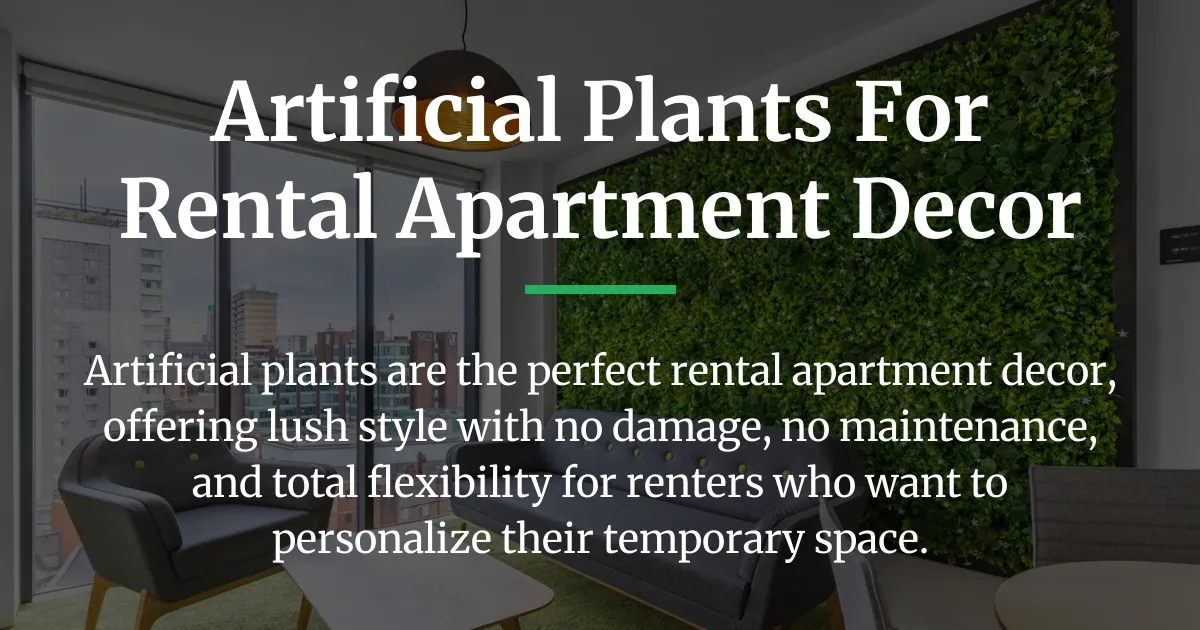
Living in a rented apartment often feels like a style compromise. You want a home that feels personal and alive with greenery, but your lease agreement and the ever-looming prospect of moving make permanent changes or high-maintenance real plants a risky hassle. This is where a smart, strategic approach to decor comes in. Using artificial plants for rental apartment decor is not a second-best choice; it’s a powerful, creative solution designed for the realities of renting.
It transforms the challenge of a borrowed place into an opportunity for flexible, beautiful expression without a single worry about your security deposit.
The Smart Renter’s Guide to Artificial Greenery
Forget the basic lists of benefits you have seen before. The true value of faux foliage for renters is how directly it solves core rental headaches. It is about more than just adding a green touch; it is about building a living space that works for your transient lifestyle.
First, it completely eliminates risk and logistical headaches. Every renter knows the anxiety around causing any permanent damage. With high-quality artificial plants, you get the visual impact of lush greenery without drilling into walls for hanging planters, without water spills that stain hardwood floors, and without the need for sunlight that your cramped space might lack.
This directly protects your security deposit and keeps your relationship with your landlord smooth. Second, it offers unmatched flexibility and control. Your decor can evolve at a moment’s notice. Feel like moving your jungle to the bedroom for a new look? Do it instantly without worrying about shock or sunlight.
Get a new roommate or simply want a change? Rearranging your faux foliage is as easy as moving a lamp. Finally, artificial plants create a rare sense of consistency in an impermanent life. While you move from one rentals location to another, these plants remain a constant, familiar element you can always style in your new surroundings, making any space feel like home faster.
Why Fake Plants Beat Real Ones for Most Rentals
While the love for real plants is understandable, the practicalities of renting often clash with their needs. Real plants require a specific commitment to light, water, and climate that many apartments, with their limited windows or erratic heating, cannot provide. This leads to the disappointment of watching plants struggle and die, which is both disheartening and a waste of money.
Artificial plants remove all those variables. They thrive in dark corners, survive your vacation, and never attract pests. For anyone with allergies, their hypoallergenic nature is a blessing, removing the mold and pollen that potted soil and real blooms can introduce. They are the definitive low-maintenance, versatile companion for a busy renter’s life.
Finding Fake Plants That Fool the Eye
The biggest fear renters have is that artificial plants will look cheap and plastic, undermining their decor. This critical concern is where most guides fail, but conquering it is simple once you know what to look for. The secret is to ignore the word “artificial” and shop for realism instead.
High-quality lifelike artificial plants use materials and construction tricks to mimic nature perfectly. Look for plants made from polyethylene or silk blends, which have a softer, more natural texture than stiff plastic. Examine the color; real leaves are never one flat shade of green.
The best faux plants have color variation, subtle gradients from light to dark, and even realistic brown tips or yellow veining. Check the stems and arrangement. They should have natural-looking imperfections, a believable thickness, and be arranged asymmetrically like a real growing plant.
Your Realism Checklist Before You Buy
Before you click “add to cart,” run through this quick mental checklist. Does the plant have a realistic weight? Cheap ones feel insubstantial. Can you see detailed vein patterns on the leaves? Are the stems wired so you can gently bend and shape them into a natural posture? Is the base or “soil” covered with moss, bark, or pebbles instead of shiny, fake dirt?
Investing in one or two larger, high-quality statement plants, like a faux fiddle leaf fig or olive tree, and then saving on smaller filler greenery is a smart budget strategy. That one beautiful plant can anchor an entire room.
Placing Plants in Your Unique Rental Layout
Every rental has its quirks—awkward corners, unsightly fixed elements, or a lack of square footage. Artificial plants are your secret weapon to tackle these issues head-on. This is about strategic placement, not just decoration.
For small spaces and studio apartments, think vertically. Use tall, slim artificial trees, like a faux bamboo or snake plant, in a corner to draw the eye upward and make ceilings feel higher. Trail long, artificial ivy or pothos from a high shelf or a secure adhesive hook to add greenery without sacrificing an inch of floor space.
You can even use a series of small faux green wall panels or discs to create a temporary, stunning focal point behind your sofa or bed. To solve common rental flaws, get creative. A large, bushy artificial plant in a nice basket can elegantly camouflage a radiator, an HVAC unit, or a plumbing pipe.
A row of identical faux boxwoods on a windowsill can disguise uneven frames or a less-than-perfect view. In larger areas, use a big artificial tree to define a seating zone in an open-concept room or to fill an empty, awkward corner that never seemed to have a purpose.
Styling Your Faux Foliage Like a Designer
The final step to mastering artificial plants for rental apartment decor is integration. A faux plant should look like it belongs, not like it just arrived from the store. This is where your personal creative expression shines through.
Start with the pot. The plastic grow pot it comes in is the number one giveaway. Immediately replant it into a decorative pot, basket, or planter that fits your style. Use leftover moss or decorative pebbles to cover the top and hide any mechanical base. This simple upgrade makes a dramatic difference.
Next, combine your plants with other rental-friendly decor elements. Layer them with textured rugs, different lighting sources like floor lamps and string lights, and removable wallpaper. This creates depth and distraction, making the plants part of a rich tapestry so their “fakeness” never stands out.
For a truly authentic touch, gently bend and fluff the stems and leaves when you first unpack them. Nature is not perfectly symmetrical, so arrange them to look organically grown. You can even add a few drops of essential oil to cotton balls hidden in the soil for a subtle, real plant scent.
Keeping Your Green Space Fresh and Clean
Long-term care for artificial plants is wonderfully simple. Dust is the main enemy of realism, so a quick routine keeps them perfect. Every few weeks, give them a light dusting with a microfiber cloth or a gentle blast from a hair dryer on the cool setting.
For a deeper clean every few months, mix a small amount of mild soap with water in a spray bottle, mist the leaves lightly, and wipe them down. This will keep your plants looking vibrant for up to 15 years or more. When it is time to move, packing is easy. For larger plants, use wardrobe boxes.
Wrap delicate leaves in tissue paper and secure stems so they do not bend. Smaller plants can be nestled in regular boxes. They will arrive at your next home ready to instantly bring life to your new four walls, making the transition smoother and your new space feel like home immediately.
Frequently Asked Questions
Can artificial plants cause damage to rental walls or floors?
No, high-quality artificial plants themselves will not cause damage. The risk comes from how you display them. Always use removable adhesive hooks designed for walls instead of nails, and place pots on trays or in sealed planters to protect floors from any scratches. This way, you enjoy the look with zero risk.
How do I clean dust off artificial plants?
Dust them lightly with a microfiber cloth or use a hair dryer on a cool, low setting to blow dust away. For a deeper clean, mix a little dish soap with water in a spray bottle, lightly mist the leaves, and gently wipe them clean with a damp cloth. Let them air dry completely.
Are artificial plants safe for homes with pets or children?
Yes, they are generally very pet-friendly and safe. They do not have soil that pets can dig in or toxic saps or leaves that could harm a child or animal if chewed. However, always secure top-heavy pots to prevent tipping and check that small, detachable parts are not a choking hazard.
Do artificial plants fade in sunlight?
Prolonged, direct sunlight can cause some artificial plants to fade over time, especially lower-quality ones. For very sunny windows, look for UV-protected artificial plants or simply rotate them occasionally. Using sheer curtains can also help diffuse strong sunlight.
Is it worth spending more on high end artificial plants?
For your main statement plants, yes, it is absolutely worth the investment. A more expensive, designer-looking artificial plant uses better materials and construction for stunning realism that lasts for many years. You can save money on smaller, filler greenery where details are less noticeable.
Where should I hide the base of a faux plant?
The best trick is to replant it into a nicer decorative pot or basket. Then, cover the visible “soil” area inside with decorative moss, bark chips, smooth stones, or even dried coffee beans. This covers the plastic base and adds a natural, finished look.
Can I mix artificial plants with real ones?
Absolutely. Mixing them is a great way to add fullness and texture. Use real plants for easy-to-care-for varieties in spots with good light, and use artificial plants to fill in dark corners or add height where a real plant would not survive. The combination can look very lush and natural.
What do I do with my artificial plants when I move?
Pack them carefully to prevent bending. Use tall boxes, wrap leaves in paper, and pack stems snugly so they do not shift. They are not fragile like real plants, so they transport easily. Unpack them first in your new home to quickly add life and familiarity to the space.
How can I make my artificial plant smell real?
Place a few cotton balls soaked in your favorite essential oil, like lemon, lavender, or pine, at the base under the moss or decorative topping. You can also use a very light mist of linen spray around the plant, but avoid spraying the leaves directly to prevent residue.
Are artificial plants a sustainable choice?
They can be, due to their long lifespan. A good artificial plant that you keep and use for a decade or more creates no water waste, needs no fertilizers or pesticides, and avoids the carbon footprint of constantly replacing dead real plants. Their longevity makes them a sustainable, low-maintenance option.
Creating Your Perfect Rental Sanctuary
Decorating a rental is not about settling for less; it is about making smarter choices that honor both your style and your situation. Artificial plants for rental apartment decor represent one of the smartest choices you can make. They provide the joy and beauty of greenery with none of the stress, offering a perfect solution for creating sustainable low-maintenance green spaces anywhere.
By choosing realistic varieties, placing them with purpose, and styling them with intention, you build a home that feels permanent and personal, even when you know it is temporary. Let your rented space be a canvas for your creativity, where faux foliage gives you the freedom to design boldly and live comfortably, ready for whatever comes next.