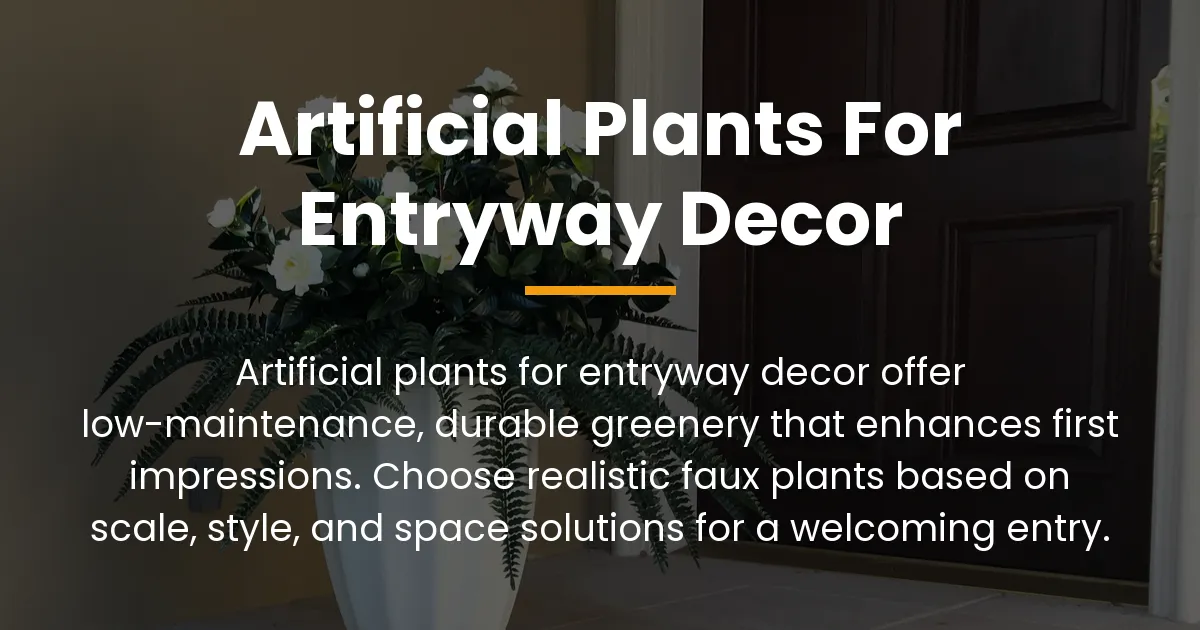
Your entryway sets the tone for your entire home, offering a first impression to guests and a daily welcome to you. Achieving that perfect blend of warmth and style often feels challenging, especially with the practical limits of real plants in this high-traffic area. This is where the smart use of artificial plants for entryway decor becomes a powerful design solution. This guide moves beyond simple product lists to provide a strategic framework for selecting and styling faux greenery that solves problems, complements your architecture, and creates a lasting impact.
The Case for Faux in the Entryway
Real plants bring life to a space, but the entryway presents unique hurdles that make artificial versions a superior choice. This area demands consistency and durability above all else. Unlike a sunny living room, entryways often suffer from poor or fluctuating light, making it hard for real plants to thrive.
Opening and closing the front door brings drafts and temperature changes that can stress living greenery. Artificial plants for entryway decor provide a permanent, lush appearance without any worry about watering schedules or seasonal die-back.
They are also ideal for households with allergies or busy schedules, offering beauty without the maintenance. By choosing faux, you gain complete control over your design, ensuring a polished and inviting entrance every single day.
Choosing Artificial Plants for Entryway Decor
Selecting the right faux greenery is not about picking the first pretty plant you see. Success hinges on choosing pieces that look convincingly real and harmonize with your home’s architectural style. A thoughtful selection process transforms a simple decoration into an intentional design element.
The Hallmarks of Convincing Artificial Plants
Quality artificial plants mimic nature’s imperfections. Look for color variation within the foliage, where leaves have subtle gradients of green, yellow, or brown instead of one flat, synthetic color. The texture is equally important; high-quality faux plants have matte finishes with visible leaf veining and stems that bend in natural, irregular patterns.
Examine the structure of the plant. Real plants grow towards the light, so a convincing fake one will have a slight, asymmetrical shape. Finally, consider the base. A weighted, realistic pot or planter adds stability and completes the illusion, preventing a cheap, plastic look.
Matching Plant Form to Your Entryway’s Style
The shape and type of plant should converse with your entryway’s design language. For a modern or minimalist entry, seek clean lines and architectural forms. A tall artificial Dracaena or a sleek fake olive tree in a simple planter works beautifully.
Traditional entryways often welcome the structured elegance of a pair of topiary trees, like faux boxwood balls. For a farmhouse or bohemian feel, consider artificial eucalyptus garlands or hanging faux fern vines that introduce softness and texture. Matching the plant to the style ensures your decor feels cohesive, not cluttered.
Strategic Placement for Maximum Impact
Where and how you place your artificial plants determines their effectiveness. This step is about solving spatial problems and creating visual flow, turning your entryway into a more functional and appealing space.
Solving Common Entryway Problems with Greenery
If your entryway is narrow and feels cramped, use vertical artificial trees or tall faux grasses to draw the eye upward, creating an illusion of height and space. Wall-mounted or hanging artificial vines can also utilize unused vertical space without crowding the floor.
For dark corners that lack natural light, opt for artificial plants with lighter green foliage or those incorporating white flowers. These lighter tones help reflect any available light, making the area feel brighter and more open. A large, empty wall next to the door becomes an opportunity for a focal point.
A substantial piece like a tall fake olive tree or a pair of structured topiaries can anchor the space and provide a welcoming statement. The key is to identify your entryway’s specific challenge and select a plant form that directly addresses it.
The Rule of Scale and Balance
Proportion is crucial in entryway design. An oversized plant can overwhelm a small alcove, while a tiny one can get lost in a grand foyer. As a general guide, the size of your artificial plant should complement the key features around it.
For a console table, the plant should be roughly one-third to half the height of the mirror or art above it. Floor plants should frame the door or a piece of furniture without blocking the pathway. Always leave enough breathing room around the plant so the space feels curated, not crowded.
Advanced Curation and Long-Term Impact
To achieve a truly polished look, consider how your artificial plant interacts with the entire entryway ensemble. This advanced layer of styling addresses longevity and ethical considerations, setting your decor apart.
Composing a Cohesive Entryway Vignette
Your artificial plant is one player in a larger design team. Think about creating a vignette on your console table by layering the plant with other elements. Coordinate the planter’s material or color with your door hardware or light fixture for a tied-together look.
Place the faux greenery alongside a decorative basket, a sculptural lamp, or a framed piece of art. This layered approach adds depth and interest, making the plant look like an integrated part of your home’s story rather than an afterthought.
Material Awareness and Sustainable Choices
With growing awareness of environmental impact, it’s wise to consider the lifecycle of your decor. The best approach is to buy fewer, but higher-quality artificial plants designed to last. Look for UV-resistant coatings if your entryway receives direct sunlight, as this prevents fading and extends the plant’s life for years.
Seek out brands that use recycled materials or have clear policies on sustainability. By choosing durable pieces over trendy, disposable items, you reduce waste and make a more responsible choice. This turns the purchase of artificial plants for entryway decor into a considered investment in your home’s long-term aesthetic.
Conclusion
Successful artificial plants for entryway decor rely on intentional design strategy, not accidental placement. By assessing your space’s specific needs, prioritizing realism in your selections, and styling with scale and harmony in mind, you can create a welcoming first impression that endures. Let this framework guide you in transforming your entryway into a stylish, low-maintenance gateway that reflects your personal taste.
Frequently Asked Questions
Can artificial plants for entryway decor be used outside a front door?
Yes, many artificial plants are suitable for outdoor use on a covered front porch. You must specifically look for labels stating “UV-resistant” or “for outdoor use” to ensure the materials won’t fade or degrade quickly in sunlight and weather.
How do I clean dust off my artificial entryway plants?
Use a hairdryer on a cool setting to blow loose dust away, or gently wipe leaves with a slightly damp cloth. For detailed plants, a soft-bristle brush can dislodge dust from crevices without damaging the foliage.
What is the best way to secure a tall artificial tree in a pot?
Fill the base of the planter with stones, sand, or decorative gravel to add weight and stability. This prevents the tree from tipping over, especially in high-traffic entryways.
Are artificial plants safe for homes with pets?
Generally, yes, as they are non-toxic. However, ensure small parts like berries or loose leaves are securely attached to prevent pets from chewing and swallowing them, which could be a choking hazard.
Can I mix artificial plants with real ones in my entryway?
Absolutely. Mixing high-quality faux plants with real ones can add texture and depth. Place real plants where light is sufficient and use artificial plants for entryway decor in darker corners to maintain a consistent green look throughout.
How do I prevent my artificial plants from fading in a sunny entry?
Choose artificial plants labeled as UV-resistant. If your plant is not UV-protected, you can apply a UV-resistant spray sealant available at craft stores. Also, consider rotating the plant occasionally to ensure even exposure.
What’s the difference between silk, plastic, and polyethylene faux plants?
Silk plants have a fabric-like feel but can fray. Plastic plants are often less realistic and shiny. Polyethylene (PE) is a modern material that captures fine details and texture, making it the most realistic and durable option for convincing artificial plants.
What are good artificial plants for a very narrow entryway table?
Opt for slender, vertical shapes like artificial bamboo stalks, a small faux orchid, or a narrow potted faux boxwood topiary. These provide height and greenery without taking up too much precious surface space.
Do artificial plants for entryway decor hold value as a housewarming gift?
Yes, a high-quality artificial plant in a stylish planter is an excellent and thoughtful housewarming gift. It offers lasting beauty without imposing care responsibilities on the new homeowner, making it a practical and decorative present.
What color faux flowers work best for a neutral entryway?
White flowers or blooms in soft greens, creams, and muted eucalyptus tones work beautifully. They add a touch of life and contrast without clashing with a neutral color scheme, keeping the entryway feeling fresh and elegant.