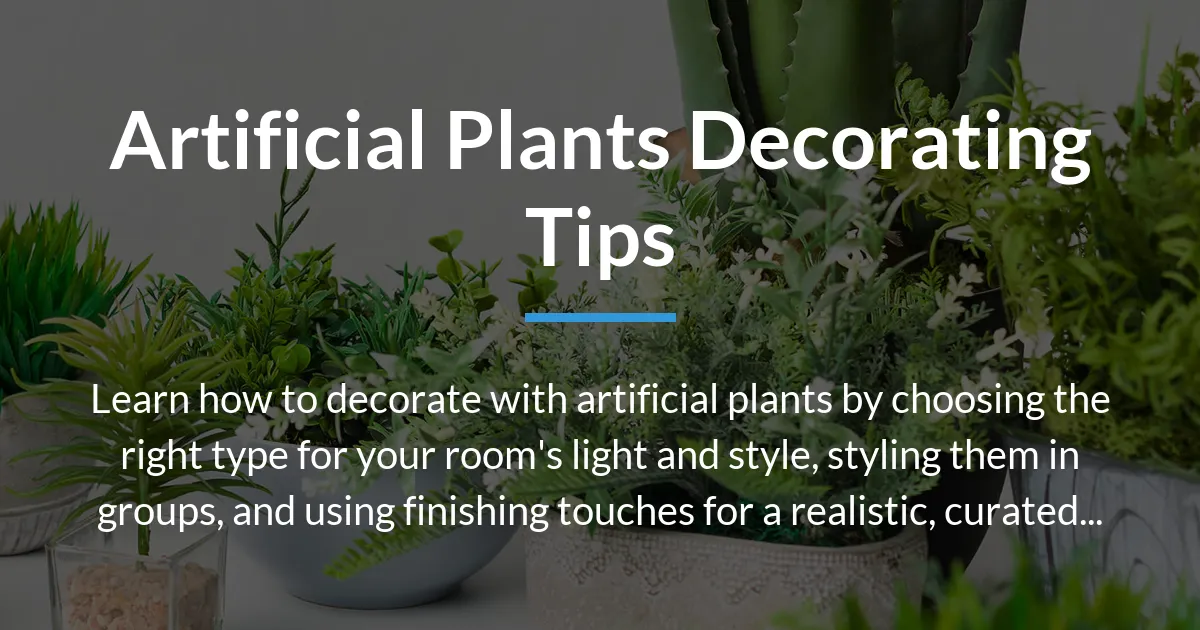
You want to add greenery to your home without the hassle of care, and that is a smart design choice. The challenge is making those artificial plants look and feel like a natural part of your decor. This guide is about moving beyond basic placement. We will explore how to use faux botanicals as a deliberate design tool to create beautiful, realistic, and permanent green accents in any room.
Start with Your Design Goal
Before you buy a single leaf, pause and ask yourself a simple question. What do you want this plant to do in your space? Treating an artificial plant as a simple decoration is where things can go wrong. Instead, think of it as a tool with a specific job.
Is your goal to add height and structure to an empty corner? A tall, sculptural tree or a large tropical leaf might be your answer. Maybe you want to soften a harsh shelf edge or a blank wall. A trailing vine or a delicate fern could be perfect for that.
Perhaps you are solving a practical problem. You love plants but your living room gets almost no natural light. Your goal then is to find a faux plant that thrives in that exact condition. Defining this intention first turns shopping from overwhelming to purposeful. It guides every choice you make next.
Choosing the Right Plant for the Job
With your goal clear, you can now select the perfect artificial plant. This is more than just finding one that “looks real.” You need to match the plant’s form, material, and size to your plan.
Pick the Right Shape and Style
Different plant forms create different effects. A faux fiddle leaf fig or olive tree brings bold, architectural shape. It can anchor a room. Grasses or bamboo add movement and a modern, airy feel. Succulents and cacti offer clean, geometric texture perfect for contemporary spaces.
Think about the style of your room. A bushy, faux monstera with large, split leaves fits a tropical or bold modern theme. A structured boxwood topiary tree feels classic and orderly. The plant should feel like it belongs with your furniture and other decor, not like a visitor from another planet.
Understand Materials and Quality
The best artificial plants use a mix of materials to fool the eye and the hand. Look for silk or polyester for soft, realistic leaves. Higher-end plastic can mimic the waxy sheen of plants like succulents. The key is in the details. Check the stems for realistic coloring and texture. See if the leaves have natural-looking veins and slight variations in color.
Quality does not always mean most expensive. It means looking for these thoughtful details. A well-made plastic plant can look more real than a poorly made silk one. Touch is important too. If it feels stiff and plasticky to you, it will to your guests as well.
Get the Scale Correct
This is a common mistake. A plant that is too small looks lost and cheap. One that is too large can overwhelm the space. Before you buy, measure the spot where the plant will go. Consider the height from the floor or the surface, and the width of the area.
Use painter’s tape to mark the dimensions on your floor or wall. This visual trick helps you imagine the plant’s footprint. For a floor plant in a living room, a good rule is that it should fill about two-thirds of the vertical space from the pot to the ceiling. This creates impact without feeling cramped.
Match the Plant to Your Room
This is the most important step most guides skip. A beautiful faux plant in the wrong spot still looks wrong. You must consider the specific conditions of the room where it will live. Let’s be your personal room-by-room guide.
For Bright, Sunny Rooms
Rooms with lots of light are a gift. Here, you have the most flexibility. You can choose almost any plant that matches your style. This is the perfect place for those light-loving, large tropical leaf plants like monsteras or bird of paradise.
Just remember one key tip. Even artificial plants can fade if they are in direct, harsh sunlight all day. To make them last for years, look for plants labeled as UV-protected. Or, place them in bright but indirect light to keep their colors vibrant.
For Low-Light or Windowless Spaces
This is where artificial plants truly shine. You can bring life to a dark corner, a bathroom, or a hallway where no real plant could survive. The secret is to choose faux plants that are believable for those conditions.
Think about what grows in low light in nature. A realistic faux fern, a peace lily, a snake plant, or a ZZ plant are excellent choices. They look perfectly at home in shadowy spots. Avoid putting a bright, sun-loving fake cactus in a dark corner. It breaks the visual logic and gives away the secret.
For High-Traffic Areas and Hallways
Places where people are always walking by need tough, low-maintenance greenery. You want plants that won’t get knocked over or need constant adjusting. Look for sturdy, shorter plants with less delicate foliage.
A faux boxwood ball in a heavy pot, a sturdy agave, or a snake plant are great for hallways or entryways. Their simpler forms are less likely to get caught on bags or clothing. They add a touch of green without becoming a nuisance.
Creating a Focal Point in a Living Room
The living room is often where you want a statement piece. This is the spot for that taller artificial tree or a large, impressive plant. Place it in an empty corner beside a sofa or near a window. It should fill the space and draw the eye.
To make it a true focal point, treat it like a piece of art. Use strategic lighting, like a small floor lamp, to highlight its form. This creates shadows and depth, making it look even more real and important to the room’s design.
Styling Your Artificial Plants Like a Pro
You have the perfect plant for the perfect spot. Now, let’s make it look like it grew there. Styling is what separates a placed object from an integrated design element.
Choose and Prepare the Perfect Container
Never leave an artificial plant in its cheap, plastic nursery pot. This is a dead giveaway. The container is half the look. Choose a planter, basket, or vase that fits your room’s style and is the right scale for the plant.
Make sure the pot has some weight to it. A heavy ceramic pot or a woven basket filled with a base material makes the whole arrangement feel grounded and real. To secure your plant and give it height, fill the bottom of the planter with foam blocks, pebbles, or even crumpled newspaper. Then place the plastic pot inside and cover the top with moss, sand, or decorative stones to hide the edges.
Create Believable Groupings
A single fake plant can sometimes feel lonely. A group feels like a curated collection. Cluster two or three plants of different heights, textures, and types together. Use the rule of odd numbers for a more natural look.
Combine a tall, slender plant with a mid-sized bushy one and a small trailing vine. Place them at different levels by using plant stands or stacks of books. This adds depth and interest. Mixing your best artificial plants with a few real ones, if you have them, is the ultimate trick for total believability.
Place for Natural Realism
Avoid perfect symmetry. In nature, plants are not perfectly centered or evenly spaced. Angle your plant slightly so it doesn’t look stiff. Let a trailing vine spill over one side of the pot more than the other.
Consider the sight lines from where people usually sit or walk. You want the plant to look good from multiple angles. Also, think about how light from your windows or lamps would hit a real plant. Position your faux greenery so it interacts with that light, creating highlights and shadows on the leaves.
The Final Touches for Authenticity
This is where you do the magic that makes people do a double-take. These small, finishing acts transform a good setup into a great one.
Fluff, Bend, and Personalize
When you first take an artificial plant out of the box, it is compressed and uniform. Your first job is to bring it to life. Gently bend the stems and branches in different directions. Carefully separate each leaf so they are not all stuck together.
Look at pictures of the real plant. See how the leaves naturally droop or curl? Mimic that. Do not be afraid to slightly reshape the plant to fit your space better. You can even trim a stem if it is too long or looks unnatural.
Simple and Effective Maintenance
Dust is the enemy of realism. A dusty fake plant looks like exactly what it is. Make dusting them part of your regular cleaning routine. For light dust, use a hairdryer on a cool, low setting or a soft microfiber cloth.
Every few months, give them a deeper clean. You can gently wipe leaves with a damp cloth or, for sturdier plastic plants, even rinse them in the shower. Let them air dry completely. This keeps them looking fresh and vibrant for years.
Weave Them into the Seasons
One of the joys of real plants is how they change. You can mimic this subtly with faux plants. In autumn, tuck a few realistic-looking faux berry stems or dried wheat at the base of your plant. In spring, add a few small, artificial blossoms.
You do not need to redecorate completely. These small, seasonal touches make your permanent greenery feel connected to the world outside your window. It is a detail that shows thoughtful, layered decorating.
Bringing It All Together
The best artificial plants decorating tips are not about hiding something fake. They are about using a fantastic design tool with confidence and intention. By starting with a clear goal, choosing the right plant for your specific room, styling it with care, and adding those final authentic touches, you create a space that feels alive and beautifully curated. You get all the joy of greenery with none of the stress, and that is the ultimate design win.
Frequently Asked Questions
Can you use artificial plants outside?
Yes, but you must choose ones specifically made for outdoors. Look for “UV-protected” or “all-weather” labels. These are designed to resist sun fading and moisture. Regular indoor artificial plants will quickly fade and break down outside.
How often should you dust artificial plants?
You should dust them lightly every one to two weeks as part of your regular cleaning. A deep clean every three to six months is also a good idea to keep them looking their best and prevent built-up grime.
Do expensive artificial plants always look more real?
Not always. Price can be an indicator of better materials and details, but it is not a guarantee. Focus on the specific details like leaf texture, color variation, and stem realism. A mid-priced plant with great details often looks more real than a costly one that is poorly designed.
How do you make an artificial plant smell real?
You can add a subtle, natural scent by placing a few drops of essential oil on the decorative moss or soil in the pot. Scents like pine, eucalyptus, or fresh linen work well. Do not spray the leaves directly, as oils can damage some materials.
What do you fill the bottom of a planter with for a fake plant?
Use heavy, stable materials to weigh the pot down and give the plant height. Great options include foam blocks, packing peanuts, river rocks, or even old plastic bags. Fill about one-third to one-half of the pot, then place the plant’s plastic pot inside on top.
Can you cut or trim artificial plants to fit a space?
Absolutely. This is a great way to customize your plant. Use wire cutters to trim stems to your desired length. You can also remove individual leaves or branches that look unnatural or are in the way. Just cut carefully and reshape the plant afterward.
Are there places you should never put a fake plant?
Avoid putting them right next to heat sources like radiators or fireplaces, as high heat can warp the materials. Also, avoid spots where they will be constantly touched or brushed against, as this can accelerate wear and tear.
What’s the difference between silk, plastic, and latex plants?
Silk and polyester plants have soft, realistic-feeling leaves but can fade in sun. Plastic plants are durable and often better for outdoors or high-traffic areas, but can look shiny. Latex plants have a very realistic, rubbery texture but can degrade over time. Many high-quality plants blend materials for the best look and feel.
How do you secure a tall artificial tree so it doesn’t tip?
First, use a heavy, wide-based planter. Fill the bottom with sand, gravel, or rocks for extra weight. You can also secure the plastic pot inside the decorative pot with strong waterproof glue or a few dabs of hot glue. For extra safety, use clear museum putty under the base.
Can artificial plants fade in sunlight?
Yes, they can. Just like your couch or rug, the colors in artificial plants can fade if they are in direct, strong sunlight for many hours a day. To prevent this, use UV-protected plants for sunny spots or place them where they get bright but indirect light.