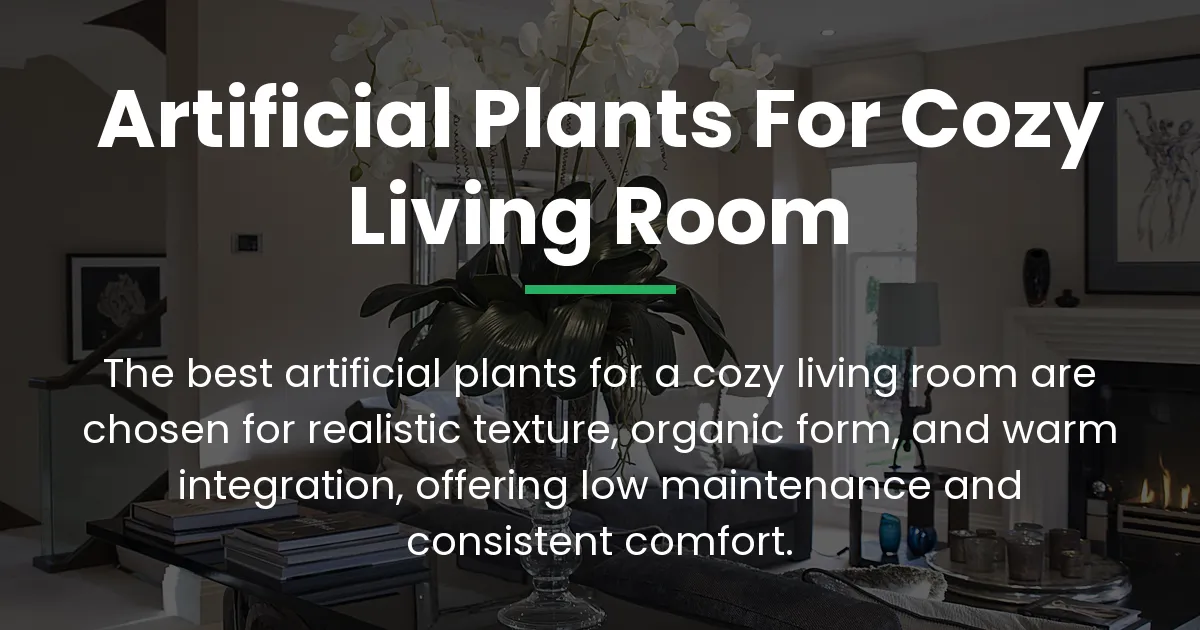
Choosing artificial plants for your cozy living room is a smart design move. It lets you add natural beauty without the hassle, creating a forever comfortable space. This guide explains how to pick and style faux plants that boost coziness through texture, shape, and smart placement.
Why Faux Plants Work for Coziness
Many people think fake plants lack soul, but that idea misses the point. For a cozy living room, artificial plants are a practical and stylish choice. They bring the calming effect of greenery without any upkeep worries.
You never have to stress about watering, sunlight, or wilting leaves. This consistency is key for coziness, which is all about feeling relaxed and at ease. With faux plants, your room always looks inviting, no matter the season or your schedule.
Addressing the so-called fake plant hate is simple. It often comes from seeing poor-quality or poorly styled plants. When selected with care, artificial plants blend seamlessly into your decor. They become part of the room’s texture and mood, not just plastic decorations.
Defining Cozy: A Design Framework for Plants
Cozy is not just a vague feeling. It is a set of design rules you can apply to everything in your room, including plants. For artificial plants to feel cozy, they must contribute to warmth, comfort, and a lived-in look.
Think about texture first. Cozy spaces often have soft, tactile elements like blankets and rugs. Your plants should add to this with leaves that look and feel real. Avoid glossy plastic that shines artificially. Instead, go for matte finishes or fabrics that mimic real foliage.
Color is another big factor. Cozy color schemes lean toward warm, muted tones. For plants, this means greens that are deep, olive, or sage, not bright neon. These colors blend with natural wood and soft textiles to create harmony.
Form and scale matter too. Cozy rooms feel balanced and layered. Use a mix of plant shapes, like broad-leaf plants for fullness and trailing plants for movement. Vary the heights with large standing plants in corners and smaller accent pieces on shelves.
The Designer’s Case for Faux: Beyond Low Maintenance
Low maintenance is just the start. High-quality artificial plants offer benefits that real plants cannot match for a cozy sanctuary. They are completely allergen-free, which is great for anyone with sensitivities, adding to physical comfort.
You have perfect control over the color and look. Unlike real plants that may change with seasons, faux plants stay exactly as you choose. This lets you match them perfectly to your room’s palette for a cohesive design.
They are also durable and ethical. No need for pesticides or worry about pests. Your faux greenery remains pristine, reducing visual stress and contributing to a peaceful atmosphere. This makes them a pro-faux plant choice for mindful living.
Selecting Artificial Plants for a Cozy Feel
Now, apply the cozy framework to pick the right plants. The goal is to find artificial plants that look hyper realistic and enhance warmth. Here are some types and traits to focus on.
Start with classic choices that have organic forms. Fake fiddle leaf figs are popular for a reason. Their large, broad leaves add instant texture and a jungle vibe. Look for ones with a real trunk or realistic stem details to avoid a plastic look.
Rubber tree plants are another excellent option. Their dark, matte leaves contribute to a rich, cozy color scheme. They work well as statement pieces in living room corners, providing good height variation without taking over the space.
Do not overlook trailing plants. Even some trailing plants like fake ivy or pothos can soften edges and add movement. Place them on shelves or sideboards to create layers. This breaks up rigid lines and makes the room feel more organic.
For smaller accents, consider artificial bonsai trees or succulents. These add detail without clutter. Ensure they have such a different texture from other decor to stand out subtly. Avoid anything too matchy-matchy where all plants look identical.
Always check for realistic features. Hyper realistic looking plants often have UV protection to prevent fading in natural light. They might include details like varied leaf sizes or natural bends. This attention to detail fools the eye and enhances coziness.
Styling Techniques for a Cozy Look
Choosing the right plants is only half the battle. How you style them makes all the difference. The key is to integrate artificial plants so they feel like part of the room, not afterthoughts.
Begin with placement. Think beyond just putting a plant in a corner. Use plants to define spaces, like near a dining room sideboard or beside a sofa. This creates intimacy and anchors your decor. Avoid lining them up like soldiers; scatter them for a natural feel.
Pots and containers are crucial for warmth. Choose materials that add texture, like textured ceramic, woven baskets, or concrete. These materials feel handmade and cozy. Steer clear of shiny plastic pots that can cheapen the look.
Group plants together for impact. Mix different types, such as a large fake olive tree with smaller ferns or grasses. This layering mimics nature and adds depth. Remember good height variation to draw the eye upward and make the room feel larger yet snug.
Integrate plants with other cozy textiles. Place a faux potted plant next to a knit blanket or a soft rug. This blends greenery with tactile elements, reinforcing the comfortable atmosphere. The goal is a jungle vibe that feels inviting, not overwhelming.
The Realism Ritual: Three Steps to Fool the Eye
To avoid the fake look, follow this simple ritual. It addresses the common complaint that artificial plants seem plasticky and cold.
First, dust your plants regularly. Dust can make leaves look dull and artificial. Use a soft cloth or a gentle duster to keep them clean. This maintains a matte finish that resembles real foliage.
Second, bend and style the stems and leaves. When you buy artificial plants, they often come in a uniform shape. Gently manipulate the branches to create natural arches or spreads. This breaks the symmetry and adds organic movement.
Third, use the soil and moss trick. Many faux plants have visible plastic bases. Cover these with a layer of decorative moss or small stones. This top-dressing hides the base and makes the plant look potted in real soil, enhancing realism.
Frequently Asked Questions
Can artificial plants look good in a room with lots of natural light?
Yes, if you choose hyper realistic looking plants with UV protection. These are designed to resist fading and glare. Avoid glossy finishes that can reflect light and look plastic. Place them where light enhances their natural colors, not washes them out.
How do I clean artificial plants to keep them looking cozy, not dusty?
Dust them lightly with a soft cloth or use a hairdryer on a cool setting to blow dust away. For deeper cleans, wipe leaves with a damp cloth. Avoid harsh chemicals that might damage the material. Regular cleaning maintains their matte, realistic texture.
Are small artificial plants or large standing plants better for a cozy feel?
Both are important. Use large standing plants as focal points in corners to add height and presence. Smaller accent pieces on tables or shelves create layers and intimacy. The mix of sizes contributes to good height variation and a lived-in look.
What pot materials work best with artificial plants for a warm look?
Textured ceramic, woven baskets, and concrete pots are ideal. They add tactile warmth and blend with cozy decor. Avoid shiny plastic or metallic pots that can feel cold and artificial. Choose colors that complement your room’s color scheme.
How can I safely use artificial plants if I have a pregnant cat or pets?
Ensure plants are placed securely so they cannot be knocked over. Check that materials are non-toxic and avoid small detachable parts. Keep plants out of reach if pets like to chew. This prevents accidents and keeps your cozy space safe for everyone.
Where is the best place to buy realistic artificial plants?
Look for stores that emphasize quality, both online and offline. While local Target might have options, focus on traits like realistic texture and UV resistance when shopping. Read reviews to see how plants look in real homes, not just in product photos.
Do I need to change my artificial plants with seasonal decor?
Not necessarily. You can keep core plants year-round. For seasonal touches, add small accents like artificial white flowers in winter or warm-toned blooms in fall. This refreshes the space without replacing everything, maintaining the cozy base.
Can I mix real and fake plants in the same room?
Absolutely. Use real plants for easy-care spots with good light, and faux plants for darker areas like a windowless bathroom. Blend them by choosing similar textures and colors. This mix adds variety and makes the faux plants less noticeable.
What’s the biggest mistake people make when decorating with fake plants?
Choosing plants that are too matchy-matchy or placing them without thought. This makes them look like a set of decorations rather than part of the room. Avoid this by varying plant types and integrating them with your decor for a natural flow.
How long do high-quality artificial plants typically last?
With proper care, they can last for many years. Quality plants made from durable materials resist fading and wear. Regular cleaning and avoiding direct sunlight when possible will extend their life, making them a long-term investment for your cozy living room.
Selecting artificial plants for a cozy living room is about more than just buying greenery. It is a design strategy that combines realism, texture, and smart styling to create a perpetually comfortable space. By following the principles of cozy design and focusing on integration, you can transform your room into a warm sanctuary that always feels inviting.