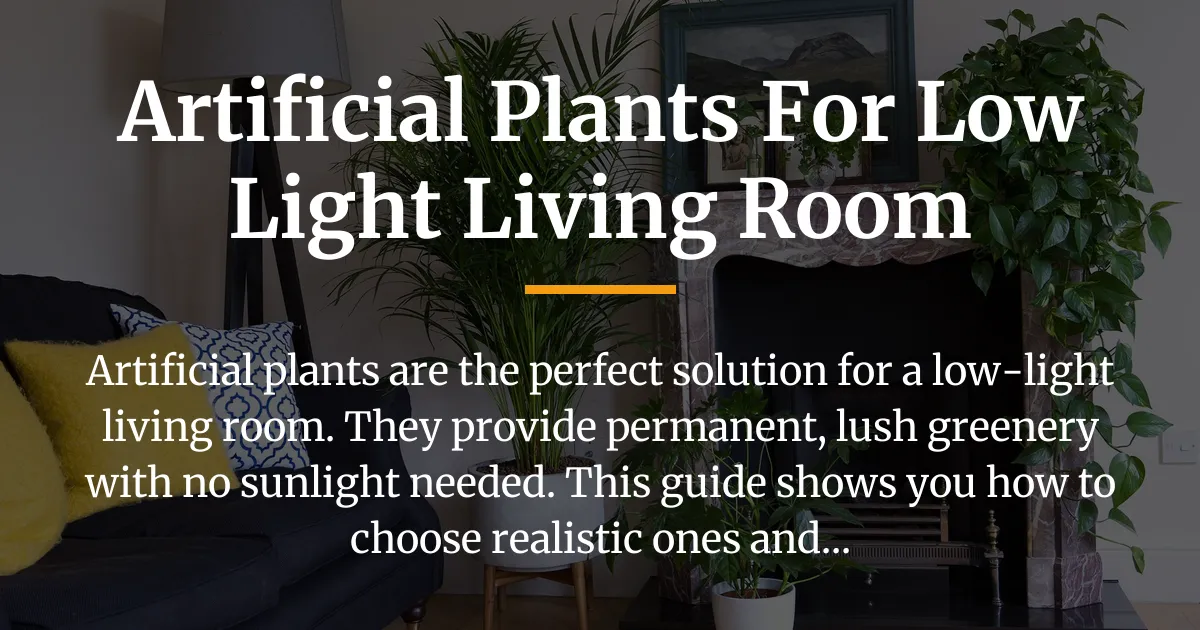
Your living room feels a bit empty without the life that plants bring. But the sun just never seems to reach those corners. You have probably heard about real plants that tolerate low light, but even those can struggle and look sparse. The clear and beautiful solution is to use artificial plants for a low light living room. This guide will show you exactly why this works, how to pick plants that look wonderfully real, and where to put them to create a vibrant space that never needs a sunny window.
Why Artificial Plants Are Smart for Low Light
First, let us understand the real problem with low light. People often suggest real plants like snake plants or ZZ plants for dark rooms. These are indeed tough plants. They have a very slow metabolism, which helps them survive with less light.
But survive is not the same as thrive. In a truly dark living room, especially one with only a north-facing window or no direct sun at all, these plants enter a kind of hibernation. Their growth completely stops.
They will not produce new shoots or leaves. Their beautiful, full shape can slowly become stretched and thin as they reach weakly for any tiny bit of light. The biggest risk then becomes watering. Because the plant is not actively growing, the soil stays wet for much longer.
It is surprisingly easy to overwater a dracaena or a peace lily in a dark corner. This leads to root rot, which is often the real end for many low-light tolerant plants. The promise of a green space turns into a cycle of buying, struggling, and replacing.
This is where the strategy of using artificial plants shines. They are not just a fake alternative. They are the guaranteed solution. An artificial plant does not have a metabolism. It does not need light or water.
It will remain exactly as full and vibrant as the day you bought it, whether it is in the brightest spot or the darkest corner of your apartment. For a frequent traveler or someone who simply wants a beautiful, predictable space, this solves the problem completely. You get the psychological benefit and visual appeal of greenery without the worry.
When You Should Choose Artificial Over Real
This choice is not about giving up on real plants. It is about making a smart design decision for the specific conditions of your home. Think about the light in your living room as zones.
Maybe you have one small table that gets a sliver of bright indirect light for a few hours. That is a great spot for a real pothos. But what about the large, empty corner six feet away that is always in shadow? Or the bookshelf against a wall that never sees the sun?
For those permanently dark areas, an artificial plant is not the second choice. It is the first and best choice. It allows you to place lush, full greenery precisely where you want it for your design, not where the sun dictates. You are choosing permanent perfection for your problem areas, which is a very clever way to decorate.
How to Pick the Best Artificial Plants for Dark Spaces
Not all artificial plants are created equal, especially when you plan to use them in a room with low light. The shadowy environment can actually help hide imperfections, but you need to know what to look for to make the most of it. The goal is botanical plausibility.
This means choosing a plant that would naturally be found in similar dim conditions. A sun-loving succulent or a cactus will always look out of place in a dark living room. Your brain knows it does not belong there. Instead, look for species that are known as forest undergrowth or shade dwellers.
Think about ferns, philodendrons, certain palms, and leafy plants like the peace lily. These are plants we expect to see in softer light. Their forms and colors are designed by nature for these settings, so a well-made artificial version will feel right at home.
Next, pay close attention to texture and finish. In a dim room, light comes from lamps and overhead fixtures. This ambient light behaves differently than sunlight. A glossy, plastic finish will catch this light in harsh, unnatural ways, creating shiny spots that scream “fake.”
You want to look for plants described as having “real touch” or matte finishes. These materials absorb and diffuse light softly, just like a real leaf would. Run your hand over the leaves if you can. They should feel slightly waxy or textured, not smooth and slippery.
Scale is another critical factor. A small, lonely plant in a huge dark corner will look sad and obviously decorative. Do not be afraid to go big. A tall tree or a large, bushy plant can fill the vertical space and become a proper focal point. It creates impact and makes the greenery feel intentional and substantial.
The Low Light Realism Checklist
When you are shopping, either online or in a store, keep this simple list in mind. These features separate a convincing artificial plant from a cheap one, especially for low-light placement.
First, look for color variation. Real leaves are not just one flat shade of green. They have gradients, with lighter veins and slightly darker edges. Some even have hints of yellow or brown for authenticity. This subtle variation reads as real even in shadow.
Second, check for natural asymmetry. A real plant is not perfectly round or symmetrical. Stems should bend gently, leaves should point in different directions, and the overall shape should be organic. Avoid any plant that looks like a perfect green lollipop.
Third, feel for bendable stems. High-quality artificial plants often have wires inside their stems and leaves. This allows you to gently shape the plant after you take it out of the box. You can splay leaves apart or arch a stem over time, which breaks up the stiff “store-bought” look and lets you customize it for your space.
Finally, never forget the base. A beautiful, realistic plant stuck in a flimsy black plastic pot will ruin the illusion. The planter and the top dressing are half the battle. Look for sets that come in a nice pot, or plan to repot it immediately into one of your own, filling the top with realistic-looking moss, bark, or stones.
Great Artificial Plant Choices for Your Living Room
Here are some excellent types of artificial plants that work wonderfully in a low-light living room. Each category serves a different design purpose. Remember, the reasoning for why they work is key to making them look at home.
Tall Statement Trees
A tall tree can anchor a room and draw the eye up. In a low-light setting, it fills empty vertical space without needing light from above. A great choice is an Areca Palm. Its soft, feathery fronds create a light, airy feel and cast beautiful shadows when placed near a lamp.
An artificial Fiddle Leaf Fig can also work, but style it wisely. In real life, these plants demand bright light. So, to make it believable, choose one that is not overly huge and has some natural-looking leaf droop and variation. An artificial Olive Tree, with its silvery-green leaves and gnarled trunk, is another sophisticated option that brings a rustic, permanent elegance to a dim corner.
Mid-Height Foliage Plants
These plants are perfect for side tables, console tables, or standing on the floor next to furniture. Their strong, architectural shapes read very well in softer light. The Snake Plant, or Sansevieria, is a classic. Its upright, sword-like leaves have a modern silhouette that stays crisp and clear even in a dark area.
The ZZ Plant is another fantastic pick. Its glossy, oval leaves grow on graceful, arching stems. A good artificial version captures this waxy texture beautifully. An artificial Peace Lily, with its deep green leaves and white blooms, adds a classic touch and a pop of bright white that can help lighten a dark spot visually.
Trailing and Hanging Varieties
Use these to add life to shelves, mantels, or placed in a hanging planter. They help draw the eye across a shadowed wall and add layers to your greenery. Artificial Pothos or Heartleaf Philodendron are ideal. Look for ones with long, trailing vines that have a mix of leaf sizes and a realistic, heart-shaped leaf.
An artificial Boston Fern is a timeless choice for a hanging basket. Its lush, full fronds create a sense of abundant life. Place it in a corner where its form can be appreciated, and the shadows between its leaves will look incredibly natural.
Placing and Styling Your Artificial Plants
This is where you make your artificial plants truly belong in your living room. Thoughtful placement and styling are what transform them from decorations into integral parts of your space.
Start by working with your light sources, even though the plants do not need them. Place your artificial plants near your lamps. The ambient light from a floor lamp or table lamp will create natural-looking highlights and shadows on the leaves and stems. This movement of light and dark is what makes real plants look dynamic, and you can mimic it perfectly.
Do not scatter single plants randomly around the room. Group them together. Create a “plant zone” on a sideboard or in a corner by clustering two or three plants of different heights and types. Put a tall tree in the back, a mid-height foliage plant in the middle, and a trailing plant spilling over the front of a shelf.
This grouping looks intentional and lush, much like a curated corner in a real garden. It feels more believable than a single, isolated fake plant on every other surface.
The planter you choose is non-negotiable. It is the foundation. Always use a high-quality planter that feels substantial and suits your decor style. Before you place the plant in it, weight the bottom with sand or small stones. This gives a tall artificial tree stability and a realistic heft.
Then, cover the artificial soil or base of the plant with a layer of real or realistic-looking decorative moss, bark chips, or smooth pebbles. This final touch at the soil line is a huge detail that sells the whole illusion.
Caring for Your Artificial Plants
While you will never water them, artificial plants do need a tiny bit of care to stay looking their best, especially in a living room where dust accumulates.
Dust is the main enemy. In a low-light room, dust on leaves can be more visible under lamp light. The best way to clean most artificial plants is with a soft microfiber cloth. For more delicate or intricate leaves, like on a fern, use a soft-bristled detailing brush or even a clean makeup brush.
You can also use a hairdryer on the cool, low setting to blow dust out of dense foliage. Every few months, take a moment to gently bend stems and adjust leaves. This prevents them from settling into a stiff, unnatural position and keeps the arrangement looking organic and fresh.
A common question is about fading. High-quality artificial plants are treated to resist UV fading. Since your low-light living room has no direct sunlight, fading is even less of a concern. Your plants will keep their beautiful colours for a very long time.
Frequently Asked Questions
Can I mix real and artificial plants in one room?
Absolutely, and this is often the best strategy. Use your hardiest real plants in the brightest spots you have, even if it’s just a small area of bright indirect light. Then, use high-quality artificial plants to fill in the permanently dark zones. This creates a full, green look throughout the room. Just make sure the artificial plants are realistic enough to stand next to the real ones.
How do I clean dust off artificial plants without damaging them?
For most plants, a slightly damp microfiber cloth wiped gently over each leaf works perfectly. For very dusty or intricate plants, take them outside and use a can of compressed air to blow the dust away. Always avoid harsh chemicals or soaking the plants in water.
What is the biggest mistake people make with artificial plants?
The two biggest mistakes are choosing the wrong type of plant for the environment and skipping a good planter. Putting a bright, sun-loving artificial cactus in a dark corner looks fake. Putting a beautiful, realistic plant in a cheap, thin plastic pot also looks fake. Focus on botanical plausibility and a quality base.
Do artificial plants cost more than real plants?
Initially, a high-quality artificial plant often has a higher upfront cost than a small real plant from a nursery. However, you should think of it as a one-time investment. Compare it to the ongoing cost of replacing real plants that fail in low light, plus the cost of soil, pots, and fertilizer over years. For a dark space, the artificial plant usually wins on long-term value.
How can I make a tall artificial tree look stable and not wobbly?
Stability is all about weighting the planter. Before you add any decorative topping, put a layer of heavy rocks, sand, or even dry cement mix in the bottom of your planter. Then insert the plant and pack more material around the base. This gives it a solid, grounded feel, just like a real, heavy tree would have.
Your low light living room deserves to feel alive and welcoming. By choosing artificial plants with care and styling them with intention, you solve the light problem beautifully. You get permanent, lush greenery exactly where you want it. Remember, the goal is not to trick your guests, but to create a space filled with the calm and beauty that plants provide, in a way that makes perfect sense for your home.