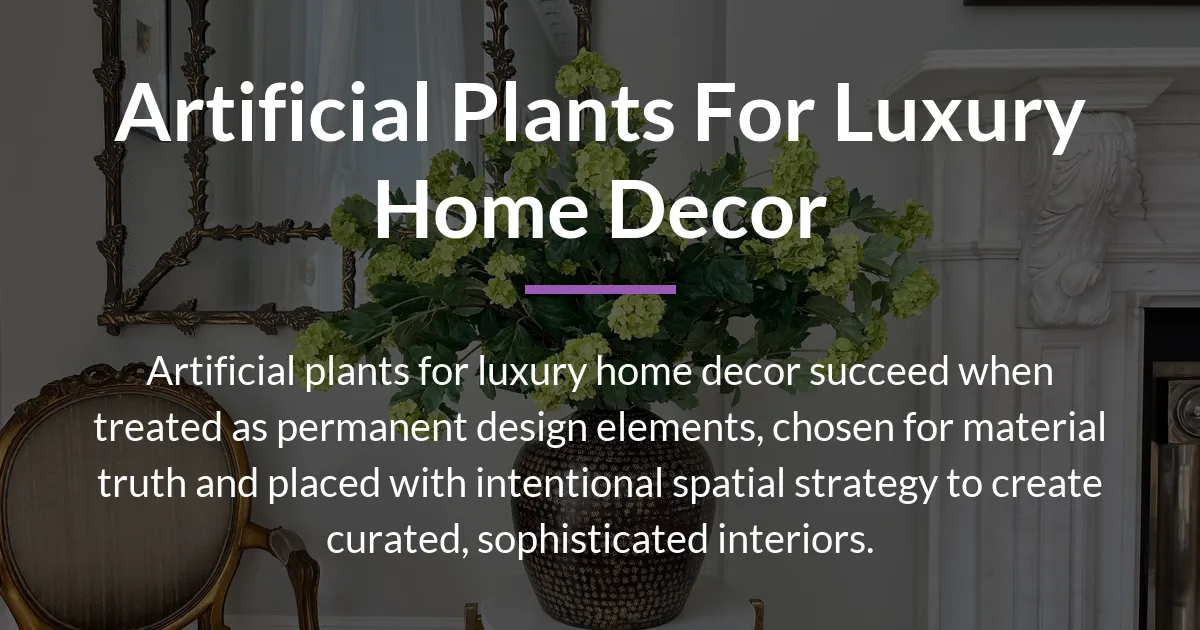
You are looking for artificial plants to elevate your home, not just fill a corner. The goal is sophistication, not just convenience. Achieving true luxury requires a fundamental shift in perspective. Here, artificial plants are not mere substitutes for living ones. They are permanent, intentional sculptural elements for your interior design. Success depends on three principles: a relentless focus on material truth, selecting plants as functional design components, and mastering their strategic placement within your space.
The Foundation of Luxury is Material Truth
The first principle separates a luxury artificial plant from an ordinary one. This distinction is not about price alone. It is about an authentic and believable material presence that convinces the eye and respects the hand.
Cheap imitations fail because they appeal to a generic idea of a plant. Luxury versions replicate the specific, imperfect beauty of a real specimen. This is the core of material truth.
What Your Eyes and Hands Detect
Examine the details that our senses instinctively recognize. High-end artificial plants have subtle color variation within a single leaf or petal, mimicking how light naturally plays on organic surfaces. The stems have realistic weight and articulation, able to bend and hold a pose rather than standing in rigid, uniform symmetry.
Avoid any surface with a plastic shine. Premium materials use matte or silk finishes that absorb light softly, just like real foliage. The feel is equally important. In high-touch zones, a premium plant should not feel cold or slick but have a texture that suggests life.
The Statement of Construction
Look beyond the surface to how the plant is built. Luxury is communicated through density and stability. We call this bolder coverage, where the foliage is full and lush, never sparse or revealing the mechanics underneath.
Individual stems are often hand-poked into the base, allowing for natural arrangement. The base itself is critical. A weighted, high-quality foundation, like a substantial round fiberstone base, provides undeniable stability. It prevents tipping and gives the piece a grounded, permanent presence in your room.
Selecting Plants as Design Components
Move beyond asking “what plant should I buy?” Start by asking “what design function do I need?” This reframes your search. You are not shopping for a species. You are selecting a tool to achieve a specific aesthetic effect in your interior design.
Architectural Statements
These are the heroes of a space. Large-scale, sculptural forms command attention and define areas within an open floor plan. They are used to anchor an empty corner or frame a beautiful view.
Think of a tall, commanding Fiddle Leaf Fig with its broad, glossy leaves. Or the strong, vertical lines of a Snake Plant, which brings modern graphic appeal. For a softer, tropical feel, an Areca Palm with its feathery fronds can fill vertical space elegantly. These pieces are investments in your room’s architecture.
Textural Layers and Fillers
Not every plant needs to be a star. Supporting players add depth, softness, and a sense of lived-in abundance. They are the layers that make a space feel rich and complete.
Use a lush Artificial Large Boston Fern in a hanging basket to introduce cascading greenery from above. Incorporate sprays of Artificial Sweet Grass or Eucalyptus into bookshelves or on a console table. These elements add movement and fine details that break up hard surfaces and invite closer inspection.
The Role of Real Touch Technology
This advanced material is a game-changer for specific applications. Real Touch, or similar technologies, create a startlingly realistic tactile experience. The leaves and stems feel supple and natural to the touch.
This feature is non-negotiable for any plant that will live within arm’s reach. A plant on a desk in a home office, greenery beside a bathtub, or a small arrangement on a side table you pass daily should all utilize this technology. For a tall tree viewed from across the room, visual impact may be sufficient, but for intimate spaces, Real Touch preserves the illusion completely.
Strategic Placement Within Your Interior Landscape
Now, apply your selected components with intention. This is where curated design diverges from random decoration. Placement is about psychology, guiding the eye and shaping the feeling of a room.
Creating Focal Points and Anchoring Spaces
Use a single, magnificent plant to hold a visual area. In a living room with high ceilings, a 6 to 8 ft tree can fill the vertical void beautifully, giving the room scale and purpose. Place it in an underused corner to activate that space.
On a minimalist porch, a large Agave in a black planter becomes a striking sculptural focal point against a neutral wall. The plant’s strong form and the planter’s contrast work together to command attention and define the area’s aesthetic.
Composing Tablescapes and Surfaces
The scale here is everything. A plant must be proportional to its surface. A massive centerpiece will overwhelm a delicate console table, while a tiny pot will get lost on a long dining room table.
For dining tables or large consoles, consider groupings. Use an odd number of vessels with plants of varying heights and textures. You might pair a medium Spathiphyllum with a smaller cluster of grasses. This creates a composed, artistic vignette rather than a solitary decoration.
Utilizing Vertical Space with Intention
Do not forget the power of height. Hanging baskets are not just for porches. In a room with high ceilings, a thoughtfully placed hanging Boston Fern can draw the eye upward, emphasizing the room’s airy quality.
Use them to frame a window, with one basket on either side, or in a series along a blank wall to create a dynamic, vertical garden effect. This technique adds life at eye level and above, making the entire room feel considered and lush.
The Final Layer of Curated Illusion
This final stage is what separates a thoughtful design from a simple purchase. It addresses the subtle, often ignored practices that protect your investment and perfect the illusion of luxury.
Vessels as Integral Design
The pot or basket is not an afterthought. It is half of the design equation. A premium plant in a cheap plastic nursery pot will never feel luxurious. Select a planter that complements your home’s overall décor style, not just the plant.
Choose a textured stone or ceramic pot for a modern look. A woven wicker basket adds organic warmth. A sleek metal cylinder brings an industrial edge. The vessel should feel like a permanent piece of your furniture, elevating the plant from a disposable item to a fixed part of your interior landscape.
Maintenance Beyond Dusting
The promise of “no watering” is not a license for neglect. Dust is the enemy of realism. It settles on leaves and betrays the artifice with a dull, matte coating. Regular light dusting is essential.
But luxury demands deeper cleaning. Every few months, a more thorough refresh is needed. Use a soft microfiber cloth and a gentle solution of water and a drop of mild soap. Carefully wipe each leaf, supporting it from underneath. For delicate silk plants, a can of compressed air can dislodge dust from hard-to-reach crevices. This care preserves the plant’s vibrant color and realistic texture for years.
Evolving Your Botanical Decor
A static room can feel stale. While your artificial plants are permanent, their arrangement need not be forever. To keep your space feeling dynamic and thoughtfully managed, consider a subtle seasonal rotation.
You might move your large statement tree from the living room corner to the office for a season, replacing it with a different sculptural form. Swap the filler greenery in your bookshelves from bright ferns in spring to richer, deeper greens in fall. This practice mimics the subtle shifts of nature and keeps your own eye engaged with your space.
Frequently Asked Questions
Can luxury artificial plants be used outdoors?
Yes, but you must select plants specifically designed and rated for outdoor use. These will be made from UV-resistant materials that will not fade or degrade in sunlight. Forms like agaves, palms, and ornamental grasses often translate well to outdoor luxury settings in appropriate planters.
How do I clean high-end artificial plants without damaging them?
For routine care, use a soft feather duster or a hairdryer on a cool, low setting to blow off loose dust. For a deeper clean every few months, wipe each leaf gently with a microfiber cloth dampened with a mixture of water and a small amount of vinegar or mild soap, then dry immediately.
Are artificial plants considered a sustainable luxury choice?
They can be, when viewed as a long-term design investment. Their sustainability comes from longevity—a premium artificial plant that lasts a decade or more eliminates the water, nutrients, and potential pesticides used for live plants, and avoids the waste cycle of replacing dying real plants.
What size artificial plant is best for a room with high ceilings?
To balance the space, choose a tall plant between 6 to 8 feet. This height helps fill the vertical volume, creates a dramatic focal point, and gives the room proper human scale. A tree-like form such as a palm or fig works perfectly.
How can I make my artificial plant arrangement look less symmetrical and more natural?
Gently bend and adjust the stems and leaves to break up perfect symmetry. Rotate the plant in its pot so its “best side” is not facing perfectly forward. When grouping plants, use odd numbers and vary the heights and types to mimic the casual diversity of nature.
Where should I avoid placing a faux plant in a luxury home?
Avoid placing low-quality faux plants in high-touch zones where people can easily feel them, like on a side table next to a sofa. Also, be cautious in areas with intense, direct sunlight that may cause fading, or in humid spaces like showers if the materials are not specifically treated for moisture.
What is the difference between silk, plastic, and blended material plants?
Traditional silk feels soft but can fade and is delicate. Basic plastic is durable but often looks shiny and fake. Luxury artificial plants now use advanced blended materials like polymers and fabrics that are both durable and highly realistic, offering the best combination of lifelike texture and longevity.
Do luxury designers ever mix real and artificial plants?
Absolutely. This is a sophisticated strategy. Use real plants where their care is manageable and their life cycle is appreciated. Then, incorporate high-quality artificial plants in hard-to-reach spots, low-light areas, or where you need perfect, unchanging form. The blend creates fullness and life while being practical.
How important is the planter for a luxury faux plant?
The planter or decorative basket is critically important. It is the foundation that integrates the plant into your home’s design language. A high-end planter made of ceramic, stone, or woven fibers signals that the entire piece is a permanent, valued element of your decor.
What is the typical lifespan of a premium artificial plant?
With proper care and placement away from direct, harsh sunlight, a premium artificial plant can maintain its realistic appearance for 7 to 10 years or more. Their longevity is a key part of their value proposition in luxury decor.
In the end, artificial plants for luxury home decor reach their highest potential when you stop seeing them as fake flora. See them instead as sculptural tools for design. Their success lies in the deliberate choice of material, their purposeful role in your space, and the curated care you give them. This approach transforms them from simple decor into enduring elements of your home’s character and style.