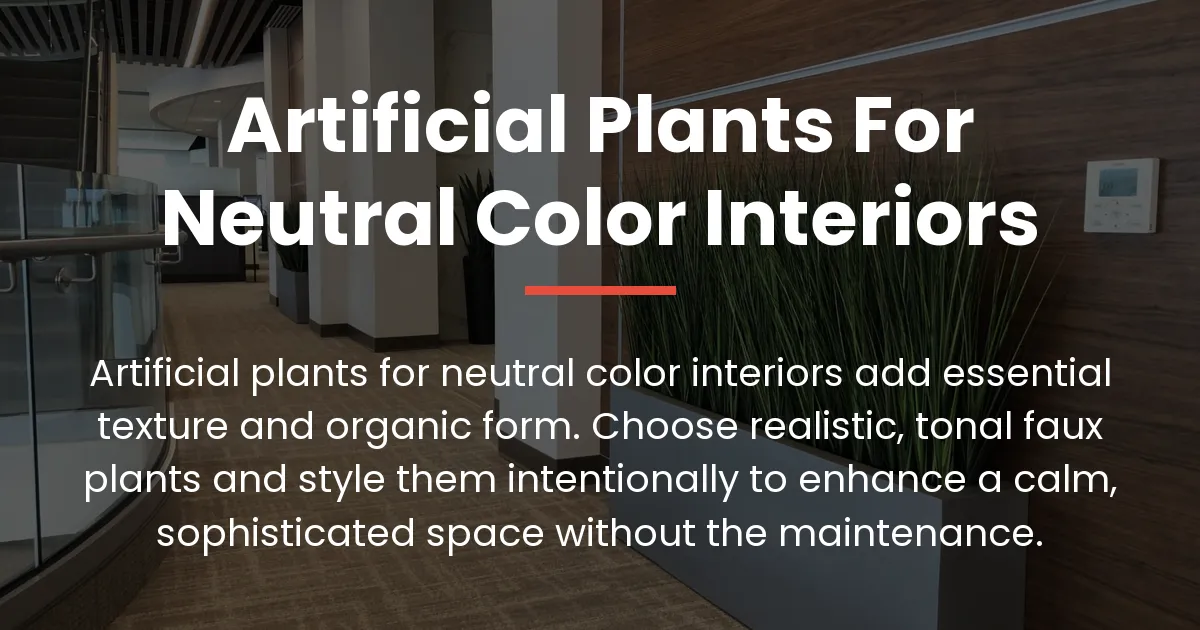
Choosing artificial plants for a neutral color interior is a smart design decision that goes beyond simple decoration. In a space defined by calm beiges, soft greys, and clean whites, these permanent botanical elements become the stars of the show. They introduce vital texture, organic shapes, and a touch of life without disrupting your serene palette. This guide will show you exactly how to select, place, and style artificial plants to make your neutral space feel designed, intentional, and beautifully alive.
Why Neutral Interiors Need Organic Forms
A room decorated in neutral tones creates a peaceful and sophisticated backdrop. The magic, however, lies in what you layer on top of that canvas. Without variation in texture and form, a neutral space can feel flat or sterile.
This is where artificial plants become a powerful tool. They provide the permanent, fuss-free organic forms that a neutral scheme craves. Unlike a bright, colorful room where patterns and hues compete for attention, a neutral interior lets the intricate veins of a faux monstera leaf or the graceful curve of a faux olive branch take center stage.
The Biophilic Benefit Without the Hassle
Humans have an innate desire to connect with nature, a concept called biophilia. Real plants bring this benefit, but they also bring the need for sunlight, water, and care. Artificial plants offer a brilliant compromise.
They satisfy our visual need for nature in a completely controlled way. You get the calming, life-giving look of greenery without worrying about it wilting in a dim corner or over your weekend away. This makes them perfect for bringing a sense of the outdoors into any room, regardless of light conditions.
Color as a Background for Texture
Think of your neutral walls, sofa, and flooring as a blank, calming canvas. On this canvas, the detailed texture of a faux fern or the sculptural silhouette of a faux snake plant becomes a masterpiece.
The lack of competing color means every detail in your artificial plant is amplified. The goal shifts from adding a “pop of color” to adding a “pop of texture.” This approach creates depth and interest in a much more subtle and designer-led way.
Choosing Artificial Plants for a Neutral Palette
Not all artificial plants are created equal, especially when they will be a focal point in a quiet room. The key is to move past just looking for something green and instead focus on qualities that enhance your specific space.
Focus on Form and Realism, Not Just Color
This is the most important step. In a neutral room, any flaw in an artificial plant is more noticeable. Your selection should prioritize realistic form and high-quality materials.
Material is the first clue to realism. Look for plants made from silk or high-grade plastics that have botanical accuracy. Touch is important too; better materials have a more natural feel and movement. The form of the plant dictates its design function.
Tall, architectural plants like faux fiddle leaf figs or bird of paradise make bold statements. Trailing plants like faux pothos or ivy introduce softness and movement. Bushy plants like faux boxwood or rosemary add fullness, while sculptural plants like succulents or air plants offer modern, geometric interest.
Tonal Color Choices Within Green
Forget just “green.” To work harmoniously within a neutral palette, think of your plant’s color as an extension of your existing tones.
A sage or olive green introduces a warm, earthy note that pairs beautifully with beiges and creams. A cooler, grey-green eucalyptus or dusty miller complements spaces built on grey and white. Even variegated leaves with hints of cream or white can tie directly into your room’s color story, creating a cohesive and layered look.
Scale and Proportion
A tiny plant on a large, empty shelf will look lost, while an overly large one can overwhelm a delicate side table. Always consider the size of the plant in relation to its future home.
For filling an empty floor corner, choose a tree or large bush that stands at least five feet tall. For styling a dining table or wide console, a broader, medium-sized arrangement works best. Smaller succulents or stems are perfect for layering on bookshelves or beside a bathroom sink.
Placing Artificial Plants in Your Space
Once you have selected the right plants, strategic placement is what transforms them from decorations into integral parts of your room’s design. Think about solving spatial problems and enhancing key areas.
Focal Points and Empty Corners
Use a tall, statement artificial plant to solve a common design issue: the empty corner. A faux olive tree, ficus, or large palm can instantly fill that dead space with life and structure, anchoring the entire room.
Similarly, a striking artificial plant like a large orchid arrangement or a sculptural succulent can act as a natural focal point on a sideboard or entryway console. It draws the eye and creates a sophisticated first impression.
Surface Styling Beyond the Coffee Table
While a coffee table centerpiece is a classic move, don’t stop there. A dining table benefits greatly from a long, low faux floral arrangement or a series of smaller potted plants down the center.
Bookshelves and mantels come alive when you weave in small artificial plants among books and objects. On an entryway table, a welcoming arrangement sets the tone for your home. The key is to group plants with other textured items like books, ceramics, or baskets to create a curated vignette.
Unexpected Spaces
Artificial plants truly shine in rooms where real plants struggle. A bathroom, often humid and low-light, is perfect for a faux fern or orchid on the vanity.
A sun-drenched kitchen windowsill can host faux herbs without the worry of them cooking. A home office gains warmth and personality from a sleek faux plant on the desk, boosting the biophilic benefit without any distraction.
Styling Artificial Plants for a Designed Look
This final layer is what separates a basic setup from a designer-worthy space. It involves the thoughtful details that make your artificial plants look intentional and authentic.
The Importance of the Vessel
The pot or vase you choose is half the design. It must complement both the plant and your interior. A sleek, glossy white vase contrasts beautifully with a green plant in a modern space.
A rough, textured terracotta pot adds organic warmth to a neutral room. A concrete or stone-finish planter reinforces a minimalist, architectural feel. Never leave a beautiful plant in the cheap, plastic grower pot it came in.
Creating Spatial Balance
Use artificial plants as a tool to visually balance your furniture and architecture. Place a substantial faux tree or large floor plant beside a bulky sofa to visually “weigh down” that side of the room.
Use a trailing plant on a high shelf to soften a sharp corner or draw the eye along a blank wall. This strategic placement makes the room feel more harmonious and complete.
Composing with Tonal Layers
For an advanced, cohesive look, compose your plant within a tonal vignette. Pair a grey-green faux eucalyptus stem with a grey ceramic vase and a beige linen napkin.
Place a faux pothos in a cream pot next to a stack of neutral-toned books and a wooden bowl. This method creates a pocket of pure texture and subtle color variation that feels incredibly deliberate and serene.
Frequently Asked Questions
Can artificial plants look good in a minimalist neutral interior?
Absolutely. In fact, they are ideal. Minimalist design relies on clean lines, intentional pieces, and a lack of clutter. A single, perfectly chosen artificial plant in a high-quality, neutral pot acts as a living sculpture. It adds the necessary organic form and texture without the visual noise or maintenance requirements of many decorative items.
How do I clean dust from artificial plants in my home?
Regular dusting is essential for maintaining realism. For most plants, use a hairdryer on a cool, low setting to blow loose dust away outdoors. For more stubborn dust, lightly wipe leaves with a slightly damp microfiber cloth. For delicate silk flowers, a soft-bristle makeup brush or a can of compressed air works perfectly.
Are there artificial plants to avoid in neutral color schemes?
Generally, avoid plants with overly bright, unnatural-looking greens or garish, non-botanical flower colors like neon pink. These can look cheap and clash with a serene palette. Also, be wary of plants with obviously plastic, shiny leaves, as they reflect light in an unnatural way and detract from the sophisticated feel you want.
Can I mix artificial plants with real ones in the same room?
Yes, this is a fantastic strategy. Mixing high-quality faux plants with real ones adds depth and makes the artificial ones even more convincing. Use real plants in spots with ideal light, and place artificial plants in darker corners or harder-to-reach spots to ensure greenery is evenly distributed throughout your space.
What is the best way to secure a tall artificial plant in a pot?
To prevent tipping and add stability, fill the base of your decorative pot or planter with heavy materials. Use stones, pebbles, or sand. Then, place the plastic grower pot inside and pack more sand or foam around it to hold it firmly in place. This gives the plant a solid, grounded appearance.
How often should I change or rearrange my artificial plants?
Unlike seasonal decor, your core artificial plants can stay in place for years. However, rearranging them occasionally, or swapping a few between rooms, can refresh your space without new purchases. You can also update smaller filler elements, like swapping faux berry stems for faux seeded eucalyptus, to reflect different seasons.
Do artificial plants work in a neutral bathroom or kitchen?
They work exceptionally well in these spaces. Bathrooms and kitchens often have challenging conditions like steam, humidity, or temperature swings that can stress real plants. A faux plant thrives here, adding a permanent touch of life to a vanity, shelf, or countertop without any concern for its well-being.
Where can I find high-quality, realistic artificial plants?
Focus on specialty home decor retailers, both online and in-store, that emphasize design and realism over low cost. Look for detailed product photos and customer reviews that specifically mention how real the plant looks. While they may be an investment, one or two high-quality pieces will look far better than many cheaper, less realistic options.
Selecting and styling artificial plants for neutral color interiors is a thoughtful way to enhance your home’s design. By prioritizing realistic form, tonal texture, and intentional placement, you move beyond simple decoration. You use these permanent botanical elements to introduce balance, warmth, and organic beauty into your calm sanctuary. Embrace them as key components of your design, and enjoy the lasting, hassle-free life they bring to your space.