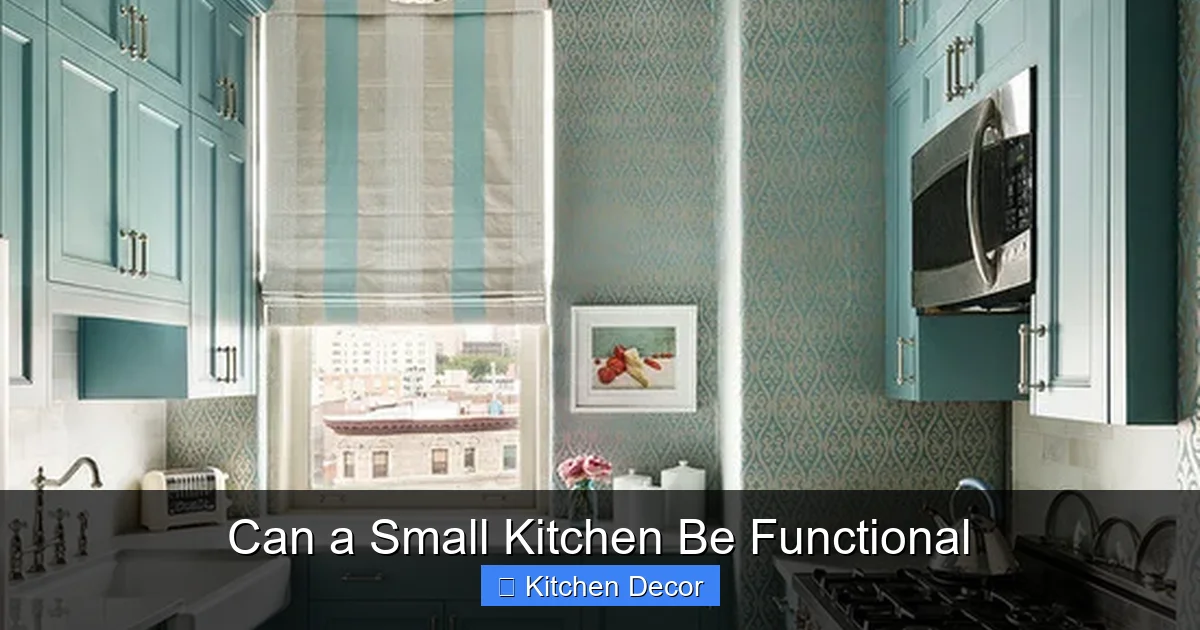
Don’t let limited square footage cramp your culinary style! This guide proves that a small kitchen can be incredibly functional and efficient. Discover practical strategies to maximize every inch, from vertical storage and smart layouts to multi-functional appliances, ensuring your compact space works perfectly for your cooking needs. With clever planning and thoughtful design, you’ll see how easily a small kitchen can be functional and a joy to use, proving that size truly doesn’t limit its potential.
Can a Small Kitchen Be Functional
The dream kitchen for many conjures images of sprawling islands, double ovens, and endless counter space. But for a significant number of us, reality presents a more compact picture: a small kitchen. You might be looking around your cozy cooking area and wondering, “Can a small kitchen be functional? Is it even possible to create delicious meals and entertain guests without feeling utterly overwhelmed by the lack of space?” The answer, without a doubt, is a resounding YES! This comprehensive guide is here to transform your perspective and show you exactly how to make your small kitchen not just functional, but also efficient, organized, and even beautiful.
Having a small kitchen doesn’t mean sacrificing your culinary ambitions or living with perpetual clutter. In fact, compact spaces often inspire more creative and thoughtful design solutions. By the end of this guide, you will have a clear, step-by-step roadmap to assess your current space, optimize every inch, and implement smart strategies that prove a small kitchen can be functional, delightful, and perfectly suited to your lifestyle. Let’s dive in and unlock the full potential of your compact culinary hub!
Key Takeaways
- Declutter Ruthlessly: The first step to a functional small kitchen is to remove anything non-essential, creating immediate space and clarity.
- Maximize Vertical Space: Look up! Walls, cabinet interiors, and even space above doors offer valuable storage opportunities that are often overlooked in compact kitchens.
- Embrace Multi-Functional Items: From appliances that do double duty to furniture with hidden storage, choosing items that serve more than one purpose is crucial for small spaces.
- Optimize Layout and Workflow: Arrange your kitchen into logical zones (prep, cook, clean) and ensure pathways are clear, allowing for smooth, efficient movement despite limited space.
- Prioritize Lighting and Aesthetics: Bright lighting, light colors, and thoughtful decor can make a small kitchen feel larger, more inviting, and undeniably more functional.
- Choose Compact, Efficient Appliances: Select appliances specifically designed for smaller footprints, or multi-functional units, to save precious countertop and floor space.
- Maintain Ongoing Organization: A truly functional small kitchen requires consistent effort to keep things tidy, ensuring everything has a home and clutter doesn’t resurface.
Step 1: Assess Your Current Space and Needs
Before you buy a single organizer or paint a wall, the most crucial first step is to understand what you’re working with and what you truly need. This foundational assessment will guide all your subsequent decisions, ensuring that every change contributes to making your small kitchen be functional.
Declutter Ruthlessly
This is often the most impactful first step. A small kitchen quickly becomes dysfunctional when it’s overflowing with unnecessary items. Be honest with yourself about what you truly use. Do you really need six different spatulas? When was the last time you used that novelty ice cream maker? If an item hasn’t been used in a year, is broken, or doesn’t bring you joy, it’s time to let it go. Donate, sell, or discard. Less stuff means more space, instantly making your small kitchen be functional.
- Tip: Tackle one cabinet or drawer at a time to avoid feeling overwhelmed.
- Example: Remove duplicate utensils, unused small appliances, expired food, and rarely used serving dishes.
Map Out Your Workflow
Think about how you move through your kitchen when you’re cooking. Most kitchen tasks fall into three zones: prep (cutting, mixing), cooking (stove, oven), and cleaning (sink, dishwasher). A functional small kitchen will have these zones in a logical sequence. Observe your movements and identify bottlenecks. Where do you find yourself constantly reaching, stretching, or moving items?
- Tip: Draw a simple floor plan and mark your main appliances (sink, stove, fridge). Then, draw lines showing your path during a typical cooking session.
- Example: If your cutting board is far from both the sink and the stove, that’s a workflow issue to address.
Identify Storage Gaps
After decluttering, you’ll have a clearer picture of what remains and where it *should* go. Walk through your kitchen and note areas that are underutilized or completely ignored. Is there empty space above your cabinets? A blank wall? The back of a cabinet door? These are potential goldmines for making your small kitchen be functional.
- Tip: Take photos of your kitchen from different angles. You might spot opportunities you missed during an in-person walkthrough.
- Example: A narrow gap next to the fridge might be perfect for a pull-out spice rack.
Step 2: Optimize Storage Solutions
Storage is the cornerstone of any functional kitchen, especially when space is at a premium. Creative and efficient storage solutions can dramatically increase your small kitchen’s capacity without adding square footage. This is where you truly start to see how a small kitchen can be functional.
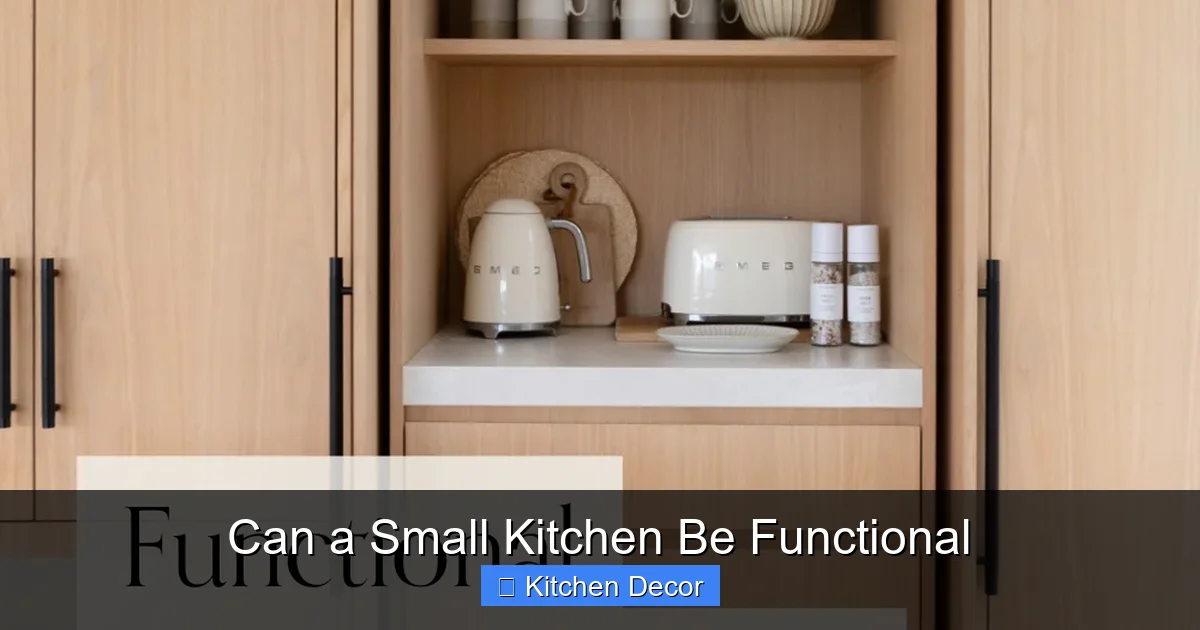
Visual guide about Can a Small Kitchen Be Functional
Image source: images.squarespace-cdn.com
Go Vertical
When you can’t go out, go up! Vertical space is often the most underutilized asset in a small kitchen. Look at the full height of your walls and cabinets.
- Stacking Shelves: Add shelves inside cabinets to create more layers for plates, bowls, or spices.
- Cabinet Risers: Use risers to stack mugs or small bowls, freeing up valuable shelf space.
- Above Cabinets: If you have space between the top of your cabinets and the ceiling, use it for storing infrequently used items or decorative pieces.
- Pantry Over-the-Door Organizers: These are fantastic for spices, wraps, or small cooking tools.
Utilize Wall Space
Walls are more than just structural elements; they are prime real estate for making your small kitchen be functional.
- Magnetic Knife Strips: Frees up drawer space and keeps knives safely accessible.
- Pegboards: Highly customizable for hanging pots, pans, utensils, and even small shelves.
- Floating Shelves: Offer open storage for frequently used items or decorative elements, adding visual lightness.
- Pot Racks: Hanging pots and pans above an island or even along a wall frees up cabinet space.
Smart Cabinet Interiors
Don’t let the depths of your cabinets become black holes of forgotten items. Intelligent inserts and organizers are key.
- Pull-Out Drawers/Shelves: Convert deep cabinets into easily accessible storage, especially for heavy pots or small appliances.
- Lazy Susans: Perfect for corner cabinets or pantries, making everything visible and reachable.
- Drawer Dividers: Keep utensils, gadgets, and spices neatly organized and prevent them from jumbling together.
- Under-Sink Organizers: Maximize the often-awkward space under the sink for cleaning supplies.
Embrace Multi-Purpose Furniture
Every piece of furniture in a small kitchen should earn its keep by serving multiple functions.
- Kitchen Carts/Islands on Wheels: These can serve as extra prep space, storage, and even a serving station. Roll them away when not in use.
- Drop-Leaf Tables/Bars: Extend for dining or extra counter space when needed, fold down to reclaim floor space.
- Benches with Storage: If you have a dining nook, a bench can offer seating and hidden storage.
Consider Open Shelving (with caveats)
Open shelves can make a small kitchen feel more expansive and less cluttered than closed cabinets. However, they demand impeccable organization. Only display items that are attractive and frequently used. If you’re not meticulous about keeping things tidy, open shelving can quickly become visual clutter.
Step 3: Enhance Countertop Efficiency
Countertop space is precious in any kitchen, but it’s gold in a small one. Maximizing its efficiency is vital for a small kitchen to be functional.
Visual guide about Can a Small Kitchen Be Functional
Image source: onekindesign.com
Prioritize Essential Appliances
Resist the urge to keep every gadget out. Only the appliances you use daily or almost daily should live on your countertop. Store less frequently used items in cabinets or a pantry.
- Tip: If you only use your toaster once a week, put it away after each use.
- Example: A coffee maker might stay out, but a blender used for smoothies twice a month can be stored.
Portable Prep Zones
When permanent counter space is limited, create temporary zones.
- Cutting Boards Over the Sink: Maximizes prep space and allows scraps to be easily pushed into the drain.
- Stove Top Covers/Boards: Convert your stovetop into extra counter space when not in use.
- Rolling Carts: As mentioned, these can be wheeled over to your main prep area when you need extra room.
Integrated Solutions
Think about solutions that integrate into your kitchen’s existing structure.
- Built-in Appliance Garages: If remodeling, consider a cabinet that can hide small appliances behind a retractable door.
- In-Drawer Knife Blocks: Keep knives safe and off the counter.
Step 4: Master Lighting and Aesthetics
Design elements play a surprisingly large role in how a small kitchen feels and functions. A well-lit, visually appealing small kitchen can feel larger, more inviting, and therefore, more functional.
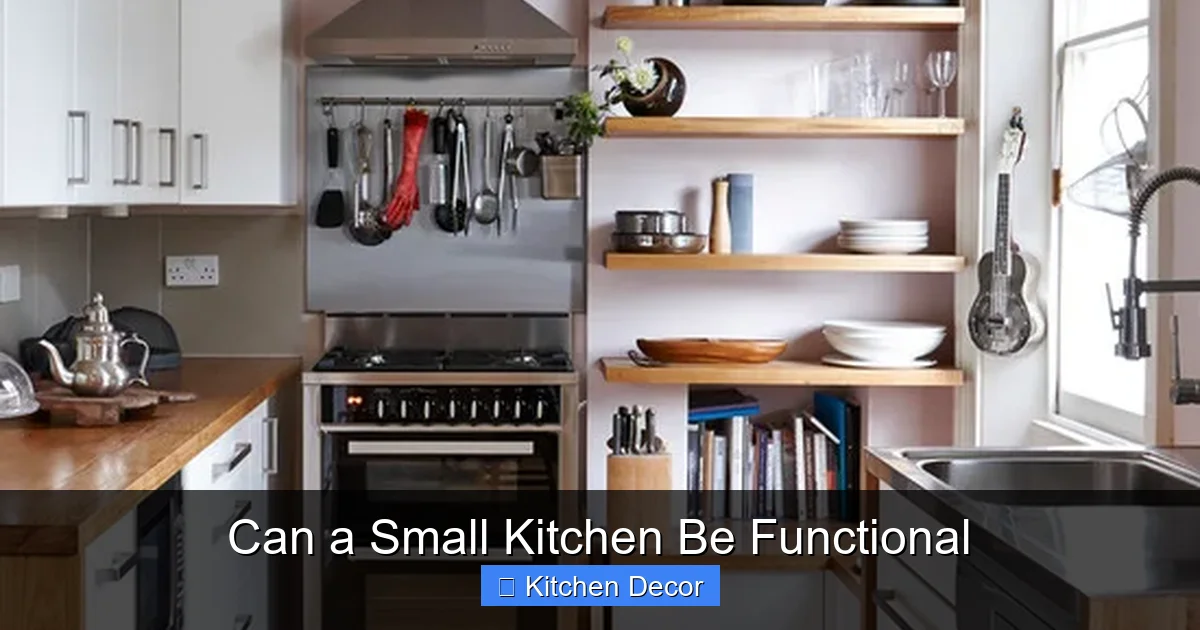
Visual guide about Can a Small Kitchen Be Functional
Image source: stylemotivation.com
Brighten with Light
Good lighting can make a small space feel open and airy.
- Task Lighting: Install under-cabinet lighting to illuminate prep areas, eliminating shadows and making tasks easier.
- Ambient Lighting: Overheads, flush mounts, or track lighting provide general illumination.
- Natural Light: Keep windows unobstructed. If privacy is an issue, opt for sheer curtains or blinds that can be pulled up completely.
Strategic Color Choices
Light colors tend to reflect light, making a room feel larger and more open. This is particularly effective in ensuring a small kitchen can be functional and visually appealing.
- Walls and Cabinets: Opt for whites, light grays, pastels, or other pale hues.
- Monochromatic Schemes: Using different shades of the same color can create a seamless look, preventing the eye from stopping at harsh contrasts.
Mirrors and Reflective Surfaces
Mirrors are a classic trick for expanding a space visually. While a full wall mirror might be too much, consider small reflective elements.
- Mirrored Backsplash Tiles: Can add sparkle and bounce light around.
- Stainless Steel Appliances: Their reflective surfaces also contribute to a sense of openness.
- Glass Cabinet Doors: Allow the eye to see through, reducing the visual weight of cabinets.
Thoughtful Decor
Even a small kitchen can benefit from personal touches, but moderation is key.
- Minimalist Approach: Choose a few key pieces that you love rather than cluttering surfaces with many small items.
- Greenery: A small plant or herb garden can add life and freshness.
- Consistent Style: Sticking to a cohesive style prevents the space from feeling disjointed and chaotic.
Step 5: Choose Appliances Wisely
The right appliances are fundamental to ensuring a small kitchen can be functional. Don’t compromise on efficiency or capability just because you have limited space. Smart choices make all the difference.
Compact & Built-In Options
Many manufacturers now offer appliances specifically designed for smaller footprints.
- Narrow Refrigerators: Available in 24-inch widths, perfect for apartment-sized kitchens.
- Drawer Dishwashers: Seamlessly integrate into cabinetry and take up less vertical space.
- Combination Microwave/Hood Vents: Frees up counter space by combining two essential functions.
- Induction Cooktops: Sleek, energy-efficient, and easy to clean, they can sometimes be covered for extra prep space when not in use.
Multi-Functional Appliances
The less counter space an appliance takes up, the better. Look for items that serve multiple purposes.
- Convection Toaster Ovens: Can bake, toast, and sometimes air fry, reducing the need for a full-sized oven for small meals.
- Food Processors with Blender Attachments: Combines two tools into one base.
- Instant Pots/Multi-Cookers: Pressure cook, slow cook, sauté, steam – all in one pot.
Energy Efficiency
Smaller appliances often mean less energy consumption, which is good for your wallet and the planet. Look for ENERGY STAR ratings.
Step 6: Implement Smart Layout Strategies
While you might not be able to knock down walls, you can still optimize your existing layout. A well-planned layout is essential for ensuring a small kitchen can be functional and easy to navigate.
The Galley Layout
This is often the most efficient layout for narrow spaces. It features two parallel countertops or a counter and a wall of tall cabinets. It creates a compact “work triangle” (fridge, sink, stove) that’s highly efficient.
- Tip: Ensure adequate clearance between the two sides (at least 3 feet) for comfortable movement.
L-Shape Efficiency
An L-shaped kitchen utilizes two adjacent walls, keeping the center open. This provides good workflow and often allows for a small dining area or an island if space permits.
- Tip: Corner solutions (Lazy Susans, pull-out shelves) are vital in this layout to prevent wasted space.
U-Shape (if space allows)
A U-shaped kitchen offers the most counter and storage space. While challenging in truly tiny kitchens, if you have three contiguous walls, it can be extremely functional. This layout requires careful planning to ensure the “U” doesn’t become too narrow.
Consider a Kitchen Island (Portable)
A fixed island is usually out of the question for a small kitchen. However, a small, rolling kitchen cart or island can provide that valuable extra prep and storage space. It can be moved out of the way when not needed or even serve as a mobile serving station.
Step 7: Maintain Organization for Long-Term Functionality
Implementing all these strategies is a fantastic start, but maintaining them is what truly makes a small kitchen be functional in the long run. Organization is not a one-time event; it’s an ongoing practice.
A Place for Everything
Once you’ve decluttered and organized, make sure every single item has a designated “home.” When you’re done using something, put it back immediately. This prevents clutter from accumulating.
- Tip: Label shelves or bins if it helps family members remember where things go.
Regular Decluttering
Even after your initial purge, new items inevitably creep in. Schedule a mini-decluttering session once a month or quarterly. Quickly go through drawers and cabinets to remove anything that no longer serves a purpose.
Habit Formation
The most powerful tool for maintaining organization is forming good habits. Wash dishes immediately after use, wipe down counters daily, and put groceries away systematically. These small habits add up to a consistently functional and tidy small kitchen.
Troubleshooting Common Small Kitchen Challenges
Even with the best intentions, you might run into specific roadblocks. Here are solutions to common small kitchen woes that can prevent your small kitchen from being functional.
What if I have absolutely no wall space left?
If walls are full or non-existent (e.g., rentals with strict rules), focus heavily on cabinet interiors and multi-purpose items. Look for under-shelf baskets, stackable containers, and items that can hang from cabinet doors. Maximize storage *inside* your existing structures. Even space above your refrigerator can be used for a shallow shelf or basket.
My budget is tiny – what’s the first thing I should do?
Start with ruthless decluttering. It costs nothing but time and provides immediate space. Then, focus on inexpensive organizers like drawer dividers, stacking shelves, and hooks. DIY open shelving from inexpensive lumber can also be a budget-friendly option. A truly functional small kitchen doesn’t require a huge investment.
How do I deal with visual clutter when everything has to be out?
If you have open shelving or minimal closed storage, embrace a cohesive aesthetic. Store similar items together (e.g., all white dishes). Use uniform containers for dry goods. A limited color palette for visible items can also reduce visual chaos. The goal is “curated” rather than “cluttered.”
I cook a lot, but my kitchen is tiny. How can a small kitchen be functional for an avid chef?
For serious cooks in small spaces, focus on the “work triangle” and premium, compact appliances. Invest in a high-quality, portable induction cooktop for extra burners. Prioritize superior knives and multi-functional tools over single-use gadgets. A large, sturdy cutting board that fits over your sink is a game-changer. Consider a compact, high-performance stand mixer that can be stored away. Your small kitchen can be functional for serious culinary pursuits with the right tools and strategic storage.
Conclusion
You started this guide asking, “Can a small kitchen be functional?” Hopefully, by now, you not only have your answer but also a comprehensive plan to achieve it. A small kitchen is not a limitation; it’s an opportunity for creativity, efficiency, and smart design. By systematically decluttering, optimizing every inch of storage, making thoughtful choices about appliances and layout, and maintaining ongoing organization, your compact cooking area can easily become a hub of culinary activity and joy.
Remember, the goal is not just to fit everything in, but to create a space that works for you, simplifies your cooking routine, and feels welcoming. Embrace the challenge, implement these strategies, and discover just how incredibly functional, efficient, and beautiful your small kitchen can truly be. Happy cooking!