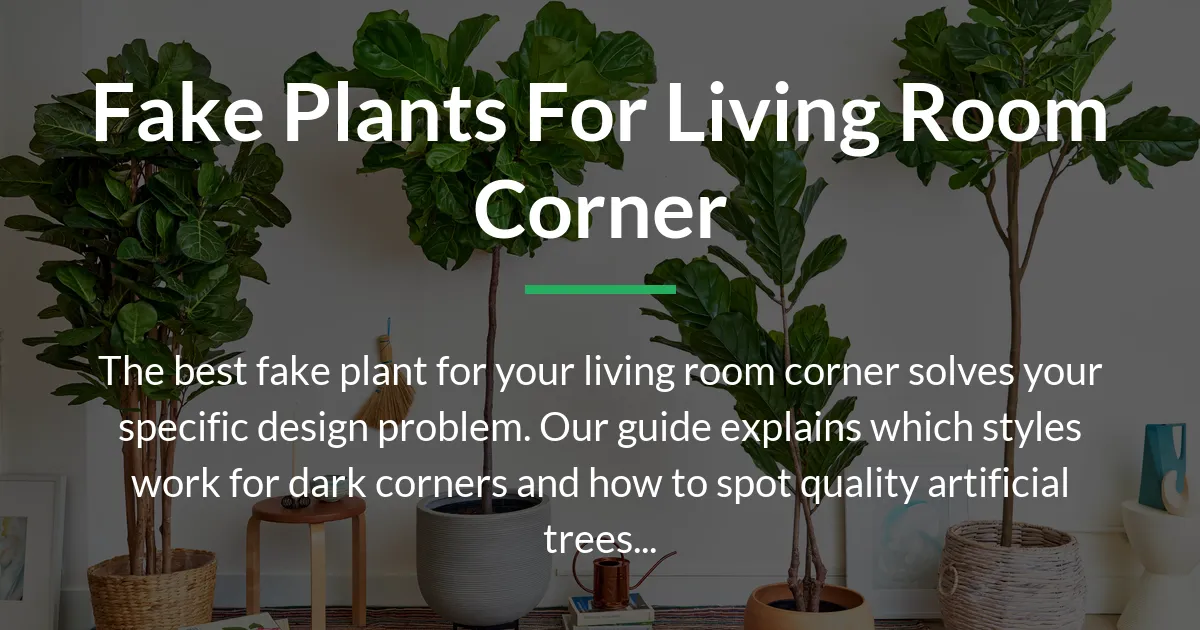
Choosing fake plants for a living room corner is a smart move for a space that needs life without the light or care. The right artificial plant can transform that empty corner from a forgotten spot into a stylish focal point, but only if you pick the correct one. This guide moves beyond simple lists to show you how to select, evaluate, and style a fake plant that perfectly fits your space and looks believably real.
Choosing a Fake Plant for Your Living Room Corner
The best fake plant for your living room corner is one that solves your specific spatial and design problem. An empty corner is more than just a spot to fill; it’s a design opportunity. The wrong plant can look out of place or cheap, while the right one adds balance, texture, and height exactly where you need it.
Start by looking at the corner itself. Is it a dark space beside a bookshelf or a bright, sunlit nook? Is the room’s style modern and minimal or cozy and boho? The plant you choose should be a direct response to these conditions. A tall, skinny plant fights for attention in a large, open corner, just as a short, bushy one gets lost behind your sofa.
Think about what the corner needs most. Often, the goal is to add vertical interest, which means height is your primary concern. Other times, you might need to soften a harsh angle or add a pop of color. By defining the corner’s problem first, you can narrow your search to the plant styles that offer the best visual solution.
What to Think About Before You Buy
Consider the scale of your room and furniture. A plant that is too small will seem timid, while one that is too large can overwhelm the space. A good rule is that your fake plant should reach at least two-thirds the height of your ceiling or a nearby piece of furniture, like a tall lamp or the arm of a chair.
Next, consider the plant’s shape and leaf density. A plant with a sparse, open silhouette works well in a tight corner where you don’t want to block light or movement. A plant with full, dense foliage is better for filling a large, empty void or creating a privacy screen. Matching the plant’s natural form to your room’s style makes it look intentional.
Best Fake Plant Styles for Corner Spaces
Not all artificial plants work the same way in a corner. Each popular style brings a different feeling and solves a different design challenge. Here are the best options explained by their purpose, not just their name.
Tall and Structural: Fiddle Leaf Fig and Olive Trees
A Fiddle Leaf Fig tree is a classic choice for a reason. Its large, broad, and graphic leaves create a strong visual anchor. This plant works beautifully in a modern or minimalist living room corner, where its clean lines and bold shape make a clear statement. It commands attention without being fussy.
An artificial Olive Tree offers a more relaxed, Mediterranean vibe. The silvery-green leaves and often twisted trunk add organic texture. This style is perfect for softening a contemporary space or complementing a rustic or boho decor theme. It brings a sense of weathered, natural beauty that feels timeless.
Vertical and Airy: Dracaena and Birds of Paradise
The Dracaena, or Yucca plant, is the expert at dealing with tight spaces. Its growth is vertical, with spiky leaves erupting from a central trunk. This form is ideal for a narrow corner beside a piece of furniture, like a console table or an armchair, because it adds height without creating a wide, bulky obstacle.
A Bird of Paradise plant brings a dramatic, tropical flair. Its large, banana-like leaves stretch out horizontally from a central stem, creating a wide, fan-like shape. This makes it perfect for a large, empty corner where you want to create a lush, full look. It fills horizontal space beautifully, making it feel like a true indoor jungle corner.
Full and Tropical: Areca Palms and Monstera
An Areca Palm is the go-to for instant fullness. Its many fronds, each with numerous small leaflets, create a dense, feathery volume. This type of plant is fantastic for filling a large, barren corner with softness and movement. It provides a lush backdrop that feels welcoming and alive.
A large, floor-standing Monstera Deliciosa, with its unique split leaves, makes a bold artistic statement. Its sculptural leaves are a focal point on their own. This plant suits a corner that needs a touch of modern jungle drama, working well in spaces with eclectic, global, or contemporary decor. It’s more about interesting shape than sheer volume.
How to Spot a High Quality Artificial Plant
Knowing the best styles is half the battle; the other half is judging quality from a product photo or description. A high-quality fake plant uses better materials and construction to avoid that plastic, obviously-fake look, especially in daylight.
The term “real touch” is common but vague. True quality comes from the blend of materials. The best artificial plants often mix silk, polyethylene, and latex to replicate the varied texture of real leaves—some soft, some waxy. Look closely at product images: high-quality leaves have subtle color variations, realistic vein detailing, and a matte or semi-matte finish that doesn’t reflect light like shiny plastic.
Inspecting the Trunk and Construction
A plastic trunk is a dead giveaway of a cheap plant. Seek out options that use a natural wood trunk or a highly realistic molded material that mimics bark texture. Some better faux Olive Trees or Ficus trees even incorporate twisted, realistic trunks that look like they were taken from a real tree, adding immense credibility.
Stability is crucial for a tall floor plant. A good quality plant will have a substantial, weighted pot or base to prevent tipping. In the description, look for mentions of a “cement-filled” or “weighted” planter. This not only adds safety but also gives the plant a more substantial, planted feel.
For corners that get any sun, UV resistance is a key feature. UV-resistant materials are treated to resist fading from sunlight exposure. If your chosen corner is near a window, prioritizing this feature will keep your plant looking vibrant for years, making it a smarter long-term investment.
Arranging Your Fake Plant in the Corner
Placing your plant is just the first step; styling it is what makes it look integrated and real. The goal is to create a composed vignette, not just drop a pot on the floor.
Start with the planter. The plain plastic pot it comes in often lets it down. Place the entire plastic pot inside a larger, more decorative basket, ceramic pot, or woven planter. This adds texture, style, and helps the plant feel grounded. Leave a little space around the inner pot, and fill that gap with Spanish moss, dried reindeer moss, or even crumpled paper to hold it steady and hide the plastic rim.
Layering and Final Touches
To make the corner look truly intentional, layer your fake plant with other decor items. Place a small stack of coffee table books beside the base, or lean a piece of framed art against the wall behind it. You can also add a textured throw blanket over a nearby chair or a small basket on the floor to build a cohesive look.
Lighting can be your secret weapon. A small, warm-toned floor lamp or a directed spotlight can create beautiful shadows through the leaves, adding depth and realism. Crucially, it can also help reduce any unwanted plastic sheen by washing the plant in a soft, natural-looking light instead of harsh overhead lights.
Dust is the enemy of realism. Gently clean the leaves every few weeks with a microfiber cloth or a soft duster to keep them looking fresh. For a deeper clean, you can use a hairdryer on a cool setting or a can of compressed air to blow dust out of dense foliage without damaging the leaves.
Frequently Asked Questions
Can you put fake plants in a sunny corner?
Yes, but you should choose a UV-resistant artificial plant. Regular fake plants can fade and become brittle in direct sunlight over time, so checking for this feature is important for sunny spots.
How do you clean dust from artificial leaves?
Use a soft microfiber cloth, a feather duster, or a hairdryer on the cool setting to blow dust away. For a deeper clean, you can wipe leaves gently with a damp cloth.
What size fake plant is best for a living room corner?
A tall artificial plant, generally between 5 to 7 feet, is often best for a living room corner. It should be proportionate to your ceiling height and nearby furniture to properly fill the vertical space.
Are fake plants safe for homes with pets?
Yes, fake plants are generally safe for pets as they are non-toxic. However, you should still prevent pets from chewing on them, as plastic or silk materials can pose a choking hazard or cause intestinal blockage if ingested.
How do you make a fake plant look more real in its pot?
Hide the plastic nursery pot by placing it inside a larger decorative planter. Then, cover the visible top soil with real or preserved moss, decorative stones, or even a layer of real potting soil to complete the authentic look.