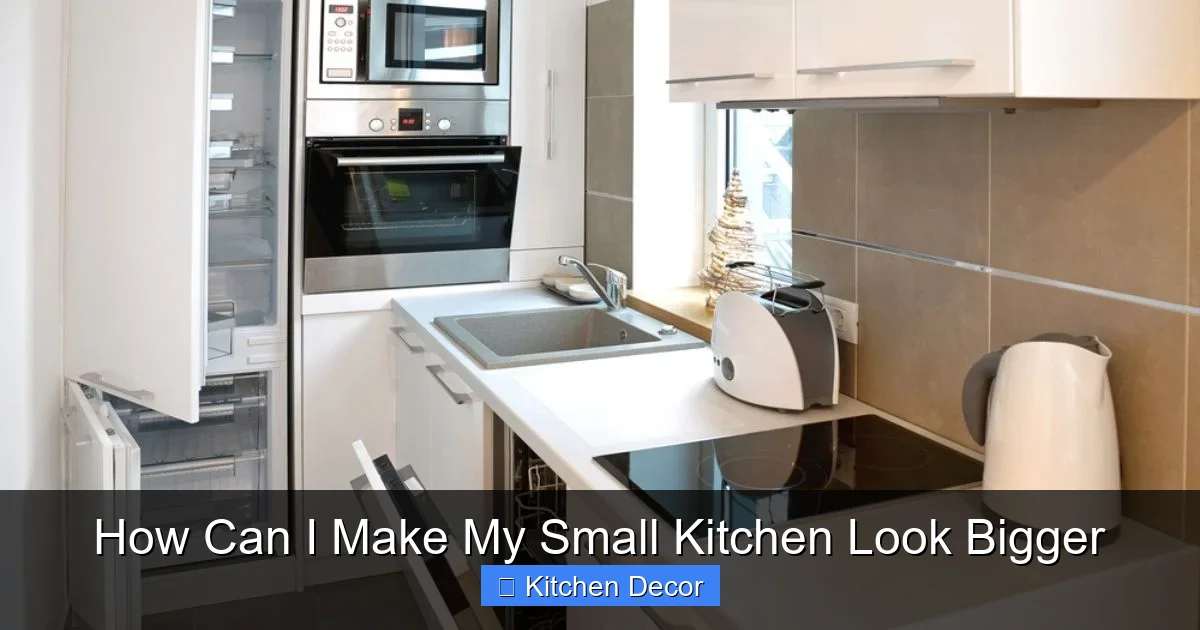
Transforming a small kitchen into a spacious-feeling haven is entirely achievable with strategic design choices. This guide will show you how to declutter ruthlessly, harness the power of light colors and smart lighting, and implement innovative storage solutions. By choosing space-saving furniture and incorporating reflective elements, you can effectively make your small kitchen look bigger and more functional, enhancing both its aesthetic appeal and usability.
Ever feel like your kitchen is shrinking? It’s a common dilemma, but you don’t need a sledgehammer or a moving truck to solve it. With clever design strategies and smart choices, you can dramatically change how your small kitchen feels. The goal isn’t to physically expand your walls, but to create the illusion of more space, making your kitchen feel brighter, airier, and far more functional. This comprehensive guide will walk you through practical, step-by-step methods on how can I make my small kitchen look bigger, transforming it into a space you’ll love spending time in.
We’ll cover everything from decluttering and optimizing light to smart storage solutions and strategic decor. Each tip is designed to help you maximize every inch and create a sense of openness. Get ready to rethink your small kitchen and unlock its full potential!
Key Takeaways
- Declutter Ruthlessly: The most impactful first step is to remove all unnecessary items, creating visual space and making your small kitchen look bigger instantly.
- Embrace Light Colors and Reflective Surfaces: Use white, light grays, and pastels on walls, cabinets, and backsplashes, paired with reflective materials like glass and mirrors, to bounce light and expand the perception of space.
- Optimize Lighting: Maximize natural light and layer artificial lighting (ambient, task, accent) to eliminate shadows and brighten every corner, making the kitchen feel more open and inviting.
- Implement Smart, Vertical Storage: Utilize vertical space with tall cabinets, wall-mounted solutions, and clever drawer organizers to keep countertops clear and provide ample storage without taking up floor space.
- Choose Space-Saving Appliances and Furniture: Opt for smaller footprint appliances, counter-depth refrigerators, and multi-functional furniture like collapsible tables or slim islands to ensure everything fits proportionally.
- Incorporate Glass and Mirrors Strategically: Glass cabinet fronts and well-placed mirrors can create depth and reflect light, effectively tricking the eye into believing the space is larger than it is.
- Maintain a Minimalist Decor Style: Keep decorative items to a minimum and choose pieces that are either functional or add subtle visual interest without contributing to clutter, ensuring the kitchen always feels open.
Step 1: Declutter and Organize Ruthlessly
Before you even think about paint colors or new cabinets, the most crucial first step to make your small kitchen look bigger is to declutter. Clutter is the enemy of small spaces, making them feel cramped and chaotic. A clean, organized kitchen automatically appears larger and more inviting.
Remove Everything from Surfaces
Start by taking everything off your countertops, refrigerator top, and any open shelves. Seriously, everything. This gives you a blank canvas and immediately shows you how much space you actually have when it’s clear. You might be surprised by the immediate visual expansion.
Purge Unnecessary Items
Go through every single item. Ask yourself: “Have I used this in the last year?” “Do I really need this?” “Do I have duplicates?” Be honest! Get rid of broken items, expired foods, and gadgets you rarely use. Donate, sell, or discard items that don’t serve a purpose or bring you joy. This might include that bread maker you used once or the excessive collection of coffee mugs. Less stuff means more visual space, which is key to making your small kitchen look bigger.
Categorize and Contain
Once you’ve purged, group similar items together. Store everyday essentials within easy reach and lesser-used items in less accessible spots. Use drawer dividers, cabinet organizers, and stackable containers to keep things tidy. Every item should have a designated home. When everything is organized, it’s easier to maintain a clutter-free environment, contributing significantly to a sense of openness.
Step 2: Embrace Light Colors and Reflective Surfaces
Color plays a massive psychological role in how we perceive space. Light colors reflect light, making walls recede and spaces feel more expansive. Dark colors absorb light, making rooms feel cozier but also smaller and more enclosed. This is a fundamental strategy when trying to make your small kitchen look bigger.

Visual guide about How Can I Make My Small Kitchen Look Bigger
Image source: organisemyhouse.com
Paint Walls and Ceilings Light
Opt for white, off-white, light gray, or very pale pastels (like a soft blue or mint green) for your walls. Painting the ceiling the same light color as the walls, or even a shade lighter, can make the room feel taller. A cohesive, light color scheme blurs the lines of the room, creating an uninterrupted flow that visually stretches the space.
Choose Light-Colored Cabinetry
Just like walls, light-colored cabinets are transformative. White, cream, or light gray cabinets reflect light beautifully and blend seamlessly with light walls, creating a continuous look. This eliminates visual breaks that can make a kitchen feel chopped up and confined. If new cabinets aren’t in the budget, consider painting your existing ones.
Select Light Countertops and Backsplashes
Continue the light theme with your countertops. White, light quartz, or pale laminate surfaces will keep the kitchen feeling open and bright. For backsplashes, opt for light-colored subway tiles, glass tiles, or even a simple painted finish. A uniform, light backsplash that extends to the ceiling can also draw the eye upwards, enhancing the feeling of height and helping to make your small kitchen look bigger.
Consider Integrated or Light Appliances
If possible, choose appliances that blend into your cabinetry. Integrated dishwashers and refrigerators disappear behind cabinet panels, creating a seamless look. If not, opt for stainless steel or white appliances that reflect light or maintain the bright aesthetic. Avoid bulky, dark appliances that can dominate a small space.
Step 3: Optimize Lighting
Light is a magic wand for small spaces. A well-lit kitchen feels larger, more inviting, and more functional. Poor lighting creates shadows and dark corners, making a room feel cramped and enclosed. Mastering your kitchen’s lighting is a powerful way to make your small kitchen look bigger.
Maximize Natural Light
First, make the most of any natural light you have. Keep window treatments minimal – think sheer blinds, light curtains, or no curtains at all if privacy isn’t an issue. Keep windows clean to allow maximum light penetration. If privacy is a concern, consider frosted glass or top-down/bottom-up blinds.
Layer Artificial Lighting
Don’t rely on a single overhead light. Instead, create layers of light:
- Ambient Lighting: This is your general overhead light. Recessed lighting is excellent for small kitchens because it’s flush with the ceiling and doesn’t take up visual space. A single, minimalist flush mount fixture can also work.
- Task Lighting: Essential for functionality. Under-cabinet lighting is a game-changer. It illuminates your countertops, making food prep safer and more enjoyable, while also brightening dark corners. LED strip lights are a popular and energy-efficient choice.
- Accent Lighting: Use small lights to highlight specific areas, like a piece of art or open shelving. This adds depth and visual interest without overwhelming the space.
Use Bright, White Light Bulbs
Choose light bulbs with a color temperature of 3500K-5000K (cool white to daylight). These mimic natural light and make colors appear truer, contributing to a brighter, more open feel. Warm, yellow light (2700K) can make a small kitchen feel cozier, but also smaller.
Step 4: Implement Smart Storage Solutions
When you have limited square footage, clever storage is non-negotiable. Getting items off your countertops and organized within cabinets and drawers is vital to maintain a sense of openness and to make your small kitchen look bigger. Every inch counts!
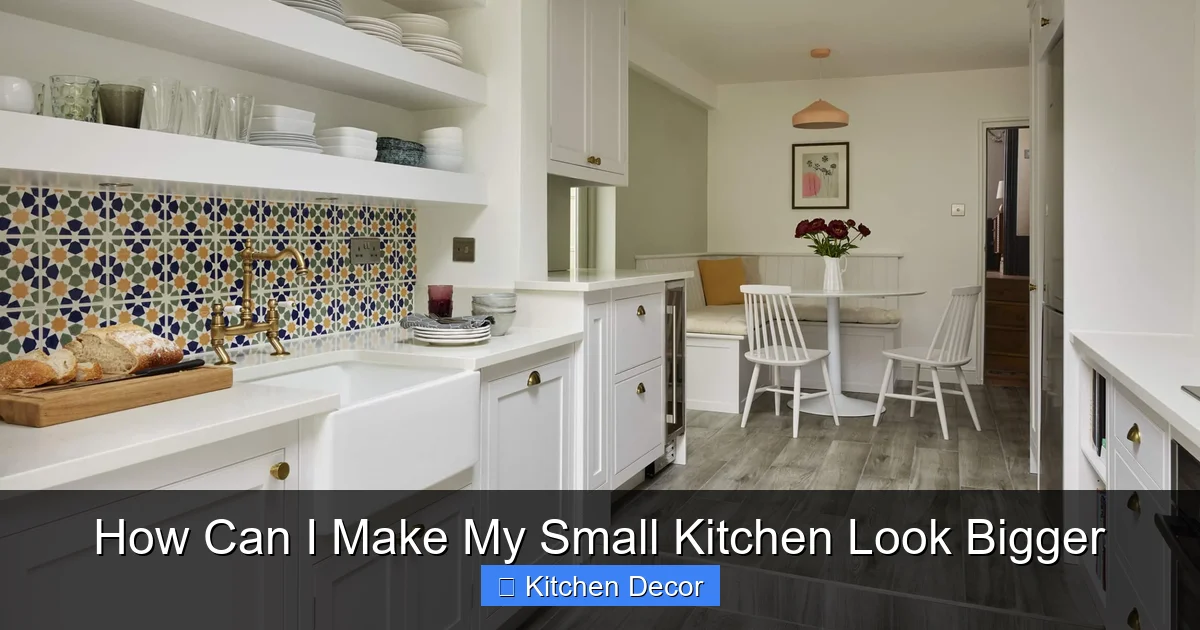
Visual guide about How Can I Make My Small Kitchen Look Bigger
Image source: harveyjones.com
Go Vertical with Storage
Look up! Maximize vertical space by installing cabinets that go all the way to the ceiling. This provides additional storage and creates a streamlined, custom look that makes the walls appear taller. Use the higher shelves for items you don’t use every day, perhaps with a small step stool nearby.
Utilize Cabinet and Drawer Organizers
- Pull-out shelves: These make reaching items at the back of deep cabinets much easier.
- Drawer dividers: Keep utensils, spices, and small tools neatly organized.
- Lazy Susans: Perfect for corner cabinets or pantries, allowing easy access to jars and bottles.
- Vertical dividers: Store baking sheets, cutting boards, and platters on their sides, saving space and making them easy to grab.
- Over-the-door organizers: Use the inside of cabinet doors for spice racks, foil dispensers, or dishcloth holders.
Consider Wall-Mounted Storage
Free up countertop and drawer space by using your walls efficiently:
- Magnetic knife strips: Keep knives safely stored and easily accessible.
- Wall-mounted pot racks: If your kitchen ceiling is high enough, a small, sleek pot rack can be both functional and decorative.
- Pegboards: A versatile solution for hanging utensils, small pots, or even open shelves.
- Floating shelves: Use these sparingly and strategically for aesthetically pleasing items (see Step 7).
Multi-Functional and Hidden Storage
Every piece of furniture or accessory in a small kitchen should ideally serve multiple purposes. A kitchen island with built-in drawers or shelves, or a bench with storage underneath, are excellent examples. Think about kick-plate drawers for shallow storage or a pantry with sliding doors to save swinging space. Keeping things tucked away significantly helps to make your small kitchen look bigger and less cluttered.
Step 5: Choose Space-Saving Furniture and Appliances
Large, bulky items can quickly overwhelm a small kitchen. Opting for appropriately sized furniture and appliances is crucial for maintaining an open feel and ensuring functionality. This step is about making smart choices for your biggest investments to make your small kitchen look bigger.
Opt for Smaller Footprint Appliances
While a full-sized refrigerator might seem necessary, a counter-depth model can save precious inches and create a more integrated look. Consider 24-inch wide dishwashers instead of 30-inch, or compact microwaves that can be built into cabinets or placed on a shelf rather than taking up counter space. If you’re a single person or small family, a smaller refrigerator might be perfectly adequate.
Consider Slimline or Island Alternatives
Traditional kitchen islands can be space hogs. Instead, consider:
- Butcher block carts: These are movable, often have shelves or drawers, and can be tucked away when not in use.
- Narrow islands: Some manufacturers offer very slim islands designed for small spaces.
- Fold-down tables: A table that folds against the wall when not in use is a brilliant space-saver for eating or prep.
- Console tables: A narrow console table can serve as extra counter space or a breakfast bar.
Select Furniture with Legs
If you have a small dining area in your kitchen, choose tables and chairs with slender legs. This allows light to pass underneath and creates an illusion of open space, unlike solid bases which can feel heavy and block the view. Clear acrylic chairs are also excellent for disappearing into the background.
Step 6: Incorporate Mirrors and Glass
Mirrors and glass are secret weapons in the quest to make your small kitchen look bigger. They reflect light and create depth, fooling the eye into perceiving a larger space.
Glass-Front Cabinet Doors
Replace solid cabinet doors with glass-front alternatives. This allows you to see into the cabinets, creating an impression of depth. It also reflects light, further brightening the room. If you choose this option, be sure to keep the contents of those cabinets tidy and organized, as they will be on display. Clear or frosted glass both work well, depending on your preference for display versus subtle reflection.
Strategically Placed Mirrors
A well-placed mirror can work wonders. Consider:
- Mirrored backsplash: This can reflect the entire room, dramatically expanding the perceived space. However, be mindful that it will also show splatters more readily. Use it in a less messy zone, perhaps above a serving area.
- Mirrored panels: Integrate mirrored panels into the side of an island or on a cabinet door.
- Decorative mirror: A framed mirror on a wall can act as a piece of art while also reflecting light and expanding the room. Place it opposite a window if possible to maximize natural light reflection.
Reflective Accessories
Beyond large surfaces, incorporate smaller reflective elements. Stainless steel appliances, chrome fixtures, glossy tiles, and even polished metallic accents can catch and bounce light around the room, adding to the overall brightness and openness. These small touches contribute significantly to helping make your small kitchen look bigger.
Step 7: Strategic Decor and Styling
The final touches in your kitchen’s decor can either enhance its spaciousness or undo all your hard work. Think carefully about every item you bring into the space.
Embrace Minimalism
Less is more. Resist the urge to over-decorate. A few carefully chosen, functional, or aesthetically pleasing items are better than many small trinkets that contribute to clutter. Keep countertops as clear as possible, with only essential and attractive items like a stylish utensil holder or a fresh plant.
Use Vertical Lines
Just like painting walls to the ceiling, incorporating vertical lines can draw the eye upwards, making the ceiling seem higher. This can be achieved through:
- Vertical shiplap or beadboard: On an accent wall or backsplash.
- Tall, slender shelving units: If using open shelving, opt for narrow, vertically oriented units.
- Long, flowing curtains: If you have windows, hang curtains high and let them fall to the floor.
Open Shelving (Used Wisely)
Open shelving can make a kitchen feel less heavy than solid upper cabinets. However, it’s a double-edged sword. If not styled carefully, it can quickly become cluttered. Use open shelves for a few attractive, everyday items like matching dishware, clear glass jars of staples, or cookbooks. Avoid overcrowding and keep items neatly stacked or lined. This helps make your small kitchen look bigger by reducing visual bulk.
Incorporate Subtle Patterns and Textures
Avoid busy, large patterns that can feel overwhelming in a small space. Instead, opt for subtle textures or small, repeated patterns. A herringbone tile backsplash, a textured rug, or linen dish towels can add interest without making the room feel smaller. Keep the overall color palette consistent.
Add Greenery
A small plant or herb garden can bring life and freshness into the kitchen without taking up too much space. Choose compact plants like succulents, small herbs, or air plants. The touch of nature can make the space feel more vibrant and welcoming. A well-placed small plant can add a natural touch without obstructing the view.
Troubleshooting Common Mistakes
Even with the best intentions, it’s easy to fall into common traps that can counteract your efforts to make your small kitchen look bigger. Here are a few to watch out for:
- Over-decorating: Too many small knick-knacks or wall hangings can quickly create visual clutter, shrinking the space. Stick to a minimalist approach.
- Ignoring vertical space: Not utilizing cabinets that go to the ceiling or foregoing wall-mounted storage leaves valuable square footage untapped.
- Too much open shelving: While open shelves can be great, filling every wall with them can lead to a messy, unorganized look, making the kitchen feel more cluttered than open. Balance open and closed storage.
- Choosing dark or heavy finishes: Dark countertops, floors, or backsplashes can absorb light and make the room feel much smaller. Stick with light, reflective surfaces wherever possible.
- Poor lighting: A single, dim overhead light creates shadows and makes the kitchen feel gloomy and cramped. Invest in layered lighting to brighten every corner.
- Clutter creep: Even after a good declutter, items can slowly accumulate. Schedule regular mini-decluttering sessions to maintain your open, spacious look.
Conclusion
Transforming your small kitchen into a space that feels expansive and inviting is a journey of thoughtful choices and strategic design. By diligently decluttering, embracing light colors and reflective surfaces, optimizing your lighting, and implementing clever storage solutions, you can dramatically change its appearance. Remember to choose space-saving furniture and appliances, incorporate glass and mirrors, and maintain a minimalist approach to decor.
Each of these steps contributes to a harmonious whole, making your small kitchen look bigger, brighter, and more functional. It’s not just about aesthetics; it’s about creating a more enjoyable and efficient environment for your everyday life. Now, armed with these tips, you’re ready to unlock the full potential of your small kitchen and create the spacious feel you’ve always dreamed of. Enjoy your beautifully expanded kitchen!