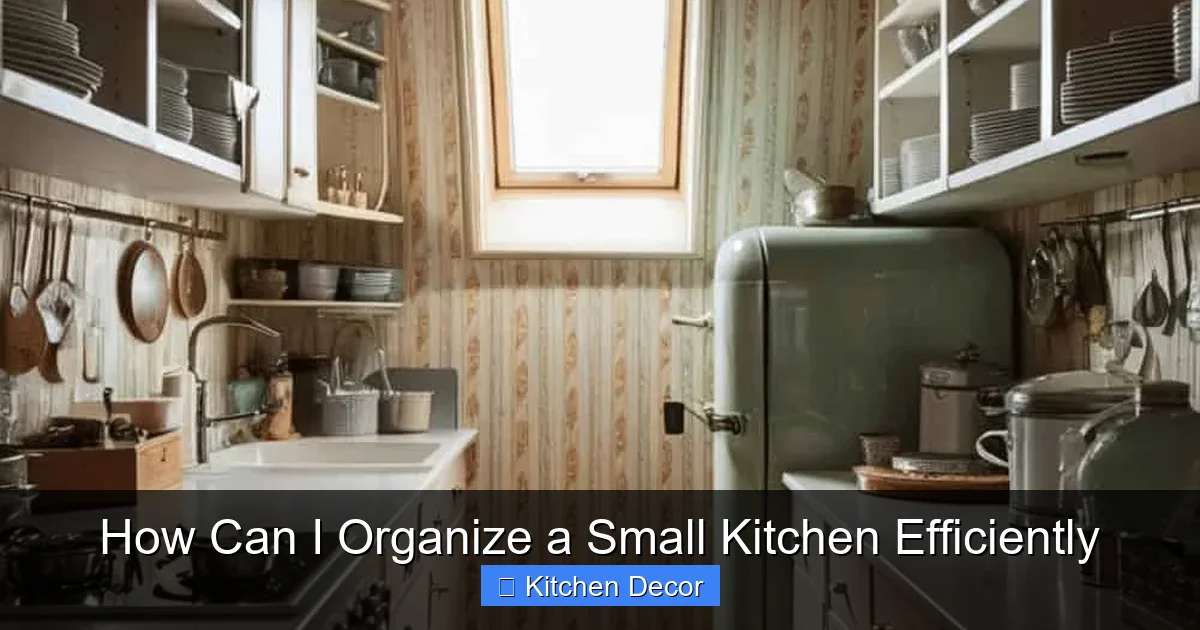
Transform your cramped cooking space into an efficient culinary haven! This comprehensive guide reveals how to organize a small kitchen efficiently through ruthless decluttering, clever storage solutions, and smart zone creation. Discover practical tips to maximize every inch, making your kitchen functional, stylish, and a joy to cook in.
How Can I Organize a Small Kitchen Efficiently
Do you ever feel like your small kitchen is waging a secret war against you? Tiny countertops, overflowing drawers, and cabinets that seem to swallow items whole can turn cooking into a frustrating chore rather than a joyful experience. If you’re nodding your head, you’re not alone! Many of us face the challenge of a compact cooking space, but the good news is that with a little strategy and some clever solutions, you absolutely can organize a small kitchen efficiently.
This comprehensive guide is designed to help you reclaim your kitchen. We’ll walk you through a step-by-step process, from the initial purge to clever storage hacks and sustainable maintenance tips. By the end, you’ll have a kitchen that not only looks great but functions beautifully, making every culinary adventure a delight, no matter its size. Get ready to transform your tiny kitchen into an efficient, organized, and inviting hub of your home!
Key Takeaways
- Declutter Relentlessly: Start by emptying your entire kitchen and making tough decisions about what truly stays. Get rid of duplicates, unused gadgets, and expired items to create a clean slate for efficient organization.
- Create Functional Zones: Divide your small kitchen into dedicated areas for prepping, cooking, storing, and cleaning. This minimizes unnecessary movement and makes daily tasks smoother and more intuitive, even in limited space.
- Utilize Vertical Space: Don’t overlook walls and cabinet interiors. Install shelves, magnetic strips, pot racks, and over-the-door organizers to store items vertically, freeing up precious countertop and drawer space.
- Optimize Cabinet & Drawer Interiors: Maximize every inch inside your cabinets and drawers with smart inserts, dividers, pull-out shelves, and stackable containers. Group similar items to maintain order and easy access.
- Implement Smart Countertop Strategies: Keep countertops as clear as possible by only displaying frequently used, aesthetically pleasing items. Use multi-functional appliances and designated trays to contain clutter and maintain a sense of spaciousness.
- Master Pantry & Food Storage: Decant dry goods into clear, airtight containers, label everything, and use shelf risers to make the most of pantry space. Organize food logically to prevent waste and simplify meal prep.
- Maintain Consistent Habits: Organization is an ongoing process. Establish daily tidy-up routines, a “one-in, one-out” rule, and regular mini-purges to ensure your small kitchen remains efficiently organized and a pleasure to use.
Step 1: The Grand Purge – Decluttering with a Vengeance
Before you even think about buying another organizer or rearranging a single item, you must tackle the biggest hurdle: clutter. Trying to organize clutter is like trying to rearrange a messy junk drawer – it just moves the mess around. To truly organize a small kitchen efficiently, you need to be ruthless. This step is about making tough decisions and letting go.
Empty Everything Out
This might sound daunting, but it’s essential. Take everything out of your cabinets, drawers, pantry, and off your countertops. Place items on your dining table, a portable island, or even the floor. Seeing everything laid out in one place gives you a clear picture of what you actually own. It’s often surprising how many items accumulate.
The “Keep, Donate, Toss” Rule
Now, go through each item, one by one, and place it into one of three piles:
- Keep: These are items you use regularly, love, and are in good condition.
- Donate/Sell: These are items that are still functional and in good shape, but you no longer use or need. Think duplicate utensils, rarely used appliances, or dishes you’ve replaced. Someone else could benefit from them!
- Toss/Recycle: These are broken items, expired food, worn-out sponges, or anything truly unusable. Be honest with yourself.
Practical Tip: Be especially critical of kitchen gadgets. Do you really use that avocado slicer or specialized garlic chopper more than once a year? If not, it’s probably contributing to clutter. For small kitchens, multi-functional tools are gold.
Be Realistic About Usage
When deciding what to keep, ask yourself these questions:
- When was the last time I used this? (If it’s been over a year, seriously consider letting it go.)
- Do I have duplicates? (You probably don’t need three spatulas or five mismatched mugs.)
- Is this item essential for how I cook and eat?
- Does this item bring me joy or serve a practical purpose?
Remember, the goal is to only bring back items that truly earn their spot in your limited kitchen space. This initial purge is the foundation for learning how to organize a small kitchen efficiently.
Step 2: Zone In – Creating Functional Areas
Once you’ve decluttered, the next step in learning how to organize a small kitchen efficiently is to create zones. Even in a tiny kitchen, designating specific areas for different tasks can drastically improve workflow and make your space feel larger and more manageable. Think of your kitchen as a series of mini-workstations.

Visual guide about How Can I Organize a Small Kitchen Efficiently
Image source: i.pinimg.com
Prep Zone
This is where the magic happens – chopping, mixing, and getting ingredients ready. Ideally, this zone should be near your sink for washing produce and possibly near your fridge for easy access to ingredients. Keep your cutting boards, knives, mixing bowls, and frequently used prep utensils (peelers, whisks) in this area.
- Example: A small section of countertop with a knife block, a stack of cutting boards in a stand, and a drawer underneath for measuring cups and spoons.
Cooking Zone
This area revolves around your stove and oven. You’ll want to store pots, pans, baking sheets, and cooking utensils (spatulas, ladles, tongs) here. Spices should also be within easy reach. The less you have to walk back and forth with hot items, the safer and more efficient your cooking will be.
- Example: A cabinet directly below or next to the stove for pots and pans, a drawer nearby for cooking utensils, and a wall-mounted spice rack or a small shelf above the stove.
Storage Zone
This is where you keep your non-perishable food items, dishes, glassware, and less frequently used small appliances. This zone might encompass your pantry (if you have one), upper cabinets, and perhaps a dedicated corner. Grouping similar items makes them easier to find and keeps your kitchen tidy.
- Example: Upper cabinets for plates, bowls, and glasses; a pantry cabinet or shelf for dry goods; a lower cabinet for larger serving dishes or small appliances like a toaster oven.
Cleaning Zone
Typically centered around your sink, this zone houses dish soap, sponges, dish towels, and perhaps a small drying rack. Keeping these items contained and easily accessible makes post-meal cleanup much less of a chore.
- Example: Under-sink organizers for cleaning supplies, a dispenser for dish soap, and hooks for dish towels near the sink.
Defining these zones helps you understand the flow of your kitchen and ensures that items are stored where they are most logically and frequently used. This strategic placement is key to how to organize a small kitchen efficiently.
Step 3: Embrace the Vertical – Walls, Doors, and Shelves
One of the biggest mistakes people make in small kitchens is underutilizing vertical space. When horizontal surface area is limited, you must look up! Maximizing vertical storage is a game-changer for how to organize a small kitchen efficiently.

Visual guide about How Can I Organize a Small Kitchen Efficiently
Image source: shabbyfufu.com
Wall-Mounted Shelving and Racks
Open shelving can be both practical and stylish in a small kitchen. Use it for frequently accessed items like plates, bowls, and glasses, or for displaying aesthetic pieces that add personality. Wall-mounted racks for spices, knives (magnetic strips), or even fruit baskets can free up valuable counter and drawer space.
- Practical Tip: Choose open shelves for items you use daily to avoid them gathering dust. For things used less often, keep them in closed cabinets.
Over-the-Door Organizers
The inside of cabinet doors or even the back of your kitchen entry door can be excellent spots for extra storage. Install a thin spice rack, hooks for measuring cups/spoons, or a small caddy for tin foil and plastic wrap. This is a brilliant way to hide clutter and use otherwise dead space.
- Example: A wire basket attached to the inside of a pantry door for snacks or cleaning supplies.
Magnetic Strips
Beyond knives, magnetic strips can hold small metal spice tins, frequently used cooking utensils, or even small bowls. Mount them on an unused backsplash area or the side of a cabinet. This keeps essentials visible and within arm’s reach without cluttering drawers.
Pot Racks
If you have a sturdy ceiling or a strong wall, a hanging pot rack can be incredibly effective. It frees up cabinet space for other items and makes finding the right pot or pan a breeze. This works particularly well in kitchens with high ceilings.
By thinking vertically, you add layers of storage that keep your countertops clear and make it much easier to organize a small kitchen efficiently.
Step 4: Inside Out – Optimizing Cabinets and Drawers
Once you’ve decided what to keep and where your zones are, it’s time to make the most of your existing storage. Smart interior solutions are crucial for how to organize a small kitchen efficiently.

Visual guide about How Can I Organize a Small Kitchen Efficiently
Image source: shabbyfufu.com
Drawer Dividers and Organizers
Untamed drawers quickly become junk drawers. Invest in adjustable drawer dividers or modular organizer trays to give every item a designated spot. Use them for utensils, cutlery, cooking tools, food storage lids, or even small spices. This keeps things from shifting around and makes items easy to find.
- Example: A custom-fit cutlery tray, or expandable bamboo dividers to separate spatulas from whisks.
Cabinet Shelf Inserts and Risers
Many cabinets have a lot of unused vertical space between shelves. Shelf inserts, risers, and stacking shelves can double or triple your storage capacity. Use them for plates, bowls, cups, or canned goods. This prevents you from having to stack items too high, which makes them unstable and difficult to access.
- Practical Tip: Measure your cabinet height before buying risers to ensure a perfect fit.
Pull-Out Organizers
For deep lower cabinets, pull-out shelves or baskets are game-changers. No more rummaging on your hands and knees for that pot at the very back! These are perfect for pots and pans, cleaning supplies, or even small appliances. They make every item accessible.
Corner Cabinet Solutions
Corner cabinets are notorious for being black holes. Lazy Susans (turntables) are excellent for these spaces, making everything accessible with a spin. You can also find specialized pull-out corner cabinet systems, though these are a bigger investment.
Stacking and Nesting
Whenever possible, choose cookware, bakeware, and food storage containers that stack neatly or nest within each other. This is a fundamental principle for small kitchen organization. Look for pots with removable handles or sets designed for compact storage.
By implementing these interior strategies, you ensure that every inch within your cabinets and drawers is working hard for you, helping you truly organize a small kitchen efficiently.
Step 5: Countertop Command Center – Keeping it Clear but Accessible
In a small kitchen, countertops are precious real estate. The goal is to keep them as clear as possible to maximize your workspace, but still have frequently used items easily accessible. This balance is key to learning how to organize a small kitchen efficiently.
Minimalist Approach
Only keep items on your countertop that you use daily or that are aesthetically pleasing and contribute to the kitchen’s look. Think about your coffee maker, a kettle, perhaps a small fruit bowl, or a knife block. Everything else should find a home in a cabinet or drawer.
- Example: Rather than individual salt and pepper grinders, consider a small set on a tiny tray.
Multi-Functional Items
Choose appliances and tools that serve multiple purposes. A stand mixer with various attachments, or a single powerful blender that can handle smoothies and soups, are better choices than multiple single-purpose gadgets taking up space.
Trays and Baskets
Use small decorative trays or baskets to group similar items on your countertop. This instantly creates a sense of order and makes it easier to clean underneath. For example, a tray for your olive oil, salt, and pepper by the stove, or a small basket for mail and keys (if your kitchen doubles as an entry point).
- Practical Tip: Opt for trays with low sides or open baskets to maintain a light and airy feel.
Appliance Garages
If you have an appliance you use frequently but don’t want permanently displayed (like a toaster or food processor), consider if there’s a cabinet or pantry shelf where it can live and be easily pulled out when needed. A rolling cart that tucks away can also serve as an appliance garage and extra prep space.
A clear countertop instantly makes a small kitchen feel larger, cleaner, and more efficient. It’s a visual trick that pays off immensely when you’re trying to organize a small kitchen efficiently.
Step 6: Pantry Power – Smart Food Storage
Whether you have a dedicated pantry closet, a single pantry cabinet, or just a few shelves for food, optimizing this space is vital for how to organize a small kitchen efficiently. Good food storage prevents waste, simplifies meal prep, and keeps your kitchen tidy.
Decanting Dry Goods
Take items like flour, sugar, pasta, rice, and cereals out of their bulky, often awkwardly shaped packaging and decant them into clear, airtight containers. This instantly creates a uniform look, makes it easy to see what you have, and protects food from pests.
- Practical Tip: Choose square or rectangular containers as they maximize space better than round ones.
Clear Containers
Beyond dry goods, use clear containers for snacks, baking supplies, and even leftovers in the fridge. Being able to see what you have at a glance reduces impulse purchases and forgotten food.
Labeling is Key
Once everything is in containers, label it clearly! Include the item’s name and the expiration date. This is especially important for items like flour or sugar, where different types look similar. A label maker or even simple masking tape and a marker work wonders.
FIFO (First In, First Out)
When stocking your pantry or fridge, always place newer items behind older ones. This ensures you use older food first, preventing spoilage and waste. Regularly rotate items during your grocery trips.
Shelf Risers and Bins
Just like in your cabinets, shelf risers can help maximize vertical space for canned goods or small jars. Utilize small bins or baskets to group similar items like baking supplies, snack bags, or breakfast items. This keeps small items from getting lost and creates a neat appearance.
An organized pantry, no matter how small, is a cornerstone of an efficient kitchen. It saves you time and money, making it easier to prepare meals and reducing stress.
Step 7: The Maintenance Marathon – Keeping it Organized
Congratulations! You’ve put in the hard work to organize a small kitchen efficiently. But organization isn’t a one-time event; it’s an ongoing process. Establishing good habits will ensure your kitchen stays functional and beautiful.
A Place for Everything
Once you’ve designated a home for every item, commit to putting things back in their proper place immediately after use. This simple habit prevents clutter from accumulating. If an item doesn’t have a clear home, reconsider if you truly need it or find a suitable spot.
Regular Mini-Purges
Instead of waiting for a grand overhaul, do mini-purges quarterly or even monthly. Quickly go through a drawer or a single cabinet. Check expiration dates in your pantry, consolidate spices, and identify anything that’s no longer serving its purpose. This keeps clutter from creeping back in.
Daily Tidy-Up
Spend 5-10 minutes each evening wiping down countertops, loading the dishwasher, and putting away any stray items. Waking up to a clean, organized kitchen sets a positive tone for the day and makes cooking more enjoyable.
The “One-In, One-Out” Rule
When you buy a new kitchen gadget, dish, or even a new set of towels, consider if there’s an older item you can donate or discard. This prevents your small kitchen from becoming overwhelmed with new purchases.
Consistency is key. By integrating these small habits into your routine, you’ll find it remarkably easy to maintain your efficiently organized small kitchen, making it a source of joy rather than stress.
Troubleshooting Common Small Kitchen Challenges
Even with the best intentions, small kitchens present unique hurdles. Here are some common problems and how to tackle them when you aim to organize a small kitchen efficiently:
“I have too many gadgets and no space for them!”
This is a classic small kitchen dilemma. Go back to Step 1: the purge. Be extremely honest about how often you use each gadget. If it’s seasonal (like a turkey roaster) and you only use it once a year, consider if you can borrow one, rent one, or if it’s worth the precious storage space. For multi-functional appliances, store attachments in clear bags or small bins within the appliance’s box or a dedicated cabinet.
“My kitchen layout is terrible, and I have no pantry!”
While you can’t change the layout easily, you can create the illusion of a pantry. Utilize a tall, narrow bookcase or shelving unit (even in an adjacent hallway or dining room) for food storage. Use attractive bins and baskets to keep it neat. For truly awkward spaces, custom shelving or a pegboard system can make dead zones functional. Think creatively about unused wall space near doorways or above windows for small, lightweight shelves.
“I share my kitchen, and others aren’t as organized!”
This requires communication and compromise. Have an open conversation about your efforts to organize a small kitchen efficiently and the benefits it brings. Assign specific shelves or drawers to each person if necessary. Start by organizing your own items perfectly, leading by example. Small, labeled bins for individual snacks or belongings can also help maintain order without feeling overly restrictive.
“My small kitchen feels dark and cramped.”
Organization isn’t just about storage; it’s also about creating a pleasant atmosphere. Maximize natural light, keep windows clear, and use light colors for walls and cabinets. Mirrors can visually expand a space. Strategic lighting (under-cabinet lights, task lighting) can make a huge difference. A few well-placed plants or a pop of color can also make the space feel more inviting.
Conclusion
Organizing a small kitchen efficiently might seem like an overwhelming task, but by following these steps, you can transform your challenging space into a highly functional and enjoyable area. Remember, it’s not about magic; it’s about strategic thinking, ruthless decluttering, clever storage solutions, and consistent habits.
You now have the tools to tackle every cabinet, drawer, and countertop. Embrace the process, be patient with yourself, and celebrate each small victory. A well-organized small kitchen will not only make cooking more pleasant but will also reduce stress and bring a sense of calm to your home. So, roll up your sleeves, put on some music, and get ready to create the efficient, beautiful kitchen you’ve always dreamed of!