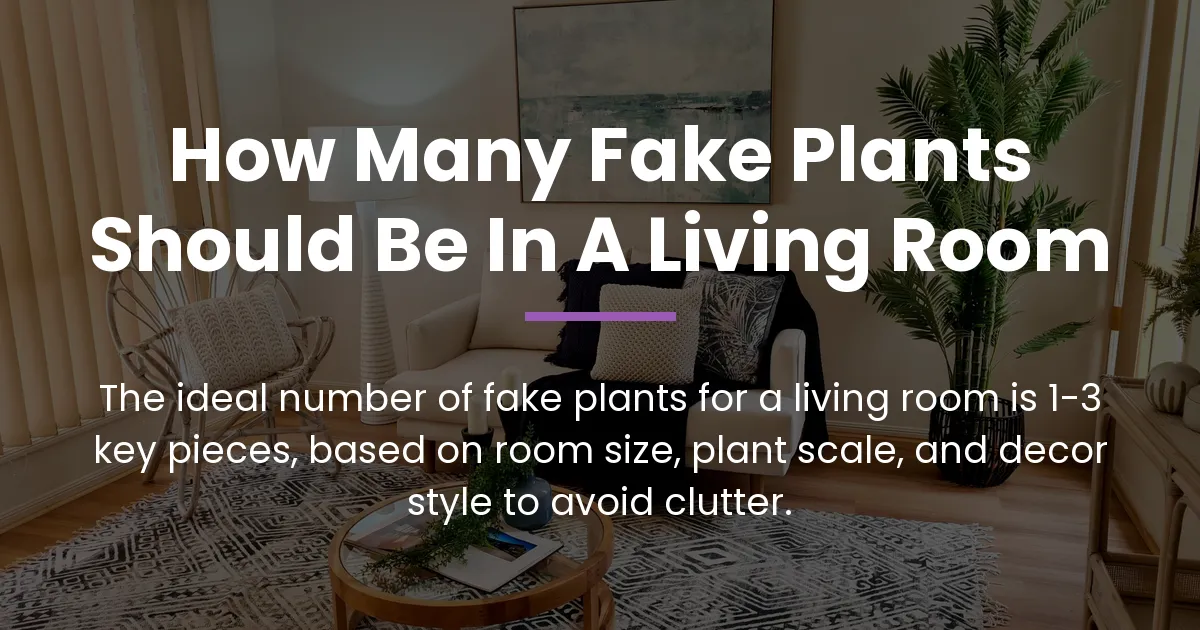
Fake plants bring permanent greenery to your living room without any need for sunlight or water. They are safe for pets and always look alive. But figuring out how many fake plants should be in a living room can be tricky. The perfect number is not a fixed rule. It is a design choice that balances beauty with your space.
How Many Fake Plants Should Be in a Living Room
How many fake plants should be in a living room depends on your specific room, but a useful guideline is to aim for 1 to 3 key pieces. This range works for most standard living rooms to create impact without feeling crowded. The right number comes from understanding visual weight, which is how much attention an object draws based on its size, color, and placement.
This principle helps you avoid a cluttered or sparse look. It turns the question from searching for a magic number into a simple design formula. You start with one to three plants and adjust based on your room’s layout and your personal style.
The Core Principle of Visual Weight
Visual weight is the secret to placing fake plants well. A large, dark green fake tree in a heavy pot has high visual weight. A small, bright succulent in a light vase has low visual weight. Your goal is to distribute this weight evenly across your living room.
Think of your room as a scale. Too many high-weight plants on one side makes the space feel heavy and unbalanced. Too few plants leaves it feeling empty. For an average living room, one statement plant with high visual weight can be enough. Two or three plants with mixed weights often create a more layered and interesting look.
This approach gives you a clear starting point. It moves you away from randomly buying plants and toward intentional decorating. The visual weight of each plant combines with your furniture and decor to create harmony.
What Changes Your Number
The guideline of 1 to 3 plants is a starting point. Several factors will change the exact number that feels right for your home. Your living room size, the plants you choose, and your decor style all play a part.
The Size of Your Living Room
A large, open-concept living room can handle more plants than a small, cozy one. In a big space, three plants might look perfect. In a small room, those same three plants could make it feel cramped. The key is to scale the plants to the room.
For a very large room, you might use multiple statement plants in different corners. In a small room, one medium plant or a few very small accents might be the limit. Always leave enough empty space around furniture and walkways. The plants should fill voids, not block movement.
The Size and Scale of the Plants Themselves
Not all fake plants are created equal. A six-foot fake fiddle leaf fig tree counts as one major piece. A set of six small fake succulents spread on a shelf also counts as one grouping. The physical size and visual impact of each plant change the math.
If you choose one large tree, you might only need that single plant. If you prefer many small ferns and grasses, you could group five or six together as one visual unit. The scale of the plant relative to your furniture matters most. A plant should look like it belongs, not like it is swallowing the sofa or getting lost on a table.
Your Existing Decor Style
A minimalist modern living room might call for just one sculptural fake plant as a focal point. A bohemian or eclectic room might happily host several plants in various sizes and types. Your decor style sets the tone for how many plants feel appropriate.
Look at your current room. If you have lots of patterns, textures, and objects, adding many plants might create visual noise. If your room is very clean and simple, a few well-placed plants can add needed life. The plants should complement your style, not fight against it.
Placing Your Fake Plants
Where you put your fake plants is just as important as how many you have. Good placement ensures each plant is seen and contributes to the room’s flow. Think of your living room in zones and place plants according to their visual weight.
Statement Anchors for Large Corners
Empty corners are perfect for large, tall fake plants like palms or olive trees. These statement anchors draw the eye and give the room structure. One plant in a corner can balance a large piece of furniture on the opposite wall. This placement often means you only need one or two big plants total.
Choose a corner that feels bare or needs height. The plant should be tall enough to fill the vertical space but not so wide it blocks pathways. This turns a dead zone into a focal point with just one item.
Surface Accents for Shelves and Tables
Bookshelves, side tables, and mantels are ideal for smaller fake plants. Use these spots for trailing plants like ivy or bushy plants like ferns. They add layers and breaks up flat surfaces. You can place several small plants here without overwhelming the room.
Space them out. Do not cluster every shelf with a plant. Instead, alternate plants with books, frames, or other decor. This creates rhythm and keeps the look curated, not cluttered. Two or three surface accents are often enough for a standard living room.
Vertical Fillers for Empty Walls and Heights
If you have high ceilings or a blank wall, consider a hanging fake plant or a tall plant in a floor vase. This draws the eye upward and uses often-wasted space. A hanging basket with a fake fern or a tall bamboo palm can add volume without taking up floor space.
This type of placement is especially useful in rooms where floor space is limited. It adds greenery without crowding. One vertical filler can complement your other plant placements and make the room feel fuller.
Choosing Types of Fake Plants
The types of fake plants you choose affect how many you need. Mixing different categories creates a more natural and dynamic look than using multiple copies of the same plant. Think in terms of roles: tall trees, trailing plants, and sculptural pieces.
A tall fake tree, like a fiddle leaf fig or areca palm, acts as a room anchor. A trailing fake pothos or string of pearls adds softness to shelves. A sculptural fake agave or succulent group adds modern texture to a table. Combining one plant from each category often gives a balanced, complete look with just three plants.
This variety mimics how plants grow in nature. It prevents your collection from looking like a store display. Good fake plants have realistic details like varied leaf sizes and natural color gradients. Look for these features to make each plant count visually.
Sustaining the Illusion
Keeping your fake plants looking good long-term is crucial. A dusty, faded plant defeats the purpose. A simple maintenance routine and choosing quality materials from the start make all the difference.
A Realistic Cleaning Routine
Fake plants do collect dust, but managing it is easy. The number of plants you have directly affects how often you need to clean. For one to three plants, a quick dusting every two weeks with a microfiber cloth is enough. For more plants, you might need a weekly once-over.
Use a hairdryer on a cool, low setting to blow dust off delicate leaves. For sturdier plants, a damp cloth works well. Schedule this cleaning when you do other light chores. This keeps your plants always looking fresh and avoids the dreaded “plastic jungle” look.
Investing in Quality Materials
Not all fake plants are equal. Cheap plastic plants often look fake because of uniform color and shiny leaves. Better materials like silk, latex, or polyethylene have more texture and color variation. They look real from a distance and up close.
You do not need to buy the most expensive brand. Look for plants with wired stems you can bend for a natural shape. Check for realistic pot details or be ready to place them in a new, nicer container. A few good-quality plants will always look better than many cheap ones. This investment means you need fewer plants to make a stylish impact.
Fake Plants and Your Space
Fake plants can do more than just decorate. They can contribute to a feeling of wellbeing in your home. This is part of biophilic design, which connects people to nature. Even fake plants can provide a positive impact by adding calming green elements to your view.
Some people worry about the ethics of fake plants. If this concerns you, consider buying second-hand fake plants from thrift stores or online marketplaces. This gives old plants a new life. You can also look for brands that are transparent about their materials. Balancing your desire for greenery with your values might affect how many plants you choose to bring in.
Conclusion
The best answer to how many fake plants should be in a living room is the number that creates balance for you. Start with one to three pieces and see how they feel in your space. Use the principle of visual weight and thoughtful placement to avoid clutter.
Remember that quality beats quantity. A few well-chosen, well-cared-for fake plants will make your living room feel alive and inviting. They add greenery without the work, letting you enjoy the beauty of plants every day.
Frequently Asked Questions
Do fake plants need to be near windows?
No, fake plants do not need light, so you can place them anywhere. However, avoid direct sunlight for long periods as it can fade the colors over time.
Can I mix fake plants with real ones in the same room?
Yes, mixing real and fake plants can work well. Place real plants near light sources and use fake plants in darker corners. This combination gives you more flexibility.
How often should I dust my fake plants?
Dust your fake plants every two weeks for a small collection. If you have more plants or a dusty home, a quick weekly wipe is better. This keeps them looking fresh.
What is the best way to make a fake plant look real?
Put it in a real planter with some soil or moss on top. Bend the stems and leaves into natural positions. Mix it with other real objects like books or wooden decor.
Are expensive fake plants from brands like West Elm worth it?
Often, yes. Higher-priced fake plants usually have better materials and more realistic details. But you can find good-looking fake plants at mid-range prices by checking materials and construction.
Can fake plants improve your mood like real plants?
Studies show that seeing greenery can boost mood. While real plants have added air-purifying benefits, convincing fake plants can still provide a visual lift and sense of calm.
How do I choose the right planter for a fake plant?
Choose a planter that fits the scale of the plant and your room style. A heavy pot adds stability for tall plants. For a real look, use a planter you would use for a live plant.
Is it bad to buy fake plants from a thrift store?
No, buying second-hand fake plants is a great sustainable option. Just give them a thorough cleaning when you get home. You can often find unique, high-quality plants this way.
What is the best large fake plant for a living room corner?
A fake fiddle leaf fig tree, olive tree, or areca palm are excellent choices for corners. They are tall, have good visual weight, and are popular for their realistic looks.
How do I keep my fake plants from fading in sunlight?
Keep them out of direct sunlight. Use curtains or blinds to filter strong light. If fading happens, rotating the plant occasionally can help ensure it fades evenly.