
Unlock the potential of your living room’s underutilized corners! This comprehensive guide offers practical steps and creative inspiration on how to decor a living room corner. From selecting the right furniture to adding personal touches, you’ll learn to transform neglected spaces into functional and stylish focal points that enhance your home’s overall aesthetic.
Transforming a living room can often feel like a grand undertaking, but sometimes the biggest impact comes from the smallest details. One area that is frequently overlooked is the humble living room corner. These often neglected spaces can become awkward voids or simply gathering spots for dust bunnies. But what if we told you that with a little creativity and intention, you could turn any living room corner into a stunning and functional feature?
This comprehensive guide will walk you through the entire process of how to decor a living room corner. We’ll explore everything from understanding your needs to selecting the perfect pieces and adding those finishing touches that make a space truly yours. Get ready to unlock the hidden potential in your home!
Key Takeaways
- Define the Corner’s Purpose: Before decorating, determine if the corner will serve as a reading nook, storage area, display space, or a combination.
- Consider Scale and Proportion: Choose furniture and decor items that are appropriately sized for the corner to avoid overcrowding or making the space feel empty.
- Utilize Vertical Space: Employ tall bookshelves, wall shelves, or hanging plants to draw the eye upward and maximize functionality without taking up floor space.
- Incorporate Lighting: Strategic lighting, such as floor lamps or accent lights, can create ambiance, highlight decor, and make the corner more inviting.
- Add Personal Touches: Incorporate artwork, photographs, and decorative objects that reflect your style and personality to make the corner unique.
- Don’t Forget Comfort: If creating a seating area, prioritize comfort with plush cushions, throws, and an inviting rug.
- Experiment with Color and Texture: Use contrasting colors or varied textures to make the corner a visually interesting element within the room.
Step 1: Assess the Corner and Define Its Purpose
Before you even think about buying a single decorative item, take a moment to truly look at the corner you want to transform. What are its dimensions? What’s the natural light like? More importantly, what do you *want* this corner to do for you and your living room?
H3: Consider Functionality
This is the most crucial step. A well-decorated corner isn’t just pretty; it serves a purpose. Think about your lifestyle and how you use your living room.
* **Reading Nook:** Do you love to curl up with a book? This corner could become your personal sanctuary.
* **Storage Solution:** Is clutter a constant battle? The corner can house stylish shelving or cabinets.
* **Display Area:** Do you have cherished items, artwork, or plants you want to showcase?
* **Seating Area:** Could a small seating arrangement add extra comfort and conversation space to your room?
* **Workstation:** In a pinch, a small desk and chair can create a compact home office.
* **Decorative Focal Point:** Sometimes, the goal is simply to add visual interest and beauty.
H3: Analyze the Space
* **Size:** Is it a tight nook or a more expansive area? This will dictate the scale of furniture you can use.
* **Light:** Does it get natural light? This can influence plant choices and the types of items you display.
* **Traffic Flow:** Ensure your decorated corner doesn’t impede movement through the room.
* **Proximity to Other Furniture:** How will the corner relate to your existing sofa, chairs, and coffee table?
**Practical Tip:** Grab a tape measure! Knowing the exact dimensions will prevent you from buying pieces that are too large or too small.
Step 2: Choose Your Anchor Piece

Visual guide about How to Decor a Living Room Corner
Image source: malenapermentier.com
Once you know the purpose, it’s time to select the main element that will define your corner. This “anchor piece” will set the tone for the rest of your decor.
H3: Seating Options
If your goal is a cozy spot to relax, consider:
* **Accent Chair:** A stylish armchair is a classic choice. Opt for something comfortable with a design that complements your existing furniture.
* **Small Loveseat or Chaise Lounge:** For larger corners or if you want more seating.
* **Floor Cushions and Poufs:** A more bohemian or casual approach, perfect for a reading nook.
**Example:** A plush velvet armchair in a jewel tone can add a pop of color and luxury to a neutral living room corner.
H3: Storage and Display Solutions
For those needing organization or a place to showcase belongings:
* **Bookshelf:** A tall, narrow bookshelf draws the eye upward and offers ample storage and display space.
* **Console Table:** A slim table can house decorative items, a lamp, and perhaps a small basket underneath.
* **Floating Shelves:** These offer a minimalist look and can be arranged creatively to display art, plants, or books.
* **Cabinet or Sideboard:** For more substantial storage needs, a small cabinet can hide clutter while providing a surface for decor.
**Example:** A ladder bookshelf with open shelves allows you to arrange books, framed photos, and small plants in an aesthetically pleasing way.
H3: Decorative and Functional Accents
Sometimes, the anchor isn’t furniture. It could be:
* **A Large Plant:** A statement plant in an attractive pot can add life and color.
* **A Unique Sculpture or Floor Lamp:** A striking piece can be a sculptural element in itself.
**Practical Tip:** Think about the height of your anchor piece. It should be substantial enough to fill the corner without overwhelming it.
Step 3: Layer in Lighting
Visual guide about How to Decor a Living Room Corner
Image source: i.pinimg.com
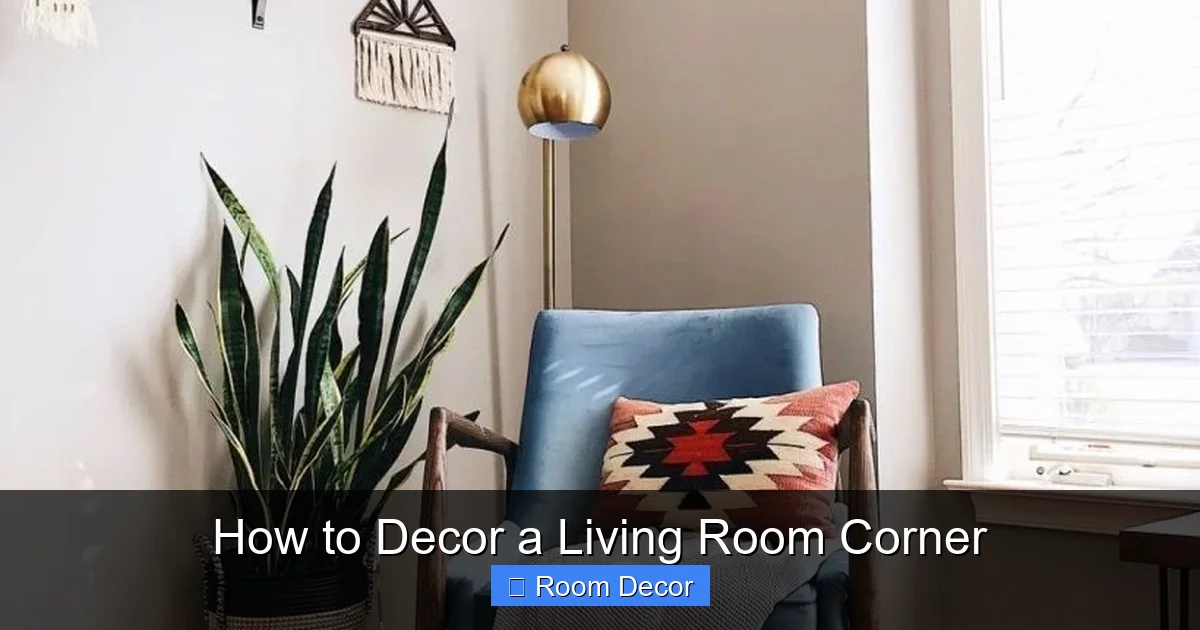
Good lighting is essential for any well-decorated space, and a corner is no exception. Lighting can create ambiance, highlight your decor, and make the area feel more inviting and functional.
H3: Ambient Lighting
This is the general illumination of the corner.
* **Floor Lamp:** A classic choice that provides overhead light and can also be a decorative element. Arc lamps are great for reaching over seating.
* **Wall Sconce:** If you have the option, a wall-mounted sconce can provide subtle illumination without taking up floor space.
H3: Task Lighting
If the corner is for reading or working, you’ll need focused light.
* **Adjustable Table Lamp:** Placed on a console table or next to a chair.
* **Reading Lamp:** Specifically designed to direct light onto a page.
H3: Accent Lighting
This is for highlighting specific items.
* **Picture Lights:** For artwork.
* **Uplighting:** Place a small spotlight at the base of a plant or sculpture to create dramatic shadows and highlight its form.
* **Fairy Lights or String Lights:** Can add a magical, cozy glow.
**Example:** Combine a tall arc floor lamp over an accent chair with a small table lamp on a nearby shelf for a layered lighting effect.
**Practical Tip:** Use warm-toned bulbs (around 2700K) for a cozy and inviting atmosphere, especially in living areas.
Step 4: Add Texture and Comfort
Visual guide about How to Decor a Living Room Corner
Image source: blog.society6.com
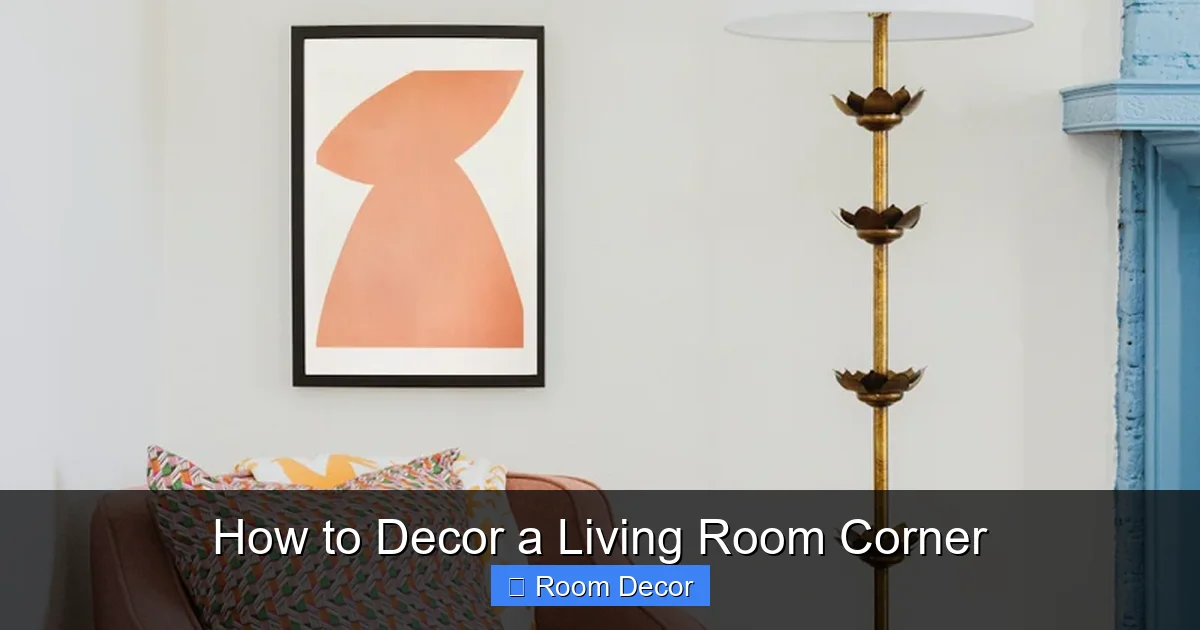
Once the main elements are in place, it’s time to bring in softness, warmth, and visual interest through texture and comfort.
H3: Textiles are Key
* **Throw Pillows:** Even if you don’t have seating, a few well-placed pillows on the floor or a bench can add color and comfort.
* **Throws and Blankets:** Drape a cozy knit throw over an armchair or a stack of blankets in a basket.
* **Rugs:** A small area rug can define the corner as its own zone, add warmth underfoot, and introduce pattern or color. Consider a sheepskin rug for ultimate cozy vibes.
H3: Natural Elements
* **Plants:** Bring life and freshness into the corner. Vary their sizes and types – a tall floor plant, a trailing vine on a shelf, or a small succulent.
* **Wood Accents:** Wooden bowls, picture frames, or small furniture pieces add natural warmth.
* **Stone or Ceramic Decor:** Vases, bowls, or decorative objects can introduce earthy textures.
**Example:** A shaggy faux fur throw over a leather armchair paired with a jute rug underneath creates a rich tapestry of textures.
**Practical Tip:** Mix textures like smooth, rough, soft, and hard to create a more dynamic and appealing look.
Step 5: Personalize with Art and Accessories
This is where your corner truly comes to life and reflects your personality.
H3: Wall Art
* **Gallery Wall:** Arrange a collection of framed photos, prints, or small paintings.
* **Large Statement Piece:** A single, impactful piece of art can anchor the corner.
* **Mirrors:** A mirror can bounce light, make the space feel larger, and add a decorative element. Consider an ornate or uniquely shaped mirror.
H3: Decorative Objects
* **Vases and Bowls:** Display them on shelves or tables, either empty or filled with fresh flowers or decorative fillers.
* **Sculptures and Figurines:** Choose pieces that resonate with your style.
* **Books:** Arrange them artfully on shelves, spines out, or stack them horizontally.
* **Candles:** Add ambiance and a pleasant scent.
* **Personal Memorabilia:** Display cherished items that tell your story.
**Example:** A collection of black and white family photos arranged in a gallery wall above a slim console table, topped with a small sculptural vase.
**Practical Tip:** Don’t over-accessorize. Group items in odd numbers (threes or fives) and vary their heights and shapes for visual interest. Leave some empty space to avoid a cluttered look.
Step 6: Consider a Thematic Approach
To make your corner feel cohesive and intentional, consider a theme. This isn’t about being overly literal, but rather about choosing elements that work harmoniously.
H3: Color Palette
* **Complementary Colors:** Choose colors that are opposite each other on the color wheel to create a vibrant and energetic corner.
* **Analogous Colors:** Select colors that are next to each other on the color wheel for a harmonious and calming feel.
* **Monochromatic Scheme:** Use different shades and tints of a single color for a sophisticated look.
H3: Style Inspiration
* **Bohemian:** Think layered textiles, plants, macrame, and eclectic decor.
* **Mid-Century Modern:** Clean lines, natural wood tones, and geometric patterns.
* **Industrial:** Metal accents, exposed brick (or faux brick), raw wood.
* **Coastal:** Blues, whites, natural fibers, shells, and driftwood.
* **Minimalist:** Focus on essential pieces, clean lines, and a neutral palette.
**Example:** For a bohemian corner, you might choose a floor cushion, a hanging plant, a macrame wall hanging, and a stack of colorful patterned pillows.
**Practical Tip:** Look at your existing living room decor. Your corner should complement, not clash with, the overall style of the room.
Troubleshooting Common Corner Decor Challenges
Even with the best intentions, you might encounter a few hiccups.
H3: My Corner Feels Too Small and Cramped
* **Solution:** Opt for furniture with legs to create a sense of openness. Use mirrors to reflect light and space. Choose lighter colors. Avoid bulky items. Utilize vertical space with wall-mounted shelves instead of floor-standing units.
H3: My Corner Feels Empty and Neglected
* **Solution:** Ensure your anchor piece is substantial enough. Layer in more decor. Consider a taller plant or a floor lamp. Add a rug to ground the space. Don’t be afraid of a statement piece.
H3: The Lighting is Poor
* **Solution:** Introduce multiple light sources. A floor lamp, a table lamp, and perhaps some fairy lights can make a huge difference. Consider plug-in wall sconces if wiring is an issue.
H3: The Decor Doesn’t Match the Rest of the Room
* **Solution:** Re-evaluate your color palette and style. Introduce one or two elements that tie the corner into the main room, like a throw pillow in a similar color or an art print that complements existing artwork. Sometimes, a complete refresh of the corner’s accessories is needed.
Conclusion
Decorating a living room corner is an accessible and rewarding way to enhance your home. By following these steps – from defining its purpose and choosing the right anchor piece to layering in lighting, texture, and personal touches – you can transform any overlooked space into a functional, stylish, and inviting extension of your living room. Don’t be afraid to experiment, trust your instincts, and most importantly, have fun creating a corner that you love!