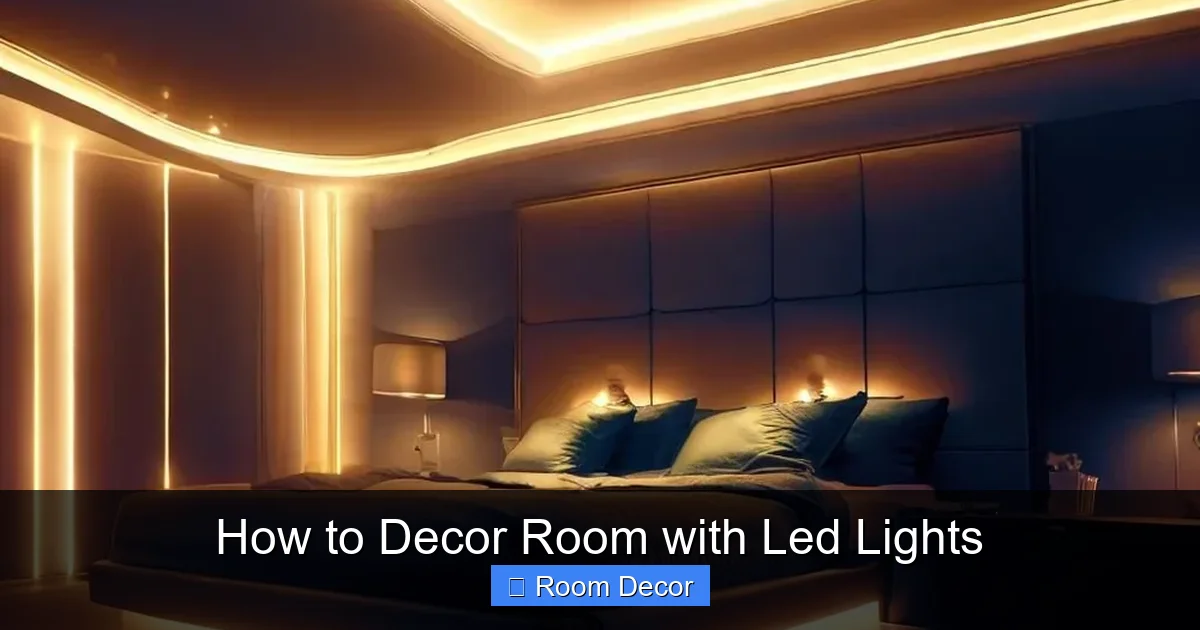
Discover how to dramatically elevate your room’s ambiance with LED lights! This guide provides a step-by-step approach to planning, selecting, and installing various LED lighting solutions. Learn to create mood lighting, highlight features, and personalize your space for a stunning visual impact. Unleash your creativity and make your room shine!
How to Decor Room with LED Lights
Are you ready to transform your living space into a vibrant, dynamic, and utterly personalized sanctuary? Look no further than the magic of LED lights! In this comprehensive guide, we’ll walk you through everything you need to know to decor your room with LED lights, from choosing the perfect type of lighting to mastering installation and creating stunning visual effects. Whether you’re aiming for a cozy, relaxing vibe, a party-ready atmosphere, or a chic, modern aesthetic, LEDs offer an incredibly versatile and energy-efficient solution. Get ready to illuminate your creativity and make your room truly shine!
Key Takeaways
- Understand LED Types: Differentiate between LED strips, bulbs, and smart LEDs to choose the best fit for your decor goals and budget.
- Plan Your Lighting Design: Determine the mood, accent areas, and overall aesthetic you want to achieve before purchasing any lights.
- Master Installation Techniques: Learn how to safely and effectively install LED strips, fixtures, and bulbs for a professional look.
- Utilize Color and Brightness Control: Explore the power of RGB and tunable white LEDs to create dynamic lighting scenes and adapt your room’s atmosphere.
- Troubleshoot Common Issues: Be prepared to fix minor problems like flickering or connectivity issues for a seamless lighting experience.
- Enhance Room Features: Use LED lights to draw attention to artwork, architectural details, or furniture, adding depth and visual interest.
Step 1: Define Your Vision and Purpose
Before you even think about buying a single LED strip or bulb, take a moment to envision what you want to achieve. What’s the primary mood you want to set? Is it a relaxing bedroom retreat, an energetic entertainment space, a focused home office, or a stylish living room for guests?
Consider the Mood
Think about the feelings you want your room to evoke. Warm, soft white light can create a cozy and inviting atmosphere, perfect for bedrooms and living rooms. Brighter, cooler white light is excellent for task lighting or areas where focus is important, like a home office or kitchen. Vibrant colors can inject personality and fun, ideal for entertainment areas or gaming rooms.
Identify Accent Areas
Where do you want to draw attention? Perhaps you have a beautiful piece of artwork you want to highlight, a unique architectural feature like a cove ceiling, or a sleek TV that could benefit from bias lighting. LEDs are fantastic for accentuating these elements.
Think About Functionality
Beyond aesthetics, consider how you’ll use the room. Will you need bright light for reading or hobbies? Do you want the ability to dim the lights for movie nights? Do you want to be able to change the color of the lights to match your mood or the occasion?
Step 2: Choose the Right LED Lights

Visual guide about How to Decor Room with Led Lights
Image source: images.squarespace-cdn.com
The world of LED lighting is vast and exciting. Understanding the different types available will help you select the best options for your room decor.
LED Strips (Tape Lights)
These are arguably the most popular and versatile choice for room decor. LED strips are flexible strips with adhesive backing, making them easy to stick to various surfaces.
* Types of LED Strips:
* Single Color: Available in a wide range of colors (white, red, blue, green, etc.). Perfect for consistent accent lighting.
* RGB (Red, Green, Blue): These strips contain LEDs that can emit red, green, and blue light. By mixing these primary colors, they can produce millions of different colors. You’ll usually control these with a remote or a smartphone app.
* RGBW (Red, Green, Blue, White): An upgrade from RGB, these strips have an additional white LED. This allows for brighter and more pure white light, as well as a wider spectrum of pastel colors.
* Tunable White: These strips allow you to adjust the color temperature of the white light, from warm, cozy amber tones to bright, cool daylight hues. This is excellent for creating different moods throughout the day.
* Brightness (Lumens): Check the lumen output per meter to ensure the strip is bright enough for your needs.
* Density (LEDs per meter): Higher density means more even light output and fewer visible “hot spots.”
LED Bulbs
These are direct replacements for traditional incandescent or CFL bulbs. They come in various shapes, sizes, and connection types (E26/E27, GU10, etc.).
* Smart LED Bulbs: These are Wi-Fi or Bluetooth enabled and can be controlled via smartphone apps or voice assistants (like Alexa, Google Assistant). They often offer color changing capabilities, dimming, and scheduling.
* Standard LED Bulbs: While less dynamic than smart bulbs, they offer significant energy savings and long lifespan.
LED Spotlights and Puck Lights
These are smaller, focused light sources.
* Spotlights: Great for accentuating specific objects like artwork or plants.
* Puck Lights: Often battery-operated, they are ideal for cabinets, shelves, or under-counter lighting where running wires is difficult.
LED Neon Signs
For a bold statement, custom LED neon signs are a fantastic choice. They mimic the look of traditional neon but are more durable, energy-efficient, and safer.
Step 3: Plan Your Installation Layout

Visual guide about How to Decor Room with Led Lights
Image source: i.pinimg.com
Once you have an idea of the types of LEDs you want, it’s time to plan where they will go. Careful planning prevents wasted materials and ensures a professional finish.
Measure Your Space
Accurately measure the areas where you intend to install your LED strips or fixtures. This will help you determine the total length of strip needed or the number of bulbs or puck lights required.
Consider Power Sources
LEDs need power. For LED strips, you’ll typically need a power adapter that plugs into a wall outlet. Think about where these outlets are located and how you’ll discreetly run the power cords. For smart bulbs, they simply screw into existing fixtures.
Think About Control Options
* Remotes: Simple and effective for basic RGB or dimmable LEDs.
* Smartphone Apps: Offer more advanced control, scheduling, and customization for smart LEDs and some RGB strips.
* Voice Assistants: For ultimate convenience, integrate with Alexa, Google Assistant, or Siri.
* Wall Switches/Dimmers: For traditional LED bulbs, ensure compatibility with dimmers if dimming is desired.
Visualize the Light Placement
* Behind Furniture: Placing LED strips behind sofas, beds, or entertainment centers creates a soft, ambient glow and a “floating” effect.
* Under Cabinets/Shelves: Excellent for task lighting and adding depth to kitchens, living rooms, or display shelves.
* Along Ceiling Coves: Provides indirect, diffused light for a luxurious and modern feel.
* Around Mirrors/Artwork: Enhances features and creates a dramatic focal point.
* Along Baseboards/Crown Molding: Adds subtle illumination and defines architectural elements.
Step 4: Installation Techniques

Visual guide about How to Decor Room with Led Lights
Image source: i.pinimg.com
This is where your room decor vision starts to come to life! Always follow the manufacturer’s instructions for your specific LED products.
Installing LED Strips
1. **Clean the Surface:** Ensure the surface where you’ll be sticking the LED strip is clean, dry, and smooth. Use an alcohol wipe if necessary.
2. **Cut to Length (If Needed):** LED strips can usually be cut at designated points (marked by a scissor icon). Measure carefully to avoid cutting too much.
3. **Peel and Stick:** Slowly peel back the adhesive backing and carefully press the strip onto the surface. Work in sections, especially on curves.
4. **Connect Power:** Attach the LED strip to its power connector, then connect the connector to the power adapter.
5. **Hide Wires:** Use cable management clips or channels to keep power cords tidy and out of sight. You can often tuck wires behind furniture, along walls, or inside decorative conduits.
6. **Mount Controllers/Receivers:** If your LED strip comes with a separate controller or receiver box, find a discreet place to mount it, often near the power source.
Tips for a Seamless Look with LED Strips:
* **Use Diffusers:** For a smoother, more uniform light, consider using aluminum channels with frosted diffusers. These also help dissipate heat and protect the strip.
* **Corner Turns:** For sharp corners, you can either use flexible corner connectors or bend the strip gently (if the design allows). Avoid creasing the strip.
* **Extend Power:** If your desired location is far from an outlet, you might need extension cables. Ensure they are compatible with your LED system.
Installing LED Bulbs
1. **Turn Off Power:** Always switch off the power at the circuit breaker or unscrew the existing bulb before installation.
2. **Screw in the Bulb:** Carefully screw the new LED bulb into the socket.
3. **Power On:** Restore power and test the bulb.
4. **Pair Smart Bulbs:** For smart bulbs, follow the manufacturer’s app instructions to connect them to your Wi-Fi network and pair them with your smartphone or voice assistant.
Installing Puck Lights and Spotlights
* Surface Mounting: Many come with adhesive pads or small screws. Clean the surface, then attach the light.
* **Recessed Mounting:** Some are designed to be installed into small holes cut into surfaces like shelves or cabinet interiors.
Step 5: Controlling Your LED Lights
The true magic of LED lighting lies in its controllability.
Using Remotes
Most non-smart RGB LED strips come with a simple infrared (IR) or radio frequency (RF) remote. IR remotes require line of sight to the receiver, while RF remotes have a longer range and don’t need direct sight. Experiment with different color combinations, brightness levels, and pre-set effects (like fading or flashing).
Leveraging Smartphone Apps
For smart bulbs and more advanced LED strip kits, smartphone apps offer unparalleled control.
* **Color Selection:** Choose from a color wheel or a palette of pre-set colors.
* **Brightness Adjustment:** Dim the lights for a cozy ambiance or brighten them for tasks.
* **Scene Creation:** Save your favorite color and brightness combinations as “scenes” (e.g., “Movie Night,” “Party Mode,” “Relax”).
* **Scheduling:** Set lights to turn on or off automatically at specific times, great for security or waking up gently.
* **Music Sync:** Some apps can sync your lights to the beat of music, creating a dynamic visualizer effect.
Integrating with Voice Assistants
Connect your smart LED lights to Amazon Alexa, Google Assistant, or Apple HomeKit. This allows you to control your lights with simple voice commands: “Alexa, set the living room lights to blue,” or “Hey Google, dim the bedroom lights to 30%.”
Step 6: Creative Decorating Ideas with LEDs
Now for the fun part – bringing your room decor to life!
* **Behind the TV (Bias Lighting):** Placing LED strips behind your television reduces eye strain by creating a soft glow that matches the screen’s brightness. It also makes the screen appear to “float” and enhances the viewing experience. Use RGB or tunable white LEDs for best results.
* Under Bed Lighting: Install LED strips along the underside of your bed frame. This creates a soft, ambient glow at night, making it easy to navigate the room without harsh overhead lights. Consider motion-activated LEDs for automatic illumination when you get out of bed.
* Shelf and Display Lighting: Illuminate bookshelves, display cabinets, or picture frames with LED strips or puck lights. This draws attention to your prized possessions and adds a sophisticated touch.
* Ceiling Cove Lighting: For a high-end look, install LED strips inside ceiling coves. This provides indirect, diffused light that bounces off the ceiling, creating a soft, even illumination that’s easy on the eyes.
* Desk or Workspace Lighting: Use LED strips or adjustable desk lamps to provide focused, task-oriented lighting. Tunable white LEDs are great here, allowing you to switch between cooler, more energizing light for work and warmer light for relaxing.
* Accentuating Architectural Features: Run LED strips along crown molding, baseboards, or around doorways and windows to highlight the room’s architectural details and add depth.
* Creating a “Halo” Effect: Install LED strips around mirrors or artwork to create a subtle halo effect that draws the eye and adds a touch of drama.
* Custom Neon Signage: Personalize your space with a custom LED neon sign featuring your name, a favorite quote, or a fun graphic.
Troubleshooting Common LED Light Issues
Even with the best planning, you might encounter minor hiccups.
Flickering Lights
* **Cause:** Loose connections, incompatible dimmer, power supply issues, or faulty LED strip.
* **Solution:** Check all connections, ensure your dimmer is LED-compatible, try a different power outlet, or test with a different power supply. If the strip itself is faulty, contact the manufacturer.
Lights Not Turning On
* **Cause:** Power supply issues, incorrect wiring, or dead battery in the remote.
* **Solution:** Ensure the power adapter is plugged in and working. Double-check all wiring connections. Replace the battery in your remote.
Colors Not Accurate (RGB LEDs)
* **Cause:** Faulty LED in the strip, damaged controller, or incorrect color mixing.
* **Solution:** Try different color settings to see if a specific color channel is affected. Inspect the strip for any visible damage. If it’s a widespread issue, the strip or controller might need replacement.
Connectivity Problems (Smart LEDs)
* **Cause:** Weak Wi-Fi signal, incorrect network password, or app issues.
* **Solution:** Ensure your Wi-Fi router is within range and providing a strong signal. Re-enter your Wi-Fi password. Restart your router, phone, and the LED device. Reinstall the app if necessary.
Conclusion
Decorating your room with LED lights is an incredibly rewarding and accessible way to inject personality, create atmosphere, and enhance your living space. By understanding the different types of LEDs, planning your design, and mastering simple installation techniques, you can achieve professional-looking results that transform your room into a personalized haven. Whether you opt for subtle ambient lighting behind furniture, vibrant color-changing effects for parties, or focused task lighting for your workspace, LEDs offer endless possibilities. So, unleash your creativity, experiment with different ideas, and get ready to enjoy a beautifully illuminated room that perfectly reflects your style!