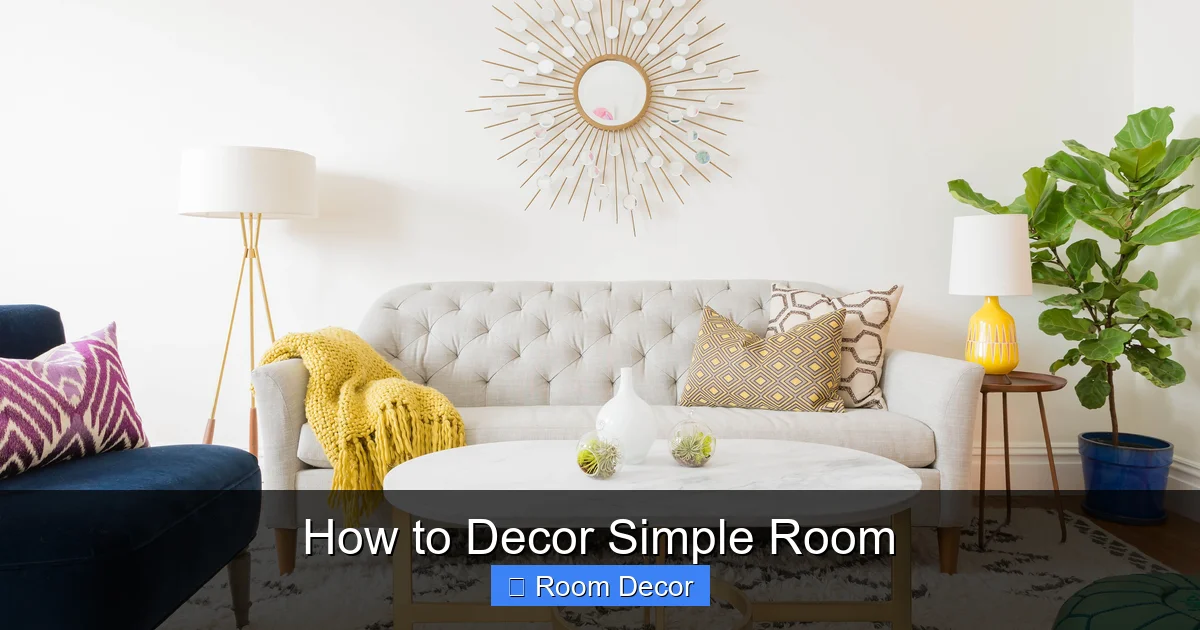
Transforming a simple room doesn’t have to be complicated or expensive. This guide will walk you through the process of decorating your space with ease, focusing on creating a functional and stylish environment. You’ll learn how to declutter, choose a color palette, select key furniture, and add personal touches that reflect your personality, all while keeping it simple and budget-friendly. Master the art of simple room decor and enjoy your beautifully refreshed space.
Welcome to the ultimate guide on how to decor a simple room! Are you looking at your living space and feeling a little… uninspired? Perhaps it feels bare, a bit cluttered, or just not quite “you.” Don’t worry! Decorating a simple room is all about creating a functional, comfortable, and aesthetically pleasing environment without overcomplicating things. This guide is designed to break down the process into easy, actionable steps. We’ll explore how to transform your room into a reflection of your personality and needs, even on a budget.
By the end of this guide, you’ll understand how to:
* Prepare your space for decorating.
* Choose a style and color palette that suits you.
* Select essential furniture that is both stylish and practical.
* Enhance your room with effective lighting.
* Add personality with decorative elements and textures.
* Keep your simple room tidy and organized.
Let’s dive in and make your simple room a place you love!
Key Takeaways
- Start with a Blank Canvas: Decluttering and cleaning your space is the essential first step to understand your room’s potential and create a serene foundation for your decor.
- Define Your Style and Color Palette: Understanding your aesthetic preferences and choosing a cohesive color scheme will guide all your decorating decisions, ensuring a harmonious look.
- Prioritize Functional Furniture: Select pieces that serve a purpose and fit the scale of your room, focusing on quality over quantity for a uncluttered and practical space.
- Master the Art of Lighting: Layering different types of lighting – ambient, task, and accent – can dramatically change the mood and functionality of your room.
- Incorporate Textures and Layers: Adding various textures through rugs, throws, and cushions creates depth and warmth, making a simple room feel cozy and inviting.
- Personalize with Meaningful Accents: Artwork, photos, and decorative objects that hold personal significance bring character and a sense of “home” to your decorated room.
- Embrace Smart Storage Solutions: Efficient storage keeps clutter at bay, maintaining the simplicity and visual calm of your decorated space.
Step 1: Declutter and Clean – The Foundation of Simple Decor
Before you even think about paint colors or furniture, the most crucial step in decorating a simple room is to declutter and clean. A tidy space is the foundation for any successful decor project. Clutter can make a room feel smaller, more chaotic, and less inviting.
H3: Purge and Organize
Take a good, honest look at everything in your room. Ask yourself these questions for each item:
- Do I use this regularly?
- Does it bring me joy or serve a specific purpose?
- Do I have too many of these?
Be ruthless! Donate, sell, or discard items that no longer serve you. Group similar items together as you declutter. For instance, put all your books in one pile, all your stationery in another, and so on. This makes it easier to see what you have and what you truly need.
H3: Deep Clean Your Space
Once you’ve decluttered, give your room a thorough cleaning. This includes:
- Washing windows and mirrors.
- Wiping down walls and baseboards.
- Vacuuming or mopping floors.
- Dusting all surfaces, including light fixtures and ceiling fans.
A clean room feels fresh and provides a blank canvas to work with. It’s amazing how much a good clean can transform a space, even before you add any new decor.
Step 2: Define Your Style and Color Palette

Visual guide about How to Decor Simple Room
Image source: cdn.apartmenttherapy.info
This is where the fun begins! Thinking about your personal style and choosing a cohesive color palette will guide all your subsequent decorating decisions.
H3: Discover Your Decor Style
What kind of atmosphere do you want to create? Do you prefer a minimalist, modern, bohemian, Scandinavian, or something else entirely?
- Minimalist: Clean lines, neutral colors, essential furniture, and uncluttered surfaces.
- Modern: Sleek designs, metallic accents, bold colors, and geometric shapes.
- Bohemian (Boho): Eclectic mix of patterns, textures, natural elements, and vibrant colors.
- Scandinavian: Light and airy, functional design, natural materials (wood), and a focus on comfort and simplicity.
Look for inspiration online (Pinterest and Instagram are great for this!), in magazines, or even in hotels and cafes you admire. Save images that resonate with you to create a mood board.
H3: Choose Your Color Scheme
Once you have an idea of your style, select a color palette. A good rule of thumb is the 60-30-10 rule:
- 60% Primary Color: This is your dominant color, often used on walls or large furniture pieces.
- 30% Secondary Color: This color complements your primary color and is used for furniture, curtains, or accent walls.
- 10% Accent Color: This is a bolder color used for small decorative items like pillows, artwork, or decorative objects.
For a simple room, consider a neutral base palette (whites, grays, beiges) and then add pops of color. This makes the room feel calm and allows you to easily change accents seasonally or as your taste evolves.
Practical Tip: Test paint colors on your walls before committing. Light can drastically change how a color appears.
Step 3: Select Functional and Stylish Furniture

Visual guide about How to Decor Simple Room
Image source: thespruce.com
Furniture is the backbone of any room. For a simple room, focus on pieces that are functional, comfortable, and appropriately sized for your space.
H3: Prioritize Key Pieces
Identify the essential furniture your room needs. For a living room, this might be a sofa, a coffee table, and an armchair. For a bedroom, a bed and a nightstand.
- Sofa/Bed: This is likely your largest and most important piece. Choose something comfortable and in a color that fits your palette.
- Coffee Table/Nightstand: Consider multi-functional pieces, like a coffee table with hidden storage or a nightstand with drawers.
- Seating: If space allows, an armchair or a floor cushion can add extra seating and coziness.
H3: Scale and Proportion
Ensure your furniture fits the size of your room. Oversized furniture can make a small room feel cramped, while tiny furniture can look lost in a large space. Measure your room and the furniture before purchasing.
H3: Quality Over Quantity
In a simple room, it’s better to have a few high-quality, well-chosen pieces than many cheap, ill-fitting ones. Invest in pieces that you love and that will last.
Example: Instead of a bulky TV stand, opt for a sleek, wall-mounted media console. In a bedroom, a bed frame with built-in storage drawers is a fantastic way to maximize space.
Step 4: Master the Art of Lighting

Visual guide about How to Decor Simple Room
Image source: architecturebeast.com
Lighting can dramatically transform the mood and functionality of a room. In a simple room, layering different types of lighting is key.
H3: Ambient Lighting
This is the general illumination in your room.
- Overhead fixtures: A stylish ceiling light or pendant can be a focal point.
- Natural light: Maximize natural light by keeping windows clear and using sheer curtains if privacy is needed.
H3: Task Lighting
This is lighting for specific activities, like reading or working.
- Table lamps: Place them on nightstands, consoles, or side tables.
- Floor lamps: Great for reading corners or behind sofas.
H3: Accent Lighting
This is used to highlight specific features, like artwork or architectural details.
- Picture lights: Illuminate artwork.
- Small accent lamps: Can be placed on shelves to create mood.
Tip: Use dimmers on your lights to control the intensity and create different atmospheres for various times of day or activities. Warm-toned bulbs tend to create a cozier, more inviting feel than cool-toned bulbs.
Step 5: Add Texture and Layers for Warmth and Depth
A room with only flat surfaces can feel sterile. Introducing textures and layers adds visual interest, warmth, and a sense of comfort to your simple room.
H3: Rugs
A rug can anchor a seating area, add color, and provide a soft surface underfoot.
- Choose a rug that is the right size for the space. In a living room, the front legs of your sofa and chairs should rest on the rug.
- Consider the material and pattern to complement your style. A textured jute rug adds natural warmth, while a patterned rug can be a focal point.
H3: Cushions and Throws
These are easy and affordable ways to add color, pattern, and texture.
- Mix and match different textures: think chunky knits, faux fur, velvet, and linen.
- Layering throws on your sofa or bed instantly makes the space feel more inviting.
H3: Curtains and Window Treatments
Beyond privacy, curtains add softness and can introduce pattern or color.
- Sheer curtains allow light to filter in, maintaining an airy feel.
- Heavier drapes can add a touch of luxury and help with insulation.
Example: In a living room with a neutral sofa, add colorful cushions in varied textures and a cozy knit throw. This instantly adds personality and comfort.
Step 6: Personalize with Art and Decorative Accents
This is where you infuse your personality into the space. Choose items that you love and that tell a story.
H3: Wall Art
Art can be a fantastic way to add color, personality, and a focal point to your walls.
- Gallery Wall: A collection of smaller pieces can create a dynamic display. Mix photos, prints, and even small objects.
- Oversized Art: A single large piece can make a bold statement.
- Mirrors: They reflect light and can make a room feel larger and brighter. Choose frames that complement your style.
H3: Decorative Objects
These are the smaller items that add character.
- Vases: Even without flowers, interesting vases can be decorative.
- Books: Stacked art books or favorite novels add a personal touch.
- Plants: Greenery brings life and color to a room.
- Personal Photos: Framed photos of loved ones or memorable trips.
Key Principle: Don’t overdo it! In a simple room, a few carefully chosen, meaningful pieces are more impactful than a crowded display. Rotate your decorative items to keep your space feeling fresh.
Step 7: Implement Smart Storage Solutions
Maintaining a simple room means keeping clutter at bay. Smart storage is essential for this.
H3: Utilize Vertical Space
Shelving units, wall-mounted shelves, and tall bookcases can store items without taking up too much floor space.
- Use decorative boxes or baskets on shelves to hide smaller items.
H3: Furniture with Storage
As mentioned earlier, furniture that doubles as storage is a lifesaver.
- Ottomans with hidden compartments.
- Beds with drawers or lift-up storage.
- Coffee tables with shelves or drawers.
H3: Baskets and Bins
These are versatile and can be used to store anything from blankets to toys to office supplies. They also add a decorative element.
Troubleshooting: Where to Put “Stuff” in a Simple Room?
The key is to be intentional. Assign a home for everything. If you find yourself with too much “stuff” that doesn’t have a designated spot, it might be time for another decluttering session. Sometimes, simple decor means being more selective about what you bring into your home in the first place.
Conclusion
Decorating a simple room is an achievable and rewarding process. By focusing on decluttering, defining your style, choosing functional furniture, layering lighting, adding texture, and personalizing with meaningful accents, you can create a space that is both beautiful and highly livable. Remember, simplicity doesn’t mean boring; it means thoughtful selection and intentional design. Embrace these steps, have fun with the process, and enjoy your beautifully decorated, simple room!