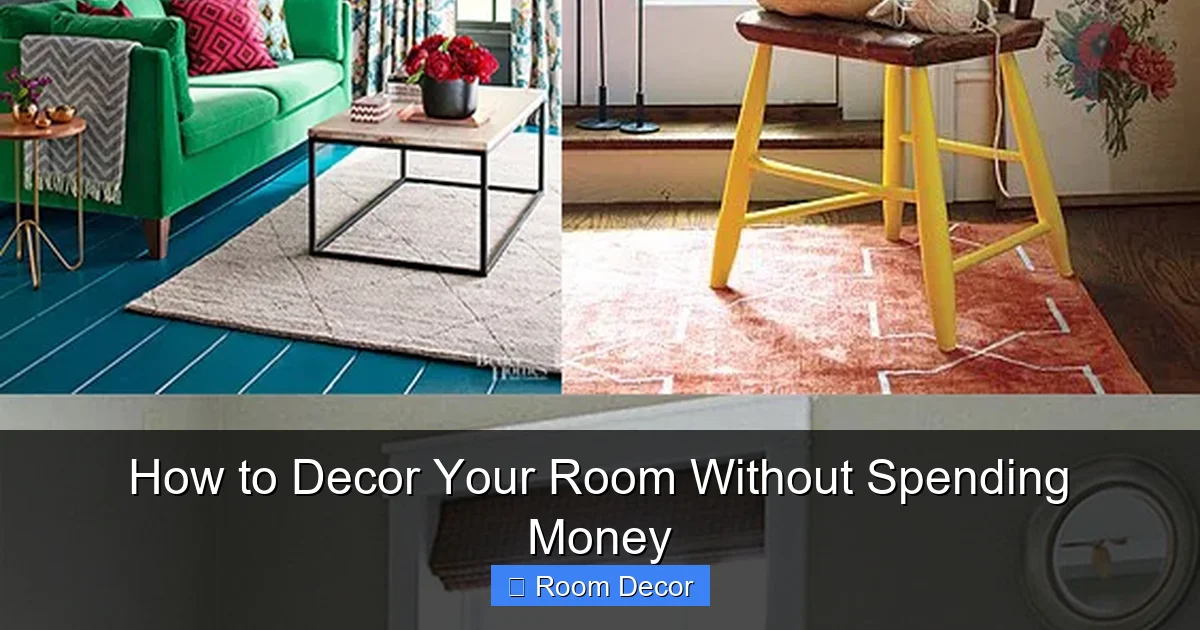
Transform your room into a stylish sanctuary without spending a dime! This comprehensive guide reveals ingenious strategies for repurposing, rearranging, and upcycling everyday items. Learn how to maximize your existing resources and unleash your creativity to achieve a beautiful and personalized space. Discover practical tips and inspiration for a budget-friendly room makeover.
Key Takeaways
- Embrace Repurposing: Give old items new life by transforming them into decorative elements, saving money and reducing waste.
- Strategic Rearrangement: Sometimes, simply changing the layout of your existing furniture can dramatically alter the feel of your room.
- DIY Art & Decor: Create unique wall art, accents, and even functional items from free materials like magazines, fabric scraps, and natural elements.
- Harness Natural Light: Maximize natural light and introduce greenery to instantly brighten and refresh your space without any cost.
- Declutter and Organize: A tidy room is a beautiful room. Decluttering itself is free and makes a huge impact on your decor.
- Borrow and Swap: Connect with friends or family to borrow decorative items or swap pieces you no longer need.
How to Decor Your Room Without Spending Money
Feeling like your room needs a refresh but your wallet is feeling a little light? Don’t worry! Decorating your personal space doesn’t have to break the bank. In fact, some of the most beautiful and unique room makeovers come from creativity and resourcefulness, not from expensive store-bought items. This guide is your roadmap to transforming your room into a stylish haven, completely free of charge. We’ll dive into clever ways to repurpose what you already own, rearrange your furniture for a fresh look, and create stunning decor pieces from everyday materials. Get ready to unlock your inner decorator and make your room shine!
1. The Power of a Good Declutter and Clean
Before you even think about adding anything new, the most impactful (and free!) decorating step you can take is to declutter and clean your room thoroughly. A messy room will always feel less appealing, no matter how much decor you have.
Step-by-Step Decluttering:
- Gather Supplies: Grab a few boxes or bags. Label them “Keep,” “Donate/Sell,” “Trash,” and “Relocate” (for items that belong elsewhere in the house).
- Start Small: Don’t try to tackle everything at once. Pick one area, like your desk, a shelf, or your closet, and focus on that.
- Be Ruthless: Ask yourself: Do I use this? Do I love this? Does it serve a purpose? If the answer to these questions is no, it’s time for it to go.
- Sort and Dispose: Put items into their designated boxes. For the “Donate/Sell” box, try to get these items out of your house as soon as possible to avoid second-guessing.
- Clean Thoroughly: Once everything is decluttered, give your room a good clean. Dust surfaces, vacuum or mop the floor, clean windows, and tidy up.
Why it Works:
A clean and organized space instantly feels larger, more serene, and more intentional. It allows you to see what you *truly* have and appreciate the items you choose to keep, which is the foundation of good decor.
2. Rearrange Your Furniture for a Fresh Perspective
Sometimes, a room just needs a change of scenery. Simply moving your existing furniture around can dramatically alter the flow, feel, and functionality of your space. This is one of the most powerful no-cost decorating techniques available.
H3: Assess Your Current Layout:
- Consider the Flow: How do you move through the room? Are there any awkward bottlenecks? Can you create better pathways?
- Think About Functionality: Where do you spend most of your time? Can you optimize your furniture placement for those activities (e.g., placing your desk near a window for natural light)?
- Identify Your Focal Point: What do you want to draw attention to? It could be a window, a piece of art, or even a cozy reading nook. Arrange furniture to highlight this.
H3: Experiment with New Arrangements:
- Try the “Floating” Method: Pull furniture away from the walls. This can make a room feel larger and more dynamic.
- Create Zones: Even in a small room, you can create distinct areas for sleeping, working, or relaxing. Use furniture placement to define these zones.
- Swap Sides: If you have a bed, desk, or dresser, try moving it to the opposite wall. You’ll be surprised at how different the room feels.
- Test the “Back-to-Back” Approach: Place a sofa or armchair with its back to another piece of furniture to create a sense of separation without walls.
Practical Tip:
Take a photo of your current layout before you start. This can help you remember how things were and provide a baseline. Don’t be afraid to try out several different arrangements until you find one that feels right.
3. Unleash Your Inner Artist: DIY Wall Art and Decor
Your walls are a blank canvas, and you don’t need expensive prints to make them interesting. There’s a world of free art and decor you can create yourself.
H3: Magazine Magic:
- Collage Creations: Tear out inspiring images, colorful patterns, or text from old magazines. Arrange them on a piece of cardboard or sturdy paper and glue them down to create unique collages.
- Quote Art: Find powerful or beautiful quotes. You can write them yourself in your best handwriting on scrap paper or cardstock, or print them from your computer if you have printer ink. Frame them using found frames or even sturdy cardboard cutouts.
- Color Block Art: Cut out large blocks of solid color from magazines and arrange them in an abstract pattern.
H3: Nature’s Bounty:
- Pressed Flowers and Leaves: Collect beautiful flowers and leaves on a walk. Press them between heavy books for a few weeks. Once dried, arrange and glue them onto paper or cardstock for delicate, natural art.
- Branch Decor: Find interesting-shaped branches. You can paint them white or black for a minimalist look, or leave them natural. Hang them on the wall, use them as a base for string lights (if you have them), or even suspend smaller items from them.
- Seashells or Interesting Rocks: If you live near a beach or have collected interesting stones, arrange them in a shallow bowl or shadow box (if you have one) for a natural display.
H3: Fabric Scraps and Old Clothes:
- Fabric Wall Hanging: If you have old fabric scraps or t-shirts you no longer wear, cut them into strips. You can braid them, knot them onto a sturdy stick or dowel, or create a patchwork effect for a bohemian-style wall hanging.
- Fabric “Paintings”: Cut out shapes from patterned fabrics and glue them onto a plain background (like an old canvas or cardboard) to create abstract designs or even recognizable figures.
H3: Personal Photos as Art:
- Black and White Transformation: If you have color photos you’re not particularly attached to, try printing them in black and white (if your printer allows, or even manually tinting them with charcoal or pencil). This instantly gives them a more sophisticated, artistic feel.
- Creative Arrangement: Print out your favorite photos and arrange them in a gallery wall on a blank wall. You don’t need expensive frames; simply tape them directly to the wall using painter’s tape or washi tape for a casual, modern look.
4. Repurpose and Upcycle Household Items
Look around your home with fresh eyes. So many items destined for the trash or recycling bin can be transformed into functional and stylish decor.
H3: Jars and Bottles:
- Vases: Clean out old jam jars, pickle jars, or interesting glass bottles. They make perfect, rustic vases for flowers or greenery.
- Storage: Use jars to store small items like pens, makeup brushes, buttons, or even snacks. Decorate the jars by tying twine around them or painting them with leftover craft paint.
- Candle Holders: Place a small tealight or votive candle inside a clean jar for a simple and elegant candle holder.
H3: Cardboard Boxes and Tubes:
- Storage Solutions: Cover sturdy cardboard boxes with old wrapping paper, fabric scraps, or even plain brown paper and twine to create attractive storage bins for shelves or under the bed.
- Wall Art Base: Cut cardboard into interesting shapes (like geometric patterns or even letters) and paint them. Mount them on the wall as unique art.
- Bookends: Sturdy cardboard tubes or small, strong boxes can be reinforced and covered to create DIY bookends.
H3: Old Clothing and Textiles:
- Pillow Covers: Old sweaters, t-shirts, or patterned fabric can be sewn (or even no-sew with fabric glue) into unique pillow covers.
- Rag Rugs: Cut old t-shirts or sheets into strips and braid or crochet them into a colorful rag rug.
- Curtains or Tapestries: A large, interesting piece of fabric (like an old tablecloth or a patterned sheet) can be hung as a temporary curtain or a wall tapestry.
H3: Miscellaneous Items:
- Tin Cans: Cleaned tin cans can be used for pen holders, small plant pots (ensure drainage holes), or even painted and arranged for decorative purposes.
- Old Books: Stack old books to create a decorative riser for other objects, or carefully hollow them out to create a secret “box” if you have the patience.
5. Harness the Power of Natural Light and Greenery
The simplest changes can have the biggest impact on a room’s atmosphere. Harnessing natural light and bringing in plants are two of the most effective free decorating strategies.
H3: Maximize Natural Light:
- Clean Your Windows: This is a no-brainer, but often overlooked. Clean windows let in significantly more light.
- Sheer Curtains or No Curtains: If you have curtains, opt for light, sheer fabrics or consider removing them altogether if privacy isn’t an issue.
- Mirrors (If You Have Them): Strategically place mirrors opposite windows to reflect light and make your room feel brighter and larger.
- Keep Window Sills Clear: Don’t clutter your window sills with too many objects, as this can block light.
H3: Introduce Greenery:
- Propagate Existing Plants: If you or a friend has houseplants, ask for cuttings to propagate. Most plants can be easily grown from cuttings in water or soil.
- Forage for Greenery: In safe and appropriate natural areas, you can gather branches, interesting leaves, or even wildflowers to place in jars as temporary decor. Be mindful of local regulations and environmental impact.
- Seed Starting: If you have any seeds lying around (even from fruits like avocados or citrus), you can try growing them. While it takes time, the process is rewarding and the plant will be free.
6. Borrow, Swap, and Scavenge Creatively
Don’t underestimate the power of your social network and local resources when it comes to free decor.
H3: The Art of Borrowing:
- Ask Friends and Family: Need a particular decorative item for a special occasion or just to try out a new look? Ask if anyone has something you can borrow – a lamp, a vase, a throw blanket, or even a picture frame.
- Temporary Displays: Borrowing is perfect for experimenting with different decor styles without commitment.
H3: Organize a Swap Party:
- Gather Like-Minded Friends: Organize a small “stuff swap” with friends. Everyone brings items they no longer want but are still in good condition.
- Exchange Decor Items: This is a fantastic way to refresh your space with new-to-you decor items without spending any money.
H3: Neighborhood Scavenging (with caution):
- Curb Alerts: Keep an eye out during “bulk trash” days in your neighborhood. People often put out perfectly usable furniture, lamps, or decorative items.
- Freecycle or Buy Nothing Groups: Online platforms dedicated to giving away items for free are goldmines for decor. You might find anything from picture frames to small furniture pieces.
- Always Clean and Sanitize: If you find items this way, always clean and sanitize them thoroughly before bringing them into your home.
7. The Importance of Lighting
While you might not be able to buy new lamps, you can certainly make the most of the lighting you have, and introduce more atmospheric lighting through creative means.
H3: Repurpose Existing Light Fixtures:
- Clean Fixtures: Dust and clean your existing lamps and light fixtures. A clean fixture emits brighter light.
- Change Bulb Wattage (if applicable): If you have dimmer switches or different bulb options, adjust them to create different moods. A warmer, lower wattage bulb can make a room feel cozier.
H3: Candlelight and Natural Glow:
- Use Candles Sparingly: If you have old candles, you can melt down remnants and combine them into new candles in old jars or containers.
- String Lights (if you own them): If you already have fairy lights or string lights, use them! Drape them around your bed, across a wall, or in a clear jar for a magical glow.
Troubleshooting Common No-Spend Decor Challenges
* “My room still feels bland.” Revisit your decluttering. Are there too many small, insignificant items? Try grouping similar items together for a more impactful display. Consider adding more DIY art.
* “I don’t have enough variety in textures.” Look for opportunities to incorporate different textures. A woven basket (even if it’s just a fruit basket you’ve cleaned), a stack of books with interesting covers, or even a soft, clean throw can add texture.
* “Everything looks too ‘homemade’.” This is where the framing and finishing touches come in. For DIY art, try to mount it on sturdy backing. If you’re using jars, ensure they are sparkling clean. Presentation is key!
* “I’m tired of looking at the same things.” This is where rearrangement and borrowing become crucial. Constantly shifting furniture and borrowing new items will keep your space feeling fresh.
Conclusion
Decorating your room without spending money is not just about saving cash; it’s about tapping into your creativity, resourcefulness, and appreciation for what you already have. By decluttering, rearranging, repurposing, and embracing DIY projects, you can create a space that is both beautiful and uniquely yours. The most stylish rooms often tell a story, and your no-spend decor journey will undoubtedly create a narrative filled with ingenuity and personal touch. So, roll up your sleeves, look around your home with new eyes, and start transforming your room into the sanctuary you deserve!