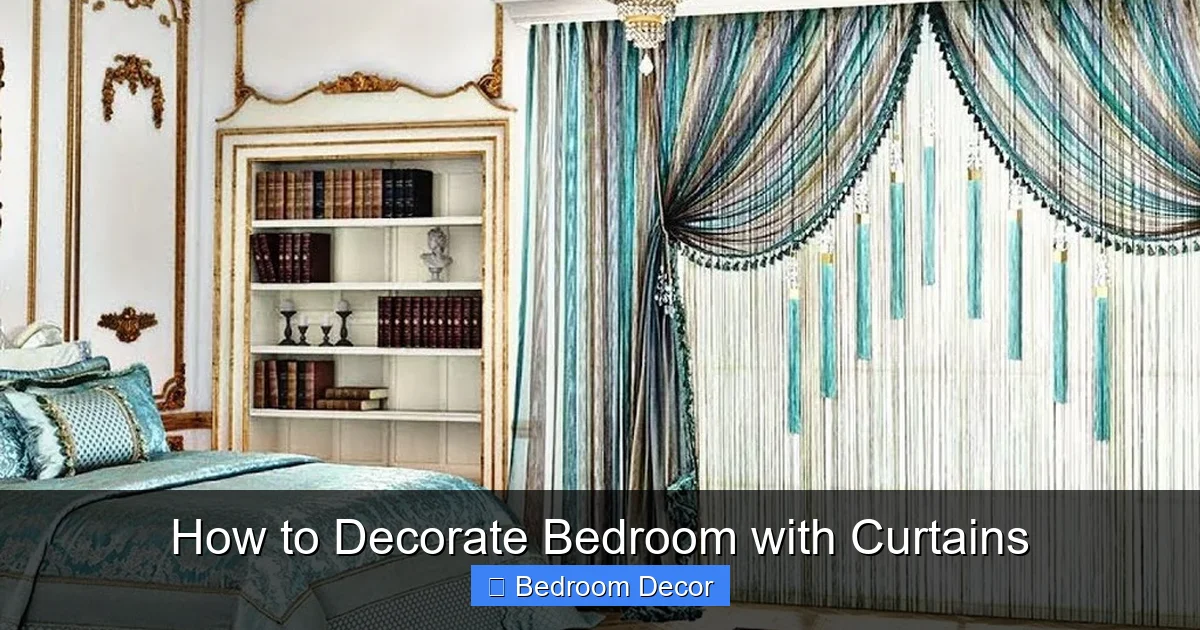
Curtains are a powerful tool to transform your bedroom’s ambiance, privacy, and style. This guide provides a complete roadmap on how to decorate bedroom with curtains, from selecting the right fabric and style to measuring, installing, and styling them perfectly. Learn to create a cohesive and inviting look that reflects your personal taste and makes your bedroom truly shine.
How to Decorate Bedroom with Curtains
Your bedroom is your sanctuary, a place for rest, relaxation, and personal expression. While furniture, paint colors, and bedding often take center stage, there’s one design element that can dramatically transform your space, offering both beauty and functionality: curtains. Learning how to decorate bedroom with curtains effectively can elevate your room’s style, enhance privacy, and control light, all while adding a touch of softness and elegance. Far more than just window coverings, curtains are essential for creating the perfect atmosphere.
This comprehensive guide will walk you through every step of decorating your bedroom with curtains. From understanding different styles and fabrics to precise measuring, choosing the right hardware, and mastering installation and styling, you’ll gain the confidence and knowledge to create a truly stunning and personalized retreat. Get ready to discover how simple additions can make a world of difference when you decorate bedroom with curtains.
Key Takeaways
- Define Your Vision & Function: Always start by considering your bedroom’s desired mood and the primary purpose of your curtains (privacy, light control, aesthetic).
- Measure Meticulously: Accurate measurements for both width and length are critical. Always aim to hang rods wider and higher than the window frame for an elevated, professional look.
- Match Style & Fabric: Select curtain styles (e.g., grommet, pinch pleat) and fabric types (e.g., sheer, blackout, velvet) that align with your overall bedroom decor and practical needs.
- Hardware Matters: The curtain rod and accompanying hardware are integral to the curtains’ drape and the room’s overall aesthetic; choose them wisely to complement your design.
- Master Installation & Styling: Proper installation (high and wide) can make windows appear larger. Experiment with styling techniques like tie-backs, puddling, or layering to enhance your decor.
- Color & Pattern Cohesion: Choose curtain colors and patterns that either harmonize with your existing palette or provide a thoughtful, complementary contrast for a balanced design.
- Prioritize Maintenance: Regular cleaning and care are essential to keep your curtains looking fresh, vibrant, and extending their lifespan, thus preserving your bedroom’s beauty.
Step 1: Define Your Vision and Bedroom Style
Before you even think about fabric samples, it’s crucial to clarify what you want your curtains to achieve and how they will fit into your existing or desired bedroom aesthetic. This initial planning stage is vital when you decorate bedroom with curtains.
Consider Existing Decor and Ambiance
Look around your bedroom. What’s the overall vibe? Is it modern and minimalist, cozy farmhouse, luxurious traditional, or bohemian chic? Your curtains should seamlessly integrate with this style, rather than clashing with it. Think about the colors, textures, and finishes already present in your furniture, bedding, and accessories. Are you looking for curtains that blend in or make a statement?
Think About Mood and Function
Curtains serve multiple purposes in a bedroom. What are your primary needs?
- Privacy: Do you live on a busy street or have close neighbors? You’ll need fabrics that offer substantial privacy.
- Light Control: Are you a light sleeper who needs complete darkness? Blackout curtains might be essential. Do you prefer a soft, diffused light? Sheer or semi-sheer options could be perfect.
- Insulation: Does your bedroom get too hot in summer or too cold in winter? Thermal-lined curtains can help regulate temperature.
- Sound Dampening: Some heavier fabrics can help absorb sound, making your bedroom a quieter retreat.
- Aesthetics: Are you purely looking to add a decorative touch, color, or pattern to complete your room’s look?
Understanding these functional needs will narrow down your choices significantly as you plan to decorate bedroom with curtains.
Explore Different Decor Styles
Quickly review how different curtain styles complement various decor themes:
- Modern: Clean lines, solid colors, grommet or simple rod pocket styles.
- Traditional: Rich fabrics, pinch pleat, tab top, often with elaborate tie-backs or valances.
- Farmhouse/Boho: Natural fibers like linen or cotton, casual styles, maybe subtle patterns.
- Luxurious: Velvet, silk, layered curtains, floor-to-puddle lengths.
Step 2: Understand Curtain Types and Fabrics
The world of curtains is vast, with many styles and fabrics offering different looks and functionalities. Knowing your options is key to successfully decorate bedroom with curtains.
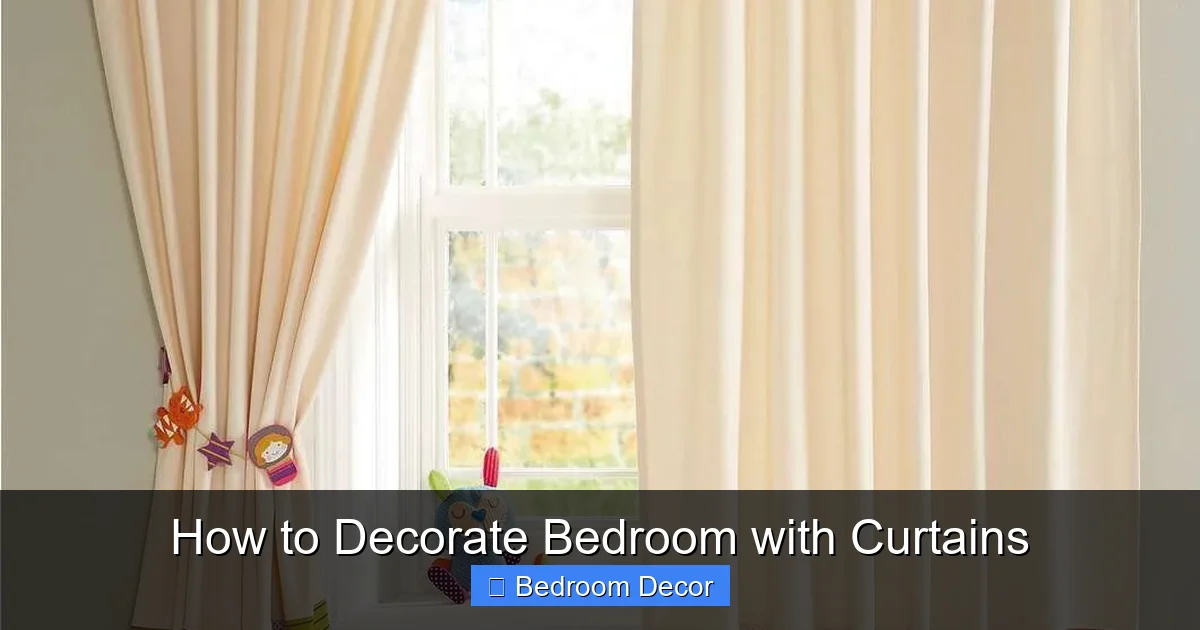
Visual guide about How to Decorate Bedroom with Curtains
Image source: i.pinimg.com
Curtain Styles (Headings)
The heading refers to how the curtain attaches to the rod. This choice dramatically impacts the curtain’s drape and overall look.
- Rod Pocket: A casing sewn into the top through which the rod slides. Creates a gathered, casual look. Not ideal for frequently opening/closing.
- Grommet/Eyelet: Metal rings sewn into the fabric create a modern, sleek look with deep, even pleats. Easy to slide open and close.
- Pinch Pleat: Fabric is gathered and sewn into permanent pleats at the top. Offers a formal, elegant look. Requires special hooks and rings.
- Tab Top: Loops of fabric at the top slide over the rod, creating a relaxed, informal feel.
- Back Tab: Hidden tabs on the back create a cleaner, more tailored look than standard tab tops, giving the illusion of a floating curtain.
- Cafe Curtains: Shorter curtains covering only the bottom half of the window, often used in kitchens but can add charm to a bedroom for partial privacy.
- Roman Shades: Not technically curtains, but a popular alternative or layering option. They fold into neat pleats when raised.
- Valances & Swags: Decorative top treatments that cover the curtain rod and add a finishing touch. Often used over blinds or drapes.
Fabric Choices
The fabric dictates the curtain’s drape, light control, insulation, and texture.
- Sheer: Lightweight, translucent fabrics (e.g., voile, lace) that allow maximum light while providing minimal privacy and a dreamy, airy feel. Perfect for layering.
- Linen: Natural, breathable, and slightly textured. Offers a relaxed, elegant look and good light diffusion. Wrinkles easily, which can add to its charm.
- Cotton: Versatile and durable, available in various weaves and patterns. Offers good light filtration depending on thickness. Easy to clean.
- Velvet: Luxurious, heavy fabric that offers excellent light blocking, insulation, and sound dampening. Adds warmth and opulence.
- Silk/Faux Silk: Elegant and shimmery, but can be delicate. Offers a sophisticated look. Faux silk is more durable and fade-resistant.
- Blackout: Specifically designed with a dense lining (or multiple layers of fabric) to block nearly all light, ideal for bedrooms where complete darkness is desired.
- Thermal: Often made with multiple layers or a specialized lining to provide insulation against heat and cold, improving energy efficiency.
Linings
Curtains can be unlined or come with various types of linings:
- Standard Lining: Adds body, protects the curtain fabric from sun damage, and offers moderate privacy.
- Blackout Lining: Provides maximum light blockage.
- Thermal Lining: Improves insulation.
- Interlining: An additional layer between the curtain fabric and the lining for extra body, insulation, and a luxurious feel.
Step 3: Measure Accurately for Perfect Fit
This is arguably the most critical step. Incorrect measurements lead to ill-fitting curtains that detract from your bedroom’s aesthetic. Proper measuring ensures your efforts to decorate bedroom with curtains pay off.

Visual guide about How to Decorate Bedroom with Curtains
Image source: i.pinimg.com
Measure Width
Measure the width of your window frame. Then, add 6-12 inches (3-6 inches on each side) beyond the window frame. This allows the curtain rod to extend past the window, so your curtains can be pulled back fully, allowing maximum light when open. For curtain fullness, you’ll generally want your curtain panels to be 1.5 to 2.5 times the total width of your rod. So, if your rod is 80 inches wide, you’ll want panels totaling 120-200 inches in width.
Measure Length
Decide where you want the top of your curtain rod to be. A good rule of thumb is to install the rod 4-6 inches above the window frame (or even closer to the ceiling for a dramatic, height-enhancing effect). Then, measure from the chosen rod height down to your desired length.
Standard Lengths to Consider
- Sill Length: Ends at the windowsill. Good for windows that open inward or have radiators below. Less common for bedrooms.
- Apron Length: Ends about 1 inch below the windowsill/apron. A slightly softer look than sill length.
- Floor Length: The most popular and elegant choice for bedrooms. Ends about 1/2 to 1 inch above the floor. This clean look is easy to manage.
- Puddle Length: The curtain fabric pools on the floor (adds 6-10 inches to floor length). Creates a romantic, luxurious, and dramatic look, but requires more maintenance and can be a tripping hazard.
Step 4: Choose the Right Curtain Rods and Hardware
The hardware is not just functional; it’s a significant part of the visual appeal when you decorate bedroom with curtains.

Visual guide about How to Decorate Bedroom with Curtains
Image source: stylebyemilyhenderson.com
Rod Types
- Standard Rod: A basic rod, often hidden by the curtain’s heading.
- Decorative Rod: Designed to be seen, often with ornamental finials. Comes in various materials and finishes.
- Traverse Rod: Operates with a cord or wand, allowing curtains to glide smoothly. Ideal for heavy drapes or frequently opened curtains.
- Tension Rod: Fits inside the window frame without drilling. Only suitable for very lightweight curtains and small windows.
Material and Finish
Match the rod material and finish to your existing hardware (light fixtures, door handles, furniture pulls) or overall room style. Common options include:
- Metal: Brushed nickel, oil-rubbed bronze, brass, black – versatile and modern.
- Wood: Natural wood tones, painted white, or dark stained – adds warmth and a classic touch.
- Acrylic: Clear, modern, and understated.
Finials and Holdbacks
Finials are the decorative caps at the ends of the curtain rod. They can be simple or ornate, adding a personal touch. Holdbacks or Tie-backs are used to elegantly sweep curtains to the side when open. They can be simple hooks, decorative arms, or fabric bands. Choose them to complement your curtain style and rod.
Placement of the Rod
Hang it High: Mount the curtain rod 4-6 inches above the window frame, or even closer to the ceiling. This draws the eye upward, making the room feel taller and more spacious.
Hang it Wide: Extend the rod 6-12 inches beyond the window frame on each side. This allows the curtains to be pushed completely off the window when open, maximizing natural light and making the window appear larger.
Step 5: Select Color, Pattern, and Texture
This is where your personal style truly shines and where you can most creatively decorate bedroom with curtains.
Color Psychology in the Bedroom
Color plays a huge role in setting the mood:
- Neutrals (white, cream, grey, beige): Create a calm, serene, and versatile backdrop.
- Cool Tones (blue, green, lavender): Promote relaxation and tranquility, ideal for a peaceful bedroom.
- Warm Tones (soft yellow, blush pink, terracotta): Add warmth, comfort, and a touch of vibrancy without being overstimulating.
- Darker Hues (navy, charcoal, deep green): Can add a sense of luxury, depth, and drama, especially with blackout capabilities.
Coordinating with Your Decor
- Matching: Choose a curtain color that perfectly matches a prominent color in your bedding, rug, or wall art for a cohesive look.
- Complementary: Select a color that complements your existing palette, offering a subtle contrast or enhancing the overall scheme. For example, soft blues with warm grays.
- Contrasting: If your room is very neutral, a bold curtain color can be a stunning focal point, adding personality and flair.
Pattern Play
Patterns can add visual interest, but be mindful not to overwhelm the space.
- Subtle Patterns: Think tone-on-tone damasks, delicate stripes, or small-scale geometrics. These add texture without competing with other elements.
- Bold Patterns: Large florals, strong geometrics, or vibrant prints can be a statement piece if the rest of the room is relatively subdued. If you have patterned bedding, ensure the curtain pattern complements rather than clashes.
Adding Texture
Texture adds depth and a tactile quality. Consider the interplay of smooth, shiny, matte, or plush fabrics. For example, velvet curtains bring a luxurious texture, while linen offers a more organic, relaxed feel. Layering different textures can create a rich, inviting atmosphere.
Step 6: Mastering Installation and Styling
Once you have all your components, proper installation and thoughtful styling will bring your vision to life as you decorate bedroom with curtains.
Hanging the Rod
Use a level to ensure your rod is perfectly straight. Mark the positions for your brackets, pre-drill holes (if necessary), and securely fasten the brackets to the wall. For heavier curtains, ensure you’re drilling into studs or using appropriate wall anchors.
Hanging the Curtains
Slide your curtains onto the rod according to their heading type. For grommet or back tab curtains, alternate the direction of the first and last grommet/tab to ensure the curtain ends face the wall, creating a neat finish.
Styling Techniques
- Simple Drape: Let the curtains hang naturally. This works well for modern and minimalist styles.
- Tying Back: Use holdbacks or decorative tie-backs to pull curtains to the side, allowing more light in and framing the window beautifully.
- Puddling: If you chose puddle length, arrange the fabric gracefully on the floor. This creates a romantic, luxurious look.
- Layering: Combine sheer curtains underneath heavier drapes. This offers maximum flexibility for light control and privacy. The sheers provide privacy while letting light in, and the drapes can be closed for darkness and insulation.
Accessorizing
Enhance your curtains with thoughtful accessories:
- Decorative Tie-backs: Beyond functional, they can be jeweled, tasseled, or braided.
- Tassels & Trims: Sewed onto the edges of curtains, these add a bespoke, luxurious touch.
- Valances or Swags: As mentioned, these can add a decorative finish above your main curtains.
Step 7: Maintenance and Care
To keep your bedroom looking fresh and your curtains beautiful, regular maintenance is key.
Cleaning Tips
Always check the care label on your curtains. Some fabrics are dry-clean only, while others can be machine washed on a delicate cycle. Avoid harsh detergents and high heat that can damage fabric or cause shrinking.
Regular Dusting
Vacuum your curtains regularly using a brush attachment or gently shake them outdoors to remove dust and allergens. This prevents dirt buildup and keeps them looking vibrant.
Troubleshooting Common Curtain Decor Issues
Even with careful planning, you might encounter a few hurdles when you decorate bedroom with curtains. Here are some common problems and solutions:
Curtains Look Too Short or Too Narrow
- Solution for Shortness: If they are just slightly too short, you might be able to lower the rod slightly. Otherwise, you’ll need new, longer panels. For future reference, always buy slightly longer than you think you need; you can always hem them.
- Solution for Narrowness: This is a common issue. You need more panels to achieve proper fullness. For an average-sized window, two panels are usually sufficient, but larger windows might require three or four. Remember the 1.5 to 2.5 times rod width rule.
Room Feels Too Dark or Too Bright
- Too Dark: If you initially chose blackout curtains and now find your room too dim, consider adding sheer curtains as a layer. Keep the blackout curtains for nighttime and draw back for soft light during the day. Alternatively, lighten your curtain color.
- Too Bright: If light leaks through, ensure your rod extends wide enough to cover the window frame completely. Add blackout lining if your current curtains don’t have it. Layering with an opaque curtain over sheers can also help.
Curtains Don’t Match the Style
- Solution: This often happens if the initial vision wasn’t clear. If the color or pattern is off, consider if a simple tie-back or valance could tie it in. Otherwise, a change in fabric or style might be necessary. Sometimes, simply changing the curtain rod or finials can harmonize the look.
Conclusion
Decorating your bedroom with curtains is a rewarding endeavor that significantly impacts the comfort, style, and functionality of your personal retreat. By carefully considering your vision, understanding fabric types and styles, taking precise measurements, and paying attention to hardware and installation, you can create a truly stunning transformation.
Remember, the goal is to create a space that feels uniquely yours – a haven where you can relax and recharge. Don’t be afraid to experiment with textures, layers, and accessories until you achieve the perfect look. With these steps, you’re well-equipped to expertly decorate bedroom with curtains and enjoy a beautiful, functional, and inviting sanctuary for years to come.