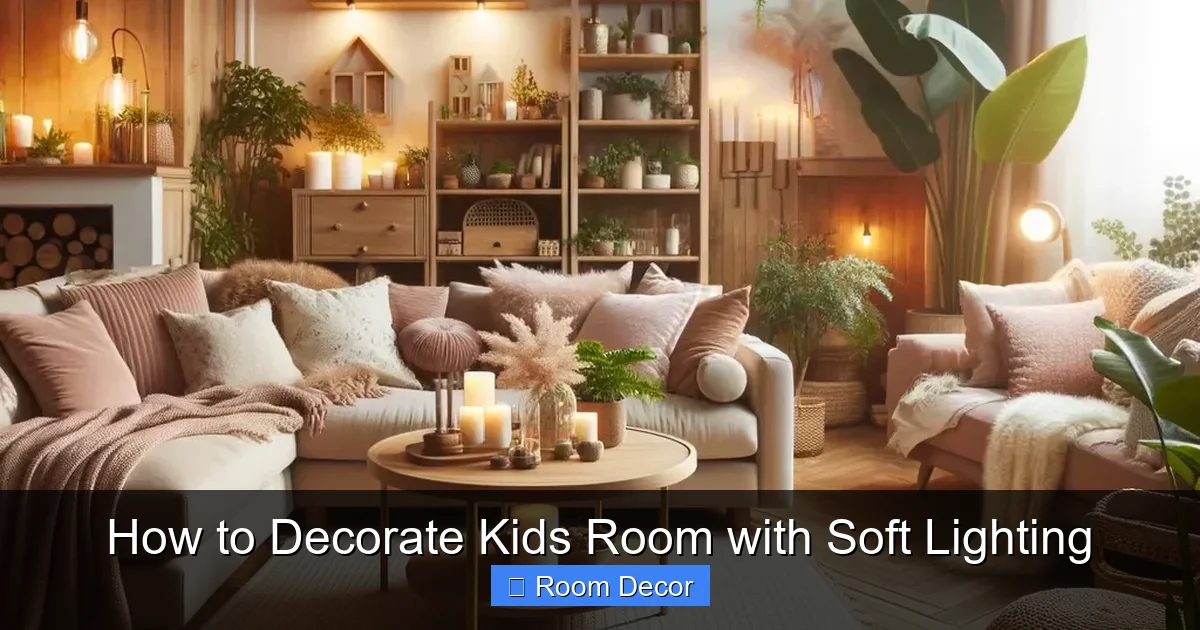
Creating a child’s room with soft lighting is an art that blends comfort, safety, and imagination. This comprehensive guide will walk you through choosing the right fixtures, bulbs, and decorative elements to foster a calming atmosphere conducive to rest and play. Discover how to layer light, implement dimmers, and prioritize safety, ensuring your child’s space is both beautiful and functional.
How to Decorate Kids Room with Soft Lighting
Welcome, fellow parents and decorators! If you’ve ever walked into a brightly lit, sterile room and felt a slight jolt, you know the power of light. Now imagine that feeling magnified for a sensitive little one. Decorating a kids’ room isn’t just about choosing cute themes or furniture; it’s also about crafting an atmosphere that nurtures their well-being. And when it comes to atmosphere, nothing is quite as transformative as soft lighting.
This guide is your comprehensive blueprint for how to decorate kids room with soft lighting, transforming it into a serene, cozy, and utterly enchanting sanctuary. We’ll explore everything from bulb choices to smart controls, ensuring safety and style go hand-in-hand. By the end, you’ll be an expert at creating a beautifully illuminated space where your child can grow, dream, and play in comfort. Let’s illuminate their world, gently!
Key Takeaways
- Layer Your Lighting: Combine ambient, task, and accent lighting to create versatile zones for play, reading, and sleep, adapting to your child’s changing needs throughout the day.
- Prioritize Warm Color Temperatures: Opt for LED bulbs with a color temperature between 2700K and 3000K (warm white) to promote relaxation and prepare children for sleep, avoiding harsh cool tones.
- Embrace Dimmers and Smart Controls: Install dimmer switches or smart lighting systems to easily adjust brightness, allowing for customizable ambiance from bright playtimes to gentle nightlights.
- Focus on Safety First: Always secure fixtures, manage cords, and choose cool-to-the-touch LED bulbs to prevent accidents and ensure a worry-free environment for your child.
- Incorporate Themed and Decorative Lights: Use string lights, novelty lamps, and subtle projectors to add a magical touch and personalize the room, making it a truly enchanting space.
- Think About Diffusers and Shades: Select lamps with fabric shades, frosted glass, or built-in diffusers to soften light output and reduce glare, making the illumination gentle on young eyes.
1. Understanding the Magic of Soft Lighting in Kids’ Rooms
Before we dive into the “how-to,” let’s understand why soft lighting is such a game-changer for a child’s space. It’s more than just aesthetics; it impacts their mood, sleep, and even their vision.
What is “Soft Lighting”?
Soft lighting isn’t about darkness; it’s about diffusion and warmth. It refers to light that is gentle, without harsh glares or shadows. Think of the warm glow of a sunset or the diffused light through a cloudy sky. Technically, this often means light sources with a lower color temperature (measured in Kelvin, K) and those that use shades or diffusers to spread the light evenly.
Why It Matters for Children
Children’s eyes are more sensitive than adults’. Harsh lighting can cause discomfort, strain, and even headaches. Soft lighting, on the other hand, offers numerous benefits:
- Promotes Better Sleep: Warm, dim light signals to the body that it’s time to wind down, supporting melatonin production and healthy sleep cycles.
- Creates a Calming Atmosphere: A gentle glow can reduce anxiety and make a room feel safer and more inviting, especially at bedtime.
- Reduces Eye Strain: Diffused light is easier on developing eyes, crucial for activities like reading, drawing, or playing.
- Encourages Imagination: Soft shadows and ambient light can create a magical, dreamy environment perfect for imaginative play and storytelling.
- Enhances Room Decor: It makes colors appear richer and textures softer, elevating the overall aesthetic of the room.
Balancing Light Levels: Day vs. Night
A kids’ room needs to be versatile. You’ll need brighter light for playtime and homework, and softer light for quiet moments and sleep. The key is creating layers of light that can be adjusted. This is central to how to decorate kids room with soft lighting effectively.
2. Planning Your Lighting Zones for Optimal Comfort
Instead of just one overhead light, think of the room in “zones.” This layered approach is fundamental to achieving truly soft and functional lighting.
The Ambient Glow: General Room Light
This is your primary, overarching light source, providing general illumination. For a kids’ room, avoid single, harsh overhead lights. Instead, opt for:
- Flush Mount or Semi-Flush Mount Fixtures: Choose ones with frosted glass or fabric diffusers to soften the light. A central fixture with a dimmer switch is ideal.
- Recessed Lighting: A few well-placed recessed lights can provide ample ambient light without being obtrusive. Ensure they are on a dimmer.
Tip: Look for fixtures that distribute light upward and outward, bouncing it off the ceiling and walls for a softer effect.
Task Lighting for Activities
This lighting is focused on specific areas where your child performs tasks. It should be bright enough for the activity but still contribute to the overall soft ambiance.
- Reading Nook: A floor lamp or a wall-mounted sconce with an adjustable arm placed next to a comfy chair or bed. Ensure the light source is diffused and doesn’t create glare.
- Desk Area: A good desk lamp is crucial for homework and creative projects. Choose one with an adjustable head and a warm LED bulb.
Tip: Position task lights so they don’t cast shadows on the work surface. For right-handers, place the light on the left, and vice-versa.
Accent and Night Lighting
This is where you add charm, comfort, and a sense of wonder. Accent lights highlight features or create a specific mood, while nightlights provide reassurance.
- Nightlights: Essential for young children. Choose ones that emit a very low, warm glow, often in whimsical shapes.
- String Lights/Fairy Lights: These can be draped around a canopy bed, along a wall, or inside a decorative jar for a magical touch. Always choose battery-operated or low-voltage LED options for safety.
- Wall Sconces: Can provide a gentle glow, especially if pointed upwards or downwards, washing the wall with light.
- Projector Lights: Star or ocean wave projectors can be incredibly soothing for bedtime routines.
Incorporating Natural Light
Don’t forget the sun! Natural light is the best light.
- Sheer Curtains: Allow daylight to filter in softly, reducing glare.
- Blackout Blinds/Curtains: Essential for nap times and blocking early morning sun, helping to maintain a dark sleep environment.
3. Choosing the Right Fixtures for a Gentle Illumination
The type of fixture plays a huge role in how light is distributed and perceived. When you decorate kids room with soft lighting, the fixtures are your canvas.
Ceiling Fixtures
- Diffused Flush Mounts: Instead of exposed bulbs, opt for fixtures with a translucent cover (like frosted glass or acrylic) that spreads the light evenly.
- Fabric Drum Shades: These provide a soft, ambient glow and come in a variety of colors and patterns to match your decor.
Wall Sconces
- Up-Lighting or Down-Lighting Sconces: These wash the wall with light rather than shining directly into the room, creating a very soft effect.
- Adjustable Sconces: Great for reading nooks, allowing light to be directed where needed without being overwhelming.
Tip: Ensure wall-mounted fixtures are securely fastened and cords are tucked away or run inside the wall.

Visual guide about How to Decorate Kids Room with Soft Lighting
Image source: thumbs.dreamstime.com
Table and Floor Lamps
These are versatile and can be moved as your child’s needs change.
- Sturdy Bases: Choose lamps with wide, heavy bases to prevent tipping.
- Fabric Shades: Essential for diffusing light. Look for shades that are light in color or have whimsical patterns.
- Appropriate Height: For table lamps, ensure the shade covers the bulb from eye level when sitting or lying down.
String Lights and Fairy Lights
These are decorative powerhouses!
- LED Only: Always use LED string lights as they stay cool to the touch.
- Battery-Operated or Low Voltage: For added safety, especially near beds or accessible areas.
- Placement: Drape them over canopies, along bookshelves, or inside clear containers.
Novelty and Themed Lamps
Fun and functional, these add personality.
- Character Nightlights: Offer comfort and a low light level.
- Projector Lamps: Create a magical ceiling display that can soothe a child to sleep.
Tip: Ensure any novelty lamp is sturdy, child-safe, and uses LED bulbs.
4. Selecting the Perfect Bulbs: The Heart of Soft Lighting
The bulb itself is perhaps the most critical element when you decorate kids room with soft lighting. It determines the light’s quality, warmth, and safety.
Color Temperature: The Warmth Factor
This is measured in Kelvin (K).
- Warm White (2700K-3000K): This is your go-to for soft lighting. It mimics the glow of incandescent bulbs, creating a cozy, inviting, and calming atmosphere. It’s ideal for bedrooms as it supports natural sleep cycles.
- Cool White (3500K-5000K): Avoid these for general room lighting in a kids’ room, especially in the evenings. They can be too stimulating and disruptive to sleep.
Brightness: Lumens, Not Watts
Forget watts; focus on lumens. Lumens measure brightness.
- Adjustable Brightness: Aim for bulbs that offer flexibility. A main ambient light might need around 800-1100 lumens (equivalent to a 60-75W incandescent), but you’ll want to dim it significantly. Nightlights should be very low (e.g., 10-50 lumens).
Bulb Types: LED for Safety and Efficiency
- LED Bulbs: These are hands down the best choice for kids’ rooms.
- Cool to the Touch: Greatly reduces the risk of burns.
- Energy Efficient: Saves on electricity bills.
- Long Lifespan: You won’t be changing bulbs often.
- Dimmable Options: Many LEDs are designed to work with dimmer switches.
Tip: Always check the packaging to ensure the LED bulb is dimmable if you plan to use a dimmer switch.

Visual guide about How to Decorate Kids Room with Soft Lighting
Image source: thumbs.dreamstime.com
Diffusers and Shades
These modify the light from the bulb.
- Frosted Bulbs: Naturally diffuse light, reducing glare.
- Fabric or Paper Shades: Soften and spread the light, adding a decorative element.
- Built-in Diffusers: Many fixtures come with integrated diffusers.
5. Integrating Decorative and Thematic Lighting Elements
This is where the room truly comes alive and becomes a reflection of your child’s personality, all while maintaining that soft, inviting glow.
Themed Nightlights and Projectors
- Star Projectors: Transform the ceiling into a galaxy, offering a soothing visual distraction for bedtime.
- Ocean Wave Projectors: Mimic gentle water movements, often with calming sounds.
- Character Nightlights: A familiar face can provide comfort and a gentle glow.
String Lights as Decor
- Canopy Drapes: Weave string lights through a bed canopy for a dreamy effect.
- Wall Art Enhancement: Outline a wall mural or frame a picture gallery with fairy lights.
- Jar Lanterns: Fill clear glass jars (placed safely out of reach) with battery-operated fairy lights for charming, portable lanterns.
Illuminated Wall Art
- Backlit Canvases: Some wall art comes with subtle LED backlighting, creating a soft glow around the piece.
- Glowing Decals: Stars or shapes that absorb light during the day and glow gently at night.
DIY Lighting Ideas
Get creative!
- Paper Lanterns: Simple, inexpensive, and can be lit internally with small LED puck lights or string lights (ensure they are LED and not hot).
- “Cloud” Lights: Attach cotton batting to a paper lantern with battery-operated LED lights inside for a whimsical cloud effect.
6. Enhancing Control with Dimmer Switches and Smart Lighting
Control is king when it comes to soft lighting. Being able to adjust the brightness instantly is invaluable.
The Power of Dimmers
- Adjustable Ambiance: Dimmers allow you to transition seamlessly from bright light for playtime to a gentle glow for story time, and finally, a very dim light for sleep.
- Energy Savings: Dimming lights also reduces energy consumption.
- Installation: Consult an electrician if you’re unsure about installing dimmer switches yourself. Ensure they are compatible with your LED bulbs.
Smart Lighting Systems
For the tech-savvy parent, smart lighting offers ultimate flexibility.
- App Control: Adjust brightness, color temperature (if using smart RGBW bulbs), and even set schedules from your phone.
- Voice Activation: Integrate with smart home assistants for hands-free control. “Hey Google, dim the lights in Lily’s room to 20%.”
- Scheduling: Program lights to gradually dim at bedtime or gently brighten in the morning, mimicking natural light cycles.
Timers and Motion Sensors
- Timers: Great for nightlights that automatically turn off after a set period, once your child is asleep.
- Motion Sensors: Can be useful for hallway lights leading to the bathroom, providing a soft guiding light without fully waking a child.
7. Safety First: Essential Considerations for Kids’ Rooms
No matter how beautiful the lighting, safety must always be the top priority in a child’s room.
Cord Management
- Hide and Secure Cords: Use cord covers, clips, or channels to keep all electrical cords out of reach and out of sight.
- Avoid Dangling Cords: Ensure no cords are within reach of small hands, especially near cribs or beds where they could pose a strangulation hazard.
Fixture Stability
- Secure Lamps: Table and floor lamps should have heavy, stable bases. Consider anchoring taller floor lamps to the wall.
- Wall-Mounted Fixtures: Ensure sconces and other wall lights are securely installed and can’t be pulled down.
Heat Emission
- Use LEDs Only: As mentioned, LEDs generate very little heat, eliminating the risk of burns from touching bulbs or fixtures. Avoid traditional incandescent or halogen bulbs.
Shatterproof Bulbs and Shields
- Plastic or Coated Bulbs: Consider bulbs made from shatter-resistant materials or those with a protective coating, especially for fixtures that might be within reach.
- Protective Covers: Some fixtures offer cages or robust diffusers that shield the bulb.
Accessibility
- Out of Reach for Toddlers: Place lamps, especially those with cords, on high shelves or dressers until children are older and understand electrical safety.
- Easy for Older Kids: Ensure switches are easily accessible for older children to operate safely.
8. Maintaining and Evolving Your Soft Lighting Scheme
A child’s room changes as they grow. Your lighting can too!
Regular Cleaning
- Dust Shades and Bulbs: Dust can reduce light output and pose a fire hazard if it accumulates on hot bulbs (though less of an issue with LEDs). Regularly wipe down shades and fixtures.
Adapting to Age
- Infant: Very dim, warm nightlights, soft ambient light.
- Toddler: A bit more task lighting for play, comforting nightlights.
- School-Age: More robust task lighting for homework, still maintaining a calming bedtime routine. Involve them in choosing new shades or accent lights!
Seasonal Adjustments
- Winter: You might want slightly brighter ambient lighting to counteract shorter, darker days.
- Summer: Rely more on natural light, using blackout blinds for early sun.
Troubleshooting Common Soft Lighting Issues
Even with the best planning, you might encounter a few snags. Here’s how to tackle them:
“It’s Still Too Bright!”
If your room feels too harsh even with “soft” bulbs, check the lumen output of your bulbs – they might be too powerful. Try lower lumen bulbs, add more diffusers (thicker shades, frosted covers), or ensure all main lights are on dimmers set to a low percentage. Remember, layering different low-lumen sources is often better than one bright source.
“It’s Too Dim!”
Conversely, if the room feels consistently gloomy, you might need more light sources. Add another accent lamp, a wall sconce, or slightly increase the lumen output of your ambient bulbs. Ensure all your chosen warm bulbs aren’t *too* yellow, as this can sometimes feel dim rather than soft. Make sure window coverings aren’t blocking too much natural light during the day.
“The Room Feels Flat!”
If your lighting lacks depth, you likely need more layers. A single overhead light, no matter how soft, won’t create interest. Add task lighting, accent lights like string lights or a novelty lamp, and experiment with different heights of light sources (floor lamp, table lamp, wall sconce) to create visual appeal and varying pockets of light.
“Safety Concerns with Existing Fixtures.”
If you have older fixtures with exposed bulbs or frayed cords, it’s best to replace them. For cords, invest in cord covers or have an electrician reroute wiring inside the walls. For unstable lamps, secure them or place them out of reach. Prioritize your child’s safety above all else.
“My Child Doesn’t Like It.”
Sometimes, what we think is soothing isn’t for them. Involve your child in the process where appropriate. Let them choose a fun nightlight, the color of string lights, or the shade for a lamp. Giving them a sense of ownership can make them more comfortable and appreciative of the space. Adjust the color temperature slightly if they find it too yellow or too white.
Conclusion
Decorating a kids’ room with soft lighting is a journey of thoughtful choices, blending aesthetics with practical benefits. By focusing on layered illumination, warm color temperatures, safe fixtures, and flexible controls, you can create a truly magical and nurturing environment for your child. This isn’t just about making a room look good; it’s about fostering better sleep, encouraging calm, and sparking imagination in a safe and inviting space. So, go ahead, illuminate their world with a gentle, loving glow, and watch them thrive under its comforting embrace!