Quick Summary:
Decorating a small bedroom is achievable and stylish! Focus on smart furniture, light colors, vertical space, and clever storage. These essential tips will help you maximize your compact room for a beautiful, functional sanctuary.
Feeling a bit cramped in your bedroom? You’re not alone! Many of us dream of spacious rooms, but end up with cozy, compact spaces. It can feel like a decorating puzzle, trying to fit everything you need while making it look good.
But don’t worry! Transforming a small bedroom from cluttered to chic is totally doable. With a few smart strategies, you can create a space that feels bigger, brighter, and more organized.
We’re going to walk through easy, practical steps to make your small bedroom a place you love. Get ready to discover how to make the most of every inch!
Making Your Small Bedroom Feel Bigger: The Magic of Illusion
Decorating a small bedroom is all about creating the illusion of space. It’s like a fun visual trick where we make things look grander than they are! We’ll use color, light, and clever furniture placement to fool the eye.
Think of it as a creative challenge. We’re not limited by square footage; we’re inspired by what we can do with it. Let’s dive into some simple techniques that make a big difference.
1. Embrace Light and Bright Colors
Light colors are your best friend in a small space. They reflect light, making walls seem to recede and the room feel more open and airy. Think soft whites, creams, pastels, and light grays.
Don’t be afraid to use these colors on your walls, ceiling, and even the floor. A monochromatic or analogous color scheme (colors next to each other on the color wheel) can also create a seamless look, expanding the visual space.
Pro Tip: If you love a pop of color, use it in your accessories like throw pillows, blankets, or artwork. This adds personality without overwhelming the space.
2. Maximize Natural Light
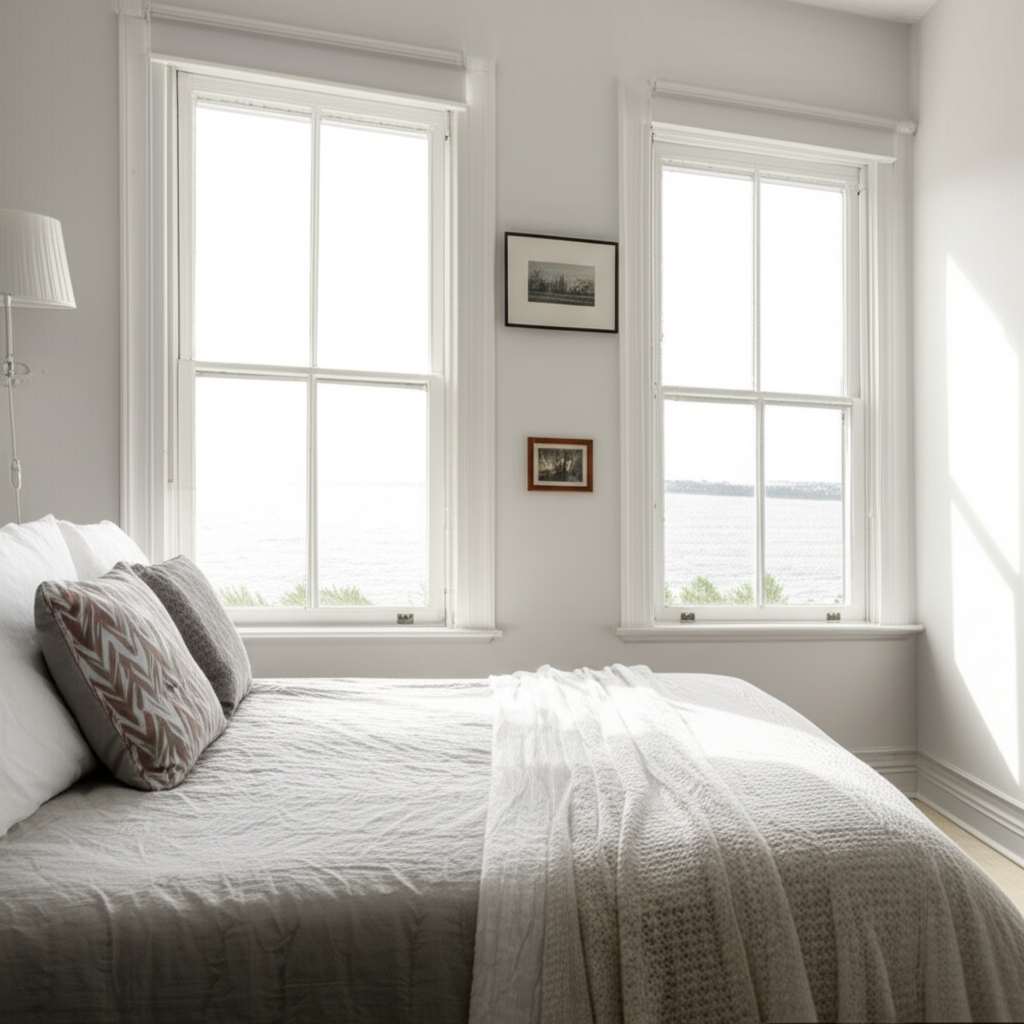
Letting in as much natural light as possible is crucial. Keep window treatments simple and light. Sheer curtains or blinds that can be fully opened will allow sunlight to flood the room.
Avoid heavy, dark drapes that can make a room feel closed off. If privacy is a concern, consider top-down/bottom-up blinds that offer flexibility.
Consider placing mirrors opposite windows. This simple trick bounces natural light around the room, instantly making it feel larger and brighter. You can find great mirror options at places like The Home Depot.
3. Strategic Furniture Choices
The furniture you choose can make or break a small bedroom. Opt for pieces that are scaled appropriately for the room. Avoid bulky, oversized items.
Look for furniture with legs, as this creates a sense of openness underneath. A bed frame with a slim profile or a platform bed can also help. Consider multi-functional furniture that serves more than one purpose.
Smart Furniture Ideas for Small Bedrooms
- Bed with Storage: A bed frame with built-in drawers or a lift-up mattress is a game-changer for stashing away linens, clothes, or other essentials.
- Floating Nightstands: Wall-mounted nightstands free up floor space and give a sleek, modern look.
- Slim Console Table: If you need a desk or vanity, a narrow console table is a great alternative to a bulky desk.
- Ottoman with Storage: A storage ottoman at the foot of your bed can serve as extra seating and a place to tuck away blankets or shoes.
4. Utilize Vertical Space
When you can’t go wider, go taller! Vertical space is often underutilized in small rooms. Think about using the walls for storage and display.
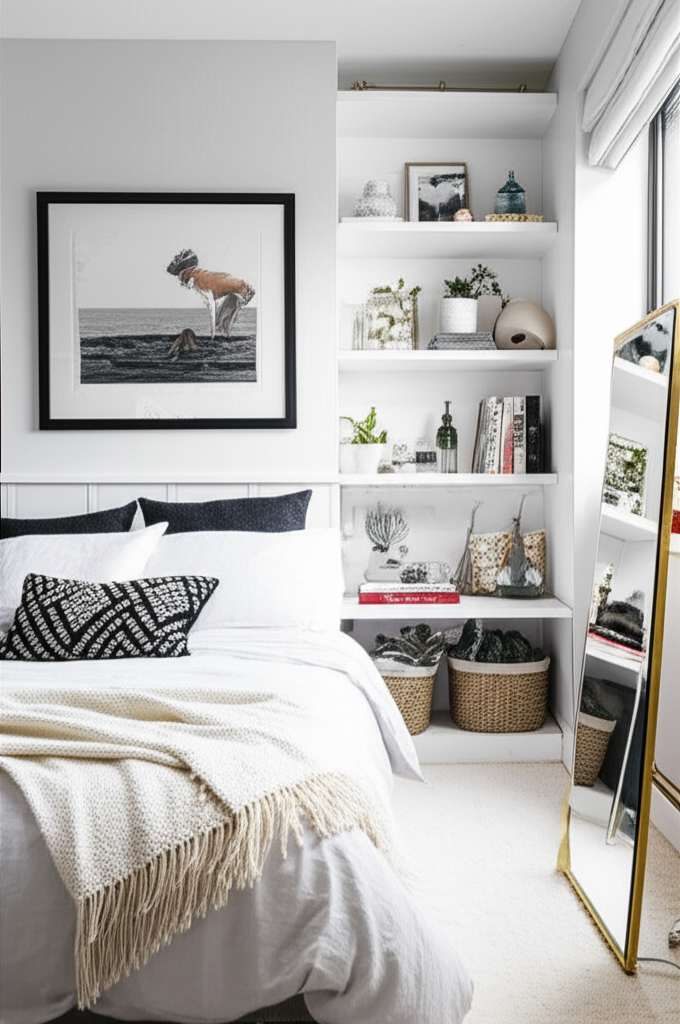
Tall, narrow bookshelves, wall-mounted shelves, and even hanging organizers can add significant storage without taking up precious floor space.
Tip: Install shelves above your bed or behind your door. These are often overlooked areas that can provide valuable storage.
5. Smart Storage Solutions
Clutter is the enemy of small spaces. Implementing smart storage is key to keeping your room tidy and feeling spacious. Everything should have a designated place.
Think about hidden storage options. Under-bed bins, closet organizers, and decorative boxes can help conceal clutter. Regularly decluttering is also essential – less stuff equals more space!
Creative Storage Hacks
- Wall-Mounted Shelving: Install shelves above your bed, desk, or dresser for books, decor, or storage bins.
- Over-the-Door Organizers: These are perfect for shoes, accessories, toiletries, or cleaning supplies.
- Drawer Dividers: Keep your drawers neat and maximize space with dividers for clothes, socks, and accessories.
- Pegboards: A stylish and versatile way to hang jewelry, bags, or even small plants.
6. The Power of Mirrors
Mirrors are magical in small spaces. They reflect light and create the illusion of depth, making the room feel much larger. A large mirror can dramatically open up a room.
Consider a floor-length mirror leaning against a wall, or a large wall mirror above a dresser or headboard. Grouping smaller mirrors can also create a visually interesting focal point while adding light.
Placement Tip: Place mirrors strategically to reflect light sources (like windows) or attractive parts of your room.
7. Choose the Right Bedding and Linens
The textiles in your room play a significant role in its overall feel. Opt for lighter colors and simple patterns for your bedding. Busy, dark patterns can make the room feel smaller.
Layering with lighter-weight throws and pillows in coordinating colors adds comfort and style without visual clutter. Crisp, white or light-colored sheets can make your bed look inviting and airy.
8. Scale Your Decor and Furniture
When decorating, always consider the scale of your items relative to the size of the room. Large, overwhelming pieces of art or furniture can make a small space feel even smaller.
Instead, opt for a few well-chosen, appropriately sized decorative items. A single, larger piece of art might be better than a gallery wall of small frames that can look cluttered.
9. Create Zones with Rugs
Even in a small bedroom, you can define different areas using rugs. A rug can anchor your bed and create a cozy zone, while a smaller rug near a seating area or vanity can visually separate that space.
Lighter-colored rugs or those with simple, subtle patterns work best to keep the space feeling open. Avoid very dark or busy patterns that can visually shrink the room.
10. Lighting is Key (Beyond Natural Light)
Good artificial lighting can transform a small bedroom. Relying solely on an overhead light can create harsh shadows and make the room feel flat. Layer your lighting.
Consider wall sconces, table lamps, and floor lamps to add warmth and dimension. Dimmers are also fantastic for adjusting the mood and light intensity.
Tip: Wall-mounted sconces are excellent for saving precious surface and floor space.
11. Keep it Clutter-Free and Organized
This is perhaps the most important tip for any small space. A cluttered room, no matter how well-decorated, will always feel small and cramped. Regular decluttering is a must.
Invest in smart storage solutions like drawer organizers, shelf dividers, and attractive bins. The goal is to have a place for everything, and everything in its place.
Learn more about effective decluttering strategies from experts at the U.S. Environmental Protection Agency on reducing waste.
12. Consider Wall Color and Paint Tricks
Beyond just light colors, there are paint tricks that can visually enhance your space. Painting the trim and ceiling the same color as the walls can create a continuous, expansive feel.
A slightly lighter shade of your wall color on the ceiling can also draw the eye upward. For very low ceilings, painting them a crisp white can make them feel higher.
Accent Wall? If you love an accent wall, choose the wall that is furthest from the door. Painting it a slightly darker or bolder color can create a sense of depth, making the room feel longer.
13. Floating Furniture for an Airy Feel
Anything that floats off the ground makes a space feel lighter and more open. This includes floating shelves, floating nightstands, and even wall-mounted televisions.
By reducing the visual “footprint” of your furniture, you create more visible floor space, which tricks the eye into thinking the room is larger than it is.
14. Smart Layout: The Bed Placement
Where you place your bed is critical. Often, placing the bed against the longest wall is the most efficient use of space. However, sometimes pushing it into a corner can free up more central floor space.
If you have two windows, consider how the bed placement interacts with them. Placing the headboard against a wall with windows might require careful curtain selection, but can also bring in beautiful light. Alternatively, placing the bed between two windows, or with a window to the side, can work well depending on the room’s layout.
Example Layout Considerations for a Small Bedroom with Two Windows
| Layout Scenario | Pros | Cons | Tips |
|---|---|---|---|
| Bed Centered Between Windows | Creates a focal point, balances the room, maximizes natural light. | May limit bedside table options, requires careful bed frame choice. | Use matching bedside tables and lamps for symmetry. Ensure curtains are adjustable to control light. |
| Bed Against Wall with One Window | Simplest for bed placement, allows for full use of the opposite wall for storage or a dresser. | May block some light from one window, depending on headboard size. | Use sheer curtains. Consider a headboard that doesn’t obscure too much of the window. |
| Bed Against Wall Opposite Windows | Maximizes light from both windows, creates an open feel. | Bed is not the focal point of the windows. | Use mirrors on the wall opposite the windows to reflect light and scenery. |
| Bed in Corner (Near One Window) | Frees up significant floor space, can feel cozy. | May make one window less accessible, can feel unbalanced. | Use wall-mounted lighting. Add a tall plant or bookshelf near the other window to balance the space. |
15. Multi-Functional Furniture is Your Secret Weapon
In a small bedroom, every piece of furniture should earn its keep. Multi-functional items are designed to do more than one job, saving you space and money.
Think about a storage ottoman that doubles as a coffee table or extra seating, a daybed that can be used as a sofa and a bed, or a desk that folds away when not in use. These clever pieces are essential for maximizing utility.
16. Keep the Decor Minimal and Intentional
Less is definitely more in a small bedroom. Resist the urge to fill every surface with knick-knacks. Choose a few meaningful decorative items that you truly love.
A well-placed plant, a couple of favorite books, or a piece of art can add personality without creating visual clutter. Group items together for a more curated look.
17. Consider a Statement Piece (Carefully!)
While minimalism is key, a single, well-chosen statement piece can add character and draw the eye, making the room feel more intentional and less like a collection of small items.
This could be a unique lamp, a striking piece of art, or a beautifully patterned rug. Just ensure it’s in proportion to the room and doesn’t overwhelm it.
18. The Illusion of Height
To make your ceiling feel higher, hang curtains higher and wider than your window frame. Extend the curtain rod several inches above the window and let the curtains fall all the way to the floor.
This draws the eye upward, creating an illusion of greater height. Vertical stripes on walls or wallpaper can also achieve a similar effect.
19. Transparent Furniture
Furniture made from clear materials like acrylic or glass can make a big impact in a small space. Because you can see through them, they don’t visually block the room.
A clear acrylic chair or a glass-topped nightstand can make the room feel more open and airy, as they have a minimal visual weight.
20. Cozy Up with Texture
Even with a light color palette, you can add warmth and depth through textures. Think chunky knit blankets, velvet pillows, a soft rug, or wooden accents.
Mixing textures adds interest and makes the space feel more inviting and layered, without adding visual clutter. This is a great way to add personality on a budget.
Frequently Asked Questions About Decorating Small Bedrooms
Q1: What is the best color to paint a small bedroom?
A1: Light and bright colors are best. Whites, off-whites, creams, light grays, and soft pastels reflect light and make the room feel more open and airy. They create a sense of spaciousness.
Q2: How can I make my small bedroom feel bigger without moving walls?
A2: Use visual tricks! Maximize natural light, use mirrors, choose furniture with legs, go vertical with storage, and opt for light colors. These elements create an illusion of more space.
Q3: What type of furniture should I avoid in a small bedroom?
A3: Avoid bulky, oversized furniture that dominates the room. Steer clear of dark, heavy pieces, and furniture that sits directly on the floor without legs. These can make the space feel cramped.
Q4: Is it okay to use dark colors in a small bedroom?
A4: While light colors are generally recommended, you can use dark colors strategically. Consider a dark accent wall on the longest wall to create depth, or use dark colors in accessories for a cozy, dramatic feel. Just balance it with plenty of light and reflective surfaces.
Q5: How do I decorate a small bedroom with two windows?
A5: Treat your windows thoughtfully. Use light, airy curtains that can be fully opened. Consider placing your bed between them for symmetry, or against a wall opposite them to maximize light. Mirrors opposite windows are also highly effective.
Q6: What are the best storage solutions for a small bedroom?
A6: Focus on multi-functional furniture (like beds with drawers), vertical storage (shelving, wall organizers), and hidden storage (under-bed bins, decorative boxes). Keep surfaces clear and declutter regularly.
Q7: How can I make my small bedroom feel more stylish?
A7: Style comes from intention. Choose a cohesive color palette, layer textures, add a few carefully selected decorative items, and ensure your room is well-organized. Good lighting and a few personal touches can elevate the style significantly.
Conclusion
Decorating a small bedroom doesn’t have to be a daunting task. By focusing on smart strategies like maximizing light, choosing appropriately scaled furniture, and utilizing vertical space, you can transform your compact room into a stylish and functional sanctuary.
Remember, it’s all about creating illusions of space and making every inch count. With these essential tips, you’re well-equipped to design a bedroom that feels open, inviting, and perfectly you, no matter its size.
For even more inspiration on maximizing small spaces, check out our guide on cozy small kitchen ideas that apply similar principles of space-saving and style.
So, go ahead and experiment! Start with one or two of these ideas, and watch your small bedroom blossom into a space you love spending time in. Happy decorating!