Creating a safe and engaging space for your little one is paramount. This guide provides step-by-step instructions on how to decorate a toddler room safely, ensuring every element from furniture to decor is child-proofed and age-appropriate. You’ll learn essential strategies for securing heavy items, making windows and outlets safe, and selecting materials that promote both fun and peace of mind for parents.
How to Decorate Toddler Room Safely
Welcome, parents! As your little one transitions from baby to toddler, their world expands rapidly, filled with boundless curiosity and energy. This is an exciting stage, but it also brings new challenges, especially when it comes to their personal space. Decorating a toddler room safely isn’t just about aesthetics; it’s about creating a secure, stimulating environment where your child can play, learn, and grow without accidental harm.
This comprehensive guide will walk you through every crucial step to decorate toddler room safely, ensuring peace of mind for you and a fun, protected haven for your child. We’ll cover everything from anchoring furniture and child-proofing essentials to choosing safe decor and setting up smart storage solutions. By the end, you’ll have all the knowledge to transform their room into a functional, beautiful, and most importantly, safe space. Let’s get started!
Key Takeaways
- Anchor All Furniture: Always secure heavy furniture like dressers, bookshelves, and changing tables to the wall using anti-tip kits to prevent tip-overs, which are a leading cause of injury.
- Prioritize Window Safety: Install cordless blinds or shades, use window guards on upper-story windows, and keep furniture away from windows to prevent falls and entanglement hazards.
- Child-Proof Electrical Outlets: Cover all unused outlets with safety caps or install tamper-resistant receptacles to protect curious toddlers from electrical shocks.
- Select Safe, Age-Appropriate Decor: Choose decor items that are sturdy, non-toxic, and free from small parts that could be choking hazards. Ensure all wall art and mirrors are securely mounted.
- Create Smart Storage Solutions: Organize toys and belongings in accessible, tip-resistant bins or low shelves. Store small or fragile items out of reach to prevent choking or breakage.
- Regularly Inspect for Hazards: Consistently check the room for new potential dangers as your toddler grows and develops new skills, adapting the environment to their changing abilities.
Step 1: Planning for Safety First
Before you pick out paint colors or adorable themed decor, the very first step in how to decorate toddler room safely is a thorough safety assessment and careful planning. This foundational work will guide all your subsequent decisions.
Assess the Current Space
Take a critical look at the room as it stands. What are its existing features? Are there old window treatments with cords? Are outlets uncovered? Is there heavy furniture that could tip? Identify potential hazards upfront. Think about your toddler’s current developmental stage and what new skills they might be learning soon, such as climbing, pulling themselves up, or opening doors. This foresight is key to proactive safety.
Define Your Toddler’s Needs and Stage
Every toddler is different! Consider your child’s unique personality, activity level, and developmental milestones. A highly active climber will need different considerations than a child who prefers quiet play. Are they still in a crib, or have they transitioned to a toddler bed? Understanding their specific needs will help you tailor the safety measures effectively as you decorate toddler room safely.
Set a Safety-First Budget
While decorating can sometimes feel costly, many safety solutions are affordable. Allocate part of your budget specifically for safety items like furniture anchors, outlet covers, and cordless blinds. Think of these as investments in your child’s well-being. Prioritizing these items ensures you don’t skip crucial safety steps.
Step 2: Securing the Foundation: Walls, Windows, and Floors
This step focuses on the structural elements of the room, ensuring they are impenetrable to a curious toddler. These are often the biggest and most overlooked safety hazards.
Anchor Furniture to Walls
This is perhaps the most critical step when you decorate toddler room safely. Heavy furniture like dressers, bookshelves, tall cabinets, and even changing tables can easily tip over if a child climbs on them or pulls drawers out. According to the CPSC, tip-over incidents are a significant cause of injury and death among young children.
- Use Anti-Tip Kits: Purchase and install anti-tip kits for *all* top-heavy furniture. These typically involve straps or brackets that secure the furniture to a wall stud.
- Follow Instructions Carefully: Read the installation instructions provided with your anti-tip kit. Ensure the anchors are drilled into wall studs, not just drywall, for maximum security.
- Test the Anchors: Once installed, gently try to pull the furniture away from the wall to ensure it is firmly anchored.
- Avoid Displaying Temptations: Keep tempting items like toys or remote controls off the top of dressers or shelves to discourage climbing.
Window Safety: Blinds, Cords, and Guards
Windows present multiple hazards, from falls to strangulation. Addressing these is essential when you decorate toddler room safely.
- Choose Cordless Window Coverings: Replace any blinds or shades with cords, which pose a strangulation risk. Opt for cordless blinds, shades, or shutters. If you can’t replace them immediately, use safety cleats to keep cords out of reach and tightly wrapped.
- Install Window Guards or Stops: For windows on upper floors, install window guards that prevent a child from falling out. For all windows, consider window stops that only allow the window to open a few inches.
- Keep Furniture Away from Windows: Position cribs, beds, and other furniture away from windows, as a child can use them to climb up and access the window.
Flooring Choices for Toddlers
The floor is where your toddler will spend a lot of time playing, crawling, and eventually running.
- Soft, Non-Slip Surfaces: Carpeting or area rugs can provide a soft landing for tumbles. Ensure any area rugs have non-slip backings to prevent them from sliding and causing falls.
- Cleanliness: Regularly clean floors to remove dust, dirt, and small objects that could be choking hazards.
Electrical Outlet Safety
Toddlers are fascinated by small holes and love to explore with their fingers.
- Cover All Unused Outlets: Use child-proof outlet covers or safety plugs for every unused electrical outlet in the room.
- Consider Tamper-Resistant Receptacles: If you are renovating, install tamper-resistant receptacles (TRRs), which have internal shutters that prevent foreign objects from being inserted.
- Manage Cords: Keep all electrical cords neatly tucked away, secured, or hidden behind furniture. Exposed cords can be a tripping hazard or a temptation for chewing.
Step 3: Choosing Safe Furniture and Decor
Now for the fun part – selecting items for the room! But remember, safety remains the top priority. This is where you really focus on how to decorate toddler room safely with specific items.
Select Age-Appropriate Furniture
Always choose furniture designed for children, meeting current safety standards. Look for certifications and avoid hand-me-down items that might not comply with modern safety regulations.
- Rounded Edges: Opt for furniture with rounded edges or corner protectors to prevent bumps and scrapes.
- Sturdy Construction: Ensure all furniture is stable and well-built, without wobbly parts or sharp corners.
Cribs, Beds, and Mattresses
The sleeping area is paramount for safety.
- Crib Safety: If still using a crib, ensure it meets current CPSC safety standards. The mattress should fit snugly, with no more than two fingers’ width between the mattress and the crib frame. Avoid drop-side cribs.
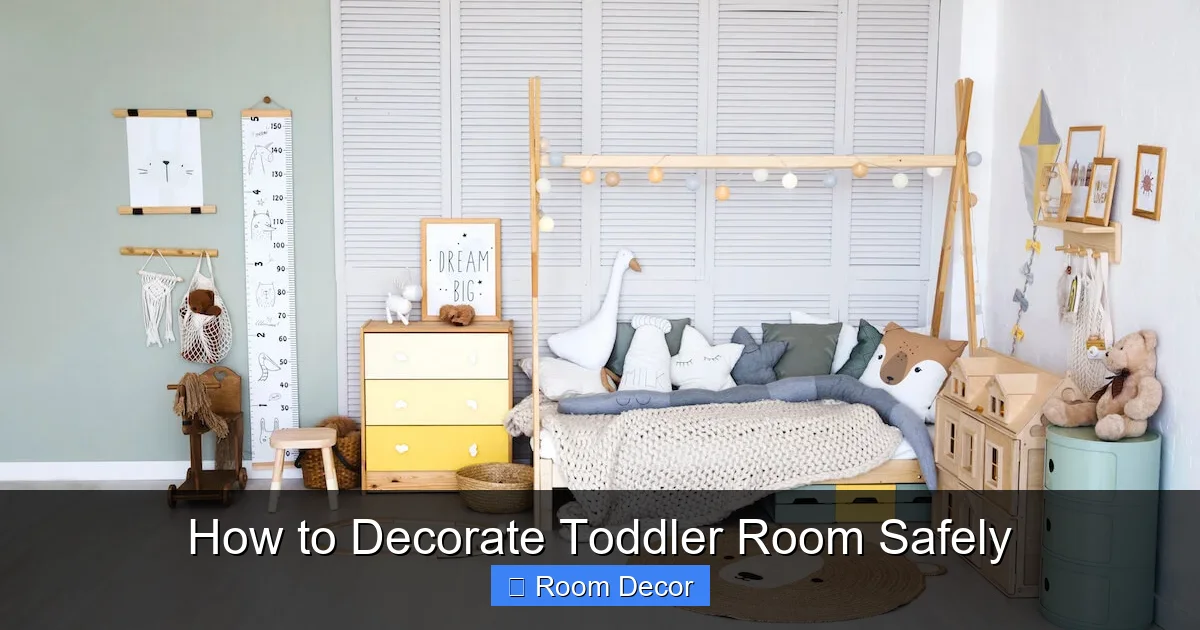
- Toddler Bed Transition: When transitioning to a toddler bed, choose one with side rails to prevent falls. Ensure the bed is low to the ground for easy access and minimal fall height.
- Firm Mattress: Whether crib or toddler bed, a firm mattress is safest. Avoid overly soft mattresses or toppers that could pose suffocation risks.
- No Pillows or Heavy Bedding (for cribs): For cribs, avoid pillows, bumpers, comforters, and excessive loose bedding. A fitted sheet and a sleep sack are generally recommended for infants and young toddlers. For older toddlers in beds, ensure pillows and blankets are appropriately sized.
Storage Solutions: Preventing Climbs and Pinches
Storage is essential but must be safe.
- Tip-Resistant Bins and Chests: Use bins or chests that are heavy enough not to tip when empty or partially filled, or secure them as you would other furniture.
- Drawer Stops: Ensure dressers and cabinets have drawer stops to prevent toddlers from pulling drawers completely out, which can fall on them or be used as steps.
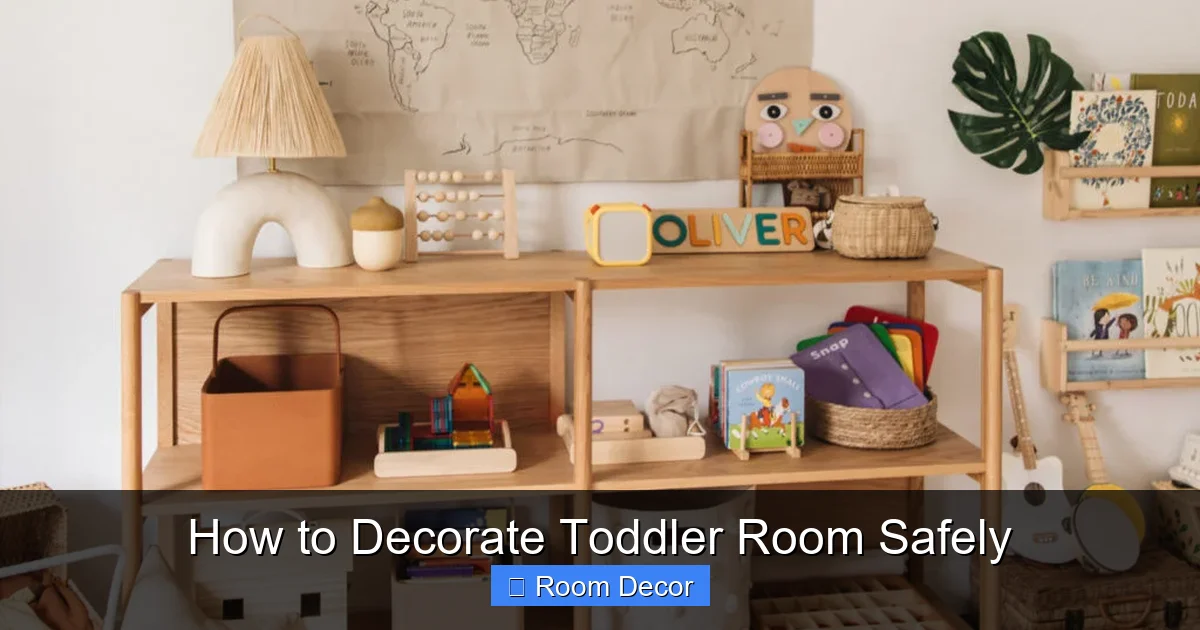
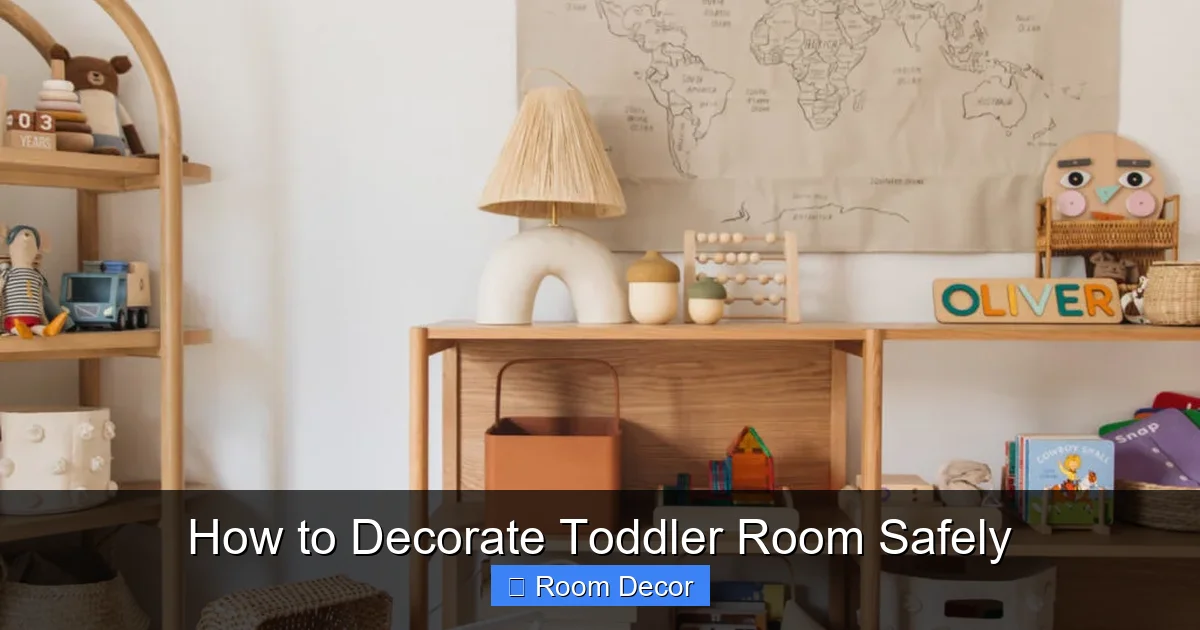
- Low, Accessible Shelving: Keep frequently used toys on low, open shelves that are easily accessible to your toddler, reducing the need to climb.
Safe Decor Elements: Art, Mirrors, and Shelves
Decor adds personality, but small details matter when you decorate toddler room safely.
- Secure Wall Hangings: All wall art, pictures, and mirrors must be securely mounted to wall studs with appropriate hardware. Avoid hanging heavy items directly over the crib or bed.
- Shatterproof Mirrors: If incorporating mirrors, choose shatterproof acrylic mirrors or those with safety backing.
- High Shelves for Delicate Items: Place decorative items that are fragile, small, or heavy on high shelves well out of your toddler’s reach.
- Non-Toxic Materials: Ensure any paint, glues, or finishes used on decor are non-toxic and child-safe.
Lighting the Room Safely
Good lighting is important, but fixtures need to be safe.
- Secure Lamps: Opt for wall-mounted or recessed lighting where possible. If using table or floor lamps, ensure they are stable and heavy-based, not easily tipped over. Keep cords out of reach.
- Night Lights: Use enclosed night lights that fit snugly into outlets and don’t protrude significantly.
Step 4: Smart Storage and Organization
An organized room is often a safer room. Thoughtful storage helps keep hazards out of reach and minimizes clutter.
Keep Small Items Out of Reach
This is a golden rule for how to decorate toddler room safely. Toddlers explore with their mouths.
- Choking Hazards: Any item smaller than a toilet paper roll can be a choking hazard. This includes small toy parts, beads, coins, batteries, and certain craft supplies. Store these items in high, locked cabinets or on shelves that are completely inaccessible to your toddler.
- Harmful Substances: Keep medications, cleaning supplies, and other hazardous chemicals locked away, preferably in a cabinet outside the toddler’s room.
Organize Toys for Easy Access and Safety
A well-organized toy system encourages independent play and reduces risks.
- Low Bins and Baskets: Use open bins or baskets on low shelves for easy access to toys. Choose soft, flexible materials over hard plastic or metal where possible.
- Rotate Toys: Rotate toys periodically to keep the room from becoming overwhelmed and to maintain your toddler’s interest in fewer, safer toys.
Use Child-Proof Latches and Locks
For cabinets or drawers that must contain less safe items, latches are a must.
- Cabinet and Drawer Locks: Install child-proof latches on any cabinets or drawers containing items you don’t want your toddler to access.
- Door Knob Covers: Consider door knob covers on doors to other rooms (like bathrooms or utility closets) if you want to restrict access.
Step 5: Textiles and Soft Furnishings
Soft furnishings add warmth and comfort, but they also need to be safe.
Bedding and Linens
Once your child is in a toddler bed, you can introduce more traditional bedding, but still with caution.
- Fitted Sheets: Always use fitted sheets that snugly fit the mattress.
- Lightweight Blankets: Choose lightweight blankets appropriate for the season.
- Age-Appropriate Pillows: Introduce a small, flat pillow when your toddler is at least two years old, or as advised by your pediatrician.
Rugs and Playmats
These can soften falls and define play areas.
- Non-Slip Backing: As mentioned, ensure all rugs have a non-slip backing to prevent trips and falls.
- Washable Materials: Choose rugs and playmats made from materials that are easy to clean, as spills and messes are inevitable.
- Low Pile: Low-pile rugs are often easier to clean and pose less of a tripping hazard than high-pile shags.
Curtains and Drapes
While already covered under window safety, consider the textile aspect.
- Short or Tie-Back: If using drapes, ensure they are either short enough not to pool on the floor (where a toddler could pull on them) or securely tied back out of reach.
- Lightweight Fabric: Heavy drapes could potentially fall if pulled forcefully. Choose lightweight fabrics if your child can reach them.
Step 6: Ongoing Safety Checks and Adjustments
Decorating a toddler room safely isn’t a one-time task. It’s an ongoing process.
Regular Safety Inspections
Make it a habit to regularly inspect the room.
- Daily Quick Scan: A quick glance each day can spot obvious issues like loose cords or misplaced small items.
- Weekly Deep Dive: Once a week, spend a few minutes actively checking furniture anchors, outlet covers, window locks, and toy bins for wear and tear or new hazards.
- Seasonal Review: Conduct a more thorough safety review a few times a year, imagining the room from your toddler’s perspective. Get down on their level to see what they see.
Adapt as Your Toddler Grows
Your toddler’s abilities and needs will constantly change.
- New Skills: As they learn to climb, jump, or open new things, new hazards may emerge. Adapt the room accordingly.
- Toy Storage: As their toy collection grows and changes, re-evaluate your storage solutions to keep it safe and organized.
- Bed Transition: Be ready to transition from a crib to a toddler bed, or from a toddler bed to a twin bed, when the time is right, always prioritizing safety.
Involve Your Toddler in Safety Habits
As they get older, you can start teaching your toddler about safety in their room.
- “Hands Off” Zones: Teach them that certain areas or items are “hands off.”
- Putting Toys Away: Encourage them to put toys back in their designated spots, helping to keep the floor clear of tripping hazards.
- Gentle Play: Teach them to play gently with furniture and not to climb on things not meant for climbing.
Troubleshooting Common Safety Oversights
Even with the best intentions, some safety issues might pop up. Here’s how to address them:
My Toddler Keeps Climbing the Bookshelf/Dresser.
This is a very common and dangerous behavior.
Solution: First, ensure the furniture is securely anchored to the wall. If it continues, remove any tempting items from the lower shelves or drawers. Place heavier items on lower shelves to make climbing less appealing. Consider using magnetic or internal cabinet locks if they are using drawers as steps. Reinforce boundaries verbally and physically redirect them.
Visual guide about How to Decorate Toddler Room Safely
Image source: newdarlings.com
Visual guide about How to Decorate Toddler Room Safely
Image source: newdarlings.com
Visual guide about How to Decorate Toddler Room Safely
Image source: coasterfurniture.com
My Toddler Plays with Electrical Outlets Despite Covers.
Sometimes persistent toddlers can remove standard outlet covers.
Solution: Upgrade to tamper-resistant outlet covers that require a specific action to open or that are built into the outlet itself (TRRs). You can also place furniture directly in front of less-used outlets to block access, ensuring it doesn’t obstruct airflow to electronics.
My Toddler Keeps Pulling Down the Curtains.
Curtains can be a strong temptation for pulling.
Solution: Ensure the curtain rod is securely installed and robust. If they can reach the curtains, consider replacing them with cordless Roman shades or blinds that are completely out of reach. If keeping curtains, ensure they are lightweight and tied back with decorative, strong ties.
There Are Too Many Small Toy Pieces.
Some toys come with tiny accessories that are hard to manage.
Solution: Designate a high, locked cabinet or a bin that is completely out of reach for any toys with small, detachable parts. You may need to remove these parts entirely until your child is older. Periodically declutter and sort toys, removing anything that has become a choking hazard.
Conclusion
Decorating a toddler room safely is a journey of careful planning, thoughtful choices, and ongoing vigilance. By prioritizing safety measures like furniture anchoring, window security, and smart storage, you create a nurturing environment where your child can thrive without unnecessary risks. Remember, a safe room is a joyful room, allowing your toddler the freedom to explore and learn, and giving you the peace of mind to watch them grow. Keep these tips in mind as you continually adapt their space, and enjoy creating a wonderful, secure haven for your little explorer!