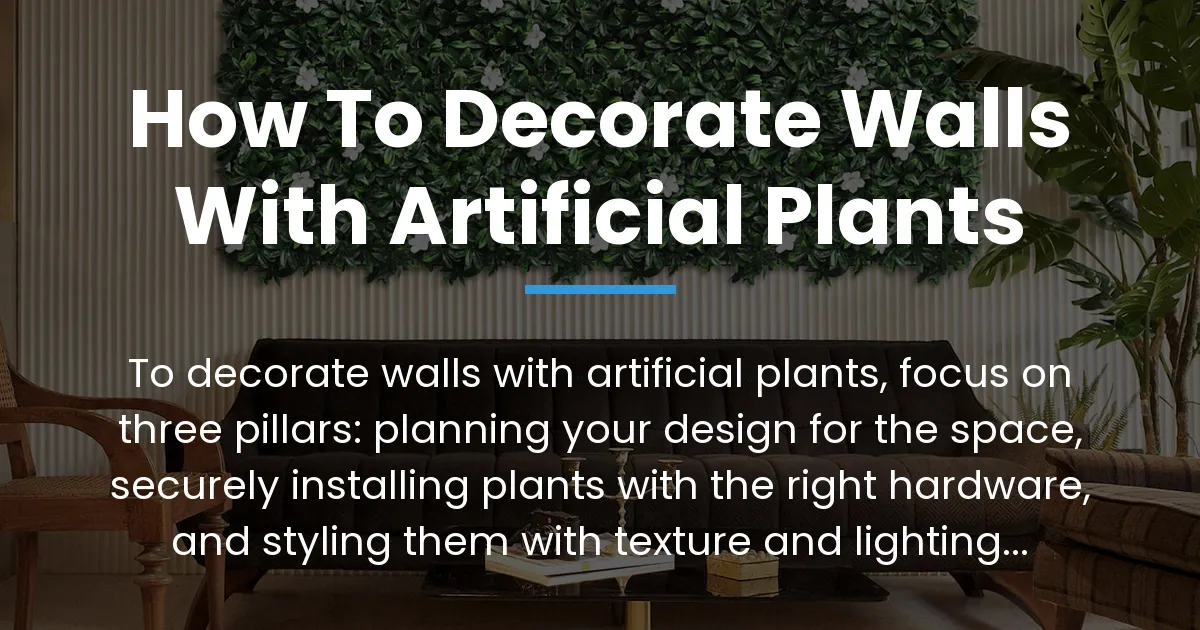
Decorating walls with artificial plants is a brilliant way to bring permanent, zero-maintenance life into any room. The secret to success moves far beyond just sticking a fake plant on a shelf. True mastery comes from combining smart design planning, proper mechanical installation, and clever styling techniques for realism. This guide will walk you through that complete system, transforming your walls with greenery that looks intentional and authentic.
Planning Your Artificial Plant Wall Design
Before you buy a single leaf, the most important step is planning. Rushing to purchase is how you end up with pieces that feel out of place or underwhelming. This phase is about making intentional choices that work with your specific space.
Start by looking at the wall itself. Is it a large, blank canvas in your living room or a narrow slice of space in a hallway? The wall’s size and shape will guide your scale. A massive, empty wall can handle a big statement piece like a tall faux fiddle leaf fig tree or a grid of artificial boxwood panels. A smaller wall might be perfect for a delicate arrangement of hanging eucalyptus stems or a single beautiful planter.
Next, consider the light in the room. Note where the natural light falls and where your artificial lights are. Even though faux plants don’t need light to live, light dramatically affects how they look. You can use spotlights to create beautiful, realistic shadows behind leaves, adding depth. Avoid placing very shiny artificial plants directly under harsh overhead lights, as this can amplify their fake appearance.
Choosing Your Type of Greenery
Your goal and the room’s function will point you to the right kind of artificial plants. For full, lush coverage, artificial plant wall panels are a popular choice. These are often modular pieces, like boxwood or ivy panels, that you connect to cover a large area seamlessly. They are fantastic for creating a green accent wall or covering up an unsightly fence indoors.
For a more curated, artistic look, individual plants are the way to go. Think of mounted artificial anthurium stems, a potted fake snake plant on a floating shelf, or a trailing faux pothos vine. Mixing types is key. A large leafy tree in a corner, combined with some medium potted plants and a few hanging vines, creates a layered, natural ecosystem on your wall.
Creating a Visual Balance Plan
Grab a pencil and paper or use a simple digital app to sketch your wall. Mark where windows, doors, and outlets are. Now, play with layout ideas. The goal is visual balance, which doesn’t always mean perfect symmetry.
For a calm, formal look, symmetrical arrangements work well. You could place two identical potted artificial plants on shelves flanking a window. For a more dynamic, modern feel, try an asymmetrical layout. Imagine a cluster of three different sized plants in one area, balanced by a single, longer trailing vine snaking down the other side of the wall. This creates movement and interest.
Always think about the flow of the room. Use trailing plants to lead the eye toward a beautiful piece of art or a cozy seating area. Let your wall greenery be a part of the room’s story, not an isolated decoration.
Mounting and Arranging Your Artificial Plants
This is the core “how-to” where ideas become reality. A secure and thoughtful installation is what separates a professional-looking display from a haphazard one. The method you choose depends entirely on what you are hanging.
First, gather your essential tools. You will likely need a stud finder, a level, a measuring tape, a pencil, and a drill. For hardware, have a variety of options ready: sturdy wall hooks, picture-hanging wire, clear fishing line for invisible hanging, heavy-duty drywall anchors, and brackets. For very lightweight items, high-weight-capacity command strips can be a good no-hole solution.
Installing Heavy Potted Plants and Trees
A large faux tree in a planter, like a faux fiddle leaf fig, has significant weight. The safest method is to secure it directly to a wall stud. Use a sturdy bracket or a large, robust hook anchored into the wood stud behind your drywall. If the planter will sit on a floating shelf, ensure the shelf is also firmly anchored into studs and that the planter is secured to the shelf with museum putty or a discreet strap to prevent tipping.
Never rely on standard drywall anchors alone for heavy items. They can pull out over time. If you cannot hit a stud, use heavy-duty toggle bolt anchors designed to spread the weight across a larger area of the wall from behind.
Hanging Wall Panels and Lightweight Stems
Artificial plant wall panels often come with interlocking systems or grommets. Follow the manufacturer’s instructions, but the principle is to create a unified, seamless field of green. Use a level constantly as you work across the wall to keep lines straight. For lightweight individual stems or garlands, like faux eucalyptus, clear adhesive hooks or small nails are perfect.
The trick with hanging vines is to create a natural, organic drape, not a stiff line. Use multiple small hooks along the path you want the vine to take. Gently weave the stem through the hooks, allowing it to curve and loop slightly between attachment points. This mimics the way a real vine grows and searches for light.
Arranging for Natural Impact
Once everything is securely on the wall, step back and look at the arrangement. This is where you finesse. Layer your plants by bringing some forward and others back. If you have shelves, place a plant at the front of one and at the back of another to create depth.
Direct the growth patterns. Bend the stems of your artificial plants gently to curve toward the light source in the room. Tuck a leaf behind a picture frame or let a vine creep over the edge of a mirror. This integration makes the plants feel like a living part of the architecture, not just objects placed against it.
Styling Tips for a Realistic Look
The final, and most rewarding, phase is styling. This is how you beat the “fake” look and create a display that makes people do a double-take. The goal is to break up the perfection that comes from a factory box.
Start by combining different textures and varieties. Do not buy a “matched set” of three identical plants. Instead, mix leaf sizes and shapes. Pair the broad, glossy leaves of a faux bird of paradise with the feathery, fine texture of an artificial fern or the waxy leaves of a fake succulent. Use different shades of green and even some plants with hints of brown or cream on the edges, as real plants have.
The Art of Imperfection
Take your plants out of the box and immediately modify them. Gently bend and twist the stems and branches to give them a unique shape, as no two real plants grow exactly alike. Carefully separate leaves that are fused together from the mold. If a plant looks too uniformly full, you can even trim a few leaves or small stems with wire cutters to create a more natural silhouette.
For plants that look too shiny, a light dusting with matte finishing spray, designed for crafts, can tone down the plastic gloss. Always test this spray on a small, hidden part of the plant first.
Integrating Lighting and Decor
Lighting is your best friend for adding realism. A small, directional LED spot or puck light placed above or below a wall plant will cast authentic-looking shadows on the wall behind it. This adds incredible depth and makes the plant look three-dimensional.
Integrate your plants with other decor. Place a small potted artificial plant in front of a stack of books on a shelf. Let a vine partially frame a piece of art. Choose planters that complement your room’s style—a modern ceramic pot for a contemporary space or a woven basket for a boho feel. This blending makes the greenery feel curated and at home.
Maintaining Your Artificial Wall Garden
While you won’t need to water your wall, a little maintenance keeps it looking fresh. Dust is the main enemy. Every few months, use a hairdryer on a cool, low setting or a soft brush attachment on a vacuum cleaner to gently remove dust from leaves and stems.
Every so often, check the security of your hardware. Tighten any screws or brackets that may have loosened. One of the joys of artificial plants is the ability to change them with the seasons or your mood. You can swap out a few stems or add a string of fairy lights for the holidays to give your wall a quick and easy refresh.
Frequently Asked Questions
How much weight can drywall hold for artificial plants?
A standard drywall anchor might hold 10-20 pounds, but for safety, always aim to screw heavy items directly into a wall stud, which can hold over 100 pounds. For medium-weight plants where you can’t find a stud, use heavy-duty toggle bolts.
Can artificial plants be used in a bathroom?
Yes, but choose high-quality artificial plants labeled for humidity. Bathroom steam can lower the lifespan of some materials, so ensure they are well-sealed and dust them regularly to prevent mold from forming on dust particles.
How do I clean dust off artificial plants on the wall?
Use a hairdryer on the cool setting to blow dust away, or a soft microfiber duster. For a deeper clean, lightly wipe leaves with a damp cloth. Avoid harsh chemicals that could damage the material.
What is the difference between artificial plant wall panels and individual plants?
Panels are for creating a uniform, full-coverage green wall or privacy screen. Individual plants, like potted trees or hanging stems, are for accent decoration, allowing for more creative and varied arrangements.
How can I stop my artificial wall plants from looking shiny?
You can lightly spray them with a matte sealer or even gently dust them with a tiny amount of cornstarch using a makeup brush. The best long-term solution is to buy higher-quality plants with a matte finish from the start.
Are there artificial plants safe for outdoor wall use?
Yes, look for plants specifically labeled “UV protected” or “for outdoor use.” These are made with materials that resist fading and degradation from sunlight and weather.
How do I choose the right color of artificial greenery for my wall?
Match the tone to your room. Cool, grayish greens work well in modern spaces, while warmer, brighter greens feel more traditional or tropical. Bring a pillowcase or paint swatch with you when shopping to compare colors.
Can I use real planters with fake plants on the wall?
Absolutely. Using a beautiful, real planter is one of the best tricks to make an artificial plant look real. Just ensure the planter is properly secured to the wall and the plant is firmly anchored inside it with foam or rocks.
What type of artificial plant is best for a narrow vertical space?
Tall, narrow plants like fake snake plants, vertical wall-mounted stem arrangements, or long trailing vines are perfect for drawing the eye upward in a tight space without taking much horizontal room.
How often should I rearrange my artificial wall plants?
There’s no set rule, but doing it seasonally or when you feel the room needs a refresh is a great idea. It prevents the display from becoming static and lets you experiment with new layouts.
Learning how to decorate walls with artificial plants successfully turns them from simple decorations into integral parts of your home’s character. By following the journey from thoughtful planning and secure installation to artistic styling, you equip yourself to create a lasting, beautiful, and customizable green space. The result is a wall that feels alive, layered, and uniquely yours, all without a single drop of water.