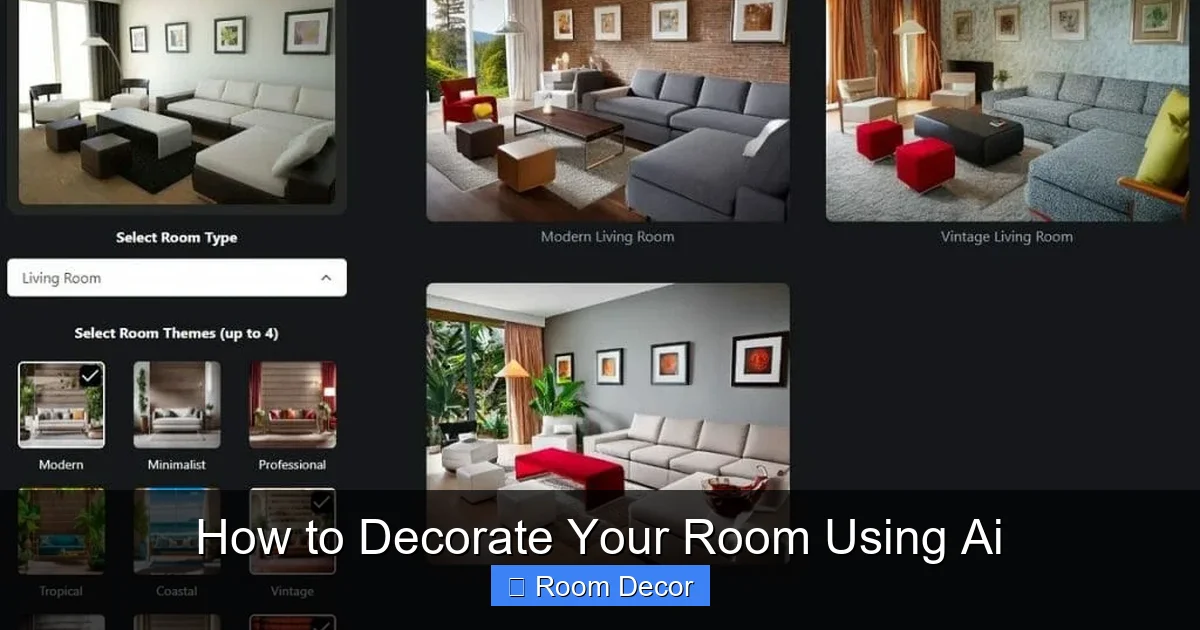
Transform your living space with the power of Artificial Intelligence! This guide shows you how to use AI tools to brainstorm design ideas, visualize your dream room, and even find the perfect decor items. Discover how AI can make room decoration more accessible, personalized, and fun than ever before.
How to Decorate Your Room Using AI
Are you dreaming of a room makeover but feel overwhelmed by the endless possibilities? Or perhaps you have a vision but struggle to translate it into a tangible design? What if you could have a creative assistant, available 24/7, that understands your style and can show you exactly what your dream room would look like? Welcome to the future of interior decorating, powered by Artificial Intelligence (AI)! This guide will walk you through how to decorate your room using AI, making the process exciting, intuitive, and remarkably effective.
For a long time, decorating a room meant flipping through magazines, browsing endless websites, and relying on a good dose of imagination. While these methods still have their charm, AI is revolutionizing how we approach interior design. It offers a unique blend of creativity, personalization, and practicality. From generating novel design concepts to virtually placing furniture, AI tools are becoming indispensable for anyone looking to refresh their living space.
In this comprehensive guide, you’ll learn:
- How to use AI to brainstorm design ideas and discover new styles.
- The best AI tools for visualizing your dream room in stunning detail.
- How to get personalized recommendations for furniture and decor.
- Tips for translating AI-generated designs into a real-world budget and plan.
- How to overcome common challenges when decorating with AI.
So, let’s dive in and unlock the potential of AI to create a room that truly reflects you!
Key Takeaways
- AI as a Creative Partner: AI tools act as powerful brainstorming partners, offering endless design concepts tailored to your preferences.
- Visualizing Your Vision: Utilize AI image generators to create realistic visualizations of your room’s potential before making any purchases.
- Style and Theme Discovery: AI can help you identify and refine your personal style and choose cohesive themes for your decor.
- Personalized Recommendations: Leverage AI to get tailored suggestions for furniture, color palettes, and decor items that fit your specific needs and tastes.
- Budget-Friendly Exploration: AI allows for extensive experimentation with design ideas without the immediate cost of physical samples or purchases.
- Streamlined Shopping: AI-powered tools can simplify the shopping process by directing you to specific products that match your visualized designs.
Step 1: Define Your Starting Point and Goals
Before you even think about AI, it’s crucial to have a clear understanding of what you want to achieve. AI is a powerful tool, but it works best when guided by your intentions. Think about the function of the room, your preferred aesthetic, and any existing pieces you want to incorporate.
Assess Your Current Space
Walk through your room and take note of its current state. What do you like? What don’t you like? Consider the size, layout, natural light, and any architectural features.
Identify Your Needs and Wants
What do you want to do in this room? Is it a relaxing sanctuary, a productive workspace, or a vibrant entertainment hub? List the essential functions and desired moods.
Gather Inspiration (Optional but Recommended)
Even with AI, having a starting point for your aesthetic can be helpful. Collect images of rooms, colors, or styles that catch your eye. This can be from Pinterest, Instagram, or even photos you’ve taken.
Example: Let’s say you want to redecorate your bedroom. Your current room feels cluttered and a bit drab. You want it to be a peaceful retreat where you can unwind. You love natural light and the color green.
Step 2: Leverage AI for Design Inspiration and Idea Generation
This is where the magic of AI truly begins. AI-powered design tools can generate a vast array of ideas, often surprising you with creative combinations you might not have considered.
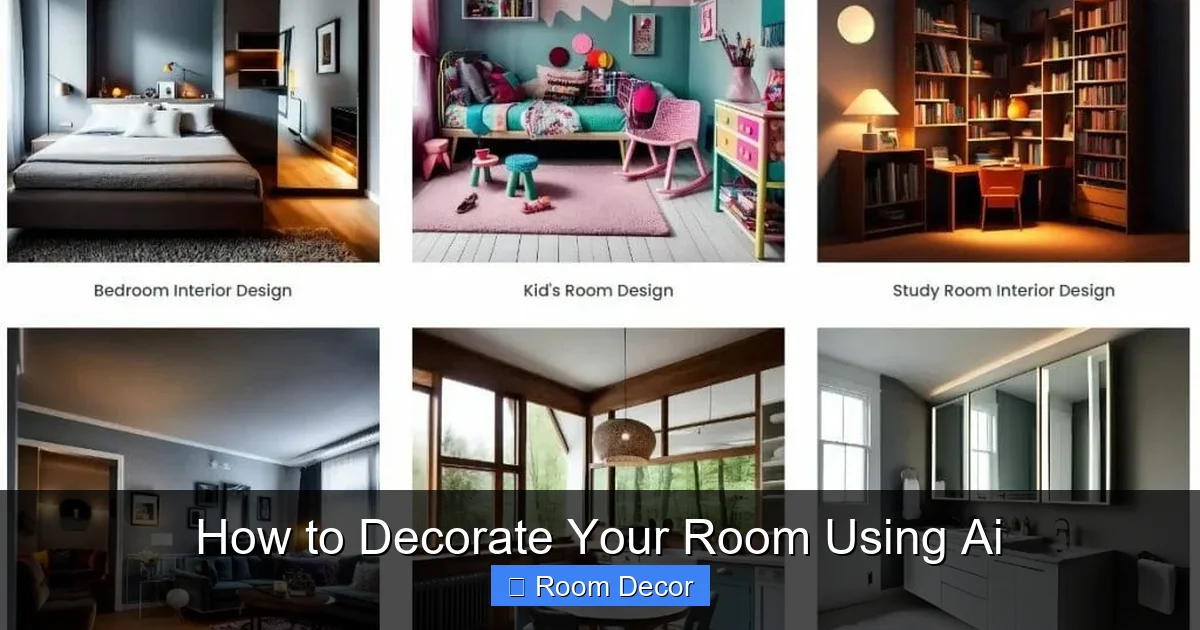
Visual guide about How to Decorate Your Room Using Ai
Image source: decorilla.com
Using AI Text-to-Image Generators
Tools like Midjourney, DALL-E 2, Stable Diffusion, or even free online versions can be your primary source of inspiration. You’ll provide a text prompt, and the AI will generate images based on your description.
Crafting Effective Prompts
The key to getting great results from AI image generators is to write detailed and descriptive prompts. Be specific about the style, colors, furniture types, mood, and even the overall atmosphere you’re aiming for.
- Include keywords: “modern,” “bohemian,” “minimalist,” “cozy,” “vibrant,” “calm.”
- Specify colors: “sage green walls,” “warm wood tones,” “navy blue accents.”
- Describe furniture: “a plush velvet sofa,” “a minimalist oak desk,” “rattan accent chairs.”
- Mention the mood: “a serene and tranquil bedroom,” “an energetic and playful living room.”
- Add stylistic details: “lots of natural light,” “abstract art on the walls,” “indoor plants.”
Prompt Example: “A serene and tranquil bedroom with sage green walls, a large window with sheer curtains letting in natural light, a minimalist wooden bed with crisp white linens, a few potted plants on a small bedside table, and a cozy reading nook with a plush armchair.”
Experimenting with Different Styles and Themes
Don’t be afraid to play around! Try prompts that combine unexpected elements to see what the AI comes up with. You might discover a unique style that perfectly suits you.
Example: After generating a few “serene bedroom” images, you might try: “A bohemian-inspired bedroom with earthy tones, macrame wall hangings, a canopy bed, and lots of plants, bathed in soft morning light.” Or, “A modern, minimalist living room with a sleek grey sofa, a large abstract art piece, and strategically placed lighting.”
AI-Powered Interior Design Platforms
Some platforms are specifically designed for interior design and incorporate AI. These often allow you to upload a photo of your room and then apply different styles or virtually place furniture.
- Examples: Havenly, Modsy (though business models can change, look for AI-driven interior design services). Many furniture retailers also offer AI visualization tools on their websites.
These platforms can be great for seeing how specific pieces of furniture might look in your space or for exploring pre-defined design styles.
Step 3: Visualize Your Dream Room with AI
Generating ideas is exciting, but seeing is believing. AI tools allow you to create realistic visual representations of your chosen design concepts.
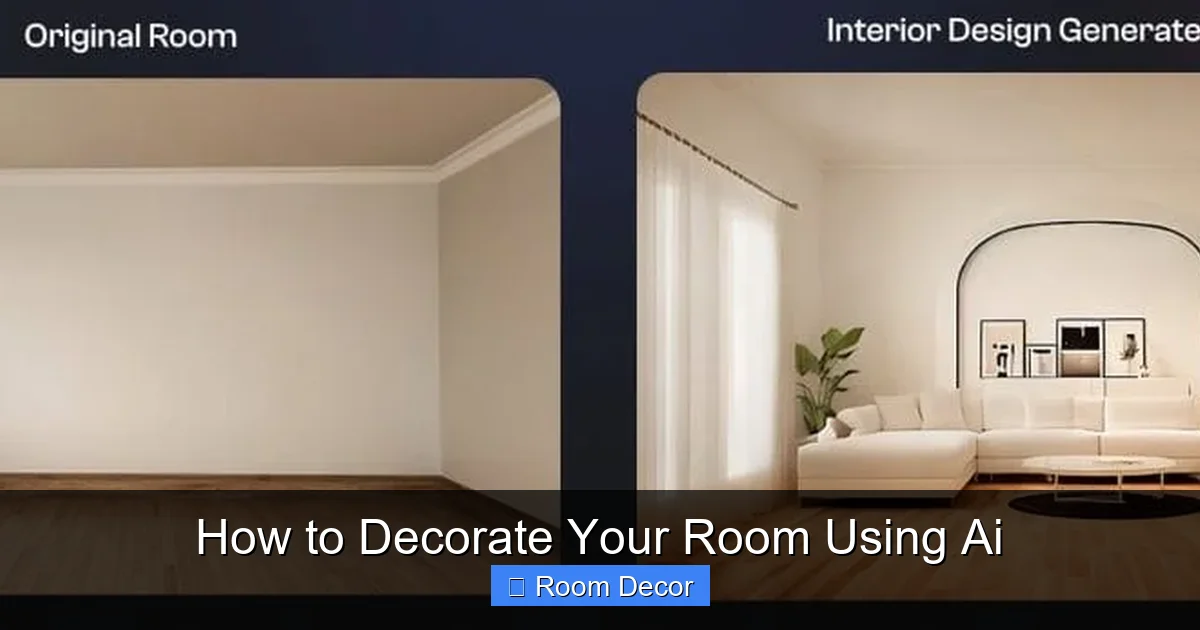
Visual guide about How to Decorate Your Room Using Ai
Image source: decorilla.com
Using AI Image Generators for Room Mockups
The text-to-image generators mentioned earlier are excellent for this. Once you have a concept that resonates, refine your prompts to create more specific mockups of your actual room, if you can describe its dimensions or upload a basic sketch. If not, you can generate aspirational mockups.
Prompt Refinement: If your first generated image is close but not perfect, iterate on your prompt. Add details like “view from the doorway,” “showing the corner with the bookshelf,” or “with a large rug in the center.”
Virtual Staging and Furniture Placement Tools
Some AI interior design platforms go a step further. You can upload a photo of your room, and their AI can then virtually “stage” it with different furniture and decor items. This is incredibly useful for understanding scale and how different pieces will fit.
- How it works: These tools often allow you to select furniture from a catalog and place it in your virtual room. The AI can help with realistic lighting and perspectives.
Example: After generating an AI image of your ideal serene bedroom, you might use a virtual staging tool to upload a photo of your actual bedroom. Then, you can select a bed frame, dresser, and rug that resemble those in your AI inspiration image and see how they would look in your space.
Color Palette Exploration
AI can also assist with color palettes. You can ask AI to generate color schemes based on a mood or a specific image. You can also feed an AI image generator a photo of your room and ask it to suggest complementary colors or to reimagine the room in a different color palette.
Prompt Example: “Generate a calming color palette for a bedroom inspired by a forest landscape.” Or, “Reimagine this room in a bold, vibrant color scheme.”
Step 4: Get Personalized Decor Recommendations
Once you have a clear visual direction, AI can help you find the actual products to bring your design to life.
AI-Powered Shopping Assistants
Many online retailers are integrating AI to provide personalized product recommendations. These tools learn your preferences as you browse and can suggest items that match your style and budget.
Reverse Image Search for Decor Items
If you see a piece of furniture or decor in an AI-generated image that you love, you can use reverse image search tools (like Google Lens or dedicated shopping apps) to find similar items for sale. While not strictly AI for design, it’s a powerful AI-driven discovery tool.
AI for Budgeting and Item Matching
Some advanced AI tools are starting to integrate budgeting and item matching. You can input your budget, and the AI can suggest items within that range that fit your design concept. You can also upload images of items you own and ask AI to suggest complementary pieces.
Example: You loved the minimalist oak bed from your AI-generated bedroom mockup. You can then use AI shopping assistants or search engines to find “minimalist oak bed frames under $800.” If you find a rug you like, you can ask an AI tool, “What kind of coffee table would go well with this rug?”
Step 5: Planning and Execution
AI is a fantastic tool for inspiration and visualization, but the actual decorating requires planning and action.
Creating a Shopping List
Based on your visualized designs and AI recommendations, create a detailed shopping list. Prioritize essential items and then move on to decorative accents.
Budgeting and Sourcing
AI can help you find items within your budget. Compare prices from different retailers and consider second-hand options. AI-generated mockups can help you avoid impulse buys by giving you a clear vision of the final result.
DIY and Customization with AI Guidance
Sometimes, the perfect item isn’t readily available. AI can inspire DIY projects. For instance, you might see an AI-generated image of a custom-built bookshelf and then use AI to brainstorm simple DIY instructions or to find tutorials.
Putting It All Together
Start with the larger items like furniture, then move on to paint colors, lighting, and finally, accessories. Refer back to your AI visualizations frequently to ensure you’re staying true to your design.
Troubleshooting Common AI Decorating Challenges
While AI is incredibly powerful, there can be a few hiccups along the way.
Challenge: AI Images are Too Generic or Not Quite Right
Solution: Refine your prompts! Be more specific. Add negative prompts (e.g., “no clutter,” “not too modern”). Experiment with different AI models or variations within a model.
Challenge: Difficulty Finding Exact Items from AI Images
Solution: Focus on the *style* and *vibe* of the item, not an exact replica. Use reverse image search to find similar products. Be prepared to compromise slightly or look for custom solutions.
Challenge: AI Recommendations Don’t Fit Your Actual Room Dimensions
Solution: Always measure your space before purchasing anything. Use virtual staging tools that allow you to input room dimensions or scale furniture to your actual measurements.
Challenge: Overwhelmed by the Number of AI-Generated Options
Solution: Set constraints. Limit yourself to exploring 2-3 core styles or color palettes at a time. Save your favorite AI generations and revisit them after taking a break.
Challenge: Integrating Existing Furniture with AI Designs
Solution: Upload photos of your existing furniture to AI tools or use them as inspiration for new pieces that will complement them. AI can help you find a cohesive style that bridges old and new.
Conclusion
Decorating your room with AI opens up a world of creative possibilities that were once unimaginable. From sparking initial inspiration with imaginative prompts to visualizing your dream space in photorealistic detail and even guiding your shopping choices, AI is transforming interior design into a more accessible, personalized, and enjoyable experience for everyone.
By following the steps outlined in this guide, you can harness the power of AI to:
- Explore a wider range of styles and themes than ever before.
- See exactly how different designs will look in your space before committing.
- Discover unique and perfectly matched decor items.
- Save time and potentially money by avoiding design mistakes.
Remember, AI is a tool to augment your creativity, not replace it. Your personal taste and preferences are still at the heart of a beautiful and functional room. So, embrace the technology, experiment with different AI tools, and enjoy the process of creating a living space that you truly love. Happy decorating!