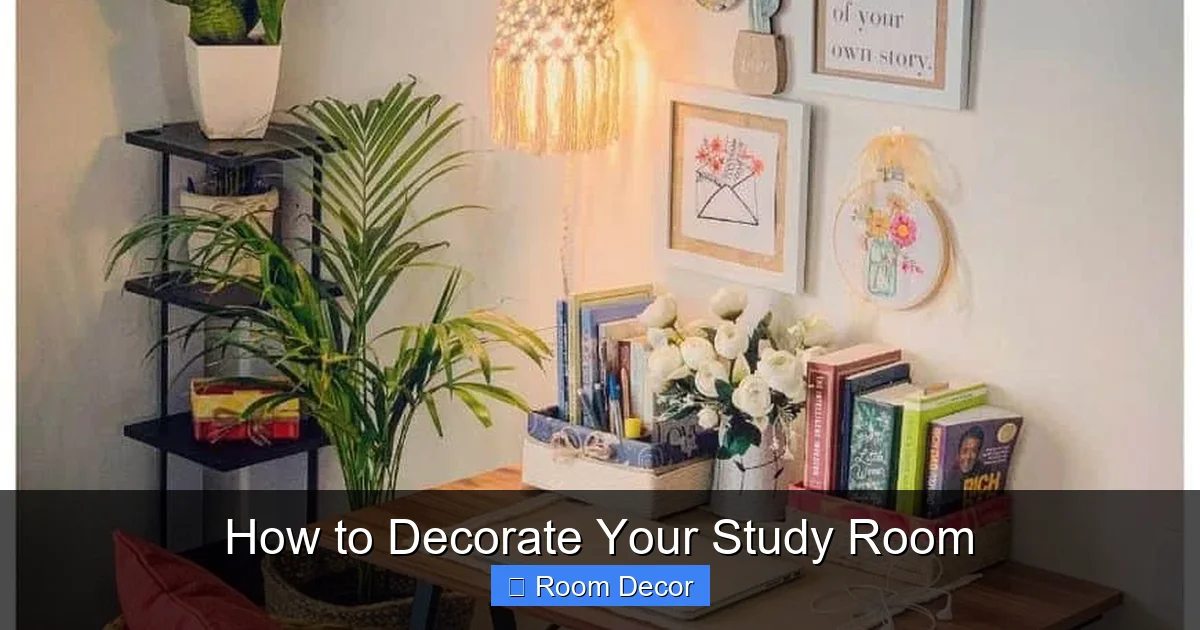
Ready to create your dream study space? This guide will walk you through the essentials of decorating your study room for optimal focus and comfort. We’ll cover everything from choosing the right furniture and color palettes to incorporating personalized touches that inspire you. Maximize productivity and minimize distractions by following our step-by-step advice.
# How to Decorate Your Study Room
Creating a study room that is both functional and inspiring is key to boosting your productivity and making learning an enjoyable experience. Whether you’re a student, a remote worker, or simply someone who enjoys a dedicated space for reading and reflection, a well-decorated study room can significantly impact your focus and well-being. This comprehensive guide will walk you through every step of transforming your space into a personalized sanctuary of learning and creativity. We’ll explore how to choose the right furniture, select the perfect color scheme, optimize lighting, implement smart storage, and add those special touches that make your study room uniquely yours. Get ready to learn how to decorate your study room for maximum impact!
## Step 1: Define Your Study Style and Needs
Before you start picking out paint colors or furniture, it’s essential to understand what you need from your study room and what aesthetic appeals to you. This foundational step ensures that your decorating choices are practical and aligned with your goals.
### Assess Your Study Habits
Think about how you primarily use your study room. Do you spend hours poring over textbooks? Do you need space for art supplies or crafting? Is it mainly for online meetings, requiring a professional-looking backdrop? Your answers will dictate the type of furniture and layout you need.
* For intense study: You’ll want a comfortable chair, ample desk space, and minimal distractions.
* For creative work: Consider a larger desk surface, good lighting for detail work, and perhaps inspirational visuals.
* For mixed use: Think about flexibility – a desk that can accommodate a laptop and notebooks, plus perhaps a small reading nook.
### Determine Your Aesthetic Preferences
What kind of atmosphere do you want to create? Are you drawn to minimalist, modern designs, or do you prefer a cozy, rustic feel? Do you love bright, energizing colors, or do you find peace in muted, calming tones?
* Minimalist: Clean lines, neutral colors, uncluttered surfaces.
* Bohemian: Eclectic mix of textures, patterns, and colors, often with plants and global influences.
* Industrial: Exposed brick, metal accents, raw wood, functional and sturdy pieces.
* Scandinavian: Light wood, white and gray palettes, functional design, cozy textiles.
### Consider the Room’s Size and Natural Light
A small study room will require different decorating strategies than a large one. Similarly, a room with abundant natural light will handle colors and decor differently than a darker space. Measure your room accurately and note the direction of any windows.
## Step 2: Choose Functional and Ergonomic Furniture
Furniture is the backbone of any room, and in a study room, it’s crucial for both comfort and productivity. Investing in the right pieces will prevent strain and support your work habits.
### The Desk: Your Command Center
Your desk is where the magic (and hard work) happens. It needs to be the right size for your space and your tasks.
* Size Matters: Ensure it’s large enough to hold your computer, notebooks, and any other essentials without feeling cramped. A common mistake is buying a desk that’s too small.
* Height is Key: The ideal desk height allows your arms to rest comfortably at a 90-degree angle when typing. If you can’t find the perfect height, consider an adjustable desk or a footrest.
* Storage Options: Some desks come with built-in drawers or shelves, which can be incredibly useful for keeping supplies organized. If not, plan for separate storage solutions.
* Consider L-Shaped Desks: If you have the space, an L-shaped desk can offer more surface area and distinct zones for different tasks.
### The Chair: Your Support System
You’ll be spending a lot of time in your study chair, so comfort and ergonomics are paramount. This is not the place to skimp!
* Ergonomic Design: Look for a chair with good lumbar support, adjustable height, armrests, and a comfortable seat. Your back will thank you.
* Material: Consider breathable fabrics for warmer climates or prolonged sitting. Leather can offer a sleek look but might be less breathable.
* Test It Out: If possible, try sitting in a chair before buying it to gauge its comfort.
### Additional Furniture for Comfort and Functionality
Depending on your needs and space, you might want to consider other furniture pieces.
* Bookshelves: Essential for organizing books, binders, and decorative items.
* Filing Cabinets: For those who deal with a lot of paperwork.
* Accent Chairs or Beanbags: To create a comfortable reading nook or a space for breaks.
* Small Side Table: To hold a cup of coffee, a lamp, or your phone.
## Step 3: Master the Art of Color Psychology
Color has a powerful impact on mood and concentration. Choosing the right color palette for your study room can help you stay focused, calm, or creative.
### Calming and Focus-Enhancing Colors
These colors are ideal for environments where deep concentration is needed.
* Blues: Known for their calming effect, blues can reduce stress and improve focus. Consider soft blues, muted teals, or gentle sky blues.
* Greens: Evokes a sense of nature and tranquility, promoting balance and clarity. Shades like sage green, mint green, or forest green work well.
* Grays: A versatile neutral that can create a sophisticated and calm atmosphere. Lighter grays are often best to avoid making the room feel too dark.
### Energizing and Creative Colors
If your study involves brainstorming or creative tasks, you might opt for colors that stimulate the mind.
* Yellows: Associated with happiness and optimism, yellow can boost creativity and mental energy. Use it as an accent color to avoid being overwhelming.
* Oranges: A warm and inviting color that encourages enthusiasm and communication. Again, best used in moderation.
* Reds: A powerful color that can increase energy and passion. Use sparingly as an accent for a motivational boost.
### Neutral Bases and Accent Colors
A neutral base color for walls provides a calm foundation, allowing you to introduce accent colors through decor, artwork, or furniture.
* Wall Color: Opt for soft whites, off-whites, light grays, or muted earth tones as a safe and versatile choice.
* Accent Pieces: Introduce your chosen energizing or calming colors through cushions, rugs, artwork, or decorative objects.
## Step 4: Optimize Lighting for Productivity
Proper lighting is crucial for reducing eye strain, preventing headaches, and maintaining energy levels. A layered lighting approach is usually best.
### Natural Light: The Best Source
Maximize natural light whenever possible.
* Window Treatments: Use sheer curtains or blinds that can be adjusted to control glare without blocking light entirely.
* Keep Windows Clear: Avoid placing tall furniture that obstructs natural light from entering the room.
### Artificial Lighting: Essential Layers
Supplement natural light with artificial sources.
* Ambient Lighting: This is the general lighting for the room, usually provided by an overhead fixture like a ceiling light or pendant. Choose a warm, diffused light.
* Task Lighting: Crucial for your desk. A good desk lamp provides focused light directly where you need it for reading, writing, or computer work. An adjustable lamp is ideal.
* Accent Lighting: Used to highlight specific features, such as artwork or bookshelves. Think of small track lights or picture lights.
### Light Temperature Matters
The color temperature of your bulbs can also affect your mood and productivity.
* Cool White (4000K-5000K): Mimics daylight and is great for tasks requiring alertness and focus.
* Warm White (2700K-3000K): Creates a cozy and relaxing atmosphere, suitable for reading or winding down.
* Consider Dimmable Options: This allows you to adjust the brightness of your lights based on the time of day and your activity.
## Step 5: Embrace Smart Storage Solutions
A cluttered study room can be a major distraction. Implementing smart and attractive storage solutions will keep your space organized and serene.
### Declutter Ruthlessly
Before you buy storage, go through everything you have. Donate, recycle, or discard anything you no longer need.
### Vertical Storage
Utilize wall space to keep your desk clear.
* Bookshelves: Adjustable shelves allow you to customize them for different-sized items.
* Floating Shelves: Great for displaying decorative items or storing frequently used books and supplies.
* Wall-Mounted Organizers: Pegboards, wall grids, or pocket organizers can hold pens, scissors, and other small items.
### Desk Organizers
Keep your immediate workspace tidy.
* Drawer Dividers: Separate pens, paperclips, staples, and other small supplies.
* Desk Caddies: To hold pens, markers, and notepads.
* Magazine Holders: For organizing papers, notebooks, or current projects.
### Hidden Storage
Conceal clutter for a cleaner look.
* Storage Baskets and Bins: Use attractive baskets on shelves or under your desk to hide less sightly items.
* Filing Cabinets: Opt for stylish ones that blend with your decor.
* Ottomans with Storage: These can double as seating and a place to store blankets, books, or extra supplies.
## Step 6: Personalize Your Space for Inspiration
This is where you inject your personality into the room, making it a place you genuinely want to spend time in.
### Artwork and Wall Decor
Choose pieces that inspire or calm you.
* Inspirational Quotes: A framed quote can provide daily motivation.
* Personal Photos: Displaying photos of loved ones can make the space feel more comforting.
* Artwork: Select paintings, prints, or photographs that resonate with you. Consider a vision board where you can pin inspiring images, goals, and ideas.
### Plants and Greenery
Plants bring life, improve air quality, and reduce stress.
* Low-Maintenance Options: Snake plants, ZZ plants, and Pothos are excellent choices for busy individuals.
* Placement: Place larger plants in corners or near windows, and smaller succulents or desk plants on your shelves or desk.
### Textures and Textiles
Adding soft textures can make your study room feel more inviting and cozy.
* Rugs: A soft rug can define the space and add warmth underfoot.
* Cushions and Throws: For your chair or any accent seating, adding cushions and throws makes the space more comfortable and stylish.
* Curtains: Choose fabrics that complement your color scheme and provide the desired level of light control and privacy.
### Scent and Sound
Don’t underestimate the power of sensory elements.
* Candles or Diffusers: Choose calming scents like lavender or eucalyptus for focus, or uplifting scents like citrus for energy.
* Music: Create a playlist of instrumental music or ambient sounds that aid concentration.
## Troubleshooting Common Study Room Decor Issues
Even with the best intentions, you might encounter challenges. Here are a few common ones:
### My study room feels too small.
* Solution: Use light colors on walls and furniture. Employ vertical storage to draw the eye upward. Mirrors can create an illusion of more space. Keep furniture to a minimum and ensure clear pathways.
### I get easily distracted in my study room.
* Solution: Declutter aggressively. Minimize visual distractions by facing your desk away from windows or busy areas. Use calming colors. Implement task lighting to avoid eye strain that can lead to distraction. Consider noise-canceling headphones.
### My study room lacks personality.
* Solution: Add more personal items! Frame photos, display meaningful objects, use colorful artwork, or create a vision board. Plants can also add a lot of character.
### My study room feels sterile and uninviting.
* Solution: Introduce warmth through textures – a soft rug, a cozy throw, wooden accents. Add plants for life and color. Use warmer lighting options for the evenings.
## Conclusion: Your Personalized Path to a Productive Study Space
Decorating your study room is more than just making it look good; it’s about creating an environment that supports your learning, work, and well-being. By following these steps – from defining your needs and choosing functional furniture to mastering color psychology, optimizing lighting, implementing smart storage, and personalizing your space – you can transform any room into a highly effective and enjoyable study sanctuary. Remember, your study room is a reflection of you, so don’t be afraid to infuse it with your personality and creativity. A well-decorated study room is an investment in yourself and your future success. Now go forth and create your perfect study space!
Key Takeaways
- Define Your Study Style and Needs: Understanding your personal preferences and how you use the space is the first crucial step in decorating your study room for success.
- Prioritize Functional Furniture: Select a desk and chair that are ergonomic and suit the size of your room to ensure comfort and support during long study sessions.
- Master the Art of Color Psychology: Choose a color palette that promotes focus, calmness, or creativity depending on your primary study activities.
- Optimize Lighting for Productivity: Employ a mix of natural and artificial light sources to reduce eye strain and create an energizing atmosphere.
- Embrace Smart Storage Solutions: Declutter your study room with stylish and practical storage options to maintain an organized and serene environment.
- Personalize Your Space for Inspiration: Add decorative elements that reflect your personality and motivate you, making your study room a truly enjoyable place to be.
- Don’t Forget the Power of Plants: Incorporate greenery to improve air quality, reduce stress, and add a touch of natural beauty to your study room.