
Is your small kitchen feeling overwhelmed and inefficient? Don’t worry, you can easily conquer those common small kitchen organization problems with a strategic approach. This guide walks you through decluttering, zoning, and maximizing every inch of space, transforming your kitchen into a functional and enjoyable area. Get ready to implement clever storage solutions and maintain a clutter-free environment, making daily tasks much smoother.
How to Fix Small Kitchen Organization Problems
Welcome, fellow home chef! Does the thought of stepping into your kitchen fill you with dread rather than delight? Are you constantly battling overflowing drawers, cluttered countertops, and a general sense of chaos? If you’re nodding along, you’re not alone. Many of us grapple with small kitchen organization problems. A small kitchen, while cozy, can quickly become a source of frustration if not properly managed. But don’t despair! With the right strategies and a bit of effort, you can transform even the tiniest culinary space into an efficient, functional, and surprisingly spacious area.
This comprehensive guide is designed to help you tackle and fix small kitchen organization problems, step by step. We’ll walk you through everything from ruthless decluttering to clever vertical storage solutions and smart ways to optimize every nook and cranny. By the end, you’ll have a kitchen that not only looks better but also makes cooking and meal prep a joy instead of a chore. Get ready to reclaim your countertops, find your spices with ease, and truly love your kitchen again!
Key Takeaways
- Declutter Ruthlessly First: Before buying any organizers, empty your kitchen, sort every item, and get rid of anything broken, unused, or expired. This foundational step is crucial for truly fixing small kitchen organization problems.
- Zone Your Kitchen for Efficiency: Group similar items and create designated zones for different activities (e.g., prep, cooking, baking). This minimizes movement and makes tasks more intuitive, directly addressing common small kitchen organization problems related to workflow.
- Maximize Vertical Space Cleverly: Look up! Walls and cabinet interiors offer prime real estate. Utilize shelves, wall-mounted racks, pegboards, and stackable solutions to free up valuable counter and drawer space.
- Optimize Cabinet and Drawer Interiors: Install drawer dividers, pull-out organizers, tiered shelves, and lazy Susans. These tools are game-changers for making the most of every hidden corner and preventing items from getting lost.
- Unlock Forgotten and Niche Spaces: Don’t overlook the back of cabinet doors, the sides of your fridge, awkward corners, or even toe-kick areas. Every tiny bit of space can be cleverly repurposed for storage.
- Implement a Maintenance Routine: Organization isn’t a one-time fix. Regularly declutter, follow a “one in, one out” rule, and do quick tidies after meals to prevent clutter from creeping back in and keep small kitchen organization problems at bay.
Step 1: Declutter Ruthlessly – The Foundation of Fixing Small Kitchen Organization Problems
Before you buy a single organizer or label maker, the absolute first step to solving small kitchen organization problems is to declutter. Seriously, this is non-negotiable. You can’t organize what you don’t need or use. Think of this as clearing the canvas before painting a masterpiece.
1.1 Empty Everything Out
Yes, *everything*. Take every single item out of your cabinets, drawers, pantry, and off your countertops. Place them on a dining table, a portable cart, or even on the floor in another room. Seeing everything you own laid out can be a shocking but incredibly eye-opening experience. This immediate visual impact helps you understand the true scope of your small kitchen organization problems.
1.2 Sort and Categorize
As you empty, begin to sort items into categories. Group similar things together: all plates, all mugs, all spices, all cooking utensils, all small appliances, all food storage containers. This helps you see duplicates and assess true quantities.
1.3 Make Tough Decisions: Keep, Donate/Sell, or Toss
Now comes the hard part: making decisions about each item. Hold each item and ask yourself:
- Do I use this? When was the last time? If it’s been over a year, consider letting it go.
- Do I love this? Is it beautiful or sentimental?
- Is it broken or damaged? If it can’t be fixed, toss it.
- Do I have duplicates? Do you really need three can openers or ten spatulas? Keep the best one or two.
- Is it expired? Check all food items, spices, and cleaning supplies.
Be honest with yourself. Every item you keep takes up precious space in a small kitchen. Be particularly brutal with unitaskers (gadgets that only do one thing, like an avocado slicer) unless you use them constantly.
1.4 Clean Your Now-Empty Spaces
With everything out, take the opportunity to deep clean your cabinets, drawers, and pantry shelves. Wipe them down, vacuum crumbs, and line shelves if desired. Starting with a sparkling clean slate will make the reorganization process feel even more satisfying. This fresh start is key to fixing small kitchen organization problems effectively.
Step 2: Zone Your Kitchen for Optimal Flow
Once decluttered, the next step in fixing small kitchen organization problems is to think about how you use your kitchen. Creating “zones” based on activity makes your kitchen much more efficient, even if it’s tiny.
2.1 Identify Your Kitchen Zones
Think about the main activities that happen in your kitchen:
- Prep Zone: Usually near your main cutting surface, sink, and trash can. Store cutting boards, knives, mixing bowls, and prep tools here.
- Cooking Zone: Around your stovetop and oven. Keep pots, pans, cooking utensils, oils, and frequently used spices nearby.
- Baking Zone: If you bake often, dedicate a space for baking sheets, measuring cups, mixing bowls, and baking ingredients.
- Dishwashing Zone: Near the sink. Store dish soap, sponges, and dish towels. Dishes should be stored conveniently close for putting away.
- Pantry/Food Storage Zone: Where you keep non-perishable foods, snacks, and perhaps a small appliance or two.
- Coffee/Tea Station: If applicable, gather mugs, coffee maker, tea bags, sugar, etc., in one spot.
2.2 Assign Items to Their Zones
Once you’ve defined your zones, put items back into the cabinets and drawers that are closest to their respective zones. For instance, put cooking oils and spices near the stove, and plates and bowls near the dishwasher or drying rack. This significantly reduces wasted movement and makes your kitchen feel larger and more organized. This strategic placement is crucial for managing small kitchen organization problems.
Step 3: Maximize Vertical Space – Look Up!
In a small kitchen, horizontal space (countertops) is a luxury. The solution to many small kitchen organization problems lies in going vertical.
3.1 Install Wall-Mounted Shelves
Open shelves can be both practical and decorative. Use them for frequently accessed items like mugs, bowls, or even small recipe books. Ensure they are securely mounted and don’t overwhelm the space. Floating shelves can add a minimalist touch.
3.2 Utilize Wall-Mounted Racks and Pegboards
A pegboard is a fantastic, customizable solution for small kitchen organization problems. Hang pots, pans, utensils, cutting boards, and even small spice racks. Magnetic knife strips are also excellent for freeing up drawer space. Install a wall-mounted rack above your sink for drying dishes or holding sponges.
3.3 Stackable Storage Solutions
Inside cabinets and pantries, think vertically. Use stackable containers for dry goods like flour, sugar, pasta, and cereals. Stackable shelves or risers can double your storage space for plates, bowls, or canned goods. This is a simple yet powerful way to address small kitchen organization problems.
3.4 Pot Racks and Lid Organizers
If you have high ceilings, a hanging pot rack can free up a lot of cabinet space. If not, consider a vertical pot and pan organizer inside a deep cabinet, along with a separate lid organizer to keep lids from sprawling everywhere.
Step 4: Optimize Cabinet and Drawer Interiors
The inside of your cabinets and drawers can be a black hole for clutter. Smart interior solutions are vital for tackling small kitchen organization problems.
4.1 Drawer Dividers and Organizers
Invest in adjustable drawer dividers or utensil trays. These prevent cutlery, spatulas, and gadgets from jumbling together. Dedicate one drawer to cooking utensils, another to baking tools, and so on. For deep drawers, consider using small bins to separate items like small baking supplies or spices.
4.2 Pull-Out Organizers
For deep, dark cabinets, especially under the sink or in pantry areas, pull-out shelves or baskets are life-savers. They bring the contents to you, eliminating the need to dig and making it easy to see everything at a glance. This is especially helpful for bulky items like cleaning supplies or small appliances, significantly reducing small kitchen organization problems.
4.3 Under-Shelf Baskets and Risers
These clever additions clip onto existing shelves, creating an extra layer of storage underneath. Use them for dish towels, foil, plastic wrap, or even small snacks. Shelf risers or stackable shelves can double the usable space in your cabinets for plates, bowls, or canned goods.
4.4 Lazy Susans (Turntables)
A lazy Susan is perfect for corner cabinets, pantries, or even inside your fridge. Use them for spices, oils, condiments, or cleaning supplies. They make everything easily accessible with a simple spin, preventing items from getting lost in the back. This is a highly effective tool for managing small kitchen organization problems related to accessibility.
4.5 Door-Mounted Storage
Don’t forget the inside of your cabinet doors! Install hooks for measuring cups, pot holders, or even lightweight cutting boards. Slim spice racks or small baskets can also be mounted here for extra storage.
Step 5: Utilize Forgotten and Niche Spaces
In a small kitchen, every inch counts. Some of the best solutions to small kitchen organization problems involve thinking outside the box and utilizing spaces you might not have considered.
5.1 Back of Cabinet and Pantry Doors
As mentioned, these are prime spots. Beyond hooks and spice racks, you can install thin, shallow shelves for small jars or cleaning cloths.
5.2 Sides of the Refrigerator
If your fridge isn’t built-in, its sides are often wasted space. Magnetic racks, organizers, or command hooks can hold oven mitts, lightweight tools, or even small baskets for frequently used items.
5.3 Unused Corners
Corner shelves, especially floating ones, can turn an awkward corner into functional storage. Look for corner-specific shelving units or even small corner desks if space allows.
5.4 Toe-Kick Drawers
This is an advanced but brilliant solution. If you’re renovating or handy, adding a drawer into the toe-kick space beneath your lower cabinets can provide hidden storage for flat items like baking sheets, serving trays, or seldom-used linens. It’s an often-overlooked area perfect for solving unique small kitchen organization problems.
5.5 Rolling Carts or Utility Carts
A slim rolling cart can slide into a narrow gap between appliances or a wall. Use it to store extra groceries, cleaning supplies, or even as a mobile coffee station. When not in use, it can be tucked away.
Step 6: Smart Storage for Specific Items
Certain items tend to cause more small kitchen organization problems than others due to their shape, size, or frequency of use. Let’s tackle them directly.
6.1 Pots, Pans, and Lids
- Vertical Dividers: Use tension rods or specialized racks in deep drawers or cabinets to store pots and pans vertically, preventing stacking.
- Lid Organizers: Mount wire racks on cabinet doors or use in-drawer organizers to keep lids tidy and separate from pots.
6.2 Cutting Boards and Baking Sheets
- Vertical Slots: Use a simple rack or even tension rods to create vertical slots in a cabinet for slim items.
- Behind Cabinet Doors: Mount slim hooks or a magazine file holder on the inside of a pantry door for cutting boards.
6.3 Spices
- Drawer Inserts: Slanted spice drawer inserts allow you to lay jars flat and see all labels.
- Magnetic Spice Racks: Mount on the fridge or a metal backsplash.
- Tiered Shelves: Small tiered shelf inserts work well in pantries or upper cabinets.
- Door-Mounted Racks: As mentioned, these save prime interior space.
6.4 Food Storage Containers (Tupperware)
This is a notorious culprit for small kitchen organization problems.
- Nest Them: Store containers nested within each other, with lids stored vertically in a separate bin or rack.
- Dedicated Drawer/Cabinet: Give them their own designated spot to prevent an avalanche.
6.5 Small Appliances
Only keep appliances you use regularly on the countertop. Store less-frequently used ones in lower cabinets, pantries, or even a rolling cart. Consider multi-functional appliances to reduce clutter.
Step 7: Maintain Your Organized Kitchen
Organization isn’t a one-time event; it’s an ongoing process. To prevent small kitchen organization problems from returning, establish a few simple maintenance habits.
7.1 The “One In, One Out” Rule
When you buy a new kitchen gadget, piece of cookware, or even a mug, commit to donating or getting rid of an old one. This prevents accumulation.
7.2 Regular Micro-Decluttering
Once a month, quickly scan your pantry and fridge for expired items. Every few months, quickly review a drawer or cabinet to ensure everything is still serving its purpose.
7.3 Daily Tidying Habits
- Put items back where they belong immediately after use.
- Wipe down countertops after cooking.
- Empty the dishwasher promptly.
These small actions prevent clutter from piling up and turning into overwhelming small kitchen organization problems again.
Troubleshooting Common Small Kitchen Organization Problems
Even with the best intentions, you might face some challenges.
Problem: “I’ve decluttered, but it still feels cramped.”
Solution: Revisit Step 1. Were you truly ruthless? Sometimes we hold onto things “just in case.” Also, consider if you’re over-organizing. Too many small bins and organizers can sometimes add visual clutter. Focus on clear countertops and open spaces. Light colors and good lighting can also make a space feel larger.
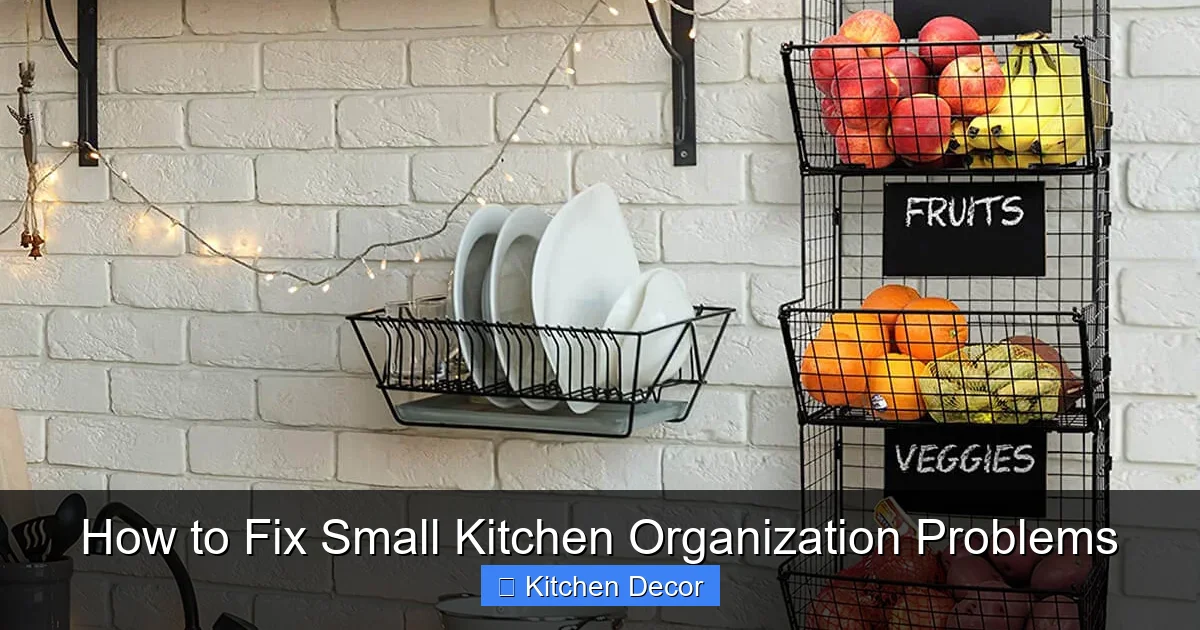
Visual guide about How to Fix Small Kitchen Organization Problems
Image source: homebnc.com
Visual guide about How to Fix Small Kitchen Organization Problems
Image source: mrkitchenfaucets.com

Visual guide about How to Fix Small Kitchen Organization Problems
Image source: homebnc.com
Problem: “I lose motivation halfway through.”
Solution: Break it down. Don’t try to do the whole kitchen in one go. Dedicate 15-30 minutes to one drawer or one cabinet. Celebrate small victories. Enlist a friend or family member for accountability and extra hands.
Problem: “I can’t afford fancy organizers.”
Solution: You don’t need expensive solutions to fix small kitchen organization problems. Get creative! Repurpose shoeboxes for drawer dividers, use old glass jars for dry goods, and stack items directly or use sturdy boxes as shelf risers. DIY pegboards are affordable, and tension rods can create vertical dividers. Look for second-hand items at thrift stores.
Problem: “My family members undo my hard work.”
Solution: Communication is key. Explain your system and its benefits. Involve them in the process, especially when deciding where things go. Label shelves and bins clearly so there’s no confusion about where things belong. Consistency and patience on your part will eventually pay off.
Conclusion: Reclaim Your Small Kitchen!
Fixing small kitchen organization problems is entirely achievable, no matter how daunting it seems right now. By following these steps – from ruthless decluttering and strategic zoning to maximizing vertical space and utilizing clever interior solutions – you can transform your kitchen into a highly functional and enjoyable space. Remember, it’s an ongoing journey, but with a little effort and consistent maintenance, you’ll be amazed at how much more efficient and pleasant your small kitchen becomes. Say goodbye to clutter and hello to a kitchen that truly works for you!