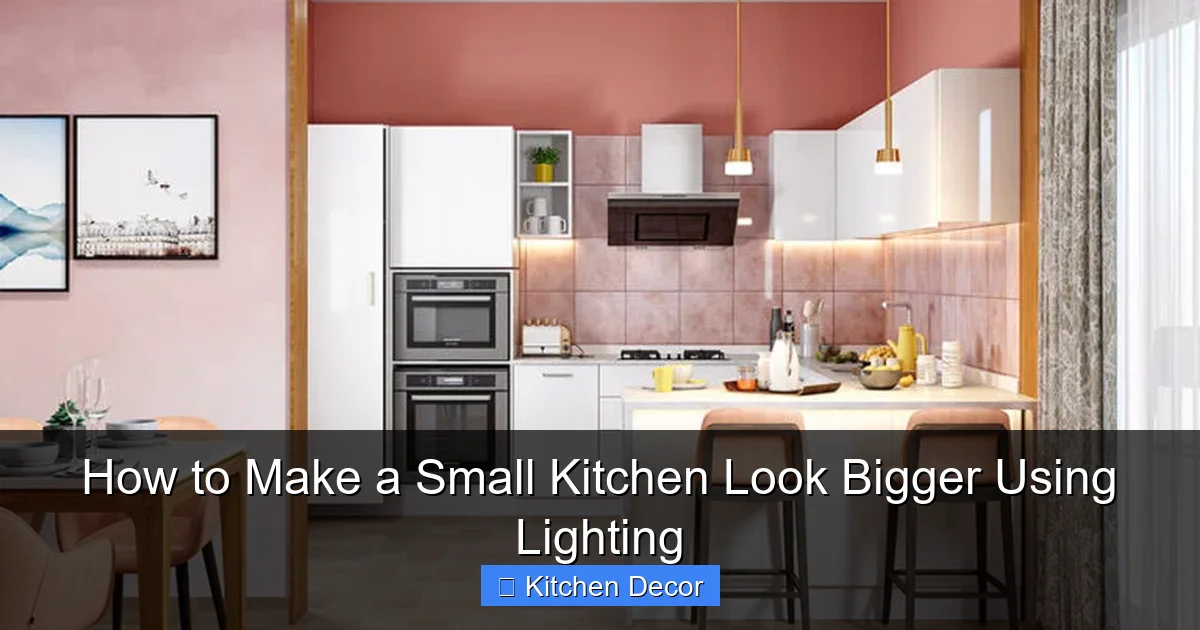
Unlock the secret to a more spacious kitchen! This guide reveals how to transform your small kitchen into a larger, brighter space by mastering lighting techniques. Learn to strategically layer ambient, task, and accent lighting, choose optimal color temperatures, and utilize dimmers to create depth and visual expansion, making your small kitchen look bigger using lighting effectively.
How to Make a Small Kitchen Look Bigger Using Lighting
Do you often feel like your kitchen is closing in on you? Small kitchens can be charming, but they often present a challenge when it comes to feeling open and airy. The good news is, you don’t need a sledgehammer to expand your space! With a clever approach to lighting, you can visually stretch your walls, raise your ceiling, and create an illusion of spaciousness that makes your small kitchen look bigger using lighting you strategically place. It’s truly transformative!
This comprehensive guide will walk you through every step of using light to make your small kitchen feel larger, brighter, and more inviting. We’ll cover everything from understanding different types of lighting to choosing the right fixtures, color temperatures, and strategic placements. By the end, you’ll have all the knowledge you need to turn your compact cooking area into a visually expansive culinary haven.
Key Takeaways
- Layered Lighting is Essential: Combine ambient, task, and accent lighting to create depth and eliminate shadows, which are crucial for making a small kitchen look bigger.
- Prioritize Recessed and Under-Cabinet Lights: These fixtures provide powerful illumination without cluttering the ceiling or countertops, essential for maximizing visual space.
- Choose the Right Color Temperature: Cooler, brighter light (like daylight white, 4000K-5000K) can make a small kitchen feel more expansive and open than warmer tones.
- Strategic Placement Creates Illusion: Wash walls, illuminate corners, and highlight vertical elements to draw the eye upward and outward, visually extending the room’s boundaries.
- Harness Natural Light and Reflection: Utilize mirrors, glossy surfaces, and light-colored window treatments to bounce light around the room, significantly brightening and enlarging the space.
- Integrate Dimmers for Flexibility: Dimmers allow you to control light intensity, adapting to different times of day and tasks, which helps in fine-tuning the perception of space and mood.
- Avoid Over-Lighting or Single-Source Lighting: Too many large fixtures or relying on just one overhead light can shrink a small kitchen; instead, opt for multiple, smaller, well-distributed sources.
Step 1: Understand the Power of Layered Lighting
The biggest secret to making any room, especially a small kitchen, feel larger isn’t just about adding more light, but about adding layers of light. Think of it like painting a picture; you don’t just use one color. Layering helps eliminate shadows, creates depth, and draws the eye to different areas, all contributing to making a small kitchen look bigger using lighting effectively. There are three main types of lighting layers:
1.1 Ambient (General) Lighting
This is your kitchen’s main source of illumination. Its purpose is to provide overall brightness, allowing you to move safely and comfortably. For a small kitchen, ambient lighting should be bright but evenly distributed to avoid harsh shadows that can make a space feel smaller.
1.2 Task Lighting
Task lighting is focused illumination for specific activities, like chopping vegetables, reading recipes, or washing dishes. It’s crucial in a kitchen, as good task lighting prevents eye strain and enhances functionality. When trying to make a small kitchen look bigger using lighting, effective task lighting also adds an extra layer of brightness.
1.3 Accent Lighting
Accent lighting is all about creating mood, highlighting architectural features, or drawing attention to decorative elements. While often overlooked in small spaces, accent lighting can be incredibly effective in adding depth and interest, preventing the room from feeling flat and confined.
Step 2: Master Your Ambient Lighting Choices
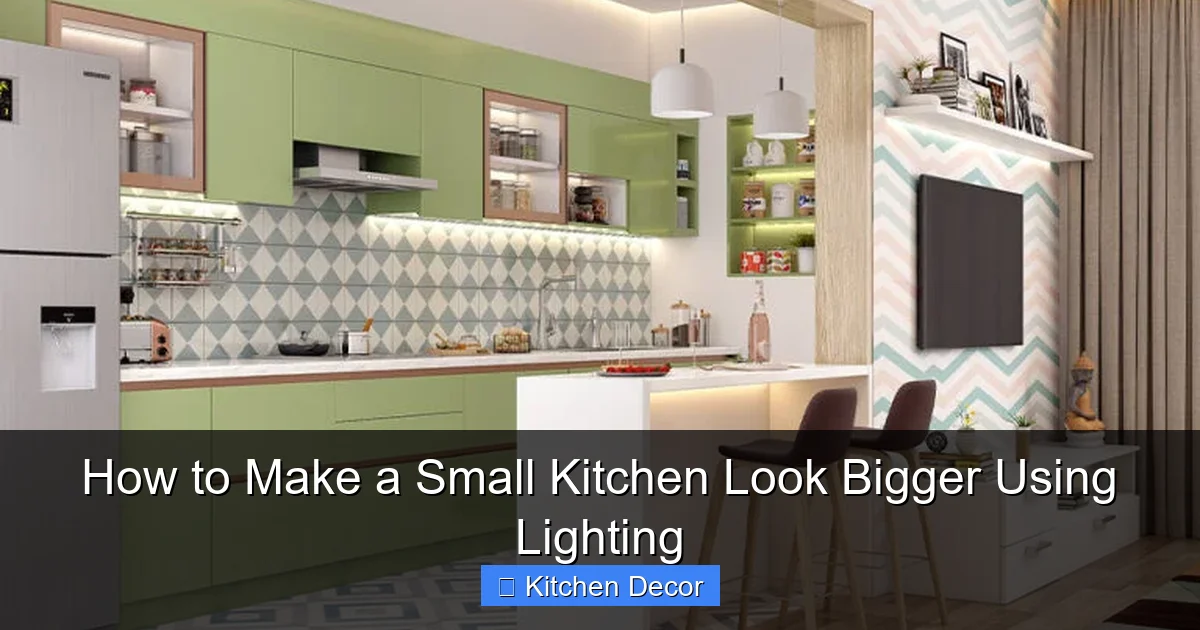
Your general lighting sets the tone for the entire kitchen. For a small kitchen, the goal is bright, even illumination without overwhelming the space with bulky fixtures.
Visual guide about How to Make a Small Kitchen Look Bigger Using Lighting
Image source: media.designcafe.com
2.1 Embrace Recessed Lighting
Recessed lights (or can lights) are perhaps the best friend of a small kitchen. They are installed directly into the ceiling, meaning they take up no visual space. This sleek, unobtrusive design is perfect for creating a clean, uncluttered ceiling line, which is vital for making a small kitchen look bigger using lighting. They provide excellent, diffused light that can wash walls and illuminate the entire room evenly.
- Tip: Opt for smaller LED recessed lights. Space them strategically to avoid dark spots but also prevent over-illumination. Aim for a grid that provides even coverage.
- Example: Four to six 4-inch LED recessed lights might be perfect for a 10×10 foot kitchen, depending on their lumen output.
2.2 Consider Flush Mount or Semi-Flush Mount Fixtures
If recessed lighting isn’t an option (perhaps due to budget or ceiling structure), flush mount or semi-flush mount fixtures can work. These lights sit close to the ceiling, minimizing their visual footprint compared to larger chandeliers or pendants. Look for designs that are sleek, simple, and don’t hang down too far.
- Tip: Choose fixtures with frosted or white glass to diffuse light broadly, reducing harsh glare and shadows.
- Example: A modern, low-profile LED flush mount fixture with a wide diameter can provide ample ambient light without dominating the ceiling.
2.3 Use Track Lighting Strategically (If Applicable)
While not always ideal for very small kitchens due to their visual presence, modern, minimalist track lighting can be used strategically. If you have a long, narrow kitchen, a single track with adjustable heads can direct light precisely where needed, washing walls and illuminating task areas. Just be mindful of the scale.
- Tip: Choose tracks that match your ceiling color to help them blend in. Direct lights to illuminate walls and counters rather than straight down.
Step 3: Elevate Your Task Lighting
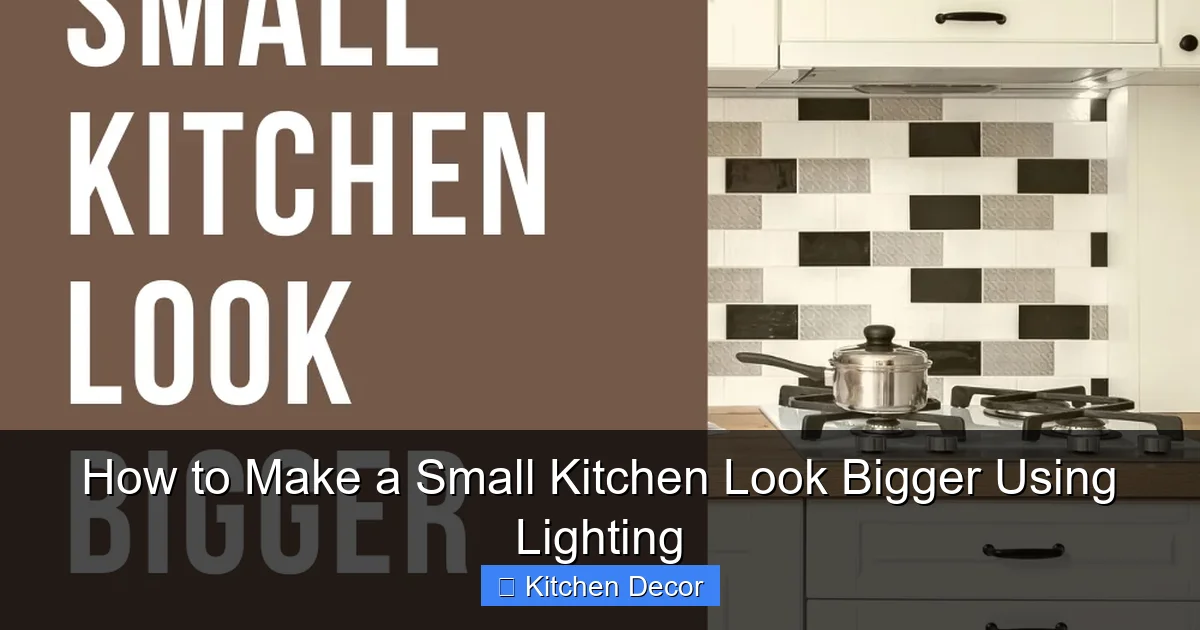
Effective task lighting not only makes your kitchen more functional but also adds crucial layers of light that contribute to making a small kitchen look bigger using lighting techniques.
Visual guide about How to Make a Small Kitchen Look Bigger Using Lighting
Image source: i.pinimg.com
3.1 Install Under-Cabinet Lighting
This is a non-negotiable for small kitchens! Under-cabinet lighting illuminates your countertops, making food prep safer and easier. But beyond functionality, it makes a huge visual impact. By lighting up the space between your upper and lower cabinets, you banish shadows that can make your kitchen feel closed in. It also highlights the backsplash, adding visual interest and depth.
- Options: LED strip lights, puck lights, or linear bar lights are all excellent choices. LED strips are often preferred for their seamless, even light distribution.
- Placement: Install them at the front edge of the cabinet underside to prevent shadows on the countertop.
- Example: Long, continuous LED strip lights along the entire length of your upper cabinets will provide brilliant, shadow-free illumination for your prep areas, visually expanding the work surfaces.
3.2 Thoughtful Placement of Pendant Lighting (If Space Allows)
While large, ornate pendants can shrink a small kitchen, a strategically placed, appropriately sized pendant can actually enhance the sense of space. One or two smaller pendants over a kitchen island or peninsula can define a zone, add a decorative touch, and provide focused task lighting. The key is scale!
- Tip: Choose pendants with a narrow profile or clear glass to minimize visual obstruction. Ensure they are hung at the correct height (typically 30-36 inches above the countertop) to avoid blocking sightlines.
- Example: Two delicate glass globe pendants over a small peninsula can add style and concentrated light without making the area feel cramped.
Step 4: Incorporate Accent Lighting for Depth and Interest
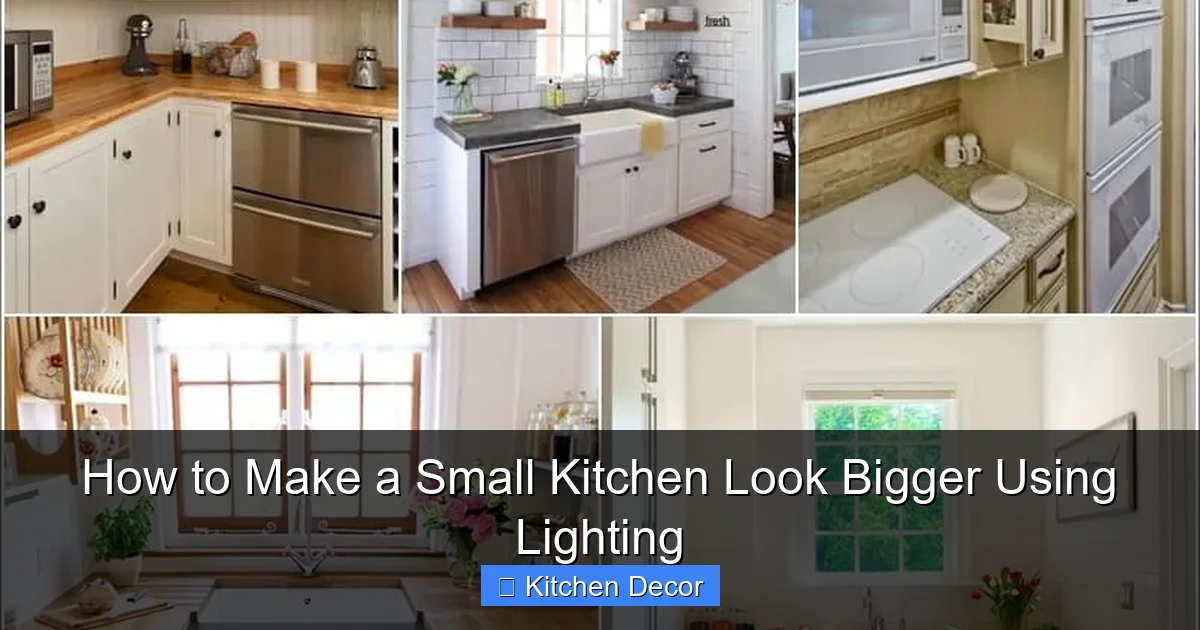
Accent lighting is often underestimated in small kitchens, but it plays a vital role in creating depth and dimension, helping your small kitchen look bigger using lighting creatively.
Visual guide about How to Make a Small Kitchen Look Bigger Using Lighting
Image source: amazinginteriordesign.com
4.1 Light Inside Glass-Front Cabinets
If you have glass-front upper cabinets, installing small LED puck lights or strip lights inside them can be incredibly effective. This illuminates the contents, turning them into a display, and adds a glow that pushes the eye back, creating an illusion of depth within the cabinet itself. This pushes the perceived boundaries of the room.
- Tip: Use warmer light inside cabinets for a cozy, inviting feel, especially if displaying decorative items.
4.2 Add Toe-Kick Lighting
This is a subtle but powerful trick! Installing LED strip lights under your base cabinets, where they meet the floor (the toe-kick area), creates a floating effect for your cabinetry. This lifts the cabinets visually, making the floor appear larger and extending the perceived boundaries of the room. It’s a fantastic way to make a small kitchen look bigger using lighting that adds a sophisticated touch.
- Example: A continuous warm LED strip along the toe-kick of all base cabinets creates a soft, ambient glow at floor level.
4.3 Use Strip Lighting Above Cabinets
If your upper cabinets don’t reach the ceiling, placing LED strip lights on top of them can wash the ceiling with a soft, upward glow. This draws the eye up, making the ceiling appear higher and the room feel more expansive. This upward light bounce is a great technique to make a small kitchen look bigger using lighting.
- Tip: Ensure the light is directed upwards and evenly distributed to avoid hotspots.
Step 5: Strategic Placement for Visual Expansion
Where you place your lights is just as important as the lights themselves. Strategic placement can dramatically alter perception.
5.1 Wash Walls and Ceilings with Light
Brightly lit walls and ceilings recede, making them appear further away. Use recessed lights or track lighting to “wash” your walls with light. This minimizes shadows in corners and along edges, which can make a small kitchen feel cramped. Lighting the ceiling upwards also helps to make it feel higher.
5.2 Illuminate Corners
Dark corners in a small kitchen make the space feel smaller. By adding small sconces, corner-mounted strip lights, or directing recessed lights into corners, you eliminate these shadowed areas. Bright corners extend the perceived boundaries of the room.
5.3 Highlight Verticality
Drawing the eye upwards makes a room feel taller. Consider vertical strip lighting along the edges of a pantry or a tall cabinet. If you have open shelving, lighting under each shelf can also create vertical interest. This upward visual movement directly contributes to making a small kitchen look bigger using lighting techniques.
Step 6: Choose the Right Color Temperature
The “color” of your light, measured in Kelvin (K), has a significant impact on how a room feels.
6.1 Avoid Overly Warm Light
While warm white light (2700K-3000K) can feel cozy, it can also make a small space feel a bit yellow or closed in. It’s great for living rooms but less ideal for maximizing space in a kitchen.
6.2 Opt for Cooler, Brighter Light
For a small kitchen, cool white (3500K-4500K) or even daylight white (5000K-6500K) is often recommended. These cooler tones mimic natural daylight, making the space feel cleaner, crisper, and more expansive. They also render food colors more accurately, which is a bonus for cooking.
- Tip: Use cool white for ambient and task lighting to enhance spaciousness. If you want a touch of warmth for accent, consider mixing temperatures with dimmers.
Step 7: The Magic of Dimmers and Smart Controls
Dimmers are essential in any kitchen, but particularly in small ones. They offer unparalleled flexibility, allowing you to adjust the intensity of your light to suit different times of day, tasks, or moods. This flexibility helps in fine-tuning the perception of space.
- Benefits:
- Adaptability: Bright light for cooking, softer light for dining or cleaning.
- Mood Control: Create a cozy atmosphere or a vibrant workspace instantly.
- Energy Saving: Dimmers can reduce energy consumption.
- Visual Manipulation: Adjusting light levels can subtly alter how large or intimate a space feels. For example, slightly dimming accent lights while keeping task lights bright can create layers.
- Tip: Install dimmers on all your lighting layers (ambient, task, and accent) for maximum control. Smart lighting systems allow you to control lights from your phone and even program scenes.
Step 8: Harness Natural Light and Reflective Surfaces
While not strictly “lighting fixtures,” maximizing natural light is one of the most powerful ways to make a small kitchen look bigger. Artificial lighting should complement, not replace, natural light.
8.1 Incorporate Mirrors
A strategically placed mirror can work wonders. Hung on a wall opposite a window, it can reflect natural light deep into the room, instantly doubling the perceived space and brightness. Even mirrored backsplashes can have a similar effect, albeit more subtly.
8.2 Utilize Reflective Surfaces
Glossy cabinets, stainless steel appliances, polished countertops, and even shiny tiles can bounce light around the room. These reflective elements help to spread both natural and artificial light, making the entire kitchen feel brighter and more open. Light-colored finishes, especially white, also reflect light much better than dark colors.
8.3 Choose Light Window Treatments
Heavy, dark curtains will block precious natural light and make your windows appear smaller. Opt for sheer blinds, light-colored Roman shades, or simply leave windows uncovered if privacy isn’t an issue. Maximizing natural light is key to making a small kitchen look bigger using lighting and environmental factors.
Step 9: Troubleshooting Common Lighting Mistakes in Small Kitchens
Even with the best intentions, it’s easy to make mistakes that can inadvertently shrink your kitchen. Here are some pitfalls to avoid:
9.1 Relying on a Single Overhead Fixture
A solitary ceiling light casts harsh shadows, creating dark corners and making the room feel flat and confined. Always use multiple layers of light.
9.2 Using Too Many Bulky Fixtures
Large chandeliers or overwhelming pendant lights will visually shrink your ceiling and clutter the space. Opt for sleek, low-profile, or recessed options.
9.3 Incorrectly Placed Task Lighting
Under-cabinet lights installed at the back of the cabinet underside will cast shadows on your hands and work surface. Always place them towards the front.
9.4 Ignoring Color Temperature
Using overly warm, yellow light throughout a small kitchen can make it feel dingy and closed in. Stick to cooler whites for general and task lighting.
9.5 Over-Illumination Without Purpose
Just flooding the room with bright light isn’t enough. The light needs to be layered and directed strategically to create depth and eliminate shadows. Too much un-layered, bright light can feel harsh and overwhelming rather than spacious.
Conclusion: Illuminate Your Way to a Bigger Kitchen
As you can see, making a small kitchen look bigger using lighting is a nuanced art, but it’s entirely achievable with the right strategy. By understanding the principles of layered lighting, choosing appropriate fixtures like recessed and under-cabinet lights, and paying attention to details like color temperature and strategic placement, you can transform your compact kitchen.
Remember to harness natural light, utilize reflective surfaces, and integrate dimmers for ultimate control and flexibility. A well-lit kitchen isn’t just more functional; it feels more expansive, welcoming, and enjoyable to be in. So, go ahead, illuminate your small kitchen, and watch it visually expand before your very eyes!